
Bunnies

0

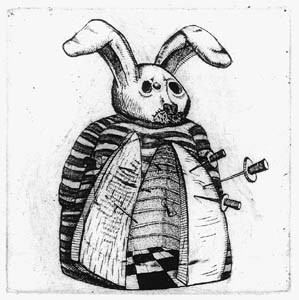
Rabbit Is Rich: Will Smith’s etching, ‘Bunny Sarcophagus,’ looks better than it tastes.

Chasing the Rabbit

Cacao, bunnies and resurrection: what’s the connection?

By Sara Bir

Chocolate comes from cacao trees. Not a lot of people know that. It’s common to think of chocolate as something that comes from Hershey, Pa., or the Godiva boutique at the mall. But no, chocolate finds its true source in the equatorial rainforest, where pods grow from the trunks of cacao trees and are harvested and processed by hand to yield cacao beans.

Cacao trees originated in the Amazon basin and gradually spread up to Central America, and for thousands of years, the only people to enjoy cacao were the pre-Columbian civilizations who made their homes there. To the Aztecs, the Maya and the Olmec, cacao was a sacred thing.

Easter, meanwhile, comes vaguely from something to do with Jesus. At least that’s what many people who passively celebrate Easter think. After traipsing through the library, however, a hapless amateur historian soon discovers that the artifacts of what we commonly know as Easter–colorful eggs, pure-white lilies, sugary jelly beans, brand-new bonnets, controversial Mel Gibson movies–are in fact a train wreck of forgotten rites of rebirth. When you get right down to it, Easter is just another commercially corrupted holiday.

And somewhere along the line, Easter and chocolate became inextricably intertwined. I have become acutely aware of this because I work in a chocolate factory, and it’s now the time of year when the sugar-mad masses come poking around in search of cute little chocolate eggs and chocolate bunnies to plant inside the green plastic grass of their kids’ Easter baskets.

“Last year,” a co-worker confided, “we got so sick of people grabbing at the huge chocolate rabbit on display that after Easter Sunday, we took the rabbit outside and ceremonially sacrificed it by beating it with a stick.”

Argh! Another tradition to throw a wrench into the randomly constructed gears of the Easter machine. Even finding one true origin of Easter is a disenchanting nightmare. While some sources maintain that Easter is a lunar celebration (the word “Easter” is thought to be derived from the Saxon Eostre or Ostara, goddess of the moon), others claim that it’s a solar gig, that “Easter” refers to the sun riding in the east–Ostara is also the goddess of the dawn.

In any case, Easter was a pagan celebration until it got injected with a little Jesus power via second-century Christian missionaries, who encouraged Saxon tribes to carry on with their feasts in a Christian manner, and handily timed the Christian observance of the Resurrection of Christ for the same part of the year.

As a child in Sunday School, I was taught that Easter is the most important event in the Christian year, that the Resurrection of Christ was the strongest defining feature of our faith. So I asked my Sunday School teacher what fluffy bunnies and baby chicks had to do with it, because to me, those were the most exciting things about Easter.

The baby chicks and eggs my teacher had a pretty decent explanation for (“Because Easter celebrates Jesus’ rising, we look to eggs and baby chicks as symbols of new life–just like Jesus!”), but she wasn’t very convincing about the bunny part. “Easter is in the spring, and bunnies come out in the spring after a long, hard winter to a better, warmer life.”

Yeah, sure–and so do skunks and rats.

What she didn’t mention is that rabbits are some of the most goddamn fertile creatures on the planet, and thus an excellent symbol of new life, since they often seem to be fabricating it. Rabbits do have strong mythological ties with the moon, and the goddess Ostara’s earthly sidekick was a rabbit. Supposedly, German immigrants introduced the rabbit to American Easter folklore.

Oschter Haws was kind of the German bunny equivalent to Christ-Kindel; children were told that if they were good, Oschter Haws would lay them a nest of colored eggs. Here in America, Easter was not that big of a secular to-do until after the Civil War–when, coincidentally, industry made chocolate readily available to the masses. Hmm.

Consider the timeline of chocolate for a moment. For a good few millennia, chocolate was consumed almost exclusively as a beverage. And up until the mid-16th century, cacao was virtually unknown to the Old World. Just as in the pre-Columbian Americas–where only the nobility and the merchants had access to costly cacao–the privilege of enjoying chocolate was available only to the European upper classes.

Chocolate required a great deal of labor to prepare: the beans had to be roasted, ground by hand over a heated stone, mixed into a paste, cooked gently, skimmed of cocoa butter and then painstakingly frothed to a pleasing foamy texture. It was hardly as simple as dissolving a packet of Swiss Miss into mug of boiling water.

Chocolate in ready-to-eat solid form did not appear on a large scale until the mid-1800s (thanks largely to advances made by the English firm of J. S. Fry and Sons), and solid chocolate that was velvety smooth in texture didn’t come along until 1879, when the Swiss manufacturer Rodolphe Lindt developed a refining process called conching.

Chocolate rabbits didn’t arrive on the scene until conching was perfected, but in true rabbit fashion, they soon began popping up everywhere. German tinsmith Friedrich Anton Reiche established a chocolate and ice cream mold factory in 1870 that grew to become the world’s largest, exporting highly detailed metal molds–many of them in rabbit forms–to confectioners in America and elsewhere.

Interestingly enough, in France, they not only have Easter rabbits, but Easter bells. I found out about this from reading David Sedaris’ book Me Talk Pretty One Day. Sedaris writes of encountering this tradition while in France, floundering ineptly through language classes with a surly professeure who takes issue with Sedaris’ assertion during a class discussion that the Easter Rabbit brings chocolate in a basket.

“The teacher sighed and shook her head,” he writes. “As far as she was concerned, I had just explained everything that was wrong with my country. ‘No, no,’ she said. ‘Here in France the chocolate is brought in by a big bell that flies in from Rome.'”

The flying bell–cloche volant–comes from an old French Catholic tradition holding that on Good Friday all of the church bells in France take off and fly over to the Vatican in Rome, hauling with them all of the misery and grief of those who mourn Jesus’ crucifixion. Then the bells fly back to France on Easter morning, and in place of the misery and grief, they carry lots and lots of chocolate in the shape of rabbits, eggs and . . . bells!

At least a chocolate rabbit is anthro-pomorphic; it’s cute with its little bunny head and ears, which of course you bite off first. A bell offers no such delights. What do you bite off first on a cloche volant? The clapper? The grief and misery?

Sadly, chocolate has as little to do with rabbits as it does with bells. At least bunnies and bells have been linked with Easter for hundreds of years. But chocolate and Easter’s connection is completely a product of clever modern-day marketing. The one thing I grew up looking forward to more then any other on Easter morning–that big-ass solid chocolate rabbit to gnaw on bit by bit while watching television over the following few days–is ultimately as historically related to Easter as Hallmark is to Valentine’s Day.

Maybe gathered around some other-worldly fire under a full spring moon, Quetzalcoatl, Peter Cottontail, Jesus and Ostara are sipping some long-lost ceremonial Meso-American cacao beverage, looking at our mess of a world and laughing heartily as we wait for life to begin anew in spring, all fertile and resurrected and full of promise and flying bells.

As for myself, I will be at work, joyously partaking in a new Easter tradition: the destruction of a chocolate rabbit with a stick.

From the April 7-14, 2004 issue of the North Bay Bohemian.
© Metro Publishing Inc.

BR5-49

0

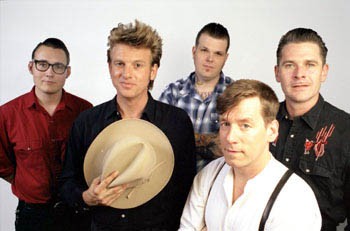
Still Running: BR5-49 outlast the bastards.

Hillbilly Deluxe

BR5-49 retool the show

By Greg Cahill

It was like having a really great ’58 Ford Fairlane that had a tired engine but is a really old car that you want to save,” says singer and guitarist Chuck Mead, describing the restoration of the alt-country band BR5-49. “We overhauled it with a new Mustang engine, and it runs great now!”

Following the departure last year of founding member and co-lead vocalist Gary Bennett and longtime bassist Smilin’ Jay McDowell, Mead and the remaining members of this highly regarded act set out to “retool” BR5-49 (the name is taken from a phone number in a Junior Samples Hee Haw sketch). Bennett’s loss could have spelled doom: he founded the band a decade ago while working at Robert’s Western Wear, a clothing store and bar located in Nashville’s old-town district on lower Broadway. And it was Bennett who set the standard for the band’s virtuosity and irreverent songwriting.

At the height of Music City’s 1990s’ big-hat parade–one that saw Nashville usurped by Garth Brooks, Shania Twain and other pop acts–BR5-49 became the first retro-country band to gain national attention and a major label contract, releasing their eponymous debut in 1996. The band quickly became known for its impressive instrumental chops, what music critic Mark Deming once dubbed “grits and high spirits,” and a penchant for penning songs about such quirky pop-culture artifacts as 1950s pinup girl Bettie Page (immortalized in BR5-49’s homage “Bettie Bettie”).

A Grammy nomination followed, Playboy dubbed them “Nashville’s hippest band” and BR5-49 opened tours for Bob Dylan, the Black Crowes and other stars.

“After the guys quit, we didn’t know what to do,” says Mead. “We just thought we’d go back to playing on lower Broadway.”

And that’s what they did–for a while.

In the clubs, Mead and the other surviving band members encountered a loose-knit network of young alt-country players known as the Hillbilly All-Stars. Mead soon started feeling energized about playing again and decided to climb under the hood, so to speak, to rebuild his old band. He recruited All Stars vocalist and guitarist Chris Scruggs–whose grandfathers were the legendary Earl Scruggs and Louisiana Hayride performer Tex Dickerson, and whose parents were the famed Nashville musician Gary Scruggs and maverick singer-songwriter Gail Davies–as well as bassist Geoff Firebaugh, a veteran of several Pacific Northwest punk bands.

The revamped lineup hit the road last year for tours of the United States and Europe before entering the studio to capture the band’s newfound magic on record. “We had no record deal,” says Mead. “We had no schedule to meet. We paid for the studio out of our own pockets. We simply wanted to get in there and make our songs sound like we’d always wanted them to sound, and we wanted to have fun doing it. The only expectations we had to live up to were our own.”

The resulting work, Tangled in the Pines, proves that BR5-49 can still crank out twangy, beer-soaked, honky-tonk anthems. The new material, like the swampy blues-drenched “Run a Mile,” which Mead describes as “straight-up creepy hillbilly music,” and the juke-joint reverie “When I Come Home,” stack up with the best the band has forged in the past.

“We dug deep for this record,” says Mead. “And putting all the songs together unwittingly ended up being kind of a story. In a sense, it tells a tale about guys trying to ‘make it’ and their journey through themselves and their world. It’s a record about chasing away–and in some cases trying to outrun–your demons, and then coming back for more. It’s a story about us.

“It just goes to show you what you can do when you decide to outlast the bastards.”

BR5-49 perform Sunday, April 18, at the Mystic Theatre, 21 Petaluma Blvd. N., Petaluma. Big Sandy and His Fly-Rite Boys open the show. 8pm. $15. 707.765.2121.

Spin Du Jour

Phil Kline, Zippo Songs: Airs of War and Lunacy (Cantaloupe)

The similarities between the Vietnam War and the mess in Iraq are striking. So this incendiary work by avant-garde composer Phil Kline (a member of the Bang on a Can All-Stars) is uncanny in its simple brilliance. On this new CD, Kline pairs “Three Rumsfeld Songs” (with text culled from a worldwide e-mail that mocked the skewed logic heard at those surreal press briefings given by Secretary of Defense Donald Rumsfeld) with “Seven Zippo Songs,” which contain lyrics drawn from the inscriptions U.S. troops serving in Vietnam scratched on their Zippo lighters–lighters that were sometimes used to torch the thatched roofs of rural huts. The latter is a stirring series of themes on going to hell, getting bummed, getting high, getting horny, getting bored, dying and finding God. The disc concludes with an eerie rewriting of the Doors’ 1967 Oedipal epic “The End,” included in its original form on the Apocalypse Now soundtrack. Life imitating art imitating art . . .

–G.C.

From the April 7-14, 2004 issue of the North Bay Bohemian.
© Metro Publishing Inc.

M.O.B.

0

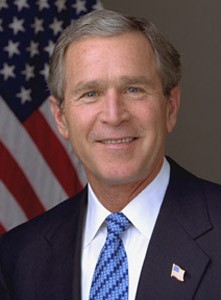
President Nixon, Now More Than Ever: M.O.B. aims to throw the crook out.

M.O.B. Rule

Benji Nichols rounds up musicians to help oust Bush

By Sara Bir

Some mornings you wake up and just want to go right back to sleep. Radios often don’t make it any easier. News of suicide bombings, arctic drilling, global warming and Patriot Act-ing can slither into your brain so quickly that ducking under the covers and hiding from everything feels like the most reasonable option. Ah, there’s nothing like greeting a sunny, new I-hate-our-president day.

One morning, Petaluma-based music producer and musician Benji Nichols decided to do something about it. “I usually have the clock radio set to KPFA–except that it makes you want to slit your wrists,” he says. “And I just realized that I couldn’t take listening to the same old shit day after day. . . and I got frustrated, because I feel like I’m doing work for other people, but I’m not doing anything creative for the people I know–artists, musicians. So I was thinking in the shower and I came up with this stupid acronym of the M.O.B., which is Musicians to Oust Bush. But I kind of ran with it. I realized that if I didn’t do something, I’d go crazy.”

Nichols’ idea led him to gather songs for a compilation CD, which he plans to put out himself and send to contributing bands, who will hopefully disperse their M.O.B. CDs to local media outlets. “I’m taking anybody who will donate a track that’s kind of decent and to the point,” Nichols says. Currently, he has donations from artists across the country, including Jamaican-born singer-songwriter Owen Plant from Boston; Sacramento underground cult figure Anton Barbeau; and upstate New York-based Americana-tinged rockers the Mammals.

With tracks like Pierce Woodward’s “Leave No Millionaire Behind” and Adras Jones’ perfectly titled “Hold Your Nose and Vote,” M.O.B. is so far staying right on target. Some of the contributors are folks Nichols knew previously, but others, such as Barbeau, sort of came out of the blue.

When it’s all said and done, the compilations will feature 13 or 14 tracks, not all of which are musical. Utah Phillips donated two characteristically anarchistic commentaries, and Nichols would welcome more (recent San Francisco mayoral candidate Matt Gonzales is on Nichols’ wish list).

Proactivity is great and all, but the one obvious question here is what, exactly, Nichols hopes to accomplish with M.O.B. “There’s other groups like Bands against Bush and Punkvoter, people like that who have giant websites and want to raise money for the cause–whatever ‘the cause’ is,” he says. “I really wanted to do something that wasn’t based around money or printing T-shirts. And I also was thinking that instead of giving money to all these other groups that I support occasionally, I’d just do something myself.”

Nichols is accepting M.O.B. submissions until May 1. Amazingly enough, he hasn’t received any tracks from North Bay musicians yet. “So far I’ve gotten a lot of good material, but I’d love to tap into the hip-hop scene–even ranchero bands. I do want some more representation from this area.”

Having grown up in the Midwest and attended the Berklee College of Music in Boston, Nichols recognizes that in many parts of the country (read: not Northern California) there’s still a stigma attached to releasing music with an obvious left-leaning political agenda. “There’s definitely a bubble here,” he says. “Whereas in reality, my parents won’t even talk to me about [M.O.B.] anymore. But that was part of my ambition for doing this. I really wanted to put something down that wasn’t outwardly too radical–the main point is that these people are all across the spectrum, and what they have to say is the same thing.

“You don’t have to be on the street, you don’t have to be knocking on doors, but you do need to realize that what’s going on is really serious. A lot of the people contributing are really young, and we’re the people who are realizing that we’re the ones who are getting screwed.”

For more information about M.O.B., visit www.benjinichols.com.

From the April 7-14, 2004 issue of the North Bay Bohemian.
© Metro Publishing Inc.

Wil Wheaton

‘Dancing Barefoot,’ by Wil Wheaton, is available from Amazon.com.

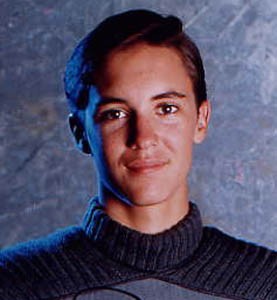
Wheaton in his ‘Star Trek’ days.

Adult Reader

Wil Wheaton steps out of Crusher’s shadow

By Joy Lanzendorfer

You may or may not remember Wil Wheaton from Star Trek: The Next Generation. On the show, Wheaton played boy genius Wesley Crusher. Before Star Trek, he was a successful child actor with several films to his credit, including the lead in the 1986 hit Stand by Me. But despite his early successes, Wheaton couldn’t seem to get out from under the heel of Wesley Crusher, who (for reasons unknown to us normal mortals) has been called the most hated character in Star Trek‘s 20-year history. Wheaton found himself typecast at age 18 and, with a few exceptions, more or less disappeared from the public eye after leaving the show in the early ’90s.

That is, unless the public happens to spend a lot of time on the Internet.

Since 1999, Wheaton has kept a popular blog, www.wilwheaton.net, where he maintains daily posts about his life and career. At this point, he has amassed a fairly large following and has become something of an Internet celebrity. His blog averages about 600,000 page visits a month, many of them repeat visitors. While his self-depreciating humor and likable personality factor into the mix, many of his readers relate to Wheaton, 31, because of his status as a self-described “geek.”

“When I think of someone as being geeky, I think of them with an overabundance of specialized knowledge,” he says by phone from his Southern California home. “I definitely have a great deal of that. I get excited about role-playing games and text-based computer games. And I have a real affection for science fiction.”

Last month, Sebastopol’s beloved tech publisher to many a geek, O’Reilly and Associates, published Wheaton’s first book, Dancing Barefoot. Culled from five auto-biographical stories that were originally published in some form on his blog, this is the first of two books O’Reilly will put out by Wheaton. The second, Just a Geek, will be released in June.

Wheaton never considered writing a book until cartoonist Dan Perkins, known as Tom Tomorrow and creator of the “This Modern World” strip, urged him to think about it.

“He said, ‘Your blog is popular and a lot of people read it–you really ought to write a book,'” Wheaton says. “I remember saying, ‘I’m not an author, I’m a struggling actor. I can’t write.’ But Dan said, ‘Look, you write every day. Just think about it.’ And I thought about it, and then some of my weblog entries began to turn into more developed stories.”

The stories became Just a Geek, a book about how Wheaton came to terms with the success of Star Trek and his lack of success as an adult actor. But Wheaton ended up with 100,000 words, far too many for the kind of book he was writing. From the trimmings came Dancing Barefoot. He shaped the stories, gave them some context and set up online fulfillment of Dancing Barefoot on his blog. His initial print run of 200 books sold out in four hours.

“It was just taking off,” Wheaton said. “I was getting all this magnificent, wonderful support from independent booksellers and small stores and people who read my website and really believed in me.”

He sold 3,000 copies from orders coming into his site before O’Reilly approached him to publish the book.

The stories in Dancing Barefoot range from Wheaton and his wife dancing in the rain (thus the title) to Wheaton’s introduction to William Shatner. Since it came out in March, the book has ranked as high as 184 on the Amazon.com list and was number 10 in its category. As of this writing, its Amazon ranking is 764.

These books are just the beginning of Wheaton’s writing career. In fact, after facing his failure as an adult actor, he has started to redefine himself through his writing.

“I’ve worked very little as an actor in the last couple of years,” he says. “I took most of last year off to work on these books and my agents dropped me, so I haven’t had an agent in almost a year. My real focus for the last year or so has been writing. I’m working really hard to create stuff that doesn’t suck. Before it ever gets to an editor, it has to pass my inner critic.

“And my inner critic,” he chuckles, “is a surly bastard.”

From the April 7-14, 2004 issue of the North Bay Bohemian.
© Metro Publishing Inc.

Arab Americans

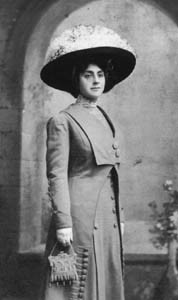
Photo Courtesy of Willard F. Zahn, M.D.

Fifie Malouf.

Immigrant Song

The story of Arab Americans in California and the North Bay

By R. V. Scheide

Before Sept. 11, 2001, Sacramento writer Janice Marschner was working on a book about the thriving hot springs resort industry that existed in Northern California in the late 19th century. During her research, she kept encountering references to the immigration of various ethnic groups to the region, including some from the Middle East. California’s diverse immigrant population would be a great subject for another book, she thought, and she began working on a new proposal, California: An International Community. Then came 9-11.

“Following 9-11 there was a reported rise in hate crimes against Middle Eastern Americans and also others mistaken for Arabs and Muslims,” Marschner writes in the introduction to California’s Arab Americans (Coleman Ranch Press; $18.95). Realizing that very little had been written about the Golden State’s small Arab immigrant population, Marschner felt it imperative to rush an excerpt from California: An International Community to press as a separate, smaller edition. “I hope that this book . . . will provide Californians and all Americans a better understanding about our community members of Arab descent–the now third and fourth generation, as well as the new arrivals.”

Marschner’s hopes have been realized with California’s Arab Americans, a quick glimpse at the various Middle Eastern peoples who have immigrated here during the past 150 years and the cultures and traditions they’ve brought with them. She begins the book with a brief history of the Middle East, where both Christianity and Islam originated. She then notes that there have been three waves of Arab immigration, beginning with the arrival of an estimated 100,000 Syrians between 1880 and 1914.

While subsequent waves of immigrants have sought refuge in America from the war-torn Middle East, the Syrians’ arrival remains somewhat of a mystery to scholars, as there were no major political upheavals at the time. Some have speculated that the 1876 Centennial Exhibition’s worldwide call for global arts exhibitors may have lured Syrians with the promise of prosperity in America.

At any rate, some of those Syrians settled in Sonoma County, where their relatives can still be found today. In what is perhaps the most enjoyable part of Marschner’s book, she details the family histories of California’s Arab Americans by region so that readers may follow their footsteps, before history and assimilation wipe out all the traces.

“Sonoma County attracted several utopian colonies, but it has never been a draw for Arab immigrants,” Marschner writes. Never-theless, Arab Americans made their presence known. In 1915, Syrian immigrants Abe and Nazara Maloof ran a successful ice cream parlor in Guerneville. Later, they ran a bakery in Santa Rosa and in 1918 had a son, Milton, who served in WWII and spent most of his life in Sonoma County until passing away in 1999.

“He was real proud of being Syrian,” says wife Paula Maloof, who still lives in Sonoma County quite near the home where Abe and Nazara once lived. Milton worked in the Mare Island Naval Shipyard for 31 years; he and Paula were married for more than 50 years. She also remembers the most flamboyant member of the family, Fifie Malouf (like most immigrants, the Americanized spelling of the family name varies), who in the first half of the 20th century was way ahead of her time, having been married three times. Fifie lived on and off in Santa Rosa, according to Marschner, and at one time ran the local swimming pool. Paula adds that while in Los Angeles, Fifie purportedly ran a house of ill-repute.

Marschner cites several other Sonoma County families of Middle Eastern descent, including Michael Selby, who immigrated from Beruit, Lebanon, in 1902 and arrived in Santa Rosa in 1917, where he served as a popular barber for some of the area’s more prominent citizens until the age of 92. It’s delightful facts such as these that help humanize California’s Arab Americans, an insightful, timely book.

From the April 7-14, 2004 issue of the North Bay Bohemian.
© Metro Publishing Inc.

Jean Hegland

Art of Mothering

Novelist Jean Hegland balances words with work

By Gretchen Giles

Windfalls can be the unexpected gifts that opportunity and good luck occasionally shake down upon us from the sky. Windfalls are also those fruits loosed from the tree, their ripeness untasted, that fall heavy from the limb and rot by the trunk. In Healdsburg-area author Jean Hegland’s new novel, Windfalls (Atria Books; $25), both the great deep surprise of good luck and the terrible waste of letting that which is ripe go wasted are closely observed.

Like Hegland’s acclaimed 1997 novel, Into the Forest, and her first book, A Life Within: A Celebration of Pregnancy, a non-fiction work illustrating the journey of pregnancy, Windfalls also concerns women, children and family. A literary science fiction inquiry, Into the Forest follows two sisters making do in the woods while society crumbles slowly around them. Windfalls places two very different women in the exultant and exhausting rigors of motherhood.

Hegland, who has three children of her own, is currently at work on a new novel that also examines family. But after that, she chuckles, she’s done with the nuclear circle for a while. “As a writer,” she says by phone from her home studio, “I’ve sort of mined that vein.”

She’s certainly mined it deeply in Windfalls. As a graduate student, Anna gets pregnant, has an abortion, becomes a professional photographer, marries and has two children. She leaves the kids with the nanny in order to quickly go out and try to grab at some art, wandering with a camera hoping that inspiration will fit into her tight time frame. When she phones home she realizes that her call has been the only bad thing about her child and nanny’s entire day. Cerise, on the other hand, gets pregnant in high school, keeps her first child, loses her emotionally, then has another child and loses him to tragedy. With little education, Cerise devotes her adult life to her daughter Melody, working a series of increasingly demeaning jobs in order to support the child who rejects her in the agony of a vicious adolescence. Melody grows up to perform a home tattoo on her own face.

Anna and Cerise, different in education and temperament, share between them the familiar vagaries of motherhood and eventually form a friendship that allows each to help the other. Most importantly, the theme of motherhood versus creativity and the expectation that no one will ever say thanks to Mom pipes through the narrative like oft-tarnished silver threads.

This is a balance that Hegland knows well. “It’s an issue that interests me a lot,” she concedes. “Every woman cuts a different deal; there’s this huge spectrum and everyone’s arrangement is unique. When Into the Forest was published in England, I was in London at a dinner party and it turned out that the other women writers there also had children. Instantly the question was: how do you do it? Everybody’s answer was so different. But the insight that I had that hopefully drives the book and certainly drives my life is that they’re not pursuits that are somehow opposed; they’re not antithetical to each other. The things that I learn as a writer nurture what I do as a mother, and vice-versa.

“My ambition,” she continues, “is to write every day, and every day is a new dance. My rule is that only smoke and major blood are reasons for interrupting me. I try to be very ferocious about getting writing time and also very graceful about giving it up.”

While motherhood actually sparked Hegland’s publishing career, she is one of those wise souls who already knew what she wanted to be when she grew up. “When I was very, very little,” she says, “I wanted to be a writer. And when I was teenager I wrote lots of poems with the word ‘shadow’ in them. In college, I gave up on it because I was so disappointed in the things that I wrote and I knew the kind of writing that I loved. But in graduate school, I learned that I wasn’t a bad writer–I was just writing first drafts. And I realized that I didn’t have to get it right the first time. And now,” she chuckles, “I rely on revision.”

Both Into the Forest and Windfalls took over five years each to write, not a surprising length when one factors in the raising of Hegland’s three active children, the youngest of whom is now just 11. Her next projects will have an environmental theme, one perhaps familiar to Into the Forest readers. “I keep telling myself that in a novel, it’s the story that comes first,” Hegland says. “That’s what’s got to matter most and the didactic stuff, well–a little goes a long, long way.

“It’s a challenge because one can get so fervent, but more is less,” she says firmly, “when it comes to fervency.”

From the April 7-14, 2004 issue of the North Bay Bohemian.
© Metro Publishing Inc.

Book Notes


Book Notes

New and noteworthy, local and langurous

Earthworms Are Easy

I’m not normally a squeamish person, but the idea of reading Amy Stewart’s The Earth Moved: On the Remarkable Achievements of Earthworms (Alonquin Books; $23.95) gave me the squirms. Her subject is, after all, earthworms, billions upon billions of them, boring and churning through the earth, through root systems, through caskets, through, someday, our own bodies. But from the opening pages, when this North Coast Journal garden columnist inverts a diagram of an apple tree so that the roots are on the top, The Earth Moved wormed into me, trans-forming revulsion into curiosity as Stewart explores the natural history of the worm. Her tale, a series of connected essays, begins with Darwin, whose final book was a study of the earthworm. An avid gardener but not a trained scientist, Stewart gets up close and personal with the 10,000 worms in the black plastic compost bin on her porch, goes on an Ahab-like search for a three-foot-long giant worm in Oregon, and presents an impressive array of worm lore and knowledge, throwing in a Nietzsche epigram here, an e.e. cummings poem there. It’s a literate, engaging read that left me with a newfound respect for this deaf, dumb and blind creature. Amy Stewart has shown me my inner worm.

–R. V. Scheide

Amy Stewart reads from ‘The Earth Moved’ twice in the North Bay. Wednesday, April 14, at Copperfield’s Books, 2316 Montgomery Village Drive, Santa Rosa. 7pm. Free. 707.578.8938. Tuesday, April 20, at Book Passage, 51 Tamal Vista Blvd., Corte Madera. 1pm. Free. 415.927.0960.

Group Growing

In the summer of 1971, Art Kopecky and a group of friends piled into a converted bread truck dubbed the Mind Machine and wandered gypsylike across the American West. They leapfrogged between hippie enclaves and eventually landed at the New Buffalo commune where he would settle down and live for the next 12-plus years, chronicling the entire experience in a series of journals. Recently Kopecky, now a fine woodworker residing in Sebastopol, decided to unearth these journals and publish excerpts from them in a nearly untouched form, realizing that he had unwittingly produced a record of this historical time and place. The resulting book is New Buffalo: Journals from a Taos Commune (University of New Mexico Press; $24.95).

The journals are simple, quickly scribed but philosophical accounts of day-to-day life at New Buffalo: the fast turnover of names and faces, the intoxicated celebrations, the police raids, the internal wrangling, the politics of irrigation, and the ultimate satisfaction of hard work as its own reward. They are also a record of New Buffalo itself growing up, from wide-eyed idealism and endless parties, to crafts production as livelihood, to full self-sufficiency as a dairy farm. And though the details are sparse, by the end, a story arises that is far more than the sum of its individual entries.

–Michael Houghton

Arthur Kopecky reads from ‘New Buffalo’ on Wednesday, April 7, at 7pm. Copperfield’s Books, 138 N. Main St., Sebastopol. Free. 707.823.2618.


Got Nukes?

When George W. Bush mispronounces the word “nuclear” as “nucular,” is he committing a typo or what Stanford linguistics professor Geoffrey Nunberg terms a “thinko”? That’s the starting point for the title essay from Nunberg’s latest collection of NPR Fresh Air radio commentaries and New York Times articles, Going Nucular: Language, Politics and Culture in Confrontational Times (Public Affairs; $22.95). With the dexterity of a spider monkey, Nunberg picks the topic clean, providing the reader with new insight on the subtleties of language. “No president has taken more flak over his language than George W. Bush,” Nunberg writes. “That’s understandable enough; Bush’s malaprops can make him sound like someone who learned a language over a bad cell-phone connection.” It’s possible that Bush’s mispronunciation of “nuclear” is an involuntary typo, Nunberg says, a product of the word’s relatively recent folk etymology.

On the other hand, Yale-educated Bush could be committing a thinko, a conscious choice to mangle the word, either to portray himself as one of the bubbas, or to enamor himself with certain hawkish Pentagon types, who prefer to mispronounce the word when referring specifically to nucular weapons.

Rather than answer the question, Going Nucular provides readers with the tools to search out the president’s speech for themselves. Nunberg, who serves as the chair of the Usage Panel for the American Heritage Dictionary, approaches each subject with scientific objectivity delivered via a standup comic act. He cracks wise then gets wise, sifting through the data–language–to shake out ever-elusive meaning. Rarely polemical, frequently hysterical, Going Nucular is one of those rare books that can change the way you think, or at least the way you say “nuclear.”

–R.V.S.

I’m OK and So Am I

I get the willies going into the self-help section of the bookstore. You see all these needy, desperate people clutching Kleenex and searching for answers and affirmation. You can practically feel the angst-vortex around the aisle. Eeech! OK, so maybe I’m displacing some inner fear. Perhaps I’m keeping a secret from myself. So how does that make me feel? I’m not sure. Maybe somewhere between Captain Superior and King Kong. Give me time. I’m still sorting out the cast of “inner characters” described in Dan Neuharth’s Secrets You Keep From Yourself: How to Stop Sabotaging Your Happiness (St. Martin’s Press; $24.95).

This Marin psychotherapist has a breezy talk-show way of describing the dumb-ass things we do to destroy any chance at happiness. We’re consumed by a demonic hit parade of deception, procrastination, escapism and addictive behavior. We hate and reject ourselves when, frankly, the rest of the world already does that just fine without us. The good news is that for 25 bucks, Neuharth aims to cure the evil little voices in your head with exercises, check boxes and handy tables that pinpoint your exact neurosis, plus step-by-step guides for banishing those nasty self-esteem problems in a jiffy. Now don’t you feel better? I know I do.

–Heather Irwin

Beat Beginnings

Several years ago, in a roundup review of several Beat generation biographies as well as a previously unreleased book by Jack Kerouac, Johah Raskin wrote, “Given the choice between reading books by Jack Kerouac, Allen Ginsberg and William Burroughs or reading books about them, I’ll take the originals over the biographies and critics any day of the week.” This reviewer and minor Beat fanatic is inclined to agree. Nevertheless, Sonoma State University communications professor Raskin’s seventh book, American Scream: Allen Ginsberg’s ‘Howl’ and the Making of the Beat Generation (University of California Press; $24.95), is essential reading for anyone interested in what was arguably the most important American literary movement of the 20th century.

Raskin has shaped an enormous amount of research, including previously unreleased material from the Allen Ginsberg Trust, into a compelling inside look at Ginsberg and the cultural milieu that brought about his most famous poem, “Howl,” first performed at San Francisco’s Six Gallery in 1955. With pain-staking detail, Raskin re-creates the post-WWII environment that led Ginsberg to his remarkable, angry denunciation of what Americans politely call progress, including the poet’s struggle with his own homosexuality. American Scream helps us understand the importance of “Howl” and the Beats. It’s also a sorry reminder that the hope that once inspired an entire generation seems now a distant memory.

–R.V.S.

Jonah Raskin reads from ‘American Scream’ twice on Tuesday, April 13. At noon, at SSU, 1801 E. Cotati Ave., Rohnert Park. Free. 707.664.2259; and at 7pm, Copperfield’s Books, 138 N. Main St., Sebastopol. Free. 707.823.2618.

Generational Healing

Mother, Heal My Self (Crestport Press; $14.95) is a most unusual title for a most unusual book, the story of a healing journey of a young woman stricken with kidney disease, written by mother JoEllen Koerner, a nurse who accompanied her daughter, Kristi, through every critical turn. It tells how modern doctors failed to diagnose Kristi’s illness, much less cure it, and of a Lakota Sioux healer who leads mother and daughter along a different path to recovery. Savvy North Bay readers will not be surprised to discover that the native way of healing treats disease as a symbolic expression of the twists or knots in a patient’s personal story. But the central premise of the book may be new to many: the principle of intergenerational healing.

Wanigi Waci, the Sioux healer, tells Kristi that her five kidney stones represent the five generations of women in her family who struggled through difficult and even fatal childbirth because of the oppression they endured in their male-dominated families. Kristi’s process of healing involves not only her mother and grandmother, but generations of women who preceded them. By opening to the inherited misunder-standings and fears she carries within herself, Kristi’s healing process actually heals the whole lineage.

For Koerner, Kristi’s illness means letting go of her own rage at the behavior of men and creates a tremendous opening to the joys of a loving relationship in a life once narrowly defined by duty. Mother, Heal My Self is dramatic and vivid, as Kristi struggles through long nights of excruciating pain so intense that she finally asks her mother to help her die.

But although it’s Kristi’s life-threatening crisis that keep the narrative riveting, it’s her mother’s honest exploration of her own feelings that yield the book’s sweetest treasures–the inspiration to change our own lives and heal the stifled sobs of our ancestors, reaching into the past for the source of the problem and looking to the future to transform the way we live on this troubled planet.

–Stephanie Hiller

A Growing Revolution

Squeeze one of Fetzer Vineyard’s grapes and you’ll see the seeds of change. They’re organic, for one thing, grown in sustainable ways with healthy soil, few, if any, chemicals and in the company of pest-eating chickens and goats. They’re picked by workers who are valued not just for their ability to perform back-breaking work, but for their contri-butions to the company’s greater good. Happy grapes, happy goats, happy workers. OK, so that’s simplifying things a bit. But in True to Our Roots: Fermenting a Business Revolution (Bloomberg Press; $27.95), Fetzer president Paul Dolan boils it down to this: an agri-cultural revolution is at hand and it’s both profitable and flavorful.

Devotees of Alice Waters have long known that sustainable food is better for us, better for the land and just downright tastier. But how profitable is it? With his company producing a whopping 4 million cases of wine per year (and growing), Dolan says that a commitment to shifting the business mindset to one that protects the land, values the worker and ultimately produces a high-quality product isn’t that hard. His six business ideals can read at times like a Tony Robbins seminar, but at the heart of it, there’s just that: heart.

Dolan is a lifer in the industry, trying to change it from the inside and succeeding with his steadfast determination to make wine–and all agriculture–sustainable. So how does the story end? Surprisingly, Dolan has just announced that, after 27 years at the helm, he’s leaving Fetzer to open two new vineyards based on the ideals of the book and his own passion for food and wine. A true revolutionary.

–H.I.

From the April 7-14, 2004 issue of the North Bay Bohemian.

© Metro Publishing Inc.

UFW

0

State of the Union

United Farm Workers turn up heat on North Bay companies

By R. V. Scheide

As members of the United Farm Workers union prepare for a week of celebrations centered on Cesar Chavez Day, this Wednesday, March 31, the union continues to make strides both locally and nationally in the ongoing battle to better the wages and working conditions of agricultural workers.

Chavez, who passed away in 1993, would have turned 77 on March 31. He is internationally renowned for founding the first successful farm labor organization in 1962. Robert Kennedy called Chavez “one of the heroic figures of our times.”

Locally, the UFW is negotiating contracts with two major Sonoma County employers, Gallo of Sonoma and the Redwood Empire lumber company. The negotiations have stalled repeatedly, the UFW says, thanks to the continued union-busting tactics used by both employers. Meanwhile, on the national front, UFW president Arturo Rodriguez has called on members of the House and the Senate to pass the AgJobs bill, which will grant permanent citizenship to undocumented workers who stay in the country and continue to work in agriculture.

“Can we say to the world this is the land of freedom except for undocumented immigrants?” Rodriguez said at a Washington, D.C., press conference March 24. “To those who say we shouldn’t consider or cooperate with hard-working, tax-paying undocumented immigrants, that they are criminals and trespassers, I say to you: Why do you continue to buy most fresh fruits and vegetables? They come to your tables through the skill and toil of undocumented farm workers.”

The UFW’s struggle to unionize Gallo of Sonoma has been simmering for more than a decade, after wine-grape workers voted for UFW representation in 1994. Since then, Gallo has frustrated the UFW’s efforts by refusing to extend benefits to farm-labor contractors. Since 1994, the company’s use of such workers has increased from 60 percent to 80 percent of the workforce.

Last November, more than 400 wine country workers and supporters joined a UFW march in Santa Rosa to demand that Gallo make good on its promise to provide health benefits to contracted farm laborers. In December, a state judge ruled that Gallo violated state law when it tried to decertify the union last year. In January the UFW filed new charges against the company, alleging that a whistleblower had been fired because of his union activities.

Gallo of Sonoma spokesman John Segale countered that both the current contract and the contract on the table offer health benefits to contract laborers hired as full-time employees by the company.

Increasingly, undocumented immigrants have been entering the workforce in fields that were once dominated by native-born or naturalized laborers, such as the construction industry. Because these workers are paid less and often receive no benefits, employers can cut costs substantially by hiring them.

Two years ago, employees at the Redwood Empire’s sawmills in Asti decided they’d had enough. After the company denied them the accustomed 3 percent annual cost-of-living adjustment and cut some of their benefits, they organized a work stoppage and went looking for union representation.

“The UFW is spreading into other industries,” says Vanessa Rhodes, Santa Rosa-based UFW contract administrator. “When those Asti workers organized the work stoppage, they walked out and came to the UFW. Normally, these situations come about because employees are in dire need. They themselves decide they want a union.”

Eventually, Redwood Empire granted the cost-of-living raise and reinstated benefits, hoping, the UFW says, to persuade employees that a union was unnecessary. But in February 2003, employees voted to have wage increases and benefits secured through a contract negotiated by the UFW.

Since then, according to Rhodes, Redwood Empire has dug its feet in on contract negotiations, hoping to force a new election in 2005. Rhodes says that some workers who have supported the union have been targeted by Redwood Empire management, violating the National Labor Relations Board’s requirements for good-faith bargaining.

One such employee, Irma Sanchez of Cloverdale, was fired for allegedly going to the bathroom too often. Co-workers allege that her firing was pure retaliation. Other employees are afraid to testify about conditions at Redwood Empire facilities, which reportedly include poor sanitation in the bathrooms and the kitchen, because they fear for their jobs.

Neither Redwood Empire nor its parent company, San Jose-based Pacific States Industries, would comment for this story.

Rhodes says that negotiating the contract with Gallo is crucial and will be one of the major themes in this year’s Cesar Chavez Day march and rally for legalization. “If we can win this with Gallo, all the other contracts will follow suit,” she says enthusiastically before switching to a more somber tone. “And if we lose . . . all the contracts will follow suit.”

The Cesar Chavez Day march is scheduled for Sunday, April 4, at 10am, beginning at 665 Sebastopol Road (the old Albertson’s parking lot) and ending with a rally at Court House Square at the corner of Fourth Street and Mendocino Avenue, Santa Rosa.

From the March 31-April 6, 2004 issue of the North Bay Bohemian.

© Metro Publishing Inc.

Trio Mediaeval

0

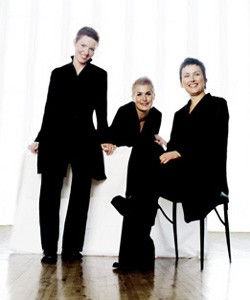
Photograph by Fredrik Arff

Threesome: Trio Mediaeval sing words of the angel.

Going Medieval

Sacred CDs hit the racks

By Greg Cahill

Jesus freak Mel Gibson, director of The Passion of the Christ, isn’t the only artist tapping into the religious fervor of the Easter season, though he is probably the most hyped. A veritable basketful of new classical CDs is on the racks. But it is a trio of polyphonic vocal discs that are the standouts.

Probably the most talked about is Soir, dit-elle (ECM New Series) by Trio Mediaeval. This follow-up to the female vocal ensemble’s critically acclaimed 2001 debut Words of the Angel blends the old and the new, the simple and the complex. This Scandinavian trio–Anna Maria Friman, Linn Andrea Fuglseth and Torunn Østrem Ossum–evoke the transformative mystery of ancient and modern religious music while shifting effortlessly from unadorned monophony and Caelian chants to haunting polyphony. On this remarkable disc, sections of 15th-century composer Leonel Power’s “Missa Alma Redemptoris Mater” are interwoven with 20th-century works by Ivan Moody, Gavin Bryars, Andrew Smith and Oleh Harkavyy.

The resulting music is both beautiful and profound. It is on a par with both the hugely popular Anonymous 4, who top Billboard‘s classical charts with their heavenly recordings of medieval chanting and polyphony, and Gothic Voices, who moved sacred vocal music into the mainstream with A Feather on the Breath of God (Hyperion), their stunning 1986 collection of hymns and sequences by 12th-century abbess Hildegard von Bingen.

After years of exploring medieval European music, Anonymous 4–Johanna Maria Rose, Susan Hellauer, Ruth Cunningham and Marsha Genensky–have tapped into this nation’s religious roots on American Angels: Songs of Hope, Redemption and Glory (Harmonia Mundi), an overview of Anglo-American sacred music that ranges from 18th-century psalmody from New England to 19th-century shape-note songs from the rural South. Some of these songs will no doubt be familiar; the text of John Newton’s “Amazing Grace” pops up twice. And many of these songs and distinctive song forms have gained exposure through such singers as Emmylou Harris and on the recent Cold Mountain soundtrack.

This is a long way, culturally, from the ancient chants and polyphony of the female quartet’s 1992 debut An English Ladymass, but the purity of their voices on these simple hymns is nothing short of baptismal.

One of the most arresting new recordings of sacred music is Nebbiu: Canti Sacri Corsica (Harmonia Mundi), the debut of medieval chants and polyphony from Tempus Fugit, a male quintet who concentrate on ancient religious songs from the Nebbiu region of Corsica. While the singing of Trio Mediaeval and Anonymous 4 has a light, ethereal quality, the bass-heavy Tempus Fugit deliver swooping glissandi that call down the Holy Spirit while grabbing your fifth chakra and delivering a Latin lesson you won’t soon forget.

One of the most powerful songs here is “Messe Vultum Tuum,” a reconstructed Roman mass from the seventh century that is based on the belief that the singers, through their breath and sound, can attain a level of purity that will result in the manifestation of the Virgin Mary’s face. Powerful stuff.

Too powerful, in fact, for the early Christian church. “Messe Vultum Tuum” was banned in the 11th century and lay dormant for a millennium until it was resurrected by ethno-musicologist Corinne Bartolini with harmonizations by Antoine Tramani, and given voice by Tempus Fugit.

Top that, Mel Gibson.


‘Epilogue’ (Oxingale)

Miró Quartet with Matt Haimovitz

The Miró are rapidly becoming one of my favorite young quartets. It is often said that the Miró are a powerhouse ensemble that play with the unified sound of a string-driven machine. There’s truth to that notion, though there is nothing machinelike in these heartfelt readings. Both works share a common bond as the last string work by a pair of great composers steeped in sorrow. The Mendelssohn String Quartet in F Minor, op. 80, is an ode to the composer’s dead sister and his last complete score before succumbing to grief within weeks of its completion. It is a staple in the quartet repertoire. The Miró draw on the boundless sadness and beauty of this piece and lend the allegro molto finale a rawness that some critics mistake for youthful indiscretion. I hope the Miró never lose that edginess.

The Schubert String Quintet in C Major, D 956, op. post. 163., is equally strong. During his final days, wracked with delirium, Schubert crafted two works as part of a song cycle he called “Schwanengesang” (literally, his swan song): the first, an unusual trio for soprano, clarinet and piano; and the second, this stunningly gorgeous quintet for string quartet plus cello. This is the Miró at their best with the talented cellist Matt Haimovitz in tow.

–G.C.

From the March 31-April 6, 2004 issue of the North Bay Bohemian.

© Metro Publishing Inc.

Cinema Epicuria

0

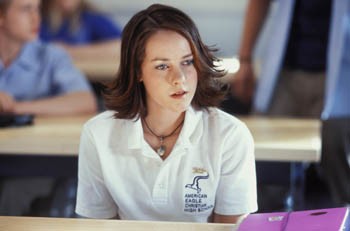
Wise Beyond Her Years: Jena Malone costars in ‘Saved!’

Beautiful Truths

Cinema Epicuria gets personal

For most fans of the cinematic arts, the recipe for a memorable film festival is simple: we want a laid-back environment, a focus on excellent films we might not get to see anywhere else, and maybe a certified filmmaking celebrity or two. Not too many, though–just enough to get our pulses thrumming.

Cinema Epicuria, the familiar name for the Sonoma Valley Film Festival, now in its seventh year, has been steadily developing a reputation as one of the county’s most laid-back, film-focused events, with just enough celebrity action to make people take notice. And people are taking notice.

With its added emphasis on food and wine–free winetastings and culinary treats are offered at all screenings–Cinema Epicuria has grown larger each year, this time adding a new venue devoted specifically to documentary films, a new animation program, and a full-fledged awards ceremony, while also continuing its popular subfestival of extremely edgy films, affectionately known as the Lounge.

A new director of programming steps up this year as well: Hollywood insider Tiffany Naiman. Asked to describe the tone of this year’s festival, Naiman is precise. “We’ve programmed a lot of really personal films this year,” she says, “films that look at the way we all live together.”

The programming at most film festivals often ends up revealing an accidental theme or two, with several films falling together into some unofficial category. At last year’s SVFF event, for example, there was a surprising number of films about people engaged in long conversations. Asked if there are any such themes among this year’s films, Naiman admits there are a few films about rock ‘n’ roll (see sidebar) and many featuring strong lead performances by women.

This year’s Imagery Honors–in which three actors or filmmakers are honored for their work–is an all-female event, a cross-generational homage to the work of Jena Malone (Bastard Out of Carolina, Contact, Stepmom, Donnie Darko, Life as a House), Deborah Kara Unger (Crash, The Hurricane, The Game, Sunshine) and Irish legend Fionnula Flanagan (James Joyce’s Women; Rich Man, Poor Man; Some Mother’s Son; Waking Ned Devine; The Others). There will be an additional tribute to the career of actress Blythe Danner, appearing in the emotionally gripping two-person drama Quality of Light, also starring Robert Forster, a tribute recipient in 2002. All four women will be in attendance at the festival and available for audience questions following the screenings of their films.

Jena Malone has major roles in the forthcoming United States of Leland and the festival’s closing-night film, Brian Dannelly’s Saved! Also starring Mandy Moore, Heather Matarazzo, Macaulay Culkin and Mary-Louise Parker, Saved! (already the subject of lots of college radio buzz) is a bit like Fast Times at Ridgemont High, only set at a Christian high school.

“It’s a fun movie, but it’s also very personal and very important,” says Malone, 19, speaking by phone from her home in Lake Tahoe. “Belief is a beautiful thing and it’s a powerful thing, but because it’s so powerful it can also be dangerous. We’re seeing that in the world today. In Saved! we’re breaking down a lot of the stereotypes in one specific group, the group of young people involved in this New Age kind of Christianity.”

In the film, Malone plays a born-again at the top of the heap at American Eagle Christian High School, with Mandy Moore as her best friend, another popular senior whose life has been held together by nothing but her beliefs. “It propels her to do things that are not necessarily good,” says Malone. “My character has experiences that cause her to question her faith. That’s what the film is saying: question your beliefs. Test them, because without understanding how your philosophical foundation is structured, how can you grow as a person and build on that foundation? In the process of testing those beliefs, whether you come back to them or not, you will have strengthened the belief you end up with.”

Malone underscores the importance of film festivals, where smaller films are acknowledged and celebrated. “Unfortunately, most American cinema doesn’t want to feed and nurture us with lots of different ideas about the world and about life,” she says. “A lot of American cinema is built on manipulation and formula. That’s not true of everything, but it seems so rare when you see something really stunning, like many of the independent films and even some of the more unusual studio films. But it’s sad that those films aren’t more widely known and talked about. No one’s walking around wearing The Weight of Water T-shirts, and that’s one of the best and truest films I’ve ever seen.”

Truth, explains Malone, is what independent cinema is all about. “For me, it does comes down to truth,” she laughs. “Complicated truths or beautiful truths that make you laugh, simple truths or messy truths that help us to express what we’re seeing and feeling and experiencing. I want movies to be about what’s true, what’s real, what’s important.”

That applies to the kinds of movies she hopes to make with the rest of her burgeoning career. “It’s good to do work that you want to do, that satisfies you and makes you proud,” Malone says. “When it’s your status or your career that is dictating what you do, when you are no longer making choices with your heart, it kind of sucks.”

Where Jena Malone is just starting out, Fionnula Flanagan has, in her words, “been around forever.” The kind of actress who people recognize when they see her, even if they can’t place the face or remember the name, Flanagan has been making first-rate films since 1974’s Picture of Dorian Gray. Many American audiences first saw her in the epic TV miniseries Rich Man, Poor Man, and she won major acclaim when her one-woman show James Joyce’s Women was made into a critically praised film in 1985.

In recent years, she’s landed a string of gem parts in popular films, from Mrs. Mills, the ghostly housekeeper in The Others, to Teensy, the recovering alcoholic Southern belle in The Divine Secrets of the Ya-Ya Sisterhood. Some will remember her as the scientist who claimed to be Data’s “mother” on Star Trek: The Next Generation. While there will certainly be clips of those roles and others at the tribute, the only film she’s got running in the festival is One of the Oldest Con Games, a delightful 20-minute short featured in the Narrative Short Films program. In the film, directed by Karen King, Flanagan plays a grieving widow who isn’t the easy target two con men assume she is.

Speaking from her Los Angeles office, Flanagan describes her viewpoint when asked to sum up her own acting career. “I know people always say they’ve been fortunate about being able to do this and that, and I think, yes, I certainly do feel fortunate,” she says. “There are certain things I’ve gotten to play that I really loved playing, because they meant so much to me in the larger world, issues that were very personal.”

Along with James Joyce’s Women (“Making that film was a journey that was very personal for me,” she says), Flanagan cites Jim Sheridan’s Some Mother’s Son, about the 1981 prison hunger strike in Northern Ireland, as a meaningful experience. “It was something that was very close to my heart,” she says. “I feel extremely grateful to have been a part of that film, to have played one of those mothers and to have been able to carry that story.

“If a film has a resonance in the larger world outside the film, then it’s of interest to me,” she continues. “If it doesn’t have that, then, well, it’s just a job. But I’ve been fortunate that those kinds of gifts have been given to me along the way–movies I’ve done that have to do with remarkable moments in the history of our time.”

Cinema Epicuria runs Wednesday, March 31, through Sunday, April 4. For a complete listing of the over 100 films and events, check the website at www.cinemaepicuria.org or call 707.933.2600.

Almost Famous

Mayor of the Sunset Strip, the opening-night film of the Sonoma Valley Film Festival, is one of many films this year to examine the world of rock ‘n’ roll, its makers and its fans. Joe Berlinger and Bruce Sinofsky’s Metallica Mayhem is an in-depth look at the musicians behind one of heavy metal’s most successful bands. The Devil Cats is a mockumentary about an all-girl band who’ve made themselves famous but can’t actually play music. And while Mayor of the Sunset Strip, by veteran filmmaker George Hickenlooper, may seem like a bit of a mockumentary itself, the film and the man it’s about, Los Angeles DJ Rodney Bingenheimer, are 100 percent the real thing.

Bingenheimer, born and raised in Mountain View, is something of a Forrest Gump in the L.A. rock scene, an unassuming guy who’s managed to become friends with nearly every major rock star of the last four decades, many of whom, like David Bowie, appear on film to sing his praises. The movie is set for a national release following its screening at the festival. After years of hanging out with the famous, and in some ways helping them to become famous, Bingenheimer might be on the verge of joining the ranks of rock ‘n’ roll celebrity himself. He was even asked to contribute his voice to a character (DJ Fish) on Nickelodeon’s SpongeBob SquarePants.

“Celebrity, um, it’s been a big part of my life, I guess,” Bingenheimer allows by phone, “because I’ve been involved in radio, doing my show in L.A. on Sunday nights, being a rock writer for various publications, and doing the English Disco [the club he once owned on Sunset Strip], where famous people were always around.”

While there are those who would decry the shallowness of the celebrity-worshipping culture he’s a part of, Bingenheimer has a sweetly simple take on the subject. “It makes you feel happy to meet a celebrity,” he says. “It feels good to say, ‘Wow, that actor or actress, that musician, is so cool. He spoke to me.’ It’s a simple thing, but it’s nice when it happens.”

–D.T.

From the March 31-April 6, 2004 issue of the North Bay Bohemian.

© Metro Publishing Inc.

Bunnies

Rabbit Is Rich: Will Smith's etching, 'Bunny Sarcophagus,' looks better than it tastes.Chasing the RabbitCacao, bunnies and resurrection: what's the connection?By Sara BirChocolate comes from cacao trees. Not a lot of people know that. It's common to think of chocolate as something that comes from Hershey, Pa., or the Godiva boutique at the mall. But no, chocolate finds its...

BR5-49

Still Running: BR5-49 outlast the bastards.Hillbilly DeluxeBR5-49 retool the showBy Greg CahillIt was like having a really great '58 Ford Fairlane that had a tired engine but is a really old car that you want to save," says singer and guitarist Chuck Mead, describing the restoration of the alt-country band BR5-49. "We overhauled it with a new Mustang engine,...

M.O.B.

President Nixon, Now More Than Ever: M.O.B. aims to throw the crook out.M.O.B. RuleBenji Nichols rounds up musicians to help oust BushBy Sara BirSome mornings you wake up and just want to go right back to sleep. Radios often don't make it any easier. News of suicide bombings, arctic drilling, global warming and Patriot Act-ing can slither into your...

Wil Wheaton

'Dancing Barefoot,' by Wil Wheaton, is available from Amazon.com.Wheaton in his 'Star Trek' days.Adult ReaderWil Wheaton steps out of Crusher's shadowBy Joy LanzendorferYou may or may not remember Wil Wheaton from Star Trek: The Next Generation. On the show, Wheaton played boy genius Wesley Crusher. Before Star Trek, he was a successful child actor with several films to...

Arab Americans

Photo Courtesy of Willard F. Zahn, M.D.Fifie Malouf. Immigrant SongThe story of Arab Americans in California and the North BayBy R. V. ScheideBefore Sept. 11, 2001, Sacramento writer Janice Marschner was working on a book about the thriving hot springs resort industry that existed in Northern California in the late 19th century. During her research, she kept encountering references...

Jean Hegland

Art of MotheringNovelist Jean Hegland balances words with workBy Gretchen GilesWindfalls can be the unexpected gifts that opportunity and good luck occasionally shake down upon us from the sky. Windfalls are also those fruits loosed from the tree, their ripeness untasted, that fall heavy from the limb and rot by the trunk. In Healdsburg-area author Jean Hegland's new novel,...

Book Notes

Book NotesNew and noteworthy, local and langurousEarthworms Are EasyI'm not normally a squeamish person, but the idea of reading Amy Stewart's The Earth Moved: On the Remarkable Achievements of Earthworms (Alonquin Books; $23.95) gave me the squirms. Her subject is, after all, earthworms, billions upon billions of them, boring and churning through the earth, through root systems, through caskets,...

UFW

State of the UnionUnited Farm Workers turn up heat on North Bay companiesBy R. V. ScheideAs members of the United Farm Workers union prepare for a week of celebrations centered on Cesar Chavez Day, this Wednesday, March 31, the union continues to make strides both locally and nationally in the ongoing battle to better the wages and working conditions...

Trio Mediaeval

Photograph by Fredrik ArffThreesome: Trio Mediaeval sing words of the angel.Going MedievalSacred CDs hit the racksBy Greg CahillJesus freak Mel Gibson, director of The Passion of the Christ, isn't the only artist tapping into the religious fervor of the Easter season, though he is probably the most hyped. A veritable basketful of new classical CDs is on the racks....

Cinema Epicuria

Wise Beyond Her Years: Jena Malone costars in 'Saved!'Beautiful TruthsCinema Epicuria gets personal For most fans of the cinematic arts, the recipe for a memorable film festival is simple: we want a laid-back environment, a focus on excellent films we might not get to see anywhere else, and maybe a certified filmmaking celebrity or two. Not too many, though--just...
11,084FansLike
4,606FollowersFollow
6,928FollowersFollow