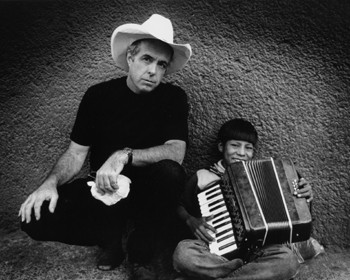
Mos Def and Talib Kweli

0

: Mos Def flirts with ugly irony. –>

Mos Def and Talib Kweli speak from the shadows

By Karl Byrn

Chart-topping rapper Missy Elliott’s terrific string of recent hits are catchy because they’re weird, with sideways bleats and beats that are unlike anything else on hit radio. Up-and-coming Definitive Jux rapper Murs works both on an indie label and with P. Diddy. The most acclaimed new rappers this year are British: Dizzee Rascal, who’s as much techno-hybrid as rap, and the Streets’ Mike Skinner, who’s white and loopy.

Just when did alternative hip-hop start straddling the status quo of mainstream hip-hop success?

The dateline for underground hip-hop’s shift isn’t a decisively marked point like alternative rock’s moment of acceptance into the mainstream. Alt-rock thrived in the margins in the ’80s, hosted by indie record labels, college radio and punks touring in vans. Nirvana’s megaselling Nevermind blew alt-rock’s options open in the early ’90s with an indie-to-mainstream point from which major labels pushed middle-of-the-road acts like Matchbox Twenty and Third Eye Blind as some sort of “alternative.”

Indie/underground hip-hop has similarly thrived with small labels, college radio and artists’ self-distributed mix-tapes. But without a single Nevermind to pinpoint, a phenomenon similar to alt-rock’s shift is finding indie and “conscious” rappers in the forefront of current hip-hop. Alt-hip-hop has lately found itself with not only bestsellers but also an unclear new direction.

What is alternative hip-hop? For the genre’s 20-plus years, that idea has encompassed a broad counterpoint to brutal gangsta gruffness and lap-of-luxury bling-bling hits. Alt-hip-hop has included the self-awareness preaching of KRS-1, the collegiate giddiness of De La Soul, the surrealism of DJs like Kool Keith and El-P, the biting black-power politics of Dead Prez and the expert scratching of Rob Swift. If it’s not what the average teen hip-hopper knows, it’s alt-hip-hop.

Like many current rappers, Mos Def and Talib Kweli find themselves with one foot in the underground and one foot in the mainstream. Hailing from the late ’90s New York indie duo Black Star, Def and Kweli have both just released their sophomore discs. As of the last week in October, Def had debuted at No. 5 on the Billboard Top 200 album chart, with Kweli holding strong at No. 41 after three weeks. Less than a handful of household-name rappers like LL Cool J and Queen Latifah are sandwiched in between.

Def’s market presence as a film actor surely helped his disc The New Danger (Geffen) sell well, but the album seems built to confuse and confound.

He flirts with ugly irony in the work’s central image–that of himself donning blackface. Stretching into murky, uncentered cracks like stoned jazz, sludgy rap-metal and fair-to-middlin’ blues, the tracks seem marked by a deliberate absence of strong wordplay. When Def realizes that rock guitar and jazz vocals are not his calling card, he returns to his deft rhyming skills; cuts like “Sunshine” and “Grown Man Business” ring and flow with the soft and dirty soul of the projects. The New Danger is frustrating and incomplete, but in its haziness, there’s still Mos Def asserting his right to play with the boundaries of his identity.

Talib Kweli is more assured of his angle. He’s one of hip-hop’s top go-to guys for guest-rapper credibility. He wants the mainstream, and he doesn’t need to alter himself for it. But like Def, he wants to be seen as a serious artist. On his latest, The Beautiful Struggle (Rawkus), Kweli notes, “If lyrics sold, then truth be told / I’d probably be just as rich and famous as Jay-Z,” as if knowing that his skills at wordplay and social commentary are impeccable. So he sticks with those strengths while also crafting an album built for pop consumption; from two duets with soulstress Mary J. Blige to pop-rock dance showstoppers like “We Got the Beat,” The Beautiful Struggle is both snappy and topical.

If Kweli has found pop suitable to the manic verbosity of Black Star, and Def has found himself adrift, then both may still be on a path to alt-hip-hop’s next move. They both hint at dissatisfaction with being cornered as alt-heroes–as Def says, “Stop with the nonsense, like ‘He conscious’ / I’m just awake, dog.” But their connection in a conscious community is deeper.

Both artists purposefully reference Grandmaster Flash and The Furious Five’s classic song “The Message” (Kweli’s “Broken Glass” and Def’s “Close Edge”), an uneasy slice of ghetto realism that brought hip-hop into pop awareness. For the rap duo formerly known as Black Star, “The Message” is a reminder that hip-hop’s success is still hip-hop’s struggle, that the loudest voices still come from the shadows.

From the November 10-16, 2004 issue of the North Bay Bohemian.

© Metro Publishing Inc.

Briefs

0

Blue Smarts

Of all the pieces that have appeared on the blue state/red state phenomenon that currently divides the American electorate, an online chart is easily the most provocative. Graphic artist Chris Evans updated a list first published in the Economist and the St. Petersburg Times that correlates the average IQ of the residents of each state with that state’s choice for president in 2000 to reflect the most recent election. The result? Big blue came out on top–way on top. The 16 states with the highest IQ and 19 of the top 25, voted for Kerry. That smarts for some red-state residents, and at least one critic has noted that the Economist later retracted its list. But the St. Petersburg Times has issued no such retraction, and Evans stands by the chart. “I am glad that so many people are so interested in statistical correlations and their relation to politics,” he says. “Such correlations are increasingly interesting as some candidates this year funneled more money into partisan propaganda than has ever been attempted in the history of the world.” Gaze in awe at
http://chrisevans3d.com/files/iq.htm.

Attention, Walmart Stoppers

Did the American Canyon City Council violate the California Environmental Quality Act and its own zoning laws when it approved a WalMart Supercenter last month? Absolutely, say the 200 or so core members of American Canyon Community United for Responsible Growth, a group that opposes the big-box retailer infamous for the low wages and meager benefits it provides employees. The group says the members voted unanimously to file legal action against the city within 30 days if its complaints with the WalMart Supercenter deal are not addressed. For once, the threat won’t be falling on deaf ears. It seems Cindy Coffee, publisher of the Napa-Solano Post, founder of American Canyon United and an ardent WalMart opponent, was awarded the most votes in the city council election Nov. 2, edging out incumbent Mayor Lori Luporini.

Bad Genes

Now that Marin County has passed Measure B, joining Mendocino County in banning genetically engineered crops and other organisms, it only makes sense that Sonoma County, the geographic bridge between the two, follow suit. But in order to qualify for the next ballot in March 2005, GE-Free Sonoma County needs to gather a total of 40,000 signatures supporting its measure no later than Monday, Dec. 20. About half of the required signatures have been gathered so far, says campaign coordinator Daniel Solnit. To that end, GE-Free Sonoma County is seeking volunteers to gather signatures. For details, contact Solnit at 707.823.4410.

From the November 10-16, 2004 issue of the North Bay Bohemian.

© Metro Publishing Inc.

The Byrne Report

The Byrne Report

Sawdust Arnie

IN EARLY AUGUST, the California National Guard and the U.S. Northern Command theoretically exploded a dirty bomb in Long Beach Harbor. Terrorists theoretically hijacked an airliner in Oakland. And “insurgents” were dealt with at San Francisco International Airport with theoretical bullets.

These war games–part of an ongoing series of homeland defense exercises–were coordinated in the war room of the Office of Emergency Services in Sacramento. For several days, a score of ranking U.S. Army and National Guard officers sat at rows of computer terminals, running response scenarios with about 100 California law enforcers and public safety officials. The atmosphere was relaxed. Cops and soldiers chatted as a plume of radioactive cesium chloride kissed the breath of a few million Angelinos–theoretically. Overhead, huge television screens were tuned to CNN, FOX and MSNBC pundits jabbering about Saddam, 9-11, Saddam, Iraq, Saddam, World Trade Centers, Saddam, al Qaida.

The war game–called Determined Promise–had little or nothing to do with saving civilian lives. It was all about testing the ability of local police, the National Guard and the Department of Defense to share intelligence–and to act upon it militarily.

As the Bush administration’s preemptive warfare strategy evolves to include the home front, law enforcement agencies are becoming increasingly intertwined with the military bureaucracy. In a significant break with our country’s traditional separation of police and military powers, the Determined Promise exercise combined local SWAT teams with federal troops as they acted out the crushing of suspected terrorists, including persons whom an Office of Emergency Services press release termed “insurgents.” (Defined, in case you didn’t know, as those “who rebel against authority.”)

The Department of Defense’s recent amalgamation of civilian and military intelligence agencies under the leadership of the Northern Command, the first combatant command created inside the United States since 1776, is a remarkable story–and it has gone almost unreported by the national press and electronic media.

But on Aug. 6, after it was announced that Gov. Schwarzenegger planned to stop by the war room for a visit, the media hastened thither, eager to be commanded. The governor’s handlers briskly told television camera people exactly where to set up their machines and when they could turn them on. Still photographers were ordered to sit on their knees in front of the podium. Reporters were told there would be no questions. The KOVR cameraman standing beside me confided that Schwarzenegger rarely takes questions from the press. “They call, we come,” he sighed. “It sells the peanut butter.”

It was then that two words lodged deep inside my eclectically educated brain rose to the surface: “lictor” and “fasces.” Lictors, I later confirmed with www.livius.org, were bodyguards for dictators, vestal virgins and provincial governors in ancient Rome. They escorted the Roman official when he spoke in public, and performed menial tasks, such as opening gates and beating up rebels. Lictors carried fasces, bundles of rods surrounding an ax in the middle. The fascio (“symbol of unity, strength and justice”) was used for lashing, or even terminating, troublemakers.

Suddenly, the cacophony of the room evaporated. Two huge lictors emerged on a balcony. When all was judged to be safe, Arnold appeared, resplendent in a gold suit, golden hair, bronzed and chiseled face. He slowly descended through a florescent glow, acknowledging the adoration of his retainers in a ceremony as ancient as the gods of Rome. With the learned noblesse oblige of a movie star, he stopped to shake the hand of a worshipper or bend low to whisper, to pat a back. The cameras whirred in silence. Nary a cough, nor a question marred his reception by the press, perfectly controlled by the lictors.

In my mind’s ear, I heard a speech made by a real Roman politician. In 1928, as reported in the book Sawdust Caesar by George Seldes, head of state Benito Mussolini summoned the editors of 70 Italian newspapers to an assembly. “I consider Italian Fascist journalism to be an orchestra,” Il Duce said. “It knows how to serve the regime. It does not wait the word of command every day. It has it in its conscience.

“[A]part from strictly political questions . . . criticism can, with limitations, be exercised for all other questions. . . . Just as it should be permissible to say that Mussolini as a violin player is a very modest amateur, so it should be permissible to criticize objectively art, prose, poetry or the theater without any veto.”

The assembled press corps of California hung on Arnold’s few words. Praising the natural beauty of California and the strength of our economy, Schwarzenegger reached for the concentrated homily: “The terrorists attack us because they are jealous of us.” The cops and soldiers applauded.

The orchestra duly recorded Arnold’s utterance for later playback–never bothering to question or even to notice the extraordinary but largely unconcealed militarization of American society that was taking place inside the room.

Arnold plays the violin very well.

From the November 3-9, 2004 issue of the North Bay Bohemian.

© Metro Publishing Inc.

Les Claypool

0

More of Les

Col. Claypool hosts a rock circus

By Greg Cahill

It’s a carnival of carnality, a sideshow of visceral funk-metal in which the bassist dons a malevolent monkey mask and thrashes about on stage like a crazed simian while banging on a six-foot aluminum synth-stick and serenading a guitarist dressed in a freakishly expressionless white plastic mask and an inverted KFC bucket hat and who delivers backwards kung fu kicks and an aggressive nunchaku exhibition when less imaginative string benders might offer just a blazing guitar solo.

Welcome to Colonel Claypool’s Bucket of Bernie Brains. Forty-one-year-old bassist, singer, songwriter, ringmaster Les Claypool–who lives outside of Occidental on a patch of land he’s dubbed Rancho Relaxo–brought his traveling rock ‘n’ roll circus to the Warfield Theater for a pre-Halloween gala where even the often bizarrely costumed San Francisco audience failed to upstage the band.

On the last leg of a 23-city tour that concluded Nov. 7 in Seattle, Claypool (best known as the head honcho of Primus) and his cohorts–avant-rock and onetime Guns N’ Roses guitarist Buckethead (aka Brian Carroll), keyboardist Bernie Worrell of Funkadelic and drummer Brian “Brain” Mantia of Primus–explored the fringes of underground funk through layers of improvisational jams. All the material was built around songs from Claypool’s latest side project The Big Eyeball in the Sky (Prawn Song/Interscope), a recently released CD rife with anti-war, anti-authority and anti-establishment lyrics.

It was rock ‘n’ roll spectacle at its best from four musicians who over the years have blended musical excellence and cosmic foolery.

The set started when Worrell, bathed in pillars of pot smoke, mounted the stage alone, like a preacher at the pulpit, to take his position behind a Hammond B-3 organ and a bank of synthesizer keyboards. During the next 10 minutes he gave a soulful master class in Western music, moving seamlessly from Bach to blues to gospel to funk to free jazz.

Worrell, the 60-year-old funk innovator and veteran of the P-Funk mob, joined George Clinton’s Funkadelic with the landmark 1970 album Free Your Mind and Your Ass Will Follow, which served as a template for a generation of young punk funksters, including Claypool, who emerged in the late ’80s as a vital movement that also spawned the Red Hot Chili Peppers and Faith No More. These days, Worrell is stricken by severe arthritis and wracked with pain that has restricted his performances, so Saturday night was a real treat.

On the other hand, the supremely strange Buckethead is about as limber as you can get. On stage, he dipped into a trick bag of avant-rock licks that ranged from apocalyptic power chords to rapid-fire riffs that have become the trademark of his sci-fi-inspired robotic persona.

For his part, percussionist Brain gave a textbook lesson in tasteful dynamics that culminated with a show-stopping 10-minute drum solo on a trap set and electronic pads that emitted gamelan-like tones. It was arguably the night’s musical high-water mark.

Orchestrating the whole affair, Claypool–named last month by Bass Player as one the magazine’s 30 “ground-shaking gurus”–was a kenetic swirl of energy, powering up thumb-thumping bass lines and performing his patented circular duck walk a he egged the band to stretch its boundaries. The overall result was reminiscent of Frank Zappa’s mid- to late-’70s fusion bands, no surprise since Primus has shown a strong Zappa influence. But in Claypool’s hands, the rapport between these marquee players had a light, playful quality, even when they had the audience by the throat.

Even the opening act reflected Claypool’s fascination with experimental music. Gabby Lala, a virtual unknown, offered a set of precocious Hello Kitty-inspired experimental-pop. Slated soon to become the first non-Primus-related act signed to Claypool’s Prawn Song label, Lala plucked a ukulele to the accompaniment of ambient tape loops and, in a high-pitched little girl voice, sang kiddie rhymes that admonished the crowd to brush their teeth after eating sweets. The audience was less than impressed, but it became evident that Claypool might be on to something when Lala, a longtime student at the Ali Akbar School of Music in San Rafael, picked up a sitar (which she held like a guitar) for an surreal session that featured a masked Claypool on electro-acoustic stand-up bass, Worrell on harmonium and Brain on percussion.

His emerging role as a producer underscores Claypool’s evolution as an artist who already has established himself as the premiere bassist of the alterna-nation and a major anti-pop icon of the South Park generation–he even wrote the popular Comedy Central animated show’s angular theme song.

There seems to be no containing him these days.

In addition to his current outing with his Bucket of Bernie Brains, Claypool has completed two Primus tours this year, though the band is on a five-year hiatus from the studio. On Nov. 16, fans will be treated to the only concert DVD from Primus, Hallucino-Genetics Live 2004, filmed at the last US show in June at the Aragon Ballroom in Chicago.

Clearly, Claypool–who popped up, along with Brain, on several songs on Tom Waits’ new album, Real Gone (Anti)–is hitting his creative stride. He’s a ringmaster who cracks one smart whip.

Web extra to the November 3-9, 2004 issue of the North Bay Bohemian.

© Metro Publishing Inc.

Sam ‘Lightnin” Hopkins

0

Mojo Hand

Who says Lightnin’ never strikes twice?

By Greg Cahill

Legend has it that Sam “Lightnin'” Hopkins–a straggly Texas kid who learned to play the guitar from his brother–once heard blues great Blind Lemon Jefferson at a Baptist church social. Hopkins spent the entire day working up enough nerve to walk up to the stage and play along, only to be shot down when Jefferson shouted, “Boy, you gotta play it right!”

By the time Bay Area filmmaker Les Blank made his award-winning 1967 documentary The Blues According to Lightnin’ Hopkins, the then-legendary singer and guitarist had indeed learned to play it right, perfecting a raw, emotional and improvisational style that earned him the reputation as the last great country bluesman.

“When I plays the guitar,” he told Blank, “I plays it from my heart and soul. And I plays my own music.”

While he never became a household name, Lightnin’ Hopkins is regarded in blues circles as a musician’s musician. He’s also a pervasive influence on succeeding generations; his sometimes rough-and-tumble style resonating in the raucous punk-blues of the White Stripes and the Black Keys.

Hopkins died in 1982, but not before recording some of the finest folk-blues around. His vaunted status has been reinforced over the past year by the release of more than a dozen reissues and anthologies. Two of the best, released in the last few weeks, are Hello Central: The Best of Lightnin’ Hopkins (Columbia Legacy) and The Best of Lightnin’ Hopkins (Fantasy/ Prestige).

The former is part of Sony’s longstanding “Roots ‘n’ Blues” series and gathers 20 tracks from Hopkins’ Mainstream and Jax label albums. Hello Central has a laid-back, front-porch sensibility that perfectly captures the understated performance style that made Hopkins a hit during the ’60s folk and blues revival. Such songs as the dirgelike “No Good Woman” are rife with melancholy and a sense of loneliness that serve as a counterpoint to Hopkins’ twisting guitar lines.

The latter brings together 16 tracks previously released on 1991’s critically acclaimed seven-CD box set The Complete Prestige/Bluesville Recordings. It’s a bit more of a romp than Hello Central and includes Hopkins’ trademark boogie “Mojo Hand” and a cover of his 1947 debut single “Katie Mae.” It also finds the bluesman covering such classic blues songs as Big Joe Williams’ “Baby Please Don’t Go” (titled “Back to New Orleans” here), Sonny Boy Williamson’s “Good Morning Little Schoolgirl” (wrongly credited to Hopkins), Arthur “Big Boy” Crudup’s “Mean Old Frisco” and the traditional “Blues in the Bottle.”

While both of these discs are highly recommended, neither is as far-ranging as Rhino Records’ 1993 two-CD anthology Mojo Hand, which compiled 40 tracks that rank among Hopkins’ best. While it’s not a definitive retrospective–that would prove too unwieldy, considering Hopkins’ prolific career–it is a comprehensive and insightful overview of a remarkably powerful American blues artist.

For a real treat, check out 1993’s hard-to-find It’s a Sin to Be Rich, a must-have blues classic. Recorded “live” in the studio in 1972 and shelved for two decades, It’s a Sin teams Hopkins with an ace studio band that features guitarists John Lee Hooker, the late Luther Tucker (a Chess studio sideman who lived in Marin County for many years before his untimely death) and Jesse Ed Davis (best known for his work on John Lennon’s early solo albums), plus session drummer Jim Gordon (playing one of his earliest studio gigs). It’s a loose, down-and-dirty session that simply simmers with the mojo man’s mystical hoodoo.

Spin Du Jour

Various Artists, ‘Lightning in a Bottle’ (Columbia/Legacy)

Remember the Year of the Blues? This two-CD set, the soundtrack from Antoine Fuqua’s newly released documentary, chronicles the Feb. 7, 2003 all-star blues tribute held at Radio City Music Hall to commemorate that milestone. The once-in-a-lifetime benefit concert raised thousands of dollars for music-education programs. It also brought together a dream-team house band (Dr. John, Levon Helm, Ivan Neville, Kim Wilson, Larry Taylor, Danny Korthmar and Willie Weeks) with a star-studded lineup that included B. B. King, Bonnie Raitt, Buddy Guy, John Fogerty, Solomon Burke, Clarence “Gatemouth” Brown, Keb’ Mo’, Ruth Brown, Gregg Allman, Mos Def, the Neville Brothers and Steve Tyler and Joe Perry of Aerosmith, among others.

The set’s highlights are many: Mavis Staples delivers a heart-wrenching rendition of Blind Lemon Jefferson’s “See That My Grave Is Kept Clean”; Macy Gray takes on Big Mama Thornton’s “Hound Dog”; Angelique Kidjo cajoles Buddy Guy to solo on her searing cover of Jimi Hendrix’s “Voodoo Chile”; and India.Aire samples Billie Holiday’s “Strange Fruit,” to name a few. Well worth checking out.

–G.C.

From the November 3-9, 2004 issue of the North Bay Bohemian.

© Metro Publishing Inc.

Cookbooks

0

Photograph by Paolo Nobile; ‘Italian Slow and Savory’

Grove Groove: From olives, as might come from this tree, to baked fish, Joyce Goldstein’s handsome new cookbook praises the slow ways of Italy.

Italian State of Mind

New cookbooks showcased at Simi series

By Gretchen Giles

For some, reading cookbooks is as satisfying as reading poetry; for others, it’s even more satisfying. I am of the latter opinion, for where meter and metaphor often escape me, the imaginary pleasures of plump pigeons baked in “blankets of country bread and cream” assuredly do not. Not trifling with such mundane matters as where to obtain said fatted urban animals, I instead swoon to thoughts of how the custardy blanket of breaded bird would smell, how the preparation would feel under the knife and how its browning body would look direct from the oven.

Simi Winery draws from three recently released culinary poem-books to create a “Bounty of the Harvest” slate of special winemaker/ chef meals. The last of them, focusing on holiday appetizers drawn from Bay Area-based food writer and editor Tori Ritchie’s new book, Party Appetizers: Small Bites, Big Flavors (Chronicle Books; $14.95), is scheduled for Saturday, Nov. 13.

The former food editor for San Francisco magazine, Ritchie is no stranger to parties, either hosting or attending them, and she is quick to add smart tips to help the harried host. It’s one thing to skewer Moroccan-influenced merguez meatballs with yogurt sauce on toothpicks; it’s quite another to consider quizzical friends secretly pocketing dirty toothpicks for lack of a better receptacle. Put a small glass out for used sticks, Ritchie reminds. Clean the bathroom, she warns; you wouldn’t believe how many people forget to do that.

Writing in a clear style accessible to even the most novice host, Ritchie admits that she only throws cocktail-type parties nowadays, and never a sit-down dinner parties. Her living room is her office, the table’s not big enough, who’s got the time? So she seasons nuts, serves room temperature treats like miniature artichokes with a Meyer lemon aioli at the ready, bakes shrimp in salt and does such marvelous things with fruit and wheat as a fig and gorgonzola crostini with carmelized onions (see Sidebar below).

But the other two cookbook authors featured in the Simi series have wandered far from San Francisco for their books. Renowned restaurateur and author Joyce Goldstein embraces the Italy-based Slow Food movement with the glories included in her latest work, Italian Slow and Savory (Chronicle Books; $40). Goldstein is serious about cooking and eating in the Italian manner and learning to slow one’s life down to the pulse of enjoyment–“learning” being the relevant term, as she admits that when outside of that country, she’s still apt to be a multitasking stress-freak like most other Americans.

“Slow” being somewhat subjective, Goldstein defines it as taking a culinary approach to any food, even a five-minute fish, and extending it to a golden half-hour. Anything that roasts or bakes or simmers or stews fits into this definition of the nonfast. As with her other cookbooks, Goldstein’s style is straightforward and accessible, even for such delicacies as pigeon and bread soup, which is neither a soup nor features pigeons, but is described by the words “soft and custardy.” And so back into poetry we slide, landing firmly by her pork stew with apples (see Sidebar).

San Francisco Chronicle food writer Janet Fletcher feels that there is simply no healthier way to eat than a daily bowl of pasta lightly dressed with a homemade sauce and fresh vegetables. Her Four Seasons Pasta (Chronicle Books; $19.95) uses the harvest to determine the dinner. As with Ritchie and Goldstein, Fletcher’s writing voice is that of a patient and interested friend who would simply like you to do as well at the stove as she does.

And, unlike many books devoted to the mysteries of pasta, Four Seasons doesn’t beat the reader over the head with the superiority of the homemade variety. Rather, Fletcher agrees that for many dishes, homemade is preferable–assenting that she herself doesn’t attempt it except on the weekends–but that many dried pastas are excellent. Best of all, she even names brands, a nicety many authors sidestep, making it that much harder to be at the market imitating them. Pronouncing DeCecco the best inexpensive dried brand marks Fletcher as a brave and rare woman in my estimation, and means that I’ll be buying DeCecco.

In one nearly erotic recipe, Fletcher overly braises radicchio when she neglects to turn the heat out under a pan. She returns only to discover that the vegetable has “melted, merging with the onion and pancetta until you couldn’t tease the parts apart,” resulting in fresh ribbon pasta with braised radicchio, pancetta and parmesan (see Sidebar below). Yes, please.

Tori Ritchie appears as part of Simi Winery’s ‘Bounty of the Harvest’ celebration on Saturday, Nov. 13, from 11am to 3pm. Cooking demonstrations are followed by lunch and wine pairings. 16275 Healdsburg Ave., Healdsburg. $85. 707.473.3213.

Home at the Range

Fig and Gorgonzola Crostini

extra-virgin olive oil
1 medium yellow onion, halved and sliced
1 tsp. sugar
1 tsp. minced fresh rosemary
1 baguette (about 1 pound), cut diagonally into 24 slices
18 ripe Black Mission figs, thinly sliced
5 oz. Gorgonzola cheese, thinly sliced

Warm 3 tablespoons oil in medium skillet over medium-high heat. Add onions and cook, stirring, until limp. Sprinkle sugar over the onions and stir well. Turn heat down to low and spread the onions out in the pan. Cook until they turn golden-brown, about 15 minutes. Transfer to small bowl and stir in fresh rosemary, salt and pepper to taste.

Preheat broiler, brush both sides of bread slices with oil and broil, turning once, until golden. Leave broiler on.

Spoon onions onto each piece of bread, dividing equally. Add three or four slices of fig over each. Top with a slice of Gorgonzola and broil until cheese has melted.


Pork Stew with Apples

olive oil
1 1/2 to 2 pounds fatty boneless pork shoulder, cut into two-inch pieces
10 cloves garlic, chopped
1 fresh chile pepper, minced
3 fresh rosemary sprigs
1 c. dry white wine
4 apples (try Gala, Golden Delicious or Renette), peeled, cored and sliced

Place large sauté pan over high heat and thinly coat bottom with olive oil. Working in batches, add pork and brown on all sides. Add oil as needed and season with salt and pepper. Each batch should take 8 to 10 minutes, lift out with slotted spoon and transfer to plate when a batch is done.

Return all the browned pork to the pan, place over medium heat and add garlic, chile, rosemary and wine. Mix well, bring to gentle boil, then reduce heat to low, cover and simmer for almost an hour. Uncover and skim off excess fat. Add apples and some water if necessary, re-cover and cook over low heat until pork is tender, about 30 minutes. Remove rosemary sprigs from pot and discard. Serve garnished with fresh orange, if desired.


Pasta with Braised Radicchio

1/4 pound pancetta, minced
3 tbsp. extra-virgin olive oil
1 large yellow onion, minced
1 pound radicchio, quartered, cored and thinly sliced
1/2 c. dry white wine
salt and freshly ground pepper to taste
1 pound fettuccine (Fletcher calls for fresh egg pasta but we now know that DeCeccos will work just as well)
2 tbsp. minced Italian parsley
4 tbsp. unsalted butter, cut into 8 pieces
1/3 c. freshly grated Parmesan

Put pancetta and olive oil in large skillet and cook over moderately low heat until pancetta begins to crisp. Add onion and cook, stirring often until it becomes soft and golden, about 10 minutes. Add radicchio, wine and salt and pepper to taste. Bring to simmer and cook, stirring, to soften radicchio. Cover and cook, stirring occasionally, until radicchio is tender, about 30 minutes.

Bring large pot of salted water to boil. Add pasta and cook until al dente. Stir parsley into the radicchio mixture and add a few tablespoons of hot pasta water to loosen sauce.

Drain pasta and return to pot over low heat. Add butter and toss well. Add sauce and cheese and toss. Serve immediately in warmed bowls.

From the November 3-9, 2004 issue of the North Bay Bohemian.

© Metro Publishing Inc.

Nursing Homes

0

North Bay nursing home chain Ensign pulverized by watchdog report

By Joy Lanzendorfer

ONE OF THE hardest decisions anyone can make is sending a family member or loved one to a nursing home. While there are great facilities in the North Bay for the elderly and others requiring skilled nursing care, some North Bay nursing homes leave much to be desired, according to a scathing report recently released by industry watchdog organization Nursing Home Watch.

The report states that during the last year, three elderly residents at Summerfield Health Care Center in Santa Rosa have lost an alarming amount of weight. One patient lost 22 pounds in one month. Another lost 18 pounds in five months, dropping to 88 pounds. Family members said that when they brought her a sandwich from home, she “scarfed” it down and wanted more. When she was observed sitting in front of a puréed meal, the woman explained that the “food was cold and I do not like mushy food.” A third resident lost 17 pounds in one month, dropping to 104 pounds. When an inspector saw her sitting in front of a dinner tray, crying and asking to go to the bathroom, a staff member said, “She always does that.”

Last year at Santa Rosa’s Park View Gardens nursing home, an elderly man was going to the bathroom unassisted when he fell and hit his head. The employee who looked at him said that he might have a head injury, yet no doctor was contacted until a full hour after the fall. The man later died from significant intercranial bleeding. Park View Gardens also had an outbreak of scabies last year that affected 55 residents and 36 employees. It was 15 days before health authorities were notified about the outbreak.

At the Sonoma Healthcare Center, a 79-year-old WW II veteran got a pressure sore on his heel. Though a doctor examined the heel, the staff was unable to provide documentation that they monitored or treated the wound. In 10 days, the pressure wound turned black and began to smell. The veteran was transferred to another nursing home, which reported that the infection had spread to his bone.

All of the problems cited in Nursing Home Watch’s report occurred in homes owned and operated by Ensign Group, the fifth largest and fastest growing nursing home chain in the state. A coalition of unions and healthcare advocates, Nursing Home Watch (NHW) is highly critical of practices at Ensign’s 26 nursing homes in California, including four in the North Bay, the aforementioned facilities as well as the Cloverdale Healthcare Center. The watchdog organization compiled data from official sources like Medicare, Medicaid and the California Department of Health Services that paints an unflattering portrait of the company.

“Overall, we found a very troubling patient care record,” says Jennifer Kelly of NHW. “Some factors we saw were bed sores, low staffing levels, weight loss and unappetizing food. These are all dangerous signs.”

The report claims that nearly all of Ensign’s facilities are staffed below state levels and that the nursing homes were cited 314 times for violations in the last reporting period. Nursing Home Watch also filed a lawsuit against Ensign listing specific homes that have violated minimum-safe-staffing standards. Cloverdale Healthcare Center is included in the suit, the largest staffing-related lawsuit ever filed against a nursing home operator in the state.

According to state law, nursing homes must provide a minimum of 3.2 skilled nursing hours per day to each resident. The state average is 4.1 hours of care per resident. But state records for 2003 indicate that Ensign facilities were providing as low as 2.8 hours of skilled care to each resident daily.

Neglect was the most common problem in the 26 nursing homes. The report listed urine-soaked sheets, an unattended resident in a ditch outside a nursing home, open bed sores with exposed muscle or bone, and residents restrained or ignored by harried workers.

Outright abuse was less common, but the most disturbing allegation occurred at Sonoma Healthcare Center.

Ensign is not alone. Abuse of patients at other local nursing homes is an ongoing concern. Since 2002, Pleasant Care Napa has been fined a total of $55,000 by the Department of Health Services for allegations that improper care endangered the lives of three patients. The nursing home has filed several countersuits in Napa Superior Court to have the charges reduced or erased, according to the Napa Valley Register.

Separately, the state charged Pleasant Care Napa $1,000 because it said a 96-year-old resident was ill after the staff neglected to care for him. In addition, two residents witnessed employees assault a mentally impaired resident according to two former employees. Pleasant Care Napa didn’t return calls from the Bohemian.

Low staffing ratios are one of the root causes of neglect in nursing homes.

“The key to proper care is an adequate number of staff,” says Kelly. “If you have enough employees, you don’t see problems like open wounds or residents falling because there are people there to assist them.”

With a national nursing shortage, finding qualified staff is difficult for any healthcare organization. In the Ensign report, all four local nursing homes needed more nurses to reach the state’s 4.1 hour average of daily care per resident, but some staff seemed unaware of the shortage. At Park View Gardens, which needs five more nurses to reach the minimum, an unidentified employee was indignant to questions about staffing levels.

“Boy, do you have your information wrong,” she said. “We have more than enough employees.”

Ensign says the report is an attack against the company because its employees aren’t part of a union, specifically the healthcare workers union, SEIU Local 250. In a statement on its website, the company says that NHW claims to be “advocating quality care, but in reality they are just trying to punish Ensign caregivers and leaders for refusing to take union orders and pay union dues.”

Ensign is a for-profit, privately held company founded in 1999 by longtime nursing-home operator Roy Christensen. Its strategy is to acquire struggling nursing homes and turn them around, cutting costs and increasing revenue. But a healthcare company with a for-profit status doesn’t sit well with some.

“Ensign’s mission is to make money,” says Shirlee Zane, executive director of the Council on Aging of Sonoma County. “How they make money is by cutting back on patient care, staff, food, linen–all these things that are essential to healthcare.”

Once a year, the California Department of Health Services makes a surprise visit to nursing homes for inspection. Facilities in violation are fined anywhere from $100 to $25,000.

“What’s a little $1,000 or $10,000 fine to a company that makes millions in profit?” says Zane. “It’s a ping on the wrist. It does nothing.”

Ensign spokesperson George Stapley says that by being for-profit its employees can own part of the company and share in the fruits of their labor. Not all employees own part of the company, but many do. According to the report, the average hourly wage for employees in Ensign’s 26 nursing homes ranges between $8 to $14 an hour.

Stapley adds that the data in the report does not take into account that the company is in the process of turning many struggling nursing homes around.

“Nursing Home Watch has consistently referenced the past operating histories of nursing homes that we have acquired just to make us look bad,” he says. “It takes us 6 to 18 months to turn around a nursing home, and they are reporting data without acknowledging that.”

But advocates for the elderly say that Ensign is merely trying to deflect criticism away from current care violations. These problems are essential to address, and not just because of health concerns.

“Bad care erodes morale, the emotional spirit,” says Zane. “And that is essential in an elderly person who is frail or ill so they can survive.”

From the November 3-9, 2004 issue of the North Bay Bohemian.

© Metro Publishing Inc.

Ring Tones

0

Rachmaninoff!: Would Wolfie appreciate the classical qualities of the ring tone?

For Whom the Ring Tones

Ring tones find their way to the Billboard chart

By Sara Bir

There’s a scene in Willy Wonka and the Chocolate Factory where Willy Wonka plays the opening bars of the overture to The Marriage of Figaro on a tiny keyboard in order to unlock the doors to the nerve center of his factory. Upon hearing the fleeting snippet of Mozart, one woman blurts out “Rachmaninoff!”

Thanks to the plethora of ring tones available to consumers, similar scenarios can play out in real life innumerable times a day–fragments of beloved symphonies or moving cinematic themes chirp from millions of cell phones all over the world with all the authority and command of the base-model $9.99 Casio keyboard you got for Christmas in third grade.

There’s nothing wrong with employing technology for harmless amusement, and if you own a cell phone, you might as well make it play silly little songs for fun. But remember when phones rang and that’s all they did–ring? The option of a phone call announcing itself in the form of “Twinkle, Twinkle, Little Star”–let alone Usher and Alicia Keys’ “My Boo”–simply did not exist.

Assuming that some of you live in caves and emerge only on a weekly basis to retrieve your new issue of the Bohemian, ring tones are songs and sound effects that people can program their cell phones to blip out all cutesy-style, so that instead of hearing a traditional ring or beep, they hear a really lame version of “Build Me Up, Buttercup.”

In Asia and Europe, ring tones are big business. Last year’s worldwide sales have been estimated at $3 billion. Here in America, ring tones are just starting to gain steam with an audience outside their present core of younger, more urban users. That spells money, especially since it can cost $1.99 or so to download a splashy new ring tone. And that’s why Billboard Magazine has announced the launch of the Hot Ringtones chart, which will track the top 20 weekly worldwide ring-tone sales.

From a strictly business standpoint, it’s pretty straightforward: ring tones are a product, and the Hot Ringtones chart will follow the sales of that product. But from the perspective of a music fan, matters get murky. Other Billboard charts track the sales of albums and singles, which, while peddled as commodities by big record companies, are also ostensibly musicians’ works of creative expression and artistic merit.

Ring tones are in another category: somewhat primitive-sounding versions of popular songs that function more as an audio accessory than real compositions, they are basically musical fashion, little more than a downloadable T-shirt or button flaunting your favorite band-of-the-moment. That’s why it’s ridiculous that the record industry has partially blamed the popularity of ring tones for the decline in music sales. It’s like blaming sagging tuba sales on a sudden boom in doorbell installations. People fall in love with songs and seek out the ring tones, not the other way around.

Having only a land line myself, I spent an evening on the Internet, listening to sample ring tones. First, I located a version of my all-time favorite song, Del Shannon’s “Runaway.” Dear Holy Christ. Shrill and difficult to place or recognize, it made the sound effects to Pong seem melodic and baroque. It’s a good thing for Del that he already committed suicide, because that ring tone would surely drive him to it.

Even so, if they ever do come up with ring tones that very closely approximate the way original songs sound, that’s when we’ll be in trouble. I wouldn’t want the real “Runaway” on my cell phone, because it trivializes how music makes us feel to have it chiming at totally random intervals every single damn time someone calls to say they’ll be five minutes late to meet you at the bar or ask what groceries you need. In fact, if you ever run across a kick-ass ring tone–a ring tone that you can bang your head to or pump your fist to–please let me know, so I can go find those caves I mentioned earlier.

From the November 3-9, 2004 issue of the North Bay Bohemian.

© Metro Publishing Inc.

Swirl ‘n’ Spit

0

Swirl ‘n’ Spit
Tasting Room of the Week

Clos Pegase Winery

By Heather Irwin

Lowdown: Long before COPIA arrived on the scene, Clos Pegase was extolling the virtues of art and wine–and giant bronze thumbs. Located just outside Calistoga, this winery is equal parts art museum and winery, merging the grape with the great masters of sculpture, painting and architecture.

Completed in 1987 by the famous architect Michael Graves (popularized recently by his line of kitchen wares at Target), the massive columns and soaring porticoes hark back to ancient Greece. The ultramodern sculptures, however, including the aforementioned giant thumb are, well, a little less classical in nature but impressive in scale, if nothing else.

Mouth value: Of the three tastings offered, the best bet is the $10 red wine selection–though I was frankly disappointed at not having the option to taste any of the winery’s white wines without forking over another $5. When I queried the staff about this, I was asked if I liked whites or reds, and told to taste what I liked. Um, right. I like both. Frankly, the policy seems a little screwy.

In any case, the 2001 Mitsuko’s Vineyard Pinot Noir ($30) is a nice, earthy wine with lots of sweet fruit. New to the winery, the Pinot is a charming addition despite being quite different in character than its coastal cousins. I was less stunned by the 2000 Mitsuko’s Vineyard Merlot ($25), which seemed a little flat, as did the 2001 Pegase Circle Claret ($22). Pegase’s wines, however, tend to have a more subtle, Bordeaux-influenced quality rather than the big, beefy Cabs typical of Napa. The 2001 Pegase Circle Reserve Zinfandel ($22) had some of the qualities of both, with a subtle velvety quality that’s not usually found in typically spicy, peppery Zinfandels, as well as lots of oak and fruit. Cellaring will likely reveal even more curves and sex appeal in this wine.

Don’t miss: Great art and wine is nice, but petrified wood? Who can beat that? Just down the road is the Petrified Forest. You’ve probably driven past it a thousand times. Stop into the gift shop, if nothing else, to learn how wood turns to stone–or silica, to be precise. Cheesy, educational, and very . . . geological.

Five-second snob: Clos Pegase is named for the winged horse, Pegasus. The myth goes something like this: where Pegasus’ hooves scraped the earth, great springs arose to nourish the grapes. From those grapes came great works of art and literature. (Everyone knows that the grape inspires greatness, as well as really nasty hangovers). Ergo, Pegasus was responsible indirectly for such greatness. Clos is the French term for an enclosed vineyard. Feel enlightened?

Spot: Clos Pegase Winery, 1060 Dunaweal Lane, Calistoga. Open daily, 10:30am to 5pm. Winetasting, $5-$25. 1.800.366.8583.

From the November 3-9, 2004 issue of the North Bay Bohemian.

© Metro Publishing Inc.

‘Renaissance’

Sweet Kit: Marlowe gets it in the eye in ‘Renaissance.’

Times Two

‘Renaissance’ is a tasty new stew, ‘Laughing’ a mess

Sonoma County Repertory Theatre should be praised, congratulated and adulated for its tireless commitment to the development of brand-spanking-new plays, the latest of which, John Moran’s Renaissance, is stalwartly facing its world premiere run at the Rep in a lively, confidently staged production directed by Sheri Lee Miller.

Renaissance is the second in a proposed five-play cycle by Moran, the first of which was Repertory, critically acclaimed when it was first performed in 1999 (a staged reading) and again in a fully staged, somewhat reworked production in 2000. Expect similar future tinkering for Renaissance, as playwright Moran, the Rep’s current playwright-in-residence, uses each live performance of his plays to test and experiment. He even goes so far as to invite theatergoers to e-mail him with comments, criticisms and suggestions.

Now that’s brave.

While Repertory was a giddy speculation as to what would happen were William Shakespeare, Christopher Marlowe, Walter Raleigh and Ben Jonson to form a theater troupe in the New World, cleverly comparing the quarrelsome quartet to the Beatles, Renaissance is comparatively sedate, though frequently hilarious. Subtitled Marlowe Gets It in the Eye, Moran’s latest historical comedy takes place on May 30, 1598, the day of Marlowe’s murder, stabbed in the eye supposedly following a barroom brawl. Boasting a relatively vast 13-character cast, Renaissance is set in a two-room tavern run by the widow Eleanor Bull (Harmony Blossom), who apparently has a thing for the handsome Kit Marlowe, who is played with wry, swashbuckling cool by Daniel Riviera. Marlowe, unfortunately for the widow Bull, is gay, a character trait that, along with suspicions he might be secretly atheist and a writer of treasonous tracts, has landed him in trouble with the queen’s secret police.

History shows that Marlowe did spend his last hours in a tavern room with three men: his occasional agent Robert Poley (Clark Miller), the thuggish hired killer Nicholas Skeres (played with smoldering venom by Eric Thompson) and the alleged eye stabber himself, Inghram Frizer (Dwayne Stincelli). As the three not-so-wise men interrogate Marlowe, calling details of his plays into question for their potential “secret messages,” the parallels to the McCarthy black list become juicily apparent.

For comic relief, Moran has thrown in a family of job-seeking tavern workers (Rich Deike, Mary Lou Sefton and Peggy Van Patten) and a deliciously affected pair of actors, Edwardson and Sell (the brilliant duo of Dan Saski and Noah Lucé), who show up looking for parts in Marlowe’s next play. A late-show appearance by Oxford (Ciaran Vejby) and a drop-dead funny Shakespeare (Miyaka Cochrane) leads to the play’s funniest moments, the “truth” about Marlowe’s murder and yet another twist on the old theory of who really wrote all of Shakespeare’s plays.

Though a bit longer than necessary, with a few too many unconnected side stories and a face-the-audience narration device that bizarrely disappears after 20 minutes, Renaissance works, weaving history and blatant anachronism into a funny, meaty stew of theatrical and political farce.

Tuna Madness

Christopher Durang’s Sister Mary Ignatius Explains It All for You ranks solidly among my very favorite modern plays, having only recently been bumped to the No. 2 position by David Auburn’s Proof. I also admire Durang’s Beyond Therapy and The Marriage of Bette and Boo. His superb and uproarious one-act The Actor’s Nightmare is one I often reread for the sheer pleasure of the words and ideas. I am, by anyone’s measure, a staunch fan of Christopher Durang’s genius.

Somehow, however, I’ve completely missed Laughing Wild, one of Durang’s better-known pieces and one that has been remounted numerous times since it first appeared in 1987, right at the height of the playwright’s popularity. So when it was announced that the show would be staged at Cinnabar Theater, in a production by Western Union Theatre Company, directed by the great Elizabeth Craven, I was fairly certain I knew what to expect from Durang’s famously plotless play and from this production. Mainly, I expected to enjoy it from beginning to end.

I was half right.

With roots in the Theater of the Absurd, Durang specializes in comedies about seriously disturbed people, frequently those who’ve been damaged by religion. In Laughing Wild, an oddly constructed show in which emotional frailty is explored in a series of loosely connected mini-plays, the Durang stamp is in clear evidence, but with much less of the focus and control his most successful plays exhibit.

Though occasionally funny, Laughing Wild is a fascinating mess, and a rambling one at that, with moments of insight and spot-on satire mingled with long deviations from the point that don’t add up in the end. Certainly, it can be argued that Theater of the Absurd is all about not adding up to anything, as it reflects the absurdity of life by showing that life rarely makes sense. Fine. I agree. But the best absurdist pieces still end up at a place that is intellectually satisfying. This one just left me frustrated.

The play begins with a long monologue, a whacked-out riff on everything that is wrong with modern society, delivered by the woman (Laura Jorgenson), whose existential misadventures include a violent confrontation with a man in the tuna-fish section of a grocery store. Clearly a borderline psychotic, the woman rants about her failed life, hopes and dreams and her hatred for Mother Theresa and TV talk-show host Sally Jesse Raphael.

Next up is the man (Joe Craven), another tragically unhinged soul delivering a self-help workshop on relaxation techniques, who has not quite recovered from a bad encounter with a crazy woman in the tuna-fish section of the grocery store. Far less focused than the first monologue, the man rambles all over the map. It’s occasionally funny, but much of it seems beside the point. The second act is a series of strange dream sequences, including several variations on the pivotal encounter in the supermarket.

I don’t fault the actors, whose performances are nothing short of astonishing, fully committed, as it were, to the bittersweet dementia of their characters. With Laughing Wild, it’s Christopher Durang who lost me.

‘Renaissance’ runs Thursday-Sunday, Nov. 4-6, at Sonoma County Repertory Theater, 104 N. Main Street, Sebastopol. $15-$18. Nov. 4, pay what you can. 707.823.0177. ‘Laughing Wild’ runs Thursday-Saturday, Nov. 4-6, and Friday-Saturday, Nov. 12-13, at 8pm; Sunday, Nov. 7, at 2pm. Cinnabar Theater, 3333 Petaluma Blvd. N., Petaluma. $18-$20. Nov. 7, pay what you can with canned-tuna donation. 707.763.8920.

From the November 3-9, 2004 issue of the North Bay Bohemian.

© Metro Publishing Inc.

Mos Def and Talib Kweli

: Mos Def flirts with ugly irony. -->Mos Def and Talib Kweli speak from the shadowsBy Karl ByrnChart-topping rapper Missy Elliott's terrific string of recent hits are catchy because they're weird, with sideways bleats and beats that are unlike anything else on hit radio. Up-and-coming Definitive Jux rapper Murs works both on an indie label and with P. Diddy....

Briefs

Blue SmartsOf all the pieces that have appeared on the blue state/red state phenomenon that currently divides the American electorate, an online chart is easily the most provocative. Graphic artist Chris Evans updated a list first published in the Economist and the St. Petersburg Times that correlates the average IQ of the residents of each state with that state's...

The Byrne Report

The Byrne ReportSawdust Arnie IN EARLY AUGUST, the California National Guard and the U.S. Northern Command theoretically exploded a dirty bomb in Long Beach Harbor. Terrorists theoretically hijacked an airliner in Oakland. And "insurgents" were dealt with at San Francisco International Airport with theoretical bullets.These war games--part of an ongoing series of homeland defense exercises--were coordinated in the war...

Les Claypool

More of LesCol. Claypool hosts a rock circusBy Greg CahillIt's a carnival of carnality, a sideshow of visceral funk-metal in which the bassist dons a malevolent monkey mask and thrashes about on stage like a crazed simian while banging on a six-foot aluminum synth-stick and serenading a guitarist dressed in a freakishly expressionless white plastic mask and an inverted...

Sam ‘Lightnin” Hopkins

Mojo HandWho says Lightnin' never strikes twice?By Greg CahillLegend has it that Sam "Lightnin'" Hopkins--a straggly Texas kid who learned to play the guitar from his brother--once heard blues great Blind Lemon Jefferson at a Baptist church social. Hopkins spent the entire day working up enough nerve to walk up to the stage and play along, only to be...

Cookbooks

Photograph by Paolo Nobile; 'Italian Slow and Savory'Grove Groove: From olives, as might come from this tree, to baked fish, Joyce Goldstein's handsome new cookbook praises the slow ways of Italy.Italian State of MindNew cookbooks showcased at Simi seriesBy Gretchen GilesFor some, reading cookbooks is as satisfying as reading poetry; for others, it's even more satisfying. I am of...

Nursing Homes

North Bay nursing home chain Ensign pulverized by watchdog reportBy Joy LanzendorferONE OF THE hardest decisions anyone can make is sending a family member or loved one to a nursing home. While there are great facilities in the North Bay for the elderly and others requiring skilled nursing care, some North Bay nursing homes leave much to be desired,...

Ring Tones

Rachmaninoff!: Would Wolfie appreciate the classical qualities of the ring tone?For Whom the Ring TonesRing tones find their way to the Billboard chartBy Sara BirThere's a scene in Willy Wonka and the Chocolate Factory where Willy Wonka plays the opening bars of the overture to The Marriage of Figaro on a tiny keyboard in order to unlock the doors...

Swirl ‘n’ Spit

Swirl 'n' SpitTasting Room of the WeekClos Pegase WineryBy Heather IrwinLowdown: Long before COPIA arrived on the scene, Clos Pegase was extolling the virtues of art and wine--and giant bronze thumbs. Located just outside Calistoga, this winery is equal parts art museum and winery, merging the grape with the great masters of sculpture, painting and architecture. Completed in 1987...

‘Renaissance’

Sweet Kit: Marlowe gets it in the eye in 'Renaissance.'Times Two'Renaissance' is a tasty new stew, 'Laughing' a mess Sonoma County Repertory Theatre should be praised, congratulated and adulated for its tireless commitment to the development of brand-spanking-new plays, the latest of which, John Moran's Renaissance, is stalwartly facing its world premiere run at the Rep in a lively,...
11,084FansLike
4,446FollowersFollow
6,928FollowersFollow