Loading Zone

0

Funny Face: An actress clowns around with the rubber ball of nuclear demise.

Acting Up

Clowns and monsters populate Loading Zone’s sharp, satirical shorts

Eliot Fintushel may be best known to Bay Area theatergoers as the writer and performer of certain remarkable one-man shows (as with the manic-depressive Apocalypse, in which he recited and acted out the entire Book of Revelation), while Northern California schoolchildren will certainly recognize him as the multitasking ringmaster at the center of magical, eye-popping, storytelling extravaganzas.

There is another side of Fintushel, however, that is lesser known: his work as an award-winning science fiction writer. As dark as Apocalypse was, Fintushel’s stage work seldom strays into the same darkened corners that his futuristic fiction frequently does.

That Fintushel, as an artist, has two sides–one as the sacred clown, if you will, balanced by the other, an eerie prophet of doom–has never been more clear than in his new show at the Loading Zone Theater, Shudders and Belly Laughs. Fintushel does not appear in this quartet of short theater pieces, but his various writerly personalities are on conspicuous display.

Directed by David Lear, the new show is exactly the kind of thing that this tiny 50-seat “black box” venue was created for. The fact that no audience member is further than 15 feet away from the action adds to the intimacy–and intensity–of the show, which combines Aleph’s Legs, a creepy little piece Fintushel wrote three years ago, with three relatively light “clown sketches” (President Bonzo, Atomic Bonzo and Lala’s Gift) originally developed by Fintushel in the mid-1980s.

After a surreal opening monologue written and performed by Christina O’Reilly, a mysterious Fairy Godmother, the “clowns” (drawn from 500 years of jovial history rather from that of Barnum and Bailey) launch the first two short plays, gentle political fables with teasing satirical tones. In the first, Bonzo (played in jittery overdrive by the very funny Al Liner) asks the Fairy Godmother to be made the president of the United States. This makes him happy until Lala (Corisa Aaronson) is granted her wish to be made God. While Lala is content to be God and still be ordered around by Bonzo, the new commander in chief is less secure about sharing power with anyone. “God!” he complains. “Smack in the middle of my Oval Office!”

In the second, Bonzo develops an atomic bomb (OK, a big rubber ball he says is an atomic bomb) that he plans to employ to either blow off the head of rival clown (Celeste Thomas) or use as a nuclear “detergent.” A third clown piece comes at the conclusion of the no-intermission show, but before the audience is treated to that, there is Aleph’s Legs to jar us all out of smiling, clown-watching complacency.

There are no clowns in Aleph’s Legs, since the subject, torture and interrogation, is nothing to joke about. This play reveals Fintushel at his least amused, and at the height of his storytelling scariness.

A Twilight Zone-like head-bender, Aleph employs actual passages and psychological torture techniques from the CIA’s official interrogation manual, which Fintushel discovered after the Freedom of Information Act flushed it into public view. Agents Weiller (Edward McCloud) and Vetters (Joe Winkler) discuss the interrogation of someone name Aleph (Jan Freifeld, recently seen as the patriarch in Actors Theatre’s Last Night of Ballyhoo). Aleph’s legs, it seems, have been cut off by Weiller, but the crude surgery was evidently successful. “He was a proud warrior,” Vetters tells him. “Now he’s a groveling beast. You won.”

Before he knows it, Weiller finds the tone of the interview shifting, shocked to realize that it’s he who is being interrogated. So begins a series of twists and turns in which no one is who he thinks he is, and it becomes clear that, when given absolute power of another person’s mind and soul, it’s astonishingly hard to know when it’s time to stop. With the Abu Ghraib scandal still faintly ringing in our apparently-not-outraged-enough minds, the pointedly wicked “truth” of Aleph’s Legs is all too timely.

‘Shudders and Belly Laughs’ runs Friday- Saturday through Dec. 4 at 8pm. Special Sunday matinee, Nov. 21 at 2pm. Loading Zone Theater, Kid Street School, 708 Davis St., Studio 208, Santa Rosa. $10-$14. 707.765.4843.

From the November 17-23, 2004 issue of the North Bay Bohemian.

© Metro Publishing Inc.

Fish

0

Photograph by Michael Amsler

See Food: A server named Miguel carries such temptations as a Saigon Salmon Sandwich and a Tuna Melt to customers at Fish.

Flopping Fresh

Attack of the 50-foot squid sandwich and other fish tales

By Heather Irwin

Oh, my. There seem to be legs sticking out everywhere from my sandwich. Little pink tentacles, really, as well as heads the length of my index finger. Or are they beaks? I seem to have missed that section of biology.

Whatever the case, I’ve been repeatedly assured that these little cephalopods are both eco-friendly and spanking fresh. (Whew.) So, with a decided dousing of tartar sauce, I call the whole thing good, guiding the torpedo roll of legs, heads and sauce home with a happy chew. And chew. And chew. Hey, this is squid after all, and requires a solid commitment to thorough mastication. Yet, all I can think about is that old saying “You are what you eat” with a bit of a shudder, before I swallow it, fins and all.

But what I’m eating, despite my own slight squeamishness, isn’t a bad thing to be at all. The folks at Fish are fairly fanatical about, well, fish–as well as cephalopods, crustaceans and other sea creatures making their way onto your plate. Chances are that whatever you’re eating was swimming happily along, minding its own business rather recently, as in hours ago, not days or weeks. In fact, the restaurant is closed on Monday and Tuesday primarily because the fishing boats don’t go out those days, I’m told. So, I suppose if anything, I’m fresh.

Headed up by Masa’s former executive chef Chad Callahan, this Sausalito seafood cafe has the benefit of a celeb-status chef deciding what gets breaded, battered and poached each day. Yet despite being the spawn of a culinary star, the six-month-old restaurant has thus far avoided the paparazzi and settled into a simple, order-at-the-counter affair that eschews pretension and fussiness. OK, there’s a little fussiness (brown-buttered Brussels sprouts?), and lunch will easily cost you upward of $17. This is Sausalito, after all.

But the food and ambiance make Fish so worth it. A pair of gnarled fishermen fresh from the catch exchange fish stories just outside the restaurant. I’d swear they were planted for atmospheric effect if I were a more jaded person. In a world where seafood is typically something seen through sanitary plastic wrap, neatly filleted and divorced from the sea, it’s somehow exciting to move up the supply chain a bit, even if you have no idea how to swab a deck or tow a line. Inside the restaurant, large chunks of tuna belly, tilapia and some sort of flat fish I can’t quite identify look out from a bed of ice, decidedly unprocessed and practically flopping around.

See, at Fish the big idea is getting to know the true taste of fish–the inner fishiness of your fish. Which isn’t really fishy at all. Suffice to say, there’s not much fiddling done with the food. You’ll see plenty of whole fish (heads, eyeballs and all), unbreaded calamari (fins intact) and whole shellfish (heads and tails) that show off the beauty of the sea rather than trying to cover up freezer burn or sub-par catches. Picky, possibly to a fault, the cook sniffed each piece of fish (and tossed a few back) as he cooked in the large open-view kitchen. A little too familiar with your food? Possibly, but the results pay off in some of the flakiest, loveliest fish I’ve ever had the pleasure of eating. I’ll handle a little fish-sniffing, thank you.

The menu is straightforward and constant for both lunch and dinner, though a large variety of specials tend to sometimes eclipse the regular plates. That’s not a bad thing. The Monterey calamari sandwich ($15) was featured on the ever changing chalkboard on a recent visit. Served with shoestring fries, house-made tartar sauce and an Acme torpedo roll, it spoke to me. Not literally, of course; that was my friend insisting I try it after poking a tentacled mass into his own mouth. I took the bait.

Always on the menu are two chowders: red and white. Now, I’m not about to step onto the minefield of what constitutes a “real” chowder, though if you stand at the counter long enough, you’ll undoubtedly hear someone else do just that. There seems to be an ongoing battle between purists for the cream-based white chowder and those for the Portuguese-style red chowder, made with tomatoes, clams, cilantro and wine. I’ll simply say this: if you don’t order the New England white chowder ($4 cup), you’re a damned fool. The unfortunate recipient of one too many nasty, gluey chowders in my life I can say that this is a true chowder. The broth is thin enough to let the little morsels of clams, potatoes, onion and celery swim around happily, yet thick enough to be hearty . . . and buttery . . . creamy . . . drooling . . . aaggghh! Yep, it’s that good.

Another sure bet is the halibut fish and chips ($15). The fish is locally caught, battered with Anchor Steam beer and flour, then fried crispy. Not one for an inch-thick coating of greasy glop, these little beauties are delicately handled with just a light windbreaker of batter that lets the fish, rather than the oil and flour, shine through. The house-made tartar sauce is served up generously and gives the fish a soulful baptizing.

Also a solid choice is the fish taco plate ($10), with tasty grilled white fish, corn tortillas and all the fixin’s. Important to remember with just about every entrée, however, are the fries. Eschew the salad this one time. Fish’s fries are cut thin, fried up fresh and served liberally.

For those who don’t like seafood (how very sad for you), there are a handful of items on the menu: salad, a Niman Ranch hamburger and grilled cheese, as well as a peanut butter and jellyfish sandwich (all jelly, no fish) for the kids.

The restaurant itself is situated in a former restaurant that was a former boat shop at the edge of the Sausalito harbor, and Fish perches bayside with huge windows that look onto the marina. With informal picnic benches serving as the only seating both inside and out, there’s no need to dress for the occasion, and there are plenty of crayons and stain-proof concrete floors for kids and the otherwise messy.

The daytime crowd is a perfect mix of Chanel-clad lunching ladies, after-work locals and seafood fanatics who have sussed out the signage-free restaurant (quaintly tucked back behind the deli and bait shop). Grab your own napkin and silverware at the little service station and an old National Geographic to read as you munch, breathing in the salty tang of bay air. Evening is pretty much the same scene, only with more beer, served up in jelly jars.

Along with your dinner, you get a healthy dose of ecological information about what you’re eating, should you choose to read any of the many pieces of sustainability literature placed around the restaurant. You’ll learn that Dungeness crab (the season starts next week!) is a good fish to buy, along with spiny lobster and farmed tilapia. On the “it depends” list of seafood that is sustainable are squid (uh oh), sole and mahi mahi. Wild caviar, Chilean sea bass, monkfish, orange roughy and farm-raised salmon make the “bad” list as seafood that is either overfished or unsustainable. Without being preachy, its nice to be informed when you’re being eco-friendly, which of course makes what you eat somehow more palatable, tentacles and all. And that’s no fish tale.

Fish is located at 350 Harbor Drive, Sausalito. Open Wednesday-Sunday, 11:30am-4:30pm and 5:30-9:30pm. 415.331.FISH.

From the November 17-23, 2004 issue of the North Bay Bohemian.

© Metro Publishing Inc.
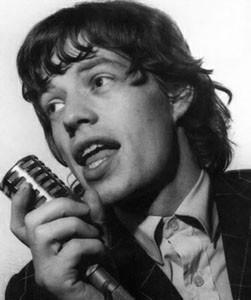
Swirl ‘n’ Spit

0

Swirl ‘n’ Spit
Tasting Room of the Week

Passalacqua Winery

By Heather Irwin

Lowdown: There’s something to be said for a tasting room that seems cheery and warm, even on a miserable, cold, gray winter day. Like so many of the Dry Creek Valley wineries, Passalacqua is charming and quaint with a local, family-run-winery-thing going on, yet it is very serious about making some really nice wines.

Absent of self-aggrandizing or Disneyland tactics, Passalacqua is just folks. A lot of folks, it turns out. The local clan is impressively large (everyone, it seems, knows one of the Passalacquas), and the winery continues the legacy of the family’s winemaking Aunt Edith, who had a Healdsburg winery in the 1930s.

Mouth value: Passalacqua focuses on red wines but has a surprisingly good Chardonnay. After feeling a bit let down by the 2002 Russian River Valley Sauvignon Blanc ($15), which seemed flat and far too delicate for the palate, it was tempting to move on to the reds. I was dissuaded, thankfully. The 2002 Russian River Valley Chardonnay ($23) shies away from being overly oaky and lets the fruit speak. Apple and pear chatter away, but a smattering of vanilla and smooth, rich depth and buttery goodness keep the wine well away from Boone’s Farm territory. The winery makes two Zinfandels, with the 2002 Dry Creek Valley “Old Vine” ($29) the better choice; while the 2002 Sonoma County ($24) still feels a bit tight, the Old Vine speaks with an old soul. There’s a rich jammy quality that lingers on . . . and on. Also worth a mention is the 2001 Dry Creek Valley Cabernet Sauvignon ($35), with a deep, dark color and plenty of coffee and cocoa on the nose with plum as a payoff. (Casting off all snob-speak, I can say with confidence that it tastes yummy.)

Don’t miss: Two reasons to spend a few extra minutes at Passalacqua. First off, sidle up to the hearth, which usually has a toasty fire going on rainy winter days. Nearby, you can check out a nifty little wine aroma kit that helps novice (and experienced) wine sniffers identify the aromatic differences between common smells associated with wine, such as, for instance, lychee nut and quince. Who knew? Also, step outside onto the large deck overlooking a garden and vineyard. Pretend for a moment this is all yours. Ahhh . . .

Five-second snob: What’s so great about old vines? In the case of some grape vines, age improves them–pretty significantly. Here in California, some of the oldest vines can be 80 to 100 years old. The deal is that, kind of like us, the vines slow down a bit after middle age (about six years or so) and produce less though more concentrated grapes. Concentrated equals more flavor. And more flavor equals better wine, right?

Spot: Passalacqua Winery, 3805 Lambert Bridge Road, Healdsburg. Open daily, 10am-5pm. 707.433.5575.

From the November 17-23, 2004 issue of the North Bay Bohemian.

© Metro Publishing Inc.
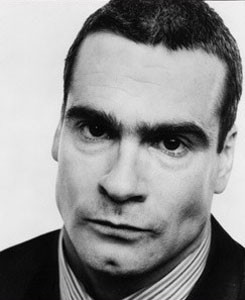
Daryl Scairiot

1

: Daryl Scairiot’s reckoning of loneliness. –>

Daryl Scairiot’s stinging musical novels

By Gabe Meline

The first time I heard Daryl Scairiot was at a wedding, where, in the joyful spirit of eternal union, he was performing a song about slicing one’s neck with a sharp knife.

An unforgettable first impression, as you can imagine, but a few days later he outdid himself. Our second meeting–if you can call it that–was while I was out on a midmorning walk, and I stepped over him sleeping soundly on a Santa Rosa sidewalk.

Scairiot is an incredibly talented 28-year-old songwriter recently transplanted from the Arizona desert. Though he feels fully at home here–and, yes, he now has a roof over his head–there is something very transitory about his nature. The open expanse of the Southwest tinges his music with drift, and he sings of whispers and spirits with the languorous perspective of one who was born and raised in a ghost town.

On a sunny morning, Scairiot sits on a rocky ledge overlooking the vast expanse of Santa Rosa, smoking a Sherman (“It was my birthday–I got myself the good kind”) and speaking with careful enthusiasm for Saint Rose Parish (Scorpiolovesongs), his self-produced debut album.

“I used to want to be a novelist,” he says, “but I don’t have the discipline to write that many pages of material.” Songs, he notes, only have to last for one page or so, and now his repertoire of original songs stretches into the hundreds. Saint Rose Parish stands, in effect, as his first book, one with 13 stinging chapters.

Much like Greg Brown or Tom Russell, Scairiot is able to create truths in his work that can be jarring at first; the ghostly “Words Whispered in the Dark,” for example, rearranges all safe feelings about personal space in just three-and-a-half minutes. “I used to write character songs a lot,” he says. “Funny, witty–almost novelty songs. Nowadays, I want more conflicting perspectives to create a vision of the world that is more zesty and exciting and magical and fantastic than daily life actually is.”

Scairiot’s appearance this morning is notably unzesty: he is unshaven, wearing an old sweatshirt, faded jeans and a lamp-chain bracelet. He is educated but unpretentious, often accenting phrases with imaginary finger-quotes in the air, as if to show that the point he’s making at the moment is up for debate.

Directness lies instead in his music, a jazzy amalgam of dark folk and bright melody accented with stark instruments like a glockenspiel or wood saw. In his lyrics, lovers’ initials are carved in trees while newborn babies, stubborn and doomed, swim out to death at sea. They’re the kinds of stories you want to hear while you’re out painting in the shed, alone, on a cold evening.

Scairiot closes Saint Rose Parish with the incredible “Saint Rose,” a 10-minute reckoning of loneliness. The very presence of an epic song at the end of the album evokes Bob Dylan; Scairiot’s sad-eyed lady in this instance is the city of Santa Rosa, besotted with rain and, in the eyes of a recently relocated desert rat, peopled with complete strangers.

One character sells beads and offers to heal the morning shakes: “He says his name’s Osiris and he says that love is a virus / That it doesn’t catch like fire, more like cold.” Scairiot’s sultry baritone tiptoes at a heartbeat tempo, examining at poetic length the drenched population of a penitent city. The song finally concludes with, “It’s not the praying / It’s the bowing that pleases old Saint Rose.”

“I seemed to be the only one in town who was bummed out that it was raining all the time,” he explains, recalling his early alienation after leaving Arizona. “Of course, in the song, arrogantly enough, I have to declare that God, in the Judeo-Christian tradition, was the God of the desert.”

Scairiot laughs in disbelief at this brazenness, overlooking his new town. “So, like, God’s on my side.”

A CD release party for Daryl Scairiot’s ‘Saint Rosa Parish’ is slated for Friday, Nov. 19, at North Light Books. Alison Harris and the Tester Duo accompany. 550 E. Cotati Ave., Cotati. 7pm. Free; all ages. Scairiot also performs songs live on KRCB 90.9-FM on Wednesday, Nov. 24, from 10pm to midnight. For more info, visit www.darylscairiot.com.

From the November 17-23, 2004 issue of the North Bay Bohemian.

© Metro Publishing Inc.
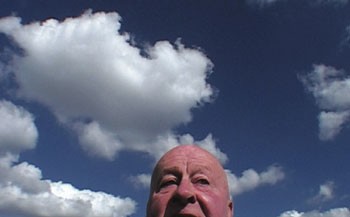
‘The Fantasticks’

0

: Lyricist Tom Jones and composer Harvey Schmidt celebrate the seventh anniversary of their musical’s 42-year run on Broadway. –>

Charismatic cast shine in charming production of ‘The Fantasticks’

Plant a radish, get a radish–never any doubt,” sing a pair of exasperated fathers as they compare their children, who haven’t grown up how they expected, to the vegetables in their gardens, which consistently have. “That’s why I like vegetables,” they conclude, because with Brussels sprouts and kidney beans, “You know what you’re about.”

The same could be said for The Fantasticks, a show with very specific, built-in ideas about how it is to be performed: the set is always bare or nearly so; the actors sit upstage with their backs to the audience when not on; and what passes for special effects–rain, snow, a disappearing and reappearing wall, the waxing and waning of a paper moon–are produced by the actions of the mute, a mysterious, never-smiling, one-woman scenery department. With The Fantasticks, no matter how many productions one might have seen by companies large, small, professional, amateur or otherwise, one pretty much always knows what to expect, which, since there is a kind of comfort in familiar things, is not a bad situation at all.

In the recently opened production of The Fantasticks, a collaboration by Actors Theatre and Santa Rosa Players–the second full theatrical staging since the two companies joined forces last year–director John Rathjen confidently guides his charismatic cast through all those time-honored stage actions, and simultaneously manages to make the story seem invigorating and fresh. The cast, a mix of seasoned performers familiar to fans of local theater and a couple of new faces, deserve much of the credit as well, perfectly capturing the innocent, sentimental tone of The Fantasticks, a show in which tone is everything.

Since the moment it appeared in Greenwich Village in 1960, audiences have embraced this slight but charming romantic fable about love gone wrong then right again, boosted by sweet, infectious songs, many of which, like the show-opening “Try to Remember,” have since worked themselves into America’s musical subconscious.

The story, clearly inspired by the stuff of ages past, concerns a pair of young lovers, a boy (Michael Detoffoli) and a girl (Beverley Viljoen), who’ve fallen in love despite–or perhaps because of–the large, stone wall their fake-feuding fathers have secretly built to separate them. This, it turns out, was the fathers’ plan, recognizing children’s tendency to set their sights on doing whatever they are told not to do. Once the kids are hopelessly in love, the fathers hire a band of over-the-top actors (Bill Waxman, Douglas Cupples and Jeff Coté, who also serves as the show’s singing narrator) to stage a mock kidnapping of the girl (archaically referred to as a “rape,” with lively narrative exposition discussing that word’s etymological roots in the Latin verb meaning “to seize”). From this the boy is expected to save his true love, thus ending the father’s make-believe feud.

It works, of course, but when the first act ends with a song blissfully titled “Happy Ending,” with half the show still to come, it’s a hint that the young lovers’ love affair will be hitting some bumpy spots on the road to a harder-won, more mature conclusion.

Michael Detoffoli, whom SRP regulars have watched grow up onstage, with increasingly sizable roles in several productions, here gets his largest SRP role to date, and he nails it, exuding the right balance of busting-out-all-over, youthful male romanticism, and singing his numerous songs in a fine, confident voice. Viljoen, as the girl, is equally delightful, strong-voiced, wistful and heart-breakingly sweet, in her first performance with SRP and AT.

Tom Viers, mischievously glowering as the boy’s father, and Timothy Jaxon as the girl’s father (with a wide-open, expressive face he knows how to use to comic effect), make a hilarious comic team, alternately beaming and bumbling as they lovingly mismanage their children’s lives. Through it all, a striking, straight-postured, top-hatted Allison Marcom, as the mute, pulls off the astonishingly feat of keeping a straight face, unsmiling and watchful, through all the inspired buffoonery and sweet, familiar silliness busting out all around her.

‘The Fantasticks’ plays Friday-Sunday through Nov. 28. Friday-Saturday at 8pm; Sunday at 3pm. Saturday, Nov. 13, special $10 matinee at 2pm; no evening show. Merlo Theater, LBC, 50 Mark West Springs Road, Santa Rosa. $15-$22. 707.523.4185.

From the November 10-16, 2004 issue of the North Bay Bohemian.

© Metro Publishing Inc.
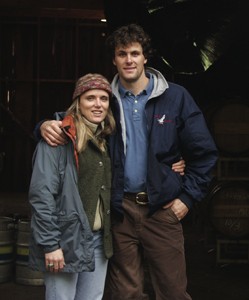
Swirl ‘n’ Spit

0

Swirl ‘n’ Spit
Tasting Room of the Week

Rodney Strong Winery

By Heather Irwin

Lowdown: Rodney Strong is a man of somewhat biblical proportions–at least in Sonoma winemaking. You sort of feel the need to put a whole lot of “begats” behind his name. Because somewhere in the history of so many Russian River, Alexander Valley and specifically Chalk Hill wineries, the former dancer turned winemaker shows up with remarkable frequency.

Like a handful of others, Strong saw the potential in the orchards and open fields of wine country, despite the misgivings of his city-girl wife. And what began farther south near Sausalito as a wine-distributing business turned in 1959 into a full-fledged winery in Windsor, the acquisition of some of Sonoma’s most prime grape-growing acreage and finally an empire turning out some 500,000 cases annually.

And though Strong himself has long-since faded from the picture (the winery has been acquired several different times and is now under the ownership of the Klein family), his namesake still produces some amazing wines worthy of his pioneering spirit–in addition to being a darned nice place to visit.

Mouth value: On my visits, the staff at Rodney Strong were remarkably friendly and helpful, giving no customer pressure to leave with a couple of cases of wine. Overall, the wines are a bit like you’d imagine Rodney to be: sprightly, engaging and cosmopolitan with a healthy dose of farm-country down-to-earthiness. Most are in the $18 to $28 range, making them approachable dinner and entertaining wines.

The 2003 Charlotte’s Home Sauvignon Blanc ($12) is a Harvest Fair winner that pulls back on the floral and leans much more toward the fruit, making for a crisp snap of a wine that won’t leave you puckering. Best served nice and chilly. The 2002 Sonoma County Chardonnay ($14) has surprising depth and creaminess for the price range. I liked the solid oak that is well-balanced with the fruit.

Reds are some of Strong’s, well, strongest contenders. The 2002 Russian River Valley Pinot ($18) has tons of fruit, and felt a little young but will likely get more complex with some aging. Worth the $3 extra tasting fee (though when I offered to pay, I was waved away) was a taste of the 1999 Symmetry Red Meritage ($55). The Symmetry is consistently one of the winery’s most acclaimed wines, and for good reason. It’s huge and deep with an amazing nose and ripe, dark fruit. It’s like comparing a Big Mac and a filet mignon. Both are wonderful, but one is just, well, more wonderful in a soul-satisfying way. (And, yes, I mean the filet.)

Don’t miss: Take the self-guided tour of the winery as you enter. There are plenty of interesting facts about the winery and winemaking without any annoying tour guides.

Spot: Rodney Strong Winery, 11455 Old Redwood Hwy., Healdsburg. Open daily, 10am-5pm. Free tasting for many wines; $3 each for some special reserve wines. 1.800.678.4763.

From the November 10-16, 2004 issue of the North Bay Bohemian.

© Metro Publishing Inc.
North Bay Democrats

0

North Bay politicos weigh in on divisive election and what comes next

By R. V. Scheide

Depressed. Demoralized. Defeated. In the wake of the Nov. 2 election, Democrats are feeling anything but Democratic and those Republicans who are in full gloat are piling it on. Newly reelected Republican president George W. Bush, having narrowly avoided the one-term fate that befell his father, now claims a mandate to dismantle social security and Medicare, strip away what little fairness remains in the federal tax code and disrupt the rest of the Middle East. Republican governor Arnold Schwarzenegger, who helped push Bush over the top with a last-minute appearance in the key battleground state of Ohio and effectively denied millions of Californians healthcare by publicly opposing Proposition 72, now openly taunts Democrats as “losers.” It’s no wonder that the Democratic rank-and-file is feeling more than a little bit delusional.

Nevertheless, there’s a glimmer of hope amid the storm clouds of division, the faintest of silver linings, according to elected members of the North Bay’s heavily Democratic political contingent. The Republican victory parade is about to be rained upon in a big way by a crazy little thing called reality, a subject the Grand Old Party has not been overtly fond of as of late: the reality of the unpopular war in Iraq, the reality of the $7.5 trillion-and-growing national debt, the reality of nearly 50 million Americans without health insurance.

“The president was reelected, and elections have consequences,” says Rep. Mike Thompson (First District). “Clearly, we’re going to have policies that reflect his beliefs and the beliefs of those who are in control of the House and the Senate.” But Thompson sees any alleged overarching Bush mandate as dubious. “He has a mandate from the red states, no doubt about that. But the blue states? No way. He needs to moderate his positions. Anything short of that is overreaching, and there will be consequences.”

“We’re not red or blue, we’re purple,” agrees Rep. Lynn Woolsey (Sixth District), a frequent and vocal critic of Bush administration policies. “It’s not like, ‘Whoops, we lost, now everything George W. Bush wants he gets.'”

Although media reports have trumpeted the GOP’s gain of five seats in the House, both Thompson and Woolsey find plenty to be optimistic about in the election results. In Illinois, Democratic challenger Melissa Bean defeated Philip Crane, the longest-serving Republican in the House with a 35-year tenure, in the race for that state’s eighth congressional district. In New York, former Buffalo City Council member Brian Higgins won the 27th congressional district seat vacated by retiring moderate, Republican Jack Quinn.

“In regard to the House, there’s a lot to be cheery about,” says Thompson. “We came out of this with more seats than people thought possible. I’m astonished that we did as well as we did.”

Of course, the House has no control over one of the biggest issues weighing on Democrats in the election’s wake, the fact that Bush will be selecting as many as three Supreme Court justices in the next four years. “That’s between the Senate and the executive branch–we don’t have any say,” explains Woolsey. “You’ve just put your finger on the most important issue in this reelection.”

How Senate Democrats handle Bush’s Supreme Court nominations remains to be seen, but early signs are not encouraging. With Iowa’s Sen. Tom Daschle’s defeat, Sen. Harry Reid of Nevada, a conservative Democrat who opposes abortion rights, is slotted to be next minority leader. During the first four years of the Bush administration, liberals became increasingly critical of what they perceived as acquiescence by the Daschle-led senate Democrats, many of whom signed on to Bush’s tax cut proposals and his doctrine of preemptive attack with hardly a struggle. Reid’s leadership promises more of the same, unless unabashed liberal firebrands such as newly reelected Sen. Barbara Boxer make a stand.

Neither senators Boxer nor Diane Feinstein returned calls before press time. Overall, Democrats lost four seats in the closely divided senate, a loss that was slightly eclipsed by rising star Barack Obama’s victory in the race for the Illinois senate seat.

At the state level, Gov. Schwarzenegger’s labeling of Democrats as “losers” comes as a big surprise to North Bay Democratic Assembly members Patty Berg (First District) and Joe Nation (Sixth District), who along with newcomer Noreen Evans (Seventh District) handily won their seats by margins that truly can be called mandates. In fact, despite the fact that the governor publicly endorsed more than a dozen Republican assembly candidates around the state, none of the targeted Democrats were defeated.

“All I can say is that we still hold the majority in the Assembly and the Senate,” says Berg, adding that Assembly Speaker Fabian Núñez (46th District) deserved much of the credit. “We have a remarkable person in the Speaker. He has a solid relationship with the governor and is a remarkable strategist. No one lost their race who was targeted and I think it’s because of the Speaker.”

There are signs that the governor’s name-calling act–earlier this year he castigated Democrats as “economic girlie-men”–is beginning to wear thin.

“The governor has a tendency to be a little too loose with his words, and that can have a tendency to come back and bite you,” says Nation. Despite the fact that many of the initiatives Schwarzenegger campaigned against were defeated–including propositions 66, 68, 70 and 72–overall, the state’s election results simply don’t justify such hyperbole. “We didn’t have any change, so there can’t be a lot of change in the dynamics,” says Nation. “He’ll push his agenda, and we’ll continue to push back.”

Pushing back may become increasingly easier as Schwarzenegger’s agenda, driven by former Republican governor Pete Wilson and the state chamber of commerce, becomes more familiar to the public. Nation spent the last 10 days of the election campaigning for Kerry in Ohio and was present when Schwarzenegger appeared in Columbus on behalf of the president.

“Schwarzenegger has portrayed himself as a moderate and bipartisan,” he says. “I think people are starting to blame him for Kerry’s loss. People may begin to see the real Arnold Schwarzenegger.”

House member Mike Thompson hopes that bipartisanship will rise above the level of the past two-year session, in which Republicans took to excluding Democrats from important conference committee meetings.

“They have to allow us to work with them,” he says. “If they continue to assume that they will roll over the minority party, it isn’t going to do anybody any good.”

“We have to find a way to get our troops out of Iraq,” says Lynn Woolsey.

“We don’t have the bully pulpit, but we will have an audience. I for one am going to continue to fight for the issues my district–Marin and Sonoma counties–thinks are important. I have a mandate to do that.”

What happens in California will be echoed across the country, Patty Berg insists. “We are the largest state in the nation, the fifth largest economy in the world,” she says. “As California goes, so goes the rest of the nation.”

Hopefully for better, not for worse.

From the November 10-16, 2004 issue of the North Bay Bohemian.

© Metro Publishing Inc.

Turkey

0

Talking Turkey

Stalking the restaurant holiday meal

By Elisa Camahort

In the years that I’ve been a vegetarian, I’ve been to many, many meaty Thanksgiving and Christmas dinners. And, yes, I confess that sometimes it’s tough. Even pre-veggie, I rarely ate turkey, other than at those holiday dinners. Even so, when those nights roll around, the turkey tempts me. What is that? Nutritional nostalgia, I guess.

In the early years, my mom and I both fell into this “must have main dish” mentality. Other cultures eat a series of small or side dishes: tapas, kimchee, dim sum. There’s no equivalent here. We are definitely an appetizer-entrée-dessert kind of country.

Usually my mom would go all out on some vegetarian main dish: a casserole, a stew, a pasta dish–something hearty, something veggie . . . something I felt obligated to make a major dent in, especially if no one else was.

It took years for me to convince my mom that I would not starve or feel deprived if left to my devices with all of the normal side dishes at holiday meals. We’re talking sweet potatoes, mashed potatoes, cranberries, salad, bread, corn, maybe even another cooked vegetable–not to mention the absolute necessity to save room for dessert.

I’m sure you see what I mean: a big, full meal without a main dish.

Actually, I’m often happier in a restaurant if I approach my meal with the same philosophy. You try going to Larkspur’s Left Bank, for example, and finding a real vegetarian entrée on the menu–doesn’t exist. Am I unhappy to chow down on a beet salad, a side of spinach, Brussels sprouts and mashed potatoes? Not unhappy at all, thank you.

Sometimes I do feel like dispelling the pitying attitudes of my holiday dining companions. You can only hear so many jokes about Tofurky.

So every now and then I bring a delicious recipe for vegan tofu pot pie, gotten long ago from PETA. (They’re not just about naked models, people!)

It’s got gravy made with nutritional yeast; it’s got a homemade crust; it’s got the corn and peas we all remember lovingly from Swanson’s. It’s hearty, savory and filling.

But it’s got no meat at all. And that makes the holiday season that much more full of thanks, peace and goodwill in my book.

Vegging Out

Where to cage a vegetarian meal on Thanksgiving

Sparks. The mother of all vegetarian menus in the North Bay now that Roxanne’s has inexplicably closed, Sparks offers a full six-course holiday menu of organic, vegan food, prompting the usual mewling question: why do vegans always get to eat such great desserts? There is a pre-holiday seating on Wednesday, Nov. 24, at 7pm, and three Thursday seatings, at 1pm, 4pm and 7pm. Prix fixe cost is $45 per person. 16248 Main St., Guerneville. 707.869.8206.

Lydia’s. More down-home is Lydia’s, which has dishes made three ways, raw, vegan or vegetarian, depending on your preference. They will be open with their takeout for the holiday as well as offering table service. 31 Bolinas Ave., Fairfax. 415.456.5300.

Vegevillage. For something completely different, head out for Chinese food this Thanksgiving. Vegevillage in Boyes Hot Springs offers over 60 vegetarian dishes to choose from and will be open for the holiday, though husband and wife owners Juliana Chen and Jeffrey Huang aren’t making a traditional American menu. “Customers will just choose their favorites,” Juliana predicts brightly. 18350 Hwy. 12, Boyes Hot Springs. 707.939.8383.

Going for Broke

Sometimes, faced with the daunting task of spending two days in the kitchen, families opt to pack up and pack it in where someone else does the cooking. Here are some of the best Thanksgiving spots in the North Bay.

Dry Creek Kitchen. Begin with foie gras or a lobster and porcini soup, trifle with rabbit, turkey, bass or beef and finish with either pumpkin, apple, quince or chocolate at this outstanding eatery. The Kitchen seats between 2pm and 8:30pm on Thanksgiving, and the three-course prix fixe is $55 per adult; under 12, half price. 317 Healdsburg Ave., Healdsburg. 707.922.5399.

The Duck Club. Enjoy a splendid view with that splendid meal at this restaurant in the Bodega Bay Lodge and Spa. Seating between 3pm and 7pm, the Duck Club offers a fairly traditional meal, with choices between turkey, filet mignon and salmon. And, of course, there’s that view. $45 per adult; under 10, $12.95. 103 Coast Hwy. 1, Bodega Bay. 707.875.3525.

Insalata’s. The sun always shines from the plates at this Mediterranean-inspired restaurant, which brightens for the holiday with pancetta-wrapped salmon or roast turkey with a sonnet of side dishes, and could begin with an appetizer platter perhaps containing every good thing on the planet, from spiced nuts to Dungeness crab salad to Meyer lemons to Cowgirl Creamery cheese to roast wild mushrooms. Such lovelies as roast red kuri squash soup, marinated olives, mashed Yukon Gold potatoes and others can be purchased from the takeaway counter as a boost to home-cooked efforts. Seatings are between 2pm and 7:30pm, reservations required. $49 per adult; under 12, $24. 120 Sir Francis Drake Blvd., San Anselmo. 415.457.7700.

Madrona Manor. This elegant building, reminiscent of an earlier time, comes alive at the holidays. Chef Jesse Wiley offers a prix fixe three-course meal that could start with a lobster chowder enlivened by profiteroles, for chrissakes, and could end with a pear quince crisp; turkey or ham in the middle. Six seatings between 1pm and 7:45pm. $64 adults; under 12, $32. 1001 Westside Road, Healdsburg. 707.433.4231.

Mountain Home Inn. Some enjoy working up an appetite before celebratory gorging, and planning a day on Mt. Tam makes a wonderful fit for retiring to the rustic elegance of this table. Thanksgiving begins with a hot apple drink, has a special appetizer for celebrants under 12 and offers perhaps the most unusual holiday main course–a red flannel hash with beets, ham, griddle duck eggs and grits. Indeedy. Seating is from noon to 6pm. $32 per adult; under 12, $16. 810 Panoramic Hwy., Mill Valley. 415.381.9000.

Oakville Grocery. Not offering a sit-down holiday meal, the Oakville nonetheless is there for the harried home cook or the guest requested to bring a little something. Heavy on the comfort side of the food spectrum, the prepared foods range from a whole Diestel turkey, cooked and ready to go ($59.95) to a fresh cranberry sauce ($6.95) to a swooningly good creamed spinach with parmigiano reggiano, which, considering the price of spinach, is a deal at $9.95 a pound. Two North Bay locations: 7856 St. Helena Hwy., Oakville, 707.944.8802; and 124 Matheson St., Healdsburg, 707.433.3200.

Santé at the Sonoma Mission Inn. Make the terrible choice between lamb loin or ahi tartar–among others–to begin. Flirt lightly with a black Mission fig and pear terrine, and then stagger on to the heartbreaking decision between prime rib, organic turkey, smoked pork loin, halibut or polenta with a grilled veggie tian for your main pleasure. There are, of course, some six desserts. It’s a feast. Serving from 2pm to 9pm, reservations only. $99 adults; $35, 12 and under. 100 Boyes Blvd., Sonoma. 707.938.9000, ext. 2415.

–Gretchen Giles

Send a letter to the editor about this story to le*****@*******ws.com.

From the November 10-16, 2004 issue of Metro, Silicon Valley’s Weekly Newspaper.

© Metro Publishing Inc. Metroactive is affiliated with the Boulevards Network.

For more information about the San Jose/Silicon Valley area, visit sanjose.com.

The Byrne Report

The Byrne Report

Schwarzenomics

THE CLEVER PEOPLE’S media regularly swoon over the political muscle of Gov. Arnold Schwarzenegger. The New Yorker ran a long profile of the strongman in June, portraying him as bipartisan, competent and “Supermoderate!” The New York Times’ editorial board is much taken with what it perceives to be a middle-of-the-road governing style. And in September, Wired magazine saw fit to pump Schwarzenegger as “moderate” and “effective.”

In reality, the governor is neither moderate nor effective–his main economic advisers are the same right-wing academics (a lot older now) who promoted the ineffective “free market” theories used by President Ronald Reagan to cut taxes while running up record deficits and trade imbalances.

On Sept. 17, Schwarzenegger formed the Council of Economic Advisers to help him “return economic vitality to the Golden State.” The 16-member panel is packed with Reagan-era supply-side economists such as Milton Friedman and Arthur Laffer. It is chaired by George Schultz, former Reagan cabinet member, board member of the Bechtel Group and fellow at the Hoover Institution, a right-wing think tank located at Stanford University. In fact, half of the governor’s economic advisers are Hoover Institution fellows.

The council includes Hooverites Annelise and Martin Anderson, who co-authored a series of obsequious Reagan biographies. The Andersons, who are married, were both on former governor Pete Wilson’s council of economic advisers, which led the charge to deregulate California’s energy industry with horrible results. Martin also serves on the Defense Policy Board, a neoconservative body that advises Department of Defense Secretary Donald Rumsfeld and includes Henry Kissinger, and Hoover fellow Gary S. Becker–who also serves on Schwarzenegger’s economic council.

Other Hoover fellows on the council include Michael Boskin, who chaired George H. W. Bush’s council of economic advisers and John F. Cogan, currently an economic adviser to George W. Bush. In an interview, Martin Anderson said that the council is bipartisan. When asked which of its members are Democrats, he replied, “I have not studied that.”

A quarter of a century ago, Shultz, Anderson, Friedman and Laffer claimed that cutting business taxes would result in “trickle-down” economic stimulation and lower budget deficits. The opposite occurred during the Reagan-Bush years. The poor got poorer and military spending shot the federal deficit into orbit. And who can forget what happened when the Reagan team deregulated the savings and loan industry, unleashing a $500 billion crime wave that bankrupted mom-and-pop banks and pushed the economy into a prolonged recession?

Shortly after Schwarzenegger was elected to office last November, an economic report on the state’s rosy fiscal outlook was issued by the nonpartisan Office of the Legislative Analyst in Sacramento. The governor must not have read it, because his main talking point is that corporations flee the world’s fifth richest economy due to overregulation and high taxes. But the highly regarded legislative analyst Elizabeth Hill has said that the impact of the dotcom-triggered recession of late 2001 was no worse in California than it was anywhere else in the United States. It was mostly due, she observed, to “chronic overcapacity in many key industries [and] weak foreign demand.”

Hill did not say that high taxes or workers’ compensation insurance rates or overregulation of industry had anything to do with the downturn of the business cycle. California business revenues and profits “are up sharply,” she determined.

The analyst attributed the upswing to better sales, cheap labor and hundreds of millions of dollars per year in state subsidies to business, called tax credits. In addition, under Proposition 13, companies are protected from paying taxes on the fair market value of real property. No wonder that, in 2002, Fortune magazine rated California as the best state in America in which to do business.

(Interestingly, individuals are picking up the corporate tax slack. Personal income taxes in California now account for 48 percent of general fund revenues–up from only 18 percent 40 years ago. And, as the federal government reported in April, nearly two-thirds of all U.S. corporations paid no income tax between 1996 and 2000.)

Mirroring Reaganomics, Schwarzenegger “balanced” the 2004-2005 budget with $15 billion in bond and loan funds. In effect, he kited the deficit, paying operating costs with borrowed billions laden with Wall Street vigorish. To avoid collecting business taxes, he slashed education funds, raided local property tax bases and even killed a small annual tax credit for underpaid teachers. Hardly moderate. Hardly effective.

In September, Hill reported that Schwarzenegger’s one-time budget-balancing act does not address the problem of the state’s structural deficit–measured at $15 billion and growing. It’s a bust. Rather than embrace the governor’s immoderate economics, the people of California would be wise to push his advisers back inside Reagan’s crypt–then lock the door.

From the November 10-16, 2004 issue of the North Bay Bohemian.

© Metro Publishing Inc.

Sudden Oak Death

: Dr. Lee Klinger believes that oaks are being treated like humans–with medicines that alter the symptoms, not the cause. –>

Scientists square off over causes and treatments of Sudden Oak Death

By Tara Treasurefield

Forest ecologist Lee Klinger, Ph.D., stands just beyond the grape arbor at the Laguna de Santa Rosa watershed preserve in Sebastopol. It’s early October, and Klinger is about to lead a workshop. Participants will whitewash an oak tree with a blend of mineralized rock salt, hydrated lime, crushed oyster shells and water, spreading trace minerals and oyster shells beneath the tree. This is the way Native Americans and other indigenous peoples protected trees from pests and diseases, and Klinger is trying to revive it. “We can’t just leave trees alone,” he says. “They need to be tended, as the Indians tended them. We’ve got a lot of work to do, just to catch up.”

Before putting the group to work, Klinger announces that he is on a mission. His goal, he says, is to alert as many people as possible that Sudden Oak Death (SOD) is a sham, and that oaks and other trees are in urgent need of care. “Most of the oaks and other trees that I see are stressed, or extremely stressed,” he says. “I see lots of dead leaves and branches, and sparse growth.” But Klinger’s most important point is to insist that “almost all the dying trees can be saved. Most of them don’t even show evidence of disease. For the ones that do, the disease is secondary. They just need nutrition,” he says, in the form of minerals that are rich in calcium. This is holistic medicine for trees.

The prevailing view of SOD, which reflects the thinking of the pathologists that defined it, is that of conventional medicine: identify a symptom and apply medicine to treat it. The cause, in this case, is thought to be a fungus called Phytophthora ramorum, and scientists are diligently searching for ways to control it. To prevent the disease from spreading, infected branches and entire trees are cut away. Nursery stock that is known to carry the fungus is strictly quarantined, and forest officials urge hikers to wash the soles of their shoes, bikers to wash their tires and dog owners to wash their pets’ paws when they leave an infected area.

But two different approaches are at hand in protecting California’s trees, one holistic, the other based on the disease model of conventional medicine. Which approach is more likely to save our trees?

Nature vs. Nurture

Most Californians would probably vote for the conventional approach, which has the decided advantage of being the only one they have ever heard of. It has the seal of approval of leading authorities, including the University of California, the U.S. Department of Forestry, the U.S. Department of Agriculture, the mainstream media and such trusted elected officials as Congresswoman Lynne Woolsey, Congressman Sam Farr and Senator Barbara Boxer. Since 1999, according to Katie Palmieri, public information officer for the California Oak Mortality Task Force–a coalition of public agencies, nonprofit corporations and private interests–some $50 million has been spent researching the P. ramorum fungus. Forest pathologist Matteo Garbelotto, Ph.D., of UC Berkeley reports that over the past four years he and UC Davis plant pathologist David Rizzo, Ph.D., have each raised some $3 million alone for P. ramorum research.

Leading authorities notwithstanding, Michael Prudhomme of San Anselmo, who whitewashed his first tree at Klinger’s Sebastopol workshop, prefers the natural approach. “It makes total sense to me,” he says. “I have lots of healthy oak trees and a few that appear to be sick. I’m very interested in learning ways to care for these trees.”

Landscape gardener Scott Gough, the caretaker of trees on 1,000 acres in Lake County, also believes that Klinger is on the right track. “What he says makes much more sense to me than anything else I have heard,” Gough says. “He has the comprehensive picture of the whole thing that’s going on with Sudden Oak Death. That’s a big deal.”

Root Causes

It really is a big deal. Klinger has led research projects in forest ecology worldwide for 20 years, for the National Center for Atmospheric Research, the University of Oxford, the Chinese Academy of Sciences and other prestigious institutions. Explaining what prompted him to settle in California in 2002, Klinger says, “A major driving force was the fact that Sudden Oak Death was here, and I knew I had a treatment and I knew it wasn’t the fungus that was the primary cause.” Back then, he had high hopes of collaborating with Rizzo and Garbelotto. These two respected scientists serve as advisers to the California Oak Mortality Task Force. But Rizzo turned Klinger down because his lab was concentrating on P. ramorum.

The single-minded focus of California scientists on a fungus is difficult for Klinger to understand, particularly since he sees the same fungus as an opportunistic species that takes advantage of trees that are already dying of other causes. Explaining that P. ramorum kills a tree by growing a canker around the trunk, and that the canker “bleeds” black sap, Klinger says, “Most of the oaks that are dying do not have bleeding cankers. Given this, P. ramorum is not the best explanation for why the oaks are dying.” A better explanation for the cause of tree death, according to him, is a bit more complex, involving mosses, soil acidification and tree roots.

Klinger’s theory about tree death came together in 1985, when he was researching a massive decline of old-growth trees on Kruzof Island in southeastern Alaska. One day he noticed that wherever trees were dying, thick growths of mosses covered the ground and the trunks. On a hunch, he began digging and probing with his shovel, discovering that there were no roots in the soil under the matted moss. His data later confirmed that mosses are highly acidic and that runoff from them causes soil acidification. Industrial pollution such as acid rain, acid fog and other factors also contribute to soil acidity, all of which harm tree roots. And that, according to Klinger, is what’s really killing most of the trees that are dying in California and other parts of the world.

In addition to causing tree roots to die, Klinger says that if “left unchecked, mosses degrade bark and create spaces where fungi and beetles can get in. The moss will very slowly bring a tree down. People must tend trees and keep moss off them with whitewash. Bark is like skin, and whitewash decreases acidity. But calcium is just a start. Trees need trace minerals, too.” Klinger’s work on mosses has since been confirmed, peer-reviewed and published in several scientific papers–and so has his work on peatlands.

“There are lots of ancient peat bogs on Kruzof Island, many older than 8,000 years,” says Klinger. “I excavated the bogs. Buried beneath them, I found large stumps and other remnants of the old-growth forest, a younger stage in the development of the ecosystem.” Intact stumps of oak forests have also been found beneath peat bogs in the British Isles. Klinger believes that in 1,000 to 2,000 years, peatlands–bogs, fens and swamps–will replace many of the old-growth forests of today. “They’ll remain peatlands until they’re destroyed by fire, glaciers, floods or a rise in the sea level,” he says.

Klinger’s findings baffle plant pathologist Ted Swiecki of Phytosphere Research, a plant-science consulting and research firm based in Vacaville. “Trees have had mosses growing on them for centuries,” he says. “Trees are capable of sustaining moss on their bark. Lichens grow on trees, they’re happy. It grows on healthy trees and diseased trees, and has no effect. Anything that grows equally commonly on trees has no effect.”

But consulting arborist Ralph Zingaro, who owns Bioscape Inc. in Petaluma, agrees with Klinger. To make sure that California’s forests don’t evolve into peatlands during his lifetime, he thinks it’s a good idea to take care of trees. But that depends on the people of California. “Do they want a bunch of dead trees, or do they want a bunch of live trees?” Zingaro asks. “The trees need a good dose of calcium. Otherwise, we’ll just let nature take its course and we’ve got a bunch of dead trees. There’s nothing wrong with that. Let nature take its course. Some people will say, ‘Great! I need the firewood.'”

Magic Bullet?

Pat Robards, a forest ranger at Marin County’s China Camp State Park, is a great fan of the California Oak Mortality Task Force. “A completely unknown disease was addressed so quickly and thoroughly by scientists . . . ,” he says. “This was like being able to watch the black plague and identify the cause of it and prevent its spread.” He hastens to add, though, that the fight against SOD is not over by a long stretch. “What we’re looking at now is an unknown wave coming at us,” says Robards. “For example, some large, very beautiful huge trees were still producing green leaves with P. ramorum all over the trunk. They’re dead now. In China Camp, if they were anywhere near a targeted area, we felled the tree. Early last summer we took about 170 trees out, and 99 percent were coast live oaks and black oaks. The trees we didn’t cut down are still falling.”

Trees will soon be falling in Humboldt County, too, but for good reason, says Rizzo. “We’re not going to eliminate [SOD]. In Humboldt County, where it’s just getting started, we can target it and really slow down the spread of it. We can manage it aggressively by removing branches and some trees that are showing infection.” Rizzo and Garbelotto also recommend the one brand of phosphite (a chemical compound) that the Department of Pesticide Regulation has approved to protect oaks and tanoaks from P. ramorum. Arborists have used potassium phosphite fertilizer for many years, and by 1999, Zingaro had discovered its effectiveness with oaks that are showing signs of stress.

In 2002, after Zingaro persuaded him to conduct some experiments with phosphite, Garbelotto was suitably impressed with the results. Last year, he developed a new way to apply the approved brand. “The reason trees are not treated in general is because though you may have a product that works well, there is no way to make it go where it’s supposed to,” he says. After considerable research, he found a way to deliver phosphite directly to the P. ramorum fungus on tree trunks and make it stick. “You just spray the compound on the bark,” he says. “Many scientists around the world are trying it and having positive results.”

But impressive as the short-term results of phosphite may be, it wouldn’t be accurate to describe it as a magic bullet. Though the brand approved for use against P. ramorum is classified as a fungicide, it doesn’t kill the fungus. “It doesn’t directly affect P. ramorum; it simply enhances the defense mechanism of the plant,” says Garbelotto. In addition, the manufacturer cautions that its product may lose disease resistance with repeated use at high rates.

Building Stronger Trees

As Rizzo and Garbelotto continue to focus on P. ramorum, other researchers are finding evidence that the true culprit may be the acidification of California soils. Under a grant from the California Department of Food and Agriculture, Robert O. Miller, an affiliate professor of soils and crop sciences at Colorado State University, tested the acidity of 50,000 samples of California soils, most from agricultural land, some from forested areas.

“Statewide, we found that 22 percent of the soils were moderately or strongly acidic and 4 percent were very strongly acidic,” says Miller. “I’d expect the agricultural market to be putting a lot of lime on their soils.” Over the past two years, Klinger and Zingaro have collected 130 soil samples from forested areas infected with P. ramorum. After comparing Miller’s data with the samples he and Zingaro have collected, Klinger says “the Sudden Oak Death soils are much more acidic than what Miller is finding.”

Arborist Craig Peterson, who owns Arborworks in Marin County, is also testing soils for acidity. “We’ve always been told that the coastal soils here are rich in calcium and that they’re always neutral or alkaline,” he says. “I have not gotten one alkaline reading. All the trees are suffering from a lack of calcium.”

But what strikes other researchers as “too acidic” is normal to Rizzo, Swiecki and consulting urban forester Ray Moritz, who serves on the Oak Mortality Task Force’s executive committee. Moritz says that during all 27 years that he has been testing Marin County soils, they have always been slightly acidic. “The neutral or alkaline soils are the exception, not the rule,” he avers.

Moritz also disputes claims that acid rain affects Marin County soils. “Sudden Oak Death made its first recognized infestation in Marin County, where 85 percent of the time the winds are out of the west-northwest off the ocean. There is virtually no industry in Marin County, and the first infestations and the first huge die offs of tan oak were west of the freeway. Where would that acid rain come from?”

How about from the ocean?

“The ocean off the California coast is not producing as much acidity as further north,” says Klinger. “But a significant amount is. The closer you get to the coast, the more acidic is the rainfall and the more acidic is the soil. The lower the calcium in the soil, the closer you get to the coast.”

And so it goes. Just as Sudden Oak Death researchers see no evidence that soil acidity and acid rain are harming California’s oak trees, they also see no evidence that calcium would help them. “I have yet to see any sound data that any of our forest trees are calcium deficient,” says Ted Swiecki. “Calcium deficiency has various symptoms, and they don’t show up on our trees. If a tree is in a more stressful situation or it’s declining, it tends to be at much lower risk of developing the disease. We don’t know exactly what controls it, but relatively vigorous trees are the ones that are [getting P. ramorum].”

That’s reason enough to avoid calcium, says Garbelotto. “One of the main concerns that I have regarding the use of calcium is that it appears that plants that are very healthy become more susceptible to the disease. P. ramorum likes plants that grow very well because they produce a lot of sugar. To use anything that would potentially improve the general health of the tree may not necessarily mean that it’s going to be protected from Sudden Oak Death.”

But Cornell University forest ecologist Tim Fahey, Ph.D., says, “It would be highly unlikely that making trees more healthy would make them more vulnerable to disease infections.” Fahey recently witnessed a striking regeneration of sugar maple seedlings after calcium was applied to a forest damaged by acid rain.

Scott Gough is also getting encouraging results with calcium. Last spring, he began treating the stressed trees under his care with whitewash, crushed oyster shells and trace minerals. “I have been watching these trees for five years,” he says. “The ones we treated in the spring showed signs within a month or two of clearly new, vigorous growth patterns. It’s obvious that they are getting better.”

As for Klinger, the California Oak Mortality Task Force has accepted two of his papers, one on acid rain and soil acidity, and the other on the treatment that native peoples used to protect the trees they relied on for food, shelter and fuel. In January, Klinger will make formal presentations on both papers at the Sudden Oak Death Science Symposium in Monterey. He only wishes that he could reach more Californians.

“If they could just know that there’s a simple, nontoxic treatment that has been used for thousands of years and that all this talk about the fungus killing the trees is driven by the disease model, and the disease model isn’t working in human health and it doesn’t work in tree health either,” he sighs.

“If they could just know that the ways that indigenous peoples cared for trees is tree care at its finest.”

From the November 10-16, 2004 issue of the North Bay Bohemian.

© Metro Publishing Inc.

Loading Zone

Funny Face: An actress clowns around with the rubber ball of nuclear demise.Acting UpClowns and monsters populate Loading Zone's sharp, satirical shorts Eliot Fintushel may be best known to Bay Area theatergoers as the writer and performer of certain remarkable one-man shows (as with the manic-depressive Apocalypse, in which he recited and acted out the entire Book of...

Fish

Photograph by Michael AmslerSee Food: A server named Miguel carries such temptations as a Saigon Salmon Sandwich and a Tuna Melt to customers at Fish.Flopping FreshAttack of the 50-foot squid sandwich and other fish talesBy Heather IrwinOh, my. There seem to be legs sticking out everywhere from my sandwich. Little pink tentacles, really, as well as heads the length...

Swirl ‘n’ Spit

Swirl 'n' SpitTasting Room of the WeekPassalacqua WineryBy Heather IrwinLowdown: There's something to be said for a tasting room that seems cheery and warm, even on a miserable, cold, gray winter day. Like so many of the Dry Creek Valley wineries, Passalacqua is charming and quaint with a local, family-run-winery-thing going on, yet it is very serious about making...

Daryl Scairiot

: Daryl Scairiot's reckoning of loneliness. -->Daryl Scairiot's stinging musical novelsBy Gabe MelineThe first time I heard Daryl Scairiot was at a wedding, where, in the joyful spirit of eternal union, he was performing a song about slicing one's neck with a sharp knife. An unforgettable first impression, as you can imagine, but a few days later he outdid...

‘The Fantasticks’

: Lyricist Tom Jones and composer Harvey Schmidt celebrate the seventh anniversary of their musical's 42-year run on Broadway. -->Charismatic cast shine in charming production of 'The Fantasticks' Plant a radish, get a radish--never any doubt," sing a pair of exasperated fathers as they compare their children, who haven't grown up how they expected, to the vegetables in their...

Swirl ‘n’ Spit

Swirl 'n' SpitTasting Room of the WeekRodney Strong WineryBy Heather IrwinLowdown: Rodney Strong is a man of somewhat biblical proportions--at least in Sonoma winemaking. You sort of feel the need to put a whole lot of "begats" behind his name. Because somewhere in the history of so many Russian River, Alexander Valley and specifically Chalk Hill wineries, the former...

North Bay Democrats

North Bay politicos weigh in on divisive election and what comes nextBy R. V. ScheideDepressed. Demoralized. Defeated. In the wake of the Nov. 2 election, Democrats are feeling anything but Democratic and those Republicans who are in full gloat are piling it on. Newly reelected Republican president George W. Bush, having narrowly avoided the one-term fate that befell his...

Turkey

Talking TurkeyStalking the restaurant holiday mealBy Elisa Camahort In the years that I've been a vegetarian, I've been to many, many meaty Thanksgiving and Christmas dinners. And, yes, I confess that sometimes it's tough. Even pre-veggie, I rarely ate turkey, other than at those holiday dinners. Even so, when those nights roll around, the turkey tempts me. What is...

The Byrne Report

The Byrne ReportSchwarzenomics THE CLEVER PEOPLE'S media regularly swoon over the political muscle of Gov. Arnold Schwarzenegger. The New Yorker ran a long profile of the strongman in June, portraying him as bipartisan, competent and "Supermoderate!" The New York Times' editorial board is much taken with what it perceives to be a middle-of-the-road governing style. And in September, Wired...

Sudden Oak Death

: Dr. Lee Klinger believes that oaks are being treated like humans--with medicines that alter the symptoms, not the cause. -->Scientists square off over causes and treatments of Sudden Oak DeathBy Tara Treasurefield Forest ecologist Lee Klinger, Ph.D., stands just beyond the grape arbor at the Laguna de Santa Rosa watershed preserve in Sebastopol. It's early October, and Klinger...
11,084FansLike
4,446FollowersFollow
6,928FollowersFollow