Cinema History

0

April 4-10, 2007


Let’s talk numbers.

The Ten, directed by David Wain, is an affectionately heretical, indie-tinged spoof-romp through all 10 of those celebrated, party-pooping commandments from the Old Testament. It is purely coincidental that a movie named The Ten has been chosen to help kick off of the Sonoma Valley Film Festival’s grand and expanded 10th year (April 11-15), but the organizers of the festival are not above pointing out the freaky numerical synchronicity. Featuring Gretchen Mol, Winona Ryder, Famke Janssen, Oliver Platt and Paul Rudd (the latter of whom is expected to be in attendance at the SVFF, along with a gazillion other film-land notables), The Ten could be described as irreverent, funny, upsetting, experimental, bizarre, challenging and wonderful–all words that (another coincidence!) have actually been employed to describe the SVFF at various times in its first rags-to-riches decade.

“This is the big 10,” enthuses SVFF executive director Marc Lhormer, who, with his wife, Brenda, has been involved in the festival in one capacity or another for the last seven years. “To have reached 10 years is quite a milestone. For right now, though, I’m just looking forward to this year’s festival.”

The number of screening venues has grown from five to seven, positioned all around Sonoma’s historic plaza, with the addition of the Sonoma Veterans Hall, which will feature two venues: a 450-seat room named Hollywood (where the major events–a star-packed John Lasseter tribute and the closing-night awards ceremony–will be held) and a smaller side room dubbed Vine. With more than 80 films in play, most of them screening at least three times, the proudly unconventional film festival–which features free food and wine pairings at every screening–is clearly counting on big audiences this year for its big anniversary.

Moreover, the SVFF (which Brenda Lhormer dubbed “Cinema Epicuria” in 2002) has become famous for the quality of its parties, the hospitality with which visiting filmmakers are treated (many of them staying in the homes of Sonoma-based “host families”) and the general accessibility of the visiting celebrities. Another thing the festival has become known for–though this may never end up on the promotional brochures–is the somewhat happy-go-lucky, accident-prone nature of some of its celebrity tributes; people are still talking about 2003’s projector snafu that inspired Robin Williams to give a hilarious seven-minute rant about free wine at film festivals (“I saw a wino in the park across the street going, ‘Motherfuck! I should have made a film!'”).

But back when the festival began in the fall of 1997, the entire affair was conspicuously less memorable, decidedly grassroots and homespun (read: amateur but well-intentioned), mainly consisting of a big, fancy Saturday-night party surrounded by a bunch of lightly attended film screenings.

“It was a little embarrassing,” says Lhormer, who would not become involved until the festival’s third year. “Those first few years established the festival as a place where the filmmakers were treated very, very well, but there was not the full marketing program that would really generate an audience and justify even having the festival.”

The underlying problem was simple: with few exceptions, the festival didn’t offer films that anyone wanted to see.

In 2002, after two years of involvement as a host family for out-of-town filmmakers, Brenda was named executive director. One of her first acts was to hire a programmer with solid indie film connections: Chris Gore, editor of Film Threat magazine and website, and author of The Ultimate Film Festival Survival Guide. It is not hard to make the case that with Gore working to draw cool films and filmmakers from around the country and developing unique film venues, and with the Lhormer’s refocusing the festival with the Cinema Epicuria brand, 2002 was the turning point.

That year, the festival doubled its attendance.

Gore, who had just landed a television series with Stars Cinema, was back for 2003, which saw increased attendance, but when negotiations to bring him back again broke off during the summer of 2003, the SVFF went shopping for a new director of programming. Since Gore’s departure (he’s back this year as one of the jurors), there has been a new programmer every year, each one bringing his or her own flavor and tone to the festival’s strategically motley vibe.

With Hollywood film buyer Tiffany Naiman in the programmer’s seat, 2004 was the edgy year, with lots of films about heroin addiction and alcoholism showing up in the schedule, and articulate teenage charmer Jena Malone (Saved, The United States of Leland) cadging cigarettes from moviegoers on the sidewalk.

Two thousand five was the “personal movies” year, with Bay Area filmmaker Jesse Lindow programming a large number of solidly humane films about people pursuing their own dreams at all costs. It was the year teenage gay rights crusader Shelby Knox did not cadge cigarettes on the sidewalk, but was at all the parties, happily debating the merits of public-school sex education with anyone who’d listen.

Last year, with East Coast programmer (and sometime theater manager) Gabriel Wardell on board, an “urban sensibility” was in evidence, with a step away from some of the more playful, silly films seen in previous years and a noticeable upgrade in the technical and crowd-management professionalism of all the theater venues. For 2007, the festival has signed Cevin Cathell (pronounced like “Kevin”), a film producer (Eve’s Bayou) and the programmer of the Santa Barbara Film Festival.

This may become the year of the “big buzz” film, with movies like The Ten, the much-talked-about 1970s drama Diggers, the corporate vampire spoof Netherbeast Incorporated, Sarah Polley’s directorial debut with the bittersweet Away from Her, the truly great reality TV thriller Voyeur, and the atmospheric Alan Rickman and Sigourney Weaver romance Snow Cake, all of which have been getting a lot of good word-of-mouth.

“This is the more-eclectic-than-usual year,” says Cathell, “with some killer shorts [check out the animated masterpieces One Rat Short and The Ghost of Sam Peckinpah] that people will be talking about in all the restaurants, and a lot of strong, strong American independents. This is the year where people will say congratulations on the first 10, now we can’t wait for the next 10.”

“Ultimately,” Marc Lhormer adds, “no matter what you do in your festival, no matter how crazy the parties are and how many visiting stars there are, a film festival lives or dies based on the strength of its programming. If people don’t like the films, the festival’s not going to last. I truly believe the Sonoma Valley Film Festival is going to last a long, long time.”

For more information on this year’s lineup and how to get tickets, visit www.sonomafilmfest.com


New and upcoming film releases.

Browse all movie reviews.
Open Mic

0

April 4-10, 2007

Since its adoption in 1973, the Marin countywide plan has helped to preserve Marin’s hills and open spaces by containing sprawl and reversing earlier plans for rampant freeway construction and the paving over of our spectacular countryside. While most of the plan has withstood the test of time, a variety of unintended consequences remain concerning traffic congestion, our ongoing addiction to fossil fuels and a lack of affordable housing.

As state law requires, every county and city’s general plan must be kept up to date, and Marin County supervisors have twice amended the countywide plan. For the past six years, county planners have met with more than a thousand community members to help revise the plan. As a result, a broad consensus was reached to make “planning sustainable communities” the overarching theme of the current update. In keeping with the tradition of Marin’s visionary 1973 plan, the current update has received attention from around the state and the nation.

The proposed plan reflects Marin’s environmental sensibility. To our knowledge, it is the first local general plan in the nation to address both global warming and our high consumption of natural resources as demonstrated through a tool called the ecological footprint. Despite our environmental values, the typical Marinite consumes more resources than the average American and almost three times as much as the average Italian. The plan proposes to reduce our dependence on fossil fuels and consequent greenhouse gas emissions, to continue to protect our environment, to support our local agricultural producers and to focus additional housing within already developed areas, such as failing strip malls.

The proposed plan includes sections on renewable energy, green building and the public-health implications of how land use contributes to sedentary lifestyles, diabetes and heart disease. The plan encourages access to fresh local foods, and supports walking, biking and the ability to age in place rather than being forced to move. Another innovative feature is a series of benchmarks and targets to enable the community to track progress toward achieving its goals.

The plan continues Marin County’s trend for slow, targeted, carefully controlled growth. It anticipates our population expanding at less than 1 percent a year and encourages housing near public transportation, jobs and in community centers. The plan would allow more of our children, service providers, public-safety professionals, healthcare workers, retail clerks and teachers who now drive to Marin from far-flung areas to be able to afford to live here.

The plan celebrates Marin County’s cultural history and identifies types of businesses that have historically been a good fit and should be retained and encouraged to expand. While the plan addresses the entire county, including the cities and towns, its regulatory jurisdiction applies only outside town and city limits.

After a series of public outreach meetings, four working groups and 25 public hearings, the latest version of the plan is now in a final series of public hearings at the Marin County Planning Commission. The hearings began this month and will continue through July. Meanwhile, the Planning Commission and the Board of Supervisors still need to resolve several contentious issues. Should protections be retained or expanded for historic bay lands? How much housing and commercial expansion should be allowed? What strategies should be employed to address the “mansionization” of homes on agricultural land?

Care to join the debate?

Alex Hinds is the community development director for the county of Marin. The Byrne Report will return next week.


Ugly Truths

0

April 4-10, 2007


Eugene O’Neill’s towering family drama Long Day’s Journey Into Night is a play so good and so difficult that most companies that tackle it end up failing miserably. As good as the Sonoma County Rep frequently is, I nonetheless approached their new production of O’Neill’s masterpiece with a sense of apprehension that can best be described as dread. Had it turned out to be a disaster, I would merely have blamed them for having too much confidence in believing they were up to a test as fiery and potentially damning as Journey.

To my relief, it is decidedly not a disaster; in fact, as directed (with grace and wit) by Sharon Winegar and solidly acted by a first-rate cast, this production ranks as one of the best things the Rep has ever done, with several of its actors giving the finest performances of their careers.

And to think I almost skipped this one.

Long Day’s Journey Into Night, Eugene O’Neill’s richest and most autobiographical play (poor guy), was not written for the stage so much as it was written for the salvation of the playwright’s soul. It is an attempt on O’Neill’s part to cleanse his psyche of the crushing pain he must have felt after a lifetime of carrying all that anger and hatred for people he had also loved unconditionally and still grieved for. Written in 1942, O’Neill instructed it not be performed until 25 years after his death, a stipulation his widow skirted with the help of Yale University; the work was first performed three years after his death.

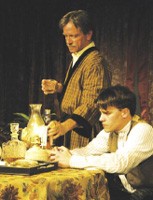
The play, about a single transformative day and night in the life of the chronically alcoholic Tyrone family, mirrors the details of O’Neill’s own childhood as the youngest son in a family of self-loathing, drink- and drug-addicted theater people, a messy clan of thinkers and dreamers who were as kind to each other as they were frequently, astonishingly cruel. On this one long night, the morphine-addicted wife and mother Mary (a brilliant, detailed performance by Elizabeth Fuller) falls spectacularly off the wagon, and the family, for all the damaged love they feel for one another, is too trapped in its own addictions and resentments to know how to deal with it. The amount of alcohol these characters ingest in one evening is staggering. So psychologically raw for its time was Journey, so crammed with the kind of beautifully crafted “ugly truths” that O’Neil had become famous for, the play was granted a posthumous Pulitzer Prize for Drama in 1957 (the author’s fourth such honor), and was immediately recognized as a masterpiece.

With just five characters, each one a bundle of rich opportunities for the actor, Journey gives the Rep’s cast an emotional workout. Some productions err by forcing the emotion too hard, pushing it into unbearable histrionics. Under Winegar’s measured guidance, gentle pace and almost loving tone, the cast sidesteps melodrama and gives up something achingly real.

As the bitter, fearful and disappointed patriarch James, Scott Phillips portrays a professional actor who can only drop his façade of artifice when drunk or in the arms of his beloved, increasingly distant Mary. Avila Reese, in the smallish part of the family’s Irish maid, manages to be both sweet and somewhat sad, an unwitting sponge for the family’s pain. David Yen, as the acerbic older son James Jr., gets many of the play’s funnier lines (O’Neill was a funny writer, something people tend to forget), and skillfully nails the bittersweet duality in such lines as, “I love you more than I hate you.” Benjamin Stowe, an intense actor who sometimes buries the truth of his characters in layers of arch self-awareness, steps so far inside the character of Edmund, the frail, tubercular youngest son, that it’s like watching an actor be born on stage; this is a magnificent, selfless performance that is frequently, heartbreakingly mesmerizing.

“Mesmerizing” is not the word for what Fuller does with the character of Mary; as she murmurs her dislike of the fog that encases the Tyrone summer home overlooking a river, Fuller descends, step by step, into her own fog of loneliness and despair as Mary moves, slowly at first, then frighteningly quickly, into a morphine-fueled stupor. It is a superb performance in a superb production that, for lovers of exhilarating theater, should quite definitely not be missed.

‘Long Day’s Journey Into Night’ runs Thursday-Saturday through April 29 at the Sonoma County Repertory Theater. Thursday-Saturday at 8pm; also, April 22 and 29 at 2pm. 104 N. Main St., Sebastopol. $15-$20; Thursday, pay-what-you-can. 707.823.0177.


Museums and gallery notes.

Reviews of new book releases.

Reviews and previews of new plays, operas and symphony performances.

Reviews and previews of new dance performances and events.

Morsels

0

April 4-10, 2007

Cue the 1940s-style newsreel. Hear, amidst images of delighted hot dog eaters and Seussian slurpers of slurps, the disembodied prophetic voice of the retail god. But his is a seditious message. “Whereas decadence may have contributed to the fall of the great empire of Rome, convenience may very well be the Achilles’ heel that wrestles the great American empire to her knees. And nothing is more emblematic, my fellow Americans, than the ‘C-stores’ across the country. With names like ‘Fast and Easy,’ these convenience stores open their doors like the Whore of Babylon, entertaining nearly every digestible whim and vice conceived by putrid humanity.”

And that, of course, is why I like them.

Nowhere else can you get booze, porn, fake news, candy, meatius mysterius and all the icy-cold synthetic chemicals needed to wash it down with than at any local convenience store. These C-stores are the quintessence of America. Petaluma used to have a red-light district in what some would say were more honest times. Now we have 7-Eleven and, my personal favorite, the Fast and Easy Mart, where, at a single transaction, one can buy 10 sticks of beef jerky, a chocolate milk, three cupcakes, a lottery ticket, NoDoz and some tobacco. Should one, you know, choose.

Some (OK, many) have suggested that I should feel shame for my love of the C-store, open wide and willing to me as it is at all hours of the day and night. To them, I retort, “See the flag in the window there, comrade? It’s my duty to patriotically patronize, to support that most American, and often most immigrant, dream and can-do attitude so often lacking in the declining middle class, of which I count myself and you a member.”

Look around, I tell them, and see the crippled man, hobbling in to the C-Store at 9pm. He’s a regular. The clerk already knows which five porn magazines to hand over. Where else is this poor, decrepit bastard, this refuse of a society gone quietly mad, going to come so close to so much beauty, so much to worship–and maybe even a complimentary cup of coffee, if he can carry it?

The C-stores are the great equalizers, the last bastion of the former American democracy. When they’re criticized, it’s only by hypocrites who hate America. These hypocrites predict a downfall equal to or greater than that of the Rome of yore. And when it comes, they say, it will because of our love of convenience, of alienation from the real world of hope and fear around us. Our downfall will come, they say, much like the name of the store itself: fast and easy.

Quick dining snapshots by Bohemian staffers.

Winery news and reviews.

Food-related comings and goings, openings and closings, and other essays for those who love the kitchen and what it produces.

Recipes for food that you can actually make.

Not What It Seems

0

music & nightlife |

Photograph by Elizabeth Seward

By Gabe Meline

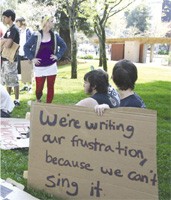
The closure of Epiphany Music in downtown Santa Rosa last month and the arrest of its owner are naturally emotional issues for the local music scene. For many of the city’s teenagers, Epiphany provided a crucial outlet for creativity, a welcoming place for face-to-face socialization and a steam valve for the pressures of adolescence. It was, as the saying goes, all they had. When that outlet was taken away, over a hundred people converged in Courthouse Square to protest police action against the venue.

I can be counted as someone who enjoyed many nights at Epiphany, both as performer and participant. The building’s intimate space–by day a music store specializing in instruments from around the world–encouraged dynamic self-expression, fostering an exciting environment both onstage and off. While the rest of the street hosted standard bar bands, Epiphany and the kids who called it home ruled the downtown block as a cultural Tesla coil of innovation, engaged in creating new forms of communication amid a city of spiritless ritual.

News of Epiphany’s closure and the arrest of its owner, Lisa Reed, came as no surprise. Even before Epiphany’s illegal rewiring to siphon free power from PG&E (whose bills Reed allegedly has not paid for over a year) was revealed, Epiphany’s utterly haphazard management was well known. The store had already been closed once before by the State Franchise Tax Board for neglecting to pay over $5,000 in back sales tax. Moreover, I can attest that underage drinking outside the venue went largely unchecked, and I personally witnessed both marijuana and glass pipes sitting in plain view behind the store’s counter on two separate occasions.

I find little fault, morally, with all of this. If you’re going to steal from anyone, you could do far worse than the tax board or PG&E, and teenage drinking and drug use essentially made me the person I am today. But I also know that flagrantly and obliviously ignoring certain strictures of societal order results in swift and unsympathetic punishment.

Still, I was distraught at news of the store’s initial closure by police, who, according to early postings made from Epiphany’s MySpace account, allegedly arrived seven cars strong and arrested Reed, 44, for “having an illegal assembly” while she was playing the piano inside Epiphany after hours with two friends. The postings hinged on a claim that the definition of an assembly is a gathering of 50 or more people.

But this claim was refuted after I spent a full day interviewing representatives from the fire, police, and community development departments. Reed was actually arrested for refusal to comply with a stop use order posted on the building the day before for seven separate fire code violations, ordering to cease “any and all uses involving the assembly of patrons for the purpose of entertainment.” No one I spoke with could verify the number of people in the store at the time of the arrest, but according to Senior Building Inspector Mike Reynolds, a stop use order applies to any assembly, regardless of size. Presumably, the piano playing could constitute entertainment.

In other words, the police utilized a broad interpretation of the stop use order to seize on a small yet legitimate misdemeanor in order to pre-emptively thwart impending catastrophe in a hazardous building. Reed was bailed out, but upon discovery of the building’s illegal rewiring, she was arrested again the next day for felony charges of theft.

During the recent Saturday afternoon protest in Courthouse Square, I interviewed Reed in order to allow her to tell her side of the story, which was vastly underrepresented in the daily newspaper. But she had little detail in her defense. After speaking with her, I am left with the unwavering opinion that she is possibly the worst representative for all-ages shows in the city and that she is making fools of the wonderful kids rallying earnestly to support what actually is her gross negligence and incapacity to handle responsibility.

I first asked Reed what reason she had been given for her arrest–the arrest that, at that very moment all around her, over 100 kids were protesting. She couldn’t say. “Playing the piano in my store?” she guessed. “I’m not sure what it was.” She neglected to mention her second arrest for felony theft from PG&E.

I asked her about the fire code violations posted on the building prior to her arrest; she responded that she’s always been legal. “I’ve always complied. There were no exits blocked, nobody’s ever been locked in.” I have almost always seen a wood pallet blocking the rear entrance, and have personally been accidentally locked in the back room.

I then asked Reed about the siphoning of PG&E’s power. “I don’t know what that is,” she said, seeming confused. “I can’t really comment. I don’t know at this point. It’s all a bunch of lies, though!” Asked if she was going to fight the city, she nodded. “The city, they’ll be in so many lawsuits that they’re gonna probably, you know, end up buying the building from me.”

(At press time, Reed had not found a lawyer willing to take her case. She also does not own the building.)

One of the rallying cries we always hear is that the city of Santa Rosa hates its teenagers, and, judging by the track record, that’s an easy point of view to subscribe to. I’ve seen so many all-ages shows shut down by police that I get nervous anytime I see a new venue violating the law, no matter how minor.

But go to any hyphy show at the Sonoma County Fairgrounds and you’ll find over a thousand teenagers getting down to music perceived by adults as far more threatening than punk rock. You wouldn’t believe some of the crazy shit I’ve seen at those shows, but the cops haven’t shut them down because they are put on by promoters who cooperate with the city to ensure that issues like security, curfew, permits and fire codes are adhered to properly.

Thus the sight of over a hundred kids protesting in Courthouse Square–and later that night, excitedly playing in front of the condemned store on a rented generator–is both incredible and totally sad. Incredible because these kids refuse to take the loss of their only outlet for live music laying down, and are sticking up for the right for their voice to be heard. Sad, because so much of their energy in defending Reed and trying to reopen Epiphany is plainly misspent. Not only has Reed failed to offer refunds for $60 booking deposits paid to secure upcoming shows that are now cancelled, but worse, she has essentially guaranteed that any future all-ages venue in Santa Rosa will face a dire uphill battle.

Thanks to Reed’s belligerence with the city, there’s now a wedge driven between two opposing factions who must work together truthfully and honestly to find common ground in order for an all-ages venue to survive.

The youth of Santa Rosa need a representative who possesses the rare ability to invest all of their time and energy into a project that will reap them no financial reward whatsoever. This someone will also need to be smart, responsible and quick-witted when being in charge of hundreds of other people’s kids. Someone with a clear vision of how the shows will operate, with the ingenuity to make it happen and the bureaucratic skill to keep it afloat.

I still believe that such a person will eventually come along, but when they do, they will have Epiphany to blame for the rigid hoops that they’ll surely need to jump through for the city, the police, and now, a community far less likely to take teenagers’ concerns seriously. In this, Reed’s actions are contemptible. The only remaining question is how long will it take for the scars of Epiphany’s horrible mismanagement and stubborn refusal to admit its mistakes to heal.


FIND A MUSIC REVIEW

First Bite

0

April 4-10, 2007

What a difference nine months makes. When I first sampled the tapas at (the then-brand new) Wine Spectrum Shop & Bar in Santa Rosa, I really liked the food. It was very nice California cuisine, and appropriately elegant for the sleek wine bar setting of leather couches and walls lined with rare boutique wines.

What I wasn’t so fond of were the prices. While understandably tapas, these little bites were truly teeny tiny, bringing mere canapés of relatively ordinary ingredients for double-digit charges. I left hungry and feeling a bit ripped-off.

That was last July. Since then, I’ve received a couple of e-mails from Spectrum’s owner and the chef, telling me that changes have been made and, um, urging me to return and give the place another try. (That’s a polite summary of the missives, anyway.)

Well, fine. A recent shopping foray into downtown found my mother and me walking past the shop, and so, feeling a bit starved, we went in.

Well, hallelujah. Wine Spectrum has revamped and spun me into a 180. This is now a terrific spot in Railroad Square to get that same first-rate California cuisine, but in such ample portions that the prices seem almost cheap.

When I graciously allowed my mother to order the cream of wild mushroom soup ($7) instead of getting it myself, I was worried that I wouldn’t be able to filch more than a bite or two. But it took the both of us to work to the bottom of this oblong tureen of gorgeous stuff. It was thick, like hot, silky baby food, intensely earthy and dolloped with a touch of cream and juicy chopped shiitake.

My spinach salad ($11) crowded the edges of its dinner plate. The mountain of crisp, fresh leaves was studded with smoky diced duck (warm, beefy, with some of the fat still on, yes!), capers, Point Reyes blue cheese and bits of red onion with a touch of sweet balsamic.

And there was so much Matos São Jorge cheese in our panino ($8) that it overflowed the bread, making a lovely crisp-edged puddle dotted with roasted red pepper and onion alongside handfuls of delicately dressed mesclun.

In fear of not being full, I had also ordered a “bread and spread” plate ($10). It arrived, and there was no space left on our low-slung coffee table. The Artisan Bakers basket brimmed with crispy crostini, lavosh and soft crusty loaf; the dips were whipped white bean hummus, warm spinach-chèvre and chunky sundried tomato-olive tapenade.

To finish, we shared a big, beautiful slab of grilled pound cake ($9), the gently sweet dessert capped with orange zest mascarpone and sitting on a pool of rhubarb-Cabernet coulis. Very refined; very delicious.

Even the wine pours seem to have ballooned, as a bonus to the already exciting 40-or-so interesting selections available. I swear there was at least seven ounces in my five-ounce Zind Humbrecht Alsace Riesling ($7), while mom’s two-ounce Phaedrus Wolf Family Napa Valley Cabernet Sauvignon ($5) looked like double.

So there you have it, Wine Spectrum masters. There will be no more complaints from me.

Wine Spectrum Shop & Bar, 123 Fourth St., Santa Rosa. Open from 3pm for snacks and dinner, Tuesday-Sunday. 707.636.1064.


Quick-and-dirty dashes through North Bay restaurants. These aren’t your standard “bring five friends and order everything on the menu” dining reviews.

Ask Sydney

April 4-10, 2007

Dear Sydney, my dad and stepmother live comfortably, not lavishly, in retirement in Florida. My mom died many years ago. She was always the one we counted on to help us kids out financially. If she were alive, she would make sure my two sons would be “taken care of”–birthdays, holidays, college funds, etc. As it is, my dad doesn’t even send the kids 10 bucks for their birthdays. He loves to talk with them and obviously loves them a great deal, but even on Chanukah, all he sends is a couple of fancy cakes, not a cent of gelt for the kids. I’ve tried to broach the subject, but it’s awkward. He doesn’t have to send squat to his grandchildren, right? Am I out of line to expect Grandpa to show some “love” financially to his grandkids?–Filial Frustrations

Dear Filly: It takes so much money just to make it, many of us depend on the generosity of family members in order to help provide for our children, and sometimes for ourselves. It would not be far-fetched to say that if families lived more closely together, sharing homes, childcare and offering monetary assistance to each other when possible, our lives could be much easier than they are when we are separated by an almost obsessive desire to have “personal space.” Perfect example? Dad lives in Florida and spends his cash on himself. Once you turned 18, his financial obligations to you were over. Try coming up with something concrete to ask for, like, “Hey, Dad, can you help me put braces on the grandkids, so they don’t have to go through life being called Bucky Beaver?” He may say no, and then you could resent him. Go ahead. It won’t make you feel any better or do any good, but still, he deserves it. Parents should take care of their children as best they can forever. Parenthood is a lifetime commitment. Our children are always our children, no matter how old they get, and when a parent forgets this, it can be very hurtful. Your father is under no obligation to help his grandchildren (and you in the process) by providing thoughtful financial assistance, but by failing to do so, there is no question that he is letting you down.

Dear Sydney, my son recently came home from school very upset. He’s a sophomore in high school, and he’s being made fun of for being “gay.” This has been an on-again, off-again problem since elementary school, and it breaks my heart over and over watching him suffer. My son made me promise not to complain to the school. He says this won’t change anything and would just make things worse for him. How can I protect my beautiful, kind-hearted son from this constant cruelty? Should I complain or respect his wishes? I’m furious about this.–Mama Bear

Dear MB: Make an appointment to meet with the principal. The way your son is being treated is neither acceptable nor safe. Clearly, whether he is gay or not, he’s being discriminated against. Tell the principal that your son’s well-being and safety in school is the responsibility of the teachers and the administration, and they need to do whatever is necessary to ensure your son is no longer tormented. If the problem persists, or even if it doesn’t, consider finding another school. There are high schools where he will be treated with respect. Interview the various schools in your area, and find out what sort of programs and support systems they have in place to support queer youth. (Whether or not he identifies himself as queer is beside the point in this case, as he is being treated as such by his peers.) Gay-bashing is not something to take lightly. It can be lethal. Demand an environment where your son will be treated well. A sophomore in high school should not have to worry about defining his sexual identity, but no doubt the treatment he has been receiving is both confusing and disturbing for him. First, ensure that he is in a safe environment, then try to find someone for him to talk to about what’s been going on.

Dear Sydney, my kids are pre-adolescent. I’ve always raised them to be independent thinkers, and now I’m kicking myself. I have experienced 36 years on this planet and feel I know what they need in order to become healthy adults. But they fight me tooth and nail on almost every single thing I ask of them. I feel so frustrated. I’m beginning to have much more forceful encounters with them and feel that I’m often up against a more powerful force than myself. Obviously, I intended to raise powerful people, but I don’t always think they know what is best. How do I convince them otherwise? For instance, do I insist that they go on family outings or take lessons when they don’t want to and aren’t even willing to try? Or do I just let them stay home? Things are so different than when I was being raised; I never would have fought my parents like this.–Miserable Martyr Mother

Dear Martyr: Bravo to you for raising kids who are independent thinkers! Do you really want kids who do whatever you say because they’re afraid to do otherwise? Believe me, times have not changed. There are still millions of children who are too afraid or intimidated by their parents to speak up for what they want and believe. That said, sometimes you do know what’s best, and you have the right–and the obligation–to make sure that your children follow your directions when it’s important. Look carefully at the different things that you expect of them. Is it really vital that they take lessons? Some kids don’t want to take lessons. So what? But what about family outings? Well, what is it you want them to do? Try to plan family outings that they’ll find engaging, and if you want to do something they don’t, then leave them at a friend’s and go without them. You’ll have a much better time, and so will they.

As your children grow, they are going to resist your suggestions with increasing frequency. Try not to take it personally (yeah, right). They may be kids, but they still know what they like. Your job is to give them as many opportunities as you can, but ultimately, it’s their decision if they want to take you up on it or not. The more thought you put into the things you “make” them do, the more they will know to take you seriously when you insist. People have been tut-tutting “Kids today!” for decades. But the fact is, child-rearing is akin to climbing Mount Everest in a bikini and flip-flops. For all practical purposes, it’s impossible, but what choice do we have, once we’ve begun, but to follow through?

‘Ask Sydney’ is penned by a Sonoma County resident. Inquire at www.asksydney.com.

No question too big, too small or too off-the-wall.


Wine Tasting

0


Ain’t it grand that, even during the reign of a president who stays the course of sobriety, our fine local wines continue to be served at White House state dinners? It’s particularly fun to imagine interns squirreling away opened bottles afterwards, if we presume that the executive crib bears any resemblance to the rest of the world. The nonpartisan chief sommelier has been partial to Selby Chardonnay through several administrations, as attested to in official menus posted on the wall of that winery’s tasting room. Tony Blair enjoyed it with sliced duck breast. Bill Clinton had something similar.

Susie Selby is a Texan as blonde as Semillon who, after pursuing degrees in marketing and business, adopted her late father’s dream of opening a family winery in the early 1990s, and worked her way up from cellar rat to winemaker. A few blocks from the winery, Selby pours in one of the boutique tasting rooms that have sprouted like weeds around the Healdsburg Plaza. The day after a grueling wine-tour weekend, we found people a little shell-shocked, but the Selby joint was kick-back and friendly. Absent of food pairing, chewing the fat goes a long way toward having a good time with wine.

Sweet tooths might best appreciate the grassy, lemony 2005 Sonoma County Sauvignon Blanc ($13). A waft of the 2005 Russian River Valley Chardonnay ($28) brings back olfactory memories of sunny days gone by (was it that coconut sunscreen that the girls put on?) with a distinct flavor of lime. Now let me get this straight: She put the lime in the coconut? We drank it all up. The 2005 Russian River Valley Pinot Noir ($32) has an enticing strawberry aroma, and depending on taste, either falters as too thin or succeeds as delicate.

The deep black cherry 2002 Alexander Valley Malbec ($28) is made for an asado, by which I mean barbecue. Of a yet deeper hue, the 2003 Sonoma County Petite Sirah ($28) hints of coconut and raisin, but it’s hard to tell what else might be lurking within this tannin monster. Drinkable now, the 2005 Old Vine Zinfandel ($28) is pure jam on toast and might almost go great with a cup of coffee. I didn’t find the 2005 Bobcat Zinfandel ($34) as intense as suggested; dry but declawed, it’s redolent of freshly pressed grape skins. If you’re putting together an instructional wine aroma kit, be sure to include the 2004 Azevedo Cabernet Sauvignon ($45) and label it “eucalyptus.”

Bottom line? More unique than expected. What did I grab a few bottles of to squirrel away? The late-harvest 2000 Sweet Cindy ($12), a tragically sweet potion that is all apricot and Cognac ringed with white raisins dancing around in a delirium.

Selby Winery, 215 Center St., Healdsburg. Tasting Room open daily 11am to 5:30pm. Tastings are free. 707.431.1288.


View All

What’s the Buzz?

0

April 4-10, 2007


‘Look at this!” exclaims Rob Keller one afternoon in February as he checks on his cluster of beehives in an organic Asian pear orchard southwest of Napa. “Larvae!”

I look at the piece of beeswax he has just removed from the humming hive. Curled up at the bottom of several of the hexagonal cells are maggots. Bee maggots.

“Have one. They’re good.” He hands me the chunk of wax.

A photographer and a teacher of beekeeping at the Nimbus Art School in St. Helena and the Napa Valley Adult School, Keller seems like a trustworthy enough man. The repulsive worm pulsates with growing insect life, and even if it isn’t quite delicious, I know it won’t kill me, so I suck the white, shiny worm out of its comfortable beeswax cell and pop it between my incisors. A rush of flavor like milk and honey flows over my tongue.

Keller and I enjoyed several more bee larvae, but we couldn’t eat all of them. Keller keeps just a dozen of his own bee boxes active throughout the year, and this small semicircle was the lot of them. Last year, he collected 300 pounds of “multifloral” honey from this little collection of hives, and these squirming, succulent larvae represent this season’s harvest, which he plans on marketing, raw and unprocessed.

But elsewhere–beneath the buzzing drone of the endless activity of bees–things aren’t quite right in the apian world. Bees everywhere are dying, and while Apis mellifera, the European honeybee, is not native to the Americas, in the past 400 years the species has largely displaced and replaced native pollinating insects. In fact, thousands of wild plants and commercial fruits and vegetables now depend on this insect for their own procreation, and if European honeybee populations continue to falter, many farmers may have to find new work and wild ecosystems could wither.

How bad is it? Pretty bad, say beekeepers and biologists from around the world. Whereas keepers in the United States managed 5 million hives two decades ago, today they tend to half that many in spite of a rising demand for honey. The decline has been attributed largely to the spread of such parasites as the varroa mite, which first appeared in North America in 1987. Many authorities believe that commercial beekeepers’ chronic overdosing of their hives with antibiotics and pesticides has created, in the style of Darwinian selection, super-parasites that drop dead at nothing. Simultaneously, such overmedicating encourages the proliferation of genetically deficient bee colonies.

In a paper arguing for the merits of biodynamic, organic, medicine-free beekeeping, Santa Rosa Junior College beekeeping instructor Serge Labesque writes, “It is this approach to pest and disease control that is inherently wrong, because it seeks to protect all colonies, weak and strong, those that do not have natural defenses against pathogens and those that do. It is a strategy that deeply interferes with nature’s selection process.”

Mites and parasites aside, a more vague yet more ominous threat materialized six months ago when East Coast beekeepers began to see tremendous and rapid declines in their colonies’ populations. The symptoms have since come thundering across the continent. Everyone concerned is baffled, and they’ve named the dramatic phenomenon colony collapse disorder, or CCD.

“This is something new,” says Labesque. “Not even scientists know what it is, so no one knows how to handle it. People’s colonies have just started dying, and there is no one disease that explains it all.”

Keller and Labesque are among a rising tide of beekeepers who strongly believe that chemicals, pesticides and antibiotics are to blame, and that the proper way to raise bees is to let them raise themselves.

“We’ve just been overmedicating these animals,” Keller says. “Their immune systems have been compromised, and it’s my mission as a teacher to work with the common people and promote this new school of sustainable beekeepers and to basically fortify the Napa bee population.”

The media have lately zoomed in on the California almond industry, a $2.2 billion annual business. Bees pollinate the blossoms of almond trees and ultimately produce the nuts. So vast are the state’s orchards that each February, almond farmers recruit insects from beekeepers across the United States and the world for use in their orchards. The hives arrive in semis, each carrying 400 boxes or more, totaling somewhere in the neighborhood of 10 million bees. In 2006, well over 1 million bee boxes entered the state for the almond harvest.

Labesque believes that this annual conglomeration of so many different bees from so many different regions is unnecessary and has encouraged the spread of troublesome mites and diseases. He urges California almond growers to raise their own bees onsite or to utilize only local keepers’ hives, and is currently seeking legislation to alter the laws and conventions that currently allow for so many colonies–a great many of them infected–to be brought together each year.

We’d all be hypocrites, however, if we were to speak too harshly of hive transportation. That is, after all, how honeybees made it to this continent to begin with. Indigenous to Eurasia and represented by 26 subspecies, Apis mellifera came westward to the New World with the Spaniards in the 15th and 16th centuries. Until then, honey was an unknown miracle on this side of the Atlantic. Today, it’s big business.

In 2005, American beehives produced 175 million pounds of honey, most of which was pasteurized, filtered and blended into an unidentifiable and generic golden blend. But raw, natural honey is a marvelous phenomenon, as diverse and wonderful as artisan wine and cheese. Locally, hobbyist beekeepers market scores and scores of varietal honeys, and many can be tasted at Beekind, a bee-oriented curiosity shop in Sonoma County. Several dozen honeys from around the globe adorn the shelves in the store’s front window, beautifully filtering the sunlight in different shades of gold as it passes through the jars.

Tasting the lineup, one finds a slight commonality of flavor threading through them all: that well-known, musty, honeybee essence. Otherwise, the spectrum is vast. Eucalyptus honey, a light amber in color, tastes like caramel. Rusty-brown buckwheat honey has notes of tree sap and coffee. Dark redwood forest honey, which technically is not honey (it’s a long story), tastes of beer, chocolate and pine resin.

To make honey, bees ingest flower nectar and accumulate it in a stomachlike chamber. Here, the nectar becomes infiltrated by enzymes which serve to convert the nectar into fructose and glucose while also reducing the pH levels to those inhospitable to fungi and microbes. Returning to the hive with the cargo, the bees regurgitate the nectar into the hexagonal beeswax cells of the honeycomb. The sweet floral liquid is subjected to the wing-fanning of thousands of stationary bees, and this relentless activity creates heat and the evaporation of water from the nectar. When the sticky deposits have been reduced to a moisture level of approximately 17 percent (bees have instruments to make such measurements), the thick fluid is officially designated “honey,” and the bees seal it over with wax to protect against marauding bears and beekeepers.

Bees gravitate toward pollen, too. Each insect finds a virgin flower, grips it belly-side up and shakes the blossom like a furious chimp at the bars of a cage. The pollen falls and dusts the bee, at which point it flies home and stashes the floral powder separately from the honey. These two ingredients compose the nutritional needs of bees.

The queen bee is a very special member of the colony. She is the only fertile female, lives 50 times longer than the other bees and grows to be twice as large. But at birth, she is no different than her siblings. In fact, a new queen comes along only when the citizens of the colony decide that the current one must be replaced. Once they have come to this agreement, proceedings advance rapidly. The nurse bees furtively select a larval female, and they pamper her, guard her and feed her a diet–not of honey and pollen–but of “royal jelly,” a secretion from the hypopharyngeal glands of the nurses. This milky fluid is extremely nutritious, and while her siblings mature to inferior dimensions, the chosen infant grows big and strong and becomes sexually viable.

Despite its agrarian aspect, beekeeping today is a volatile business. According to Doug Vincent, who owns Beekind with his wife, Katia, American commercial beekeepers are disappearing at a rate of 10 percent per year, in spite of rising domestic demand for honey.

“But hobbyist beekeepers are increasing at the rate of 10 percent per year,” he says. “With the organic movement, there’s a demand for the raw product, and every small beekeeper I know sells every drop they produce.”

Beekind itself has jumpstarted and now caters to over 300 local beekeepers with beekeeping equipment and a retail outlet for their honey and beeswax products, and the interest in both making pure, unadulterated honey and in eating it is growing. The Sonoma County Beekeepers’ Association currently consists of over a hundred members, according to Labesque, and only a handful of them participate in commercial scale productions. Meanwhile, uncounted hundreds of beekeepers in the North Bay reside off the grid.

The world’s beekeepers are currently divided by very different philosophies on appropriate bee husbandry. Yet the same people are inextricably linked through the intermingling of their insects, and Labesque, Keller and many others firmly believe that cooperation and solidarity in the worldwide beekeeping community are key in preserving the health of bees everywhere. Albert Einstein once predicted that life on earth would cease with the disappearance of bees. If so, this designates beekeepers as the stewards of much more than our honey supply, and whatever they decide to do in the coming months and years to alleviate the issues that currently face our bees, let’s hope they do it right.

Find honey, bee products and beekeeping equipment at Beekind, 921 Gravenstein Hwy. S., Sebastopol. 707.824.2905. Also visit Marshall’s Farms Honey, 159 Lombard Road, American Canyon. 707.556.8088. For additional information, contact the Sonoma County Beekeepers’ Association. www.sonomabees.org.

Quick dining snapshots by Bohemian staffers.

Winery news and reviews.

Food-related comings and goings, openings and closings, and other essays for those who love the kitchen and what it produces.

Recipes for food that you can actually make.

News Briefs

April 4-10, 2007

Say it ain’t so

A coalition is challenging the Sonoma County Water Agency’s assertion that there’s enough water for substantial urban growth, as listed in its Urban Water Management Plan. “It’s essential that county planners have the facts right and that they come clean with the public about the surface and groundwater limits,” argues Stephan C. Volker, the coalition’s attorney. The lawsuit filed by 14 groups representing conservationists, farmers, ranchers, fishermen and outdoor recreation enthusiasts charges that the county must admit that unsustainable urban growth could lead to severe water shortages. Volker says he hasn’t seen this many people in a coalition since the 1980s water wars, and he knows of only one other lawsuit against an Urban Water Management Plan. According to Stephen Fuller-Rowell of the Sonoma County Water Coalition, “It’s time for a change of direction on water policy.”

Ready for anything

Marin County is the proud owner of a shiny, $430,000, 34-foot emergency van. “It’s extremely high-tech,” says Marin County Sgt. Mike Crane. “It’s a state-of-the-art mobile communications center. It’s able to roll throughout the state. . . . If there was another Oakland Hills fire, it would roll there. If we had another Loma Prieta earthquake, it would roll there. If it was needed in Southern California, it would go there.” Known as COMM-1 and paid for with state and federal Homeland Security grants, the self-contained vehicle has five dispatch stations, sophisticated computers, radios, telephones, a 50-foot extension camera and exterior lights that can make midnight seem like noon. It was put through its paces in February in a mock terrorist attack held at Ross School.

Bocce passions

To soothe ongoing squabbles between the St. Helena Bocce Ball Club and the Napa Valley Bocce Ball Federation, the St. Helena City Council recently created a five-member Bocce Ball Committee to oversee the use of Crane Park’s bocce courts. Kathleen Carrick, the city’s recreation director, says that out of Calistoga’s 9,000 residents, about 800 to 900 people play bocce ball. “It’s the number one passion in this small town,” Carrick explains. “People’s passions are quite strong when it comes to bocce ball.” No board members from either league were allowed to be on the new committee. “We wanted people who would be neutral,” Carrick notes. The committee has no budget, so its only addition to the city’s bottom line will be the cost of staff time for meetings and paperwork.


Cinema History

April 4-10, 2007Let's talk numbers.The Ten, directed by David Wain, is an affectionately heretical, indie-tinged spoof-romp through all 10 of those celebrated, party-pooping commandments from the Old Testament. It is purely coincidental that a movie named The Ten has been chosen to help kick off of the Sonoma Valley Film Festival's grand and expanded 10th year (April 11-15),...

Open Mic

April 4-10, 2007 Since its adoption in 1973, the Marin countywide plan has helped to preserve Marin's hills and open spaces by containing sprawl and reversing earlier plans for rampant freeway construction and the paving over of our spectacular countryside. While most of the plan has withstood the test of time, a variety of unintended consequences remain concerning traffic congestion,...

Ugly Truths

April 4-10, 2007Eugene O'Neill's towering family drama Long Day's Journey Into Night is a play so good and so difficult that most companies that tackle it end up failing miserably. As good as the Sonoma County Rep frequently is, I nonetheless approached their new production of O'Neill's masterpiece with a sense of apprehension that can best be described as...

Morsels

April 4-10, 2007 Cue the 1940s-style newsreel. Hear, amidst images of delighted hot dog eaters and Seussian slurpers of slurps, the disembodied prophetic voice of the retail god. But his is a seditious message. "Whereas decadence may have contributed to the fall of the great empire of Rome, convenience may very well be the Achilles' heel that wrestles the great...

Not What It Seems

music & nightlife | Photograph by Elizabeth Seward ...

First Bite

April 4-10, 2007What a difference nine months makes. When I first sampled the tapas at (the then-brand new) Wine Spectrum Shop & Bar in Santa Rosa, I really liked the food. It was very nice California cuisine, and appropriately elegant for the sleek wine bar setting of leather couches and walls lined with rare boutique wines.What I wasn't so...

Ask Sydney

April 4-10, 2007 Dear Sydney, my dad and stepmother live comfortably, not lavishly, in retirement in Florida. My mom died many years ago. She was always the one we counted on to help us kids out financially. If she were alive, she would make sure my two sons would be "taken care of"--birthdays, holidays, college funds, etc. As it is,...

Wine Tasting

What’s the Buzz?

April 4-10, 2007'Look at this!" exclaims Rob Keller one afternoon in February as he checks on his cluster of beehives in an organic Asian pear orchard southwest of Napa. "Larvae!" I look at the piece of beeswax he has just removed from the humming hive. Curled up at the bottom of several of the hexagonal cells are maggots. Bee...

News Briefs

April 4-10, 2007 Say it ain't so A coalition is challenging the Sonoma County Water Agency's assertion that there's enough water for substantial urban growth, as listed in its Urban Water Management Plan. "It's essential that county planners have the facts right and that they come clean with the public about the surface and groundwater limits," argues Stephan C. Volker,...
11,084FansLike
4,606FollowersFollow
6,928FollowersFollow