Appreciation: Todd Williams

0

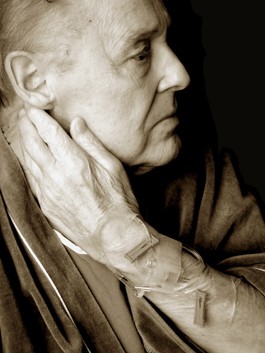
Last Tuesday evening, at the start of the weekly summertime concert in the Plaza, series producer Dan Zastrow took the stage to make a sad announcement, informing the large crowd that “Dr. Toad”–Robert “Todd” Williams, founder of the influential Toad Hollow Winery in Healdsburg—had passed away that morning. Leading the gathering in a toast to Williams, Zastrow quoted Williams’ friend Mark McMullen, saying, “Todd only yelled at the people he loved . . . and Todd loved everybody.”

Williams had struggled with heart problems for several years, and he’d been ill in recent months, but his passing still hit his friends and fans hard. Known for his oversized personality and penchant for telling wild stories, the big and bearded Williams (older brother of actor Robin Williams), founded Toad Hollow with winemaker Rodney Strong in 1993, tirelessly promoting not just his own award-winning wines, but the notion of affordable wines for nonpretentious wine drinkers. Notably whimsical (all of his wine labels featured odd names and paintings of toads doing curious things), he was the P. T. Barnum of wine, bringing a deliberate sense of fun to an industry too often seen as stuffy and snobbish.

“The thing about Todd Williams,” says McMullen a few days after Williams’ death, “is that he was always outside the box. He lived there, outside that box, thumbing his nose at pretentiousness. And he was a very nice guy. Anyone who talked to Todd for 10 minutes walked away believing that Todd was their new best friend—and a lot of times it was true. He was that kind of guy. He was a big man with a big heart, with great big arms that could hug a whole group of people all at once.”

Adds Erik Thorsen, Toad Hollow’s controller and Williams’ longtime friend, “Todd got into this business after years of having owned bars and restaurants all over the world, because he felt that too many people were intimidated by wine. Todd believed that wine should a part of people’s everyday lives, not just something that was celebratory. He wanted people to know they could have a glass of wine with a bowl of chili at home in front of the television or with a grilled cheese sandwich. He believed that wine should be fun, and he made it fun by spreading the message that the rules were not important. If you like red wine with your fish, have red wine with your fish, and enjoy it. That was Todd’s thing: wine is to be enjoyed, it’s not some exotic ritual for rich people.

“On a personal level,” he adds, “I will miss Todd’s stories. Whether they were true or not, I don’t even care. He was a great storyteller. He lived an amazing life, and in the same way he loved sharing his wines with the masses, he loved sharing his life with everyone he met.”

There will be a public celebration of Todd Williams’ life on Saturday, Aug. 25, from 2pm to 5pm, at Richards Grove and Sara Lee Vineyards, 3575 Slusser Road, Windsor. All are welcome.


SEARCH AVAILABLE RESERVATIONS & BOOK A TABLE

View All


Quick dining snapshots by Bohemian staffers.


Winery news and reviews.


Food-related comings and goings, openings and closings, and other essays for those who love the kitchen and what it produces.


Recipes for food that you can actually make.

Doubly Creative

0

August 22-28, 2007

Fall Arts:

Their differences and similarities can be seen in the work. A highly trained artist who taught for years at the college level, she works with oil paint and collage on canvas or wood, blending found images and words with layers of meaning and insight in a style termed magical realism. Her artwork explores themes and ideas through rich colors and deceptively simplistic painted images and text.

He’s a prince—the great nephew of the last czar of Russia—who’s worked as a sailor, farmer, carpenter, timekeeper, jewelry maker and more. With no formal artistic training, his work has a naive spark that springs to life in his chosen media, Shrinky-Dinks, the plastic children’s craft material that reduces after being baked. His hand-lettered titles become part of his artwork. A series depicting moments in his highly unusual life story are featured in his recent book, The Boy Who Would Be Tsar.

Married for 32 years, they’re Inez Storer and Andrew Romanoff, longtime fixtures on the Marin County coast. They live in a wood-shingled, three-story, 100-year-old former hotel in Inverness. Romanoff crafts his small creations in the huge dining room, drafting images first on his computer and then drawing and baking them in Shrinky-Dinks. Storer prefers creating in her studio in Point Reyes Station. A home-based studio doesn’t work for her.

“A woman thinks that she should be doing the laundry and cleaning the house, and why am I doing this egocentric work? I should be saving the world and yadda-yadda,” Storer explains cheerfully. Having a studio to go to, she adds, makes it more “like having a job.”

The inspiration for Romanoff’s creations comes from his memories and from current events. “My routine is simple,” he explains. “I get up and do the Internet. I read the newspapers—the London Times and the Moscow Times.” He sketches ideas on his computer, then uses a color printout as a reference when he draws on sheets of shrinkable plastic.

“Sometimes I get tired of it and I don’t do it. Sometimes it’s very amusing.”

Storer thinks she has the answer for her husband’s erratic work patterns.

“I’ve diagnosed him—he has ADHD,” she laughs. “He’ll have a show, and I look at him and I say, ‘You’ve got to get cracking.’ It’s a month before and I would be frantic. And he’ll say, ‘I’m getting to it.’ He’ll do something else and then all of a sudden, day and night, there’s this frenzy. That’s typical, leaving everything to the last minute.”

“It’s all ready,” Romanoff counters. “I’ve got the plan. All I have to do is create it.”

Storer is much more deliberate in her work. “I’m afraid I’ll be struck down,” she explains.

She earned a bachelor’s degree in art from Dominican University of California and a master’s from San Francisco State University. She’s had solo exhibitions nationwide and has taught at S.F. State, College of Marin, Sonoma State and the San Francisco Art Institute.

Two separate friends each claim credit for introducing Storer and Romanoff. Whoever’s responsible, the couple met in the village of Inverness in 1973 or 1974. They’re not sure of the exact year. She was a divorced mother of two, teaching art classes at San Francisco State. He was a widower with four children, working as a carpenter building homes.

“She was a beautiful lady, full of spark and vim,” Romanoff recalls.

“He was really wild looking,” Storer laughs, remembering that Romanoff had long hair and a beard. “A couple of my friends said he looked dangerous.”

They married. “He moved in with his four [children] and I had my two, in this old hotel,” Inez says cheerfully, likening it to the TV show The Brady Bunch. “You’d never do it if you had any brains,” she laughs.

Storer is a self-proclaimed pack rat. The couple often visit thrift stores together, looking for the postcards, photographs, old books and other items that she uses for inspiration or incorporates in her artwork. On an easel in her studio, a work-in-progress includes a phrase that might point to the steadiness of this marriage, one that’s weathered six children and the stresses of the artistic life.

“Advise strongly against going,” the canvas reads. “Stay where you are.”


Museums and gallery notes.

Reviews of new book releases.

Reviews and previews of new plays, operas and symphony performances.

Reviews and previews of new dance performances and events.

Preview: Marcia Ball

0

08.22.07

Though Marcia Ball’s long, dark hair has gone short and gray, she still favors skirts that allow her long legs to swing to the boogie-woogie beat of her piano. Ball may not act like it, but she is a superstar among blues and R&B aficionados. Along her musical path, which is now over 35 years long, she has picked up multiple Grammy nominations and Blues Music Awards. Rolling Stone magazine once praised her as a purveyor of “rollicking, good time blues and intimate, reflective balladry.” She’s performed on Austin City Limits, A Prairie Home Companion, NBC’s Today Show at the White House and in Martin Scorsese’s PBS series The Blues. She has played at virtually every major festival throughout the United States and Europe.

Ball was born in 1949 in Texas, but she grew up just over the border in Vinton, La., a town of 10 square blocks. She recalls going to an Irma Thomas performance at age 13, an event which helped turn her in the direction of the R&B, soul and blues she had already begun listening to on a radio station out of Beaumont, Texas.

Ball has gone through some changes on the way to her current style. In the late 1960s, she was a member of a psychedelic band called Gum; later, she sang progressive country music with Freda and the Firedogs. Fate stepped in while driving to San Francisco with her husband in 1970. Their car broke down in Austin, where she fell in love with the city that to this day remains her home base. During a recent phone call from Louisiana, Ball said that though her music is steeped in traditional styles, it is “alive and growing,” noting that “I write about half my songs.”

On her 2005 album, Live! Down the Road, Ball recorded the double entendre song, “Let Me Play with Your Poodle.” People sent her pictures of their poodles. Her dog, an Australian shepherd named Sonny Boy Williamson III, was not amused.

Ball headlines Saturday, Aug. 25, at 4:45pm at the Bodega Seafood Art and Wine Festival, Watts Ranch, 16855 Bodega Ave., Bodega. (Unlike a visit to Ball’s home, no dogs are allowed.) The fest continues on Sunday, Aug. 26, with Tom Rigney and Flambeau and Pride & Joy. Saturday, 10am to 6pm; Sunday, 10am to 5pm. $8&–$12; under 12, free. 707.824.8717.

You can also catch Ball on Sunday, Aug. 26, at the Rancho Nicasio’s weekly outdoor summer barbecue. On the Town Square, Nicasio. 4pm. $20. 415.662.2219.


Dave Brubeck

0

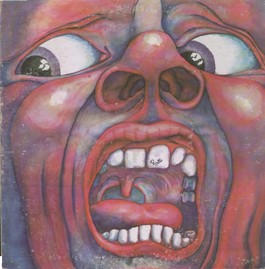
My favorite Dave Brubeck album is Time Further Out, which I bought as a teenager for two reasons: one, it had a crazy-looking painting on the cover; and two, it sounded a lot more dangerous and exciting than its predecessor, Time Out. I mean, a time out is what happens when you need to take it easy for a while. But time further out? Whoa, man.

I wound up buying, listening to, sometimes selling back and debating the pros and cons of many of Brubeck’s other albums. Jazz: Red Hot and Cool, Jazz at College of the Pacific, Gone with the Wind and of course the hugely famous Time Out all featured the quartet in top form. I even once had a long conversation with my mom, herself never much of a jazz fan, about The Riddle, featuring clarinetist Bill Smith in a series of tunes based on the folk form of “heigh-ho, nobody home.”

But over the years, I’ve kept coming back to Time Further Out. It’s one of my “attic records,” from a time when I lived constantly half hunched over in a top-floor room with no insulation, when the summer nights were scalding hot and the gin and tonics were ice cold, when living in an attic was made more cosmopolitan, almost glamorous, by the constant clattering of my typewriter in rhythm with the sounds of jazz coming from my turntable in the corner.

You know how a split-second of a song will take you back in time to a place that fades further and further from memory through the years, but which can be brought back in a complete, unbroken wave of recollection by simply putting a needle on a record? That’s “It’s a Raggy Waltz” for me. Somehow, its bouncy, lithe melody effortlessly conjures an era of my life that was by many accounts dismal. Maybe I liked it back then because it was so hopeful, and maybe I like it now because it helps redden my rose-colored glasses. Either way, it’s my jam.

But Time Further Out also succeeds on another level, in that it’s a concept album that actually delivers both intellectually and musically. The crazy-looking painting on the cover is Painting: 1925 by Joan Miró, and Brubeck was so enamored with it that he wrote the album as a jazz interpretation of Miró’s work. Up in the corner of the canvas, there’s a descending line of sequential numerals; Brubeck adopted these as time signatures to use, respectively, throughout the album.

Like Brubeck’s best-known tune “Take Five,” the songs swing so fluidly that their oddball construction is overshadowed. It was a hat trick employed through much of Brubeck’s career, aided by the palatable velvet tones of one of jazz’s widely underrated saxophonists, the highly inventive Paul Desmond. Swinging or not, the songs were tough to play; at one point during Time Further Out, you can hear drummer Joe Morello actually laughing at the end of a take, relieved that he managed to get through an excruciating chorus.

Each track on Time Further Out is a variation on the 12-bar blues form, which renders “It’s a Raggy Waltz” an unlikely close cousin of, say, Ornette Coleman’s “Blues Connotation.” Many jazz fans would place Brubeck and Coleman at opposite ends of the spectrum, but what Ornette did for harmony, Brubeck did for rhythm—they both skewed the hell out of convention and made it sound normal, distilling rather than magnifying their music’s challenges.

Brubeck has been a pioneer of racial integration, a jazz ambassador and a composer of some of the most complex commercial successes of the postwar era. He’s 86 now, and he’s just recorded an album of reflective solo material, appropriately titled Indian Summer. Most of the tunes are beautiful standards from Brubeck’s youth—”Memories of You,” “September Song,” “I Don’t Stand a Ghost of a Chance with You”—but stuck almost directly in the middle of the disc is a thunderous, full-bodied original called “Thank You,” played as if he were hoping for the whole world to hear his gratitude at having lived such a full life.

After everything he’s given to the world, he’s thanking us. Crazy.

The Dave Brubeck Quartet perform Saturday, Aug. 25, 2007,as part of the ongoing efforts of the Healdsburg Jazz Festival. Jackson Theater, 4400 Day School Place, Santa Rosa. 8pm. $50–$100. 415.392.4400.

Green Zone: Eco-News for Sonoma, Marin and Napa

08.22.07

I set off for San Francisco early on Thursday morning. My mission: to ride on the back of a Vectrix scooter. With a top speed of 62 mph, this scooter is rumored—OK, rumored by its PR firm—to be the best of its kind. With an estimated 10-year battery life, a patented braking system (DAaRT™) that redirects energy back into the battery pack, rapid acceleration, an engine that is quick to charge (plugs into any standard 110/220 volt power outlet and charges in just two hours) and a body that is easy to drive, the Vectrix is virtually silent, with a streamlined design that looks as cool as it is (said to be) practical and comfortable. To make this little Thursday-morning media event all the more tempting, alternative-fuel consultant Chelsea Sexton and Plug in America cofounder Marc Geller are scheduled to speak.

I figure this is a great chance to go for a scooter ride and learn a little bit more about this new electric-vehicle craze that seems to be sweeping the North Bay, where the once obligatory Volvo station wagon is being replaced by the Toyota Prius and the Highlander Hybrid, and scooters are becoming an increasingly familiar sight on the roadways.

I arrive at the event a good half-hour before the scheduled speakers, which gives me time to acclimate to the fog and sign up for my ride on a Vectrix. The Vectrix is indeed as silent as they say; the sound of teeth chattering can be heard despite the scooters whizzing about the parking lot.

When it’s my turn, I climb on the back of a glistening model and go whizzing around in a tight circle, taking the turns with such speed and agility that, if it weren’t for the fact that the scooter wasn’t making any noise or spewing any fumes, I might as well be on the back of a motorcycle. This thing is slick, and I beg for an extra spin around the ring.

“That was great!” I say, as I pull off my helmet. “How much are they?!” I’m in love, and I’m ready to buy. The promotional material I’ve already read claims that the Vectrix is “clean, affordable and fun to drive.” Well, the clean and fun-to-drive parts are true. “Eleven thousand dollars,” a shivering Vectrix promoter informs me as he takes my helmet back.

Maybe it’s just the cold and maybe I just need a cup of coffee, but my exuberance begins to fade. Eleven thousand dollars for a scooter is not “affordable” in my book, and I’m beginning to wonder why the speakers have yet to appear and start speaking. I look around for someone who might be able to explain what’s going on with the keynotes, and see that those in charge have rushed to gather around a stunning news anchor in tight jeans who has only just arrived with her van and crew.

At this point everyone begins to look very important and inflated while I sit, alone and cold on a folding chair, wishing that I could wear such tight jeans without looking like a jerk. Thirty minutes tick by, during which time no one speaks to anyone who isn’t holding a camera or a microphone, and I discover that I have dog crap on my shoe. It’s definitely time to go home.

As I drive back to Sonoma County, it occurs to me that I have just put 70 miles on my car in order to ride an electric scooter for three minutes. The irony, so perfectly represented by the tang of dog crap on my sneaker, does not elude me.

I decide to put in a call to Moto Meccanica, a motorcycle and scooter shop in Santa Rosa, to see if they know anything about Vectrix. Moto Meccanica doesn’t do electric, but they do cheerfully direct me to Revolution Moto, who might. I put in a call to Revolution owner Roy Gattinella to see if he has any electric scooters for sale, and to ask him if he’s heard of the Vectrix. Roy has heard of the Vectrix and considered carrying it at one time, but according to his standards, electric scooters are not a good enough option.

“Using an automobile to run small errands is like sailing a cruise ship to go water skiing,” Roy says. While he eagerly awaits alternatives to the gas-run scooter, the electric scooter just isn’t it. Roy says you have to look at the “manufacturing footprint.” These scooters are being made almost entirely out of plastic, they run on nickel metal hydride batteries that are incredibly toxic for the earth from the moment the nickel is strip-mined to their inevitable disposal, and we have no idea how long the product will last.

“Show me a scooter that runs on hydrogen or on solar, and I’ll be all over it,” Roy says. In the meantime, he feels more comfortable sticking to old technology that is still great technology, scooters that run off of “a sip” of gasoline, and are built to last.

As for me, I’m left wondering, if no scooter is perfect, then who are the real eco-warriors when it comes to transportation? Some say it’s the bicyclists. But what about those of us who don’t appreciate having to equate going somewhere with exercise? Find out more in upcoming columns when I take on the public transit system.

For more information on the Vectrix go to www.vectrixusa.com. For a scooter that sips rather than guzzles, visit Revolution Moto at www.revolutionmoto.com; Moto Meccanica at www.motomeccanica.com.


Preview: Cotati Accordion Festival

0

08.22.07

It may have taken almost 30 years, but Brave Combo, a renegade polka band from Texas, have finally managed to realize nearly every cliché of the rock-star world: appearing on The Simpsons, performing at David Byrne’s wedding, winning two Grammy Awards and recording an album with Tiny Tim. About the only milestone unchecked on Brave Combo’s dance card is performing for the president, although frontman and lead accordionist Carl Finch points out that with this current administration, it’s highly unlikely to happen. “We’re far enough in our career that if we got invited to play on the White House lawn,” he says, “we’d turn it down.”

But wait—what’s that? An accordion festival in a small town, 1,700 miles from home? Hey man, count Brave Combo in! “We’ve wanted to do it forever!” enthuses Finch of the 17-years-and-running Cotati Accordion Festival and its attendant participants. “Freaks, just like us, and in a beautiful part of the country!”

There’s a long-running and accepted notion that the general public hates accordions, but since 1979 Brave Combo have proved it increasingly untrue. While the image of Lawrence Welk as old people’s music fades away—slowly replaced on retirement home stereos by Elvis Presley and the Beatles—there’s a new renaissance afoot for the instrument, and the band’s no-holds-barred mishmash of polka, new wave, noir jazz and border music is living proof. “The old idea of the accordion is so passé, it’s hard to believe anybody would use it as the butt of a joke anymore,” Finch rails, citing tired stereotypes about velour tuxedos and Myron Floren, “because the accordion, generally, is the coolest instrument around.”

Gogol Bordello, Arcade Fire, Yann Tiersen, Joanna Newsom and Dropkick Murphys are but a dramful of new torchbearers for the old keys ‘n’ bellows, and though you’re more likely to hear “That’s Amore” from the lineup in Cotati than, say, Gogol Bordello’s “Immigrant Punk,” you might also get lucky with Brave Combo’s famous version of “Purple Haze.” Yet even Finch is excited about the enormous parade of every participant simultaneously playing “Lady of Spain,” an annual festival ritual best described as majestically nuts. “That’s what’s great about accordion people,” he laughs, “is that they can really poke fun back at themselves.”

The Cotati Accordion Festival spans Saturday&–Sunday, Aug. 25&–26, from 9:30am to 8pm each day, at La Plaza Park in downtown Cotati. Tony Lovello and the Zydeco Gamblers are among the highlights. $15&–$17. 707.664.0444. www.cotatifest.com.


Cost of the Iraq War

0

Photograph by David Abbott
Priorities: Activist Joy Derry camps out in front of Palm Drive Hospital protesting monies spent on war that could have been spent on healthcare.

By David Abbott

MoveOn members in communities around the Bay Area gathered together for a series of press conferences Aug. 16 in an effort to bring the public’s attention to the staggering amount of local taxpayer dollars being funneled into the war in Iraq. The events coincided with the release of the online activist site’s report titled “War at Home,” highlighting the costs of the war for each congressional district, including the Sixth, encompassing Sonoma and Marin counties, Lynn Woolsey’s home district. Costs to St. Helena’s Mike Thompson’s First District were also calculated.

Lydia Karcher organized the event that took place on a sunny Sonoma County afternoon, when approximately 35 MoveOn members gathered in front of Woolsey’s Santa Rosa office to bring the message of public frustration to the Congresswoman. Others met in Pt. Reyes Station, San Rafael, Benicia and throughout the state.

“This is a good turnout,” Karcher said as she surveyed the gathering. “Thirty-five people signed up, and I figured that if we had 10 it would be OK.”

MoveOn’s report estimates the current cost of the war to the state of California overall to be $57.77 billion, with the Sixth District alone kicking in some $1.33 billion. Among the domestic ills that could have been addressed with these tax dollars are healthcare for an estimated 545,599 adults or 495,519 kids; Head Start program funding for 157,656 preschoolers currently not served by that program; the employment of 20,041 new elementary school teachers; the institution of 204,006 scholarships to make college more affordable; renewable electricity for 2,367,038 homes; or 3,977 affordable housing units for low-income renters.

In Mike Thompson’s First District, the local cost of the war is roughly $875 million, a sum that could have instead hired 16,279 public safety officers or supported 11,696 new port container inspectors for California’s busy international waterways.

Many of those gathered at the MoveOn event believe that the total cost of the war exceeds the Bush administration’s estimated $456 billion, and there was speculation about where the funding has really gone.

As she presented an oversized check representing the Sixth District’s lost $1.33 billion to Woolsey aide Emmie Morgan, Karcher enumerated the issues frustrating Americans against the war.

“Bridges are falling and people are dying,” she said. “We need to get out of this war to save ourselves.”

Woolsey was not in town, but Morgan read a statement issued by the Congresswoman: “It is only through the power of the grassroots, when citizens like yourselves hold their elected officials accountable on this issue, that we will have any chance of bringing our troops home safely,” the statement assured.

“You obviously know where I stand on the issue—with all of you,” Woolsey soothed the throng through the voice of her aide, to the accompaniment of the rumble of trucks, supportive honks and peace signs offered by passing motorists.

Ari Camarota heard about the event at a “drinking liberally” gathering in Santa Rosa the previous Monday. Camarota acts as a self-styled “performing arts liaison” for Woolsey.

“This is something that needs to be done,” he said. “We should have been in the streets in 2000. This is what we get for sitting around.”

Of the protest in Sebastopol, “I was really pleased with the turnout,” said Marty Roberts about the 30 or so supporters who rallied at Palm Drive Hospital. “It was a true community effort.”

Roberts praised Palm Drive for allowing the event to take place on its property. Of course, such largesse also focused attention on the healthcare crisis that could be addressed with but a fraction of the dollars wasted on the war.

Twenty-six year old Paul Schiefer spoke before the crowd in front of Palm Drive, representing the generation that will pay the highest price in blood and treasure for the war.

“We are incredibly fortunate to live in a democracy where it is possible to have our voice heard,” he said. “However, if we chose not to participate in our political dialogue, we also have no right to complain about the direction our country is going. This is our moment to shape the future that we will soon inherit. We need to accept the responsibility of being the future leaders of this country and start making our collective voice heard.”

Susan Santiago estimated the crowd gathered in Point Reyes Station to be about 20. Santiago read a list of the names of Californians killed in the war.

“I can’t express in words the horrors I see in this country,” she said.

The series of events were intended to raise awareness of the costs of war to local representatives in preparation for decisions that should be made in September when the fabled “Petraeus Report” is set to be released.

The research contained in the report was performed by the National Priorities Project (NPP), a 501(c)(3) organization in Northampton, MA, that purports to “analyze and clarify federal data so that people can understand . . . how their tax dollars are spent.”

More information is available at MoveOn.org and on the NPP website at http://nationalpriorities.org.


His Floating World

0

08.22.07

The great thing about tenure is that I can’t be dismissed summarily,” laughs Sonoma State University professor Michael Schwager. The director of SSU’s prestigious art gallery, Schwager is making a nervous joke about his job’s future because his exhibition space is preparing to hang a series of works by Hawaii-based painter Masami Teraoka that are, well, genital-friendly. And blood-friendly. And breast-friendly. And bestiality-friendly. And sure, the-Pope-as-monster-friendly.

A career retrospective, the show—titled “Drawing on the Parts: The Art of Masami Teraoka”—presents Teraoka’s work in its intended and unabashed form, wonderfully contrasted with ancient Japanese prints that the painter has, in the past, taken for inspiration.

“Drawing on the Parts” is a rare collaboration between one of Teraoka’s most avid supporters, the Palo Alto&–based collector Brian Pawlowski, his San Francisco gallerist Catharine Clark and Schwager. (By coincidence, Schwager and Clark each bought a piece of Teraoka’s work decades ago as their first-ever fine-art purchases.) Now they are teaming up to bring this world-class artist and his very modern vision to the North Bay in an unprecedented exhibition of the type normally reserved for urban museums.

Japanese-born, Teraoka emigrated to L.A. in the early ’60s to attend the Otis College of Art and Design, where he completed both his undergraduate and MFA degrees. With almost no English skills, the artist was startled and invigorated by his new California home and quickly became immersed in what has come to be known as the “second wave” of pop art that emanated in part from the pastel shock of SoCal culture.

Influenced by the traditional wood-print style that marks Japan’s Edo period—a time roughly traced from 1615&–1868, one of calm and prosperity in Japan, when the wealthy merchant class was demoted from power but freed to enjoy what was termed a “floating world” of arts and culture unique to themselves while the Shogun ruled—Teraoka made it his own. Much of the art emanating from that time was as deeply erotic as it was concerned with narrative and storytelling. Bohemian and underground, full of allusions and in-jokes, the culture’s beloved woodblock prints marking that time, known as “ukiyo-e,” are well-known to most children growing up in Japan.

Drawing upon this “floating world” tradition and its arts, Teraoka set about systematically taking ukiyo-e styles out of the realm of the Shoguns and onto the beaches of L.A., using recurring images as individual shorthand. Ancient text, a script known as “jojuri” that is tantamount to Middle English, accompanies the images in cartouches placed throughout, sketching out jokes that Teraoka admits even he can’t often remember. Tissues, an old-fashioned visual reference to carnal pleasure, and condoms, a new-fashioned reference to sex as death, abound. Octopi pleasure women eight different ways while jumping catfish presage disaster.

Looking to the world around him, Teraoka fashioned huge, stylized panels featuring geisha and samurai eating McDonald’s hamburgers and Baskin-Robbins ice cream. He envisioned L.A.’s iconic La Brea tar pits under the shadow of Mt. Fujiyama. He made his geishas titian-haired, blue-eyed girls and gave them condoms to grapple. His samurai sport professional diving equipment and Timex watches. His Japanese women wear Brazilian thong bathing suits and impatiently repel men’s attempt at succor. His blonde-haired Western geishas greedily slurp down labia-shaped sushi. He himself often appears in the works, bemused and clownish, the butt of all cultural jokes.

“It’s never simply copying; there is such a wonderful satirical cultural criticism—the Westernization of Japan,” Schwager says. “Japan has embraced Western culture, and it isn’t always pretty.”

And then, in the ’80s, a friend’s child was tragically transfused with HIV-positive blood, and Teraoka changed his focus. As AIDS raged throughout the art world, the artist slowly moved away from the ukiyo-e style that had made his name and began to learn about and investigate the traditions of Western art, particularly the religious work of the European Renaissance.

Moving from watercolors on paper to oils on canvas, Teraoka has since produced nightmarish, brilliantly conceived triptychs and panels based on old master paintings but ideologically concerned with AIDS, corruption in the Catholic Church, women’s subjugation both in the West and Middle East (one series deals with the role of the burka), the Jesus myth replete with stigmata, and—ceaselessly—with the mysteries and joys of female sexuality. Reminiscent of the lurid scenes of Hieronymus Bosch, these hugely narrative multiframe paintings are political, incisive, fiercely topical and yet retain an ineffable, compelling beauty.

“We get really extreme reactions. I’m used to it, because a lot of the other artists we show here invite that response. That’s what art should do. If you’re pleasing everybody, maybe you’re not working hard enough,” says Teraoka’s chief gallerist, Catharine Clark. “I’ve had clients who are Catholic who might be offended by some of the content that critiques the church, and I have others who say, ‘This is the conversation that needs to be happening.’ I love that art can inspire that kind of conversation. There’s still a pervasive opinion that the role of artists is entertainment, and the purpose is to uplift; I don’t necessarily think that’s an artist’s job. Not all of it is pretty or easy to digest, but then, neither is the news. Masami is almost like a sponge; he takes everything in, and it all gets into the work.”

Acknowledging that Teraoka’s current work can be controversial, Schwager says, “I don’t do anything just to fill the space, but I don’t know if we’ve ever pushed the envelope this far. Art has always played a role one way or another in stretching boundaries and making visible what people sometimes just think or image. This will be a potent combination.

“For the county, for our audiences, for people who really want to see challenging work—and a lot of the work is super-inviting and beautiful—this is going to be a great pleasure.”

‘Drawing on the Past: The Art of Masami Teraoka’ runs Sept. 6&–Oct. 14, opening with a public reception on Thursday, Sept. 6, from 4pm to 6pm. Teraoka appears in discussion with writer Alison Bing on Saturday, Sept. 29, at 2pm. A sushi-filled reception precedes. All events free. Art Gallery, SSU, 1801 E. Cotati Ave., Rohnert Park. 707.664.2295.


Brewing Beer in Barrels

0

08.22.07


Sometimes I wish I were an oak barrel. They lead lives of luxury, housed for all their years in rustic wine country cottages, some with million-dollar views of the hills and the vines and the goats over on the neighbor’s estate—and they’re constantly full to the brim with fine wine. When one vintage goes to bottle, why, another is bound to arrive. It’s paradise.

But what if your owner gives you away to a brewery? It happens—more and more frequently, it seems—and what a shock it must be to find yourself suddenly filled to the quarter hoop with bitter beer. Yet the brews getting this royal oak treatment are blessed with a whole lot of love, and months or years in a barrel can make a pretty remarkable brew.

“We’ve been barrel-aging our beers this way since 2001,” says Vinnie Cilurzo, owner and brewmaster at Russian River Brewing Co. “Back then, it was just a side-hobby brew, but over time it got more popular. When we moved from Korbel to our downtown location, we started to make barrel-aging standard process.”

Cilurzo uses oak barrels for several of his Belgian brews, such as Temptation ale, Supplication ale and Beatification ale. The barrel-aging lasts a year to two years or more, and currently four beers on the list spend some time in oak. The Beatification blonde ale sits for 23 months in La Folie barrels, while the other barrel beers hang out for about a year in their respective oak casks.

The Depuration blonde ale gets a year in a French oak Chardonnay barrel with an addition of white wine grapes; ditto for the Temptation golden ale, minus the fruit; and the Supplication brown ale spends a year in French oak Pinot Noir barrels with a slog of sour cherries tossed in for the duration. During the barrel time, a complexity, a thickness of flavor and a depth of character arrives in the body of each beer.

Barrel-aging beer is an old tradition in Belgium. Going hand in hand with this technique is the concept of sour beer, which Russian River is also pursuing. The barrel does not cause sourness; the Brettanomyces yeast used in fermentation does, but Cilurzo just happens to age three of his four sour beers in the old wine barrels. It’s a double whammy, making for some of the most unusual beer in the North Bay. And be warned: This sour-beer business is no subtle nuance for tasting geeks to dance around with their delicate naming games; the beer’s tartness surpasses lemonade.

At present, Russian River Brewing Company is increasing its barrel-aging operation. While Cilurzo, formerly a winemaker, now owns 60 barrels, he plans to acquire another 300 or more within months and put them into the production process at his new location on Santa Rosa Avenue, to open in early 2008. Every barrel will be deployed into the sour-beer line, though this expansion won’t hit shelves until 2009, he says.

“It’s literally like making wine. It’s funny. I left the wine business to make beer, mainly because I liked the quick turnaround. You could have a batch of beer in 20 days. It’s kind of ironic that I’ve come full-circle and am now making beers that take two years,” he chuckles.

Some oak barrels never taste wine, getting dunked on day one into the Appalachian whiskey trade. American law states that whiskey barrels cannot be used twice, a stipulation that drives many American barrels overseas for a second bout of action in the Scotch industry. But for others, it’s Miller time. Around the nation, more and more brewers of “extreme” beers have taken to aging their barley wines, stouts and old ales in retired bourbon and whiskey barrels, which can impart a severe yet very appealing bite of hard alcohol to the brew.

“Our first foray into barrel aging was in 1997 for our 10th anniversary,” said Mark Ruedrich, president and brewmaster at Ft. Bragg’s North Coast Brewing Co. “That one was a Belgian dubbel.”

But today, the company’s barrel experiments are growing more frequent. As we speak, the brewery pub is pouring a mighty version of its Old Rasputin Russian imperial stout, aged for 13 months in Kentucky bourbon casks as an ode to the big award-winning stout’s 10th year of production.

Old Rasputin, in her pure form, is a hoppy, muscled-up, black-bodied titan of a beer, with an ABV of 9 percent and scents of toasted wood, dark chocolate and molasses in the finish. The bourbon barrel makes Old Rasputin X even better. The cask adds a heavy, sweet aroma and an appealing softness to the flavor. Vanilla melts with the bitterness and the toasted barley, and, tasted beside the original Old Rasputin, this stout is an entirely different drink. The ABV has increased, too, mostly via evaporation, to 11.6 percent by volume. This baby’s hot. It’s only available at the brewery, so go get it while it’s there.

North Coast has also given its potent Old Stock ale the barrel treatment. Due for release in several months, the experiment will furnish two special versions of this super-beer—one aged in bourbon barrels, and the other in brandy barrels. Ruedrich has been doing some experimental tasting in the brewery’s cellar, and he reports that the brandy has imparted a sherry-like flavor to the beer that, he assures, is “just remarkable.”

Ruedrich has also siphoned a sampling of his famed Brother Thelonius Belgian-style ale into 10 former Syrah barrels. He says he does not quite know what to expect. Meanwhile, some new space at the brewery has opened up, says Ruedrich, and he plans to boost his barrel production from 50 to 100.

Down south in the yellow hills of Paso Robles, Pinot Noir and Merlot aren’t the only things making people shout. Firestone Walker Brewing Co. has been fermenting—actually fermenting—beers in new oak for over 10 years, since the company’s founding in 1996.

“This brewery comes from a winemaking family,” says brewer Matt Brynildson. “We’re really comfortable with the use of barrels.”

The barrels are of new oak, which only mingles with the beer for two weeks or so during primary fermentation. This intercourse produces a mild toffee-and-vanilla flavor in three year-round beers: their Double Barrel ale, the Firestone pale ale and the Walker’s Reserve, the latter an espresso-like chocolaty porter. However, for the brewery’s 10th anniversary last year, management decided to push the barrel concept a step further.

“We kept our backs to the barrel-aging process for a long time,” says Brynildson, “but when our anniversary was coming up, we decided to make a high-gravity beer, fermented in oak and aged in oak. It did well for us, and we’ve decided that now each year we’re going to do an oak-aged release.”

Last year’s special release was not just barrel-fermented and barrel-aged, says Brynildson, it was also a blend of seven different beers. Just like winemaking. And they were whoppers. A triple IPA, an imperial brown ale, a robust porter, a hemp ale and a Russian imperial stout of 14-percent ABV all contributed to the soup. Brynildson describes the blend’s flavor as “almost over-oaked, intensely vanilla and bordering on coconut.” The 500 cases are all gone now but for a few bottles being passed around on Internet trading sites for hundreds of dollars each, but the next super-oaked blend is due out in October.

Like many other breweries in the barrel business, Firestone is boosting its barrel production over time. It makes one wonder: What’s happening to beer? You know, that light yellow crap, the king of the Rockies or whatever they call it? Cilurzo believes that increasingly, more Americans prefer new and exotic foods and drinks, and that barrel-aged beer flows right along with the trend.

“Consumers are willing to experiment and try something totally funky and unique, and, compared to fine wine, these beers are a very affordable luxury. It’s 10 to 12 bucks for a 375 milliliter bottle, but it comes out to be a lot cheaper than an equivalent $50 or $60 bottle of wine.”

For North Coast’s Ruedrich, barrel-treated beers represent a greater change in the very understanding of beer.

“Barrel-aged beer represents a development in our understanding of beer. For a lot of people, beer was always the light watery stuff in a can. That changed, and now it’s changing some more as people discover that beer can improve over long periods of time. Aging them in barrels is just a further development in our understanding of what is beer. Really—what is beer?”

Like a fine wine, the answer keeps getting better with time.

Russian River Brewing Co., 725 Fourth St., Santa Rosa. 707.545. 2337. North Coast Brewing Co., 455 N. Main St., Ft. Bragg. 707.964.2739. Firestone Walker Brewing Co., 1400 Ramada Drive, Paso Robles. 805.238.2556. Also look for barrel-aged specimens from El Toro Brewing Company in Morgan Hill and a few high-alcohol oaked oddities from Drake’s Brewing Company in San Leandro.

Quick dining snapshots by Bohemian staffers.

Winery news and reviews.

Food-related comings and goings, openings and closings, and other essays for those who love the kitchen and what it produces.

Recipes for food that you can actually make.

Quiet on the Set

0

August 15-21, 2007


Holding her right hand against her portable headset, Stacy Stanzl, 20, listens intently to the instructions being relayed to her and then yells out, “Rolling!” Clad in jeans and a green T-shirt, the San Francisco State University student is standing in front of what appears to be a half-completed wine shop, with walls of racks just waiting to be filled with bottles. At the sound of Stanzl’s voice, the handful of people near her stop talking and working. They don’t want to make any noise that could interfere with filming on the set next door.

This isn’t Hollywood. It’s Sonoma.

At college, Stanzl studies film. This summer, she’s back in her hometown, on the set of the feature film Bottle Shock. She worked in the production company’s office from late May to early August, answering phones and running errands. That was a paid position. Now she’s an intern, putting in 12- to 14-hour days, six days a week. She’s earning school credit and a résumé listing, but no money. She loves every minute.

“It makes more sense than making people lattes in San Francisco for $9 an hour,” Stanzl explains with a huge grin after the “Cut” command has been forwarded and she can talk again. “It’s much more relevant to what I want to do.”

She steps outside. Four gleaming white air-conditioned travel trailers with colorful “Star Wagons” logos are lined up in the rear parking lot of this 9,200-square-foot office and warehouse space in eastside Sonoma. Humming softly nearby is a portable generator. A Hollywood Caterers truck offers refreshments.

This is the headquarters of Shocking Bottles LLC, the production company formed to turn the Bottle Shock manuscript by entertainment-lawyer-turned-writer Ross Schwartz into a feature-length film. The movie is a light-hearted look at what’s considered the birth of the California wine business in 1976, when Napa vintages emerged triumphant from a blind tasting against their highly regarded French counterparts. It’s a romantic tale woven around actual events and focusing on the father-and-son duo of Jim and Bo Barrett of Chateau Montelena winery, which produced the winning Chardonnay.

In 2005, Marc and Brenda Lhormer, promoters of the Sonoma Valley Film Festival, read the Bottle Shock screenplay and loved it. They recruited director Randall Miller and his writing/producing partner Jody Savin. Also on board are producers J. Todd Harris and Marc Toberoff. After rewrites to the script, Miller’s film industry connections attracted a strong cast headed by English actor Alan Rickman. The long list of Rickman’s credits includes playing Professor Snape in the Harry Potter movies and the villain in Die Hard.

Operating on a shoestring budget (the producers won’t disclose the actual amount), Bottle Shock began a 30-day filming schedule on Aug. 1 in the Napa and Sonoma valleys. That’s how Stanzl came to be a set intern at the Sonoma warehouse site, equipped with a headset and unbridled enthusiasm.

“It’s the most amazing thing ever to happen in Sonoma since the Bear Flag Revolt,” Stanzl asserts, her voice filled with both humor and awe.

It’s hot on the indoor set. Really hot. Large circular lights close to two feet in diameter blaze overhead, creating perfect camera conditions but making people sweat. The air conditioning rumbles loudly. Once everything and everyone is in place, the order goes out to turn off the air conditioning. It takes a few moments before the noise dies away. Then filming begins.

Merely using plywood, paint and attention to detail, this corner of a former wine-label warehouse has been converted into an airport lounge circa 1976. Or at least the center area and three sides give that impression, with bright orange walls, a light yellow ceiling, rows of black chairs and a gray counter area displaying TWA and American Airlines logos. Visible through the “windows” is an image of a plane awaiting boarding. The fourth side of the room is dark, filled with equipment and technicians all supporting the illusion being created for the cameras.

Colorful polyester patterns of the ’70s are everywhere as volunteer extras pretend they’re waiting for a flight. The cameras focus on Rickman, portraying an English wine shop owner who was the chief architect of the tasting, and Chris Pine (The Princess Diaries 2, Just My Luck, Blind Dating) as Bo Barrett.

In today’s scene, Rickman’s character discovers he’s only allowed to carry one bottle of wine onboard his international flight to Paris. Worried that the vintages chosen for the tasting mustn’t be bumped or shaken in the cargo area, Rickman and Pine recruit other passengers to carry the extra bottles.

With a click of a slate showing the scene and take numbers, filming begins.

Rickman’s distinctive, well-modulated voice carries easily as he steps up to the TWA counter. “I’ll be traveling on flight 349 to Paris this morning,” he says smoothly. His voice carries authority and assurance.

With an exceedingly plastic smile, the woman behind the counter explains that he can’t take his 26 wine bottles on board. Rickman and Pine address the crowd. When Pine announces that his family owns a Napa winery, a voice asks, “Is your last name Gallo?”

There’s a minor hitch in the smooth-flowing scene, and a crewmember conveys the director’s order: “Back to one.” Wearing a floppy beige hat, a volunteer extra who was standing at the counter when the scene started doesn’t appear to understand the cue, and begins wandering off the set. A crewmember steps out, gently guiding her back to her starting spot. The main actors and the director don’t even seem to notice the mistake.

The scene is run several times, with a makeup artist patting the sweat off the actors between takes. It’s shortly before noon. Most people in the room began their workday between 6am and 8am, and will keep at it until 8:30pm or 9pm. A total of 60 extras and six principal actors showed up at staggered times this morning, were prepared by the wardrobe and makeup crews, then waited until called to the set.

Sonoma residents Bob Ogle and his wife Lucy Weiger are in the crowded airport scene. “We don’t call ourselves extras,” Ogle explains with a laugh. “We’re ‘background artists.'” A salesman, he took a day off to get his first experience on a movie set. His wife came dressed in a 1970s outfit that she’s owned for 30 years, but he had to be fitted into a suit by the wardrobe people. “The funny thing was trying on the clothes and remembering why I hated the ’70s,” Ogle laughs again. “All that polyester.”

The lights and sound technology fascinate Ogle, but the big draw is making a feature film with an outstanding cast. “I was blown away that Alan Rickman is starring. I walked on the set and there he was. Just hearing his voice, you think of Harry Potter and everything. It’s pretty fun–a memorable day.”

Taking it all in stride is David Hinkley, looking very ’70s in a brown corduroy coat with light-colored elbow patches. “I’m just a local actor who used to do a lot of theater in Sonoma County,” he says. “I got all the leads when I was young and pretty. Now I mostly do character roles.”

Today, he’s an unpaid extra, but in a featured spot. “I had to smoke 10 cigarettes and they got a close-up.”

There’s no way to know if the shot will be included in the final movie, but he doesn’t care. “I’d play a rock just to be in a scene with Alan Rickman and Chris Pine. Those guys are amazing.”

There’s been some controversy about Bottle Shock. It’s in production while another, higher budget film based on George Taber’s original book, The Judgment of Paris, is still being written. But this isn’t a contest or a race. The other movie will be focused on the larger picture. Bottle Shock is a fictionalized story about the Barretts, the self-proclaimed “hicks from the sticks” who shook up the wine establishment.

The script takes a few liberties, including the wine-intern love interest played by Rachael Taylor (Transformers, See No Evil). The mainstream media has made much of the fact that in one playful scene, when stranded by the side of the road, she flashes her breasts to get a passing motorist to stop and help. There was no such woman in 1976, but Taylor’s character adds spice to the story line.

Some shooting is being done in Calistoga and the Napa Valley, including at the Chateau Montelena winery, but in many scenes, Sonoma Valley locations substitute for Paris and Calistoga in the 1970s. Director Miller is thrilled by the local conditions.

“I haven’t seen an afternoon when I haven’t been amazed by the light,” he explains. “It’s very cinematic. People live here and they appreciate it, but they don’t realize how beautiful it really is.”

Before he read the script, Miller wasn’t familiar with the wine competition that’s come to be known as the Judgment of Paris, but he thinks it makes an incredible story element. It was a time when all kinds of people were involved in the fledgling California wine industry. “It’s a story about people,” Miller says. “Some of them were screwy, some were regular guys and they managed to create something wonderful.”

The story, Miller says, attracted an A-list of cast members to work for scale on this independent movie. In addition to Rickman, Pine and Taylor, the movie features Bill Pullman (Independence Day, Zero Effect, Lost Highway), Freddy Rodriguez (Grindhouse, Six Feet Under, and soon to join the TV series Ugly Betty) and Eliza Dushku (City by the Sea, Bring It On, Buffy the Vampire Slayer).

The movie’s 30-day shooting schedule is dictated in part by the limited budget, but it also makes it feasible for these accomplished actors to participate.

“It’s like coming to do an off-Broadway play for a short period of time,” Miller explains. “People want to do an artistic endeavor.”

Lori Laube and Jenifer Coté of Santa Rosa-based American Eagle Casting are charged with filling more than 450 roles for Bottle Shock. “We’ll use a lot of people more than once,” Laube explains. And they’re not just casting people, they’re also rounding up authentic-looking cars and other vehicles.

She’s happily amazed by the number of people volunteering to be in the crowd scenes (details at www.americaneaglestudios.com). “Some of them are here 12 and 14 hours a day. I can’t speak highly enough of the caliber of people we’re getting locally.”

Usually, their company works on documentaries, short films, commercials and print shoots; they’re currently recruiting models for a tourism catalogue. Laube is delighted to be working on a feature film, hoping it will attract other productions to this area. Casting work is demanding but fun, she says.

“You have to be highly organized, you have to have a lot of patience, and you have to be able to talk people into working for free.”

For some, it’s not a hard sell. Daria Taylor is part of the airport crowd scene. She saw an announcement about the project on the Internet just five months after she and her husband moved from Australia to California. They live in San Jose, but she thinks it’s worth the drive. “My husband thinks I’m crazy,” she says happily. To be on the Sonoma set by 8am, she departed San Jose about 6am. She’ll put in a 12- to 14-hour day, mostly standing around waiting, then drive back home, all for no pay.

“It’s not arduous. It’s a bit hot [on the indoor set] but nothing too extreme. This will be a good story to make the people back home jealous,” she smiles. “This is the day I got to stand next to Alan Rickman.”


New and upcoming film releases.

Browse all movie reviews.

Doubly Creative

August 22-28, 2007Fall Arts: Their differences and similarities can be seen in the work. A highly trained artist who taught for years at the college level, she works with oil paint and collage on canvas or wood, blending found images and words with layers of meaning and insight in a style termed magical realism. Her artwork explores themes...

Preview: Marcia Ball

08.22.07Though Marcia Ball's long, dark hair has gone short and gray, she still favors skirts that allow her long legs to swing to the boogie-woogie beat of her piano. Ball may not act like it, but she is a superstar among blues and R&B aficionados. Along her musical path, which is now over 35 years long, she has picked...

Dave Brubeck

Reflecting on the master jazz pianist and his 'Indian Summer'

Green Zone: Eco-News for Sonoma, Marin and Napa

08.22.07I set off for San Francisco early on Thursday morning. My mission: to ride on the back of a Vectrix scooter. With a top speed of 62 mph, this scooter is rumored—OK, rumored by its PR firm—to be the best of its kind. With an estimated 10-year battery life, a patented braking system (DAaRT™) that redirects energy back into...

Preview: Cotati Accordion Festival

08.22.07It may have taken almost 30 years, but Brave Combo, a renegade polka band from Texas, have finally managed to realize nearly every cliché of the rock-star world: appearing on The Simpsons, performing at David Byrne's wedding, winning two Grammy Awards and recording an album with Tiny Tim. About the only milestone unchecked on Brave Combo's dance card is...

Cost of the Iraq War

Photograph by David Abbott Priorities: Activist Joy Derry camps out in...

His Floating World

08.22.07The great thing about tenure is that I can't be dismissed summarily," laughs Sonoma State University professor Michael Schwager. The director of SSU's prestigious art gallery, Schwager is making a nervous joke about his job's future because his exhibition space is preparing to hang a series of works by Hawaii-based painter Masami Teraoka that are, well, genital-friendly. And blood-friendly....

Brewing Beer in Barrels

08.22.07Sometimes I wish I were an oak barrel. They lead lives of luxury, housed for all their years in rustic wine country cottages, some with million-dollar views of the hills and the vines and the goats over on the neighbor's estate—and they're constantly full to the brim with fine wine. When one vintage goes to bottle, why, another is...

Quiet on the Set

August 15-21, 2007Holding her right hand against her portable headset, Stacy Stanzl, 20, listens intently to the instructions being relayed to her and then yells out, "Rolling!" Clad in jeans and a green T-shirt, the San Francisco State University student is standing in front of what appears to be a half-completed wine shop, with walls of racks just waiting...
11,084FansLike
4,446FollowersFollow
6,928FollowersFollow