Wine Tasting Room of the Week

0


Sometimes, the road to Dry Creek leads to Carneros and the road to Carneros leads back to Kenwood. I’ll explain. Planning to hit Dry Creek, I was foiled by one of those weekend events where the valley is messy with gaggles of stumbling wine tasters. (I know you are but what am I?) Researching an alternate foray into Carneros, I found Ty Caton Vineyards-Muscardini Cellars, finding also, by happy accident, this shared tasting room’s grand opening.

A local who attended Sacramento State University and did a brief tour in the real estate theater, Ty Caton returned to his family’s Sonoma Valley property in the mid-’90s to develop a 40-acre estate vineyard. Caton is both a hands-in-the-dirt winegrower who planted much of the vineyard himself and savvy entrepreneur. He started up a whimsical sideline with a lower price point called Racchus (rhymes with Bacchus; the white is called Rollus—Racchus and Rollus?) and, on a whole new level of fun and sun, a small-batch Tahitian rum brand. Michael Muscardini is a neighbor of the Caton’s who comes from the building trade and focuses on Italian varietals. Current releases were made at Wellington Vineyards, but Caton and Muscardini now have their own tasting room in Sonoma’s new Eighth Street “winery condo” park. That’s the Carneros connection.

Located in the Kenwood Village Plaza with a convenience market and a post office, the tasting room is already a new candidate for local favorite among cross-county commuters, and it’s open ’til 6pm. Thanksgiving dinner alert: Muscardini Cellars 2006 Rosato di Sangiovese ($18) is a great choice for folks who are on the fence over serving a red or a white with the good dead bird. It’s a dry rosé with a touch of rose petal and strawberry, with a full body that makes it a contender.

Muscardini also offers a red Sangiovese, Barbera and a Super Tuscan. The 2005 Unti Vineyard Syrah ($38), however, was a standout for bright white pepper that seems to focus the fruit at the top of the palate. The star of Caton’s estate is really the Cabernet. Little wonder, it’s next door to the esteemed Monte Rosso vineyard. The 2004 Estate Cabernet Sauvignon ($42) confounds expectation—it’s got the softest, most integrated tannins of wines tasted. Smokey plum and leather add background to signature blackcurrant Cab flavors.

The chocolate mint notes of the 2004 Tytanium ($46) hint at its roots in volcanic soil, and the warm mouth-feel rides the middle of dusty and velvety tannin. The choice that highlights the on-the-way home location may be the 2004 Ty Caton Estate Field Blend ($20), a kitchen-sink cuvée that is about all you’d want on the dinner table.

Ty Caton Vineyards and Muscardini Cellars, 8910 Sonoma Hwy. (in the Kenwood Village Plaza), Kenwood. Open daily, 10am to 6pm. 707.833.0526.


View All

Desert Storm

11.07.07

Afew months ago, The Devil on Horsebacktold of the Darfur crisis. Darfur Now shows how much progress has been made in a relatively short time. The documentary observes six men and women who are trying to stop the government-armed “janjaweed,” irregular soldiers who have been burning, looting and raping their way through the Sudanese province.

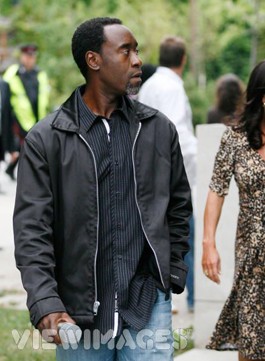
The best-known of the six subjects is actor Don Cheadle, who co-wrote a book on the subject, Not On Our Watch. Cheadle is seen trying to inform the governments who are investing in Sudan of the situation, and he takes his equally famous friend George Clooney to travel with him. At a press conference, Clooney says the Darfur rescue will be a finite process. Clooney claims that he and Cheadle talked to people who hadn’t really been talked to about Sudan. “We’re the highest-level delegation that has ever gone to Egypt. This shouldn’t be. This is embarrassing.”

Other subjects include Adam Sterling, a 24-year-old student activist and part-time restaurant employee in L.A. who gets word out about the genocide, taking his case from street corners to the California state capitol. In Darfur, we hear from Ahmed Mohammed Abakar, the sheik of the Hamadea refugee camp (population 47,000). He tries to keep peace among the traumatized and furious refugees who keep expanding their numbers. And in the hills, Hejewa Adam, a mother whose child was murdered by the soldiers, camps in a burned-out house and trains with her fellow guerillas against the janjaweed.

Pablo Recalde, a dapper aid worker in a straw fedora and a well-groomed beard, heads the World Food Program in Darfur. It’s operated out of a modest single-wide trailer in the West Darfur capital El Geneina, a town crawling with armed men. There, Recalde organizes truck caravans to the starving sections of the country.

And in the Hague, an International Criminal Court (ICC) prosecutor named Luis Moreno-Ocampo assembles a case against the Sudanese officials who have been trying to pretend their fingerprints aren’t on the triggers. Moreno-Ocampo is from Argentina. There, he had the satisfaction of prosecuting the officers who unleashed the fascist “Dirty War” on his fellow citizens. Seen patiently assembling his case, flying to the U.N. headquarters or commuting to work in a rowboat on a Holland canal, Moreno-Ocampo works against time. Yet, at the ICC, an unidentified official shrugs that two accused architects of the Darfur genocide will be surrendered by Sudan “in a month, two months . . . six years.”

Darfur Now gives some voice to Sudan’s alibis. Recalde suggests the janjaweed might be the contents of a Pandora’s box opened by the government; once unleashed, they’re hard to retrieve. A group of Arabs say that they’ve been the victims of Darfur raiders. And Sudan’s U.N. ambassador, Abdalmahmood Abdalhaleem Mohamad, inventively describes U.S. outrage over Darfur as a calculated appeal to the American black vote.

Writer-director Ted Braun keeps raising the film to an upbeat note, as if wrapping it all up, and then shifting back to a worsening situation. One wishes it had been possible to send out a squad of several directors, each taking an aspect of the tragedy, a Six Films About Darfur. But Darfur Now is rather like that, anyway; its transitions barely have any connecting tissue. (I know this is like complaining about the ill-fitting suit on a messenger bringing important news.)

Braun records the triumphs on the humanitarian side: a food convoy that makes it through without being hijacked by thieves. Sterling’s yearning to do some good leads to California Assembly Bill 2941, divesting California pensions from companies that invest in Sudan. Moreno-Ocampo poses with his hand on a pair of chairs at the World Court, which, he trusts, will soon be filled with a pair of sweating Sudanese ministers trying to get their stories straight.

If one perceives in Darfur Now a false dawn in this darkness—an upbeat tone that’s part of the slickness of this film’s technique—it fits in with the right attitude to take toward this crisis. We can fix it.

‘Darfur Now’ opens at select Bay Area theaters.


New and upcoming film releases.

Browse all movie reviews.

Love Your Brother

0

11.07.07

On the same page of the Old Testament in which Moses condemns the eating of shrimp as an “abomination” and warns against the wearing of linen and wool together as an “abomination,” the text also pronounces homosexual union an “abomination”—as bad, one supposes, as snacking on shrimp in a poly-blend suit.

There are some differences, of course. Prawn consumption rarely leads to excommunication, ostracism or suicide. Italian-cut cloth rarely causes family disruption, loss of faith or eternal damnation. But the topic of homosexuality in the Catholic and fundamentalist churches remains, even in the supposed enlightenment of the 21st century, a divisive topic.

Filmmaker Daniel Karslake produced a short segment for PBS on a lesbian African-American Harvard Divinity student that caused a teeanger from Iowa to write to him thanking him for saving his life. “I bought the gun. I wrote the note. I happened to see your show, and just knowing that someday I might be able to go back to a church with my head held high, I dropped the gun in the river,” the youth wrote. That prompted Karslake to lengthen his short into the documentary For the Bible Told Me So, which screens on Nov. 15 at the Rialto as a benefit for Face to Face Sonoma County AIDS Network.

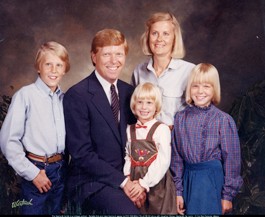
Focusing on five prominent figures, including Bishop Desmond Tutu and former House Majority leader Dick Gephardt, whose daughter Chrissy (above right in one of those classically awful family shots of yore) is a lesbian, For the Bible looks at how educated people of faith handle the normal human rise of same-gender love.

In a letter produced to help promote the film, director Karslake explains that the focus of the film is forward, not backward, intended to bolster those “who believe their religion is about love, not hate and separation.” Amen to that.

For the Bible Tells Me So screens on Thursday, Nov. 15, at 7:15pm. Rialto Lakeside Cinemas, 551 Summerfield Road, Santa Rosa. $6.50-$9.50. 707.525.4840.


New and upcoming film releases.

Browse all movie reviews.

First Bite

0

11.07.07

Editor’s note: First Bite is a new concept in restaurant writing. This is not a go-three-times, try-everything-on-the-menu report; rather, this is a quick snapshot of a single experience. We invite you to come along with our writers as they—informed, intelligent eaters like yourselves—have a simple meal at an area restaurant, just like you do.

This isn’t technically a first bite, or a second, or even a 12th bite. I admit, I’m a Cape Fear regular. One of this restaurant’s beauties is that it can be many things at many times to many people. The tourists love that it pops out of nowhere on the way to Jenner, offering Southern-kissed Californian food pleasing to a citizen of anywhere. Locals love the comforting flavors and the welcoming atmosphere: a peaceful, window-lined room, with walls filled with local art and carved African masks.

I’ve gone to dinner there after canoeing from Monte Rio to Casini Ranch, and was treated to a feast befitting the valor of such an adventure (Carolina chicken with prosciutto, fontina and pecans in bourbon cream, $18.50; and roasted pork tenderloin in Jim’s mahogany sauce, $20). I’ve brunched there (Jonesboro Benedict: caponata and fontina with hollandaise over poached eggs on black pepper grits, $9.95; Hangtown fry: pan-seared cornmeal oysters, country sausage and green onion in parmesan scrambled eggs, $12.95) after visiting “our” Cadenasso, a painting we cannot afford to own but consider ours anyway, despite its actually belonging to the Christopher Queen Gallery, one of many quaint shops arrayed along the Duncan’s Mill town center. Those brunches succeeded in making us feel like art owners; that is, aesthetically privileged.

When our daughter was a baby, we laid out a blanket for her on the carpet and enjoyed some stolen moments of quiet intimacy (house-smoked salmon and ricotta tortellini with spinach, cracked black pepper and Romano cream, $14.95; Cape Fear pink chowder, a mélange of clams, potato, onion, celery and cream, blushing with tomato, $7.50).

During our most recent visit, I was in such a crappy mood, I was ready to find fault with anything. So when we’d been seated on the beautiful rose- and jasmine-framed patio, which normally I find so charming, and the drink machine went nutso with loud rhythmic exclamations issuing from it, my tension and irritation built into something concrete. “What the hell is that?” I asked, leaping to my feet. Our waiter squeezed the last gusts of air out of the drink gun like a cavalier deputy, silencing the raging machine, then blew smoke from its end. Peace was restored to the land, and our good food arrived.

I thought about how much of any experience, whether it’s dining or traveling—or marriage, for that matter—depends upon one’s mood when appraising it, although little is said in reviews about that. Doug ate his roast beef and Boursin sandwich ($9.95), the last one to be had, while the folks at the next table admitted their deep envy. I forked into my Thai ginger chicken salad ($11.95), nursing the aforementioned snit, when a wave of—I’m not going to call it well-being because that would be overstatement; it was closer to forgiveness—swept over me. So maybe Cape Fear Cafe is that: a place you go no matter what your mood, like the home of a close friend, because you’re welcome there, whether celebratory or fuming, savoring each bite or shoveling the food in. The good tastes and calming atmosphere may not save you from your own foulness, but they do remind you of better times.

Cape Fear Cafe, 25191 Hwy. 116, Duncan’s Mills. Open daily for lunch and dinner; brunch, Saturday&–Sunday. Closed daily from 2:30pm to 5pm. 707.865.9246.


Quick-and-dirty dashes through North Bay restaurants. These aren’t your standard “bring five friends and order everything on the menu” dining reviews.

Reel Life Stories

0

11.07.07

We are all singing in different languages, but there is unity and harmony.” Although the late Malian njarka player Hassi Sare—a subject in the documentaryTimbuktoubab—is speaking of his experience blending musical cultures in the West African land known as the roots of blues, he could just as easily be summing up the overall vibration of the Sebastopol Documentary Film Festival, running Nov. 8&–11 at the Sebastopol Center for the Arts.

Timbuktoubab (Thursday, 7pm; Saturday, 8:15pm) follows local musician and filmmaker Markus James and three masters of traditional Malian music through their craft, blending traditional American blues, tribal Songhai lyrics and native Wasalu beats to create a remarkable crosscultural remix. To enhance the experience, Markus James and the Wassonrai, plus didgeridoo master Stephen Kent, are scheduled to play at the Sebastopol Community Center on Nov. 9.

The first of its kind in Sebastopol, the festival is the brainchild of filmmaker Eliza Hemenway, who has brought together a wide array of 40 independent documentary films. Hemenway, who moved to the North Bay from San Francisco a year ago, explains, “The Bay Area is the hub for documentary filmmaking. It’s the heartbeat of it in the country, so I couldn’t believe that there wasn’t a strong population of filmmakers here, and of course there is.”

Amid so much good, there are a few true gems to watch for. The Eloquent Nude (Friday, 7pm) is a beauty of a film examining the life and love between Edward Weston and Charis Wilson. Wilson, now in her 90s, recounts her years with Weston, with some laughs and some regret. Not only was she one of his most famous models, his muse and his lover, she was a young woman struggling to come into her own, both in harmony with and in the shadow of Weston’s genius.

Passion and Power: The Technology of Orgasm (Thursday, 7pm; Saturday, 3pm) traces the history of a simple little invention, the vibrator, from a prescribed medical procedure aimed at ridding women of “hysteria” to a hidden vice, as it relates to the changing views of women’s sexuality. Expect Victorian-era vibrators the size of kitchen tables and information on whether a move to Texas might put a damper on the number of sex toys you can own. Area musician and activist Holly Near hosts a Q&A with filmmakers Emiko Omori and Wendy Slick following the Thursday screening.

There are several other films that highlight resident talent, a conscious goal by Hemenway, who has dubbed this section of the festival “Reel Community.” Texas Gold (Friday, 7pm), directed by Santa Rosa filmmaker Carolyn Scott, follows modern-day fisherwoman Diane Wilson, a mother of five who takes on the petrochemical industry and is dubbed an “unreasonable woman” when she rallies against the toxic pollution of her stretch of ocean.

Every Beat of My Heart: The Johnny Otis Story (Saturday, 7 pm) is a still-in-progress bio of Johnny Otis, a longtime Sebastopol resident who discovered Etta James and is often called the Godfather of R&B. A Q&A with filmmaker Bruce Schmiechen follows directly after the film, itself followed by a Johnny Otis tribute concert with Jackie Payne and Steve Edmonson band at the French Garden Brasserie after the screening, featuring Nicky Otis, Johnny’s son, on drums.

Village HopeCore (Saturday, 12:45 pm), part of the festival’s Youth Forum, was created by Sonoma Academy students Jake Eakle, Becca Heitz, and Myles Lawrence-Briggs and profiles the men and women of Chogoria, a rural village in Kenya, and how micro-lending has changed their lives. Other Forum films include Child of Our Time, which follows the collaboration between the Santa Rosa Symphony and 15 teens who respond through art to the poem and music of Sir Michael Tippett, and The Toolbox Project, a short film developed for West Sonoma County schoolchildren.

Patrick’s Gallery (Saturday, 12:45pm) highlights the work of Sebastopol sculptor Patrick Amiot and how the sculpture of a fisherman changed his life (and the face of Sebastopol). Just wander down Florence Avenue if you want a preview.

The festival also pulls the craft of good filmmaking off the screen and into a series of special personal presentations. Film editor and Santa Rosa resident Vivien Hillgrove (Henry and June, The Unbearable Lightness of Being) hosts “Filmmaking from an Editor’s Perspective” (Saturday, 3pm), an examination of how editing can make or break a film. A retrospective and Q&A session with the award-winning San Francisco&–based documentary filmmaker Ellen Bruno (Saturday, 4:45pm) gives an overview of this prolific documentary filmmaker, whose work has garnered some 25 national and international honors, including a Guggenheim Fellowship.

As with many budding new art shows, entries can be hit and miss, especially if you enjoy the traditional History Channel documentary form, but, hey, this is a Sebastopol festival, and in due fashion, the diversity in opinion and presentation here is impressive. Come explore what global and local independent filmmaking has to offer, and help turn the First Annual Sebastopol Documentary Film Festival into a second annual.

The Sebastopol Documentary Film Festival runs Thursday&–Sunday, Nov. 8&–11, at the Sebastopol Cinemas (6868 McKinley St.) and the Sebastopol Center for the Arts (6780 Depot St.). Tickets are $8 general, $10 for special programs and $20 for the opening-night gala screenings, followed by a food and wine reception. At-the-door tickets are not available at the Sebastopol Cinemas; go to the Center for the Arts to purchase. 707.829.4797. Markus James and the Wassonrai perform ‘Desert Blues III: Mali, Mississippi, Guinea’ at the Sebastopol Community Center, 390 Morris St., on Saturday, Nov. 9, at 8pm. A master class with Bolokada Conde, lead drummer for the National Drum and Dance Ballet of Guinea, precedes at 5:30pm. $7&–$15; includes master class. 707.823.1511.


New and upcoming film releases.

Browse all movie reviews.

Step-In Parents

0

11.07.07


Jeri vividly remembers the phone calls she used to receive from her grandson Josh when he was five. “Grandma, can you come get me?I can’t wake up my mom.”

Jeri and her husband, Frank, would once again drive from their Petaluma home to the apartment Jeri’s divorced daughter Kelly rented in Rohnert Park. Kelly would once again be passed out drunk. And little Josh would once again be doing his best to care for Mandi, his newborn baby sister.

Jeri and Frank would gather up the kids and take them home, at least until Kelly regained consciousness and demanded their return. Often, Josh didn’t want to go back to his mother’s.

“He literally would cry when I turned the corner to take him home,” Jeri recalls.

Even worse were the times when Kelly would drive the kids while drunk.

“The whole thing was so upsetting,” Jeri says. “Finally, my husband and I talked about it and said let’s do it.”

“It” was filing to become the legal guardians of Josh and Mandi.

Jeri and Frank attended a Grandparents Parenting . . . Again clinic that walked them through the small mountain of required forms and procedures. The paperwork was reasonably straightforward, but emotionally, it was a hard step to take.

“I couldn’t believe what I was doing to my own daughter,” Jeri explains. “I felt so guilty because I was hurting her. But I thought, ‘The kids are what’s important.’ Them having a safe and secure life—that’s what’s important.”

Kelly opposed the guardianship, but the court ruled against her, and for over a decade, Jeri and Frank have raised Josh, now 17, and Mandi, now 12. The kids continue to see their biological parents, but home is with Grandma and Grandpa.

“I think my daughter has come to realize that the kids are better off where they’re at,” Jeri says quietly. “At least they have a stable environment. They know where their next meal’s coming from.”

Legal guardianship is an option not just for relatives but for any adult concerned about a minor who’s living in an unstable or unsafe environment. Experts estimate that about two-thirds of guardian requests are unopposed, but when a case is contested by a biological parent or other adult, the court may still rule that appointing a guardian is in the best interests of the child—even if the guardian isn’t a relative.

“A blood link is not required; it’s only one factor,” explains Ronit Rubinoff, executive director of Legal Aid of Sonoma County. “The overriding factor is, what is the bond or relationship between the potential guardian and the potential ward? You have to show as a potential guardian that you have some connection with this child, that you have some experience with this child, that the child has some bond with you. You also have to show as a potential guardian that you would make a suitable guardian and a suitable caretaker.”

There were 1,879 new probate guardianship filings in fiscal year 2005&–2006 in 22 California counties being monitored by the Judicial Council of California, including 42 in Napa and 108 in Sonoma. Rubinoff hopes there will be even more in the future. “I’d love to see all the cases that are going through foster care come through a guardianship instead.”

Grandparents or other adults who have cared for a child for years may think applying for a legal guardianship is a bad idea because it will just rock the boat. But without the formal paperwork, they have no legal standing to authorize medical care, deal with school officials—or to stop a parent who has suddenly reappeared in the child’s life and wants to yank the kid out of the home he or she has lived in for so long. Being named legal guardian can prevent the yo-yo effect of an unstable parent disrupting a kid’s life and then drifting away again.

Through the Child Abuse Prevention Project, Legal Aid of Sonoma County has increased the number of families it assists with guardianship from about two a month to an average of nine. The program has helped 95 families and a total of 135 children who were dealing with problems that included physical abuse, neglect, homelessness, drug abuse, criminal behavior and parental abandonment.

“Legally, there’s an opportunity for us to do this; morally, there’s an opportunity for us to do this, and what a contribution to make,” Rubinoff says. “I think it’s one of the most rewarding types of work we do, not because of the legalities, but because it’s so incredible to see the generosity and compassion of these various good Samaritans, whether they’re relatives or not, who open up their homes and take care of these children. What an incredible thing to do.”

Joan & Sarah

Sitting in the coffee shop with their heads together over a menu, Joan, 56, and Sarah, 10, look like an average grandmother and granddaughter. Sarah happily steps outside to visit with the ducks in the large pond just outside the window.

That’s when Joan summarizes their story. Her daughter, Mary, was about 18 and going through rehab for a meth addiction when she discovered she was pregnant. Mary moved home with her parents, Joan and Joe, and gave birth.

All went well for a few years, but when Sarah was a little older than two, Mary’s behavior became erratic again; she was back on meth. After some agonizing, Joan and Joe attended the guardianship clinic offered by Grandparents Parenting . . . Again, then filed for emergency temporary guardianship and a restraining order. But before the final paperwork could come through, Mary fled with Sarah.

Mary deposited Sarah with Sarah’s biological father in Mendocino County and disappeared. When Joan and Joe found Sarah, she was sleeping on a mattress in the same room with her father and his young girlfriend. There was a fist-sized hole in the home’s front door and the place was a mess. Joan and Joe arranged to take Sarah home for a short visit, then a longer one. Soon, she was with them full-time.

“When we got her back, she stuttered so badly I couldn’t believe it was the same kid,” Joan recalls.

Sarah would wake up at night screaming, and during the day would have what Joan calls “meltdowns.” Joan would take her to a rocking chair in a dim room and just rock her gently, holding her close.

“I taught her to breathe,” Joan remembers. “Three and a half years old, and I would say, ‘Breathe with Grandma.'”

Joan and Joe were granted legal guardianship. Mary, who was working in San Francisco as a lap dancer, fought against the order but lost.

There have been a lot of changes in the years since then. Mary has tried unsuccessfully several times to get the guardianship terminated so she can have Sarah back. Joe passed away earlier this year, and Joan took a disability retirement from her Sonoma County job.

There’s strong pride in Joan’s voice when she reports that Sarah is a healthy, normal child now. That Sarah’s doing well academically, and is a leader in her school. That Sarah has been taking horseback riding lessons and swim classes. And that most adults who meet Sarah comment on how well she communicates—well beyond her years.

“Most people wouldn’t know that she’s ever had this history, but it was very rough going for awhile,” Joan says, her eyes on her granddaughter.

Guardianship isn’t always the best answer, says Kelly Reiter, an attorney with the Family and Children’s Law Center in San Rafael.

“Sometimes, it may be better to go through [Child Welfare Services, formerly called Child Protective Services], because you might be able to get more services and [financial] support for the child,” Reiter explains. “But more people need to know about guardianship as an option.”

The Family & Children’s Law Center is a private nonprofit organization that helps low-income clients. About 70 percent of the guardianships that Reiter handles involve relatives; in the other 30 percent, the guardians are not biologically related but are emotionally bonded to the child.

In many situations, guardianship is an important tool, says Nick Honey, director of the Sonoma County Human Services Department. In Sonoma County in 2006, out of 239 children who left the Child Welfare Services system, 36—or about 15 percent—were in permanent guardianship situations. “Every child needs a permanent plan, and the more permanent the plan, the better,” Honey says. He adds, “We support [guardianship] because it’s a commitment from an adult to a child that provides the child with some permanency.”

Linda Canan, director of Child Welfare Services in Napa County, agrees. “Guardianship is one of the ways that kids can achieve permanency, a sense of belonging, and, when they’re not able to be with their own birth parents, it kind of eases their anxiety about where they’re going to be tomorrow. In terms of permanency, it’s just one step down from adoption.”

Guardianship can take a child out of the Child Welfare Services system, where the law mandates there be a focus on reuniting the birth family—something that might not always be in the best interests of the child.

Day in Court

A young man in his early 20s stands stiffly in his blue suit and white shirt; a dark tattoo stretches up his neck to where several large steel studs adorn the edge of his ear. Behind him are rows of chairs where others wait their turn, sitting quietly as if they’re in church. Several skim through the folders they hold, checking on their paperwork. One man drums his fingers almost silently on the armrest.

Behind the raised judge’s desk sits Sonoma County Commissioner Larry Gamble, who is hearing contested guardianship cases.

The morning’s calendar is a full one, and although Gamble listens patiently to each person who stands before him, he keeps things moving along. Gamble explains to the young man in the blue suit that he will be allowed to see his child for supervised two-hour visits every other week. The father, who is currently in a drug-rehab program, leaves the room obviously satisfied.

The people involved in the next case are called forward. Gamble reviews the paperwork, then officially announces that legal guardianship will be granted to a little girl’s grandmother. “It’s nothing that one should undertake lightly,” Gamble tells the new guardian. “You now have a legal obligation, in addition to a family obligation.”

Smiling, the woman leaves the courtroom. The next case is called. Not all the required paperwork has been filed, so the case is rescheduled.

Next case. A mother wants more visitation. The guardian, the child’s grandfather, tells Gamble, “The last time I let her go out with her mother, she didn’t come back for several weeks.” Gamble orders a mediation session. “There’s a four-year-old child out there, and that child deserves a good life,” he tells the mother and grandfather.

The cases and people continue to cycle in. Gamble remains patient, but makes it clear that his interest is what’s best for the children involved.

“One of the things we like in our lives and that children like is consistency,” Gamble says to a brother and sister who want their young cousin removed from her current guardian and put into their care. “Children don’t like change.”

Watching from the sidelines is Anne Pierce, founder and executive director of Grandparents Parenting . . . Again. She attends all the Sonoma County guardianship hearings.

“I’ve been going for seven years,” Pierce says of the sessions, which are referred to as “calendars.” “I don’t think I’ve missed three calendars in all that time.”

She gets calls almost daily, she adds, from people who are worried about a child. On rare occasions, she recommends against trying for a guardianship. “Some people who come into the clinic, as much as they love the child, there’s too much anger in them,” Pierce explains. “You have to get your act together. You can’t do this just because you love your grandchildren and you’re angry at your own children. You have to set that anger aside.”

The best place to vent that anger, Pierce says, is in the support groups offered by Grandparents Parenting . . . Again. “It’s a good place to let the anger out without letting it out around the kids.”

She’d like to see even more services available to those who are stepping in to raise children in need. “In foster care at any given time, there’s approximately half a million children nationwide,” Pierce asserts. “But for children being raised by grandparents, there’s almost 6 million.”

Consistency & Love

All kinds of things can upset the balance of family life: drug or alcohol abuse, mental illness, incarceration, financial woes, violence, illness, death. Any one of these can make it necessary for someone else to step in and be willing to care for a child.

For Dominga, it was the death of her sister, whose appendix burst during childbirth. Dominga’s own son was born in April 2006. Her nephew was born the following month. With assistance from Legal Aid of Sonoma County, Dominga and her husband were named as guardians to her newborn nephew.

“For me it was a joy because my husband knew that he also wanted to raise my nephew,” Dominga says through a Spanish-English interpreter.

Now she spends her days caring for two one-year-old boys. She wouldn’t have it any other way.

“Even though my sister and I were pregnant at the same time—well, things just happen. We never really know what’s going to happen.”

Jeri has no regrets about the 12 years she and Frank have spent raising their two grandchildren, Josh and Mandi.

“We have totally enjoyed these kids. You think back how many years we’ve had them—we’ve seen them through Halloween costumes, Christmases, teaching them how to ride a bike . . . We’ve totally enjoyed them.”

When they applied for guardianship, Jeri was recovering from the 1996 death of her 26-year-old son who was killed by a car while in a crosswalk. She was also taking care of her elderly mother, who is now in a Petaluma nursing home. Jeri hires a caregiver to visit her mother on weekends so she can be with the grandkids.

Jeri knows that her friends are enjoying retirement, traveling and empty nests, but said she and her husband of 23 years have absolutely no regrets.

“This isn’t something that we planned in our lives, but we’ve embraced it. We really have embraced it. Nothing can compare with my granddaughter putting her arm around me and saying, ‘Hey, Gram, you want to go hang out for a while?'”

For anyone contemplating becoming a child’s guardian, Jeri’s advice is quick. “Just go for it,” she urges. “It’s not going to be easy, but if you want it badly enough, the rewards are endless.”

Preparing to Care

If a capable adult steps up and says, “I want to care for this child,” and the parents and other close relatives either don’t object, are dead or can’t be found, creating a guardianship mostly involves crossing the i’s and dotting the t’s on a raft of complicated paperwork. An uncontested case will probably go to a court hearing only once, when the guardianship is officially granted.

If Child Welfare Services is involved, a guardianship bid will be heard in Family Law Court, and there are legal requirements to first try to reunite the biological family, if possible. However, guardianships are also awarded in probate court, without involving government agencies like Child Welfare Services.

To be granted a guardianship, a plethora of official forms must be filled out precisely and correctly, and certain procedures have to be followed in notifying adult relatives of the child, but the process doesn’t necessarily require the services of a lawyer. Many people successfully negotiate the guardianship maze with the help of a legal self-help center or nonprofit agency.

If a child appears to be in danger of immediate harm, an emergency temporary guardianship may be granted in only five days. Then the usual process will be followed to establish a guardianship beyond the temporary one. A guardianship lasts until the child is 18 years old, but can be ended before then if the guardian agrees or the biological parent demonstrates to the court’s satisfaction that he or she can now provide a stable and secure home for the child.

Resources

General guardianship information is available at www.courtinfo.ca.gov or www.lsc-sf.org; and Nolo Press publishes The Guardianship Book for California: How to Become a Child’s Legal Guardian ($34.99).

Sonoma

Grandparents Parenting . . . Again 707.566.8676; www.grandparentsparentingagain.orgLegal Aid of Sonoma County Leave a message at 707.542.1290

Marin

Family and Children’s Law Center San Rafael, 415.492.9230; www.faclc.orgLegal Self-Help Center of Marin 415.492.1111; www.marinlegalselfhelp.org

Napa

Family Law Facilitator’s Self Help Center of Napa Superior Court 707.299.1137; www.napacourts.com/Family/family_facilitator.htmLegal Aid of Napa County (assists seniors seeking guardianship) 707.259.0579

News Briefs

11.07.07

Bagging the Ban

A threatened lawsuit is prompting the town of Fairfax to set aside—at least temporarily—its plans to completely ban plastic shopping bags. In July, the Fairfax Town Council unanimously approved banishing the ubiquitous bags from grocery stores, restaurants and shops. The law was supposed to go into effect Feb. 10, but instead the council is making the ordinance voluntary rather than mandatory. Representatives of plastics manufacturers argued the ban would increase the use of paper bags, and threatened to go to court to force Fairfax to pay for an environmental impact report. “It would take probably $50,000 to fight this,” says Fairfax town manager Linda Kelly. Instead, activists hope to put a plastic bag ban on the local ballot, possibly as early as November 2008.

Selling Petaluma

Want to name a community center for your Aunt Bertha or television host Stephen Colbert? Ten eBay auctions will give the highest bidders naming rights for seven parks, two trails and a community center, all part of the 274-unit Quarry Heights subdivision slated to be built on an old rock quarry at the southern edge of Petaluma. The money raised will be used to improve restrooms and concession stands at the Petaluma and Casa Grande high school stadiums. Developer KB Homes teamed with Petaluma City Schools to create the eBay auctions which end Friday, Nov. 16, at 8pm. (Details are online at www.namepetalumaparks.com.) “We’re trying our best to get the word out about this unique opportunity,” says schools superintendent Greta Viguie. Anyone can bid, but a committee has final approval of the names, which can’t be offensive or related to alcohol, tobacco or drugs.

Too Short for Wi-Fi

A deal to have AT&T invest more than $1 million to create a free wireless Internet service inside Napa’s city limits was announced with great fanfare last February, but the plans got nipped because most of Napa’s utility poles are only 30 feet high. The California Public Utility Commission enacted new regulations creating a safety zone around high voltage power wires. Since nothing can be hung from the bottom 16 feet of a utility pole, in Napa that leaves only 14 feet for two high-voltage lines, not enough room to squeeze in WiFi antennas, making the wireless program impossible, says Barry Martin, Napa’s community outreach coordinator. Fortunately, he adds, the city didn’t spend any money on this project.


Long-Haired Redneck

0

music & nightlife |

By Gabe Meline

David Allan Coe is coming to town, and it’s probably the only time that Petaluma’s cowboy population will make the three-block trek from Kodiak Jack’s over the ideological Berlin Wall and into the Phoenix Theater. It’s also probably the only time that the Phoenix will have to mop up Copenhagen and Skoal afterwards. Coe’s pretty much the most extreme example of “outlaw country” there is, and the venerable teen venue may never be the same.

Coe’s written hundreds of songs, and many of them are great, but he’s faced scrutiny for his staunch redneck ways. There’s an oft-recycled story—which Coe has never entirely dismissed—of the singer murdering a fellow inmate in jail rather than supplying sexual favors, and this year it was announced he owes $292,688 in unpaid child support. Even more notoriously, he recorded two underground mail order-only albums in the 1980s full of songs that common decency deems unprintable, including an infamous rant against white women who fornicate with black men. In the years since, Coe’s been called a racist, a misogynist, a smart businessman, a rebel, a genius and an idiot—and all of them apply, in varying degrees.

The racist tag is the one that especially haunts and infuriates Coe, who insists that he was encouraged to release his controversial songs by none other than Screamin’ Jay Hawkins, a black R&B singer, and defensively points to the black people he’s had as band mates. But do Coe’s personal beliefs really matter when he’s obviously attracting, and artistically justifying, intolerance? Coe can talk all he wants about refusing to perform his “joke” songs live, but he still turns an untidy profit by selling the album—clad in images of the Confederate flag—on his website.

Now 68, Coe could easily rest on his back catalogue of hits, which actually includes quite a few tender odes—Johnny Cash did a great version of “Would You Lay with Me (In a Field of Stone)”—but he’s still active, recently recording a country-metal collaboration with the Texas metal band Pantera, who have long been accused, as bad luck would have it, of also being closet racists. It’ll be interesting to see if Coe is ever inducted into the Country Music Hall of Fame, and if so, whether or not he’ll get the same sort of mixed reaction that faced director and House Un-American Activities Committee cooperator Elia Kazan when he took the podium in 1999 to accept a Lifetime Achievement Oscar.

Coe’s career magnifies the exact question that underlined Kazan’s big moment: What’s more important, the man or the artist? The hundreds of contributions to country music, or the one ugly stain? And how widely do we separate the two?

David Allan Coe appears this Sunday, Nov. 11, at the Phoenix Theater, 201 E. Washington St., Petaluma. 8pm. $25. 707.762.3565.


FIND A MUSIC REVIEW

Fair Is Foul

0

11.07.07

Midnight on Halloween, the witching hour. There I was at 11:45pm, chugging caffeinated beverages along with some 15 other theater-loving insomniacs, preparing to experience a special sneak preview of the Loading Zone Theater’s super-creepy new production of the Scottish Play. (Macbeth began its regular run last Friday, beginning each night at the sensible hour of 8pm.) The cast and crew deserve mega-kudos just for attempting this midnight launch, especially when one considers that there was also a 9pm show earlier that night, meaning these actors performed two lengthy stagings back to back.

In the Loading Zone’s small 45-seat black box theater, no chair is farther than about 12 feet from the performance area. You can literally hear a whisper—which is good, because this Macbeth is full of hushed asides and softly murmured threats, easily the most intimate staging of Mackers that I’ve ever seen. That intimacy serves the production well. Directed by David Lear, this version, acted out by a cast of five actors shape-shifting from one character to another, highlights the mystical undercurrents in Shakespeare’s text, imbuing the entire play with an aura of pleasantly inevitable dread, bringing the audience intimately within the nightmarish twists and turns of fate, the banal accidents and audacities and desperate improvisations of individual evil.

Macbeth, at its heart, is a classic noir thriller, and this production, though still working through some rough patches and pacing issues on the night I saw it, clearly captures that noirish tone, dousing everything in a hell broth of pagan danger and awestruck wonder. With its knives and thrones made of bones and a soundtrack of rumbling tones, this Macbeth boasts a visual and auditory style that is exhilarating and, in places, remarkably scary.

Encouraged by the unexpected prophesies of a quartet of highland witches (who prowl the stage making off-putting animal noises, creeping and lurching through the set’s atmospherically tangled curtain of rotting trees and twisted branches), the Scottish warrior Macbeth (David Yen, nicely manifesting the ticks and whispers of cautious uncertainty) makes the mistake of telling his wife, Lady Macbeth (Corisa Aaronson), that a bunch of witches just told him he’d someday be king.

Playing on his obvious adoration of her (Lady Macbeth is played by Aaronson as a woman who believes a little too fiercely in her husband’s leadership abilities), she convinces Macbeth to murder the current king and assume the throne. Once the murder is done, all hell breaks loose, with those Fate-like witches (played with intense physical commitment by Denise Elia, Ryan Schmidt and Jan Freifeld) constantly showing up to push the mayhem forward.

Except for Yen, who plays only the one part, the four other actors take on all the other roles in the play, stripping the script of its original grandeur but replacing it with something effectively immediate and otherworldly, lending the play a kind of multiple personality disorder that works well with its themes of madness and flip-flopping identity. The entire cast is excellent, gender-swapping and easing in and out of 20 different characters, but as Malcolm, the son of the murdered king, and especially as Hecate, the queen of the witches (an invention specific to this production), Elia is the standout, giving a performance of mesmerizing intensity that is as brave and assured as it is detailed and riveting.

In the end, the real star of the show is the director. Lear strips Macbeth down and rebuilds it into something fresh and pulse-pounding and incredibly weird. Whether Shakespeare would approve is another question. The final image, in which the audience is invited to imagine themselves following Macbeth’s footsteps to the throne, is effective in reminding us that ultimately Macbeth is not about the seething violence that lurked below the skin of some crazy Medieval Scotsman whose ambitions got the better of him. In the end, it’s about you and me.

‘Macbeth’ runs Friday&–Sunday through Nov. 24. Friday&–Saturday at 8pm; Sunday, 2pm. Loading Zone Theater, in the old Lincoln Arts Center, 709 Davis St., Suite 208, Santa Rosa. All seats are pay-what-you-will; advance reservations necessary. 707.765.4843.


Museums and gallery notes.

Reviews of new book releases.

Reviews and previews of new plays, operas and symphony performances.

Reviews and previews of new dance performances and events.

Goofball Trap

0

11.07.07


Followers of Ween are a motley bunch. Stoners, nerds, scholars, Deadheads, frat guys and folks of otherwise indisputable normality have all wrapped their heads around the paradigm that makes Ween Ween and not just another goofy band.

For years I dismissed them as just that, an irreverent novelty act for college kids, those guys whose nonsensical video, “Push the Little Daisies” was on Beavis and Butt-Head. Who needed Ween?

Turns out I did. As far as I’m concerned, everyone needs at least a little Ween. The band, who have been together since 1984 and just released their ninth album proper, La Cucaracha have produced such a wide-ranging body of songs that even the squarest of the square can grow to love at least one of them.

It’s easy to understand why the un-Weened public would be inclined not to take the band seriously. Song titles like “Flies on My Dick” and “Help Me Scrape the Mucus off My Brain” can bring to mind the notebook snickerings of bratty, white suburban middle-school kids. Pinched, affected vocals, the use of profanity and sly pop-culture references are not infrequent. You figure Ween can’t be serious, but then you realize theyare. . . but they can’t be . . . but they are . . . ad infinitum. Realization of this snake eating its own tail is the Eat Me/Drink Me ticket into Ween’s wonderland, a rewarding and maddening place.

Perhaps the most vehement Ween fans are devoted to the band’s early years. Mickey Melchiondo and Aaron Freeman—otherwise known as Dean Ween and Gene Ween—formed the band in New Hope, Penn., at age 14 and rode out the decade immersed in drugs and tape machines. Output of that era can be unlistenable to regular folks. When “Poop Ship Destroyer” appears on your iPod’s shuffle, best skip the track or risk wrecking the mood of the party.

But dismiss later Ween at your own risk. Genre-hopping (they recorded an entire album with Nashville’s best session musicians) and an unshakable ’70s rock fixation do not overpower the reality that Gener and Deaner grew into powerful, mature songwriters. Even when derision, snark and snickers come in tidal waves, there’s also an equal, omnipresent measure of sincerity, a vital element that rescues their best work from the kitsch sludge pile.

Take “Baby Bitch,” from 1994’s Chocolate and Cheese. A funny and acidic indictment of a vindictive ex-girlfriend (“Baby, baby, baby bitch / Fuck you, you stinky-ass ho”), it’s also a moving and amazingly accurate evocation of post-breakup depression and self-loathing, an undeniably pretty ballad that thumbs its nose at every pretty ballad before and after it.

Ween’s songs hinge on either upending or paying tribute to musical and lyrical clichés; they’re not poking fun so much as running amok for the hell of it. Topicality, the measure of a great parodist, is not part of Ween’s game. They could give a crap, and while you can draw a direct line between many Ween songs and their inspiration (“Pandy Fackler” to Steely Dan; “Buenas Tardes Amigo” to Sergio Leone; “The Mollusk” to some whacked-out Christian prog-rock record for kids), they’re not in the business of inserting humorous couplets into other artist’s current Top 10 songs.

And a lot of their songs are pure Ween. Like the spooky “Spinal Meningitis (Got Me Down)”, which would either be incredibly offensive and hurtful to a child inflicted with the disease, or oddly comforting. I mean, why not sing about how much it would suck to have spinal meningitis?

Besides, a fair amount of Ween songs have to do with their homeland, southeast Pennsylvania. There really is a “Joppa Road.” “Pork Roll Egg and Cheese” is a sandwich featuring pork roll, a high-fat lunchmeat specialty of southern New Jersey. The easy-rocking sway of “Chocolate Town” perhaps recounts a bus ride down to Hershey.

Sadly, La Cucaracha is too unfocused and wanky to serve as a proper introduction to Ween, but everything it’s not (uniformly awesome, for one) does remind us of the greatness Ween have reached, and hopefully will again. That they can initially come off as a joke band might be for the best; we get no huge Ween hype to spoil our fun, no bloated Ween bio-pics or overworked publicity photos of Gener and Deaner looking tortured and artistic. They can go on being totally serious about messed-up music, or as messed-up about totally serious music, for as long as they like.


Desert Storm

11.07.07Afew months ago, The Devil on Horsebacktold of the Darfur crisis. Darfur Now shows how much progress has been made in a relatively short time. The documentary observes six men and women who are trying to stop the government-armed "janjaweed," irregular soldiers who have been burning, looting and raping their way through the Sudanese province.The best-known of the...

Love Your Brother

11.07.07On the same page of the Old Testament in which Moses condemns the eating of shrimp as an "abomination" and warns against the wearing of linen and wool together as an "abomination," the text also pronounces homosexual union an "abomination"—as bad, one supposes, as snacking on shrimp in a poly-blend suit.There are some differences, of course. Prawn consumption rarely...

First Bite

11.07.07Editor's note: First Bite is a new concept in restaurant writing. This is not a go-three-times, try-everything-on-the-menu report; rather, this is a quick snapshot of a single experience. We invite you to come along with our writers as they—informed, intelligent eaters like yourselves—have a simple meal at an area restaurant, just like you do. This isn't technically a first...

Reel Life Stories

11.07.07We are all singing in different languages, but there is unity and harmony." Although the late Malian njarka player Hassi Sare—a subject in the documentaryTimbuktoubab—is speaking of his experience blending musical cultures in the West African land known as the roots of blues, he could just as easily be summing up the overall vibration of the Sebastopol Documentary Film...

Step-In Parents

11.07.07Jeri vividly remembers the phone calls she used to receive from her grandson Josh when he was five. "Grandma, can you come get me?I can't wake up my mom."Jeri and her husband, Frank, would once again drive from their Petaluma home to the apartment Jeri's divorced daughter Kelly rented in Rohnert Park. Kelly would once again be passed out...

News Briefs

11.07.07 Bagging the BanA threatened lawsuit is prompting the town of Fairfax to set aside—at least temporarily—its plans to completely ban plastic shopping bags. In July, the Fairfax Town Council unanimously approved banishing the ubiquitous bags from grocery stores, restaurants and shops. The law was supposed to go into effect Feb. 10, but instead the council is making the ordinance...

Long-Haired Redneck

music & nightlife | By Gabe Meline ...

Fair Is Foul

11.07.07Midnight on Halloween, the witching hour. There I was at 11:45pm, chugging caffeinated beverages along with some 15 other theater-loving insomniacs, preparing to experience a special sneak preview of the Loading Zone Theater's super-creepy new production of the Scottish Play. (Macbeth began its regular run last Friday, beginning each night at the sensible hour of 8pm.) The cast and...

Goofball Trap

11.07.07Followers of Ween are a motley bunch. Stoners, nerds, scholars, Deadheads, frat guys and folks of otherwise indisputable normality have all wrapped their heads around the paradigm that makes Ween Ween and not just another goofy band.For years I dismissed them as just that, an irreverent novelty act for college kids, those guys whose nonsensical video, "Push the Little...
11,084FansLike
4,606FollowersFollow
6,928FollowersFollow