Giving Back

11.28.07

As a young girl, I used to imagine that if I were ever rich, I would buy my mom new clothes and myself a tennis racket. By middle school, I wanted to buy her dirt fill for the retaining wall that was going to keep our house from sliding down the mountain, and some designer jeans for myself so that I wouldn’t be such a reject at school. By high school, I had pretty much given the fantasy up. The rich were rich and I was not, never had been, never would be.

Naturally, this was also around the time that I began to foster cynicism. Politicians are not to be trusted; movie stars spend too much on their lavish lifestyles to deserve any respect; and the people in the position to facilitate global change care more about their bottomless coffers than they do about rising cancer rates, sweatshop labor, contaminated rivers and oceans and our starving school systems.

Hooray for Richard N. Goldman.

A San Francisco philanthropist with whom I recently spoke via a convoluted combination of cell and speaker phones, Mr. Goldman—a man about whom it seems disrespectful to address with just a surname—managed during our brief chat to crack my cynicism right open like a stubborn coconut.

Mr. Goldman is the recipient of 36 different prestigious awards and honors, and though I am no fan of the Boy Scouts due to their refusal to accept homosexual scout leaders, I can’t help but be impressed by a man who, in his late 80s, can earn himself a Distinguished Eagle Scout award.

Mr. Goldman tells me that he and his late wife, Rhoda Goldman, became concerned after WW II with what they correctly perceived to be a drastic rise in the world’s population, a change that they felt would eventually begin to choke the earth. As a proactive measure, they founded the Goldman Fund in 1951; since its inception, the fund has distributed over $550 million, with more than $175 million donated to Bay Area projects. Believers in open space, protecting the environment and climate and population control, the Goldmans were pioneers in their support of the environmental movement.

Mr. Goldman donates to a host of agencies and projects so diverse that it would be impossible to list them all here. What is striking, and perhaps most impressively clear about the list, however, is that there is a balance. The Goldman Fund operates as a mini ecosystem of support for the planet by funding projects that reduce the impact of industry, protect and restore the environment, provide safe living environments and clean water, stabilize global population growth, protect reproductive rights and provide sexuality education across the globe. All the while, Mr. Goldman has not forgotten the importance of thinking globally but acting locally, and this focus has helped to enrich Bay Area open space, support area arts and provide a helping hand to a host of groups working to educate and assist those most in need.

He tells me that 18 years ago, while reading in the newspaper about a Nobel Prize winner, he and his wife came to the mutual realization that there was no comparable award to recognize the visionaries of the environmental movement. Since the inception of the Goldman Environmental Prize, which remains the world’s largest award honoring grassroots environmentalist, 119 people in some 70 countries have been awarded $125,000 each for their efforts to save the planet. The award is given once a year to an activist from each continent.

After speaking with Mr. Goldman, I visited the Goldman Environmental Prize website and viewed some of the short videos that tell the stories of past recipients. The winners are not fresh from high-end universities or directors of large organizations; rather, they are small-town people who have managed to commit awe-inspiring acts of bravery in order to protect their communities and the world.

When I was a young, I did have one consistent wish to go along with my illusionary riches. I wanted to purchase a magical power that would enable me to project music from above, sort of like God. I felt convinced that if I could do this, I would be able to stop violence around the world, literally freeze the armies in their tracks, and fill their hearts, at least momentarily, with love.

Ever since watching the video of one of the Goldman Environmental Prize winners—a Mongolian herder who managed to educate himself and then organize in such a way that he changed the mining practices within his country, literally saving the rivers from death—I’ve been pondering my long-ago wish. Perhaps the world is fortunate that it is Mr. Goldman, and not I, who has riches to share, because clearly, he understands what needs to be done with them.

For more information on the Goldman Environmental Prize, go to www.goldmanprize.org.


Out with the Old

0

11.28.07

USIC marketing during the Christmas season is filled with all sorts of repackaged crapola that caters to the emergency-driven shopper, be it the cash-in box set, the recycled anthology or the truly desperate “deluxe edition.” The result: Dad gets stuck with two CDs of Led Zeppelin songs that he already owns (Mothership); Mom’s got Van Morrison’s hits all over again but with worse artwork (Still on Top); and your brother has the same early recordings of Bob Marley that’ve been released 543 times already (eight different times this year alone).

This year, get ’em something new that they’ll love you for finding.

For example, Mom’s probably hooked on the Leonard Cohen tribute I’m Your Man, but if she’s never heard of M. Ward’s Post-War, then you alone can rescue her. For the globally minded mom, there’s Anoushka Shankar and Karsh Kale’s Breathing Under Water, a unique, elegant soundscape from worlds away. And if Mom’s too mellow for the revived howl-call of soul songstresses Bettye Lavette (The Scene of the Crime) or Mavis Staples (We’ll Never Turn Back), there’s always Robert Plant and Alison Krauss’ Raising Sand, if only for their stunning, hypnotic rendition of “Killing the Blues.”

For Dad, you could go with Neil Young’s new Chrome Dreams II, but it’s useless compared to two live recordings released this year: Live at the Fillmore East (totally rockin’; good if Dad still drinks beer) or Live at Massey Hall (captivating solo set; good if Dad still gets high). Bruce Springsteen’s Magic pales next to the Live in Dublin double CD, awash in the liberating spirit that the E Street Band once oozed. And instead of an utterly inessential repackaging of Bob Dylan songs (Dylan, foisted off as a one-, two- or three-CD set), how cool would it be to open Dad’s eyes with the soundtrack to I’m Not There, two whole CDs of Dylan’s music as played by almost three dozen newer artists like Yo La Tengo, Calexico, Jeff Tweedy and the Black Keys?

Sure, your sister’s been bumping Amy Winehouse, so buy her Sharon Jones’ 100 Days, 100 Nights. Better yet, get Jones’ earlier album Naturally—after all, Winehouse stole Jones’ backing band, the Dap-Kings, along with a few ounces of her attitude. Buying Alicia Keys’ As I Am or Colbie Caillat’s Coco won’t actually embarrass you, but wouldn’t you feel better wrapping up something less watered down? M.I.A.’s forward-thinking Kala or Stephen Marley’s Mind Control ought to fit the sisterly bill.

If your brother’s just discovered the guitar, options abound: The Cribs’ Men’s Needs, Women’s Needs, Whatever is a cornucopia of catchy hook-driven Weezer-ish pop gems; Jesu’s Life Line is a heavy soup of spaced-out distortion; and the Heavy Metal box set covers everything evil, loud and thundering from 1968&–1991 housed in a replica of a Marshall amplifier. If your brother’s a budding DJ instead, go with DJ QBerts’s helpful Scratchlopedia Breaktannica DVD, full of insider turntable tips.

Once the family’s taken care of, there are the sprinkling gifts. Got a friend who loves the Pogues? Try Gogol Bordello’s raucous Super Taranta. The Kinks? Spoon’s Ga Ga Ga Ga Ga. Talking Heads? The Arcade Fire’s Neon Bible. It’s not even a stretch for fans of the Police to love Menomena’s Friend and Foe. Ohmega Watts’ Watts Happening is perfect for kids who aren’t allowed to hear rap music with swearing. The Heliocentrics’ Out There is an intoxicating blend of hip-hop and free jazz. David Murray’s Sacred Ground and Howard Wiley’s The Angola Project are deep jazz picks, and Volker Strifler’s The Dance Goes On is a satisfying blues choice. The electronica fan can find solace in Luke Vibert and Jean Jacques Perry’s Moog Acid, Bassnectar’s Underground Communication, or !!!’s outstanding Myth Takes, and even the classical fan can have something new with Osvaldo Golijov’s beautiful Oceana.

Love Is the Song We Sing is a worthy box set that digs insanely deep into the 1960s San Francisco psychedelic scene—good for your crazy uncle?—while the Devil Makes Three and Two Gallants both have self-titled albums representing the new guard of the Bay Area.

Also, finally on DVD after decades of criminal unavailability, John, Paul, George and Ringo’s Help!, sure to be a huge hit for Christmas and something fun for the whole family to watch while cleaning up wrapping paper.

And remember: there’s nothing more boring than buying music on the Internet, so if all else fails, get ’em a gift certificate to your local independent record store.


Do the Right Thing

11.28.07

SOME DAY, books as we know them—printed, bound, shaped conveniently like bricks—will no longer be available as gifts, except to cranky bibliophiles dedicated to keeping the old ways alive, like the rebel reciters in Fahrenheit 451. Instead, we will gather round the designated winter-solstice symbol and hand out URLs, so that loved ones and friends can download the latest mysteries, fantasy epics and celebrity tell-alls to their glow-in-the-dark wireless E-book readers.

The process is already under way, thanks to Google Book Search. Not that everyone thinks that’s necessarily a good idea. For one thing, the process lacks transparency, a point that French national librarian Jean-Noël Jeanneney makes forcefully in Google and the Myth of Universal Knowledge: A View From Europe (University of Chicago Press; $11 paper)—at 92 pages, it’s just the right size for a bibliophile’s stocking.

Europeans, Jeanneney argues, worry that Google’s exclusivity deal sets a dangerous precedent by “conferring a public property to a private organization.” But that’s Europeans for you—they just won’t get with the marketplace regimen. First, it’s socialized medicine, then it’s socialized book-scanning. Only Rudy Giuliani can stop them.

Eco-Chamber

Meanwhile, Google or no Google, there is still no better gift than a book. At this time of year, the title alone recommends Bill Clinton’s Giving (Knopf; $24.95 cloth), in which the presumptive First Guy offers salutary lessons in how anybody (not just Bill Gates and Warren Buffett) can make a difference with networked charity, like microloans, that can reach people in need directly.

Speaking of Bill, someone else in his administration just won the Nobel Peace Prize, which suggests some excellent new books about the environment as presents.

Earth Under Fire: How Global Warming Is Changing the World (UC Press; $34.95 cloth) chronicles the journey of photojournalist Gary Braasch as he captures images of a planet on the brink of environmental catastrophe. From Denali National Park in Alaska to Queropalca, Peru, Braasch’s photographs show the retreat of glaciers and the advance of deserts.

I know it is anthropomorphism, but the lone hungry polar bear in a melting northern landscape looks mightily annoyed at what we’ve done to his eco-niche. Earth Under Fire also features Braasch’s sobering text, based on his visits with climate-change scientists supplemented with essays by researchers in a variety of disciplines. All in all, it is a good corrective to Bjorn Lomborg’s pernicious Cool It, the new bible of the right-wing flat Earthers.

Trees of the California Landscape (UC Press; $60 cloth) by Charles R. Hatch is an exceptional reference book that discusses in detail all of California’s native and ornamental trees with photos of species in full foliage and close-ups of bark and leaves. In addition to serving as an identification guide, the book also dispenses invaluable advice for cultivating trees in the urban and backyard landscape—and enhances our appreciation for the importance of nurturing the natural world while we can.

More practically, busy activist-author Bill McKibben (who wrote the afterword to Earth Under Fire) supplies useful information for raising awareness about climate change in Fight Global Warming Now: The Handbook for Taking Action in Your Community (Henry Holt and Company; $13 paper). Written committee-style with the Step It Up Team (see Stepitup2007.org), the book tells how to convince individuals and the powers that be to cut carbon admissions. McKibben’s tips ranges from hyperlocal quick fixes (put in compact fluorescent bulbs at home) to public protests—refreshingly, the book counsels creativity and a sense of humor.

Into the Gap

Last year saw a surge in the number of books dissecting our misadventure in Iraq. This year, left-leaning pundits have taken aim at the home-front economic and governing failures of the Bush administration. The results aren’t pretty reading (you’ll wake up screaming if you get any sleep at all), but sometimes duty calls, even at the holidays.

In The Conscience of a Liberal (Norton; $25.95 cloth), New York Times columnist Paul Krugman explains why the ultrarich enjoy a new Gilded Age, while the rest of us subsist on stagnating real wages. The right people probably won’t read this, but if you have a choir to preach to, Krugman delivers the progressive message with conviction and concision.

In Takeover: The Return of the Imperial Presidency and the Subversion of American Democracy (Little, Brown; $25.99 cloth), Pulitzer Prize&–winning reporter Charlie Savage tells the hair-raising tale of how the Republicans have managed to turn the three equal branches of government into one 900-pound presidential gorilla who has packed the Supreme Court and expects Congress to buy the dubious legal notion of the unitary executive. The sordid process includes disregard for treaties, massive secrecy and signing statements that allow the president to ignore laws he doesn’t like.

For someone with a long memory, try Broken Government: How Republican Rule Destroyed the Legislative, Executive and Judicial Branches (Viking; $25.95 cloth) by John W. Dean, who seconds the opinion of many that “Bush and Cheney represent the worst example ever of the American presidency.” Since Dean was the White House legal counsel to Tricky Dick Nixon himself, he ought to know. Sadly, for us, way back when, Dick Cheney learned all the wrong lessons from the Watergate scandal.

Art for Art’s Sake

Buying large, heavily illustrated, slick-paper art books seems decadent at any other time of the year, but the holidays allow for some indulgences. Consider them good for the soul.

Two new books prove that movies can look as good on the page as they sometimes do on the big screen. Now Playing: Hand-Painted Poster Art from the 1910s Through the 1950s by Anthony Slide, with Jane Burman Powell and Lori Goldman Berthelsen (Angel City Press; $50 cloth), reveals a seemingly lost world. For decades, many theaters commissioned one-of-a-kind artist posters. Only now, through some diligent research, have these rare treasures been brought back to light.

Some artists enhanced studio publicity shots with a painterly style; others detoured into bold graphic realms, emphasizing what the individual theaters thought would sell, rather than what the distributors told them was important. Hence Batiste Madalena’s poster for 1927’s Hotel Imperial concentrates on a stunning art deco portrait of Pola Negri, eliminating the names of her co-stars and directors, and even the name of the studio. Another poster by Madalena (who needs to be folded into the pantheon of 20th-century graphic greats), for 1924’s Yolanda, goes the other direction by planting a tiny costumed figure against a black background with Marion Davies’ name in dominating type.

The images are reproduced at a generous size and evoke a bygone era of glamour. Who wouldn’t want a time machine in order to see The Woman God Changed, a 1921 barn-burner; in Ike Checketts’ poster, star Seena Owen looks like she stepped out of a Klimt painting.

Sadly, much of silent-film history is simply lost, since so many prints were neglected, discarded and destroyed (or disintegrated on their own, thanks to nitrate stock). Silent Movies: The Birth of Film and the Triumph of Movie Culture by Peter Kobel (Little, Brown and Company; $45 cloth) gives a wondrous glimpse at what we’ve been missing all these years since sound.

Drawing on the holdings of the Library of Congress, the book charts the silent era, from the early technical developments like the Electrotachyscope to the first studios, stars and directors. Kobel provides a solid overview of the period, but the pictures really tell the story. A pensive photo portrait of a half-clad Louise Brooks in her trademark flapper bob captures some of her still-fresh sensuality. A still from Cecil B. DeMille’s The King of Kings is so full of perfectly posed costumed extras that it looks like one of Jeff Wall’s elaborately staged panorama photographs.

Proving that Lindsay Lohan and Paris Hilton aren’t the first stars to get into trouble, a poster touts a forgotten feature called The Speed Girl, based on star Bebe Daniels many run-ins with traffic cops. Most intriguing of all is an image of a girl prisoner adjusting her stockings from DeMille’s juvie epic The Godless Girl, in which “a high school riot between Christians and atheists lands the leaders of the two groups in a state reformatory.” At last, a movie that even Christopher Hitchens could love.

(And in silents news: On Dec. 1 at the Silent Film Festival at the Castro Theatre in San Francisco, Anthony Slide will sign copies of Now Playing, and Christel Schmidt, one of the editors of Silent Movies will appear. See page 75 for details.)


Wine Tasting Room of the Week

0


Many of us may be asking the question, where did Roshambo go? A winery is usually the epitome of solid, long-standing institution. Yet this paradigm-shifting winery is in a state of flux, neither here nor there. Look, is that a Roshambus carrying a party army into the night? You’ll recall that the “old winery” was practically brand-new when sold to Silver Oak. Now, we find the wine country’s hippest tasting room under Blue Tree.

Visitors to Cornerstone Place on Arnold Drive south of Sonoma are invited to wander a nine-acre nexus where art meets nature and it all meets shopping. The gardens were designed by high-end landscape architects whose philosophy and vision are described beside each installation. The signature installation, Blue Tree by artist Claude Cormier, is described as giving “new life to a diseased tree slated for removal, decking its branches with 70,000 sky-blue Christmas balls. . . . Blue Tree stands out against the ever-changing sky, becoming a barometer for subtle fluctuations in light.” Disoriented, we feel as though we have stumbled into the Black Rock Desert.

Behind a red, tented entrance on the side of a tin building, the Roshambo outpost is re-imagined as a warehouse party space or perhaps a late ’90s dotcom break room. It’s party time, all the assets are liquid, and they’ll be pissed away shortly. Of course, it’s this very deracination that is the illusion:

Roshambo’s “silent partners” are acres of vineyards, their roots sunk firmly in Dry Creek Valley soil. The party will go on. Roshambo always has been more about lifestyle than the wine. But it all works because the wines have been consistently good to excellent. The 2005 “Scissors” White Blend ($25) is a celebration of Roussanne, Marsanne and Viogner. It “cuts” the boundaries between our senses, allowing us to taste a spring garden landscape, sweet citrus blossoms and ripe apricots and honeydew melon, no matter the season. Nefariously dark fruit and cured tobacco aromas emanate from the depths of the 2004 “Rock” Sonoma County Red Blend ($40). Like the revelation of texture and light when a shadow is lifted, it’s supple and agreeable.

The neighboring tasting room, Grange Sonoma, is also well worth a visit. It’s envisioned as a rural collective where artisan, small-production wines may be tasted together. Owners John Green and Heather Kirlin are knowledgeable and will engage you on whatever level of winespeak you’re comfortable with. The Derbes 2003 Carneros Chardonnay ($36) is a kinetic representation of dry, flaky and mild Parmigiano-Reggiano, with a light mushroom broth. It hits us with a slightly hot finish, perhaps an admonition for savoring it too much? Tallulah 2004 Sonoma Coast Syrah ($28) asks what would it be like to be a beautiful, cocoa-dipped olallieberry?

The Tallulah 2004 Del Rio Oregon Syrah ($30) addresses our discomfort with varietal anomalies (Syrah in Oregon?) and shows us with a variety of playful and enticing aromas—like apricot, wet sweet hay and red fruit—that the unexpected can be quite pleasing.

Cornerstone Place, 23570 Hwy. 121, Sonoma. Open daily from 10am–5pm. Roshambo charges $5 for tasting; $10 reserves. 707.431.2051. Grange Sonoma tasting fee, $10. 707.933.8980.


View All

Back in Form

0

music & nightlife |

By Alan Sculley

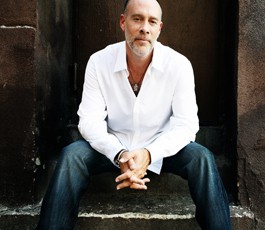
O ver the past two years, for the first time since he started his career, Marc Cohn has found himself writing songs for the most natural of reasons.

“I got back to the place I was when I first started writing songs, when it had nothing to do with career or craft. It was just about necessity,” Cohn says in a mid-October phone interview. “I had things I needed to articulate, and that was the only way I knew how.”

The organic burst of songwriting provided the bulk of material for the newly released Join the Parade , which is Cohn’s first new studio CD in nearly a decade. He plays the Mystic Theater on Dec. 3 to support Parade .

Cohn just wishes the events that helped break what had been a long and frustrating bout with writer’s block would never have happened. After finishing a show Aug. 7, 2005, in Denver, a man attempting to carjack the van in which Cohn was riding fired into the van. The bullet hit Cohn in the temple. Amazingly, the bullet lodged in tissue and did not enter the brain, and he was able to leave the hospital the next day. Cohn saw the entire event unfold, including the gunman as he aimed at him.

As Cohn hints, dealing with the emotional after-effects of the carjacking and the shooting has been difficult. Today, he’s coping as well as could be expected.

“You never totally get over this kind of thing,” he says. “There will still be something that triggers a memory and then creates some sort of disturbance or anxiety or unsettled feeling. And I’m just trying to learn how to accept that. Occasionally, there’s still a nightmare. But I’ve learned pretty well how to deal with it. But for the most part—knock on wood—I’m doing great.”

Musically, Cohn is certainly doing much better than in any time in the recent past. While he lost his muse for the better part of eight years, it returned in fine form to inspire the songs on Join the Parade . The new disc shares the soulful influence that informed his earlier albums, the 1991 self-titled debut (which included the hit single “Walking in Memphis”), 1993’s The Rainy Season and Burning the Daze (1998). But Parade has a grittier and rootsier sound that works very well for Cohn.

His live set has taken on a whole new direction with the full-band format. “It kind of starts out rocking, and kind of stays there for a good part of the night,” he says. “And then [guitarist] Shayne [Fontaine] and I go back to just a duo format for awhile, and then the band comes back out again, and that’s the show. The audience sort of decides how many encores [we do]. It’s a completely different arc to the show. I’ve really been enjoying it.”

Marc Cohn appears on Monday, Dec. 3, at the Mystic Theater. 23 Petaluma Blvd. S., Petaluma. 7pm. $30–$35. 707.765.2121.


FIND A MUSIC REVIEW

Double-Edged Swords

0

11.28.07

‘I nnocent’ is a most approximate term.” This proclamation is made late in the second act of playwright John Strand’s satisfyingly funny, word-warring adventure Lovers and Executioners . In Strand’s view of the world, nothing is ever all black or all white, all sweet or all sour. Neither is Lovers and Executioners , a rich, thoroughly enjoyable English adaptation of La Femme Juge et Partie , a largely forgotten 17th-century play written by Molière’s most vigorous theatrical rival, Antoine Jacob de Montfleury. As staged by the Marin Theatre Company, under the sure-handed direction of Josh Costello, the wonderful period details—the witty dialogue all in verse, the magical set by Steve Coleman, the magnificent costumes by Fumiko Bieldfeldt—manage to anchor the story in France of the 1600s while maintaining a solidly contemporary sense of humor and social awareness.

Bernard (Jackson Davis) is a rich landowner in the market for a new wife after the accidental drowning of his first wife, Julie. His terrible secret, known only to his faithful but cranky servant Guzman (Gary Grossman), is that Julie’s death was not accidental; Bernard, believing her to have been unfaithful, abandoned her to die on a tiny strip of an island in the middle of the sea. What Bernard does not realize as he sets his sights on the ditsy but attractive Constance (Alexandra Creighton), is that Julie (the excellent Lisa Anne Porter, above right) is not dead; she escaped from the island, spent the last three years training herself in swordsmanship and has now returned to town in the guise of a young soldier named Frederick.

As Frederick, Julie exacts her revenge on Bernard, first by wooing Constance herself (uh, himself), and then by snatching away the job Bernard had been aiming for, that of the local magistrate. As magistrate, Julie/Fredrick ends up charging Bernard with the murder of his wife, a hanging offense, unless he can prove that she was indeed unfaithful, a shameful charge he’d almost rather die than have to live with.

The play is crammed with sword fights, wacky wordplay and pithy, thoughtful ruminations on the meaning of justice and forgiveness, while remaining miraculously light and full of mischief. The ending is powerfully ambiguous, staunchly avoiding ridiculous wrap-ups. As such, it is far more satisfying—and funnier, too. From start to finish, while ever threatening to become a tragedy, Lovers and Executioners never stops being hilarious.

Lovers and Executioners runs Tuesday&–Monday through Dec. 16. Tuesday and Thursday&–Saturday at 8pm; Wednesday at 7:30pm; Sunday at 2pm and 7pm, also Dec. 8 at 2pm. Nov. 28 at 6:30pm, happy hour. Dec. 2 at 6pm, LGBT reception. Marin Theatre Company, 397 Miller Ave., Mill Valley. $20&–$50; Tuesday, pay what you will. 415.388.5208.

DATE_TIME_PRICE


Museums and gallery notes.

Reviews of new book releases.

Reviews and previews of new plays, operas and symphony performances.

Reviews and previews of new dance performances and events.

Homeward Bound

0

11.28.07

Three years ago, Nadia McCaffrey got the news that every military mom dreads: her son Patrick McCaffrey had been killed in Iraq. Her story was in part told in these pages (“The Exploitation of Pat Tillman,” June 27, 2007), adding a layer to the tale of the government’s shameful response to the death of the former NFL star and Iraqi soldier Pat Tillman from friendly fire. Soon after her son’s death, McCaffrey pledged to turn her grief and rage into a constructive project, one that is now taking shape in Guerneville: a three-story home called Veterans Village that will house up to 20 returning veterans and provide them with shelter, counseling and job-placement services as they readjust to the vastly different civilian world.

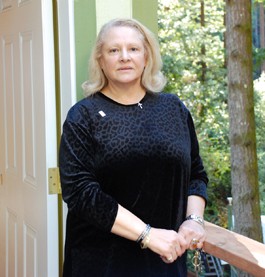
Wearing a cross pendant and a gold star pin on her indigo bIsaacse (the gold star signifies she’s lost a child in combat), McCaffrey met me in early November at the rustic facility sheltered by a redwood grove. She has a no-nonsense attitude and exudes determination and confidence, so it’s not a surprise that her pledge to have a facility up and running by the end of this year is coming to fruition.

When she made her promise, McCaffrey had no idea how or where she’d provide a residential facility for veterans or how she would finance it. But through Veterans Village workshops and events for veterans and their families, McCaffrey met a donor who agreed to help her. He asked to remain anonymous for this story. We’ll call him Isaac.

Isaac put McCaffrey in touch with the Guerneville home’s owners, who were building it as a residence, and encouraged them to let it become a facility for veterans. Isaac says he’s paying for construction improvements, appliances and furniture to get the home ready for its first residents to move in December. A veteran of the Soviet and Israeli armies, Isaac felt compelled to give something back to the men and women who have served in the U.S. military.

“I feel it’s very unjust for a person to come back after everything they’ve done for the country, and someone gives them a short briefing, drops them at the airport and says, ‘Have a nice day,'” he says.

“Only the community can correct this.” Located on a small cul-de-sac just off Drake Road, the four-bedroom house has a kitchen, common area where vets can share stories and a separate wing for female soldiers. Most rooms have views of the towering redwoods that surround the property.

McCaffrey, a resident of Tracy, will live at the facility and be what Isaac terms the “goddess mother.” A staff of three or four will be led by an on-site manager, who is a Vietnam vet. McCaffrey’s group, Veterans’ Village, is working with Farms Not Arms to give scholarships to vets who want to make farming their postwar vocation.

Veterans can stay at the house for several weeks or several months, depending on how much time they need. “It takes time for a person to reconstruct themselves and fit into civilian life,” Isaac explains. “It doesn’t happen in one day.”

Marcy Orosco, director of workforce and housing services for North Bay Veterans Resource Center, will help with job placement, résumé development and counseling for those living at the Guerneville housing facility, and she has positive news. “We have partner employers who want to hire vets first,” she says.

McCaffrey, who’s met with senior government and military officials in Washington to advocate for veterans, hopes the Guerneville house is the first of many such facilities. “This is just a pilot, a model,” she says, adding, “We’re opening another one in upstate New York.

“Noting that about 60 percent of returning vets have spouses and/or children, McCaffrey says, “We need to empower [veterans] again so they can readjust to society without destroying their families. Our goal is to give them the resources they need so they don’t end up on the street or on drugs.”

One of those tools will be voluntary meditation practice. Stephen Edwards Jr., a veteran whom McCaffrey has worked with through Veterans Village, has found solace through meditation. “Within six weeks of returning from a 12-month tour of duty in Iraq, I was diagnosed with acute post-traumatic stress syndrome,” he wrote in a post on VeteransVillage.org. “I was experiencing depression and anxiety and felt very angry. Unfortunately, I took this out on my wife and daughter, who did all they could to be helpful and understanding. But they weren’t able to heal me. I found myself trying to hold the enormity of my pain and anger inside.”

Edwards attended a retreat lead by a Vietnam veteran and Buddhist monk, and says that through meditation, he “began to learn how to accept my feelings and not to suppress or discard them, and to learn how to control my anger, anxiety and irritability.”

Dedicated to Ken Ballard, who lived in Mountain View before being killed while serving in Iraq, Veterans Village is now accepting applications for staff and for vets who need assistance.

To contact Veterans Village founder Nadia McCaffrey or to learn more, go to www.veteransvillage.org.


Gift to All

11.28.07

When Alorha Breaw discovered the pocket-sized paperback The Better World Shopping Guide: Every Dollar Makes a Difference, she immediately bought 17 copies. That was all the store had in stock.

“I’ve given them for everything from birthday gifts to housewarming presents,”

Breaw explains. She adds that they’ll make great stocking stuffers this holiday season. Breaw keeps one copy for herself, but laughs, “I’m having a hard time hanging on to that one.”

She uses the guide every time she shops, whether it’s for groceries, wine, clothing, gasoline—anything at all. “It’s a wealth of resources in one,” she explains. “When you’re out shopping, it’s an easy, easy, easy reference guide. And you don’t have to feel guilty as you make choices.

“The book covers 73 categories from airlines to wine, and gives manufacturers a letter grade of A to F—just like in school. Under the gasoline category, Exxon gets an F, and is described as the “#1 worst corporation on the planet” and a “renowned human rights violator.”

The book is based on the idea that individual dollars are becoming more powerful than individual votes. The average citizen casts a vote every few years—maybe every few months if the ballot initiative process goes into overdrive—while folks who are politically apathetic, unmotivated or overwhelmed might cast a vote even less often.

Yet consumers register their desires daily by how they spend their dollars. In this season of gift-buying frenzy, we’re making constant statements about which products we prefer, which stores we frequent, which websites get our credit card numbers.

“We do have a lot of power and influence, if only we can figure out what our real choices are,” says University of California sociology professor Ellis Jones, author of both The Better World Shopping Guide and the larger paperback The Better World Handbook: Small Changes That Make a Big Difference.

The power base in our society is shifting, Jones asserts.

“We have to come to grips with the idea that the economic realm may be becoming more important than the political realm. That’s just a reality. We may live in a democracy in the political world, but in the economic world, we don’t have a democracy. But we do have a role in that realm in that our dollars are our votes.”

“The bottom line is that every one of these companies needs our dollars to survive. It’s their lifeblood.”

So for the socially aware, it isn’t necessary to give up gift-giving on moral or ethical grounds, or to give only donations to worthy causes instead of actual presents.”

[The guide] provides a powerful way to make choices during the holiday season to allow your gifts to be both something nice that you’re giving family and friends, but also something nice for parts of the planet you’ll never see and for people you’ll never meet.”

Published in November 2006 with absolutely no marketing budget, the guide has already sold more than 20,000 copies. There’s a companion website at www.betterworldshopper.org, which lists background information, sells an iPod form of the guide and is beta-testing a cell phone version. The guide is also on sale at Amazon.com and has been spotted in large book chains like Borders and Barnes & Noble.

“It’s even sold at Wal-Mart—ironically, because Wal-Mart doesn’t rate too well in the book,” Jones laughs.

He recommends buying it through independent bookstores, fair trade shops or the website—but not because he’s focused on sales.

“It’s not really about the book. It’s about getting the information to people so they can make better purchasing decisions. We want to have people shift their dollars.”

He adds, “Each of our dollars has to be thoughtful and reflective and made powerful so that it makes the world a place that we would like to live in and that our children and grandchildren would like to live in.”

Which makes holiday gift-giving work on more than one level.

“Part of the gift is the gift itself, and part of the gift is building a better world.”


Dolby Days

4

11.21.07

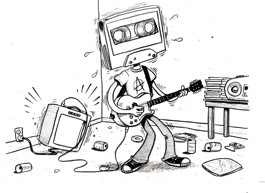
Some people keep tools in their garage. Still others have bikes, sports equipment, broken appliances, old mementos. There’re even a few odd people who have a car stowed in there. Me, I’ve got cassettes in the garage. About a thousand of them, actually.

Earlier this year, I wrote about researching old records made in Sonoma County, digging up copies of vintage vinyl, tracking down surviving band members, finding out the bands’ stories. After the article was published, I figured that my local music-historian days were over. But shortly thereafter, I received a letter from longtime local promoter and former Magnolia’s nightclub owner Scott Goree, offering me boxes of his old demo tapes from local bands. Would I be interested, he asked, in rescuing about 600 cassettes from the awaiting dumpster?

Archaeologist’s panic kicked into high gear. I raced over and loaded them into my trunk, bringing them home to my understanding wife and already cluttered garage. We immediately rifled through and puzzled over these demo tapes, seduced by the undeniable charm of the obsolete format.

A demo tape, especially between the mid-’80s to the early ’90s, was a crucial calling card for struggling bands. Since CD manufacturing wasn’t yet affordably available, a demo tape often sufficed as a band’s “album,” sold in stores and sometimes containing a dozen or more songs. And since a four-track recorder, a double-deck cassette player and a photocopy machine were the only tools required to go down in high-bias history—and especially since Photoshop and ProTools didn’t yet exist—a demo tape usually reflected a band’s individual aesthetic with alarming clarity.

Fascinated by this era’s once-dominant format, I picked out some band names that I remembered from the era, the bands that ruled the Sonoma County underground after new wave died but before Nirvana came along and kicked open the doors for every well-off suburban kid with an Ibanez—the bands that were either good enough or passionate enough to do it themselves and who invited the public in on their fun in the form of a Maxell XLII C-46 IEC Type II Dolby Audio cassette.

Take Abnormal Growth, for example, whose first recordings were multitracked on a cheap stereo console with a strategically placed ghetto blaster playing backing tracks from across the room. Guitarist John Crowhurst still remembers the exact date (Sept. 13, 1986) when he started Abnormal Growth with childhood friend Clay Butler. It marked the inception of a unique Santa Rosa band who opened for legends like NOFX, Bad Religion and GWAR, and who also existed, like so many others, solely on cassette.

“It was so anti&–the-whole-hair-metal thing, which was to try to get signed,” explains Crowhurst of the band’s demo-tape-only lifespan. “I was a big, fat, longhaired guy and Clay couldn’t sing and we really didn’t have a good drummer for the first couple years, so we just decided, ‘Screw it! We wrote 20 songs this month, we can make an album!'”

Abnormal Growth’s marketing was genius. They posted comic-book flyers around town for their third tape, Healdsburg, and their second cassette release, Let’s Grow Some Crosses, began with a hilarious commercial for their first self-titled tape. Eventually, they were making 500 copies each, selling them to punks, metalheads and “rebellious LSD-taking preppies,” while navigating the pesky crowd of skinheads who sometimes congregated around the band. During a show at a church in Santa Rosa, the meeting of one of these skinheads and a stage prop would prove immortal.

“We had a song called ‘Preschooolers of the Beast,'” Crowhurst explains, “and when we were getting ready for the show, we decided to buy a Foster Farms chicken and nail it to a cross.” During the song, a skinhead grabbed the fowl crucifix and brought it into the mosh pit, where it was shredded into tiny pieces and showered on both crowd and band. “I got hit in the head a couple of times, and there were chunks of [raw chicken] stuck in my guitar,” laughs Crowhurst, “but the promoter, who also lived [in the church] at the time, was a vegan. Oh, my. She was so not happy.”

In stark contrast to heavier hardcore bands of the day like Moto-Stillbirth and Vertical Urge, Abnormal Growth didn’t take themselves too seriously. Still, the band called it quits exactly five years after the ghetto-blaster recording sessions, on Sept. 13, 1991, after a show with Sharkbait at Guerneville’s River Theater.

These days, Crowhurst and Butler run a comprehensive website about the band, hosting songs, art and stories, and Crowhurst says he has no regrets about the band’s analog-only alignment. “It was really hard to even comprehend having any record labels giving a crap about us,” he says now, “so we figured we’d just do it ourselves and have fun.”

Get the Funk Outta My Face

Around the same time, a Santa Rosa band called Insanity Puppets formed in 1985 and released two demo tapes: And Only the Insane Shall Survive in 1987, followed by the 1988 cassette When the Tough Get Going, the Weak Get Screwed. Both were recorded live, stuffed with photocopied lyric sheets and sold directly by the band at local shows opening for the likes of the Adolescents, Agent Orange and MDC.

When the Tough Get Going specializes in societal dissertations under a haze of pot smoke; no other band could so effectively rail against media deception with a song called “The Bong That Ate Tokyo.” And though their rehearsal-space roommates Capitalist Casualties would last much longer (they’re still around), Insanity Puppets created a definitive sound of Santa Rosa punk rock from the days of its famed downtown hangout spot, Anarchy Alley.

“We were always game to play anywhere, any club, any party,” says guitarist Guthrie Lowe, “but we wound up playing with bands that we idolized—Bad Religion, SNFU and RKL.” Lowe’s not even sure if he still has a copy of the When the Tough Get Going demo tape. “I will tell you, it has lost its luster over the years a little bit,” he admits, “but it was a good snapshot at the time, that’s for sure.”

Spearheaded by promoter Laurel Pine, an arts collective called Xcntrcx began bringing touring bands to the area during Insanity Puppets’ early days, and lead vocalist Adolfo Foronda helped the band to get larger shows. But a major change was happening in the North Bay underground, one that would that would cripple the band and alter the local musical landscape completely: the infusion of—nay, invasion of—funk.

“We were very vociferous about that,” insists Lowe. “Right after Primus appeared was the first time you saw a $10 door price on anything in Sonoma County, as far as local shows went. So we were displeased about that, and a lot of bands who we thought were cool, or were friends with, started doing the funk thing. Everyone was slapping bass. It got really annoying.”

Lowe says that despite dwindling opportunities, Insanity Puppets never felt locked out by the funk explosion (“We were always out of place anyway”), and he has no regrets about sticking to a classic punk sound. “It’s always been a diverse, underground, countercultural community around here,” he says. “Everybody’s had their own stamp and style, so we weren’t really too worried about trends.”

Insanity Puppets lasted on and off until 1999, surviving changing incarnations and occasional incarcerations. A 7-inch released in 1991 called Who Brought the Corpse? would be the band’s only noncassette release, and it proves that they stuck to their guns; the thanks list includes “beers from around the world,” “the inventor of the bong” and, of course, “all those who hate funk.”

One band who fell disastrously under funk’s spell was Wasted Morality, whose Stell’s House tape was warped almost beyond recognition when I found it. But I’d seen their name on old flyers for hardcore shows, and, determined to hear some vintage Santa Rosa thrash, I carefully unscrewed the tape, transplanted its contents into a new cassette shell, put it in my player and pressed play. The shit that came out of my speakers was atrocious.

“We were a thrash metal band, mainly, from about ’85 to ’90,” explains drummer Andy Rosa, “and then things started changing—Primus and Mr. Bungle were coming on big—and we made a mistake and tried to play our own kind of funk, which wasn’t what we really were. We should never have done that, we should have just stuck with what we were doing. But thrash was dying out, and people weren’t that interested.”

While other local bands like Victims Family were able to assimilate funk elements without sacrificing impact, Stell’s House is a weak, adolescent attempt at trend-hopping, evidenced by incessant slap-bass and lyrics like “Step on over ’cause you look real sweet / Shake your butt to my funky beat.” An earlier demo tape (“Which is what we really were,” says Rosa) called Stitches reveals the powerful band who opened for DRI and Suicidal Tendencies, but Wasted Morality weren’t the best at playing funk, and Rosa says the opportunities for choice opening slots dried up. The band broke up in 1992.

Who the F*ck is Ed?

What was this great threat called funk music, and how did it take over?

Look no further than Disciples of Ed, a local funk phenomenon whose self-titled demo tape sold over 1,000 copies, who straddled the worlds of punk and funk by playing with both Operation Ivy and Primus, and who commonly sold out the Phoenix Theater on their own before breaking up in 1992. Hailing from Cloverdale, where small-town life dictated the creation of fun from scratch, Disciples of Ed made a name for themselves by hosting annual “Ugly Clothes” parties on their large rural ranch—buying plentiful kegs, inviting bands like Mr. Bungle to play and locking the exit gates at 9pm to ensure a drug-addled rager with as many as 400 revelers until the sun came up.

“It turned into this big, ugly, polyester Woodstock thing,” remembers drummer Chris Forsythe, calling the festivities “the most unappealing thing to eyeballs ever.”

This wild atmosphere found its way onto the stage, and soon Disciples of Ed were showing up at punk shows dressed in neon, wielding stuffed animals and toting cans of Cheez Balls to pour all over the audience. (The artificial snack would grow to be the band’s trademark; a famous “Cheez Ball Wrestling” show with bikini-clad girls is still whispered about, and Planters even starting giving the band discounts for ordering so many cases.) The crowds ate it up, whisked into blissful abandon by DOE’s increasingly elaborate stage antics. “We always tried to out-do the last show, and we wanted every show to be different and more over-the-top than the last,” says Forsythe.

Despite the asterisked obscenity, T-shirts with the inquiry “Who the F*ck Is Ed?” started causing administrative troubles at the area’s high schools. The band sought to answer the question by introducing the public to their namesake: Ed “Aardvark,” a Cloverdale character known for freaking kids out by eating ants. “We finally brought him out onstage, this old, funky, quirky, wiry dude with glasses,” Forsythe remembers, “and said, ‘Here’s Ed,’ and nobody believed us!” Despite widespread popularity, Disciples of Ed broke up shortly afterward.

Another funk band ruling the scene were the Louies, who made a live demo tape that captures a short-lived atom bomb of a band. Started in 1990 in Sonoma, the Louies soon annexed members from all over the county, swelling at one point to be a 14-piece funk juggernaut. The Louies were high on showmanship, costumes, antics and audience involvement—singer Blane Lyon often crowd-surfed while straddling a giant inflatable whale—and usually played to packed houses, either opening for Primus or headlining.

“We were starting off when we were young,” says Lyon now, “so we all just gave love! It was never about the money for us back then. It was all about writing songs, performing—we totally believed in it. And that was a beautiful, beautiful thing that we shared.”

Guitarist Lincoln Barr, who joined the Louies when he was just 15, remembers playing wide-eyed at the “Ugly Clothes” rite-of-passage parties with Disciples of Ed, building a huge skateboard ramp at the band’s practice space, sharing the stage with a young Green Day and sporting ridiculous, tacky outfits onstage. “I try to convince my wife that it was cool then,” he says now, “but she doesn’t buy it.”

What he doesn’t completely remember are the songs. When I rattle off a few titles, he howls with laughter, since, like Lyon, Barr hasn’t owned a tape of the band in years. Still, he misses the carefree pre-grunge atmosphere. “I have to admit—of course, my tastes in music have changed a lot and the things I want out of a show have changed and maybe I’m not as in touch as I used to be—but it would be refreshing to see people having fun a little bit more,” he says. “At least every once in a while.”

Analog Diaries

Perhaps one of my favorite demo tapes in the pile is from the decidedly un-fun Legion of Orb, an eerie goth-punk Petaluma band formed in 1988. The cassette is covered with a hand-cut label, and its plastic case, devoid of the usual insert, is labeled with a sword, a crown, some clouds and Old English lettering. One song, “Necrophiliac,” says it all: “Burning candles! / Covered knives! / You’re a necrophiliac, because I’m dead inside!”

With haunting leads, chromatic riffs and brooding vocals, Legion of Orb’s cassette sums up the attraction to extreme psychosis that lures disaffected teenagers growing up in a hick town. Elusive frontman Dan Puskar proved impossible to immediately track down, but I found guitarist Phil Lieb, who confirms that the band once aptly opened for Neurosis at the Phoenix before eventually calling it quits. “I was a few years older than the other members,” says Lieb. “There were a lot of lifestyle problems and such, and basically the band just ran its course.”

Like so many other bands I’ve tracked down, no members of Legion of Orb have any recordings of their old band at all, and the surprise existence of their demo tape represents a small-scale holy grail.

Far from cultural detritus, there’s a whole history in the cast-aside cassettes of the world, and in many ways, these old tapes are such personal documents—imagine losing a diary 20 years ago, only to have someone call up out of the blue wanting to talk about its contents—that it’s no surprise to hear the recurring question from just about every band I speak with: “Oh my God, can you make me a copy of that?”

And really, after everything they’ve given me, how can I say no? I’ve got a lot of demo-tape dubbing to do.

The Short List

Petaluma lore is a thick quilt of defunct bands, but Coffee and Donuts remain passionately in the hearts of most old-timers. Inextricably linked with the groundbreaking Jaks skateboard team, the band played a jazzy amalgam of punk, jazz, blues and reggae; played with Operation Ivy and fIREHOSE; shared a rehearsal space with Victims Family; and made the rounds of skateboard contests, parties and charity benefits.

Coffee and Donuts never officially manufactured a demo tape, but their practice tapes were passed around like secrets between friends and promoters, endlessly dubbed and cherished. Bassist K. C. Cordoza says he hasn’t owned anything by the band in years except for a third-generation cassette that an old friend recently copied for him. The mangled tape that I managed to find had to be disassembled and untwisted in order to play at all.

Cordoza’s the only member still in Petaluma, and when I ask why the band broke up, he replies with a short laugh. “The drummer slept with my girlfriend. And also . . . yeah, that was pretty much it. I wasn’t really motivated to continue. I was mature enough to kinda deal with it, but at the same time, it was my two best friends in the world stabbing me in the back.” Ouch. The band broke up in 1991.

The Garden may not have been too prominent around the late ’80s, but their silk-screened, modern rock&–inflected demo tape holds up very well as an example of the diversity in the area; no local band sounded like them, except maybe Cast of Thousands. The band played Andrews Hall, the Studio KAFE, the Cotati Cabaret and the Palace Theatre, went on a Northwest tour to open for Alice in Chains and played with Faith No More at the River Theater. Before breaking up, the band clung to a thread by auditioning drummers for over a year, which frontman Michael Estes calls “the biggest hell I think I’ve ever gone through.”

From Napa came the Bwana Devils, four oddball punk rockers from Vintage High School who released six different demo tapes during an unlikely career that began in 1983. Napa isn’t exactly a rock ‘n’ roll town, and guitarist Pat Hazen tells of a Battle of the Bands at the Napa Fairgrounds gone awry. “It was pretty confrontational,” Hazen, now 50, says. “People were screaming, I thought we were going to be killed in front of a thousand people, and we had to sneak out the back.”

The Bwana Devils instead played mostly out of town, including a show with Jane’s Addiction in Vacaville and a Davis frat party with the Replacements. Honing their unique brand of rollicking punk, a few nibbles from record labels came their way, “but nothing really panned out,” Hazen says. The band split in 1991, and the demo tapes—plus 1,500 practice cassettes—are all that remain.

Metal bands including ICE, Stone Crow and Broken Ties abounded in the ’80s, but none shredded as hard as Malicious, whose meagerly hand-drawn demo tape Addicted to Pain belies the fierce speed and volume contained within. Booking shows was hard for a speed-metal band in those days, and the band instead threw weekly parties at their practice space in Petaluma.

Drummer Matt McKillop points out that the band opened for Exodus, Death Angel and Vio-lence, and that the members goaded each other to dizzying heights of speed and volume. “When I hear that stuff, that was the baddest-ass drumming I will ever give to the world,” McKillop says. “They pushed me to a level that I’ll never get to again.” The band broke up when guitarist Joe Miller died of cancer in the early ’90s.

Originally a three-piece, Animal Farm at one point boasted over a dozen members on trumpet, sax, pedal steel, accordion, piano, mandolin and violin. “Certainly, it was a recipe for chaos,” recalls frontman Preston Booker, who started the band in 1986. “We had a lot of hectic shows where it didn’t come together, but now and then we had this huge ensemble and it would kinda work, and it would be pretty magical.”

Animal Farm played with Cake at the tiny Old Vic before that Sacramento group got huge, and won a Battle of the Bands at Magnolia’s, allowing them to record at Prairie Sun in Cotati. Like all of the band’s other temporary cassettes, the tape I found is hand-labeled. Animal Farm never did put out an official release.

Echoing the experience of so many other bands of the era, Booker sums up the group’s early-’90s demise. “We fell into anarchy at the end,” he says.—G.M.


Fork Votes

0

11.21.07

The average concerned citizen would have to be out of his or her mind not to be outraged by the Farm Bill being considered this month by the Senate and its sister legislation passed in late July by the House. Our paid representatives actually spent over a year crafting their plan to guide our food and farm sectors for the next five years. The probable outcome, if and when the Senate ever gets around to finalizing a bill: another multibillion dollar agribusiness welfare package wrapped in a veneer of reform.

Originally conceived as an emergency bailout for millions of farmers and unemployed during the dark times of the Dust Bowl and Great Depression, the Farm Bill has snowballed into one of the most—if not the most—significant force affecting food, farming and land-use in the United States. In a country consecrated to private-property rights and free-market ideals, it might seem hard to fathom that a single piece of legislation could wield such far-reaching influence. But to a large extent, the Farm Bill determines what sort of foods we Americans eat (and how they taste and how much they cost), which crops are grown under what conditions and, ultimately, whether or not we’re properly nourished.

What can we citizens look forward to for the Farm Bill’s $300 billion price tag?

— Unlimited payouts to megafarms and absentee landowners already earning record-breaking profits.

— Cheap corn and soybeans for feedlot operators that maintain animals in confinement factories, spreading disease, greenhouse gases and labor abuse wherever they set up shop. (Farm Bill “conservation” programs will even pay $450,000 for the construction of lined pits which feedlots can fill with toxic concentrations of manure.)

— The continuation of a wildly successful federally funded obesity campaign, which ensures that the cheapest foods in our supermarket aisles and convenience outlets are laden with processed flours, refined sugars, saturated fats, unhealthful meat and dairy products, and an excess of subsidized calories.

— A decline in conservation programs that protect vital habitats, help to stem erosion, filter fresh water, preserve open space and provide many other public benefits.

Sure, we’ll hear a lot about “forward-looking” new programs that will help get us on the right track. But it’s important to look behind the rhetoric and find out just how the deals are made.

We’re supposed to get excited, for example, about a USDA snack program that will help 5,000 schools and 4.5 million children “eat healthier.” Let’s do the math. According to the U.S. Department of Education, there are over 93,000 public elementary and secondary schools in this country with nearly 47.5 million students. There’s a sizable private and charter school population as well. Each child lucky enough to participate in the program will get two-thirds of an apple a day, according to school chef and nutritionist Ann Cooper.

Then there are the “energy independence” programs we’re hearing so much about. Decades of environmental-protection gains are being threatened as farmers take lands out of conservation programs to cash in on the corn-ethanol gold rush. On the one hand, using corn for agrofuels does make feed more expensive for feedlots, making family-farm-raised options a lot more reasonable. But corn farming is dependent on boatloads of toxic pesticide and fertilizer applications, and is extremely hard on the land and aquatic systems. Ethanol production also consumes enormous amounts of fresh water.

You can also follow the money. The USDA’s very own Farm Bill website, for example, posts a map of subsidy recipients who live in Manhattan. Attempts to limit the amounts of adjusted gross income (currently at $2.5 million per operation) and the number of those eligible for farm payments have consistently failed in recent decades. This year, both the House and Senate are proposing downsizing those income tests, but any millionaire with a good legal and accounting team will find a way around them.

A bipartisan amendment from senators Byron Dorgan, D-N.D., and Charles Grassley, R-Iowa, would cap total farm payments at $250,000 and require subsidy-receiving operations to be owned by actual working farmers. This would be quite an improvement over the current loophole-ridden policies, and a way to free up funds for other urgent priorities. (As of this writing, there’s still time to call your senators and ask them to support the Dorgan-Grassley amendment.)

As obscene as recent farm-payment programs have become (over $1.1 billion were paid to deceased farmers between 1999 and 2005 according to Washington Post reporter Sarah Cohen), it’s important to remember that it’s a real privilege to have a Farm Bill to debate.

The Farm Bill is our chance to set the food and farming system on the right course. It’s our chance to compensate land stewards and food providers for things the free market doesn’t value. It’s our chance to create an actual healthy food and healthy land ethic. As an old saying goes, it’s our chance to put the “culture” back into “agriculture.” The Farm Bill matters because it can actually serve as the economic engine driving small-scale entrepreneurship, on-farm research, species protection, nutritional assistance for food banks, school lunches made from scratch, habitat restoration and low-petroleum input farming systems, to name just a few. Our challenge may not be to abolish government supports altogether, but to ensure that those subsidies we do legislate actually serve as valuable investments in the country’s future and allow us to live up to our obligations in the global community.

There is still time to have a say. Every day we can vote with our forks by buying from local farmers, supporting organic producers whose practices we know and approve of, visiting farmers markets when we can. But we only get a Farm Bill every five years, and the decisions made in federal policies will affect all of us on a daily basis. It’s time to let every one of your elected officials know that you have them on notice, that you vote with your fork and you expect them to vote as if the nation’s very health, future and security is at stake.

Because it is.

Dan Imhoff is a Sonoma County resident, independent publisher and author of many books, including ‘Food Fight: The Citizen’s Guide to a Food and Farm Bill.’

Quick dining snapshots by Bohemian staffers.

Winery news and reviews.

Food-related comings and goings, openings and closings, and other essays for those who love the kitchen and what it produces.

Recipes for food that you can actually make.

Giving Back

11.28.07 As a young girl, I used to imagine that if I were ever rich, I would buy my mom new clothes and myself a tennis racket. By middle school, I wanted to buy her dirt fill for the retaining wall that was going to keep our house from sliding down the mountain, and some designer jeans for myself so...

Out with the Old

11.28.07USIC marketing during the Christmas season is filled with all sorts of repackaged crapola that caters to the emergency-driven shopper, be it the cash-in box set, the recycled anthology or the truly desperate "deluxe edition." The result: Dad gets stuck with two CDs of Led Zeppelin songs that he already owns (Mothership); Mom's got Van Morrison's hits all over...

Do the Right Thing

11.28.07 SOME DAY, books as we know them—printed, bound, shaped conveniently like bricks—will no longer be available as gifts, except to cranky bibliophiles dedicated to keeping the old ways alive, like the rebel reciters in Fahrenheit 451. Instead, we will gather round the designated winter-solstice symbol and hand out URLs, so that loved ones and friends can download...

Back in Form

music & nightlife | By...

Double-Edged Swords

11.28.07" 'I nnocent' is a most approximate term." This proclamation is made late in the second act of playwright John Strand's satisfyingly funny, word-warring adventure Lovers and Executioners . In Strand's view of the world, nothing is ever all black or all white, all sweet or all sour. Neither is Lovers and Executioners , a rich, thoroughly...

Homeward Bound

11.28.07Three years ago, Nadia McCaffrey got the news that every military mom dreads: her son Patrick McCaffrey had been killed in Iraq. Her story was in part told in these pages ("The Exploitation of Pat Tillman," June 27, 2007), adding a layer to the tale of the government's shameful response to the death of the former NFL star and...

Gift to All

11.28.07When Alorha Breaw discovered the pocket-sized paperback The Better World Shopping Guide: Every Dollar Makes a Difference, she immediately bought 17 copies. That was all the store had in stock."I've given them for everything from birthday gifts to housewarming presents," Breaw explains. She adds that they'll make great stocking stuffers this holiday season. Breaw keeps one copy for herself,...

Dolby Days

11.21.07Some people keep tools in their garage. Still others have bikes, sports equipment, broken appliances, old mementos. There're even a few odd people who have a car stowed in there. Me, I've got cassettes in the garage. About a thousand of them, actually.Earlier this year, I wrote about researching old records made in Sonoma County, digging up copies of...

Fork Votes

11.21.07The average concerned citizen would have to be out of his or her mind not to be outraged by the Farm Bill being considered this month by the Senate and its sister legislation passed in late July by the House. Our paid representatives actually spent over a year crafting their plan to guide our food and farm sectors for...
11,084FansLike
4,446FollowersFollow
6,928FollowersFollow