First Bite

0

12.19.07

E ditor’s note: First Bite is a new concept in restaurant writing. This is not a go-three-times, try-everything-on-the-menu report; rather, this is a quick snapshot of a single experience. We invite you to come along with our writers as they—informed, intelligent eaters like yourselves—have a simple meal at an area restaurant, just like you do .

My mom is picking at something beige on her plate. She holds a forkful aloft, inspecting it, then offers it to me for analysis. “Might be toast,” she muses. I take a bite, feeling the dry graininess on my tongue, the starchy crust and the blandness that tastes only of butter. It’s poorly done polenta. She gives me a chunk of the gray meat that sits atop. It’s overcooked fish—mahi mahi, we suppose, as our waitress had recited it as the catch of the day ($17)—that hunkers in a puddle of white wine sauce under a fistful of dry parsley flakes.

Now it’s my turn. “Bacon grease for sure,” I vote, pushing my plate of meatloaf ($16) in her direction. “Maple syrup, maybe. Microwaved hamburger.” She identifies ketchup, and nibbles at a scoop of stiff mashed potatoes alongside. We both agree that the side dish is spinach, rather than the promised Brussels sprouts. She sighs. I cough. We both put down our forks. This little game we’ve been playing at Sky Lounge Steakhouse & Raw Bar isn’t fun anymore.

When we first sat down at the restaurant on a recent Saturday night, we’d been amused. There’s a retro charm to the place, tucked as it is inside the Sonoma County Airport, overlooking the tarmac with its walk-up plane ladders and looking like a throwback to the ’50s.

But this Sky Lounge wasn’t at all what we had expected. It opened in August to a fair bit of publicity. It’s newsworthy because the North Bay’s only commercial airport reopened last spring after a long hiatus. As such, Sky Lounge is a gateway to wine and food country, an important first and/or last impression for visitors. Appropriately, it promises “top grade” beef and seafood from local farmers and fishermen, in a “first class restaurant with a creative menu emphasizing freshness and quality.”

A centerpiece, deliciously showcased in marketing materials, is the raw/sushi bar. It sounds like a nifty proposition even for folks not trapped waiting for a plane: Hog Island oysters in truffle-ponzu mignonette, kona kampachi spiked with spicy mayo and jalapeño wafer or a soft shell crab BLT.

Yet tonight, there’s no sushi or raw display at the tiny wheeled-in sushi stand off the kitchen. There’s apparently no real food either; our waitress tells us the chef is off. So instead, our dinner is just coffee-shop clam chowder ($6) that’s been so beat-up by reheating that there’s yellowish skin across the top, a caesar ($11) drowned in mayonnaise and a few marinated anchovies and Asian lettuce cups ($9) buried under flabby pork clumps.

Outside, it’s so densely foggy that the PA system alerts us an incoming flight is being diverted to Oakland, and its passengers will be bused back here. A pack of people settle in at the bar to wait, arming themselves with cocktails. Don’t they know that the first rule of going to the airport is to check and make sure the plane is on schedule? The second rule, apparently, is to find out if the chef has arrived.

Sky Lounge Steakhouse & Raw Bar, 2200 Airport Blvd. (in Sonoma County Airport), Santa Rosa. Open for breakfast and lunch daily; dinner, Wednesday&–Sunday. 707.542.9400.


Quick-and-dirty dashes through North Bay restaurants. These aren’t your standard “bring five friends and order everything on the menu” dining reviews.

Craving Fresh Blood
0

12.19.07

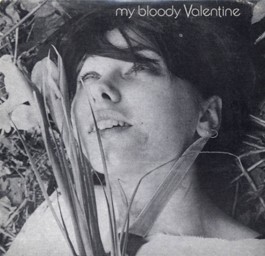
The story is somewhat legendary: My Bloody Valentine, led by Kevin Shields, formed in Ireland in 1984, relocated several times and plugged away without much notice until their album, Isn’t Anything , a juxtaposition of distorted guitars and ethereal vocals, garnered critical acclaim. Their follow-up, Loveless , excavated even further into a mix of fragile beauty and fabricated chaos—diamonds muted in felt. Loveless is sculpted rather than arranged, a studio album if there ever was one. Shields’ primary interest was crafting moments that never sonically existed in real time, a process that was painstaking enough to require what was rumored to be Loveless’ $500,000 recording cost, a substantial sum for an unproved band on an indie label in 1991.

After Loveless , My Bloody Valentine signed with Island records, disappeared into Shields’ home studio and never came out. By 1997, their membership was down to Shields and co-vocalist and guitarist Bilinda Butcher, with no new albums on the horizon.

Until now.

Shields has announced the band is reforming to play a handful of shows in Britain and to finish that damn lost record already. Loveless was the touchstone of the shoegaze era; it left listeners hungry for more, and now they can finally exhale. But based on prior performance, it is perhaps a shrewd move to assume that My Bloody Valentine won’t deliver the promised album within the new year, or even the ones after that.

In the meantime, there’s a whole universe of music to listen to out there, a fair share of it My Bloody Valentine&–derived. Here’s the cream of the lesser-known crop.

The Athens, Ga., instrumental band Japancakes recently released a start-to-finish cover album of Loveless , and—surprise!—it’s neither a novelty nor a goggle-eyed homage. Japancakes’ interpretation replaces the vocals (something My Bloody Valentine happily blurred deep in the mix) with instruments such as slide guitar, cello and Farfisa organ, resulting in more straightforward, less atmospheric songs. And by bringing those heretofore buried melodies to the forefront, Japancakes transform some of Loveless’ mellower transitional tracks into lovely standouts, such as “Touched,” which seeps with unvarnished melancholy.

Japancakes strip away the diaphanous haze that My Bloody Valentine liberally applied to their recordings, revealing the rock-solid songwriting that’s not immediately apparent when listening to the original versions. Their Loveless cover makes a fine complement to the original, but still shines in its own right.

Shortly after imports of Loveless hit our American shores, a number of bands took to the distortion pedal. One such band, Philadelphia’s Lilys , put out a somewhat maudlin but still enjoyable copycat album, In the Presence of Nothing , in 1992. Listen to the gorgeous metallic wreckage of “Tone Bender” (whose chugga-chugga guitar paired with whisper-soft vocals follows My Bloody Valentine’s “Only Shallow” template to a T), and dare to say imitation isn’t the sincerest form of flattery. Lilys’ productivity has far outstripped My Bloody Valentine’s; the band has recorded nine albums and counting, covering a stripped-down ’60s garage-rock phase up to the psychedelic art-pop they continue to perform to this day.

Also still very much active are Seattle’s Voyager One , who take more musical cues from early, ultradruggy Verve (they’re more percussive and vocal-driven), but share My Bloody Valentine’s devotion to studio-crafted musical environments. Particularly of note is their 2002 album Monster Zero , which hints at what happens when a band takes a dance-centric track like Loveless’ “Soon” and runs with it. Voyager One, who are a super-tight live act with or without My Bloody Valentine comparisons, have a new album on deck for February 2008, and if precedent serves, it should be a good one.

And, of course, there’s no way to write a list of My Bloody Valentine supplements without mentioning the Sacramento power trio Electro Group , whose fiercely eloquent songs are the ultimate distillation of My Bloody Valentine’s punkier side. Both A New Pacifica and their latest, the succulent Good Technology , don’t skip on the fuzz, the volume or the blissful catchiness.


Sense of Self

0

12.19.07

Self-portraiture is such a difficult task that few artists regularly undertake it. After all, how to disconnect the id and release any sort of unguarded truth when the subject matter is one’s very own complicated self?

The challenge has got to be tougher for teens, young people who are still wrassling out the particulars of who they are now and who they might be some day. But teens are resilient, and, in the case of the wonder kids who are in Santa Rosa High School’s ArtQuest program, they’re also terrifically honest, terrifically smart and terrifically plain old talented.

This is our second year working with ArtQuest, under the direction of Tanya Braunstein and Glen Graves. This year, we asked the students to explore the self-portrait from three angles: their physical self, the person they are at home and their public persona. Drawing from the results of these three revealing chapters, we chose one shot from each artist to reproduce in these pages.

I am personally amazed at the honesty expressed by these young artists. I jokingly suggested that if I had to take a self-portrait, I’d just shoot the contents of my purse. Would I actually dare to print an image depicting my slovenly habits and insane need for extra lipsticks? No way. These kids are far braver than I’ll ever be.

All of the shots taken and approved, plus the ones reprinted here, will be on exhibition at the Santa Rosa High School multipurpose room through Dec. 20. A free artist’s reception kicks off on Wednesday, Dec. 19, from 3pm to 5pm. 1235 Mendocino Ave., Santa Rosa.

We applaud the artistry and hard work of this year’s crop of ArtQuest kids. Bravo!

Hannah Bowen: Hannah took this unvarnished shot of herself just after waking up one morning.

Ashley Franklin: Ashley’s shot from the inside of her car reveals roads traveled and roads yet to take.

Abby Campbell: To us, Abhy’s shot evokes the poems of Sylvia Plath. No, there is no concrete reason why. This was a cover contender.

Joseph Zappelli: Joseph calls this his ‘Italian GQ’ shot. It’s irresistible, but so is the moody, refracted image he took through the doorway into his bedroom that we wish we had room to also print. This was another cover contender.

Melanie Hede: Melanie took on a gothic mood for ‘Storm,’ which depicts her favorite abandoned water tower.

Elizabeth Randol: Put a favorite Belgian waffle iron in a white cast iron sink, and voila!

Claire Sloan: Claire elegantly juxtaposes her grown-up size with the baby chair given to her as a child.

Alex Molinari: Alex is a ‘Boho’ photo veteran, having been part of our first annual. He is also one of a trio of celebrated kids who would have made $53k in the stock market this fall had they been using real dosh.

Connor Lawson: Connor caught the light and the reflection of the landscape while having the composure to pose with enormous thought.

Chloe Minervini: Chloe calls this ‘Closer’ and it was a difficult pick. She also produced stunning shots of her parents, her cosmetic basket and herself playing the piano.


Come Let Us Adore Them

0

12.19.07

E ven though it seems everyone has tired of the incessant caroling, there’s still a demand. That’s the argument of Darren Davis of radio conglomerate Clear Channel, whose station WLIT set another record in the Christmas race to the bottom by beginning Christmas programming the day after Halloween. In an interview with the Chicago Tribune , Davis said, “Everyone thinks it’s a good idea to be the alternative for all those people who don’t like Christmas music, but I see the ratings every year that show those people don’t exist.”

So somebody’s listening. And those of us who retreat into darkened rooms late at night to turn on the Christmas station or give “Jingle Cats” another spin could be treating ourselves much better. Here are some bona fide Christmas classics and surprising discoveries that you don’t need to feel guilty about.

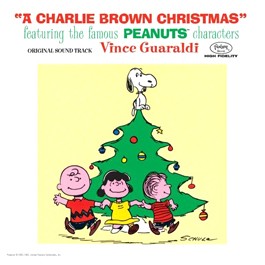
‘A Charlie Brown Christmas’ and ‘Ella Fitzgerald’s Christmas’ These are the standard bearers, immediate choices and likely a bit overplayed. But unlike 90 percent of the Christmas radio chestnuts that seem so inevitable that they may as well be part of your genetic code, the tracks on these two holiday chestnuts have an ethereal and eternal quality that truly conjures up nostalgic memories of holidays past and mirages of slowly falling snow.

‘A New Possibility: John Fahey’s Guitar Soli Christmas Album’ Leave it to virtuosic folk guitarist and far-thinker John Fahey—who could take a Kenny G composition and turn it into something revelatory—to take the hoariest of Christmas standards and render them transcendent and somehow new. The 20 tracks on this holiday collection are not only among the finest the holidays have to offer, but are worth a listen regardless of the season.

‘A Christmas Gift for You from Phil Spector’ It’s a bit uncomfortable in this day and age to offer the stamp of approval for anything associated with Phil Spector, akin to acknowledging that OJ was entertaining in the Naked Gun movies. But this album, produced by Spector in his ’60s Wall of Sound heyday, is not only a Christmas classic but an incredible slab of ’60s soul in its own right. Featuring tracks by the Ronettes, the Crystals and Darlene Love, you’d be shocked to hear how many of the best of the Christmas station standard bearers came from this classic.

WOXY Radio’s ‘Holiday Mixer’ Cincinnati’s trendsetting independent radio station WOXY is spreading the holiday cheer online with a streaming Internet station that mixes Christmas classics by the likes of Nat King Cole and Elvis Presley with über-hip holiday renditions by the likes of the Polyphonic Spree, the Arcade Fire and Yo La Tengo. It’s an eclectic mix of the sublime (Low’s “Little Drummer Boy” is stunning) and the surreal (selections from John Waters’ Christmas album). Listen online at [ http://woxy.lala.com/holiday.php ]http://woxy.lala.com/holiday.php.


Letters to the Editor

12.19.07

Apropos of nothing

In speaking of American heroes, do you know which hero was born in my home country of New Zealand? If you guessed Russell Crowe, that would be right. He is a man of dashing looks, stylish smiles and untouched greatness. The man rose from being one of the most respected persons of the tiny island nation and made his way through to the top of the world. He was born with a passion for animals, mainly goats and horses. A man of principle and a sense of being. He is what we call in my native land “tu meke,” meaning great.

I love his presence. I once had the privilege of meeting him in person, and the only thing he told me after I said hello was, “Aoh, you will go to far places, I can see it.” If you didn’t know yet, some of those words are of Maori dialect, which are the native people of New Zealand, and Russell Crowe is directly related through his great-great-great grandmother. My father’s side has also lived there as far back as we can trace.

So in a way, I would like to say, thank you, Russell Crowe for being a part of me, New Zealand and the rest of the world. As we might say in New Zealand you are my “whanau,” or family. You have changed so many lives, so greatly.

May the light of your passage be my words,

Rex Harigon

Santa Rosa

Mr. Harigon, your sweet letter, arriving out of the blue for no good reason we can fathom other than an irrepressible love for Russell Crowe, tickles us immensely. Thanks for the smiles.

Gold Worthy

I just read the Redacted review and commentary (“See No Evil,” Peter Byrne, Dec. 12). Brilliant! Byrne’s courage shines bright, a lonely light in Sonoma County, for sure. This journalist is worth gold, as are the courageous Bohemian and the Rialto Cinemas Lakeside in Santa Rosa.

Byrne’s hard look at what is going on on the ground south of Baghdad regarding the rape and murder of a 14-year-old and the butchering of her family should disgust the pro-Bush ostriches. Byrne really makes the point that war atrocities go hand in hand with the misguided right-wing war package, whose rules includes undying loyalty to the leader, George W. Bush, and the notion that bombing, raping and butchering the enemy are all OK.

Hooray! Someone lives who has the guts to put into words the real costs of war: slaughtering the enemy while creating brutal, twisted soldiers who will return and apply the neatly packaged rules of war here at home.

Johanna Lynch

Cazadero

Ms. Lynch, your letter was forwarded to Peter Byrne, prompting him to underscore the ‘gold’ aspect of your praise in ongoing professional correspondence with his editor. (We forgive you for this.)

More by Peter can be found in the December issue of ‘Scientific American’ and his eight-page spread on the late physicist Hugh Everett. We hear tell that ‘Sci Am’ is more ready with the gold. Perhaps it’s alchemy . . .

Mail-Order Husband

Richard Coshnear is a traitor to the United States of America (“ICE Raids,” Aug. 29). With 15,000 illegal aliens in Sonoma County, he is doing all he can to confuse the issue for those too dense or too corrupt to see the truth: illegal aliens don’t belong here. The Constitution was written to protect Americans from the government, not illegal aliens from being sent home. With your lies and made-up stories about “bigotry,” you help make us become the victims of illegal alien criminals.

You will always have your commie friends to believe your lies about racism, but it’s so sad that you suck the American sheeple into believing your lies as well. I am the husband and sponsor of a legal immigrant, a real immigrant. You phonies run from the truth so quickly because you are commies and because you exploit the very people you claim to want to help. If there is a hell for liars and hypocrites, you will be there.

Jeff Wilson

Via e-mail

Mr. Wilson, you lowly cur, we do direct your attention to this week’s news story (p9) on the continuing ICE raids and their effect on small children. Those little ones really ought to toughen up!

We also condemn you for stealing our photo of Richard Coshnear and for posting our personal correspondence with you on the Internet. Have a lousy holiday.


Some Place Like Home

12.19.07


A s Immigration and Customs Enforcement (ICE) continues to target local illegal immigrants, some community members are trying to make Sonoma County a “county of refuge.” If it passes the Board of Supervisors, it would mean that although ICE could still conduct operations in Sonoma County, local law enforcement would not be able to help them unless required by federal law to do so.

Other cities in the Bay Area, including San Francisco, Oakland and Richmond, have already declared themselves places of refuge. Locally, the movement started because of concern that the Sonoma County Sheriff’s Department is allowing ICE agents to ride along in patrol cars, as reported in these pages (“Caught Being Brown,” Aug. 29).

The sheriff’s department says ICE is helping with Santa Rosa’s growing gang problem. But the County of Refuge Campaign—which includes groups like Committee for Immigrant Rights, the ACLU and the Peace and Justice Center of Sonoma County—believes that Latinos are being racially targeted. They say the police are stopping people for such minor infractions as broken taillights, and ICE is using it as an opportunity to question them about their immigration status.

The campaign is calling it a violation of the Fourth Amendment, which protects people from unlawful search and seizure. And that, coupled with ICE raids on immigrant homes in nearby towns like San Rafael, is pointing to a disturbing pattern of human rights violations.

“I keep hearing these stories about how people are afraid to let their kids outside to play because of ICE,” says Heidi Doughty, one of the organizers of an education forum on Sonoma County as a County of Refuge. “It’s crazy. People in this county are working their tails off, they are afraid to drive a car, and now they are afraid to leave their children to go to work. It reminds me of [how the Nazis treated the Jews during] World War II. You know, step by step by step.”

On Dec. 4, the County of Refuge Campaign presented its case to the Sonoma County Board of Supervisors. Presenters brought with them 4,500 letters signed by members of the community supporting turning Sonoma County into a County of Refuge.

The letters were gathered on the Internet, in shopping centers and in churches. In fact, some faith-based institutions have taken an active role in informing the public about attempts to make Sonoma a County of Refuge. The synagogue Congregation Shomrei Torah and the Unitarian Universalist Congregation are sponsoring a series of educational forums on the issue. The next forum will be held at the beginning of 2008.

The forums are important because few people know the full extent of ICE’s actions in the North Bay, believes Larry Carlin, co-chair of the synagogue Shomrei Torah’s social action committee.

“We don’t know how pervasive the issue is,” he says. “We know it’s there, but a lot of it is anecdotal information. But one thing is clear: people are afraid to come out of their houses for fear of being arrested.”

Doughty, a fourth- and fifth-grade elementary school teacher, helped organize the forum because she wanted to give people a chance to speak out about this fear. She became concerned about ICE’s activities when she started seeing how it was affecting some of her students.

One little girl in particular started experiencing stomach pains so severe, she missed several weeks of school. After talking to her mother, Doughty learned that the girl was afraid to come to school because she thought her parents would be deported while she was gone.

“I thought, ‘Oh, she’s a kid, she doesn’t know what the reality is,'” says Doughty. “But then in September, she told me that ICE had come in the middle of the night to her aunt’s door and started pounding and screaming. The aunt had been here for 15 years, and they took her and dumped her in Tijuana. I thought, ‘Oh my God, this is true.'”

Faith-based institutions have a history of helping immigrants find refuge. During the Sanctuary Movement of the 1980s, Catholic, Protestant and Jewish congregations banded together to give Central American refugees pouring into the United States social services and advocacy support. For many, it is a moral issue about how human beings should be treated.

And that affects far more people than just believers, asserts Carlin.

“It’s much greater than a moral issue,” he says. “It’s about the rights of an individual. Our Constitution guarantees these kinds of rights, and to prevent a certain segment of the community from being protected by these rights, I think it’s unfair. I think it’s not right.”


Leisurely Listening

0

12.22.07

B ox sets make great Christmas gifts—they’re impressively packaged, they come with fancy booklets to pore over and they can be listened to for hours on a leisurely holiday. But most importantly, loved ones often truly want a certain box set, yet often won’t justify buying it for themselves. That’s where you come in. This year has been especially generous in the box-set department; here are a few of the good ones to throw under the tree.

‘Love Is the Song We Sing: San Francisco Nuggets 1965&–1970’ An amazing four-CD set that digs ridiculously deep into the San Francisco ’60s underground, Love Is the Song We Sing comes complete with detailed liner notes and reminisces about the heart of the definitive cultural revolution. All the heavy hitters from the Summer of Love get their usual due, but it’s the utterly obscure groups (the Vejtables, Mourning Reign, the Harbinger Complex, to name a tiny few) that distinguish this set from a mere nostalgia piece. An essential pick for anyone who grew up in the Bay Area during the 1960s.

Miles Davis, ‘The Complete “On the Corner” Sessions’ I have to admit, it was the famous fat-booty artwork that originally lured me to On the Corner , and on an initial listen I didn’t feel anything click. But I tucked it in my memory as one of those albums I’d probably dig on down the line, and sure enough, over the years I’ve pulled it out to increasingly enjoyable results. This set showcases the uncut, unedited band, playing live and raw in the studio, crafting jams that were too heavy for the public to comprehend even 20 or 30 years into the future. A sticker on the outside talks about Davis going “beyond the outer limits of jazz, rock and funk”; in doing so, he rewrote the boundaries of all three.

‘Stax 50th Anniversary Celebration’ As with the San Francisco box set, it’s the obscure tracks on this affordable two-CD set that make it worth picking up, as with “Your Good Thing (Is About to End)” by Mable John. Who the hell is Mable John, and why did such an amazing singer nearly get lost to the cut-out bin? It turns out she was Little Willie John’s sister, and as for why she’s not a household name, who knows—all you have to know is she’s on this set, which, incidentally, is impeccably sequenced. The lineup of “Mr. Big Stuff” followed by “Never Can Say Goodbye” and then “Whatcha See Is Whatcha Get” is almost as good as the one-two-three punch of “Tramp,” “Soul Finger” and “Born Under a Bad Sign.”

‘People Take Warning! Murder Ballads and Disaster Songs 1913&–1938’ A stunning three-CD overview of early American blues and folk recordings that’s sure to sink Christmas merriment at the drop of a needle. The songs from these restored 78 rpm records chronicle disasters both large and small: the sinking of the Titanic, the Baltimore fire of 1904 and the Mississippi flood of 1927, to name but a few. If you’ve ever wondered what it was like to live in a world of train wrecks, explosions and fatal diseases, look no further; the brilliant liner notes by Tom Waits put it all in perspective. Incredible.

‘The Heavy Metal Box’ A mammoth set spanning 1968&–1991, from Iron Butterfly to Sepultura, with every screeching solo, chunky power chord and high-pitched wail in between. The best part is that no matter how old or dated this stuff gets, it’s still guaranteed to make parents totally miserable. Hell yeah! Most diehard metal fans could probably do without Great White or Poison, and including Spinal Tap almost seems like admitting defeat, but seriously, Hawkwind, Iron Maiden and Slayer in the same Marshall Amp-shaped container? Dayy-uumm.

Roy Haynes, ‘A Life in Time’ Three CDs plus a DVD that only scrapes the surface of Haynes’ vast discography as one of the most-recorded drummers in jazz. If you’ve got a loved one who recently went to see Haynes at Yoshi’s and couldn’t stop drooling afterward, this one’s a no-brainer. Every kind of combo is represented, including those led by Charlie Parker, Oliver Nelson, Bill Evans, Bud Powell and Eric Dolphy, up to Haynes’ own Fountain of Youth and Birds of a Feather groups. Thwack thack thack bmm boom bmm thwack!

‘The Brit Box: UK Indie, Shoegaze, and Brit-Pop Gems of the Last Millennium’ Even snobby Anglophobes who cringe whenever Catherine Wheel or the Stone Roses are mentioned will find it hard to argue with the Cure, the Smiths, Spacemen 3, Pulp, Supergrass, Elastica or Spiritualized. (I have a friend who is aghast at the glaring omission of Shellyann Orphan, but when you’ve got Thousand Yard Stare and Gay Dad, who needs Shellyann Orphan?) Grant yourself extra twee points for wrapping this up with a stringed tea bag as a ribbon and crumpets as a bow.

The Beatles, ‘Help!’ There’s a wonderful fly-by-the-seat-of-your-pants feel to this movie, and the unwritten vibe clearly enshrines the absurd. Discovering marijuana in the early stages of the skyrocket ride to immortality was never more exciting. As has long been pointed out, this is also the dawn of the music video as we know it, with the ski-pole edits in “Ticket to Ride” predating Michel Gondry by a good 40 years. A deluxe version of the regular two-DVD set includes lobby cards, a poster, a book with unseen photographs from the film sets and a reproduction of Richard Lester’s original annotated script. How tempting is that?

Led Zeppelin, ‘The Song Remains the Same: Collector’s Edition’ The first time I saw this film, I fell asleep during “Dazed and Confused.” When I woke up, Jimmy Page was still playing the song’s violin-bow solo! Which means: the songs are crazy long. This is ’70s excess at its finest, and there’s bound to be someone in the family who’s been frothing at the mouth over Zep’s reunion show in London, so give ’em the next best thing.

Megadeth, ‘War Chest’ No one who sat through the Metallica documentary Some Kind of Monster can ever forget the crying, sniveling, whimpering Dave Mustaine scene where he talks about getting the boot from Metallica and how it ruined his life. Redemption is his, however, with this massive, avenging box set that chronicles Megadeth’s career and shows that Mustaine got heavier and heavier while James Hetfield and Kirk Hammett hella wussed out.

Emmylou Harris, ‘Songbird’ The beautiful voice of Emmylou Harris turns up in so many undiscovered corners of the recording world that it would be impossible to collect even a petri-dish sample of everything she’s done. This set focuses on some of her personal favorites from the last 35 years, eschewing radio hits and well-known concert staples. With a well-written book, a DVD of live performances, there’s even a home recording, thoughtfully included, of Harris singing “Immigrant Eyes” for Guy Clark on his birthday.


First Bite

12.12.07

E ditor’s note: First Bite is a new concept in restaurant writing. This is not a go-three-times, try-everything-on-the-menu report; rather, this is a quick snapshot of a single experience. We invite you to come along with our writers as they—informed, intelligent eaters like yourselves—have a simple meal at an area restaurant, just like you do .

Belly up to the long bar at Tres Hombres at 10pm on a Saturday and it’s like Acapulco at the height of the tourist season. But saunter in on a weekday afternoon and it’s more like a sleepy Mexican village. The upscale restaurant in Petaluma’s new Theater District complex has been open since the end of September, and though it has received mixed reviews from locals, it feels like it’s here to stay.

Granted, there are nuances to work out in the kitchen, in the dining room and on the menu. We performed our patriotic duty and mentioned our concerns to the chef. But the food looks great and tastes good, and it’s a fun place to hang out for an hour before or after a movie, or to eat, drink and revel. At the bar, there are more than 70 different tequilas to choose from, and on the menu there are salads, burgers, tacos, tostadas and fajitas. Chef Gray Rollin, who looks like a surfer and made the surfer scene in Maui for years, makes traditional Mexican food with an Asian twist. It’s colorful, spicy and it wants to explode with all kinds of flavors. Local Mexican food has rarely, if ever, been this exciting.

On a quiet Tuesday afternoon, a pal and I enjoyed a leisurely lunch while elderly ladies dined at a neighboring table. We started with pints of Lagunitas pale ale ($4.50) that came with chips and first-rate salsa. We ordered a small guacamole ($5.25) that was quite large, but was deemed too salty. We both had the “spicy tortilla soup” with strips of red and green tortillas that I loved but my pal found too spicy.

Then we shared an excellent caesar salad ($7.50), a large chile verde entrée with tender chunks of pork ($12.75) and a veggie burrito ($10.50) with bite-sized bits of zucchini, broccoli and carrots, along with delicious black beans and rice. It all came at once, which was too much at one time, and we couldn’t eat it all. For dessert, we tried the Baja banana ($5.25), deep-fried bananas with cold ice cream and rich chocolate sauce that would have fed four.

Soccer was on the TV screen behind the bar, and music on the sound system, but we were able to carry on a conversation about Petaluma’s restaurants. We agreed the more the merrier, and that Tres Hombres is the best Mexican restaurant in Petaluma, surely the best new Mexican restaurant in Sonoma County, and maybe just the best Mexican restaurant in the North Bay.

Chef Gray Rollin looks like he doesn’t have a Mexican bone in his body, but he knows how to cook Mexican dishes, and he’s training Mexicans to cook their own cuisine, which he says he enjoys but finds a bit loco. In fact, bona fide gringos are cooking some of the best Mexican food anywhere these days, from Petaluma to Puerto Vallarta, so don’t hold it against the men in the kitchen at Tres Hombres that they don’t all hail from the heart of Mexico.

Tres Hombres. 151 Petaluma Blvd. S., Petaluma. Open for lunch and dinner daily; brunch, Saturday&–Sunday. 707.773.4500.


Quick-and-dirty dashes through North Bay restaurants. These aren’t your standard “bring five friends and order everything on the menu” dining reviews.

Class War

12.22.07

L ike the original, the film version of Ian McEwan’s novel Atonement takes place on two vastly different summer days. The first half unfolds in a British manor in 1935. It delves so far into the world of upper classes that I expected Jeeves to wander in. After all, the turning point of the plot is, essentially, a Bertie Wooster-style mistake.

During a heat wave on a weekend, young Robbie (James McAvoy) gets into a scrape. He’s the cook’s son who is practically a member of the wealthy Tallis family of Wiltshire. Recognizing his talent, the Tallises have sent him to school. Now he’s begun to notice young Cecilia Tallis (Keira Knightley), just back from college. They have a small disagreement; a precious vase gets broken. Cecilia strips and dives into the family’s fountain to taunt Robbie a little.

Later that day, Robbie writes a small note of apology, which he foolishly gives to Cecilia’s prying little sister, 13-year-old Briony (Saoirse Ronan). Worse, he accidentally gives Briony the first draft of the note, composed in midswoon after seeing Cecilia clad only in a wet slip. In a few candid sentences, he describes what he’d like to do to her if he could. This note leads to thorough disaster, implemented by Briony’s fervent imagination.

After the calamity, Atonement heads to World War II, where Robbie, now a wounded soldier, atones for his mistake the hard way. The trick in Atonement is that there are other apologies in the offering, and other punishments are handed out by fate. Maybe the worst is life as a nurse in a regimented, pitiless London hospital during the Blitz, a life as bad as that in any prison.

The success of the novel owes partially to the fact that we get it both ways. As in Brideshead Revisited , the twitty, lounging, English-upper-class types show their steel during the war. And yet they also commit unforgivable atrocities against those of us who drop our aitches. The success of the movie is due mostly to the unfussy way director Joe Wright portrays interwar manor life.

Wright is reunited with his star from Pride and Prejudice , the petulant, desirable Keira Knightley. Knightley’s body, as slender as any art deco icon, is draped in backless green silk. The color is hard to carry off, but the purpose of it is revealed when heat and desire redden Cecilia’s skin, or when the crimson lights from police cars turn her to cinnamon.

Reversing the usual pattern, Wright uses a swift, hand-held camera in the manor and majestically composed scenes for the warfare. The early scenes have the darting camera as Briony deals with a gaggle of unwanted cousins; it’s there for the instant that Briony catches Cecilia in mid-coitus, splayed out like a starfish against the library wall.

The real art comes in the later scenes, with Robbie’s march to the English Channel with the fleeing British Expeditionary Force. During these scenes, McAvoy advances to the lead rank of English film stars. The revealing shot of the terminal beach at Dunkirk is a stunner. Clammy, smoky light floods in as the camera cranes up. We see the thousands of milling soldiers, junking their trucks and shooting the horses so that the Nazis won’t have them. Amid the destruction, the remains of hallucinatory beachfront attractions still stand. A brawl breaks out in a gutted cafe. A choir practices in a gazebo amid the lolling or marching wounded, with a tattered Ferris wheel in the background. The sequence is Atonement’s finest moment.

Whether the film transcends the formality of the book is another matter. Atonement starts with a clacking typewriter. It’s such a sinister mechanical sound to younger ears, and it becomes the drum track in the title music. This clacking is the emblem of a seriously engrossing but repeatedly overdetermined film. In Atonement , we can’t seem to get away from the idea that this is a story, just words on paper.

‘Atonement’ opens on Friday, Dec. 14, at Rialto Cinemas Lakeside, 551 Summerfield Road, Santa Rosa. 707.525.4840.


New and upcoming film releases.

Browse all movie reviews.

See No Evil

0

12.22.07

O n March 12, 2006, five American soldiers gang-raped and murdered a 14-year-old Iraqi girl named Abeer Qasim Hamza near the occupied town of al-Mahmudiyah, south of Baghdad. After the rape, the troops butchered Abeer, her parents and her baby sister. A soldier who witnessed the atrocity belatedly ratted the platoon out to military authorities, who prosecuted.

Thus was al-Mahmudiyah added to the growing list of places where thousands of American soldiers have committed unspeakable acts in Iraq, including Haditha, Abu Ghraib and Fallujah. (Atrocities in Afghanistan are a related matter). The war on Iraq is the modern Holocaust. Since 1991, about 2.5 million Iraqis (10 percent of the population) have died as a result of incessant bombing, ground wars, blockades and military occupation.

Under the leadership of G. H. W. Bush, Bill Clinton and G. W. Bush, the American public has turned a blind eye to this holocaust while energy and weapons-manufacturing corporations and military contractors, such as Halliburton, Blackwater, URS and Perini, have thrived on pain.

Finally, after six years of complicity with the war regime, some in Hollywood have found the guts to challenge our Eichmannesque culture by making a handful of antiwar films, ranging from Robert Redford’s Lions and Lambs to Paul Haggis’ In the Valley of Elah to writer-director Brian De Palma’s cinéma vérité about the al-Mahmudiyah bloodbath, Redacted.

Produced by billionaire-libertarian Mark Cuban’s Magnolia Pictures, the movie was shot in Jordan. Realistically acted, the story is revealed by hand-held video cameras wielded by self-obsessed soldiers, fixed security cameras and web cams. When it was released in November, the deranged demagogue Bill O’Reilly ranted against it on Fox television, claiming that freedom of speech does not extend to criticizing American troops.

To date, only 28 movie theaters in the country have shown the astonishingly apropos Redacted, which puts the blame for al-Mahmudiyah not on a few renegade soldiers, but where it belongs: on the American people.

Be assured, it is not the violence of certain scenes that repels people from seeing Redacted; American filmgoers relish vicarious participation in murder and rape. No, movie audiences shun Redacted because they instinctively realize that a decent person cannot see this film and remain a political ostrich.

I interviewed Izzy Diaz, who plays a pivotal role in Redacted . There was no official, celebrity-spotlighted opening of the movie in Los Angeles, he said, but he attended the first showing of it. “Out of 13 people in the theater, I knew eight of them.”

He explains: “People are not yet ready to hold a mirror up to themselves.”

The Rialto Cinemas Lakeside in Santa Rosa and the Opera Plaza in San Francisco are the only two theaters in Northern California that have had the courage to show Redacted . I saw it at the Rialto with three other souls. I did not go there to be entertained. I went because it is my duty as a human being to witness the story of these crimes that were committed by my countrymen in my name. Seeing the movie was an excruciating experience, but it reaffirmed my commitment to do everything I can to help end America’s global war against humanity. It is not true that we are powerless to act against the cruel and savvy criminals who run this country, but it is true that claiming powerlessness makes it easier to stand in line at Whole Foods.

The Rialto’s proprietor, Ky Boyd, did his part: he brought Redacted to the screen and earned all of $400 in three days. Where were you, Sonoma County? You rushed to see Fahrenheit 911 , which allowed cackling viewers to blame Bush, but not themselves, for incompetence in Iraq. But you avoided Redacted , which teaches us that we are responsible for the carnage. Bush-Cheney-Rice and Congress are only as monstrous as we allow them to be. We nourish them with our silence, with the self-fulfilling mantra “There is nothing I can do.” (Say it a million times a day and it will still not be true!)

To paraphrase a question posed by one of the arrested soldiers in Redacted , “We bomb and kill these people, so why can’t we rape and kill them?” Indeed, what is the difference between bombing and raping? Netflix this film now, and discover if you can figure out that difference while continuing to live your really important life. Listen for the best line in the film, delivered by the soldier with a late-blooming conscience: “I watched it happen and did nothing to stop it.”

Be warned: If Americans continue to do nothing, then we will deserve whatever payback comes our way, be it plague, bomb, flood, the Mormons or even another Clinton.


First Bite

12.19.07E ditor's note: First Bite is a new concept in restaurant writing. This is not a go-three-times, try-everything-on-the-menu report; rather, this is a quick snapshot of a single experience. We invite you to come along with our writers as they—informed, intelligent eaters like yourselves—have a simple meal at an area restaurant, just like you do .My mom is picking...

Craving Fresh Blood

12.19.07The story is somewhat legendary: My Bloody Valentine, led by Kevin Shields, formed in Ireland in 1984, relocated several times and plugged away without much notice until their album, Isn't Anything , a juxtaposition of distorted guitars and ethereal vocals, garnered critical acclaim. Their follow-up, Loveless , excavated even further into a mix of fragile beauty and fabricated chaos—diamonds...

Sense of Self

12.19.07Self-portraiture is such a difficult task that few artists regularly undertake it. After all, how to disconnect the id and release any sort of unguarded truth when the subject matter is one's very own complicated self? The challenge has got to be tougher for teens, young people who are still wrassling out the particulars of who they are now...

Come Let Us Adore Them

12.19.07E ven though it seems everyone has tired of the incessant caroling, there's still a demand. That's the argument of Darren Davis of radio conglomerate Clear Channel, whose station WLIT set another record in the Christmas race to the bottom by beginning Christmas programming the day after Halloween. In an interview with the Chicago Tribune , Davis said, "Everyone...

Letters to the Editor

12.19.07Apropos of nothingIn speaking of American heroes, do you know which hero was born in my home country of New Zealand? If you guessed Russell Crowe, that would be right. He is a man of dashing looks, stylish smiles and untouched greatness. The man rose from being one of the most respected persons of the tiny island nation and...

Some Place Like Home

12.19.07A s Immigration and Customs Enforcement (ICE) continues to target local illegal immigrants, some community members are trying to make Sonoma County a "county of refuge." If it passes the Board of Supervisors, it would mean that although ICE could still conduct operations in Sonoma County, local law enforcement would not be able to help them unless required by...

Leisurely Listening

12.22.07B ox sets make great Christmas gifts—they're impressively packaged, they come with fancy booklets to pore over and they can be listened to for hours on a leisurely holiday. But most importantly, loved ones often truly want a certain box set, yet often won't justify buying it for themselves. That's where you come in. This year has been especially...

First Bite

12.12.07E ditor's note: First Bite is a new concept in restaurant writing. This is not a go-three-times, try-everything-on-the-menu report; rather, this is a quick snapshot of a single experience. We invite you to come along with our writers as they—informed, intelligent eaters like yourselves—have a simple meal at an area restaurant, just like you do .Belly up to the...

Class War

12.22.07L ike the original, the film version of Ian McEwan's novel Atonement takes place on two vastly different summer days. The first half unfolds in a British manor in 1935. It delves so far into the world of upper classes that I expected Jeeves to wander in. After all, the turning point of the plot is, essentially, a...

See No Evil

12.22.07O n March 12, 2006, five American soldiers gang-raped and murdered a 14-year-old Iraqi girl named Abeer Qasim Hamza near the occupied town of al-Mahmudiyah, south of Baghdad. After the rape, the troops butchered Abeer, her parents and her baby sister. A soldier who witnessed the atrocity belatedly ratted the platoon out to military authorities, who prosecuted.Thus was al-Mahmudiyah...
11,084FansLike
4,446FollowersFollow
6,928FollowersFollow