
I love the Bohemian, and now I really love it!
Thank you so much for your article by Stett Holbrook in your food and drink section on the hazardous effects of eating meat and dairy (“Low-Carb(on) Cuisine,” May 14).
Not only does eating meat and dairy contribute more to global warming than any SUV, it is horrific for the animals. We now know that eating a plant-based diet excluding any meat and dairy products is the healthiest diet and lifestyle; eating a plant-based diet is a win-win-win situation. It saves the animals from horrific and deplorable suffering on factory farms and slaughterhouses, it helps the environment and it is the best for your health.
Thank you again for the wonderful article. We look forward to more like it!
Lisa Soldavini
Petaluma
I just read “Trawling for Answers” by Alastair Bland (May 14), and I have to say that his assessment is spot on. The MLPA issue has been out of the public eye for too long. I believe that Mr. Bland has exposed this process for what it really is. Kudos to Mr. Bland and the Bohemian for printing this article.
Michael Caporale
San Jose
Alastair Bland’s article “Trawling for Answers,” regarding the MLPA Blue Ribbon Task Force considering placing restrictions on the north coast fisheries, hit home. Bland writes, “In fact, many anglers have suspected all along that the public MLPA process has been a done deal from the start.”
The anglers’ “suspicions” are 100 percent correct. The MLPA is no different than any other corporate-funded public body: corporate-owned commercial trawlers that destroy thousands of miles of ocean habitat aren’t on their hit list, only the individual commercial and sport fisherman who use sustainable practices are. Before the fisherman and their allies even showed up to the meeting, the MLPA had already made their decision to restrict the waters off the North Coast—they are just going through the motions of holding a faux public hearing.
Several months ago, I observed a meeting of the Central Coastal Commission where a fisheries expert presented the results of a two-and-a-half year-long scientific study performed in restricted waters adjacent to a Central Coast marine sanctuary. The purpose of the study was to prove that newly developed methods of fishing would reduce or eliminate by-catch, meaning that some of the restrictions to fisherman should be removed.
At the end of the presentation, a woman on the commission asked the question that drove a stake through the heart of the study: “How many dolphins were taken as by-catch during the study?” The expert responded, “Amazingly, only one dolphin was caught during the two-and-a-half-year study.”
When she heard his response, the woman started ranting about the dolphin, with several other members of the commission chiming in. They had their excuse to invalidate the study and to make sure that restrictions remained in place for commercial and sport fishermen (no mention of corporate trawlers). Nowadays, going before public commissions is like betting on a fixed horse race. You lose!
Michael Murphy
Kenwood
Why bother voting in a party primary when there is only one candidate, running unopposed, like Lynn Woolsey is on June 3? I’ve always supported Woolsey because of her strong opposition to the war in Iraq and her consistent support for progressive issues that I believe in, but her continued public support for Hillary Clinton during the Democratic primary is unacceptable to me.
In addition to the fact that Woolsey’s district voted predominantly for Barack Obama, it is unacceptable because Clinton’s campaign rhetoric has included:
• Praising McCain’s qualifications over Obama’s
• Threatening to “obliterate” Iran with nuclear weapons
• Stoking racial fires to cut into Obama’s support
• Participating in misleading smears about Obama’s religious beliefs and patriotism
• Suggesting she is staying in the race because something might happen to Obama
This time, although Woolsey is running unopposed and will clearly move on to the general election, I have an opportunity to send her a message when I step into the voting booth on June 3.
If you are also discouraged by Woolsey’s continued support for Hillary Clinton throughout the current Democratic primary season, please join me in not voting for Lynn Woolsey on June 3!
Steve Enos
Cotati
&–&–>
Beer Mistress
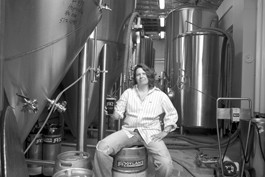
T he best brewer of beer does not necessarily leave his trademark upon the product. To the contrary, he may be a humble man and a servant to cherished styles. A seamless transition as a new beer man takes over for an old at a neighborhood brewpub is among the strongest testimonies there is to a brewer’s understanding of his science and mastery of his craft.
Or hers.
Just a handful of women in the Bay Area and a scant dozen in the United States brew beer professionally, and Moylan’s Brewing Company in Novato has one of them, though Denise Jones doesn’t dwell on the novelty of it all.
“I don’t think people look at me, taste my beer and say, ‘That’s pretty good for a woman,'” she says. “Beer is really about the beer.”
Moylan’s was founded 19 years ago, in which time customers have come to know, expect and enjoy its list of familiar ales. So when owner Brendan Moylan hired Jones in October of 2006, he was not looking for an overhaul of the beer list; on the wet end of the tap, it’s still just business as usual.
“It wasn’t my job to come walking into Moylan’s and make sweeping changes to the beer or even leave my signature on the beer,” Jones, 43, says. “My job was just to tighten up a few loose ends, increase the balance here and there, and increase the shelf life for the bottled beers.”
Moylan’s has seen a growth in its bottled-beer program as the brewery gains renown across the country. The beer is distributed to 15 states, and Jones calls the long and winding road of national distribution the “beer torture chamber.” It must travel from tank to filter to bottle to truck and, finally, to retailers across the nation, where poor staff handling and balmy stockrooms can potentially damage the product, if transport hasn’t already.
Meanwhile, Jones feels beer is best served on draft over the counter, when it’s just days or weeks old, an unusual philosophy in the midst of so much buzz over barrel-aging, vertical vintage tastings and ancient ales pulled from the cellar. But Jones grew up on fresh beer. She learned to brew in brewpubs and was never even a home brewer, which is the way that many, if not most, brewers begin.
She has almost always made beer to be served onsite, moving the majority of the product from tank to keg to glass, all within 30 feet and two weeks of its point of origin. Jones enjoys this close relationship between brewer and buyer, as she receives immediate feedback, criticism, praise and questions.
Yet she remains behind the scenes most of the time, brewing beer without end. In fact, to compare the art of winemaking, the Bay Area’s other specialty in artisan beverage making, to that of brewing paints a telling picture. Winemaking is a vintage activity that arrives each fall in a flurry of mild panic. Brewing, on the other hand, is a steady, repetitive effort that occupies a professional day in and day out, much like a chef’s.
Which isn’t so unusual. In merry olde England, beer was considered “women’s work,” something done in the kitchen to feed the men. Asked why not many women helm the kegs today, Jones considers. “I think it’s always been an engineering-type job, and more men are usually engineers than women,” she says. “It also requires physical strength—muscular strength—and that’s usually men. In the latter part of history, men have just been the brewers, but I never approached it as a man’s job. I just approached it as a function of creativity, and for that I really enjoy it.”
Good thing, because last year, over a thousand barrels of beer were served across Moylan’s bar.
Jones says that the greatest challenge of beer-making, especially for familiar locals, is meeting the demand for consistency.
“Brewers must diligently watch the beer, and it has to taste exactly the same each time you put a new batch on the shelf, whereas the winemaker will say that 1997 tasted like this and 1999 was a little more of that. Winemakers say nature gives them a different product each year, but nature gives us different products, too. It’s shifting sands with barley, and it’s shifting sands with hops.”
Drinking the stuff is easier, though caution is advised when tipping back some of Moylan’s whoppers like the Hopsickle Imperial Ale, a triple IPA. Buffed up to over 9 percent alcohol by volume, it’s a tempest of flowery aromas, caramel in the mouth and stinging alpha acids. The imperial stout goes 10 percent and bubbles with black fudge, smoky dark chocolate and peanut butter. The Old Blarney Barleywine is just as strong, a deep dark brown, and layered with caramel, butterscotch and candy flavors. And there’s the 8 percent Kilt Lifter, a sweet Scotch ale that blends the nutty flavors of wild rice, rye, wheat and corn. On the lighter side are the Dry Irish Stout, the Tipperary Pale Ale and the fruity, red Wheat Berry. A dozen or more beers are available on draft at any time.
Yet some 70 percent of the brewpub’s forecasted 4,000-odd barrels of beer will be shipped outward to 15 states this year. With national distribution comes national acclaim, and Jones is getting it. She has won nearly 20 awards since arriving at Moylan’s 18 months ago, and among the nationwide fraternity of craft brewers, Jones is becoming an increasingly recognized name and face who has taken several medals at the Great American Beer Festival.
Jones attended the American Brewers Guild in Davis, received her master of styles degree in Chicago, studied in Munich, has attended national and international beer and wine conferences and has received training in sensory analysis. Still, she’s not done.
“Constantly learning is really important to me,” she says. “I will not be complacent in my craft.”
She calls her job a “highly worthy career,” made interesting by the daily challenges, the customers, the feedback, the balancing of art and science, and her team of assistants.
“It’s a job. It’s a career. It’s something I have passion for. There’s plenty of room for women out there in brewing. I’d encourage anyone—if you’re a man or a woman, young or old—to go into brewing if that’s what you like. Maybe it’s a blinded, sexist attitude, but I belong to one of the most fraternal orders of people, and I really don’t think I encounter sexism among brewers.”
Quick dining snapshots by Bohemian staffers.
Winery news and reviews.
Food-related comings and goings, openings and closings, and other essays for those who love the kitchen and what it produces.
Recipes for food that you can actually make.
First Bite
E ditor’s note: First Bite is a new concept in restaurant writing. This is not a go-three-times, try-everything-on-the-menu report; rather, this is a quick snapshot of a single experience. We invite you to come along with our writers as they—informed, intelligent eaters like yourselves—have a simple meal at an area restaurant, just like you do .
My guy, Doug, and I have passed through many doors in the 12 years we’ve been together, so it was fitting that we would enter the red door of Portelli Rossi to celebrate our anniversary. Located in Novato’s old town, Portelli Rossi was formerly known as Kitchen 868, and though it still has the same owner, Henry Hautau, and the same executive chef and managing partner, John Ruggieri, it has changed its style and focus. Which, come to think of it, is a little like me and Doug, who were together before, and now are again in a great, new way that will B-4- evah ! Are you sensing a pattern here? Good.
Portelli Rossi focuses now on Italian food with dishes in a more affordable range than previously offered (most are under $20). In an attempt to broaden their appeal, they even have a menu for the bambini with such whine-stoppers as chicken fingers ($7) and steak and fries ($9). Doug and I went for lunch and didn’t bring our own bambini, it being a day to celebrate our just us-ness, and a school day at that, hurrah.
It’s cozy and intimate inside with golden walls, a red ceiling, a jumble of modern art and what looked like beer coasters or decals framing the mirrors—but on such a nice day, Doug and I chose to sit on their new brick patio. That seemed to be the place to be, with a view of the foot traffic on Grant, heat lamps for cool evenings and strings of lights.
Nibbling on the home-baked rosemary bread, we broke our adoring gaze just long enough to survey the menu and decide among smoked bacon and white bean soup ($6); mozzarella di buffalo antipasti ($8); fried artichoke salad ($11); prosciutto di parma, formaggi or eggplant panini ($9–$13); or clam linguine ($11/$17).
Displaying his usual good taste and judgment, Doug chose the caesar salad ($9), a carryover from Kitchen 868 days, and no wonder. A lemony anchovy dressing lightly coated long spears of cut romaine, croutons and grana padano ; for actual anchovies, Doug tossed in an extra $1.50. For our second course, I ordered the pancetta-wrapped rock cod ($17), which was slightly salty and crunchy, but moist, on a bed of white beans, chard and capers. Doug went for the ravioli funghi ($16), a full order, which turned out to be only five pockets (pity those who order the half) filled with velvety portabella mushroom and covered in brown butter sage sauce, so good we wished there were more .
With our lunches, I drank an Inzolia ($8), my first time with the delicious Sicilian wine. Doug quaffed a $9 glass of Starry Night Zinfandel. (Did I mention Doug’s likeness to Van Gogh, in the artist’s two-eared phase, that is?) We traded spoonfuls of our desserts, a classic custardy crème brûlée ($6) for Doug, and, for me, a spicy ginger cake with brandy and butter hard sauce ($7)—their flavors reminiscent of the times we’ve had together lingered as we went out through the red door and into our 13th year together.
(I promised Doug that, in honor of our anniversary, I would write him a paean in the form of this review, mentioning his name 12 times, one for each glorious year together—and with this, Doug, I have!)
Portelli Rossi, 868 Grant Ave., Novato. Open for lunch, Tuesday–Saturday; dinner, Tuesday–Sunday. 415.892.6100.
Quick-and-dirty dashes through North Bay restaurants. These aren’t your standard “bring five friends and order everything on the menu” dining reviews.
Taylor Eigsti Quartet at Sonoma Jazz+
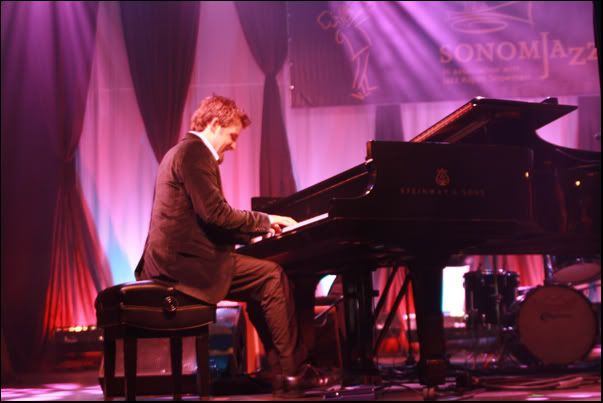
Taylor Eigsti talked nervously. Wouldn’t you, in front of a 3,000-seat tent with only a few hundred people in it? His buddy, Julian Lage, looked at him, looked out into the expanse. Laughed.
Then Eigsti sat down, punching out spare, discordant notes on his piano, as if in a musical deterioration of how eerie the whole thing was. Lage responded by picking out high-pitched chirps from his guitar strings below the bridge, and eventually, Ben Williams and Eric Harland sidled in. Out of all this, a song eventually self-sculpted: Cole Porter’s “I Love You,” full of wit, verve, dramatics and a fleeting debt to Bill Evans.
Another amazing night by Taylor Eigsti and Julian Lage was underway.
For some reason, I turn into a 1960s television host when talking about Eigsti and Lage. These kids, they’re a real gas, just righteously groovy. I go ape for ’em, you dig?
I wasn’t alone: at the finish of the group’s next tune, “Time Lines,” a thundering, raging storm of full-fingered jazz, the crowd jumped immediately to their feet. There’s something so beautiful and weird and gratifying about watching a huge tent that’s only 30-percent full going absolutely bananas for the relative unknowns, and especially when those unknowns are ruling as hard as Eigsti and Lage.
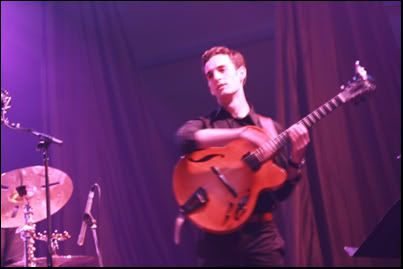 Eigsti is 23, Lage is 20, and people can talk all they want about young players only studying theory and technique and recycling old ideas in place of emotion—it’s just not true with these two. They’ve got an emotional depth that goes acres deep. I’d seen this on display as a duo before, but with Williams and Harland they were a powerhouse. Though the two did play some duets together, the bluesy “And What if I Don’t” by Herbie Hancock and the original composition “True Colors”—and offered an introspective take on the surprise indie-rock tune of the set, the Eels’ “Not Ready Yet” (!)—the two truly shined in a full-force setting.
Through every open door, both Lage and Eigsti tiptoed carefully; the majority of their solos began with sparse hesitation, a note here, a run there. Feeling out the field. Wayne Shorter’s “Deluge” saw Lage open his solo with palm-muting intermittent bent notes on the fretboard, which slowly unraveled into more loosely muted hammer-ons, which eventually unraveled into a full-speed-ahead trek both in and out of the scale, going by so fast it was impossible to completely grasp.
Harland must have been in on this plan, too, because he’d take eights like this: 1) rubbing his stick end on the bell of his ride, and 2) same thing but with some bass drum, and 3) rim shots mixed with toms building up to 4) ending by wailing away. Mas y mas.
Yes, these dizzyingly executed extended crescendos abounded, even amongst all four members. “Caravan,” the set’s closer, opened with what Lage calls “my only toy”—a delay pedal, used with flat-fifths and slides and layered rhythms—while Eigsti reached inside the grand piano and dampened the strings with one hand, pounding out fast notes with the other. I’m of the belief that there’s no lousy way to play “Caravan,” but this was on some other shit entirely; Eigsti’s marathon solo, in particular, was unleashed like he was hungry, ravenous, stabbing at the keys. It was so impactful that the crowd started cheering in the middle and didn’t let up until the triumphant end minutes later.
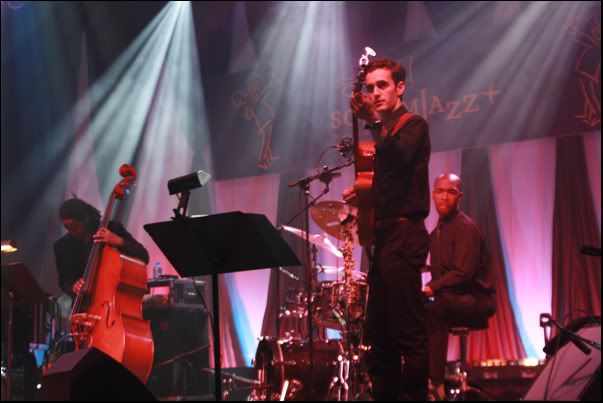 Eigsti’s group—this same quartet—is playing tonight at Yoshi’s in Oakland and tomorrow at Yoshi’s in San Francisco. Go, go, go. Also, Eigsti has a new album out this week called Let It Come To You, and it features incredible performances that come damn close to capturing his live show. So well, in fact, that I’ll forgive the goatee.
Also, be sure to check out Lage’s trio when they open for Charlie Haden and Joshua Redman at the Raven Theater on June 7 as part of the Healdsburg Jazz Festival.
Herbie Hancock at Sonoma Jazz+
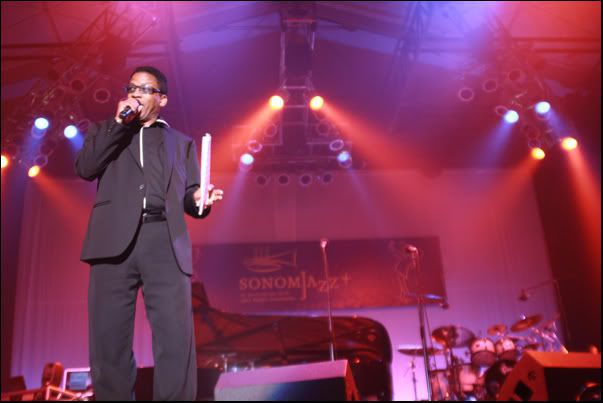
Herbie Hancock is a jazz legend. It’s a fact. You can’t strip him of it.
At what’s billed as a jazz festival, you’d think people would be into Herbie Hancock. But after his first song last night, the Blue Note jazz classic “Cantaloupe Island,” an exodus of half-tipsy middle-aged Wine Country dilettantes who’ve been trained that Michael McDonald is “jazz” filled the aisles and headed to their SUVs.
This, I’d think, might be slightly embarrassing for the Sonoma Jazz+ Festival, who have suffered as many exhortations to simply change their name as Hilary Clinton has to drop out of the primaries. Frankly, I’m overwhelmingly for it. If you’re going to represent yourself as a “jazz” festival but then book mostly R&B, blues, or pop acts, you’re not only insulting an original American art form but also, I might add, essentially defying a Congressional decree calling for the recognition and preservation of jazz as a rare and valuable national American treasure.
Herbie Hancock, along with Julian Lage and Taylor Eigsti, represents the true jazz minority at this year’s festival, and Hancock occupies a decidedly unique place in jazz, however mainstream it may be. Though most of what he’s done lately falls into classical or pop realms, he has constantly pushed, in his music, the jazz ideal of exploration and possibility. No amount of Starbucks-friendly collaborations with Corrine Bailey Rae can taint that fact, and in a twisted way, his forays into funk fusion, industrial breakdance music, and other non-jazz idioms actually support it. If jazz is a journey, then Hancock is an overarching participant, straying from the designated path with equal parts vision and experimentation.
Example: while Hancock introduced his second number last night, the equally classic “Watermelon Man,” he announced that he and his quintet would tackle it with a few variations. First, they’d incorporate a 17-beat count into the song, based on African music. Second, they’d introduce one extra beat at a time, until they reached 17 beats. Oh, and another thing: they’d bring out a DJ to play turntables on the song.
The exodus continued.
 What followed was an entirely creative take on “Watermelon Man,” with bassist Marcus Miller holding down the solid groove while Hancock switched from grand piano, to synthesizer, to. . . wait a second. . . a Key-tar?! Yep—Hancock and his harmonica player traded harp and Key-tar licks, the DJ threw in some scratching and the guitarist played wild octave-pedal scales. In its offbeat and original way, it was jazz—and the idea of jazz—at its finest, and to be fair to the crowd, the multitudes of people who stuck around gave him the first of many deserved standing ovations.
A trio of Joni Mitchell songs from Hancock’s what-the-hell Grammy Award-winning Album of the Year River: The Joni Letters followed, with vocalists Lizz Wright and Sonya Kitchell delivering stellar versions of “Edith and the Kingpin” and “The River,” the latter ending with angelic harmonies between the two. However, Kitchell’s take on “All I Want,” a breathy, sexy rendition, was a misfire compared to Mitchell’s laughing, playful original.
I actually listened to Mitchell’s Blue before coming to the show, and “All I Want” is such a great, weird dichotomy of a song—it’s full of longing and loneliness, but it’s also buoyant and optimistic, like Joni’s looking towards the day that she’ll be happy, feel free and knit sweaters. As the listener, you think that day could be tomorrow and the sweater she’ll knit is just for you. Kitchell sang it instead like there was no hope in sight—just a lot of self-wallowing and bluesy inflection.
 Hancock himself played fantastically, but the greater impression left was that of a scientist in a jazz lab, professorially dissecting each number with sheet music in hand and explaining how the quintet would approach each new discovery. Introducing “Jean Pierre,” a vehicle for bassist Miller, he even joked about the song’s sketchy genesis. “This is a composition by the great Miles Davis,” he said, to scattered cheers. “You think Miles wrote it alone? Who knows!” (for further reading on Davis’ notorious habit of plagiarizing other’s songs, I recommend the book Shades of Blue by Bill Moody).
With Hancock’s classic Blue Note era covered by “Canteloupe Island” and “Watermelon Man,” with the Headhunters era covered via the encore “Chameleon,” and with the pop era covered with the Joni Mitchell songs, there was only one stone left unturned in Hancock’s set. I would have never thought he’d play it, not in a million years.
“Are you ready?!” he shouted. “For the first time in 25 years, are. . . you. . . ready?!”
And with that, he strapped on the Key-tar, motioned to the DJ, and led the band in a run-down of the great breakdance jam I used to backspin to when I was nine years old: “Rockit.” The crowd erupted. It wasn’t exactly jazz, but it felt good, and all egregious festival misnomers aside, that’s what any good festival is supposed to offer.
Al Green at Sonoma Jazz+

“There’s people wonderin’,” said an unstoppable Al Green on stage in Sonoma last night, “if the Reverend Al’s still got it!”
And then, to answer his own hypothesis, in the high falsetto that’s conceived thousands of babies and still melts ladies’ hearts:
“Yeeeeeeeeaaaahhhhhh, bay-beee!”
With an 11-piece band, a hailstorm of energy and verve and most importantly, a voice that’s still pure quicksilver, Al Green at that point had already proved to the Sonoma crowd that he’s definitely still got it. The exchange existed, rather, as part of an extended love-fest with the audience—showy but unscripted—that started with his passing out roses to the ladies in the front row and continued in rambunctious call-and-response fashion like the Baptist masses that Green conducts most Sundays to the public at his church outside of Memphis.
“I love you,” he said. “I love you. I love you. I love Sonoma.” Then again, singing: “I love Sonoma. I’m gonna make my own song. I looove Sonoommaa. I looove Sonoomm“—the falsetto kicked in—”AAAAAAAAAHHHH!”
The feeling, to say the least, was mutual. “Let’s Stay Together” inspired a bumrush to the stage, putting security in a tizzy, and “Here I Am” caused massive spillover outside of the too-small cordoned dance areas down the side of the festival’s gargantuan tent. During “How Can You Mend A Broken Heart,” Green held the congregation spellbound in a masterful, heart-wrenching torpor; that one song alone boosted last night’s lovemaking in Sonoma County by 20 percent.
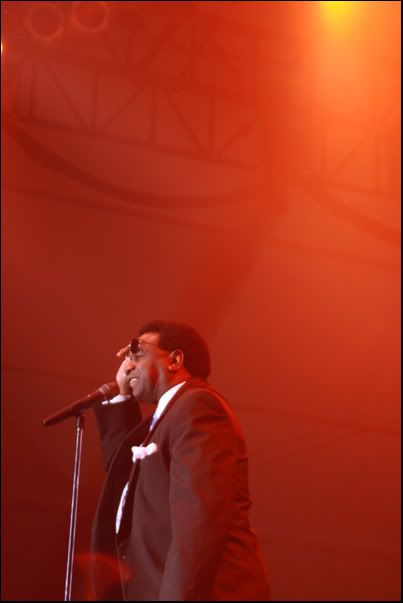 During Green’s high-energy, 50-minute set, there were only a few clunky moments. Green barreled through an unnecessary medley of classic soul hits—”I Can’t Help Myself,” “My Girl,” “Bring it on Home to Me,” “I’ve Been Loving You Too Long,” “The Dock of the Bay,” “Wonderful World”—which would have been much better had he picked one and sang it in its entirety (I nominate “Bring it on Home to Me.”) This led into a lacking “Tired of Being Alone” featuring Green singing pieces of the song but mostly playing with the crowd while his 11-piece band vamped in the background, and after an extended “Love and Happiness” closed the set, Green’s backup singer lamely ran down a Wikipedia entry of his achievements: “Al Green, ladies and gentlemen! Member of the Rock and Roll Hall of Fame! Member of the Soul Hall of Fame! Member of the Gospel Music Hall of Fame!”
In the overall picture, however, these details will have to accept their status as minor gripes, fully overshadowed by Green’s talent, personality, legend, and desire to give all that he is to his audience. “The lady back there that’s the head of this whole thing made me promise to keep my little ‘A’ on the stage,” he said at one point, clearly delighted with himself as he walked like a disobedient child down the front steps to his adoring crowd, “and here I am. . . on my way down again!” And then the falsetto, again, directly into the eyes of a sea of swooning females.
Yes. Al Green has still got it.
Kool & the Gang at Sonoma Jazz+
 “I think my favorite line in the song is ‘She’s a lady,'” I said. “I mean, ‘she’ wouldn’t be anything but a lady, right?”
“No, because ‘lady’ is used as a term of distinction. Not all females are ladies. Plus, that’s only half the line: it goes, ‘She’s a lady that you really want to know.'”
“Oh, right! ‘Somehow I’ve got to let my feelings show. . .'”
We were strolling towards the tent in Sonoma, talking about “Fresh,” the still-stupendous Kool & the Gang jam which played for one blissful summer on constant repeat in my house growing up. I was 10 when the album Emergency came out, and I spent hours staring into the cover, checking out Kool & the Gang’s ’80s outfits, thinking the same thoughts that any 10-year-old thinks when they stare into an album cover: Those dudes are in a band. That’s so cool.
So I suppose we could have left happy after Kool & the Gang hit the stage in Sonoma with “Fresh.” But the song, complete with synchronized dance movements and choice poses, heralded what I’d figured would be the case with Kool & the Gang: they were out to deliver a totally scripted, well-oiled show of role-playing and crowd pleasing. This can be seen, in a lot of ways, a schlocky Vegas gimmick. But in another light, it’s also a lost art in the history of R&B, where great “show bands” or “stage bands”—even small, regional funk ensembles—used to never hit the stage without a perfectly-rehearsed set of joint-jumpin’ dances, perfectly executed breakdowns, and sewn-up patter.
To a standing-room crowd out on the dance floor, many of them in disco outfits and huge afro wigs, Kool & the Gang put on a dazzling show, not ignoring the early heavy funk that established them in the first place: “Jungle Boogie,” naturally, “Funky Stuff,” of course, and the song that every desperate DJ leans on to get people moving out on the floor—”Hollywood Swinging.”
Lite-rock hits like “Joanna” and “Cherish” mixed with disco hits like “Get Down on It,” which led into the most predictable encore in the universe: “Celebration.”
Dare I say that a little bit of jazz even crept into their show?
 During “Funky Stuff,” everyone in the band except the guitarist took extended solos. Later on, saxophonist Dennis Thomas mentioned how they’d all grown up on Miles Davis and John Coltrane. And. . . well, okay, that’s about it. The rest was pure boogie.
The tent was really going nuts dancing and screaming, which Kool & the Gang acknowledged during the calypso-flavored “Island Shake,” bringing select participants from the crowd to strut their stuff on stage. First it was two ladies—you can see the results in the photo above—and then it was two guys, who actually used their time in the spotlight to square dance. I’m not kidding.
“Those guys,” the singer joked, “ain’t never been to the island.”
—————————————
P.S. My 10-year-old self can’t let the moment pass: you gotta check out the video for “Misled,” from Emergency, starring Kool & the Gang when they still had JT Taylor singing. Part Thriller, part Raiders of the Lost Ark, it’s an amazing (and really, really low-budget) time capsule of MTV during the Reagan era:
[display_podcast]
Treasure Island Festival Lineup Announced!
 It’s no secret that one of my favorite concert-going experiences is the Treasure Island Music Festival, a two-day soirée with an incredible lineup and a beautifully scenic setting out in the middle of the San Francisco Bay. With the organizers planning the gigantic Outside Lands Festival in Golden Gate Park this year, I expected that a second year out the island might be a sinking prospect. I needn’t have worried. This year’s lineup was announced today:
Saturday, September 20:
JUSTICE | TV ON THE RADIO | GOLDFRAPP | HOT CHIP | CSS | ANTIBALAS | AESOP ROCK | AMON TOBIN | FOALS | MIKE RELM | NORTEC: BOSTICH + FUSSIBLE
Sunday, September 21:
THE RACONTEURS | TEGAN & SARA | VAMPIRE WEEKEND | SPIRITUALIZED | OKKERVIL RIVER | TOKYO POLICE CLUB | THE KILLS | DR. DOG | JOHN VANDERSLICE | THE DODOS | FLEET FOXES
It’s $65 per day, $115 for a two-day pass. Tickets go on sale Friday, May 30, but make sure to visit the festival website for mailing list signups and presale passwords.
So what makes the festival so great? I’ll tell you.
Scarlett Johansson Takes Our Advice
I know we all weighed in on the mostly forgettable Scarlett Johansson album in last week’s Bohemian, but I never expected she’d read the reviews, consider our rapier criticism, and tighten up her act. But lo, here it is, Johansson performing “live” (yeah right) and though it’s still kinda like, whatever, it’s way better and more passionate than the cruddy record. Gone are the excessive vocal effects and the washed-out production, and she seems like she actually cares about the song. Why didn’t she just do this in the first place?
Poco Persevere
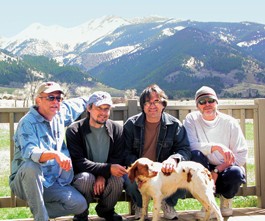
Poco is a case study in perseverance. Formed from the remnants of Buffalo Springfield in 1968, the upbeat country-rock band recorded a series of well-liked but not terribly strong-selling albums. As the ’70s wore on, key members Jim Messina, Richie Furay and Randy Meisner sought, and mostly found, greener pastures elsewhere, eventually leaving Rusty Young as the last original member. He still is.
The 12th record Poco had released, Legend, included “Crazy Love” and “Heart of the Night,” two back-to-back Top 20 hits that dramatically revived the band’s fortunes.
“The only reason we’re talking now is ‘Crazy Love,'” Young cheerfully admits by phone from his home overlooking the Missouri forest. “That was our first hit single. It’s a classic, and it still pays the mortgage.”
Although they never reached that pinnacle again, Poco have remained active, playing 40 to 50 shows each year, a level of activity that Young laughs is “plenty for me.” The current edition of the band plays the Mystic Theatre on May 22, and it’s a given that their two signature hits will be on the set list; the long, lean years gave Young a rich appreciation for the good fortune those songs represent.
And that sets off a story, Young recounting a conversation many years earlier with one of his contemporaries. “It was 3am and I was sitting across the table from Tom Fogerty, and Tom said, ‘I’m quitting Creedence Clearwater.’ And you know, Tom didn’t write the songs, he didn’t sing, he played rhythm guitar. He was making a gazillion dollars, and I didn’t see his future as being particularly bright if he quit. And I said, ‘I can’t believe you’re going to quit, Tom. What’s up with that?’
“And he said, ‘If I have to play “Proud Mary” one more time, I think I’ll kill myself.’
“I told him, ‘If we had a song like “Proud Mary,” I’d do like Hank Williams did with “Your Cheating Heart,” I’d open with it, I’d play it in the middle of the set, I’d close with it and it would be the first two encores.’ That’s how I feel about ‘Crazy Love.’ I can’t imagine not playing it in concert.”
As the story suggests, Young is a ready raconteur. No wonder he’s putting the finishing touches on his musical memoirs.
“I’ve been in this band for 40 years,” he says. “I’ve got Elton John stories, Keith Moon stories, backstage stories that people haven’t really heard. And over the past 20 years, we’d be sitting around a dinner table or at a bar and I’d start talking about, say, the session I watched with Keith Moon. And people started telling me, ‘You ought to write these down.’ So that’s what I’m doing.”
An early chapter will likely revisit the path that brought Young from Colorado to Los Angeles to contribute some pedal-steel work to Buffalo Springfield’s Last Time Around LP and how that led to his role in Poco.
“An audition was set up with Gram Parsons,” he says, “because he was going to start a new band. But I blew off the audition because Jimmy and Richie and I just hit it off—we had a lot of things in common, goals and musical history, and the Springfield was breaking up and they were going to start a new band and it was just a perfect match, so I went that way.”
Later, however, he says, “Gram Parsons came back and auditioned to be in Poco and that didn’t work out as well. That’s all in the book.”
Young in print vows not to pull any punches. “I just read so many autobiographies that I felt were unsatisfying because they gloss over things and they don’t really tell the stories,” he explains. “They’ll say something like, ‘I had a really rough flight over to France,’ and it’ll be somebody I know, and I was on that flight, and they had more than a rough flight—they left the airplane in handcuffs!”
Poco play Thursday, May 22, at the Mystic Theatre, 23 Petaluma Blvd. N., Petaluma. 8pm. $23. 707.765.2121.
Win-win-win
Beer Mistress
Taylor Eigsti Quartet at Sonoma Jazz+
Herbie Hancock at Sonoma Jazz+
Al Green at Sonoma Jazz+
Kool & the Gang at Sonoma Jazz+
Treasure Island Festival Lineup Announced!
Scarlett Johansson Takes Our Advice
Poco Persevere



