
Editor’s note: First Bite is a new concept in restaurant writing. This is not a go-three-times, try-everything-on-the-menu report; rather, this is a quick snapshot of a single experience. We invite you to come along with our writers as they—informed, intelligent eaters like yourselves—have a simple meal at an area restaurant, just like you do.
Restaurants come and go as fast as the seasons. The best are, to borrow a punch line from Monty Python, like a jam donut: Their arrival brings us pleasure, and their departure merely leaves us hungry for more. The space formerly occupied by the beloved Cafe St. Rose has sprouted an eclectic eatery that’s been as eagerly anticipated as the former is pined for. The only raw-food fine dining north of San Rafael, Seed is part of the latest resurgence of a regime that’s been touted for over a hundred years. Raw-food partisans come in many stripes, from raw-meat-scarfing Paleolithics to gentle fruitarians. Vegan’s the word here, both in conventional raw foods like salad and creative mimicry of traditional cooked dishes. Seed delivers artfully arranged plates that are, more often than not, as flavorful as they are interesting.
The window box of a dining room is light and airy but comfortable. Seed’s style is lower-case-letter modern/urban, not what some may expect going on stereotype. Our chipper server gets a break being brand-new on the job; the personable owner and chef circulate to explain their menu and solicit our reactions.
With a permit pending for serving vegan wine (yes, there is), there’s something to look forward to—with this caveat: If my experience at Berkeley’s Cafe Gratitude is any guide, one bottle shared over raw food makes for a tipsy time.
The chef’s tasting plate ($11) offers a broad, bite-sized overview of the appetizer selection. The “live” carrot ginger soup was served cool in a glass, like a savory smoothie spiked with ginger and allspice. Live chips, dehydrated vegetable crisps drizzled with hummus-like jalapeño “crème” were a big hit at the table. Sea salad was a nest of thin, crisp seaweed and carrot, and live caesar was topped with piquant pine nut Parmesan. The shrunken tapenade-stuffed crimini mushrooms looked as if they’re cooked—finished with little fragrant sprigs of fennel, a scrumptious if tiny treat.
The barbecue burger ($12.50) was the closest thing to the image of old-school, earnest veganism on the menu. The side caesar was fresh and tasty, and I approached with an open mind the dark, compressed live nut burger and its earthy bouquet. But the live barbecue sauce ruined it for me. Although my dining companions did not pick it up, the vinegar aroma triggered a remarkable and unfortunate memory of . . . a winery at the end of harvest. I say it nicely—I mean the drains.
I didn’t get near feeling full until a tasty cup of French green lentil soup in spicy cumin broth ($3.50), one of a few cooked items on the menu, arrived. The hands-down most creative and satisfying entrée were the ravioli flowers ($13). Creamy macadamia nut filling is folded into thinly sliced rutabaga “pillows” to approximate ravioli—really several times better than this description sounds.
With room for dessert, we found the brownie (all desserts, $6.50), too dry, but the Cheezcake is the new wave of New York style. Cool and creamy with hazelnut crust, drizzled with live strawberry sauce, each bite was better than the last. Our departure only left us hungry for more.
Seed, 463 Sebastopol Ave., Santa Rosa. Open for lunch and dinner, Wednesday&–Saturday; brunch, Sunday. 707.546.7333.
Quick-and-dirty dashes through North Bay restaurants. These aren’t your standard “bring five friends and order everything on the menu” dining reviews.
Radical Chic

Illustrations by Michael Houghton
Story by Gretchen Giles
Spinach. Tomatoes. A lone Texan jalapeño. Global warming. The 2008 Farm Bill. Gasoline. The wars in Iraq and Afghanistan. Sure, bad news is made every day, but the sort of bad news we’re reeling from currently is bad news that we’ve brought exactly upon ourselves.
Not much more than a century ago, the United States was largely a rural place. And then we got very good at producing lots of things very quickly. Rapidly, that which we created ourselves in small lots or grew ourselves on small acreage went out of vogue, and prepackaged readymades came into rabid national fashion.
In considering this year’s Arcadia issue, our annual salute to food and wine, we began to warm to the idea of the Victory Garden. Originated by the government during WW II, Victory Gardens provided Americans with some 40 percent of their food during the so-called Good War; Golden Gate Park alone had over 800 plots, and the land across from San Francisco’s Civic Center was a full-blown farm.
Today, the land across from the Civic Center is once again planted with food, as S.F. gears up for the Slow Food Nation convivia over Labor Day weekend, and the wave of vogue is slowly turning back to that which is small, that which is fresh, that which is carefully made with intent.
When something as inoffensive as a tomato, a head of spinach or a little green pepper cannot be trusted as being healthy and safe in our modern-day food supply, it is time to rely once again upon oneself. With such reliance comes other growth. Being able to provide your own transportation and provide your own food, being canny enough to create a true sense of freedom in your life is uniquely patriotic—and essentially American.
With a growing sense of glee, it occurred to us that doing it for yourself is in fact the best way to stick it to the Man. Planting a Victory Garden is a strangely radical act. Something so old-fashioned and innocuous is actually a wild stride toward liberation. Don’t trust that tomato? Grow one in a windowsill, on the porch, in the yard. Worried about systemic poisons in that strawberry? Eat them only in season, buy them only from a farmer, grow them yourself. Don’t like the war in Iraq? Ride a bike and get off the petrochemical death-spiral. Self-sufficiency is a hallmark of American culture—at least it sure used to be.
And from the looks of things, it is once again.
On the following pages, we profile people who follow the radical trajectory of self-sufficiency, giving to others, finding joy in eternal pleasures and creating victory in their own lives and those surrounding them through small, good acts that, when taken together, mount a gorgeous bloom.
Salmonella poisoning, global warming, peak oil, senseless wars and even the 2008 Farm Bill aside, the North Bay in the 21st century is at an exciting point, where the people who are paying attention aren’t just the older generation who shook it all up in the ’60s. It’s also the hipsters, the young marrieds, the tastemakers. Digging in the ground, making it yourself and doing for your own is hip again. To borrow a very old expression: Hallelujah to that.
Quick dining snapshots by Bohemian staffers.
Winery news and reviews.
Food-related comings and goings, openings and closings, and other essays for those who love the kitchen and what it produces.
Recipes for food that you can actually make.
Cranky Pants

Splitting his time between Guerneville and Manhattan, acclaimed consultant Clark Wolf graces these pages with the occasional diatribe from the periodic local.
OK, I’ve had it. I’m totally sick and tired of people commenting on what I eat and drink, like they know something I don’t, and like it’s OK to have a public opinion about something as intimate as what I put in my mouth. Especially when they’re so deeply wrong.
I’m talking about you, Starbucks. It’s really swell that you stopped everything for an hour or two (and delightfully eerie to walk by a locked-up gaggle of baristas revisiting the basics) to attempt to refresh your commitment to coffee mania, but can you please teach your team a few basic facts? And some manners?
Simple fact: There’s less caffeine in espresso than in regular drip coffee. A six-ounce cup of brewed coffee has about 100 to 115 milligrams of caffeine; a double espresso, about 50. OK, so I like a Quad (that’s four tight shots). And a Venti coffee (a trademarked term for a huge amount—20 to 24 ounces depending on the drink) is 400 to 450 milligrams of buzz. So whose eyebrows should be raised?
More complex fact: Espresso has less caffeine for two separate but relevant reasons. First, it’s most usually made from better beans—they’re called Arabica and just naturally have less caffeine while having more, deep flavor. Second, the push-through of water means less time on the bean, so again the less caffeine you get into your cup. (The cheaper brews use a bean called Robusta, which is, uh, pushy but somehow less refined.)
Big fat fact: A whole lotta stuff Starbucks and other nuevo barista bars sell is huge-calorie/empty-calorie confectionary. I mean, 600 calories for an Iced Peppermint White Chocolate Mocha Venti crap-o-chino?! And they cross their eyes at my quad?
And you really don’t need to know my name. I’ve not yet had my coffee this morning, so your corporate attempt at commercial bonding with me is really rather invasive. If I’d wanted to have coffee with you instead of from you, I’d have invited you over. Just sell me the damn quad.
Clark Wolf
Clark Wolf is the president of the Clark Wolf Company, specializing in food, restaurant and hospitality consulting.
River Brews
Clark actually does like the coffee at these places:
Coffee Bazaar14045 Armstrong Redwoods Road, Guerneville. 707.869.9706.
Gold Coast Coffee 25101 Steelhead Blvd., Duncan’s Mills. 707.865.1441.
Kaya Organic Espresso, 16626 Hwy. 116, Guerneville. 707.869.2230.
Mama Java 19420 Hwy. 116, Monte Rio. 707.865.0800.
Quick dining snapshots by Bohemian staffers.
Winery news and reviews.
Food-related comings and goings, openings and closings, and other essays for those who love the kitchen and what it produces.
Recipes for food that you can actually make.
I, WinePod

Forget soil. Forget irrigation. Forget weather. Forget purple hands in October. We’ve entered the 21st century, and we’ve hit the ground running. Just eight and a half years in, and already there’s a computer that can make wine year-round. Sort of. Developed in Silicon Valley, the WinePod allows human involvement—requires it, actually—but this gizmo’s got the digital brains to virtually eliminate all human error and the blunders that can ruin a batch of homemade bucket-wine.
The machine, invented in 2005 but only now going mainstream, is a 4-foot-tall R2-D2 look-alike with a 15-gallon capacity. It is clean-lined and quicksilver-sleek, and will add an industrial sex appeal to the modern dining room. And, unlike any human winemakers we know of, it can make 12 vintages of wine per year—winter, spring, fall or summer.
Here’s how it works. You buy a WinePod for a tad over $4,500, which includes a 15-gallon bundle of grapes from ProVina, WinePod’s founding father, which keeps about 50 tons of frozen Pinot, Cab and Syrah grapes in a cold-storage warehouse in Richmond. (Successive grape orders are around $700.) Remove the WinePod’s lid and dump the grapes into its steel-lined belly. Flip a switch to activate the automatic press, which squashes the grapes with 16 pounds of pressure per square inch. The skins and pulp are easily removed via the pomace basket.
Add dry yeast and the marvelous brix sensor. This complex, wireless gadget about the size of a Walkman (remember those?) soaks in the stewing wine and communicates with the winemaker via a PC application called WineCoach. This system provides breaking news updates from the belly of the WinePod; if there seems to be distress and unrest, the WinePod will suggest adding some yeast nutrient, another accessory.
Greg Snell, who initially conceived of the idea, says the WinePod is the first home-winemaking kit to bring commercial winemaking capabilities to the mini-batch level. Most home winemakers have only a plastic bucket with a spigot at the bottom to work with, making temperature control, for one, an almost unmanageable issue, but the brix sensor directs the WinePod in carefully controlling the temperature of the fermenting wine as needed, with no human input required.
But not every function of the WinePod is automated.
“The person is still the winemaker,” says Snell. “I was worried at first that people would think this is a winemaking machine, where you don’t have to do anything. That’s what a custom crush facility is, but the WinePod is the real deal. You’re making the wine. The software just serves as a crutch to keep you from making dumb mistakes.”
In Capitola at the north shore of Monterey Bay, just across the mountains from the WinePod’s Silicon Valley origins, Cava Wine Bar has integrated a WinePod into the cool, jazzy decor of the space. The staff and several customers have already made one batch of Napa Cabernet, now at rest in the eight-gallon oak barrel that comes with the WinePod.
As the wine ages, the winemakers will communally add oak chips, tannin powder and other optional elements from the WinePod accessory kit. Snell and his colleagues hope to interest other wine bars nationwide in having a WinePod on the premises, to expose wine enthusiasts to WinePod winemaking without having to make the immediate plunge of purchasing their own.
Snell has received a small amount of criticism from winemakers who claim that they learned to make wine the hard way, and that the WinePod allows one to bypass all the challenges. Cava Wine Bar co-owner Zach Worthington, who has seen the machine do its thing, disagrees and says there is nothing false about making wine in the WinePod.
“It teaches you winemaking exactly as it happens anywhere else, just on a small scale. You start with your fresh fruit and end with wine.”
Bad advice is prevalent in the home-winemaking community, says Snell, and a batch of wine gone south due to a simple error can easily turn a frustrated winemaker away from the hobby for good. With the WinePod, there’s no goofing up, as long as one regularly sits down at the computer to receive updates and advice. The WinePod, says Snell, will also bridge the intimidating gap that so often lies between a fine finished bottle of wine and the average Joe who once never could have imagined making such a product himself.
“We’re trying to demystify wine and winemaking, take the snobbery out of it and make it understandable,” Snell explains. “Even wine aficionados who haven’t made wine will not have the wine knowledge and appreciation of someone who makes it.”
Even if a robot does half the work.
Quick dining snapshots by Bohemian staffers.
Winery news and reviews.
Food-related comings and goings, openings and closings, and other essays for those who love the kitchen and what it produces.
Recipes for food that you can actually make.
Free Tools

Zuckerman, 37, who has worked in book libraries for eight years but calls reading “not my favorite thing to do,” has founded the Santa Rosa Tool Lending Library, and in the past two months alone, with only word-of-mouth directing people to the library, he has loaned out tools from his shed to over 50 patrons.
The idea is simple: Just like a book-lending library, patrons can check out tools at Zuckerman’s library for an agreed-upon length of time. When they’re done, they return it. If a tool is returned late or damaged, a fee will be charged, but otherwise the library is completely free.
So far, community support has been unanimous in the form of donations—cash, tools and services—and Zuckerman currently has his mind set on filing official nonprofit status and expanding the library to serve the community at large. As anyone in need of a $35 tool that they’ll use just once can attest, his efforts could result in one of the greatest things to happen to Sonoma County.
There are only about 20 tool libraries in the United States, and many of them are electric-tool-only libraries operated by utility companies. Using Oakland, West Philadelphia, Portland, Ore., and Columbus, Ohio, as models, Zuckerman, even in the library’s infancy stage, has amassed an inventory of over 200 tools. He also has received supportive offers of free legal help, free tool audit and maintenance and free advisory services from plumbers and construction workers.
Aside from covering costs—the largest being insurance—making money seems to be the last thing on Zuckerman’s mind. This is in stark contrast to his Beverly Hills upbringing in the family pawnbroking business. Tools at the family pawn shop were always coming and going, but the practice didn’t align with Zuckerman’s vision. “Everyone’s wheeling and dealing,” he says, “and you have to be clever. This is in some ways a reaction to that. It’s very simple and honest.”
After setting out on a bicycle trip in 1998 from Eugene to Los Angeles (“I was pulling a Forrest Gump,” he says), Zuckerman stopped off in downtown Santa Rosa where he was offered a job, on the spot, at Sawyer’s News. Since then, he’s worked at both the Sonoma County Library and the SRJC Library. Between his pawnbroking knowledge and his library experience, there’s no reason to predict his tool-lending library will be anything but wildly successful.
More than anything, Zuckerman loves offering people the ability to perform their own tasks, such as changing their own oil or unclogging their plumbing line, both of which, he says without hesitation, are within anyone’s grasp. “There’s just something so grounding about self-sustainability and self-reliance, especially when you’re always depending on people,” he says. “To be able to do anything on your own—even something as simple as unscrewing something—is pretty empowering.”
The library’s most popular tools right now are the power washer and the rototiller, although the tree pruner and high-pole saw are commonly requested as well. So far, no one has stolen a tool from the library or returned a tool late. Area hardware stores, in fact, have lent their support to the concept, operating under the notion that greater accessibility to home improvement is always good for business.
In fact, there’s only one person against the tool library. “My dad!” Zuckerman jokes. “My dad does not get this at all, ’cause my dad’s a money man.”
But when the library passes its development stage and starts expanding to serve the community, Zuckerman’s dad will have every reason to come around. “I told him that under ‘Founder,’ even if I have nothing to do with the library anymore, it will always say ‘Dustin Zuckerman,’ and this will be my legacy to the community. And when he heard that—’legacy’—he was OK, and started to get it.”
The Santa Rosa Tool Lending Library is online, with inventory, instructional videos and checkout procedures, at www.borrowtools.org.
Quick dining snapshots by Bohemian staffers.
Winery news and reviews.
Food-related comings and goings, openings and closings, and other essays for those who love the kitchen and what it produces.
Recipes for food that you can actually make.
Pick a Pepper
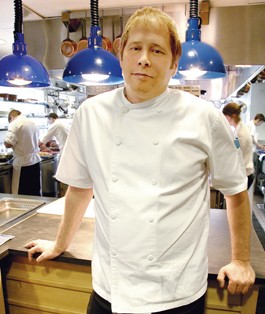
The welcoming of homegrown produce into restaurant kitchens is fast becoming the preferred method of restaurateurs all over the state, as chefs opt out of cheaper, often questionable produce for fresh, guilt-free and flavorsome ingredients. And many are taking matters into their own hands by planting their own restaurant gardens.
“When you do have to go the farmers market, you see all of this great Swiss chard, and beautiful peaches and strawberries,” says executive chef David Kinch of the Michelin-starred Manresa in Los Gatos. “But then you’ll notice that all the chefs are all buying the same Swiss chard and peaches and strawberries! One of the great things about having your own garden is that it causes a separation, and it makes what you do unique.”
Ubuntu, a restaurant and combined yoga studio in Napa, places a heavy emphasis on using organically farmed local produce to support its decidedly green outlook. A large part of the ingredients used in Ubuntu’s “garden fresh menu” is grown on its own land, designed by wine country favorite Jeff Dawson, who created gardens for both the Fetzer and Kendall-Jackson wineries.
At Ubuntu, where employees are encouraged to walk or ride to work if possible and all the furnishings are made from recycled wood, the staff are not only mindful of the energy they expend, but encourage a sustainable lifestyle through the food they serve.
“Because our farm is run biodynamically, we’re putting extra care into the produce,” says Ubuntu executive chef Jeremy Fox. “Plus, we can pick things as we like them, and it really puts the control back in our hands.”
It helps to have good friends with larger patches of dirt. Manresa’s exclusive partnership with Cynthia Sandberg’s Love Apple Farm in Ben Lomond began serendipitously. Kinch, who had always bought tomatoes from Sandberg, mentioned he was looking for land to farm. Sandberg wanted to begin to expand her land into a biodynamic farm, and the rest, as they say, is homegrown history.
“Our relationship is very unique, because everything that grows is solely for the restaurant,” Kinch says. “That way, she can concentrate on what she does best, rather than worry about selling certain ingredients or growing certain crops.”
It also ensures the best produce. For the most part, Manresa’s entire menu is supported by Love Apple Farm’s harvest, but sometimes, depending on weather or unforeseen consequences, the restaurant is forced to supplement with ingredients from farmers markets or commercial growers. But for about six to nine months of the year, every component of every dish is grown by Sandberg and the gardening staff.
And that’s another thing. Gardening staffs, employees whose sole purpose is tending to the farms and small restaurant gardens, are fast becoming commonplace for high-end establishments, which makes the overwhelming task of tending acres of farmland a joint effort.
“We know exactly where everything is coming from,” Fox says. “We know there are no pesticides, and the possibility of things like salmonella in the tomatoes is completely gone.”
Indeed, now that tomatoes have been causing concern at the market, a brilliantly homegrown Roma can set the tone for a five-star meal, Kinch says. “The appeal of having a garden lies in the quality of the ingredients first and foremost,” he says. “It’s a great indicator of seasonality, it adds a wonderful sense of place and it really does bring out the personality of your restaurant and help create that right feeling.”
That feeling is sprouting. Northern California’s ideal climate and fertile soil has sparked somewhat of a gardening revolution as restaurants up and down the coast—like the French Laundry in Yountville, Sebastopol’s French Garden and the Station House Cafe in Pt. Reyes Station—have all made a commitment to serving the freshest produce from their own backyards.
“I think a lot of people are going to try it because it is a trend, but it really is an important new part of the food industry,” Kinch says. “An integrated working farm or garden is a rarity—the elements all play into it and make it difficult—but if people could find the time and money to do it long-term, they’d find it’s very rewarding.”
Fox agrees, adding that no matter the obstacle, personally growing the ingredients is undoubtedly worth it.
“The only problem is it’s not a money-making venture,” he says of deciding to go homegrown. “It’s more a personal choice. Unfortunately, sometimes you’ll plant something and wait for a few months, and it just doesn’t turn out the way you wanted it to. That’s just the way it goes.”
Farm-fresh produce is reappearing in big cities like Chicago and New York as well, with chefs traveling to farms just outside the city for produce or simply housing a rooftop garden or two. While it seems innovative and groundbreaking, personally growing produce goes way back to Delmonico’s, a Manhattan eatery that famously harvested its ingredients from a farm in Brooklyn some 100 years ago. What’s new this time around is the emphasis on the environmental impact of food. The focus on biodynamic farming and sustainable practices has changed the face of gardening itself, and although many restaurateurs simply love the quality of organic produce, the effort to maintain a greener garden is behind the movement.
Bay Area diners are sensing a shift as well, and judging by the success of homegrown restaurants, they seem to love every bite.
“Since day one people have noticed,” Kinch says. “Even when they had no idea we were growing our own stuff, they knew something was going on.”
Pay Dirt
Restaurants that grow their own
Dempsey’s Restaurant & Brewery Owners Peter and Bernadette Burrell also manage Red Rooster Ranch, an organic farm in West Petaluma. Ranch produce appears on the menu year-round, and they often harvest ingredients in the mornings and serve them the same evening. The adjoining brewery is run as biodynamically as possible, so there’s a sustainable something for the whole family. Dempsey’s, in the Golden Eagle Shopping Center, 50 E. Washington St., Petaluma. Open for lunch and dinner daily. 707.765.9694.
The French Garden Restaurant & Brasserie Owners Dan Smith and Joan Marler provide executive chef Didier Gerbi with all the freshest, best produce from their 30 acres of organic farmland located just west of Sebastopol. The French Garden takes green dining above and beyond, hosting films, dinner concerts, poetry readings and dance to complement the just-picked entrées. 8050 Bodega Ave., Sebastopol. Open for dinner, Wednesday&–Sunday; brunch, Sunday. 707.824.2030.
Mustard’s Grill This upscale grill house tucked in between vineyards and mustard fields plays home to a small garden where owner Cindy Pawlcyn draws inspiration for her dishes. Barbecue gets all gussied up as Pawlcyn and her team treat diners to locally farmed culinary dishes that range from the familiar to the bizarre. 7399 St. Helena Hwy., Yountville. Open for lunch and dinner daily. 707.944.2424.
Station House Cafe This West Marin hideaway is treasured by locals and tourists alike for its strong service and sustainable take on American cuisine. Produce is grown onsite and procured through a partnership with Marin Organic. Chef Wayne Pratt not only has a knack for creating tasty and healthy dishes, he surfs in his spare time. 11180 State Route 1, Pt. Reyes Station. Open daily. Breakfast, lunch and dinner, Friday&–Monday; lunch and dinner, Tuesday&–Thursday. 415.663.1515.
Ubuntu In this self-described “vegetable restaurant,” customers can calm the soul through the accompanying yoga studios or the mouth-watering organically farmed dishes—or both! Green living is taken to a new level at this Napa Valley oasis, making a brighter outlook, as well as a satisfied stomach, a guarantee.
1140 Main St., Napa. Open for dinner, Monday&–Friday; lunch and dinner, Saturday&–Sunday. 707.251.5656.
Zazu Perhaps the sweetest little roadhouse there ever was, Zazu serves up Italian-infused Americana dishes with a local kick: it grows its own herbs and diverse produce in planter boxes behind the restaurant. Zazu employs a gardener to care for its produce, and crops include pears, pomegranates, squash and numerous lettuce varieties, to name a few. 3535 Guerneville Road, Santa Rosa. Open for dinner, Wednesday&–Sunday. 707.523.4814.
Quick dining snapshots by Bohemian staffers.
Winery news and reviews.
Food-related comings and goings, openings and closings, and other essays for those who love the kitchen and what it produces.
Recipes for food that you can actually make.
Pine-Sol with a Licorice Linger

Thus pondered Aleister Crowley, British occultist and self-proclaimed wickedest man in the world, of his beloved and recently outlawed absinthe, “the Green Goddess,” in 1918.
Whether he ever found his answer isn’t known; when he died in 1947, it was still illegal to drink absinthe in America and parts of Europe. But it’s a question that bears repeating today.
The devil’s drink has come to the North Bay, and would-be homicidal maniacs are lapping it up. Apparently tossing aside worries of hallucinations, ignoring dark tales of madness and violence, and even risking the possible loss of an ear, sophisticates across Sonoma, Napa and Marin counties are downing drams of the vicious liquid.
Yes, absinthe, the desperado drink of choice for 19th-century painters, poets and writers. Suddenly, the highly alcoholic, fiendish concoction that allegedly bewitched Vincent van Gogh into carving off his fleshy flap is showing up in high-end restaurants like Cyrus in Healdsburg and Bouchon in Yountville.
Served in its classic water blend, it’s holding court at trendy eateries like Cindy’s Backstreet Kitchen in St. Helena. Paired with odd partners like Red Bull, Champagne and gin, it’s making a splash in the bars of such hip spots as the Girl & the Fig in Sonoma. At Traverso’s Gourmet Foods and Liquors in Santa Rosa, co-owner Michael Traverso can barely keep his four brands on the shelves.
Indeed, the forbidden la fée verte, or the Green Fairy as it’s called, has landed hard here after a near-100-year prohibition was lifted in December.
And now, my head is pounding. Hard. In a quest to solve Crowley’s riddle, I’ve been doing shots of the stuff in bars, restaurants, private homes and, in one case, a dark alley (OK, an exclusive lounge with an alley entrance). I’ve sampled almost a dozen brands and cracked into private caches from collectors holding legal bottles, but also bootleg grog smuggled from Europe.
What I’ve learned: Absinthe, like fine wine, has many nuanced characteristics, capable of challenging even the most talented tasting notes writer.
Alas, not all of these qualities are particularly nice. “Licorice” rolls off the tongue, but so does “battery acid.” Adorable? Not so much. Terrible? Pretty often.
Why the excitement, then, for a drink that is essentially harsh herbs and excruciatingly high levels of alcohol?
Think mind-altering buzz. Or, as Cyrus bar manager Scott Beattie quips, “We’ve been told we couldn’t have it. What’s not to love?”
Blame Lance Winters, owner of St. George Spirits in Alameda. Purported to have near-hallucinogenic properties, absinthe was banned in its native France in 1915, and had been illegal in America since 1912. But thanks to Winter’s perseverance, his domestic version was reintroduced in very limited quantities to the States this winter. The distillery, most famous for its Hangar One vodka, sold out of its inaugural 3,600 bottles in just six hours.
Immediately, the Swiss Kubler and French Lucid brands burst upon the American market, too, and the anise-flavored liquor that was once considered the bane of bohemian culture hit mainstream.
French-style absinthe is made by macerating herbs (including wormwood, star anise and fennel) in up to 90 percent alcohol (brandy is common) and then distilling it all into a green liqueur. The spirit is then infused with more herbs, like hyssop and lemon balm, resulting in a brew that contains nearly twice the alcohol content of most other spirits, reaching up to 144 proof (that’s 72 percent alcohol). Some bars maintain a two-drink maximum, particularly when blending it with energy drinks.
Besides the obvious draw of potency, there’s the undeniable allure of the mythology attached to it. Edgar Degas and Pablo Picasso painted portraits of it, celebrated French poet Paul Verlaine cursed it as he lay dying from its effects in 1896, and his protégé, the savage wordsmith Arthur Rimbaud, penned this romantic wail: “When the poet’s pain is soothed by a liquid jewel held in the sacred chalice, upon which rests the pierced spoon, the crystal sweetness, icy streams trickle down. The darkest forest melts into an open meadow. Waves of green seduce. Sanity surrendered, the soul spirals toward the murky depths, wherein lies the beautiful madness—absinthe.”
Then there’s the macabre legend of why the lunatic libation was originally banned in Switzerland. In 1905, after Jean Lanfray, a 31-year-old Swiss laborer, sampled some absinthe and then killed his pregnant wife and two children, the Swiss government blamed the liqueur.
Critics of the Lanfray tale point out, that Lanfray had consumed an entire bottle of absinthe before breakfast, and then moved on to crème de menthe, cognac and soda, at least six glasses of wine and a cup of coffee laced with brandy.
Despite the naughty notoriety, most of the threat turns out to be nonsense. The active ingredient of thujone is rumored to affect the brain. It’s true that wormwood (Artemisia absinthium) can cause paroxysms and paralysis, yet the amount needed to be consumed for this is astronomical. The only deadly ingredient in absinthe, actually, is alcohol.
Some say the ban was a conspiracy by the wine industry and temperance fanatics to put the popular spirit out of business. And the veto has been likened to baseless hysteria, along the lines of Reefer Madness, the 1936 film shrieking about the horrific dangers of marijuana. In reality, the most likely repercussion of too much indulgence is one hellacious hangover.
Ben Aviram, head sommelier at Bouchon, doesn’t recommend even trying for the fairy trip. “I’m not a scientist, but my understanding is that the concentrations of wormwood are not enough to cause hallucinations no matter how much you drink. The effects are urban myth.”
Jesse Bennett, bartender at the Girl & the Fig, says the issue doesn’t really come up, anyway, with more people sampling than snorting the noxious blend. “It’s pretty popular, but it’s more because of curiosity,” he says of the seven to eight shots he pours each week.
True absinthe aficionados insist the real appeal is in the remarkable flavor. Liqueurs such as ouzo, Pernod, pastis and anisette may taste similar but are less complex, without the powerful botanical symphony.
Beattie, though, is one of the most rabid promoters of absinthe, stocking a private treasure chest of almost a dozen bottles in his home cabinet (without a licensed distributor for most of the exotic labels, he can’t serve them all at Cyrus).
Like most North Bay shops, his Cyrus absinthe is served drip style. The hooch is poured into a special glass and then water is slowly splashed in over chunk ice held above the glass in a slotted silver spoon—the water is necessary to dilute the single ounce of alcohol and “blossom” the herbs, while the ice slowly melts to tame the burn. As the water filters in, the drink turns milky opalescent, a process called louching.
Sometimes Beattie will put a sugar cube in the spoon for a sweet edge; what he will not do is light the sugar cube on fire, which while a popular Czech tradition, is only done to caramelize and mask the bitterness of low-quality absinthe. (It’s still a catchy gimmick—Bouchon will flame the cube on request.)
Good drama or no, don’t count me a convert.
The first selection I sampled in a private tasting with Beattie was called Roquette 1797. It smelled like an old closet, mud and cat pee. The silvery liquid barely louched, and tasted of mothball and medicine. I hated it.
Beattie’s feelings weren’t hurt. “Absinthe generally is too intense, too complex, not for mass consumption. People say they like anise, but they don’t.”
The Belle Amie was better. The gold-olive-toned brew imparted iodine, lemon and cleaning fluid. Pine-Sol with a licorice linger. My sinuses were open.
Verte Suisse unleashed menthol, lime and rancid cough syrup before ripping to the back of my throat with its harsh bite. My chest was warm and my skin itched. By the time I got to Absinthe Verte de Fougerolles, I was seeing tendrils of light, and tasting tea, spice and brake fluid.
Beattie wasn’t surprised to find that I liked St. George Absinthe Verte the best, swilling the murky green potion like lemonade. The brandy-based, herbaceous beverage is the top choice at the Girl & the Fig, too, for its smooth, mild, palatable personality and its endearing Good & Plenty perfume. Still, I was nauseous.
I decided a nibble would help. Yet another challenge to absinthe is what to pair it with (other than a designated driver). Beattie trotted out a couple of tests: assorted cheeses, Chex Mix and pickled ginger stained with beet juice. Pickled daikon smelled like feet, so in the end, it won. As Bouchon’s Aviram notes, however, absinthe has such an assertive flavor that it’s, er, “best” enjoyed on its own.
Then I tried the La Maîtresse Rouge. Packaged in a pretty silver screwcap bottle, it’s a rosé and it tastes pink, very floral, with a soft, delicate dance of anise and real flowers kissed with embalming fluid. My eyes were tingling, my stomach ached and my brain shrieked, “I know where you live—we’ll be discussing this later.” But it was still a surprisingly un-nasty sip.
In the long run, absinthe may be simply a novelty. A bartender at Cindy’s Backstreet Kitchen says he’s still nursing the original bottle he ordered more than six months ago. And Traverso has already seen a dramatic slow down in the “frenzy” that followed the spirit’s December debut.
He’s not too surprised. “For the money, fifty to eighty dollars,” he says, “I’d rather have a good bottle of Scotch.”
Absinthe Makes the Heart Grow Fonder
Where in the North Bay to find the green fairy in a bottle:
Beverages & More www.bevmo.com
Bouchon 6534 Washington St., Yountville. 707.944.8037.
Cindy’s Backstreet Kitchen 1327 Railroad Ave., St. Helena. 707.963.1200.
Cyrus 29 North St., in the Hotel les Mars, Healdsburg. 707.433.3311.
The Girl & the Fig 110 W. Spain St., Sonoma. 707.938.3634.
JV Wine & Spirits 301 First St., Napa. 707.253.2624.
Ludwig Liquor & Smoke Shop 431 San Anselmo Ave., San Anselmo. 415.456.1820.
Plaza Liquors 19 W. Napa St., Sonoma. 707.996.2828.
St. Helena Wine Center 1321 Main St., St. Helena. 707.963.1313.
Traverso’s Market106 B St., Santa Rosa. 707.542.2530.
Vintage Wine & Spirits 67 Throckmorton Ave., Mill Valley. 415.388.1626.
Quick dining snapshots by Bohemian staffers.
Winery news and reviews.
Food-related comings and goings, openings and closings, and other essays for those who love the kitchen and what it produces.
Recipes for food that you can actually make.
Dust to Devils

I liked Mark McLay and the Dustdevils’ latest album, Love and Barbwire, immediately. For one, I’ve always thought “peace and love” was a bunch of horseshit—love and barbed wire being much more realistic. Two, the album opens with the cheerfully pessimistic, oddly upbeat song “25 Miles of Barbwire,” a fitting soundtrack addition for a decent postapocalyptic sci-fi movie with a sense of humor. It’s a postapocalypse of the world, or a once-promising but now imploded relationship.
Equal parts Americana, roots and straightforward pop-rock, McLay alternates mournful ballads with clever songs on the lighter side. “Standin’ in the Fire” is a standout track, with its minimal lyrics remaining open-ended enough to evoke both the inferno of bad love as well as the events of 9-11. The theme of the album, overall, is love, where it goes right and where it goes wrong. On the album’s closing track, “Help Me See,” McLay laments: “It’s been foggy, it’s been thick, real shady and slick . . . / I’ve been misused, blackened my heart, barbecue.” Jaded-sounding keyboards vibrate, female backing vocals echo and concur and lead guitar round out what are essentially late-night acoustic guitar songs composed when it’s quiet—and dark—enough to face oneself with complete honesty. McLay performs on July 26 at Studio E.
Drummer Dan Ransford and bassist Eric Straus provide a solid foundation from which to anchor songs about turbulence and storms. The album was recorded at Banquet Studios in Sebastopol, and McLay is known as an energetic live performer who once rocked himself right offstage onto the hard floor. “The Dustdevils have been doing this for 14 years,” McLay reports, “and I’m impressed how live music [in the North Bay] perseveres. Places close, but new places open and people keep trying to have live music in their clubs or houses—wherever they can cobble something together.”
McLay hails from a farm in eastern Oregon, and his music reflects a rural sensibility, though “everything changed the day I went to a used record store in Boise, Idaho,” he says, “and came home with Rocket to Russia by the Ramones.” Though his music sounds little like the abrasive punk of the 1970s, there is an honesty and melancholy that still rings true, tinged with hopefulness for something better to come—if even only on a local, interpersonal level, where it indeed may matter most.
Mark McLay and the Dustdevils perform Saturday, July 26, at Studio E in rural Sebastopol. Directions provided with ticket reservation. 8pm. $20. See www.northbaylive.com for details. 707.542.7143.
Postpeak
Global-warming predictions have long been tossed about by scientists, but until fairly recently, no one seemed to be listening. Now, “global warming” is the term of the day, and anyone who still doesn’t believe in it, like the president of the United States, for instance, is considered by a newly moral majority to have the brain capacity of a newt. Once a term become readily accepted by society, the time arrives to delve past it and start making new ones. Enter “peak oil.”
Coined by geophysicist M. King Hubbert in the 1950s, the term isn’t so new as all that, but for those of us who do not travel among physicists, it is new enough to cause a little head scratching, as well as the usual accusations of Nostradamus-like extremism. The idea behind peak oil is logical enough. Any time you have a finite resource—meaning, it won’t last forever—you will eventually reach a peak of production, at which point, there will be a decline. Sonoma County’s Post Carbon Institute (PCI) not only believes in peak oil, it believes that the decline is happening now, it’s happening fast, and that, if we fail to act now to get society off of this fossil-fuel addiction, this decline could be terminal.
I met with Post Carbon fellow and internationally renowned energy expert Richard Heinberg over coffee to discuss peak oil, the Post Carbon Institute and the PCI’s upcoming launch of an inaugural lecture and community-networking event on Aug. 2. Heinberg and Julian Darley, cofounder of the PCI and author of High Noon for Natural Gas, plan to present on peak oil and local responses to high gas prices in a world that is running short of fossil fuels. Heinberg, a Santa Rosa resident, is the author of eight books, including Peak Everything, The Party’s Over and Powerdown, has been featured in Leonardo DiCaprio’s film The Eleventh Hour and has given over 300 hundred lectures on oil depletion across the globe.
Heinberg says that scientists have been forecasting this moment for decades, but now that it has arrived, society remains unprepared. What, he asks, are the consequences going to be if we do not respond accordingly? We have entered a new era, and no matter how much we may want to deny it, life is going to change. Our way of life is based on the extraction of nonrenewable resources, but the problem isn’t only oil; it concerns fish and water and everything else that we use up at a rate so unprecedented that recuperation has long since become impossible.
Heinberg is careful to note that the depletion issue is different than the climate-change issue. Climate change is often framed as a moral problem, Heinberg says, something we must consider for the future generations. Depletion, however, is a matter of survival. There is no question, no debatable timetable. Eventually, the oil will be gone, and when it is, either we adapt or we go down.
The job of the PCI is to look at what this depletion means in regards to every aspect of our lives, from transportation to electricity to materials to food, and to then tackle each of these issues one by one. The answer, Heinberg cautions, is not just to figure out a way to make our “stuff” from something else. Yes, we need alternative sources, but we are starting too late. Our consumption is too big; we have to reduce our consumption, and no biodegradable disposable fork is going to change this fact.
Right about now is when your average listener decides to get up and leave the room. Too depressing. The PCI knows this, of course, and works furiously to frame this dilemma intelligently, and in such a way that we can begin to see the benefit of a shift in our current lifestyles. The PCI has a solar car share in place, a public service broadcasting website sending podcasts around the globe and demonstration farms set up across the country. They have created a 12-minute video, Peak Oil for Policy Makers, and actively seek to educate policy makers around the world, helping them, on the municipal level, to get off fossil fuels, and fast.
Richard Heinberg speaks on Saturday, Aug. 2, at the Sebastopol Veterans Memorial Hall at 7pm. A wine and appetizer reception precedes at 6pm. 282 High St., Sebastopol. $5&–$10; childcare available with RSVP. 707.823.8700. For more info, go to www.postcarbon.org.
Camp Clamp Down
Driving east from Occidental to Pinole, Tim Johnson was unsure how he should break the bad news to the students at St. Joseph’s School. As a site director for the Caritas Creek environmental education program, based in western Sonoma County, it was one of his many tasks to make on-site visits to the participating Bay Area classes. As with every school he visited, the students would be excited to see him. Tall, boyishly handsome and exuding the sort of benign expression found in kindergarten teachers and Sesame Street characters, Johnson was well-liked by the students at St. Joseph’s.
Johnson’s popularity, of course, was simply a reflection of the students’ love for Caritas. As a heavily enrolled school-year environmental education program for over three decades, Caritas Creek’s unique and engaging approach to inspiring early adolescent children has proven to be an inimitable experience for tens of thousands of Bay Area children over the years.
Technically, however, Johnson was no longer employed. Just days earlier, the entire Caritas staff had been collectively terminated by the program director at Catholic Charities/Catholic Youth Organization (CCCYO) when they conflicted over proposed changes to the core tenants of the thriving program.
Against the demands of CCCYO, Johnson figured he would keep his appointments and at least offer some kind of in-person explanation. Greeting him by his nickname, Gus, the St. Joe’s eighth graders asked Johnson anxious questions about the troubling rumors they heard on MySpace concerning problems with the Caritas Creek program.
“It was all very emotional, especially for the younger kids, who were asking me why they couldn’t go to Caritas anymore,” Johnson says. “The teacher at the time told me that she might need to get grief counselors.”
As the official rationale of a “staffing problem” first leaked out, numerous parents, teachers and administrators, who have long considered the Caritas staff of college-educated teacher-naturalists one of the program’s best assets, deemed the explanation severely insufficient.
“We were very upset about the closure of Caritas at Occidental,” says Karen Francis, an eighth-grade language arts teacher at St. Patrick’s School in Rodeo, “so my students and I wrote letters to CYO and the San Francisco and Oakland [dioceses] about how we felt.”
Matters soon devolved further when CCCYO filed a multimillion dollar federal lawsuit alleging trademark infringement against a few of Johnson’s co-workers who sought to relaunch Caritas at a new location. With emotions running high, a heated tug-of-war ensued over the prevailing identity of the camp.
The Spirit Shot
The origin of the 216-acre CYO site in Occidental goes back to the early 1930s, when Father John Silva purchased 12 acres on Salmon Creek and converted it into a wilderness camp for teenage boys. Shortly after World War II, he donated the camp to the Catholic Youth Organization of the Archdiocese of San Francisco, who within a few years gave more serious attention to developing facilities for a formal outdoor recreation experience.
Later, in the mid-1950s, CYO purchased an additional 74 acres in the area and began running a more complete program for the Bay Area’s schoolchildren.
As a young girl from the Epiphany School in San Francisco’s Excelsior district, Paula Pardini’s time at CYO’s summer camp would become a huge influence on her life’s direction. She volunteered as a junior counselor in high school and worked summers at the CYO camp while in college. In the coming years, her experiences with CYO would prove to be a key inspiration for her founding of Caritas Creek.
“CYO was an amazing experience for me growing up,” says Pardini. “Nothing moves kids the way the camp environment does.”
Now in her 60s, Pardini is upbeat and animated in recollecting her earlier days. With expressive eyes that are as bright as her shiny white hair, she tells of how her CYO experience landed her a job at the more affluent Cloverleaf Ranch camp in Santa Rosa during her mid-20s. There, Pardini would eventually help break the camp’s color line by raising funds to bring a group of inner city youths from Oakland to attend, an act that proved significant beyond its more obvious reasons.
“It was the best session the camp ever had, because you had eight kids who embraced everything with enthusiasm and appreciation,” Pardini explains. “The year-round director told me, ‘This was the spirit shot that this camp needed for years.'”
The unique dynamic of pairing children from vastly different socioeconomic backgrounds was an experience that Pardini kept close as she searched for a Northern California location to establish her own outdoor camp a few years later.
“The idea was to provide children with the opportunity to connect with one another on a common footing,” says Mary Gordon, a cofounder of Caritas Creek, “without the trappings of what your history is or how much money you have, and to have them understand how similar they are rather than different.”
Settling into the spectacular natural setting of the Mendocino Woodlands, Pardini’s young team launched Caritas Creek as a nonprofit organization in the summer of 1975.
“I suggested ‘Caritas,’ because it is the Latin word for ‘God’s love,'” says Pardini, “and we combined it with ‘Creek,’ feeling that it combined the spiritual with the environmental. Caritas is about these connections, with your environment, your contemporaries, your god.”
Environmental Serendipity
In addition to its outdoor summer recreation camp, Caritas Creek began to distinguish itself with a unique school-year environmental education program that took a distinctive spiritual approach to engaging its students. Drawing from numerous sources, including her master’s degree program at the University of San Francisco’s Institute for Catholic Educational Leadership, Pardini generated a vibrant philosophy with a focus that would be summed up as “self, others, nature and spirit.”
“In the beginning, we really had to show people what we were trying to do,” says Gordon, “but over the years we had developed a unique niche. Today, there are many choices for environmental education, but people continue to come back to us because of the history and the reputation we have built.”
Through Pardini’s earlier contacts with CYO, Caritas Creek began to rent out the Occidental facility in 1979 to conduct environmental education. By 1984, the two had joined a partnership, with Caritas running the school-year program and CYO providing financial and facility-related backing.
The program was indeed highly multifaceted. Set among the redwoods, the camp would purposefully schedule schools from sharply differing locations—such as San Francisco’s affluent Marina district with Oakland’s struggling International Boulevard—for a week of its unique curriculum. Recreational activities such as archery, canoeing and ga-ga ball (a more rambunctious though ultimately less sadistic version of dodge ball) were matched with academically oriented nature hikes and scientific study. More spiritually engaging activities proved integral to the program, such as Serendipity, which sought to engage students in matters of community, self-identity and relationship-building by inviting them to share their views and emotions in intimate group conversations led by a teacher-naturalist.
“The activities that are set up for the kids [at Caritas] are well thought-out and have a deeper meaning,” says Sonya Simril, principal of St. Leo the Great School in Oakland. “The Serendipity is one of the best aspects of the trip. The kids have the opportunity to sit down in a circle and share something, personal or not, knowing that everyone will respect them.”
Although documents prepared for their 2007 court case sketch an ever-teetering relationship between Caritas and the upper management of CYO, the program thrived over the years, garnering stellar assessments from teachers, parents and administrators.
“If school were perfect, all of school would be like Caritas,” says Ann Manchester, former superintendent for the Oakland Diocese and the exiting principal of Holy Name School in San Francisco. “The program completely engages kids on all levels and appeals to every kind of learning style. It’s a week of total learning, immersion and complete community formation.”
As teachers and parents saw their kids return from Caritas with better behavior and positive perspectives, the weeklong camping experience became a core curriculum component for numerous schools from San Jose to Lake County. Most noticeably, the students themselves regarded the trip as a special experience that delved far beyond the usual classroom monotony.
“When we were told in the eighth grade that we were going [to Caritas] again, the reaction of everyone was crazy, and we couldn’t stop talking about it until we actually got to camp,” says Hannah Kargoll, a former student of St. Joseph’s of Notre Dame in Alameda. “The lessons really carried over with us when we got back, because at Caritas, they made a really big point that everything we were doing there could be brought back with us into the world.”
Eventually, continuing management conflicts between CYO and Caritas led to Pardini’s resignation in 1999. The camp’s popularity and high evaluation marks from participating parents and teachers would continue under Pardini’s longtime assistant Paul Raia, even as tensions between the partnered organizations heightened.
Programs, Priorities
After CYO completed its merger with Catholic Charities in 2003, it acknowledged the revamping of its winter and summer camps as a defined priority.
In 2005, CCCYO’s HIV director Dr. Glenn Motola’s promotion to director of programs was initially perceived as an encouraging development by members of Caritas, who were eager to see someone from the head office exhibit an on-the-ground understanding of what the program was and where it needed assistance.
“When Glenn Motola started as director of programs, he came to camp and inflated us about how he loved Caritas and how he thought it should be the flagship of CYO programs,” says current Caritas director Erik Oberg. “He really had our support when he first arrived at camp.”
The optimism proved short-lived. Caritas staff members assert that Motola’s promise of a hands-on presence never manifested, as he instead began to reveal a perspective sharply out of touch with the realities of the program.
“I remember Glen Motola promising us that he would be around a lot and watch activities, but he never did,” says Nelson Hernandez, a current teacher-naturalist at Caritas Creek, “so the people who wound up making some really big decisions simply had no real understanding of our program.”
Although CCCYO executive director Brian Cahill recognizes the popularity of the CYO-Caritas program, he asserts that it was not fiscally solvent and was falling short in other key areas. Negative feedback from teachers regarding the environmental education program, however small, typically pointed to the same two concerns: cabin supervision and a need for a higher prioritizing of the science content.
“At the time, there were serious parental concerns regarding supervision,” says Cahill via email. “[Our current] curriculum is now aligned with the California 4&–8 grade science standards, which was not the case prior to 2007.”
While everyone seemed to agree that the use of high school students for cabin supervision needed revamping, the notion of shifting the emphasis away from spiritually engaging activites toward a more explicit academic experience became a lingering point of contention.
“Glen started talking about how we need to shift to a science standards program,” says Oberg, “and if we did that, we could charge more. So everything was then leading to an inevitable goal of a science standards program as Motola started critiquing us in crazy ways.”
Moving into 2006, matters between Motola and Caritas management deteriorated so badly that a legal document prepared by Caritas for its court case one year later characterizes the time period as the point when the divide between the two organizations “became concrete.” The document provides a laundry list of conflicts between Motola and the Caritas management, which ultimately resulted in the resignation of two junior Caritas program directors in the space of about a year. (Motola, who is now the director of the Oak Hill School in Sausalito, declined to comment for this article.)
“The only thing we ever knew was that Paul Raia was struggling with the corporate office,” Johnson says, “we never had any tangible evidence that anything was really wrong, because CYO management were never around. Enrollment was doing great and most teachers were willing to book their week again as they were getting on the bus to leave.”
While some members of the staff caught wind of rumblings with upper management, such squabbling appeared to be a mainstay since the days when Pardini first formed a partnership with CYO.
“I left for Christmas break without any thoughts in my mind of things not going well,” says teacher-naturalist Camilla Guevara. “I knew that CYO was constantly second-guessing the program, but we just thought of Glenn Motola as some guy in the administration who didn’t get it. It was his job to get it—but he didn’t.”
Within a mere few days of returning from break in January, the entire program had fallen to pieces.
Trouble in Paradise
Little more than a week prior to hosting their first class of the 2007 spring semester, Motola called a meeting of the entire Caritas staff on Jan. 17, and presented them with a list of changes to the program that needed to be instituted immediately. Depending on whom you ask, the Caritas senior program director Paul Raia either personally chose to be absent or was prohibited from attending. (Now set to begin as the executive director of the Next Generation nonprofit in Marin, the conditions of Raia’s severance package restrict him from commenting for this article.)
Earlier in the month, Motola had received the final report of a camp evaluation he commissioned from the risk-management firm Camp and School Consulting. While the report acknowledges many positive attributes of the program, it ultimately calls for a sizable overhaul of numerous aspects of the camp and the environmental education program. The assessment echoed many of Motola’s perspectives, particularly on moving toward a more narrowly defined science-oriented curriculum. The list of changes Motola then presented to the staff heavily reflected the recommendations of the evaluation.
“Outside professional consultants had vital recommendations regarding supervision and best practices, [which] were not received in a positive manner by camp leaders,” says Cahill, “and they elected to sever ties.”
Among the list of roughly a dozen changes were issues such as the ever-worrisome dilemma of cabin supervision, disciplinary procedures and numerous facility-related matters, issues which the Caritas staff claim that they had expressed a full willingness to support. However, three points in the area of “Curriculum” proved contentious: revisions to the program’s “Serendipity” activity, a halt to the mixing of school groups and a restructuring of the week-concluding practice of “Celebration.”
It was in these three proposed revisions that the staff saw an effort by CCCYO to revamp the core tenants of Pardini’s program and skew it toward a completely new focus that removed the emphasis on connecting with the kids.
“The one change that I just couldn’t get behind was the separating of the schools,” says Johnson. “Why would you want to separate these kids when the whole point is to bring them together? It’s against what CYO says their mission is.”
When questioned on Motola’s insistence on the segregating of schoolchildren from differing socioeconomic backgrounds, Cahill asserts, “Our camp philosophy is to meet the needs of various groups of kids regardless of socioeconomic background, with specific programming and trained facilitators that meet their distinct, individual needs.”
Befuddled by how such core changes were to be implemented in the space of about nine days, the Caritas staff contends that they requested Motola’s specific plan on how to proceed.
“We said, ‘If you want us to make these changes, how should we do it?'” says current Caritas program director Emily Wood Ordway. “We were willing to hear their ideas. After two hours of discussion, they said we had to vote: ‘Yes’ you’re willing to stay, or ‘no’ you’re not.'”
What ensued is a matter of starkly different recollections. Cahill states that “the former camp leadership was not willing to consider implementing program changes. As a result, the program was temporarily suspended and staff were laid off in order to allow them to receive benefits.”
Conversely, the Caritas staff claims that they had brokered a second meeting set to convene two days later in which Motola and other CCCYO staff would return with a tangible plan for implementing the changes in such a short space of time.
“They came back on Friday and they had no proposal at all,” says Ordway. “There was no dialogue or choice on the matters. Nothing. Just eviction notices and letters of termination.”
Caritas Returns
Shocked and discouraged, many Caritas staff members simply returned to their homes around the country. Some dug in and tried to rally support against CCCYO’s decision, while others began looking forward.
“A lot of staff members were from out of state and left right away,” says Ordway. “A couple of us stuck around, and I started talking to Erik [Oberg] about doing our own camp.”
With the eager support of three schools, the duo successfully spearheaded an effort to run a pilot program for a new camp in nearby Cazadero. Amazingly, they had it up and running with a fully volunteer staff by April.
In late spring, Oberg and Ordway had paired with Gordon and Pardini to launch a new incarnation of Caritas Creek in the fall of 2007 at their new location in Cazadero. Pardini and her new partners mailed out their fall registration forms for environmental education shortly before CCCYO mailed theirs. Unsurprisingly perhaps, both parties claimed to be Caritas Creek.
“Within a week of us sending out our registration, CYO sent out their form for Caritas Creek,” Ordway explains. “That was followed by a lot of confusion and disgruntled responses from school administrators who were trying to piece the story together and decide who to trust. The phone calls just started pouring in.”
In light of the emerging conflict over who had the legitimate rights to Caritas Creek, Oberg, Ordway, Gordon and Pardini were served with papers informing them that CCCYO was suing them for trademark infringement for $9.6 million, as well as a court injunction to halt any further use of the Caritas name and logo in connection with the Cazadero camp.
“We had no resources and we didn’t know what to do,” says Ordway. “We were so passionate about the program, but felt that if we could not continue to call it Caritas Creek, it wouldn’t work.”
However, Pardini’s lawyer soon arranged a meeting with Paul Vapnek of Townsend and Townsend and Crew, one of the most renowned lawyers in the field of patent and trademark law at one of San Francisco’s oldest firms. Soon, the new upstart incarnation of Caritas Creek had a stellar legal team—pro bono.
“One of the reasons I’m still coming into the office on a regular basis is cases like Paula Pardini’s and the other Caritas Creek people,” explains Vapnek, “because these were interesting issues and these were people that desperately needed help. And the firm was willing to let me and several of our younger lawyers represent them without charge.”
When it came time for the hearing, Caritas entered the courtroom as a community. “We rallied people associated with the camp to show up for the hearing,” Ordway says. “On our side of the courtroom we had 44 supporters; on the CYO side of the courtroom they had the executive director [Brian Cahill].”
The judge quickly turned down CCCYO’s request for an injunction, and within the week, a settlement was being brokered. Among the details, CCCYO would relinquish any claim to the Caritas name or logo, while the Caritas staff would be required to state on all of the materials that they are not affiliated with CCCYO. It was a stipulation they were all too ready to accept.
Today, both CCCYO and Caritas Creek operate camp programs in close proximity to each other. The former is quick to cite its compliance with California science standards, and points to the 750 children currently enrolled in its summer camp program. Meanwhile, Caritas is presently running a summer camp in King’s Canyon near Sequoia National Park.
Yet the most telling postscript to the split is that Caritas Creek has ended up with the lion’s share of schools in its environmental education program. Whereas the final 2006 school-year program of CYO-Caritas Creek boasted 88 participating schools, nearly 50 of them had already attended the new incarnation of Caritas in Cazadero, a telling sign as to whether a spiritually oriented program has any staying power with the Bay Area’s Catholic school system.
As one teacher remarked, “It’s ironic to me that it’s a Catholic Youth Organization that wants to focus more on science.”
First Bite
Radical Chic
Cranky Pants
I, WinePod
Free Tools
Pick a Pepper
Pine-Sol with a Licorice Linger
Dust to Devils
Postpeak
Camp Clamp Down



FOLLOW US
Copyright © Weeklys All rights reserved.
Our Publications
