Strung Out

0

08.06.08

In a summer movie lineup crowded with comic-book heroes and larger-than-life action sequences, an unassuming documentary turns the spotlight on a real-world superhero. Most people have probably never heard of Philippe Petit, but he can dance on air—without any special effects.

Man on Wire, the latest release from documentary filmmaker James Marsh (The King, The Team), is not a formulaic superhero movie. It’s better. Marsh, who has said he sees the film as a heist movie, directs the story with all the suspense and wit of a film noir murder mystery and all the adrenaline of a blood-pumping bank-robbery flick. And the best part of all is that Petit is more than real—thriving, actually, now into his 60s—and every moment of the story is made more incredible for it.

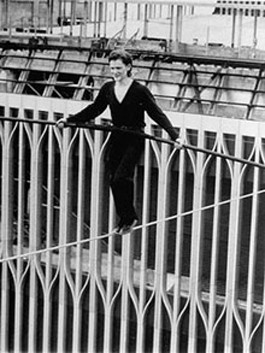
On Aug. 7, 1974, Petit, an energetic and daydreaming Frenchman, set out to do the impossible. With the help of a small group of friends, he smuggled equipment and cables into the newly erected World Trade Center, secured the cable across the 200 feet between the towers and proceeded to walk back and forth for the better part of an hour.

Petit, his face lost in memories, tells the camera that he had been dreaming of the towers for six years, watching them grow from across the ocean and idly doodling a wire across the tops of them in pictures. The towers were being built for him, he says. When the time came, Petit infused a giddy desperation into his entire life, devoting everything to his final moment of performance. Of course, Petit was promptly arrested after coming down off of the wire, and the camera watches as reporters whip themselves into a frenzy trying to discover why Petit risked his life for such a stunt. “There is no why,” he says simply. In context, it makes complete sense.

The film entirely captures the soul of the man behind the “artistic crime of the century”; his quirks, his passion for the art of wire walking, his joie de vivre are all communicated through Petit’s excited, undeniably charming narration. Miraculously, a friend had the good sense to film and record nearly every stage of the crazy operation, and these surprisingly articulate home movies make up the bulk of the film. Marsh substitutes missing moments by recreating them in black-and-white, which thankfully does not interrupt the flow of the narrative in the slightest. That spine-tingling something about defying both physical and mental laws is exhilarating to watch and mesmerizing to imagine, but the actual images and footage of Petit lying down calmly along a thin cable 1,350 feet above Lower Manhattan, a goofy smile plastered on his face, is simply breathtaking.

Seeing the birth and construction of the World Trade Center is more than a little chilling. A stunt like Petit’s could only have occurred at the time it did—security issues and terrorism paranoia prevent any such thing happening again—and a hazy sort of sad nostalgia is vaguely present throughout the film. “I figured I was watching something that nobody else would ever see again in the world,” says a wide-eyed young cop who was sent to retrieve Petit from the roof, in a clip from the 1974 nightly news. “Thought it was once in a lifetime.”

Petit did not fall, nor did he die, but the amount of tears shed in the film is staggering. The sheer beauty of the stunt, the risk and the drive to accomplish a dream loosens the tear ducts unexpectedly for many of Petit’s friends, who helped him endlessly to his destiny and fame. But Petit’s eyes stay dry, glittering instead with childlike joy as he recounts every second and emotion of the operation. “Life should be lived on the edge,” he says emphatically, punctuating the point with his hands. “See every day as a true challenge, and then you live your life on the tightrope.”

‘Man on Wire’ opens Friday, Aug. 8, at the Rafael Film Center (1118 Fourth St., San Rafael, 415.454.1222) and Rialto Cinemas Lakeside (551 Summerfield Road, Santa Rosa, 707.525.4840).


New and upcoming film releases.

Browse all movie reviews.
Soft and Green

0

08.06.08


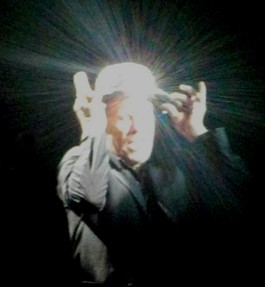
Wednesday, 1pm. Tom Waits makes his way down South Georges Street, just south of Temple Bar, in Dublin, Ireland. He’s in denim and shades, incognito, and he moves down the narrow sidewalk with deliberate concentration. It’s not the way he usually walks; back home in California, he lumbers calmly, whereas this is a strangely uncomfortable glide. His wife, Kathleen, picks at some takeout wrapped in aluminum foil, and a small cluster of friends attends. Together, they look like any other group of friends roaming the streets of Dublin.

It only takes 10 feet or so before he’s recognized by a fan, who demurs just a second before running and approaching him. “No, no, no,” Waits says, waving the back of his hand in the air to brush off whatever request might be pending. The kid stands there, still more dumbfounded than disappointed, and Waits and his crew disappear down the cobblestone alley.

Wednesday, 11pm. The six-tiered circus tent is dripping fat, heavy raindrops on all sides, and the surrounding overgrowth in Phoenix Park buckles under the torrent. A security guard in standard-issue Polo shirt stays dry beneath a blue-and-yellow vinyl eave, smoking a cigarette, noticeably uninterested in the gales of applause exploding from inside the tent as 3,000 Dubliners beg Waits back to the stage for an encore. The security guard has been like this for the past two hours.

When the show is finally over, and Waits has played his twenty-sixth and final song and has bid farewell by leaning over the front of the footlights to touch the extended hands of hundreds who’ve rushed to the front of the aisles, the security guard stands up and stomps out his cigarette. His face stays blank as he oversees thousands exiting the tent into the downpour—talking, twittering and more than likely headed to the nearest pub to try and explain the unexplainable event they’ve just witnessed. And so it goes for the next three nights.

Thursday, 2:30pm. At the Tara Street station, near downtown Dublin, a city worker uses an ancient, worn-down broom to sweep puddles of rainwater off the platform. The train has just pulled out of the station early, leaving a crowd stranded for the next fifteen minutes. A young girl holding some shopping bags reapplies her lipstick, bored. Across the tracks, two guys are singing “Innocent When You Dream.”

The downtrodden, the obliterated, the incorrigibly sentimental—Dublin is full of these people, these characters immortalized in Waits’ canon. It makes sense that the city has embraced him so much. The streets are dirty here, the weather’s bad, the trains leave you stranded and you’re miles from home.

Friday, 1pm. Back on South Georges Street, at Spindizzy Records in the Market Arcade, the clerk is talking about going to Waits’ third and final show tonight. Customers within earshot turn and join in on the ongoing conversation that the city has been having for the past three days. Where are you sitting? How did you get tickets? What songs did he play? Was it worth the high ticket price? And so on.

A girl in her 30s asks about public transportation to the tent; she’s headed there tonight. An older ruddy-faced fan in a nylon jacket is still recovering from the show the night before. “Best £137 I ever spent,” he says, smiling.

The young clerk, like nearly every other Dubliner, mentions seeing Waits at the Olympia Theater in 1987; this week is the first time Waits has been back since, and the city has been waiting 21 years for his return. More people overhear the discussion and migrate to the counter. Everyone in the store, it turns out, has either gone or is going to the shows this week.

“It was brilliant,” one man says, “the best concert I’ve ever seen.”

“Someone told me he had breakfast at the Bad Ass Cafe with Cait O’Riordan yesterday morning,” someone else offers. “She’s Elvis Costello’s ex-wife, you know.”

“Was the sound good?” someone asks. “It’s in a tent, right?”


“I love him,” says a young girl with a thick accent. “I think I’m going to pass out when I see him.”

The record store, for an interval, has stopped being a record store. “You see how it is?” asks the clerk. “All you have to do is say ‘Tom Waits’ and everyone flocks around! The man, he’s a legend. It’s a real happening here.”


News Blast

0

08.06.08

Dianne’s Casino

Stop the Casino 101, an organization opposed to Vegas-style gaming development here in the North Bay, claims Sen. Dianne Feinstein recently brokered a deal between Sonoma and Marin counties and the Federated Indians of Graton Rancheria (FIGR) to pave the way for a proposed casino-hotel complex just outside Rohnert Park in Sonoma County.

Casino opponent Frank Egger, former Fairfax mayor and progressive activist, attended a July 22 meeting of the Marin County Board of Supervisors at which Egger alleges Marin County counsel Patrick Faulkner was videotaped admitting the senior senator’s role in the deal.

Frank Egger belongs to Stop the Casino 101 Coalition. “I was in the audience at the time,” Egger says. “What he [Faulkner] said, in effect, was that this agreement was brokered through Sen. Feinstein’s office.”

But Feinstein’s director of communications, Scott Gerber, disputes the claim, telling the Bohemian that Egger’s accusation “is simply false.” Gerber says the senator “had no role in brokering the agreement, nor has she agreed to introduce any legislation on the subject.”

Jeff Brax, the deputy counsel for Sonoma County concurs with Gerber, insisting Feinstein played no role, then adding, “There’s no quid quo pro with this particular agreement. And that agreement provides for no second casino anywhere in Sonoma [County], and in exchange the county will not contest the decision to put the Rohnert Park site into trust, although the county can still challenge development of the casino itself.”

And yet, “by statute,” says Egger, “each tribe is allowed two casinos in California. The Graton Rancheria has said they’ll only build one. Apparently the Graton Rancheria has claimed they’ve given up their sovereign immunity. I don’t think you can give away your rights.”

A July 24 press release from Stop the Casino 101 Coalition contends that this is the second deal Feinstein has struck with the tribe. The first, in 2003 with Greg Sarris, chairman of the Graton Rancheria, “was that if the FIGR moved its casino site from the original Highway 37 site near the Marin/Sonoma border, she [Feinstein] would not obstruct the acquisition of any future site, a promise she apparently continues to keep.”

But the Rohnert Park casino issue is by no means the whole story. “No one’s looking at the cumulative impact of these casinos on our communities between the Golden Gate Bridge and Laytonville,” Frank Egger insists, addressing the five tribal casinos presently proposed along the 101 corridor. “It’s going to be another Vegas strip if, in fact, they all come to pass.”


Here Come the Girls

0

08.06.08

It’s a cruel summer for the girls, sad to say. Katy Perry tries to make us all believe that kissing another girl is, like, the most shocking thing in the universe, and Duffy tries to make us think that Mary Wells never existed, and Rihanna tries to convince us that her jam this year is as sweet as last year’s “Umbrella.” Where are the breezy, thoughtless tunes that can flood the car and whisk your mind away?

Well, down in Brazil, it turns out. CSS, a mostly female five-piece from São Paulo, have just released their sophomore album Donkey, and it’s the perfect thing to throw on at pool parties and backyard barbecues during the waning days of an Indian summer. Mindless, kinda dumb, very repetitive and totally enjoyable, it’s the best pop music that the United States wasn’t able to cough up this year, and it’s what you’ll want to furtively sneak into your niece’s music collection to give her some actual hope for that old idea of girl power.

Sophisticated and juvenile at the same time, “Left Behind” is an ultimate kiss-off single, if only because it makes ditching a jerky boyfriend sound like a ton of fun. “I’m gonna jump onto the table and dance my ass off ’til I die / And then I’ll hopefully forget you,” sings lead singer Lovefoxxx. Throbbing synth sounds burble beneath dueling guitar lines and slick production, and how can you resist?

Staunch fans of the band’s 2005 debut album, Cansei de Ser Sexy, will find Donkey nowhere near the raw and subversive cattiness of older songs like “Meeting Paris Hilton” or “Art Bitch.” CSS’ new major-label home on Warner Brothers has brought along the usual production tricks; the album’s unnecessarily slick and processed, and the fuzzy Polaroids that make up the inside booklet can’t make up for the band’s lost innocence. But these feelings last for only a little while, and beneath the album’s sheen is the same great band, kinda like the difference between Beauty and the Beat vs. Vacation.

Donkey is in stores now. CSS perform, in all their neon spandex stage-diving glory, at the Treasure Island Music festival in San Francisco on Sept. 20&–21.


Where’s the Beef(steak)?

08.06.08

It’s hard to imagine a world without tomatoes. No standing in the garden in midsummer, wolfing down cherry tomatoes before they make it into the basket, no juicy tomato seeds dripping from that piping hot burger, and RottenTomatoes.com would certainly be out of business. The famed fruit masquerading as a vegetable has not had the easiest year, what with libelous salmonella accusations and all, so a fancy Napa Valley dinner dedication is naturally in order.

The Martini House—a St. Helena restaurant famous for both running a lucrative Prohibition-era bootlegging business in its basement and serving up the quintessential wine country experience—couldn’t be a better spot for a fête de la tomato. So it’s pulling out all the stops: a tantalizing menu from chef Todd Humphries; discussions with Attack of the Killer Tomatoes director John DeBello and his director of photography, Kevin Morrisey; and a special showing of the 1991 sequel, Killer Tomatoes Eat France. The lovely tomato is blushing already.

The menu is, of course, completely inspired by the fruit and its many varieties, with a considerably gourmet twist. After starting with a chilled yellow tomato soup, guests can also enjoy warm, oven-roasted tomato tart with basil cream, Maine lobster with tomato gelée and stuffed, candied Early Girl tomatoes. All dishes are accompanied by pairings from Peay Vineyards in northern Sonoma County.

To add at least one more reason to attend the anticipated culinary celebration, guests will have the opportunity to mingle with not only chef Humphries and vintner Andy Peay, but DeBello and Morrisey to boot!

So whether it was the cherry, Roma, Early Girl or the mighty Beefsteak that stole our hearts once upon a time, the Martini House’s Tomato Dinner is sure to give it its moment of glory once again.

Stop in the name of everyone’s favorite veggie—er, fruit, Wednesday, Aug. 13, at the Martini House, 1245 Spring St. (at Oak), St. Helena. 6:30pm. $60-$165. 707.963.2233.

Quick dining snapshots by Bohemian staffers.

Winery news and reviews.

Food-related comings and goings, openings and closings, and other essays for those who love the kitchen and what it produces.

Recipes for food that you can actually make.

Gimme Some Sugar

0

08.06.08

Stepping into Sift Cupcakery in Cotati, one is immersed in a world of nostalgia-triggering retro elegance. Shabby-chic chandeliers sparkle above the sleek teal countertop. The vanilla-tinged sweetness of fresh-baked batter floats in the air. Luxurious velveteen curtains separate the front room from the kitchen. Like mini works of art, the cakes sit regally behind their respective name tags: “Pinking of You,” “The Sky Is Falling!” and “Chocolatease” are among the sassy monikers with which owner Andrea Ballus has christened her confections. “The fun part is coming up with the names,” she smiles.

This is clearly no frumpy mom-and-pop bakery. The 30-year-old Ballus comes out from behind the counter in a white eyelet blouse, cropped jeans and high heels. A tattoo is barely visible on her ankle. She looks like a lot of fun, and so do her cupcakes. Heaping mounds of creamy, colorful frosting and meticulously applied sprinkles and mini candies adorn the voluptuous cakes. A smiling girl manning the register wears a custom-made pink and black toile-patterned apron, the chic uniform of all Sift employees.

Ballus has carefully tailored the aura of her shop to represent the “new cupcake,” no longer the slightly stale yellow cake squeezed with sugary icing. Now the dessert is a mini palette upon which gourmet chefs can experiment with flavors and appearance. Why not a red velvet cake with cream cheese frosting, or a banana cake with caramel ganache?

It’s no shock that since opening her store in mid-April, Ballus’ cupcakes have been flying off the shelves at $2.75 each. With boutique cupcakeries emerging all over California, from the L.A.-based Sprinkles to Citizen Cupcake in San Francisco, the only surprise is that the North Bay hadn’t been struck sooner. At Magnolia Bakery in New York, the rumored origin of the cupcake mania, customers line up around the block to get them and are limited to purchasing no more than a dozen at a time. An “appearance” on the hit show Sex and the City boosted the shop’s popularity still further.

Now cupcakes and Carrie Bradshaw and Co. are seductively intertwined in the pop-culture psyche. Just ask Ballus, who experienced the Sex and the City phenomenon not long after opening Sift. “The day that the [Sex and the City] movie opened, we were just swamped in here,” she laughs. “All these women dressed to the nines in their New York City outfits, just standing around eating cupcakes and drinking coffee. It was so funny.”

Not that cupcakes are purely a “girl thing.” In a popular SNL skit, comedians Andy Samberg and Chris Parnell rap over the phone, “Let’s hit up Magnolia and mac on some cupcakes,” turning the treat into a laid-back dude’s go-to cure for the munchies. In Sift’s early life, a large number of the customers were male. Now the demographic has shifted more toward moms with kids, but the store still has its male groupies. “A lot of them are buying [cupcakes] for their wives or girlfriends,” she says. “And a lot of them are getting them for clients. Instead of bagels and coffee, they’re serving cupcakes and coffee!”

Ballus should know a thing or two about mixing business and food. The Benicia native acquired a love of baking and experimenting from her father, with whom she spent a lot of time in the kitchen growing up. “There were lots of wasted eggs,” she says, “a lot of wasted sugar and flour.” She spent three years in Las Vegas, working first in radio and then as a fine-dining specialist for San Pellegrino. She noticed that cupcake shops were popping up everywhere. “I just thought it was a great idea, and I really wanted to move home,” she says. “I knew there was a niche, because I got married in Sonoma in October and I couldn’t find cupcakes here. Not good ones.” Apparently what happens in Vegas doesn’t always stay in Vegas, at least not a smart business idea.

But the question of why cupcakes? still remains. “I think they’re just super cute,” Ballus says, “and people have a lot of fun with them. It’s like a throwback to when you were a kid, or when your parents were kids.” Perhaps, but there’s no denying that these treats are packed full of butter and sugar. Ballus is coy about divulging the calorie count of one cupcake. “We don’t really need to know,” she says. “We love them. I think we all eat our fair share of cupcakes around here, so we definitely don’t wanna know.” (Spoiler warning: a “typical” homemade cupcake weighs in at around 150 calories; Sift’s, being more generously proportioned, are probably a bit more.)

Gretchen George, senior study dietitian at the Stanford Prevention Research Center, says, “The idea of portion size is starting to hit home with lots of consumers, and a cupcake is a reasonable portion size for a discretionary calorie allowance in one day.” In other words, the trick is stopping at just one.

Ballus has been working hers off the old-fashioned way. “In the beginning, it was 14- to 16-hour days. Get home at 11pm at night and have to get up at 4 in the morning,” says Ballus. But her mom and loved ones have supported her every step of the way. “My girlfriends were totally with me,” she smiles. “The alarm would go off at 4am, and we’d be like, ‘Oh my God, we’re going to have to do this for the rest of our lives!'” Husband and bar/restaurant manager Jeff Ballus helps out too. “He comes and does the things that we girls don’t want to do,” says Ballus. “He gets the desperate phone calls from us. ‘Jeff, we can’t do this! Can you go to the store and pick up the hundred-pound bag of flour?'”

Now that things have calmed down slightly, Ballus is basking in the rewards of her efforts. Off the top of her head, she estimates that Sift sells about 300 cupcakes a day, though some Saturdays see off up to 600 or 700 cakes.

The future looks bright. Sprinkles stores reportedly sell about 1,500 cakes per day, while Buttercup Bakery boasts sales of 2,000 to 3,000 daily. But Sift isn’t in a hustle-bustle city like New York or on some swanky Beverly Hills strip. “Probably the biggest obstacle was worrying about my location,” Ballus admits. “We’re definitely off the beaten path a little bit. But it’s a destination. People know they’re coming to get cupcakes. And it definitely hasn’t hindered our business in any way.”

Ballus doesn’t believe the cupcake craze is just a flash in the pan. “I mean, there are shops just dedicated to pretzels. Who would have ever thought?” she laughs. But unlike pretzels or doughnuts, the “retro cupcake” has become an up-scale obsession, eaten by Gucci-bag-toting socialites and ultracool hipsters, not truck drivers and Costco customers. And it’s showing up on everything from baby togs to camisoles. Among those capitalizing on the craze in the high-end demographic is Johnny Cupcakes, a trendy Boston-based clothing company that sells merchandise bearing custom cupcake logos at prices ranging up to $75.

Ballus’ own craving for the miniature cakes stems from imagined childhood angst. She jokes, “You know how your parents made you feel so cool if they brought cupcakes to your class on your birthday? I never got those. But I always wanted them, and I think that’s where my whole obsession with cupcakes comes from.”


Cupcakeries!


Sift Cupcakery , 7582 Commerce Blvd., Cotati. 707.792.1681.

Frosting Bakeshop , 7 E. Blithedale Ave., Mill Valley. 415.888.8027.

Kara’s Cupcakes (scheduled to open 2009), Oxbow Public Market, 610 First St., Napa. 707.226.6529.

Lollipop , 417 Miller Ave., Mill Valley. 415.380.1976.

Teacake Bakeshop , 119 Corte Madera Town Center, Corte Madera.  415.924.2000.

Quick dining snapshots by Bohemian staffers.

Winery news and reviews.

Food-related comings and goings, openings and closings, and other essays for those who love the kitchen and what it produces.

Recipes for food that you can actually make.

Live Review: Tom Waits at the Ratcellar – Dublin, Ireland

46


Greetings from the drizzly grey skies of Dublin, Ireland, where last night I saw the greatest Tom Waits show I’ve ever seen, hands down, holy shit, it was INCREDIBLE.
We actually saw Tom Waits and his wife Kathleen on the street in downtown Dublin yesterday, before the show, coming out of the Georges Arcade. Said hi, kept walking. Running into them on the street isn’t such a rare thing back home in California, but it is a truly surreal thing on the other side of the world.
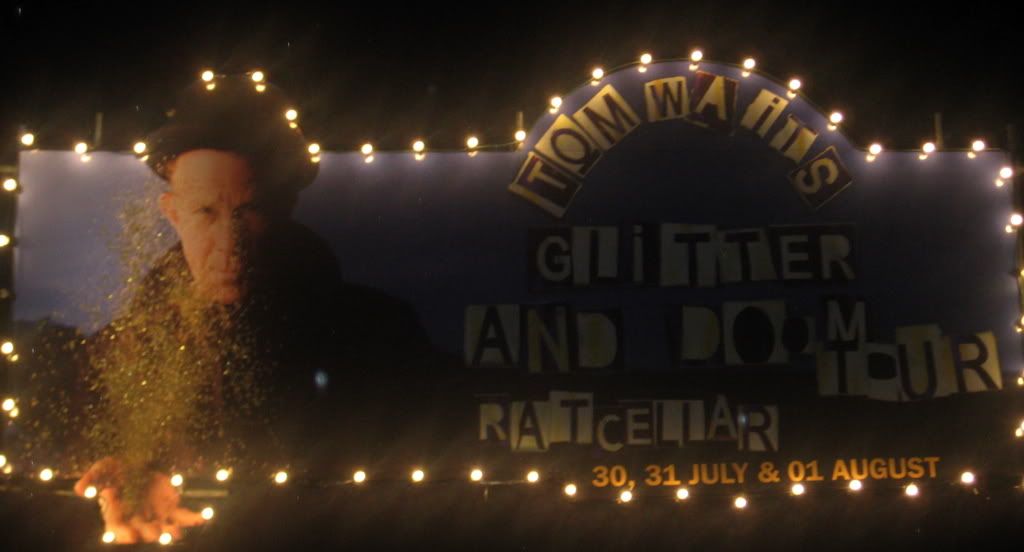
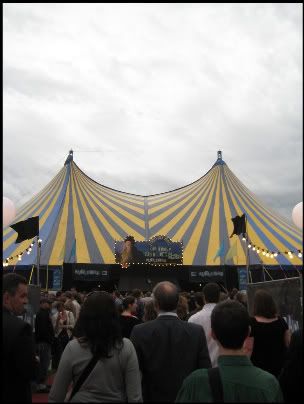
You want surreal? How about a six-tiered circus tent in the middle of a park? ‘Cause that’s where Waits played last night. Christened “The Ratcellar,” it was every bit the Barnum & Bailey spectacle you’d think: purple and yellow stripes, a grand marqueed entrance, red velvet curtains, raked seating on all sides. Built just for these shows, Waits booked three nights here, under the big top.
Tom Waits must really love Dublin. The strolling around town, the building of a special tent, the three-night stand—and undoubtedly one of the greatest shows he’s ever performed. Two and a half hours, 26 songs—the set list, below, was unbelievable—and most of the time, he made the enormous tent of 3,000 feel like an intimate parlor. He certainly seemed honored, and more than a little grateful, to be in Dublin.
Tickets to the show were 138 Euro—about $215 each (the highest price I’ve ever paid for tickets). There was a lot of grumbling about this in Dublin. After the show last night, I can’t imagine anyone grumbling about it anymore.
Waits came out to thunderous applause, threw himself and his band into “Lucinda,” and we were off and running. “Raindogs” was a good sign right afterwards, and it soon became apparent that the set had changed drastically from the time I saw him last month in Phoenix: “The Other Side of the World,” from the film Night on Earth, with an excellent flamenco-guitar solo by Omar Torrez, and “I’ll Shoot the Moon” from The Black Rider, with a please-call-me-baby long spiel mocking modern telephone communication. “Your phone is also a camera,” Waits quipped, “but my sunglasses are also a tricycle.”
“This is a song about family reunions,” Waits said next. “I hate family reunions. There’s so much family there. All these people I’ve been avoiding all year show up. . . Uncle Bill, I owe him money. Look away. No, wait, he owes me money! Get his ass over here. And of course, the infamous. . .”—and starting “Cemetery Polka”—“Uncle Vernon, Uncle Vernon, independent as a hog on ice. . . “
“Singapore” wrapped up with Waits falling over horizontally and banging like a kid on the highest keys of a toy piano, ending with a gargantuan gong-like thud that rumbled dramatically throughout the tent, which became the perfect venue for a long, spoken-word freeform about the circus. As the band played “Russian Waltz” in the background, Waits spun taut yarns about carnival characters such as Yodeling Elaine, Funeral Wells, Little Tiny, Poodle Murphy and Tripod (“how he got the name Tripod is another story altogether”). Interspersed with a snippet of “Tabletop Joe,” the inspired number ended with Waits shouting, like a howling broken wino, “Leave the bum! Leave the bum! Leave the bum!”
True to tradition, Waits dissected the various laws, both real and imagined, native to Dublin: “A lot has changed since I was here last,” he said. “It’s now illegal to force a monkey to smoke in Dublin, for example. And it’s against the law to get a fish drunk here! I used to come here just for that.”
Pointing out that the beginnings to many of his songs sound the same, Waits plowed into “God’s Away on Business,” one of many newer songs that benefited from fresh arrangements. Being on the road has invigorated Waits’ more recent material; they’re looser, more open. They breathe more. “Metropolitan Glide,” “Hoist That Rag,” “Lie To Me”—I saw these songs last month in Phoenix and they’ve changed, drastically, for the better. “Hoist That Rag,” in particular, was amazing, with beautiful Stravinskyesque piano solos by Dublin’s own Patrick Warren, possessed electric guitar soloing by Torrez, and blistering saxophone work by a rejuvenated Vincent Henry, playing and joking astride Waits’ youngest son Sullivan on second tenor sax.
On the subject of the band, I gotta say, Casey Waits on drums has come through like no one could have ever imagined. Much like Denardo Coleman backing up Ornette, it seemed a novelty at first, back when Casey was 14—but now, Casey’s grown into his own, and he’s perfect for his dad’s behind-the-beat style. Kudos, my friend. And bassist Seth Ford-Young, who came in just a week or so before the tour to replace Larry Taylor, very well may have secured himself a permanent place in the band. He’s excellent.
The band was given a break when Waits sat down at the piano to deliver the highlight of the night. “This was a request. . .” he announced. “. . . my own request.” A beautiful, beautiful “Tom Traubert’s Blues” ensued, to a ridiculously wild standing ovation. It didn’t stop there. “On the Nickel,” an overlooked gem from Heartattack and Vine, came next, and then “Christmas Card From a Hooker in Minneapolis,” which slaughtered the sentimental hearts of everyone in the crowd. He started “House Where Nobody Lives,” but then ditched it. “That’s a short one,” he said, “sometimes the short ones are the best. Why don’t we do one we can all sing on?” Alas: “Innocent When You Dream.”
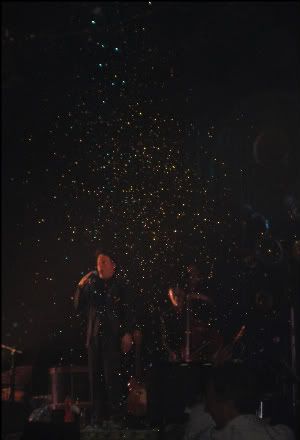
“Green Grass” had Waits in a low whisper, while “Lie to Me” brought him strutting around his dusty pedestal. “Dirt in the Ground” was played in a striking new meter, sort of a 6/8 over a 4/4, as Waits loosely whispered the words in a low, ominous tone, and “Make it Rain” became a self-fulfilling prophecy: the tent started pattering away with raindrops from above. Long, drawn-out, and heavenly, the song came to a close with Waits cupping his hands to his mouth and shouting “Make it rain!” back up to the obliging sky. Upon the final chord, a hailstorm of glitter showered down from the top of the tent. “Good night!” said Waits, and as the crowd bumrushed the stage, he made his way across the entire front row, reaching out over the edge and touching hands with the devoted, clearly overwhelmed.
The three-song encore ended with “Time,” and there was no more perfect way to end the night—except, perhaps, wandering out into the raining Dublin night with 3,000 other fans utterly dumbfounded with bliss. It was about a mile-long walk to the nearest pub to meet up with our ride, and we were soaked. It didn’t matter. Last night was simply one of the greatest shows I’ve ever been to, and worth every step through every rainy night in any blustery city in the world.
————————
Wednesday, July 30, 2008
Set List:
Lucinda / Ain’t Goin’ Down to the Well
Raindogs
Falling Down
On the Other Side of the World
I’ll Shoot the Moon
Cemetery Polka
Get Behind the Mule
Cold Cold Ground
Singapore
Circus / Tabletop Joe
God’s Away on Business
Tom Traubert’s Blues
On the Nickel
Christmas Card From a Hooker in Minnneapolis
House Where Nobody Lives (false start)
Innocent When You Dream
Lie to Me
Hoist that Rag
Bottom of the World
Green Grass
Way Down in the Hole
Metropolitan Glide
Dirt in the Ground
Make it Rain

Jesus Gonna Be Here
Eyeball Kid
Time

Wine Tasting Room of the Week

0


Tasting at Williamson made the next three experiences I had seem pale and perfunctory by comparison. There was no glass change from red back to white, nary a soda cracker in sight and the thrifty refunding of only one of two fees upon purchase at those joints. I hope those pinched pennies pay out double—in pennies. Not so at Williamson, which offers up creative food pairings with each pour, side-by-side comparisons and witty banter all for the price of free. Alas, there lies the rub. The Williamsons are so confident that after trying their wines you’ll want to buy that I left wishing they had lent their blending talents to a token inexpensive vintage or had charged a fee. While I didn’t get the gentle ribbing that the voluble Mr. All-Talk-No-Wallet before me received, tasting is just trying, after all. But I’ll say this: The wine is superb.

Aussie transplants in Dry Creek Valley by way of Silicon Valley, Dawn and Bill Williamson put down their vinifera roots in the early 1990s, and made like vintners in 2002. Furnished in contemporary villa (the walls antiqued, the art not dangerous), their Healdsburg tasting room warms up as any expectation of pretense is dissolved with hearty hospitality. On a recent weekday, the Williamsons poured their finessed wine with finger food sliced and diced on the spot. The pairings work quite well (“We’re looking for the well,” quipped Dawn Williamson).

Matched with cheese and bread-and-butter pickle, the 2005 Chardonnay Amourette ($38) is a limpid pool of toned-down toffee, and a paragon of balance. Bill Williamson conceived of the 2005 Vin Rouge “Clarissa” Claret ($47), with nose of cassis, ginger and Fig Newton, as his late-night sipping wine, an agreeable replacement for coffee. Next, Williamson drizzled honey over blue cheese, piggybacked on a wedge of cheddar. Note how the warm, juicy 2005 Dry Creek Valley Cabernet Sauvignon ($57) extinguishes the tangy blue. True enough.


Claiming his 2005 Chateau Montelena Cabernet Sauvignon ($57) is crafted for the grill, he offers a pepper-crusted challenge: Note how the Cab takes away the salami’s salt and fat from the palate, leaving only flavor. Indeed, it does. Go back to the other Cab, it will go down too hot. Whether parlor trick or, indeed, design, it’s just like the man said. No brash down-under style, the 2005 Shiraz ($47), served with chutney and cheese, shows burnt vanilla bean and a bit of bramble, but the softness of a Napa Merlot. Where’s the sweaty-saddle Shiraz with Vegemite? These Aussie transplants are surely defectors on that account.

Williamson Wines, 134 Matheson St., Healdsburg. Open daily, 11am–7pm. No tasting fee. 707.433.1500.


View All

Steppin’ Out

0

07.30.08

Last year, I was at O’Leavers Pub in Omaha, Neb., an old haunt of indie wünderkind and Bright Eyes sensation Conor Oberst. People in Omaha are very friendly, and while enjoying the Fugazi on the jukebox, the easy-listening LP decór and the complete lyrics to L. L. Cool J’s “I Need Love” graffiti’d on the wall, I asked my fellow pub-goers about Oberst. Every one told a variation on the same story.

“That guy,” said one particularly whiskey-mottled barfly, “slept with every girl in town.”

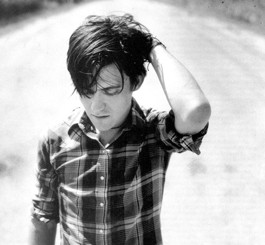
Whether or not it’s true—small towns being small towns—the rumor only adds to the enigmatic reputation of Conor Oberst, 28, who next week releases his first major solo album outside of the Bright Eyes steam train that’s provided one of the most illusory and fleeting catalogues of American music in the last 10 years. Unfortunately, that train has pulled into a station called Blandsville, and Conor Oberst is a predictable layover in safe territory. The sharp edges of idiot and genius on either side of his previously dichotomized spectrum have been shaved smooth, and what’s delivered is an album as lazy and as flat as Oberst’s boyish bob.

I always root for Oberst, even though his records are full of pretentiously calculated “spontaneity”—taxing field recordings, long interviews with himself and ingratiating, pointless storytelling—because, on the other hand, each album has contained absolute gems. “Let’s Not Shit Ourselves (To Love and to Be Loved),” “Landlocked Blues”—these are songs that will be sung 30 or 40 years from now, and others, such as “When the President Talks to God,” have already made history. (His short-lived 2002 side project, Desaparecidos, warrants an entire separate column.)

Recording since he was 13, Oberst has grown up in public with fame thrust upon him quickly, manifesting in strange ways. At a recent Omaha show, for example, Bruce Springsteen invited Oberst up onstage to sing “Thunder Road,” which Oberst thoroughly butchered. There are hundreds of thousands of people who’d give their right arm to sing with Springsteen onstage, and Oberst didn’t even bother to memorize the words.

In his own material, though, he’s exuded a strong sense of believing his own prominence. When this works, it’s great; when it doesn’t, he delivers insipid ideas (“If you want to see the future / Look into a cloud”) with awkward conviction. Often, he’ll become so immersed in the “truth” in his lines that he’ll punctuate them with screaming, passionate agreements with himself, such as “That’s a fact!” or “Oh yeah, we will!”

So here we have Conor Oberst, recorded in Tepoztlán, Mexico, with plenty of free time and open air. This is a bad thing. Oberst excels best when put under constraints, be they of time or of the heart, and the scenes he’s conjured—of sleeping on the beach, refilling his canteen, watching the fireplace—rest on their own breezy banality instead of his talent for insight. Musically, the record is a stab at mediocre alt-country; it makes me miss the jagged ridiculousness of his early lo-fi efforts even more.

“Sausalito,” for example, moseys over a loping bass line, with Oberst singing about living easy on a houseboat, and “I Don’t Want to Die (In the Hospital)” is a bona fide roadhouse romp that finds Oberst ditching any idea of musical originality and latching on to the Bakersfield sound hook, line and twang. “Help me get my boots back on,” he sings, “I gotta go, go, go, ’cause I don’t have a home.”

Elsewhere, Oberst’s imitative voice sounds at times exactly like Tom Petty, Gordon Gano or even, in the spitfire consonants accented on “Cape Canaveral” or “Get Well Cards,” a little like Eminem. This is also a bad thing. In the record’s token screamed agreement with himself—”¡Claro que sí!”—he sounds less like the eruptive Oberst we’ve come to know and more like the Frito Bandito. Maybe it’s a joke?

Oberst’s Townes Van Zandt influence comes to the fore on “Milk Thistle,” a fragile song which is the album’s best. “If I go to heaven, I’ll be bored as hell,” he sings, “like a little baby at the bottom of a well.” It’s a line so good, he uses it again to close the record, and one can’t help but remember when lines like this whizzed in and out of him at lightning speed.


Longtime fans of Bright Eyes might find reason to worry, but let’s hope Conor Oberst isn’t a sign of Oberst’s future direction. It’s a casual vacation, nothing more; he flew down to Mexico and recorded some songs, that’s all, and I’m willing to bet that the girls down there are prettier than the ones at O’Leavers.


‘Lighten Up’ Already

07.30.08

Banks are closing, gas prices are enough to make anyone break down and sob at the pump and this just in: the price of mozzarella cheese has inflated by 80 percent, putting the beloved pizza pie industry in danger. Sure, I’ll ride my bike to work and stuff cash into my mattress, but please, O Mighty Economy God, don’t take the pizza! Luckily, Fred Poulos, owner of Mombo’s Pizza in both Santa Rosa and Sebastopol, has come to the rescue.

Faced with either increasing prices or decreasing portions, Poulos decided to find a happy medium. The compromise evolved into a little thing called the “Lighten Up” menu, a two-tiered pricing system, where customers can opt for a pizza with less cheese and toppings instead of paying a higher cost for items off the original menu.

Over the past 18 months, Poulos has seen the prices of his ingredients rise at alarming rates (flour alone shot up 200 percent) and knew something had to be done, fast. For the first six months of the year, he struggled to stay competitive and increased advertisements, but his sales declined.

“I have never in my 30 years of owning pizza restaurants seen pizza fare badly in a recession. On the contrary, I do better in recessions!” Poulos says, recalling the days of his first restaurant, Pizza My Heart, during the Reagan trickle-down. “I’ve always said pizza was recession-proof. But here we are.”

The Mombo’s menu now includes an expanded salad menu, soups and sandwiches, and, of course, more modest pizza pies.

“When my partner Mike and I started testing the new menu last month, I discovered I actually liked it better,” Poulos says. “It’s a much more authentic representation of true East Coast&–style pizza.”


It’s been a month or so since the introduction of Lighten Up, and while customers are taking their time getting used to a slice not dripping in cheese and laden down with toppings, Poulos says they appreciate the gesture.

“My gut tells me we’re in for the long haul with this one,” Poulos says, “so we’re really doing our best to keep moving and serve our customers as best we possibly can.”

Quick dining snapshots by Bohemian staffers.

Winery news and reviews.

Food-related comings and goings, openings and closings, and other essays for those who love the kitchen and what it produces.

Recipes for food that you can actually make.

Strung Out

08.06.08In a summer movie lineup crowded with comic-book heroes and larger-than-life action sequences, an unassuming documentary turns the spotlight on a real-world superhero. Most people have probably never heard of Philippe Petit, but he can dance on air—without any special effects.Man on Wire, the latest release from documentary filmmaker James Marsh (The King, The Team), is not a formulaic...

Soft and Green

08.06.08Wednesday, 1pm. Tom Waits makes his way down South Georges Street, just south of Temple Bar, in Dublin, Ireland. He's in denim and shades, incognito, and he moves down the narrow sidewalk with deliberate concentration. It's not the way he usually walks; back home in California, he lumbers calmly, whereas this is a strangely uncomfortable glide. His wife, Kathleen,...

News Blast

08.06.08 Dianne's CasinoStop the Casino 101, an organization opposed to Vegas-style gaming development here in the North Bay, claims Sen. Dianne Feinstein recently brokered a deal between Sonoma and Marin counties and the Federated Indians of Graton Rancheria (FIGR) to pave the way for a proposed casino-hotel complex just outside Rohnert Park in Sonoma County. Casino opponent Frank Egger, former...

Here Come the Girls

08.06.08It's a cruel summer for the girls, sad to say. Katy Perry tries to make us all believe that kissing another girl is, like, the most shocking thing in the universe, and Duffy tries to make us think that Mary Wells never existed, and Rihanna tries to convince us that her jam this year is as sweet as last...

Where’s the Beef(steak)?

08.06.08It's hard to imagine a world without tomatoes. No standing in the garden in midsummer, wolfing down cherry tomatoes before they make it into the basket, no juicy tomato seeds dripping from that piping hot burger, and RottenTomatoes.com would certainly be out of business. The famed fruit masquerading as a vegetable has not had the easiest year, what with...

Gimme Some Sugar

08.06.08Stepping into Sift Cupcakery in Cotati, one is immersed in a world of nostalgia-triggering retro elegance. Shabby-chic chandeliers sparkle above the sleek teal countertop. The vanilla-tinged sweetness of fresh-baked batter floats in the air. Luxurious velveteen curtains separate the front room from the kitchen. Like mini works of art, the cakes sit regally behind their respective name tags: "Pinking...

Live Review: Tom Waits at the Ratcellar – Dublin, Ireland

Greetings from the drizzly grey skies of Dublin, Ireland, where last night I saw the greatest Tom Waits show I’ve ever seen, hands down, holy shit, it was INCREDIBLE. We actually saw Tom Waits and his wife Kathleen on the street in downtown Dublin yesterday, before the show, coming out of the Georges Arcade. Said hi, kept walking. Running into...

Steppin’ Out

07.30.08Last year, I was at O'Leavers Pub in Omaha, Neb., an old haunt of indie wünderkind and Bright Eyes sensation Conor Oberst. People in Omaha are very friendly, and while enjoying the Fugazi on the jukebox, the easy-listening LP decór and the complete lyrics to L. L. Cool J's "I Need Love" graffiti'd on the wall, I asked my...

‘Lighten Up’ Already

07.30.08Banks are closing, gas prices are enough to make anyone break down and sob at the pump and this just in: the price of mozzarella cheese has inflated by 80 percent, putting the beloved pizza pie industry in danger. Sure, I'll ride my bike to work and stuff cash into my mattress, but please, O Mighty Economy God, don't...
11,084FansLike
4,446FollowersFollow
6,928FollowersFollow