Yoshi’s In Trouble

0

Yoshi’s gets a $1.5 million loan from the City of San Francisco. On top of a $1.3 million loan. On top of a $4.4 million loan. And Wayne Shorter didn’t sell out the place? Things are not looking good. From Jesse Hamlin’s piece in the San Francisco Chronicle:
Kajimura expects to pay off creditors – including some who have filed lawsuits against the club – as soon as the city cuts him a check.
The San Francisco venue has lost “several hundred thousand dollars,” and to reverse that, the booking in San Francisco, Hamlin reports, will diversify into world music and Americana. Oakland’s Yoshi’s will stay predominantly jazz.
I’m sad for Yoshi’s, but at the same time, I must admit there have been great jazz artists playing there who I haven’t felt compelled to see. The high ceilings have a little bit to do with that. There’s just no replicating the coziness of Yoshi’s in Oakland; it is and remains the perfect place to see jazz, and opening up the booking to artists like Toumani Diabaté and Tracy Nelson over in San Francisco will ensure that Oakland retains more artists like Wayne Shorter and Roy Haynes.
Inevitable: Open the floodgates for other local businesses to ask for their bailout, too.

Animal Collective’s ‘Merriweather Post Pavilion’ LP Disappears Immediately

3

I wrote a few weeks ago about Animal Collective’s Merriweather Post Pavilion, a record that a surprising number of critics have no reservations about already hailing as the album of the year. I didn’t like the album at first. Then I reconsidered the unique achievement Animal Collective had made by constructing pop songs out of unconventional ingredients, and wrote my review.
Another reason I may have been inclined toward speaking favorably of the album is that the band released it on vinyl two weeks before the CD, which is always a way to win my heart. Not that anyone could find the damn thing. Websites sold out of it immediately. Stores couldn’t even order copies. It swiftly went out of print. Fools were bummed.
Here’s the amazing thing. As reported by MTV, of all places, Merriweather Post Pavilion has a chance at actually hitting the Billboard charts next week for selling out the initial run of 4,500 copies. That’d be vinyl on the Billboard 200. Could you believe it?
This falls in line with reports of vinyl sales being up 89-percent from last year, and of record pressing plants being swamped with orders nationwide. It’s getting crazy in lacquerland.
Anyway, if you missed out on the 180-gram gatefold 2LP version of Merriweather Post Pavilion, don’t stress. It looks like they’re already rush-releasing a vinyl repress to be out “in the next three to five weeks.”
As for me, I’ve been swinging back toward my gut instinct. It turns out that those hooks all over the record are in fact obnoxious to me, after all. What can I say? I like Feels. Renaissance Faire singing about quaint domesticity, not so much.

Will Oldham in New Yorker, Will Oldham in Santa Rosa

There was a fascinating 10-page New Yorker profile on Will Oldham in last week’s issue, spotlighting in particular his penchant for playing small, weird, semi-secret out-of-the-way shows.
In related news, if I were you, I’d subscribe to Will Oldham’s mailing list. Like, right now. There’s a noticeable gap in his upcoming tour itinerary, and though I’m sworn to secrecy about the details at the moment, I can tell you that when tickets go on sale for his show in Santa Rosa, they won’t be available through normal sources, and they certainly won’t last long. The mailing list is your best bet.

Critical Closeness

01.07.09

Take the new film book Scorsese by Ebert at face value, and it’s our greatest film critic interviewing our greatest living director. That’s the problem. Roger Ebert hangs the laurels on Martin Scorsese in a 1998 essay reprinted in the volume: “There is no greater American director right now than Martin Scorsese.” The idea of a “greatest living director” is a terrible approach for the evaluation of a talent. It entails too much build-up, as well as too much nostalgia for past work.

This short book combines reprinted reviews and interviews along with reconsiderations by Ebert of some of Scorsese’s films. It also includes a transcript of an onstage interview Scorsese gave at Ohio State University, the book’s most valuable section.

Scorsese by Ebert (University of Chicago Press; $25) is the work of a fan interviewing a fan. Ebert has a subject who tends to open himself up like a can of beans, anyway. The director’s effusiveness and enthusiasm are part of his reputation. Probably no other American filmmaker worked so closely with former film critics as screenwriters: Paul Schrader, Jay Cocks, Paul Zimmerman. And certainly no other American filmmaker is as dedicated to the elements of studio-era craftsmanship. Who else has talked so convincingly about the terrible deterioration in film stock, the death of Technicolor, the neglect of Michael Powell?

Ebert was in on the beginning of Scorsese’s rise to critical esteem. He was perceptive enough to realize that Scorsese’s I Call First (later known as Who’s That Knocking at My Door) was the work of a director going places. And Scorsese claims that he kept Ebert’s review of his first film in his wallet for years. Both were ardent Baltimore Catechism&–era Catholics; the critic from southern Illinois, the director from Little Italy. Both wanted to enter the priesthood.

In essay after essay, Ebert identifies the mother/whore dichotomy that Scorsese has worked like almost no other American director. The motif appears strongest in Who’s That Knocking at My Door, where Harvey Keitel rejects a woman who has been raped on the grounds that she is impure. How much is this kind of dichotomy Italian Catholicism, and how much is it the private obsession of Scorsese? According to Scorsese by Ebert, Ebert once met the director at a low point. Scorsese was brooding over one of his divorces and claiming that he’d go to hell for leaving his wife. Ebert thought Scorsese was joking. Nope.

“When people sincerely believed in hell, they were not so fond of striking graceful attitudes on its brink,” George Orwell wrote. Look at Scorsese’s very practical mother, playing a nana fixing a snack for the Mafia gravediggers in GoodFellas. He couldn’t have gotten the fear of hellfire from that practical woman, could he? And then you read this Scorsese quote: “Italians are pagans. I took up Catholicism on my own.”

Worked up by the theatrical side of Catholicism—the ceremony of high mass, the candles, the music—Scorsese had similar autointoxication with the movies. And intoxication is the problem. Though he brought grindhouse levels of violence to the respectable film, Scorsese is peaceable in real life: a suffering asthmatic, a keeper of poodles, a man who never saw a boxing match until he made Raging Bull. (Serious fight fans would have to say, “That explains a lot.”)

The problem of seeing the violent life from a remote view appears all over Scorsese’s movies. Moreover, Scorsese is a veteran of the drug era, which made criminals out of so many basically peaceable people. That Robert De Niro, Ray Liotta and the horror clown Joe Pesci became so fetishized is all part of Scorsese’s skill. It’s also the result of his myopia.

Sometimes, this admiration for the mafia type borders on a fan’s shallowness. Scorsese comments here, with no protest by Ebert, “If you had personal dealing with Luciano, he was great.” As a first-rate film scholar, Scorsese ought to know that the 1937 gangster film Marked Woman was based on Luciano’s less charming side.

At worst, Ebert tries to lay down the liturgical law against censors of The Last Temptation of Christ, accusing them of “the sin of pride.” At best, he revives some unpopular films, sometimes with a fan’s confusion and helplessness: “I guess we go to New York, New York to enjoy the good parts.” Ebert writes about the unlovable but tough King of Comedy: “If it has greatness, perhaps it is in its mystery.” So many times in Ebert’s reviews of Scorsese’s work, there’s a sense of the battle for a film being lost; he knows he’s dealing with movies that are too difficult, too painful to be popular.

It’s easier to remember the bravura scenes: the ceiling camera in Taxi Driver; the fights in Raging Bull (a masterpiece of style, not content, that fight); the close-up on Paul Newman’s face as he’s fitted for glasses in The Color of Money; Nick Nolte slugging cognac from a paint-smeared snifter in New York Stories; Joni Mitchell’s moon-burst of female energy among the bearlike musicians in The Last Waltz.

Too bad Ebert writes that he has “no clue” what Mitchell’s song “Coyote” was about. I think it’s directly about Neil Young, but I know it’s about a woman musician picking up male prerogatives. That Ebert can’t celebrate that moment—well, that’s Ebert echoing the old Madonna/whore dichotomy at work, the career-long void in the heart of Scorsese’s work. Analyzing it will never free some people from it.


New and upcoming film releases.

Browse all movie reviews.

Jews and the Abstract Truth

0

01.07.09

At age two, Saul Kaye glued his head to the stereo speakers in his family living room, and one could make the argument that he’s never really unglued himself. In fact, as a teenager, his only weekly ritual was tuning into a radio show called The Blues Train , which played Muddy Waters, Willie Dixon, Son House and other greats from 8pm to 6am while Kaye played along.

Saul Kaye’s new album, Jewish Blues , is the product of two life-altering communions, the first being playing along every week to the radio. His second came at Jerusalem’s Western Wall, where after a period of falling away from his Jewish upbringing, Kaye says, “I went to Israel in my 20s and had a classic ‘wall’ experience. I was at the wall, with my family, and felt a strong reconnection.”

Kaye’s never made a completely blues-based album before, just as he’s never made a record completely written from Jewish themes. But the two came together naturally for him. “We have this amazing American blues tradition, that comes essentially from the African slavery experience,” he says. “Jewish people have been slaves in multiple countries for hundreds of years, and there haven’t been many songs written specifically around that. So the concept was basically taking the African-American slavery musical tradition, which is the blues, and dipping the Jewish historical experience into it.”

The results are simply fantastic. “Sea of Reeds” imagines the 75 percent of Jews who stayed in Egypt while others followed Moses; “Mao Tzur” sets the Art Scroll translation of the Rock of Ages to a 12-bar blues; and “Shema Coleinu” may well be the first blues song written in Hebrew. Appropriate cover songs make appearances, too: “Go Down Moses,” “Wade in the Water” and a slightly reworked “The Sky Is Crying” reflect the Jewish experience in the desert.

“It’s really Jewish in its content—as in the characters are Jewish people, and it’s about their stories—but there’s definitely not an agenda,” stresses Kaye, promising that this is not a proselytizing project. “It’s just exploring those characters through the lens of the blues. Plus, I mean, if you know about Judaism, it’s not a religion that seeks to convert people at all.”


Recorded completely live, Jewish Blues has a natural, vintage sound, and Kaye’s songs benefit greatly from pianist and backup singer Simon Russell and what Kaye calls his “New York Mafia rhythm section,” Brahm Sheray and Andy Korn. He’ll soon head back out on tour, where among other places, he’ll make a return appearance playing at the Sundance Film Festival—not that he’ll be able to recognize any of the movie stars gallivanting about. “You know, I don’t even know what People magazine looks like,” he quips. “I wouldn’t even know them!”

Saul Kaye plays Tuesday, Jan. 13, at Downtown Joe’s, 902 Main St., Napa. 8:30pm. Free. 707.258.2337.


Bobo Boo Hoo

01.07.09

Kate Winslet has now starred in two separate films inspired by Flaubert’s Madame Bovary. First was last year’s Little Children, about the steamy dissatisfaction of a suburban mother. Now comes Revolutionary Road, an intelligent, compact adaptation of Richard Yates’ 1961 novel. It concerns a married middle-class couple, lost in desire for the ungraspable. “I want to feel things,” says April Wheeler, the female half of a pair of failed culture vultures. It’s all there in her blood-colored lips and her turbulent brow. This woman’s sensuality is never far from rage. It’s a trembling yet tough performance by an actress who smokes a cigarette like she means it.

Sam Mendes’ film version amplifies the feminism in the book. That’s no surprise, since Winslet, both a movie star and an eminent tragedian, takes the upper hand easily. Against this actress—this force—Leonardo di Caprio looks every bit the aging juvenile actor he is. They meet at a party in lower Manhattan shortly after World War II. April is an aspiring actress who falls for Frank’s proto-Beat suavity. Frank is an Army vet and a longshoreman, who doesn’t care much about what he does for a living.

When these dreams play out a few years later, Frank is commuting in from Connecticut to a dull job in the city. Now married, the Wheelers have two children, who are usually neither seen nor heard. And something has just died: April’s hope of acting. She’s frozen onstage when the curtain comes down on a failed community theater production of The Petrified Forest (incidentally made into a Bette Davis movie about a waitress who longs to leave America for Paris).

April’s humiliation leads into a top-volume film noir fight between the couple on the roadside. The following Monday, Frank tries to get his own back. He celebrates his 30th birthday by having an extramarital nooner with Maureen (Zoe Kazan), a pigeonlike secretary.

When Frank returns home, April is contrite. She has a plan: the two of them can escape their suburban unhappiness, liquidate the house and take their kids to Paris. That, she reminds Frank, is the only place where people are really alive.

This moment of mutual exhilaration is doomed to failure. That’s no surprise to those who read Madame Bovary, a book that is a series of open doors are first presented, then closed and locked. Larger-than-life movie lines spell out the couple’s misery: “No one forgets the truth; they just get better at lying.” Every great and deep movie needs something easily grasped in it—that’s the part that gets mistaken for melodrama.

Revolutionary Road is a ringing tragedy on so many levels. First is the tragedy of the Wheelers themselves, with their essential lack of faith in each other. Their pride and prejudice doesn’t help. They’re blinded by a sense of superiority that keeps them unable to see the world around them.

This film mocks suburban drones, but gently and sympathetically, just as Yates did. The supporting cast keeps providing new pleasures. Kathy Bates is a gabbling but gentle real estate agent. As Frank’s boss, Jay O. Sanders has a wonderfully meaty, jowly 1950s face; he feeds that face, snapping at his business lunch while deftly fastening the chain around Frank’s leg. (Frank’s big chance is a ground-floor job in the nascent computer industry. It’s an inside joke for Northern Californians: if Frank sticks with high tech for 20 years, he’ll be able to buy Paris.) The great Kathryn Hahn is the female half of the neighboring couple, the Wheelers’ best pals. Here she’s the soft, dim wife of a covert husband (David Harbour), who has a secret passion for April.

Michael Shannon plays an emotionally disturbed visitor who gets way too excited by the Wheelers’ plan of European escape. This, too, is the edge of melodrama, the madman who can say what everyone’s thinking. Yet Shannon’s one line of farewell is endlessly quotable, a summing up of life for generations of unplanned kids brought to term. Revolutionary Road is a movie for anyone who ever asked why some grim fate hitched up a draft ox and a prancing circus pony and then decided to present them to you as your parents.

‘Revolutionary Road’ opens on Friday, Jan. 9, at the Rialto Lakeside Cinemas. 551 Summerfield Road, Santa Rosa. 707.525.4840.


New and upcoming film releases.

Browse all movie reviews.

Worst of 2009

0

01.07.09

By now, we’ve all pored over, ruminated on and argued about the incessant year-end Best Of lists, but overlooked are the impending horrors that the music industry has secretly conspired to inflict upon us during these distracting times. Only by scouring the depraved depths of major-label press releases and gluing one’s ear to the money-grubbing grapevine of gratuitous drivel does the warning become clear. Here are the Worst Albums of 2009, the oncoming detritus to avoid.

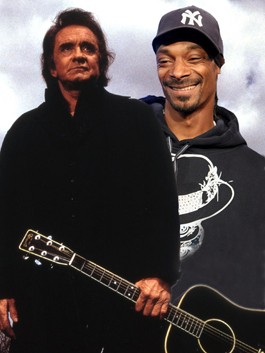
Ridonkulous Remixes Why John Carter Cash allowed ‘Johnny Cash Remixed’ (Jan. 27 release date) to be released is beyond comprehension. That he actually executive-produced the thing and tried to declare that his dad “would have loved this remix record” is beyond the law of the land. Even worse, guest remixers weren’t even given separated tracks to work with, instead simply layering a bunch of junk—like guest vocals from Snoop Dogg—over the regular album versions. Abominable.

Awful Auto-Tune The children are to blame yet again for ‘Re:Generations’ (March 10), which remixes the splendor and talent of Nat King Cole into an incomprehensible regurgitation. “It’s so cool, and Dad would get quite the kick from this!” claims Natalie Cole, who digitally barges in on her dad’s legacy yet again on “Straighten Up and Fly Right,” mixed by will.i.am. The desperation of the music industry doesn’t get much more unbearable than Just Blaze’s remix of “Pick-Up,” which robo-fies Cole’s vocals into a T-Pain impersonation while two girls squawk phrases like “Oh my God, Becky, he’s looking at my butt!”

Contrived Crazes Mark your calendars! Jan. 13 sees the release of the ‘Fatty Boom Project’! Finally, in one place, all the hits of the nonexistent Fatty Boom craze collected on one CD! There’s “Boom Style” and its sibling, “Boom Boom Style.” There’s “Boom,” “Boom Fatty Boom” and “Boomba.” Throw in “Fattyboom,” “Fatty Afro Funk” and the slammin’ “Butthole Mix,” and your collection is complete with all the Fatty Boom tracks that no one could ever want!

Kids Krapola There are always plenty of ex-famous artists willing to embarrass themselves in the name of helping the children, and Neil Sedaka proves no exception with ‘Waking Up Is Hard to Do’ (Jan. 6), a children’s album. Featuring punny reworkings of classic tunes (“Where the Toys Are,” “Lunch Will Keep Us Together”), the cover art is a happy cartoon—even the eighth-notes are smiling—drawn by someone who has obviously not seen Sedaka in 20 years. There’s also ‘Hushabye Baby: Lullabye Renditions of Willie Nelson’ (Jan. 27). If you really want your baby to get some sleep, take the advice of a song not included on this collection and spike her ba-ba with Willie’s own Whiskey River hooch. Does the trick every time.

Putrid Packaging Forget that Creedence Clearwater Revival’s useless three-CD ‘Collector’s Tin’ (Jan. 20) doesn’t contain anything you don’t already have. Forget, even, that it’s exclusively available at F.Y.E., the last of the unexplainably remaining mall chains. No, the truly lousiest aspect of this thing is that it comes in a flimsy tin container with graphics designed by a first-semester Photoshop student. Also in the cheap-ass tin series: Poison, Rod Stewart and the Moody Blues. Good, perhaps, if you’ve lost your usual weed-stash tin, but otherwise sad.

Turdy Tributes Not mentioned anywhere on the cover of ‘AC/DC’s Black Ice Tribute’ (Jan. 13) are the Tribute All-Stars, who cover songs from AC/DC’s latest album, poorly, on this blatant rip-off. Also seeing release is Lisa “Left-Eye” Lopes’ ‘Eye Legacy’ (Jan. 27), which posthumously pairs the late TLC star with the also-dead Tupac Shakur. Guitarist Chuck Loeb and his upcoming tribute ‘#1 Smooth Jazz Radio Hits’ (Jan. 27): Feel like barfing all over again, for only $18.99!


Treacherous Timing Leathermouth’s ‘XO’ (Jan. 27), with the song “I Am Going to Kill the President of the United States of America,” released one week after Obama is sworn in. Or ‘Thizzed Up and Dranked Out’ (Jan. 20), released three years past the Bay Area Thizz craze. Or most absurdly remiss, ‘Easy Christmas Now! Groovy Carols for a Cozy Winter,’ a Christmas compilation—set for release on Jan. 20.

Stuff That Sounds Bad but Actually Might Be Cool The original cast recording of ‘Forbidden Broadway Goes to Rehab’ (Jan. 13), the collection of multicultural psychedelic cinema funk ‘B-Music: Drive In, Turn On, Freak Out’ (Jan. 13) and the need-we-say-more ‘Obscure Tape Music of Japan Vol. 2: Music for the Puppet Theatre of Hitomi-Za’ (Jan. 6). Disastrous . . . or promising? Time will tell.


Tuna Melt

0

01.07.09

SUSTAINABLE SUSHI: San Francisco restaurateur Casson Trenor’s Tataki serves only that seafood which nourishes both the self and the sea.

The end is in sight for the mighty bluefin tuna unless diners drop their chopsticks on the double. This huge predator, bigger and faster than most other fish, was once king of the sea, but rampant pillaging and pirating of the resource by factory-sized ships is driving the Atlantic bluefin tuna the final mile toward commercial extinction. In November, representatives of the nations that fish for Atlantic bluefin gathered for a conference in Morocco. After a week of deliberating the future of the lucrative yet failing industry, they agreed to set a bluefin harvest quota for the coming years that far exceeds the maximum sustainable take recommended by marine scientists. In the eyes of some environmental groups, that decision could be the final nail in the coffin.

“They chose to sacrifice this fish for short-term gain,” says Mark Stevens, senior program officer with the World Wildlife Fund. Stevens notes, however, that a current boycott movement among restaurants and retailers in the European Union could help turn the tide. Another hope is for the intervention of the Convention on International Trade in Endangered Species (CITES), the organization that halted trade of elephant ivory in Africa in the 1980s.

The bluefin is best known as toro to those who love its pink and buttery belly meat, and as maguro to those who prefer the darker muscled flesh. Yet the sushi industry’s rise in the past three decades has equaled the bluefin’s fall. At the height of their abundance last century, bluefin commonly grew to nearly 1,500 pounds in the Atlantic Ocean. In those days, few ate the big tuna, and sport fishermen often paid to have the worthless carcasses trucked away after photo ops; many a giant bluefin of the era was ground into cat food. Then people gained a taste for the rich flesh. The fleets mobilized, demand skyrocketed, prices followed and the rest is history. Today, experts in science and of industry alike acknowledge that this fish is quickly on its way toward commercial extinction.

Yet fishery commissioners hardly seem to care. At its annual meeting in November, the International Commission for the Conservation of Atlantic Tunas (ICCAT), showed more concern for conservation of the industry itself than of the fish that supports it. The organization’s 46 member nations all touted the common goal of striking an agreement during the summit on how to efficiently manage, document and curtail the bluefin catch while assuring the survival of the bluefin fishing industry. Scientists had firmly warned ICCAT reps that the East Atlantic bluefin stock will continue to crash if harvested at a rate of over 15,000 metric tons annually. They further suggested that a take of 7,500 tons or less would be optimal, allowing the population to actually rebuild, but ICCAT simply ignored the advice and went with a go-ahead plan to catch 22,000 metric tons of bluefin tuna in 2009, reducing the quantity to 19,950 tons in 2011. The commission also disregarded suggestions to halt fishing in the Mediterranean during the peak spawning season in June.

“Dollars in the bank tomorrow overruled everything else,” says Phil Kline, an oceans campaigner with Greenpeace.

Bluefin is recognized as three separate yet closely related species around the globe: Thunnus thynnus in the Atlantic; T. orientalis in the Pacific; and T. maccoyii Down Under. Of all the stocks, the West Atlantic bluefin is in the worst shape, at just 10 percent of its 1970s level and dropping fast. A full decade ago, biologists advised a shutdown of the West Atlantic fishery. In turn, U.S. tuna exporters simply hired their own analysts to reinterpret the data; the scheme worked, and in the end the quota was actually increased.

However, the West Atlantic quota of 2,700 metric tons soon became moot. Fishing has gotten so bad that the U.S. can no longer catch its allowed limit and only landed 27 percent of its share in 2005 and just 10 percent in 2006. Thus, the limit does not actually serve as a limit, observes Carl Safina, cofounder and president of Blue Ocean Institute. As he recently wrote on his tuna blog, “[The quota] remains higher than the catch, so the quota is not a limit. It’s like limiting your pasta intake by reducing your limit from 10 pounds of spaghetti per meal to five pounds per meal. Nobody is eating five pounds, so it’s not a limit.”

In the Pacific, the pressure on T. orientalis is tremendous. Tag-a-Giant, a small operation based in New York, has been tagging Atlantic and Pacific bluefin for 12 years. Biologists catch the animals on rod and reel, fit them with devices that record movement, and return them to the water. For the data to be read, the tags must be retrieved—and that hasn’t been a problem in the Pacific Ocean, says Shana Miller, Tag-a-Giant’s science and policy manager. Of 600 tags inserted into the belly cavities of Pacific bluefin, she says, fishermen have returned more than half to collect the $500 reward. 

“That gives you an idea of how many boats are fishing for them,” Miller says.

Scientists depend largely on landing reports for their data, but the figures are only as accurate as fishermen are honest, and in recent years industry watchdogs have noticed a huge discrepancy between the global bluefin catch reports and what Japan, the world’s greatest bluefin consumer, imports each year. For example, the 2007 East Atlantic quota of 29,500 metric tons is now believed by investigators to have been surpassed to the level of 61,000 metric tons due to illegal fishing. This trend may reverse, though, as Japan has recently adopted a policy of turning away undocumented bluefin.

Most bluefin tuna are sold to the sushi industry. The highest grade of bluefin meat is the toro, or belly meat, where the red muscle is marbled with creamy white fat.

Casson Trenor believes that change must come at the will of consumers—and quickly. A fisheries conservation activist and a San Francisco sushi restaurateur, Trenor believes that consumers are as responsible for the bluefin’s plight as the fishing boat decks on which the tuna die. “If we have any hope of saving this fish, we need to stop eating it. I mean, we need to stop,” he says. “Chefs need to take responsibility for this, and we need to stop exploiting the hell out of this fish and give them a break.”

To encourage sushi fans to quit eating such unsustainable luxuries as bluefin, Trenor has authored a new book, Sustainable Sushi: A Guide to Saving the Oceans One Bite at a Time. The Zagat-sized handbook has just hit shelves and is meant to be used at the table as a translation guide to the often mystifying prose of sushi menus. In less than a minute, one can reference a fish’s true biological identity, its various Japanese pseudonyms, its culinary value and the consequences of eating it.

Bluefin tuna may be the No. 1 no-no of the sushi industry, but other fish are to be avoided as well, says Trenor, whose own sushi restaurant, Tataki, has created a menu void of threatened species and products of dirty aquaculture. Trenor warns never to eat hamachi, which in most cases is not actually yellowtail, as commonly believed, but Japanese amberjack caught in the wild and transferred to enclosed pens for feeding and fattening. Farmed salmon is never a safe option, nor is unagi. Shrimp farmed in tropical nations, especially in Southeast Asia, is the cause of entire river ecosystems collapsing. Longlined swordfish, mahi mahi and tuna should be avoided, too.

“All these items happen to be the top sellers in the U.S. sushi industry, so you can see we’re in trouble,” he says.

As the wild bluefin tuna nears the vanishing point, industry scientists have devised bluefin aquaculture systems that may be marketed as “sustainable” but which actually fall far short of sustaining anything. “Ranching” is the most destructive method, a system by which wild juveniles are netted and transported alive en masse to holding pens. The captive bluefin are fed wild sardines until they reach market size and are then slaughtered.

Feeding captive bluefin is another problem. As one of only several warm-blooded fishes, the bluefin operates under a rapacious metabolism, and for each pound of bluefin that comes out of a tuna ranch, an exorbitant 25 or 30 pounds of sardines and anchovies goes in. This astronomically high “fish-in to fish-out” ratio is now contributing to the overfishing of the smaller fishes so essential to the ocean’s food web.

Should CITES grant bluefin tuna Appendix 1 status—the same enjoyed by the tiger, giant panda and many marine mammals—most trade of bluefin would halt. However, World Wildlife Fund’s Stevens says that CITES has historically shown reluctance to protect fishes of economic significance, and he notes that CITES has twice declined to intervene in the trade of Chilean sea bass. Its next meeting is scheduled for 2010.


Until then, ICCAT will handle the fate of the bluefin. Though the commission’s stated objective is to conserve and sustainably manage bluefin tuna, Safina has quipped that the acronym could ably stand for “International Conspiracy to Catch All Tuna,” and he charges that ICCAT is operated by “ponderous self-important, cynical men who move and think like escargot.” Kline, too, sees the commission as more of a threat to tuna than a protector.

“ICCAT has proven itself to be an abject failure. It can’t by any means manage tuna. All ICCAT can do is kill them.”


The Time Is Now

0

01.07.09

Three years ago, the people of Sonoma County established the most ambitious goals in the United States for doing its part to put the brakes on climate change.

Elected officials from the county’s nine cities and the Board of Supervisors set the target for reducing greenhouse gas emissions to 25 percent of 1990 levels by the year 2015.

It’s a goal way ahead of what’s been proposed in Sacramento or anywhere else in the country.

Now, the Climate Protection Campaign, a Sonoma-based organization that works in partnership with local governments and businesses, is releasing an action plan for meeting these objectives.

Curbing global warming calls for monumental action, nothing short of transforming our energy, transportation and land-use systems. That means making a serious investment. The action plan shows that reducing our global-warming footprint pays back many ways by stimulating and strengthening our economy, creating business-innovation opportunities and improving our energy security and our health.

The plan’s solutions will not drain our city and county budgets. Rather, they pay their own way using a variety of financing methods. Unlike the factors that led to the current economic turmoil, the proposed solutions invest in brick-and-mortar infrastructure and build new industries that will contribute in tangible ways to our region. Implementing the plan has the potential to stimulate economic growth and create green-collar jobs and more investment in the local economy.

The Scoping Plan for California’s Global Warming Solutions Act, released in October, predicts a number of benefits to reducing greenhouse gas emissions statewide. These include projections of $33 billion in increased economic production, an increase in overall personal income of $16 billion and more than 100,000 new jobs. Some experts suggest that these are conservative estimates.

In recent weeks, it’s been suggested we should delay climate-protection programs until teetering financial systems are stabilized. We disagree. Global warming is not on hold and, in fact, addressing it may provide some remedies for financial crisis. In many ways, the battle is already being waged by the growing green movement, and the green economy is already putting people to work. Infrastructure investment and jobs creation is a proven economic stimulus strategy. We’re at a historic fork in the road, and the Climate Protection Campaign plan is pointing us in the right direction.

Details of the plan are online at www.coolplan.org. Here are some highlights.

Solutions Voluntary energy-efficiency retrofit of 80 percent of Sonoma County homes and businesses. Replace fossil-fuel-generated electricity and produce 67 percent of our current energy needs with “clean” local power from solar, biofuel, wind, geothermal and other renewable sources. Increase water efficiency. Establish green building ordinances. Develop commuter trains and other public transit. Create a rental fleet of electric cars. Reduce travel by curbing urban sprawl. Encourage businesses to implement telecommuting programs. Protect and increase land devoted to agriculture and forests.

Financing Set up a loan fund that helps property owners overcome the upfront cost of retrofitting their home or business by paying the loan back on their annual property tax bill. Use low-interest municipal bonds to fund electricity-generation systems using renewable energy sources. Provide optional “pay as you save” financing for purchase of energy-efficient appliances that get paid back at rates lower than the utility bill savings.

The action plan estimates an energy infrastructure makeover costing $3.5 billion to $4 billion over 10 years. Too much? Here’s some perspective.

Sonoma County already spends huge sums on activities that contribute to global warming. The budget for widening Highway 101 from the Novato Narrows to Windsor is more than $1 billion. Annual new construction costs in the county approach $1 billion. Our collective gasoline bill is $750 million a year.

Future The Climate Protection Campaign has shown us a way to shift this money from fossil fuels to renewables, a way that will keep our dollars circulating here in our local economy.

The action plan deserves careful consideration by the community, political leadership and business. History has presented us with this monumental challenge and opportunity. We’ve already made the commitment to reduce our contribution to global warming. The next step is to actually do it. It is time to act.

 at Kilkenny is principal of Kilkenny Advisors and a Sonoma County business leader. Mike Senneff is a Santa Rosa attorney and key supporter of the Sonoma County Open Space District. Iver Skavdal is president of Winzler & Kelly, an engineering and environmental planning firm.

Open Mic is now a weekly feature in the Bohemian. We welcome your contribution. To have your topical essay of 700 words considered for publication, write [ mailto:op*****@******an.com” data-original-string=”zvdZ9ZoxRddxxk0Zg3/98Q==06a2RF5o7WC5FvcNi71yhqjehpDjzUaSTA3h301i10DSzqZ7EBUVqb5/fxBmYZE4+OwhpGiB96DTuXNvEy8tjWxImC2pTT6iIG8RmH4G/+/1zc=” title=”This contact has been encoded by Anti-Spam by CleanTalk. Click to decode. To finish the decoding make sure that JavaScript is enabled in your browser. ]op*****@******an.com.


Words, War, Wildlife, Wine

0

01.07.09

Country Joe McDonald knows how yesteryears portend equally bad tomorrows. He who laid the “I-Feel-Like-Like-I’m-Fixin’-to-Die Rag” on us has recorded close to three dozen albums since first fronting Country Joe and the Fish back in the ’60s. McDonald has long been politically active, evidenced not just in his opposition to the Vietnam War, but to all wars and injustices, no matter how they’re gussied-upped and shrink-wrapped. He’s also worked the other side of the fence on issues addressing unjust treatment of returning war vets.

Back in 1971, McDonald set anti–World War I poems by English poet Robert W. Service to music. Since then, he’s written and performed songs about feminism, saving the environment and the demise of hippiedom.

Forty years ago McDonald produced a solo record titled Thinking of Woody Guthrie. In keeping with how disasters tend to recycle themselves, Country Joe performs Guthrie’s Dust Bowl–era classics on this eve of the newest Great Depression, singing songs about poor folks staring down hard times while hopin’ for better tomorrows. McDonald performs his heartfelt “A Tribute to Woody Guthrie” on Friday, Jan. 9, at the 142 Throckmorton Theatre. 8pm. $20–$30, 142 Throckmorton Ave., Mill Valley. 415.383.9600

While we’re on the justice beat, the Sonoma County Commission on Human Rights is looking for, well, commissioners. The CHR’s stated goal “is to promote better human relations among all people in Sonoma County through education, advocacy, and by initiating action that fosters the recognition of and an appreciation for the diversity of our community.” If that resonates with you, visit their website and drop them a line at www.sonomacountyhumanrightscommission.org.

Plants and animals have rights too, no? The Carolyn Parr Nature Center in Napa certainly thinks so. This nonprofit invites kids of every age to “learn about Napa County habitats and birds of prey through tours, dioramas, games, hands-no activities and books.” Groups are asked to call to arrange their visit. Others are invited to drop in any weekend between 1pm and 4pm. Carolyn Parr Nature Center Museum, Westwood Hills Park, 3197 Browns Valley Road, Napa. 707.255.6465

And for those who prefer to kick off ’09 with wit, words and wine, Rosso & Bianco (formerly Chateau Souverain) hosts a “several actor” performance of “Two Step,” a short story by Maile Meloy, chosen from the latest issue of Frances Coppola’s literary pub, Zeotrope: All-Story. The winter issue release party runs from 4pm to 6pm on Sunday, Jan. 10. Two new wines will be uncorked, no doubt enhancing the experience. But that’s not all. The latest All-Story features both a classic reprint of “The Curious Case of Benjamin Button” by F. Scott Fitzgerald and the design and photography of NYC rock legend Lou Reed. An ageless crowd of arty hipsters promises to be present, along with ink-stained wretches lured in by this upscale freebie. 300 Via Archimedes (Independence Lane exit) Geyserville. 707.857.1434


Yoshi’s In Trouble

Yoshi's gets a $1.5 million loan from the City of San Francisco. On top of a $1.3 million loan. On top of a $4.4 million loan. And Wayne Shorter didn't sell out the place? Things are not looking good. From Jesse Hamlin's piece in the San Francisco Chronicle: Kajimura expects to pay off creditors - including some who have filed...

Animal Collective’s ‘Merriweather Post Pavilion’ LP Disappears Immediately

I wrote a few weeks ago about Animal Collective's Merriweather Post Pavilion, a record that a surprising number of critics have no reservations about already hailing as the album of the year. I didn't like the album at first. Then I reconsidered the unique achievement Animal Collective had made by constructing pop songs out of unconventional ingredients, and wrote...

Will Oldham in New Yorker, Will Oldham in Santa Rosa

There was a fascinating 10-page New Yorker profile on Will Oldham in last week's issue, spotlighting in particular his penchant for playing small, weird, semi-secret out-of-the-way shows. In related news, if I were you, I'd subscribe to Will Oldham's mailing list. Like, right now. There's a noticeable gap in his upcoming tour itinerary, and though I'm sworn to secrecy about...

Critical Closeness

01.07.09Take the new film book Scorsese by Ebert at face value, and it's our greatest film critic interviewing our greatest living director. That's the problem. Roger Ebert hangs the laurels on Martin Scorsese in a 1998 essay reprinted in the volume: "There is no greater American director right now than Martin Scorsese." The idea of a "greatest living director"...

Jews and the Abstract Truth

01.07.09At age two, Saul Kaye glued his head to the stereo speakers in his family living room, and one could make the argument that he's never really unglued himself. In fact, as a teenager, his only weekly ritual was tuning into a radio show called The Blues Train , which played Muddy Waters, Willie Dixon, Son House and other...

Bobo Boo Hoo

01.07.09Kate Winslet has now starred in two separate films inspired by Flaubert's Madame Bovary. First was last year's Little Children, about the steamy dissatisfaction of a suburban mother. Now comes Revolutionary Road, an intelligent, compact adaptation of Richard Yates' 1961 novel. It concerns a married middle-class couple, lost in desire for the ungraspable. "I want to feel things," says...

Worst of 2009

01.07.09By now, we've all pored over, ruminated on and argued about the incessant year-end Best Of lists, but overlooked are the impending horrors that the music industry has secretly conspired to inflict upon us during these distracting times. Only by scouring the depraved depths of major-label press releases and gluing one's ear to the money-grubbing grapevine of gratuitous drivel...

Tuna Melt

01.07.09SUSTAINABLE SUSHI: San Francisco restaurateur Casson Trenor's Tataki serves only that seafood which nourishes both the self and the sea. The end is in sight for the mighty bluefin tuna unless diners drop their chopsticks on the double. This huge predator, bigger and faster than most other fish, was once king of the sea, but rampant pillaging and pirating of...

The Time Is Now

01.07.09Three years ago, the people of Sonoma County established the most ambitious goals in the United States for doing its part to put the brakes on climate change.Elected officials from the county's nine cities and the Board of Supervisors set the target for reducing greenhouse gas emissions to 25 percent of 1990 levels by the year 2015.It's a goal...

Words, War, Wildlife, Wine

01.07.09 Country Joe McDonald knows how yesteryears portend equally bad tomorrows. He who laid the "I-Feel-Like-Like-I'm-Fixin'-to-Die Rag" on us has recorded close to three dozen albums since first fronting Country Joe and the Fish back in the '60s. McDonald has long been politically active, evidenced not just in his opposition to the Vietnam War, but to all wars and injustices,...
11,084FansLike
4,446FollowersFollow
6,928FollowersFollow