On The Stereo: ‘Ballplayers’ with Lenny Randle and Thad Bosley

Shea Stadium, July 13, 1977. 9:30pm. A 28-year-old slugger best known for punching out his former manager steps up to the plate against the Cubs. Bottom of the sixth, Mets are losing. Suddenly – POOF.
The New York City blackout of 1977 would become notorious. In the 24 hours of darkness, the city was ridden with looting, fires, arrests and a neverending din of blame. But what of Lenny Randle, the batter left at the plate?
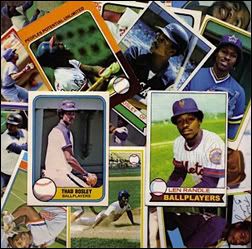
Evidently, in 1983, Lenny Randle teamed up with fellow Major League Ballplayer Thad Bosley—they both had afros, they both loved music. They chipped off some of their pro sports salaries and went into the recording studio. They released three records, which somehow caught the ear, 25 years later, of People’s Potential Unlimited, who have just re-released four songs on Ballplayers, a 7″ EP. It sucks so bad that it doesn’t suck, if you get what I mean.
1983 was a weird time in music—the sound of electronic synthesizers, especially, was in flux, hovering between the modular analog Arp sound and the now-classic Casio sound. Funk music in 1983? Forget about it. Disco had leveled the scene. Those who tried failed in spectacularly awkward fashion, which is why now, of course, everyone wants to hear the stuff. Enter PPU, who’s been reissuing the era, and Ballplayers.
“American Worker” kicks things off with a Springsteen anthem via drunk O’Jays and terrible lyrics. If this is the theme for the American worker, then c’mon, unemployment. “Bos Music” is basically some drum machines with a poorly-played outtake from the War Games soundtrack. But things pick up on Side Two, with “Universal Language”—boogie handclaps by just one guy, hand drumming on a plastic bucket, space disco, wah-wah guitar, and the cruddiest breakdown of the early ’80s! (There’s competition.) There’s also no way, on top of it all, to resist “Jam With Us,” wherein Bosley and Randle repeat over a totally killer bassline, “Don’t you wanna jam with us?” Of course, the answer’s yes, because though they might have been intimidating ballplayers, their musicianship is on a level that just about anyone could join in, no prob.
As for that postponed game at Shea Stadium in 1977? The game was resumed—two months later. The Mets still lost.
—–
If you decide to order Ballplayers and wanna pick up some other People’s Potential Unlimited releases while you’re at it, here’s a few good ones:


Sir Bentley, “Sir Bentley Street Shuffle” – The sound of a slicked-out player in a polyester suit sliding down a 1976 side street, giving breathy directions. Whether they’re to the listener or himself, it’s hard to tell, and hardly matters. There’s a bitchin’ conga solo, and backup vocals that sound like they’re sung by iguanas. B-side is the extended version.


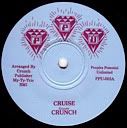
Crunch, “Cruise” b/w “Funky Beat” – Totally unbelievable analog entanglement, enjoyable at both 33 and 45 rpm. Kinda like if Liquid Liquid were more into meth. Every single fret buzz and pick sound is audible on the bass—a Hohner? a Rickenbacker?—and when the vibrato synthesizer hits near the end it’s like the arrival of the Zyklon droids. “Funky Beat” finds Crunch fucking around with the portamento switch and rapping in a horny Dracula voice about how funky the beat is, in spite of the fact that the beat is not really funky.


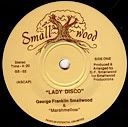
George Smallwood, “Lady Disco” b/w “Mr. Sunshine” – A man describes his plight: His girl cannot stay away from the disco floor. How can he keep up? Especially when she is the type of girl who warbles “III Liiikee Myyy Dannnncceiinngg!” after every chorus? Hence, the eternal struggle. Her man, or the disco ball? He accuses her of making “disco babies,” and the song fades with no resolution. (How many songs start with a hi-hat solo?) “Mr. Sunshine” gets a genius shuffling drum beat, at times totally rushed and wrong. But I get it. Sounds like something DFA would put out, except they’d make it slick and perfect. This isn’t even close to perfect, and it’s beautiful.

We Ride At Night

My man Jay Howell had to bow out last night, which meant that yours truly played records for four hours straight at Jason Vivona and Brian Henderson’s art show at Daredevils & Queens. I say “played records” instead of “DJed” because unless you’re matching beats and blending mixes, I don’t really consider it DJing. “DJing” also insinuates the presence of dancing, and luckily, that was not on the tab.
The events at which I’ve been behind the decks before—weddings, parties, and once, Rock ‘n Roll Sunday School—have always carried the pressure to supply rhythm of appropriate popularity and/or contagion for body movement by the masses. That’s nice if you’re trying to make more friends but a nightmare for me, and I was glad to evade that pressure by asking Vivona beforehand if I could play Born Against. He’s got a D. Boon tattoo on his hand. He said yes.
Correspondingly, Vivona and Henderson’s art doesn’t exactly cry out Rapture mashups and Lady Gaga. Vivona paints psychedelic characters with ooze for heads and Playmobil toys for penises, usually staring into nothingness with 28 eyeballs. Henderson photographs the undead; his bodies splayed out in abandoned warehouses, contorted, naked and covered in blood. Thus: Flipper, Archeopteryx, City of God, Lightning Bolt, Dewey Redman, Battles and of course, the Minutemen. There’s only one thing I love more than playing records for four hours straight, so thanks, guys, for having me.
I should let you know that on May 23, I’ll be joining my friend Larry Slater for his Jazz Connections radio show on KRCB. We too will play records for four hours straight, except that all of those records will be by Charles Mingus. Since I have more records by Charles Mingus than by any other jazz artist (unless, like me, you count Frank Sinatra as a jazz artist), this is a natural fit; Dr. Slater and I will cue up, play, and discuss the great man’s music, about which there are an infinite number of insights to make. (I’m still working on my volatile axe-throwing accusatorial temper-tantrum Mingus impersonation for a special segment called “What It Was Really Like To Play In Mingus’ Band.”) That’s on KRCB, 90.9 FM, on Saturday, May 23,from 8pm-midnight.
How about Devendra Banhart coming to the Mystic? How about Bassnectar coming to the Hopmonk? How about K’Naan being marketed through MySpace and MTV instead of NPR? Oh, wait. Sorry. The NPR interview’s here.

Open House at The MYC

2

Halfway through “Swagga Like Us,” Torman Jahi hopped on stage at the MYC, got the people on their feet, and then passed the mic one by one to a group of young rappers for a full-on all-ages posse cut. Some of ‘em killed it, some of ‘em rapped the alphabet, and some essentially trainwrecked, but all of ‘em got cheered. Come to think of it, the guy who trainwrecked got cheered the loudest.
This is the philosophy of the MYC, or Marin Youth Center, in San Rafael. Everyone gets a shot, and everyone gets support no matter what. This would be laudable enough by teen center standards, but there’s the extra added benefit that the shit happening at the MYC is actually completely cool. Forget cookies and punch; over the last two years, they’ve been hosting jazz groups, school-of-rock band camps, hip-hop sessions, recording workshops, acapella groups, art programs, breakdance troupes, cooking classes and far, far more.
On Friday night, the MYC opened the doors in downtown San Rafael and invited the public for an open house. It’s got that Emeryville loft thing goin’ on, with exposed rafters and ducts in the main performance room. Elsewhere, the walls boast posters of Malcolm X, bulletin boards warning of the dangers of smoking, a framed certificate for the current champion of the pool table, and tons of photos chronicling the varied activity that takes place here. It’s a new building, with a tinge of the municipal. That feel will surely and eventually lose out to the very communal and cutting-edge spirit of the place.
The band, from the Oakland School of the Arts, was ruling it. Three female singers with stellar pipes, all still in high school. Three guys on bass, drums and keys, layin’ it down on covers of “American Boy” and “Crazy in Love.” To close the night, ‘Til Dawn, an acapella group who rehearses at the MYC, took the stage. They sang “Tell Me Something Good,” “Steal My Kisses” and “Something to Talk About”—and were great. As I left my too-brief visit, kids with cameras ran back to the high-tech studio to edit their video footage while visitors and young staff were clustered around a pool game, dancing and singing “Ms. Jackson.”
I know it must be a common reaction, but where was this place when I was a kid?
More photos below.

Letters to the Editor

03.04.09

Just so doggone cute

OMG, I laughed so hard that some sort of liquid came out of my nose when I read Kate Williams’ piece! (“Puppy Love,” Open Mic, Feb. 25). I can so totally relate!

When our sweet old Australian cattle dog passed away last April, we vowed to never get another dog. “No other dog could ever replace Rosie.” Somehow, nine months later, I found myself strolling down the long corridors in the local animal shelters seeking a sign, a tug at my heart strings, something that would make me go home to my husband and say, “Honey, I think it’s time. I’ve found a pup.”

Lo and behold, I saw the sign! At the Sonoma County Animal Shelter there was this sweet, adorable little Heinz-57 that they guessed to be about five months old. Pretty red/tan with white markings, 25 pounds (she won’t be much bigger than 30 pounds, maybe 35 they told me) and just as sweet as could be. I asked how she was with cats, because we have two seven-year-old brothers who have been ruling the roost since Rosie passed. “Oh, she’s fine. Let’s take her into the office where we have the shelter cat and you can see for yourself” they told me. Zoom, she flew at the kitty, the kitty let her have it and the pup just turned around and found something else to play with. Great! I told myself. That’s just perfect. Long story short, we signed the papers, and she was mine. I spent over $300 at PetCo to outfit my new little girl, named her Gypsy (because she was a stray) and took her home to meet the family, cats included.

Three seconds into entering the house, one of my cats puffed himself into something straight out of a horror flick, stood on his hind legs and literally ripped into Gypsy’s nose and tongue. Blood everywhere—not exactly the homecoming I was hoping for my new little pup. Gypsy was yelping in pain, Smokey was swollen to four times his normal size with eyes as big as saucers and making the most horrific howling sound I’ve ever heard. I tried to get between the two—really, really stupid idea—and ended up getting swatted by the cat. He took off down the hallway, Gypsy broke out of my hands and chased him, and I’m standing there holding bags of puppy toys and treats.

I dumped the bags and tried calling Gypsy to come back to me. Of course, she doesn’t come; she’s had two names already, the first one where she originally lived, the second one the shelter gave her, and now Gypsy. She doesn’t know what I’m saying. I had to literally drag her back into the kitchen.

And that was just the first day.

Now we are a month into our new addition to the family, and while she doesn’t have accidents in the house like Kate Williams’ pup, she is a chewer and a digger—neither of which Rosie ever did. She has already annihilated rugs, shoes, pretty much anything that’s left on the floor. I am questioning the wisdom in choosing this little girl, although she is so adorable, sweet, loving and playful. Oh, and did I mention that she’s already doubled in size?

I happened to look out the window this morning and saw her burying a bone in one of the wine barrels we use as planters. There she was, in the barrel, digging a huge hole—dirt flying everywhere—with a bone in her mouth. She gently dropped the bone in the hole, used her nose and feet to cover it up and, looking very satisfied with herself, jumped out of the barrel and casually walked away. I told my husband that in addition to dahlias blooming this year, we will be growing bone bushes, too.

Suffice it to say that we are investigating puppy trainers at present. Because although Gypsy has turned our lives upside down, she has also made us laugh uncontrollably, made us get more exercise with our twice-daily walks and our home isn’t so lonely anymore.

I just had to share my puppy experience.

Deb McGauley
Santa Rosa


Dept. of Corrections

Paige Green of www.paigegreenphotography.com shot the handsome full face of Arann Harris featured on p33 of last week’s issue. We duly gave her credit and then dully threw a big black border over the darned thing. Lawd knows we regret the mistake.

The Ed.
Inking it Out 


&–&–>

Wine $$ 101

0

What’s in wine? Bottled sunlight, poetry, the song of the soil? Naturally. Apart from those fine things, we sometimes stop to wonder, how much cold cash doth a bottle contain?

The vast disparity in wine prices is delightful mystique for collectors, frustrating opacity for everyone else. Between mass-produced and artisanal products, we allow some variance. Take cheese. The manufacture of cheese demands no small commitment of labor, machinery and animal husbandry. A brick of Jack costs $4; artisanal Andalusian goat Gorgonzola, say, eightfold at $34 by the pound. And yet, the hills of dairy country are not studded with Tuscan dairy villas.

With wine, prices vary something stupid. If it’s all just rotted grapes sealed with tree skin, what makes the difference? Short answer: Not all grapes are equal. Longer answer: Unequal grapes get unequal treatment. To find out what this means, let’s build our own hypothetical bottle of wine.

The Juice We can squeeze about 750 bottles from one ton of grapes. The 2008 California Crush and Harvest Report tells us that the average ton of Napa Cab sells for $4,450—$6 worth of juice in the bottle (with prices above $10,000 not uncommon). Let’s buy some Sonoma County Pinot Noir at $3,000. Our per bottle cost is $4.

The CaskNew oak barrels cost from $600 to $1,200; used barrels, about $100 to $300. Let’s go 50-50 on some old and new, high-end lumber: $2 per bottle.

The Flask The pricier the wine, the more costly the corks, foil, label and glass. Bottling costs, even without using the most expensive materials, could be $3.25 per bottle.

We’re already up to $9, and haven’t even rented a warehouse to make the stuff in—let alone built our Tuscan villa. We also need a crusher, press, stainless steel tanks, hoses, clamps, duct tape and beer, a crush crew and tasting room staff.

Let’s turn to John Kelly, detail-driven wine wonk and owner of Westwood Winery, to fill in the gaps. “The burn rate for a small winery—say, 2,500-case annual production—is likely to be at least $500,000 and probably $1 million or more a year,” Kelly says. “Break-even requires revenue of at least $17 to $34 per bottle.” Let’s take the low figure. After the distributor and retailer add their take—voilà: a $40 bottle. Are we rich yet? We got maybe $1.

So does it follow that $100 bottles contain corresponding value? Well, no. A wine-consulting insider who declined to be named explains, “Other than historical or purely exceptional bottles, the reasoning behind $100 bottles is twofold: exorbitant real estate costs and modern business models—and a bad habit of trying to become a ‘cult’ wine right out of the gate.” The only way to make that $5 million dream pencil out to investors is to charge exorbitant prices without first building a reputation, often by hiring a celebrity winemaker to infuse it with instant cachet. Some more established producers price their wine so that they can get on that wagon. “I would say [it’s] probably 50-50 between these two categories,” estimates our insider.

Leaving aside Almaden and company, most quality wine from North Bay appellations retails from $12 to $60. Within that spread, it appears that consumers are getting what they paid for. Much beyond that, they just might be investing in shares of scarcity, prestige, vanity and hope.


View All

No Shame, No Blame

0

03.04.09

FREE: Mark Zaifman’s Spiritus Financial refers to the life force of just breathing.

My first realization that our family was not of the moneyed class came after a trip to the Los Angeles County Museum of Art. On the way home, my mom drove us through Hancock Park, where we admired massive brick houses with swooping driveways, emerald grass and sparkling windows. On the approach to my hometown, the houses shrunk and liquor stores proliferated. On arriving home, the neighborhood seemed claustrophobic, the houses dirty and cramped. At 10 years old, I felt ashamed of my class status. Obviously, we did not have enough.

The years since have been spent alternating between aversion of and attachment to money. I could easily attend an anticapitalist rally one day and shop for cheap furniture at IKEA the next. After graduating from college, I earned a small income as a barista, lived the broke life that seemed my destiny and defaulted on $20,000 in student loans. I “forgot” to pay credit card bills, racked up late penalties and cowered at the mercy of the dragon cash.

It seemed that there was never enough. But there was always enough for the small stuff like sweatshop-made clothes from the mall, CDs and records, meals out with friends. There was even enough for the big stuff, like that digital video camera now gathering dust in my closet. The mornings of shame were the worst, when I awoke to a slamming hangover and a wallet filled with nothing but strangers’ phone numbers. Thirty dollars blown at the bar, the show or on whatever debaucheries I had gotten into the night before doesn’t seem like much until it’s multiplied by three times a week. I had no balance when it came to spending. I couldn’t seem to apply my philosophical awareness of the dangers of material fetishism to the physical realm.

After meeting the practical and frugal man who became my husband, my money dysfunction began to affect someone besides me. An impulsive decision to return to graduate school for an MFA left me $50,000 in debt during the worst economic crisis since the Depression, and forced me to begin the tough work of aligning my values with my spending habits. Things had to change if my husband and I were to ever purchase our dream property with room to garden, and if I was to pay off that student loan debt before qualifying for the senior discount at the movies. It was time for me to get a ticket on the train to Frugalville.

In desperation, I turned to books for money advice, starting with Suze Orman’s wide-eyed enthusiasm for Roth IRAs and graduating to Your Money or Your Life by Joe Dominguez and Vicki Robin, which outlines a nine-step system for “transforming your relationship with money and achieving financial independence.”

I started reading and found strategies for budgeting and saving, while being more drawn to the authors’ love of voluntary simplicity and environmental awareness. I was struck by the astounding equation of money with the soul, vigorously underlining the quote, “Our life energy is precious because it is limited and irretrievable and because our choices about how we use it express the meaning and purpose of our time on earth.”

After hemming and hawing, I began the first step, which meant calculating all of the money I’d earned over the years, followed by the daunting process of calculating my current net worth. What did I have to show for all that I had earned? I jotted down each cent that went in or out of my life. I examined those expenditures, deciding which ones were essential and which seemed to be a “waste of my life energy.” Luckily, I stumbled upon an online budgeting program that did most of the calculations for me. All I had to do was enter in the numbers.

I hit the first pothole at the fifth step. On a monthly basis, I had to plot my total income and expenses on a line graph. The goal is that the income line rise higher and the expense line duck lower as the months pass. Since I began charting about six months ago, I have consistently spent more than I earn. I write it down. I struggle. My weaknesses are new books, pints of good beer and impulse food buys. I’ve had to tame the clothes-horse and become friends with the clothes already in my closet, including the hated maroon cotton slacks and the weird sparkly half-cape.

With hope for help into bringing my expenditures in alignment with my goals and values, I contacted Windsor-based money guru Mark Zaifman, owner of Spiritus Financial and a contributor to the newly revised version of Your Money or Your Life. After facilitating workshops based on the principles of the book, in which participants work toward becoming “FI-ers” (short for cultivating financial intelligence, integrity and independence), Zaifman opened his “values-based,” holistic financial-planning service in 2003.

“The overarching taboo subject in society is money. You start examining your relationship with money and hit the first roadblock, which is either shame or guilt, and that can be the obstacle that slows you down along the path to transformation,” Zaifman says over the phone, speaking with the calm confidence of someone who has battled his financial demons and won.

Almost immediately, I feel like less of a failure. As working-class French writer Annie Ernaux says, “The worst thing about shame is that we imagine we are the only ones to experience it.” It is liberating to hear frank talk about money shame. In my family, money was discussed in whispers, as though it were an omnipresent basement monster waiting to eat us if we stepped just slightly out of line. Zaifman claims that money is not a monster. Rather, it is an energy system with a distinctly spiritual component.

I initially balk at connecting finances and spirituality, but at this point I’m willing to give it a shot, especially if it means attracting the abundance that FI-ers believe flows across the universe.

When I ask Zaifman where to start on this path to transformation, he suggests baby steps. “Start setting mini goals for yourself, either every week or every month that you are going to accomplish a little more clarity around your relationship with money. You may not get to the finish line in a month or six months or a year, but you are beginning that journey, one step at a time,” he assures.

Zaifman encourages steep discipline since, he reminds, “it’s not a free lunch to get to the place where you’re feeling a surplus all the time.” A reward system can also be helpful, “to put a little sugar with the medicine,” when budget goals are met. I wonder if my reward could be a trip to Costa Rica, but realize that this is probably not the type of reward to which he is referring. It’s painful to come to terms with the fact that I have to limit myself to one new, fantastic book every six months if I don’t want to be thousands of dollars in debt for the rest of my waking days.

All the stuff about abundance is attractive, but what about those of us who have only known a scarcity consciousness? After growing up and spending most of adulthood thinking there will never be enough, and with the economy falling into a downward spiral seeming to confirm my worst fears, it’s hard to comprehend a world of abundance.

“It goes back to the psychological and the emotional, our habits, patterns and belief systems,” Zaifman says, illustrating the point by referring to his own working-class childhood and immigrant parents. He continues: “If we shift and think about abundance, not as material possessions but in what we already have—nature and time—then all of a sudden it does feel unlimited. That’s the shift we need to make in our lives to get to a point of equilibrium, so the world actually becomes a peaceful place to live.”

At this point in the conversation, I experience a classic “a-ha!” moment. If I just give up the struggle and shift my focus from what I don’t have to what I do have, half the battle has been won. As I move from shame to acceptance, it will become easier to see that I do have enough, and that whatever is left over should go to paying off that debt rather then buying the first glittery object that catches my eye. A baby step, but a step nonetheless.  

To learn more about Mark Zaifman, go to [ http:-/www.spiritusfinancial.com- ]www.spiritusfinancial.com.


Laid-Off Blues

0

03.04.09

Well, I got laid off.

The omnipresent question from others and from myself is, “What, oh what, are you going to do now?”

First off, I did the most logical, though unhelpful, thing I could possibly do: drink and cloak myself in self-pity. In the hungover morning after, I made a survival plan.

Immediate action includes scraping the state plate for crumbs from the welfare pie. Unemployment checks, food stamps, subsidized childcare, medical and dental insurance—all topped with a sweet dollop of loser stigma.

Savings and tax returns will take care of the now. State aid will smooth the interim, and then . . . Ideally, another desk or tag with my name carefully printed on it, and all systems back to go. Back to complaining about the long hours and not having quality time with my kids. Back to early mornings of bleary-eyed traffic and weak office coffee. Back to false smiles and forced co-worker chit-chat. Back to all those horrible things I have been mourning the last 24 hours.

And why are they suddenly my red badge of courage? I was brought up with a blue-collar work ethic. Working 9 to 5, even if you hate the work, was a display of one’s mettle. I am no coal miner’s daughter, but it was the same theory: I was raised to work hard, earn my keep and not to bitch and moan. But even that blue-collar ethic has not kept me from getting laid off twice in the last 15 months.

Facing unemployment again, I wonder, am I at a loss or am I free?

My initial mental responses circled greatly around blame and lack of self-worth. Instead of considering that long-standing financial institutions were closing their doors, I thought maybe if I had used my paycheck for $70 haircuts and didn’t wear vintage clothes to the office, I would’ve been kept on. If only I’d listened to my mother and learned how to type faster when I was 12, I’d still be employed. Panic led to $1.99 wine, which led to visions of my daughters singing plucky songs while scrubbing hotel floors in rag dresses. Thoughts like that got me no further than the bathroom floor.

Why is my self-worth tied to the hours put into corporate labor? Why is that the only answer? My generation is made of a myriad of free-wheeling hard workers. People paying bills and making lives without a suit. If I follow only one prechosen course, I am purposefully closing the doors to a multitude of other opportunities that exist for my fulfillment.

Day two, sober and back to planning a route of action, I dully follow the alternative paths back to the same goal: financial stability. I am at a crossroads. I can probably Craigslist my way back into an office with enough résumés and persistence. I can hold out for a bit with the buffer of state benefits, start a garden and enjoy my children. I can join a vocational rehab program and finish my education, preparing for higher levels of future employment.

Last week, I could only envision rolling months of the same weekly work patterns, and I was happy about it. After licking my wounds, the optimism of possibilities is slowly taking over the despair of being a statistic.

Freelance writer Lacey Graham is a Santa Rosa resident who knows Word, Excel, InDesign and is an experienced customer-service rep.

Open Mic is now a weekly feature in the Bohemian. We welcome your contribution. To have your topical essay of 700 words considered for publication, write [ mailto:op*****@******an.com” data-original-string=”F297gYuxodofpdhHMApP1A==06aCS4b/14h0+DL6ttCNlZsA/msnphTuh1y9JkRechD0sTUpDD4jA6EhFzIAGrt69/Z5n8YO+nOKIKkGHVVvsCX3NpBx/geksohP+ak2Q8vrxM=” title=”This contact has been encoded by Anti-Spam by CleanTalk. Click to decode. To finish the decoding make sure that JavaScript is enabled in your browser. ]op*****@******an.com.


The Bad Plus

0

03.04.09

Despite a mission statement promising to “present and preserve jazz,” it’s probably time to just roll over and accept that the Sonoma Jazz+ Festival’s gonna book whoever they’re gonna book. We could say, you know, Lyle Lovett has some sax players in his band. Joe Cocker, you know, he might play some solos. And hey, they added that tiny little “+” to their name to represent past headliners like Steve Winwood, Boz Scaggs, Steve Miller, LeAnn Rimes, Michael McDonald, Bonnie Raitt and Kool & the Gang. Who are we to be snobs?

But since no other local media outlet seems brave enough to protect this American art form—and since the local jazz programmers we called up don’t want to be quoted saying “You mean that bullshit thing they call a jazz festival?” (actual quote)—it’s up to us. There are plainly no jazz artists headlining Sonoma Jazz+ 2009 this year. Around here, we’d even be cool if, like, Rick Braun was playing. But Chris Isaak?

Sonoma Jazz+ does many great things, not the least of which is providing large financial support to music programs in area schools. They also have a second stage, and a “Wine and Song in the Plaza” program that is alive with small jazz combos. But in light of PR maven Michael Coats’ assertion that since 2005 they’ve already booked any jazz headliner who could fill a 3,800-seat tent, our suggestion is to honor jazz by please just calling the festival what it actually is: the Sonoma Music and Wine Festival.

The-very-good-but-not-jazz acts scheduled include Joe Cocker, Lyle Lovett and His Large Band, Ziggy Marley, Chris Isaak, Big Bad Voodoo Daddy, Shelby Lynne and Keb’ Mo,’ all coming to Sonoma May 21&–24. Tickets go on sale to local residents on March 7; to the world at large on March 9. For details, see www.sonomajazz.org.

Simultaneous with the creative definitions emanating from Sonoma is the encouraging news from the Healdsburg Jazz Festival announcing its initial lineup. Bona fide jazz headliners John Handy, Randy Weston, Airto Moreira, Esperanza Spaulding, Dee Dee Bridgewater, Denny Zeitlin and Julian Lage lead a list-in-progress to appear May 29&–June 7. For updates, see [ http://www.healdsburgjazzfestival.org/ ]www.healdsburgjazzfestival.org.


Crepes of Wrath

0

03.04.09

When I married two years ago, I didn’t know how to cook. Dinner usually consisted of a few slices of Brie and some whole grain crackers, washed down with a glass of Cabernet. After settling into conjugal life, however, that all changed. A kitchen full of shiny new appliances with names like “Cuisinart” and “KitchenAid” gleamed enticingly from the countertops. Encouraged by the sweet, hungry eyes of my new husband, my meals went from cheese and crackers to Bolognese sauce and arugula salad with red wine vinaigrette.

My infatuation with cooking and culinary gadgets quickly blossomed into a full-on love affair. But, as tends to happen with fickle romance, something came between us: the recession. It took my beloved food budget, an extravagant dollar amount I am still unwilling to print, and tightened it down in its mean little grip while simultaneously inflating grocery prices.

Milk went from $2.99 to somewhere in the $4 range. Bread prices soared to over $4. Butter, chicken, flour and produce prices all rose while my income went the opposite direction. I began taking a second look, this time with a critical eye, at the ingredient list of a given recipe. Hmmm. Maybe six different kinds of hard cheeses weren’t exactly a necessity. Maybe that organic cotton tailored apron from Anthropologie could wait until, um, never.

I had to do the impossible: cook delicious, healthy meals for my husband, son and myself for only $100 a week. Given the great fiscal heights at which I had previously spent each week, that seemed impossible. But necessity is the mother of invention, and invent a new tactic I must if I was going to meet this budget challenge.

I contacted Stephanie Nelson, founder of the flourishing website CouponMom.com, for a little help. Nelson has appeared on Oprah, as well as contributing to Good Morning America and CNN, to share her tips on slashing the grocery bill. This girl knows how to pull off a shoestring budget.

“It’s all about planning,” Nelson says. Planning what? Planning to go to the store and stand weeping in the wine aisle that you can only afford two-buck Chuck? “Collect coupons and store sale fliers and plan your meals around what’s on sale,” she clarifies. Oh.

Nelson also thankfully says that coupon use is only a small part of what she has deemed “strategic shopping.” Strategic shopping has three integral components: meal planning, brand flexibility and store flexibility. Coupons will often be for store brands that are less expensive than name brands, and being true-blue to your local organic boutique might not prove to be the most budget-savvy approach to grocery gathering. “Go where the sales are,” Nelson says. And what Nelson says, I do. Her website has grown from 200,000 members last year to 1.4 million this year. Who am I to argue with her?

I took Nelson’s advice, and tried some of my own ideas as well, and here’s what I learned along the way, presented in a handy numbered list, no less. As with all advice, take this with a grain of (kosher) salt. I’m not a medical expert, and your nutritional needs may differ greatly. I’m just a healthy person trying to make it all happen on a tight budget.

1. Sadly, meal planning is, in fact, crucial. Make peace with that fact. And really, Nelson was right. It does help to plan around coupons or sale fliers. Here’s the deal. You have to make a meal plan if you want to only spend $100 a week, and you have to stick to it. Learn to not eat by mood. The proper response (said with a twinkle and a smile, of course) to “I don’t feel like lentil stew and cornbread!” is “Well, I don’t feel like going into debt to fund your hamburger and french fry addiction, so lentil stew it is.”

2. Remember: You are not too good for coupons. Repeat to yourself hourly or as necessary.

3. Realize that, for the time being, your meals will have to be simple. And possibly not organic, farm-raised, grass-fed and drunk upon the pure filtered sunshine that dapples daisies. Try to keep meat to a once-a-week splurge. Rather than preparing to sit down to a hunk on a plate, buy a whole chicken, cut it up and cheat it out to several plates; same with sturdy beef cuts or pork loins. I still remember the day it occurred to me like a flash from heaven that I simply couldn’t afford to eat as much wild Pacific salmon as the nutrition gods tell me I should. Ditto for avocadoes.

4. Choose which herbs you will use that week. Each bundle of herbs is exorbitantly expensive, so one week it’ll have to be parsley, the next week you can splurge on that precious basil. But ya can’t have both. Or grow your own on your cute little sunny windowsill, and have yourself an herb party.

5. Become intimately acquainted with your freezer. Always double or triple your freezable recipes, like soups, stews, sauces and casseroles. If the produce in the fridge is going south, cut it up and freeze it, and pull it out again to use later. Having foods frozen and ready to go is like a Christmas gift to yourself every time you use it.

6. Share. Everything you need to know you did learn in kindergarten, after all! For those not morally opposed to Costco, let it become your new best buddy. Find a friend or relative as depressingly broke (read: wisely frugal) as you, and make a strict list of things you’ll share. Good items include produce, eggs, milk, tortillas, bread, cereal, olive oil, chicken sausages, ravioli and toiletry items. Important note: stick to the list when at Costco. You probably do not need sheepskin seat covers or a new gas grill, and you certainly can’t use 16 new cookbooks.

7. Make the time to bake your own bread. Warning: family and friends who get one bite of delicious morsels of whole-wheat goodness will never be satisfied with the store stuff again. My husband, who formerly lived on a steady diet of Wonderbread, now incredulously looks at me like I’m ripping shreds off a cardboard box if I hand him anything besides the homemade. Bake your own cookies and cakes. Make a pie. Just think of baking time as an investment in the people you love loving you more.

8. We’ve been so affluent that we expect our meals to be gourmet. Our darling chef friends at the Food Network channels are always blithely chattering about their Parmesan-Reggiano and organic fennel and entrées with 32 ingredients, making the act of preparing a meal that costs under $10 seem ludicrous. Learn as I did that the Food Network isn’t footing your bill—you are. Change your perception of what a meal should be. One of my frequent winter go-tos is a simple shallot spaghetti. I sauté about six shallots and a couple of chopped garlic cloves in a generous splash of olive oil until soft and golden, then add it to a big bunch of cooked whole wheat spaghetti. Splash about a cup of the pasta water in to make a quick sauce, then toss well and sprinkle with grated Parmesan cheese and parsley. This meal is quick, very delicious and, best of all, only about $2 a person.

9. Nutrition knowledge is a good thing. But sometimes it can be oppressive when you know what havoc chemicals and pesticides can do to your body but you can’t afford those elusive organic bananas. Tell yourself you’re doing the best you can, and move on. Buy organic when you can, but don’t beat yourself up when you can’t.

10. Your Crockpot is more than a storage bin for Tupperware lids. Crockpots tenderize inexpensive cuts of meats and are the perfect way to let dried beans simmer all day into soft perfection.

11. Say bye-bye to the $4 lattes, hello to dusty Mr. Coffee.

13. Buy the Sunday paper. Nelson says that 75 percent of coupons are found in the Sunday paper, and this is where the real coupon magic can happen. “Buy more than one paper,” Nelson says, “and you’ll get double the savings.” Heck, buy three. Go crazy.

As Nelson says, it just takes planning and a little organization to be on your way to real savings. Your bank account will thank you, and strangely enough, you may just find that you like it.

 

Quick dining snapshots by Bohemian staffers.

Winery news and reviews.

Food-related comings and goings, openings and closings, and other essays for those who love the kitchen and what it produces.

Recipes for food that you can actually make.

Next Big Bubble

0

03.04.09

In a piece called “A Modest Proposal” (March 26, 2008), I suggested in an open letter to Mahmoud Ahmadinejad and Hugo Chavez—high on George Bush’s list of imaginary enemies—that they could bring America down merely by bringing Wall Street down.

More than a few readers called me nuts. I was being hyperbolic, hysterical. But I was right.

Ready for another bomb? Our pension system is broken. It’s next to blow up.

Pension assets are invested in the stock and bond markets, which, coincidentally, are down more than 30 percent from last year. Whoops. Make that close to 40 percent for some plans more heavily invested in stocks. According to the Center for Retirement Research at Boston College, that’s about $4 trillion in losses.

Four trillion isn’t just my estimate and, actually, the number is even bigger. The report I just cited estimates losses only up to October 2008. The market has been down more since that time. January 2009 was the worst January in the history of the New York Stock Exchange.

Furthermore, pension systems were seriously unfunded even before the current bear market; Los Angeles faces a $1 billion shortfall, half of it pension-related, for 2010. This is especially true for public pension systems, like CalPERS (state employees and some counties), CalSTRS (teachers) and SACRS (the counties that self-manage their pension assets and that don’t belong to CalPERS).

State and local governments are not required to fund the pension costs for public employees for years. Public pension systems play by one set of rules called GASB (Government Accounting Standards Board); private pension plans play by a much stricter set of rules called FASB (Financial Accounting Standards Board). But state and local governments don’t worry much. They have an ace in the hole. CalPERS and the other public systems could, in theory, grossly mismanage their investment assets all the way down to zero dollars, and their retirees would still get paid the lucrative benefits promised to them, because there is a state constitutional requirement to pay them. If the system goes broke, states and local governments just raise taxes.

To say there is a relative generosity of pension plans for public sector workers vis-à-vis private sector workers doesn’t even begin to tell the whole story. According to the Center for Retirement Research at Boston College, public employees do three times better.

Take a recently retired deputy sheriff who worked 30 years and who made an average of $75,000 for the last five years of employment. This is an entirely realistic number, and probably doesn’t even include overtime. Three percent of $75,000 is $2,250; multiply it by 30, and you get $67,500. That’s what that retired deputy will get every year, with cost of living adjustments for the rest of his life. Not to mention subsidized health insurance for the rest of his life, which may or may not include the spouse.

How did public employees get such a sweet deal? Simple: unions.

Virtually everybody who works in the public sector is represented by a union or a collective bargaining unit, whereas hardly anybody who works in the private sector is represented by a union anymore.

States and local governments have the “miracle funding” option of higher taxes. States and local governments by law can’t renegotiate or repudiate pension commitments, not even in U.S. Bankruptcy Court. So they issue what are called pension obligation bonds, which have the net effect of raising the tax burden. The bottom line is there is no equitable way to pass on the excessive cost of benefits to future generations that were bought through undue influence.

Our kids are really screwed.

Enter Paul McCauley, CPA, and his Proposed McCauley Initiative Measure, also officially known as “The McCauley Public-Employee Pension Reform Act,” which has been approved for circulation for signatures to be put as a referendum on the California ballot in 2009.

If enacted into law, the initiative would amend the contracts clause of the California Constitution to allow the state and local governments to renegotiate public-employee pension contracts.

Citing “undue influence,” the current economy, the infrastructure burden, California’s sinking credit rating and even global warming, McCauley’s proposition seeks to end the pension game as it’s currently played in the public sector. McCauley’s opponents are quick to point out that he works for the Sheet Metal Workers Union and hasn’t proposed any legislation to end private sector union benefits.

I recently obtained a memo written by Contra Costa’s district attorney’s office written by L. Douglas Pipes and dated Jan. 23, 2009.

Mr. Pipes writes, “We cannot stop these (mostly ignorant) people, like Mr. McCauley, from rabble-rousing the electorate with these kinds of proposals. But we can stop such proposals from going into effect.”


Pipes goes on to say that even if passed by the electorate, the unions will sue. He implies the electorate is often wrong.

Pipes concludes by writing, “You can sleep well at night without worrying about the McCauley initiative. Let us instead focus our concerns and actions on our fight to protect our vested health insurance benefits from the slash and burn actions of Contra Costa County.”

And I thought the chief concern of the DA’s office was law and order.

Stupid me.

Ryan Morris contributed to this article


On The Stereo: ‘Ballplayers’ with Lenny Randle and Thad Bosley

Shea Stadium, July 13, 1977. 9:30pm. A 28-year-old slugger best known for punching out his former manager steps up to the plate against the Cubs. Bottom of the sixth, Mets are losing. Suddenly - POOF. The New York City blackout of 1977 would become notorious. In the 24 hours of darkness, the city was ridden with looting, fires, arrests and...

We Ride At Night

My man Jay Howell had to bow out last night, which meant that yours truly played records for four hours straight at Jason Vivona and Brian Henderson’s art show at Daredevils & Queens. I say “played records” instead of “DJed” because unless you’re matching beats and blending mixes, I don't really consider it DJing. “DJing” also insinuates the presence...

Open House at The MYC

Halfway through “Swagga Like Us,” Torman Jahi hopped on stage at the MYC, got the people on their feet, and then passed the mic one by one to a group of young rappers for a full-on all-ages posse cut. Some of ‘em killed it, some of ‘em rapped the alphabet, and some essentially trainwrecked, but all of ‘em got...

Letters to the Editor

03.04.09Just so doggone cuteOMG, I laughed so hard that some sort of liquid came out of my nose when I read Kate Williams' piece! ("Puppy Love," Open Mic, Feb. 25). I can so totally relate! When our sweet old Australian cattle dog passed away last April, we vowed to never get another dog. "No other dog could ever replace...

Wine $$ 101

No Shame, No Blame

03.04.09 FREE: Mark Zaifman's Spiritus Financial refers to the life force of just breathing. My first realization that our family was not of the moneyed class came after a trip to the Los Angeles County Museum of Art. On the way home, my mom drove us through Hancock Park, where we admired massive brick houses with swooping driveways, emerald grass and...

Laid-Off Blues

03.04.09Well, I got laid off.The omnipresent question from others and from myself is, "What, oh what, are you going to do now?"First off, I did the most logical, though unhelpful, thing I could possibly do: drink and cloak myself in self-pity. In the hungover morning after, I made a survival plan.Immediate action includes scraping the state plate for crumbs...

The Bad Plus

03.04.09Despite a mission statement promising to "present and preserve jazz," it's probably time to just roll over and accept that the Sonoma Jazz+ Festival's gonna book whoever they're gonna book. We could say, you know, Lyle Lovett has some sax players in his band. Joe Cocker, you know, he might play some solos. And hey, they added that tiny...

Crepes of Wrath

03.04.09When I married two years ago, I didn't know how to cook. Dinner usually consisted of a few slices of Brie and some whole grain crackers, washed down with a glass of Cabernet. After settling into conjugal life, however, that all changed. A kitchen full of shiny new appliances with names like "Cuisinart" and "KitchenAid" gleamed enticingly from the...

Next Big Bubble

03.04.09In a piece called "A Modest Proposal" (March 26, 2008), I suggested in an open letter to Mahmoud Ahmadinejad and Hugo Chavez—high on George Bush's list of imaginary enemies—that they could bring America down merely by bringing Wall Street down. More than a few readers called me nuts. I was being hyperbolic, hysterical. But I was right.Ready for another...
11,084FansLike
4,446FollowersFollow
6,928FollowersFollow