Woman Warrior

0

03.25.09

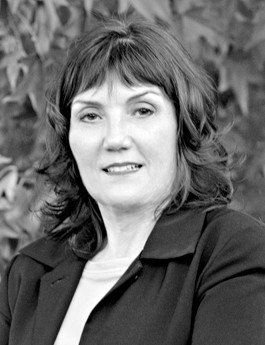
GENDER NUETRAL: Helen Grieco decided to learn self-defense after being attacked by another woman in the NOW offices.

If it can be said that such feminist figures as Simone de Beauvoir and Emma Goldman mastered their existence through the psychological, biological and political examination of their own gender, then surely Petaluma’s own Helen Grieco should be included in this company.

Grieco has had a lengthy career in feminist politics, spanning some 25 years, first taking root at the San Francisco chapter of the National Organization for Women (NOW) and eventually culminating in a high-ranking position as the executive director of the California state-wide chapter. Among her other projects, Grieco and her husband, Patrick Phair, founded an anti-violence organization, BRAVE (Building Resources for Anti-Violence Education) People, in which some 10,000 women have been trained in self-defense over the years.

On a recent day, Grieco answers the door while on the phone—this is a woman who is always on the go, and a snapshot of a day in Grieco’s life develops: fits of flurried activity driven by her continued clarion call to safeguard women.

Still talking on the phone, she hands over a copy of a poster titled “Women’s Words,” containing epithets relating to the female experience and words that are aimed to bolster female confidence. Her west Petaluma house is unassuming, the inside cozy, providing her husband and small daughter a safe and loving sanctuary, and it is inside this house, sitting on her couch, that we begin to talk, and evidence of her far-reaching triumphs are handed to me in the form of letters written by politicians Barbara Boxer, Lynn Woolsey and Dianne Feinstein.

Grieco’s background is an indivisible part of her drive for the reclamation of power, and her mannerisms, phrasing and unflinching directness derive from her Long Island origins. Hailing from a blue-collar Italian family, she describes some of the family dysfunction she experienced growing up. Recalling her mother’s background, Grieco says, “Later on, I found out that she had been raped when she was 15, and I think that sent her into classic promiscuity and all the aftermath behaviors that women suffer going through violence.”

Grieco’s mother was a victim of regular domestic violence at the hands of her father. Grieco recalls a time as a young child when she saw her mother being beaten by her father and told him to stop. “For me, that was the first moment in my life that I stood up to the abuse of power,” Grieco remembers. “And that’s how I would define my life. My life has been a long haul of dealing with the abuse of power.”

At age 12, Grieco and her mother fled to what Grieco refers to as a “shack” in upstate New York. It was there that the two were forced into a life of deprivation, where even such a basic provision as food was scarce. Grieco saw then the demoralizing effect this had on her mother. She recalls a time when her mother was almost at the end of her rope. “She said, ‘I’m a failure as a woman, I’m a failure as a mother, I’m a failure as a wife.’ When you’re 13, what do you say?”

Listening to Grieco talk about her history, the direct role fate and destiny and perhaps even a little divine intervention have played in helping to shape her life, described as “loops” by Grieco, was evidenced again when as a 22-year-old she arrived in San Francisco from the East Coast, narrowly escaping a job as a sex worker and instead landing a job as a waitress. Grieco’s tough-talking, no-nonsense ways built her reputation on Geary Street, where she worked at the Stage Deli on the graveyard shift from 7pm to 3am. “I worked [with] the pimps, the prostitutes, the drug addicts,” she remembers. “Everyone would go to the theater and then they’d come in to get their cheesecake and go home, and out would come the night crawlers. I was infamous on the street because I was just so scrappy—I’d say, ‘I’m not on the menu, asshole.'”

It’s easy to get the impression that Grieco has had 20 different lives. The individual arc that characterizes each of these lives has been punctuated by realizations and inspirations, as was the case when a philosophy instructor at San Francisco State introduced Grieco to Dr. Mary Anne Warren, a feminist and a philosophy professor. “I lit on fire,” Grieco says emphatically. “No one ever said ‘domestic violence.’ It was just like I had the bad family and my dad beat my mom, so it was massive consciousness raising—like this isn’t my fault, I’m just not from a bad family, there are political and social systems in place that perpetuate this kind of stuff. Women survivors are stockpiled in this society—I mean they’re everywhere.”

As her tenure as the executive director of California NOW, there was no shortage of tangible results stemming from Grieco’s hard-won achievements, including increasing the funding from $160,000 per year to $1.2 million, and being instrumental in changing family law legislation in California. And it is not only violence perpetrated by men that Grieco was a victim of; she bore witness to political in-fighting at NOW and acknowledges, “There were some very brutal things that happened in the hands of women in the organization.” A direct showdown at the S.F. NOW office almost found Grieco thrown out of a two-story window by another woman, inspiring her to learn self-defense.

Grieco now spends her time training women, girls and men in self-defense through the Defending Ourselves Self-Defense School she and Phair run, the BRAVE People organization, and the SHE (Safety, Health and Economic Literacy) Institute, which is specifically geared toward young girls. 

Speaking as if she’s addressing all parents who have daughters, she says, “You have got to get your daughters fundamental trainings—you need to teach them about safety, you need to teach them about healthy minds and bodies, you need to teach them about economic literacy. I don’t think that anything could be more clear to this society right here and now today than it was to me.” 

Helen Grieco is many things to many people: a catalyst, a daughter, a mother, an educator—an example.

To learn more about Grieco’s classes in self-defense, go to www.bravepeople.org.

Search for J. Raskin

0

the arts | visual arts |

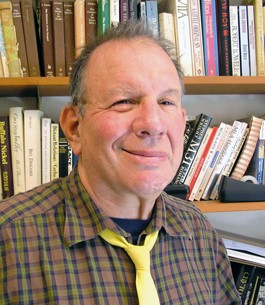
Photograph by Daniel Raskin
PROF: Jonah Raskin has been at SSU since 1981.

By Bart Schneider

Jonah Raskin has had a long and impressive career, and it shows no signs of ebbing. The 67-year-old communications professor  at Sonoma State University has published countless essays and reviews, as well as more than a dozen books. Beginning with the 1971 literary study The Mythology of Imperialism, Raskin has given himself a long series of hearty projects that have resulted in important books on Allen Ginsberg, Abbie Hoffman and, most recently, Jack London.

For my money, Raskin deserves canonization, if only for his extraordinary, sleuthlike 1980 biography My Search for B. Traven, which tracks the ghost of the elusive Traven, author of The Treasure of the Sierra Madre, throughout Mexico. Traven spent his last years in Mexico, and retains legendary status there; cab drivers amaze Raskin by quoting his lines.

After weaving his way through a wide circle of former Traven intimates in Mexico City, Raskin gets an invitation from his widow, Rosa Elena, to stay in her house, and there, surrounded by a lifetime of the author’s artifacts, he writes the biography. Raskin begins to lose his grip as he channels Traven. In a remarkable scene, Raskin dons the dead man’s clothes and glasses, and begins to wonder who he is.

In 2007, the book was translated into French (Á la Recherche de B. Traven) and published in France. Raskin, brought over for a series of readings, was delighted to encounter enthusiastic crowds in bookstores around France, where B. Traven is taken at least as seriously as Jerry Lewis. After every appearance, young people took Raskin out to drink and discuss the book further. It was the kind of reception he’s never had in this country.

In May, Raskin publishes a new book, Field Days: A Year of Farming, Eating, and Drinking in California, with University of California Press. The book provides a rich history of Northern California agriculture and features portraits of local luminaries from General Mariano Vallejo and Luther Burbank to M. F. K. Fisher and some of the latter-day pioneers of organic farming. Field Days also offers a personal account of Raskin’s year spent meeting local farmers, working in their fields and bringing produce to market.

When I ask Raskin to describe the arc of his career, he flashes me his gonif grin and says, “It’s been all downhill.” He explains that his journalism career began at age 15, writing high school sports for The Long Islander, the weekly newspaper founded by Walt Whitman in Huntington, Long Island. “Hard to top that.”

Raskin, who was co-captain of his high school football team and made Newsday‘s All-Suffolk County team in 1958, had his breakthrough in journalism when he wrote about the halftime goings-on at a game he played in. “Everybody loved the piece,” Raskin remembers.

But Raskin scoffs when I suggest that it was maybe he who invented New Journalism, the brand of participatory journalism associated with Hunter S. Thompson, Norman Mailer, and Tom Wolfe. “No,” he says, “Jack London was writing that stuff decades earlier.”

After his high school glories, Raskin chose to attend Columbia University, not for football but because that is where his Beat heroes, Jack Kerouac and Allen Ginsberg, went to college. After receiving his MA in American literature, Raskin moved to England and studied English and American literature at the University of Manchester.

Raskin’s first university teaching job was at the State University of New York, at Stony Brook, where he taught English lit. While on the faculty at Stony Brook, Raskin became involved in radical politics. He participated with Students for a Democratic Society in the occupation of Columbia University in 1968, and in 1970 had become Minister of Education for the Youth International Party (Yippies), whose co-members included Abbie Hoffman, Jerry Rubin and Paul Krassner.

Denied tenure at Stony Brook because of his militant activities, Raskin became, in his words, “a radical freelance journalist,” living on book advances and fees from articles and reviews.

In 1981, Raskin joined the SSU faculty, where he’s been the chair of communications studies since 1988. He especially enjoys teaching media law, a lecture course. When he describes the class to me, he gets that gonif grin back on his mug.

“I love it,” he says, “I get to perform.” 

Novelist Bart Schneider was the founding editor of ‘Hungry Mind Review’ and ‘Speakeasy Magazine.’ His latest novel is ‘The Man in the Blizzard.’ Lit Life is a biweekly feature. You can contact Bart at li*****@******an.com.


View All


Museums and gallery notes.


Reviews of new book releases.


Reviews and previews of new plays, operas and symphony performances.


Reviews and previews of new dance performances and events.

Pink Collar

03.25.09

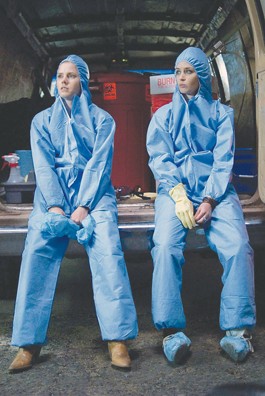
Starting with a suicide—a comedic one, in a sporting-goods store—the macabre Sunshine Cleaning maintains its light-hearted mood of loss and self-destruction to the end. The film emerged at the 2008 Sundance festival, and then it submerged, despite A-list stars Amy Adams and Emily Blunt.

In its present form, it appears badly trampled by studio executives with cold feet; the happy ending couldn’t have been more trumped-up if a game-show host wrote it. Odd that a movie about the job of cleaning would go so wrong when trying to clean up every loose end in the plot. And yet Sunshine Cleaning has some integrity even in its cut-up form. At its best, the film evinces that paradoxical quality one seeks in indie movies—that quality of being both shambling and well-built.

Part of what makes the film well-built is the Barbara Ehrenreich factor. Sunshine Cleaning seems very knowing about pink-collar work. In Albuquerque, N.M., Rose (Adams) is the single parent of an odd boy, Oscar (Jason Spevack). Rose works for a Merry Maids&–like outfit. She also keeps company with Mack, a married plainclothes cop (Steve Zahn) whom she meets in motels. Her sister, Norah (Blunt), has repeatedly flunked out of any job more demanding than babysitting Oscar.

After a session at the motel, Mack, sort of laying around and thinking aloud, recalls the big money the biohazard cleaners got picking up the pieces of a suicide at the sporting-goods store. Rose decides she knows enough about scrubbing to do such a job, and she recruits the feckless Norah to help. They are aided by a kind industrial-cleaning and supplies store owner named Winston (the Matt Dillonish Clifton Collins Jr., who played Perry Smith in Capote).

Cleaning up the vast ickiness of trailers and rented rooms, Adams and Blunt get to bounce off one another. And as it often does, the grossness gives way to pity—a pity that cancels out the girls’ own self-pity. But when Rose starts to meet up with some of her fancy former pals from high school, they are not as impressed with her small business. Meanwhile, Norah decides to track down and stalk Lynn, the grownup child of one of their dead clients, after finding Lynn’s photos in a trailer. But Lynn (Mary Lynn Rajskub) has an agenda of her own.

Sunshine Cleaning does without conventional romance, and that’s where it centers its integrity. New Zealand&–born director Christine Jeffs (Rain, Sylvia) has made a strongly impressionistic film; what one critic described as “available-light filmmaking” actually looks more like a motif: the colors of dried blood, pink concrete and the strange clutter of old people’s homes. Here, New Mexico looks less like the land of enchantment than the land of existentialism.

The film has an outsider’s skeptical view of settling down. From what’s here, it looks as if the Lynn/Norah angle was where the romance was meant to be, and that this faced some editor’s ax. The date Lynn and Norah go on together gets truncated right in the middle, as Norah is doing a session of “trestling”—clinging onto a railroad trestle as a train speeds overhead.

The angle of the Winston and Rose relationship is also left up in the air, which is more satisfying. The self-amused Winston has a hobby; when not selling cleaning supplies, he’s building military model planes. This isn’t easy, because he lost an arm under circumstances that we never learn, even though Oscar asks him bluntly how it happened, just like a little boy will. There is all sorts of backstory potential here. What a pleasure it is that director Jeffs decides to avoid it! Collins apparently has two arms in real life, but he looks more convincing than many fake amputees we get in the movies—he acts asymmetrical.


The independent cinema demands more backstories left up in the air. When we find out about Rose and Norah’s childhood, it’s unlikely as hell; you can practically hear a producer asking dumb questions like “Why does a girl as good-looking as Rose have such low self-esteem?”

The good thing about the rewriting and reshooting work on Sunshine Cleaning is that the renovation all shows; you can tell exactly where the compromises were made, know the obvious cowardly reasons why they were done, and we can overlook them in the bigger scheme of things.

‘Sunshine Cleaning’ opens on Friday, March 27, at the Rialto Cinemas Lakeside, 551 Summerfield Road, Santa Rosa. 707.525.4840.


New and upcoming film releases.

Browse all movie reviews.

Life and Limbs

03.25.09

The whole earth is alive, all of a piece, one living thing, a creature.

—Lewis Thomas

Trees are healers without words or borders. Beyond the stuff we take from them—the fuel, food, interspecies habitat, pharmaceuticals, lumber, beauty, shade and oxygen—there is a gift of presence that can’t be quantified. And anyone who has read the autographical works of Rachel Remen may recall one of her most humbling insights about being a psychologist: after long presuming her counseling clients got better because of her saying the right things, she realized they healed not by her insights and training, but her presence. As a nonjudgmental presence, she emulated a tree. (Coming from me, Ms. Remen, that is the highest of compliments.) A tree can help us to save this life we love. But only if we first put ourselves in its presence.

Trees in general seem merely a means to an end during this environmental crisis, their loss meaning a rise in global temperatures. Up in Canada, they are fighting over how to manage aging forests infested with pine boring beetles and vulnerable to increasing wildfires. Locally, many researchers want to stop the wood boring beetle infestations and the spread of sudden oak death. We desperately need to save the trees if we are to sustain life on earth.

But we need them for more than atmospheric thermostat adjusters and stuff providers. We need them because they restore us to ourselves in a way our hare-brained, digital communications cannot. A tree is connected morphologically and cosmically to something larger and deeper than private gains or political agendas. In fact, selflessness and political neutrality make trees powerful helpers in times of crises.

The French who organized Médecins sans Frontières more than 35 years ago—known to English speakers as Doctors Without Borders—saw the innocent die for being on the wrong side of some border, and “excluded from medical care.” These physicians aid victims of crisis in least 60 countries around the world, ignoring political boundaries. Other systems thinkers ignore the boundaries too, just as trees themselves do.

In a recent post on the Nature Conservancy blogsite, David Cleary proposed a cap-and-trade extension that includes tree saving beyond our political frontier. “Why not,” Cleary asked, “include a provision in the U.S. carbon trading system that allows U.S. companies to gain carbon credits for offsets in Latin America?” He points out that North America, too, will suffer if the Amazon goes. The Germans are ahead of us in thinking beyond their borders to extend cap-and-trade benefits to preserve trees in the Andes. Whatever we do elsewhere to keep the trees in the ground will buffer climate change here. 

If we keep this up, soon everyone will accept the biological and spiritual concept that everything is connected to everything else, like the healing power of just one tree up close and personal. Pick just one and spend some time beside it. Turn off the cell phone and experience time differently, as tension eases, lost peace is restored, answers float to the surface. Trees nurture the health and well-being of humans everywhere.


For a species that can’t read, trees practice the key medical-ethics principle primum non nocere, or “first, do no harm.” And they ignore the borders imposed on them. They even ignore the boundaries we impose inside ourselves, including, “I’m too busy to sit by the last tree on earth. I have to answer these emails.”

The healing tree in my life happens to stand close by. In my creekside backyard is a towering California Bay Laurel with a trunk measuring 249 inches—the largest individual I’ve seen anywhere in the North Bay. It grows half on my neighbor Ray’s property and half on mine, curving like a trident hand over the small house Ray’s father built in 1942. Ray keeps the old house as a weekend retreat in memory of his dad and of his childhood spent on the creek.

Ray and I, though from different generations, share an intense love of trees. And inexplicably, this bay laurel seems to love us back. Talk about presence. Maybe because it has lived so long in a hallowed spot and grown to such gargantuan proportions, it seems sentient to me. But in its presence, my mind clears and I am glad to be alive and a part of everything else.


Silent Scream

0

03.25.09

Done.

That is the best way to describe how I feel right now about where my country has gone. I am tired of lying politicians of all stripes. I am tired of idiots on Wall Street who for the love of the Almighty just don’t get it. So in the words of the great Harvey Milk, “I am here to recruit you.”

Are you tired of politics as usual? Are you sick of reading stories about the polluted stream of money flowing into D.C. and fleecing the hard-working, taxpaying citizen? Feel repulsed by the growing disconnect between our moral responsibility to one another and our government’s servitude to the moneyed few? Sick of being told who “serves” the right God? Then maybe you are ready to join M.O.T.H.E.R.P.H.U.C.K.E.R.S. for America!

We are Morally Outraged Tired Hard-Working Empowered Reasonable People Hoping for Urgent Change and Knowledge Equating to Real Solutions. That’s right, we are M.O.T.H.E.R.P.H.U.C.K.E.R.S.!

Just about everyone has been or will be at some point in his or her life part of the M.O.T.H.E.R.P.H.U.C.K.E.R.S. whether they know it or not. That is the beauty of the whole idea. We are Democrats (tax-and-spend liberals), Republicans (book-burning, science-booing, fear monkeys), Independents (can’t make a decision or a commitment), seniors (old farts), new voters (uninformed idiots with power), white-collar workers (cubicle slave whores), blue-collar laborers (knuckle draggers), religious folk (terrified of Hell), spiritual seekers (been to Hell and back) and many other voices from the cacophony of our national political discourse.

We are Republicans tired of arguing about a woman’s right to choose. We are Democrats who understand that not all corporations are bad. We are Americans who aren’t afraid of two women marrying, of teaching evolution and science in our schools, of seeing actual healthcare become a universal right for all Americans. We aren’t afraid of God in the public conversation, just don’t want the Almighty used to persecute or punish our fellow citizens. We are people tired of being pandered to by politicians of either party. We are sick of Republicans falling to their knees for big business and of mealy-mouthed Democrats’ spineless platitudes in the face of real decisions.

We are Americans sick of the people’s business and welfare being substituted for that of corporate succor. We have grown exhausted by the daily excess exhibited by the Wall Street financial “wizards,” who turned out to be nothing more than self-serving, indulgent, megalomaniacs who have wrecked the American dream for so many. We are fed up with electing supplicant politicians who forget who they serve. We are enraged by the continued boot-licking, ass-kissing and government welfare offered to those who most benefit from our society but contribute so little to it.

M.O.T.H.E.R.P.H.U.C.K.E.R.S. adhere to a code of equality and unfettered fairness. We believe in tax breaks that can be taken by all, or should never become law. We demand a legal system that believes not just in revenge but also redemption. Of a school system that teaches all students whether they want to go on to college or become auto mechanics. A society in which no veteran will ever have to sleep on the streets.

We will not ever endorse a political candidate. We will never hold a convention or air a commercial vilifying one side or the other. We are a silent majority of Americans who are not blindly loyal to one party or platform. Instead we hold to an ideal.

These are but some of the principles we hold dear to our hearts. We keep the preamble of the Constitution as the light by which we see the world and keep our own counsel. We know that this will call for sacrifice, which we are prepared to make.


Are you ready, willing and able to become part of the M.O.T.H.E.R.P.H.U.C.K.E.R.S. for a better America and a better tomorrow?

Sean Wall is a currently unemployed (and secretly enjoying it) Sonoma County native and political junkie who hastens to add that he is stunningly handsome, single and gay.

Open Mic is now a weekly feature in the Bohemian. We welcome your contribution. To have your topical essay of 700 words considered for publication, write op*****@******an.com.


Good ‘Book’

0

03.25.09

For fans of live theater, there are few things more exciting or nerve-racking than the world premiere of a brand-new play by a first-time author. They are exciting because without a constant stream of new plays into the pool—and new authors to write them—theater would have no future, and the appearance of a new play, any new play, is a sign that theater is alive and well. What’s nerve-racking are those very words “new” and “first-time.” We often presume that the work of a “first-time” playwright will seem amateur and unpolished. And when that first-time author is local, someone we might even know, then the stakes are even higher.

With The Book of Matthew, the debut effort by Sonoma County playwright Gene Abravaya, well known for years as an actor, director and theater marketing expert, there is every reason to be excited and (whew!) absolutely no need for polite concern. The Book of Matthew is an assured and emotionally rich delight. This lovely and affecting autobiographical comedy-drama, launched last weekend with a first-rate production by the Pacific Alliance Stage Company, marks the debut of a significant new voice, one that has already been heard outside Sonoma County; The Book of Matthew has just been selected as the 2010 Studio Theater season-opening play of the Old Town Playhouse in Traverse City, Michigan.

The PASCO production of Matthew, with an exceptional cast that is as adept at the play’s many comedic moments as it is honest and effective in the dramatic twists and turns, easily ranks as the best show to date in PASCO’s current season, with fine, perfectly paced work by director Hector Correa, who also gives a charming, multilayered performance in an important supporting role.

Matthew Liebowitz (Tim Kniffin, superb and perfectly cast) is a bitterly witty, barely employed New York novelist, making pizzas by day while sweating out the fate of his long-in-the-works first novel, which has been rejected by every major publisher but one. He has recently separated from his wife, Maggie (a wonderful Jennifer Coté), a soap opera actress who clearly still loves her husband but misses the hopeful, generous man he used to be.

Depressed and broke, reduced to drinking sour milk and eating days-old pizza, Matthew reluctantly agrees to watch over his aging, irascible father, Howard (the great Will Marchetti, giving another in a long string of inventive performances), who’s become all but mute since the death of his wife, giving only grunts and single-syllable responses to his family’s desperate attempts at conversation.

Matthew’s high-strung bookkeeper brother, Robert (well played by Jeff Coté), is frustrated at Matthew’s stubborn commitment to writing the Great American Novel (Matthew once had a great-paying job writing for Maggie’s soap opera but concluded that it was beneath him), while Robert’s whirlwind of a wife, Karen (a hilarious Priscilla Locke), is baffled that her brother-in-law can’t see that his wife still loves him. Reluctantly, Robert and Karen leave the elder Liebowitz in Matthew’s care to embark on a long-delayed vacation.


The first act, with its situation-based comedy and clever one-liners (“My wife didn’t leave me because I’m a slob. She left me because I’m a neurotic slob!”), reveals Abravaya’s former career working as a stage manager and producer of Hollywood sitcoms, but there is remarkable depth and potency to the story’s loving, second-act tidal wave of emotion, as Matthew and Howard engage in long overdue father-son combat, made all the more astonishing by Howard’s reluctance to use actual words to convey his feelings. Abravaya, while peppering the play with laughs, never shies away from strong, dramatic revelations, some of the best coming from Correa as Vincent Alcedo, Matthew’s gay, middle-aged, chorus-boy neighbor, with whom Howard forms an unlikely bond.

With this solid, entertaining production, Abravaya and company movingly examine the pain and frustrations of lifelong dreaming, and the cost—and intermittent rewards—of hoping against hope. For Abravaya, who finally gets to demonstrate his considerable skill as a playwright, the payoff has been well worth the wait.

‘The Book of Matthew’ runs Thursday&–Sunday through April 12. Thursday at 7:30pm; Friday&–Saturday at 8pm; Sunday at 2:30pm. Spreckels Performing Arts Center, 5409 Snyder Lane, Rohnert Park. $17&–$24. 707.588.3400.


Museums and gallery notes.

Reviews of new book releases.

Reviews and previews of new plays, operas and symphony performances.

Reviews and previews of new dance performances and events.

Grape Camp

0

03.25.09

Hello, Muddah . . . Hello, Faddah . . . Can we please have . . . more Bonarda? 

It was barely past dawn, and as we lined up along the dirt path leading to the immense acres of fruit waiting to be plucked, our boss barked his orders. It was bone-chillingly cold in the Alexander Valley vineyards of Sonoma County, and the late September fog bit through our light jackets. The dark skies portended rain, and as we curled our frozen fingers into well-worn gloves, Hoot Owl Creek owner Mark Houser laid it all out.

Only ripe grapes were to be gleaned. A professional worker is able to tell if the sugar content is correct simply by the stickiness in his hand. A skilled harvester takes in up to a ton and a half of fruit a day. Houser was personally counting each grape, he said, since the Cabernet being plucked was destined to be $40-a-bottle wine for some of the nation’s best restaurants.

This wasn’t just fruit, he said. This was a future.

He called us back in barely an hour later, shaking his head gravely as he peered into the heavy plastic tubs we’d lugged down the long vineyard rows. We’d crouched, shuffled and hacked furiously with sharp knives, yet we had cleared perhaps 10 pounds each, a weight littered with stems, leaves, raisins and unripe berries. We’d left perfectly good grapes on the vines and dropped more good grapes to rot on the ground.

He sighed. We were worthless.

Then, as the first rays of sun peeked through the clouds, Houser puffed deeply on his cigar and decreed our punishment.

It was back onto the heated, luxury charter bus for us. Off to see the inner workings of barrel and tank rooms at the by-appointment-only Jordan Winery in Alexander Valley, where we would muse at how much work it takes (other people) to run a winery, then undergo an arduous tasting of fine Chardonnay and Cabernet Sauvignon alongside premium Sonoma-crafted cheeses, breads and chocolates.

Next, we would be bussed to the Francis Ford Coppola Rosso & Bianco winery in Geyserville, where we would marvel as trucks dumped grapes into sorting and stemming equipment, mere steps from a very distracting gift shop.

Then, as a reward for our great efforts, we would tuck into an al fresco, white tablecloth lunch of flat-iron steak and lamb chops marinated in Coppola’s Diamond Merlot, grilled fennel sausage homemade by a local artisan purveyor, and roasted farm-fresh vegetables all paired with Coppola’s Director’s Cut Zinfandel.

Welcome to Sonoma County Grape Camp, a two-and-a-half day, hands-on adventure held smack in the middle of harvest season. We were Grape Campers, a group of 31 people who had signed up for an intense immersion into the world of wine.

For someone who’s spent a lot of time around wine (even if mostly on the business end of a glass) and lives across the street from a vineyard, it seemed it would be just a silly romp. We wine country types already know that while imbibing wine is luxurious, the process of getting it from ground to glass can be long, laborious and as detailed as any science project. It isn’t cheap, either—tuition for my trip was $1,500 per person; for the 2009 season, it’s $1,750. What, pay to pick grapes? Um, no, you pay me.

Yet by just its second year of operation, Grape Camp has already proven irresistible to amateur enophiles, with sold-out sessions drawing participants from as close as Nevada and Texas, and as far away as Virginia and New York. Call it culinary tourism or, as I quickly coined, “vintnertainment.” It was educational. And it was a blast. If our days started at dawn in a winery field, they ended past midnight, after elaborate feasting and much drinking at another winery.

“Lots of people have a dream of experiencing a grape harvest,” explained Sonoma County Winegrape Commission marketing vice president and camp director Larry Levine as we rode our bus past such multimillion dollar properties as White Oak, Hanna and Simi wineries. “Here, they can do that in style. It truly is a fantasy camp.”

Fantastic, indeed. Besides sipping many exclusive labels rarely seen outside of private allocations, campers gain entrance into an insider’s-only wine experience that few of the public will ever glimpse. At one point, I glanced up from a dessert of local apple-huckleberry crisp to see that my server was Gina Gallo.

And did I mention much drinking?

Our first glass was lifted at an opening-night wine reception at Vintners Inn, nestled among the Ferrari-Carano vineyards in Santa Rosa. Then we were chauffeured to the private Frei Brothers Reserve Winery in Healdsburg for a sunset feast on a sprawling lawn above the vines. Zazu restaurant’s Duskie Estes and John Stewart presented handcrafted Black Pig salumi and whole spit-roasted pig, paired with 28 different coveted Sonoma County wines.

Stuffed, sleepy and, yes, drunk, we were led back to Vintners Inn to snore the snores of the wicked in a luxury suite.

The next day, after our morning at Hoot Owl, we convened back at the Vintners, where legendary Sonoma chef and cookbook author John Ash conducted a cooking and wine-pairing class. The secret to great wine and food matches? In a nutshell, Ash said, it’s balancing sugar and acid. And the secret to his chilled heirloom tomato soup with a swirl of salsa verde? His finishing instruction: “Drizzle it on your loved one, andtake them.”

The evening found us at Kunde Family Estate in Kenwood, supping on braised short ribs and velvety polenta served deep inside a barrel-aging cave. Drink up, our hosts said, though urging us not to get lost in the catacombs, centered 175 feet below the surface of the 5-million-year-old volcanic lava flows that are the vineyard’s bedrock.

Early the next day, we were back amid the vines at dawn, picking grapes at boutique grower Ulises Valdez’s vineyards in Green Valley. We hand-grafted buds, learned the secrets of irrigation and then moved on to stomping grapes at the Valdez Family Winery warehouse in Santa Rosa, where we turned sticky waltzes through a soggy slosh of Syrah. As we danced, we drank—our first glass of the day at 10am.

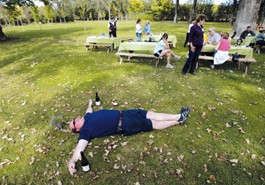
For one second-time Grape Camper from Sacramento, it was all almost too much. She’d smuggled out an open bottle of Syrah, and chugging it on the bus to our next destination, shrieked, “I already can’t wait for next year!”

The afternoon found us lolling at Richard’s Grove & Saralee’s Vineyard in Windsor, sprawled on a lush, green lawn for a picnic lunch of Bellwether Farms fromage blanc torta and tri-tip sandwiches from Healdsburg’s Relish Culinary Adventures. There, we learned the apparent effortlessness of founding an international goat cheesery: Bellwether owner Cindy Callahan shared that she had never seen a live sheep, but purchased 10 ewes and a ram to graze pastures, and by happenstance ended up with the delicacy cherished by Berkeley’s famed Chez Panisse, and now, the world.

We weren’t done quaffing, either. Next was a Champagne and hors d’oeuvres “graduation” at John Ash & Co. restaurant in Santa Rosa, followed by an “ultimate” Pinot Noir dinner personally hosted by some of Sonoma County’s most exclusive wineries, including Flowers Vineyard & Winery of Cazadero, and Dutton-Goldfield of the Russian River Valley.

A near-endless stream of Pinot was poured alongside Sonoma specialties such as tea-smoked duck breast with goat cheese croutons, pan-fried California sturgeon on lentils and roasted venison loin with fig gastrique.

As we ate, guest vintner Tom Hinde raised a glass of his Flowers Andreen-Gale 2005 Pinot Noir, and said, “We have definite studies that Pinot Noir drinkers have a 15 percent higher IQ than Cabernet Sauvignon drinkers.”

IQ who?

Sonoma County Grape Camp 2009 runs Sept. 21&–23 and is already half sold-out. Cost is $1,750 per person or $3,500 per couple, and includes lodging, meals, tastings and activities. A locals package is available for campers not needing lodging. 707.522.5860. www.sonomagrapecamp.com.


Quick dining snapshots by Bohemian staffers.

Winery news and reviews.

Food-related comings and goings, openings and closings, and other essays for those who love the kitchen and what it produces.

Recipes for food that you can actually make.

It’s Spring Again

1

Bright sun and bloomin’ flowers got me singing this song, same as every year. Lyrics are easier to remember than “It Might As Well Be Spring,” weirdly enough. Do golf and hip hop have a place together in anyone else’s mind out there? Yo, Biz: let’s hit the fairgrounds and play nine, you beautiful nut, you.

[display_podcast]

(P.S. Just picked up the Cold Chillin’ reissue of Master Ace’s Take a Look Around and yes, the 4xLP format is unwieldy but damn if every single side ain’t perfect right now.)

Live Review: Heatwarmer at Matrix

4

“When they first started playing, I couldn’t tell if it was the wackest shit ever or the most punk rock thing I’d ever seen.”
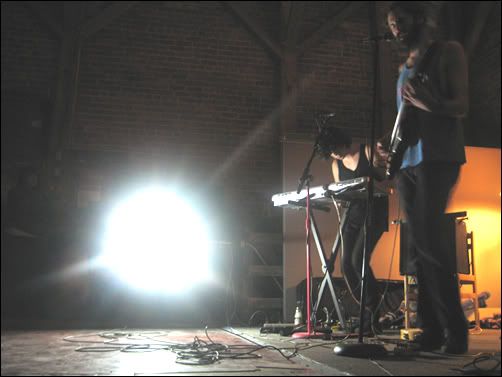
I gotta ride with my friend Josh on this one, who did eventually determine the latter. From Seattle, Heatwarmer set up in the cavernous room of Matrix in Petaluma and, before they’d played a note of their “songs,” noodled for 10 minutes or so in the most fantastically addictive way. “I hope this is their set,” I told Shane, hopelessly. “It sounds like the Wired Guitar God Parodies,” he replied, acutely.
Though the noodling was not their set, it was close. Galaxie 500 meets Mr. Bungle meets Raymond Scott meets Phish meets Quasi meets a slowly accumulating cadre of won-over appreciation on the faces of everyone at Matrix. At one point I zoned out on the keyboard player, who wore some kind of medallion around his neck, pondering how he’d memorized all the augmented chords and dexterous runs, when I realized that the electric clarinetist was unreeling the same in unison.
Grappling with an initial sense of confusion, springboarding either into “good” or “bad,” makes the final result that much more concrete. It’s why I don’t recreationally listen to much pop radio, and why Heatwarmer was, in a mentally interactive way, so positively and weirdly thrilling. Check them out here.

Do You Underfuckingstand?

1

Courtney Love writes in her blog on MySpace. Courtney Love does not have an editor. Courtney Love asks her computer a lot of questions. Courtney Love exists on Mars.
Courtney Love is very amusing to me right now.
From her MySpace blog, March 18:
there are 27 TWENTY SEVEN Cobains inthe USA< there are no other people named Kurt and there is certainly not a name “KOBANE” AS IN DAWN CICCONE KOBANE. KAY?


NOW there are NO cobains in Ohio or New Jersey,
ALL of the people show including the 103 year olds ( when theres 50 that means there are tons more we were just looking at Cobains over 100 years of age, there are none so these peopel ALL HAVE PROPERTY< they all own PROPERTY, there are 1000s and 1000s of these using my and my daughters surname ( they have to to purchase the fraudelent property they have to show a forged POWER OF ATTORNEY to some batty old lady in the the county title office are you WITH ME?)
i am fucking SHOCKED to see the STUPIDIDTY of some of your comments. really “kurt will always be no 1” what the Fuck? are you fucking BRAINDEAD?
Kurt is DEAD. yet he owns under his ssn over 2000 properties, under a few other names even more, do you get it?
they stole HIS money were forced to use HIS surname and bought REAL property
do you UNDERSTAND?
DO YOU UNDERFUCKINGSTAND?
to show you much else would make you start singing i dont know,….Metallica? am i speaking to BEAVIS AND BUTTHEAD?
HAVE YOU EVER READ A BOOK?
ONE?
DO YOU REALISE WE ARE IN A DEPRESSION?
DO YOU UNDERSTAND THAT ROCK AND ROLL IS AN INDUSTRY WHERE ALOT OF MONEY GETS STOLEN? ( EG HENDRIX FAMILY 280,000,000$)? DO YOU?
ARE YOU YET UNDERSTANDING THAT THE FAMILY, THE MOTHER, SISTERS, HALF BROTHER AND DAUGHTER OF KURT COBAIN HAVE HAD EVERY PENNY STOLEN AND PUT INTO CRAPPY ASSED PLANNED UNIT SUBDIVISIONS, LOOK AT “CARMEN”
DO YOU THINK THAT THERE IS A CARMEN? IN THE WORLD? COBAIN? THERE IS NOT.
AS STATED THERE ARE NO COBAINS OF ANY VARIANT IN OHIO OR NEW JERSEY,
ARE YOU FUCKING BRAINDEAD?
MORTGAGE FRAUD IS A 4 TRILLION DOLLAR A YEAR INDUSTRY,
DO YOU THINK THAT 103 YEAR OLD COBAINS WHO HAVE LIVED AT ONE ADDRESS FOR 103 YEARS EXIST?
do you?
do YOU?
4 TRILLION A YEAR INMORTGAGE FRAUD.
DO YOU UNDERSTAND?

Woman Warrior

03.25.09 GENDER NUETRAL: Helen Grieco decided to learn self-defense after being attacked by another woman in the NOW offices. If it can be said that such feminist figures as Simone de Beauvoir and Emma Goldman mastered their existence through the psychological, biological and political examination of their own gender, then surely Petaluma's own Helen Grieco should be included in this company....

Search for J. Raskin

the arts | visual arts | Photograph by Daniel Raskin PROF: Jonah Raskin has...

Pink Collar

03.25.09 Starting with a suicide—a comedic one, in a sporting-goods store—the macabre Sunshine Cleaning maintains its light-hearted mood of loss and self-destruction to the end. The film emerged at the 2008 Sundance festival, and then it submerged, despite A-list stars Amy Adams and Emily Blunt. In its present form, it appears badly trampled by studio executives with cold...

Life and Limbs

03.25.09The whole earth is alive, all of a piece, one living thing, a creature.—Lewis Thomas Trees are healers without words or borders. Beyond the stuff we take from them—the fuel, food, interspecies habitat, pharmaceuticals, lumber, beauty, shade and oxygen—there is a gift of presence that can't be quantified. And anyone who has read the autographical works of Rachel Remen...

Silent Scream

03.25.09Done. That is the best way to describe how I feel right now about where my country has gone. I am tired of lying politicians of all stripes. I am tired of idiots on Wall Street who for the love of the Almighty just don't get it. So in the words of the great Harvey Milk, "I am here...

Good ‘Book’

03.25.09For fans of live theater, there are few things more exciting or nerve-racking than the world premiere of a brand-new play by a first-time author. They are exciting because without a constant stream of new plays into the pool—and new authors to write them—theater would have no future, and the appearance of a new play, any new play, is...

Grape Camp

03.25.09Hello, Muddah . . . Hello, Faddah . . . Can we please have . . . more Bonarda? It was barely past dawn, and as we lined up along the dirt path leading to the immense acres of fruit waiting to be plucked, our boss barked his orders. It was bone-chillingly cold in the Alexander Valley vineyards of Sonoma...

It’s Spring Again

Bright sun and bloomin' flowers got me singing this song, same as every year. Lyrics are easier to remember than "It Might As Well Be Spring," weirdly enough. Do golf and hip hop have a place together in anyone else's mind out there? Yo, Biz: let's hit the fairgrounds and play nine, you beautiful nut, you. (P.S. Just picked up...

Live Review: Heatwarmer at Matrix

"When they first started playing, I couldn't tell if it was the wackest shit ever or the most punk rock thing I'd ever seen." I gotta ride with my friend Josh on this one, who did eventually determine the latter. From Seattle, Heatwarmer set up in the cavernous room of Matrix in Petaluma and, before they'd played a note of...

Do You Underfuckingstand?

Courtney Love writes in her blog on MySpace. Courtney Love does not have an editor. Courtney Love asks her computer a lot of questions. Courtney Love exists on Mars. Courtney Love is very amusing to me right now. From her MySpace blog, March 18: there are 27 TWENTY SEVEN Cobains inthe USA< there are no other people named Kurt and there...
11,084FansLike
4,446FollowersFollow
6,928FollowersFollow