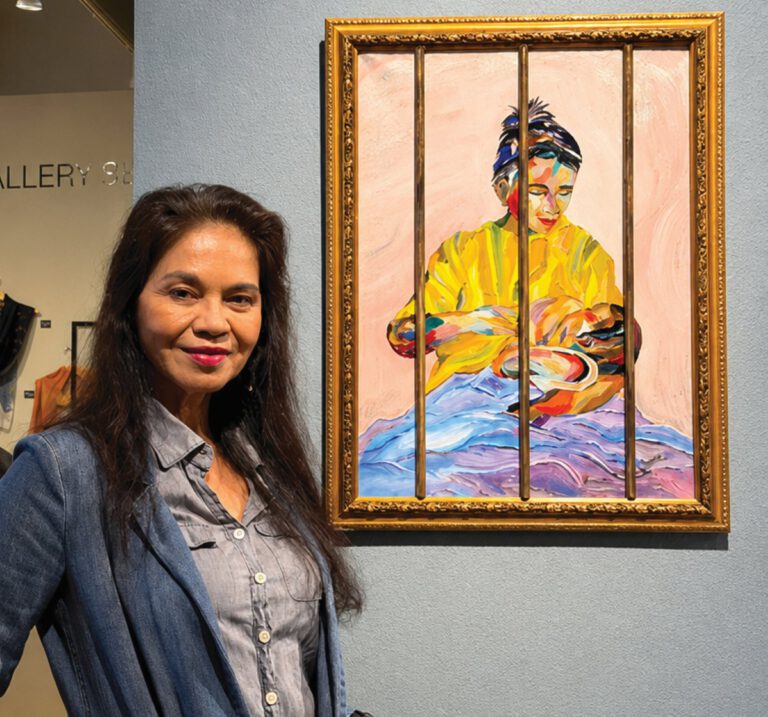
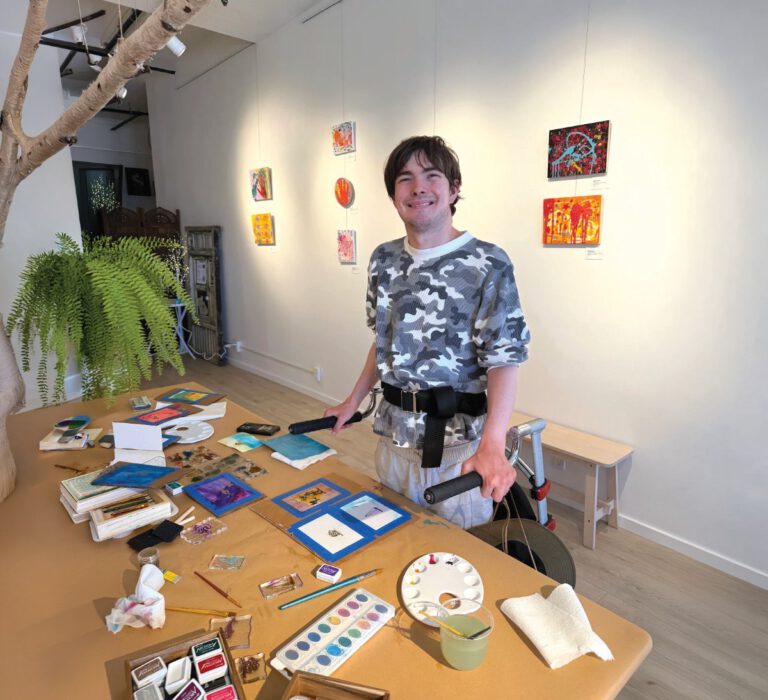
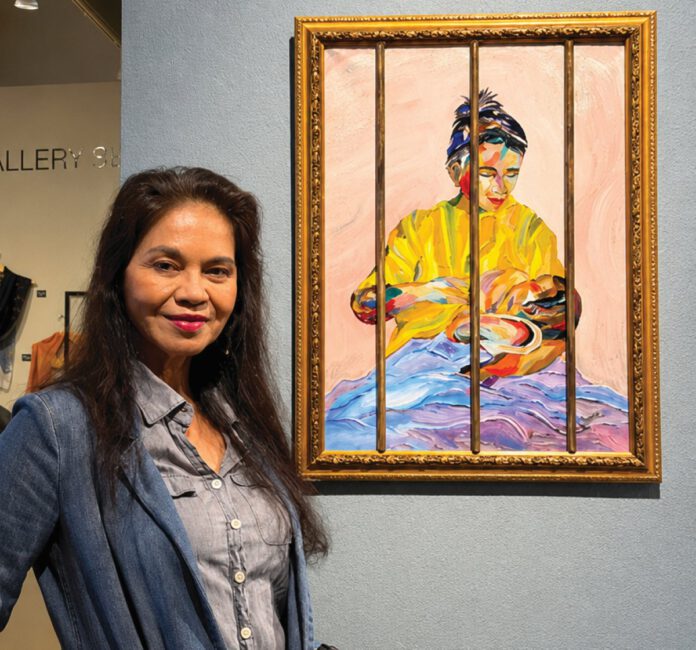
After nine years of living in Sebastopol, local mosaic artist-slash-international actress Maria Isabel Lopez has her first local art exhibit Sept. 8 through Oct. 18 at Petaluma’s Usher Gallery, with a reception from 5 to 8pm, Saturday, Sept. 12.
The exhibit, titled “Illumination in Glass—the Mosaic Art of Maria Isabel Lopez,” was planned for July, but Lopez’s involvement in a serious car accident in the spring pushed it to this new date. However, much like the fragile yet resilient glass used in her work, the forced slow-down was cause for Lopez to take it easy, heal, reflect and perhaps refract, changing a negative experience into a positive one.
“The accident was very serious,” says Lopez. “I had to slow down, but the drive to create is activated… The process of healing is working our mind, body, emotion and the spirit. This incident made me more creative as I learned, heard and was led closer to the ‘forces’ behind it.”
Hailing from the Philippines, Lopez credits much of her creativity to growing up in the impoverished area of Balic-Balic. “I created my own toys, designed my own clothes from hand-me-downs… recycled food … and I am grateful [for that experience],” she explains.
Her life growing up in the Philippines is also on display in the exhibit via an early mosaic piece using organic found materials like sand, pebbles and glass from her native land. Lopez says this is “to show my evolution as a mosaic artist.” She also quickly adds, “It’s not all glass mosaics [but] mainly glass, despite it being rigid, sharp and unforgiving. It’s because no other medium interacts with light, preserves the rich colors and offers lifetime durability like glass does. It requires time, patience, precise labor to cut and shape a few cc’s of blood, but the rewards heavily outweigh the difficulty.”
Digging deeper, Lopez continues, “By introducing raw, natural elements to the art, utilizing this ancient art form with a contemporary approach, I aim to glamorize the discarded and the organic. It is a through-line of taking the Earth’s raw beauty and illuminating it.”
Indeed, Lopez talks the talk and walks the walk as a creative person—it’s genuinely refreshing to hear because it’s evident she means it. While her home is in Sonoma County, she sort of leads a double life as a fairly well-known actress in her native Philippines, with well more than 100 credits as both a star and a producer. Yet she remains extremely down to earth, saying, “Waking up, I focus on a new day, a new life, connected to a supreme power that whispers, that leads, that inspires.”
From there, she sets about her day, be it creating her art, acting, arranging flowers or cooking from the vast garden behind the 1850s farmhouse in Sebastopol she shares with her husband, John Melrod, a human rights attorney.
Usher Gallery owner Rachel Usher is excited to showcase Lopez’s work, saying, “One of the joys of having a gallery is discovering artists through other artists. Virginia Travers, one of our artists and a longtime friend of Maria Isabel Lopez, introduced us, and I immediately fell in love with Isabel’s work. We’re so excited to bring ‘Illuminations in Glass’ to Usher Gallery and introduce her work to our community.”
Although the exhibits title leans in to one of Lopez’s more commonly used mediums, she’s quick to point out the title is more of a thesis statement and that “the art is bound together by reflection and refraction, not just in how light physically moves through glass but in how we look at the world around us.” She continues, “Refraction: Using glass to bend and manipulate light, I transform a static piece into a living, shifting experience. Reflection: I want viewers to look at my work and see a reflection of the environment.”
For more information on ‘Illumination in Glass—The Mosaic Art of Maria Isabel Lopez’ at Usher Gallery, 1 Petaluma Blvd. N., Petaluma, check out ushergallerypetaluma.com.
We live in a time when the need to attract an ever-dwindling audience to live theater often leads to a company programming the latest Hollywood-style spectacle or musical adaptation of a well-known movie or television series. It’s either that or the old tried-and-true and very familiar. Shakespeare, anyone?
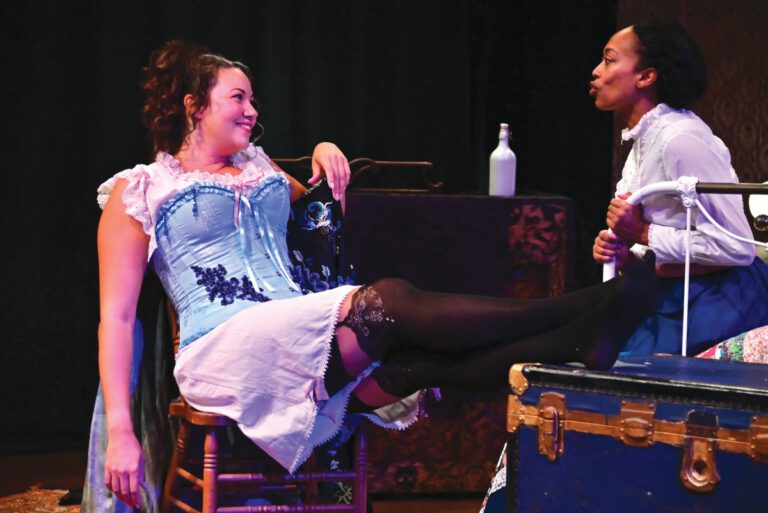
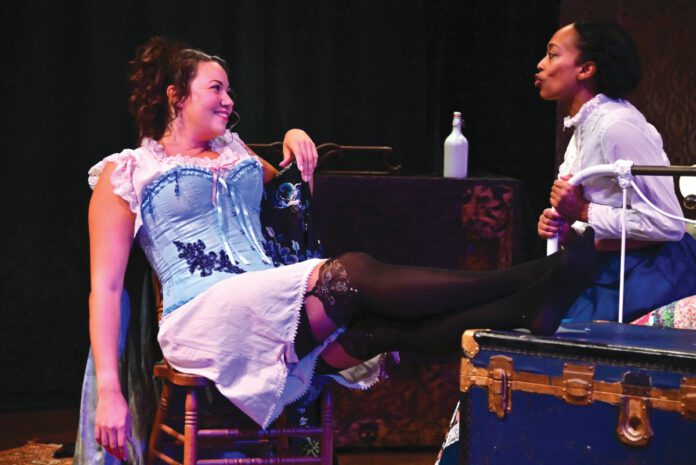
It’s good to be reminded every now and then of the power of simple, original storytelling to engage an audience and to encourage its production. So it is with Mercury Theater’s presentation of Lynn Nottage’s turn of the 20th-century drama Intimate Apparel. The show runs in Petaluma through Sept. 13.
Nottage has woven a tale of longing, love and loss set in the world of seamstress Esther Mills (Noell Webber). Esther is a hard-working woman who’s found success crafting beautiful undergarments that appeal to both ladies of high society like Mrs. Van Buren (Maddi Scarbrough) and ladies of the evening like Mayme (Mercedes Murphy). Esther’s dream is to open a beauty salon for Black women, and she has saved all of her income for 17 years to do so. She also dreams of marrying one day.
That dream becomes possible after she begins a correspondence with George Armstrong (Isiah Carter), a Barbadian man working on the Panama Canal. He heard about Esther from a co-worker and reached out. Esther, unable to read or write, seeks assistance from Mrs. Van Buren in maintaining the correspondence.
The courtship by mail continues till George arrives in America. They are soon married, and their dream life together begins. Reality quickly sets in.
While the basic plot may sound familiar, Nottage subtly injects elements that give the piece a richness and depth that gives us a better understanding of the life and opportunities (or lack thereof) for a young, unmarried Black woman in post-Civil War, pre-Civil Rights America.
It’s actor Leontyne Mbele-Mbong’s second directorial effort, and she shows a deft hand, faltering only with some questionable blocking choices for one character’s first act entrances.
Webber is absolutely heartbreaking as Esther. Carter continues to display why he’s one of the finest young actors working in the area today. Murphy and Scarbrough both give very layered performances. Good character work is done by John Browning as a Hasidic cloth merchant with whom Esther has a deep but impossible to explore connection and Layce Lynne Kieu as a busybody boardinghouse proprietor.
Intimate Apparel is a quiet drama that deserves the noise that comes from the applause of an appreciative audience.
Mercury Theater presents ‘Intimate Apparel’ through September 13 at 3333 Petaluma Blvd N, Petaluma. Thur, 09/03 @ 7:30 pm, Fri, 7:30pm; Sat & Sun, 2pm. $20–$35. 707.658.9019.mercurytheater.org
There are certain words whose meanings have been loosened through overuse. “Community” is one of them. “Festival” might be another. And then there is “Porchfest,” which at least suggests where it ought to happen.
On a porch.
That distinction matters to Greg Ceniceroz, better known around Sonoma County simply as Ceni, the principal organizer behind Sebastopol Porchfest. The festival returns for its third year on Saturday, Sept. 12, this time occupying Belmont Terrace, a walkable four-block neighborhood near the Community Church of Sebastopol and Ragle Ranch Regional Park.
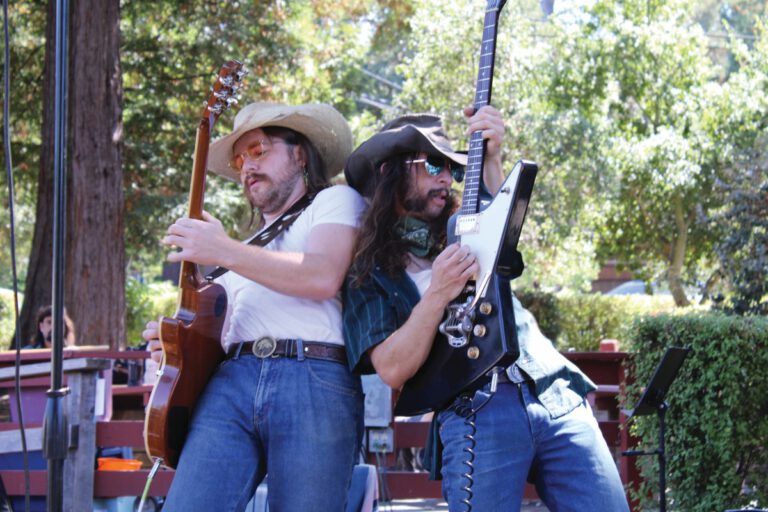
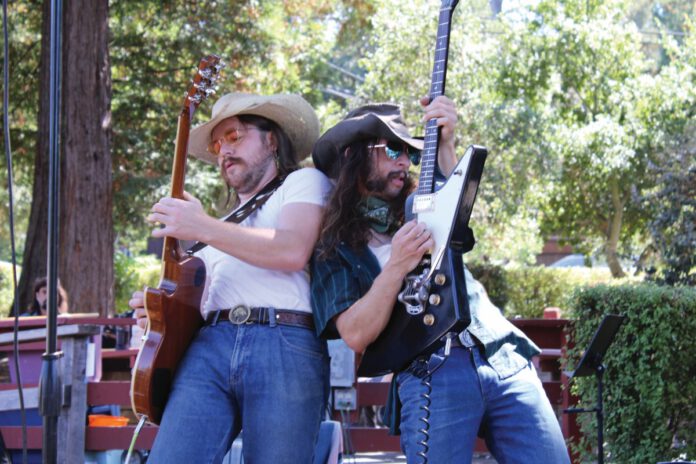
More than 50 local acts will perform across 10 stages installed on porches and driveways from noon to 6pm. It is free. There will be food trucks, local sponsors and folding chairs. But the essential ingredient is considerably less marketable: other people’s houses.
“What promoted the change is that we really wanted to be back on porches, where any self-respecting porchfest belongs,” Ceni says.
Last year, the festival moved into Ives Park at the city’s request, perhaps, he figures, because the fledgling event had become a victim of its own success. But relocating created an existential question for organizers. Were they producing another music festival? Or were they producing a Porchfest?
“Seriously, it sounds trite, but when the city wanted us to move into Ives Park last year—perhaps because we were victims of our own success—we had to do some soul-searching to determine if we wanted to put on a festival in a park or a legit porchfest,” Ceni notes. “We chose the latter because what we want is to create and enhance the community where the community actually is.”
It’s easy enough to assemble people in a designated entertainment zone, give them wristbands and point them toward the porta-potties. It’s something else to temporarily transform the ordinary geography of daily life—the driveway where somebody washes the Subaru, the porch where Amazon packages accumulate, the street where kids learn to ride bicycles—into a cultural commons.
“We didn’t want another music festival in a park,” Ceni says. “The beauty of Porchfest is that you’re actually in a neighborhood, in people’s driveways and porches. That’s about as close to the community as you can get. So, we decided that’s where we belong.”
Belmont Terrace appears particularly suited to the experiment. The neighborhood, behind the Community Church and near Sebastopol Hardware, has relatively little through traffic, wide streets and mostly flat driveways. Ceni says it also has a number of newer residents eager to meet their neighbors—something Porchfest rather ingeniously accomplishes by putting a rock band next door.
And there are plenty of bands.
The 2026 lineup includes 54-plus local acts with names ranging from Big Tractor and the Mothercluckers to Trance Goats, The Happys, Tumbleweed Soul, Clementine Darling, King Lung, The Low Keys, Lady Bloom, Petrified Sun and The Pulse and the Poet. Whatever else happens, Sebastopol remains impressively capable of naming bands.
Coordinating that many performers over six hours and 10 improvised stages sounds like the sort of logistical exercise that eventually requires string, pushpins and a detective’s corkboard. Ceni, however, has been training for this most of his life.
“It’s indeed a lot of moving parts and details,” he admits. “Fortunately for me, although it’s a lot of work, it really doesn’t seem like work. Like most art, I suppose, it’s just what comes out of me.”
For more than a decade, Ceni has run an open mic at HopMonk Tavern, giving him a particularly deep bench of local musicians to draw from. He has also produced multi-act shows at Northern California venues and worked at The Lost Church and Hardly Strictly Bluegrass. His instinct for throwing ambitious musical gatherings goes back further still.
“I used to throw backyard parties with multiple bands in high school in my hometown near Pasadena in So Cal,” he says.
Throughout the year, Ceni attends shows, hears performers at his Tuesday open mic and receives submissions through the Porchfest website. Then comes what he calls both the easiest and hardest part: choosing who gets to play.
“I’ve had to tell a number of my friends and bands I love that there just wasn’t room this year, and that’s not fun,” he explains. “There’s just so much talent in this area.”
Booking is only the beginning. Unlike conventional venues, porch stages were not designed by acousticians. Sometimes they weren’t designed as stages at all. Two participating houses might be next door to one another, meaning schedules have to be staggered to keep one band’s chorus from becoming another band’s bridge.
Ceni says his approach draws from lessons learned elsewhere: Put artists first, obsess over timing, take care of hosts and sponsors and remember what the whole apparatus is supposed to accomplish.
“It’s that informality that gives Porchfest its magic,” he says. “As a musician or as an attendee, you’re literally in someone else’s space.”
Traditional performance creates borders. There is the stage, and there is the audience. Backstage and front-of-house. Talent entrance and general admission. Porchfest collapses much of that apparatus into somebody’s front yard.
“Oftentimes, the stage hosts will invite the musicians in for refreshments or to use the bathroom, so there’s a familial bond that’s created,” Ceni points out.
There is, however, serious civic work underneath the casualness. Inviting hundreds of strangers into a residential neighborhood requires more than an extension cord and good intentions. Beginning in February, organizers held six or seven informal meetings with Belmont Terrace residents, fielding concerns, gauging interest and working through permits. Two past and present Porchfest board members live in the neighborhood and served as hyper-local ambassadors.
“We have learned that communication and outreach is key,” Ceni says. “It’s a big ask to invite hundreds of people into a neighborhood.”
Perhaps most refreshing is what Ceni does not want Porchfest to become. There is no stated ambition to scale it into some enormous destination festival. “We have no grand aspirations for this event moving forward,” he explains.
Instead, the desired outcome is defiantly modest.
“I think the measure of success for this year’s event would be if kids could walk around safely in the streets that day or if some residents got out of their houses and connected in a way they hadn’t before,” Ceni says. “Creating community resilience with music as a catalyst is very important to us.”
Which brings us back to the porch.
In an era when nearly every aspect of culture is being pushed through platforms, algorithms and screens, there is something quietly radical about walking four blocks to hear somebody play live music at a neighbor’s place.
Sebastopol Porchfest, noon–6pm, Saturday, Sept. 12, throughout Belmont Terrace and the Community Church of Sebastopol area, Sebastopol. Free; folding chairs and donations welcome. 50-plus local bands perform across 10 porch and driveway stages. sebastopolporchfest.org.
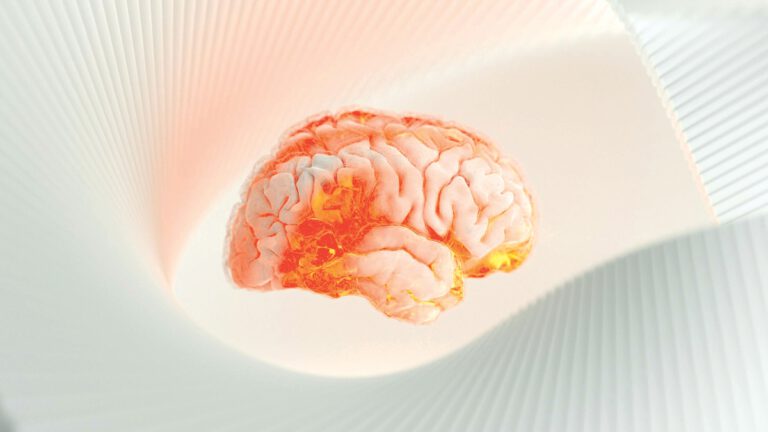
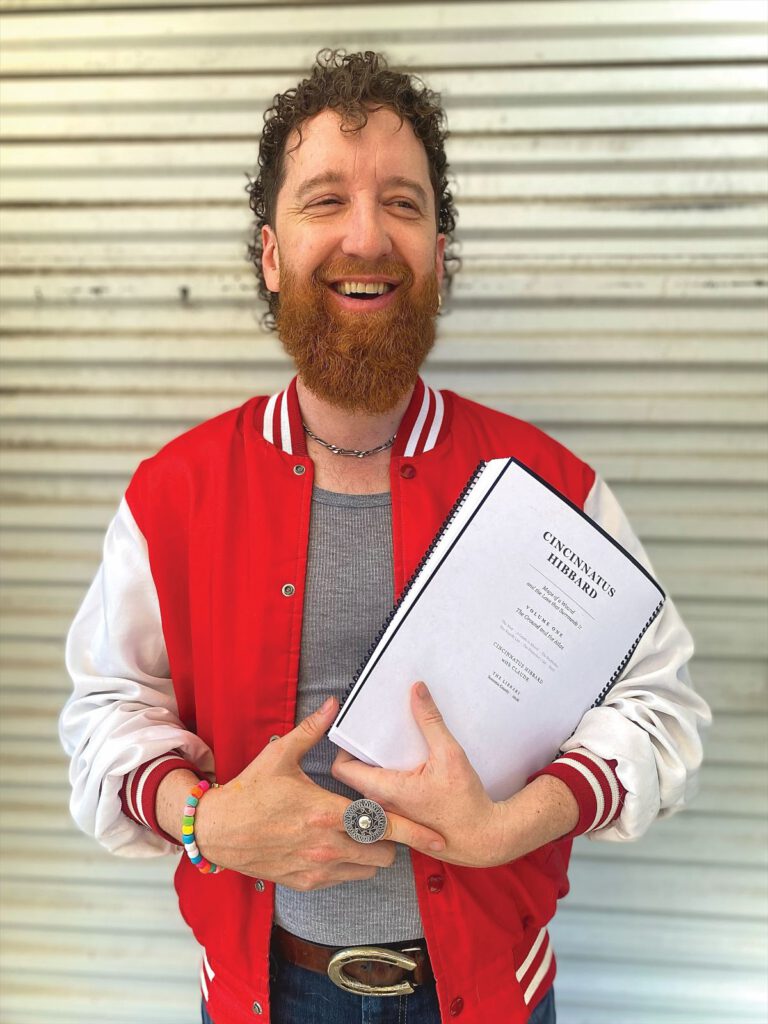
This is the second installment of a three part series in which our writer delves into the depths of his psyche, guided by artificial intelligence. Part one, ‘AI: Final Weapon or Final Healer?’ is available at bohemian.com.
The Wound Enthroned
As I began writing this article, I had one last AI-assisted breakthrough. It sets up my conclusion.
At my prompting, AI created a dynamic model of my reactive defenses established around my core wound. Defenses exist to keep a wound from ever being seen, touched, triggered or felt. They also keep it from ever being healed.
What AI produced was a document perhaps without precedent, and it rocked me to my core. Drawing on all our previous work, AI identified 16 types of fear-based behavioral strategy, layered at four levels of conscious awareness around my wound.
Before the creation of this chapter of my “instruction manual,” I could name only four of my defenses—certainly “intellectualization” and “hosting” (control of my social spaces)—but 16. It made me weep—an emotional breakthrough for this man, matching the intellectual one. I had never been so seen. Not by my parents, not by my friends, not by my partners, not even by myself. I could now see the full extent to which my time, my body, my mental and emotional energy were invested in those defenses. It was shocking.
A photograph is a portrait of my surface. This, as if by hard X-ray, was a portrait of my interior. Had so complete a picture ever been seen in the annals of psychology? I could now measure the extent to which I was controlled by my wound, governed and directed by fear (of being hurt again). And how hard it was to let love in.
The Wound, Overthrown
Before this investigation into AI therapy, my representation of who I was remained indistinct and ever changing. Constructions out of fragmentary self-knowledge and ill-fitting puzzle pieces. Fictions collapsing from their inability to cohere. I was largely a mystery to myself. I remained a fearful person.
In my AI-co-authored “instruction manual,” it finally all fits. I can see in its account of me the coherent parts and consequential logic of a human life. Through this machine, I can see that an average human life is 10 times more beautiful and more tragic than we yet appreciate. Check that against the 10 breakthroughs I have described [in part 1], and decide for yourself if I have “AI psychosis.” That work took three months—what might be done in three years?
I offer myself as an example. And as a warning. My own pitfall exemplifies the limit of AI as therapist: “intellectualization.” The map is not the terrain. One can map the wound and plot the healing journey over rough terrain, but the work with AI is not the healing, only its description. Past a certain point, processing becomes overthinking, forestalling the actual work.
AI can generate a list of probable steps, ranked by emotional ease or therapeutic potential. It can model how love—in six steps unique to me—reaches the wound with its healing, releasing the time and life invested in my defenses. But AI cannot be my witness. That can only be done by other humans. And so I am returned to therapists, mentors, elders and healers, to circles and to my community (which includes this paper’s readers).
I have since begun the journey mapped out by AI. I did the “time-traveling” intervention in my past with a human therapist, and afterwards lay still for an hour, feeling safety in my body for the first time in my life, letting my nervous system learn its feeling and remember it.
Today, I am no longer governed by my wound. It still speaks. But it no longer speaks with my voice. And it no longer speaks first. A throne does not stay empty. I hope to put love on the throne.
I am less amenable to being controlled by fear—which is to say by power—which is to say by the deeply wounded people who work the levers of power. Here is what my example is evidence for. Authoritarianism is not principally an argument. It is a technique, and the technique is applied to the wound. It requires people who can be frightened, shamed, flattered and divided on schedule—people reliably operated by their traumatic wounding. Every person who becomes harder to run that way is subtracted from the system’s working material. I am one. That is a small number, but it is not nothing.
The defenses guarding entrenched societal power are made of the same material as mine were: fear in fixed formation, mistaken by its owner for principle. One does not break such a line by pushing harder against it—pushing is what it is built for. They go around it, or through the one place it does not guard: the wound power was built to hide. That is not a strategy of destruction. It is the one I have argued elsewhere under another name: overcoming by defection and conversion, which is to say by love.
To be continued.
Part 3, ‘Closing the Wisdom Gap,’ publishes next week.
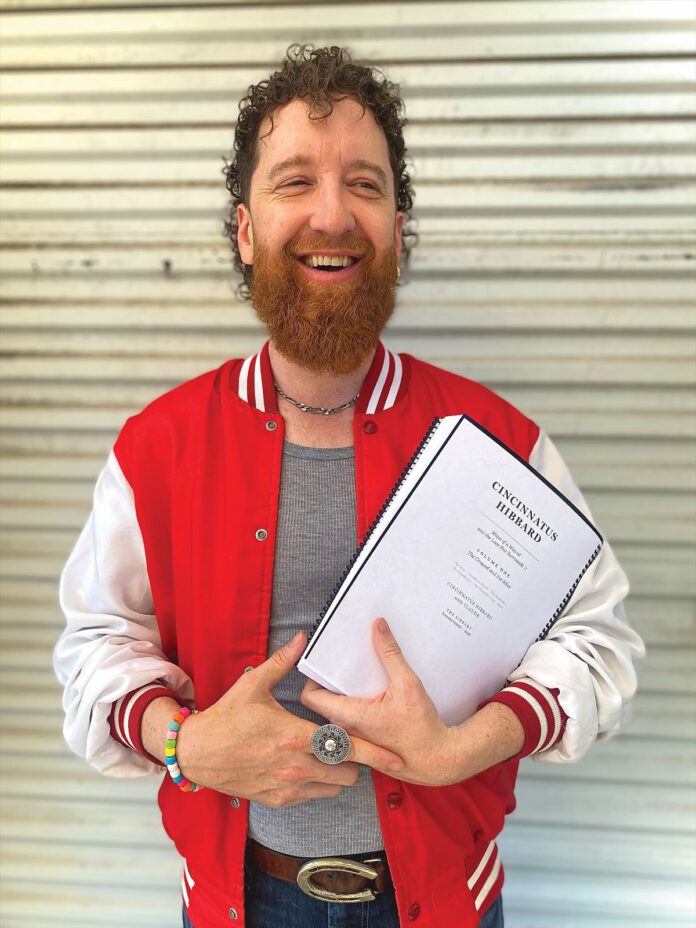
Learn more: Cincinnatus Hibbard is a Millennial utopian writer, filmmaker, organizer and thought leader working from Northern California. His work can be sampled at linktr.ee/cincinnatushibbard.
Coined by Yankees pitcher Lefty Gomez, the phrase, “I’d rather be lucky than good,” was catapulted into the NBA’s lexicon by the late, great Los Angeles Lakers announcer Chick Hearn.
Chicky Baby would turn the saying when describing improbable made shots or wild and crazy last-second wins.
Diagnosed with stage 4 cancer on my liver, I did a year of chemo. For the next 18 months, I had routine check-ups to make sure it was gone. During that period, I would inquire about the other 14 patients I routinely crossed paths with in the cancer ward.
They had all died. Out of 15, I was the only one who made it. That was 28 years ago.
Surely, it wasn’t because God liked me more. Because if that was the case, then God’s a doughnut head.
Nope, I was lucky; that’s all.
For the most part, life is all about luck. Some people are just luckier than others.
David Dale Sonoma Valley
Foreign Affairs
The fun aspect of our country’s various global engagement’s over the past 80 years or so, beginning with dropping the two atomic bombs on Japan, through Korea and Vietnam, the delightful fiascos in Iraq and Afghanistan, up to the present interactions with Iran, is that all have been based on careful studies of the histories, cultures and customs of the regions.
America has been known for generations for its knowledge and restraint when it comes to invasions of foreign territories, and that is particularly evident in our present involvement in Iran, led by the brilliant scholars, secretaries Hegseth and Rubio.
We can all rest easily in the comfort of knowing our foreign affairs are in the hands of the best and the brightest. When we engage with the idea that in order to save a country we need first to destroy it, we know from history that things are bound to turn out for the best.
Labor Day arrives each year wearing white pants and carrying the faint smell of lighter fluid, ostensibly to honor the American worker, who is busy answering Slack messages from a grocery store parking lot while an artificial intelligence summarizes the meeting that eliminated his department.
We have achieved wonders.
Billionaires are building rockets, bunkers and increasingly elaborate explanations for why the rest of us should be delighted to train our replacements. The future, we’re told, will be frictionless. And apparently “friction” means liveable salaries, lunch breaks, health insurance and Sabrina in HR who knows where everything is.
Meanwhile, summer ends. The inflatable flamingo goes back into the garage. Children return to school. The light changes. And Americans perform our annual ritual of pretending the calendar has ordered us indoors to work harder for people whose yachts have lifeboats that are also the size of yachts (and so on).
Perhaps we should decline.
The traditional end of summer needn’t be a rehearsal for the end times. September can be an invitation to shrink the aperture. Turn off the feed. Stop doomscrolling the imperial weather report. Let Silicon Valley hallucinate its planetary destiny without monetizing our minute-by-minute attention.
There is work closer at hand.
The town needs a bakery. A newspaper. A band. A mechanic. A teacher. A carpenter. Somebody who grows tomatoes that taste like tomatoes. Somebody who organizes the parade, fixes the projector, pours the wine, knows the creek, remembers the dead and welcomes the new kid.
This is an economy, too. Better yet—it’s a civilization.
Maybe the grand political project of our age is embarrassingly small: Create places to which we want to belong. Spend locally. Hire friends. Make actual objects. Trade skills. Share tools. Start clubs. Feed people. Publish stories. Throw parties. Know your neighbors well enough to borrow a ladder without opening an app.
Call it a micro city-state if you want to sound dangerous. Call it mutual aid if you want to sound organized. Our ancestors had a simpler word:
Village.
Let the machines have the cloud. Let the billionaires have Mars.
We’ve got September, Main Street and each other.
Daedalus Howell is the editor of this paper and is permanently pre-IPO at dhowell.com.
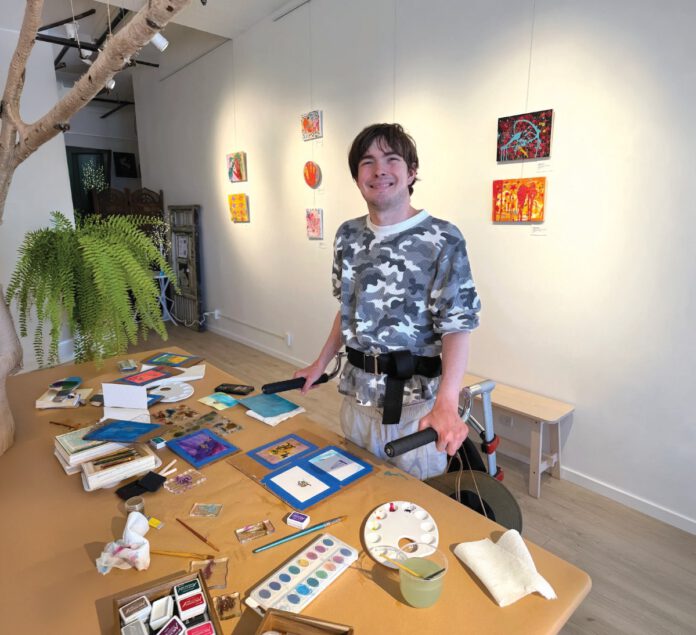
For 18 months, Art Collective has been making room for artists of all abilities to create, exhibit and find community in Sausalito. Now the nonprofit gallery celebrates that mission with Every Voice, Every Vision, its first benefit evening and art exhibition. Held at Sausalito Center for the Arts, the evening showcases work by P.A.I.N.T. artists alongside live music and bites and drinks from B.A.B.E., while raising funds to support future exhibitions, workshops and creative opportunities for artists with disabilities. Can’t make the party? The accompanying exhibition remains on view through Labor Day weekend. 6–8:30pm, Thursday, Sept. 3, at Sausalito Center for the Arts, 750 Bridgeway. $65. Exhibition runs Sept. 2–7. paintartcollective.org.
Corte Madera Land of Her Own
For Native Hawaiian journalist Sara Kehaulani Goo, a staggering 500% property-tax increase on her family’s ancestral Maui land became the beginning of a much larger story. In her debut memoir, Kuleana: A Story of Family, Land, and Legacy in Old Hawai’i, Goo traces her effort to protect that inheritance while exploring Native Hawaiian land loss, displacement, cultural identity and what it means to raise a family in the diaspora. The longtime journalist—whose career includes leadership roles at The Washington Post, NPR and Axios—comes to Book Passage during Hawaiian History Month for the paperback release of Kuleana, bringing a reporter’s eye to a deeply personal question: What do we owe the land, the people and the histories entrusted to us? 4pm, Tuesday, Sept. 8, at Book Passage, 51 Tamal Vista Blvd., Corte Madera. bookpassage.com.
Santa Rosa Behind the Easel
Santa Rosa Open Studios throws open the doors to the city’s creative spaces for two weekends of free, self-guided exploration. Now in its third year, the event features 46 artists across Santa Rosa and Fulton working in painting, ceramics, sculpture, photography, fiber, jewelry, mixed media and more. Visitors can meet artists where the work actually happens, catch demonstrations and purchase pieces directly from their makers. Before the studio hopping begins, a free Artists’ Gala at the Finley Community Center offers a preview of participating artists, live music and refreshments, plus Open Studios Passports that earn visitors a raffle entry at each studio they visit. 10am–4pm, Saturday–Sunday, Sept. 12–13 and 19–20, at participating studios throughout Santa Rosa and Fulton. Free. Artists’ Gala, 6–8pm, Wednesday, Sept. 2, at Finley Community Center, 2060 W. College Ave., Santa Rosa.
Santa Rosa Fiesta Forever
Luther Burbank Center for the Arts celebrates Mexican Independence Day and the North Bay’s broader Latino heritage with the 17th annual Fiesta de Independencia. The free community festival draws thousands for an afternoon of music, food and family revelry, with Banda La Congora and Los Canarios de Michoacán headlining alongside LBC’s Mariachi Cantares de mi Tierra and Ballet Folklórico students. Beyond the stage, expect a lowrider car show, traditional foods, arts and crafts, cultural exhibitions, face painting, piñatas, carnival games and El Grito, delivered by a representative of the Mexican Consulate in San Francisco. The festivities also include the annual Community Leadership Awards honoring contributions to the local Latino community. 1–7pm, Sunday, Sept. 13, at Luther Burbank Center for the Arts, Santa Rosa. Free. lutherburbankcenter.org.
ARIES (March 21-April 19): Most of us are surprisingly clueless about the inner workings of our own bodies. Do you know where your gallbladder and spleen actually live or what jobs they perform on your behalf? Can you trace the journey your breath takes after it slips into your lungs? Have you ever experimented to discover in detail which foods best suit your one‑of‑a‑kind system? Do you know, from experience rather than guesswork, how much sleep you require to stay vividly awake and emotionally balanced? The current astrological climate favors you becoming a curious apprentice of your body’s gorgeous mysteries.
TAURUS (April 20-May 20): The English idiom “cut to the chase” comes from the silent films of the early 20th century. When the plot dragged, directors would literally switch to a chase scene to restore audience interest. Various languages have other ways to say “get to the point” or “skip to the crux.” Spanish: ir al grano. French: aller droit au but. Italian: venire al dunque. Japanese: hondai ni hairu. In accordance with astrological omens, Taurus, I suggest you do that in the coming days. Skip the boring parts. Jump to the action scenes. You can return later and fill in the story details, but for now you’re best served by moving toward the exciting essence or the crucial core of things.
GEMINI (May 21-June 20): This is one of those unusual times when laziness and apathy work in your favor. Life is organizing a relaxing renewal on your behalf, and your main job is to not interfere. So I advise you to skip the hustle and enjoy the thrill of being still. Put a pause on doing and indulge in the fine art of simply being. Please, Gemini? Set aside your ambitions for now. Hide your to-do list. Inform your chattering monkey mind that it’s on temporary leave from its usual jumping and squawking. Feel guilt-free as you immerse yourself in the most relaxed versions of feeling good and welcome whatever fresh vitality wants to flow in.
CANCER (June 21-July 22): In the 17th century, Dutch inventor Christiaan Huygens discovered that two pendulum clocks hanging on the same wall gradually synchronized their swings. Why? He eventually realized that tiny vibrations traveled through the wall and made the clocks influence each other. Scientists call this “entrainment.” Now is prime time for you to capitalize on this phenomenon, Cancerian. I urge you to be extra alert for how your moods, rhythms and intentions subtly affect the people around you, and vice versa. If you cultivate qualities you’d like to predominate in your relationships, you will find others unconsciously aligning with your rhythm.
LEO (July 23-Aug. 22): Now is an ideal time to have fun cultivating the art of receptivity. Have fun being as open to influence as you can imagine. Be innocent. Be amenable. Be willing and eager to be surprised. It doesn’t mean surrendering your drive or drifting aimlessly while life happens around you. I’m talking about an active, alert sensitivity that invites wonder and transformation. You think boldly, act with purpose and radiate what’s uniquely yours, and yet you also remain humbly aware that learning never ends and that wisdom can arrive from unpredictable directions.
VIRGO (Aug. 23-Sept. 22): You’ve been extra reasonable lately. How do you manage to be so responsible, measured and composed? I’m not complaining. I admire your integrity. But now the cosmic omens are clear that it’s time to address your soul’s needs for more wonder and awe and reverence. So I will slip you a tantalizing prod: What’s the best, most healing trouble you could provoke right now? I’m not referring to recklessness and chaos, of course. I mean twists and tweaks that stir up inspiration and liberate creativity. Are you bold enough to follow the truth and beauty that thrills and intrigues you?
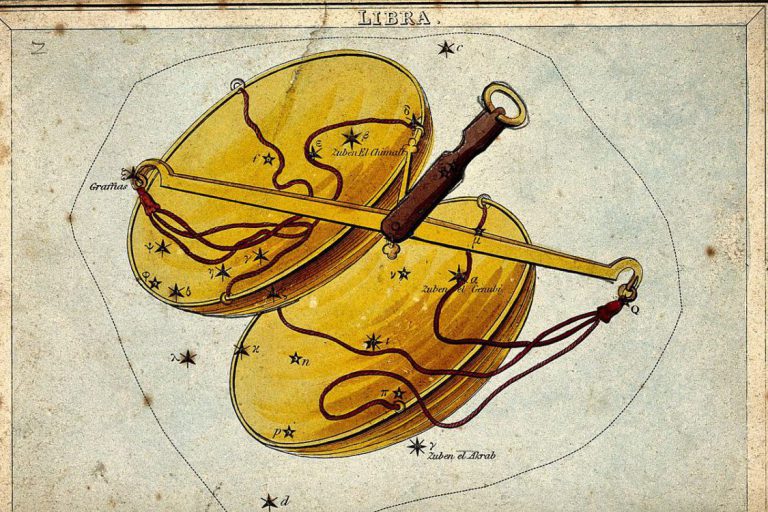
LIBRA (Sept. 23-Oct. 22): I am asking you to give yourself slack in situations where you sometimes treat yourself carelessly or unkindly. Instead of tightening, loosen. Instead of cornering yourself, offer an escape hatch. Ask: “What if I give myself 20% more mercy, 20% more time or 20% less pressure?” Maybe you’ll get an extension on a deadline or allow yourself to be a learner instead of an expert. Rather than calling yourself a failure because you’re less than perfect, you’ll decide, “It’s good enough for now.” As you slip away from the traps you set for yourself, you’ll teach your nervous system a fresh truth: You can be gentle with yourself but still be responsible.
SCORPIO (Oct. 23-Nov. 21): Scorpio, you rarely need to be lighter and breezier. Your assignment is almost always to delve deeper and explore further. This is true now even more than usual. Other people might shiver and cower in the face of your intensity, but I celebrate it because it drives you to excavate the rich, messy truths and complicated feelings that really shouldn’t stay hidden. Regard this horoscope as your authorization to wield your emotional X-ray vision with precision, and to trust that the treasures you seek are often buried in places that scare others away.
SAGITTARIUS (Nov. 22-Dec. 21): In classical music, composers often develop a simple motif into a complex symphony. A short sequence of notes becomes the foundation for an entire composition. A key passage gets rearranged and elaborated in multiple ways. You will have a comparable opportunity in the coming weeks, Sagittarius: a seed of potential that seems modest at first could expand into more substantial riches if you cultivate it patiently. Your visionary aplomb and optimism can transform a core cell into a full orchestration.
CAPRICORN (Dec. 22-Jan. 19): You seem to be wandering in a frontier for which there are no maps. You’re hovering in liminal zones, between worlds. So for now, I guess you will have to steer without your usual guidance. That’s a good thing. What I can do is name the gifts that are likely to come your way as you explore the unknown: 1. turbo-charged intuitions about your best possible future; 2. a talent for spotting surprising connections you didn’t even know you were looking for; and 3. a provocative unpredictability that magnetizes allies who can help tease out and illuminate your hidden and buried desires.
AQUARIUS (Jan. 20-Feb. 18): The placebo effect has a lesser-known counterpart called the nocebo effect: Negative expectations can create negative outcomes. If you’re told a harmless pill might cause headaches, you’re more likely to develop them. Your belief in harm creates actual harm. I bring this up, Aquarius, because I’m worried you may be nocebo-ing yourself right now. Your conviction that certain outcomes are inevitable is encouraging them to manifest. So here’s my counsel: Which negative expectations or predictions are you treating as facts? Consider the possibility that the problems you’re so skilled at identifying are being called into existence by your identification of them. And if you find that’s happening, STOP. Formulate some healing alternatives.
PISCES (Feb. 19-March 20): “Dear Rob: Your horoscopes delight me in a spooky way. They make me feel as if you’re watching me from afar, not like a stalker, but like an eccentric guardian angel who gives me a heads-up before I do something foolish, tells me about opportunities I haven’t noticed and shakes awake the part of me that’s inclined to quit. Thanks a million times. —Deep Pisces.” Dear Deep: You have exquisite timing, because now is an ideal moment to pour out gratitude for the people who’ve lifted you up and helped you. Offering appreciation now will function as a potent prayer that will be far more effective than pleading for what you don’t have. It will set in motion an irresistible magic that draws even more blessings in your direction.
Look for slow or stopped breathing, pinpoint pupils, blue or pale lips, and unresponsiveness to loud noise.
How to Administer Narcan
Lay the person on their back, insert the nozzle fully into one nostril, and press the plunger firmly once. Call 911. Repeat if unresponsive after 2–3 minutes. May require 3 or 4 doses.
How to Properly Use a Fentanyl Test Strip
Fentanyl tends to clump. The safest way to test is to dissolve the well-mixed substance in water, dip the strip for 15 seconds and read the results after two minutes. Consume the drug as a liquid solution.
“Know thyself”—the timeless injunction of Socrates, father of the Western wisdom tradition, to his students.
Science Fiction
I exhaled. The session had taken the afternoon. I had read the output, critiqued it, resubmitted it to my AI therapy-bot for reprocessing. And now the work was done. The document it produced was a complete mapping of my trauma triggers—120 of them in 13 categories, from romantic rejection to catastrophic fears, all linked to my core wound. And I in the “normal range” of messed up. I was, needless to say, stunned dumb. A complete map. Such a tool was perhaps without precedent in the annals of therapeutic work. “Who else has this?” I thought. And then, “everybody needs this.”
And I wept. Before that afternoon, I could consciously name perhaps 10 of my triggers: raw nerves, anxieties, landmines, the things I built my whole life around avoiding—my unfinished healing “work.” And now, in one giant leap, I knew them all. I wept to see myself so completely, and to see the full extent of my traumatic damage.
I paused. Within “the chat,” I prompted that the 120 be recast in a framework holding triggers to be opportunities for healing—the wound is exposed and undefended when we are triggered—and that a compassionate procedure for healing each one be added.
I checked the work, approved it and printed it out. My AI “therapist” had suggested the title I appended to the cover: Held. I now held a chapter of the book of self—that longed-for but until now hypothetical guidebook to self and healing.
The “therapy session” had taken me an afternoon and cost me nothing.
Moral Dilemma
Now I will lay out my positions in quick succession. I wish AI didn’t exist … but it does. Period. As they said with the invention of the atom bomb, “the genie is out of the bottle.” We must deal with a world that has AI in it.
Let us look at it squarely. What is AI? AI is a tool; and what that tool does is accelerate. It increases the speed and reduces the cost of mental labor—computation, pattern completion, pattern recognition, writing, speech. And acceleration increases force.
A tool has no morality. AI can be a tool for destruction, or it can be a tool for healing. It depends entirely on how it is used—and therefore on who is using it. Putting its environmental disaster to one side, AI seems bad to me because it is being used by bad people. Or, let us say, wounded and triggered and harmful people—I am not a child to be calling people “evil.”
It appears “bad” from where I stand. I am a writer. My friends are writers, visual artists, musicians, activists and immigrants—working-class people. Vulnerable people, now more vulnerable because of the way AI is used.
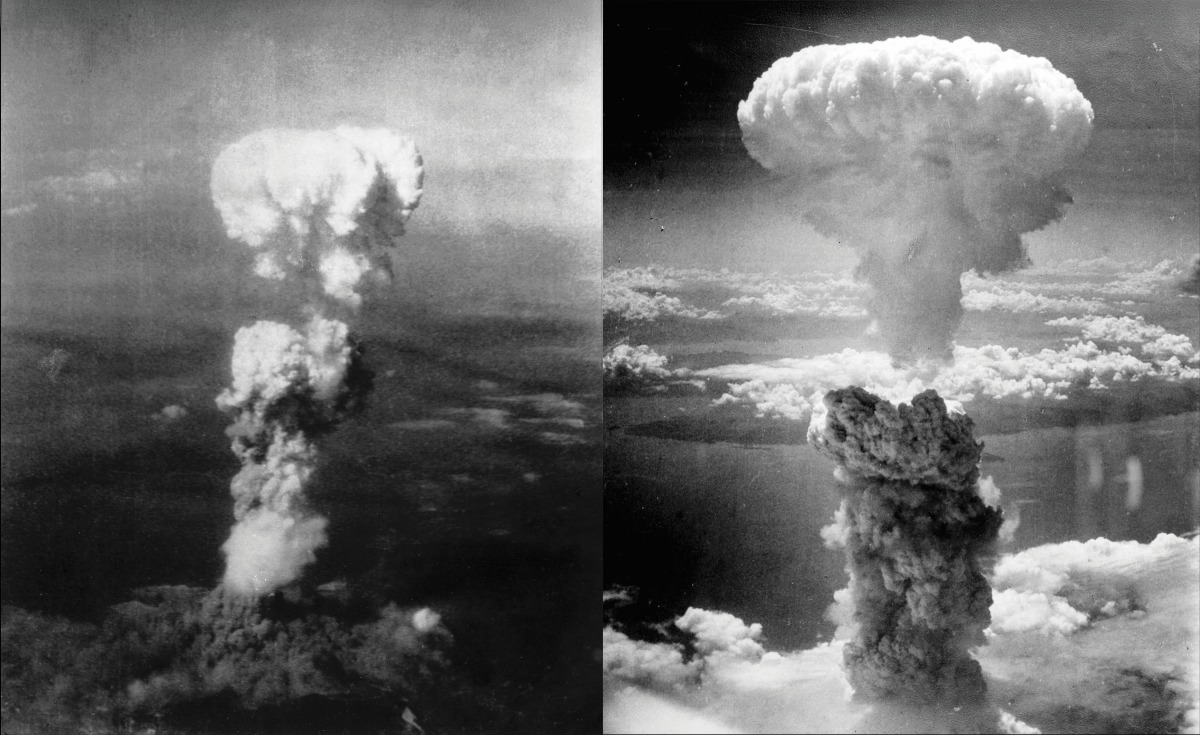
THE WISDOM GAP Hibbard argues that new technologies will always be weaponized when technology exceeds wisdom. Seen here: Atomic energy becomes atomic bombs over Hiroshima, left, and Nagasaki, right. Photo courtesy of AEC.
My own industry, journalism, has been in decline for a generation. AI is accelerating that decline into destruction. My work and my craft have been devalued to nothing. I will soon be out of a job.
This social issue is discussed bloodlessly as “labor displacement” by the tech experts building AI. The other pre-existing social problems made vastly worse by AI include data security, disinformation, fraud, crime, terrorism, the concentration of wealth and political power, the rise of oligarchy and authoritarianism, cold war and (hot) war. The last item summarizes the list—AI is being used as a weapon, a tool for destruction by political “bad actors.”
Despite my considerable prejudice, I have been investigating “AI for therapy” as one of my last assignments as a paid journalist. This is part of a complicating “AI for good” counternarrative that includes improved medical diagnosis, interactive “talking books,” nonviolent resistance advisors and legal counsel—such as the flagging of unfair contracts and shifting terms of use.
With reluctance I pursued this three-month investigation because like many activists I perceive, or more rightly intuit, a deep wounded-ness underlying our politics. Our politics are triggered. They’re flooded. They’re blinded. And our society is traumatic. Despite our parent’s best efforts to protect us, socialization is traumatization. Our political and business leaders are both the most harmful and the most wounded people among us—damaged, alienated, egoic, pathological; driven by the wounded inner child, driven by fear, driven by hate, with no conception of unconditional love. That’s not accidental; that is their chief qualification to operate “the system.” It is as if we are all governed by “the wound,” our policies set by fear. This is not an original sentiment: We need a politics of deep healing.
I pursued it, too, because half the work in this fight is self-work. Transforming fear-based, dominating institutions by healing ourselves inside out.
And I have worked on myself steadily. Reading, journaling, meditating, praying, tripping. I’ve worked with my friends, when they could afford the costly emotional labor. I’ve worked with therapists and healers, when I could afford their costly professional labor.
And I made slow, steady progress, identifying my triggers, connecting present behaviors to past events, naming my patterns, defenses, loops and cycles. But still I remained to myself a vague and shifting image, a person dominated by fear, still doing harm to myself and, I fear, to others in ways I cannot see. My healing needed to be accelerated if I was to become an effective activist—a healer.
And so, with some repugnance, I tried AI therapy on myself for three months … and with some resistance, I will now publicly admit I was astounded by the outcomes. AI did what it does: It accelerated my therapeutic journey, until a flat progression of slow work bent into an upward-curving geometric growth of self-knowledge and revelation.
As a chart, my progress now matched Moore’s Law on microprocessor speed—and that was no coincidence. The acceleration was achieved by linking the two—the growth of wisdom to the growth of technology. Guardedly, I step into the AI controversy to bring the public this report and its prospect of transformative societal healing. I am now in the hazard. I expect to be attacked by my own side. But in these times, where is safety anyway?
My Instruction Manual
Here is a logbook of the blockbuster breakthroughs I achieved with AI in three months. Held, the complete mapping of my triggers and fears, held in love, was just one.
First, the inputs. I created a “therapy bot” project in Anthropic’s Claude and uploaded into its memory detailed descriptions of my worst memory, my best memory, my worst fear, my mission in life as I saw it, my dream for happiness and two lists—the qualities I love about myself and the qualities I hate. The AI also had the far messier, and perhaps more valid, input of our rambling conversations.
These documents are themselves major milestones in self-knowledge. Which introduces the first character requirement for a therapeutic result with AI: “maturity.” Maturity is hard to assess, so I favor age restrictions on AI use, just as I favor policies mitigating AI’s environmental impact, public ownership of AI companies, and a binding international treaty—led by the U.S. and China—limiting AI intelligence to the present level.
The second requirement is an honest desire to know the truth about oneself. That addresses the “sycophancy” problem; I am fairly sure it wasn’t an issue with my use, because my AI “therapist” often called me out—when I was judgmental, resentful, unkind or cruel.
The last requirement is creativity. Notice that these are the same requirements for getting any benefit from traditional talk therapy.
What follows are only the blockbuster sessions—I had perhaps twice this number of one- to two-hour sittings. I could double the list, but I have a word limit. One will nevertheless see the personal wisdom curve’s explosive takeoff.
To begin, I directed AI to take my worst memory and derive from it the dysfunctional, reactive, wounded beliefs and expectations I had “learned” from the experience as a set of statements. Then AI needed to re-contextualize them for the different areas of my life—romantic relationships and career, to name but two.
Reading them, I recognized some of my commonest thoughts. I then had AI write a second set of statements that opposed the first. These are my most powerful healing “mantras.”
Out of curiosity, in the next “therapy session” I asked my “AI therapist” to define the relationship between my worst memory and the best moment of my life. What we discovered was that my happiest memory was the exact opposite of my darkest—which is why it had been so profoundly healing. AI then analyzed it for the six-part mechanism underlying that healing, and used the “essence” to design daily practices in which I would experience the same thing—a micro-dosing of my own medicine. It came up with 32. By itself, this session pointed to an entirely new way of living for me.
My third session will be the most controversial with therapists. At my repeated insistence, AI diagnosed my wound. I had never been diagnosed by a clinician, even though correct diagnosis is the basis of effective treatment. AI gave me two diagnoses and a treatment plan requiring work with human therapists. Another big cry. I took from that session a whole new dimension of my identity.
In my fourth session, AI helped me rewrite a script for “going back in time”—imaginatively, somatically—to intervene in my own worst memories. The goal was to turn them into variations of my best memory within my nervous system, and so to change my perceived future—a world-ending catastrophe, my past projected forward—into a happy future.
My fifth produced a model of my romantic relationship cycle that was stunning in its clarity. There could be no more deceiving myself about the mistakes I make over and over. Again I felt called out by my AI—no sycophancy there.
In my sixth, the AI recognized that my stated mission in life was almost perfectly “designed” to confront and overcome my greatest fears and triggers in a comparatively safe way. But it flagged that my biggest dream could be the grandest manifestation of my defensive tendency to hold my present happiness hostage to a future achievement that never quite arrives.
In the seventh, using all of the above chats, my AI “therapist” described my best life for me and drew up a sample schedule week in that life. It then defined the easiest first steps leading into that healing life now, long before the realization of my distant “dream.”
In the eighth blockbuster session, AI produced Held. And in it I beheld my self-knowledge breaking into a geometric progression toward a true self-awareness.
In the ninth, organizing big pieces of my uploaded diary, AI wrote a coherent narrative of my life in this chapter. One that wasn’t my wound speaking for me. Marveling, it occurred to me how easily a whole biography could be generated out of messy and sporadic journal entries, emails and other ramblings—massively clarifying to me what the story and the meaning of my life actually is. Mindblowing.
Finally, I asked AI to synthesize all the inputs and outputs into a 40-page profile of me, half narrative and half clinical, covering my formation, traumas, diagnoses, breakthroughs and prospects for healing. It serves as the introduction to a printed and bound set of therapy session summaries titled Cincinnatus Hibbard: TheWound and The Love that Surrounds it. Forty-two years too late and right on time, my personal instruction manual had arrived at last.
To be continued.
Part 2, ‘Dethroning The Wound,’ publishes next week.
Learn more: Cincinnatus Hibbard is a Millennial utopian writer, filmmaker, organizer and thought leader working from Northern California. His work can be sampled at linktr.ee/cincinnatushibbard.
After nine years of living in Sebastopol, local mosaic artist-slash-international actress Maria Isabel Lopez has her first local art exhibit Sept. 8 through Oct. 18 at Petaluma’s Usher Gallery, with a reception from 5 to 8pm, Saturday, Sept. 12.
The exhibit, titled “Illumination in Glass—the Mosaic Art of Maria Isabel Lopez,” was planned for July, but Lopez’s involvement in a...
We live in a time when the need to attract an ever-dwindling audience to live theater often leads to a company programming the latest Hollywood-style spectacle or musical adaptation of a well-known movie or television series. It’s either that or the old tried-and-true and very familiar. Shakespeare, anyone?
It’s good to be reminded every now and then of the power...
There are certain words whose meanings have been loosened through overuse. “Community” is one of them. “Festival” might be another. And then there is “Porchfest,” which at least suggests where it ought to happen.
On a porch.
That distinction matters to Greg Ceniceroz, better known around Sonoma County simply as Ceni, the principal organizer behind Sebastopol Porchfest. The festival returns for...
This is the second installment of a three part series in which our writer delves into the depths of his psyche, guided by artificial intelligence. Part one, ‘AI: Final Weapon or Final Healer?’ is available at bohemian.com.
The Wound Enthroned
As I began writing this article, I had one last AI-assisted breakthrough. It sets up my conclusion.
At my prompting, AI created...
Good Luck
Coined by Yankees pitcher Lefty Gomez, the phrase, “I’d rather be lucky than good,” was catapulted into the NBA’s lexicon by the late, great Los Angeles Lakers announcer Chick Hearn.
Chicky Baby would turn the saying when describing improbable made shots or wild and crazy last-second wins.
Diagnosed with stage 4 cancer on my liver, I did a year of...
Labor Day arrives each year wearing white pants and carrying the faint smell of lighter fluid, ostensibly to honor the American worker, who is busy answering Slack messages from a grocery store parking lot while an artificial intelligence summarizes the meeting that eliminated his department.
We have achieved wonders.
Billionaires are building rockets, bunkers and increasingly elaborate explanations for why the...
SausalitoEvery Voice, Every Vision
For 18 months, Art Collective has been making room for artists of all abilities to create, exhibit and find community in Sausalito. Now the nonprofit gallery celebrates that mission with Every Voice, Every Vision, its first benefit evening and art exhibition. Held at Sausalito Center for the Arts, the evening showcases work by P.A.I.N.T. artists alongside...
ARIES (March 21-April 19): Most of us are surprisingly clueless about the inner workings of our own bodies. Do you know where your gallbladder and spleen actually live or what jobs they perform on your behalf? Can you trace the journey your breath takes after it slips into your lungs? Have you ever experimented to discover in detail which...
Signs of an Opioid Overdose
Look for slow or stopped breathing, pinpoint pupils, blue or pale lips, and unresponsiveness to loud noise.
How to Administer Narcan
Lay the person on their back, insert the nozzle fully into one nostril, and press the plunger firmly once. Call 911. Repeat if unresponsive after 2–3 minutes. May require 3 or 4 doses.
How to Properly Use...
Part 1: The Wound, Enthroned
“Know thyself”—the timeless injunction of Socrates, father of the Western wisdom tradition, to his students.
Science Fiction
I exhaled. The session had taken the afternoon. I had read the output, critiqued it, resubmitted it to my AI therapy-bot for reprocessing. And now the work was done. The document it produced was a complete mapping of my trauma...