Healdsburg’s Royal Family

When he was just five years old, Octavio Diaz was burned by a kettle of hot milk while watching his mother make hot chocolate over their open-flamed adobe oven. Despite the pain to his chest and arms, Diaz stuck by his mother’s side, absorbing her techniques, her recipes—and mostly, her passion.

“We are the first generation of men in my family who love to cook,” he says of himself and his brothers.

For the past decade, the Diaz family has steadily climbed the culinary ladder in Healdsburg, where they now own two restaurants and a market. Diaz’s brother Pedro runs El Farolito on Plaza Street, having started as a dishwasher eight years ago; his youngest brother, Francisco, runs a second location in Windsor. On Cinco de Mayo 2010, Diaz opened Agave Restaurant & Tequila Bar in Healdsburg’s Safeway shopping center, a location that belies the restaurant’s gastronomic sophistication.

And just this past August, with a music- and masquerade-filled celebration, Diaz opened Casa del Molé Mercado y Carniceria on Center Street (formerly Los Mares), named for his mother Juana’s increasingly famous mole negro, which she makes from scratch weekly. Every few months, Diaz’s parents return to the Zocalo market in their native Oaxaca to procure several of the 32 total ingredients—which include plantains, walnuts, animal crackers, chocolate, and a variety of chiles—that give mole its distinct flavor.

Passed down through four generations of Oaxacan women, Juana’s unique recipe contains no lard or sugar, though she does use local Gravenstein apples and golden raisins for sweetness. The entire process takes about three days, from the first roasting of the chiles to the final jarring of the sauce, which is available for purchase at Casa del Molé ($12.99 for a 16-ounce jar). “One of our secrets,” Diaz confides, “is to remove all the seeds from the peppers, because they are bitter. It takes a lot of work, but it’s worth it.”

Hard work comes naturally to Diaz, for whom success is the only option. “I cannot fail,” he tells me matter-of-factly. As the oldest of seven siblings, he feels the pressure of being a leader for his family, many of whom have gained citizenship over the past decade, and whose generosity made his restaurant dream a reality. “In this economy, our family is our bank,” says Diaz, “which allows us to stay out of debt and not pay interest.”

[page]

When he was 13 years old, Diaz left Oaxaca to live with his aunt and uncle in Rohnert Park. During high school, he worked as a busboy at the Red Lion Hotel (now the Doubletree), where he met a hostess and college student named Nancy. “I used to ride my bike to SSU from Rancho Cotate to see her,” Diaz says of the woman who’s been his wife since 1997. Red Lion proved auspicious in another way as well. “That’s where I discovered my love for hospitality,” he says.

Though Diaz toyed with the idea of being a teacher, one semester of teaching a beverage-management class in the SRJC culinary program convinced him otherwise. “It was very hard,” he admits, “and I realized I wanted to stick with restaurants instead. I have the highest respect for teachers,” says Diaz, who credits the SRJC with helping him achieve his goals.

When it comes to food, Diaz is committed to bringing more vegetables into Mexican cuisine. Casa del Molé’s produce section is even bigger and more colorful than the pastry case, and Diaz gets as excited about cabbage as he does about their homemade chorizo and goat stew. “It’s like having our own farmers market,” he says of Casa del Molé, which supplies all three of the Diaz restaurants, “but it’s open every day.”

Even though Agave offers standard taqueria items like burritos and nachos, it’s the traditional Oaxacan food that Diaz is most proud of: molotes, deep fried masa stuffed with potato, chorizo and herbs ($10); pollo asado, grilled chicken that’s been marinated in a secret sauce de la casa ($11); tlayuda, a corn tostada topped with beans, cabbage, avocado, salsa and queso fresco ($10); and of course, the molé de Oaxaca, served atop chicken ($13) or enchiladas ($12). True to its name, Agave also offers a huge selection of tequilas and mescals, many from family-run distilleries in remote Oaxacan villages.

Like Agave’s menu, Diaz’s world straddles the old and the new. Though he comes from a family of seven siblings, he is stopping at two when it comes to his own kids, in part, he says, “because I want to give them the best life possible.”

He is an intrinsic part of the Healdsburg community, greeting nearly every other person he sees as we walk from Agave to Casa del Molé on a recent Thursday afternoon. But his ties to Oaxaca, where his grandmother still lives, remain strong.

“Part of my motivation to work hard is to make my grandma proud,” he says, “because we are like the harvest of her hard work.”

Deadwood Hwy.

0

In a profitable twist of fate, a private construction company is selling $98,000 worth of redwood trees to a public agency, largely from public land.

Last December, Ghilotti Construction was awarded a $30.5 million contract to replace the Airport Boulevard overpass along Highway 101, according to Caltrans’ website. The overpass will include new, longer on- and offramps, one of which will extend over Mark West Creek, and will result in the permanent closure of ramps just south at Fulton Road.

The project requires the removal of roughly 600 trees, underway now. With Ghilotti subcontractor Atlas Tree Service on site, stumps and bare logs now take the place of the redwoods, visible to motorists on the road.

Like so many of the redwoods along the northern corridor, these were non-native trees planted for aesthetic reasons decades ago in the early stages of the freeway’s construction. According to the project’s EIR, the redwoods “reinforce motorists’ perception of the regional landscape character and Highway 101 as the ‘Redwood Highway.'”

Many of the trees towered on land in Caltrans’ existing right-of-way, according to documents on Sonoma County Transportation Authority’s website. Highly detailed maps from a 2001 project study report show state right-of-way as a dotted line extending several feet beyond Highway 101’s border on either side, and stretching around the circular on- and offramps of both the Fulton and Airport overpasses. The majority of redwoods being felled are in grassy islands inside these snaking ramps.

Strangely, Ghilotti assumes possession of the valuable trees once cut down. In fact, the Sonoma County Water Agency is buying 200 logs from Ghilotti at the aforementioned cost of $98,000, according to SCWA spokesperson Brad Sherwood. The logs will provide structural enhancements along Dry Creek, which will be widened and shaped to benefit endangered coho and steelhead as part of ongoing improvements.

That’s a selling price of $490 a log—a cost that Sherwood says is fair value lumber price.

“Thirty-foot logs go for anywhere from $400 to $500,” he says. “The logs we’re purchasing are anywhere from 20 to 30 feet.”

Still, how can the property of a public entity be ceded to a private corporation and then sold to another public agency for a profit, with taxpayer money on both ends?

Kevin Howze, an engineer with the county’s department of planning and public works, has worked alongside staff from the Sonoma County Transportation Authority and Caltrans on the Airport Boulevard project. He says he isn’t aware of the details of this particular lumber transfer, but adds that it isn’t unprecedented.

“It’s not uncommon that debris can be the contractor’s responsibility,” he says. “Sometimes it has value; other times it’s nothing more than a nuisance.”

[page]

When asked if the deal could be complicated by the fact that many of the trees are on public state land and being sold—by a private company—to a public county agency, Howze responded that though unusual, “there’s nothing inherently wrong with it.”

“It was explained to me that Ghilotti is contracted with Caltrans to clear the site,” Sherwood says, adding that he, too, asked how the trees became the contractor’s property when he heard about the deal, and that county contractors and legal counsel were contacted to ensure this was standard practice. “As part of that responsibility,” he says, “they essentially own whatever’s on the site.”

Ghilotti did not return a call seeking comment.

As redwoods from the state right-of-way are being sold to the SCWA, a plot of land between the two onramps that was designated as county open space is also going away to Caltrans for construction. A document from the Transportation and Public Works board meeting dated March 20, 2012, details the transfer, which includes two parcels of land in a 610-foot strip near Mark West Creek.

“The Specific Plan for the Sonoma County Airport Industrial Area, dated July 13, 1987, designates a portion of the subject property as a riparian conservation and enhancement corridor,” the document reads. “The State’s proposed use of the subject property as a freeway project is clearly incompatible with the Specific Plan designation.”

However, the document concludes, Caltrans would likely seize the property via eminent domain for the freeway widening project if the county agency attempted to hold on to it. The open space land was ultimately offered to the state via a possession and use agreement, which stipulates that Caltrans “make its best efforts to convey easements to the County over the subject property and other adjoining land in the vicinity for future public access purposes.”

One of these uses will ideally be a pathway near the creek that runs under the freeway. In the county’s 2010 general plan, a multi-use pathway is called for the site, running between Old Redwood Highway and the SMART railroad tracks, similar to the Prince Memorial Greenway along Santa Rosa Creek. As it stands now, the county will have to hope Caltrans operates in good faith to allow the county usage of the former open space land.

“If we went to court, we would just get money, so hopefully we’ll still have something we can negotiate with,” says Eric Nelson, an agent with the Transportation and Public Works Department. He points out that this piece of land isn’t unique; it’s one of many being used by Caltrans for the widening project, part of the Highway 101 congestion relief program begun in 2004 (or, as local bumper stickers once famously declared, “Three Lanes All the Way”).

Though concern has arisen over the highly visible redwood removal along the freeway in Petaluma, Nelson says he hasn’t heard any protest about the Airport- and Fulton-area trees from local conservation groups.

“As to the ugliness of taking down the redwoods, we haven’t really had an oar in that water,” says Steve Birdlebough, chair of the local Sierra Club chapter. “Maybe we should have. That’s when the chickens come home to roost for a lot of folks. It’s the final realization of ‘Oh dear me, what have we done?'”

Most of the Sierra Club’s efforts were in the EIR stage of the 101 expansion, Birdlebough says, ensuring that HOV lanes to encourage carpooling were part of the mix.

“In the ’70s and ’80s, the Sierra Club’s concern was much about visual scenery,” he says. “In the ’90s and ’00s, our concern has turned toward the question of climate disruption and use of fossil fuels, of changes so serious we humans may not be able to adapt fast enough.”

Perhaps not. But in the meantime, freeways expand, trees turn a nice profit, and the “Redwood Highway” is becoming ever more a misnomer.

The Right Thing

0

Sonoma State University’s new Ethics Center has caused quite a stir among my colleagues and students during the first week of classes.

The notorious American International Group gave two-thirds of the new center’s $16,000 first-year budget. One might wonder what AIG’s intentions were for funding the center; AIG is not known for its ethics. In fact, the insurer’s risky bets on derivatives were central to the 2008 economic crash.

Of course, they were rewarded with a $182 million bailout. Retired SSU professor Robert Plantz reminded the university community on the faculty email list that AIG is “talking about suing our government for what they think is a lousy deal in the bailout.” So much for gratitude and ethics. They appear to be one more mega-corporation jumping on the bandwagon to further privatize SSU and direct its studies.

“Any entity designated as an ‘Ethics Center’ has a special responsibility to scrutinize the moral and ethical correlates of its own supporting foundation, structure and functioning, especially its filtering of acceptable and unacceptable issues,” noted sociology professor Noel Byrne.

The public first heard about the Ethics Center in an article headlined “Some Topics Too Close to Home for SSU Ethics Center,” in the Jan. 16 Press Democrat. Its subhead? “Director of new venture opts not to weigh in on donor AIG’s role in economic crisis.”

“The Ethics Center has a basic challenge to speak to the ethics of taking money from AIG,” notes retired political science professor John Kramer.

I welcome the Ethics Center, whose first event will be a Feb. 6 lecture by Judge Brad Seligman on “Big Law, Small Law: Old and New Civil Rights in the 21st Century,” in the Warren Auditorium at 4pm. I hope that such presentations will become forums to discuss controversial issues.

The new center plans to deal with issues such as immigration, water use, food ethics, clean technology and income inequality, according to its director, philosophy lecturer Joshua Glasgow. But if it’s not willing to discuss AIG, what other mega-corporations or millionaires might already be knocking on SSU’s door? Walmart? Chase? Monsanto, which funds UC Irvine’s agriculture department?

Shepherd Bliss (3s*@*****st.net) teaches college and farms.

Open Mic is a weekly op/ed feature in the Bohemian. To have your essay of 350 words considered for publication, write op*****@******an.com.

Punk’s Not Dead (Yet)

0

Punk’s not dead; it’s just looking for a way to smoke cigarettes in an iron lung. Legendary Canadian hardcore punk group D.O.A. are on a farewell tour. After 32 years, the group is calling it quits. As the old punk adage goes, when you’ve made more albums in a career than the number of beers you can drink in a night, it’s time to hang up the hair gel.

With 18 full-length records, a live album, 21 seven-inches, countless compilations and even a book, Joey “Shithead” Keithley and friends are done with a career that helped birth a genre and pave the way for punk to get harder, faster and finally not care about fashion. Listening to D.O.A. never gets old, because the music pretty much stayed the same from day one: power chords and simple rhymes, a circle pit in 4/4 time.

Today’s punk, if you can find it, compares to D.O.A. like a Shih Tzu to a Doberman. If you think you’re into punk and your favorite band is New Found Glory or Blink 182, go see D.O.A. at the Phoenix. Don’t wear Converse. Wear boots. And for fuck’s sake, turn your cell phone off.

Late Night at the Lanes

0

“Where else are you gonna find a middle-aged Cubs fan bumping and grinding on a pool cue?”

I’m in the lounge at Double Decker Lanes in Rohnert Park and the scene that 21-year-old Travis Byrd describes is, indeed, happening. The silver-haired dancer in a blue Cubs jersey will later ascend a karaoke stage to groove and enunciate his Chicago-loving heart out in a passionate rendition of AC/DC’s “Dirty Deeds Done Dirt Cheap.”

It’s this growling tribute to cyanide and neckties—and things like it—that draws Byrd’s group of twenty-something friends to the Double Decker bar, one of whom says he has never bowled here.

“This is a working man’s bar,” says 23-year-old Dillon O’Halloran, looking around at the leather stools, faux-rock wall and big-screen TV set on MLB.

Built in the ’70s at the suburbs’ end, often marked by flickering Bud signs, bowling alleys and the bars inside them are indicative of another time, when roller rinks weren’t creepy and brushing PBR foam from your ‘stache was neither ironic nor cool. In the shelf life of hip, this of course means they’re about to hit their critical retro date and become the darlings of Instagram-users everywhere—San Francisco’s just-opened Mission Bowl, with its wunderkind chef, grapefruit cocktails and regularly scheduled brunches, serves as a preview to this inevitable trend.

But what of North Bay bowling alley bars? Are they still the authentic home of longtime regulars—true flannel-and-whiskey dives? Or are they, too, being co-opted by the young and beautiful, those with disposable incomes and nostalgia for a sepia-toned past they never actually knew?

The phrase “kids these days,” which I overhear at Boulevard Lanes in Petaluma, doesn’t seem out of place.

Bartender Sasha Barrios confirms that Boulevard’s lounge clientele is generally older. She stands behind a center island made of dark wood and Greek columns, which was remolded after the bar was built, but no one can remember the exact year—sometime during the Reagan era. It looks like it belongs in Tom Selleck’s house. Two big-screen TVs broadcast a 49ers win, signs for Bud, Coors and Miller Lite line the walls, and a small group of patrons reference Cheers and address each other by first name.

“Most of our regulars are league bowlers, people who have been bowling for years,” Barrios says.

One such regular is a man who asks that I refer to him only by his first name, Kip. He has silver hair and is dressed simply, in boots and denim. He’s been coming to Boulevard for roughly 10 years and has been part of the bowling world for much longer.

At the age of 17, he began working as a bowling-alley mechanic, fixing the pinsetters that deposit neat triangles of 10 at the end of each lane. This was in the mid- to late ’70s, he recalls, at bowling alleys in Greenbrae, Millbrae, Novato and San Rafael, most of which have long since closed.

“The only one still up is the Country Club in San Rafael,” he says, lamenting the rising cost of the sport. When he first started working, it cost 65 cents to play and 25 cents for shoes, and with the youth discount, it was 40 cents a game and 15 cents for shoes.

But although he’s no longer a mechanic, he still enjoys Boulevard’s bar. “I know a lot of the people,” he says. “It’s just comfortable.”

Barrios agrees.

“The regulars depend on me, I know everyone’s drinks,” she says, adding, “I wouldn’t want to deal with a bunch of kids.”

[page]

The vibe at Windsor Bowl is similar, at least at 5pm. In the warm, wood-paneled interior, a group of men discuss their local Elks Club. A woman sits at the far end of the bar, nursing a beer, and remarks sadly, “I remember the day I turned 40.”

And at Double Decker in Rohnert Park, bar manager Shelly Brewer says there’s a steady group of older regulars—”some of them really old”—who come in for a drink every day after work. In the 12 years she’s been here, a number of them have passed away.

“There’s no real label to who comes in here—they’re from all walks of life,” she says.

But as the Friday evening hours tick by, Double Decker increasingly swells with younger people who weren’t even alive when a dollar would rent four pairs of bowling shoes—and it’s precisely the bar’s dated, dive aesthetic that draws them, according to O’Halloran and Byrd, who sit across from each other on a pair of leather couches like foils in a bromance.

“Nowadays, people go out to get laid or get on the dance floor,” O’Halloran says. “Bowling alley bars are still a little bit of a secret, so no one’s putting on airs.”

He has perfect posture, a black coat and says I should refer to him in this piece as “an Adonis in a scarf.” Byrd, meanwhile, sports a T-shirt and slicked-back hair, and sprawls across the couch in a leisurely slouch as he names the supposed vices of other local watering holes. They suffer from a host of things, he says: fraternity assholes, sorority girls, people the pair went to high school with and bathrooms full of pubic hair.

“The thing about this is it’s blue-collar,” O’ Halloran says.

They two both work—one at UPS, the other as an EMT—and live with their parents. Neither of them went to SSU. They met in high school at Rancho Cotate, in a scenario involving a comic book store, an Iron Maiden concert or one of their sisters, but because they keep revising the story, I can’t know which one is actually true.

I ask if their lifestyles fit with the working-man image they’re conjuring, or if they are, in fact, simply hipsters hopping on the next trend.

“Fuck, yes,” says Byrd, when I ask if they’re actually blue-collar. “I leave work sweating every day after busting my ass. I’m not part of that hipster bullshit.”

But O’Halloran is less sure.

“I guess this is the new cool, like intentionally going to a thrift store,” he says.

“We’re part of it,” he concludes, after considering for a moment and looking genuinely sad. “I should just go hop on my fucking fixed-gear. We’re part of the scene that is ruining the bowling alley bars.”

After that, their discussion gets heavy. They talk about unions, guns, Nintendo 64, “the fucking iPad,” the feeling of disdain they have for other Millennials and their lingering fear that they won’t be able to hand a life of security and comfort to their own children in this insecure, post-recession world.

“Our generation is lost,” 23-year-old O’Halloran concludes.

On the small stage, a karaoke regular I’d met earlier named Karla Mayer belts out “lordy, lordy, lordy, lordy” and assures the Friday-night crowd that freedom’s just another word for nothing left to lose. Her soulful voice fills this room full of pool tables and Cubs fans and care-worn young adults, warming and soothing a glass full of something amber and familiar knocked back again and again.

[page]

DROWN YOUR SORROWS AT A BOWLING ALLEY BAR

Boulevard Lanes, 1100 Petaluma Blvd. S., Petaluma.
707.762.4581.

Double Decker Lanes, 300 Golf Course Drive, Rohnert Park. 707.585.0226.

Windsor Bowl, 8801 Conde Lane, Windsor. 707.837.9889.

Country Club Bowl, 88 Vivian Way, San Rafael. 415.456.4661.

Napa Bowl, 494 Soscol Ave., Napa. 707.224.8331.

(RIP: Continental Lanes, Holiday Bowl, Nave Lanes, L & L Lanes, Cloverdale Bowl and so many others . . . )

Letters to the Editor: January 30, 2013

School Segregation

It was horrifying to read this article (“A School Divided,” Jan. 23) and realize that nothing has changed since 1960 when the school committee in Sausalito launched the first integration attempt of the schools by removing me and five boys from Bayside school and bussing us into the MLK (Richarson Bay School) in 1960. It is an abomination to hear that nothing has changed in the self-proclaimed “most progressive state in the nation.” What century are we in?

The segregation of students in Sausalito and Marin City led to race riots when all students joined together at Tamalpais High School in 1960, as students tried to accommodate to new cultures totally foreign to them. This segregation was and continues to be a travesty.

I ask that you all consider carefully the fact that there should be no Marin City. Sausalito should catch up with the rest of the nation and integrate the two areas, with low-income housing available throughout the two areas and thus stopping the cruelty of segregation for all of its citizens, the most valuable being children.

Via Online

More Important Than Yoga

Re: “Road to Wellville,” (News, Jan. 16), the Sonoma County Economic Development Board’s 2012 report, Sonoma County Indicators Abridged Edition, states that 14.4 percent of our residents had no healthcare coverage in 2011. Per U.S. census estimated county population, that means 70,289 people with no insurance, no Medi-Cal, and no MediCare.

These people not only need access to urgent care for issues such as high fevers, dehydration, flu complications, severe pain and minor injuries, but they also need access to care and prescription refills for chronic conditions like diabetes, high blood pressure and asthma.

While uninsured mothers continue to have nowhere but the emergency room to take their sick kids, and while uninsured people are going without their necessary prescription medications, it seems ludicrous to celebrate primary prevention measures like exercise, smoking cessation and yoga becoming readily available to the insured. We must find a way to provide primary care to our population of over 70,000 uninsured Sonoma County residents. Obamacare may bring about meaningful improvements in a year or two, but meanwhile, we have expensive suffering that needs to be addressed now.

Santa Rosa

$25 Weddings Are Awesome

Oh, Bohemian! Have you lost your way? How bohemian is it to include a guide to the wedding industry (Jan. 9) without some counter-article on alternative weddings? Forty-one years ago last June, we married in our backyard, held a potluck reception on the lawn and had a wedding we’ll remember until our memories fail (four cakes, one of which was declared the wedding cake until the children ate it, so another took its place). Total cost: $25, including my sweetie’s wedding dress and the invitations (mimeographed—nowadays they’d be photocopied or sent out on the internet). It’s not necessary to enslave yourself to the wedding industry to have a great, memorable event. The love between the couple and among family and friends makes for a great and memorable wedding; the rest is just decoration.

I know that you probably got some needed revenue from this advertising insert, and I don’t begrudge you the revenue. But still . . .

Sebastopol

Whistleblowers

John Kiriakou, former CIA officer and whistleblower, has been sentenced to 30 months in jail. In 2007, he confirmed the use of waterboarding and described it as torture. He joins Daniel Ellsberg, Bradley Manning and many others pursued by the government in an effort to intimidate those with access to “secrets” from releasing them. When President Obama was campaigning, he indicated he would support whistleblowers. Now in power, he doesn’t. And no one involved with torturing detainees has been sent to prison. What a surprise!

For a democracy to function, citizens need to know what’s really happening. And we don’t.

Santa Rosa

Write to us at le*****@******an.com.

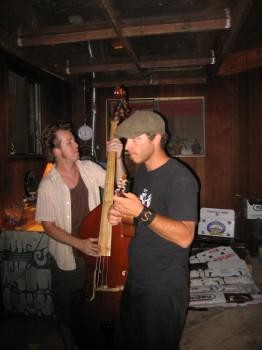
Wooden Wonders

0

“Music saved my life,” says Kevin Russell. “When I was a kid, we moved a lot. One of the constants in my life turned out to be music.”

This appreciation led Russell to organize the Sebastopol Guitar Festival, showcasing the art of making and playing the six-string sword on Feb. 2. “I’m just in love with guitars,” says Russell. “Guitar is probably the most popular instrument in the world, and I wanted to do something that celebrated that.”

Not just another guitar concert, the event highlights luthiery, the craft of building guitars by hand. “We have some of the best guitar builders in the world right here,” says Russell—and those luthiers are building the best guitars ever made, he says. “Some people say we’re in the golden age of luthiery right now.”

The eight luthiers scheduled to give workshops at the event are all local, differing from the much larger Healdsburg Guitar Festival, a bi-annual event attracting talented craftsmen from around the globe. Luthiers scheduled to speak at the Sebastopol Guitar Festival include acoustic guitar builder Bruce Sexauer, arched-top guitar specialist Tom Ribbecke, and Harry Fleishman, who runs a luthiery school.

Films about legendary guitarists screen throughout the day in a separate room before the main event at 8pm, when Stevie Coyle and Mike Dowling take the stage. “They’re not the kind of guys that would get attention from the mass media,” says Russell. “But they’re stunning, stunning musicians.” Dowling is a former session guitarist who spent his time in some of the biggest studios in Nashville. “I think the guy is one of the best guitar players on the planet,” Russell gushes.

Russell’s enthusiasm for music stems from a young age. “I fell in love when I was five years old looking at my uncle’s guitar. I know it sounds weird, but I actually had a viceral experience in my body,” he says. “I didnt feel that feeling again until I fell in love with the first girl I fell in love with.” He now plays both electric and acoustic guitar in several bands, including the Rhythm Rangers and the Country Trainwrecks.

Even guitars made in the same factory by the same company in the same year can have different qualities. Some call it “tone”; others have more mysterious names for it. Whatever that special quality is, it’s irreplaceable. Russell sums it up understatedly: “Every guitar sounds different.”

Vermeil Wines

0

The main problem in pairing Super Bowl party food with suitable wine is the objections that will have already arisen before I get to the end of this sentence. Is it not an insult to the spirit of a quasi-national holiday dedicated to consuming buckets of corporate beer and bags of high-saturated fat snacks, all while celebrating an athletic contest—in between multimillion dollar advertisement from those selfsame corporate beer giants?

Not if Dick Vermeil has something to say about it. Just ask him, he’s right here. The legendary coach who led the St. Louis Rams to victory in Super Bowl XXXIV is here in cardboard likeness, anyway, beside an enormous bottle of wine (a Superthuselah?). A Calistoga native, Vermeil is entrenched in Philadelphia, but he comes out during harvest to tool around on a tractor and catch the Calistoga Speedway’s sprint car races, which his father founded 75 years ago.

Remodeled since our last visit, the space hosts a museum of Vermeil’s long career. You can enter a drawing to win an autographed football, or pose for a picture with Vermeil’s stand-in. Mary Sue Frediani, whose parents met while hanging out at Louis Vermeil’s auto-body shop, runs the tasting room; husband Paul Smith is the winemaker. All the grapes are sourced from the Frediani and Luvisi vineyards.

If the football on the label isn’t permission enough to enjoy the light, fresh and pink 2012 Cabernet Sauvignon Rosé ($20), try the barrel fermented 2011 Sauvignon Blanc ($24), with a baked-pear richness you’d expect from Chardonnay. Pair with baked brie en croute, if you’re having that kind of party.

Smith’s OnThEdge 2009 Charbono ($40) has a spicy, blueberry aroma and a fine, dry finish; buffalo wings might overpower it, but if there’s any pan-seared duck breast with tamarind sauce on hand, that’s the ticket. Fans save the 2009 “XXXIV” Proprietary Red ($42) for special game days; turn to the 2008 Luvisi “1908” Vineyard Zinfandel ($38) for the brightest cherry fruit of this lineup. Nonna Frediani’s Rosedale Red ($19.57) is rustic and ready for a big slab of lasagna.

What about potato chips? The 2009 Late Harvest Sémillon ($18) has just the right amount of sweet peach nectar flavor for a winning sweet-and-salty pairing. And what a great picnic wine—for those nonconforming sorts who can not buck up and take an interest in either commercials or sports franchises, even for one day. Poor folks have got the beaches all to themselves.

Vermeil Wines and OnThEdge Winery, 1255 Lincoln Ave., Calistoga. Sunday–Thursday, 10am–5:30pm; Friday–Saturday, 10am–8pm. Tasting fee, $12. 707.341.3054.

It’s Swinth

0

I guarantee you this: the name Robin Swinth was on the lips of Santa Rosa City Council members well before the interview process to replace Susan Gorin’s council seat unfolded this past Monday. Swinth was being mentioned by council members as a high-probable pick well before the 16 other applicants turned in their papers to city hall—and, yes, even before the open applications themselves were available for pickup to the general public.

Was Swinth a foregone conclusion, and Monday’s interview process a sham? Not exactly; other candidates, Hans Dippel primarily, were also spoken of as contenders. But in hearing what I heard firsthand (when you’re an editor of a paper, your ears become well-tuned to loose lips), I can’t help but agree with the common feeling that Monday’s production was at least in part a requisite bit of political theater.

That said, Swinth is, to be clear, an excellent choice. She has the experience for the job, with past responsibilities on the Planning Commission and the Board of Public Utilities. She aced her interview. As of this writing, she appears to claim no allegiance to the so-called pro-business or progressive sides of the council, and that’s another mark in her favor as the council begins to play nice. Even Scott Bartley and Gary Wysocky, who’ve routinely leveled passive-aggressive insults at each other behind the dais, have of late been claiming the council is no longer divided and saying complimentary things about each other in public. Was there some sort of Winter-break “beer summit” we missed? If so, that’s the sort of backroom deal we would have liked to see.

QuenchThis

In response to customer complaints, PepsiCo Inc. will remove a controversial chemical added to orange Gatorade. Outcry over the chemical, known as brominated vegetable oil, or BVO, had been building over the past year. Patented as a flame retardant, BVO is used as an emulsifier in fruit-flavored drinks and has been linked to a number of health hazards.

Environmental Health News reported on BVO last year, and the story inspired a Hattiesburg, Miss., teenager, Sarah Kavanagh, to petition PepsiCo to remove the chemical. Kavanagh found the story after searching for information on an ingredient she saw on a Gatorade label. What she read inspired her to start a petition on Change.org calling for the removal of BVO from PepsiCo’s products. The petition gathered nearly 200,000 signatures from around the world.

The news that PepsiCo was removing the chemical from Gatorade was reported last Friday in Beverage Digest, though a spokesperson for PepsiCo told the Associated Press that its decision had been in the works for the past year and was not in response to the recent petition. And as the FDA allows low doses of the chemical—15 parts per million—in fruit-flavored beverages, its decision was also not based on any health concerns, according to PepsiCo’s spokesperson. The chemical won’t be removed from other citrus-flavored sodas made by PepsiCo, such as Mountain Dew.

BVO was patented by chemical companies as a flame retardant, and has been banned in food and beverages in Europe and Japan. In 1970, the U.S. Food and Drug Administration conditionally approved the interim use of BVO in soft drinks. More than 30 years later, BVO’s status is still listed as interim, despite concerns from scientists that the research is outdated and insufficient.

Meanwhile, BVO could be building up in human tissue. In studies with rats, large doses caused reproductive and behavioral problems. And after extreme binges of sodas that contain BVO, a few patients have needed medical attention for skin lesions, memory loss and nerve disorders, all symptoms of overexposure to bromine.

Kavanagh said she got the news about PepsiCo’s decision from a voicemail during her algebra class. She asked her teacher to be excused to go the restroom. “I was very, very excited,” Kavanagh said. “I called my mom and I was, like, ‘Mom, we won!'”

Kavanagh said she’s unsure about the next move in her fight against BVO, but she said “there will definitely be something coming up in the future.”

Healdsburg’s Royal Family

The Diaz dynasty: Molé, Agave and a whole lot of corazón

Deadwood Hwy.

Ghilotti Construction to sell redwoods from Highway 101 for a cool $98,000; meanwhile, open space is forfeited

The Right Thing

SSU's new Ethics Center compromised Shepherd Bliss

Punk’s Not Dead (Yet)

Hardcore forefathers D.O.A. embark on 'farewell tour'

Late Night at the Lanes

Traipsing through the North Bay's few remaining bowling-alley bars

Letters to the Editor: January 30, 2013

Letters to the Editor: January 30, 2013

Wooden Wonders

Day-long guitar fest hits Sebastopol

Vermeil Wines

It's Late Harvest Sémillon time

It’s Swinth

I guarantee you this: the name Robin Swinth was on the lips of Santa Rosa City Council members well before the interview process to replace Susan Gorin's council seat unfolded this past Monday. Swinth was being mentioned by council members as a high-probable pick well before the 16 other applicants turned in their papers to city hall—and, yes, even...

QuenchThis

Teen gets flame retardant pulled from Gatorade
11,084FansLike
4,446FollowersFollow
6,928FollowersFollow