Early Adopters

0

It’s 2:30pm, a time Beth Hall calls her golden hour.

The reason is simple: her four-and-a-half-year-old Tyler is at preschool, and everyone else is down for a nap. That includes three-year-old Piper, 18-month-old Quinn and, as of this year, her newly adopted children from the Democratic Republic of Congo—three-year-old Grayson and two-year-old Charlotte.

From a bedroom down the hallway, we hear movement and a few cries. Hall pauses to listen.

“I gauge who’s crying to see how much work it’s going to be,” she says.

Four weeks ago, the Santa Rosa mom and her husband, Mike, came back from the DRC with the two new additions to their family. With five children under age five, two of whom only speak French, the experience has been compounded by the poverty and societal trauma that, until a month ago, was their adopted children’s present. And while this adoption no doubt marks a turning point for the two, it’s a transition that hasn’t exactly been easy.

Hall began considering adoption when she was told she might never have children, an assessment that obviously turned out to be wrong. But even with biological children, the couple knew it was something they wanted to pursue. When they began learning of the massively underreported conditions in Africa’s second-largest country, they turned their attention there.

Since 1998, the DRC has been the site of massacre and sexual violence so overwhelming that the few writers covering it tend toward comparison rather than digits. Incited by the same militant refugee group responsible for the Rwandan genocide, the First Congo War—sometimes called the African World War—involved nine countries, 20 armed factions and has claimed the lives of roughly 5.4 million people. A 2006 report commissioned by the UN relief effort UNICEF puts it like this: “[E]very six months, the burden of death from conflict in the DRC is similar to the toll exacted by the 2004 Indian Ocean tsunami.”

Though the exact number of rape victims in this bloody travesty is unknown, the report estimates them to be in the hundreds of thousands. “Sexual violence is consciously deployed as a weapon of war,” it states. Abortions are punishable by imprisonment, and yet women and girls who are raped and become pregnant often become social pariahs, rejected by even their families, according to the document.

Considering all this, a scene witnessed by Hall makes tragic sense. She was in the DRC, in an area far from military occupation but still suffering from poverty that afflicts roughly 70 percent of the country’s population, according to Children’s Rights Portal.

“A mom walks by with four or five kids, and she’s holding a little three-month-old,” she recalls. “She comes up to us, to a man who was with us, and asks him to take her baby. She was serious. He very kindly said no, and so she asked again, pushing her baby toward us. She just looked like a mom. She just looked like a regular lady.”

Parents routinely abandon children they can’t care for in public places, Hall says, hoping desperately that something better than the life they themselves can give will come along. According to Children’s Rights Portal, the country is home to roughly 70,000 children living on the streets.

The new mom asks not to discuss what she knows about her children’s past, for the sake of their privacy. But she adds that she doesn’t know much.

“A lot of people will never know their kids’ stories due to the nature of the abandonment,” she says. “We hope to just give them a rich knowledge of their history, and to know that while they were not unloved, the hope is to give them a better life, or a life at all.”

Seated on her living room floor, Hall details the highs and lows of the family’s first tumultous month together, which she likens to a roller coaster.

“Adoption, especially international adoption, can be romanticized,” she says, “and while I really did not do that, it’s tough. They’re traumatized by their loss, and mourning as well as a two-and-half-year-old can.”

That morning, for example, Charlotte watched Hall put her shoes on and immediately started crying.

“I just took my shoes off, and I was like: ‘Mommy’s not leaving,'” she says.

But the high points are there, too.

“One moment can be so difficult, they act out all of their trauma on top of the trauma of just being three, and then the next moment they’re so sweet and you think they can’t get any more darling,” Hall says.

The Halls adopted through a faith-based organization called Compassion for Congo, and Beth recommends that parents trying to adopt internationally learn as much as they can about the organization they’re going through, to avoid bizarre situations enabled by language and cultural barriers and for-profit adoption agencies. In 2009, for example, This American Life did a story on a Samoan agency that took children from their families in what the biological parents thought was a boarding program, and the American parents thought was a done-deal adoption.

“Ask a lot of questions, not just of your home-study agency, but of where you’re getting the kids, because it’s easy for them to be very vague,” she says.

She also recommends that adoptive parents get as clear a picture of the foster home or orphanage as they can, and try not to be led by blind idealism. Reactive attachment disorder, which can occur when a baby or young child is passed between primary caregivers, is a psychological affliction that can come with abusive or neglectful homes, she says.

“It feels really good to look at such a huge problem like the Congo or abandoned children, and then to look in my kids’ eyes and say, ‘I cannot help all of them, but I can help you two,'” she says.

Street Script

0

Fifty-six years ago, when he was eight, Audie Foote’s life changed. It would be decades, though, before he fully realized it.

“I was with my mom,” he recalls. “We were walking in New York City, and I saw a homeless man, this derelict, and I made some kind of joke. I made fun of him.”

His mother stopped in her tracks, right there in the street, and told her son a story, a true story, something that had happened to her shortly after World War II. From that moment on, Foote was never unkind to street people again, and that story has stayed with him ever since. Now that story is being told again, this time as a stage play, The Angel of Chatham Square, opening this weekend by the Raven Players.

“I wrote it as a one-act for a short play festival the Raven was having a couple of years ago,” he says of his first stab at playwriting. “People were just incredibly moved by the story, so I decided to turn it into a full-blown two-act play.”

Directed by John DeGaetano, the play takes place in 1948, when Foote’s mother, a waitress, was required to wait each night after midnight at a bus stop near Chatham Square in New York’s notoriously rough Bowery district.

“The first night,” says Foote, “she was waiting for the bus, and this guy approached her, a scary guy, clearly with evil intentions. Suddenly, this homeless guy appeared, and he protected her until her bus came. The next night, when she got off the bus at Chatham Square again, this guy who’d saved her was there waiting, to watch over her again until her connecting bus arrived.”

Gradually, the one fellow became a small crew of guardians, and as she got to know them, learning their stories as she waited for her bus, she decided to return the favor.

“She started bringing them doggy bags from her restaurant,” Foote says. “She brought them my father’s old clothes. She brought them cigarettes. They started calling her the Angel of Chatham Square.”

Foote, who’s appeared in close to 20 plays over the last seven years, plays one of his mother’s beloved street guardians. The experience of watching his mother’s life-changing tale blossom into reality has been, he says, surreal—and incredibly rewarding.

Foote is fairly certain that Angel will not be his last play.

“I know a couple of other stories,” he laughs.

I’m Just a Po’Boy

0

In a gruff, slightly drawled voice, New Orleans transplant Rob Lippincott describes the food at his Healdsburg restaurant, the Parish Cafe. “These dishes haven’t changed in over a hundred years, and I don’t want them to,” he says on a sunny afternoon on the veranda of the converted 1860s home. “You can put your Californication on everything, but don’t do it to my food.”

What started as a bustling beignet business at the Santa Rosa and Windsor farmers markets four years ago blossomed into a full-blown Naw’lins po’boy shop late last year. While delicious, the place is decidedly NSFD (not safe for diets). “Look, it’s fried,” says Lippincott of the sandwiches so close to his heart. “But ain’t nothing wrong with that. It’s a beautiful way to cook.”

Before the po’boys start flowing at 11:30am, breakfast at Parish Cafe is positively decadent. If it doesn’t stick to your ribs, it’s not coming out of the kitchen. Pain perdu ($9), French toast with toasted bananas and pecans in a bourbon sauce, constitutes a wonderfully sneaky way to have dessert for breakfast. The crawfish and andouille omelette ($11) boasts color and texture so perfect it looks Photoshopped.

The po’boys are the main squeeze, though. Served on Healdsburg’s own Costeaux bread, these monsters come in eight- and 12-inch sizes, the larger often split for two people. Rookies can start with the ham and cheese or turkey ($8–$11), but serious eaters should try the fried seafood sandwiches with shrimp, oyster or catfish.

The best is the half and half, with oyster and shrimp ($12–$16). A fresh ocean taste permeates the fried goodness and mayonnaise, satisfying those naughty inner cravings while staying unbelievably light and crunchy. One hand holds the sandwich, the other holds the uncapped Honkey Donkey, a hot sauce to be liberally applied before each bite.

As if the regular menu isn’t tempting enough, Lippincott gives a peek into the restaurant’s secret menu. Deep fried pickles, mushrooms or green tomatoes? Just ask. The aforementioned half-and-half po’boy covered with debris gravy (trimmings from roast beef simmered for hours into gravy) can be had by whispering “the Peacemaker.” And Lippincott’s favorite off-menu item is the Frankenstein: fried catfish, oyster and shrimp covered in debris gravy. It comes with two burly guys to carry you out to your car after the food coma sets in (unnecessary disclaimer: it actually doesn’t).

Lippincott, a former charter boat captain, started his culinary career at a po’boy shop/dive bar in New Orleans. “In New Orleans, po’boys are everywhere,” says Lippincott. “It’s what New Orleaneans eat once or twice a week. All the recipes here, they come from my mom, they come from my grandma.”

Future plans include outdoor entertainment on a gaslamp-lit patio, and in May, a return to Santa Rosa and Windsor farmers markets selling those famous beignets (which are also available in the restaurant).

“Healdsburg, as hot as a food spot as it is, it’s all geared toward the tourists, nobody’s thinking about the locals,” says Lippincott. “I want somethin’ else. I want a po’boy.”

Parish Cafe, 60-A Mill St., Healdsburg. Wednesday–Sunday, 9am–3pm. 707.431.8474.

Salad Days

0

The university president and every undeclared freshman at Sonoma State University have at least one thing in common: they’ve probably all eaten salad grown by environmental studies junior MacKenzie Hart.

Last year, Hart started a program with grants from both the California Rare Fruit Growers and SSU to grow food on unused plots of land in residential communities outside of the school. “I just left about 200 flyers around the neighborhood,” he says, and now has three plots of land tended by seven students, growing several varieties of lettuce.

Now that lettuce supplies much of the salad served on campus.

The program is making a profit and giving students in the cafeteria (and diners in the fancier University Club restaurant) a chance to enjoy student-grown produce. “One of the coolest parts about this project,” says Hart, “is the stuff lasts longer because I’m delivering it usually within the hour of it being picked.”

All the student owners of the gardens have jobs in addition to working the land. “I had this desire to be in a production-based space because I wanted to test how much a person could produce in their spare time, in the time we spend checking Facebook,” says Hart. With a greater variety of veggies planned for the spring, he’s hoping the trend catches on and other students will like—or dig—the idea of gardening.

Hotel Hubbub

0

Depending on whom you ask, the Hotel Petaluma has either been an important safety net for residents on fixed incomes or a flophouse for drug users and ne’er-do-wells. But last week, the building’s new owner, Terry Andrews, decided it would be neither. Residents received 30-day eviction notices, with some of the longer-term residents allowed to stay until April 15.

Andrews’ plan is to refurbish the building, built in 1923, to its former glory, and reopen it as a nightly hotel charging $65–$90 a night. (For many rooms, the bathroom is down the hall.) The city will stand to gain hotel tax, while some note, correctly, that downtown Petaluma could use more hotel rooms.

Others are not so swayed. “There are people here who are handicapped and have been here for 10 years, 15 years, and they have to leave,” says resident Mark Perdue. “There’re gonna be a lot of homeless people in a couple months outside in the streets of Petaluma.”

Street-level retail owners are worried, too. Vinh Pham, 46, has operated T&T Nail Salon on the ground level of the hotel on East Washington Street for 12 years. Pham reports that last week, Andrews came to the salon and announced his intention to let the salon’s lease expire next year. “He decided we would not continue in this place,” Vinh says. “He said he wanted a coffee shop or a sandwich shop instead.”

In December, after he increased tenants’ rents, Andrews told the Press Democrat, “We’re not throwing people out.” Last week, the hotel’s smashed office windows were boarded up, causing speculation that perhaps someone had retaliated against Andrews for going back on those words.

Letters to the Editor: February 27, 2013

The Post Office

Thank you to the Bohemian for the great article on the Post Office (“A First-Class Institution,” Feb. 27). This false “crisis,” brought on by the federal government’s debilitating demand that the USPS pre-fund its health benefits 75 years into the future, is one of the biggest lies of our time. No other papers seem willing to tell the truth. Instead, they praise the so-called good idea of cutting Saturday delivery without saying the real reason the post office is in trouble: it’s getting robbed.

Petaluma

More on Mate

Booooo! to the uninspired cover story written by Jay Scherf on Mate (“Bottling the Tradition,” Feb. 13). His angle of traditionalism from the Argentine perspective seemed to be just a thinly veiled dislike of the Guayakí company. It was petty and very unsupportive of a great local company.

Santa Rosa

Sorry to the Guayakí supporters, but this was a great and very funny read. It’s worth looking at how the people who first made use of yerba mate regard what we’ve done with it. Reminds me a bit of how tobacco was used traditionally, and what we’ve done with it since.

Via online

Jay Scherf’s article seems to me more an indictment of the American consumer than of Guayakí’s marketing. Think about it. If Guayakí could manage to sell traditional gourds and shared straws to a public that is addicted to single-use bottles, it would be a miracle! The fact is that we in the U.S. are spoiled. One need look no further than the clogged streets of Sebastopol to find hundreds of so-called environmentalists behind the wheels of cars, who are too lazy or entitled to ride their bikes to Whole Foods to buy beeswax soap and hemp beer.

As the article points out, Guayakí is on the more conscious end of drink manufacturing, with rainforest-protection efforts and work with local farmers. Those who think the article was a criticism of Guayakí are probably just trying to obscure the real target of their own consumerist patterns.

Cotati

The SRJC Job Board Is Free

Contrary to a reader’s letter published on Feb. 20, the SRJC job board is in fact a free service to all employers, current students and alumni of SRJC. The SRJC is committed to the success of our students, and committed to support the community at large. In fact, in fulfilling our mission, we are dedicated to exercising our public responsibility for sound resource development and use.

One such resource is the SRJC job board. The Career Development Services Department and Student Employment are able to expand our services by contracting with College Central Network. Unfortunately, Tamara went directly to the College Central Network site rather than visiting the Santa Rosa Junior College student employment website. The College Central Network does charge to list open positions to individual employers—and this is why the SRJC pays an annual fee to access its services. By paying this fee, employers, SRJC students and SRJC alumni can use College Network free of charge. It gives all registered users access to a nationwide job search, or jobs specifically listed for the communities in the SRJC service area. As a matter of fact, we have student employees on hand to support any business that might have trouble navigating the employer registration and job-posting services.

We are thrilled that Tamara’s internship turned into a permanent position—what a great SRJC success story! In order to create more such success stories, we will be holding a career and internship fair for current students and alumni on April 24. The theme is “Put Your Education to Work.” Everyone is welcome to contact us for more information at 707.527.4941.

Santa Rosa Junior College

For a Dancer

I know Erma Murphy personally, and she is just such a delight to work with that it is no wonder she has arisen to such a level of measurable success in the industry (“Not Fade Away,” Feb. 13). I am so proud to know her and call her my friend. She is a true treasure to this community.

Via Online

Write to us at le*****@******an.com.

And the Winner Is . . .

0

Halfway through last year’s Stage One Theater Arts awards, held annually in downtown Santa Rosa, a curious passerby stopped to take in the scene at the Glaser Center, where a merrily multicolored crowd, youthfully dressed to the nines, was milling around the lobby during the show’s intermission. Once informed he had stumbled upon the Stage One Theater Arts awards, the inquisitive gentleman pondered that information for a moment.

“Stage One. Stage One,” he repeated, eventually adding, “That’s good. There’s still time to find a cure.”

Created five years ago by actor-writer-director and SSU graduate Lito Briano, the SOTA awards honor excellence in Sonoma County theater. But they were initially designed as an on-campus celebration of Sonoma State University’s theater arts program.

“I just wanted to create an extra bit of excitement and energy,” Briano says. “From the beginning, I envisioned it as something that might someday reach beyond SSU to the entire theater community of Sonoma County.”

The following year, Briano took the SOTAs off campus, and began the long, slow process of turning them into something the entire community could embrace.

“It’s a work-in-progress,” says Briano, who admits that some of the youth-quake shenanigans of the first few years—co-hosts in boxer shorts; musical numbers in questionable taste—might have been less elegant than they were (undeniably) crowd-pleasing. This year’s choice of host, Sixth Street Playhouse artistic director Craig Miller, should lend some extra class and credibility.

As for the awards themselves, with nominations and voting patterned after the Academy Awards, Briano has made a huge effort this year to increase the voting membership by reaching out to every theater company in the area. From the original 20 theater students who acted as members of the Stage One Theater Arts Awards Academy, the total SOTA membership now numbers 92 people and counting.

Still, there are some major players in the Sonoma County theater community who prefer to sit the SOTAs out, concerned that the awards don’t accurately represent what’s going on in the area. Winners, for example, tend to be those shows presented by the area’s younger and newer theater companies.

“There are awards, and then there are awards,” says Elly Lichenstein, executive artistic director of Cinnabar Theater. Lichenstein declined the invitation to become a voting member, though Cinnabar’s shows—and Lichenstein herself, who gave one of the year’s best performances in So Nice to Come Home To—are still eligible for a number of awards. “My feeling about SOTA-type awards, including Best Of awards and all of those things, is that they tend to be a bit too self-congratulatory. ‘Vote for me! Vote for us! Tell all your friends to vote for my performance!’ That doesn’t have any real value for me.

“I can’t in good conscience call my theater company ‘the award-winning Cinnabar Theater,’ if winning that award really just meant I was the one with the most Facebook friends.”

In fairness to the SOTAs, the Facebook scenario Lichenstein describes better fits the Broadway World Awards, in which anyone at all can log on and submit a vote. Though membership to the SOTA Academy is fairly easy to obtain for those in the theater scene, it isn’t the kind of operation where friends and family can affect the outcome of the vote.

“I do think that theater awards can have value,” remarks Beth Craven, artistic director of Main Stage West theater in Sebastopol, and a former associate professor of Theater at SSU. “Awards ceremonies can rally the troops and get your patrons excited, and I do think it can be a good thing.”

According to Craven, what the SOTAs need to do next is establish stricter criteria for voting members, requiring each voter to see a minimum number of shows at a variety of theater companies. The Bay Area Theater Critics Circle, in comparison, requires members to see a minimum of 40 shows per year, and no one is allowed to vote for a show they did not see. Unfortunately, the Critics Circle awards rarely ever honors shows north of Petaluma.

“There are ninety-something shows happening every year in this area,” Craven says. “I try to get out and see as much theater as I can, but last year I never made it to SSU to see anything they were doing, and I doubt many of them made it to Main Stage West, so I don’t feel it would have been fair for me to be deciding what was the best in Sonoma County.”

Ultimately, though, according to Briano, the SOTAs were designed to be less about winning and losing than about celebrating Sonoma County theater and theater artists, new and experienced, young and old.

“The SOTAs are a great big party,” he says. “It’s how theater artists get together to support all of our efforts. Basically, it’s just a way to have a good time together.”

The Seedlings

0

At Barnard College, the all-woman’s school in New York, Judy Butterfield hunkered down with history. But once she graduated, she came home to California and embarked on a three-month internship at Green String Farm under the tutelage of the legendary Bob Cannard, who has educated more organic farmers than any other farmer in Northern California.

Now 23, Butterfield lives with friends on True Grass Farms in Marin County and works at Grow Kitchen—a new West County hub for food, gardening and media on the outskirts of Sebastopol—where she weeds, mulches and struggles to stop soil erosion. She’s fast becoming a jill-of-all-farm-trades, though she says she “cowers and wonders at the bigness of it all.”

At Green String, she worked with piglets and rabbits, and as a Woofer in France, she acquired agricultural and communication skills. “I’m still a novice in the farming world,” she says. “In college, I learned how to deconstruct everything. I realized that I wanted to make and grow things and live in and with the landscape. That’s what I’m doing now.”

At a recent Mardi Gras dinner, Butterfield joins a lively group of two dozen young farmers and ranchers—nearly all of them novices under the age of 30—at Grow Kitchen, where they eat scrumptious gumbo and white rice made by Matthew Elias, the creative chef at Saltwater Oyster Depot in Inverness. I don’t see an ounce of fat on anyone in the room, nor a fatty entree on the large wooden table where potluck salads and pastas are arrayed. A lean, but not a mean group, these under-30 farmers eat meat proudly and raise healthy animals on farms such as Green Valley Village, Pocket Creek, and Green String—from Valley Ford and Petaluma to Graton and Occidental.

The evening brings Judy Butterfield together with Evan Wiig, Eliza Murphy, Guido Frosini and their friends and co-workers. As many women populate the dinner as men, many in jeans and flannel shirts, a few in overalls and work boots, and everyone wearing Mardi Gras beads. There isn’t a wallflower in sight; one and all converse intensely in twos and threes about food, farming and the art of slaughtering pigs, rabbits, ducks, chickens, cows and the high and mighty hog.

Hard-working realists, they share information about pasture land, pig genetics, the best breeds of chickens, and they talk about scythes, hoes, pitchforks, shovels and tools for picking apples and for peeling them. Equipped with iPhones and laptops, they’re the most plugged-in agriculturalists in human history, and unabashedly candid, too. No one I talk to uses the euphemism “harvest” that I often heard just a few years ago when I visited farms and ranches in Marin and Sonoma to gather information about the men and women who raise organic beef and boast about their beloved cows. Slaughter—not harvest—is the word that echoes tonight across Grow Kitchen.

From 2006 to 2008, when I made an eye-opening farming odyssey across Northern California, most of the young agriculturalists I met were fanatical about growing delicious carrots, delectable peas and the sweetest of melons. That was then. Increasingly, the new batch of back-to-the-land farmers are raising animals organically and sustainably, and, when their beasts are ready for market, they’re cutting heads off, butchering and carving up carcasses. They’re not a squeamish lot afraid of a little blood, mounds of manure or mending fences on bitter cold February mornings. (Not surprisingly, they’re inspired by Zazu’s Duskie Estes and John Stewart, who work culinary wonders with kale, fava beans, sorrel and more, and who bring out the beauty of bacon and pork belly.)

More than any other person in the room, Evan Wiig, 26, gave birth to this Mardi Gras meet-greet-and-eat at Grow Kitchen, which is owned and operated by entrepreneur par excellence, Jeffrey Westman. Wiig also knows how to market. Until recently, he sat at an editor’s desk at Rowman & Littlefield, the New York publishing house. Now, he helps raise black Angus cows and Blackworth hogs on the spectacular 1,000-acre pasturelands at True Grass Farms.

True Grass Farms is managed by Wiig’s longtime pal Guido Frosini, who was born in Florence, Italy, speaks fluent Italian as well as English, and who wants me to know that he was “baptized in Oakland.” Though he wears a faded T-shirt and jeans, Frosini looks as though he might model Armani suits. If Madison Avenue wants a sex symbol for another “God Made a Farmer” commercial, he surely belongs at the top of the list.

At True Grass, which has been in his family since 1867, Frosini and the crew aren’t just raising farm animals and producing USDA-certified meats; they’re also aiming to “rejuvenate” the fields along the Estero Americano that were severely damaged by decades of overgrazing. To borrow a cliché, they’ve chosen a tough row to hoe, and yet it’s spiritually uplifting and deeply satisfying.

Like Butterfield, Westman and Frosini, Wiig feels a keen sense of connection to the community. “I think I can speak for most of us when I say that we want to blend consumers and producers,” he tells me. “When shoppers go to a market, such as Whole Foods, they usually depend on labels for accurate information about what to buy or not buy. We’re not so much about labels as we are about conversations. Talk to us, and we’ll tell you about our chickens, eggs and pork. You’ll learn much more, I think, than you’ll learn when you just read a label. You’ll connect to the farmer, the land and the animal he or she raises.”

Butterfield might well be, in her own words, a “novice.” Hell, once upon a time, master farmer Bob Cannard was a novice. Like most of the under-30 crowd at Grow Kitchen, Butterfield has the bigness and boldness of the novice, and the novice’s sense that anything and everything is possible. The day after we meet, she sends an email in which she writes, “Six months into farm life, I still have that feeling you have when you’re shaken awake from a very vivid dream in which you’re running fast from nothing and the winding streets appear as if from nowhere.”

What would Bob Cannard say to Butterfield and today’s novices in fields and slaughterhouses? Having heard Cannard wax poetic about slow food, slow farming, Alice Waters and Carlo Petrini, I think I know.

“Right on,” he’d say. “And keeping on growing organically!”

Brooklyn Angel

0

It would seem only natural that Carrie Rodriguez became a songwriter. After all, songwriting is in her blood. But as the daughter of David Rodriguez, an acclaimed singer-songwriter, Rodriguez says the connection to her father made her hesitate exploring her songwriting talents.

“If you’re the kid of someone who’s known for what they do and they’re really good at it, which my dad is—he’s a very renowned songwriter—you don’t want to go there,” Rodriguez says in a phone interview. “It’s a little intimidating.”

But her plans changed in 2001 when Rodriguez, then performing in a band called Hayseed, was spotted by Chip Taylor. Taylor, who wrote “Wild Thing” and “Angel of the Morning,” offered to take Rodriguez under his wing—and on the road.

This partnership led to three albums as a duo, and Rodriguez’s turn as a vocalist and songwriter with the 2006 album Seven Angels on a Bicycle. The CD gained enough notice that Rodriguez landed a deal with major label EMI Records. But almost as quickly as she stepped up to the big leagues with her sophomore album, She Ain’t Me, Rodriguez was dropped from the roster.

“So much of my early musical career was a whirlwind. It happened so quick,” Rodriguez says. “It left me kind of just wanting to catch my breath and wondering, well, I’ve enjoyed all of this, but what is truly my voice, when it’s not being influenced by these amazing songwriters and record label executives who are hoping for me to have a hit. I needed some time to figure out what it all meant.”

She bought herself some time by doing a covers record, Love and Circumstance, which helped her reconnect with her musical roots and figure out her next step as a songwriter and solo artist. With her latest album, Give Me All You Got, Rodriguez returns, sounding more confident and willing to stretch beyond those roots.

“Devil in Mind,” one of a pair of songs Rodriguez co-wrote with Taylor, is a gritty, spirited tune with a bluesy chorus and bits of rock and folk elsewhere. “I Cry for Love” is an edgy vocal tour de force that combines blues, rock and country. The gently swinging “Tragic” has a bit of torch song jazz in its smoky, late-night sound.

On her first tour in support of Give Me All You Got, Rodriguez is touring only with multi-instrumentalist Luke Jacobs, and says the variety of instruments she and Jacobs are able to play keeps things fresh.

“We can really take liberties that you can’t take when you have drums,” she says. “So we can stretch solos out in different ways, change tempos. Usually it sounds good.”

Public Preschool: The Oklahoma Story

0

This IJ story chronicles a coalition in Marin advocating for universal preschool.
The article summarizes a survey reportedly showing a high level of support for the concept, stating:
“The initiative’s informal survey last year showed 86 percent of Marin voters would support a county “children’s fund,” 74 percent would support more sales taxes to pay for it and 68 percent would support more property taxes. But before they propose anything specific, members said they must conduct a scientific poll to gauge support.”

Oklahoma was the first state to offer public preschool.

  • Oklahoma was the first state to offer public preschool.

Of course, go to the comments section and you’ll find a slew of peeved taxpayers exercising their First Amendment rights on a very different note than the survey. Nanny state, big government, entitlements, crime, welfare, overpopulation—all the fun stuff that usually comes with any kind of discussion about the notion of public preschool.
So instead of looking at the usual polarized players, why not go to a story that not only shows many of the varying layers of this complex issue, but is also downright awesome. Perhaps you know that Oklahoma, maybe the most conservative state in the country, has publicly funded preschool. And perhaps you know that it offers universal preschool not because it was voted upon, but because it was more or less snuck in. And perhaps you know that the people who snuck it in were not those Godless liberals who want to indoctrinate kids with their socialist agenda, but a group including business-folk and conservatives who did the research and thought it just made good fiscal sense.
You can listen to this fascinating story here, on This American Life.

Early Adopters

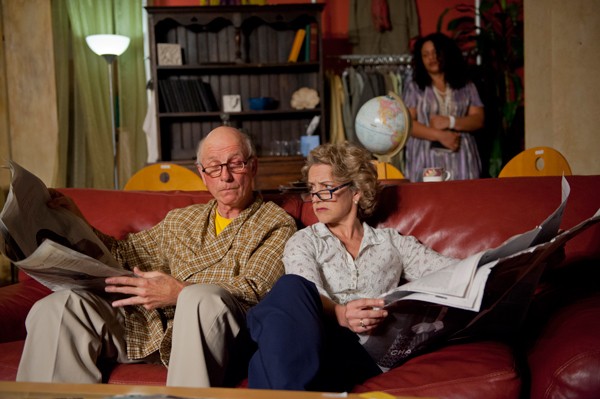
When a local couple traveled to the Congo to adopt a child, they returned with two

Street Script

'Angel' a touching true story of homelessness

I’m Just a Po’Boy

Parish Cafe brings traditional New Orleans sandwiches and breakfasts to Healdsburg

Salad Days

The university president and every undeclared freshman at Sonoma State University have at least one thing in common: they've probably all eaten salad grown by environmental studies junior MacKenzie Hart. Last year, Hart started a program with grants from both the California Rare Fruit Growers and SSU to grow food on unused plots of land in residential communities outside of...

Hotel Hubbub

Depending on whom you ask, the Hotel Petaluma has either been an important safety net for residents on fixed incomes or a flophouse for drug users and ne'er-do-wells. But last week, the building's new owner, Terry Andrews, decided it would be neither. Residents received 30-day eviction notices, with some of the longer-term residents allowed to stay until April 15. Andrews'...

Letters to the Editor: February 27, 2013

Letters to the Editor: February 27, 2013

And the Winner Is . . .

How do Sonoma County's own Tony-style awards work?

The Seedlings

Under 30: the brave new world of ranchers, farmers and hog butchers

Brooklyn Angel

Carrie Rodriguez gives it all she's got

Public Preschool: The Oklahoma Story

This IJ story chronicles a coalition in Marin advocating for universal preschool.The article summarizes a survey reportedly showing a high level of support for the concept, stating: "The initiative's informal survey last year showed 86 percent of Marin voters would support a county "children's fund," 74 percent would support more sales taxes to pay for it and 68 percent...
11,084FansLike
4,606FollowersFollow
6,928FollowersFollow