Start of Something Big

0

Gabe Meyers walks the empty grounds of the Napa Valley Expo, imagining how it’s going to go off. Some workers assemble scaffolding down the way. The occasional golf cart whizzes past. Banners out front announce a barn dance for the local 4-H chapter and the Napa-Solano Home and Garden Show.

Meyers’ event is a little bit bigger—and louder. BottleRock Napa Valley, in fact, is the largest, craziest event that’s ever been planned for Napa. Sixty-eight bands. Sixteen comedians. Four stages. Up to 35,000 people each day.

4-H barn dance, eat your heart out.

“If there’s one way to protect the future,” Meyers says confidently, “it’s to go big. We’re on the map now. Our goal was to establish this as a must-do, for artists and fans alike, early on in the festival season.”

With big size comes big headaches. Today, a week before BottleRock kicks off with a pre-festival concert by Macklemore and Ryan Lewis, Meyers has been pummeled with logistics. He’s been in even more meetings with the city today. He’s just talked again to the fire marshal. A couple days prior, Furthur, his Thursday night headliner, canceled, citing Bob Weir’s collapse onstage the week before in New York.

But Meyers is nothing if not determined, and one can sense he’s certain he’s already won. “Clearly, the response from the talent, the response from the customer—it’s something people want to be a part of,” he says. “This is already happening; we’re not going backwards on this.”

In other words: Napa, open your doors to the biggest, craziest lineup the North Bay has ever seen.

The night before the full BottleRock lineup was announced in January, a photo of a fax on BottleRock letterhead featuring a hoax “lineup” spread around the internet. It listed the Dave Matthews Band, Pearl Jam, Beck, Jack White, Robin Williams, the Pixies, Louis CK, New Order, Fiona Apple and other bands that were surely too good to be true.

But come the next morning’s official announcement, the fake fax lineup had also listed many of what turned out to be verified bands. Flaming Lips. Alabama Shakes. Macklemore. Zac Brown Band. Ben Harper. Bad Religion. Jackson Browne. Andrew Bird. Wallflowers. If you’re reading this, you know the others—the Black Keys, Primus, the Avett Brothers, Kings of Leon, Jane’s Addiction, Dirty Projectors, Violent Femmes, the Shins, Dwight Yoakam, Iron & Wine and many, many mind-boggling more. “Too good to be true” was, well, just plain true.

How’d they do it? Credit must be given to talent buyer Sheila Groves-Tracey of Notable Talent, a Petaluma resident who in the past has booked New George’s in San Rafael and the Mystic Theatre in Petaluma, and who now manages the Uptown Theatre. Both Vogt and Meyers credit Groves-Tracey with being “a huge help” in handling the booking.

But the biggest question is about who’s putting up the money, and on that point, Meyers and BottleRock cofounder Bob Vogt keep quiet. “I don’t think it’s appropriate to discuss that,” says Vogt, in the middle of the fairgrounds’ huge, empty field, soon to be filled with screaming fans. Meyers is only slightly more forthcoming: “The funding specifically for this event has come from a variety of sources: private equity, sponsorships, and ourselves.”

“Ourselves” means two guys who have only a little experience in the concert-promotion business—they’ve held numerous benefits for Giants fan Bryan Stow at Napa’s Uptown Theater, in which Vogt is a partner—and none putting on a festival. Which is what makes BottleRock such a tremendous underdog story. Most festivals of comparable stature are booked by Live Nation, AEG Live, C3 Presents or Another Planet Entertainment. That two Napa locals and a Petaluma talent buyer are presenting BottleRock, with no outside promoter, is more than impressive—it’s got everyone in the industry talking.

[page]

It certainly has locals talking, too. Because 35,000 people is nearly half the population of the city—and because there’s only a handful of roads in and out of town and fairgrounds parking is scarce to nonexistent—some critics of the festival suggest the possibility for disaster.

“People talk about all these logistical issues and everything,” says Vogt, “and I keep coming back to the basic point that it’s as great a lineup as anyone has seen, I think, in a long time. People will figure out how to park and get here when there’s great music.”

Meyers likes to say that the idea for the festival came to him when he was in utero at Altamont—he was born in August 1970—and, in fact, he and Vogt thought about using Altamont’s original location, Sears Point Raceway (now Sonoma Raceway) for BottleRock. Vogt and Meyers also bandied around the idea of a South-by-Southwest–type setup, with concerts at multiple venues around town nightly. But after talks with other promoters, it was decided that the Napa Valley Expo had the type of infrastructure perfect for a festival—power, toilets, buildings, big open fields. And, Vogt notes, the Napa Valley itself provided an alluring reason for a lot of bands to say yes.

“We just thought it would be a historic opportunity for the Napa Valley to come together,” says Vogt, “to kick off something of this size, and of this transformational sort of nature.”

The festival is transformational for Napa from an economic standpoint, as well. Hotel rooms normally going for $329 are going for $799, Meyers says, and “if we average 30,000 people a day, I’m sure there’ll be a calculation coming in around $30 million of economic impact.”

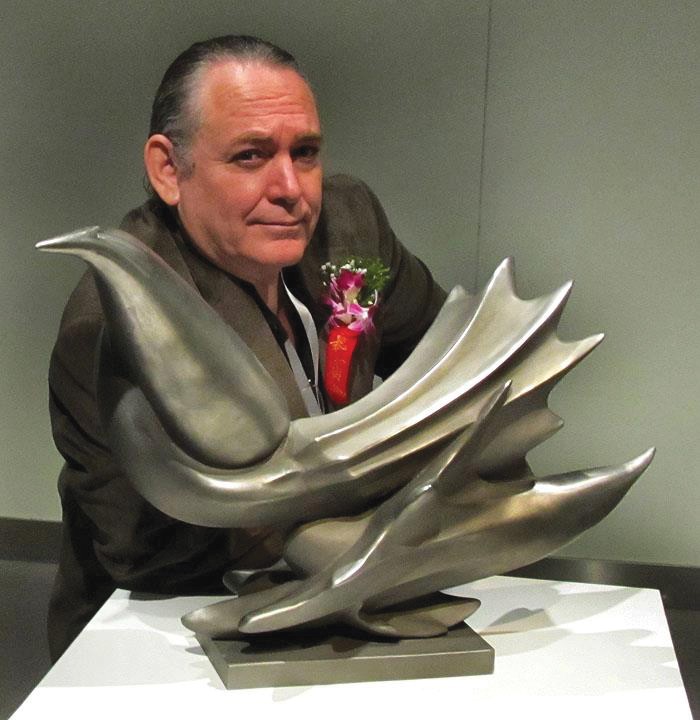
Today, while the large wooden guitars made by Napa artist Richard Von Saal are going in at the Expo, and while around the corner, artists Tim Kopra and Paul Slack construct a triangular sculpture for the VIP area, Vogt says he’s thinking only of preparations for executing everything properly. But Meyers allows a little bit of wistful nostalgia for when the last bands load out and BottleRock is over.

“It is really, really gratifying that so many friends and family have participated. So knowing me, I’ll feel a little bit like summer vacation’s over, ’cause everybody’s gonna disappear,” he says.

Don’t rule out a 2014 BottleRock, however.

“We’ll get back together,” Meyers promises. “We’re planning for next year, definitely.”

[page]

THE BANDS
This is only a select list. For full lineup, see www.bottlerocknapavalley.com.

The Black Keys

What You Need to Know The duo once recorded an album inside an old rubber tire factory in their hometown of Akron, Ohio.

Song You Hope They’ll Play “Keep Your Hands Off Her,” a Junior Kimbrough cover.

From the Gossip Pages In 2011, drummer Patrick Carney’s ex-wife wrote “Snapshots from a Rock ‘N’ Roll Marriage,” about the couple’s tumultuous marriage and eventual split.

Alabama Shakes

What You Need to Know Just see them. Then you’ll know.

Song You Hope They’ll Play “Hold On,” which blows away the Wilson Phillips song of the same name by miles.

Let’s Compare! Singer Brittany Howard gets the Janis Joplin comparison on an hourly basis, but she’s far more reliable live.

Primus

What You Need to Know Primus is led by the best damn rock bassist in the world. Even folks in the pit will stop at one point to gawk at the thunderous pounding and plucking of Les Claypool’s mindboggling fingers.

Song You Hope They’ll Play An incredible claymation video for “Southbound Pachyderm” was made in 1995, involving a kidnapped elephant and an evil dictator. Hopefully, they’ll show the video, too.

Join in the Chant Fans routinely chant “Primus sucks!” at their shows. It’s a term of endearment.

Kings of Leon

What You Need to Know In 2010, the Kings cut their set short in St. Louis because a flock of pigeons decided to shit all over the band.

Song You Hope They’ll Play “Taper Jean Girl,” the last song the band played while pigeons were shitting all over them.

What Could Go Wrong Napa has even bigger pigeons than St. Louis.

Dirty Projectors

What You Need to Know This hip group uses a lot of electronic sounds on record and recreates them live almost perfectly.

Song You Hope They’ll Play The badass rhythm, powerful yet sweet female vocals and sweet ear candy guitar parts of “Stillness Is the Move” are groove-inducing.

You Should Bring Dancing shoes, tight pants, dark sunglasses and a goatskin pouch.

Best Coast

What You Need to Know It’s as if this band were cryogenically frozen in 1994 and thawed out a couple years ago to teach overproduced hipster bands a lesson. And they don’t even know how to use the “three seashells.”

Song You Hope They’ll Play “When I’m with You,” the saddest happy song you’ll hear all day.

Surf’s Up Best Coast is often categorized as surf rock, which is odd considering they don’t surf and their music has nothing to do with the sport. Don’t be fooled.

Café Tacuba

What You Need to Know They’re one of the biggest bands in Latin America and won three Grammy awards for their last album.

Song You Hope They’ll Play That haunting acoustic version of “Maria,” about a beautiful ghost that roams the city at night. And “Chilanga Banda”; Mexico City is famous for its slang dialect that almost no one can understand—and the band put every single catcall and cussword in existence into this rowdy crowd inciter.

What You’ll See Lots of spastic jumping around, Spanish-speakers belting out the lyrics and maybe some artist-inspired communal hugging.

Dwight Yoakam

What You Need to Know The baddest honky-tonker to ever pull a ten-gallon hat over his eyes.

Song You Hope He’ll Play “Little Ways.”

Watch Your Back, Though An occasional actor, Yoakam played an abusive boyfriend in Sling Blade and a psychopathic killer in Panic Room.

Richard Thompson

What You Need to Know He once recorded an album, 1,000 Years of Popular Music, spanning traditional songs from 1068 to Britney Spears.

Song You Hope He’ll Play “1952 Black Vincent Lightning” is as technically thrilling as it is emotionally moving.

As a Laddie Thompson was born in Notting Hill, before the movie of the same name and before the neighborhood got all fancy-schmancy.

Justin Townes Earle

What You Need to Know Steve Earle is his pops; Townes van Zandt is his namesake.

Song You Hope He’ll Play “Harlem River Blues,” with its catchy chorus of “Tonight I’m going uptown to the Harlem River to drown,” is sure to be crowd-pleaser.

What Could Go Wrong The dapper singer-songwriter always looks impeccable, but in front of such a large crowd, in the heat, it’s hard not to wonder if the hair gel will run or bow-tie go askew.

Iron and Wine

What You Need to Know Lead singer Samuel Beam is not related to Jim Beam; his band name comes from a dietary supplement; and his cover of “Such Great Heights” was the wedding song for a certain Bohemian staff writer.

Song You Hope They’ll Play “Sodom, South Georgia” once inspired said Bohemian staff writer to take a road trip through the Peach State until she realized it wasn’t a real place. It’s desolate and hopeful and heartbreaking enough to be real.

Watch the Crowd For White people drinking Jim Beam and crying like fools.

Violent Femmes

What You Need to Know Started busking in Milwaukee and hit college radio with “Blister in the Sun,” featuring the most recognizable bass line from the 1980s.

Song You Hope They’ll Play “Never Tell,” a hypnotic minor-key dirge that the band inhabits and completely transforms live.

So Happy Together Singer Gordon Gano broke up the band by selling “Blister in the Sun” to Wendy’s against band mates’ wishes; they recently kissed and made up.

Rodrigo y Gabriela

What You Need to Know They perfected their magnificent guitar skills playing in a thrash metal band in Mexico City before moving to Europe.

Song You Hope They’ll Play A medley of Metallica and Slayer covers mixed in with “Stairway to Heaven,” and the original flamenco-inspired “Tamacun.”

Viva Obama! They were invited to play at the White House when the Obamas hosted the president of Mexico.

X

What You Need to Know John Doe once punched out a guy at a party in L.A. for making moves on his then-wife, singer Exene Cervenka.

Song You Hope They’ll Play “The Hungry Wolf,” a driving beast of a song.

Is He a Statue? Guitarist Billy Zoom tends to stand immobile on stage, legs spread, strumming and smiling calmly.

Girls & Boys

What You Need to Know These Sonoma County darlings were crowed Best Indie Band at the 2012 NorBay Music Awards.

Song You Hope They’ll Play The heart-wrenching tribute to local guitar legend Johnny Downer, “Johnny’s Song,” which might provoke a few tears in the crowd.

Why They Are Awesome Because only a handful of local artists were selected to perform on the BottleRock stages.

Sharon Van Etten

What You Need to Know Last year’s album, Tramp, keeps making new converts.

Song You Hope She’ll Play “I’m Wrong,” which builds in emotional intensity to inexplicable, joyful terror.

The Page Factor It’s not unusual to see her backing band playing their guitars with violin bows.

Carolina Chocolate Drops

What You Need to Know One of their members actually, legitimately plays a jug.

Song You Hope They’ll Play Although most of their numbers are based on traditional roots music from the Piedmont region of North and South Carolina, they do a mean cover of “Hit ‘Em Up Style.”

Watch the Crowd For Tweens wanting to hear that one song from The Hunger Games soundtrack.

Joan Jett

What You Need to Know Known as the Queen of Rock ‘n’ Roll, Jett was named by Rolling Stone as one of the 100 greatest guitarists of all time.

Song You Hope She’ll Play “Bad Reputation” is the anthem for justifying unladylike behavior of females everywhere.

Watch Out For Lake County biker chicks pummeling frat boys.

This is only a partial list of bands—for full lineup, see www.bottlerocknapavalley.com. Especially make sure to check out the WildCat local band stage inside the festival.

[page]

WHERE DO I PARK?

There are 12,000 spaces for parking at BottleRock. Parking is $20 per prepaid space, $30 the day of the event. VIP pass holders can park for free in special lots. Five people in a vehicle equals a free space. Shuttles to the festival are free.

From the south: Parking lot is at the Napa Pipe property on Kaiser Road. Opens at 9am. Service starts at 10am, with shuttle frequency every 10 minutes; drop off is at Third Street and Soscol Avenue.

From the north: Parking lot is at Vintage High School and Napa High School (weekdays after 5pm, weekends all day). Service starts at 10:30am. Shuttle frequency is every 10 to 20 minutes; drop off is at Clay and Juarez streets.

Free valet bike parking is offered at Third Street and Soscol Avenue.

Round-trip buses are available from San Francisco, Oakland, Concord, San Rafael and Sacramento for $29 per seat.

BUS TRIP

Buses leave at 10am and arrive in Napa in time for the first act. Departure time from the festival is 11pm. There’s also a 1am bus for stragglers.

Bus pickups are: San Francisco Caltrain Station at AT&T Park (700 Fourth St.); San Francisco Union Square (335 Powell St.); Oakland Rockridge BART Station (5660 College Ave.); Concord BART Station (1451 Oakland Ave.); San Rafael, Marin Civic Center (10 Avenue of the Flags); and Sacramento Capitol (10th Street between L and N streets).

For more, see www.bottlerocknapavalley.com.

Kitchen Call

Over a decade after first joining the army in 1992, Scott Shore served as convoy commander of the very first unit to Iraq in 2003, stationed in what he calls “the wild west of Baghdad.” For the first six months he was there, encountering snipers and bombs daily, he was not allowed to contact his wife, Shawna, to let her know he was alive. Six more months of chronic fire took its toll on his body, and he left the service in November of 2004.

“I’ve got a laundry list of injuries,” Shore tells me over the phone recently. “For nine years, I’ve been in constant pain.”

But despite sustaining severe back and neck injuries, broken ribs and clavicle, and a traumatic brain injury, Shore misses the military. Which is why just a few weeks ago, he joined a handful of other vets at boot camp.

Instead of fatigues, however, they dressed in tall white hats and coats. Instead of surveillance and scuttling, they spoke of dashes of spices and slicing on the diagonal. Wielding paring knives and spatulas, six vets and their spouses learned how to trim duck breasts and make soup stock at the Culinary Institute of America at Greystone in St. Helena.

The CIA and the military go way back—to 1946, when its original New York location was founded as a vocational training school for returning World War II vets. Now the prestigious school offers culinary boot camps for vets of Iraq and Afghanistan who were wounded in the line of duty.

The boot camp is just one of the 18 different programs sponsored by the Wounded Warrior Project, a nonprofit serving vets who were injured after Sept. 11, 2001. Founded by a group of post-9-11 vets in 2003, the project is devoted to helping vets transition back to civilian life, because, as their motto goes, “The greatest casualty is being forgotten.”

Admirably nonpartisan (“It’s about the warrior, not the war”), the nonprofit has been a boon to Shore, who was reluctant to partake of their services. “I didn’t think I deserved to take the spot of someone worse off than me,” says Shore, who was unemployed for four years and struggles with post-traumatic stress disorder.

For Shore, who is the main cook in his house, the boot camp was a chance to connect with other vets, sharing stories as well as tips for negotiating the notoriously nightmarish VA. (Eight years after filing his disability paperwork, the VA has finally recognized and compensated him).

After a morning of lectures and demos, vets at the five-day boot camp spend the afternoon applying their chopping, roasting and braising techniques to all manner of poultry, pork and potatoes. They end the day with a shared meal—indeed, a more nutritious and flavorful one than the mess hall variety.

“There is no slacking, and they come prepared,” says CIA instructor chef Lars Kronmark, who is impressed that some vets bring their own knives, utensils and, in the case of a vet with only one hand, a specially designed cutting board. “It had spikes that acted as his holding hand,” Kronmark marvels, “so he was still able to chop everything.”

The boot camps are held in the CIA’s quieter first-floor Viking kitchen because, as Kronmark points out, “the vets are often sensitive to sudden loud noises.” Amid the stainless steel equipment that’s turned many amateurs into star chefs, vets learn more than how to make pomegranate glaze and fish tacos.

“The boot camp gave me the confidence to eat healthier,” says 26-year-old Manny Del Rio, who joined the Navy in 2004, right out of high school.

Del Rio was stationed on an aircraft carrier off the coast of Japan when a jet ran over his leg. “I could see the tire coming up against the back of my heel,” says Del Rio, who was pinned beneath the jet for a full 20 minutes, the loud drone of the engine drowning out his screams. Del Rio didn’t know his lower right leg had been amputated on the ship until a doctor on the mainland told him days later.

Physical injuries like his often lead to inactivity and depression, making vets especially vulnerable to unhealthy eating habits, obesity and heart disease. Though Del Rio is grateful for the ability to navigate stairs (“Having a knee makes all the difference”), he had become accustomed to eating takeout and frozen, prepackaged food. “Cooking my own food,” he realizes, “is healthier and cheaper.”

Del Rio, who’s lost 25 pounds since attending the boot camp six months ago, also appreciated the sense of camaraderie the class rekindled from his days on the ship, when everyone worked together toward one goal. “I loved working as a team again,” he tells me. “It was also interesting to see how other vets cope with all kinds of different trauma, especially the kind you can’t see.”

Indeed, for vets like 32-year-old Melissa Gonzalez, who suffered a traumatic brain injury in Afghanistan, their injuries are often camouflaged. “I used to bake and cook all the time,” says Gonzalez, who spent months relearning basic speech and cognitive abilities. “I’d lost that love and confidence.”

In addition to learning how to poach and sauté, she left the boot camp armed with an arsenal of recipes. Though she knows she will never fully recover, “I got my confidence back,” Gonzalez says. “The Wounded Warrior Project encourages vets to overcome their disabilities and get back to life.”

Both Shore and Del Rio, who have kept in touch with vets they met in class, echo this sentiment.

“We all struggle,” Shore tells me, “which means we can all help each other.”

Shifting ‘Shape’

Neil LaBute’s Shape of Things is hardly a fragile play. The writing is tough, aggressive and packed with memorable, quotable lines. The story is immediately engaging, and LaBute’s four young college-grad characters are all rich, human and well-defined.

But I still feel I must be very cautious in describing The Shape of Things, now running at Main Stage West, because the experience of watching it for the first time is greatly enhanced by a certain sense of shocking discovery, a series of ingenious surprises and a whopper of a twist, constructed in such a way that the effect could be ruined were too many details revealed.

All of which makes reviewing the show extremely tricky.

Suffice it to say that The Shape of Things takes place at a small liberal arts college (possibly based on Brigham Young University, which LaBute attended), where a smart but insecure lit major named Adam (another brilliant, risk-taking performance by Keith Baker) is stunned to have attracted the interest of a gorgeous and self-assured, if slightly intense, art major named Evelyn. As Evelyn, Jennifer Coté is scathingly effective, though her strong performance might have benefited from a bit more variation and softness, especially early on when Adam is falling for her.

Adam—whose best friends Philip (John Browning, extremely good with LaBute’s sardonic language) and Jenny (Dana Scott, vulnerable and sweet) are initially surprised at the effect Evelyn has on their friend—allows his new girlfriend to slowly transform his appearance: new hair, new clothes, new contacts. Eventually, Adam’s friends grow alarmed as his personality begins to change as well. But to say more would risk dampening the impact of the story.

Directed with a keen sense of balance, never letting the script’s comedy or darkness tip the scales too far, The Shape of Things is further proof that LaBute (In the Company of Men, Fat Pig, The Mercy Seat) is one of the theater’s best modern chroniclers of the uneasy relationship between educated, upwardly mobile human beings in an age when cruelty is often viewed as an enviable asset and kindness is akin to social surrender. His are angry yet funny plays, requiring actors who are able to deliver his hyperverbal dialogue while suggesting more than one conflicting motivation.

Sure to provoke debate with its vicious insights and uncompromising pessimism, The Shape of Things is smart, brilliant, nasty and savagely entertaining.

Rating (out of 5): ★★★★½

‘The Shape of Things’ runs Thursday–Sunday, May 3–19, at Main Stage West. 104 N. Main St., Sebastopol. Thursday–Saturday at 8pm; 5pm matinees on Sundays. $15–$25. 707.823.0177.

My Lambo Is Hot

0

When Guy Fieri’s Lamborghini disappeared last year from a San Francisco garage, and when the perpetrator was revealed to be a 19-year-old kid who rappelled from the ceiling at night and drove it away, it was only a matter of time before someone filmed a rap video about the stealth job.

Enter Brilliant & Timbalias, whose “Max Wade” is basically the funniest response to the ordeal. Over a beat and cadence borrowed from Lupe Fiasco’s “Building Minds Faster,” the rappers profess their respect to Wade for pulling off the heist, and manage to invoke the Marin County Jail and the Marin IJ while rhyming next to—you guessed it—a yellow Lamborghini.

The Marin County duo are part of the 707 Bay Area Showdown Rap Battle Contest this week in Petaluma, alongside HD and the Bearfaced Gang, Sean E, Yung Weeybo and Tha Realest House, Elated Havoc, Notrotious, Luke Jones, Big Green and Legacy 9. For only $10, that’s a lot of verses—just hold on to your car keys.

The show goes off on Saturday, May 11, at the Phoenix Theater. 201 E. Washington St., Petaluma. 8pm. $10. 707.762.3565.

Letters to the Editor: May 8, 2013

Polka Is King!

I feel fortunate my parents chose Sonoma County to raise their family. My siblings and I were able to live in a modest home in the Montgomery Village area in Santa Rosa.

Mom and Dad hailed from Milwaukee, Wis., where polka is king. As a family of six children, we would pack ourselves into the station wagon and make the drive into the Valley of the Moon to spend the day at Little Switzerland. I have such fond memories of these family outings with the music, dancing, good food and fun activities for children.

Now, as a grown woman with daughters and granddaughters, I can no longer create new memories at Little Switzerland. I am glad every so often that I can drive to the Moose Lodge on Broadway in Sonoma and get a good workout on a Sunday night trying to keep up with the polka masters out on the dance floor there.

My point is this: the only thing I am certain of in life is change. Sonoma and its outlying communities are changing, much like other areas throughout Sonoma County. Who among us old-timers could truly have envisioned gaming casinos gracing our rural landscape, much less the “friendly city” of Rohnert Park?

Please keep the conversations going among yourselves in Sonoma regarding your community and growing pains. Some of us even remember when there was a swimming pool at the Sonoma Valley High School, which was a wonderful asset to the most important part of any town: its children and youth.

Glen Ellen

Spread the Word

I have pledged $100 to Native Songbird Care & Conservation to help Veronica Bowers, her staff, and her mission (“Bird Call,” April 24). I have signed the petition to remove the nets on the NSCC website. I have shared this horrible problem with over a hundred conservationists. If you can, please help. Please sign the petition at www.nativesongbirdcare.org, and please spread the word.

West County Hawk Watch

What Do We Have to Do?

Thank you Moss Henry, you said it all (Letters to the Editor, April 24). I couldn’t have said it better, and I’m only wanting to know what actions could change this course of events that has us playing bully to the world. Of course we are now targeted. Of course we are hated. When will the psyche of the United States realize that its role in the world has changed from great defender to self-righteous oppressor? How many more lives anywhere have to be sacrificed in the name of what Moss aptly calls “unwinnable madness”?

So in reality, we have an out-of-our-control government, out-of-our-control lobbyists (read: bribers), domestic (read: gun control) and international policies that no longer serve the common good (read: peace at home and peace in the world). And this is the light of democracy? More like its shadow side.

What do we have to do?

Guerneville

Privacy Matters

Great Open Mic by Pieter S. Myers (“Rights Left Behind,” May 1). The slow erosion of civil liberties has surely reached a tipping point. Manufacturing consent, as Noam Chomsky puts it, is done slowly, deliberately and with great specific intent every day with relentless fear messaging via mainstream media.

If you choose to have fear in your life (and I am not recommending it), let it not be for the occasional crackpot radical—they have, and always will be around (born inside this country or not). It should be for the legions of government agencies (19 in total, apparently, in Boston—BTW, where are they every weekend in Oakland?) that are growing every year on your tax dollar and devoted to broadening every manner of surveillance into our lives.

This all to keep the tired, slaving (and voting and taxpaying) masses staying terrorized of terrorists!

Public safety? Yeah, right.

Just like the war on drugs, this is another misguided government policy justified in order to keep large corporate shareholders happy, and for us to silently comply with increasing illegal intrusions into our daily life. And we are lucky: at least the drones aren’t shooting us in this country. Yet.

Sebastopol

Write to us at le*****@******an.com.

Gamba Vineyards & Winery

0

Agostino Gamba may be a sixth-generation grape grower, tending an irreplaceable, century-old vineyard, but he’s clearly no sentimentalist. See what he’s done to his 27-acre vineyard, planted in 1900 by Cesare Barbieri. The silhouette of “old vine Zin” is typically squat, thick-trunked, with gnarled arms flailing wildly—if ever so slowly—in all directions. That’s mostly dead wood, says Gamba, who whittled the “goblet” shaped vines down to their bare essentials, and trained them up on stakes. Not because he wanted to bump up the crop: Gamba’s vines put out a paltry half-ton per acre.

That was nothing to boast about when this vineyard was young, nor when Agostino Luigi Gamba Sr. settled down here in the late 1940s. In fact, the vines can do a little better, but Gamba thins the crop even then, in order to coax the oldsters into producing the big Zin flavors that he wants. And they do.

Gamba only opens the doors by appointment, so, besides low-flying airport traffic, it’s fairly quiet at this little cellar on Woolsey Road. The winery was built in 2007 with FSC certified wood and fly ash concrete, and kept cool by insulation and, on Sundays, tasting room manager Mike Adair’s collection of vintage vinyl. The 2011 “Family Ranches” Russian River Valley Zinfandel ($45) is all toasty, woody and mocha-y; it’s all-American oak for Gamba, who worked for Viansa Winery and Dick Arrowood before creating this “roll out of bed and walk to work” gig for himself 2000.

The “Starr Road Ranch” Zinfandel, aka Moratto Vineyard, has nearly upstaged the home vineyard, after the 2007 inspired a call from celebrity chef Emeril Lagasse. He wanted to feature it with Mario Batali’s “Pork Loin in the Style of Porchetta with Fennel” at Wine Spectator’s celebrity chef event in New York. So there’s that. But it’s the 2010’s ($45) enticing raspberry-and-flowers perfume, graham cracker spice and plush, rich plum fruit flavor that gets my attention. It doesn’t feel hot, but at 16.2 percent alcohol, this isn’t one for the jelly jars.

While the vineyard that Gus grew up in has survived for a hundred years (and likely improved), the corporate-owned vineyard that surrounds it has been replanted three times since he can remember. The “Centuria” dessert Zinfandel is composed of 10 vintages, reserved in the same barrel year after year. It’s fortified, with a refined, sherried nuttiness and smooth, creamy palate, and, to a soundtrack of Ella Fitzgerald on Verve, the talk gets a bit sentimental around here, after all.

Gamba Vineyards & Winery, 2912 Woolsey Road, Windsor. By appointment only. 707.542.5892.

Ain’t No Bull

0

Kristen Throop still has a photo of herself at the age of three, standing at a wooden easel. But despite painting continuously for over 40 years, the Santa Rosa artist had never staged a solo show of her work—until this week, when “Rumination,” a collection of 8-by-10-inch gouache paintings, is celebrated with a reception at Backstreet Gallery.

Throop might have kept painting in relative quietude had it not been for a recent health scare. “I just got really clear that if I was gone tomorrow, I’d be really disappointed that I hadn’t given it my all with painting,” she remembers thinking after returning home from the hospital. In a period of recuperation and self-reflection, she adds, “I spent four months sitting around thinking, ‘Is that all there is?'”

Cows, calves and bulls are the subjects of the paintings in “Rumination”—subjects that initially came to Throop in a dream. Citing humankind’s long bond with cows and the cultural imprint they bear, Throop was inspired to complete 108 paintings, 48 of which are in the show. “All the cows are kind of self-portraits, in a way,” she explains. “They’re not bucolic cows out in the pasture—there’s a certain emotional or psychological component to all of the pieces.”

“Rumination” opens with a reception on Saturday, May 11, at Backstreet Gallery. Entrance on Art Alley (off of South A Street), Santa Rosa. 5–8pm. Free. 707.478.4739.

Fight of Our Lives

The Oscar-nominated How to Survive a Plague, the definitive story of the AIDS crisis in the 1980s and 1990s, is the perfect example of what’s meant by the phrase “history so recent that it’s been forgotten.” The newly diagnosed and their supporters, as we see, had plenty to fight against. New York City’s municipal government, led by closeted mayor Ed Koch, accused them of using fascist tactics, and, meanwhile, federal agencies dawdled, despite the emergency.

The urgent, rapidly edited documentary styles itself as an underground TV broadcast. Much of it was snatched off the street and from the podiums at ACT-UP rallies, though there are important reminiscences from such figures as Larry Kramer and Dr. Barbara Starrett. Some of those shown who make the most impression are anonymous, such as the man seen in a homemade instructional video inserting a shunt into his own chest to deliver his medicine. (One always wonders about the lives the internet might have saved if it had been around a decade or two earlier.)

Many are aware of the historical value of what they were doing. “You’re going to have a story to tell in the future,” a nurse tells a strapped-in patient undergoing an experimental drug regimen. The afflicted imported their drugs from overseas, and became their own guinea pigs: AZT, the first drug commercially available to combat AIDS, was laden with bad side effects, and was murderously expensive at $10,000 a year in 1980s dollars.

How to Survive a Plague emphasizes the anger and desperation of those days, rather than the tragedy itself. We know how the story ended and how this horrific syndrome was finally slowed, at least in the First World and Europe. There’s always the question, however, of what we can do with history once we’ve learned from it. And here’s another question: What if an ACT-UP-like vanguard emerged to lead the millions at large currently being bilked and bled by the health insurance industries and Big Pharma?

‘How to Survive a Plague’ screens Tuesday, May 14, at the Sweetwater Music Hall. 7pm. $6–$10. 415.388.3850.

Taking Plagiarism Out of Journalism, One Story at a Time

0

sunlightfoundationlogo.jpg

This is pretty freaking brilliant.

In newsrooms all over, reporters get press releases by the bushel. There are services like PRWeb and PR Newswire that reporters can use to find story ideas. They can even subscribe to get e-blasts on specific topics, such as healthcare or banking. Or media ethics. Press releases provide a way for the government, businesses, labor unions and anyone who has something to say to get in front of a reporter. In of itself, this is not a bad thing. It is a useful tool.

But… sometimes… a story that comes out sounds a whole lot like the release it comes from. Sometimes it’s word for word. (Which kind of, but sometimes not exactly, could be called a free advertorial. Just sayin’.) Other times, direct quotes, or sections of the release, are copied and pasted into the story. Sure, copying a quote from a press release means the quote will be exact—yet often they’re taken out of context.

Churnalism is a product launched last week by the Sunlight Foundation that enables media consumers to conduct a side-by-side comparison of news stories in American media and press releases they (may) come from. The project is modeled after a similar British product that came out a couple of years ago.

One thing I think is exceptionally cool about this is that in addition to press releases from a variety of places, it also compares the articles to Wikipedia. As a reporter, I have no problem looking at a Wiki site to get source IDEAS, but copying and pasting from Wikipedia? Sorry kids, that is just plain ol’ plagiarism. And will very possibly be wrong.

Check out the tutorial by the Sunlight Foundation to see how it works. Too bad this wasn’t around in the days of Jayson Blair—it could have saved the New York Times a lot of embarrassment.

BottleRock Kickoff: ‘Sound City’ with Dave Grohl

Gabe Meyers, co-founder of BottleRock, stood in front of the crowd at the Uptown Theatre last night and asked “Did you ever think this would happen in… Napa?”
He was referencing the four-day music festival, the largest thing to hit the sleepy city since, well, ever. He received thunderous applause from the crowd awaiting an on-stage appearance by Dave Grohl, lead singer and guitarist of the Foo Fighters and drummer of Nirvana, in town last night for a screening of his documentary, Sound City. Meyers then reminded the everyone in the one-third–full venue that tickets were still available for most days of the festival. “Sometimes it feels like a bit of a surf break secret, like you don’t want to tell anybody,” he said. “But we really need people to know about it.”
The attendance for Grohl’s film was affected by the last-minute booking—it was finalized less than a week prior—and because it was a benefit for autism causes, tickets were $100. But the movie is fantastic, especially for audio nerds like myself (I even wore an Onkyo shirt to the screening). Sound City is about the recording console at a fucked up, nasty studio in Los Angeles that recorded some of the best rock albums of all time. It’s captivating for even the non-audio engineer thanks in large part to the vast swath of famous producers, musicians and engineers interviewed for the movie.
“Originally the idea was just to make a short film and it kind of just exploded into this idea,” said Grohl before the screening. “We wanted to inspire the next generation of musicians to fall in love with music as much as we did.” After much applause, he continued, “We decided early on we wanted to make this completely independent of any major studio or any Hollywood shit, we just wanted to make our own movie. It cost a fuckin’ fortune, just so you know.” Cue more applause.
Grohl’s interest in making Sound City was piqued when he learned the studio was closing and selling all of its gear. The band that made him famous, Nirvana, had recorded the album that made them famous, Nevermind, at the studio. Nothing sounds like a recording made at this studio on this board, one of only four like it ever produced by engineer Rupert Neve (it cost twice as much as a house in the area at the time). “I wouldn’t be here if it weren’t for this board,” says Grohl in the movie. So he bought it and installed it in his own studio. The documentary chronicles the history of the board, and of Sound City Studios, and highlights the beauty of analog recording using consoles like this and two-inch tape instead of computers to capture sound.
“I have to honestly say that this is probably the thing that I am most proud of that I have ever done creatively in my life,” said Grohl, “because it’s not for me, its for you.”
There were may cheers from the audience during both the movie and the 45-minute Q&A session between Meyers and Grohl afterward. Music in the movie, all of which was recorded on the console, was blared loud and often, which made the atmosphere less like a movie theater and more like a rock concert. Beer and wine helped, too. Some had too much, like the girl who tried valiantly to remain upright during the autograph session following the Q&A session, trying to get something signed.
All in all, it was a rock concert of a movie, and a smart and fun way to kick off BottleRock.

Start of Something Big

BottleRock descends upon the tiny town of Napa

Kitchen Call

At culinary boot camp, wounded veterans find healing

Shifting ‘Shape’

Trying to keep quiet about 'The Shape of Things'

My Lambo Is Hot

'Max Wade' rappers perform at Phoenix

Letters to the Editor: May 8, 2013

Letters to the Editor: May 8, 2013

Gamba Vineyards & Winery

At 113 years old, long in the toothsome Zin

Ain’t No Bull

Kristen Throop's debut show at Backstreet Gallery

Fight of Our Lives

'How to Survive a Plague' the most important film on battling the AIDS crisis yet

Taking Plagiarism Out of Journalism, One Story at a Time

The Sunlight Foundation creates tools to keep the media on their toes.

BottleRock Kickoff: ‘Sound City’ with Dave Grohl

Gabe Meyers, co-founder of BottleRock, stood in front of the crowd at the Uptown Theatre last night and asked “Did you ever think this would happen in… Napa?” He was referencing the four-day music festival, the largest thing to hit the sleepy city since, well, ever. He received thunderous applause from the crowd awaiting an on-stage appearance by Dave Grohl,...
11,084FansLike
4,446FollowersFollow
6,928FollowersFollow