The Thieving Reich

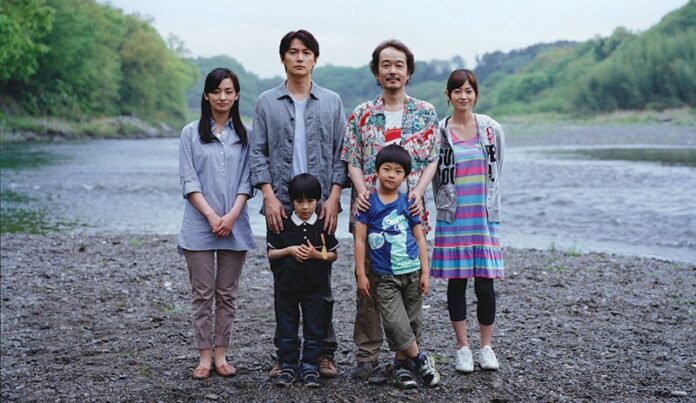
At the Sonoma County Jewish Film Festival, My Best Enemy stars the most interesting leading actor in Germany: Moritz Bleibtreu as Victor, a Jewish prince and Viennese gallery-owner’s son.

The family is facing uncertain times. It’s a few weeks before the Anschluss, the absorbing of Austria into Hitler’s Reich. Victor’s pal from childhood, practically a cadet member of the family, is Rudi (Georg Friedrich) the housekeeper’s son. After a night of drinking, Victor lets this old friend know about a secret: the family has, concealed, an original Michelangelo drawing sold by the Vatican centuries before. Mussolini has learned of it, and would like the drawing as a present from the Fuhrer.

Director Wolfgang Murnberger makes a hard-edged comedy of what comes next. Rudi turns out to be an officer in the SS, but he isn’t able to keep his uniform throughout the film, and this is a wartime milieu when clothes very much make the man. The Nazis’ ardor for valuable art undercuts their qualities of dread, and reveals them as the common, greedy thieves they were. So Murnberger does get the snickers he’s looking for. The bit about a protocol meeting, regarding who gets greeted first at a confab between Der Fuhrer and Il Duce, is nicely like the barber-chair war in The Great Dictator. (“Heil Hitler” can be a very funny line, given the inflections an actor can give it.) Praiseworthy casting of the woman who intermediates between the hapless Nazi Rudi and his suave prey Victor: Ursula Strauss may bear the name of that composer, but she looks like a Dvorak, Ann Dvorak, slender, dark-eyed and refreshingly droll.

To paraphrase that astute movie critic Josef Goebbels, My Best Enemy is built like a convoy: it tries to keep up with the slowest vessel in the audience with some heavy-handed slapstick (underscored by Matthias Weber’s too-obvious soundtrack) and a too-broad clue of where the hidden Michelangelo is concealed. Bliebtreu, though, is compulsively watchable, and keeps this wobbly film together.

‘My Best Enemy’ screens Thursday, Nov. 14, as part of the Sonoma County Jewish Film Festival at Rialto Cinemas. 6868 McKinley St., Sebastopol. 1pm and 7:30pm. $10-$12. 707.528.4222.

American Story

0

“Sometimes in the food world, we only talk about the pretty things,” says restaurateur Roy Choi, discussing his new cookbook that topped both the Asian and Mexican cookbook lists on Amazon last week. “I wanted to create a book that felt like Milpitas.”

Choi, most famous for inventing the Korean taco and igniting the food truck movement with his Kogi food-truck fleet in Los Angeles, is now shaking up the food publishing scene with a new memoir-cookbook, L.A. Son: My Life, My City, My Food, the first release from Anthony Bourdain’s new publishing imprint. Choi appears in St. Helena as part of Flavor! Napa Valley on Nov. 23.

For L.A. Son, Choi kept three goals in mind: make it affordable, truly tell the story of L.A. immigrant life and keep it rated R. He succeeds at all three. In addition, his own personal narrative details struggles with adversity, addiction and finding his calling in life.

Choi moved from South Korea to Koreatown in Los Angeles as an infant. His parents failed at liquor store and restaurant businesses before striking gold with a jewelry business. As their wealth grew (they eventually moved into Nolan Ryan’s former Orange County house), Choi struggled with his identity in SoCal’s bleach-blonde suburbs.

He turned to the streets, disappearing alone for days and bumming around Hollywood, becoming the only Asian member of a Latino lowrider club and running with a crew called the Grove Street Mob. He flirted with alcohol and crack before falling to the soft touch of green felt on Indian casino card tables.

Amid Choi’s troubles, there was food, recipes of which are peppered throughout the pages of L.A. Son: carne asada with the lowriders, pho and pork fried rice from casinos and some of the healing dishes from his mother’s kitchen after his parents finally staged an intervention for his gambling addiction.

Choi says he wrote most of L.A. Son‘s personal stories between midnight and 6am, “because I had to tap into a place that was blocked off. I couldn’t write about those things when other people were awake, because I would consciously think people were looking at it or concerned about it,” he says. “Even if you haven’t read in a while, you can read this book because it’s alive. It just feels like me talking to you, right here.”

This week, Choi talks at Flavor! Napa Valley, a three-day festival featuring local chefs Cindy Pawlcyn, Dario Di Conti, Tyler Rodde, Michael Chiarello and Christopher Kostow alongside high-profile visitors like Todd English, Scott Conant, Mario Carbone and Masaharu Morimoto. And while he won’t be prepping for Thanksgiving dinner (“I don’t believe in the lies that holiday represents,” he says), he’s all but guaranteed to inspire attendees with his own unique recipes—and his life story.

“I think the great part of it now, in that arc, is that it’s moving further and further away from having to define it as a Korean guy doing this, and it’s just becoming a story that inspires others,” Choi says. “It doesn’t matter where you come from or what color you are—it’s just an American story.”

Hat Trick

0

Harvey is one of those plays that almost everyone has heard of but few have actually seen.

The gentle little comedy by American playwright Mary Chase debuted in 1944, and ended up running on Broadway for five years. The story of an amiable alcoholic who claims to have a six-foot invisible rabbit as a best friend, Harvey won the Pulitzer for drama in 1945, and five years later was made into an Oscar-winning film starring Jimmy Stewart. It is that version most people have stumbled across, with Stewart’s indelible portrayal of Elwood Dowd that’s become a pop-culture icon of nonconformist optimism and genial human kindness.

But it all started with the play, which the Ross Valley Players are currently staging in a production that shows why audiences were so taken with Harvey seven decades ago. Steve Price gives an uncannily spot-on imitation of James Stewart’s vocal timbre and steady-soft acting style, while still bringing a bit of his own interpretation to the role of Elwood. He’s the kind of guy who likes everybody, casually inviting cab drivers and telephone marketers over for dinner, the sort who loves nothing more than hanging out in bars with his invisible friend, enjoying the company of his fellow human beings.

So of course his family wants him committed to an asylum. His status-seeking sister, Veta (Pamela Chiochetti), is still angry that her father left his house and fortune to Elwood, whose rabbit fixation has made her family a bit of a joke in social circles. Only by having him committed—and out of the way of her attempts to marry off her daughter, Myrtle Mae (Robyn Grahn)—can she gain control of the fortune and her freedom from Harvey, whom she admits she occasionally sees herself.

A series of misunderstandings at the local asylum, where the doctors claim to be able to cure anyone of delusions with a single shot of a mystery drug, leads to Veta being accidentally admitted herself, while Elwood loses track of Harvey, who, invisible or not, delusion or not, clearly has some sort of agenda of his own.

Under Robert Wilson’s unfussy but pace-challenged direction, the charming, old-fashioned story is brought to (mostly) satisfying life by a cast of community theater favorites and a few RVP newcomers. Though I wish the tone were a little more grounded and a bit less cartoonish and high-pitched, the story still works, bringing Harvey to life in all his invisible, amiably subversive glory.

Rating (out of 5): ★★★

Letters to the Editor: Nov. 13, 2013

Lawyers, Guns and Money

It is a sad commentary on our society that the only way to get a complete account of the Andy Lopez shooting is through a lawsuit (“To the Courts,” Nov. 6). Because there is a lawyer involved, people will conveniently jump to the conclusion that the family’s lawsuit is driven wholly by money. Arnoldo Casillas is doing the family no favors in this regard by publicly bragging that he is able to net them more than $24 million.

The reality is that Gelhaus will be cleared by the SRPD’s phony “investigation” for reciting his lines properly and stating that he feared for his life, knowing that doing so justifies any shooting. District attorney Jill Ravitch, who is supported in her reelection campaign by Sheriff Frietas and the Santa Rosa Police Officers’ Association, will return the favor by upholding the result of the “investigation.” The Grand Jury, mostly old, white and wealthy, will dutifully stamp the D.A.’s review, and five years or so down the road, another innocent teenager will be killed by law enforcement.

Casillas stands to make a tidy sum of money fighting this lawsuit. But if the Lopez family demands the release of every incriminatory piece of evidence that his team digs up, and if the county’s “investigation” protocol is subsequently revealed as the sham it is, and a Civilian Review Board is formed to give proper reprimand to trigger-happy deputies who kill children for no justifiable reason, then I say his money will be well-earned.

Via Online

In response to the misguided sentiments of one Jethro Hooper (Letters to the Editor, Nov. 6), Gelhaus would have had no more justification to execute Andy Lopez in three seconds if he had been carrying a real AK-47, which is legal to own in California.

Occidental

Semantics!

In your Oct. 9 “This Modern World” poli-cartoon, one character says, “This is still a democracy, isn’t it?” while the very last line is “It’s not how democracy works.”

Well, uh, the United States is not a democracy nor has it ever been; it is a constitutionally limited federal republic set up under a constitution adopted in 1787 by a Constitutional Convention.

“The Constitution is explicit about the type of government it establishes: ‘The United States shall guarantee to every state in this Union a Republican Form of Government.'” (Article IV, Section 4)—Lies You Learned at School by Michael Powell.

Via Online

Typhoon Climate

Carbon dioxide in the atmosphere has increased from about 320 parts per million in 1960 to almost 400 ppm today, an amount not equalled for 800,000 years. This has caused Pacific Ocean temperatures to rise rapidly. Surface temperatures of 30 degrees centigrade boiled up into Typhoon Haiyan, a super storm killing 10,000 people in one area of the Philippines and leaving the living in a nightmare landscape of corpses, with no food or water, debris blocking roads, and another tropical storm on the way.

We need to change our lives, and the giant corporations that dominate our lives, to slow the juggernaut of accelerating climate change. We must hold fossil fuel industries financially accountable for the consequences of climate change instead of subsidizing them. We need wind and solar power; efficient electrical transmission; zero-energy buildings; public transportation; sustainable construction, agriculture, fishing, forestry; and education for women and access to birth control.

I am planning to give money to agencies struggling to bring food and water to the people of the Philippines, but I had to write this letter as well.

Monte Rio

Party On!

Thanks to those who turned out for our fine Boho Awards party last week. Thanks are also in order to harpist Bonnie Leigh Barnum, Corks Restaurant, Mesa Beverages, Hook & Ladder, Sonoma Chocolatiers, Stephan Stubbins, Brooke Tansley and Robert Petrarca from Transcendence Theatre Co., and Tom, Linda and the rest of the staff at the Sebastopol Center for the Arts.

Write to us at le*****@******an.com.

Loud Noises

0

The name “Andy Lopez” has inspired large marches for justice, several memorials and a makeshift park at the southwest Santa Rosa site where he was shot to death by sheriff’s deputy Erick Gelhaus on Oct. 22. Now the power of Andy Lopez is affecting political campaigns.

The Andy Lopez Organizing Group plans a loud protest on Dec. 3 outside Sonoma County district attorney Jill Ravitch’s pasta feed fundraiser at the Santa Rosa Veterans Memorial Building. “We’re going to bring the demand that Gelhaus be indicted for murder right to her front door at the pasta feed,” says Jonathan Melrod, a member of the group.

But even if the Santa Rosa Police Department were to conclude in its official investigation that Gelhaus was out of line for shooting the 13-year-old, it’s unlikely that Ravitch would try a member of the sheriff’s department for murder due to the strong mutual political support between the district attorney and Sonoma County Sheriff’s Office. Sheriff Steve Freitas gave a fiery speech at Ravitch’s re-election kickoff event earlier this year (pictured above); Ravitch, likewise, has warmly endorsed Freitas, even introducing him at his campaign kickoff event in September.

Unless Ravitch recuses herself from the review of the SRPD’s investigation, pressure will surely continue to mount while Ravitch and Freitas campaign for re-election. “We feel that in the court of public opinion [Ravitch] is guilty of a conflict of interest with the sheriff’s department,” says Melrod.

The Andy Lopez Organizing group will meet with noisemakers, drums and anything loud on Tuesday, Dec. 3, in the parking area under Highway 12, across from the Veterans Memorial Building at 1351 Maple Ave., Santa Rosa. 4:30pm.

Royal Doyle

0

It seems like just yesterday that Doyle Bramhall II was our own favorite left-handed son, playing weeknights with his dad at the Studio KAFE in the late 1980s, causing more than one fan to proclaim, “That kid’s going places.”

And go places, he certainly has, from touring around the world as the guitarist for Pink Floyd’s Roger Waters to being the only fret-mangler that Eric Clapton trusts by his side while on the road. Last he was seen around these parts, he played to an adoring hometown crowd accompanying Sheryl Crow. (Actually, scratch that. Last seen around these parts, he was getting coffee in downtown Santa Rosa with Hollywood girlfriend Renée Zellweger.)

So it’s great to have him back this week, especially in a lineup that includes Charlie Musselwhite and Ray Wylie Hubbard. The $10 tickets are sold-out, but because the whole shebang is a 20th anniversary party for KRSH-FM, the station has more to give away. Tune in at 95.9-FM and take your chances at calling in—or else hang around the rear of the venue to hear Bramhall’s licks coming through the back door on Friday, Nov. 22,
at the Sebastopol Community Center.
390 Morris St., Sebastopol. 7pm.
707.588.0707.

Earth Tones

0

So a troupe of dancers, engineering students and musicians walk into a nature preserve with Bernie Krause and—no joke—compose a conceptual art piece about the origin of music.

“The idea is that animals taught us to dance and sing,” says Krause, a renowned nature recordist, author and consultant on the Soundscape Project at Sonoma State University. “There’s almost nothing in Western music in the 20th century that relates directly to the natural world,” he says. “This is an important project.”

Claudia Luke, director of SSU’s three nature preserves, first met Krause years ago working on a project in the Mojave Desert, where he recorded, for the first time, the high-pitched calls fire ants make when they’re rallying for an attack. She’s excited about the cross-discipline collaboration of this project, which includes choreographed dance, video, recorded and composed sound, and the environment of the natural world. “It’s turning sound into art,” she says.

Dance students used the preserves as a rehearsal studio, engulfing themselves in nature before even hearing the finished soundtrack. “Composers often use these types of sounds in contemporary dance,” says the project’s Sebastopol-based composer Jesse Olsen Bay, “but I haven’t seen anything specifically about these types of sounds. Everyone working on this project was responding to these soundscapes.”

There are subtle differences in the field recordings. Dawn at the Fairfield Osborne Preserve is a sparse mix of owls and other large birds, each occupying a different sonic space. At the Galbreath Valley site, it’s more of a blanket of small sounds with large birds, like crows, taking the lead melody. One challenge, says Olsen Bay, was to translate the “hugeness” of nature into “a form that wants to be neatly packaged.” Olsen Bay took the field recordings and worked them into his own studio compositions.

Luke says she hopes the performances help spark the idea that sound can tie into sense of place as much as, if not more than, any other form of stimulation—especially with the free performance at the acoustically sonorous Green Music Center.

“What SSU is doing now,” says Krause, “they’re coming full circle to the origins of music. They’re rediscovering that natural soundscapes really have a certain resonance to them that musicians can draw from.”

The Soundscape Project holds performances on Thursday–Sunday, Nov. 21–24, at the Evert B. Person Theatre at Sonoma State University (Thursday–Saturday at 7:30pm; Sunday at 2pm), and a free noon performance on Friday, Dec. 6, at SSU’s Green Music Center (tickets required). 1801 E. Cotati Ave., Rohnert Park. For more information, visit sonoma.edu/preserves.

Formative Years

0

When playwright Kenneth Lonergan first introduced audiences to his self-absorbed, drug-using, post-adolescent characters Dennis, Warren and Jessica, audiences didn’t know what to think of This is Our Youth. The play, a dark comedy, steeped in drug use, strong profanity and references from H.R. Pufnstuf to Major Matt Mason.

If you’re too old for those references, you might be among those who feel a tad uncomfortable with Lonergan’s raw and honest slice of Reagan-era life. At Sebastopol’s Main Stage West, a first-rate cast is taking a good, entertaining crack at ‘This is Our Youth,’ with fine results.

Directed by Keith Baker with a confident, laidback style that’s nonetheless engaging—even if it lacks some of the intensity and high-stakes drama of other productions—the play takes place in the apartment of Dennis, a brash, articulate part-time drug dealer who reluctantly agrees to let his friend Warren (a frequent customer) stay over after he gets kicked out of the house by his abusive lingerie-tycoon father. Warren stole five grand in cash before he vacated his dad’s house, and now he has to figure out how to replace the cash he’s already spent before he can risk a return to his home.

Into this mix steps Jessica, the wary yet game-to-party object of Warren’s desire. Eager to impress her with offers of expensive hotels and room service, Warren digs deeper into his pile of stolen money—and digs himself deeper into trouble.

A drug deal is proposed to earn the missing money. It does not go well.

As Dennis, Jimmy Gagarin is sensational, hilariously primal at times, like an angry, pot-smoking rooster, but not above collapsing into tears when he finds himself moved by Warren’s puppy-dog sense of misplaced hero-worship. Lukas Thompson, as Warren, has a wonderfully nerdy, wounded-but-defiant attitude, blending a sense of amiable hurt with a fragile hopefulness as he grows from adolescent to adult before our eyes. And as Jessica, Lauren Heney, with less stage time than the others, holds her own in scenes with Thompson and Gagarin, allowing her to show tiny flashes of girlish glee beneath the character’s calculated veneer of distanced cool.

With stunningly good dialogue and cleverly constructed storytelling, This is Our Youth is well worth a trip, whether it makes you remember your own youth, or worry—just a little—about what your own kids might be up to.

Rating: ★★★★

‘This is Our Youth’ runs Thursday-Sunday through Nov. 17 at Main Stage West. 106 N. Main St., Sebastopol. Thursdays-Saturdays at 8pm; Sundays at 5pm. $15-$25. 707.823.0177.

Dreams on Hold

0

A neighborhood battle over a center for homeless youth in Santa Rosa continues to raise accusations of both NIMBY-ism on one side and distorted facts on the other.

The Dream Center, a proposed development in Bennett Valley by the nonprofit Social Advocates for Youth (SAY), would provide short- and long-term affordable housing units for youth between the ages of 18 and 24, a contingent that’s grown steadily. SAY’s annual homeless youth count in 2009 found 268 people between the ages of 12 and 24 living on the streets; in 2013, that number is 1,128.

After discovering that the 38,000-square-foot former Warrack Hospital had sat empty since 2008, SAY’s executive director Matt Martin approached Sutter about taking over the building. Sutter agreed, and SAY proposed the Dream Center, a full-service facility with administrative offices, job training and employment counseling, healthcare services and on-site housing.

SAY cites the success of Tamayo Village, an existing 25-unit development down the road, as a model for the future center. But Community Unite, a coalition of Bennett Valley residents, began raising opposition at planning meetings in the spring, citing safety concerns and accusing SAY of misrepresenting the facts.

“There are issues with Tamayo Village, which is the benchmark for this facility,” says Brenda Chatelain, a homeowner who lives within 300 yards of the Warrack Hospital site. “We can confirm that Tamayo has had sex offenders, gang members and violent felons.”

Chatelain charges that SAY has not been forthcoming about the criminal element at Tamayo Village. She cites a September 2013 letter, “written on behalf of 12 Sonoma County deputy probation officers,” which asserts that gang members, sex offenders and violent felons have all been either supervised, seen at or housed in Tamayo Village.

Out of 25 Tamayo Village residents, one is currently on probation, says SAY communications manager Caitlin Childs. SAY works in partnership with the probation department to “ensure our youths’ joint success,” she adds via email, but clarifies that youth are not “sent” to live at Tamayo Village and that it isn’t a halfway house, as some have portrayed. Likewise, residents of the Dream Center would not be sent by the courts, but would voluntarily apply in an open-application process.

But Chatelain and others from Community Unite say they’re concerned about whether staff will be adequately trained, as well as the scope of the proposed Dream Center, which could contain as many as 63 units for homeless youth. “It’s pretty well known that the optimum environment for people transitioning out of probation, foster care or homelessness, where they really thrive, is six to 10 people,” Chatelain says.

After soliciting the neighborhood for feedback on the project in November 2012 and looking at models of already successful affordable housing in the county, such as Burbank Housing, the ambition to build a 100-unit facility was scaled down.

“We got a lot of feedback from neighbors that said it felt to big,” says SAY director of development Cat Cvengros. The current plan proposes 40 units of affordable housing for the first year. If successful, 14 units would be added over the next two years, capping at a maximum of 63 units. Potential residents would be subject to a criminal background check, a sex-offender check and a lease agreement. The facility will also offer 10 free, short-term housing slots of up to three months for residents that have been pre-drug- and alcohol-screened.

Courtney Lavelle, 22, has been an onsite facility manager at Tamayo Village for the past year. “Have you sat down and had a conversation with them?” Lavelle says. “They’re regular kids that go to high school, go to the JC. They’re regular kids who’ve had hardships in their lives. They’re beautiful creatures, in my opinion.”

Concerns raised by Bennett Valley neighbors have helped logistically, Cvengros says. “Out of it has come a lot of positive feedback to make this a place that will meet the youth’s needs and the needs of the neighborhood. The more people involved, the better the Dream Center will be.”

Meanwhile, Community Unite, according to Chatelain, demands a neutral, third-party socioeconomic impact report before any further decisions are made.

“It’s easy to be reflexive and say they’re about helping kids,” says Chatelain. “When you drill down, things are seldom black-and-white. It’s incumbent upon Bennett Valley residents to do due diligence. A neutral, third-party study is the only way to do it, because I believe there is an agenda in place that doesn’t necessarily serve anyone well.”

The application for the Dream Center is scheduled to go before the planning commission in early 2014, and then to the Santa Rosa City Council, where it will again be open to public comment.

Prison Punch

0

After serving 13 months in prison, Piper Kerman left hungry for two things. The first? A slice of pizza. The second? A drive to tell the diverse and often heartbreaking stories of the women she met while serving time at a federal correctional facility in Danbury, Connecticut.

“It was really clear to me that there was a great interest in what happens behind the walls of prisons and jails,” Kerman recalls by phone. “It is a very hidden, very intentionally hidden world.”

These stories, along with her own, became the best-selling 2010 memoir Orange is the New Black: My Year in Women’s Prison. The title is familiar for fans of the Netflix original Orange is the New Black, a brutal, racy, darkly funny and highly addictive series that’s become a much-buzzed-about hit after its premiere earlier this year. Kerman speaks Nov. 18 at Sonoma State University.

Created by Jenji Kohan—producer of the controversial Showtime series Weeds—the show revolves around Piper Chapman, an affluent and privileged Park Slope denizen sentenced to 15 months for a low-level, ten-year-old drug offense. While in her early twenties, just like Kerman, Piper Chapman became romantically involved with an older, sophisticated woman who happened to work for an international drug cartel. Also like Kerman, a one-time rash decision to carry drug money across international borders ends in a money laundering and drug trafficking conviction.

The show is lauded for the racial, sexual and socio-economic diversity of its cast, while simultaneously critiqued for employing a white woman as the entry point into a marginalized prison society, a charge that Kohan responded to in an NPR interview. “In a lot of ways Piper was my Trojan Horse,” Kohan told Terri Gross on Fresh Air. “You’re not going to go into a network and sell a show on really fascinating tales of black women, and Latina women, and old women and criminals. But if you take this white girl, this sort of fish out of water, and you follow her in, you can then expand your world and tell all of those other stories.”

What the show does incredibly well is capture the humanity and the multi-layered narratives of America’s fastest growing prison population. The number of incarcerated women has grown 646 percent between 1980 and 2010. Most are low-level offenders who’ve made serious mistakes but pose little threat of violence, says Kerman. Also, 80 percent of criminal defendants are too poor to afford a lawyer, leading to serious questions about the inequity of access to justice and fairness in sentencing.

[page]

“We are not necessarily accustomed to seeing people who are in prison, or people who are caught up in the criminal justice system, humanized, as opposed to demonized,” says Kerman, who serves on the board of the Women’s Prison Association and speaks widely about the need for indigent defense and sentencing reform. “A recognition that each and every person who goes through that system has a complicated story, and that they are the protagonists of their own story, is really important.”

Though aspects of the show’s storyline mirror her real life, it is an adaptation instead of a bio-pic, Kerman says. For example, the fictionalized Piper ends up confronting her ex-lover (played by Laura Prepon) in prison and reigniting their affair, even as her hapless fiancé Larry waits for her at home. In real life, Kerman did run into her one-time lover Nora, but it led to no more than a friendly act of letting bygones be bygones. And though the show features illicit dalliances between prison guards and inmates (one which results in a forbidden love child), a corrupt official embezzling money from the prison, a fight to the death between Chapman and the methamphetamine-damaged, fake born-again Christian Pennsatucky, and lesbian love triangles galore, none of these events actually happened.

“Television demands an enormous level of conflict in every single episode that would be almost unreadable in a book,” explains Kerman. “It’s a really different medium. I think they work hard to create conflict in a show that is fascinating, including conflicts that didn’t really exist in my own life.”

But the main goal, to humanize a dehumanized population—a crucial issue in the United States where the prison population has grown from 500,000 in 1980 to 2.3 million today, and when the Supreme Court has ruled the overly crowded conditions in California prisons to be inhumane—is the same.

Kerman’s kept busy with speaking engagements, the buzz around the show, and life with her toddler and husband Larry Smith in Brooklyn. But overall, she feels lucky to be able to do her life’s work and use her voice to pull more people into the conversation about a dysfunctional criminal justice system. “By and large, a lot of the public recognizes that we need some significant changes and it’s time to talk about what those changes should be,” she says. “There’s less debate about whether the criminal justice system needs to be reformed, and more and more, what is the best way to fix it.”

The Thieving Reich

At the Sonoma County Jewish Film Festival, My Best Enemy stars the most interesting leading actor in Germany: Moritz Bleibtreu as Victor, a Jewish prince and Viennese gallery-owner's son. The family is facing uncertain times. It's a few weeks before the Anschluss, the absorbing of Austria into Hitler's Reich. Victor's pal from childhood, practically a cadet member of the family,...

American Story

"Sometimes in the food world, we only talk about the pretty things," says restaurateur Roy Choi, discussing his new cookbook that topped both the Asian and Mexican cookbook lists on Amazon last week. "I wanted to create a book that felt like Milpitas." Choi, most famous for inventing the Korean taco and igniting the food truck movement with his Kogi...

Hat Trick

Harvey is one of those plays that almost everyone has heard of but few have actually seen. The gentle little comedy by American playwright Mary Chase debuted in 1944, and ended up running on Broadway for five years. The story of an amiable alcoholic who claims to have a six-foot invisible rabbit as a best friend, Harvey won the Pulitzer...

Letters to the Editor: Nov. 13, 2013

Lawyers, Guns and Money It is a sad commentary on our society that the only way to get a complete account of the Andy Lopez shooting is through a lawsuit ("To the Courts," Nov. 6). Because there is a lawyer involved, people will conveniently jump to the conclusion that the family's lawsuit is driven wholly by money. Arnoldo Casillas is...

Loud Noises

The name "Andy Lopez" has inspired large marches for justice, several memorials and a makeshift park at the southwest Santa Rosa site where he was shot to death by sheriff's deputy Erick Gelhaus on Oct. 22. Now the power of Andy Lopez is affecting political campaigns. The Andy Lopez Organizing Group plans a loud protest on Dec. 3 outside Sonoma...

Royal Doyle

It seems like just yesterday that Doyle Bramhall II was our own favorite left-handed son, playing weeknights with his dad at the Studio KAFE in the late 1980s, causing more than one fan to proclaim, "That kid's going places." And go places, he certainly has, from touring around the world as the guitarist for Pink Floyd's Roger Waters to being...

Earth Tones

So a troupe of dancers, engineering students and musicians walk into a nature preserve with Bernie Krause and—no joke—compose a conceptual art piece about the origin of music. "The idea is that animals taught us to dance and sing," says Krause, a renowned nature recordist, author and consultant on the Soundscape Project at Sonoma State University. "There's almost nothing in...

Formative Years

When playwright Kenneth Lonergan first introduced audiences to his self-absorbed, drug-using, post-adolescent characters Dennis, Warren and Jessica, audiences didn't know what to think of This is Our Youth. The play, a dark comedy, steeped in drug use, strong profanity and references from H.R. Pufnstuf to Major Matt Mason. If you're too old for those references, you might be among those...

Dreams on Hold

A neighborhood battle over a center for homeless youth in Santa Rosa continues to raise accusations of both NIMBY-ism on one side and distorted facts on the other. The Dream Center, a proposed development in Bennett Valley by the nonprofit Social Advocates for Youth (SAY), would provide short- and long-term affordable housing units for youth between the ages of 18...

Prison Punch

After serving 13 months in prison, Piper Kerman left hungry for two things. The first? A slice of pizza. The second? A drive to tell the diverse and often heartbreaking stories of the women she met while serving time at a federal correctional facility in Danbury, Connecticut. "It was really clear to me that there was a great interest in...
11,084FansLike
4,606FollowersFollow
6,928FollowersFollow