Monkeywrenching the Data Mines

0

Surveillance tools, however benign their beginning, will always be eventually used by those in power to suppress opposition. Few would have predicted, 20 years ago, that millions of Americans would willingly participate in the loss of their privacy and thereby, inevitably, their freedom.

In the recent Bohemian interview with Andrew Keen, he says that what’s most needed is to teach the internet how to forget. There is another way to accomplish the same purpose: overwhelm the internet with contradictory data. The same “Like” button previously used to document our friends, our interests, our purchases, our travels, our political views—this same “Like” button can also be used to render all that data meaningless. Just “like” everything.

Like things you hate. Like things you don’t know or care about. Like contradictory things. On a typical day, like the ACLU, Pat Robertson, Elizabeth Warren, the KKK, the NAACP, the Communist Party of America, white supremacist groups, Nuns on the Bus, Tea Party groups, real estate developments in states you’ll never live in, Edward Snowden, the pope, bullfighting, socialism, bunny rabbits, Vladimir Putin, gay pride, Ted Cruz, Wendy Davis, the EPA, wolves, the NRA, Obamacare, Michele Bachmann, vaccines, the Muslim Brotherhood, Israel, and don’t forget to like the NSA. Scroll through online news “liking” every article you see. Do Google searches of whatever keywords catch your eye in the daily news cycle, and like every hit that comes up.

Anyone attempting to build a “profile” on you will find it impossible to filter real you from Mega-Like you.

Also, tag everything. And tag it wrong. Misidentify everything you see. Every photo you see posted on Facebook, post a comment identifying the contents incorrectly.

Pack your Facebook profile with hundreds of movie, book and TV show titles, all unrelated, none of which you actually watch or read.

We cannot make the internet forget. But we can gorge the beast until it pukes. The NSA will not be able to expand fast enough to track all the additional information, and regardless, all the information will be worthless.

Piss off advertisers. Like everything.

D. Bauman has 25 years’ experience working in database management.

Open Mic is a weekly op/ed feature in the Bohemian. We welcome your contribution. To have your topical essay of 350 words considered for publication, write op*****@******an.com.

Local Lit

0

Santa Rosa–based psychotherapist Jo Lauer applies her knowledge of the human psyche to a new genre in ‘Best Laid Plans: A Cozy Mystery’ (CreateSpace; $11.69). Her story begins with Jenny Pond, an ex-felon who “hadn’t planned to kill anyone, but fate has a lousy sense of humor.” Jenny meets Shalese, a blue-collar social worker from Detroit, and the two fall in love as they work together at the First Step, a recovery house in San Francisco. Things go afoul when Florence, a wealthy benefactress with a particularly unsavory history, comes along, forcing the relocation of the recovery house to Santa Rosa. Like Orange Is the New Black for the wine country set, the book’s characters—mostly women who’ve spent time in jail for various offenses—only get deeper into mystery and adventure after the big move.—L.C.

Reading stories about a town that used to be famous for making cigars gives a whole new appreciation for the hand-rolled tobacco sticks favored by mobsters, businessmen and Cuban dictators alike. Santa Rosa author Emilio Gonzalez-Llanes’ ‘Cigar City Stories: Tales of Old Ybor City’ (iUniverse; $9.95) is a small but robust first-person account of the city outside of Tampa, Fla., which became a haven for Cuban, Italian and Spanish immigrants with a knack for rolling cigars. Before machine-rolled cigars become commonplace in the 1950s and ’60s, cigars were all rolled by hand. Ybor City was demolished in the 1960s to make way for urban gentrification, but the memories in Cigar City Stories create a visual, vibrant image of diverse life in the city. Whether the smell of a cigar induces salivation or an urge to vomit, Cigar City Stories is a reminder of the history and personality of one of the most luxurious methods of slow suicide.—N.G.

Long revered as a site of archaeological mastery, the ancient Toltec city of Teotihuacán sees a gazillion visitors annually (give or take a bazillion). Though many seek out the 2,000-year-old pyramids in order to simply cross another cool destination off their bucket lists, others view Teotihuacán as a serious power destination that brings all sorts of healing. ‘Dreaming Heaven’ (Agape Media International; $24.95) is the story of one group’s experience with the healing powers of this ancient site. An accompanying guidebook and workbook to the documentary of the same name, Dreaming Heaven is authored by the four guides featured in the film, including Bodega Bay’s Francis Rico, and gives step-by-step instructions to transform life circumstances in 12 short weeks. The book not only comes with the 76-minute DVD, but links to free inspirational downloads as well. That’s a lot of Toltec magic in one package!—D.B.

The Napa Valley of yore was very different from the wine-soaked, spa-laden tourist playground it’s become today. Last year, the Napa Valley Historical Ecology Atlas by Robin Grossinger explored the changes in the ecology of the valley over a span of centuries. Now ‘Run of the Mill: A True Life, Napa Adventure, by Dona Stanley Bakker ($13.95; Pastime Publications), explores an older way of life in the same region, with a focus on five years of the author’s childhood spent living at the historic Bale Grist Mill north of St. Helena. Built circa 1841 by Dr. Edward Turner Bale, the mill ceased operation around 1879, when it was run out of business by larger commercial mill operations in San Francisco and Vallejo. Bakker lived there between 1959 and 1964, after her grandparents were hired on as caretakers, and her book serves both as a celebration of times past and a reminder that every piece of land has hidden, and often fascinating, history.—L.C.

Marin County’s Raymond Welch has worked in the energy industry for 30 years, and his first novel, ‘A Change in the Weather’ (Ice Cap Publishing; $14.99), illustrates his imaginative world of social and political fallout in the face of abrupt climate change. The thriller follows the Russell family during the 10th anniversary of the disappearance of the polar ice cap in 2028. In the story, each family member does what he or she thinks is right in an America of the future that struggles to hold its democratic and Christian values during the wake-up worldwide disaster. The Arctic ice caps have completely melted and rainfall patterns change around the world. As agriculture fails, and the international economy collapses, terrorism surges—and while the Russell family struggles to fight for what they believe is right, their ideas could not be more in conflict.—T.K.

In her debut collection of poetry, Sonoma’s Lisa Summers explores the seasons and contradictions found within the West’s topographic and emotional terrain. ‘Star Thistle and Other Poems’ (FMRL; $12.95) grapples, too, with altered landscapes. A native of the Bay Area, Summers reflects her first-hand experience of witnessing our local environment transform. In “House Finches,” Summers writes: “The only traces of the old farm / its rich soil was buried alive / by sidewalks, roads and houses / are the anise weeds that burst forth / from the memory of good earth / in the last open field.” Drawing on mythology—Kuan Yin, Aphrodite, Eros—Summers explores the psyche, often bringing the reader back to the great vast ocean for a breath of fresh air.—D.B.

[page]

Baseball fans know Amy G as the in-game reporter for the San Francisco Giants, but Petaluma locals know her as the Casa Grande grad who turned her passion for sports into the world’s best job: hanging around the dugout and talking to Matt Cain, Pablo Sandoval, Hunter Pence and the rest of the greats in orange and black. Written for kids, ‘Smarty Marty’s Got Game’ (Cameron + Company; $17.95) is the first book by Amy G (still lives in Petaluma, real last name Gutierrez)—a simple story of an older sister passing on the contagious love of baseball to her younger brother during a day at the ballpark. Because of trademark issues, illustrator Adam McCauley doesn’t use Giants logos in his vibrant full-page images, but the panda hats, garlic-fries stands and giant Coke bottle make it more than evident which team is playing. (Jon Miller’s trademark call “It is outta here!” makes a key appearance.) Of particular interest is the book’s emphasis on scoring the game by hand, something of a forgotten art that might be lost on younger readers—and that, frankly, one sees more frequently over in Oakland. But if Gutierrez’s book reaches its intended audience, there’s no question there’ll be a future audience of scorers for “the greatest game in the world.”—G.M.

Gracianna Winery in Healdsburg is named for co-owner Trini Amador’s great-grandmother Gracianna Lasaga. She also provides the title of Amador’s first book, ‘Gracianna’ (Greenleaf Book Group Press; $24.95), out this fall. Combining fact with fiction, Amador—who works as a principal at BHC Consulting doing brand strategy and insights development—takes World War II and the Nazi occupation of Europe as his novel’s backdrop. Gracianna, a Basque woman who dreams of going to America but is stymied after the escalation of the war, finds herself in a fight to the death after discovering that her sister has been forced into labor at Auschwitz. Summoning all of her courage, she attempts to free her sister and learns about her own strength in the process.—L.C.

‘The Adventures of the Omaha Kid’ (Buffalo Publishing Company of the Napa Valley; $12.99) has sports, celebrity, wine and, of course, romance. St. Helena author Nathaniel Robert Winters has penned the life of Timothy Jacobson, nicknamed “the Omaha Kid,” a crossover sports superstar with an unlikely combination of skills: baseball and tennis. After a successful baseball career, the Kid goes on to compete in the U.S. Open and does very well, and finds himself a superstar almost overnight. But his romantic life doesn’t always fare as well as his swinging sports career. Using many California cities as a setting, Winters chronicles the Kid’s life through the later half of the 20th century. Using the natural drama of sports to build anxiety, the same feeling translates into the Kid’s love life. Will he strike out in love? Or will he, ahem, hit a home run?—N.G.

When Jack London’s Glen Ellen Wolf House caught fire in August 1913, little did London fans realize that the root causes of the incident would remain an unanswerable question over the following hundred years. Sonoma County resident and SSU professor Jonah Raskin attempts to unravel the mystery of what circumstances led the 15,000-square-foot house to its demise with his new chapbook ‘Burning Down the House: Jack London and the 1913 WolfHouse Fire’ (Clone; $5). Raskin interviewed over two dozen people for the chapbook, including local historians, park docents and writer-historian Kevin Starr about thefire, addressing several hypotheses in Burning Down the House. Arson,combustion or an act of self-destruction, the Wolf House fire continues to fascinate and baffle all these years later.—D.B.

‘Tales of Jack the Ripper’ (Word Horde; $15.99), the latest anthology from Petaluma’s Ross E. Lockhart (editor of The Book of Cthulu), marks the 125th anniversary of the Whitechapel slayings. Although the mystery of Jack the Ripper has captured the public’s imagination for over a century—as it is, we don’t know jack about Jack—what we know for certain is that he was a cold-blooded murderer of women. Lockhart’s anthology pulls together 17 stories and two poems from distinct voices in dark fantasy and horror such as Laird Barron, Ramsey Campbell, Ennis Drake and others. Each story illustrates a unique part of Jack the Ripper’s story in varying locales, from his childhood and personal life to those of his victims. Overall, the collection is a unique exploration of the legacy of Jack the Ripper from the point of view of authors of completely different backgrounds, each holding his own vision of the legend.—T.K.

[page]

Katy Byrne began writing “hairballs,” her word for the dark things that we hold in until they metastasize, when she was single and lonely. Part diary entry, part philosophical musing, ‘The Courage to Speak Up: Getting Your Hairballs Out’ (Langmarc Publishing; $16.95) gathers Byrne’s thoughts into book form. A licensed psychotherapist, radio personality and animal rights activist, the Sonoma County resident has poured onto paper her thoughts on love, anger, fear of sex, aging, overeating, the importance of neighbors, friendship, judgment, holidays, money anxiety, the difficulty of moving, family stress, living simply and losing a beloved pet (in her case, a cat named Einstein). The book is interactive by way of three reflection questions included at the end of the chapter, which allows readers to discover—and let go of—their own hairballs.—L.C.

Say you’re an upright bass player. What if you were asked to perform music for one of your least favorite people? In Sebastopol author Bill Amatneek’s case, that’d be a gig offer playing for president George W. Bush, as chronicled in ‘Acoustic Stories: Pickin’ for the Prez and Other Unamplified Tales’ (Vineyard Press; $27). “This was a moral decision,” Amatneek writes, “to entertain or not entertain an immoral man. I wanted to pass it up, but I also wanted to play it.” In the end, Amatneek plays the gig anyway, adding another chapter to a jam-packed book of memorable bass playing jobs. Growing up in a household on Bleecker Street that hosted legends like Pete Seeger and Paul Robeson, Amatneek went on to accompany the likes of Jerry Garcia, Bill Monroe, Peter Rowan, and Peter, Paul & Mary (whom Amatneek still clearly carries a torch for). All those stories are here, as are anecdotes of helping Bob Dylan find the stage in Philadelphia, being sung “Happy Birthday” to by Dionne Warwick, interviewing Aretha Franklin in San Francisco, playing a jazz funeral in New Orleans and many others. Overall, Amatneek’s tone is conversational and not boastful, and places the reader into the action of a life well lived in music.—G.M.

Michael Rinaldini’s ‘Daoist Practice Journal: Come Laugh with Me’ (CreateSpace; $11.98) sheds a light on walking the Taoist path from the author’s unique perspective. A former surfer turned Taoist, in The Daoist Practice Journal, Rinaldini, a Sebastopol resident, compiles journal entries written over the past 20 years. Each entry explains a different aspect of his spiritual journey, from surrendering to his beloved waves to the beauty in a simple cup of tea. The entries include selections from ancient writings in addition to current masters of the Way, and informs readers of the different Taoist practices available for study and practice, covering topics like meditation, qigong, the value of silence and solitude and much more.—T.K.

Ralph Milton Ingols was a guidance counselor at St. Helena High School for over 30 years, and, as you can imagine, he has many stories to tell about student and faculty life. ‘St. Helena High School: The Golden Years’ (Pastime Publications; $13.95), co-written with Napa Valley resident Dona Bakker, collects these tales into one volume. Told in collage fashion, the book combines recollections from students, custodians and faculty, with graduation speeches and introductory essays that give a historical context to each decade, starting in 1941 and running through 1972. Approximately 2,000 students passed through the school’s doors during this time, and they’re all accounted for in comprehensive class lists for each year. The result is an insightful peek into small-town life in a bygone era. With all proceeds benefiting a scholarship fund for current students, the book itself would make a great gift for just about anyone who attended St. Helena High School between 1941 and 1972.—L.C.

As 100.1-FM KZST’s expert CPA, Santa Rosa’s Montgomery Taylor is already known and trusted by many Sonoma County taxpayers. And maybe they want to learn how to become just as successful in life. Montgomery has compiled writings from “the world’s leading experts” in ‘The New Rules of Success’ (Celebrity Press; $19.95) to help you do just that. Though none of the authors is quite a household name, each is successful (in this case, that also means wealthy) in life, and shares a nugget of wisdom on how to achieve your goals. It’s a personal book, with each author writing specifically to you, the reader, using mostly first-person examples. Topics include motivation, customer service, relentless thinking about the customer, raising a family for success, online marketing, managing stress, commitment and more. Taylor writes a chapter himself, detailing his own rise from “farm boy” to “wealth advisor.” With so many different topics and perspectives, it’s a safe bet that if you’re looking to achieve financial success, this book is going to be helpful.—N.G.

Every woman should have a mentor. Mentors provide the inspiration, empowerment and encouragement that we don’t tend to get from greater society. Karilee Halo Shames, a holistic nurse best known for her work with husband Dr. Richard Shames around hypothyroidism, has made it easy to learn from women mentors by compiling their stories in ‘Amazing Mentors: Real Hot Mama’s Path to Power’ (Inkwell Productions; $18). Contributors include Code Pink founder Medea Benjamin, former U.S. congresswoman Lynn Woolsey, healer and chiropractor Shalamah Yahchove, Gen. Clara Adams-Ender and others. “If no leadership exists, step up and bring others along,” says Woolsey in the chapter devoted to her—that’s exactly what Halo Shames has done in compiling these thoughts and interviews.
L.C.

Tales from the Tombs

0

Ghosts get bored like anyone else. So it’s going to be a very special Halloween season this year when a troupe of local writers and actors join forces to tell original and classic mystery stories inside the 100-year-old mausoleum at Santa Rosa Memorial Park.

Titled “Mystery Writers in the Mausoleum,” the self-explanatory one-night-only literary presentation will be sure to entertain any souls still lingering inside the mausoleum—but those with a pulse and a taste for the mysterious are invited to attend the free event, too.

Illuminated by candlelight, the historic building will be filled with the spirited imaginations of the late Edgar Alan Poe and Mary Wollstonecraft Shelley, along with local (still living) writers such as Ana Manwaring, Ann Wilkes, Robbi Sommers Bryant, Paul Foley, Charles Markee, Jo Lauer, and Karen Pierce Gonzalez, reading their own stories of mystery, murder, demon slayers, haunted rooms and chupacabras. Actors John Moran and David Gonzalez add to the spooky atmosphere with
spine-tingling readings from Frankenstein and the entire short story “The Tell-Tale Heart” when “Mystery Writers in the Mausoleum” gets underway on Wednesday, Oct. 23, at Santa Rosa Memorial Park. 1900 Franklin Ave., Santa Rosa. 7pm. Free. 707.542.1580.

BNA Wine Group

0

When I first came across “Butternut,” a brand of Chardonnay said to satisfy the unabashed cravings of the oaky-butterbomb crowd, I assumed it was the contrivance of an experienced team of marketing professionals. How else to explain the explosion of dessert-themed, target-marketed wine labels except as the fruit of focus groups, spreadsheets, corporate trendmongers? To find out more about the process, I arrange to meet the West Coast representative of Nashville-based BNA Wine Group—who proves my assumptions wrong.

I find Tony Leonardini on crutches in front of Ballentine Vineyards, where he makes some of his wines. A St. Helena local since his father purchased Whitehall Lane Winery in 1993, Leonardini worked for the family business after college before trying his hand at selling a barrel of his own wine. While deftly thieving a sample of 2012 Cab from the barrel, he explains that Butternut was born by felicitous accident. One evening while he was trying to think up a name for a batch of Chardonnay that had turned out funky—and going through four glasses of the stuff in the effort—his wife walked through the door with a box of CSA vegetables and complained, “I’m going to get tired of this—two weeks in a row of butternut squash!”

In 2009 he sent half a pallet to a skeptical distributor in Nashville. The wine flew out the door, and he got a business partner. Now they’re making 50,000 cases and got picked up by Safeway, with no advertising. The 2011 “Butternut” California Chardonnay ($17.51) smells like heavily toasted oak, no doubt about it; I mean, four-alarm fire at the sawmill, overpowering even the sweet, buttery, caramel corn flavor. But Butternut fans dig it, and Leonardini hired a winemaking consultant to make sure it remains their perfect, after-work “melt away” wine.

I would have gone with “firebug,” except that Leonardini’s quite the opposite: the volunteer firefighter is sporting a cast today because he recently sprained his ankle while rescuing a couple and their dogs from a fire across the street from his house. The 2010 “Volunteer” Cabernet Sauvignon ($30.90) is his most serious wine, a liquid German chocolate fruitcake of a wine, trending savory black olive with air. There’s a saline freshness that keeps the 2012 “Bandwagon” Monterey Unoaked Chardonnay ($17.51) lively through a lingering, peanut brittle and apple pie aftertaste.

As for 2012 “Nanna’s Shortcake” Lodi Zinfandel ($17.51), a sweet and soft drizzle of raspberry syrup dignified by dark hints of clove, Leonardini says that he was just eating his favorite dessert while thinking up a new wine label. He stopped and asked himself, “Are you kidding me?”

BNA Wine Group, St. Helena. 707.968.5172. www.bnawinegroup.com.

All Treats

0

All set to preview of this year’s Treasure Island Music Festival, I checked the website to see what time Tricky, the British downtempo rapper and former collaborator with Massive Attack, would be playing. He isn’t. “Visa issues,” the site proclaims.

He’s being replaced by Danny Brown, a talented Detroit rapper with nasal delivery and clever narration but without the long-career pedigree of Tricky, who’s been around since the early 1990s. It’ll be interesting to see if he tailors his set to fit in with Saturday’s lineup, which includes Major Lazer, Little Dragon, Phantogram, Disclosure and other electronic-focused acts. Headlining is Atoms for Peace, featuring Thom Yorke (Radiohead) and Flea (Red Hot Chili Peppers).

On Sunday, Animal Collective, James Blake, Sleigh Bells, Haim (pictured) and others start the day, but at night, it’s all about Beck. The singer of “Where It’s At” is comfortable in just about any genre thrown his way; his albums sound almost like he was dared to try a new genre. In concert, musicality oozes from his sweaty devil’s haircut and dexterous fingers, no matter what instrument he’s currently grasping. Should be a good show, even if it’s only treats and no Tricky.

The Treasure Island Music Festival runs Oct. 19–20 on Treasure Island in San Francisco. For more, see www.treasureislandfestival.com.

Chainsaw Wine

0

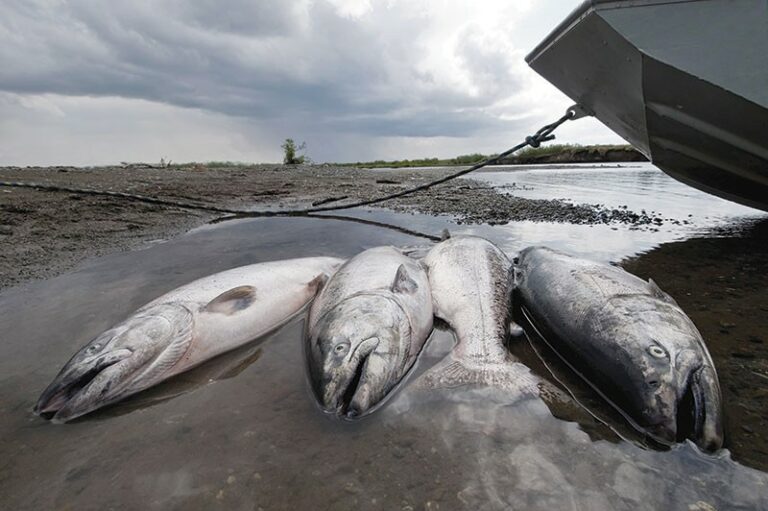
There is no forest among the trees. That’s what state officials have said regarding a large stand of second-growth redwood and Douglas fir near Annapolis that a Spanish-owned winery has proposed to level and replace with grapevines and a winery.

The project, proposed by Artesa Vineyards & Winery, has been lumbering through the legal process for several years now, and to the dismay of Sonoma County environmentalists, it has progressed almost to the finish line. Now, the only roadblock still in the way is the lawsuit filed against the state by three conservation groups in June of 2012, and which will be heard in the Sonoma County Superior Court this Friday.

Three plaintiffs—the Center for Biological Diversity, the Redwood Chapter of the Sierra Club and the Friends of the Gualala River—allege that the state’s Department of Forestry and Fire Protection conducted its review while disregarding environmental protection laws. At the heart of the lawsuit is the project’s environmental impact report, required by state law for certain types of development projects.

“Their report says that cutting down 154 acres of forest and converting it into vineyards will have no significant environmental impacts,” says Dave Jordan, a member of Friends of the Gualala River.

But not all parties seem to agree about what actually constitutes “forest.” The trees in question include thousands of redwoods and other conifers, many between 50 and 80 feet tall. The plaintiffs argue that these trees are valuable because they provide habitat for wildlife, sequester carbon and limit soil erosion.

But in August, the state attorney general’s office submitted a written rebuttal to the lawsuit, stating, “Petitioners are wrong. The project site is not a ‘redwood forest.’ . . . [I]t was completely harvested and converted to grazing and orchard. . . . Conifer timber is now just beginning to recapture the site.”

State officials had not responded to a request for comment by press time.

Sam Singer, a spokesman for Artesa who’s often hired by big-name clients to “soften” environmental crises—including the Chevron refinery fire in Richmond, the Cosco Busan oil spill in the San Francisco Bay and logging at the Bohemian Grove—says the winery plans to preserve two old-growth redwoods on the property, but that numerous 30- to 60-year-old trees will be removed. Singer says remnants of an aging apple orchard will also be replaced with vines.

“But there aren’t forests here,” Singer says. He claims that locally based opponents have misrepresented the nature of the landscape, which is due west of Geyserville some 20 miles. “This is agricultural land, and this is an agricultural project that will preserve and protect the environment,” Singer says.

Justin Augustine, an attorney for the Center for Biological Diversity, tells the Bohemian that removing trees that absorb carbon dioxide will contribute to greenhouse gas production.

The project’s EIR, however, deemed this concern “less-than-significant.”

The same conclusion was made for potential impacts on air quality, water quality, cultural resources, geologic stability and aesthetic values.

State planners considered, then rejected, alternative sites for Artesa’s project, but Jordan notes that they only looked at alternative forested sites.

“Why didn’t they consider a nonforested site?” Jordan says. “That would have led to a different outcome. It’s almost as though their definition of the project wasn’t just planting Pinot Noir and Chardonnay grapes, but knocking down a forest in order to plant Pinot Noir and Chardonnay grapes.”

Jordan points out that though the Artesa EIR recommends a 166-foot buffer between adjacent homes and the edge of the planned vineyard—a measure addressing potential harm from pesticide sprays—state officials have acknowledged that there is a house 87 feet from one edge of the project site.

Jamie and Kathy Hall have lived here for more than three decades. “I basically moved up here to live in a forest,” Jamie Hall says, “and [their project] is going to destroy everything I came here for.”

Conservationists celebrated a victory earlier this year when a 20,000-acre site called Preservation Ranch that had been proposed for a massive vineyard development project was sold to the Conservation Fund, a national land-protection organization.

But the Artesa project has marked a turning point. It is the first redwoods-to-vineyards proposal requiring an EIR to be approved in California.

Chris Poehlmann, president of Friends of the Gualala River, says that if Friday’s court date results in a precedent-setting win for the wine industry, much of the North Coast could become vulnerable to similar conversion.

“If we lose, others will see that you can win these fights—that you can cut down timber and convert it into vineyards.”

Big Man’s Bash

0

Who’s afraid of the Black Panthers? Probably no one now, but in 1967 they
gave white Americans
the willies when they
stood on the steps outside
Gov. Ronald Reagan’s capitol in Sacramento, wearing black berets, black leather jackets and carrying loaded shotguns.

In the turbulent 1960s, the bodacious Panthers advocated armed self-defense, fed the hungry and taught the illiterate. Bloody police raids and their own “Off-the-pig” bravado sharply reduced their ranks, but not before they woke the nation to the raw beauty and naked truths of African-American life.

This week, Oct. 17–19, Elbert “Big Man” Howard hosts a three-day Black Panther reunion and celebration in Santa Rosa, his adopted hometown. No Panther is better suited than he to rally the faithful and gather the curious. The editor of the Panther newspaper, he served as the party’s roving global ambassador, and prowled the United States, too, a story he tells in his memoir, Panther on the Prowl. After the Panthers imploded, he disappeared for years. Though he’s slowly reemerged—he was the focus of a Bohemian cover story in 2011—the reunion signals a public comeback.

Born in the South in 1939, Howard learned about racism on the streets, not in classrooms. “When I was a boy in Tennessee, there were real homegrown terrorists,” he says as he sips an ice tea at the Arlene Francis Center in Santa Rosa. “Hooded Klansmen in white sheets burned crosses at night to try to terrify us. If it weren’t for the black community, I wouldn’t be here now.”

He’s carried those early lessons about community all the way to Sonoma County. “My roots here run deep,” he says. “Forty or so years ago, I came here for the first time and bought 60,000 eggs for our free food program. They made hungry folks happy.” His recent work in Sonoma County focuses on ending police misconduct and brutality through the Police Accountability Clinic and Helpline (PACH), the local organization he cofounded.

At 75, Howard has no regrets. Still, if he could, he might rewrite a page or two of Panther history and save a few lost souls. “The party provided a home for a whole generation,” he says. “If they were addicts, we helped them get off drugs. If they couldn’t read, we taught them. When the party fell apart, they did, too.”

With the reunion, Howard hopes to honor those who didn’t survive, and to show his appreciation for the North Bay community (including its doctors and nurses, who helped him overcome an array of life-threatening health issues).

The Arlene Francis Center’s director of operations, Bruce Rhodes, remembers Panther meetings he attended 50 years ago. Now 59, Rhodes never officially joined the organization, but in his own quiet way, he’s revived the Panther spirit and helped turn the Arlene Francis into a gathering place for Sonoma County’s scattered African-American community and a home for musicians from Ghana, Benin and Burkina Faso who now reside in Santa Rosa.

For the three-day event, Howard has rounded up internationally renowned artist Emory Douglas, Dr. Tolbert Small, official Panther historian Billy “X” Jennings, Seattle chapter cofounder Aaron Dixon and others. Rickey Vincent unravels the connections between soul music and black power. Sister Sheba Haven reveals the role of Panther women.

As if that weren’t enough historical weight in one room, Panther cofounder Bobby Seale is scheduled to appear at some point over the three days as well.

“I first saw Seale in the 1960s,” says Martin Hamilton, executive director at the Arelene Francis Center. “These days, there’s too much Panther mythologizing. At the celebration, we’ll hear real history from people like Seale who actually made it.”

Longtime activist Judy Gumbo Albert also remembers the Panthers from 1960s Berkeley. “Back then, they took the national dialogue about race and racial inequality to a whole new level that’s unappreciated today,” she says. “I’m going to the event to relive my past and reconnect to Panthers I knew. Big Man always was a sweetie.”

“The Panthers are a prime example of what a community can do when it bands together,” Howard says, reaching for his pork pie hat. “We’ll bring this community together, too.”

Earth’s Fate

0

Do issues around climate change, social justice and threatened indigenous cultures keep you up at night, grinding your teeth, wondering what—if anything—can be done to remedy the current global crisis? Or are you so overwhelmed with bad news that you’ve found yourself face down on the floor when you could be out taking tiny baby steps toward a better world?

If you answer yes to either of these questions, the Bioneers Conference might be a good place to turn. Now in its 23rd year, the mega eco-social justice-sustainability forum rolls into the Marin Center Oct. 18–20.

This year’s conference features keynote speaker activist and UNICEF ambassador Danny Glover, and offers an array of workshops, forums and films highlighting proactive approaches to addressing the world’s complex issues. Events at the conference are jam-packed with information about youth leadership, gender awareness, community resilience, accessible healthcare, biomimicry, sustainable agriculture, progressive media, indigenous activism, medicinal herbs, education and more (whew!).

Founders Kenny Ausubel and Nina Simons spend each year planning the event, which has brought leaders like Jane Goodall, Michael Pollan and Gloria Steinem to the stage. Attending this year, in addition to Glover, are local
and international figures such as John A. Powell, Matthew Fox, Mona Polacca, Joanna Macy, Lynne Twist, and OAEC’s own Brock Dolman, among dozens of others.

Rounded out with a Saturday-night dance party, Bioneers provides a gateway into positive social change on Friday–Sunday, Oct. 18–20, at the Marin Center. 10 Avenue of the Flags, San Rafael. 9am–6pm daily. $75–$475. Visit www.bioneers.org for tickets.

Letters to the Editor: October 16, 2013

Waste Not,
Want Not

I’ve been following Bea Johnson for a few years (“The Simple Life,” Oct. 9). This is one of the best articles on her admirable pursuits I’ve seen yet. Thanks again for sharing your lifestyle with us, Bea, especially in the face of rude and ignorant commentary by those who are too set in their wasting ways to consider adopting some zero-waste choices.

Via online

Pioneer woman! This is awesome—I love my zero-waste lifestyle. Let’s get down to the basics. I feel the same way about my glass pantry, and, yes, the food should be the star. Simplicity in surroundings can be very helpful mentally and emotionally, but also in a very practical sense when it comes to cleaning.

Via online

Great article! I’m so grateful that Bea has the courage to open up and share her story. I’ve learned so much from her over the years—she’s such an inspiration!

Via online

At the beginning of the article “The Simple Life,” I was on board because my mom always said that if you can’t make the world better, don’t make it worse, and Bea Johnson certainly is trying to make things better.

But when I continued on and read that she eats meat, I jumped off the bandwagon. Ms. Johnson certainly should know that the raising of cattle for human consumption is one of the biggest things that pollute our world.

And what’s up with the television? That would have been the first thing I got rid of. Besides, I don’t think that “Pa Ingalls” had one. Hey Bea, you wanna save the planet? Jump in all the way; cut out the sugar, flour, etc. Do yourself a real favor and eat green. Then you will be saving more than just money. You will be saving you and your family’s health.

Sonoma

Freeway to Nowhere?

Thank you for printing such a wonderful article and making this important topic your front-page story (“Bypass Mayhem,” Oct. 2). You know Caltrans has really blown it when hundreds of ordinary citizens take to the streets, trees and wick drains. This rogue outfit is so out-of-control, all over the state, that it has rolled over the oversight agencies and most elected officials. Because of the Willits protests, a Contra Costa legislator is moving a bill to rein in this greedy beast. Please continue coverage of grassroots actions.

Laytonville

Thank you, Ms. Dovey, for presenting the environmentalist’s perspective in your story concerning Caltrans’ actions in Little Lake Valley. Caltrans is like an abusive husband that has hurt and disrespected his woman (the earth) time and time again. Those who bow to authority will put up with it, but the people of California who value the natural resources of our bio-regions more than destructive business-as-usual will continue to insist that a more appropriately scaled bypass be built. We need a bypass around Willits. Let’s build one that thoroughly addresses the congestion that we all can live with.

Boonville

Crop Swap

To deal with the tsunami of extra produce in Berkeley (“Want Some Figs?” Sept. 25), during the growing months, we have a once a week “crop swap.” You take your extra abundance, lay it out on tables and blankets, and then take a card from a pack of playing cards. When you start, aces get first dibs, then twos, etc. Once you’ve gone through, and everyone has had a chance to take one item/bunch, then it’s a free-for-all. Folks show up with fruit and veggies, but also eggs, honey, jams, fermented goodies, seeds and plant starts. It’s a great way to meet fellow gardeners, find a good home for surplus and get produce. Transition Berkeley organizes it. (And, yes, I would love some figs!)

Berkeley

Write to us at le*****@******an.com.

Comfort Slacks’ New Video Makes Me Want To Get Baked… Goods.

1

Napa’s Comfort Slacks released their official video this weekend for “Biscuit on My Six,” and it’s highly suggested you watch it. This band makes catchy, fun music that’s so irreverent it’s hard not to find something to love in each song.
In this video, see if you can spot the following: Shake Weight™, a judge, weatherman, a toaster that has the word “cooking” hand painted on it, Etch-a-Sketch™, a man getting a haircut, wine in a coffee mug, a comically large “cigarette,” plastic He-Man™ toy, gold hotpants, underpants that fit four people at once.
The video, which is a genius riff on a local morning television talk show, dares the viewer to contemplete: What’s your favorite type of biscuit? Blueberry? Dog? Gluten-free? Whisker? Sweet? Buttermilk?
It’s a great video, but I have to say I’m a little disappointed that this isn’t an actual show. I’d watch it every morning.

Monkeywrenching the Data Mines

Surveillance tools, however benign their beginning, will always be eventually used by those in power to suppress opposition. Few would have predicted, 20 years ago, that millions of Americans would willingly participate in the loss of their privacy and thereby, inevitably, their freedom. In the recent Bohemian interview with Andrew Keen, he says that what's most needed is to teach...

Local Lit

Santa Rosa–based psychotherapist Jo Lauer applies her knowledge of the human psyche to a new genre in 'Best Laid Plans: A Cozy Mystery' (CreateSpace; $11.69). Her story begins with Jenny Pond, an ex-felon who "hadn't planned to kill anyone, but fate has a lousy sense of humor." Jenny meets Shalese, a blue-collar social worker from Detroit, and the two...

Tales from the Tombs

Ghosts get bored like anyone else. So it's going to be a very special Halloween season this year when a troupe of local writers and actors join forces to tell original and classic mystery stories inside the 100-year-old mausoleum at Santa Rosa Memorial Park. Titled "Mystery Writers in the Mausoleum," the self-explanatory one-night-only literary presentation will be sure to entertain...

BNA Wine Group

When I first came across "Butternut," a brand of Chardonnay said to satisfy the unabashed cravings of the oaky-butterbomb crowd, I assumed it was the contrivance of an experienced team of marketing professionals. How else to explain the explosion of dessert-themed, target-marketed wine labels except as the fruit of focus groups, spreadsheets, corporate trendmongers? To find out more about...

All Treats

All set to preview of this year's Treasure Island Music Festival, I checked the website to see what time Tricky, the British downtempo rapper and former collaborator with Massive Attack, would be playing. He isn't. "Visa issues," the site proclaims. He's being replaced by Danny Brown, a talented Detroit rapper with nasal delivery and clever narration but without the long-career...

Chainsaw Wine

There is no forest among the trees. That's what state officials have said regarding a large stand of second-growth redwood and Douglas fir near Annapolis that a Spanish-owned winery has proposed to level and replace with grapevines and a winery. The project, proposed by Artesa Vineyards & Winery, has been lumbering through the legal process for several years now, and...

Big Man’s Bash

Who's afraid of the Black Panthers? Probably no one now, but in 1967 they gave white Americans the willies when they stood on the steps outside Gov. Ronald Reagan's capitol in Sacramento, wearing black berets, black leather jackets and carrying loaded shotguns. In the turbulent 1960s, the bodacious Panthers advocated armed self-defense, fed the hungry and taught the illiterate. Bloody...

Earth’s Fate

Do issues around climate change, social justice and threatened indigenous cultures keep you up at night, grinding your teeth, wondering what—if anything—can be done to remedy the current global crisis? Or are you so overwhelmed with bad news that you've found yourself face down on the floor when you could be out taking tiny baby steps toward a better...

Letters to the Editor: October 16, 2013

Waste Not, Want Not I've been following Bea Johnson for a few years ("The Simple Life," Oct. 9). This is one of the best articles on her admirable pursuits I've seen yet. Thanks again for sharing your lifestyle with us, Bea, especially in the face of rude and ignorant commentary by those who are too set in their wasting ways...

Comfort Slacks’ New Video Makes Me Want To Get Baked… Goods.

Napa’s Comfort Slacks released their official video this weekend for “Biscuit on My Six,” and it’s highly suggested you watch it. This band makes catchy, fun music that’s so irreverent it’s hard not to find something to love in each song. In this video, see if you can spot the following: Shake Weight™, a judge, weatherman, a toaster that has...
11,084FansLike
4,446FollowersFollow
6,928FollowersFollow