13 Year-Old Boy Fatally Shot by Sonoma County Sheriff’s Deputies

This fake assault rifle was being carried by 13-year-old Andy Lopez when he was shot by sheriffs deputies

  • Sonoma County Sheriff’s Departmant
  • This fake assault rifle was being carried by 13-year-old Andy Lopez when he was shot by sheriff’s deputies

An eighth-grader who attended Cook Middle School in Santa Rosa was fatally shot in South Santa Rosa by Sonoma County Sheriff’s deputies Tuesday afternoon after failing to comply with deputies’ orders to drop what turned out to be a replica assault rifle, Sheriff’s deputies said.

The shooting took place at Moorland and West Robles avenues just after 3pm. Two deputies saw a male subject with what looked like an AK-47-style assault rifle. Deputies say they repeatedly ordered the 13 year-old to drop the gun. When he did not comply, deputies fired several rounds, striking him several times. Unresponsive, the boy was handcuffed before deputies requested emergency medical assistance. He was pronounced dead at the scene by paramedics.

The boy was identified in the Press Democrat as 13-year-old Andy Lopez. After he had been shot, deputies discovered the weapon he had been carrying was a replica. He also had a plastic handgun in the waistband of his pants, deputies said. He reportedly lived in the area with his family.

This is the third officer-involved shooting in Sonoma County this year. The investigation will be handled by the Santa Rosa and Petaluma police departments, in addition to the District Attorney’s Office.

Officials from the Santa Rosa Police Department did not immediately return calls seeking comment Wednesday morning.

Bus Stop

0

Pressure is growing in communities around the world against Veolia Transdev, the worldwide industrial solutions firm based in France, clouded in political and environmental controversy and currently the operator of Sonoma County’s public bus line.

But the 25-year contract that gives the France-based giant several million dollars each year to operate the Sonoma County Transit bus fleet will come to an end in mid-2014, and local activists aligned against the company due to its support of Israel’s presence in Palestine want the county to part ways with Veolia.

The main beef against the company, which deals worldwide in waste and wastewater management, transportation and industrial-scale cooling systems, is the racially segregated bus line that Veolia operated in Israeli-occupied Palestine until last month. On Aug. 8, 2012, the Bohemian ran an op/ed asking for a boycott of Veolia Transportation, the company’s U.S. transport division and the employer of approximately 100 people in Sonoma County.

The Sonoma Alliance for a Fair Ride has led the anti-Veolia crusade on local soil. Lois Perlman, a member of the alliance, says she wants to see a U.S.-based firm operate the buses, both to keep profits within the country as well as to make a clear political statement that human rights violations, among other alleged offenses, will not be tolerated by local government.

But the matter is not one of choice, according to Bryan Albee, transit systems manager for Sonoma County Transit. He says once a call is made for bidders on a new 10-year contract, “all qualified proposers will be given equal consideration” and that it’s illegal for a federally funded service like Sonoma County Transit to show preference for one bidder based on anything but the applicant’s capacity to carry out the job.

First District supervisor Susan Gorin similarly told the Bohemian, “As a public body we are required to accept the lowest bidder, so it’s difficult to interject philosophical bias into an issue like this.”

But early this year in Davis, public sentiment may have played a role in a Veolia defeat. Veolia had placed a bid to construct a water-treatment plant. A community outcry followed, after which Veolia withdrew its offer.

Overall, a global rising tide of opposition against Veolia seems to be taking a financial toll on the giant, which has reportedly lost $20 billion in contracts in the past decade.

Though Veolia quit operating its controversial buses in Palestine in September, it still runs a train line and manages a wastewater treatment plant in parts of Palestine that have been seized by Israel. Veolia operates a landfill, too, on the West Bank. In a damning episode of scandal, Veolia claimed in 2011 to have divested from the Tovlan Landfill, but later, the Israeli Ministry of Environmental Protection confirmed publicly that Veolia remained the owner of the facility.

In the United States, Veolia Transportation operates a vast network of transit services. According to Albee, Veolia runs public transportation lines in California in Napa County, Redding, Chico, Yolo County, Yuba-Sutter counties and Modesto. Across the country and in Canada, Veolia has numerous contracts and even owns the ubiquitous airport shuttle service SuperShuttle. In San Jose, the city council recently unanimously voted to renew Veolia’s contract to operate an airport shuttle for four more years.

But pro-Palestine activists aren’t the only ones uneasy with Veolia’s presence. The corporation has run afoul of communities across the nation, mostly for wastewater-management-related violations. Locally, Veolia has been sued at least twice for dumping millions of gallons of sewage or contaminated water into San Francisco Bay. In each case—one in Burlingame, the other in Richmond—the company settled out of court.

Veolia Transportation may have lost even more credibility during the summer’s BART strike, when its vice-president of labor relations Thomas Hock offered his services as a strike negotiator to the transit line. BART agreed to pay Hock $399,000 to help settle the disagreement between the train line and its workers. Veolia was meanwhile being paid to operate extra shuttle buses for commuters along BART routes while train operators refused to work. Allegations were made that Hock had a conflict of interest—being paid to help end a strike while his own company was paid for each day the strike persisted.

The contract between Veolia and Sonoma County Transit ends on June 30, 2014. The county will then have the option of extending the contract for two years, until June 30, 2016, according to Albee at Sonoma County Transit. He says that five national firms, including Veolia, have the resources and competence to manage Sonoma County’s public buses. Just when a call for bidders will be made is not yet clear.

Self-Checkout Blues

0

When my family first moved to Novato from Ohio back in 1985, we delighted in the Novato library—so airy, pleasant and well-stocked, unlike our old library. Almost 30 years later, some exterior changes have been made to the library building where practicality has won out over aesthetics, but that is a small complaint.

However, over the past several years, I have had to visit the Marin County Civic Center so often that I began to frequent that library instead. I began to prefer it, even when it became less convenient. Visits to the Civic Center library still give me that childlike library joy. I find myself leaving with such a heavy, teetering pile of books that I begin to feel a pleasant embarrassment at my greed. In contrast, visits to the Novato library had become slightly depressing.

Finally, I realized what the Civic Center has that the Novato library no longer does: people. That is, the Civic Center library still uses the old-timey, “retro” method of patrons standing at the counter while an employee helps them check out books.

In contrast, self-service stations at the Novato library have replaced human employees. I was truly surprised that this would matter so much, but it does.

Perhaps cutting human interaction from our lives is the new “normal,” touted as convenient and faster, seen also in the rise of self-checkout lines at supermarkets and home-improvement stores. However, I believe that when we begin to subtract human interaction from our lives, we lessen our quality of life.

Don’t get me wrong, I’m no Luddite. Computers have become indispensable to libraries, and I wouldn’t go back. It is almost unfathomable to me now that I was ever able to research books using only a card catalogue. But computers shouldn’t replace all aspects of the library.

Therefore, I was dismayed to learn that the Civic Center library might also be replacing some employees with self-service stations. If that is true, I plan on driving to whatever library in Marin still employs people to check out books. And if those libraries also go the way of Novato? Well, I was thinking of moving anyway.

Kate James is an avid reader living in Novato.

Open Mic is a weekly op/ed feature in the Bohemian. We welcome your contribution. To have your topical essay of 350 words considered for publication, write op*****@******an.com.

Prager Winery & Port Works

0

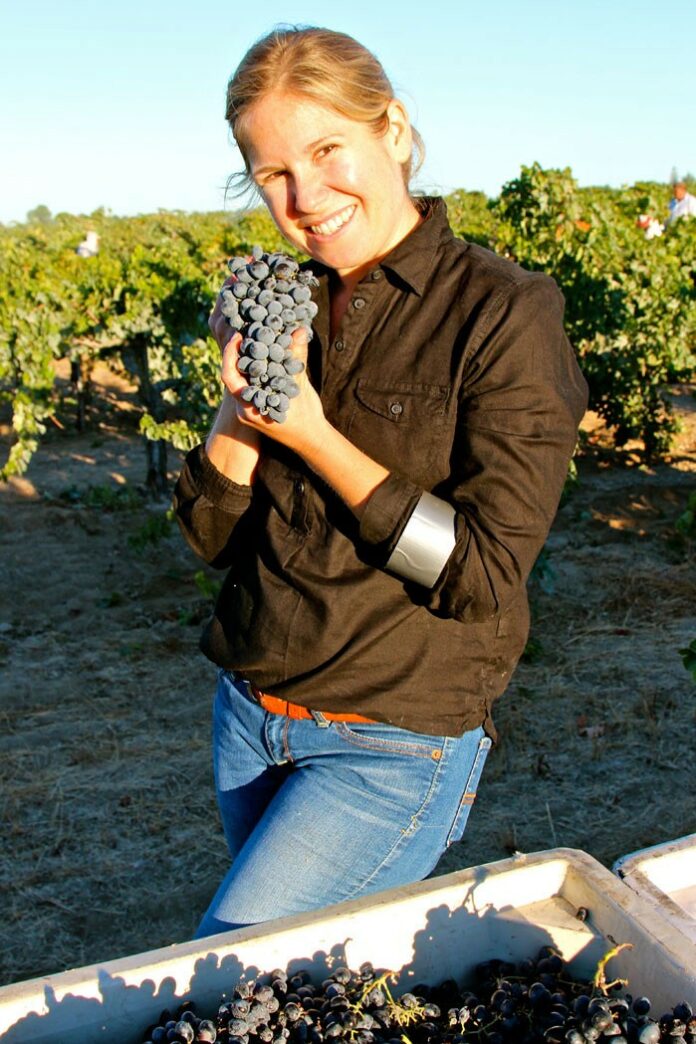
Napa Valley is a place where people come to leave their money. They part ways with their wad in a hundred ways: hoarding hundred-dollar Cabs, padding around five-Benny rooms, and finally, bewitched by the lifestyle, plunking down millions for their very own slice of St. Helena sunshine. But I like best the tradition at Prager Port Works, where they simply staple-gun cash to the plywood walls and leave it at that.

John Prager explains that it all started in the mid-’80s when his father received a dollar in the mail, free and clear—a junk mail type of promotion. He tossed the mail, but tacked the bill to the wall of the winery he started in 1979. Somewhere around 1988 an instigator type stopped by, said “I’m going to start a trend” and tacked up his own dollar.

He must have moved up in the world, because he’s since added a five, 10, even a 20 to his collection, which is now surrounded by banknotes on the ceiling, walls and banisters; currency from around the world and across time, from the Dominion of Canada, Nationalist China and, from Zimbabwe, a $100 trillion note (worth upwards of $3 at one time). Most are small bills; one cryogenically frozen dollar is especially small. Making for a fun, dive bar effect, it says something more: people are saving up their rarest old banknotes to donate them to Prager’s walls well before they even leave for their Napa getaway.

Hosted today by John Prager, his brother the winemaker, Peter, and their brother-in-law Richard Lenney, winetasting is conducted in the barrel room while they put the finishing touches on a long-overdue upgrade to the old room. But don’t worry about the threadbare oriental rug or Prager’s famous “web site,” a cobwebbed window that hasn’t been cleaned since 1985—they’re still there.

Made from traditional port grapes, the 2009 Port ($55) sighs with aromas of dark raisin and desiccated fig, and gushes with black plum and chocolate flavor. All Petite Sirah, the 2007 Royal Escort Port ($72) shows its heady spirits (it’s fortified with 170-proof brandy) but lingers like blueberry syrup. The 2009 Aria ($48.50) white port is just a liquid bear claw, while the 10-year Tawny Port ($75) is sublime and difficult to describe—hazelnuts huddled at the bottom of a cool, murky pond dreaming that they’re sipping black tea spiced with orange rind, with sherry for afters, maybe.

When touring the underdog wineries of the Napa Valley, Prager should be among one’s top stops. They’ve got something that money just can’t buy.

Prager Winery and Port Works, 1281 Lewelling Lane, St Helena. Daily, 10:30am–4:30pm (from 11am Wednesday and Sunday). Tasting fee, $20. 707.963.7678.

Heavy Medal

0

Winners of the 2013 Great American Beer Festival competition were announced in Denver on Oct. 12, with multiple North Bay breweries being recognized. The competition is the largest of its kind in the country, with over 4,800 different beers competing this year in a diverse 84 categories. Besides the judging, the festival itself draws 49,000 people annually.

Third Street Aleworks brought home the most hardware of any North Bay brewery in 2013, winning a gold medal for their Blarney Sisters Dry Irish stout in the Classic Irish-Style Dry Stout category and a bronze for their Bombay Rouge Red IPA in the Imperial Red Ale category. Moylan’s Brewing Co. also took bronze in the Classic Irish-Style Dry Stout category for their Dragoon’s Dry Irish stout. Additionally, Bear Republic earned a bronze medal for Heritage in the Scotch Ale category, while Russian River Brewing Co.’s Sanctification took the silver in the American-Style Brett Beer category. North Bay brewers received just three medals the year before (a silver to Russian River, and a bronze and silver to Bear Republic.)

California took home a total of 52 medals, along with two 2013 Brewery of the Year awards for best mid-sized brewpub (Beachwood BBQ & Brewing, Long Beach) and mid-sized brewing company (Firestone Walker Brewing Co., Paso Robles). This latest marks Firestone Walker’s fourth award in that category over the past 10 years, following wins in 2003, 2007 and 2011.

Defiant Frolic

0

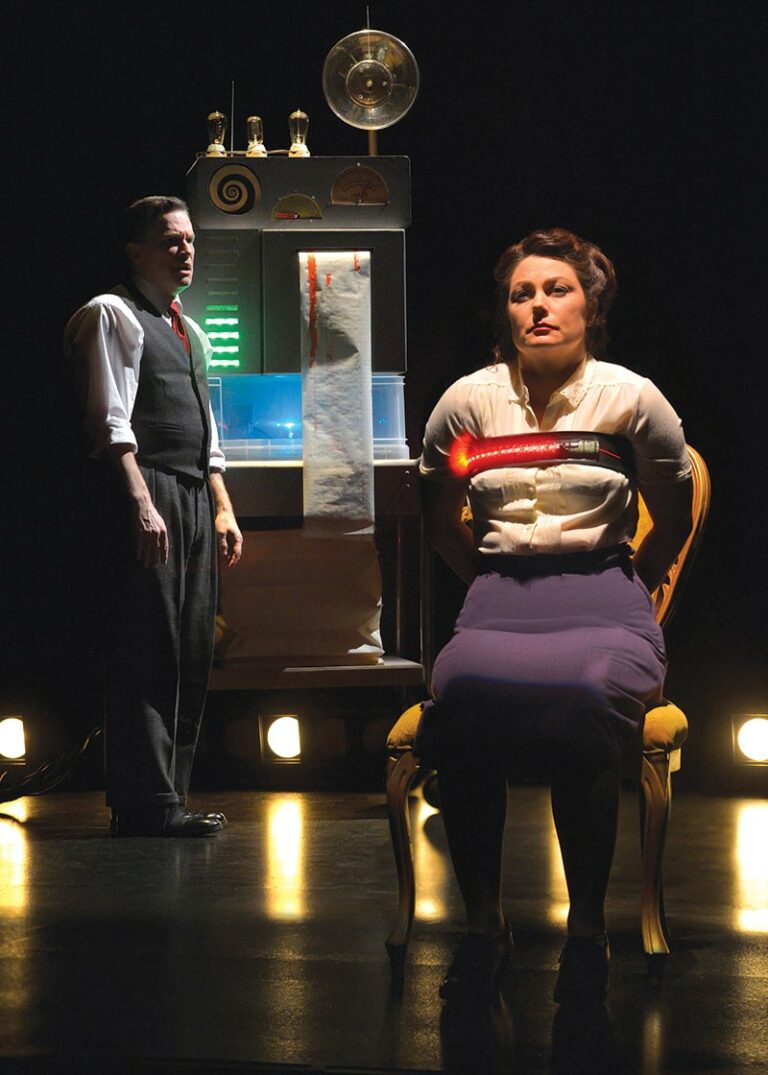
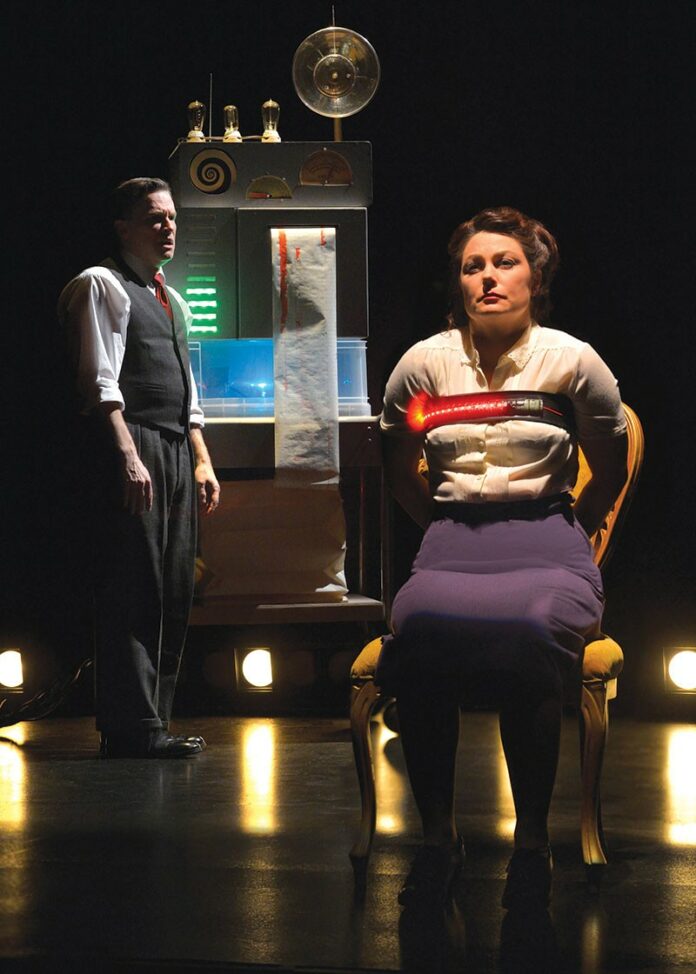
Caroline (Jessica Lynn Carroll) is a typical teenage girl—except that she’s spending her senior year at home, in need of a transplant, waiting for someone to donate a new liver. Seriously ill, but with plenty of sassy attitude, Caroline hangs out in her attic bedroom, defiantly resenting her predicament.

Anthony (Devion McArthur) is a sweet, poetry-loving basketball player who’s been having a pretty rough day. When Anthony appears with a complicated last-minute English class assignment, informing Caroline that they’ve been paired up to present a deconstruction of Walt Whitman’s “Song of Myself,” the articulately odd girl responds in a way that makes her new partner wonder if she’s a little unhinged, or just colorful and eccentric. Reluctantly, even a bit suspiciously, Caroline accepts the challenge, though she’s never read Walt Whitman’s Leaves of Grass and is more interested in testing and teasing her baffled English buddy.

In I and You, Marin Theatre Company’s world premiere of Lauren Gunderson’s sneaky, insightful two-person play, Whitman’s groundbreaking poetry is much more than just a plot point. The poem, a sensual celebration of the interconnectivity of all things, becomes a series of clues, as these two very different teens gradually discover the many things they have in common. Whitman’s use of the words “I” and “you,” and the way he shifts the meanings of those words throughout his poem, ultimately challenges the schoolmates to reexamine their own definitions of who they are, to themselves as well as to each other.

On a gorgeously detailed teenage-girl bedroom set by Michael Locker, the gently unfolding story seems like pretty slight stuff for a long time, during which audience members might wonder why Gunderson bothered to write a play about two nice kids doing homework. But as in “Song of Myself,” the power of the piece is in the way everything comes together, making sense of all that came before in a powerful, deftly accomplished feat of theatrical magic.

Director Sarah Rasmussen is perhaps a little two careful, working hard to let each new revelation arise un-guessed-at, while it might have been more dramatically fluid to let the characters show the weight of the secrets they carry. Still, with loads of charm and a joyous embrace of what it’s like to be young, self-absorbed and confidently clueless, MTC’s I and You is a sweet and lovely thing, a tiny little play that, miraculously, contains multitudes.

Rating (out of 5): ★★★★

Harvest Share

0

Nick Papadopoulos is a farmer now, but he has a professional background in conflict resolution. So, standing in a vegetable cooler on a Saturday night last March, surrounded by surplus produce that hadn’t been sold, his mind began to wander.

“We had all this food that wasn’t going to people,” the general manager of Bloomfield Farms in Petaluma recalls. “It’s edible and it’s grown for the purpose of feeding people, and we don’t make any money when it’s wasted.”

Later that week, he posted a message on Facebook advertising farmers market leftovers at a reduced price. That was the beginning of CropMobster.com, a social media hub addressing local farm waste and hunger—both issues hinging on a centralized, assembly-line food system that, according to Papadopoulos, is full of holes.

The terms “food waste” and “food access” fill national headlines, but connections between the two are rarely made. In September, the United Nations’ Food and Agriculture Organization released a report claiming that each year “food that is produced but not eaten guzzles up a volume of water equivalent to the annual flow of Russia’s Volga River, and is responsible for adding 3.3 billion tonnes [sic] of greenhouse gasses to the planet’s atmosphere.” Environmental damage aside, food producers lose an annual $750 billion on goods that feed no one. Meanwhile, 842 million people are hungry worldwide.

On a local scale, Papadopoulos saw the potential for overlap. A National Resources Defense Council study released last year states that waste occurs pre- and post-harvest, with variables like weather and labor shortages making it difficult to perfectly match a grower’s supply and demand.

If farmers weren’t making money anyway, Papadopoulos reasoned, why not discount those surpluses, or just give them away?

Gleaning operations, nonprofits like Respecting Our Elders and discount marts have come to similar conclusions. CropMobster aims to be a sort of virtual hub between such organizations and farms. Anyone can post an “alert”—a surplus of discounted blueberries, a need for gleaning volunteers—for free on its pages, which is then distributed via Twitter, Facebook, email and phone. For Papadopoulos, it’s a way of synching up the small-scale, local food scene that by nature is more decentralized than the one created nationally by factory farms.

“We wanted to address food waste and loss, and help people who are hungry or just priced out of the good stuff,” he says. “But we also wanted to help people in the cottage food industry and the gleaning industry, and build trading relationships.”

Laguna Farm in Sebastopol has used CropMobster several times.

“We’re raising our families in Sonoma County, so we really need to be able to sell our produce at retail price,” says Jennifer Branham, co-owner of the farm’s CSA program. “But in the peak of summer months, when we have an abundance and are unable to move all of our produce, it’s unique because it opens up other channels. So even though we only sold $1,000 worth of produce for $500—which doesn’t make ends meet—they publicized us, which led to new customers.”

She adds that Laguna’s waste occurs mostly pre-harvest, in their fields. If the staff knows they’ll have an abundance, they can’t afford the labor required to pick their crops, so they let them rot. This fertilizes next year’s crop, but it’s another step in the food cycle where hunger could be met—which is where gleaners come in.

Suzi Grady is a program director for gleaning outfit Petaluma Bounty. The nonprofit connects farmers with abundance to low-income housing complexes and food pantries, and also maintains a network of community gardens and a farm. As a hub in its own right, Grady says the increased reach offered by CropMobster—thousands of eyes in 12 Northern California counties—has been helpful for commodities like produce, which are highly perishable.

“We need to mobilize very quickly when we get a call,” she says.

With federal subsidies going primarily to large-scale farms, small organic growers often have to seek out a higher income bracket for their goods, which are not artificially cheap. Also, selling their leftover produce at lower prices could be seen as devaluing their regular inventory. Papadopoulos acknowledges this, but says he sees the potential for a wider market with surplus.

“That’s the inherent conflict in the local food system,” he says. “The farmers have to demand a premium price. Meanwhile people are struggling and farmers are struggling, and food surplus isn’t being traded or exchanged or sold.”

The Organ Trail

The year is 2368, and Lt. Worf is paralyzed from a spinal column injury. The USS Enterprise officer would rather die than live paralyzed, so a prototype medical device called the “genitronic replicator” is brought on board in an attempt to save him. The device is programmed to create a new spinal column, which the starship’s surgeons would implant. It has not yet been tested on a humanoid patient, but seems like the only way to save Worf.

This fictional scenario takes place in an episode of Star Trek: The Next Generation called “Ethics,” which first aired March 2, 1992. The genitronic replicator is one of those fictional Star Trek tools that surely could never exist: a machine that scans a patient, then prints replacement body parts for implantation.

But if advances in the world of 3D bioprinting continue at their current pace, this technology will be far past the prototype stage by 2368—it will be commonplace.

The idea of “printing” a vital organ is lifesaving. Over 120,000 people are on the Organ Procurement and Transplantation Network waiting list in the United States (98,142 need kidneys and 15,839 need livers), and many more who need transplants don’t qualify because of health risks, such as the risk of bodily rejection. By printing a kidney from one’s own cells, the organ is more likely to be accepted by the body and thus function normally.

As recently as five years ago, experts mused on the possibility of printing internal structures like heart valves or complex systems like the pancreas, or even a complete heart, on demand and with a patient’s own cells. The technology has the potential to revolutionize the way we view not only organ transplants, but drug research, cosmetic surgery and even space travel.

HOW IT WORKS

Though similar in theory, 3D bioprinting is vastly different from the 3D printing which has exploded in popularity in the past few years. Standard 3D printing uses a variety of inorganic materials (mostly plastics) to print everything from bobbleheads to handguns. One cannot simply print out a living tissue structure at home with a downloaded CAD drawing and a MakerBot home 3D printer. (“Hobby” versions of bioprinters do exist—a co-op lab called Biocurious in Sunnyvale offers one—but they’re expensive and only print flat rows of cells.)

A modern 3D bioprinter looks somewhat similar to a conventional 3D printer except it’s larger, has much more circuitry and uses multiple printing nozzles—one for modeling material, called “hydrogel,” and others containing cells called “bioink.” Early versions actually cannibalized inkjet cartridges, which were cleaned and sterilized, because human cells happen to be roughly the same size as older ink droplets (new ink cartridges are too fine for this).

Since living tissue is composed of many cell types, the different print heads expel the correct amount of a specific cell type along with the biodegradable hydrogel to hold it in place. The biogel structure creates a skeleton of sorts, called a scaffold, which degrades once the cells grow into the right shape. The trick is to find the right scaffold material that will support each different organ, promote cell growth and degrade after the right amount of time.

Because its cells regenerate on their own, the liver is a likely candidate to become the first bioprinted complex organ to be transplanted into a human. But as Wake Forest University’s Institute for Regenerative Medicine director Anthony Atala tells the Bohemian, “It is really impossible to predict when this technology would be available to patients through clinical trials.” He estimates it will take at least a decade, “and likely much longer.”

One major hurdle scientists face is building the intricate blood vessel networks needed to keep an organ alive. “In efforts to engineer solid organs such as the kidney and liver,” says Atala, “it is a challenge to incorporate the large number of cells required and to engineer a vascular system that can keep the structures alive until they integrate with the body after implantation.”

[page]

GROWING VS. PRINTING

Twelve years ago, Wake Forest University’s Institute for Regenerative Medicine, based in Winston-Salem, N.C., was the first group in the world to successfully implant a lab-grown bladder in a human. The same group announced in 2011 that it had grown a miniature liver, one inch in diameter, that functions, at least in the lab, as a human liver does.

So if organs can simply be grown in a lab, what’s the fuss about 3D printing? Why not just get some cells in a Petri dish and pour in the cellular Miracle Grow?

Well, for perspective, the first kidney transplant from a living donor happened a mere 59 years ago, with several unsuccessful attempts preceding it. Growing a complex organ from stem cells and then making it function normally when hooked up to the human body will take time to get right. As the process is perfected, it will need to become continuously faster and more streamlined, because organ-transplant patients’ time is limited. As Wake Forest’s website puts it, “One challenge is to learn to grow billions of liver cells at one time in order to engineer livers large enough for patients.” This is where bioprinting comes in.

Atala, a researcher at the forefront of tissue-engineering technology, explains the painstaking process of the 2001 bladder breakthrough. “The bladder scaffold was fashioned by hand and the cells were applied by hand with a pipette,” he tells the Bohemian. “With 3D printing, our goal is to make this process more precise. The scaffold would be printed using data from a patient’s medical scans, and the computer controls the placement of cells. This allows for the exact placement of multiple cell types.”

In other words, 3D printing makes an exact replica of a patient’s own organ using his or her own cells. It does this fast, with no breaks, and with precise execution—like an assembly line for organs.

DRUGS & SURGERY

As the only publicly traded bioprinting company, San Diego–based Organovo has been making the most headlines in the industry. In April, Organovo announced it had printed a 1mm-thick functioning human liver, which had lived for almost a week. “It grew to about twice as thick as we would have expected,” says spokesman Mike Renard in a phone interview with the Bohemian. By printing cells that grew into blood vessels, in addition to ones that make the liver function, “it allowed nutrients to go deeper in than would normally be the case,” says Renard.

Though this is still far away from being implantable in a human, it’s a big step in another facet of bioprinting: drug research.

Organovo’s focus right now is making living tissue for use in pharmaceutical research, specifically cancer drugs. Only about one in 5,000 drugs currently in development will make it to market, with an average cost of
$1.2 billion per product and 12 years in development. If drug companies were able to test prototypes on specific, living human tissue, time and money needed to produce effective pharmaceuticals would be reduced significantly. “Many drugs fail only after they get into humans,” says Renard. The ability to work on living, human tissue “helps make good decisions about safety and efficacy early in the process.”

TeVido BioDevices, in Austin, Texas, is focused on another area of tissue structures: reconstructive surgery. Led by Dr. Thomas Boland, University of Texas in El Paso faculty member and one of the founding fathers of bioprinting technology, the company is hoping its work on breast tissue will pay off.

Recovery from lumpectomy or mastectomy surgery is often a painful process, physically and emotionally. As far as reconstructive surgery, “right now, there’s really no good option,” says Scott Collins, TeVido’s vice president of research and development. The best scenario may include a tissue graft from a patient’s belly, but that doesn’t allow nipple or areola reconstruction, and it doesn’t react or feel the same. TeVido is working on a process in which living tissue from a patient’s own cells could be printed to exact size and shape specifications within an hour, taking on the body’s natural functions after implantation. “The real work is being done by the cells,” says Collins. “We just have to put them in the right environment so they do what we want them to do.”

This is good news for breast cancer patients and those with the risk-inherent BRCA mutation, which was brought to the wider public eye when actress Angelina Jolie chose to have a preventative double mastectomy after discovering she had an 87 percent chance of developing breast cancer. It’s also good news for plastic surgeons: what can be done to replace what’s been removed can also be done to add to what’s perceived to be lacking.

TeVido was awarded a $150,000 federal grant from Small Business Innovation Research this year. It reads, “The results of this research will help the field move towards larger, clinically relevant tissues and potentially whole organs. The commercial impacts of this research will be the availability of an autologous option for women in the lucrative $10 billion market for breast augmentation.”

[page]

BURN VICTIMS REJOICE

The team at Wake Forest is also working on printing skin cells directly onto burn victims with severe injuries who otherwise might need skin grafts culled from their back or buttocks. Kyle Binder, a lab scientist at Wake Forest’s Armed Forces Institute of Regenerative Medicine, explains in a video from Lab TV that the process involves “taking a normal desktop ink-jet printer, and you load the cartridge with cells instead of ink, and just using the normal method . . . you can print out human tissue instead of ink.”

The video shows a stunningly lo-fi version of a bioprinter, literally a home desktop printer with the cover removed, its guts modified to save lives instead of to print tax forms. Burns can account for 10 to 30 percent of all casualties on a battlefield, hence the Army’s interest in the technology, but it will also be able useful for treating burn victims on-site, like firefighters or other emergency personnel.

How it works is pretty simple: a camera scans the wound, making a 3D map with lasers, and a computer sorts out where and what to print onto the skin. The wound is filled, and—presto—the cells grow into new skin. Though this already sounds futuristic, the video of this demonstration is three years old. Since then, the Wake Forest team has updated the machine and has had success working on mice, closing a wound in two weeks that normally takes five weeks to heal. Most human victims of burns that severe will die within two weeks due to infection.

LIFE ON MARS

Sculptor and NYU art professor Robert Michael Smith is also involved in advancing bioprinting technology, but not for obvious reasons. “I want to be the first sculptor with a sculpture on Mars, except that it will be a created living form,” says the artist, who counts Montgomery High School and Santa Rosa Junior College among his alma maters. Smith, whose work was featured at Healdsburg’s Hammerfriar Gallery earlier this year, has already designed and printed 3D sculptures for this purpose, even integrating living cells using a bioprinter like the one at Wake Forest. His hope is to use the technology with his own DNA to perform tests on living, human cells during space missions to Mars. This would, in a way, make him the first human being to travel to Mars.

Smith reached out to Dr. Atala, who was receptive to the idea. “When you are exploring new venues in science, you always have to break through dogma,” says Atala in a discussion with Smith on YouTube. Atala says the idea is possible with current technology, though it would be an “expensive proposition.”

Smith says his vision includes a version of Wake Forest’s bioprinter for further experiments on the Red Planet. Like testing new treatments in drug research, Smith sees the possibility of evaluating the effects of intense, prolonged space travel on a cellular level using living tissue systems created with a bioprinter. “Why should any sentient creature be sacrificed when we can be creating physical simulators?” he asks, citing reports of people already signed up for a one-way “suicide mission” to study the planet’s potential for colonization. “Human beings are going to do whatever human beings are going to do,” says Smith. “Whether I’m involved or not, this is going to move forward.”

LAWS & REGULATIONS

Due to the United States’ regulatory system and insurance billing codes, Collins says TeVido’s breast-tissue research is likely to be implemented in the cosmetic market before the medical industry is able to take full advantage of it. Collins estimates that cosmetic procedures using this technology could be taking place within 10 years, while the FDA is looking at clinical trials and making up its mind on using the technology in medical applications. “Medical technology is getting a lot more complex very quickly, and we’re kind of overloading the system,” Collins says.

Waiting for the tortoise-like government-approval process to finalize means that, in the meantime, there’s no money coming in. One way to combat this is to license the technology for use in other countries. “That is not ideal,” says Collins, “but it’s the way many companies work in this space right now.”

Just a few months ago, Hangzhou Dianzi University in China announced it had made a 3D tissue printer that successfully printed functional miniature liver samples and ear cartilage. An orthopedic surgeon in Southern California is working on a technique involving printing cartilage from a patient’s own cells that might eventually replace dangerous and limiting spinal-fusion surgery. And perhaps most promising, a company in New England recently engineered a small kidney that produced a urine-like substance when implanted in a steer. The technology is here. It’s just in the “making sure it’s safe” phase.

“Making sure it’s safe” is a primary concern, even in the extreme, fictional future. In the Star Trek episode, Lt. Worf’s surgery was successful, but he technically died on the operating table; it was only his redundant Klingon anatomy, with backup systems of vital organs, that saved his life.

Once the technology is shown to be safe, which is on track to happen in our lifetime, new organs will appear out of thin air more often than from another human. The “organ donor” section on a drivers’ license application could become a whimsical nod to the past. The waiting list for transplants could be eliminated.

In the world of 3D bioprinting, the future may be closer than you think.

Worldly Grasp

0

In 1986, Sam Baker was on a train in Cuzco, Peru when a bomb exploded. The people he was sitting with were killed; Baker suffered a cut artery, blown-in eardrums and brain damage, and “should have died,” he says, but he didn’t.

Baker, a smart, oftentimes sad songwriter, has resisted the impulse to weave his tragedy into a larger statement about the world. Then Boston happened. Then the images of the explosions, of the half-appendages, of the bloody rescue efforts. Then Sam Baker, the train passenger who lived while a small German boy sitting next to him did not, could stay silent no longer about the senselessness of it all. “It’s not OK to blow kids up, for any reason in the world,” he says in a recent video. “I’ve not been overly vocal about this, but I am now. I’m sick of it. This stuff has got to stop.”

Baker’s new album, Say Grace, continues the artistic vision shown in his previous “Mercy Trilogy,” with economic prose and vivid imagery. But it’s Baker’s strong empathy that surfaces in everything he does. See him in person on Friday, Oct. 25, at the Occidental Center for the Arts. 3850 Doris Murphy Court, Occidental. 7:30pm. $25–$27. www.northbaylive.com.

Gun Club

0

Columbine. Newtown. Oak Creek. Sparks. The list of places where gun-fueled tragedies have occurred grows weekly—and even daily, if you live in the poorer sections of Chicago or Oakland. In response, a group of concerned Napa citizens have organized Napa County Gun Safety Day. Aimed at gun owners, potential gun owners and those interested in learning more about gun safety and regulations, the event offers gun-safety instruction from the Napa County Sheriff’s Office as well as free gun locks for the first 300 attendees. Mental health and suicide-prevention information will be available from the Napa County Health and Human Services, and at 10am, Congressman Mike Thompson offers an update on his proposed legislation to expand background checks. Voluntary and anonymous firearm disposal through the Napa Police Department will be offered. Gun Safety Day is on Saturday,
Oct. 26, between Napa City Hall
and the Napa Police Department. 1539 First St., Napa. 9am–1pm.
Free. 707.265.0200.

TRAILING OFF

The Arts Council of Sonoma County has laid off its four-person staff and will be transitioning to an all-volunteer organization, citing financial woes. At least four board members resigned in the wake of the news. Formed in 1984, the council was established as an umbrella organization for the vast array of visual, performing and literary arts in the county. The yearly ARTrails program was one of the group’s more successful projects. Board chairman Tom Lombardo told the Press Democrat that Jennifer Sloan, the group’s executive director, had withheld critical financial information that “could have informed decision making.” Sloan, along with staff members John Moran, Courtney Arnold and Vicky Kumpfer were given termination notices on
Oct. 14.

13 Year-Old Boy Fatally Shot by Sonoma County Sheriff’s Deputies

South Santa Rosa incident involved replica assault rifle

Bus Stop

Pressure is growing in communities around the world against Veolia Transdev, the worldwide industrial solutions firm based in France, clouded in political and environmental controversy and currently the operator of Sonoma County's public bus line. But the 25-year contract that gives the France-based giant several million dollars each year to operate the Sonoma County Transit bus fleet will come to...

Self-Checkout Blues

When my family first moved to Novato from Ohio back in 1985, we delighted in the Novato library—so airy, pleasant and well-stocked, unlike our old library. Almost 30 years later, some exterior changes have been made to the library building where practicality has won out over aesthetics, but that is a small complaint. However, over the past several years, I...

Prager Winery & Port Works

Napa Valley is a place where people come to leave their money. They part ways with their wad in a hundred ways: hoarding hundred-dollar Cabs, padding around five-Benny rooms, and finally, bewitched by the lifestyle, plunking down millions for their very own slice of St. Helena sunshine. But I like best the tradition at Prager Port Works, where they...

Heavy Medal

Winners of the 2013 Great American Beer Festival competition were announced in Denver on Oct. 12, with multiple North Bay breweries being recognized. The competition is the largest of its kind in the country, with over 4,800 different beers competing this year in a diverse 84 categories. Besides the judging, the festival itself draws 49,000 people annually. Third Street Aleworks...

Defiant Frolic

Caroline (Jessica Lynn Carroll) is a typical teenage girl—except that she's spending her senior year at home, in need of a transplant, waiting for someone to donate a new liver. Seriously ill, but with plenty of sassy attitude, Caroline hangs out in her attic bedroom, defiantly resenting her predicament. Anthony (Devion McArthur) is a sweet, poetry-loving basketball player who's been...

Harvest Share

Nick Papadopoulos is a farmer now, but he has a professional background in conflict resolution. So, standing in a vegetable cooler on a Saturday night last March, surrounded by surplus produce that hadn't been sold, his mind began to wander. "We had all this food that wasn't going to people," the general manager of Bloomfield Farms in Petaluma recalls. "It's...

The Organ Trail

The year is 2368, and Lt. Worf is paralyzed from a spinal column injury. The USS Enterprise officer would rather die than live paralyzed, so a prototype medical device called the "genitronic replicator" is brought on board in an attempt to save him. The device is programmed to create a new spinal column, which the starship's surgeons would implant....

Worldly Grasp

In 1986, Sam Baker was on a train in Cuzco, Peru when a bomb exploded. The people he was sitting with were killed; Baker suffered a cut artery, blown-in eardrums and brain damage, and "should have died," he says, but he didn't. Baker, a smart, oftentimes sad songwriter, has resisted the impulse to weave his tragedy into a larger statement...

Gun Club

Columbine. Newtown. Oak Creek. Sparks. The list of places where gun-fueled tragedies have occurred grows weekly—and even daily, if you live in the poorer sections of Chicago or Oakland. In response, a group of concerned Napa citizens have organized Napa County Gun Safety Day. Aimed at gun owners, potential gun owners and those interested in learning more about gun...
11,084FansLike
4,446FollowersFollow
6,928FollowersFollow