Jimmy Fallon Steps Comfortably into Tonight Show; Seth Meyers Stumbles Awkwardly into Late Night

latenight.jpg

Watching NBC’s Late Night with Jimmy Fallon over the past year or so, I grew to appreciate his sketches like “Thank You Notes,” “Superlatives” and the all-too-rare “Let Us Play With Your Look.” I was excited for the former Saturday Night Live star’s transition to the Tonight Show on NBC, which started last week with a who’s-who of famous guests, not just because it meant Jay Leno was finally off television but because he deserved it after five years on Late Night. Fallon’s a good talk show host and I love me some Justin Timberlake, who had been a frequent guest previously and has already appeared on the Tonight Show. Fallon’s first week was a little awkward, with a lot of blubbering and guests reassuring him of his obvious and multiple talents, but he’s gotten over that and looks to be beginning a long tenure as America’s favorite background noise for nighttime activities (whatever those may be). But Seth Meyers, another SNL alum, who took over Late Night this week, is a different story.

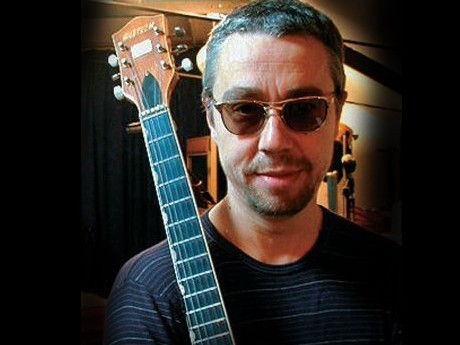
Let’s start with the positive. He has a great bandleader in Fred Armisen. The former Saturday Night Live writer and star is a great fit due to his previous history as a touring rock musician and general musical know-how. Seth Jabour and Syd Butler from Les Saavy Fav on guitar and bass, respectively, Eli Janney from Girls Against Boys on keyboards and Beyoncé’s drummer, Kimberly Thompson make up the 8G Band with Armisen, who is as musically versatile as they come. But those bright spots are not enough to carry the show.

First of all, the set is, well, it looks a little cheap. The Crate and Barrel desk in the middle of the floor with Myers’ dull, gray computer chair behind it brings to mind more of a Wayne’s World public access late night show than the one and only Late Night Show on a major TV network. The backdrop is a boring blue square pattern, like a faux Japanese screen in my great aunt’s guest room. His guests sit on individual chairs, again probably from Crate and Barrel; what happens if he has more than two guests? Or if he interviews a band? Do they sit on the floor? Come on, even I can afford a couch.

[jump]

Secondly, he needs a new monologue writer (so does Fallon, but at least he admitted it, albeit in joke form, on his Monday night broadcast). His jokes fell flat, possibly due to the lack of banter that usually accompanies jokes in this format. He didn’t connect with the audience, and having the Vice President of the United States on your first program, while pretty impressive, definitely sends a “second string” message. Especially considering President Barack Obama and first Lady Michelle Obama each appeared on Fallon’s version of Late Night.

And finally, the end of the show featured a musical guest that had no business being on television. There are now two iron-clad variety show rules: Thou Shalt Not Allow Lana Del Rey as Thy Musical Guest; and Thou Shalt Not Allow A Great Big World as Thy Musical Guest. His repetitious piano chords and whiney voice made the string section sound not like it was supporting his song with heartfelt emotion, but begging for him to stop plucking out their ingrown moustache hairs. The whole thing was screechy and went on far too long, like a poorly maintained Tilt-a-Whirl at a tiny, off-the-road Mexican carnival. And it made me just as sick.

Sorry, Meyers, but you’ve got to step it up. Call in some favors from famous friends, hire new writers, get Armisen involved more. You’re good enough, but you’ve got to surround yourself with good people to make a successful show.

Big Smiles at Smiley’s

0

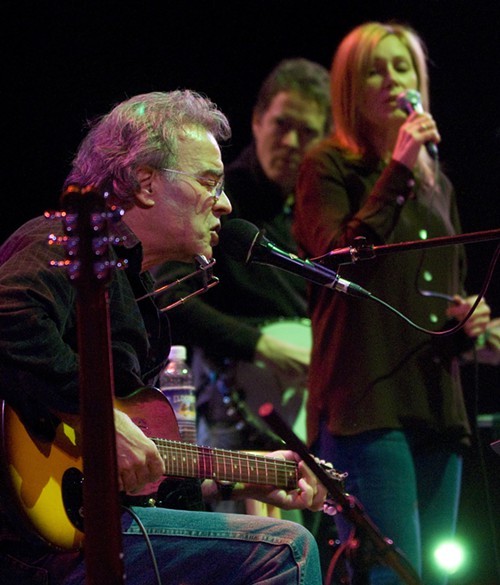
It was Friday night and Smiley’s in Bolinas was popping hard with the sounds of the Fairfax-based Tom Finch Group. I mean them guys was smoking, throwing off some funk-fusiony originals between California-cool takes on Led Zep and a “Not Fade Away” that you could hear all the way to the Phil Zone over yonder a-ways at Terrapin Crossroads. Got to talking with the bass player, Andius Jent, who played a ferocious, driving solo that went on for six glorious years. I’d have paid the $10 door just to hear “Ramble On” and the bass solo, the end. Punishing! Awesome! A great way to end the week, in a great saloon, in a great town, fully immersed in the glorious mythopoetic freakaliciousness of West Marin. Anyway, we got to talking and Jent says that Fairfax is basically the New Orleans of Marin County, music-wise. That seemed a stretch, given the stark demographic differences between the respective towns, but hey, we’re just talking. That bass solo was so freaking epic, I’ll give it up for Jent and figure on a Fairfax outing in coming days to check his claim. What the heck, it’s Mardi Gras season and nothing says One Love like a spiritualized second-line parade through the redwoods.

993987_197454653754336_1945267884_n.jpg

Feb. 23: Escher String Quartet

0

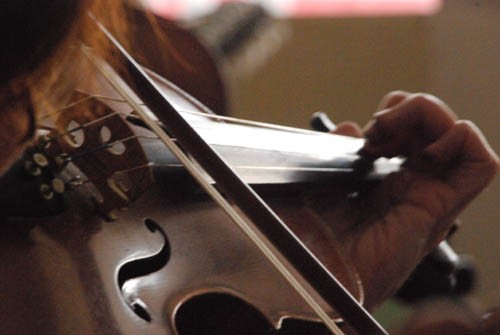
Formed in New York, N.Y., in 2005, the four musicians that make up the acclaimed Escher String Quartet take their inspiration from the artist they’re named for. M.C. Escher was known for his complex paintings that featured mind-boggling and paradoxical concepts. Moving these principles from a visual to aural medium has given the Escher String Quartet a reputation for dazzling interplay within a cohesive and moving artistic expression. The group has played the world over, from Paris to Beijing, and even performed on the BBC a few years back. Now they bring stirring classical music to the North Bay courtesy of the Mill Valley Chamber Music Society, Sunday, Feb. 23, at Mt. Tamalpais United Methodist Church. 410 Sycamore Ave., Mill Valley. 5pm. $15—$30. 415.381.4453.

Screen_shot_2014-02-19_at_1.47.46_PM.png

Feb. 21: Colin Mochrie and Brad Sherwood

0

In the annals of television comedy, improvisation has proven to be a fickle mistress. Either you get it—like the late Sid Caesar—or you don’t. Even the idea of putting on a program sans scripted laughs seems unlikely given the big bucks behind it. So how is it that a show like Whose Line Is It Anyway? could be so dominating, and so funny, on both U.K. and U.S. TV sets for decades? Look no further than stars of both incarnations Colin Mochrie and Brad Sherwood, two of the original stars now performing as a two-man group delivering “Live and Dangerous Comedy.” Just like the format of Whose Line, the funnymen will take audience suggestions and run wild. This never-to-be-repeated night of comedy happens Friday, Feb. 21, at the Marin Center’s Veterans Memorial Auditorium. 10 Avenue of the Flags, San Rafael. 8pm. $30—$60. 415.499.6800.

Screen_shot_2014-02-19_at_1.22.25_PM.png

Feb. 22: Vespertine Orchestra

0

Emphasizing minimalist electronic compositions, Petaluma’s Vespertine Orchestra (in fact, a duo) put their classical training to use to create eerily dark and intriguing pop. Partners Sadie Sonntag and Jesus Contreras do it all. Both music teachers are comfortable in many genres, combining mezzo-soprano voice and multi-instrumental mastery in songs that carry a throwback new wave sound seamlessly into the new century of electro-pop-influenced music. The Vespertine Orchestra play Saturday, Feb. 22, at Clear Heart Gallery. 90 Jessie Lane, Petaluma. 7pm. $20. 707.322.0009.

Screen_shot_2014-02-19_at_1.30.21_PM.png

Cheese Please Me

As the story goes, some years ago guerrilla artist Banksy was visiting Sonoma with some artist friends who took him to the Epicurean Connection in Sonoma. Sheana Davis, who knew Banksy’s friends, didn’t think much of the hooded young man spray-painting a stencil on the wall in her back room—after all, there are crows and other images painted by local artist Jonny Hirschmugl in the front of the store, so why not give the back a little love? Only later did she find out who Banksy was, but instead of fawning over his celebrity she was just excited that an artist had been inspired enough to leave a mark in her shop.

“I didn’t know who he was at the time,” says Davis, taking a moment from finalizing plans for her 11th annual Sonoma Valley Cheese Conference taking place next week in Sonoma. “He was wearing a hooded sweatshirt and didn’t say much.”

Davis’ connection to the famous British street artist is not as unlikely as it may seem to those who know her. She’s a champion of local artists, and each month shows a different artist’s work in her shop. She buys one new piece a month, but mostly reserves space on the Epicurean Connection’s walls for the rotating gallery. Davis runs a cheese shop, makes 500 gallons of the stuff each week and founded a conference dedicated to the craft of making the curdled-dairy delight—what the hell does her art collection have to do with cheese?

It’s about celebrating a craft and appreciating art. Davis, a chef who trained in New Orleans before moving back to Sonoma, fell in love with cheese and made her own in 2009. Delice de la Vallee was awarded first place honors by the American Cheese Society the next year. Davis now spends time nurturing new cheese makers, awarding two scholarships to the conference to a new producer each year. Sometimes the eye-opening experience helps influence a decision not to move forward. “Last year, both ended up deciding against starting a cheese company,” she says.

Davis’ straightforward, realistic approach makes the Sonoma Valley Cheese Conference a trendsetter in the industry. Bringing together producers, retailers, inspectors and the cheese-loving public helps create new partnerships and find out what works at each phase of the business. (One year after a session on licensing, many producers filed for trademarks.) And it brings many producers from out of state, too. “We bring a lot of Wisconsin cheeses in, because they’re ahead of us and we can only learn from them,” says Davis.

There have been many memorable moments in the 11 years of the conference. The first year started with a bang—and a pow and a wham and other comic-book adjectives—when fisticuffs broke out between a professor and a raw-milk producer. “We had a brawl,” says Davis. “It was like a punk-rock show.”

[page]

The professor, who was adamantly opposed to raw milk, unknowingly consumed some butter made from it. Upon being informed of this, tempers flared and punches were thrown. Since then, however, there has not been as much violence, but there has been love. “We’ve definitely seen friendships form, relationships form,” says Davis. “We’ve seen people who’ve met [at the conference] and now are married.”

The conference can have immediate impacts for local producers. When the Leveroni family’s farm was threatened by eminent domain for a hospital in 2006, “the entire conference went to speak on their behalf at the city council meeting,” says Davis. “It was pretty fun,” she says, adding that Joe Leveroni came back in subsequent years due to popular demand to update his saga.

This year, the conference heads back to its roots at the Sonoma Valley Inn. About 125 invitations were sent out for the intimate event, though the public is welcome to an opening reception and cheese tasting (with mac ‘n’ cheese, sake and beer available, too) on Sunday, Feb. 23, at Ramekins Culinary Center. Keynote speakers this year include Judy and Charlie Creighton, owners of a landmark cheese shop in San Francisco, discussing the evolution of the artisan cheese movement with an official from the USDA and two cheese producers from California and Vermont. The conference also features tours, marketing consultations and presentations on leadership skills.

Davis not only runs the Epicurean Connection, mentors new businesses and makes sure the cheese conference goes smoothly, but she’s also an active participant in the conference. Last year, she was so busy planning the event that her own entry in the mac ‘n’ cheese competition got misplaced. “How do you lose two hotel pans of mac ‘n’ cheese?” she asks.

Hopefully, this year’s event will include her own entry, as well as a few fun shenanigans. “There’s the cheese rolling,” she says, “with a ramp and everything. That’s the punk-rock skateboarder in me.”

[page]

Redwood Hill Farm & Creamery

Second-generation farmer Jennifer Bice of Redwood Hill Farm and Creamery is a gifted cheesemaker who helped start the Sonoma Valley Cheese Conference with Ig Vella and Sheana Davis. “At that time, artisan cheesemaking was small, and we wanted a way to network with colleagues and provide education,” says Bice. In just 11 years, the industry has blossomed trememdously.

“[The artisan cheese movement] really started in the ’80s with goat-cheese makers,” says Bice. “California cuisine was up-and-coming, and chefs put it on their menus, giving it exposure and creating a market.” Now there are cheeses made locally from the milk of sheep, cow and even water buffalo, as well as entire magazines about cheese.

Bice has been a contributor to this growth with her popular and award-winning goat’s milk cheeses. From the tart, fluffy chèvre to the raw-milk feta, Redwood Hill’s products consistently win medals at the major competitions. In 2013, five different varieties won gold at both the Sonoma County Harvest Festival and the California State Fair. Not one to rest on her laurels, Bice hinted that some new products are in the pipeline. “We are working on a couple new cheeses, but it’s too early to say.”

This year at the conference, she will be on a panel discussing the emergence of the natural food market, and is looking forward to the camaraderie of the gathering.—Brooke Jackson

[page]

Point Reyes Farmstead Cheese Co.

The Giacomini Dairy, in the hills above Tomales Bay, has been in operation since 1959. Robert Giacomini is a dairyman with a herd of Holsteins, but it was getting harder to support the business by just producing milk. He had a dream of making cheese, and eventually convinced his four daughters to return to the fold to help get the operation off the ground. In 2000, they launched the Point Reyes Farmstead Cheese Company and released the first blue cheese made in California, Point Reyes Original Blue.

The Giacominis will be at the Sonoma Valley Cheese Conference with their award-winning cheese. “We’re as excited as ever and we can’t wait,” says company spokesperson Jill Giacomini Basch. In 2013, their newest addition, Bay Blue, won a gold SOFI (Specialty Outstanding Food Innovation) award—considered the Oscar of the food industry—as well as a Good Food Award and a third-place ribbon at the American Cheese Society Competition. Their toma, a semi-hard table cheese, won second place there in 2012. Point Reyes Farmstead will be participating on a panel called “Publicity Boot Camp.”—Brooke Jackson

[page]

Valley Ford Cheese Co.

The Bianchi family has operated Mountain View Jersey Dairy in Valley Ford since the early 1900s. Now, about a hundred years later, with the price of milk plummeting, many dairy operations are going out of business. Fourth-generation rancher Karen Bianchi-Moreda decided to try her hand at cheesemaking with Valley Ford Cheese Company, and finds the Sonoma Valley Cheese Conference a helpful networking event.

“It’s fantastic,” she says. “I attended my first year and sat in the audience. The next year I was on the panel as a new cheesemaker, and have attended since then, meeting all kinds of great people.” Her first cheese, Estero Gold, was inspired by an alpine-style version her grandparents used to make; it won a gold medal at the California State Fair in 2012. Next came Estero Gold Reserve, which is aged for 16 months; it won Best of Show in 2012 at the State Fair.

Karen’s son, Joe, joined as cheesemaker in 2010 with a freshly minted degree in dairy science from Cal Poly. Together they created a fontina-style cheese called Highway One, which won awards at the State Fair, the Sonoma Harvest Fair and the Cal State Cheese Competition. Karen Bianchi-Moreda is proud that the next generation is getting involved in the family business. “We were able to add a value added product with milk we are already producing and allow a full time position to the fifth generation,” she says. “Doesn’t get any better than that.”
—Brooke Jackson

[page]

Bleating Heart Cheese

With a flagship cheese named Fat Bottom Girl and a company slogan that reads, “Making seriously good cheeses without taking ourselves too seriously,” Bleating Heart Cheese has arrived on the scene with a playful attitude. Owners Seana Doughty and David Dalton came to cheesemaking as non-farming amateurs, using sheep milk from Barinaga Ranch to make the first wheels of Fat Bottom Girl in 2009, which were released to critical acclaim.

In the following years, Doughty went on a quest to secure enough sheep milk for her cheesemaking and along the way created Shepherdista (a raw-milk cheese aged two to three months), Shepherdista Crush (the original version soaked in grape pumice) and Ewelicious Blue (a mild and creamy blue cheese). Eventually, she and Dalton purchased a small herd of dairy ewes and partnered with an existing sheep farm to maintain their milk supply, creating Black Oak Dairy.

Ewes only produce milk six months of the year, so Bleating Heart cheeses are available on a very limited basis. Doughty speaks at the Sonoma Valley Cheese Conference on the growing pains of a small cheese maker—her talk is called, “No money? No farm? No problem! An Update From a Small but Growing Cheesemaker.”—Brooke Jackson

<

Courting the Latino Vote

0

To hear political scientist David Selby put it, the Republican Party is blowing it big-time when it comes to corralling the Latino vote—at both the state and national levels.

Selby, a visiting instructor at UC Berkeley, has just authored a study that takes a deeply researched dive into Latino voting patterns in Santa Rosa. The study arrives as a national debate over immigration “reform” is yet again unfolding in Congress—and in the larger context of a shifting American demographic toward greater Latino participation in electoral politics, a trend most political observers have assumed will be of benefit to Democratic candidates for generations to come.

Not so fast, says Selby, who argues that Latino cultural conservatives are eager to come home to candidates more in line with their values, but that the anti-immigration GOP policies keeps them in the Democratic camp and will continue to do so until the Republican Party “stops race-baiting on immigration,” Selby tells the Bohemian.

“Latinos,” he says, “are not anti-Republican.”

The study revealed an interesting but unsurprising divide in Latino voting patterns: Hispanics overwhelmingly vote for Democratic candidates in local and national elections, but often express viewpoints on “values” issues that are starkly at odds with positions held by the candidates they support.

Selby and co-author Kelly Wurtz studied elections and various California propositions going back to 1990. It was no surprise to them that they were able to identify many Latinos who express a combination of “economic progressivism with cultural conservatism.”

Selby found significant support among Latinos for capital punishment, opposition to abortion rights and a bias toward “traditional” marriages. And yet he found that Latinos largely support progressive taxation policies that benefit the needy.

Selby notes that the largely Catholic Latino voting bloc trends both pro-life and anti-poverty (just like the new Pope Francis, who is from Argentina). “They care about community,” he says, “in that they care about those who are less well-off, and they care about the unborn.”

Selby identifies the “Proposition 187 effect” as the main reason for the apparent split in Latino loyalties. Proposition 187 was a harshly anti-immigrant state initiative from 1994 notable for its elevation of the uncompromising “politics of mean” into the national debate over Hispanic (especially Mexican) immigration to the United States. Its opening salvo of victimized indignation remains a stunning example of how those politics of mean can get elevated into a legitimate purpose, in this case, the denying of social services to undocumented aliens:

The people of California find and declare as follows:

That they have suffered and are suffering economic hardship caused by the presence of illegal aliens in this state.

That they have suffered and are suffering personal injury and damage caused by the criminal conduct of illegal aliens in this state.

That they have a right to the protection of their government from any person or persons entering this country unlawfully.

Therefore, the People of California declare their intention to provide for cooperation between their agencies of state and local government with the federal government, and to establish a system of required notification by and between such agencies to prevent illegal aliens in the United States from receiving benefits or public services in the State of California.

A flurry of lawsuits and community outrage about its utter heartlessness helped kill Proposition 187, but not before it provided the groundwork that gave rise to anti-immigration legislative initiatives now being undertaken around the country. “Race-baiting by Republicans is turning off Latinos,” says Selby. “California set that tone 20 years ago,” he says, “and now it can set the tone for finding an appeal for Latinos in the Republican Party.”

Selby also highlights California’s uniquely Latino heritage when he says that “Latino culture is California culture,” and argues that the state is, demographically speaking, 20 years ahead of the rest of the country.

But we reap what we sow. The split over issues and candidates is in full effect in Santa Rosa, where Latino voters tend to be slightly more Democratic-leaning than elsewhere in the country. But even so, the same group supports a range of issues on the right side of the ideological dial, Selby says.

Part of the dynamic teased out in this study may be a function of what Selby calls the “shared agricultural heritage” of many Latinos who emigrate to the United States—rural residents tend to be cut from a more conservative cloth than their urban counterparts. Now the rest of the country, most notably Arizona along with about 10 other states, has embarked on the same kind of immigrant-bashing frenzy that led to Proposition 187, which started as a “Save Our State” initiative in Sacramento and ended with a thud of embarrassment for California.

In the intervening years since the 1994 proposition flopped, the Republican Party has demonstrated a pigheaded indifference to the anti-immigration politics of mean, even as it awkwardly foists wunderkind Latino up-and-comers like Sen. Marco Rubio on to the national stage. Or, for that matter, when it lets freshman blowhard Ted Cruz run roughshod over the U.S. Senate in his zeal to kill Obamacare. Gov. Mitt Romney, in his failed bid for the presidency in 2012, fell victim to a harsh and demonstrably satirical call for “self-deportation” as his contribution to the immigration reform dialogue. Romney embraced a faux platform that would make life so difficult for undocumented aliens that they would “self-deport” right back to Mexico.

Selby’s advice for Republicans, not that they are asking him for it, is to “stop annoying Latinos. Stop doing things that are actively alienating them from the party.”

It may be generations before Latinos come home to their seemingly more natural place in the Republican Party, though Selby says it’s the young people just entering the political arena who drive the voting bloc leftward in elections. And those same Latino voters have not given President Obama a pass on his immigration policies, which have seen record numbers of deportations during his presidency. Still, Selby notes, Obama and the Democratic establishment know they still can count on the reliable Latino vote come election day—at least for now.

Voter suppression efforts undertaken by the GOP are also a factor driving Latinos away from the Republican Party, says Selby. “Everyone knows those efforts are targeting minority voters because they tend to vote Democratic,”
he says.

The political science professor argues that any GOP candidate for higher office who does a “180- degree turn on immigration” will likely win that election by drawing enough Latino support to turn the tide in his favor. That includes the big man from New Jersey himself, Gov. Chris Christie.

Selby identifies forty-something Latino politicians like Abel Maldonado as a “good example of the type of candidate that Republicans should be promoting.” Maldonado, a lieutenant governor in the Schwarzenegger administration, said he would challenge Gov. Jerry Brown in this year’s gubernatorial race. He did an about-face on his previous opposition to marriage equality before abruptly leaving the race in January. “It would be good to have a GOP that’s a little bit more reasonable,” Selby says.

Editor’s note: Selby’s study was sponsored and funded by the Santa Rosa-based Leadership Institute for Ecology and the Economy; www.ecoleader.org

A Bus Too Far

0

I have relied on your buses ever since they began operation. I have much to say about how they are scheduled, which, without question, does not seem to serve the majority of your riders.

In all the years I have been a passenger on your system, I have heard nothing but complaints from my fellow passengers, and they are increasing every year. Most of these complaints are leveled at the total lack of any seeming intelligence behind how the buses are scheduled. It makes everyone wonder how and why the bus company administrators and transportation agencies have created such a futile mess out of what, with a little thought and a modicum of cooperation, should be an easy fix.

Many of your riders theorize that these various agencies are paid by the oil companies to purposely sabotage public transit systems in order to discourage ridership. Don’t laugh. It’s a well-known fact that in the 1940s the oil companies bought out and completely dismantled Los Angeles’ public transit system, which at the time was considered the best in the world.

It takes upwards of four-plus hours to get from Sebastopol to west Marin. If I want to catch a bus from west Sonoma County to the SRJC in time for a class that begins at noon, the closest stop to that time is 10:49am. These schedules should be designed with students’ schedules in mind, as there are many who have no choice but to take the bus to school. This lack of connectivity is true even in the case of routes serviced by the same bus company.

I doubt that any bus administrators rely on their own service to commute, but if they did, I’m certain the bus lines they use would operate in a timely and functional manner. And don’t even ask me about the “Stupid Train.” What a huge boondoggle that is now and will be when it begins to operate.

Jay Cimo is a Sonoma County resident.

We welcome your contribution. To have your topical essay of 350 words considered for publication, write op*****@******an.com.

Arrowood’s Way

0

In a standard cartoon gag, a mountain-climbing truth seeker strains to pull himself, at last, onto a ledge where sits a wise old guru, and asks a burning question. For instance, “What is the secret . . . to wine?”

“There are no secrets in this industry,” Richard Arrowood says. Looking forward to his 49th harvest in 2014, the life-long Sonoma County winemaker says that he’s pleased to work in a field where peers cooperate more than they compete. Not that he doesn’t have a few stories to tell.

Arrowood (pictured with daughter Kerry Arrowood-Cummings) took a summer job during college at Korbel Champagne Cellars in 1965 and was the first winemaker at Chateau St. Jean in 1974, holding that job until 1990. With his wife, Alis, he founded an eponymous winery in 1985, attracting the attention of the then-expanding Robert Mondavi Corporation in 2000. “Leave him alone,” Arrowood recounts Robert Mondavi telling his business partners while tasting his wines. “Give him everything he needs.”

But the corporate owners that subsumed Mondavi peddled Arrowood Winery off to a bankruptcy-bound investment group. When they declined to pay him for his estate grapes, says Arrowood, he took a hike up to his mountain redoubt in the chaparral—taking the wines that he’d made with him. Thus began Amapola Creek, perched on a ledge in the hills above Sonoma.

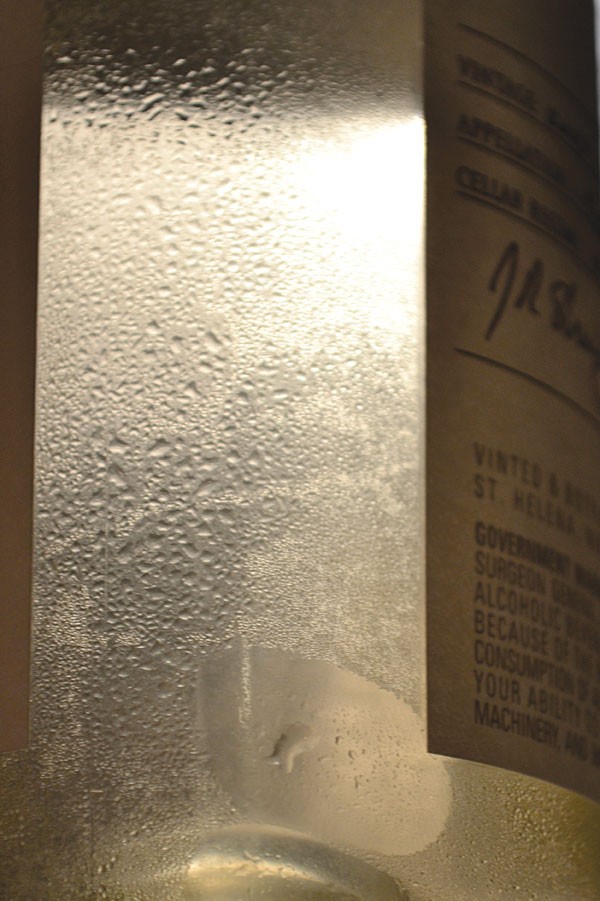
Amapola Creek is a certified organic grower and handler, and says so on the label—unlike many other organic producers (shy much, folks?). The 2012 Belli Vineyards Chardonnay ($45) has aromas of candied nuts, peach and pear, with a Meyer lemon meringue-pie flavor and a finish of flat (in a very good way) Champagne.

“Port-like Zin is not my idea of a good time,” Arrowood says, and indeed, his 2010 Monte Rosso Sonoma Valley Zinfandel ($42) finishes with lingering, chewy dryness after sweet notes of jammy, raspberry fruit. Plush yet dry, this Zin is an enigma until I read the technical information and respectfully ask, something to the effect of, “Are you kidding, Mr. Arrowood?” This wine has a pH of 3.12 while boasting 15.5 percent alcohol. That’s correct, he says with a smile. Technical story short, this wine suggests that simplistic slogans about low alcohol being the only path to “balanced” wines may beg reconsideration.

The 2010 Cuvée Alis ($48), an estate-grown Syrah and Grenache blend, evokes the perfume of dried red roses and smacks of savory-tinged strawberry and licorice. When past masters of Cabernet get serious about blends like this, it’s a good sign for the category. As for Arrowood, he’s happy to be able to focus on what matters to him the most. During harvest, he says, he does more winemaking than paperwork.

Fee Fury at Sonoma State

0

The California State University system has seen tuition costs increase dramatically over the past 10 years, and Sonoma State University is no exception, with the annual price of education nearly tripling, from about $3,010 in 2003 to $8,996 last year. Now the university is contemplating adding another $500 “success fee” to the annual tuition.

University officials say the fee is necessary to ensure that students can get the classes they need to graduate in four years and to eliminate a structural deficit of $1 million. Their argument is that $500 per year is much less than paying for another year of education. But a poll of 300 students in November showed that 41 percent would either not be able to continue or were unsure if they could continue to attend the university if the $500 fee went through.

“Students are talking like it’s already happened,” says university spokesperson Susan Kashack. “I think they might have bypassed the fact that this is something that’s been proposed.” Provost Andrew Rogerson is gathering information at open forums on campus, and will report back to university president Ruben Armiñana with his findings. From there, the president will make a decision based on that information, says Kashack.

Nine other CSUs collect success fees, including San Luis Obispo and Los Angeles. But SSU already charges students $902 in fees on top of tuition, the third-highest total of all CSUs. An additional $500 per year would make it the most expensive liberal arts campus in the system. As for the public’s opinion, a petition on Change.org Tuesday showed almost 1,100 signatures asking the university not to impose the fee—an increase of more than a hundred signatures from the previous day.

UPDATE:
Sonoma State University President Ruben Armiñana sent a letter to students Wednesday saying the university has decided not to go ahead with the proposed $500 per year academic success fee. His words: “The goal was to help students graduate in a timely manner by providing improved advising and additional classes. However, by offering more classes we would raise the average unit load for our students. This would impact the enrollment target set by the CSU system. We do not have a way to raise our target at this time. For now, we prefer to wait and see how our targets may be modified in the future before any further consideration of a fee.”—Nicolas Grizzle

Jimmy Fallon Steps Comfortably into Tonight Show; Seth Meyers Stumbles Awkwardly into Late Night

NBC's new variety show hosts are finding their footing

Big Smiles at Smiley’s

It was Friday night and Smiley's in Bolinas was popping hard with the sounds of the Fairfax-based Tom Finch Group. I mean them guys was smoking, throwing off some funk-fusiony originals between California-cool takes on Led Zep and a "Not Fade Away" that you could hear all the way to the Phil Zone over yonder a-ways at Terrapin Crossroads....

Feb. 23: Escher String Quartet

Formed in New York, N.Y., in 2005, the four musicians that make up the acclaimed Escher String Quartet take their inspiration from the artist they’re named for. M.C. Escher was known for his complex paintings that featured mind-boggling and paradoxical concepts. Moving these principles from a visual to aural medium has given the Escher String Quartet a reputation for...

Feb. 21: Colin Mochrie and Brad Sherwood

In the annals of television comedy, improvisation has proven to be a fickle mistress. Either you get it—like the late Sid Caesar—or you don’t. Even the idea of putting on a program sans scripted laughs seems unlikely given the big bucks behind it. So how is it that a show like Whose Line Is It Anyway? could be so...

Feb. 22: Vespertine Orchestra

Emphasizing minimalist electronic compositions, Petaluma’s Vespertine Orchestra (in fact, a duo) put their classical training to use to create eerily dark and intriguing pop. Partners Sadie Sonntag and Jesus Contreras do it all. Both music teachers are comfortable in many genres, combining mezzo-soprano voice and multi-instrumental mastery in songs that carry a throwback new wave sound seamlessly into the...

Cheese Please Me

As the story goes, some years ago guerrilla artist Banksy was visiting Sonoma with some artist friends who took him to the Epicurean Connection in Sonoma. Sheana Davis, who knew Banksy's friends, didn't think much of the hooded young man spray-painting a stencil on the wall in her back room—after all, there are crows and other images painted by...

Courting the Latino Vote

To hear political scientist David Selby put it, the Republican Party is blowing it big-time when it comes to corralling the Latino vote—at both the state and national levels. Selby, a visiting instructor at UC Berkeley, has just authored a study that takes a deeply researched dive into Latino voting patterns in Santa Rosa. The study arrives as a national...

A Bus Too Far

I have relied on your buses ever since they began operation. I have much to say about how they are scheduled, which, without question, does not seem to serve the majority of your riders. In all the years I have been a passenger on your system, I have heard nothing but complaints from my fellow passengers, and they are increasing...

Arrowood’s Way

In a standard cartoon gag, a mountain-climbing truth seeker strains to pull himself, at last, onto a ledge where sits a wise old guru, and asks a burning question. For instance, "What is the secret . . . to wine?" "There are no secrets in this industry," Richard Arrowood says. Looking forward to his 49th harvest in 2014, the life-long...

Fee Fury at Sonoma State

The California State University system has seen tuition costs increase dramatically over the past 10 years, and Sonoma State University is no exception, with the annual price of education nearly tripling, from about $3,010 in 2003 to $8,996 last year. Now the university is contemplating adding another $500 "success fee" to the annual tuition. University officials say the fee is...
11,084FansLike
4,606FollowersFollow
6,928FollowersFollow