It’s Yellow Journalism

‘Mustard!?” exclaims the Mad Hatter, after adding butter, jam, salt and sugar to the White Rabbit’s comically oversized pocket watch in Disney’s Alice in Wonderland. “Let’s don’t be silly!” But with mustard’s endless styles and desirable flavor, fixing a pocket watch may be the only thing this superior condiment cannot do—and its connection to the North Bay runs deep.

“Prepared mustard goes back to the 15th century,” says Michele Anna Jordan, a Sonoma County author with over 20 cookbooks to her credit. And the foundation of the spreadable gold itself dates back even further. “The mustard seed goes back to pre-biblical times, and that seed contains so much flavor.” It’s a heritage that once spawned an entire local festival celebrating the immense value of just one tiny seed (alas, the Napa Valley Mustard Festival has been on hiatus since 2012).

Some say the bright fields of yellow first came to Sonoma County thanks to a Franciscan missionary who spread the seeds as part of his landscaping duties at the early churches in the area. That’s cute, but the more likely story is that mustard arrived here with other foods, like grains, on a shipment long ago, making it an invasive species. Both black and field (yellow) mustard are classified as weeds, despite their beauty and nutritious qualities. According to the California Invasive Plant Council, the turnip relative cannot be eradicated by a simple lawnmower job, and inhibits the germination of native plants.

But the bright flowers contrast beautifully with the green grass, creating a visual bridge to the region’s vineyards, which are just starting to green when the mustard blooms. They’re an inspiration for countless oil and watercolor paintings, and it’s not uncommon to see cars pulled over on Highway 12 or Petaluma Hill Road to admire the rolling hills of yellow and green. Another good thing this invasive weed has going for it is that it keeps away harmful nematodes and other unwanted soil dwellers, giving added protection to vineyards.

HOW IT’S MADE

Mustard is made from mustard seeds, mustard powder, vinegar, water and salt. Of course, there are different varieties; sometimes it’s hard to believe sweet Zinfandel mustard and Chinese mustard are based on the same condiment, and modern times have spawned wild innovations like wasabi horseradish and hickory bacon mustard. “There are a hundred different ways to make it,” says Dennis Dunn, who makes his own stoneground beer mustard and sells it at the Santa Rosa farmers market. (No surprise that it goes perfectly with the sausages he also sells for his brother’s company, Diavola.)

Grinding is the key, says Jordan, whose out-of-print 1994 book The Good Cook’s Book of Mustard will be updated and rereleased next year. It’s the difference between true Dijon and paltry imitators. “True Dijon style from France—taste it next to American versions, and you’ll notice a difference in texture,” she says. “They’re very secret in how they do things, but from what I could ascertain, the mustard is ground between two steel plates.” The secret seems to be contained in the ratio of pressure per square inch, but Jordan still isn’t 100 percent certain. She tried to find out how Grey Poupon does it, but, she says, “They won’t let anyone watch the process. I tried really hard.”

“People can make mustard at home pretty easily,” says Duskie Estes, award-winning chef at Sebastopol’s Zazu. Her husband, John Stewart, makes mustard at the restaurant by soaking the seeds in Guinness. The final creation gets slathered on their pig’s heart pastrami sandwich with homemade sauerkraut. “I would love for him to make one with Tilted Shed hard cider,” adds Estes.

Estes is a fan of mustard, especially on burgers and corn dogs. Her daughter loves it on hot pretzels. “It’s got great acid, and sometimes heat,” she says. When the plant is in bloom, Estes likes to use mustard flowers as garnish. “It’s one of my favorite things, just driving around Sonoma County and seeing the mustard everywhere,” she says.

NO NEED TO GET FANCY

Not everyone needs a fancy mustard to get by. “I like brown mustard,” says Ralph Morgenbesser, whose Courthouse Square hot dog cart has been a fixture of downtown Santa Rosa for over 25 years. “Most people like brown. But you’d be surprised how many people still like yellow mustard.” Morgenbesser, who hails from Brooklyn, has strong opinions about hot dog toppings. Chicago dogs with pickle spears and tomatoes? “I don’t want a salad on my hot dog,” he says. But the Big Apple and the Second City can agree on one thing: no ketchup or mayo allowed (he does offer them, but never partakes). He tried offering new condiments, like mustard-and-onion sauce (sautéed onions in mustard with some crushed tomatoes), but says nothing has approached regular mustard in terms of popularity.

Not everyone even needs mustard. John Vrattos, owner of Yanni’s Sausage Grill in Penngrove, says he doesn’t allow condiments on their house-made meat torpedoes. “You wouldn’t put mustard on a pork sausage with spinach and feta, would you?” he asks. But after four years, he’s relented to the demands of his customers—somewhat. “We’ll give it to them,” he says, “but we say, ‘Take two bites without it, and if you need it, we’ll give it to you.’ Nine times out of 10, they don’t need it.” He concedes the one sausage that does have mustard is the “naughty brat,” but it’s a seasonal special.

With so many different flavors and styles, why is yellow mustard the default in America? Manufacturers realized that Americans like flavors to be on the plainer side, and French’s released a very basic version of the classic condiment to great success. Other companies followed suit, and a uniquely American take on an Old World condiment was born.

Jordan has several recipes that use mustard as a key ingredient, as well as her own recipes for the condiment itself. “I love mustard as a base of flavor,” she says, listing ingredients for her cream of mustard soup, which is still served at Santa Rosa’s Cafe Europe after her Good Cook’s Book of Mustard launch party there 20 years ago. She speaks with such appreciation for something that is taken as granted in everyone’s refrigerator door, the question came up: Is mustard the queen of condiments? “Most people would say that is ketchup,” she says, quickly adding, “but I wouldn’t.”

[page]

SIERRA NEVADA

Yes, the pioneering brewery makes mustard. Just like its original strategy for beer, the company makes only a few styles: pale ale with honey, porter spicy brown and stout stoneground. The hops in the beer lend a fresh, sweet and aromatic experience to the mustard. The porter makes a good accoutrement, the popular pale ale can turn a normal ham sandwich into a gourmet deli lunch, and the stout stoneground transforms the lowly corned beef into an explosion of complex flavors. Something about brined beef fat mixes well with stoneground mustards, and this is certainly no exception.

KOZLOWSKI FARMS

Sonoma County’s Kozlowski Farms is well known for its jams and jellies, but they also make a fine mustard. Two fine mustards, actually: Ol’ Uncle Cal’s sweet and hot mustard and a Dijon honey mustard. These are best enjoyed with pretzels, either warm and soft or small and hard. They’re great in marinades and sauces, or brushed right onto glistening, dripping, flame-licked chicken thighs on the grill. The Dijon honey is made with Chardonnay and honey, while the sweet and hot is made with brown sugar and eggs for a creamy consistency.

MENDOCINO MUSTARD

Made in Fort Bragg, Mendocino Mustard produces two styles: hot and sweet, and seeds and suds. The former is a dangerously delectable treat with a vicious kick at the end (horseradish fanatics rejoice). Those preferring the savory side of life will be attracted to the seeds-and-suds style. The crunch of brown and yellow seeds mixed with the deep flavor of North Coast Brewing’s Red Seal Ale make it a gold medal winner, and it pairs well with red ale and fresh pretzels.

NAPA VALLEY

For almost 80 years, Beaverton Foods has been producing delectable condiments, but it’s most known in the North Bay for its Beaver brand mustard. Popular styles like Dijon, stoneground, traditional yellow and the sinus-clearing sweet hot are staples at local restaurants, and sausages just don’t taste the same without them. In fact, four types of Beaver mustards are brought to the table upon each order of bratwurst at Santa Rosa’s Third Street Aleworks. Lesser known flavors like hickory bacon, extra hot jalapeño and wasabi horseradish deserve love, too, and Beaver’s Chinese mustard is so hot, just thinking about it produces the specter of a full-mouthed sneeze. It’s embarrassing to think about, so just dive in head first to this mustard (don’t worry—it’s Kosher). The Oregon-based company also makes Inglehoffer, a German-style spicy Dijon with white wine. It’s an eye-opening kick to even the richest German schnitzel. As for local products, Beaverton also produces Napa Valley Mustard Company’s products, which include more refined selections like honey mustard with orange ginger and Dijon with herbs and garlic.

Local Goodness

0

The National Association for the Specialty Food Trade (NASFT) Fancy Food Show, presented Jan. 19–21 at the Moscone Center in San Francisco, is considered the annual harbinger of things to come: prominent flavors, trends in lifestyle and nutritional choices as well as new products and innovations. This year, 1,350 exhibitors from 35 countries and regions were sprawled across the massive convention center, and the aisles teemed with attendees looking for the next great thing.

Vying for the position were approximately 80,000 different products, including a plethora of cheeses, candies, coffees, teas, cured meats and condiments of every stripe. Naturally, the North Bay was well represented with all types of original food and drink products.

Healthful snack foods encompassed a large category at this year’s show. Wild California, from Petaluma, introduced its crisps, a cross between a cracker and a chip; made with dried fruit, toasted seeds and spices, they’re low in fat and full of fiber, and are made with ingredients from the Golden State. Popcorn from over 30 vendors was a huge force, and appeared in an abundance of flavors—some zany, some sweet and some downright questionable (dill pickle, sriracha, garlic and harissa, caramel macadamia, Vietnamese cinnamon, toasted sesame and seaweed.)

An unusual snack from the Good Bean in Berkeley introduced seven types of crispy, roasted chickpeas to the market. Savory flavors like sea salt and chili lime were delicious, sweet ones like chocolate not so much. Nuts were another expansive group under the snack heading. Perfectly toasted, candied, spiced or salted varieties were on display with cardamom cashews from Sante,
a taste highlight.

Spices, salts, herbs and rubs made up a big part of the condiment section. Organic, fair trade and whole spices singly sourced are a continuing trend. Napa’s own Whole Spice showcased its rice and grain seasoning blends with flavors like almond, cranberry and herbs, Moroccan harissa and Mexican mole. Widely regarded as a purveyor of the freshest spices in the North Bay, the company’s new blends are meal inspirations in an envelope.

The Spice Lab’s test tubes of colorful salts, sugars and herbs were also attractive, while the ground Madagascar vanilla powder from Lafaza offered a flavorful and alcohol-free way to use this important ingredient.

Hot drinks were a huge category at the show, with teas leading the way in fun and flavorful blends. Novato’s Republic of Tea rolled out its Downton Abbey label with the Grantham Breakfast and English Rose varieties, which received lots of attention. They also featured two biodynamic teas: Darjeeling from India and chamomile from Italy. Other interesting flavors in tea were chocolate Earl Grey, salted caramel and chai with a hint of coffee, making for indulgent afternoon sipping. Coffee in all types, both hot and cold, continues to be very popular. One of the most unusual was the Caffe Borsa hand drip, which comes in an envelope similar to a tea bag. It unfolds into a mini drip bag with arms that attach to your cup. Pour boiling water through and—voilà!—a perfectly brewed cup of Joe.

Two companies from the North Bay have created flours and oils using grape skins and seeds, the waste products of the wine industry. WholeVine of Santa Rosa offered tastes of its gluten-free cookies and crackers, made with flour of dried grape skins and seeds. Salute Sante from Napa sampled its grapeseed oils and introduced two new varietals in their flours, which are ground from the seeds. These products are surprisingly nutritious, contributing a boost of flavor, fiber and antioxidants.

Novato’s Navitas Naturals showcased its line of organic superfoods, including maca, goji, cacao and chia seeds for snacking and for use as ingredients in recipes guaranteed to increase health. Napacakes’ Panaforte garnered raves from tasters of this satisfying treat, considered the “original power bar.”

Among the thousands of products, cheese was a standout, and the North Bay sent many talented cheese makers from the flock. Point Reyes Farmstead had samples of its new Bay Blue, a tangy mouthful reminiscent of Stilton. The venerable Marin French Cheese Company showed off a few of its classic soft rind varieties to grateful samplers. These were just two of the many talented cheese makers from the tri-county North Bay at the show.

The San Francisco Fancy Food Show presents the classic and the novel in the specialty food industry, reflecting trends for the coming year.

For more info, see fancyfoodshows.com

Louis M. Martini Winery

0

If the Cabernet Sauvignon from Louis M. Martini’s famed Monte Rosso vineyard needs no introduction, none is offered, either.

Seen one way, the lack of background information offered by the otherwise friendly and attentive staff at this tasting room, located on St. Helena Highway where the 80-year-old winery was founded in 1933, could be taken for what we moderns call “a positive.” If, as advocates of blind tasting would have it, knowing absolute nix about a wine is crucial to an honest organoleptic appraisal of it, then this is a very savvy strategy indeed, stroking the wine taster’s sense of dignity with a touch as light as a morning breeze. If, on the other hand, the goal is to sell the uninitiated on an $85 wine from a mountain site with an incomparable view and a rich history—I don’t know, maybe the air’s getting a little thin up there.

One thing’s for sure: the ladies who just sidled up to the bar on my right will not start their session with a nice white. The bottles of 1950 Mountain Dry Semillon and 1959 Mountain Sylvaner behind the bar are just for decoration; these days, besides a Moscato dessert wine, you can have any color of wine you want, as long as it’s red.

Dubbed the “King of Cabernet” by none other than Robert Mondavi, the enterprising Louis M. Martini first set up shop during Prohibition, making totally legit sacramental wine and grape concentrate. Around 1938, he purchased and renamed the Mt. Pisgah vineyard “Monte Rosso” for the color of its volcanic soil, and planted Cabernet Sauvignon. The winery sold to the Gallo empire in 2002, the deal “sweetened” with a microwinery where third-generation winemaker Mike Martini makes limited release wines like the 2010 Cellar No. 254 Meritage ($65), a big, chewy blend of Cabernet Sauvignon et al. that sticks to the palate like a chocolate mint cookie.

Visitors may also enjoy the 2011 Cellar No. 254 Petite Sirah ($55) while seated at shaded tables just a few yards from the Thomann Station vineyard from which it’s sourced. The 2008 Monte Rosso Cabernet Sauvignon ($85) is the main event here, with aromas of medium-plus toasty oak, cocoa truffle dusting, saddle leather and sweet raspberry, with flavors of Cabernet fruit leather. Would that there was such a snack. This brand’s grand old flagship vineyard, just by the by, is located in Sonoma Valley—as you’ll learn by looking very closely at the bottle.

Louis M. Martini Winery, 254 St. Helena Hwy., St. Helena. Daily, 10am–6pm. Tasting fee, $15–$20. Seek more context with the available 45-minute tour, $30. 707.968.3362.

Birthday Wish

0

Memphis Roetter is turning nine years old, and for his birthday on Feb. 26, he wants what any boy his age would want—to donate at least 9,999 meals to the Redwood Empire Food Bank.

This isn’t Memphis’ first rodeo, so to speak. The Sonoma County philanthropist has asked for donations to a charity as his birthday gift each of the past four years. He asks neighbors, friends, family and even shoppers in front of supermarkets for help in his goal. When he turned six, he raised enough for 5,585 meals; at age seven, that number grew to over 8,000, and last year, with a goal of 8,888 meals, Memphis raised enough money for the food bank to provide over 10,000 meals. This year he hopes at least to reach that mark.

“He’s definitely been putting in the effort,” says his father, Chuck Roetter. Since two meals can be provided by the food bank for about $1, that means he’ll have to collect at least $5,000. As of Monday, he already had $1,550 raised through various sources, including a crowdfunding site.

Last week, Memphis was outside Oliver’s Market in Santa Rosa asking shoppers if they’d like to contribute to his goal. More than the usual handful stopped for the energetic, fair-haired do-gooder and pledged funds. More inside were shopping for items to donate directly (although cash is far more effective, given the food bank’s heavily discounted rate for bulk purchasing). Though this wasn’t originally his idea (his mom, Juli, suggested it to him on a smaller scale when he was turning four), it’s been Memphis’ decision ever since. “It’s more work each year,” says Chuck Roetter, “but he doesn’t seem to shy away from it.”

For more information or to donate, visit www.crowdrise.com
/2014annualfooddrive.

Beer, Jay’s Way

0

Like so many great adventures before, Jay Brooks’ own twist of fate began in a smoky, East Village jazz club. That’s where the Pennsylvania-bred Army band member first sipped an imported Bass pale ale—a beer so different from the Genesee cream ale of his youth that he couldn’t help but dive into the still relatively dormant world of craft beer with gusto, guided by the books of famed beer writer Michael Jackson.

“We found a pub in Manhattan that served 50 to a hundred different beers and just started sampling them,” Brooks tells me over a Hop 2 It pale ale at Russian River Brewing Company. “It was rare to find a bar that served anything more than the standard beers, so that seemed like an amazing selection.”

Two decades later, Brooks, who lives in Cotati with his wife and two children, has been the general manager of Celebrator Beer News, a syndicated newspaper columnist for the Bay Area News Group for which he writes the “Brooks on Beer” column, and a prolific freelancer, writing for nearly every known beer publication. He studied brewing at UC Davis and has judged at the Great American Beer Festival and the World Beer Cup.

The culmination of Brooks’ beer obsession is a new guidebook, California Breweries North. A painstakingly researched guide to the ever-growing brewery and brewpub scene in Northern California, the project reflects 18 months of research and writing—twice as long as Brooks originally anticipated, he says, because of the scope and explosive growth of breweries. In Sonoma County alone, there are over 20 functioning breweries (a number that seems to grow each week), more than most states have total. Like a game of whack-a-mole, as soon as Brooks traveled to one brewery, another would open.

“You want it to be as complete and comprehensive as possible,” he says. “So there was a lot of legwork involved.” Covering San Francisco, the North Bay, the South Bay, the East Bay, the North Coast, the Northern Cascade and Shasta Mountains and the Central Valley North, the book carries the air of an insider’s guide. Brooks has been on the beer scene for more than 20 years, so he’s able to get into the backroom workings of breweries in a way that novices simply can’t. Just look at the foreword, written by Vinnie and Natalie Cilurzo of the Russian River Brewing Company, who describe Brooks as a “guy who really knows his beer.”

Hanging with Brooks for an hour is like spending time with a beer encyclopedia, one not afraid to challenge conventional opinions, namely, that beer has always been and should remain a cheap commodity.

“Industrial, mass-production breweries have created an artificial price point,” Brooks explains. More to the point, the low cost of Budweiser tends to make people balk at paying $20 for a 750ml bottle of a bourbon-barrel-aged artisan product from a microbrewery. “My view on this is pretty unpopular, but I actually think beer should be more expensive than it is now,” he adds.

When I ask Brooks about hyperlocal beer efforts, like that of Hill Farmstead, the small Vermont brewery recently profiled in the New York Times, he says, “Everything old becomes new again.” A fountain of obscure beer facts (did you know that Jane Austen home-brewed?), Brooks says that in the pre-industrial United States, there were over 4,000 breweries. Beer had to be local because it didn’t travel well. Once refrigeration and rail travel became streamlined, the number dropped below 2,000. He lauds the efforts to localize beer again, but doesn’t have a problem with the expansion efforts of breweries like Lagunitas, either. In the end, what matters most to Brooks is taste.

For this true beer geek (in the best sense of the word), Brooks’ list of favorite Bay Area breweries is considerable. In the North, he’s got his eye on Henhouse, Baeltane (he notes that brewer Alan Atha has been able to carry the experimental edge of home-brewing into his commercial efforts) and, surprisingly, Anderson Valley, which he says lost its edge about 10 years ago but has regained ground with the return of original brewmaster Fal Allen.

In the East Bay, he admires Faction and Rare Barrel, a renegade that sticks to sours only. In the South Bay, there’s Sante Adairius Rustic Ales, and in the shadow of Anheuser-Busch in Fairfield, there’s Heretic. Brooks is not one to discount the older, more established breweries in favor of new upstarts. He mentions North Coast for consistent quality, and the same goes for Mad River up in Blue Lake, which sold its first beer way back in 1990. And of course he can’t forget Moonlight Brewery, the iconoclastic, artisan operation owned by Santa Rosa’s Brian Hunt.

Brooks is already onto his next project, a compendium of beer quotes, including this great one from Abraham Lincoln: “I am a firm believer in the people. If given the truth, they can be depended on to meet any national crisis. The great point is to bring them the real facts, and beer.”

An opinion that Jay Brooks would most definitely agree with.

‘California Breweries North’ is
in stores now. For more, see
www.brookstonbeerbulletin.com.

Stick to Your Ribs

0

The smoke billowing up through the trees is the first hint. Then the whiff of grilling meat confirms it: Buster’s Southern Barbeque & Bakery is just up ahead. Sitting at the very top of Napa Valley, Busters’ brings together bikers, wine snobs and families at the crossroads of Calistoga. Regularly voted by Bohemian readers as the best barbecue in Napa, one bite of the succulent tri-tip is all it takes to understand why.

Buster Davis cut his chops in the barbecue field in Southern California, perfecting family recipes for dry rub, sauce and cooking techniques. Twelve years ago, he headed north, taking over the rundown Jolly Kone ice cream store and spiffing up the property. The prep kitchen moved into the tiny ice cream dispensary, with the front windows remaining for ordering and pick up. An adjacent seating area is now closed-in, with heating and A/C added in the last couple years to provide year-round comfort. Along the perimeter of the horseshoe driveway are tables tucked in among the trees.

The heart of Buster’s is the barbecue pit, which was made by Davis’ brother. In a deep metal box with a grill rack that can be raised or lowered, an oak fire licks the meat, kissing it with mouth-watering wood-smoke flavor. It’s a style of cooking commonly associated with Santa Maria on the central coast of California, where cooking over coastal red oak has a rich history.

From the days of the ranchos some 150 years ago, when the vast central-coast inlands were covered with large cattle ranches and the land was still owned by Mexico, beef was cooked over open fires. The cuts were strung onto branches and roasted over pits of roaring oak, giving the meat a signature wood-grilled flavor.

Today, that time-honored style of barbecue is still going strong around the Santa Maria valley where tri-tip is king—and also up in Calistoga at Buster’s, where the tri-tip is the most popular item on the menu. Buster’s cooks between 35 and 50 of the football-sized hunks on busy weekends, slicing it thickly and serving it with their signature sauce.

The sauce sets Buster’s apart from other barbecue. It comes in medium and hot versions, and is served on the side so diners can dip and slather to their liking. Tangy, smoky and with a hint of spice, the medium is the most popular, while the hot sauce is not for the faint of heart—it’s got an incendiary kick that will have diners reaching for a frosty glass of Buster’s homemade lemonade. In fact, a big sign near the register states that there are no refunds or exchanges if the sauce is too fiery for customers; Buster’s wife, Barbara Jolly, says people have tried to return it after one bite.

Racks of beef and pork ribs are another popular menu item. (Gnawing on bones is a modern-day caveperson’s dream.) The beef ribs come chewy, with good flavor, and the pork ribs are juicy and luscious, falling off the bone with that signature wood-smoke flavor.

Rounding out the offerings are chicken, hot links and pork loin. Davis recently added pulled pork, simply because so many people kept asking for it. The pile of scrumptious shreds goes well with the slabs of garlic toast that come with every meal, and that hot sauce is the perfect accompaniment to put the tiger back in the tank.

Impeccable barbecue calls for tasty side dishes, and Buster’s doesn’t disappoint. The beans, in both baked and chili varieties, are velvety, with each bite setting up a craving for the next. Macaroni salad is a starchy foil for the juicy, spicy meats, as is the potato salad, bound with the right amount of good mayonnaise to make a creamy, satisfying mouthful. The coleslaw and three-bean salad are the only green vegetables on offer, piquant and tangy. The cornbread is moist and slightly sweet, an extra that must be ordered separately but well worth it.

Meats can be ordered as dinners, which include two sides and garlic toast; sandwiches served on the garlic toast that come with one side; or as combination plates with up to three grilled items sharing the plate with two sides. Another option is to get the meats to go, in whole or half portions for the tri-tip, racks of ribs, chicken or pork loin, and by the pint for the pulled pork or the piece for the hot links. Jars of barbecue sauce are for sale, and this writer highly recommends having some on hand for whatever’s cooking on your home grill. A dollop of Buster’s sauce makes everything taste just right.

Davis and Jolly are hoping to tear down the old Jolly Kone structure and erect a larger kitchen building to accommodate the growing business. Their restaurant is for people from all walks of life who appreciate good, rib-sticking comfort food. As one customer stated after wolfing down some of the finest barbecue in northern California: “It’s not a meal, it’s an experience.”

Buster’s Southern Barbeque & Bakery, 1207 Foothill Blvd., Calistoga. 707.942.5605.

Tax Master

0

It may seem a stretch to connect personal finance with empowerment, especially for those who have lived by the mantra of “Eat the rich” since birth. Having money means you’re evil, right? The 1%! Go to hell, Warren Buffett!

All joking aside, personal finance and financial planning shouldn’t be a luxury reserved for the rich. We all deserve the chance to understand where our money goes and how we can make our income work best for us. That’s why the Earn It! Keep It! Save It! (EKS) coalition is an idea whose time has come. Created specifically for Bay Area residents, EKS’ mission is to provide free tax preparation as a tool to help low income residents become financially stable—and part of the United Way’s strategic initiative to cut local poverty in half by 2020.

Here in Sonoma County, Empire College accounting students will use VITA, a tax preparation program through the IRS, to deliver free income services to low-income residents (household income must be less than $52,000 in 2013) through April 15. The program is a win-win in that it provides valuable tax prep and guidance, which can lead to greater returns, and works as a service-based learning opportunity for Empire College accounting students, who must become IRS certified in tax preparation to participate.

The EKS kick-off event gets underway on Saturday, Jan. 25, at Empire College. 3035 Cleveland Ave., Santa Rosa. 9am–1pm. 707.546.4000. Attendees will have the chance to explore free tax help, onsite healthcare and CalFresh enrollment, and direct deposit and bank services.
For more information, see
www.unitedwaywinecountry.org.

On Target

0

The bright lights and shouting voices didn’t seem real at first, says Lisbet Mendoza, 15. “We thought it was a joke,” she told members of the Sonoma County Community and Local Law Enforcement Task Force at its Jan. 13 inaugural meeting.

Mendoza’s voice trembling with fear, she continued: “They told us to put our hands on our head . . . they had guns pointed at us.” She and her friends were handcuffed, leaving deep bruises, and though nine law enforcement vehicles arrived on the scene, the teens weren’t given a reason for their detainment, she said. “They were searching for a gun,” she told the task force, “but we didn’t have a gun. All we had was a staple gun.”

On the evening of Jan. 9, Jose Luis “Louie” Godoy, 24, drove four teenagers back from the store after buying markers, posterboard and other supplies for an upcoming Justice for Andy Lopez march. Upon his return to Moorland Avenue in Santa Rosa, he and the teenagers were surprised by several sheriff’s vehicles waiting in the dark with their lights off. Two minutes after deputies announced their presence, a sheriff’s helicopter was on the scene, shining a spotlight from overhead.

Backup from the Santa Rosa Police Department was called, and Godoy was arrested just half a mile from the site of Lopez’s death, which has been turned into a makeshift memorial park by the community.

The task force is powerless to enforce any action on this issue, as it is only an advisory body constructed to make recommendations to the Sonoma County Board of Supervisors in the wake of the shooting of 13-year-old Andy Lopez at the hands of Deputy Erick Gelhaus. But the issue was discussed as an indication of a larger problem stemming from the death of Andy Lopez: the frustration of both law enforcement and the community. “That’s the crux of this issue,” said task force member Caroline Bañuelos, referring to the incident.

Though many have claimed that Godoy and others are a target of harassment by law enforcement due to their participation in recent protests, for which the city has estimated its costs to be upwards of $250,000, officials assert the incident had nothing to do with Andy Lopez, and that Godoy was arrested as a suspect in a previous incident that day.

“[Godoy] was identified as a person that pointed a handgun at a citizen in traffic,” says Santa Rosa Police Sgt. Mike Lazzarini, one of the responding officers, reached by phone this week. After that initial incident, reported at 4:15pm near the intersection of Hearn and Corby avenues, an investigation and witness identification pointed to Godoy as a suspect. Sheriff’s deputies “happened to find him,” says Lazzarini, and called for “emergency backup” when the situation drew onlookers.

“A bunch of people from the neighborhood had come out and were being loud and causing a challenge for the deputies,” says Lazzarini, one of the responding officers. No weapons were found, but “there had been quite a time frame” between the call and the identification of Godoy as a suspect, he added.

Sonoma County Sheriff’s deputies were not available for comment at press time.

Despite law enforcement’s explanation, the case has prompted charges of harassment. Jon Melrod, a leader of the Justice for Andy Lopez campaign, says the Lopez family’s lawyer, Arnoldo Casillas, plans to file a lawsuit within the week alleging harassment of Andy’s Youth and coalition activities, “on behalf of the youth that were harassed.” From that point, the county has 45 days to settle or reject the claim, after which a federal suit can be filed. No official complaints have been submitted to the Santa Rosa Police Department.

“I think it’s a positive thing, because it’s going to show how the department works,” says Nicole Guerre, an activist whose son was good friends with Lopez. “It’s also positive for the kids, because it shows them there are consequences when things happen.”

As for Lisbet Mendoza, after the Jan. 13 task force meeting, she and her friend Karina Alvarado, 13, recalled more details of the evening. That morning, they had been at the courthouse to support Godoy in his appearance following an arrest on charges of obstructing a police officer during a Dec. 10 protest in Santa Rosa. Mendoza recognized deputies from the courtroom at the Jan. 9 arrest. “All the deputies that were there at the court, they were there that night,” she says. “They’ve been harassing us really bad.”

At the core of it all, as Bañuelos points out, is the concern felt by the community.

“It’s like a war zone in the Latino community,” says Guerre. “My son even says, ‘Am I next?'”

War Games

0

There is nothing new about war.

From the siege of Troy and the jungles of Vietnam to the deserts of Iraq and Afghanistan, war stories have always been told—some highlighting the glory, some the blood and guts. What’s remarkable about playwright
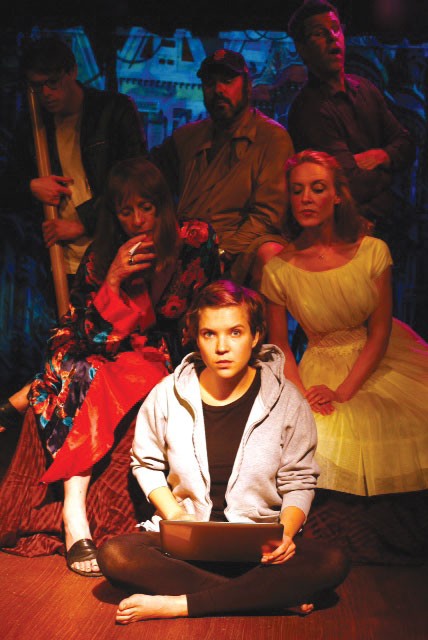
R. C. Sherriff’s strikingly authentic World War I drama Journey’s End, which just opened a month-long run at the Ross Valley Players’ Old Barn Theatre, is how modern, fresh and funny the play is. Beautifully written with equal measures of crisp insight and dark comedy, and sharply and sensitively staged by director Jim Dunn, one might never guess this thing has been around for 86 years.

Sherriff, a British writer and novelist who eventually turned to screenwriting (The Four Feathers, Goodbye Mr. Chips), based his claustrophobic stage masterpiece on his own experience of trench warfare in France toward the end of the first World War. Though the weapons and technical methods of warfare have changed since Sherriff’s days, it’s easy to believe that the alternately conflicted, committed, bored, terrified and traumatized soldiers of Journey’s End have much in common with troops serving overseas today.

Just 50 yards from the front line, where British infantrymen are literally dug in for a years-long standoff against the German army, a group of English officers wait—and wait and wait—for the next dreaded battle. They fill their time with hilariously mundane conversation (comparing rugby to cricket, commenting on the importance of pepper), rounding out the long days and nights with mindnumbing amounts of alcohol and the occasional high-stakes tabletop earwig race.

Capt. Stanhope (an excellent David Yen) has perfected the art of commanding his men while maintaining a constant state of numb inebriation. Lt. Osborne (played with amiable resignation by Tom Hudgens) has earned the nickname “Uncle,” counseling newcomers, reading poetry aloud to calm everyone’s nerves, making tension-lightening jokes about the food prepared by inventive cook Mason (a hilarious Sean Gunnell), and defending Stanhope’s alcoholism. Second Lt. Trotter (Stephen Dietz, never better) has perfected a kind of dutiful nonchalance, surrendering his fear to the monotony of routine.

The genius of the play is how tense all of this waiting becomes. Whenever something happens, Osborne admits, it happens fast. Then everyone goes back to waiting. And although the final moments of the play do feel a tad rushed after so much buildup, the overall effect of Journey’s End is powerfully, elegantly devastating.

Rating (out of 5): ★★★★½

Baby Steps

0

This past week brought a storm of news regarding “internet security” (sort of any oxymoron in today’s day and age), NSA spying (at this point, we all know they do it) and the vast extent to which our government infringes on our lives.

“Those who are troubled by our existing programs are not interested in a repeat of 9-11,” said President Obama last week, “and those who defend these programs are not dismissive of civil liberties. The challenge is getting the details right, and that’s not simple.”

The president recommended changes to the NSA’s citizen spy program, but said it as if he were doing us all a favor. While I commend the president in addressing these activities, this still raises the question, why? What does the government need to know about you or I that they should legally be allowed to tap our phones without cause? We have a Constitution and a Bill of Rights that are slowly disintegrating, and we should not be treated as criminals in the name of “national security.”

Nothing that Obama mentioned should be a shock to people in the current age of electronic media, social networking and ever-changing “privacy” policies. We live in an age when our lives are becoming entrenched in electronic media. Although internet services are convenient, we should pause a moment to survey just how much of our lives we have willingly put online. Credit cards, banking, bills, emails, family photos . . .

We volunteer this without hesitation to the internet ether. I love my Facebook as much as anyone, but even I am reevaluating how much information I want to keep floating around for others to grab. It may be time to get back to conversations in person, visiting people in person and writing letters with good old-fashioned paper and pens. (I’d say, pick up the phone and call a friend but, you know, the NSA . . .)

In other words, if you want to say something securely and privately, the best way to do it is with your mouths, in person and behind closed doors—preferably your own. For now.

Bianca May is a graduate of Sonoma State University and self-described feather-ruffler living in Rohnert Park.

Open Mic is a weekly op/ed feature in the Bohemian. We welcome your contribution. To have your topical essay of 350 words considered for publication, write op*****@******an.com.

It’s Yellow Journalism

'Mustard!?" exclaims the Mad Hatter, after adding butter, jam, salt and sugar to the White Rabbit's comically oversized pocket watch in Disney's Alice in Wonderland. "Let's don't be silly!" But with mustard's endless styles and desirable flavor, fixing a pocket watch may be the only thing this superior condiment cannot do—and its connection to the North Bay runs deep. "Prepared...

Local Goodness

The National Association for the Specialty Food Trade (NASFT) Fancy Food Show, presented Jan. 19–21 at the Moscone Center in San Francisco, is considered the annual harbinger of things to come: prominent flavors, trends in lifestyle and nutritional choices as well as new products and innovations. This year, 1,350 exhibitors from 35 countries and regions were sprawled across the...

Louis M. Martini Winery

If the Cabernet Sauvignon from Louis M. Martini's famed Monte Rosso vineyard needs no introduction, none is offered, either. Seen one way, the lack of background information offered by the otherwise friendly and attentive staff at this tasting room, located on St. Helena Highway where the 80-year-old winery was founded in 1933, could be taken for what we moderns call...

Birthday Wish

Memphis Roetter is turning nine years old, and for his birthday on Feb. 26, he wants what any boy his age would want—to donate at least 9,999 meals to the Redwood Empire Food Bank. This isn't Memphis' first rodeo, so to speak. The Sonoma County philanthropist has asked for donations to a charity as his birthday gift each of the...

Beer, Jay’s Way

Like so many great adventures before, Jay Brooks' own twist of fate began in a smoky, East Village jazz club. That's where the Pennsylvania-bred Army band member first sipped an imported Bass pale ale—a beer so different from the Genesee cream ale of his youth that he couldn't help but dive into the still relatively dormant world of craft...

Stick to Your Ribs

The smoke billowing up through the trees is the first hint. Then the whiff of grilling meat confirms it: Buster's Southern Barbeque & Bakery is just up ahead. Sitting at the very top of Napa Valley, Busters' brings together bikers, wine snobs and families at the crossroads of Calistoga. Regularly voted by Bohemian readers as the best barbecue in...

Tax Master

It may seem a stretch to connect personal finance with empowerment, especially for those who have lived by the mantra of "Eat the rich" since birth. Having money means you're evil, right? The 1%! Go to hell, Warren Buffett! All joking aside, personal finance and financial planning shouldn't be a luxury reserved for the rich. We all deserve the chance...

On Target

The bright lights and shouting voices didn't seem real at first, says Lisbet Mendoza, 15. "We thought it was a joke," she told members of the Sonoma County Community and Local Law Enforcement Task Force at its Jan. 13 inaugural meeting. Mendoza's voice trembling with fear, she continued: "They told us to put our hands on our head . ....

War Games

There is nothing new about war. From the siege of Troy and the jungles of Vietnam to the deserts of Iraq and Afghanistan, war stories have always been told—some highlighting the glory, some the blood and guts. What's remarkable about playwright R. C. Sherriff's strikingly authentic World War I drama Journey's End, which just opened a month-long run at the...

Baby Steps

This past week brought a storm of news regarding "internet security" (sort of any oxymoron in today's day and age), NSA spying (at this point, we all know they do it) and the vast extent to which our government infringes on our lives. "Those who are troubled by our existing programs are not interested in a repeat of 9-11," said...
11,084FansLike
4,446FollowersFollow
6,928FollowersFollow