Feb. 1: KWTF Comedy-Palooza at the Arlene Francis Center

0

salcookie.jpg

If you’re a standup comedian, the point of your act is to get people to laugh. But what if you inspire in an audience member a laugh that’s downright evil—a slow, honking bleat in a descending tone of diabolical plotting? That’s the quandary Sal Calanni found himself in recently, when during his set, a man in the audience repeatedly emitted an insane laugh that threatened to steal the show. Of course, Calanni rolled with it, as seasoned standups do. This week, Calanni heads a comedy festival featuring 16 comics and hosted by local funny girl Lila Cugini on Saturday, Feb. 1, at the Arlene Francis Center. 99 Sixth St., Santa Rosa. 6pm. $10. 707.528.3009.

Twitter Handle @N Stolen by Smooth Talking Con Artist

twitter.jpg

The Internet can be a paranoid place, especially with the recent NSA spying revelations. It’s actually a pretty good bet that every single thing we do online is watched and recorded by the government. But this case here illustrates some good, ol’ fashioned malicious hacking and old school con man artistry.

Naoki Hiroshima had owned the Twitter handle @N since signing up for the service in 2007, when it was still a startup. He was extorted into giving it up (after turning down a $50,000 offer for it), but the con artist left a paper trail of sorts. It wasn’t hard to figure out what happened (especially after Hiroshima conceded and the extortionist revealed how it was done, Bond villain style), but it was impossible to fix, not because of any computer virus or other hacking attack, but because of customer service.

No spoiler alerts here, you’ll have to read the full article. But suffice to say, the piece at least contains some good cybersecurity tips that might have slipped under the radar had it not been for this con artist’s need for approval. I guess the perpetrator didn’t realize how useless the Twitter handle would be when everyone knew it was stolen.

EDIT (2/5/14): Wouldn’t it be crazy if this new sake, called “N,” something to do with it?

#NoFilter

0

With the proliferation of smartphones, there are now an estimated 4,000 photos taken each second in the United States. Approximately 3,900 of them suck. As for the others? Napa Valley residents have a chance to see them in “Like/Share: Cell Phone Photography,” opening Feb. 1 at the Molinari Caffe in Napa.

Curated by Ann Trinca, the show features the work of Courtney McCutcheon, Michael Cuffe, Nicole Bruce, Matthew McClure, Ann Trinca and Robb McDonough—all photographers that Trinca knows mostly from their Instagram or Facebook accounts. And though there will always be debate over the democratization of the process of photography and the amateur shortcut of digital filters, the end results speak for themselves. (One need look no further than the recent David Hockney exhibit at the de Young for confirmation that even iPad art is here to stay.)

“Like/Share: Cell Phone Photography” opens with a reception on Saturday, Feb. 1, at Molinari Caffe. 7–9pm. Free. 815 Main St., Napa. 707.927.3623.

Of No Nation

From the cosmopolitan harbor of Lagos, Nigeria, halfway around the world, to the ports of Oakland, Calif., the wild rhythms of the Lagos Roots Afrobeat Ensemble emerge, immortalizing the sounds of Fela Kuti.

Lagos Roots is a relatively new group—they’ve only been performing as a band for three years—but together, the musicians have decades of experience from all musical genres. Which is exactly why frontman Geoffrey Omadhebo hand-selected each of them; after all, integrating elaborate African rhythms with the groove of 1970s jazz and soul demands varied skills. As a matter of fact, the band practiced for two years, in what Omadhebo calls an “Afrobeat education,” before he even booked them a gig.

His perfectionism comes from a lifetime of studying under the greats of African highlife and Afrobeat music. Much of Omadhebo’s youth was spent watching legendary drummer Tony Allen practice with the band Africa ’70 in the 1970s. Fronted by the iconic Fela Anikulapo Kuti, the 30-member Nigerian ensemble invented Afrobeat music, broadcasting Africa’s struggle for human rights and political accord worldwide.

Later, as a session drummer with EMI Records in Lagos, Omadhebo came to join the Nigerian Allstars, the first Afrobeat band to land in the Bay Area. He thrived in the cultural diversity of 1980s Berkeley, where simply stepping out the door was lyrical inspiration: UC Berkeley staged anti-apartheid protests while Nelson Mandela sat in prison, and Oakland slowly emerged from a crack epidemic while San Francisco’s elite pushed for “Manhattanization.” For Omadhebo, the boogie-down rhythms and empowering rhetoric of Afrobeat was a natural avenue for cultural and political expression, and most of all, for neighborhood unity.

“Afrobeat is the voice of the people—in order to be able to speak the truth,” says Omadhebo by phone. “Afrobeat is a context, politically, in the world. Politics is the same thing all around the world, in Africa, Asia, America, Europe. If you play Afrobeat and it does not have any political side, I think it is incomplete.”

For nearly 20 years, Omadhebo has been writing songs and performing with the Bay Area’s most popular Afrobeat ensembles. Along with original Africa ’70 members Babatunde William and trumpet player and singer Christy Agbe, the 15-piece Lagos Roots band is a celebration of Afrobeat’s roots. And by bringing together musicians, dancers and audiences, they encourage everyone to become a part of their art, and of a greater solution.

Get down to Lagos Roots on
Saturday, Feb. 1, at Hopmonk Tavern. 230 Petaluma Ave., Sebastopol. 9pm. $15. 707.829.7300.

Goodbye, Farewell & Amen

0

[image-1]

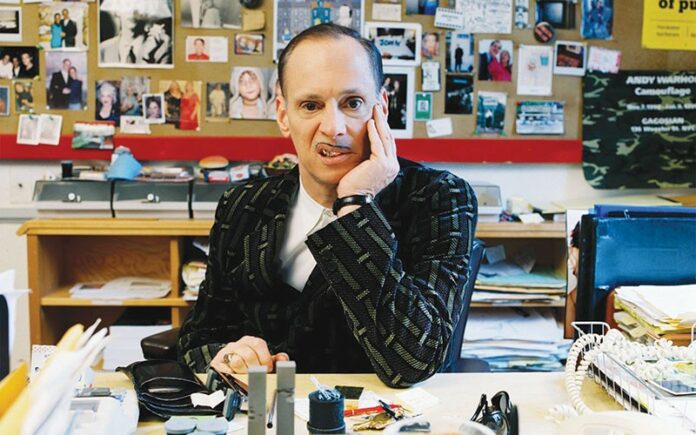
There’s no simple way to say this, so I’ll just spit it out: This is my last issue as the editor of the Bohemian.

The good thing is that I’m leaving the paper in a strong position. In my three years as editor, I’ve coordinated a redesign of both the print paper and the website, won four national AAN awards for my music writing, overseen two CNPA awards for the paper as editor, increased website traffic tenfold, launched and hosted the 24-Hour Band Contest, been a voice of the paper on KSRO and continued to write for all sections of the paper.

But most importantly, the Bohemian has remained a strong voice in the community during a time when print journalism is presumed to be dying. We’ve broken stories locally in my time as editor about Efren Carrillo knocking a guy unconscious outside a Too Short show, the inability of the Santa Rosa Police Department to accurately track gang crime statistics, the $10 million tab left to the city of Petaluma by developers of the Theatre District, and the Press Democrat‘s sale by the New York Times Co.—all stories that wound up later as front-page news in the local daily. Add to that our consistently top-notch local features, news, arts, food and music coverage from the past three years, and, well, I’m supremely proud of the impact we’ve had.

Being able to have that kind of impact on the community can be addictive. Especially if, like me, you really, really love your community. I found myself working late nights, trying to do the best possible job I could. I worked weekends and days off. I worked a lot. And I shouldn’t have. Because my wife works full-time too, raising our four-year-old daughter while trying to ensure the paper was as good as possible started to alternately resemble either a madcap farce or a Cassavetes tearjerker.

So basically, I’m slowing down. I’ll be able to spend much more time with family and friends this way. And in fact, Leilani Clark, who’s been by my side doing an excellent job for these three years as staff writer, is stepping down as well.

This is not an end. I’ll still be around, in print, in one way or another. More importantly, the Bohemian should be in good hands. There’s truly no paper in the world like it.

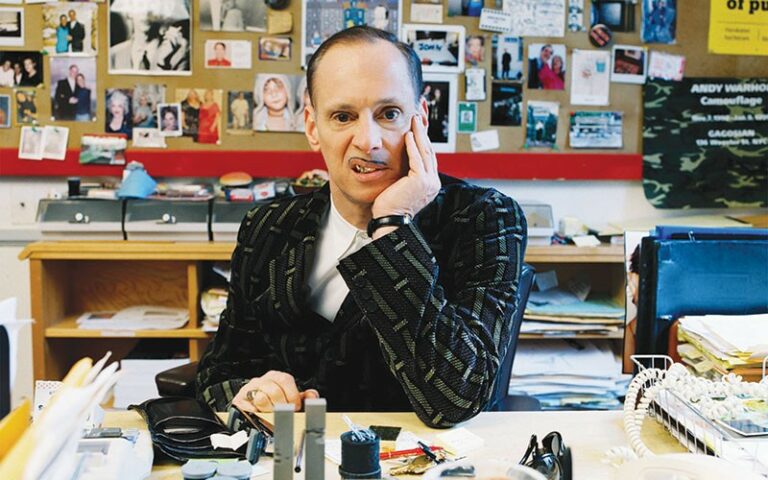
Gabe Meline is the outgoing editor of this paper.

Love and Death

Time is up for group captain Peter Carter (David Niven), flying a flak-pierced, burning Lancaster during the last days of WWII, and when he makes a desperate jump over the Channel—after radioing a final farewell to a lovely WAC (Kim Hunter) in the control tower—he sets into motion the kind of SNAFU which the soldiers in that war were all too familiar with.

The 1946 film A Matter of Life and Death, screening Jan. 31 at the Sonoma Film Institute, is also known as Stairway to Heaven. (Here at last is one movie that’s as good as the song.) It’s like the most elegant Twilight Zone episode ever made; the seeming quaintness of the theme is overcome by its balance of the sweet and the skeptical. This romance of a man caught between worlds is second only to The Wizard of Oz in the transition between glorious Technicolor and the black-and-white of the afterlife—a multiculti heaven that includes Sikhs and a statue of Mohammed. It anticipates It’s a Wonderful Life, both in its celestial preamble and its aura of mourning for lost soldiers.

Aside from its beauty as a romance, Life and Death has some of the same purposes of Shakespeare’s Henry V: to remind ancestral enemies of the cause for which they jointly fought. The film needles Franco-British antagonism to make us appreciate Carter’s spirit guide, a guillotined aristocrat played by the irresistible Marius Goring, master of the outrageous French accent.

Director Michael Powell was once an area man, as The Onion puts it; he and his wife, the noted editor Thelma Schoonmaker, lived adjacent to San Quentin. Powell went out of style in the 1950s, before a revival he lived to appreciate. His influence is everywhere in the flowering of British cinema from the 1960s on: Derek Jarman, Peter Greenaway, Ken Russell, Nicolas Roeg on the avant-garde side; the adventures of the death-defying 007 on the other.

‘A Matter of Life and Death’ screens Friday, Jan. 31, and Sunday, Feb. 2, at the Sonoma Film Institute. Warren Auditorium, SSU, 1801 E. Cotati Ave., Rohnert Park. Jan. 31 at 7pm; Feb. 2 at 4pm. $5–$7. 707.664.2606.

Beaches ‘n’ Foes

0

The beach is a sacred space to North Bay denizens. In Sonoma County, it’s one of the few county parks that doesn’t charge a use fee, providing access to an amazing, taken-for-granted piece of our world: the ocean. But now, the state wants to install self-pay stations, commonly known as “iron rangers,” at 14 beaches in the Sonoma Coast State Park system, charging $7 for each vehicle.

“I know that many locals will be very disappointed because of all the effort they have put into fighting this for so many years,” says Michele Luna, executive director of Stewards of the Coast and Redwoods. Indeed, she says, the fight is similar to one waged in the 1990s, when a $5 fee was proposed and defeated after public outcry. The nonprofit has not taken an official stance on the issue, but “our efforts have gone toward working on alternatives to charging fees,” says Luna. “We need to find another way to provide the funding that State Parks needs to operate our parks.”

A Change.org petition posted a year ago protesting the fee proposal was started by Sonoma County supervisor Efren Carrillo; it gathered 445 supporters. “Being made to pay to walk at the beach is just plain wrong,” Carrillo writes in his petition. “For the state to now start closing the door on free access to the beach is unthinkable and indefensible. Free public access to the beach is a core right of the public and must not be eroded. People should not be forced to pay the state to use what is rightfully theirs.”

The board of supervisors soundly rejected the idea when it was proposed in June, but the state parks system appealed the ruling to the California Coastal Commission. If it passes, surfers, kite flyers, whale watchers, artists and everyone else who enjoys Sonoma County’s beaches will have to carry cash on hand to visit the natural spectacle, and money collected at these sites wouldn’t necessarily go into directly funding them.

Even under new legislation aimed at localizing park funds, only half of the revenues from a park district go back into that district, and that’s only if the state parks system meets its overall revenue goals. The Russian River district, which includes the proposed fee installation sites, is reportedly on track to make its revenue goals, as is the state parks system.

Three years ago, 70 state parks were closed or threatened with closure due to the state’s budget crisis. Locally, big parks like Jack London and Sugarloaf Ridge were spared when nonprofit groups stepped in to fund and maintain them. Some beaches at state parks in Southern California recently had pay stations installed, charging up to $15 for a day-use fee. Locally, the potentially affected beaches include Goat Rock, Shell Beach, Portuguese Beach, Schoolhouse Beach, North and South Salmon Creek, Campbell Cove, Stump Beach, Russian Gulch and Bodega Head.

The appeal to the California Coastal Commission may be heard at its meeting in May, when the monthly meeting is held in the Bay Area. “We try to target items of significant public interest to hearings that are local to the issue,” says the commission’s media coordinator Sarah Christie, but she couldn’t confirm that the meeting’s agenda would include it. The deadline for the appeal process is 120 days, and “the clock doesn’t start running until the file is complete and all the information is in,” she says. The clock has not yet begun to tick, she clarified.

The commission was formed in 1976 to ensure public access to the state’s beaches. Wealthy developers had bought coastal land for subdivisions, which had no chance of being approved. Peter Douglas, the California Coastal Commission’s leader for 35 years, has said they turned to then-governor Ronald Reagan to help sell the land. That’s when a considerable amount of coastal land was purchased by the state—145,000 acres, to be exact—from Malibu to Point Arena, and added to the parks system.

After Sea Ranch, a second-home community with beautiful views—for those who could afford it—was constructed, a fear of private ownership of what belonged to the public ensued. A 1971 bill to ensure public access was defeated in the Legislature, so it was put to public vote.

Douglas, who died in 2012, was quoted in a Los Angeles Times obituary as having said, “This coast is still a place people identify as being theirs, it’s a precious treasure, and our job is to protect it for them.”

Letters to the Editor: January 28, 2014

Justice Achieved

I want to say thank you to Leilani Clark for so eloquently and presciently reporting on the issue of restorative justice (“A Better Discipline,” Jan. 22). Her empathy for the students, along with the teachers and administrators, is especially refreshing. Restorative justice is poised to change the way we as a nation discipline our students, and Santa Rosa is squarely at the forefront of implementing it as an alternative to decades of failed punishment. It is a vision for which we can be very proud, but it doesn’t often receive the kind of attention paid in last week’s well-researched cover story.

Thanks again to Leilani Clark and the Bohemian.

Via online

Remembering a Giant

A giant left us this week. Pete Seeger, American folk music lion and vanguard sociopolitical activist, passed away in his sleep at age 94.

Pete started America’s folk music revival of the 1940s, one that continues today. At his concerts, he taught us how to sing out and sing harmony. He made over a hundred albums. Songs he authored include “Where Have All the Flowers Gone,” “Oh Had I a Golden Thread,” “Kisses Sweeter Than Wine,” “The Water Is Wide,” “Waist Deep in the Big Muddy,” “Turn, Turn, Turn” and “If I Had a Hammer.”

He was a master of the five-string banjo and 12-string guitar, and wrote landmark instructional books for both. His playing was confident and driving, but he had a humble, aw-shucks way about his pickin’ that pervaded his persona as well.

Pete added music to the labor union and Civil Rights movements and popularized “We Shall Overcome.” With his wife, Toshi, he started Hudson River Sloop Clearwater, a nonprofit that cleaned up New York State’s polluted Hudson River.

He took it on the chin for his lefty politics. Pete was interrogated by the House Un-American Activities Committee, branded a “red,” blacklisted from TV and ostracized by mainstream media. But he was an outsize personality and he made his voice heard from outside, and in 1994 Pete was awarded the Kennedy Center Honor for lifetime contributions to American culture.

As a teen, Pete had questioned what he was going to do with his life. He figured it out. He changed America with his music activism.

Sebastopol

Jenifa, Oh Jeni

I think we are overthinking the fact that this one interview had Jennifer Lawrence and Debra Granik sitting together (“Down By J-Law,” Jan. 22). They were not afraid to have Lawrence sit by herself during the Winter’s Bone press junket, as she did many interviews by herself. It could have easily been that this was her first interview of the press junket and based on how nervous Lawrence gets when having to answer the artsy questions about her work, the team probably felt it be better to have Granik lead the way and give Lawrence an idea as to what she can say in the remaining interviews.

You will see this still takes place today—even though the world loves unfiltered Lawrence, she will allow her director or even one of her other cast members do the majority of the talking when talking about the craft or detailed aspects of the production process.

Via online

Wasted Taxes

There’s plenty of wasted tax money in this area that could easily cover the costs of keeping the library open more (“Long Overdue,” June 19). One example is marijuana arrests. It’s better to spend money on reinforcing positive habits that to suppress negative habits. That technique almost never works—look at the war on drugs. Look at a child who was never allowed to eat candy or sweets. Whenever she could, she binged on those foods, and ended up overweight with an eating disorder. I personally wanted to only eat candy when I was six years old—and my parents let me! I lasted a day. Since that instance, I rarely eat candy.

Spend money on the library and library programs, and our town will use it.

Via online

Write to us at le*****@******an.com.

Dance of Divinity

0

It is probable that without the onstage presence of ballet legend Mikhail Baryshnikov, Berkeley Repertory Theatre’s new show, Man in a Case, would draw a fraction of the audience this limited-run production is almost guaranteed to have. That would be a small tragedy. Presented by New York’s award-winning Big Dance Theater, Man in a Case—based on two lyrical short stories by Anton Chekhov—is a first-rate example of Big Dance’s idiosyncratic blend of theater, dance, music and multimedia visuals.

The lovely but oddly baffling show, both visually stark and emotionally rich, is a showcase of tiny moments, observations, glimpses of human heartache and visions that linger long after the short 75-minute work has ended.

On a mostly bare stage, the cast and crew chat at a table, on which sit microphones, props and two laptops, used to run the multiple sound effects and projections that co-directors Annie-B Parsons and Paul Lazar have layered over the body of the show. Chris Giarmo (the play’s music director) and co-director Lazar (sharp eyes will recognize him as the creepy entomologist from Silence of the Lambs) become a pair of hunters, Ivan and Burkin, casually swapping stories about turkey calling.

Baryshnikov—who turns out to have been sitting there all along—rises to tell his own amusing turkey-hunting story. The subject quickly changes from turkeys to missed opportunities in life, as the hunters take turns narrating two wafer-thin Chekhov tales of love almost gained but eventually lost.

In the first, performed amid a dreamlike blanket of projected images and choreographed movement, a repressed, overly cautious schoolteacher (Baryshnikov, at 70 still the definition of grace) finds himself falling for the sister (dancer Tymberly Canale) of the new history teacher (Aaron Mattocks). “We thought,” admits Burkin, “that a man who wears galoshes in all weather could never fall in love.” The trajectory of this almost-romance—which includes some beautiful courtship dancing and a spectacular slow-motion tumble down a flight of steps—is both sweet and sad.

The second, even slighter tale follows a decent, friendly farmer (Baryshnikov again) who secretly falls in love with the wife of his best friend. Little happens, but the concluding dance between the two never-to-be lovers, choreographed as a Busby Berkeley–like kaleidoscopic duet, is as tender and powerful a moment as anything that could be spoken with a thousand heartbroken words.

Rating (out of 5): ★★★★½

Smarter Farming

0

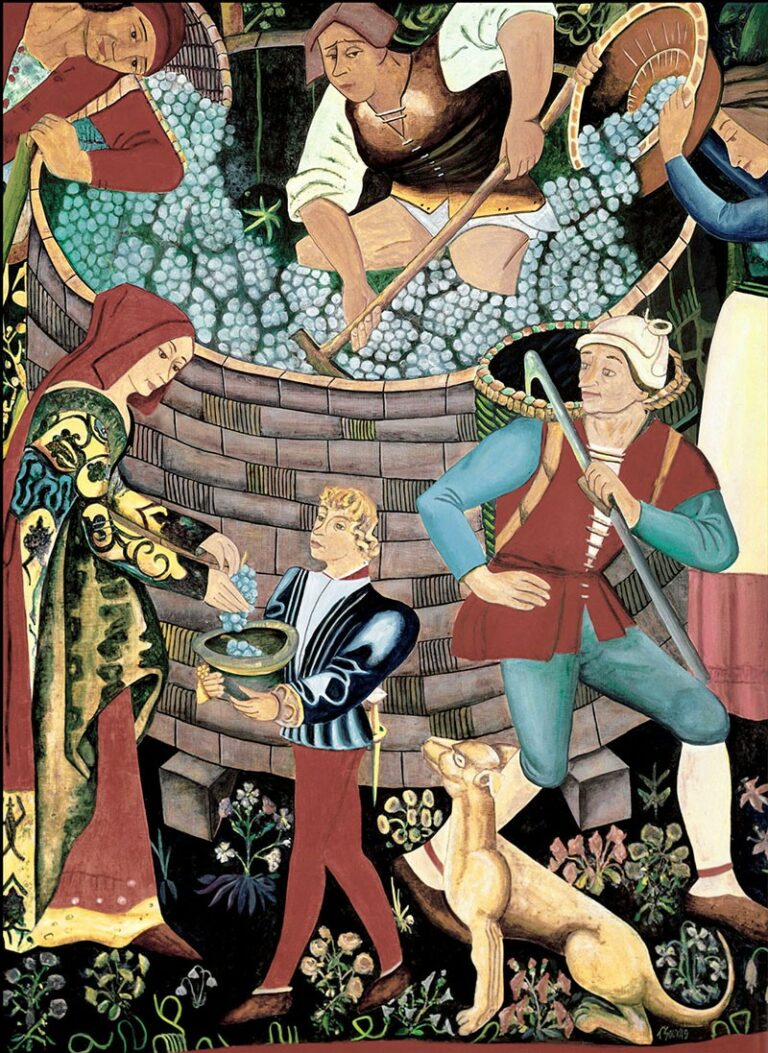
Ah, TED Talks, thy shadow is everywhere. This week, the sustainable agriculture scene rips a frame from the YouTube sensation’s playbook in a speaker series called INOV8 at the Santa Rosa Junior College. Modeled in the vein of TED, the second-annual INOV8 series aims to address the roots of innovation and new models for creativity in food and drink.

Certainly in our region there are bright minds chugging along on this very subject, and the evening includes Nick Papadopoulos, cofounder of Cropmobster, along with Jennifer Lynn Bice of Redwood Hill Farm, Kathleen Inman from Inman Family Wines (pictured) and Chris Benziger of the Benziger Family Winery. Together, that’s a lot of ideas and innovation on the stage.

The best part may be that the presentation is free. See bright minds
wax agriculturally on Thursday, Jan. 30,
at the SRJC’s Newman Auditorium.
1501 Mendocino Ave., Santa Rosa. 7pm. Free. 707.527.4011.

Feb. 1: KWTF Comedy-Palooza at the Arlene Francis Center

If you’re a standup comedian, the point of your act is to get people to laugh. But what if you inspire in an audience member a laugh that’s downright evil—a slow, honking bleat in a descending tone of diabolical plotting? That’s the quandary Sal Calanni found himself in recently, when during his set, a man in the audience repeatedly...

Twitter Handle @N Stolen by Smooth Talking Con Artist

A Twitter handle that cost as much as a Tesla was stolen through extortion

#NoFilter

With the proliferation of smartphones, there are now an estimated 4,000 photos taken each second in the United States. Approximately 3,900 of them suck. As for the others? Napa Valley residents have a chance to see them in "Like/Share: Cell Phone Photography," opening Feb. 1 at the Molinari Caffe in Napa. Curated by Ann Trinca, the show features the work...

Of No Nation

From the cosmopolitan harbor of Lagos, Nigeria, halfway around the world, to the ports of Oakland, Calif., the wild rhythms of the Lagos Roots Afrobeat Ensemble emerge, immortalizing the sounds of Fela Kuti. Lagos Roots is a relatively new group—they've only been performing as a band for three years—but together, the musicians have decades of experience from all musical genres....

Goodbye, Farewell & Amen

There's no simple way to say this, so I'll just spit it out: This is my last issue as the editor of the Bohemian. The good thing is that I'm leaving the paper in a strong position. In my three years as editor, I've coordinated a redesign of both the print paper and the website, won four national AAN awards...

Love and Death

Time is up for group captain Peter Carter (David Niven), flying a flak-pierced, burning Lancaster during the last days of WWII, and when he makes a desperate jump over the Channel—after radioing a final farewell to a lovely WAC (Kim Hunter) in the control tower—he sets into motion the kind of SNAFU which the soldiers in that war were...

Beaches ‘n’ Foes

The beach is a sacred space to North Bay denizens. In Sonoma County, it's one of the few county parks that doesn't charge a use fee, providing access to an amazing, taken-for-granted piece of our world: the ocean. But now, the state wants to install self-pay stations, commonly known as "iron rangers," at 14 beaches in the Sonoma Coast...

Letters to the Editor: January 28, 2014

Justice Achieved I want to say thank you to Leilani Clark for so eloquently and presciently reporting on the issue of restorative justice ("A Better Discipline," Jan. 22). Her empathy for the students, along with the teachers and administrators, is especially refreshing. Restorative justice is poised to change the way we as a nation discipline our students, and Santa Rosa...

Dance of Divinity

It is probable that without the onstage presence of ballet legend Mikhail Baryshnikov, Berkeley Repertory Theatre's new show, Man in a Case, would draw a fraction of the audience this limited-run production is almost guaranteed to have. That would be a small tragedy. Presented by New York's award-winning Big Dance Theater, Man in a Case—based on two lyrical short...

Smarter Farming

Ah, TED Talks, thy shadow is everywhere. This week, the sustainable agriculture scene rips a frame from the YouTube sensation's playbook in a speaker series called INOV8 at the Santa Rosa Junior College. Modeled in the vein of TED, the second-annual INOV8 series aims to address the roots of innovation and new models for creativity in food and drink. Certainly...
11,084FansLike
4,446FollowersFollow
6,928FollowersFollow