Tiny Dancers

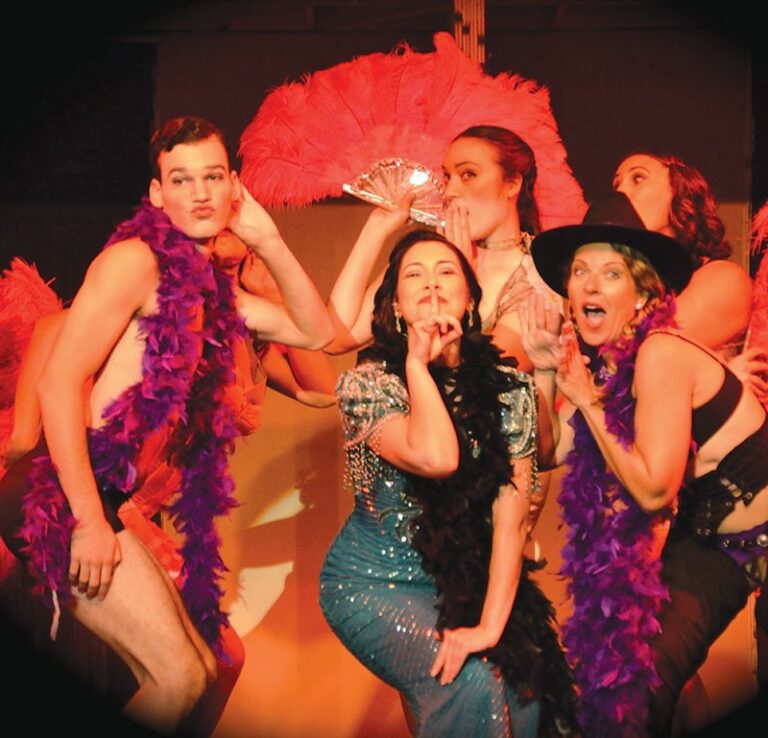
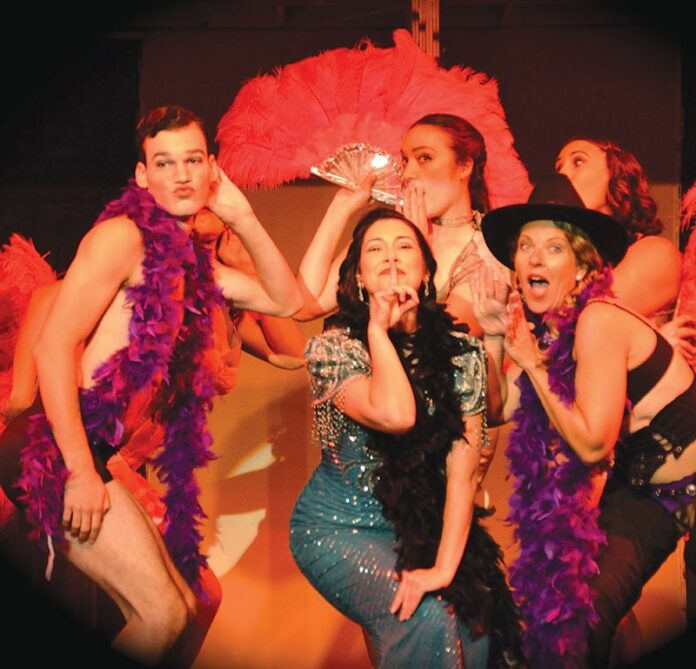
A tiny girl from a famous fairy tale, supernatural messengers eager to bring lovers together and a quartet of string instruments longing to be strummed are the cast of characters on view in the next two weeks, when several North Bay dance companies present vibrant pieces.

In Ballet Califia‘s Thumbelina, the diminutive lass with a huge heart springs to life with original choreography by founders Shelley Scott and David McNaughton. Dancing to music by Alexander Glazunov, the dancers range in age from 10 to 22, all performing up-close-and-personal at Ballet Califia’s Cotati dance studio.

“For those who are less familiar with ballet,” says Scott, “this is a great one, because unlike some ballets, the story of Thumbelina is pretty easy to follow.”

A bit less linear but no less imaginative is Strum, a world premiere dance-music collaboration from Sonoma County’s UPside Dance Company and composer Mark Growden. Presented for the first time this weekend at Healdsburg’s stylish new SHED marketplace and performance space, Strum brings out the inner “lives” of inanimate objects.

“We created our choreography based on researching different instruments like the violin, flute and cello,” says Tanya Tolmasoff, cofounder, with Kate Ahumada of UPside. “We asked, how would we move if we were these instruments, finding moments that we could be a bow, pluck a string, tune the instrument or hold a note.”

The choreography, set to original compositions by Growden—who will be performing with his quartet—even features an homage to the metronome. The SHED show also includes pieces performed to Growden’s “Pillar” and “Caravan.” The program,
says Tolmasoff, is a full-sensory experience.

“You will get your toe tapping and your heart strings plucked,” she says.

Next weekend, at the Marin Civic Center’s Showcase Theater, two other Bay Area companies—Nava Dance Theater and Odissi Vilas: Sacred Dance of India—join forces for an evening of storytelling through the medium of dance.

Messengers of Love features solo and group performances—many of them bringing to life Indian myths of love and divine intervention—presented with vivid costumes and athletic choreography. Expect to be inspired and entranced.

Mess with Texts

0

A California court issued a ruling last Friday that would let public officials shield emails and text messages from public view—even if those messages traffic in official business.

The Sixth District Court of Appeal ruled on a lawsuit against the city of San Jose by a citizen who sought access to the personal emails of thousands of city workers. The court found that messages or emails not held on city servers are not subject to disclosure under the California Public Records Act.

The Superior Court’s decision came a week after the Bohemian reported on text messages sent between embattled Sonoma County supervisor Efren Carrillo and Doug Bosco, a former congressman and co-owner of the Press Democrat. Under the court’s ruling, those text messages could now be withheld from public view. The case will next be heard by the California State Supreme Court.

The ruling could let officials shield official business from public view, simply by communicating through private email or telephone accounts. The court noted that it was up to the State Legislature to set the rules on public disclosure, and that it hadn’t done so.

County officials in Sonoma referenced the case when they fulfilled the Bohemian’s Feb. 28 request for correspondence between Carrillo and Bosco.

“We recognize that the law is currently unsettled as to the public’s right to access documents contained in the private electronic files of individuals serving in local government,” the county wrote. It cited City of San Jose v. Superior Court and added, “In light of that uncertainty, we have also asked Mr. Carrillo to . . . provide us with any documents responsive to your request. He has done so, and we are including those documents here.”

The texts illuminate a close relationship between Carrillo and Bosco and demonstrated that
Bosco had worked to influence
the PD’s coverage of pet issues.

Morel Majority

0

Mycologists know the benefits of rain. Bolete, chanterelle, morel—all come out to play on the forest floor after a good soaking.

Some are delicious, with complex or delicate flavors, some taste like cardboard, and some are deadly. The poisonous Amanita phalloides, or “death cap,” closely resembles edible mushrooms like the straw mushroom. But how does one know which is which?

Gualala resident David Arora can help with that. “He’s the rock star of Northern California mushrooms,” says former Sonoma County Mycological Society president Bill Hanson. Arora’s 1979 book Mushrooms Demystified was penned when Arora was just 22 years old. “Today, it’s still the bible, if you will, for North Coast mushrooms,” says Hanson. A corresponding field guide, All That the Rain Promises and More . . ., is the go-to pocketbook for mushroom hunters who want to quickly identify fungi in the wilderness.

Both books are in the top five best-selling mushroom books on Amazon, and they’re available at local retailers and independent booksellers.

Rutherford Rustic

0

At the end of a less-traveled lane on the edge of Rutherford, a bluebird rests on a vineyard wire. Sheep bleat under the picholine trees. Guinea fowl peep from the poultry pen. Big, golden labs nuzzle a newborn black lamb with careful curiosity.

Manure, hay and the skeletal remains of last year’s grapes fill compost bins four feet high, and haunt the air with earthy aromas. And winery owner Julie Johnson is taking a break from prepping the faded, little red building for a fresh coat of paint—barn-red.

A former public-health nurse, Johnson and then-husband John Williams bought the property in 1987 when they were riding a wave of success as co-owners of Frog’s Leap Winery. Despite Rutherford being King Cab country, Johnson has kept eight acres of the original 1971 Zin planting. At first, she turned the grapes over to three winemakers who created three different expressions of the wine; thus, “Tres Sabores.” She began making her own wine after leaving Frog’s Leap in 2000.

Partly because she feels that wine tastes better when there are good people in the cellar, but also to help pay for the cellar, Johnson takes in a few custom crush clients. Even the guinea fowl must contribute—during a recent visit, FedEx carted off a box of them, headed for a winemaker dinner in Arizona.

The decor and vibe at the garden tasting room here is more “funky country art studio” than “Napa wine country.” When the weather’s fine, picnic table seating is the thing. As eager to talk about pomegranate trees as grapes, Johnson often pops by to encourage visitors to taste a pea shoot from the cover crop or a fresh grape off the organically grown vines. “I probably talk about everything else but the wine,” she says.

In season now, the 2013 Farina Vineyard Sonoma Mountain Sauvignon Blanc ($26), a direct and floral wine of lychee, pear and Canary melon, is aged on the lees in stainless steel, making a nicely rounded refresher. Tie-dye on the Zin bottle represents one of the many colors and patterns of duct tape Johnson uses to identify lots of wine in the cellar—leopard print is for “wild” yeast. The 2011 Estate Zinfandel ($38) is toasty, plummy, grapey, big and toothsome, spicy with peppers and Mexican chocolate. Smoky and meaty, with ginger cake spice and composty blackberry fruit, the 2010 Guarino Vineyard Calistoga Petite Sirah ($45) reveals the brooding spirit of last year’s grapes. It wouldn’t be Rutherford without a 2010 Cabernet Sauvignon ($80); it wouldn’t be Tres Sabores without pomegranate-infused golden balsamic vinegar ($22).

Letters to the Editor, April 2, 2014

Very Odd

If you are interested in all this (“I Hate Me,” March 26), try Hannah Smith (digital self-harm). You mentioned Tumblr as a source of support. Dangerous, if you are loved for self-harm. And of course, the odd Megan Meier story. You mentioned Jessi Slaughter—forced off the internet for her own sanity, now transgender. If you are going to mention Jessi Slaughter, then you have to mention Aurora Eller. Then maybe Giovanna Plowman. Samantha Marie? There is something very odd about young females online.

Via online

Rolling in His Grave

I don’t even know the words for how upset I am about your irresponsible statement on page 32 of your Best Of issue (March 19): Best Reincarnation of Jack London. Darius Anderson? Jack is rolling over in his grave!

Hidden Valley Lake

Noah Way

TV host Glenn Beck and other stalwarts of the Christian right have attacked the recent blockbuster Noah as being “pro-animal” and unfaithful to the Bible. Well, yes and no. The film is both pro-animal and faithful to the Bible, at least to the Book of Genesis, our only source for the story of Noah.

After all, Genesis 1:29 admonishes, “Behold, I have given you every herb yielding seed which is upon the face of all the earth, and every tree that has seed-yielding fruit—to you it shall be for food.” It is only after the flood, with fruits and vegetables no longer abundant, that humans get permission to eat animal flesh. Even then, the Bible stipulates that lives of only select animals may be taken and always with reverence and minimal cruelty. This is certainly a far cry from today’s factory farm and slaughterhouse practices.

Regardless of how we may feel about Noah’s interpretation of the Bible, each of us can recreate the recommended diet of the Garden of Eden in our home by dropping animal products from our menu.

Santa Rosa

Write to us at le*****@******an.com.

Oversight Knights

0

The Sonoma County Community and Local Law Enforcement Task Force was created in the wake of the killing of 13-year-old Andy Lopez at the hands of a Sonoma County Sheriff’s deputy in October.

The group started meeting in January, and its work quickly underscored some questionable procedures and policies in government—not to mention the slow pace of reform in the aftermath of the shooting.

The task force’s main agenda item is to push for the creation of an independent citizen-review body. Officer-involved shooting deaths in Sonoma County are now investigated by a separate law enforcement agency, whose findings are then reviewed by the Sonoma County Grand Jury.

One recent task force meeting contained some eye-opening comments from the grand jury. Volunteer grand jurors told a task-force subcommittee that they didn’t think they were the best group to investigate such incidents, decrying a lack of diversity (most grand jurors are white, well-off and over the age 60) and small budget ($75,000 annually).

“If we have four times the budget to decide whether [the grand jury’s budget] is adequate or not, maybe that’s not the right thing,” says task force member Robert Edmonds.

When the Santa Rosa Police Department is investigating an incident involving the Sonoma County Sheriff’s Office at the same time the sheriff’s office is investigating an incident involving the police department—as is the situation with the Andy Lopez case—it’s no surprise that the public is clamoring for an independent, transparent review of the shooting. But when the grand jury is unsure whether it’s the right group to investigate the shooting, where’s the civilian review board now that it’s needed?

Edmonds pushed for a civilian review board in 2000, when the U.S. Civil Rights Commission recommended one for Sonoma County. It was never created, and Edmonds says he feels like he’s having to reinvent the wheel. “I’m frustrated, but I’m also optimistic,” he says. “The people I see who’ve been chosen as part of the task force are interested in making changes.”

The task force includes former and current law enforcement officials and community activists. Member Francisco Vázquez is also on the Community Engagement and Healing Subcommittee. “If we’re going to heal the community, the actual work of the task force won’t be evident for several years to come,” he says. “The best way to heal the community, I think, is to enter into a dialogue with the people who feel the brunt of police actions. I think, historically, Latinos are very justified in feeling that the law has not been giving them equal treatment.”

Edmonds says the task force would like to see more public participation—he’s used to seeing the same familiar faces at most meetings. “We haven’t been doing enough community outreach to get people involved,” he says. The task force was just approved to start a Facebook page (Sonoma County was hesitant due to potential liability issues). A community forum for the Community Engagement and Healing Subcommittee is scheduled for April 23 at Lawrence Cook Middle School. Information about the public meetings, including agendas, is available online at www.sonoma-county.org/communitylocallawtaskforce.

It’s been nearly four months since the 21-member panel’s first meeting, which outlined several recommendations it hoped to give the Sonoma County Board of Supervisors. Edmonds is confident the task force will do its part.

Once it makes its recommendations, the county will solicit input from the affected organizations, then report back to the task force, which will then return final recommendations to the board of supervisors.

“I think our report will come up with some very good recommendations,” says Vázquez, “but that’s not going to mean anything if they’re not implemented.”

Into the Wilds of the North Bay

0

This year, on the 50th anniversary of the Wilderness Act, I’m wilder about the wilds than I have been for ages.

I grew up feral on the East Coast, hiked, camped and backpacked in mountains and swam the waters of Long Island Sound. When I arrived in the North Bay, I discovered wilds that are often bigger and more rambunctious than the wilds I loved as a boy. I trekked across Sonoma Mountain and in the Mayacamas, the range that divides Sonoma from Napa. I rambled up and down the coast from Point Reyes to Fort Bragg and along creeks and rivers. Those open-air activities put me in touch with my own innate wildness.

Most of the time, I went alone or with my brothers, who love hiking. Then, gradually, I joined friends at outdoor events sponsored by the Sonoma and the Napa Land trusts, and by LandPaths, the nonprofit that connects humans to woods, fields and farms. At Jack London State Historical Park, I walked along trails that Jack and his wife, Charmian, hiked, and I felt connected to the historical past.

Friends at the Sierra Club, the oldest environmental organization in the nation, tell me that the overwhelming majority of people who go into the wilds are white, middle-class and aged 40 to 70. They also tell me that if the wilds are to survive and thrive, the demographics will have to change. Fortunately, there are a couple of outstanding Bay Area groups, including Outdoor Afro, that aim to connect African Americans and all people of color to wilderness.

Rue Mapp, the founder of the group, believes there’s an inalienable right to nature that’s as essential as civil and human rights, and that all people, no matter their skin color, culture and background, ought to feel at home and comfortable in the wilds. I’m with her. I hope to be with you and you and you, too, on a trail, in a park and on the seashore, and to enjoy the wildness outside and inside. As Henry David Thoreau said ages ago, “In wildness is the preservation of the world.”

Jonah Raskin is an author and longtime contributor to the ‘Bohemian.’ His most recent books are ‘Marijuanaland: Dispatches from an American War’ and ‘Field Days: A Year of Farming, Eating and Drinking Wine in California.’

Open Mic is a weekly feature in the ‘Bohemian.’ We welcome your contribution. To have your topical essay of 350 words considered for publication, write op*****@******an.com.

Captain America at War

Asthmatic stripling Steve Rogers (Chris Evans) yearned to serve in World War II. The Army made a super-soldier out of him. After a battle with the Naziest Nazi of them all, the Red Skull, he was entombed in ice and defrosted after 60 years. International relations are sadly more complicated now than in his day.

The Russo brothers’ Captain America: The Winter Soldier has a seductive argument, suggesting that things began to go drastically wrong in America right after a slightly fictionalized version of the Office of Strategic Services’ Operation Paperclip, which brought German scientists to the United States.

The national security agency SHIELD is about to launch its Insight Project, the ultimate drone program. Shilling for it is SHIELD director Nick Fury (Samuel L. Jackson), working in tandem with presidential liaison Alexander Pierce (Robert Redford). Captain America, already restless at being “Fury’s janitor,” is dubious: “I thought the punishment came after the crime.”

The agency turns out to be riddled with moles. Fury is dealt with; the Captain and agent Natasha Romanoff, the Black Widow (Scarlet Johansson) flee for cover. Help arrives from a Mideast war vet, Sam Wilson (Anthony Mackie), who has access to a previously unknown technological weapon.

The Winter Soldier gets filled to the brim with Marvel fodder—but there is breathing room throughout, and the film has a surprising amount of feeling. Chris Evans isn’t a thrilling actor, but he does suggest a little lost guy caught in the strapping body. You end up feeling a bit protective of him.

A tasty paranoid strain comes out in this “education of Captain America” movie, and it echoes what Redford (far more entertaining here than he is in his civics-lesson movies) did everywhere from Three Days of the Condor to Lions for Lambs. Refusing to be bamboozled by real politik, Captain America abides. In a world of impotent liberals, isn’t it nice to see a nearly omnipotent one?

‘Captain America: The Winter Soldier’ opens Friday, April 4, in wide release.

Spring Lit

0

NEW ANTHOLOGY FROM THE WRITE ON MAMAS

by Leilani Clark

The first ninety minutes of the Write On Mamas’ monthly meeting are virtually silent. No writing prompts. No casual talk about the latest, greatest novels. The only sounds in the room are fingers clacking across computer keyboards and pens scratching away on notepads.

“It’s a precious 90 minutes,” says Write On Mamas founding member Janine Kovac, by phone from her home in Oakland. A mother of three, including four-year-old twins born months premature, Kovac understands the need caregivers and providers have to get away from the daily grind and write.

“The goal is to provide fertile soil for parents who are also writers,” says Kovac. “That comes in the form of the meeting that starts with time to write, speakers, our online community that exchanges writing opportunities, submission opportunities, writing residencies. We also break into small groups to give each feedback on a piece or a grant or proposal.”

The group also works to enhance visibility for its 55 members. The Write On Mamas host an evening of readings at LitQuake, the hip and popular literary festival that takes over San Francisco each October. And this month the group releases its first book through its publishing arm, Bittersweet Press.

Mamas Write, an anthology of essays centered on the theme “Why I Write,” was edited by Kovac, Joanne Hartman and Mary Hill, and takes the reader on a moving journey through what it’s like to be a parent who writes and a writer who parents. Launch parties are scheduled for April 27 at Napa Bookmine in Napa and May 4 at Book Passage in Corte Madera.

The collection offers a mix of humor and pathos. Lorrie Goldin’s “From Conception to Empty Nest” finds a funny and clever comparison between the development of a writing life and the development of a child, and in “Not Afraid of Words,” Steven Friedman (Write On Mamas is an inclusive group) writes about his need to document the story of his wife Verna’s diagnosis of breast cancer. She died in 2010.

The anthology also has a fair share of pathos, including “There Was a Before,” a devastating piece by Teri Stevens about the pre-term birth of her son at 24 weeks. A former marketing director at the Napa Valley Opera house, Stevens lives in Napa and is now a mother of three. (The piece, excerpted in full, follows.)

The anthology has been in the works for more than two years. The process was more challenging than first anticipated, since it was decided early on to include quality prose from everyone “who turned their submissions in on time,” says Kovac.

Most contributors signed up for a 10-week online workshop with Kate Hopper, a Minneapolis-based teacher and author who encourages honest writing about what it’s like to be a mom—while combating myths about motherhood that refuse to die. Hopper helped the writers shape their essays, since, as Kovac says, the group tended to be “too nice” to each other. Self-published books can sometimes come across as amateurish, but Mamas Write is polished and profound, and many of the pieces would be comfortable in the pages of established literary journals.

“A lot of writing about motherhood is still considered ‘mommy memoir’ or ‘mommy blogging’ and isn’t seen as serious memoir,” says Kovac. “Even the word ‘mother’ is so loaded. There are some in publishing that are just like, ‘We don’t want motherhood stories.'”

Kovac adds that whatever literary space there is for moms tends to be taken up by well-known writers like Anne Lamott and Ayelet Waldeman. The stigma has led to an ongoing conversation among the Write On Mamas about whether or not “Mamas” should stay in the name.

The answer is always a resounding yes, says Kovac.

“Isn’t this how we take it back?” asks Kovac. “We’re writing, and we take it seriously; we’re parents, and we take it seriously.”

[page]

Book Excerpt: There Was A Before

By Teri Stevens

(excerpted from Mamas Write, with permission from the Write On Mamas)

I am reminded of it every time my three children and I go to the library to “buy” books. The Treadway and Wigger Funeral Chapel is across the street and a few doors down. The kids don’t even know it’s there. But I do. I was there once before—before we were blessed with a beautiful, healthy, happy son whom we adopted from Guatemala and brought home when he was just six months old, and before we were doubly blessed with twins who were carried to term by my sister because my breast cancer meant that I could not.

In other words, before our lives came to appear idyllic to those on the outside looking in, there was great sorrow.

I remember being in pain. This was nine years ago. It was a Thursday. I had been in pain for four days. I had gone to the doctor that Monday, but he couldn’t find anything wrong and said that the pain I was experiencing was most likely due to fibroids. Since I was in my 24th week of pregnancy, six months along, he advised me to take Tylenol. I didn’t. I remember thinking that the pain could be caused by Braxton Hicks contractions, about which I had recently read.

At the time, I was the marketing director for the Napa Valley Opera House. Continually on the computer writing press releases, answering emails or putting together one of the many marketing collateral pieces the job required, I would grasp the arm of my chair whenever I felt pain coming on.

My husband, Bill, was out of town on business for the week. Since I was feeling so awful, I decided to go to bed early that Thursday night, thinking the pain would subside if I just lay down. It didn’t. I called my doctor at about 9:30pm.

“It’s Teri Stevens,” I said into the phone. “I’m in a lot of pain.” I let him know what had been happening since Monday’s office visit—the grasping of the chair, the bending over in pain every now and then when I walked.

“Well, if you think it can wait, I can see you in the morning.” He sounded tired. “Or you can go to the emergency room at the Queen, it’s your decision.”

I said I’d see him in the morning and hung up. I lay in bed grimacing and thought, I’m going to get premature wrinkles if this continues. I got up to use the restroom, but once there my body felt like pushing, not like urinating. Not a good sign.

“Don’t worry little one,” I said to him or her, “it will be OK.” We had chosen not to find out the sex until the birth, but then for some reason the thought “I’m going to name you Jeffrey” crossed my mind. “Don’t worry, Jeffrey, it’s going to be fine. You stay in there,” I coaxed. Maybe by talking, I was trying to calm myself, tell myself it was going to be OK.

I knew I had to go to the emergency room, but didn’t think I should drive myself, even though it was only two miles away. I called 911 and asked them not to use sirens; I didn’t want to wake the neighbors. I was struggling to put on my shoes when the doorbell rang. The fire department arrived first, in a quiet truck, red light flashing a bright circle of alarm in the dark. At the door, a fireman helped me put on my second shoe and then the two men picked me up and carried me down the few small steps to the driveway and put me on a waiting gurney. The ambulance had arrived. I remember tossing my keys at one of the firemen, asking him to lock the front door. There was a light spring rain. It was Feb. 18, 2005.

I don’t recall the ambulance ride, but I do remember the bright light of the stark white hospital room they wheeled me into. Someone removed my glasses. I wasn’t there for more than a few minutes when I gave birth to our son. I remember pushing myself up on my elbows in an attempt to see what was happening.

“Is he OK, is he breathing?” I asked the doctor and nurse who were moving quickly, talking together in hushed tones, their medical jargon going over my head. Without my glasses, the room was a blur, and all I saw clearly was the look on the face of the ambulance paramedic who turned away from what was happening at the end of the gurney.

“Yes, he’s breathing,” someone said, but then he was whisked away to the intensive care unit. I didn’t get to see him. A nurse was cleaning me up from the birth, which had happened so fast that I was simply numb. At the time, the thought didn’t cross my mind, though it has many times since: what if I didn’t call 911? I would have had Jeffrey at home, by myself, the outcome of his life in my hands. It would have been the same, but it would have been my fault.

My doctor arrived. Someone had called him. “I am sorry, Teri,” he said quietly. “Your son did not make it; his small lungs were not developed enough. Just one more week, and it could have turned out differently.” I didn’t say anything, just cried. I felt deflated, all the hope I had that it would be OK, gone. I remember thinking that just days before I had read in What to Expect When You’re Expecting that babies born after 24 weeks can and do survive. So how could this be? For whatever reason, the pediatrician on call made the decision not to step in and try to save his young life.

I didn’t want to call my husband, sleeping in a San Diego hotel room, with this life-altering news; I wanted him to sleep. I told the hospital staff that I would wait until morning. Ultimately, the doctor came in with a phone and gently prompted me to call.

[page]

“Hi, I’m sorry, I know it’s the middle of the night. I’m at the hospital, something terrible happened. The baby was born early. It was a boy, and he didn’t make it.”

Shock on the other end of the line. “What? How?”

I looked around the hospital room, unable to believe I was having this conversation.

“I was in pain,” I explained through my tears, “I called 911, and I wasn’t in the emergency room for more than a few minutes and I gave birth.” Bill told me he was so sorry and that he would be home as soon as possible and asked to talk to the doctor. I don’t remember what was said. Thankfully, I fell asleep, escaping the reality of what happened for a short time.

I remember the nurses telling me what a beautiful baby he was, that his hair was blonde, like mine. It didn’t look like that when the nurses brought him in to me, since his head had been bruised from the quick delivery; I thought his hair was dark, like his father’s.

Later, while lying alone in the hospital room, I heard a knock on the door, and an older woman who was some sort of grief counselor came into the room. She sat at the side of the bed and told me she was sorry for my loss.

“Don’t lose hope, it will get better,” she said fiercely, as if her tone had the ability to make me believe. “Spring always brings new life after winter.” Usually a polite person, I turned away from her attempt to comfort me and asked to be left alone.

And then Bill was there, crying with me and holding my hand, sorry that he had been away. Before coming to my room, he had met and held our son. What he thought in those moments, I’ll never know. I told Bill I named him Jeffrey, after my cousin who had passed when we were children.

Before I was discharged, I asked to see Jeffrey again. Bill thought it might not be a good idea, but I was adamant. I had experienced so many emotions in such a short time: fear that I would give birth, heartbreak that I did too soon, guilt that it was my fault, loss of the child I would never know. I realized I should have been spending time with the one I would never see again. He was so tiny, dressed in baby blue, lying in a small basket. I kissed his cool forehead. So did Bill. Our goodbyes.

In the dark months after Jeffrey passed, I never thought I would have a family. These thoughts were compounded when we did get pregnant a few months later, only to lose the pregnancy due to complications. And then I was diagnosed with breast cancer. My whole being was saturated in grief. I am grateful that ultimately I was determined to create a family, and had the support of a loving husband who was open and willing to pursue other options.

Today, I feel that somehow, even though he is gone, Jeffrey was looking out for us. Two years and one day after Jeffrey’s due date, our adopted son, Alex, was born. And then three years and one day after Jeffrey was born and passed, his sisters, Emerson and Mikayla, were born. Which means, strangely enough, that right now I have three children who are all six years old.

I watch their heads bob up and down as they peruse the children’s library DVD section. I think about Jeffrey and wonder how different my life would be had he survived. Certainly it would be full and rich. But it would be different.

Jeffrey is not here in the physical sense, but through writing about him and the family that resulted from his presence, I am able to make some sense as to why he isn’t here, and to keep the memory of my son Jeffrey Thaddeus Stevens alive.

There was a before. But now there is also an amazing and full after.

[page]

LOCAL LIT ROUNDUP

‘The Aftermath of Forever: How I Loved and Lost and Found Myself—The Mixtape Diaries’ Summing-up a book of 10 break-ups in a couple paragraphs is akin to summing up 10 break-ups in a 155-page book. But for anyone who’s ever suffered a chest-imploding break-up, the kind that leaves you on the floor in a puddle of tears, whiskey and absolute despair, The Aftermath of Forever ($12.95; Microcosm Publishing), is a good place to start the healing process.

After getting married at age 21, and subsequently divorced a few years later, North Bay native Natalye Childress documents her journey of self-discovery through her eventual marriage to (this time) the right man. The resulting essays in this collection are accompanied by a mix-tape to describe the experience. The songs lean in the direction of indie-rock and feature Sonoma County standouts the Velvet Teen and the New Trust.

The reader is not spared the juicy details of Childress’ Bay Area romances, which lend a voyeuristic feel to Aftermath—similar to a relationship she describes in one of the book’s essays. This is a naughty, logical and well-written collection with a built-in appeal to men and women in their 20s and 30s.—Nicolas Grizzle

‘Dendrophilia and Other Social Taboos: True Stories’ Bohemian contributor Dani Burlison has released a book of essays written over four years for other publications. Burlison’s readers have been clamoring for a collection of her work in one artfully designed package for a while, and those who haven’t yet experienced the snark, the wit, the perfectly placed profanity of her writing should prepare for an afternoon of fun and empathetic schadenfreude.

Largely comprising pieces from Burlison’s McSweeney’s column of the same name, Dendrophilia ($12.95; Petals and Bones) is the perfect waiting-room time killer, especially if you’d like to be thinking about something other than what you’re waiting for. Essays include “It’s not Cannibalism If Nobody Died,” “I’m Dreaming of an Anne Frank Christmas” and “One Settled Comfortably in the Cukoo’s Nest,” and those are just the catchiest titles. The pieces themselves are entertaining and thought-provoking—even when those thoughts are “What’s a cuddle party?” or “Where can I get adult-sized footie pajamas?” And just this week, Burlison was contacted about optioning it for a television series (which would be perfect for this set of stories).—Nicolas Grizzle

‘Another Way of Seeing: Essays on Transforming Law, Politics and Culture’ Peter Gabel is president of the Arlene Francis Center for Spirit, Art and Politics in Santa Rosa, and an editor-at-large at Tikkun, the journal of progressive Jewish thought. Gabel has put together a collection of essays, Another Way of Seeing (Quid Pro Books; $23.99) drawn from Tikkun and elsewhere that highlight his interest in what he describes as the “spiritual dimension of social life—from the desire for things to the desire for love, community, solidarity and connection with others.”

Gabel sets out to infuse critical discourse on law and politics with his “spiritual-political way of seeing,” and he engages that rubric in essays that, by turn, take on the Supreme Court’s ruling for George Bush in Bush v. Gore (“by going so far beyond the legitimate limits of constitutional interpretation, the court made transparent what is usually mystified”), to the dust-up over then-candidate Barack Obama’s apparent failure to wear an American flag lapel pin during a presidential debate.

The flag-pin “controversy” was seized upon by the Washington commentariat, left to right, as some kind of a telegraphed signal from Obama about his patriotism and lack thereof. Gabel’s got another way of seeing it: “I like the way Obama sometimes wears the flag pin and sometimes does not,” he writes, “showing respect for the cultural achievements of the historical community that he seeks to represent while resisting any fixed and robotic deference to a false image of community that traps all of us in a painful spiritual isolation.”

That really does sound quite painful.—Tom Gogola

‘World of Change’ “Forget your own problems, here’s what poets think is wrong with the world today.” That’s the idea behind World of Change ($20; New Way Media), a new poetry anthology edited by David Madgalene, who brings the best of the North Bay together in one letter-sized book. Contributions come from several Sonoma County poet laureates—and from several others who write about why they wrote their poem for Madgalene’s latest compilation.

Topics include social injustice, murderous climate change, money, for-profit organ harvesting and Jack Kerouac. Compared to Madgalene’s own stream-of-consciousness style, the pieces here are more traditional free verse poems, and each has a distinctive voice.

Some pages are reminiscent of John Cage’s collection of lectures and writings, Silence, at least in appearance. Care is taken to preserve the line breaks determined by the poets, and other formatting details are honored, such as a memorial to Andy Lopez in the shape of a cross made of asterisks and names of the slain 13-year-old’s family, a poignant example of concrete poetry.

An overarching feeling of doom and gloom pervades the book, but that’s to be expected in any poetry collection dealing with society’s problems. Are we ever going to fix any of these things? We await Madgalene’s next anthology for an answer.—Nicolas Grizzle

[page]

LITERARY EVENTS AND READINGS

by Charlie Swanson

Mark Twain once wrote, “To get the right word in the right place is a rare achievement.” We couldn’t agree more. And over the next few months, a host of authors from near and far are scheduled to share their rare achievements at readings throughout the North Bay. Here’s your chance to get right with their words.

Primate ambassador Jane Goodall appears at an already sold-out event at Angelico Hall in San Rafael on April 4. Goodall’s latest, Seeds of Hope, carries with it an enthusiasm and passion that’s perfect for launching an ambitious season of readings such as this.

On April 10, Napa Valley College writing professor Iris Jamahl Dunkle shares the poetry of Gold Passage, her new award-winning collection, at Copperfield’s Books in Santa Rosa. The next day, Bay Area poet Gail King reads from her new book, Hello Life, at the Occidental Center for the Arts. The week also includes two appearances from Sisterhood of the Traveling Pants author Ann Brashares, who reads from her latest, The Here and Now, at Book Passage on April 10, and at the Tudor Rose English Tea Room on April 12.

No time to take a breath yet, because Sonoma County poet laureate Katherine Hastings reads on April 17 from her works Nighthawks and Cloud Fire at Copperfield’s in Santa Rosa. The 17th also sees Pixar production vice president Jim Morris in conversation with author Ed Catmull, who presents his upcoming book, Creativity, Inc., at Book Passage. The next night, April 18, former U.S. poet laureate Billy Collins reads from his new poetry collection Aimless Love, with singer-songwriter Aimee Mann accompanying on acoustic guitar, at the Wells Fargo Center for the Arts.

Book Passage throws down with three popular events running back-to-back-to-back. On April 21, photographer Andrew Knapp shares his adventures with his border collie in Find Momo. On April 22, actress and new mom Alicia Silverstone (Clueless, Batman & Robin) talks about her parenting guide The Kind Mama. Then, on April 23, Under the Tuscan Sun author Frances Mayes reads from her memoir Under Magnolia. She hosts a dining event at Spinster Sisters restaurant in Santa Rosa on April 24.

And there’s more in store in the coming months, as heavyweights from various fields come to the North Bay to promote their literary offerings. New Yorker cartoon editor Bob Mankoff reads from How About Never—Is Never Good for You? on May 1 (Book Passage). Sen. Elizabeth Warren reads from her new book, A Fighting Chance, on May 10 (Angelico Hall). Gourmet magazine editor Ruth Reichl reads from her novel Delicious! on May 20 (Book Passage) and May 21 (Spinster Sisters). Cult film director John Waters (Pink Flamingoes, Crybaby) reads from his hitch-hiking memoir Carsick on June 7 (Book Passage). Finally, outlaw author Tom Robbins reads from his upcoming memoir Tibetan Peach Pie on June 7 (Book Passage) and June 8 (Copperfield’s Books in Sebastopol).

And that’s just the tip of the literary iceberg. For full listings, check our weekly Readings calendar. Get lit!

Jerry Seinfeld Coming to Santa Rosa

seinfeld.jpg

Jerry Seinfeld coming to Santa Rosa? This big city, New York guy, coming to Podunk, little, 157,000-population Santa Rosa? Come on! That’s like Derek Jeter playing for the Kansas City Royals! (Except that Seinfeld actually IS coming to Santa Rosa—at least for one night.)

Seinfeld will be performing two stand-up shows at the Wells Fargo Center on May 16, one at 7pm and one at 10pm. The newly-renovated theater has been stepping up its game lately, with a pack house cheering on Wynton Marsalis and Jazz at Lincoln Center earlier this month and John Legend taking the stage on April 1. Tickets for Seinfeld’s performance will be available April 4 starting at noon.

Lately, Seinfeld’s been working on a web series called Comedians in Cars Getting Coffee. It’s basically a conversation between the legendary New York comedian and other funny, interesting people, like Tina Fey, Jay Leno, Louis C.K., and, most recently, Howard Stern. The show’s in it’s third season now, and I highly suggest watching every episode.

“Comedians in Cars Getting Coffee” Lamborghini Miura from Peter Holmes on Vimeo.

Tiny Dancers

A tiny girl from a famous fairy tale, supernatural messengers eager to bring lovers together and a quartet of string instruments longing to be strummed are the cast of characters on view in the next two weeks, when several North Bay dance companies present vibrant pieces. In Ballet Califia's Thumbelina, the diminutive lass with a huge heart springs to life...

Mess with Texts

A California court issued a ruling last Friday that would let public officials shield emails and text messages from public view—even if those messages traffic in official business. The Sixth District Court of Appeal ruled on a lawsuit against the city of San Jose by a citizen who sought access to the personal emails of thousands of city workers. The...

Morel Majority

Mycologists know the benefits of rain. Bolete, chanterelle, morel—all come out to play on the forest floor after a good soaking. Some are delicious, with complex or delicate flavors, some taste like cardboard, and some are deadly. The poisonous Amanita phalloides, or "death cap," closely resembles edible mushrooms like the straw mushroom. But how does one know which is which? Gualala...

Rutherford Rustic

At the end of a less-traveled lane on the edge of Rutherford, a bluebird rests on a vineyard wire. Sheep bleat under the picholine trees. Guinea fowl peep from the poultry pen. Big, golden labs nuzzle a newborn black lamb with careful curiosity. Manure, hay and the skeletal remains of last year's grapes fill compost bins four feet high, and...

Letters to the Editor, April 2, 2014

Very Odd If you are interested in all this ("I Hate Me," March 26), try Hannah Smith (digital self-harm). You mentioned Tumblr as a source of support. Dangerous, if you are loved for self-harm. And of course, the odd Megan Meier story. You mentioned Jessi Slaughter—forced off the internet for her own sanity, now transgender. If you are going to...

Oversight Knights

The Sonoma County Community and Local Law Enforcement Task Force was created in the wake of the killing of 13-year-old Andy Lopez at the hands of a Sonoma County Sheriff's deputy in October. The group started meeting in January, and its work quickly underscored some questionable procedures and policies in government—not to mention the slow pace of reform in the...

Into the Wilds of the North Bay

This year, on the 50th anniversary of the Wilderness Act, I'm wilder about the wilds than I have been for ages. I grew up feral on the East Coast, hiked, camped and backpacked in mountains and swam the waters of Long Island Sound. When I arrived in the North Bay, I discovered wilds that are often bigger and more rambunctious...

Captain America at War

Asthmatic stripling Steve Rogers (Chris Evans) yearned to serve in World War II. The Army made a super-soldier out of him. After a battle with the Naziest Nazi of them all, the Red Skull, he was entombed in ice and defrosted after 60 years. International relations are sadly more complicated now than in his day. The Russo brothers' Captain America:...

Spring Lit

NEW ANTHOLOGY FROM THE WRITE ON MAMAS by Leilani Clark The first ninety minutes of the Write On Mamas' monthly meeting are virtually silent. No writing prompts. No casual talk about the latest, greatest novels. The only sounds in the room are fingers clacking across computer keyboards and pens scratching away on notepads. "It's a precious 90 minutes," says Write On...

Jerry Seinfeld Coming to Santa Rosa

New York's celebrated laugh creator comes to Wine Country
11,084FansLike
4,446FollowersFollow
6,928FollowersFollow