Petroleum Politics

0

A state fracking law enacted last year to regulate the oil and gas extraction practice is now helping lawmakers dodge a new anti-fracking moratorium push.

Welcome to the well-oiled wheels of fossil-fuel politics in the Golden State.

Sen. Holly Mitchell, D-Los Angeles, co-sponsored the bill to stop fracking in the state, pending further environmental review. The bill is headed to a vote in the Senate appropriations committee May 19.

But SB 4, a fracking bill signed into law last year, is providing cover to oppose the new measure for at least one committee member, Sen. Ricardo Lara, D-Bell Gardens.

His position appears to be finding favor: use the existing law as a pretext to oppose a renewed moratorium push.

“Some of the more moderate ones are taking that position,” says Teala Schaff, a spokeswoman for Sen. Noreen Evans, D-Santa Rosa, who supports the Mitchell moratorium.

Mitchell’s bill, SB 1132, would enact a moratorium until there’s a “clear finding that it could be done safely and that there are regulations that ensure that it is done safely,” says spokesman Charles Stewart.

They already tried that last year.

Sen. Fran Pavley, D-Agoura Hills, introduced SB 4 in the last session as a bill that would have hit the pause button on the state’s limited hydraulic-extraction industry.

But the state’s gas and oil lobby got that language extracted, and Gov. Jerry Brown signed it into law. Democrats have since characterized SB 4 as basically the “better than nothing” law.

While SB 4 did enact some of the nation’s toughest fracking regs, it also provided language that would allow for an expansion of the practice, which uses pressurized water, sand and acid to bore through rock to get at previously unreachable reserves in the Monterey Shale formation.

Anti-frackers say the law opened the door to a fracking boom, a door lawmakers are reluctant to close. “It allows for a green-light for fracking in the state,” says David Turnbull, campaigns director for Oil Change International.

Nixing a fracking gold rush in a state that has only recent stepped back from the brink of insolvency was always a hard sell. The numbers are big all around. There are upwards of 15 billion gallons in the shale, with high-end promises gushing from the oil industry of
3 million new jobs and $25 billion in tax revenue.

Environmental groups around the state had supported the Pavley bill because it offered the moratorium. When she yanked the moratorium language, they yanked their support.

Despite growing opposition—and rising concerns about fracking’s potential to cause earthquakes—prospects for a moratorium appear to be running out of gas this time around, too.

The two Republican members of the appropriations committee, Mimi Walters and Ted Gaines, have already signaled opposition. Walters received $33,500 from the fossil-fuel lobby in 2012, according to data provided by Oil Change. She opposed the Pavley bill last year (too much regulation!), and opposes the moratorium.

Meanwhile, Lara abstained when the Mitchell bill came up for a previous committee vote. Lara, who, according to Oil Change, accepted $17,300 from fossil-fuel interests in 2012, recently told the Los Angeles Times that he wanted to see how Pavley’s law played out before considering a moratorium.

Lara did not respond to two emails seeking further comment.

A spokesperson for committee chairman Sen. Kevin de León, D-Los Angeles, said the senator was studying the Mitchell bill and would not take a stand in advance of the May 19 vote.

Sen. de León has received over $30,000 in contributions from the fossil-fuel lobby over eight years in the state Assembly and Senate, says Oil Change.

Sen. Jerry Hill, D-San Mateo, will support the Mitchell bill, says his spokesman.

Sen. Alex Padilla, D-Pacoima, and Senate President pro Tempore Darrell Steinberg, D-Sacramento, did not respond to emails and phone calls seeking comment.

All of the Democrats on appropriations voted for the Pavley bill last year, as did Mitchell, who represents a low-income district of Los Angeles that sits atop the Inglewood Oil Field.

“We supported Sen. Pavley’s bill, but just felt that we needed to go further,” says Mitchell’s spokesman.

Evans also supported SB 4 after the moratorium language was stripped. “We have got to start somewhere,” Schaff says, adding that Evans has offered a bill of her own this year that slaps an extraction tax on the gas and oil industry.

Assemblywoman Mariko Yamada, whose district comprises parts of Napa and Sonoma counties, says she is supporting Mitchell’s bill, but admits that it’s a “heavy lift because of the enactment of SB 4.”

Gov. Brown promised unspecified amendments in a signing statement last year that would, he said, strengthen SB 4 to the liking of environmentalists.

“Unless the amendment is, ‘We’re going to stop fracking,’ it’s not going to placate the environmental community,” says Turnbull.

In any event, those promised amendments are nowhere to be seen this legislative session.

Sci-Fi’s Father

The inspirational quality of the documentary Jodorowsky’s Dune is immaterial to the potential of the half-made movie it disinters. That inspiration transcends the tunnel-vision of some of the critics thrilled by a film that might have beat their beloved Star Wars to the screen by a few years.

Now the storyboards by French cartoonist Moebius can be animated, and this mad psychedelic project can be anatomized. The mystical filmmaker, 85-year-old Alejandro Jodorowsky, who’d been tripping out elite viewers with midnight cinema such as El Topo and The Magic Mountain, describes how he and producer Michel Seydoux tried to adapt Frank Herbert’s bestseller a corrupt interplanetary empire.

The team of “warriors” they assembled included the star for the project, Jodorowsky’s own son, who was put through two years of martial arts training. Dan O’Bannon, the FX artist on John Carpenter’s Dark Star, sold his possessions and came to live in Paris to work on Dune. British illustrator Chris Foss drew living spaceships with the dapples and stripes of scorpionfish. H. R. Giger, the father of Alien‘s xenomorph, created several terrifying fortresses, bristling with spears and teeth. And Jodorowsky set off after a cast that would include Orson Welles, Mick Jagger and Salvador Dali.

Dune was an early meeting of the minds who created the science-fiction film wave to come. With his obsessions about virgin birth and messianic sacrifice, could Jodorowsky have reached audiences on the wow-level of visuals alone? David Lynch’s version—a better movie than director Frank Pavich’s documentary claims it is—didn’t succeed on that merit. I’m as inspired as anyone by Jodorowsky’s passion, but it’s chafing to hear Dune described as “the greatest movie never made.”

For a story on Kurt Stenzel, the San Francisco-based composer of Jodorowsky’s Dune soundtrack, go to http://bit.ly/1g2obsQ.

‘Jodorowsky’s Dune’ is now screening at Summerfield Cinemas,
551 Summerfield Road, Santa Rosa. 707.522.0719.

Letters to the Editor: May 14, 2014

Drought Thoughts

Whether it rains or not at this point, we Californians are in a drought. Nonetheless, you still see bright green grass and sprinklers watering away in the middle of the hot midday sun. Seems people either don’t want to believe we’re in a drought or they must have forgotten.

The problem is that currently we are on the honor system, but the fact of the matter is that people are still wasting water, and a great deal of it. Don’t get me wrong. I’m not saying to not water your yard; just be more aware when the sprinklers come on and for how long, and turn them off when it rains. Watering your lawn really should not be this complicated.

We are in this together and all need to do our part to save what water we do have. It’s going to get worse before it gets better with summer quickly approaching. So when you are out with the kids running in the sprinklers this summer, think to yourself: maybe I should buy a kiddie pool.

Santa Rosa

Money and Politics

When the votes are counted in early June, the most closely watched results in the North Bay will be for the state Assembly in District 10, which includes all of Marin County and much of Sonoma County.

Right now, the incumbent, Marc Levine, hasn’t outgrown the mega-business interests that boosted him into the Assembly.

Levine has never given a satisfactory answer to a question asked by the Sacramento Bee last year, when he abstained from a final vote on whether to give the California Coastal Commission more teeth: “Why did Assemblyman Marc Levine take a walk on coastal protection?”

He was in the same grim groove on an important bill for protecting farmworker union negotiations. Levine opted for “not voting” on the bill (SB 25) and earned a public thank-you from Western Growers. The big-agriculture group pointed out that—from its vantage point—”not voting” was as good as voting “no.”

Now keep in mind: Levine was elected in 2012 with help from upwards of $250,000 spent by “independent expenditure committees” controlled by such agribusiness giants as Western Growers.

Individual political ambition and principles often have an uneasy relationship. But what should matter is that communities are vulnerable, lives are at stake and the environment is at risk. With those values, I believe that Diana Conti is the best choice in the Assembly District 10 race.

We need to be much better at safeguarding the health of our society. The best way to respond when politicians embrace the power of big corporate money is to strengthen the ability of the body politic to fight off such opportunistic infections.

Co-chair of the Coalition for
Grassroots Progress,

Inverness Park

Irrational Responses

As a long time resident of Montgomery Village, I too have been outraged by the people displaying the offensive Hitler/Obama comparison in front of the Montgomery Village post office (Letters, April 30). On two different occasions, I have expressed to them their rights to freedom of speech, but asked them if the Hitler mustache on a picture of Obama was really necessary. The response both times was so irrational I found it useless to converse any further. I was somewhat reluctant to even comment on this issue for not wanting to give any more attention to the people involved, but I think it’s important to expose them for what they really are: ignorant, hateful and racist.

Santa Rosa

Go Boho

Nicolas Grizzle’s “No Peeking” article, Laura Gonzalez’s Open Mic “Where Is the Outrage?” on Efren Carrillo, and Jonathan Greenberg’s news brief “Occupy Palm Drive Fizzles” (April 30) were by far the best articles in any publication on these two most important West County issues. May the renewed Bohemian continue to publish such excellent articles.

Sebastopol

Write to us at le*****@******an.com.

North Bay James Beard Award Winners

0

The North Bay picked up three James Beard Foundation Awards in New York City earlier this month. At the annual “Oscars of the food world,” Civil Eats was named “publication of the year.” The food-policy blog was founded by Penngrove’s sustainable food-media impresario Naomi Starkman.

“The James Beard Foundation award for publication of the year proves that content-driven, in-depth dialogue on food-systems issues matter,” Starkman wrote in a blog post about the award. “Civil Eats is a spark that ignited the food movement, and this award is for everyone who believes that storytelling can transform the world.”

Until recently, the blog was volunteer-run. But a successful Kickstarter campaign netted $100,000, making it the most successful crowdfunding campaign ever for a news outlet. Starkman and editor-at-large Paula Crossfield hope to hire a D.C.-based reporter to cover food politics from where a lot of the action is.

Meanwhile, Healdsburg’s SHED earned a Beard award for Best Restaurant Design in the “76 seats or more” category. I don’t think there is a better looking restaurant-market in the North Bay. And in Napa Valley, the Restaurant at Meadowood picked up an award for outstanding service. The food at St. Helena’s Meadowood gets most of the attention, but the front-of-the-house ninjas are something to behold too.

Congratulations to all. For a Q&A with Naomi Starkman please go here.

Asti Again

0

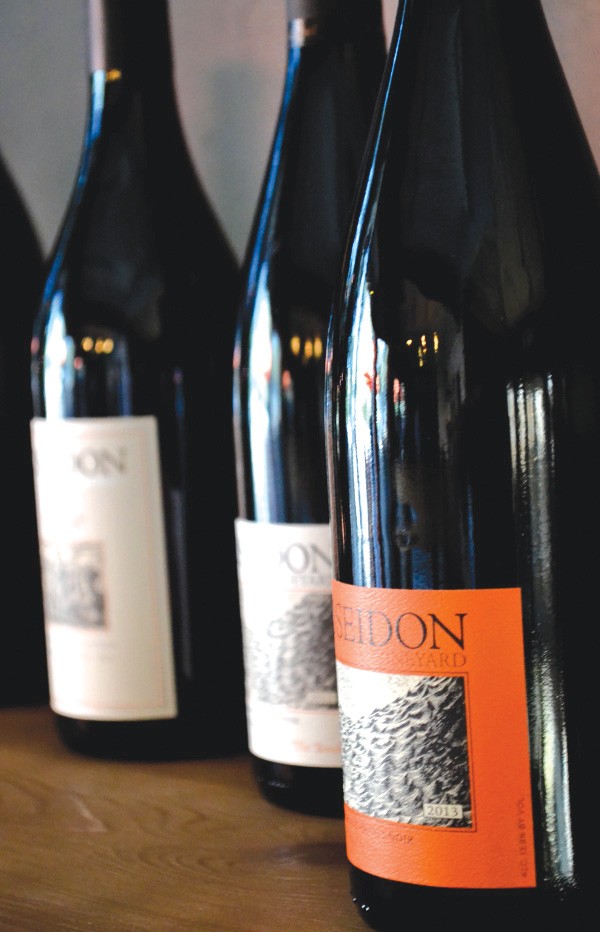
Like a hitherto hidden room revealed in a dream, the tasting room at Asti Winery feels both familiar and long forgotten. If it seems familiar to me, that’s because I visited four-plus years ago when the former Italian Swiss Colony tasting room, reputed to have been California’s second most popular tourist attraction during its heyday, was briefly reopened as Cellar No. 8 before being left to its one sepulchral inhabitant: a marble bust of a dotager cradling a straw fiasco of wine, “His Last Love.”

This weekend, you won’t have to journey into the subconscious to sip wine in this time capsule of a tasting room, now hip by attrition, where the taps flowed with wines “mellowed in redwood” until it was shuttered decades ago. On Friday, May 16, Asti Winery hosts the 17th annual Alexander Valley Winegrowers open house (the Bohemian is a sponsor of this event).

Pointing out freshly hewn, split-rail fencing and handsome new cellar doors, Asti Winery general manager Jeff Collins explains why the carefully restored facade of the 100-year-old cellar reads, “Golden State Extra Dry California Grand Prix Champagne.”

“This is the first ‘bottle shock,'” Collins says. Long before that Paris tasting of 1976, there was the prestigious Wine Exposition of 1911 in Turin, Italy. When the French got wind that the Americans would be competing, a prominent Parisian journal scoffed, “California has produced wines fit only for German troopers.” They weren’t laughing when the California upstart took home the exposition’s Grand Prix prize.

The Italian Swiss Agricultural Colony was founded in 1881 by Andrea Sbarbaro, a grocer from Genoa who became president of the Bank of Italy in San Francisco. “Sbarbaro was a marketing genius,” Collins says. As early as the 1890s, he was bringing trainloads of tourists up from San Francisco to taste wine and party by the Russian River. The parties on May 17 and 18 this year include barbecues, food trucks, photos booths and live music throughout Alexander Valley at participating wineries.

Taste Alexander Valley, Saturday and Sunday, May 17–18,
11am–4pm; various locations. Weekend passes, $65 advance;
$75 door. Opening celebration May 16, 5:30–8:30pm at Asti
Winery, 26150 Asti Road, Cloverdale. Tickets $95 advance, at
www.tastealexandervalley.org or 888.463.0207.

The Big Reveal

Pulitzer Prize–winning journalist Jose Antonio Vargas stunned the world in 2011 when he revealed that he was an undocumented immigrant in a New York Times Magazine essay.

Vargas came to the U.S. from the Philippines when he was 12, and was raised in Mountain View by his grandparents. No one in his family ever obtained the proper papers to grant him permanent residence. After graduating from San Francisco State University, Vargas began a career in journalism that took him to New York, Washington, D.C., and elsewhere. For 15 years, Vargas worked, paid taxes and kept his status a secret.

Produced and directed by Vargas, the film Documented follows the aftermath of his immigration-status outing in 2011, and how he has dedicated himself to opening up the dialogue regarding the estimated 11 million other undocumented Americans living and working in the country. The film also follows him on a personal journey to reconnect with a mother he’s not seen in 20 years.

Documented opens in limited release
this month and makes its North Bay debut May 16 at Rialto Cinemas in Sebastopol.
On Sunday, May 18, Vargas will be on hand for a Q&A session after the 1pm showing.
6868 Mckinley Ave., Sebastopol. 707.525.4840.&mdash

Fido Alfresco

0

Napa Assembly-woman Mariko Yamada’s “Dining with Dogs” legislation passed the Assembly last week and is now under consideration in the Senate. The bill, AB 1965, would leave it to localities to decide whether dogs can join their owners in outdoor dining settings, a practice now outlawed under state health law.

Several assembly members abstained, and the only “no” vote in the assembly came from Lorena Gonzalez, D-San Diego. To her animal-lovin’ credit, Gonzalez does support the Orca Welfare and Safety Act, which bans whale shows at Seaworld. But she’s still in the doghouse as far as we’re concerned.

NEW DEVELOPMENT IN WEST MARIN?

Environmental groups are sounding the alarm over a Marin County proposal to allow for more development on West Marin farms and ranches.

A series of hearings this week, starting May 14, will air concerns over Marin County’s local coastal plan, which could lift restrictions that limit new housing development on ag land on the largely undeveloped miracle that is
West Marin.

In a call-out to supporters, the local branch of the Sierra Club notes that amendments being offered by the county would “open almost two-thirds of the non-federal land in the coastal zone to residential, commercial, and industrial development without any public input or right of appeal to the [state] Coastal Commission.”

The new rules would also open the door for a limited expansion of housing for farm and ranch workers, another thorny issue in an area with some of the highest property values in the known universe and a dearth of farmworker housing.

Pucker Up

0

After 21 years, it’s the drummer’s turn.

A year after releasing an album of the guitarist’s compositions, Bay Area jazz and funk duo Charlie Hunter and Scott Amendola’s new album, Pucker, is comprised entirely of tunes written by Amendola.

Those in the know know that Hunter, playing custom, seven-string guitars, and Amendola, on a four-piece drum kit, don’t hire other musicians to play at their gigs—it’s just the guitarist and drummer up there, filling the void. It may sound like a bassist, rhythm guitarist and percussionist occupy the stage with them, but no, it’s just two extremely talented musicians who’ve been playing together since Lollapalooza was new.

“For me, making a record is about writing music,” Amendola says in a video about Pucker. “When you’re younger, what you’re listening to and what you’re aspiring to musically, that evolves over time.” But for a group whose music evolves so quickly, what does one call an evolution of evolution? Supevolution? Sounds delicious.

Amendola’s grandfather, the jazz guitarist Tony Gottuso, also penned a tune on the record. When he and Hunter first started playing together, Amendola says, “I was kind of into guitar players of the day, and he was like, ‘Yeah, that’s cool, but check this out.’ And he puts in this record and he plays this track and I go, ‘Yeah, that’s my grandfather.'” It was a song called “Satan Takes a Holiday,” by John Cali and Tony Gottuso, from Pioneers of the Jazz Guitar.

For “Scott’s Tune,” his grandfather’s composition for the new record, the duo decided to break it down from a large band orchestration to their own signature style. It sounds, fittingly, like a pioneering composition played by a pioneering duo—quickly identifiable as their own.

At live performances, first timers needn’t be alarmed upon hearing so much sound from such a sparse stage. There are no backing tracks and no lip-sync tricks (it’s all instrumental). There won’t be any dancing or theatrics to distract from the music—the two guys will likely remain seated the entire time—but the concert won’t feel boring. They might play a cover or two, but be aware that the night will consist mostly, if not entirely, of original compositions.

A tip on instrumental music: song titles are hard to remember with nary a word to jog the memory. Just sit back and enjoy it. Buy a record or two at the end of the show and hope for the best.

Barn Raising

0

LANTERN (Library Association for a New Techno-Current Regional Entity) was founded last year to spearhead a new library for Sebastopol. It includes seven board members who share this vision and a growing advisory board helping us meet our goal. As board members, we recognize that Sebastopol has outgrown its library. Even though the library was recently remodeled, it is overused and lacks facilities and technology to meet the needs of the future.

Building a new Sebastopol library will take many years.LANTERN envisions a new library of extraordinary beauty that functions effectively for all users and for a variety of functions. The citizens of Sebastopol and the West County will benefit from a design that attracts people and draws them into the building. The new library will meet the needs of a digitally dominated age.

This library will, of course, be primarily an information source, an access to books, computers and media. The 21st-century library also has programs to educate and entertain us. The new library will also have quiet study areas that our current library lacks, and will serve as a meeting place and hub for finding and sharing knowledge.

LANTERN is seeking input from all ages and fields to determine what the community will want from a new library. A design team will work with the city of Sebastopol to help create an initial plan so costs can be determined.

We are considering a bond issue on the West County ballot to help pay for this new library. We are also seeking funding from foundations, companies and individuals, and government grants.

We ask Sebastopol library users to let us know what they want from a new facility. We’re also looking for intellectual and financial assistance. Donations can be made at any Exchange Bank branch under the name LANTERN.

LANTERN is a registered nonprofit organization with pending tax-exempt status, and your donation is tax deductible. Contact us at in**@************ry.org

Clark Mitchel is a Sebasopol resident and the co-chair of LANTERN.

Open Mic is a weekly feature in the ‘Bohemian.’ We welcome your contribution. To have your topical essay of 350 words considered for publication, write op*****@******an.com.

‘South Pacific’ via Mt. Tam

0

‘I do get asked about airplanes—a lot!”

Linda Dunn, who is directing

South Pacific for the 101st annual Mountain Play—on Marin County’s Mt. Tamalpais—laughs loudly and warmly when the airplane question is brought up. The last time South Pacific was staged in the massive, 3,000-seat Cushing Amphitheater, a now-legendary production, it included a thrilling fly-over by a squadron of WWII-era planes. So of course, with South Pacific returning to the mountain, that’s what everybody, it seems, wants to know: Will there be airplanes?

“What I tell everyone,” Dunn replies cagily, “is, ‘You’ll just have to come and see, won’t you?'”

Beneath the planes-or-no-planes question is another. How does a director avoid disappointing audience members who fondly remember a previous production without repeating what was done before?

“I think,” Dunn replies, “when something is really good about a production, you certainly can decide to keep it—but you have to bring a fresh approach to it. The way I approach South Pacific is quite a bit different. My idea is to move the show from the Broadway stage into more of a living history context.”

Using the massive canvas available to her in such an enormous setting, Dunn has created a working, fully populated military installation, in which the action of the play will take place amid all the day-to-day activity that really would have been going on in such an environment.

“The set is very open,” she says. “There’s always something happening around the edges. It’s been a wonderful challenge for the actors.”

South Pacific is Rodgers and Hammerstein’s 1949 adaptation of James Michener’s bestselling Tales of the South Pacific. The play was a huge success when it first appeared, despite the rather enormous risks the playwrights took in adapting Michener’s book. The play confronts racism directly, and has a less than reverent view of the way military bases operated during the Great War.

But that realism touched people, and years later, the story of nurses and marines on an island base in the Pacific can still pack a wallop. And packed with recognizable tunes, the musical also still gets audiences humming along.

Dunn’s cast, a mix of Mountain Play regulars and a number of first-timers, includes Taylor Chalker as nurse Nellie Forbush, Randy Nazarian as the comically scheming petty officer Luther Billis, Tyler Costin as the lovestruck Lt. Cable, Mia Klenk
as Liat, the focus of Cable’s attentions, and Peter Vilkin as Emile, the expatriate Frenchman who catches Nellie’s eye.

“Oh, and we’ve also got Jim Dunn as Captain Bracket,” says Dunn. “There’s an interesting little twist.”

Jim Dunn, it should be noted, is not only the ex-husband of Linda, but until 2013 was the artistic director of the Mountain Play. For the previous 30 years, he personally helmed all of the Mountain Plays, including two of those legendary productions of South Pacific.

Linda Dunn is only the second woman to direct a Mountain Play. She follows Michelle Swanson, who directed A Funny Thing Happened on the Way to the Forum a whopping 36 years ago.

“I hope,” she says, “after this year, that all changes. There’s no reason a lot more women shouldn’t get the chance to work up there.”

Petroleum Politics

A state fracking law enacted last year to regulate the oil and gas extraction practice is now helping lawmakers dodge a new anti-fracking moratorium push. Welcome to the well-oiled wheels of fossil-fuel politics in the Golden State. Sen. Holly Mitchell, D-Los Angeles, co-sponsored the bill to stop fracking in the state, pending further environmental review. The bill is headed to a...

Sci-Fi’s Father

The inspirational quality of the documentary Jodorowsky's Dune is immaterial to the potential of the half-made movie it disinters. That inspiration transcends the tunnel-vision of some of the critics thrilled by a film that might have beat their beloved Star Wars to the screen by a few years. Now the storyboards by French cartoonist Moebius can be animated, and this...

Letters to the Editor: May 14, 2014

Drought Thoughts Whether it rains or not at this point, we Californians are in a drought. Nonetheless, you still see bright green grass and sprinklers watering away in the middle of the hot midday sun. Seems people either don't want to believe we're in a drought or they must have forgotten. The problem is that currently we are on the honor...

North Bay James Beard Award Winners

The North Bay picked up three James Beard Foundation Awards in New York City earlier this month. At the annual "Oscars of the food world," Civil Eats was named "publication of the year." The food-policy blog was founded by Penngrove's sustainable food-media impresario Naomi Starkman. "The James Beard Foundation award for publication of the year proves that content-driven, in-depth dialogue...

Asti Again

Like a hitherto hidden room revealed in a dream, the tasting room at Asti Winery feels both familiar and long forgotten. If it seems familiar to me, that's because I visited four-plus years ago when the former Italian Swiss Colony tasting room, reputed to have been California's second most popular tourist attraction during its heyday, was briefly reopened as...

The Big Reveal

Pulitzer Prize–winning journalist Jose Antonio Vargas stunned the world in 2011 when he revealed that he was an undocumented immigrant in a New York Times Magazine essay. Vargas came to the U.S. from the Philippines when he was 12, and was raised in Mountain View by his grandparents. No one in his family ever obtained the proper papers to grant...

Fido Alfresco

Napa Assembly-woman Mariko Yamada's "Dining with Dogs" legislation passed the Assembly last week and is now under consideration in the Senate. The bill, AB 1965, would leave it to localities to decide whether dogs can join their owners in outdoor dining settings, a practice now outlawed under state health law. Several assembly members abstained, and the only "no" vote in...

Pucker Up

After 21 years, it's the drummer's turn. A year after releasing an album of the guitarist's compositions, Bay Area jazz and funk duo Charlie Hunter and Scott Amendola's new album, Pucker, is comprised entirely of tunes written by Amendola. Those in the know know that Hunter, playing custom, seven-string guitars, and Amendola, on a four-piece drum kit, don't hire other musicians...

Barn Raising

LANTERN (Library Association for a New Techno-Current Regional Entity) was founded last year to spearhead a new library for Sebastopol. It includes seven board members who share this vision and a growing advisory board helping us meet our goal. As board members, we recognize that Sebastopol has outgrown its library. Even though the library was recently remodeled, it is...

‘South Pacific’ via Mt. Tam

'I do get asked about airplanes—a lot!" Linda Dunn, who is directing South Pacific for the 101st annual Mountain Play—on Marin County's Mt. Tamalpais—laughs loudly and warmly when the airplane question is brought up. The last time South Pacific was staged in the massive, 3,000-seat Cushing Amphitheater, a now-legendary production, it included a thrilling fly-over by a squadron of WWII-era planes....
11,084FansLike
4,446FollowersFollow
6,928FollowersFollow