Jan. 22: New England Kitchen in Larkspur

0

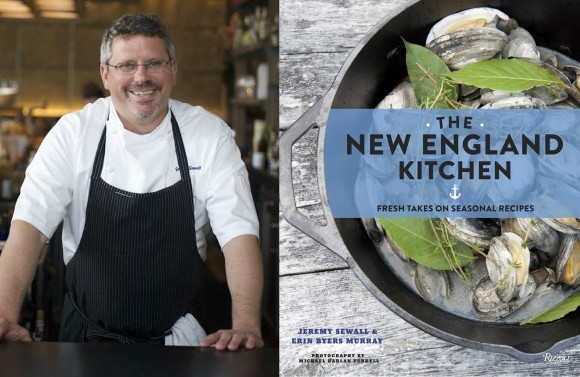
Highlighting the celebrated farms and fisheries that give New England its regional flavor, award-winning chef and author Jeremy Sewall shares more than 100 recipes in The New England Kitchen. This week Sewall brings these delicious recipes with him when he appears for a special dinner event at Left Bank Brasserie. A raw bar and sparkling wine starts the evening off, followed by a three-course meal inspired by Sewall and prepared by Left Bank chef Fabrice Marcon. An autographed copy of the book is included in the evening. Jan. 22, at Left Bank Brasserie, 507 Magnolia Ave., Larkspur. 6pm. $100–$175 for couples. 415.927.3331. 

Jan. 23: Unstoppable Savoy Brown in Sebastopol

0

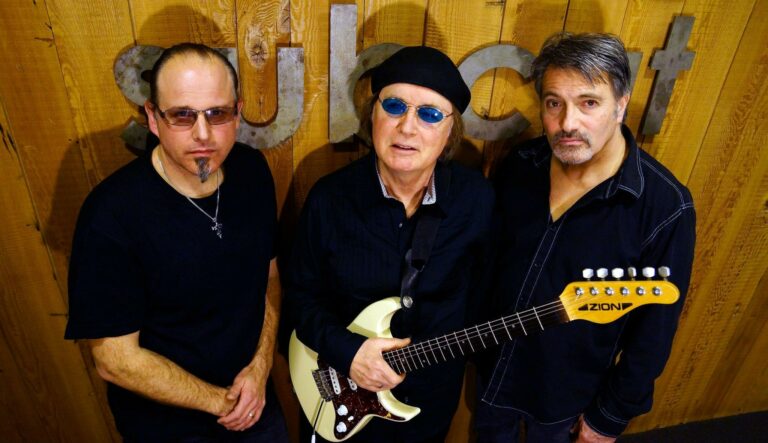
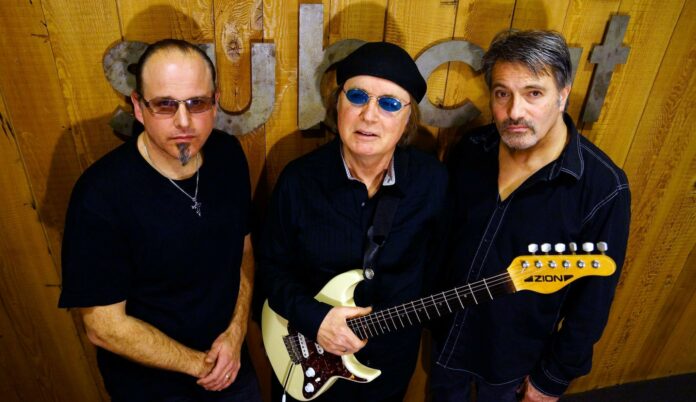
It was 1965 when British blues guitarist Kim Simmonds formed the band Savoy Brown. Over the years, the lineups have changed, but Simmonds and Savoy Brown are still performing relentlessly and releasing acclaimed albums. Last year, their latest album, Goin’ to the Delta, hit No. 5 on Billboard. Onstage, Simmonds has streamlined the lineup to a cool three-piece group for the last few years, stripping down the band’s blues-rock to its essential elements. The band keeps its creative tear on pace with a 50th anniversary celebration concert on Friday, Jan. 23, at HopMonk Tavern, 230 Petaluma Ave., Sebastopol. 8pm. $20. 707.829.7300. 

Jan. 24: Solo Glow in Sonoma

0

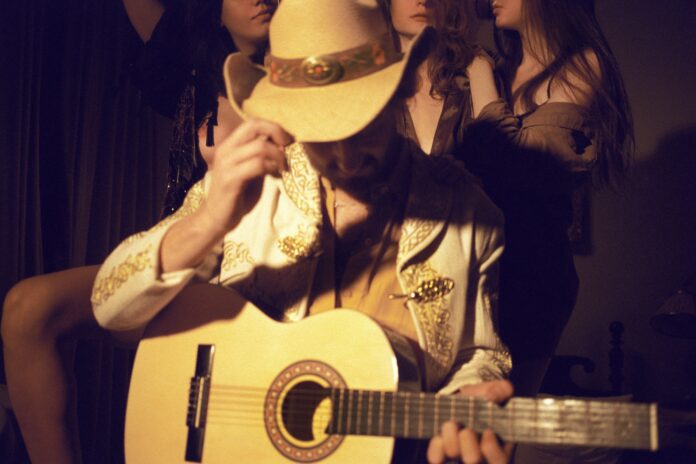
Singer and songwriter Matthew Houck grew up in Alabama and began his career as a musician in Athens, Ga., before moving to Brooklyn. All of these locations inform the artist musically. Houck mixes alternative Americana folk and indie pop rock under the moniker Phosphorescent. Next month, Phosphorescent celebrates the release of a new triple LP live album, and this week Houck comes to the cave stage at Gun Bun for a special solo show with support from Crystal Skulls and Alina Hardin on Saturday, Jan 24, at Gundlach Bundschu Winery, 2000 Denmark St., Sonoma. 7pm. $26. 707.938.5277. 

Jan. 28: Dynamic Dancing from Chicago in Santa Rosa

0

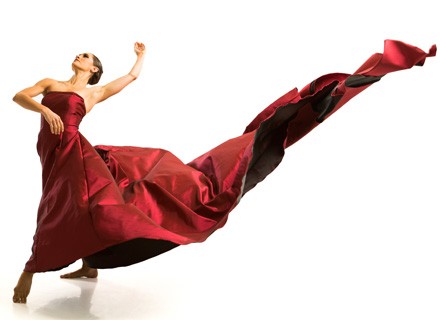
Critically acclaimed for their bold, energetic and sensuous repertoire, River North Dance Chicago combines athletic prowess and artistic perspective with robust theatrical flair. Formed in the Second City in 1989, the company’s daring dancers are all renowned in their own right. This jazz-based, contemporary dance performance comes to the North Bay Wednesday, Jan. 28, at the Wells Fargo Center for the Arts, 50 Mark West Springs Road, Santa Rosa. 8pm. Pre-show talk at 7pm. $25–$45. 707.546.3600.

Dog Days

0

After reading articles complaining about dogs, I recommend Sebastopol’s dog park in Ragle Ranch Regional Park as a good place for those four-footeds and their two-footed human companions. We socialize, frolic, share stories, argue and teach each other, as well as build community among these two distinct species. Given political, lifestyle, ethnic, gender, class, generational and other differences, humans do not always get along so well.

“Sebastopol’s dog park is like the old community water well, where differences are suspended,” says one regular. “What binds us together is our love of all things dog. Watching dogs dancing with each other is fun.” Dogs are sensuous, in their bodies, in present time, rather than stuck in the past or futurizing.

Though I’ve lived in Sebastopol for over two decades, I first entered the dog park two years ago after a puppy adopted me. I was not looking for a dog; Winnie apparently sought a human companion. She jumped into my arms at Sebastopol’s farmers market. The Cazadero family into which she was born—where they hunt boar—eventually insisted that I take her home. I resisted, then surrendered.

Winnie is a Catahoula leopard hound with a six-colored coat. She is fast, fierce and sweet, and has two differently-colored eyes. Winnie likes to growl and bark, as invitations to play. Learning to growl, for both dogs and humans, can set boundaries. I laugh more than usual at the dog park.

Sebastopol is dog-friendly. Issues do arise in the streets and at stores. Some find Winnie too intense. So there are issues and conflicts at the park. Different points of view—sometimes uninvited—on how to properly care for dogs emerge. Winnie’s energy is too much for some, including me at times. I am fortunate that Winnie has connected well with other humans, who help take care of her. “It takes a village to raise a dog” is certainly true.

Dogs have become my teachers. They express love in different ways, including what could be called “tough love.” Many dogs engage in “necking,” since their skin tends to be lose and they can pull without hurting.

Shepherd Bliss farms, teaches college and has contributed to 24 books. He can be contacted at 3s*@*****st.net.

Open Mic is a weekly feature in the ‘Bohemian.’ We welcome your contribution. To have your topical essay of 350 words considered for publication, write op*****@******an.com.

Malted Poetry

0

Late January is ripe for the kind of debauched, national heritage–themed drinking day that St. Patrick’s Day and Cinco de Mayo have become, not to mention the Fourth of July—even Germany gets some play with Oktoberfest. But what about Scotland?

It’s a crying shame, for not only are the Scots drinkers of legendary skill and endurance, but they’ve already got a day that’s custom-made for this noble purpose. Somewhat obscure stateside, Burns Night celebrates the life of Robert Burns, born Jan. 25, 1759. Burns was the author of “Auld Lang Syne,” an indefatigable ladies’ man and is fondly remembered as Scotland’s national poet. Scotch-fueled poetry slam, anyone?

Local events are few and far between. In Healdsburg, Camellia Inn’s Robert Burns Weekend, Feb. 6–8, offers a writing workshop, poetry, song, “pub quiz,” a traditional dinner and vegetarian haggis; bagpiping, no extra charge. In St. Helena, the Farmer & the Fox restaurant plans a Scottish-themed dinner special.

Meanwhile, lubricate your own Burns Night, for poor auld Scotland’s sake, with Scottish “wee heavy” ale. An extra-strong, malty style characterized by caramelization that’s traditionally achieved by a long, hot boil. According to Bob Peak, co-owner of home-brewing supplier the Beverage People, wee heavy may have an alcohol content of up to 10 percent. If you aren’t weeping poetry directly into your glass after some pints of that, perhaps you ha’ent got in it ya.

Moylan’s Kilt Lifter, available on tap and in 22-ounce bottles, was the 4–2 favorite among Bohemians who were invited to take a beer break from putting the paper to bed on a recent Tuesday evening. I recused myself from the vote, having long been on familiar terms with this beer. For months, it’s seemed to be in a bit of a funk, but this sample, purchased direct from the brewery, was spot-on. The 8 percent alcohol in this copper-tinted ale sharpens the full, sweet, malty palate, but not so much as a barley wine. A butterscotch note sets it apart from your typical amber ale. I like it as a beer back for Glendronach single malt, but don’t try this at home.

Bear Republic’s Heritage is a wee heavy at just 7 percent alcohol. Everyone remarked on this beer’s initial banana aroma; with notes of brown sugar and walnuts, it’s like liquid banana bread in a glass, smooth and creamy on the finish. Served from a freshly filled growler, Heritage got a lot of refills, but before the labels were revealed, several defectors complained that it lacked effervescence, and crowned the Moylan’s their top choice.

‘Selma’ Stumbles

It’s bizarre to contrast the Academy-lauded hit American Sniper with Selma. The latter, made for all the best reasons, was shut out of the voting, while American Sniper‘s multiple lies are being defended by the usual suspects.

Recalling the “sheep, wolves, sheepdog” speech in Eastwood’s dreadful film, see how many Twitterites are embracing the hashtag “sheepdog.” (Apparently, in times of stress and division, you may even rehab the slur “sheeple” as a badge of honor.)

Wishing won’t make Selma a more energized movie, despite its suspenseful finale during Bloody Sunday at the Edmund Pettus Bridge. Note that the bridge still bears the name of a Klansman. There’s nothing like the South to make one reach for the Faulkner line about how the past isn’t even the past.

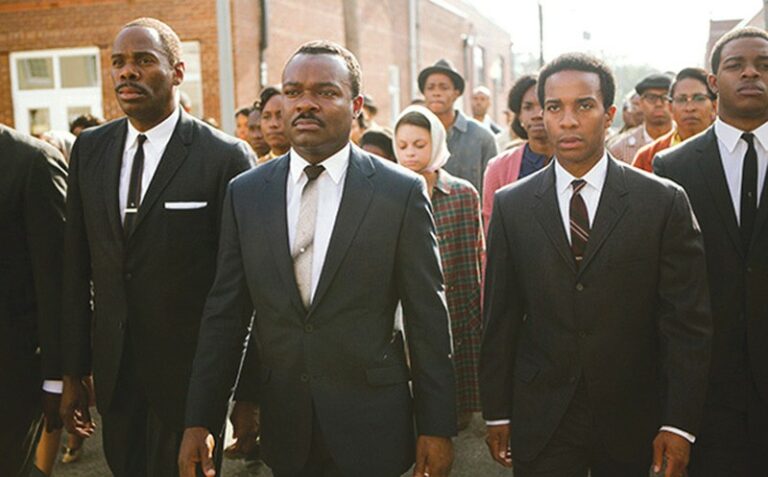
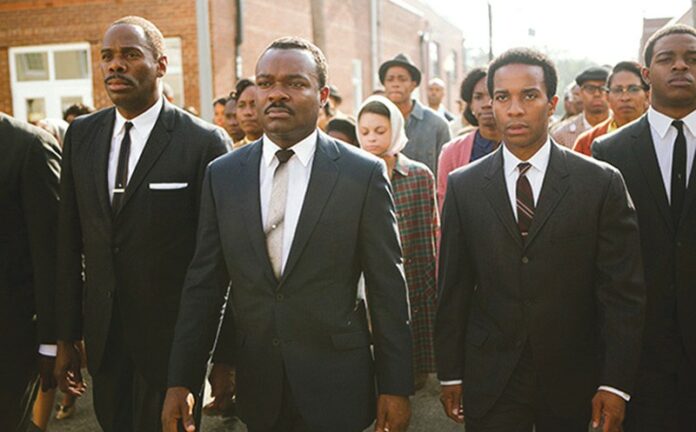
Selma is Ava DuVernay’s stiff account of the brave stand of Martin Luther King (David Oyelowo) against the Alabama state police, and the vigilante thugs who tried to block King’s peaceful 1965 march to Montgomery. In scenes of men and women bracing themselves to absorb violence, DuVernay impresses with a sense of history being made. This film is nothing but timely: yesterday’s poll taxes gave way to today’s caged voters.

King’s failings—his quarrels with his wife Coretta (Carmen Ejogo)—can finally be mentioned in a biopic, as can the extent of his constant harassment and surveillance by the FBI. Oyelowo plays King with understated dignity, and DuVernay labors not to make a plaster saint out of the man, seeking the tensions concealed under such solid conviction.

But it’s a tension-breaker when the director spreads the story wider to the offices of Lyndon Johnson (Tom Wilkinson, the most low-sodium Johnson ever) and Gov. George Wallace (Tim Roth). Both are great actors, but both are so wrong for their parts. Unlike Eastwood’s mindless celebration of gunshot wounds, Selma is a movie that needed to be made. The pity is that, on the whole, Selma‘s pulse is so faint.

‘Selma’ is playing in wide release.

Ice Cream Dreams

0

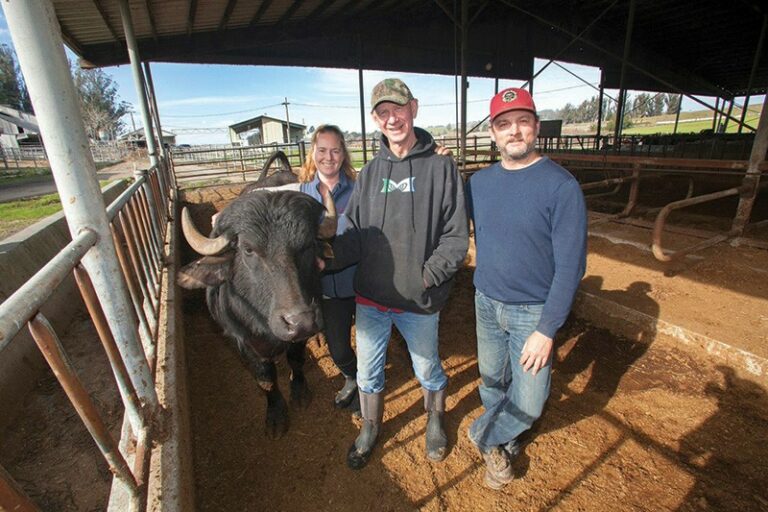
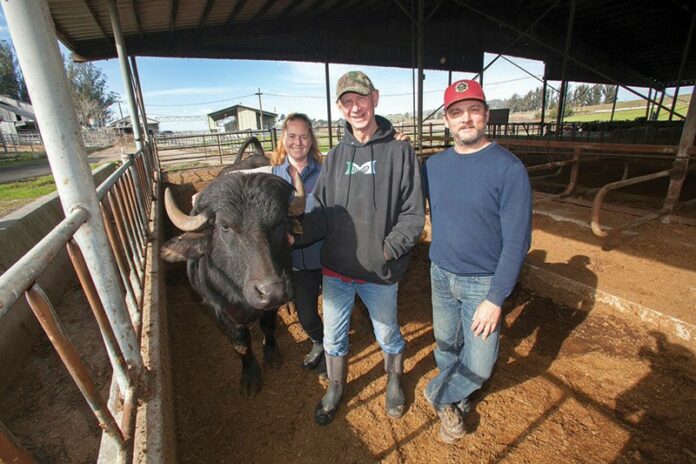
Black-and-white Holstein cattle and tan, doe-eyed Jersey cows are a common sight in the North Bay. Water buffalo? Not so much.

The curious, watchful animals with their sloped, black horns and croaking vocalizations are newcomers to western Marin and Sonoma counties, but their presence signals a delicious addition to the region’s long history of dairy farms.

Craig Ramini’s buffalo milk mozzarella operation in Tomales brought the Asiatic animals into the area. His then-partner Andrew Zlot set out to expand the herd and find a larger dairy. But when their partnership came to an end, Zlot found himself with a herd of buffalo and no idea what to do with the luxuriously rich milk they produced. He wasn’t going to make mozzarella. A chance meeting with two Mendocino County gelato makers (Paul Vierra and Marco Moramarco of Gualala’s Pazzo Marco Creamery) at a party gave him an idea. Zlot asked if they’d be willing to make a batch of gelato with his buffalo milk. They said yes, and he brought some milk up to Gualala.

“Out came the gelato, and it was just glorious,” Zlot says.

After some coaxing, the gelato makers shared their recipe for the gelato base under the condition Zlot didn’t sell in Gualala. The flavoring would be up to Zlot. Thus Petaluma’s Double 8 Dairy gelato was born.

Zlot and his two partners (Curtis Fjelstul and Melisa Schultze) began making gelato in 2013. From the restaurant side, customers have included heavies like the French Laundry, Ramen Gaijin, A16, Quince, Sushi Ran and Oliveto. On the retail side, Double 8 is available at Paradise Market (Corte Madera), Bi-Rite (San Francisco) and Market Hall (Oakland).

“There is no other buffalo milk gelato dairy in America,” says Zlot. Fjelstul (formerly production manager of Three Twins ice cream) says he’s pretty sure there isn’t one in Italy either.

The name Double 8 refers to the milking parlor, a U-shaped area that can house 16 buffalo (a double eight). Zlot used to deliver gelato in a portable freezer in the back of his Jetta, but now he makes his rounds in a used Dryer’s ice cream truck.

At $9 a pint, the gelato ain’t cheap. Dairy cows produce about three times as much milk as a water buffalo, but the milk that comes out is supremely rich and creamy. Water buffalo milk gelato is 10 percent butterfat, lower than that of traditional premium cow’s milk ice cream which has cream added to it and about 14 percent butterfat. Because buffalo milk is so rich, no additional cream is needed.

Current flavors include chocolate, hazelnut, candy cap mushroom and, my favorite, fior de latte, a plain milk flavor that’s anything but plain. The gelato is dense and chewy and stunningly delicious. Compared to premium brands of ice cream, its has a more satiny mouthfeel and a downright buttery quality.

The buffalos’ barns, the dairy and the creamery where the ice cream is made are all within a few steps of each other. It doesn’t get more farm-to-freezer than that.

“The beauty of this is the simplicity,” says Zlot, a journalist turned economist turned ice cream maker. “You milk in the morning and make gelato in the afternoon.”

For more information, visit
www.double8dairy.com.

Walmart Über Alles

0

It did not go well for protesters intent on stopping a proposed Walmart expansion in Rohnert Park last week. A Jan. 13 meeting at Rohnert Park City Hall found the town’s councilmembers voting 4–1 in favor of letting a supercenter plan go forward.

Anti-Walmart agitator Rick Luttman described the development as “outrageous and disgraceful. No other city in Sonoma County would have done something like this. They’re all a bunch of wimps.

“The worst part,” he adds, “is they clearly don’t believe in democracy. The opinions expressed by citizens last night was overwhelmingly opposed to Walmart.”

Rohnert Park officials argued that it’s not their concern to decide which businesses are good for the city and which aren’t.

Debriefer reached out to Liza Featherstone, author of Selling Women Short: The Landmark Battle for Workers’ Rights at Walmart, for some thoughts on how Walmart might have managed to convince Rohnert Park officials to green-light the proposed expansion, despite a broad base of opposition.

The corporation has grown savvy, Featherstone notes, given the torrent of criticism directed at them for low wages, poor job security and ongoing patterns of gender discrimination.

“The company has gotten really good at telling a different story,” she says. “They’ve had so much practice over the years.”

And indeed, the Tuesday vote was met with protesters banging drums and, as the Press Democrat reported, supporters wearing Walmart buttons and carrying signs that said how wonderful the company is.

But workers’ rights problems with Walmart haven’t been addressed by the company in any substantive way, says Featherstone. It has plowed forth with cheery public relations campaigns, many featuring smiling workers sporting the signature blue Walmart apron, gushing about the friendly corporate culture.

“It’s not just about the low hourly wages,” says Featherstone, “but the difficulty in getting enough hours, and reliably just being on the schedule, which is another huge challenge for someone trying to make ends meet. And, on top of that, the health insurance is terrible, and it’s hard to get it because it’s so hard to get the necessary hours to qualify for it.”

As Featherstone notes, one of the tricks to a successful Walmart campaign is to promise jobs in an area that’s otherwise short on them. The jobless rate in Sonoma County, however, has plummeted over the past two years, from almost 7 percent in 2013 to below 5 percent as of late 2014.

The issue isn’t necessarily the quantity of available jobs, but the quality. Featherstone notes that “any conservative, or just an observant person, would argue that people apply for these jobs. If there were better jobs in the community, obviously people wouldn’t be applying at Walmart, and that’s one thing that communities have to consider. Why would they want these low-paying jobs? The community probably needs to be providing other ways that people can make a living. If there is support, it’s probably because there are significant numbers of people who are not finding jobs,” she says.

Debriefer reached out to the four councilmembers who supported the plan but none of them got back to us in time for our deadline.—Tom Gogola

The Right to Offend

0

The Charlie Hebdo catastrophe of Jan. 7 has stimulated a lot of conversation and debate here and abroad over the so-called limits of free speech—and raised questions in this country about the state of American satire.

Just how far is “too far,” and how much should—how much do—cartoonists engage in self-censorship? And why?

This week I interviewed a quartet of leading American cartoonists who’ve come out of the alternative media universe and squarely represent the tradition of American political satire in their own way. Each cartoonist has engaged these questions in the aftermath of Charlie Hebdo.

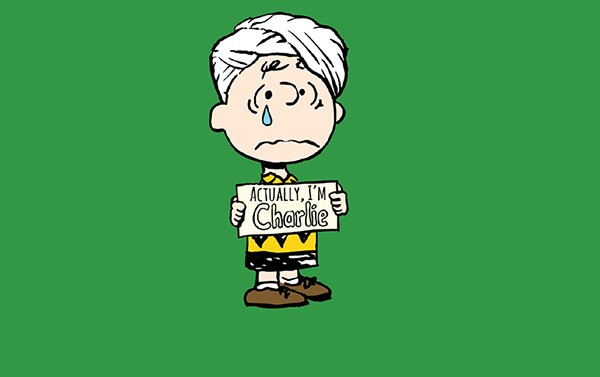
Our cover this week also tries to engage this question. With this cover, the Bohemian aims not to shock or offend, but to hold up the sacrosanct role of the alternative media: Do not shy from controversy.

Readers may know by now that Charlie Hebdo takes its name from the beloved pumpkin-headed Charles Schulz character. While the generally benign character of a typical Peanuts strip may not, at first, jibe with an impression of the scabrous and biting cartoons of Charlie Hebdo, perhaps it’s the existentialist bent of so many Peanuts strips that makes Charlie Brown a piece of American culture that the French can get with.

Santa Rosa’s Schulz Museum didn’t want to discuss the fact that the magazine named itself after Charlie Brown. “We don’t have a comment on that particular story,” says Gina Huntsinger, marketing director at the Santa Rosa–based museum. Pressed, she added, “It’s something that’s tragic that happened in Paris, and we feel it should stay with those people—not to take away from that tragedy in any way.”

Other cartoonists have taken up the Charlie Hebdo cudgel in their own way. Shannon Wheeler is the author of the popular strip Too Much Coffee Man, and was very quickly out of the Charlie Hebdo gate with a strip that we’ve reprinted here depicting the slain Charlie Hebdo employees ascending to heaven, with some choice commentary. It’s a priceless, bittersweet strip.

Wheeler says he had an initial impulse to not “go there,” but realized very quickly that he didn’t just want to do a pat comment on free speech, “something corny with pencils,” and that he had an obligation to honor the Charlie Hebdo heroes by having a little bit of fun. They’d have wanted it that way, he says.

But the American media—corporatized, sanitized and afraid of “offending” anyone, let alone an advertiser—is a dominant roadblock for American satirical cartoonists these days, Wheeler says. “People are afraid of offending. People are afraid of pushing limits,” says Wheeler. And, critically, “people are trying to make money. I think that’s what it boils down to a lot, in terms of why the humor is so conservative here.”

Cartoonist Danny Hellman identifies a strain of argument that runs “I support free speech, but . . .” as being a particularly insidious cop-out. “It’s not free speech if you put the ‘but’ there,” he says, adding that the average American doesn’t bother to get under the hood to understand the satire Charlie Hebdo was engaged in. Surface impressions rule the day.

[page]

“You have to be French and you have to be versed in French politics,” says Hellman, who rejects any conjecture that Charlie Hebdo had a “racist” undertone to it. “You can be against racism and be racist at the same time, but clearly they weren’t a white supremacist rag, like a lot of people in this country seem to think they were. They made fun of racists just as much as they made fun of religious figures. They were clearly just out to make fun of everything in a rude way.”

Jen Sorensen, who has been curating strips by Muslim cartoonists, and writing on it, believes that an “I support free speech, and . . .” approach is the more fruitful conversation to be having after the attack. “If we’re going to be talking about freedom of expression, there are some people who want to talk about the cartoons,” says Sorensen, the 2014 Herblock Prize winner.

Sorensen has been interviewing Muslim cartoonists about Charlie Hebdo. “These are educated Muslim cartoonists who are doing very brave work and whose lives are being threatened,” she says. Those cartoonists, she says, should have a voice—and it should not be drowned out in a froth of free-speech absolutism.

“I have two perspectives on this,” says Sorensen. “As a political cartoonist, it’s horrifying and awful, and I have a vested interest in not being attacked for drawing something. I absolutely support that. But then there is a conversation that follows.”

Through her interviews, she’s come to see “what different people in various minority groups think about this. And the more marginalized people are,” she continues, “the more complicated the responses are. I feel that we can firmly condemn the attacks, but can also talk about the cartoons and how they are being interpreted by broad populations.”

Skip Williamson is up there with R. Crumb and Art Spiegelman as one of the heavyweight cartoon satirists of the underground comix movement that sprang up in the convulsive American 1960s. Williamson is an absolutist on free speech issues. He cut his cartooning teeth in the racially polarized environment of America, circa Jim Crow.

One classic, jarring strip he’s been sharing on Facebook features a man in a car, with Mississippi license plate. The man has a lynched African American hanging from his rear-view-mirror. Today, that kind of gut-punchy stuff is basically off-limits, especially in mainstream publications that simply do not want to offend readers or make them uncomfortable.

“So many people here are so ready to pounce on anything that remotely smells like racism,” says Hellman, a veteran illustrator who’s done a couple of covers for the Bohemian in recent months.

Hellman makes the point that I’ve been thinking about, too: To Pakistanis and others in the Arab world who are protesting the Charlie Hebdo strips, the West is already the kingdom of the infidel. From their perspective, “we expect the infidels to do awful, disgusting things,” he says, “so why should they then kill them for being infidels? Why expect people in foreign countries to follow the rules of your religion? It’s just intolerance, plain and simple.”

[page]

Hellman notes that American cartoonists have other, somewhat more mundane concerns. “In this country, the risk of not being published is greater than being shot by radical Muslims. Who’s going to publish something that looks like Charlie Hebdo in this country? Why can’t we have good, nice, obscene satire? Someone who’s doing that sort of stuff here can’t even get into print so the jihadists can kill them.”

Hellman invokes the spirit of the Realist and early alternative newspapers, a golden age of American satire. “Things were so much more vibrant and hip back then. What happened to our media and popular culture that the blood just got sucked out of everything, and we’re left with this profit-driven, lowest-common-denominator ‘marketplace of ideas’?”

What indeed.

In the immediate aftermath of 9-11, George Bush spokesman Ari Fleischer uttered a phrase to a roomful of reporters that tipped the hand quite clearly when it came to the descent into madness that was about to ensue. Americans “need to watch what they say, watch what they do,” he infamously uttered.

It was as much a taunt as it was a threat.

But for every outrageous Ari Fleischer statement, there’s an overly sensitized person out there on the lookout for the unholy triumvirate of Racism! Sexism! Homophobia! to shout at the next person who dares to not watch what they’ve said. An entire generation, and maybe two of them, has been indoctrinated with the accepted progressive wisdom of the era, steeped in the academic cover of “identity politics” and set loose into a media atmosphere dominated by a lynch-mob chorus of instant outrage.

Wheeler agrees that Fleischer’s chilling comment is of a piece with the latter-day politics of shaming. The debatably glorious advent of Twitter has put an emphasis on beheading infidels, metaphorically, who don’t get with the sensitivity program.

“We’re still getting used to the idea that people can get shut down,” says Wheeler. “You do make the joke that is sexist or racist, or is interpreted that way, and people call for the end of your career. They call for your head. This person should be fired, they should never work again.

That’s a far cry from the heady and glorious days of the underground comix movement.

Williamson’s first published cartoon, which ran in papers all over the country in the middle of the 1960s, depicted two garbage cans as a way to highlight the abject injustices and hypocrisies of Jim Crow. One said “White Trash,” the other said “Negro Trash.” Nobody called him a racist for that cartoon strip, which he penned when he was all of 16 years old.

“Today if I published that, I’d get a lot of flak about it, but back then, it was just part of what people were doing and talking about,” says Williamson.

Williamson calls for “no censorship ever.” And he, like Hellman, laments a bygone era in American satire. “National Lampoon is gone, Mad is gone, The Realist is gone, the great satire magazines that existed at the end of the last century and into this—they are just not there anymore.

“The Charlie Hebdo murders show what a dangerous business this can be, if you do it right. If you have inner demons, you need to express them, you need to just do it. It might get you killed, but go for it!”

Sorenson’s take on the post-Hebdo conversation on expression, she says, is a little more nuanced than a lot of her colleagues. She stresses that she’s in the “I support free speech, and . . .” camp, as distinguished from the “free speech, but . . . ” camp, which can be exemplified, for instance, by Pope Francis’ utterances on the Charlie Hebdo massacre, which are worthy of savage mockery.

Sorensen also has more faith in the sturdiness of American political satire than her crusty male counterparts. “I have heard a lot of commentary to this effect, that compared to Charlie Hebdo, American satire is very weak. ‘Satire is dead in America.’ I guess I agree to the extent that daily newspapers have lost their edge, have become a lot more cautious,” she says.

“But in some ways I feel that political satire is alive and well in America.”

Jan. 22: New England Kitchen in Larkspur

Highlighting the celebrated farms and fisheries that give New England its regional flavor, award-winning chef and author Jeremy Sewall shares more than 100 recipes in The New England Kitchen. This week Sewall brings these delicious recipes with him when he appears for a special dinner event at Left Bank Brasserie. A raw bar and sparkling wine starts the evening...

Jan. 23: Unstoppable Savoy Brown in Sebastopol

It was 1965 when British blues guitarist Kim Simmonds formed the band Savoy Brown. Over the years, the lineups have changed, but Simmonds and Savoy Brown are still performing relentlessly and releasing acclaimed albums. Last year, their latest album, Goin’ to the Delta, hit No. 5 on Billboard. Onstage, Simmonds has streamlined the lineup to a cool three-piece group...

Jan. 24: Solo Glow in Sonoma

Singer and songwriter Matthew Houck grew up in Alabama and began his career as a musician in Athens, Ga., before moving to Brooklyn. All of these locations inform the artist musically. Houck mixes alternative Americana folk and indie pop rock under the moniker Phosphorescent. Next month, Phosphorescent celebrates the release of a new triple LP live album, and this...

Jan. 28: Dynamic Dancing from Chicago in Santa Rosa

Critically acclaimed for their bold, energetic and sensuous repertoire, River North Dance Chicago combines athletic prowess and artistic perspective with robust theatrical flair. Formed in the Second City in 1989, the company’s daring dancers are all renowned in their own right. This jazz-based, contemporary dance performance comes to the North Bay Wednesday, Jan. 28, at the Wells Fargo Center...

Dog Days

After reading articles complaining about dogs, I recommend Sebastopol's dog park in Ragle Ranch Regional Park as a good place for those four-footeds and their two-footed human companions. We socialize, frolic, share stories, argue and teach each other, as well as build community among these two distinct species. Given political, lifestyle, ethnic, gender, class, generational and other differences, humans...

Malted Poetry

Late January is ripe for the kind of debauched, national heritage–themed drinking day that St. Patrick's Day and Cinco de Mayo have become, not to mention the Fourth of July—even Germany gets some play with Oktoberfest. But what about Scotland? It's a crying shame, for not only are the Scots drinkers of legendary skill and endurance, but they've already got...

‘Selma’ Stumbles

It's bizarre to contrast the Academy-lauded hit American Sniper with Selma. The latter, made for all the best reasons, was shut out of the voting, while American Sniper's multiple lies are being defended by the usual suspects. Recalling the "sheep, wolves, sheepdog" speech in Eastwood's dreadful film, see how many Twitterites are embracing the hashtag "sheepdog." (Apparently, in times of...

Ice Cream Dreams

Black-and-white Holstein cattle and tan, doe-eyed Jersey cows are a common sight in the North Bay. Water buffalo? Not so much. The curious, watchful animals with their sloped, black horns and croaking vocalizations are newcomers to western Marin and Sonoma counties, but their presence signals a delicious addition to the region's long history of dairy farms. Craig Ramini's buffalo milk mozzarella...

Walmart Über Alles

It did not go well for protesters intent on stopping a proposed Walmart expansion in Rohnert Park last week. A Jan. 13 meeting at Rohnert Park City Hall found the town's councilmembers voting 4–1 in favor of letting a supercenter plan go forward. Anti-Walmart agitator Rick Luttman described the development as "outrageous and disgraceful. No other city in Sonoma County...

The Right to Offend

The Charlie Hebdo catastrophe of Jan. 7 has stimulated a lot of conversation and debate here and abroad over the so-called limits of free speech—and raised questions in this country about the state of American satire. Just how far is "too far," and how much should—how much do—cartoonists engage in self-censorship? And why? This week I interviewed a quartet of leading...
11,084FansLike
4,446FollowersFollow
6,928FollowersFollow