Letters to the Editor: July 1, 2015

Who’s Working for Whom?

I recently called the Sonoma County Board of Supervisors and asked why they hadn’t created Measure A specifically for repaving our awful roads, and was told because it would take a two-thirds majority to pass. When I brought up the notion that the public does not trust them with our money, it was as if I were speaking Greek. Sonoma County needs supervisors who are in tune with the public, and from what we have seen of Supervisor David Rabbitt, he is definitely not.

How about a new measure that will only go toward fixing our terrible roads? Anyone not using 101 on a daily basis should get down on his knees and give thanks for not being part of the parking lot. Instead of simply adding one lane in each direction, the “powers that be” are going to see to it that they ruin the once wonderful stretch of land between Novato and Petaluma. I wrote to Rabbitt about this months ago and never heard back. Are these supervisors really working for us? I think not!

Petaluma

Water Hogs

Well that about sums up “the American way” (“Rich Californians,” Facebook,
June 14). If I can pay for it, I can get it, and screw those who can’t. That is the country we know live in. The rich get rich and the poor get poorer. The authorities can issue all the citations they want. Rich people will simply pay them and keep on watering.

Via Facebook

People only react and respond to conservation when it hits them where it hurts most, their pocketbook. The state needs to be more active about fining the abusers.

Via Facebook

I saw someone watering his rocks (at noon even!) one day. My arm shot up and I pointed at him, directing anger and shame his way. My mom stopped the car and glared at him. He stopped the watering about four seconds later. People like that are selfish bastards.

Via Facebook

Dept. of Corrections

Last week’s story “Home Grown”
(June 24) listed the incorrect phone number for Soul Riders. The correct number is 707.978.3810. Also, mention of Go Local and North Bay Made may not have made it sufficiently clear that the two organizations are not related. They are definitely not. Finally, Debriefer incorrectly said that Jared Huffman is a first-term congressman; he’s a second-termer.

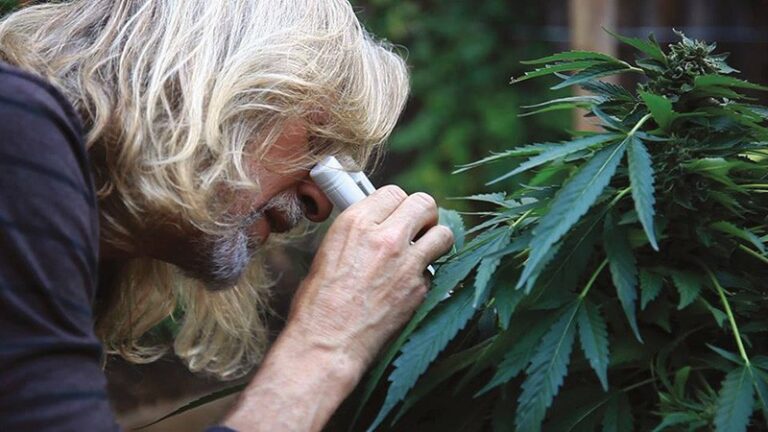
Looking deeply within his soul

Write to us at le*****@******an.com.

Cheese to Please

0

The North Bay has an embarrassment of riches when it comes to local cheese. All that cow, goat, sheep and even water buffalo milk is great for cheese lovers, but it can be hard for cheese makers to stand out in an increasingly crowded field.

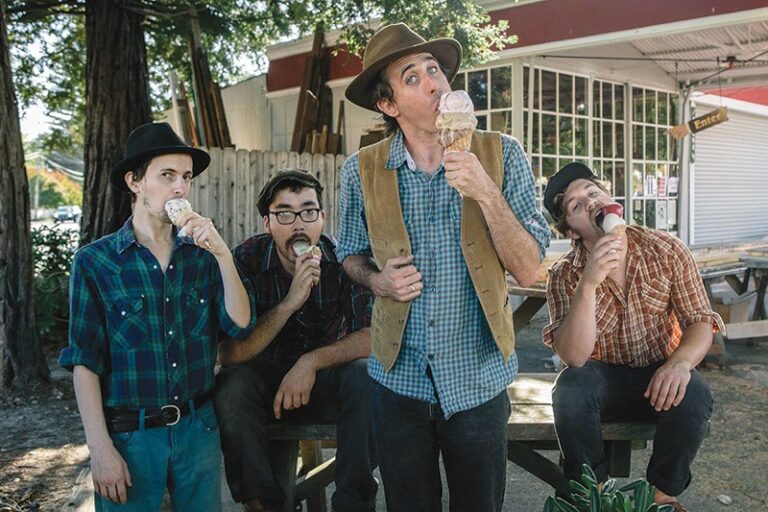
Lisa Gottreich, owner of Bohemian Creamery, doesn’t have that problem. Not only does her business have a cool name (ahem), she makes some of the most distinctive cheese in the North Bay. And now its available right where it’s made.

Bohemian Creamery cheeses are served at top-drawer restaurants like the French Laundry, Chez Panisse and Dry Creek Kitchen. The Obamas seek them out when they dine at Cotogna. That means you have to spend some serious money to try them. Gottreich had long wanted a retail outlet, but farmers markets took too much time and made her too little money, and grocery stores marked up her cheeses too much. So four weeks ago she opened her own shop. And what a shop it is.

The little market was once Gottreich’s office, but it’s been dolled up with bright paint, a cool bench atop two milk pails, framed photos of goats and a beautiful display case of her many splendid cheeses. Directly behind the market is the creamery where Gottreich turns milk into cheese, and behind that is a stunning, hilltop view of the Laguna de Santa Rosa and Mount St. Helena. Below is the pasture where Gottreich raises her hundred or so Alpine goats. It doesn’t get more farm-to-market than that. She plans to offer patio seating where you can nibble on cheese and take in the view.

Gottreich, who lived for years in Italy and was raised by European parents, calls her cheese shop a “latteria,” or dairy bar, because it will offer more than cheese. “I want to introduce people to other things that can be made with milk,” Gottreich says.

How about soft serve goat milk frozen yogurt? On my visit she had a refreshing, delicious and not too sweet, ginger-agave flavor. She’s also perfecting a recipe for whey sodas, a lightly carbonated and flavored beverage made from what’s left over when the solids (curds) are separated from the milk. Soon there will be espresso drinks made with fresh, mascarpone-like ricotta and cow’s milk cheese filled with cajete (goat milk caramel) called Cowabunga.

Most artisanal cheese makers in the North Bay specialize in cheese from one kind of milk. Gottreich makes cheese from every kind available—cow, goat, sheep and buffalo. In addition to Cowabunga, the creamery’s non-traditional cheeses include a semi-soft, water buffalo cheese, called PocoLoco, infused with bits of Italian Lavazza coffee. It’s crazy good. There’s an intriguing organic cow’s milk cheese made with local dulse seaweed called Surf and Turf.

Gottreich also makes several traditional cheess. One of my favorites is the Caproncino, a semi-hard goat cheese aged up to eight months.

The cheeses are great, but traveling to the shop with its views of goats, mountains and verdant plains makes it really special. Get there before Sunset magazine writes it up and the crowds come.

Bohemian Creamery, 7380 Occidental Road, Sebastopol. Open Friday–Sunday, 10am–6pm.

Fat Tire Temple

0

Bicycles predate paved roads, so in a way, mountain biking has always existed.

Yet Marin County is considered the birthplace of the sport, because in the 1970s local riders organized the first mountain bike race on Mt. Tamalpais, the Repack, and designed bikes that would set the path for modern bike design. The four-week-old Marin Museum of Bicycling and Mountain Bike Hall of Fame offers tribute to that history, and to bicycles in general.

“There was only one place where that activity reached a critical mass,” says Connie Breeze, curator of the museum along with her husband, Joe, a Hall of Fame inductee and mountain biking pioneer. Joe Breeze also serves on the museum’s board.

Joe Breeze and fellow pillar of the sport Charlie Kelly helped organize the first Repack race in 1976, a downhill trail on Pine Mountain that Breeze went on to win 10 times. He also welded the first ever mountain bike from new parts, dubbed it the “Breezer,” and won Repack on it the next year.

“This was our off-season fun, exploring the territory we grew up hiking around,” says Joe Breeze, at the time a road racer.

Breezer No. 1, the first bike he made, is in the Smithsonian museum; Breezer No. 2 is on display at the Marin museum. The museum plans on more exhibits, but if Joe Breeze is around, be sure to listen to his stories and check out the Mountain Bike Hall of Fame to read about his achievements in the sport, because he will humbly downplay them on his walk around the museum.

From retrofitted 1940s Schwinn clunkers to sleek, $10,000 carbon fiber bikes with finely tuned suspension, the history of cycling is told through the bikes themselves. To complete the story, a separate exhibit features a rare collection of 19th-century bikes, including the Victorian classic with the giant front tire and another model, with a chainless, shaft-drive design.

All of the bikes in this exhibit are on long-term loan from David Igler, son of prolific bike collector Ralph Igler, whom Joe Breeze met in 1975.

“We were able to cherry-pick to show the stepping stones in the evolution,” says Joe Breeze. “These are really hard to come by.”

The first bike in the exhibit is a French model from 1868 made of forged iron. It’s also the first bicycle with pedals and the first to be commercially produced. The tires look like wagon wheels, yet the design is modern compared to some of the comical and creative design that followed in the next 10 years.

In 1890, the addition of rubber tires and a chain made riding safer and more efficient, ushering in a decade known as cycling’s golden age. In the 1890s, there were two patent offices in the United States, one for bicycle inventions, one for all other inventions.

Many companies that made bikes in the late 1800s went on to make cars and car parts. “Cycling paved the way for the automobile— literally paved the way,” says Joe Breeze, explaining how roads were initially paved for cyclists, not cars. (The museum recently hosted a lecture by Carlton Reid, author of Roads Were Not Built for Cars.)

The Marin Museum of Bicycling has been in the works for years. Though organizers are still seeking a major donor, the museum opened thanks to volunteer and community support. There are no paid employees. Joe Breeze estimates he’s put in around 2,000 hours of unpaid work on the museum.

To raise money, the museum sells bricks that range from $250 for a 4-by-8-inch brick to $1,000 for a 1-foot-square brick. The bricks form part of a wall in the shape of Mount Tamalpais in front of the museum—the mountain where it all began.

The Marin Museum of Bicycling and Mountain Bike Hall of Fame is open 11am–5pm, Thursday–Sunday, at 1966 Sir Francis Drake Blvd., Fairfax. $10, adults; $5, students and youth ages 12–17; $3, children ages 6–11; for children under five, free.

Dignity for All

0

Getting married really wasn’t on my list, and I didn’t think it needed to be a priority in the LGBT civil rights movement. Neither was the idea of serving my country in wars that didn’t seem to make sense and that just wasted more young lives, especially in a country that didn’t recognize my rights as a full citizen. There were more pressing priorities that need addressing, such as employment, housing and public-accommodation non-discrimination laws.

But after witnessing the extreme backlash to serving openly in the military (unit cohesiveness, sharing bunks, foxholes), the extreme backlash to marriage equality (much of it based on religion, which should have nothing to do with civil marriages or our laws), and after learning about a young LGBT man committing suicide in Sonoma recently, I have seen how monumental achieving marriage equality nationwide really is.

It means America is now on the right side of history. The American dream of equality for all is one step closer to reality. America has grown up, and we’re catching up with our neighbors. Our country is now more united. We are taking down Confederate flags, we are moving forward toward understanding and compassion, rather than retreating into ignorance and hate.

On a personal level, it means my marriage will now be recognized everywhere in the country. Getting married at San Francisco City Hall in 2008 was of course a moment I will never forget. I’m so proud of where we live and what we stand for, and so proud, finally, that we have brought these values to the rest of the country, our country, my country.

I know other countries do things better, and some do things much worse. We aren’t perfect, but we are getting better. But today, I’m proud to be an American. Proud that the actions taken recently will heal many wounds and will improve the lives of many in our LGBT community, including our youth.

In the Supreme Court’s ruling on marriage equality, Justice Anthony Kennedy wrote, “They ask for equal dignity in the eyes of the law. The Constitution grants them that.”

That’s all we wanted.

Chuck Ramsey is the president of Sonoma County Pride.

Open Mic is a weekly feature in the ‘Bohemian.’ We welcome your contribution. To have your topical essay of 350 words considered for publication, write op*****@******an.com.

With a Bang!

0

On Friday, July 3, Analy High School’s football field opens up for Sebastopol’s Fireworks & Music Festival. Local favorites Frobeck and Sol Horizon bring the noise before the fireworks blast off in this fundraising event hosted by Sebastopol Kiwanis. The festival benefits community clubs and organizations.

On Saturday, July 4, Santa Rosa’s annual Red, White & Boom! event comes back to the Sonoma County Fairgrounds for an afternoon and evening of live music hosted by radio personality Brent Farris and local food vendors, with plenty of things for the kids to do and the county’s biggest fireworks show.

Sonoma goes traditional on Saturday with its Old Fashioned Fourth of July Parade and Celebration. Commemorating a century of community, the parade invites participants to dress in their favorite era from the last hundred years, with plenty of food, drinks and game booths for the whole family.

In Napa, everyone gets into the patriotic spirit on July 4 when the Napa Lights the Valley event honors first responders and members of the armed forces who helped rebuild the region after last year’s earthquake. Taking place around Veterans Memorial Park on the Napa River, the all-day event boasts a parade, live music, a sparkling wine toast and fireworks designed by PyroSpectaculars.

On the Right Trail

0

The Sonoma County Bicycle Coalition (SCBC) has put the pedal to the metal on a pile of bike-friendly projects around the county.

Check out the Santa Rosa–based nonprofit’s website (bikesonoma.org), and it’s obvious that trail advocacy is high on the priority list. The organization has seen through multiple projects to ease the way for cyclists. The coalition successfully pushed to prioritize bike safety at Highway 116 and Occidental Road. Now there’s a new bike path being built there.

How do they do it?

“We’re successful because we look for a way that landowners get something and the people of Sonoma County get something out of it rather than pounding your fist on the table and screaming about bicycle rights,” says SCBC executive director Gary Helfrich. “That doesn’t work.”

There are now two big trail projects afoot kickstarted with grant money for feasibility studies. One study is well along the way to completion; the other’s just getting going.

Santa Rosa–Sonoma Trail

Local officials expressed audible delight when a $190,000 feasibility study was unveiled in 2013 to suss out the long-held dream of a Santa Rosa–to-Sonoma trail. The study is funded through a grant the California Department of Transportation awarded to Sonoma County Regional Parks. Questa Engineering is the go-to consultant doing the study.

Proponents see Valley of the Moon pedal power as a great way to foment wine tourism, since the proposed trail atop an aqueduct backs up to several wineries along the way. As such, the coalition has seen “excellent results with landowners down in the valley,” says Helfrich. “This is seen as a tourism amenity, as economic development.”

Helfrich identified a couple tricky stops along the way to a green-lit construction of the 13-mile path, which would be undertaken by the county. The main thrust of the project would utilize a Sonoma County Water Agency easement parallel to Highway 12—and the imperative is to do whatever it takes to keep people off of that decidedly bike-nasty road. That’s easier said than done.

Trail advocates are now deep in the weeds of one-on-one negotiations with homeowners whose property intersects with the proposed trail, and with sorting out access to utility easements along the way.

“An awful lot of work goes on that nobody gets to see because it involves negotiations with property owners,” Helfrich says.

One issue in need of resolution is how to structure the trail at the point it passes through Kenwood, where Highway 12 essentially becomes Main Street, and where “there’s a zillion driveways and lots of traffic,” says Helfrich.

The anticipated solution is to send cyclists through lesser-used neighborhood roads. “[Sonoma] Regional Parks recognized that the trail has to go through the backroads of the town,” says Helfrich.

Kenwood’s local merchants support the trail, he adds. “They like the idea that it’s kind of a halfway point where you can wander through and buy lunch.”

The ultimate price tag of the trail is still to be determined, says project manager Ken Tam of Regional Parks. That will be a part of the final report from Questa expected later this year.

Petaluma- Sebastopol Trail

The bike coalition helped score funds for another feasibility study in April, also administered by Caltrans. The organization was one of several groups and municipalities that kicked in matching funds to a $209,000 Caltrans grant, bringing it to $248,000.

The goal: a safe ride from Sebastopol to Petaluma. There’s only one problem: Where’s the trail going to be?

The study area includes a one-mile stretch from Sebastopol city limits to Regional Parks’ Joe Rodota Trail and one mile into Petaluma city limits to connect with its existing bicycle network.

But whereas the Sonoma-to–Santa Rosa project features an identifiable trail, the Sebastopol-Petaluma route is unclear, at best.

“Look at the study area and it’s a huge blob instead of just a line,” says Helfrich. “There’s no obvious route.”

There was a railroad that rolled through here, he says, but it comes with a chain of title that needs to be unraveled. And part of that railroad line is already buried under Highway 116. Sonoma Regional Parks notes that much of the railroad right-of-way is privately owned and developed for other purposes.

“There’s a lot of misinformation out there,” says Tam. “People automatically assume where the trail alignment is going to be. We have a starting point, Sebastopol. And we have an end point, Petaluma. But how we get from here to there, that’s what the study is going to do for us.”

The feasibility study is in its infancy, Tam says, and no consultant has been selected yet.

“We will get the grant but we won’t get it until the state budget is approved,” Tam says. Once that happens, the job can go out for bid.

The Petaluma end of the project should see an uncomplicated negotiation with a small group of landowners, Helfrich notes. But at the Sebastopol end, “there are hundreds of people with property, and it just takes one” to put the brakes on the plan.

Some of the feasibility funds will be used to conduct what Helfrich says will be the “biggest title search ever.”

It could get complicated. “A lot of people probably assume that they own that little strip of land behind their fence,” says Helfrich. Sometimes they do, and sometimes they don’t.”

“I love the idea,” says Sebastopol resident and avid recreational cyclist Peg Roth. “Although I understand that there may be hurdles, I’m all for applying time, money and energy to promoting cycling by expanding our trail system. I feel we’d really benefit from a cultural shift which prioritizes cycling beyond recreation.”

Roth relates some of the cycling wisdom she’s learned in trips to Holland. Sonoma County could take a lesson from the super-bike-friendly Dutch.

“I am amazed at how cycling is a part of their daily life,” says Roth. “It’s seamless—grocery shopping, picking up children, going to a wedding are done on bicycles. My friends cycle to work, to the movies, to the bar, and they have their own lanes and traffic signals for this.

“It’s fairly simple,” adds Roth. “We’ll never move in the right direction here if we don’t dedicate time and money to promoting safe access for bicycles.”

Peg Roth’s brother, Eric Roth, also lives in Sebastopol and falls on the serious end of the bike-culture spectrum. He’s a member of the Santa Rosa Cycling Club and says he’s ridden 7,000–8,000 miles a year each of the past two years, including five double-centuries in 2014.

Eric notes that the Sonoma-Petaluma effort is “not very important to serious recreational cyclists,” given the poor quality of Sonoma County roads and the chronic lack of sufficient funds to fix them.

Bike-friendly trails open to all are nice, but road maintenance “is much more important,” Eric says. “We like to bike where there’s less traffic, but these roads are in such poor condition on average that it’s pathetic.”

The Sonoma County Bicycle Coalition has also supported projects that push for improved roadways in Sonoma County. But county voters took a pass on Measure A earlier this year, which would have put a tax on residents to fix Sonoma’s crumbling road infrastructure.

Improved roadways are not, however, in Tam’s bailiwick. He’s a parks guy, and these trails are for everyone: pedestrians, cyclists, whomever.

These projects “are geared more for people who don’t want to use the public roadways,” Tam says, while stressing that he’s not discouraging road cyclists from doing their thing.

“Some families don’t feel comfortable riding along the shoulder. This is an alternative to using the road, and our focus is on getting them off the road.”

Green Summer

0

Since opening three years ago, the Green Music Center at Sonoma State University has hosted many compelling concerts in its acoustically immaculate Weill Hall. This weekend, the center kicks of its ambitious Summer Performance Series, with international headliners and legendary performers.

The center’s new director of programming is Peter Williams. The former artistic director at Yoshi’s jazz clubs in San Francisco and Oakland, Williams joined the Green Music Center last February. He likens Weill Hall, with its retractable back wall that opens out onto a massive lawn, to the famous Hollywood Bowl in Los Angeles.

“I love the set-up for the summer shows,” says Williams. “Sitting outside seeing a show, I think, is a great way to spend a summer evening.”

Weill Hall opens July 4 for the first concert in the series, and it’s a doozy. Broadway star Megan Hilty, best known for her work in the hit musical Wicked and for roles on television shows like Smash, is backed by the Santa Rosa Symphony for an all-American program followed by fireworks, to end the night with a bang.

Other highlights of the season include country star Martina McBride, actor-turned-crooner Kevin Spacey, Natalie Cole, Orquesta Buena Vista Social Club, Chris Isaak, Steve Martin with the Steep Canyon Rangers, Dwight Yoakam, Kristin Chenoweth and Smokey Robinson.

The show that Williams is most looking forward to is the center’s inaugural Dawg Day Afternoon Bluegrass Festival on Sunday,
July 12, featuring the David Grisman Sextet, the Del McCoury Band and Jerry Douglas presenting the Earls of Leicester. Named after Grisman’s nickname “Dawg,” the festival is soon to become a staple of the center’s concert series, and Del McCoury couldn’t be more pleased.

“I like it there, it’s such a unique part of the country, a lot of great musicians there,” says McCoury in an interview from his home in Nashville. McCoury’s connection to the Bay Area goes back to his earliest days, when he played in Berkeley with Bill Monroe and briefly appeared in the Golden State Boys in the 1960s.

A veteran of festivals like Hardly Strictly Bluegrass in San Francisco, McCoury is enthusiastic to share the stage with old friends.

“Jerry [Douglas] produced several albums for me,” says McCoury, “and I got to know David Grisman when he was just a teenager. I’ve known those guys forever. I’m looking forward to coming.”

See the full lineup at gmc.sonoma.edu/Summer2015. To read the extended interview with Del McCoury, continue on to the next page.

[page]

It feels like bluegrass is more popular now than ever. Are you seeing that?

It’s been steadily growing, you know. In fact, it’s healthier now than it’s ever been. When we formed the International Bluegrass Music Association, it boosted the music because it was a time when we started having awards shows, and all the bands and managers could get together. Long story short, we got organized, you know. And it’s been growing ever since.

There’re so many bands these days, and so many young people. And that’s the livelihood of any music, I think: that young people get interested in it, and play it and listen to it and buy records. There are so many great young musicians, more so than I ever remember. There really is.

That must be good to see.

It really is. It’s such a great art form. Us old guys, when we started to play, there was only Bill Monroe and Flatts & Scruggs to listen to. Now, young people can go anywhere and hear bluegrass music.

Back when I was starting to play—of course I was a banjo player—I heard Earl Scruggs and it just ruined me for life. I was about 11, I think. By the time I got to high school, Elvis Presley was whom all the kids my age were listening to, but I still liked Earl better. (laughs)

I just wasn’t into that rock and roll singing. Later in life I realized that Elvis was a phenomenon, a great artist, probably one of he greatest we ever had. But when it came to rock and roll, I liked Jerry Lee [Lewis] better, because he was such a great musician. Plus, he would’ve made a great bluegrass singer. He could just do anything.

I gotta tell you a little story. I used to open shows for Jerry Lee back when he came out with some country songs, in the ’60s there. Well, they had a tribute to Jerry Lee [in 2007] there at the Rock and Roll Hall of Fame, and Jerry Lee called me to come play that. And it surprised me that he remembered me after all those years. So I went up there, and I did a couple of his songs. And after the show, he got in his airplane and went straight back to Memphis, but they had a party and his guitar player, Kenny Lovelace, who’d been with him since almost the start, came up and said to me, “You know, Jerry Lee and me used to sing them songs.” And I said, ‘Oh, what songs is that?’ And he starts singing one of those old Lester Flatt, Bill Monroe duets:

(singing)
Tonight I’m alone without you my dear / It seems there’s a longing for you still / All I have to do now is sit alone and cry / In our little cabin home on the hill

He said, “We used to do that stuff. When we were teenagers, we’d go to the Grand Ole Opry, and Bill Monroe was the hottest thing going.” And a lot of those early rock and rollers, you know, they listened to Monroe.

I’ll tell ya another guy who learned a lot of his technique from Monroe was, Chuck [Berry]. He’d come to the Grand Ole Opry, and because he was black, they wouldn’t let him in. So he’d sit on the back steps of the Opry, and he could hear the music, and he was listening to Monroe play that mandolin. Isn’t that something? So Bill Monroe was early rock and roll, before they tagged him bluegrass. (laughs)

With this upcoming Dawg Day Bluegrass Festival, you’re playing along with David Grisman and Jerry Douglas.

Jerry produced several albums for me, back when I was still on Rounder [Records]. I have known Jerry since he was playing with JD Crowe. And I got to know David Grisman when he was just a teenager, through my younger brothers, and recorded a record with him, called Early Dawg [Grisman’s debut solo album]. I’ve known those guys forever.

What are you impressions of the North Bay?

I play quite often there in Northern California, probably more than Southern California. I like it there. You got San Francisco, that’s a pretty town. It’s so hilly, and it’s very unusual. Bu I like that part of California, I like that part of the country really.
I’ve been coming there since—well, let’s see. I played Berkeley with Bill Monroe in ’63 for Chris Strachwitz, he’s got Arhoolie Records. And then what happened, after I quit Bill Monroe, Chris called me and wanted me to record on his label. He liked my singing. And so my first record [I Wonder Where You Are Tonight] was on Arhoolie, based out of Berkeley, California.

I’m looking forward to coming, you can tell the folks there that we’re old friends, and we just might get up and play something together.

Ashland Calling

0

The recent Supreme Court ruling affirming marriage rights to all couldn’t be better timed. As it happens, the celebration party has already started in Ashland, Ore. And this party’s got the Go-Go’s, or at least a bunch of their songs.
Even Shakespeare would be dancing.

Two weeks before the historic ruling, the Oregon Shakespeare Festival unveiled Head Over Heels, a joyously love-affirming musical by Tony-winner Jeff Whitty (Avenue Q), and anyone wanting to celebrate an engagement or wedding might want to hit the road and snap up some tickets, because this outrageously creative, gleefully uplifting world premiere is one hot show—and I have a feeling it’s about to get hotter.

Directed by Ed Silvanus Iskandar, Head Over Heels does something miraculous with the Go-Go’s greatest hits (and a few lesser known songs), spreading them around through Whitty’s insanely clever comic adaptation of the Elizabethan pastoral romance The Countess of Pembroke’s Arcadia, by the poet-soldier Phillip Sydney, a member of Elizabeth’s court till be was banned for dueling—and for daring propose marriage to the queen. As incorporated by Whitty and arranged by Carmel Dean, the songs are more than just pop-rock ear candy. Whether translated into English Madrigals, doo-wop quartets, or slinky rock-and-roll tangos, the lyrics cleverly move the story along, revealing the inner lives of the characters as well as if they’d been written for the show.
Maybe even better.

When Basilius, King of Arcadia (a delightful Michael Sharon) receives a prophecy predicting the collapse of his kingdom and his family, with hints that an epic act of adultery will threaten his marriage, he packs up his advisors, his wife (a brilliant Miriam A. Laube) and his two daughters, (Bonnie Milligan, Tala Ashe), and heads out to the forest to wait for it all to blow over. There in the wide open, of course, a series of confusions and misunderstandings ensue, most of them revolving around Musidorus (Dylan Paul), a young lovesick shepherd disguised as an amazon woman.

Basically, everyone falls in love with her, leading to a number of well-timed self-discoveries, the end result being that the king’s definition of love, and the meaning of marriage, gets a much-needed overhaul by the time the bedazzled king and his newly-redefined family all gather to sing “We Got the Beat.”
It’s goofy, giddy fluff, yes, but its sweet, irresistible, occasionally brilliant fluff. And sometimes, nothing is better, or better timed, than a bit of sweetness after a long, hard journey.

5 stars

The good, the bad and the gorgeously ugly.

That might be a fitting way of thinking about the other shows currently running on OSF’s three stages. A number of shows that run the rest of the season (Pericles, Much Ado About Nothing, Guys and Dolls), I have already reviewed in February, and one other (the brilliant Fingersmith) ends its run on July 9. Two new shows have opened on the company’s two indoor stages since February, and three (including Head Over Heels) are now running outdoors in the just-opened Allen Elizabethan Theater. In a remarkably strong season for Artistic Director Bill Rauch, there are far more hits than misses.

The one major “miss,” however, is a doozy.

Shakespeare’s Antony and Cleopatra has never been an easy play to produce. The story hops all over the globe, there are huge action scenes that play out as nothing but narration (the equivalent of, ‘Look! Over there! Our ships are all burning!’), and the tone of the piece, as written, is a wacky blend of high drama and broad comedy, some of which intrudes on its own self, leaving a sense that Shakespeare kept changing his mind about how funny he wanted this historical epic to be.

For directors, it means they must find clever ways to establish a coherent tone that is not suggested in the script, or risk leaving the audience uncertain where to laugh and where to sit there stunned at the crass stupidity of certain ancient Romans and Egyptians.

Director Rauch, who did a stellar job with his direction of the aforementioned Fingersmith, appears to have decided to just follow Shakespeare’s lead with this surprisingly spare outdoor production, the result being a sometimes entertaining, sometimes baffling mish-mash of tonal inconsistencies.

This is a tragedy, after all.

By pushing the comedic moments to goofy excess, even—as in the arrival of a bumbling snake seller—when it comes just as the tragic demise of one character is about to take place, it diminishes, rather than enhances, the whole flow of the show. The snake seller says weird stuff, it’s true, but to give him the hillbilly cadences of an extra from Hee Haw, and to have him enter and exit humming the worms-crawl-in song in the voice of a Hannah Barbera cartoon character is just too much at the wrong moment, and it leaves the entire enterprise foundering in a kind of dramatic uncertainty.

Put another way, if the death of Antony and Cleopatra, or both, gets a laugh when it happens, something is seriously wrong with this Antony and Cleopatra.

The story is fairly well known.

Roman General Mark Antony (Derrick Lee Wheeden, doing his best) is in Egypt to keep in the Queen Cleopatra (Miriam A. Laube again, also doing what she can under a confusing directorial vision). Ignoring messages from Rome, Antony spends his days romping like an adolescent, apparently having some sort of middle-aged crisis, for which the cure is lots of drinking and partying, and plenty of giddy sex with Cleopatra, who is likewise acting like a schoolgirl with a crush, cooing and giggling and bouncing on the bed in way that even the teenage Romeo and Juliet might be embarrassed to be caught in the act of.
After watching our supposedly mature main characters acting like careless children for 30 minutes, it’s hard to feel bad for them when their world starts to crumble under their irresponsible actions. That’s the point, of course, of the play, to show how great society’s are destroyed by the acts of selfish rulers, but it’s just inconceivable that the real Tony and Cleo would have run around squealing and clapping like toddlers at a birthday watching the clown tie balloon animals.

As Antony’s faithful right-hand-man Enobarbus, Jeffrey King fares best, managing the difficult task of appearing both in-control and out, offering what little emotional balance there is in this otherwise disappointing, surprisingly seasick enterprise.

2-1/2 stars

A less severe example of a play with wild tone shifts is Charles Fechter’s 1868 adaptation of The Count of Monte Cristo, one of the three new productions recently opened on the outdoor stage. Retaining a number of script changes made in the early 1900’s by actor James O’Neill (father of playwright Eugene O’Neill; keep reading), this adaptation emphasizes the swashbuckling fun of Alexandre Dumas’ classic novel while diminishing its, um, boring parts. largely by establishing an over-the-top melodramatic tone that has little resemblance to the serious historical melancholy of the original.

Edmond Dantes (Al Espinosa, seriously not-too serious) is a ship’s captain framed by a trio of businessmen and politicians who all have something to gain by getting rid of the gentle, kindhearted Dantes. His years-long imprisonment in an island hellhole is condensed using some storytelling trickery, and after escaping and locating a buried treasure, he returns home as the mysterious Count of Monte Cristo, planning to exact revenge on all who betrayed him.
The performances are tuned a tad bigger than life, but just short of having the villains twirl their mustaches. The large cast of characters make frequent asides to the audience, the beginning and end of which are signaled by the loud snap courtesy of an onstage percussionist and sound-effects man. As his foes fall one by one, Dantes turns triumphantly to the audience.

“Clack!” goes the board. “One!” shouts Dantes. “Clack!” goes the board again, and on the next bad guy. It’s that kind of show. It’s all pretty silly, but it’s fun, and occasionally just emotional enough to make us care about the characters. There are gags mixed in with the clever ships-sails-barrels-and-swords stage craft, but the gags all fit the consistently goofy vibe of the show, which by the end, has wrapped up loose ends and delivered a complex but reasonably happy conclusion. Sort of.

Well directed by Marcella Lorca, who turns the tale into the kind of stage spectacle that was all the rage in the late Victorian era, The Count of Monte Cristo is deliciously empty calories, served on a bed of crisp, not-too-guilty pleasure.

3-1/2 stars

In Eugene O’Neill’s A Long Day’s Journey Into Night, the famously tortured playwright tells a painfully personal family story, thinly disguised as fiction, but burning with the raw anguish, and dark comedy, of truth. Impressively directed by Christopher Liam Moore—putting the “long” into Long Day’s Journey by using the full text, all four hours of it—the OSF production pulls off something truly spectacular here, presenting a lushly real look at the gorgeously ugly inner lives of one very troubled, but occasionally kind of loving, American family, circa 1912.

Edmund Tyrone (Danforth Comins, masterful) is young, alcoholic, sick of body (he’s probably dying of consumption), and sick of heart (his drug addict mother has just started using again). Over the course of one very long day, Edmund will learn his fate and confront each member of his family in turn, as they all pound back enough whiskey to fill an inflatable swimming pool. His father, James (Michael Winters, making palpable the weary regret beneath his tyrannical posturing), is terrified of ending up in the poor house, despite having made a fortune as a stage actor in a popular adventure (he calls it “the moneymaker”) which he considered beneath him, but couldn’t stop for fear of losing his sizable income.

In real life, O’Neill’s father owned the rights to The Count of Monte Cristo, the same version described above, complete with James O’Neill’s own script changes.

Also home for some not-so-warm family bonding is Edmund’s self-destructive brother Jamie (Jonathan Haugen, stunningly good throughout), an actor himself, dead-set on making sure no one he knows, especially those he loves, ends up happier than he. Instead of improving his life to accomplish this, he settles for undermining everyone else’s. It’s a testament to Haugen’s craft that he makes such an unlikable character so relatable. We never exactly like him, but he clearly hates himself so much it’s hard to feel the same way.
Then there’s Mary (Judith Marie-Bergan, pitch perfect and heartbreaking), whose gradual decent from meddling mother in the morning to drugged-out, sleepwalking shell in the evening, is more than just disturbing. It’s as unsettling and terrifying as any story of possession and ghostly haunting. Despite several trips to the sanatorium to get clean, poor Mary would rather live in a drugged out past than take the steps to claim an imperfect present.

Strong additional work is done by Autumn Buck, as the family’s kind but clueless servant Cathleen. The skill of this ensemble is nothing short of astonishing, and if watching O’Neill’s Pulitzer-winning masterpiece is a bit like spending four hours in hell, it’s four hours spent with some of the best actors you’ll see on stage anywhere. Is it depressing? Sure, but only in that thrilling-depressing way that great stage art aspires to but can only rarely achieve.
If you’ve ever been tempted to see this American classic, but were afraid to enter the darkness, this is the one to see. Trust the darkness, and trust O’Neill.
You’re in good hands.

Five stars

Much more difficult to describe, but equally rich in emotional treasure, is the far less grueling Secret Love in Peach Blossom Land, written and directed by Stan Lai. Originally performed in Chinese in 1986, shortly after the 40-year ban on communication between China and Taiwan had been lifted and families long-separated were taking steps at reunion. In its first-ever English version, Lai takes the original script—a kind of site-specific experiment in which two theater companies attempt to rehearse on the same space—and tailors it to the Bowmer Theater, referred to often as such, along with numerous suggestions that someone call Bill Rauch to straighten out the mess.

One of the plays, the deadly serious drama Secret Love, is being directed by a Stan Lai stand-in known only as Director (Joseph Anthony Foronda), putting a typically OSF race-blind cast through the paces of a story clearly based on the loss of his one great love. Striving for perfection, and perhaps a bit of healing, he pushes his actors to somehow make him believe he’s traveled back in time, perhaps to make a different decision this time.
That, and get the play ready to open in two days.

When a group of Chinese-American comedians crash the Bowmer, insisting Bill has given the space to them for their rehearsal, a strange back-and-forth is set up. With an outrageously silly send-up of the ancient Chinese fable Peach Blossom Land—about an unhappily married man who finds a magical world where all his dreams come true, but pines for the wife who never really loved him—the newcomers agree to share the space, with some very funny results.

The two plays, of course, have much to say about the same subjects, and the alternating of the stories yields some powerful, and sometimes funny, discoveries.

Strange, lovely, sad, hilarious, and beautifully one-of-a-kind, watching Secret Love in Peach Blossom Land is a little like discovering a magical world where anything is possible. You may want to see it over and over. I know I did.

4-1/2 stars.

Oregon Shakespeare Festival runs through November 1. For the full schedule and information about this year’s Oregon Shakespeare Festival, visit the website at www.osfashland.org

Starry Eyed

0

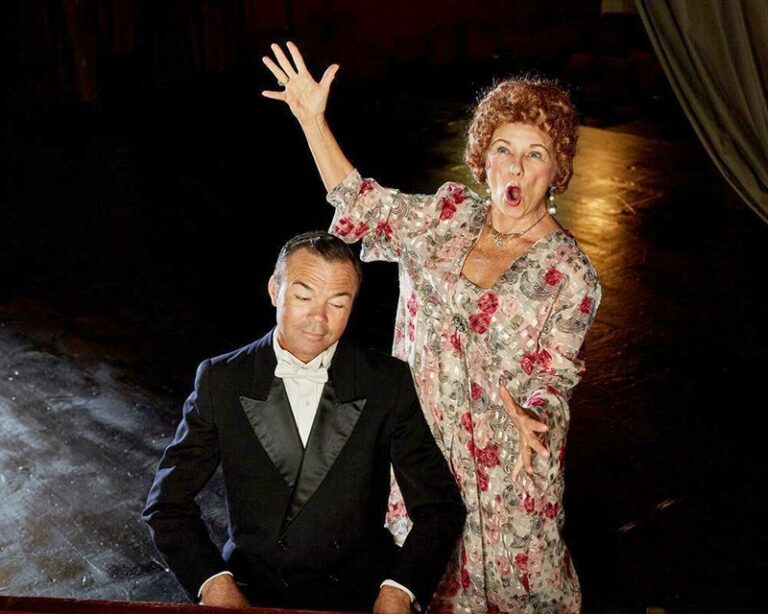
Continuing to make lightning strike over and over, Transcendence Theatre Company kicks off its third season of Broadway Under the Stars with another toe-tapping, soul-pleasing extravaganza designed to lift spirits and raise money for Jack London State Park.

“Oh, What a Night!”—the first of several shows performed outdoors at Jack London and elsewhere—is a collection of inspiring, moving and uproarious songs and dance numbers borrowed from Broadway and the world of pop music.

You’d think by now the novelty might be wearing off. Not a chance.

Under the artistic direction of Amy Miller, the Transcendence people keep making this work, blending top-tier talent, brilliant programming and a sense of polish and enthusiasm that turns each show into something that’s part concert, part dance party, part master class and part old-fashioned tent revival. The spirit of music is definitely present, made both sacred and silly through the infectious way the company brings the musical numbers to life.

Each show is two-dozen tiny moments of pure theater. Characters, brought to life through song, are portrayed by Broadway professionals performing from their souls. And this time there are blasts of colored smoke and a well-timed release of doves to add an extra bit of theatricality.

Highlights include Leslie McDonel’s slinky interpretation of “Summertime” (from Porgy and Bess), Julie Craig and Michael Mahaney’s lovely duet “Say It Somehow” (from The Light in the Piazza) and a pair of stunningly funny songs by Lexy Fridell (“Miss Byrd,” “In My Car”), who teams up later with Stephan Stubbins for a clever condensation of West Side Story, singing all of its songs in six minutes.

Memorably shining a light on Transcendence’s goal to inspire and cheer hearts, David R. Gordon and company deliver an original song, “Best Night Ever.” Written by Amy Miller, Morgan Karr and Daniel Weidlein, the song nicely encapsulates the Broadway Under the Stars experience with a poetic reminder to always find some music in the present moment, and to use that music to make every moment count.

Rating (out of 5): ★★★★★

‘Oh, What a Night’ runs through
July 3 at Jack London State Park. 2400 London Ranch Road,
Glen Ellen. Friday–Sunday.
7:30 p.m. $42–$129. 877.424.1414.
www.broadwayjacklondon.com.

Bedside Manners

Something innocent and sweet survives in Me and Earl and the Dying Girl to balance out a manipulative, conniving streak so effective that Fox Searchlight paid $12 million for the film at the Sundance Film Festival—the biggest buy in the fest’s history.

Me and Earl is never straight up Fault in Our Stars / Love Story backwash, despite the redemption of the troubled hero, the self-loathing, self-described “pasty-faced” protagonist Greg (Thomas Mann). Greg’s mom forces him to hang out with Rachel (Olivia Cooke), a neighbor fighting a losing battle with leukemia. Greg is distracted from his visits of mercy by an annoying crush on the prettiest girl in school (Katherine C. Hughes).

Meanwhile, African-American sidekick Earl (RJ Cyler) follows the sidekick’s ancient path. He coolly endorses the hero’s decisions, right up until the key moment when he, the Sidekick, can reveal the simple, honest emotions that our hero is too complex to understand.

The plot has the traditional young-adult-lit problem of badly delineated actual adults. Greg’s dad (Nick Offerman) and
Mr. McCarthy, Greg’s favorite teacher seem to be the same character. (The latter has tattoos—that’s how you can tell the difference.) It’s a tribute to Molly Shannon’s wry subtleties that she can wring so much emotion out of the one-note role of Rachel’s drunken mom.

The young actors, especially the sweet, sad Cooke don’t overdo it. Mann brings in a tough, selfish streak that took Michael Cera many movies to discover.

Cinematographer Chung-hoon Chung, of the original Oldboy, films the Pittsburgh locations so well that you think you’ve been some place exotic when you leave. The Vertigo references don’t seem in vain when you see the precipitous streets, the noble old Victorian houses and a three-story bookshop with steep, bell-tower-like steps.

‘Me and Earl and the Dying Girl’ is playing at Summerfield Cinemas,
551 Summerfield Road, Santa Rosa. 707.525.8909.

Letters to the Editor: July 1, 2015

Who's Working for Whom? I recently called the Sonoma County Board of Supervisors and asked why they hadn't created Measure A specifically for repaving our awful roads, and was told because it would take a two-thirds majority to pass. When I brought up the notion that the public does not trust them with our money, it was as if I...

Cheese to Please

The North Bay has an embarrassment of riches when it comes to local cheese. All that cow, goat, sheep and even water buffalo milk is great for cheese lovers, but it can be hard for cheese makers to stand out in an increasingly crowded field. Lisa Gottreich, owner of Bohemian Creamery, doesn't have that problem. Not only does her business...

Fat Tire Temple

Bicycles predate paved roads, so in a way, mountain biking has always existed. Yet Marin County is considered the birthplace of the sport, because in the 1970s local riders organized the first mountain bike race on Mt. Tamalpais, the Repack, and designed bikes that would set the path for modern bike design. The four-week-old Marin Museum of Bicycling and Mountain...

Dignity for All

Getting married really wasn't on my list, and I didn't think it needed to be a priority in the LGBT civil rights movement. Neither was the idea of serving my country in wars that didn't seem to make sense and that just wasted more young lives, especially in a country that didn't recognize my rights as a full citizen....

With a Bang!

On Friday, July 3, Analy High School's football field opens up for Sebastopol's Fireworks & Music Festival. Local favorites Frobeck and Sol Horizon bring the noise before the fireworks blast off in this fundraising event hosted by Sebastopol Kiwanis. The festival benefits community clubs and organizations. On Saturday, July 4, Santa Rosa's annual Red, White & Boom! event comes back...

On the Right Trail

The Sonoma County Bicycle Coalition (SCBC) has put the pedal to the metal on a pile of bike-friendly projects around the county. Check out the Santa Rosa–based nonprofit's website (bikesonoma.org), and it's obvious that trail advocacy is high on the priority list. The organization has seen through multiple projects to ease the way for cyclists. The coalition successfully pushed to...

Green Summer

Since opening three years ago, the Green Music Center at Sonoma State University has hosted many compelling concerts in its acoustically immaculate Weill Hall. This weekend, the center kicks of its ambitious Summer Performance Series, with international headliners and legendary performers. The center's new director of programming is Peter Williams. The former artistic director at Yoshi's jazz clubs in San...

Ashland Calling

The recent Supreme Court ruling affirming marriage rights to all couldn’t be better timed. As it happens, the celebration party has already started in Ashland, Ore. And this party’s got the Go-Go’s, or at least a bunch of their songs. Even Shakespeare would be dancing. Two weeks before the historic ruling, the Oregon Shakespeare Festival unveiled Head Over Heels, a joyously...

Starry Eyed

Continuing to make lightning strike over and over, Transcendence Theatre Company kicks off its third season of Broadway Under the Stars with another toe-tapping, soul-pleasing extravaganza designed to lift spirits and raise money for Jack London State Park. "Oh, What a Night!"—the first of several shows performed outdoors at Jack London and elsewhere—is a collection of inspiring, moving and uproarious...

Bedside Manners

Something innocent and sweet survives in Me and Earl and the Dying Girl to balance out a manipulative, conniving streak so effective that Fox Searchlight paid $12 million for the film at the Sundance Film Festival—the biggest buy in the fest's history. Me and Earl is never straight up Fault in Our Stars / Love Story backwash, despite the redemption...
11,084FansLike
4,606FollowersFollow
6,928FollowersFollow