Drive On

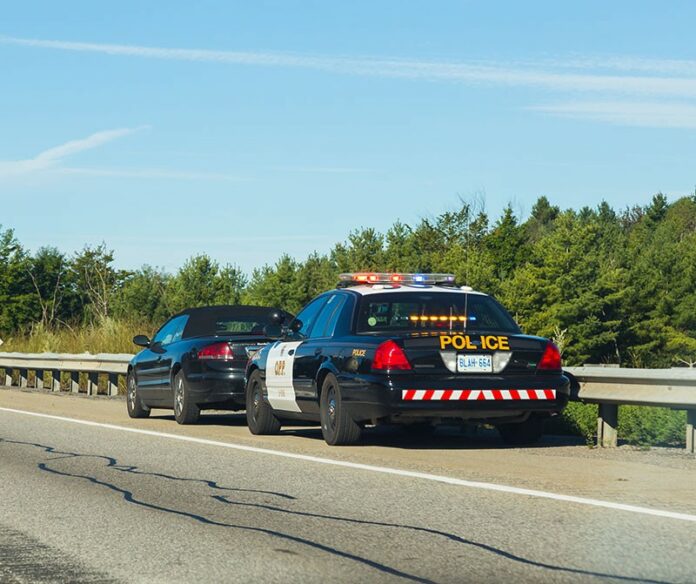
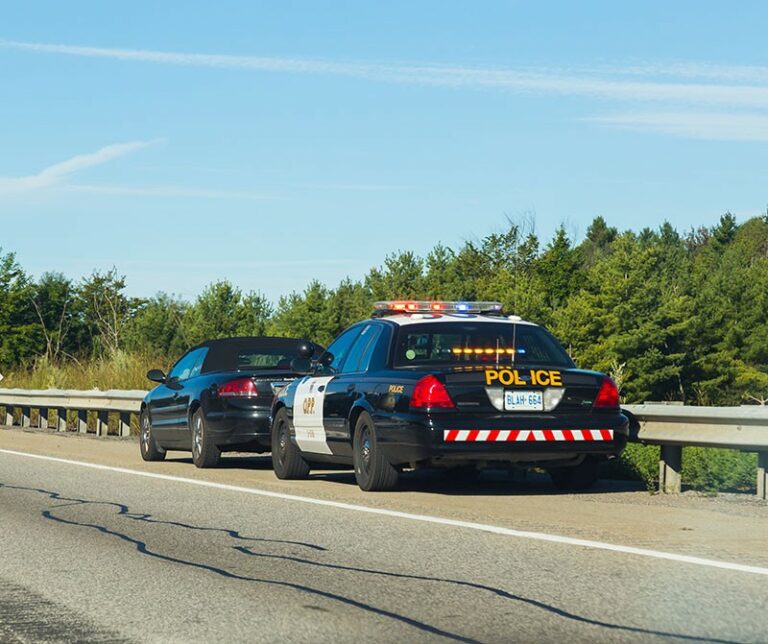
In states where marijuana has been legalized, traffic stops resulting in searches by state police are down dramatically, according to a new analysis from the Marshall Project and the Center for Investigative Reporting.

In states where possession of marijuana is legal, police can no longer assume criminal activity simply because pot is present, which would have given them probable cause to conduct a search. And that means fewer interactions between drivers and police, reducing the prospect of dangerous—or even deadly—clashes.

But even though the number of searches dropped for all racial groups, black and brown drivers are still being subjected to searches at a higher rate than whites, the study found. And because the report only studied state police stops, not stops by local law enforcement, which patrol urban areas with higher minority population concentrations, the report may understate the racial disparity in traffic stop searches.

The report is based on an analysis of data from researchers at Stanford University, who also released a report this week studying some 60 million state patrol stops in 31 states between 2011 and 2015, the most thorough look yet at national traffic stop data. The results from the legal pot states of Colorado and Washington are striking.

In Colorado, the number of traffic stop searches dropped by nearly two-thirds for whites, 58 percent for Hispanics and nearly half for blacks. In Washington, the search rate dropped by about 25 percent for whites and Hispanics, and
34 percent for African Americans.

Still, racial disparities in search rates persisted in both states. In Colorado, the search rate for black drivers was 3.3 times that for whites, and the rate for Hispanic drivers was 2.7 times that for whites. In Washington, blacks were twice as likely to be searched as whites, while the search rate for Hispanics was 1.7 times that of whites.

The data corresponds to marijuana arrests in legal states. In Colorado, for instance, a 2016 Department of Public Safety report found that while the number of pot arrests dropped by nearly half after legalization, the arrest rate for blacks was still nearly three times that of whites.

“Legalizing marijuana is not going to solve racial disparities,” says Mark Silverstein, legal director of the American Civil Liberties Union of Colorado. “We need to do a lot more before we get at that.”

But legalizing marijuana does reduce the number of traffic stop searches, and given the fraught relationship between police and the citizenry, especially communities of color, that is a good thing in itself.

Phillip Smith is editor of the AlterNet Drug Reporter and author of the ‘Drug War Chronicle.’

Letters to the Editor: July 5, 2017

SMART and Dumb

Some things you have to see to believe. For starters, that includes the so-called SMART train at a cost of over half of a billion dollars and projected to run at a deficit. That’s really a “smart” use of tax dollars. Now consider the “dumb”
$10 million park in downtown Santa Rosa. “Dumb” park meet “SMART” train. Uncomfortable benches with no backs. No trees (tore them down). No play area for kids. No restrooms. The downtown denizens won’t get caught dead in this park. Was that the plan? On the other hand you can hear the train whistle, and that must count for something.

Sebastopol

I read Mike Shea’s letter to the editor (June 21) in reference to the pathetic excuse of a supposed “reunification project” of downtown Santa Rosa’s Courthouse Square. I agree with the writer 100 percent. It’s another empty, soulless, unimaginative, cement-filled taxpayer boondoggle disguised and peddled as something other than that. How anyone could laud something as abhorrent as the “new town square” is beyond the pale.

Via Facebook

Book Fare

One hundred and forty-nine dollars for a book (“Pot Rules,” June 21)? Thanks for not helping the people that need it! I can’t help it. I think that’s seriously shameful.

Sebastopol

Resist

I am one of those tribal members (Coos) that opposes this project (“Pipelines and Battlelines,” June 14). The pipeline would go through forests and under the Umpqua, Rogue, Coquille and Coos rivers. It would ultimately be bad for fish and wildlife and impact archaeological sites.

Via Bohemian.com

We all need to wake up and see this project as a real threat. So much environmental, cultural and property damage could be unleashed in the five river crossings if the line ever leaks or breaks! So scary the way this is getting pushed ahead after being rejected twice. Do whatever you can to educate others and fight this thing.

Via Bohemian.com

Stepping Out

Marin also has the Marin Agricultural Land Trust, which offers tours of local farming operations, often followed by hikes on private ranches. Those shorter hikes are more my speed than the few overnight camping trips described here (“The Outback in Our Backyard”, May 17), but I still think TrekSonoma is super-cool.

Via Facebook

Write to us at le*****@******an.com.

Garden of Eatin’

0

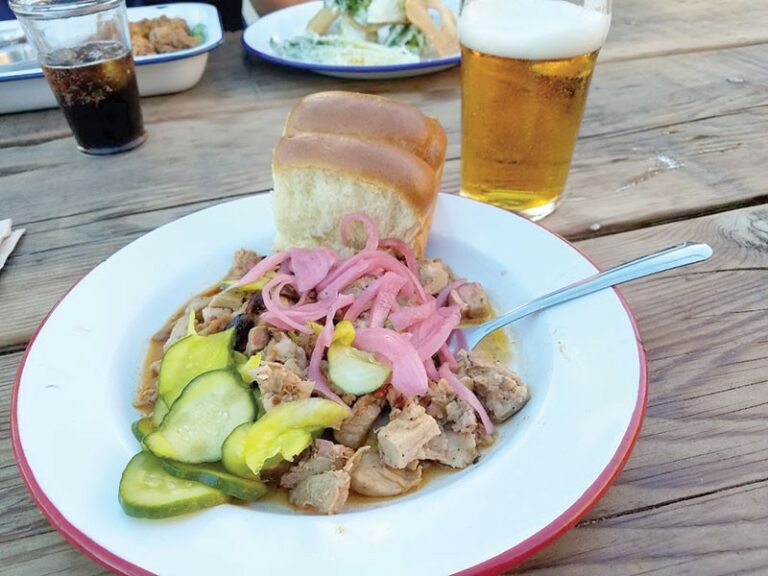
During one of those sweltering days last month, I found myself hungry for dinner but with no desire to make my house hotter by turning on the oven. So I set out to try Brewster’s Beer Garden, a new downtown Petaluma restaurant opened by San Francisco restaurateur Mike Goebel and three other partners—Chris Beerman (executive chef), Ben Hetzel (general manager) and Alfie Turnshek-Goins (bar manager).

As I rounded the corner and walked in the restaurant’s open-air, riverfront entrance, I was greeted by about 300 diners who had exactly the same idea: sit outside, drink some cold beer, eat barbecue and listen to live rock and roll. That’s my idea of a great evening.

The 350-person space is spectacular. While there is some indoor seating, most of the tables are outside on a vast, crushed-granite patio. The old brick and masonry walls of the adjacent building and the metal and woodwork created for the restaurant give it a look and feel that’s at once vintage, industrial and warm.

There’s also a large fire pit, a bocce ball court and a fenced-off playground for kids. On the other side is a stage that hosts a changing lineup of bands. Dogs are welcome, too. The restaurant fairly screams, “Relax, sit down and have a beer!”

Speaking of beers, the rows of bristling taps dispense 30 brands of craft beer from near and far. The list of cocktails and wine is impressive, too.

Beerman (how perfect is that?) has created an enticing menu of classic barbecue (ribs, brisket, pulled pork, chicken) that’s rooted in Deep South traditions but made with impeccably sourced, sustainably raised local meat from the likes of Marin Sun Farms and Stemple Creek Ranch.

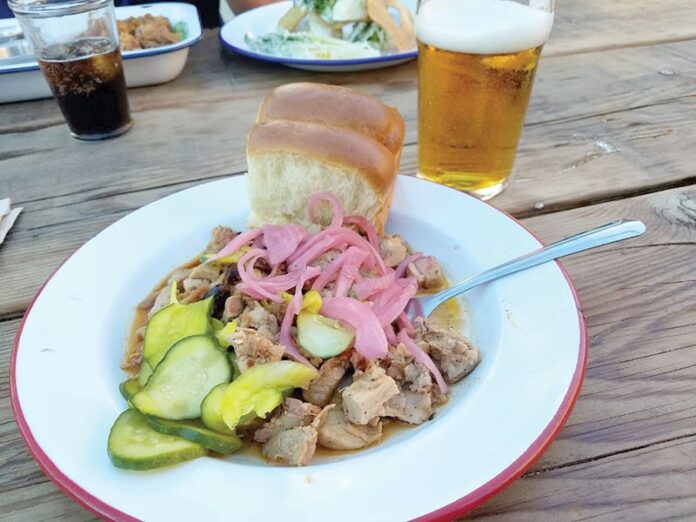
My favorite from the smoker are the St. Louis–style ribs ($24 for a half rack). The beautifully lacquered ribs are smoked over white oak and are meaty and flavorful. The Carolina-style wet-mopped “whole chopped hog” ($14 for half pound) was also good, large chunks of pork shoulder suffused with smoke and a piquant, vinegar-based slather of sauce.

Brisket is my test of a pit master’s art. It’s a tough cut of meat to get right and requires a lot of time in the smoke and heat. The meat was tender and revealed a deep smoke ring, the line of pink in the meat that is a testament to ample time on the barbecue.

Beyond barbecue, there are plenty of other options. The roasted, dry-rubbed carrots served with buttermilk dressing ($8) are a good starter, as is the roasted cauliflower with onions and capers and creamy curry sauce ($11).

My one gripe was the caesar salad ($11). I’m all for reinventing the classics, but they’ve got to be better than the original. Brewster’s makes theirs with Little Gem lettuce hearts and toasted bagel slices, instead of croutons, all tossed in a creamy but bland dressing that had me yearning for garlic, lemon and anchovies.

If you want to sit inside (and I don’t know why you would on a hot summer night), you have to wait to be seated, but the beer garden is self seating. Everybody seems to be in a good mood here. And with the food, drink, music and open-air setting, it’s easy to see why.

Brewster’s Beer Garden, 229 Water St. N., Petaluma. 707.981.8330.

June 30: Heat Wave in San Rafael

0

Like many Marin events this summer, the Marin County Fair is celebrating the 50th anniversary of the Summer of Love with a theme, “Let the Funshine In,” that embraces the music, art and tie-dyed spirit of 1967. In addition to carnival rides and nightly fireworks displays, the fair’s concert lineup is the main attraction, welcoming stars like Ann Wilson of Heart and the Commodores. July 4 features Grateful Dead tribute act Cryptical and the Happy Together Tour, headlined by the Turtles. The fair opens on Friday, June 30, at Marin Fairgrounds, Marin Center, 10 Avenue of the Flags, San Rafael. $15–$20 at the gate. 415.473.6800.

June 30: Texas Soul in Napa

0

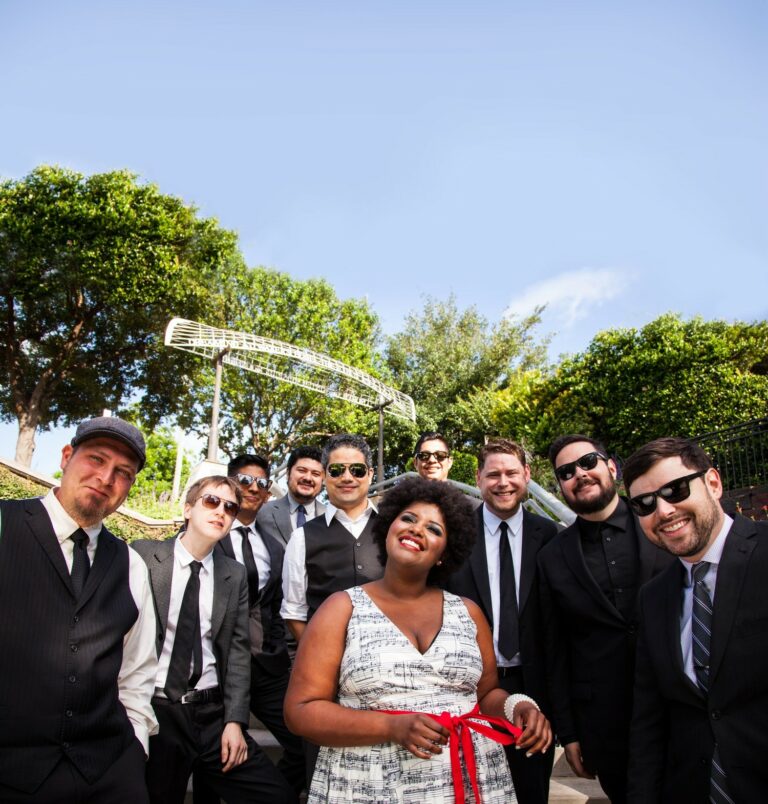
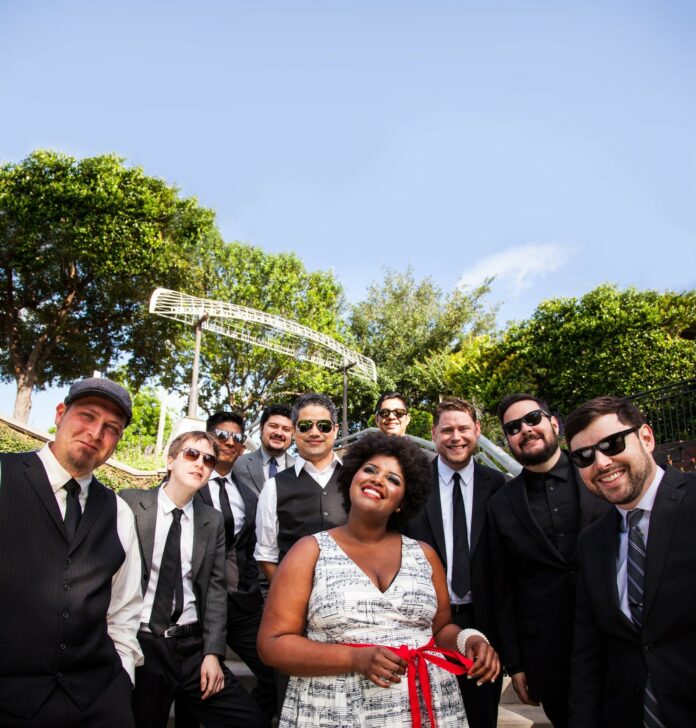
BottleRock Napa Valley may be over, but the festival’s programmers are still bringing top-tier music to Napa throughout the summer with several concerts. This week, BottleRock hosts Houston ensemble the Suffers. Formed in 2011, the 10-piece band is classified as “Gulf Coast Soul,” mixing high-energy jazz with rhythmic grooves and featuring frontwoman Kat Franklin’s larger-than-life stage presence. Since releasing their self-titled debut album last year, the Suffers have been pounding the pavement with a massive U.S. tour. They roll into the North Bay with a surprise guest this week on Friday, June 30, at Silo’s, 530 Main St., Napa. 8pm. $22–$25. 707.251.5833.

July 1: Fresh Air in Santa Rosa

0

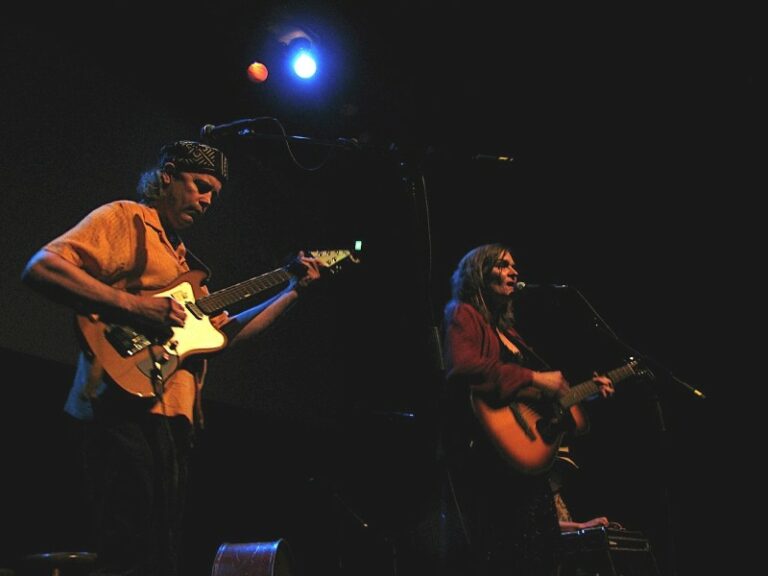
If you’ve been at a North Bay fair, festival, club or coffeehouse any time in the last 25 years, you’ve probably heard married musicians Allegra Broughton and Sam Page perform as Solid Air. As a duo or a full band, Solid Air mix Americana melodies and jazz grooves, and the group’s continuing lyrical message of peace and understanding is more resonant than ever. This week, Solid Air unveil their new album, Beautiful World, recorded at Prairie Sun Studios in Cotati and released on Sonoma County label Jackalope Records, and perform on Saturday, July 1, at the Last Record Store, 1899-A Mendocino Ave., Santa Rosa. 2pm. Free. 707.525.1963.

July 1: Modern Metals in Sonoma

0

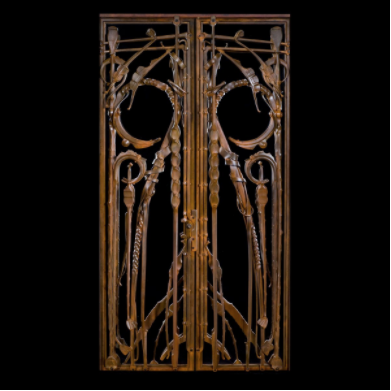
New York metal sculptor Albert Paley is a master metalsmith who constructs massive, intricate and imaginative pieces that speak to man’s relationship to the natural environment. This summer, nine of Paley’s largest works are on display throughout downtown Sonoma, and many more can be seen in the exhibit ‘Albert Paley: Thresholds.’ The extensive installation is Sonoma’s largest public art event, and docents will lead visitors on walking tours in the coming weeks. This weekend, the summer-long show opens with a reception on Saturday, July 1, at Sonoma Plaza (First Street East, Sonoma; 2pm) and the Sonoma Valley Museum of Art, 551 Broadway, Sonoma. 5pm. 707.939.SVMA.

Fictional Facts

0

It’s been building a while, the sense that the novel, far from being exiled indefinitely from the hurly-burly of relevance, was tacking back into the mix, recovered from the fashion consciousness of campus influence and other existential threats, ready to stand and be counted.

Now, as we peer through the lurid gloom of life in the Trump era, it’s clear that journalists and nonfiction writers, chained to the ascendancy of “facts” in an era when fewer and fewer of us really believe in them anymore, cannot compete with the power of a go-for-broke novelist with a light touch, an ear for comedy and human foible, and the sheer stamina and grit to cobble together a great yarn over years of effort.

This is the era of writers like Nathan Hill, whose hit novel

The Nix skewers millennial entitlement, boomer self-importance and everything in between, but above all retrieves the recent past and in so doing reanimates the present and the future. In other words, the book unlocks a gate through which many others can and should surge forth.

If nothing else, the giddy praise Hill has earned—”In my opinion he is the best new writer of fiction in America,” John Irving proclaimed—ought to inspire young writers to ponder his example, and it’s a good one to consider. The best part about Hill is his insistence that his dazzling literary success owes mostly to his having decided on a philosophy of essentially saying “Fuck it!” He opted out of the all-too-common syndrome of worrying too much about what anyone else thinks of your writing. Instead, he went for it and spent 10 years writing a novel mostly for himself, the way one dives into gardening.

The acclaimed novel was one of last year’s most talked-about books, with many critics noting its “Trump-like” Republican presidential candidate Gov. Packer—a character Hill created years before Trump ran for office. And its splashy debut came at a time when fiction was showing signs of a new resurgence; in its overview of 2016 book trends, the Los Angeles Times declared, “Long-form nonfiction is in peril.” The sudden rise of George Orwell’s dystopian classic 1984 to bestseller lists was widely noted, but the Atlantic and the BBC looked deeper into the trend to discover that the Trump era seemed to be elevating sales of other fiction, as well.

Before that, Hill had been living in Queens, toiling away on short stories to land the usual prestige publication credits, when he decided to move to Florida and start fresh. Writers need other writers, but squeeze too many of them into your consciousness and it’s like packing an elevator with too many overdressed men who have hit the man-perfume way too hard. Getting away clearly did wonders for Hill’s talent.

“The stuff I was doing in New York really wasn’t that good,” Hill said in a recent phone conversation, just after he’d returned from a trip to France to promote the roughly 719th foreign edition of his novel. “I was writing for all the wrong reasons. I’d moved to New York with a bunch of people from my MFA program [at UMass Amherst]. I was very careerist, thinking about editors and Paris Review parties and who was getting published where—thinking about everything but the actual writing. I was trying to be popular in New York. I wasn’t writing any particular truth.”

When Hill’s apartment was broken into, his computer was stolen—and along with it, years of writing vanished into thin air, gone as surely as the carbons of early short stories that Ernest Hemingway’s first wife famously lost. With Hill, as with Hemingway and most any other writer, this was surely a good thing. Not until Hill moved to Florida to be near the bassoonist who would become his wife did his work on the novel that became The Nix really open up in a new direction.

“Even more than getting all the stuff stolen, it was that early failure, kind of a global failure—going to New York City but not becoming the writer I thought I was going to become, or really finding any success at all—that led me in a different direction,” he says. “I started to write The Nix for really different reasons. When that kicked in, the writing just opened up.

“I stopped sending stuff out to agents and editors and magazines,” he says. “I stopped giving my work to writing friends who I went to school with.”

Years of feedback from writing classes and groups had been helpful, but for his writing to take off he had to hit the mute button on all that. “There comes a point where you have to do something that’s idiosyncratic, that’s just you,” he says. “You have to tune out all those voices, no matter how well-meaning and helpful they might be.”

Not everyone would feel comfortable building a 625-page novel around a main character, Samuel Andresen-Anderson, who is just sort of there. He’s no hero, no anti-hero, and the main things we know about him are that even into adulthood he lives in constant mortified terror of slipping into a crying jag, which he breaks down into categories like storms; that he teaches, but kind of hates it; and that his mother abandoned him when he was young. Oh, and he’s a writer, or sort of a writer.

Samuel feels like the buddy you have at college without ever knowing why, since you don’t really like each other all that much, but his life opens up to us in a way that makes it impossible not to care. We’re particularly pulled in by his account of twins he knew in his youth: violin-playing Bethany, who will define beauty for Samuel his whole life, and her brother Bishop, pulled prematurely into adulthood in a way that touches Samuel as well. As I wrote in my review of
The Nix for the San Francisco Chronicle last year: “This is a novel about an understanding taking years to unfold.”

“She’d decided that about eighty percent of what you believe about yourself when you’re 20 turns out to be wrong,” a character observes. “The problem is you don’t know what your small true part is until much later.”

Much as Northern California writer Emma Cline used her novel The Girls to breathe new life into our understanding of one aspect of the 1960s—the charismatic allure of a Charles Manson–type figure—Hill uses this story about a son in search of a vanished mother to papier-mâché together a shockingly vivid reimagining of the famous clubbing of protesters by overzealous Chicago police that will always be associated with the 1968 Democratic Convention. Hill slows down time in a way that mesmerizes. He takes a reader used to thinking about shorter attention spans and quietly changes the subject. For the right book, page count doesn’t matter; quality does.

Hill has a secret, and it’s one worth emulating. He likes his characters. He loves his characters. They are all flawed, they all have their sorrows, but even when they’re being hilariously over-the-top awful, he’s smiling to share with us their over-the-top awfulness. There are important lessons here. When one of the Trump sons, looking like a bad-hair outcast from a remake of the cheeseball TV show Dynasty, went on Fox News in early June to share the opinion that, to him, Democrats are “not even people,” the natural first reaction was to snicker at the sheltered cluelessness of this son of a son of privilege, this epic lack of understanding of anything other than his deranged father’s rants.

[page]

But actually, the quote was a rare case of a Trump speaking for many people, not just the tiny sliver of the country that supports this reckless presidency. Eric Trump’s words should make us all think. Too many people of too many viewpoints have been so riled, so addled with pent-up frustration and rage, they too have come to think of others as “not even people,” which is a trend probably as toxic to real democracy as the Supreme Court’s Citizen United decision equating political contributions to free speech.

It does no good to write off whole swaths of the country as rubes, simple and easy to sway, even if the Trump wave did pull along all sorts of people who ought to have known better. It does no good to assume we understand everything about them. Far better to take the crisis afflicting the country and use it as a prod to try anew to understand people from all regions of the country, from all viewpoints, up to and including hate-mongers. The question is: How do we do this? We could use a Studs Terkel, interviewing everyone and panning for gold. But journalism can only make so much headway in this direction. Fiction holds far more potential.

This, I think, is the ultimate thrill of reading Nathan Hill: having the sense of getting to know people we’d thought walled off from us. His baton-swinging cop, for example, is a tour de force, human and sad, so much so that I for one almost felt like I was identifying with him even as he slammed protesters in the head with that baton—well, at least for a moment or two. The point is simply to turn back from the glibness of hate or bias to what we are born knowing, that what unites us is stronger and vaster than that which divides us.

Reading Hill, I’m thinking that some young novelist out there with flash and nerve is going to find a way to build a fictional tunnel from the present to 1969 California, when an actor in the Governor’s Mansion in Sacramento ordered the National Guard into Berkeley to crack down on protesters who wanted to turn a scruffy little vacant lot owned by the state into a People’s Park. James Rector of San Jose, an innocent bystander, was killed in the melee, and the silent majority rallied behind Reagan and his show of force. He rode the tough-guy-on-a-horse image all the way to the White House. But like Chicago 68, it’s all become a cartoon. Only a great novelist can really reclaim that kind of territory for us, as Hill has done in The Nix.

The book was published in hardcover before last November’s election (it’s newly out in paperback), which seems oddly fitting. Post–Trump election, like post 9-11, the fiction writer feels a tidal wave of pressure to try to do something with the flotsam and jetsam of what used to be a culture. It’s overwhelming, which is why if you follow writers’ social media feeds you read much in November and afterward about people who couldn’t get out of bed for days or weeks on end. It was paralyzing.

Hill was in Southern California this spring to receive a Los Angeles Times Book Prize, and in accepting the honor, joked that he was glad to get the award—while California “is still part of the country,” showing he was aware of the fledgling movement to get a secession measure on the California ballot.

“If that gets on the ballot, who knows what happens?” Hill told me on the phone.

The joke was also a kind of homage to fellow novelist Michelle Richmond. Back in 2009, when she was working on the project that would become the novel Golden State, Richmond was going for outlandish but not too outlandish when she sat down to write a scene about Californians going to the polls to vote on seceding from the United States.

Talking to Hill on the phone, I read aloud from what Richmond had told me about the novel: “‘In the book, it’s moved from fringe to reality because a new president wants to spend $12 billion of taxpayer money on a border wall with Mexico.'”

“My God!” Hill cut in good-naturedly, loving it.

“‘He wants a war with Iran, he wants to roll back environmental protections and he’s rolling back reproductive and gay rights,'” I continued, quoting Richmond. “‘When I was writing the book, I thought eventually there will be some sort of vote, but that’s far in the future.'”

“That’s amazing,” Hill said. “The Trump-like character in my book, Gov. Packer, was written similarly a long time ago, eight years ago. I took this kind of baseline Tea Party Republican candidate who seemed to be getting popular, and pushed him to absurdity to see what happens.”

It takes years, generally, to create the world-within-a-world of a novel that comes alive enough for characters to talk on their own, leading the writer more than the other way around. As Hill put it to me: “That takes a long time to get to, to feel that the character is speaking to you, not that you’re turning the wrench.”

There is something transcendently important about that commitment of time and energy, that investment of caring and doing, and it’s potentially an important antidote to the pop-off-in-four-seconds-flat culture in which we find ourselves, led of course by the Popper-Off-in-Chief. More even than the beauty, power and importance of his great novel, I’d point a new reader to the following words as an introduction to Hill and what he stands for:

“I really want to take the time with my own political feeling and political thinking,” he told me on the phone. “I don’t want to make snap judgments. For example, as I write my next book, it’s really tempting to try to deal with the age of Trump, but I don’t think that would make a very good book. It’s too new. I don’t have enough distance from it yet. And frankly, I’m not incredibly confident about my own opinions.

“And I’m shocked at how many are extraordinarily confident in their opinions and extraordinarily sure they are right. I’d rather take my time. I don’t even take to Twitter very often, as you might have seen. I don’t want to become a kind of opinion vending machine. I reserve the right to keep my opinions to myself and think about it for a very, very long time. I’m well aware that at any time I could be wrong.”

All Aboard at Last?

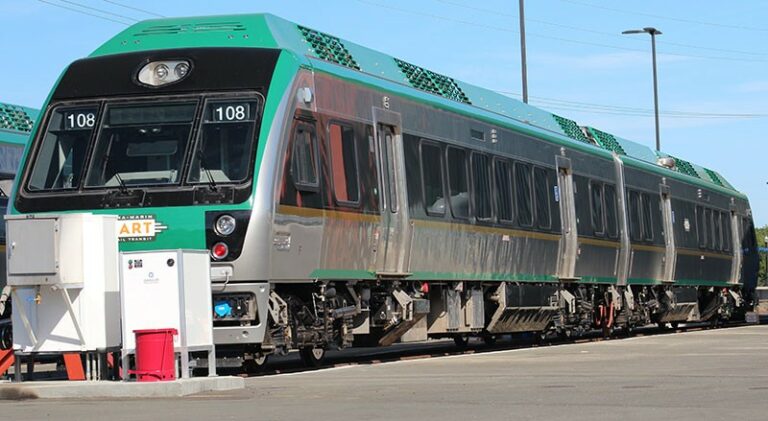
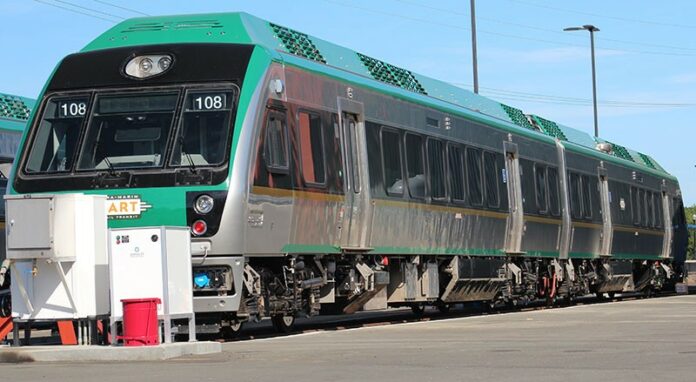
First the Sonoma-Marin Area Rail Transit said service would start last winter. Then this spring. Then early summer. And now? Free rides for everyone! That’s the plan, anyway.

We speak, of course, of the grand opening of the SMART train, which is offering free round-trip rides on June 29, July 1 and July 4. The round-trip rides on the 29th will commence in Rohnert Park (8am, 10am, 2pm and 4pm) and Marin Civic Center in San Rafael (4pm, 6pm and 8pm).

But the upstart commuter train has been beset by numerous delays and false SMART-starts.

The delays have been lamentably frequent as Sonoma and Marin county residents are charged a quarter-cent sales tax to pay for the rail service, yet have been waiting to climb aboard the train.

We get it. Starting a railroad is a complicated process, and there are lots of moving parts and federal approvals, as SMART argues every time there’s another delay.

This time it looks like they really are ready to roll, and the SMART-loving holiday masses will surely descend on the stations for the free rides—we’ll be there too.

We hope the trains rolls on schedule. Once the free grand opening is done and the rail is officially open—that date has not been set—the roundtrip from Santa Rosa to San Rafael will cost you $19.

Letters to the Editor: June 28, 2017

Sounds Fishy

Reading about the good work of Safe Catch (“Can Do,” June 14) bringing us mercury-free tuna was encouraging until I read that the safely caught fish are then shipped all the way to Thailand for cooking and canning. That gives me cause to pause on several levels. That’s a heavy carbon footprint, and what do we know about the working conditions of the Thai preparing your safe tuna?

Sebastopol

Sonoma
Has Spoken

It is time for a legal medicinal cannabis facility in the city of Sonoma. The city council took up this issue on May 20, 2009, when I was mayor. Unfortunately, I took the advice of city attorney Tom Curry and recused myself. The result was a 2–2 vote, and the matter was unresolved. A very big mistake on my part.

Time, the council and voters have changed. The voters of Sonoma passed the concept of medical cannabis by a large majority. The voters have spoken. It is time to place a Sonoma medicinal dispensary on this council’s agenda. I will be in this year’s Fourth of July parade, and I openly ask the public to join us and support us.

Sonoma

Hats Off

On behalf of all who drive over the Laguna de Santa Rosa bridge, just east of Morris Street in Sebastopol: I’d like to thank the guys who worked on its construction. You did a great job replacing a narrow, funky structure with an open, wide, welcoming and even beautiful one. The pedestrian/bicycle sidewalks on both sides were much needed. Thanks to all who labored to build this bridge.

Sebastopol

Pay Up

Wells Fargo directors and the senior executive layer should face criminal indictments. Their dereliction allowed breaches of personal and confidential information. Wells Fargo should have to restate profits and claw-back pay and bonuses to the senior executive layer, as these payments were based on illegal activity. This claw-back should go back as far as the investigation into the bank by the Los Angeles Times. California’s Treasurer, the Consumer Financial ProtectIon Bureau and the Office of the Comptroller of the Currency have taken regulatory steps against Wells Fargo, but the Federal Reserve has done nothing to date, despite its statutory authority.

Santa Rosa

Write to us at le*****@******an.com.

Drive On

In states where marijuana has been legalized, traffic stops resulting in searches by state police are down dramatically, according to a new analysis from the Marshall Project and the Center for Investigative Reporting. In states where possession of marijuana is legal, police can no longer assume criminal activity simply because pot is present, which would have given them probable cause...

Letters to the Editor: July 5, 2017

SMART and Dumb Some things you have to see to believe. For starters, that includes the so-called SMART train at a cost of over half of a billion dollars and projected to run at a deficit. That's really a "smart" use of tax dollars. Now consider the "dumb" $10 million park in downtown Santa Rosa. "Dumb" park meet "SMART" train....

Garden of Eatin’

During one of those sweltering days last month, I found myself hungry for dinner but with no desire to make my house hotter by turning on the oven. So I set out to try Brewster's Beer Garden, a new downtown Petaluma restaurant opened by San Francisco restaurateur Mike Goebel and three other partners—Chris Beerman (executive chef), Ben Hetzel (general...

June 30: Heat Wave in San Rafael

Like many Marin events this summer, the Marin County Fair is celebrating the 50th anniversary of the Summer of Love with a theme, “Let the Funshine In,” that embraces the music, art and tie-dyed spirit of 1967. In addition to carnival rides and nightly fireworks displays, the fair’s concert lineup is the main attraction, welcoming stars like Ann Wilson...

June 30: Texas Soul in Napa

BottleRock Napa Valley may be over, but the festival’s programmers are still bringing top-tier music to Napa throughout the summer with several concerts. This week, BottleRock hosts Houston ensemble the Suffers. Formed in 2011, the 10-piece band is classified as “Gulf Coast Soul,” mixing high-energy jazz with rhythmic grooves and featuring frontwoman Kat Franklin’s larger-than-life stage presence. Since releasing...

July 1: Fresh Air in Santa Rosa

If you’ve been at a North Bay fair, festival, club or coffeehouse any time in the last 25 years, you’ve probably heard married musicians Allegra Broughton and Sam Page perform as Solid Air. As a duo or a full band, Solid Air mix Americana melodies and jazz grooves, and the group’s continuing lyrical message of peace and understanding is...

July 1: Modern Metals in Sonoma

New York metal sculptor Albert Paley is a master metalsmith who constructs massive, intricate and imaginative pieces that speak to man’s relationship to the natural environment. This summer, nine of Paley’s largest works are on display throughout downtown Sonoma, and many more can be seen in the exhibit ‘Albert Paley: Thresholds.’ The extensive installation is Sonoma’s largest public art...

Fictional Facts

It's been building a while, the sense that the novel, far from being exiled indefinitely from the hurly-burly of relevance, was tacking back into the mix, recovered from the fashion consciousness of campus influence and other existential threats, ready to stand and be counted. Now, as we peer through the lurid gloom of life in the Trump era, it's clear...

All Aboard at Last?

First the Sonoma-Marin Area Rail Transit said service would start last winter. Then this spring. Then early summer. And now? Free rides for everyone! That's the plan, anyway. We speak, of course, of the grand opening of the SMART train, which is offering free round-trip rides on June 29, July 1 and July 4. The round-trip rides on the 29th...

Letters to the Editor: June 28, 2017

Sounds Fishy Reading about the good work of Safe Catch ("Can Do," June 14) bringing us mercury-free tuna was encouraging until I read that the safely caught fish are then shipped all the way to Thailand for cooking and canning. That gives me cause to pause on several levels. That's a heavy carbon footprint, and what do we know about...
12,122FansLike
4,933FollowersFollow
6,928FollowersFollow