Out, But Not Down

0

As an increasingly disgraced White House bullies its way from one feckless and embarrassing outrage to the next, LGBTQ+ activists and advocates in the North Bay and across the country are grappling with the same despair that hangs in the air for many Americans.

For the LGBTQ+ communities of the North Bay, advocates already face fallout from Trump’s ramped-up deportation efforts, of special concern in a rural region that lacks the queer-dedicated resources of San Francisco, and where LGBTQ+ noncitizens face a cruel double- or triple-vulnerability—to be young, undocumented and gay.

“I’m not living that experience, but there is already a huge sense of fear, of being LGBT-identified, and then this huge undercurrent of being deported. It creates a whole different dynamic for an individual and a culture,” says Javier Rivera-Rosales, director of Positive Images in Santa Rosa, an advocacy and outreach group that works with LGBTQ+ youth from around Sonoma County. “It jeopardizes stability and rootedness that this is the only thing they know; this is their home.”

Rivera-Rosales highlights the difficulty in out-front advocacy and outreach in the current climate of fear, where some undocumented LGBTQ+’s retreat to isolation or loneliness. Others become empowered and speak out. “People who don’t disclose their status are still speaking out and being that advocate,” Rivera-Rosales says. Even still, he continues, “one of the biggest things I see is that fear component.”

Youth facing deportation are also ensnared in cultural and familial issues. “What is your relation to your family and your friends to your queerness, your gender identity, your sexual orientation?” he asks. “I know folks personally that don’t feel safe in either category.” And even when a Latino LGBTQ+ teen goes to the group where people share their identity, he says those queer spaces “are not always comfortable because there’s not a lot of people of color or people from other backgrounds in Sonoma County.”

That sense of fear is something that Eric Sawyer can speak to as one of the founders of the AIDS Coalition to Unleash Power (ACT-UP) in the 1980s. The lifelong HIV/AIDS and human-rights worker is pessimistic about the state of the union as he tees off in a phone interview from New York about a country that has “actually elected someone who has no qualifications whatsoever to be the [president] of the United States and is bringing with him a cadre of imbeciles and incompetent pilferers. Self-absorbed me-me-me vacuum cleaners trying to dry the world of every natural resource, anything of value to enrich themselves.”

ACT-UP’s media-savvy activism spurred public attention and worldwide action that helped save Sawyer’s life and those of countless others during the height of the AIDS epidemic. He rattles off proposed environmental cuts and giveaways under consideration by the White House, including “the National Park Service, the EPA, the right to drill in the ocean anywhere, in any national park,” as he engages with the present level of frustration he feels and the proper response to it.

Sawyer says the feeling of despair in the air is very much like the early days of ACT-UP as an indifferent and/or homophobic media and political class wrote off the deaths as isolated incidents, while “a plague [was] decimating the gay community and IV drug users and other vulnerable groups.”

The difference between now and then was that during the Reagan era, for all its flaws and faults, the vulnerable and already-trampled weren’t also dealing with “the widespread degradation of American society, the rule of law and our government,” Sawyer adds. “It’s clear that some of these pariahs that are in the White House for whatever reason, really want to collapse society, and I can only suppose it’s so they can rape and pillage it. I don’t understand why there is not revolution in the streets. It’s fucking unbelievable.”

An earlier generation of gay men faced down a flatly homophobic culture as they took the first steps out of the closet. Emmy Award-winning filmmaker John Scagliotti came out of a 1960s anti-war generation that broke numerous social and cultural barriers to pave the way for a nation where, a half century after the 1969 Stonewall riots, gay marriage is now a constitutionally protected right. At least for now. Scagliotti was an activist during a period when life and death for many young people was answered through the question of whether they’d be sent to Vietnam or not. His Before Stonewall is one of several films he made that details LGBTQ+ history in the United States.

Scagliotti says that despite the urgent depravity of the current spectacle underway in Washington, he’s not convinced America is cracking up under the strain of its multiple ailments as he considers whether ACT-UP–style activism—confrontational, media-savvy and unrelenting—is a product of the times.

“I don’t feel we are there yet,” he says. “ACT-UP came out of a real sense of horror. Everyone was dying. And I don’t feel, as much as [the current president] is kind of bad, vulgar and ridiculous and silly, and rounding up Mexicans, but so did Obama—I don’t think people feel it yet. Maybe on climate change, young people might feel that. That’s the closest thing. That’s what ACT-UP is from, so there is a possibility there, the shared sense of existential despair,” he says.

Scagliotti was surprised at the lack of coordinated protests to the deportation regime now underway. “I would have thought that once that they started rounding up Mexicans, it would end,” he says. “That would be that. They would have to stop the next day, because so many people would be out there doing so many things—but nobody stopped the mass deportations.”

Can anyone? And is ACT-UP’s media-savvy, confrontational approach the way to go?

“The most fascinating thing about ACT-UP was its sophistication with the media,” Scagliotti says. “Actions were very thought-out and all based on six, 10, 20 people and a sort of a cell, and no one could tell anyone else what to do. I think this is a much better approach than these boring mass-demonstration protests. Both are important but it would be fascinating to see that kind of activity. You really have to feel it—that existential despair—down to your bones, to understand how ACT-UP worked.”

Ian Stanley is the 38-year-old program director of LGBTQ Connection in Napa, a multi-services outreach group focused on youth advocacy and activism. He cites the paucity of services for Spanish-speaking LGBTQ+ residents as one of several gaps his organization tries to fill in a rural region with many noncitizens and other LGBTQ+ youth. The organization was founded to support young trans-persons, he said, “and especially the youth who are least likely to be connected or to find support.”

Stanley’s organization is expanding into Sonoma Valley and Calistoga in the coming months. “California has a buffer of protection,” he says, “but the rhetoric is creating fear” for young trans people and immigrant communities alike.

“As our program has grown, we have definitely had to pay attention to our role in the community and the approaches we take,” Stanley says. On the question of ACT-UP–style activism, he says he grew up “white and privileged in the North Bay, had a hard time understanding the tactics that were used by other movements because I didn’t know what they did for the community.”

But after studying the history of the LGBTQ+ community and the role ACT-UP played, he now sees “undocumented LGBTs who are really at the forefront and pushing action and change—pushing fair and just immigration reform. They are much more at the forefront. It pushes you to the life-or-death model.”

Eliseo Rivas is a millennial outreach worker at LGBTQ Connection in Napa. He says young activists can’t keep up with the need in a region where “between Sonoma, Solano and Napa, sometimes people will travel to San Francisco to get the services they need.”

Their services and the welcoming environment are needed now more than ever, says Rivas, to confront “the existential dread that may face a young person now, a teenager who is seeing more and more of their rights taken away from them.”


Art of the Source

0

Maria Isabel Lopez comes to the Sonoma County arts scene via an unusual path that has taken her from a Philippines barrio to the red carpet at the Cannes Film Festival. Along the way, the former actress nurtured her love of visual art.

These days, that love of art inspires Lopez to experiment with mosaics and ceramics. She’s spent the last few years in Manila and Sebastopol studying new mosaic techniques. Her work will be on display at Art at the Source’s open studio showing next week. Art at the Source is a free, self-guided tour of some 160 West County artist studios.

Lopez’s art is made up of human-made materials and stones. “It features a lot of quartz, lapis lazuli and chalcopyrite, since I’m fascinated by the color purple and its natural iridescence,” says Lopez. Religious and natural symbols—crucifixes, trees, the yin and yang symbol—are a common element in her work. “My inspiration comes from that higher spiritual source. I am so limited on my own as a human, and my art is a way of giving gratitude.”

Art at the Source runs 10am to 5pm, June 3–4 and 10–11. Lopez’s studio is at 1313 Scheibel Lane in Sebastopol. For
more information, visit artatthesource.org

Hop Along

0

The wealth of IPA brands competing on the beer aisle is no boon to fans of different styles—even a red ale must be a “red IPA” to get a little shelf space. But for this week only, I’ll check my attitude and explore some surprising local variation within the category:

Cloverdale Ale Floyd IPA Fresh hops on the vine meet a grainy, biscuity note, and there’s a juicy, citrus zest to balance the bitter hop finish. All-around classic California IPA from Ruth McGowan’s brew pub. (6.7 percent ABV.)

Third Street Aleworks Bodega Head IPA Although named for the Sonoma Coast’s famed promontory, the aroma and hop profile point to the east: grainy, earthy and complex, this reminds me of a spicy but mellow British IPA like Belhaven’s Twisted Thistle.
(7.1 percent ABV.)

Sonoma Springs Subliminal Gold IPA Ach, even the rare microbrewery that specializes in authentic German-style beer has to pimp an IPA on the market to survive? Doch—this is “subliminal” after all: it’s like a hopped-up version of the brewery’s Kölsch-style ale, with a hop list that includes Hallertau Blanc. If you want to keep up with the IPA-drinking crowd, but really just want a more awesome version of a traditional American beer style with German roots, this is the ticket. (7 percent ABV.)

Fogbelt Del Norte IPA Last time we visited Fogbelt, it was for their freshly harvested, wet-hop aromas. Here, the aroma is more like a fresh bag of hop pellets—it’s pleasant, just different. An amber-tinted classic with rich ale flavor and tangy citrus. (7 percent ABV.)

St. Florian’s Flashover IPA Also losing “India Pale Ale” points for being not so pale, this earthily hopped, malty brew wins them back for balance. (7.3 percent ABV.)

Bear Republic Hop Shovel IPA Promising a shovelful of hops, this light gold, mellow IPA suggests lemon blossoms and ends up in the piney, citrusy camp. (7.5 percent ABV.)

Lagunitas IPA I wanted to include this best-selling, Petaluma-born IPA (6.2 percent ABV) as a baseline of the ultra-piney-hoppy, unabashedly bitter West Coast IPA style—but what happened here? This bottle, from six-pack, has oddly fruity, chewing-gum notes but not much more of interest. Old bottle, or new direction? In any case, I’ll stick with the brewery’s “Onehitter Series” like the latest Waldos Special Ale, with its sweet, resiny Lagunitas hop profile turned up to—well, over 11. At 11.9 percent ABV this is more like a double or triple IPA, and that’s a story for another day.

Letters to the Editor: May 31, 2017

Blame the Gun

Thanks to Peter Byrne, Kathleen Finigan and the Peace and Justice Center of Sonoma County for their elucidating and eloquent letters in response to my letter (“Let It Rest,” May 10).

I agree with the Peace and Justice Center that the tilting scales of justice should be heard at the highest court level. I agree with Kathleen and Judge Smith that Sgt. Gelhaus does not have a license to kill teenagers within three seconds. Contrary to Peter, I think Erick is quite a guy for shouldering the awesome burden of this tragedy for our community.

Peter presaged the Bohemian’s Hot Summer Guide with aggressive language like “blasting,” “criminally,” “killer” (I’m one too, but called a “hero” for killing Iraqis in 1991), “splattering . . . automatic gunfire”. Peter concludes that all “white” (Erick’s skin, like mine, is actually closer to pink) cops want to shoot all “colored” children, and county officials value this skill over children’s lives. Absurd!

Peter, there is no way to nonaggressively carry a toy gun. Is there such a thing as a toy gun? Like candy cigarettes? What kind of community allows children on city streets with toy guns?

Peter and Kathleen’s ad hominem attacks are disappointing, but point to the way language and Goebbels’ Big Lie work to confuse the public. Machiavellian indeed. The refusal of both to use my name (they reference the “writer,” “author,” “this gentleman”) implies they fear the American bogeyman of “the Other.” Like the president fears immigrants. Surprising if Peter or Kathleen have ever carried a weapon for a living or to protect their community. That’s OK; there are people like Erick to do so for them.

Sheriff Freitas vows not to work with ICE at the street level. I support that. I support the Peace and Justice Center’s position on the excessive use of force by all deputies and the corroding influence of Sonoma County’s ubiquitous wineries and breweries. My perspective on culpability is neither skewed, nor do I blame Andy or his parents, though I wonder who let him out of the house with that toy gun. Sonoma County’s Sheriff’s Office may have a “serious problem.” Perhaps the Peace and Justice Center would support me if I ran for sheriff? Finally, I agree with people who believe this case has been ground into fine bits. Time to let Andy, Erick and Sonoma County rest.

Guerneville

Wicked Witch

Donald Trump is a witch. He practices magic, especially black magic, and casts spells over his followers. Even though Trump gave highly classified information to the Russians, advocates the imprisonment of journalists, grabs pussies, disparages the handicapped, obstructs justice with the firing of ex-FBI director James Comey, his supporters are more passionately pro-Trump than ever before.

The only explanation is witchcraft. Recently, I spoke to a Trump supporter, and she explained that she loves Trump because he is a champion of the working class. I said: “Look at what he does, not what he says.” I explained, by way of example, that his healthcare plan would throw 24 million Americans off their healthcare. She just stared at me blankly. The information did not register.

Yes, Donald Trump is a witch, and his followers are delusional.

Kentfield

Write to us at le*****@******an.com.

The Killing of Branch Wroth

0

On May 12, the son of my good friends, Marni and Chris Wroth, was killed by Rohnert Park police.

Branch Wroth was in distress. Instead of being helped, he was killed. Despite the instructions of the Taser manufacturer, that people who exhibit “extreme agitation” or “violent irrational behavior” may be “at an increased risk of sudden death,” Branch was Tasered. Eight and a half years ago, Rohnert Park police killed Guy Fernandez for the same reasons, the same way.

Recently, on the street a few doors from my house in Santa Rosa, a man started screaming. He was clearly having a mental break. The Santa Rosa police and an ambulance showed up. The police and EMTs spoke with him very gently, very calmly. It went on for a long time. He even ripped boards from a neighbor’s fence trying to escape. They stayed calm. They never hurt him. He was still screaming as they closed the ambulance doors, but nobody was harmed.

It can be done. We must demand this of law-enforcement agencies.

The Wroths were never allowed to see their son before his cremation. An independent coroner was denied. The sheriff’s office, which freely uses excessive force, will investigate. Everything about this highlights the inhumanity of this system.

We take lives so easily in this country and make every excuse for it. Too many people accept this. We have always thought that earlier forms of punishment—cutting off hands for stealing a loaf of bread, hanging for minor infractions—were barbaric. But they continue to this day, as police are exonerated for killing unarmed people who have committed no crime or crimes equivalent to stealing bread. And instead of paying for a front row seat to the hanging, we can watch on our cell phones. That too many Rohnert Park residents do not seem to object does not make it right.

In its May 2000 report, 17 years ago (!), the California Advisory Committee to the U.S. Commission on Civil Rights called for the immediate creation of a civilian review board in Rohnert Park. Seventeen years of arrogance and inaction on the part of that city have followed.

The Wroth family’s hearts are breaking. It did not need to be this way.

Susan Lamont is a member of the Police Brutality Coalition Sonoma County.

To have your topical essay of 350 words considered for publication, write op*****@******an.com.

Slow Roll

In the euphoric aftermath of marijuana-legalization victories in California, Maine, Massachusetts and Nevada last November, the marijuana blogosphere was alive with predictions about which states would be next to free the weed.

But unlike the first eight states, which all legalized it via the initiative and referendum process, for legalization to win this year it would have to be through state legislatures. Yet here we are, nearing the halfway point of 2017, and we’re not seeing it. And we’re unlikely to see it for the rest of this year. The states that had the best shots are seeing their legislative sessions end without bills being passed, and while bills are alive in a couple of states—Delaware and New Jersey—they’re not likely to pass this year either.

To be fair, we have seen significant progress in state legislatures. More legalization bills have been filed than ever before, and in some states, they are advancing like never before. In Vermont, a bill actually got through the legislature, only to fall victim to the governor’s veto pen. Actually getting a legalization bill past both houses of a legislature and a governor has yet to happen.

And while there is rising popular clamor—buoyed by favorable opinion polls—for state legislatures to end pot prohibition, the advocacy group most deeply involved in state-level legalization efforts, the Marijuana Policy Project (MPP), understands the difficulties and intricacies of working at the statehouse. The MPP has worked hard but made no promises for victory this year, instead saying it is committed to “ending prohibition in eight more states by 2019.”

That MPP list doesn’t include initiative states, of which we could see a handful next year. The MPP is already involved in Michigan, where legalization is polling above 50 percent, and first-stage initiative campaigns are underway in Arizona, Arkansas, Missouri and the Dakotas. It would be disappointing for reform advocates if they had to wait until November 2018 to win another legalization victory through popular vote, and given the progress made in statehouses this year, they hope they won’t have to. Still, legalization at the state house is proving a tough row to hoe.

For reform advocates, it’s a case of the glass half full. “This is still a historic time,” says Justin Strekal, political director for the National Organization for the Reform of Marijuana Laws. “We’ve had great victories in the past 10 years, but they’ve all been through the initiative process. Now, with the polls continuing to show majorities favoring outright legalization, legislators are feeling more emboldened to represent their constituents, but it won’t happen overnight.”

Phillip Smith is editor of the AlterNet Drug Reporter and author of the ‘Drug War Chronicle.’

High Toned

0

Tenor saxophonist Jimmy Heath has been to California before. He’s been playing in the state since 1949, and comes to the Healdsburg Jazz festival with the Heath Brothers for the festival that runs June 2–11.

The latest iteration of the Heath Brothers features Jimmy and his brother and drummer Albert “Tootie” Heath, pianist Jeff Patton and bassist David Wong, who replaced the late Percy Heath who died in 2005. Percy was the eldest of the three brothers who comprised the core of the original legendary Heath Brothers lineup of the 1970s.

Jazz festival attendees can expect originals and Broadway standards from the band, “so people can hear something that they remember,” says Jimmy by phone from Loganville, Ga.

Heath is a retired music professor who taught at Queens College in New York City and went on to hire his former student. The elder of jazz has a sharp and witty professor’s tone when he laments some of the more modern music he hears. “They call it ‘new music,’ and some of it leaves a little to be desired,” he says with a laugh. “There’s no melody, there’s no harmony—it’s got words and a beat, and they call that music!”

Jimmy’s a true jazz ambassador with more than 130 compositions to his name, which have been recorded by the likes of Miles Davis, Dexter Gordon, Dizzy Gillespie and Ray Charles.

He still teaches master jazz classes around the world and performs with orchestras. And he’s part of an ever-evolving American jazz history where “there has always been people who are trying to find something different, avant garde or whatever you want to call it,” he says.

That’s the classic tension in jazz, between melody and spontaneity, and “sometimes you leave the public behind when you go too far out—people want a melody that they can hold on to and remember. You have to find a medium position, a middle ground—that’s me. I’m going to take a little chance musically here and there, but basically I’m a human being playing for human beings, and I’m not going to run them out of the place.”

The Heath Brothers address issues of social inequality and discrimination in their music. Jimmy recalls a North Carolina Jim Crow childhood that offered education that was separate but by no means equal, where white kids could graduate after the 12th grade but where available education for blacks ended after the 11th. “We’ve been through this kind of thing before,” he says.

But enough politics. There’s a stellar week of jazz coming up, and the Heath Brothers are holding down the multicultural fort, where the only tone that matters is a musical one. The band’s got a bassist who is Jewish and Chinese, and a white guy on piano “who is like another Heath Brother,” Jimmy says. “This is the world I love—people who are together as one.”

C Change

0

Santa Rosa vice mayor Jack Tibbetts says he struggled over Measure C, the June 6 ballot measure that could enact rent stabilization on some Santa Rosa properties while also creating a just-cause eviction policy for landlords.

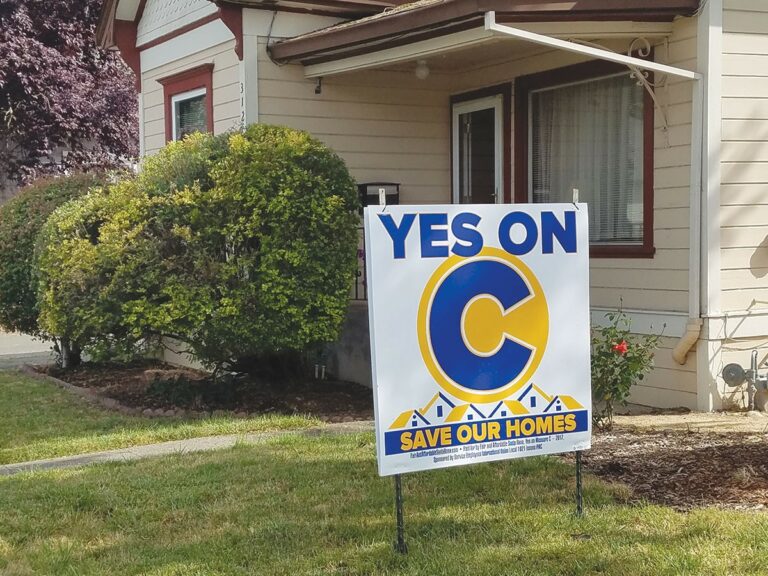
The lawn signs announcing the upcoming vote are everywhere; they are huge, and in some parts of town it’s practically neighbor-to-neighbor competition for the biggest sign on the block: Yes
on C! No on C!

The gist of opponents’ mailers showing up in Santa Rosans’ mailboxes in recent days, paid for by a consortium of realtors and a local pushback campaign whose major funders come from the real estate industry, is that Measure C won’t do anything to help with the city’s chronic problem with homelessness and the related shortage of affordable housing. But Measure C doesn’t set out to do either of those things, even if they’re a huge priority for Santa Rosa voters on either side of the Measure C question.

Mailers pushing opposition to Measure C are rife with photos and testimonials from young, elderly, Latino, fixed-income and homeless Santa Rosans, all saying they won’t support Measure C because it won’t do anything for their particular housing problem. Those people aren’t paying for the mailers, which were funded by Citizens for Fair & Equitable Housing (created by local opponents to Measure C), rental housing providers and Real Estate Professionals Opposing Measure C.

Opponents highlight that Measure C only applies to citizens living in some apartments built before 1995. “Anyone living in a single-family home, condominium, duplex, owner-occupied triplex or an apartment built after 1995 is not covered by the city’s ordinance.” It’s an odd position to take for an effort driven by real estate interests. In effect the messages seems to be: We don’t support rent stabilization in the first place, and even if we did, this ordinance wouldn’t be of any use to most Santa Rosans.

According to the mailers, “major funding” for the “No on C” effort came from the statewide California Association of Realtors Issues Mobilization PAC and Woodmont Real Estate Services, a big property-management firm with offices in Sacramento, Belmont and Santa Rosa.

Tibbetts is supporting Measure C because of what it sets out to accomplish. “At its most fundamental level,” he says, “Measure C will provide price predictability” for people currently living in housing that is affordable by design and built before 1995.

That’s about 20 percent of all housing in Santa Rosa, leaving most rental properties free of any rent-control restrictions in a county where the average rents are among the highest in the country. Opponents argue that enacting rent control on 20 percent of properties could serve to raise the rent on everyone else.

If it passes, all landlords in town will be impacted by just-cause eviction language, which forbids them from booting tenants so they can, for example, raise the rent for the next tenant. Opponents to the just-cause eviction include former Santa Rosa police chief and current Santa Rosa City councilman Tom Schwedhelm, who says the new rules will make it harder for landlords to evict criminals.

Tibbetts is supporting
Measure C despite what he calls his “internal struggle” over the bill, and his acknowledgement that the measure could create unintended consequences, which he recently laid out in an op-ed in the Press Democrat co-written with Santa Rosa school board member Jenni Klose. The Santa Rosa City Council is split, with John Sawyer, Schwedhelm and Ernesto Olivares in opposition, and Julie Combs, Mayor Chris Coursey and Tibbetts supporting the ordinance.

Tibbetts’ concerns track generally with a 2016 report from the California Legislative Analyst’s Office (LAO) that opponents to the measure have been sending around. The mailer says that the LAO report, “Perspectives on Helping Low-Income Californians Afford Housing,” found that policies like Measure C “are not sound solutions to our housing crisis.” The LAO report said that “facilitating more private housing development in the state’s coastal urban communities would help make housing more affordable for low-income Californians” which, let’s face it, is music to the ears of developers who often characterize the problem of affordable housing as lack of supply.

“Existing affordable-housing programs assist only a small proportion of low-income Californians,” the LAO report continued. “Most low-income Californians receive little or no assistance. Expanding affordable housing programs to help these households likely would be extremely challenging and prohibitively expensive.”

Measure C doesn’t expand affordable housing, but it does compel landlords to provide relocation assistance for tenants when they are repairing a unit, which in his op-ed Tibbetts acknowledged created a “financial barrier to properly maintaining, rehabilitating and remodeling depressed properties.”

Tibbetts also called for the creation of a risk-mitigation pool for landlords who might be wary of accepting tenants with bad credit or with Section 8 vouchers. He notes that Measure C has a sunset clause based on “time rather than a vacancy rate,” where the city council could adjust the ordinance if the vacancy rate was 5 percent over the course of a year.

The city is looking to construct more affordable housing in the future, Tibbetts says, but that’s not for a couple of years, and in the meanwhile, Measure C “can be a bridge to get us there.”

And the city is cranking up efforts to confront its homelessness problem as residents highlight their growing concern. On May 24, Santa Rosa launched the first of several community forums to tackle the problem. Santa Rosa voters routinely cite homelessness and affordable housing, Tibbetts says, as the top two issues of importance to them.

Wired to Wow

0

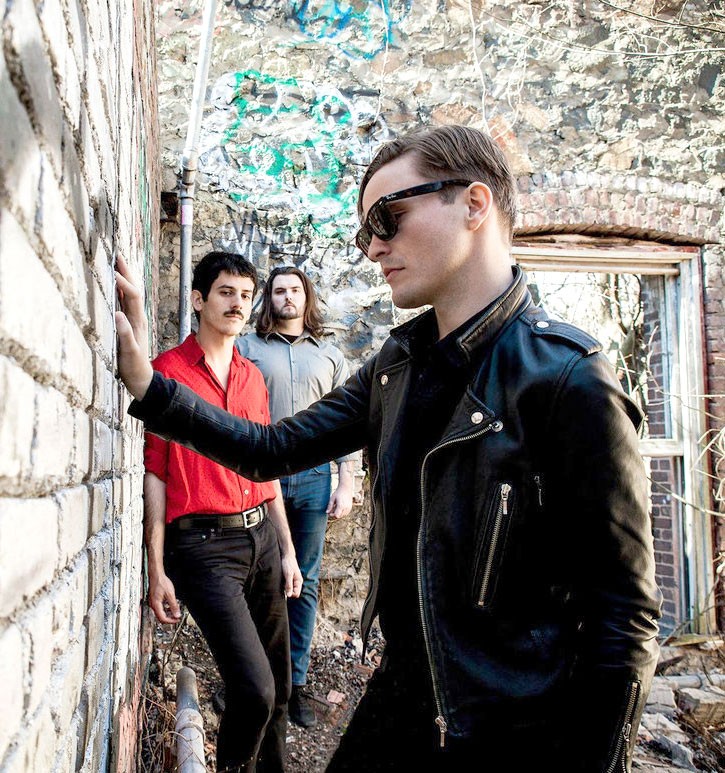
Florida’s premiere new wave misanthropes Merchandise make the most of their post-punk bedlam on the band’s latest album, A Corpse Wired for Sound. Shimmering guitars, dour vocals, electronic drum beats and a psychedelic synthesizer all combine for a sound that melts expectations and swirls with seductive sonic intensity.

Currently touring the United States with Brooklyn rockers B Boys, Merchandise’s Dave Vassalotti (guitar, electronics) talks about the band’s roots, style and favorite thing to buy at concerts.

Bohemian: You guys formed in Tampa. What’s the scene there like and how do you fit in?

Tampa has a strong history of what I guess could be called “extreme music”—death metal, thrash, punk, hardcore. That’s the stuff we all grew up on and what got us into playing in bands. As time passes, I personally feel more disconnected from any sort of scene. I’m on the fringes these days. Most people think we’re a British band anyway . . .

You’ve been through several lineup and style changes since forming in 2008, how did you approach the new album?

We tried the “full band” thing for the previous LP, After the End, and while it did work well in some aspects, it wasn’t as natural for us as we had expected. The new LP was cut in a similar fashion to how we did the old records—just lots of work on building the songs in the studio with little regard for how to play them live. Less cooks in the kitchen. It’s a better way to work!

Do you guys feel locked in sonically now? Or does the band continue to experiment?

We’ve always tried to fight being locked in to any particular sound, but it can be hard. We still have a lot of the new wave “Y’all sound like the Smiths” thing going on, even though we try actively to avoid it. We’ve been working with a new drummer who has tons of great and diverse creative input, so whatever we end up doing next may end up being drastically different. We want to move away from “songs” in the traditional sense, but not in a knee-jerk reactionary way. It should all come from a natural development and evolution. We’re taking things slow.

When you go to a concert, what’s your favorite type of merchandise to buy from a band?

LPs, duh! If there’s a book, maybe that too, but I’m foremost a record guy.

Merchandise hit the North Bay with B Boys, Marbled Eye and the Down House on Monday, June 5 at Arlene Francis Center, 99 Sixth St., Santa Rosa. 7pm. $10–$12. 707.528.3009.

Whale Tale

0

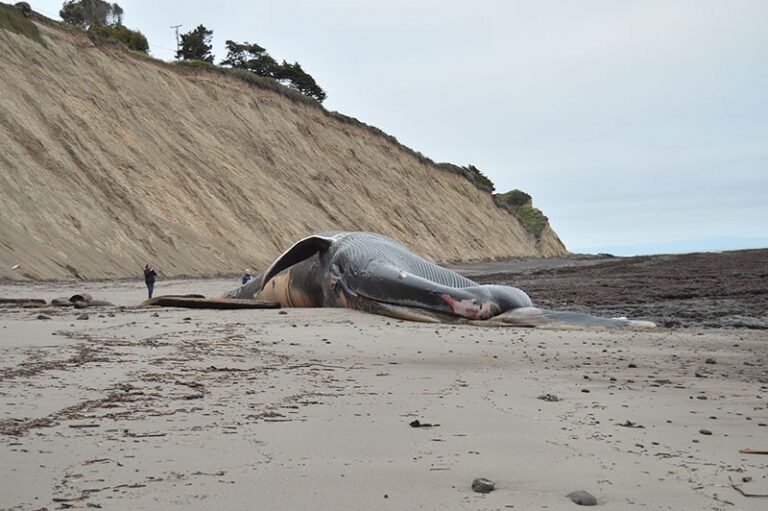
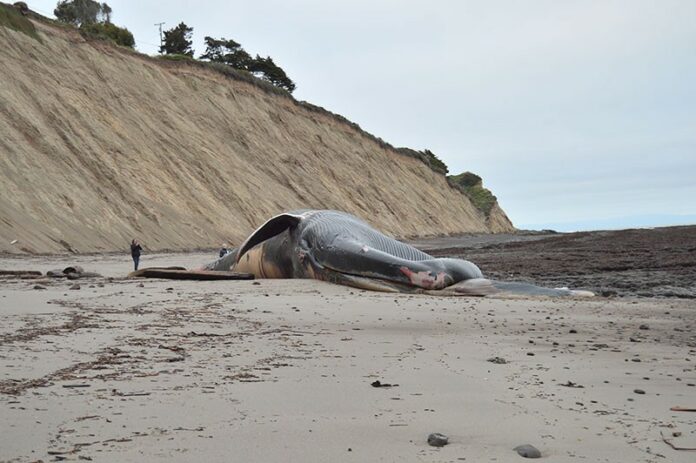
The big news of Memorial Day weekend was the whale, a 79-foot endangered female blue whale that got hit by a ship and washed up on a Bolinas beach and died. A sad and awesome scene played out at the beach through the holiday as visitors and scientists came to take their piece of the majestic animal. On Saturday morning at dawn the whale was still intact, sans its eyes which had been removed by scientists the day before—word on the whale-watch street is it is very rare luck indeed to get the eyes of a dead whale before scavengers peck them out.

“I thought it was a metal sculpture,” said a woman on the beach. There were rust-brown circles on the mammoth’s body that did lend it an ancient, sculptural look.The whale was about 20 and birthed a couple calves along the way. There are about 2,800 blue whales off of San Francisco, out of an estimated worldwide population of between 10,000 and 25,000.

To describe the aroma coming off the whale is somewhat difficult without stink-shaming the poor departed beast, a powerful, sour smell that endured in the nostril for hours. The blue whale is the largest animal to ever have roamed the earth. The leviathan is lodged in a curving corner of Agate Beach County Park that’s too rocky for any craft to get in there and tow it out to sea, and the beach is too rocky to bury the whale.

Out, But Not Down

As an increasingly disgraced White House bullies its way from one feckless and embarrassing outrage to the next, LGBTQ+ activists and advocates in the North Bay and across the country are grappling with the same despair that hangs in the air for many Americans. For the LGBTQ+ communities of the North Bay, advocates already face fallout from Trump's ramped-up deportation...

Art of the Source

Maria Isabel Lopez comes to the Sonoma County arts scene via an unusual path that has taken her from a Philippines barrio to the red carpet at the Cannes Film Festival. Along the way, the former actress nurtured her love of visual art. These days, that love of art inspires Lopez to experiment with mosaics and ceramics. She's spent the...

Hop Along

The wealth of IPA brands competing on the beer aisle is no boon to fans of different styles—even a red ale must be a "red IPA" to get a little shelf space. But for this week only, I'll check my attitude and explore some surprising local variation within the category: Cloverdale Ale Floyd IPA Fresh hops on the vine meet...

Letters to the Editor: May 31, 2017

Blame the Gun Thanks to Peter Byrne, Kathleen Finigan and the Peace and Justice Center of Sonoma County for their elucidating and eloquent letters in response to my letter ("Let It Rest," May 10). I agree with the Peace and Justice Center that the tilting scales of justice should be heard at the highest court level. I agree with Kathleen and...

The Killing of Branch Wroth

On May 12, the son of my good friends, Marni and Chris Wroth, was killed by Rohnert Park police. Branch Wroth was in distress. Instead of being helped, he was killed. Despite the instructions of the Taser manufacturer, that people who exhibit "extreme agitation" or "violent irrational behavior" may be "at an increased risk of sudden death," Branch was Tasered....

Slow Roll

In the euphoric aftermath of marijuana-legalization victories in California, Maine, Massachusetts and Nevada last November, the marijuana blogosphere was alive with predictions about which states would be next to free the weed. But unlike the first eight states, which all legalized it via the initiative and referendum process, for legalization to win this year it would have to be through...

High Toned

Tenor saxophonist Jimmy Heath has been to California before. He's been playing in the state since 1949, and comes to the Healdsburg Jazz festival with the Heath Brothers for the festival that runs June 2–11. The latest iteration of the Heath Brothers features Jimmy and his brother and drummer Albert "Tootie" Heath, pianist Jeff Patton and bassist David Wong, who...

C Change

Santa Rosa vice mayor Jack Tibbetts says he struggled over Measure C, the June 6 ballot measure that could enact rent stabilization on some Santa Rosa properties while also creating a just-cause eviction policy for landlords. The lawn signs announcing the upcoming vote are everywhere; they are huge, and in some parts of town it's practically neighbor-to-neighbor competition for the...

Wired to Wow

Florida's premiere new wave misanthropes Merchandise make the most of their post-punk bedlam on the band's latest album, A Corpse Wired for Sound. Shimmering guitars, dour vocals, electronic drum beats and a psychedelic synthesizer all combine for a sound that melts expectations and swirls with seductive sonic intensity. Currently touring the United States with Brooklyn rockers B Boys, Merchandise's Dave...

Whale Tale

The big news of Memorial Day weekend was the whale, a 79-foot endangered female blue whale that got hit by a ship and washed up on a Bolinas beach and died. A sad and awesome scene played out at the beach through the holiday as visitors and scientists came to take their piece of the majestic animal. On Saturday...
11,084FansLike
4,606FollowersFollow
6,928FollowersFollow