Artifact Art

0

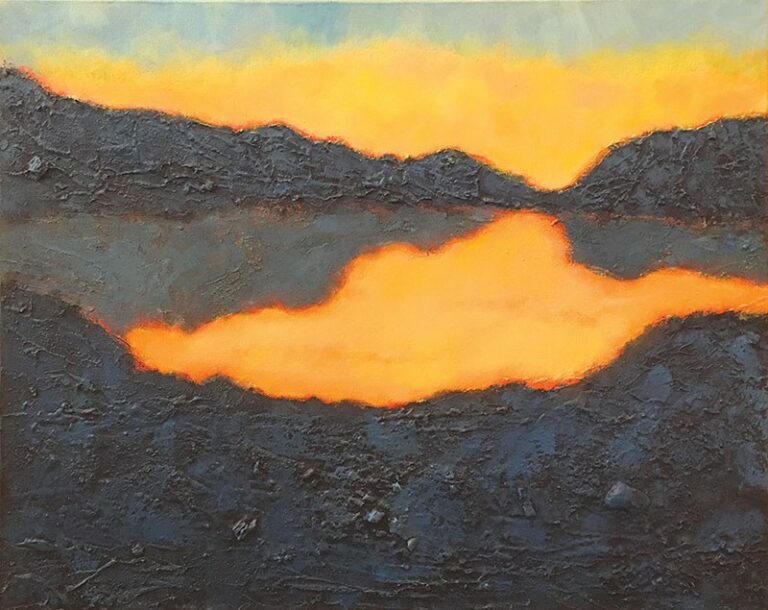
Mosaic artist and longtime Napa resident Kristina Young was already three years into her massive art project memorializing items lost in Napa’s 2014 earthquake when disaster struck again in the form of the Atlas Peak and Tubbs wildfires.

The Napa Quake Mosaic began as a planned community art piece made up of objects damaged and destroyed in the Aug. 24, 2014, quake. “Each person had a story about the object they would bring in,” says Young. “They all had nostalgic, sentimental meanings to the people.”

Whether it was part of their mother’s wedding china or their child’s kindergarten macaroni jewelry, the objects and their stories painted a portrait of a community reeling, but also healing, from tragedy.

“The idea of the mosaic is that, after it’s completed, you can go and sit in reflection,” Young says. “You can find your object that you contributed and think about what home means, what the objects in our lives mean to us.”

Still in the planning stages, the mosaic found a site within the developing Rail Arts district in downtown Napa, and Young is coordinating with the Napa Valley Wine Train to donate a railcar upon which the mosaic will be assembled. Young also designed the piece, which uses the objects to represent layers of earthly sediment and an outward radiating seismic disruption. Currently fundraising for the project, Young has received grants from the Napa Valley Art Council, Mentis and other groups.

“I was literally about to go out in the community to do some kind of crowdfunding program when the fires hit,” she says. “At first, I thought, ‘I don’t even know if [the mosaic] is relevant anymore,’ because the fires impacted so many more people and were so much larger of a disaster than the earthquake.”

Young decided she would broaden the mosaic’s scope and add objects found in the wildfires’ aftermath.

“This is very in line with what the original concept of the project was,” says Young. “It’s documenting the process of healing after a trauma. Whether it’s an earthquake or fire or any other natural disaster, the healing process is an important one.”

Young is reaching out to those affected by the fires in Napa County and asking for any objects they may want to donate to the mosaic. She has already received objects from several artists who lost their studios in the fire, among them, Napa photographer Norma Quintana.

Calistoga-based landscape painter Karen Lynn Ingalls, who lost her barn studio in the Tubbs fire, will also be contributing some of her recovered items.

“These objects are important to people’s lives; they can’t keep them, but they can’t throw them away either,” Young says.

Family Jewel

The family-owned cannabis farm has taken a back seat in Northern California as corporations gobble up more resources. And yet parents and their children continue to plant, cultivate and harvest.

Probably no father-daughter team does more in the cannabis world, and does it with more panache, than Tim, 60, and Taylor Blake, 33.

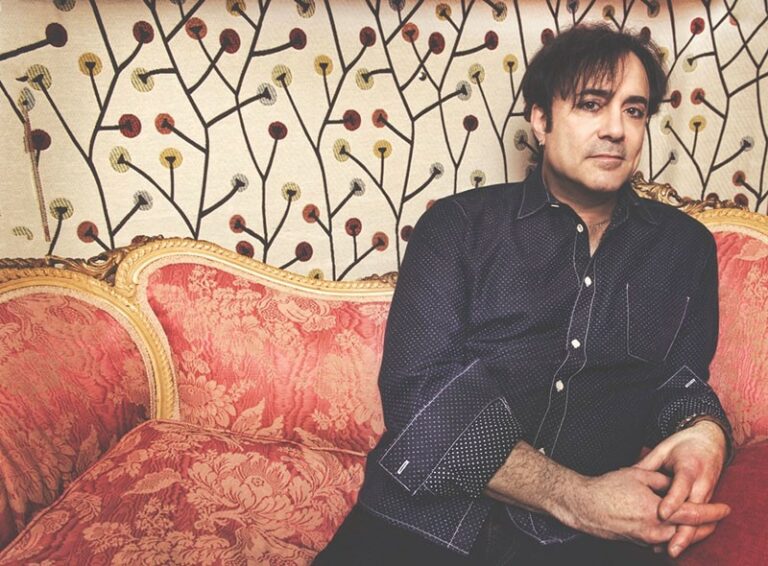
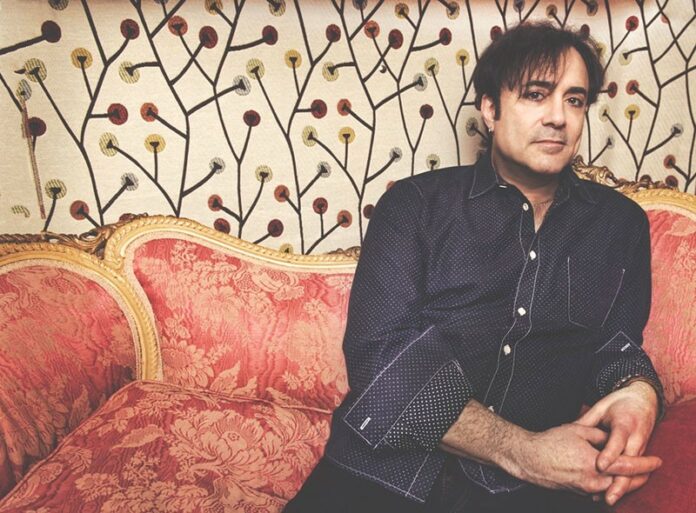
This year the Emerald Cup that Tim (pictured) founded in 2003 takes place Dec. 9–10 in Santa Rosa. Bigger and perhaps better than ever before, the focus is on regenerative, ecologically minded farming.

At the first Cup, Taylor was 19, an observer rather than a participant. This year, as women have become more prominent in the industry, she has selected speakers, assembled panels and picked judges who will smoke and eat a wide variety of cannabis products and then rate them.

“It’s hard to select judges,” Taylor says. “We pick people who smoke regularly, know a lot about different strains and who can go though many rounds without dropping out.”

Once a family get-together, the Cup has turned into an extravaganza that’s part marijuana country fair, part industry confab and part live music festival. In 2013, Tim brought the Cup from Mendocino County to Santa Rosa, now a major center in the cannabis-manufacturing industry.

In 2003, there were 23 cannabis strain entries. Last year, there were 1,205. This year, the Cup has more entries and more sponsors than ever before, including AbsoluteXtracts and the International Cannabis Farmers Association.

Tim learned about marijuana in Santa Cruz County in the 1970s. “I was the Irish kid who worked for the older guys,” he says. “Tons of Thai weed arrived by boat. One guy told me that the day of the smuggler was ending. ‘We’ll all be growing indoors under lights,’ he said. I told him, ‘You’re crazy.'”

Taylor learned about cannabis in Mendocino County and studied psychology at UC Santa Cruz.

“For years, I ping-ponged from pot fields to college classrooms,” she says. “There are marijuana people in both places, but in Mendo it’s harder to find someone who’s not involved in the industry.

“Growing up,” she adds, “I helped my father with his outdoor projects. He taught me that cultivation is a labor of love.”

Cultivating marijuana hasn’t always been fun and games for the Blakes.

“I watched friends go to jail,” Tim says. “I also saw growers trash the environment.”

To those who are eager to join the “green rush,” Taylor suggests: “Join a growers’ group, find a mentor, go to a job fair—and come to the Emerald Cup.”

Jonah Raskin is the author of ‘Marijuanaland: Dispatches from
an American War.’

Alley-Oop

0

When I drop by impromptu at Alley 6 Craft Distillery one weekday afternoon, it looks likely they aren’t open—or that I might disturb someone who’s hard at work—so I’m about to turn away after a minute or so when a sleepy-eyed Jason Jorgensen peeks out the door. Actually, he’d been having a nap.

If it sounds like he’s asking for trouble, à la moonshiner’s folly, it’s all part of the distiller’s long shift at work, Jorgensen explains in the tasting room, an unexpected little hideaway furnished like a cozy pub within this light industrial district northwest of downtown Healdsburg. Having already started a distillation of Viognier wine, which he and his wife, Krystle, use as a base for their bay laurel and wild-harvested fennel-infused Harvest gin ($40), he’s got a few hours to wait it out (while the spirit drips tediously into a collecting vat) in what he describes as a man-cave-style room upstairs until having to decide when he will cut the “tails” of the distillation.

If you’ve heard that a narrow cut in between “heads” and “tails” yields the purest product, the spirit in question may have been vodka. Where it concerns whiskey, says Jorgensen, he prefers to leave the tails rather long, as this more oily portion contributes mouthfeel and flavor.

So is that the secret to the Jorgensen’s Alley 6 rye whiskey ($50), which Bohemian staffers picked as their overall favorite in a tasting earlier this year? Or is it the 22 percent aromatic malted barley from Heidelberg, Germany, that also makes up 100 percent of their Alley 6 single malt whiskey ($60)? Could be those antiquey copper stills over there, manufactured in Portugal for the brandy trade—although other local craft distilleries use the very same design, with very different results.

The distiller’s hard-earned art is paramount, of course. And for the Jorgensens, there was that one dream trip to Scotland . . . and that two-day course in Colorado . . . “I like to say I went to the university of YouTube,” jokes the often-chuckling Jorgensen.

Surely the barrel regimen plays a role. Although the whiskey is aged in the same charred, new American oak barrels that’s required of all American whiskey bearing the name, some of the barrels in the Alley 6 cellar, a mere pantry compared to the most boutiquey of winery cellars, are as small as five gallons. Some say that’s a whiskey aging “trick.” I say it’s a delicious whiskey. Who wants to wait for whiskey this good?

1401-D Grove St., Healdsburg. Daily, 11am–5pm. Tasting fee, $10. 707.484.3593.

Top (Secret) Chef

0

You wouldn’t know it from the outside, but the tidy house on Brown Street in Healdsburg is a secret food and drink R&D laboratory.

The kitchen is loaded with high-tech devices like colorimeters and incubators. One wall is given over to an apothecary of spices, herbs, extracts, roots and functional ingredients used in recipe formulation. And there’s a custom-built beer cooler that comes out of a big log. For research, I’m guessing.

The team behind the company—Pilot R&D—is impressive. The four partners (Kyle Connaughton, Ali Bouzari, Dana Peck and Dan Felder) have résumés from some of the most acclaimed and innovative restaurants in the world: Momofuku, the French Laundry, Noma, Saison, Benu, Eleven Madison Park and WD-50. Connaugthon is the executive chef at Healdsburg’s Single Thread, which earned two Michelin stars last month.

Pilot R&D develops menus and proprietary food and beverage products for companies like Sprig, Exo, Avenir, Primal Kitchen and Barnana. While those projects are hush-hush, Pilot launched its own brand, Render, and just introduced its first product called State Bird Seed, a partnership with San Francisco’s State Bird Provisions restaurant.

The idea behind Render is to collaborate with great chefs to create great food and drink products—chef-to-shelf they call it. State Bird Seed grew out of State Bird Provision’s transformation of leftover quinoa and seeds into a salty, crunchy snack that’s also used as an ingredient on other dishes. The Pilot team refined the process and created three flavors (sea salt, almond and rosemary, and furikake) and put it all an attractive, co-branded resealable bag. The snack is good right out of the bag, but last week the Pilot team opened their doors for a private lunch to show how the crunchy bits work with other food.

The verdict? Very well. State Bird Seed is great as a crusty layer on cider-braised ribs and excellent sprinkled on bitter greens or on pear-apple crumble.

A bag goes for $4.99 at Mollie Stone’s, Healdsburg Shed and Good Eggs.

The next product launch will be his-and-her beverages from former Bar Tartine chefs Nick Balla and Courtney Burns that are due out in the spring.

Part of the idea behind Render is that many chefs have great ideas but developing them into a packaged product is beyond their skill set or resources.

“That’s not what any of these chefs set out to do,” says Peck, “but Render allows for that collaboration.”

Ali Bouzari, who has a PhD in food chemistry from UC Davis and worked on cooking vegetables sous vide with the French Laundry for his dissertation, says a lot of the firm’s work involves getting everyone in the kitchen a table and playing with ingredients, adding this and trying that, iterating—rendering—as they go. At the end of lunch, Bouzari grated bits of this and that—pecan, allspice—over a plate of just-made marshmallow in effort to achieve autumnal flavors.

“In improv,” Bouzari says, “they would say, ‘yes, and . . .'”

It will be delicious to taste
what that means in the months
to come.

For more information, visit pilotrd.com.

Nov. 16: Home of the Free in Sebastopol

0

Sonoma County immigration attorney Christopher Kerosky has spent the last year working with his nonprofit group My American Dreams on behalf of local DACA recipients who may face deportation under the current administration. Recently, Kerosky also teamed with former Washington Post reporter Jose Antonio Vargas on the documentary The Only Home I Know, which profiles North Bay DACA recipients like artist Maria de Los Angeles. The film screens on KRCB-TV on Nov. 20, and My American Dreams hosts a premiere screening, panel discussion and reception that raises funds for undocumented victims of the fires on Thursday, Nov. 16, at Sebastopol Center for the Arts, 282 S. High St., Sebastopol. 6pm. myamericandreams.org.

Nov. 17: California Craftsmanship in Santa Rosa

0

For nearly 30 years, the Sonoma County Woodworkers Association has showcased its world-renowned works of art in the annual ‘Artistry in Wood’ exhibit, and this year the show returns for its biggest display yet. Combining a historical influence, regional philosophy and ever-evolving techniques, the woodworkers in this year’s show push the medium in new directions with unique handcrafted pieces that are judged by the community’s most prominent figures. “Artistry in Wood” exhibits through December and opens with a reception on Friday, Nov. 17, at the Museums of Sonoma County, 425 Seventh St., Santa Rosa. 6pm. $7–$10; free for museum members. 707.579.1500.

Nov. 18: Wine Country Women in Calistoga

0

Celebrating the accomplishments and endeavors of the North Bay’s leading ladies, the newly published book ‘Wine Country Women of Napa Valley’ by Michelle Mandro looks in on the lifestyles of 65 women from the region who’ve made a name for themselves with wine, food and boutique businesses. This week, the book is featured in a fundraiser with several of the women on hand, including winery owner Suzanne Phifer Pavitt, opera singer Kathryn Sculatti and chef Elizabeth Binder. Donations made at the event will go to Jameson Animal Rescue Ranch’s work with animals impacted by the wildfires. Saturday, Nov. 18, Copperfield’s Books, 1330 Lincoln St., Calistoga. 3pm. Free. 707.942.1616.

Nov. 18: Light Up the Town in Sonoma

0

Sonoma Valley has been through hell this year, though the area’s strength and resolve remain intact after the wildfires. To celebrate the still-standing downtown Sonoma and a new holiday season, the Lighting of the Historic Sonoma Plaza commences this week with eight acres’ and 100,000 sparkling lights’ worth of winter wonderland. To mark the occasion, Sonoma Valley’s Transcendence Theatre Company will perform a musical holiday tribute, and the family event is stuffed with cider, hot chocolate and cookies for the kids, live jazz music and community presentations. Bring the family and spread some cheer on Saturday, Nov. 18, at Sonoma Plaza, First St. E., Sonoma. 5pm. Free admission. 707.996.1090.

On the Bus

0

We were packed and ready to board when a couple hustled over to our idling Mercedes Sprinter cargo van at a Rohnert Park park-and-ride lot. “Is this the van for the beer tour?” asked the man.

Our tour guide, Brian Applegarth, chuckled a bit and greeted the eager beer drinkers. “This is a cannabis tour,” he said. “It’s the first of its kind in the North Bay.”

Applegarth, co-founder of Emerald Country Tours, California’s first cannabis tour company, explained what the tour was about and where we were going, and by the end of their conversation, the couple wished they could get on our bus and skip the beer tour. But this was a test run for media and the tour wasn’t open to the public yet. That happens next year. The couple said they would be back.

The exchange was a bit of a vindication for Applegarth, who has been working with partner Jeromy Zajonc to get the tour company off the ground for the past few years. With recreational cannabis becoming legal Jan. 1, and growing mainstream interest in cannabis culture and products, Applegarth is poised to capitalize on Sonoma County’s unique location in the middle of what he calls “Emerald Country”—a region from Santa Cruz to Arcata that’s home to decades of cannabis cultivation, culture and history. The Emerald Triangle (Mendocino, Humboldt and Trinity counties) is the heart of California’s marijuana cultivation, but the larger region outlined by Applegarth has great stories and characters, and Applegarth wants to guide pot tourists there just as they now flock to the North Bay for winetasting and beer tours.

“Our goal is to empower people with information, promote a sense of wonder and let them feel transported.”

Applegarth is not creating a booze cruise for stoners. There is no smoking or vaping on the bus. Cannabis consumption is not allowed for legal reasons (but participants can partake off the bus where permitted), but Applegarth also wants the tours to focus on cannabis culture, heritage and health and wellness, not clouds of smoke. He’s also working on a self-guided tour with key stops along cannabis’ road to legalization, with a focus on the people who fought for the plant’s acceptance as a health benefit for those with chronic illness.

“The history is deep,” he says.

Applegarth has traveled extensively internationally and gone on many sightseeing tours himself, and he likens his tours to Vietnam’s Cú Chi Viet Cong tunnel tours, a window into a formerly secret world.

Our first stop was Rohnert Park’s not-so-secret OrganiCann, a dispensary that bills itself as the first and biggest outlet in Sonoma County. Guerneville’s Riverside Wellness might dispute that claim to being first, but OrganiCann is certainly the biggest. The 30,000-square-foot warehouse retail space is the largest in California. Anyone with a medical recommendation can visit the dispensary (and after Jan. 1 that won’t be necessary).

So what is there on the tour that’s not available to the public? Access. While the nature of the tour will likely evolve once it’s open to the public, our stop at OrganiCann featured a behind-the-scenes tour of the business operations and plant nursery. It would be an eye-opener to anyone who has never entered a dispensary before—more than a hundred kinds of edibles—but probably not particularly illuminating to those who have. Applegarth says his tours are aimed at anyone with interest in the history, culture and medical benefits of cannabis.

“It’s an exciting time because we get to invent what cannabis tourism looks like,” he says.

Will people spend the $179 for a tour? It remains to be seen. Applegarth says interest is high.

“We’re excited to see where it goes,” he says. “We’re going to follow the direction of the consumer.”

For newcomers and old hands alike, visits to cannabis farms will probably be the most interesting part of Emerald Country’s tours, since these are the places that were hidden and off-limits until we entered the new legal era. And to be sure, many operations still want to remain hidden. Applegarth says he reaches out to growers looking to build brands and stake a position in the new legal marketplace. He’s in contact with about a dozen growers for the tours.

On the way to visit a grower in Forestville, Applegarth unfurled a poster of “cannabis man,” a medical chart that described how the human endocannabinoid system works and how cannabis affects the body. It was a short tutorial, just a hint of some of the health and wellness information he will be imparting on the tours, one of which is focused just on that subject.

For a bit of fun, Applegarth invited us to don blindfolds as we neared the grow site to recreate the experience of “trimmigrants” being shuttled to clandestine gardens to trim and process freshly harvested pot. Back in the day, some growers hid the location of their grows, lest some trimmers come back and rip them off.

Turning off Highway 116 near the Blue Rock Quarry, we bumped up a dirt road and immediately passed a Sonoma County sheriff’s deputy handcuffing a Latino man. Was this a pot bust, we all wondered? It turns out the man was an undocumented worker arrested on an immigration charge and headed to the clutches of Immigration Customs Enforcement. But as we drove up the road, we were reminded that even growers who comply with state and local authorities can still face arrest and destruction of their crops.

The grower we met was “Oaky” Joe Munson. He grows cannabis for AIDS patients free of charge. He’s been raided by the sheriff and had his plants confiscated several times (see the Nugget, p30). He said he showed deputies his permits to grow medical marijuana, but that hasn’t stopped the raids.

“They said, ‘No, marijuana is bullshit.'”

Even though he says he’s in compliance, he fears another raid.

“I put the biggest plants at the bottom of the hill so the cops have to work really hard to get them out.”

He asked us not name him or publish any photographs before he harvested his crops, which he has since done.

From Munson’s farm, we headed to Guerneville for a catered lunch on the Russian River and a visit to the shoebox-size Riverside Wellness, a densely stocked dispensary that caters to the Russian River community. It was a pretty idyllic end to the sneak-peek tour.

Will cannabis tourists come running next year? My guess is yes, especially as Applegarth and Zajonc add more growers to the itinerary. Everyone wants to meet former outlaws and their old hideouts.

As the North Bay tourism industry seeks to attract visitors after the fires, pot tours may be an attractive option. Applegarth sits on Sonoma County Tourism’s marketing committee, but so far the organization is not promoting the tours alongside the many excursions it does support in Sonoma County. That’s not a slight against the tour company, but simply a reflection of the fact the tours aren’t open to the public yet, says Tim Zahner, Sonoma County Tourism’s interim CEO. There may be opportunities for collaboration next year, he says.

“After January we’re going to start figuring all this stuff out and have a lot of good questions,” says Zahner.

“Right now we’re in a waiting game.”

The Long Branch

0

It was an interesting, observable irony: as the North Bay fires burned, tree trimmers under contract with PG&E were noticeably active around the region.

In late October, trucks from the Davey Tree Expert Company were spotted hard at work around West Marin and in places like far-flung and fire-sensitive Bolinas, cutting branches away from power lines, while smoke from Sonoma County still lingered in Hicks Valley.

The flurry of tree-trimming activity late in fire season was undertaken while firefighters from as far away as Australia battled the blazes, while no firefighters drove north from Bolinas to pitch in, given what one firefighter described recently (before the rains arrived) as “the tinderbox conditions” locally. So, shouldn’t the trees be trimmed before fire season, and not while fires are actually burning?

State law requires that PG&E, an investor-owned company and the largest utility in the state, maintain a buffer zone of 18 inches to eight feet between tree branches and its power lines (the buffer space depends on the voltage of the power lines). The company does this through its Vegetation Management Program. Yet it appeared the company had some catching up to do on that front in late October, at least in West Marin. Davey provides tree-trimming services in Marin, Sonoma and Napa counties under its contract with PG&E.

Davey, an employee-owned company based in Kent, Ohio, with business throughout the United States, says the regional tree-trimming work is on schedule under the terms of its four-year contract with PG&E, which runs through December 2019.

“Routine work schedules for 2017 are proceeding as planned with the assigned local crews,” says Davey spokeswoman Jennifer Lennox in response to an inquiry about the apparent recent uptick in tree-trimming activities in West Marin.

“Davey has provided additional resources from outside of the Marin/Sonoma/Napa operations,” she adds, “to assist in power restoration in the fire areas.”

If, as Joe Biden likes to say, the past is indeed prologue, then tree-trimming activities in the North Bay will likely come into sharper focus in coming months as questions about accountability are sorted out by Cal Fire investigators, plaintiff’s lawyers and civil juries.

PG&E-contracted tree trimmers, including Davey, have been roped in on previous lawsuits centered on wildfires and power lines as recently as 2015.

A lawsuit filed on behalf of victims of the 2015 Butte fire in Amador County against PG&E and Trees Inc. claims the utility and its contractor were negligent in tree-trimming activities, and that the fire started when power lines came into contact with a tree.

According to the plaintiff’s representation in that case, Singleton Law Firm based in San Andreas, Calif., one trigger for that suit was a statement made by PG&E and Cal Fire after the blaze which said “that the Butte fire was likely caused by a tree maintained by PG&E and Trees Inc. coming into contact with a PG&E power line near the ignition point in Amador County,” according to the Singleton website.

Davey Tree has been caught up in at least one fire-related lawsuit brought against the utility. The U.S. Forest Service sued PG&E and Davey for their role in the 2008 Whiskey fire in Mendocino National Forest, when branches from a gray pine tree that were two feet from power lines ignited and burned some 5,000 acres at a cost of $5 million, according to Forest Service documents.

PG&E, Davey and a second contractor, ACRT Inc., were ordered to pay $5.5 million, split among the parties, all of whom denied any liability for the fire even as they agreed to the settlement.

As for the recent fires, which dwarf the Whiskey and Butte fires in their scale and damage, PG&E has already been sued in state superior court by dozens of burned-out residents for its alleged role in the fires.

But Davey Tree is so far not a part of the public chain of accountability stemming from the North Bay Fires—even as local radio stations are heavy with advertising from plaintiff’s law firms who say inadequate attention to tree trimming played a role in the historic October fires.

[page]

Lennox confirms that the company “does provide vegetation services in the Marin, Sonoma and Napa areas and has supported PG&E with maintaining tree clearances in accordance with California law and [California Public Utility Commission] regulations.”

Is it possible that the brutal and drought-busting winter of 2016–17 had any impact on Davey’s tree-trimming activities this summer and fall? The company says no.

“Any impacts to the routine schedule were minimal as a result of the 2017 storms,” says Lennox, “and did not impact tree-trimming activities.”

As the fires raged, PG&E immediately emerged as the leading contender in the blame game, driven by deeply reported articles on the utility giant from the Los Angeles Times and the Bay Area News Group.

The sum of the reporting is that high (but not necessarily hurricane-force) winds combined with inadequate, under-regulated PG&E infrastructure and a California Public Utilities Commission stacked with
Gov. Jerry Brown appointees eager to bend to the will of the utility when it comes to costly fire-hazard regulations and designations led to the fire.

If—as those leading California news organizations have been strongly implying for a month—PG&E is found liable in any way for the fires, what would that mean for its regional go-to tree trimmer?

That remains to be seen, but for the time being, company spokeswoman Lennox stresses that “Davey has received no claims to date, and we understand Cal Fire is investigating the origins and causes of the fires.”

PG&E has pushed back against any claim of responsibility for the the fires and, as has been widely reported, filed a motion in San Francisco Superior Court last week which claimed that third-party, private power lines were the culprit behind the Tubbs fire. The Tubbs inferno was the most destructive in the series of fires that broke out on Oct. 8 and killed 42.

In the SEC report filed Oct. 13, the company noted that “since October 8, 2017, several catastrophic wildfires have started and remain active in Northern California. The causes of these fires are being investigated by the California Department of Forestry and Fire Protection (Cal Fire), including the possible role of power lines and other facilities of Pacific Gas and Electric Company’s (the ‘Utility’), a subsidiary of PG&E Corporation. It currently is unknown whether the Utility would have any liability associated with these fires.”

The total of North Bay fire damage is estimated in the
$5 to $6 billion range. It’s the most costly wildfire in state history. PG&E maintains about $800 million in liability insurance, according to a Securities and Exchange report it filed in mid-October. That’s a potential $4.2
to $5.2 billion gap in its insurance protection against lawsuits.

“If the amount of insurance is insufficient to cover the Utility’s liability or if insurance is otherwise unavailable, PG&E Corporation’s and the Utility’s financial condition or results of operations could be materially affected,” the company notes in its SEC filing.

Whether any of that potential liability bleeds down to Davey remains to be seen.

In the meantime, Davey is halfway through its latest, four-year tree-services contract with PG&E, which was implemented in 2016 and runs through December 2019.

Davey workers themselves have separate labor agreements throughout the state with the International Brotherhood of Electrical Workers Local 1245. Those agreements set the working conditions and wages for Davey workers, says J. V. Mancour, business representative for IBEW 1245 in Sonoma County.

“We try to get the best wages and working conditions for our working folks, and provide the best professional work force,” Mancour says.

Beyond that, it’s up to Davey to deploy the workers at the bequest of PG&E. Lennox says the company is in negotiations over a new contract with IBEW 1245 which will “amend the terms effective January 1, 2018.”

The contracts don’t cover the number of hours the Davey Tree crews work, or where the work is undertaken. That’s the purview of PG&E through its contract with Davey. “Unfortunately, we don’t control how much work they get,” says Mancour. “That’s done by the employer.”

PG&E did not respond to the Bohemian‘s inquiries for comment by press time.

Artifact Art

Mosaic artist and longtime Napa resident Kristina Young was already three years into her massive art project memorializing items lost in Napa's 2014 earthquake when disaster struck again in the form of the Atlas Peak and Tubbs wildfires. The Napa Quake Mosaic began as a planned community art piece made up of objects damaged and destroyed in the Aug. 24,...

Family Jewel

The family-owned cannabis farm has taken a back seat in Northern California as corporations gobble up more resources. And yet parents and their children continue to plant, cultivate and harvest. Probably no father-daughter team does more in the cannabis world, and does it with more panache, than Tim, 60, and Taylor Blake, 33. This year the Emerald Cup that Tim (pictured)...

Alley-Oop

When I drop by impromptu at Alley 6 Craft Distillery one weekday afternoon, it looks likely they aren't open—or that I might disturb someone who's hard at work—so I'm about to turn away after a minute or so when a sleepy-eyed Jason Jorgensen peeks out the door. Actually, he'd been having a nap. If it sounds like he's asking for...

Top (Secret) Chef

You wouldn't know it from the outside, but the tidy house on Brown Street in Healdsburg is a secret food and drink R&D laboratory. The kitchen is loaded with high-tech devices like colorimeters and incubators. One wall is given over to an apothecary of spices, herbs, extracts, roots and functional ingredients used in recipe formulation. And there's a custom-built beer...

Nov. 16: Home of the Free in Sebastopol

Sonoma County immigration attorney Christopher Kerosky has spent the last year working with his nonprofit group My American Dreams on behalf of local DACA recipients who may face deportation under the current administration. Recently, Kerosky also teamed with former Washington Post reporter Jose Antonio Vargas on the documentary The Only Home I Know, which profiles North Bay DACA recipients...

Nov. 17: California Craftsmanship in Santa Rosa

For nearly 30 years, the Sonoma County Woodworkers Association has showcased its world-renowned works of art in the annual ‘Artistry in Wood’ exhibit, and this year the show returns for its biggest display yet. Combining a historical influence, regional philosophy and ever-evolving techniques, the woodworkers in this year’s show push the medium in new directions with unique handcrafted pieces...

Nov. 18: Wine Country Women in Calistoga

Celebrating the accomplishments and endeavors of the North Bay’s leading ladies, the newly published book ‘Wine Country Women of Napa Valley’ by Michelle Mandro looks in on the lifestyles of 65 women from the region who've made a name for themselves with wine, food and boutique businesses. This week, the book is featured in a fundraiser with several of...

Nov. 18: Light Up the Town in Sonoma

Sonoma Valley has been through hell this year, though the area’s strength and resolve remain intact after the wildfires. To celebrate the still-standing downtown Sonoma and a new holiday season, the Lighting of the Historic Sonoma Plaza commences this week with eight acres’ and 100,000 sparkling lights’ worth of winter wonderland. To mark the occasion, Sonoma Valley’s Transcendence Theatre...

On the Bus

We were packed and ready to board when a couple hustled over to our idling Mercedes Sprinter cargo van at a Rohnert Park park-and-ride lot. "Is this the van for the beer tour?" asked the man. Our tour guide, Brian Applegarth, chuckled a bit and greeted the eager beer drinkers. "This is a cannabis tour," he said. "It's the first...

The Long Branch

It was an interesting, observable irony: as the North Bay fires burned, tree trimmers under contract with PG&E were noticeably active around the region. In late October, trucks from the Davey Tree Expert Company were spotted hard at work around West Marin and in places like far-flung and fire-sensitive Bolinas, cutting branches away from power lines, while smoke from Sonoma...
11,084FansLike
4,606FollowersFollow
6,928FollowersFollow