



FOLLOW US
May Day!

In recent weeks, we’ve seen many folks take loud and public action against gun violence, unaffordable housing, immigration and calls for ending wars and racism. The callous slashing of summer school classes brought swift passionate action (including a sit-in) at the usually placid Santa Rosa Junior College campus.
At the Hyatt Vineyard Creek in Santa Rosa, the room cleaners, primarily immigrant women, are required to clean 28 rooms per shift (at low pay), when 15 to 18 would be a burdensome enough expectation. They organized and were recognized by Unite Here, which began negotiations last fall with the Hyatt, as well as the Petaluma Sheraton, but these hotels won’t agree to a fair contract.
Fair pay for a fair day of work needs to be fought for continually, and this marching season is no exception. The local observation of this year’s May Day (Primero de Mayo) walkout, rally and march returns to its heritage in celebration of working people, organized and not. The event theme is “Workers Struggle Has No Borders” and calls for living wage jobs, rent control, immigration reform, an end to violence and more.
May Day attendees will gather at 2pm on May 1 at Roseland Village, 777 Sebastopol Road, and, following a rally, will begin marching at 3:30pm. They’ll stop along the route at the Hyatt, where the unionized workers will give an update on the campaign for a fair contract. Then they’ll all march on to Santa Rosa City Hall.
In anticipation of the May Day march, there will be a free showing on April 21 of the movie Walkout. The film dramatizes and offers a bit of historical perspective of the true story of the 1968 student walkouts at five East L.A. schools, seen as one of the founding moments of the Chicano Movement. The film screening is at 6:30pm at the Peace & Justice Center, 467 Sebastopol Ave., Santa Rosa.
For more information about the May Day walkout check out facebook.com/May1stCoalitionSC.
David Janda has lived in Sonoma County for 45 years, and has participated in every May Day March since 2006.
Letters to the Editor: April 18, 2018
Napa’s Last Hope
If the wine industry had stuck with agriculture instead of greedily cultivating tourism as well, it might not have to deal with a locals uprising in Napa. The Oak Woodlands Initiative (Measure C) is people-driven, born out of frustration with county supervisors who keep approving more visitors, events and wine production despite locals’ objections about traffic and tourism in their supposedly semi-rural county.
The main opposition to the initiative is from the industry and county officials. No surprise. Aggressive tourism enriches the industry and government coffers. It also crowds the valley, consumes the water and degrades the semi-rural quality of Napa. Faced with a populist uprising, the opposition is fairly frantic. The argument they wrote for the ballot pamphlet was so filled with material misstatements that the court ruled they had to rewrite it and pay $54,000 in court costs as well.
The alcohol industry complains about Napa’s strict regulations. It doesn’t mention that enforcement of regulations is a fiction. It relies on—seriously—self-reporting. A few years ago the county did a spot check of 20 wineries: 40 percent were not in compliance with their permits.
Please vote yes. The Oak Woodlands Initiative is Napa’s last hope.
Calistoga
Eat It All!
Lest omnivores become an endangered species, someone needs to raise a voice in their favor. I have appointed myself to fulfill this task (with all due modesty and abject, if insincere, humility).
Anyone who has ever trekked through a forest has come upon animals eating animals. Anyone who has ever grown a garden has found one plant trying to destroy its neighbor. Even a potted plant on a window sill tries to block the sun, sometimes from a cutting of its own tissue. I have to conclude that consciousness pervades all living things, and that all living things kill other living things to survive.
I feel bad for the pig that is butchered for my pork chop, but I love pork and eat it to survive. I feel bad for the carrot that is ripped alive from the ground, cruelly diced up and thrown into boiling water, but I eat it to survive. It’s fine to decide to live solely on meat or solely on vegetables. Humans are omnivores, so we can adapt to almost any kind of diet we choose.
I was born at the beginning of the Great Depression. Our diet was very limited, of necessity, to meat and potatoes. But it was all fresh food, usually straight from the farms. Now I have more choices, so I balance fresh vegetables with locally raised pigs and chickens, plus a starch. Still the amount of beef I ate in my youth would send a modern vegan into cardiac arrest just to think about it.
This ode to the omnivore is not to start an argument. I respect the choices others make. I’m simply trying to right the balance, lest we omnivores be disdained and demonized. I would, however, be happy to share experiences with any vegetarian who has lived as near to 90 as I have lived and who has my mental clarity and vigor. If you need another 30 or 40 years to get there, I’ll wait to compare notes with you then. Stay healthy!
Santa Rosa
Write to us at le*****@******an.com.
Forced Marriage
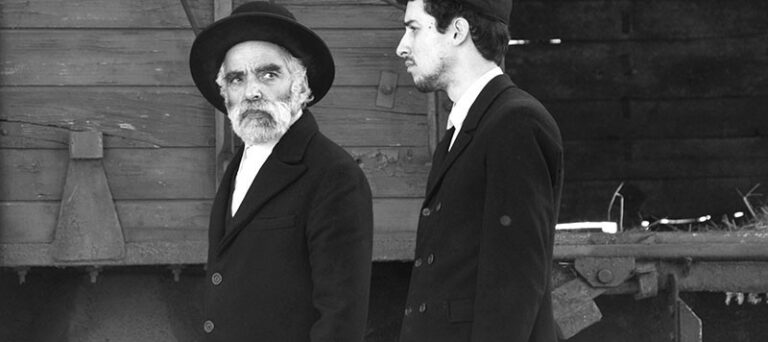
It’s a couple of days before the end of WWII, and a no-name Hungarian village is about to celebrate a wedding.
Ferenc Török’s 1945 starts in the household of the groom. He’s the son of the local dignitary, the bald, bespectacled, town clerk István (Péter Rudolf, a vision of Central European pomp). The marriage is a sham. The big man’s son, Árpád (Bence Tasnádi), is aware that his fiancé, Kisrószi (Dóra Sztarenki), loves another man, and she’s only marrying him to get the local drug and notions store as her bride price.
There’s another wedding, just as ill-omened, underway. We hear it babbled about on political radio commercials and we see it heralded by a Red Army Jeep full of the occupying Ivans, who harass the locals and mooch the wedding Champagne. A few months away are parliamentary elections, a nuptial that will eventually chain Hungary to the Soviet Union.
That’s in the future, and something of a more immediate threat has turned up. A somber pair of Jews, father and son, survivors of the camps, have arrived. They’ve come in from the railroad station, an hour’s walk away. As they wend their way through the town, the village drunk (József Szarvas) makes clear he knows who they might be and how they were dispossessed.
1945‘s black-and-white photography starkly contrasts the whiteness of the sun-struck village with the black-clad intruders. It’s a sweltering August day, with the hay already harvested, and the stubble roasting in the sun. Everything is hot and dry, but not quite cut-and-dried, though the characters in this town-without-pity stay pretty much as we see them at first.
The fateful year 1945 may seem like the distant past, but this movie is timely. Some Central European politicians are trying to downplay the Holocaust, but this film won’t let them forget. The final, wordless shot of a locomotive’s black smoke alludes to the concentration camp smokestacks that many of these good country people helped to fuel.
‘1945’ opens Friday at Summerfield Cinemas, 551 Summerfield Road, Santa Rosa. 707.525.8909.
Let’s Roll
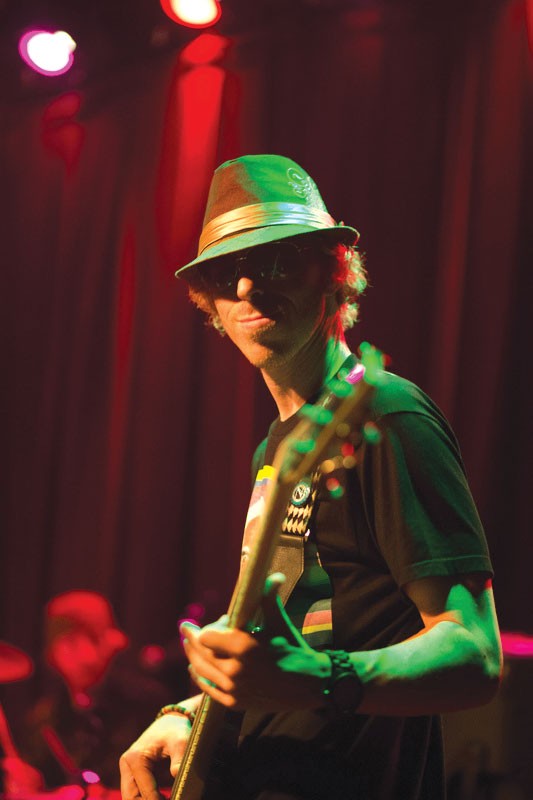
Cannabis’ big day, 4/20, falls on a Friday night the first year that recreational marijuana use is legal in California. That means there will be a party everywhere you look this weekend, including a surplus of 4/20 concerts of all genres happening in the North Bay.
With reggae essentially the official music of cannabis, Sonoma County’s Pacific Soundrise act as this year’s ambassadors of 4/20, headlining a show at HopMonk Tavern in Sebastopol.
Made up of twin brothers Spencer and Shaun Read on drums and bass, with Charles Hurley (Herb in Movement) and Skip Hill (Bellyfull) splitting guitar and vocals, the band will play a mix of classic and modern reggae with support from Occidental artist CIVILIANSOUND! and San Francisco’s Stu Tails.
In Santa Rosa, the folks at Guitar Player magazine are turning 4/20 into a chance for fundraising by hosting the Play It Forward benefit concert at the Luther Burbank Center for the Arts. Along with raising money and giving away guitars to musicians affected by last October’s fires, Play It Forward features a rare live performance from Police guitarist Andy Summers and several other acclaimed musicians.
Punk-rock stoners will be sure to pop over to the Phoenix Theater in Petaluma this 4/20 for another fire-relief benefit featuring longtime pop-punk favorites Tsunami Bomb, the Phenomenauts and others.
Originally formed in Petaluma in 1998, Tsunami Bomb toured worldwide before disbanding in 2005, though the band revamped in 2015 and still features their signature dueling female vocals and energetic live sets.
Over in Sonoma, folksy stoners will want to take in the self-described “rockadelia” of roots-rock band Achilles Wheel, who play a 4/20 show with acclaimed Americana performer Keith Greeninger at the Reel Fish Shop & Grill. Achilles Wheel will show off new songs from their latest album, Sanctuary.
Music lovers who want to put a little pep in their step this 4/20 should head over to the Mystic Theatre in Petaluma for a fiery performance from Portland, Oregon’s genre-defying MarchFourth Marching Band, with local alt-folk band Oddjob Ensemble opening the night. Made up of some 20 brassy, jazzy, funky musicians from all walks of life, MarchFourth has been compared to Cirque du Soleil.
For those looking to lounge this 4/20, Napa’s Blue Note Jazz Club is hosting popular swinging soul outfit Royal Jelly Jive, who will record a live album during four shows played over two nights in the intimate club.
For a complete list of shows, see Music calendar, p22.
Floral Wonders

Each spring at Quarryhill Botanical Garden is a lush display, as the largest collection of wild-sourced Asian plants found in the Sonoma Valley blooms throughout the 25-acre space.
This year, six months after wildfires tore through the region, yet inexplicably spared the gardens, the season’s bloom is a poignant symbol of the North Bay’s regrowth.
“It’s an incredible spring already,” says Quarryhill executive director William McNamara. “The garden has really come into its own.”
Located northeast of Glen Ellen in the Mayacamas foothills, Quarryhill was founded in 1987 by landowner Jane Davenport Jansen. McNamara was a landscape contractor at the time, and says he was in the right place at the right time to help develop the garden. He also began leading expeditions to remote locations in Japan, China and throughout Asia to collect seeds to populate the garden.
Aside from offering an outdoor oasis of natural beauty, Quarryhill is also a beacon of conservation and education in the North Bay. Each year, thousands of students get basic botany and garden lessons during half-day educational tours of the garden.
All that work was feared lost last October, as the Nuns fire decimated the Sonoma Valley. McNamara was out of town when the fire began, and was told the garden, and his home on the property, were likely gone.
“The garden somehow was miraculously spared,” he says. “It came to our fence line, and then the fire stopped. We’re not quite sure why.”
McNamara speculates that the garden’s irrigation could have been a factor, and he knows firefighters were at his home from captured security camera footage, but he’s still shocked that the garden survived.
“We feel lucky, but it’s hard to feel too lucky when so many people lost everything,” he says. “We were one of the fortunate ones.”
After the initial cleanup, Quarryhill welcomed residents to the garden admission-free through the end of 2017, as a gesture to the community, “to have a place they could come to for solace after such a tragedy,” says McNamara.
This weekend, Quarryhill offers another chance for the community to see the gardens at an Earth Day celebration and plant sale on April 21. Activities will include arts and crafts, live dance and music performances, exhibits and more.
“We tend to only look at things for their utilitarian value, but plants have intrinsic value,” says McNamara. “I want people to see that and appreciate that plants are valuable in their own right.”
Synergy

On the eve of April 20 —a global rite of spring spawned by the mystic Waldos and their quest for the secret garden of cannabinoid splendor— the embrace of legalization has ever so subtly shifted our celebration toward an understanding of the purpose and effect of the endocannabinoid system.
This system is the master regulator of human physiology. It turns out there is another system emerging from the primordial ooze, one embraced by half the planet while the rest cower in the grips of mycophobia. I’m referring to the realm of mushrooms.
Some mycologists theorize that humans and fungi shared a common ancestry 600 million years ago and that we evolved from them. Besides a 20-minute Phish jam, where exactly do the mycelial and endocannabinoid systems connect? It turns out they do so in two supremely important areas: immune system function and neurogenesis.
Viruses are well versed in the art of manipulating our immune system response to their benefit. As a result of an infection, cytokines, which are signaling molecules that promote inflammatory conditions, are stimulated to cascade in response to this intrusion.
These cascades create out-of-control inflammatory situations that result in a viral takeover. The U.S. Department of Health and Human Services reports that Cordyceps, a genus of fungi, and cannabidiol (CBD) share similar abilities to down-regulate these cascades, thus promoting anti-inflammatory conditions that could hinder the progression of infections. Coupled with this anti-inflammatory response, cannabis and certain mushrooms possess immune-stimulating properties that can up-regulate certain immune responses, which can help the body adapt and react accordingly to threats.
As for neurological health and well-being, the degradation of the neurological system is the hallmark of aging, overall health decline, traumatic injury, such as repeat concussions, and specific conditions like Alzheimer’s and dementia. Research out of Malaysia shows that Hericium erinaceus, known as the Lion’s Mane mushroom (pictured), possesses erinacines that stimulate nerve growth (neurogenesis) and help rebuild myelin, the sheath that insulates nerve fibers.
Pairing with the antioxidant
and neuro-protectant properties
of CBD and THC could hold promise for mediating neurological damage after trauma and possibly serve as a preventative for neurodegenerative diseases.
That’s worth celebrating.
Patrick Anderson is lead educator with Project CBD. He will be celebrating 420/Earth Day/Bicycle Day at Emerald Pharms in Hopland from noon to 11pm.
Certified

There’s good news for those who, while touting their winery’s “green” cred to visitors, so often say, “We try to be as organic as possible,” usually accompanied by much wringing of hands, shrugging of shoulders and a meekly solicitous smile, as if to say, “What more can we do?” The possibility exists to go all in for organic, and be certified as such.
Whether you’re shopping for a wine that’s organically farmed or one that additionally contains no added sulfites, look to the label: when an organic statement appears on a wine label, it means something.
Frey 2016 Mendocino Pinot Noir ($18) This wine bears the circular, USDA organic seal on the front label, in combination with the words “Organic Wine.” Both vineyard and winery have been certified by third-party agents, and only use substances allowed by the National Organic Program. Notably, the addition of sulfites is prohibited in the wine itself, which may contain up to 10 parts per million (ppm) of naturally occurring sulfites.
While a teensy hint of volatile acidity lurking in the background gave this organic wine away for me in a single-blind tasting, it’s not without charm, suggesting wild strawberries dusted with talc. Dropping out in the middle of the palate (this longtime organic stalwart, which depends on wide distribution in natural foods markers, does fine the wine with vegan-friendly clay as a hedge against spoilage), the wine recovers on the firm finish. Rating (out of 5): ★★
Benziger 2016 Reserve Russian River Valley Pinot Noir ($45) This bears the designation, “Made with organically grown grapes,” in combination with the California Certified Organic Farmers (CCOF) logo on the back label—note, the USDA seal is not allowed. The grapes are farmed organically, and the winery must be certified to process them, but the wine is allowed to contain sulfites up to 100 ppm (the conventional wine limit is 300 ppm). An alluring aroma of strawberries drizzled with raspberry sauce reminds me of cheesecake topping, tempered by a whiff of shale. Tangy, pomegranate flavors gain more appeal with time in the glass.★★★½
Yangarra 2016 ‘PF’ McLaren Vale Shiraz ($25) The “PF” is for “preservative free,” and, far from oxidized, this burly Shiraz, coming to us from Down Under by way of Jackson Family Wines, shows signs of “reduction,” which is basically the opposite of oxidized. Just a touch of reduction, however, accents the savor of liquefied dried plum with gamey, chocolatey notes. Not fined or filtered, it leaves a chunky residue of organic material in the bottom of the last glass—and a pretty favorable memory of the category, as well. ★★★★
Fear and Loathing
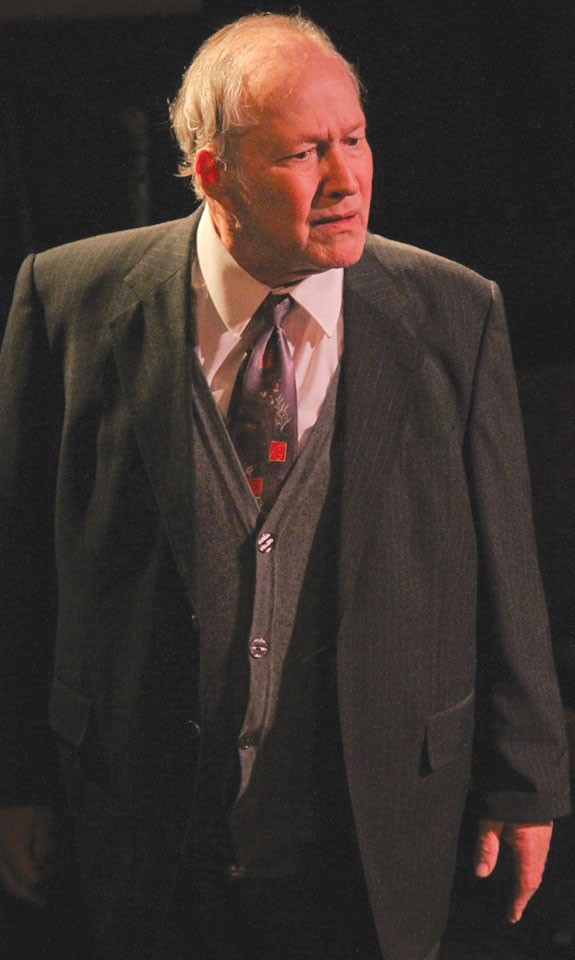
Film, television and theater veteran Charles Siebert headlines the 6th Street Playhouse production of Arthur Miller’s Death of a Salesman. Miller’s Pulitzer Prize- and multi–Tony Award–winning treatise on the elusiveness of the American dream is considered by many to be the greatest American play ever written. Nearly 70-years-old, in the hands of the right artistic team, Death of a Salesman can seem as fresh as ever.
Director Craig Miller has assembled that team to surround Siebert’s towering central performance as Willy Loman, a traveling salesman whose days on the road are rapidly coming to an end. Frustrated at still living paycheck to paycheck at his age, Willy is coming unraveled, to the consternation of his wife, Linda (Sheila Lichirie), and son Happy (Ariel Zuckerman). Things aren’t helped by the return of semi-prodigal son Biff (Edward McCloud). The action glides between the present and the past and between fantasy and reality as we see how Willy’s dreams for his boys and himself have come to naught.
6th Street’s Studio Theatre setting brings a level of intimacy to the show that makes Willy’s downfall, Linda’s helplessness and Biff’s acknowledgement of his own failures even more gut-wrenching. In a very strong ensemble of North Bay regulars, take note of Bay Area newcomer Zuckerman’s performance as the son most like his father.
Rating (out of 5): ★★★★½
If political drama is more to your liking, then the scrappy Redwood Theatre Company is presenting Farragut North by Beau Willimon (Netflix’s House of Cards). Willimon turned his time as a press aide during Governor Howard Dean’s 2004 Presidential run into this tale of the inner-workings of a similar campaign.
Set in Iowa over two days before the caucuses, press secretary Stephen Bellamy (Kot Takahashi) is a 25-year-old political hot shot working on what everyone thinks is a winning campaign. Clandestine meetings and questionable decisions lead to double-crosses, triple crosses and unemployment before the first votes are cast.
Redwood Theatre Company’s no-budget productions are always interesting, and director Ron Smith uses the energetic young troupe to good advantage here. What they lack in production value, they make up for in talent and heart. ★★★½
‘Death of a Salesman’ runs Thursday–Sunday through April 28 at the 6th Street Playhouse Studio Theatre, 52 W. Sixth St., Santa Rosa. Thursday–Saturday, 7:30pm; Sunday, 2pm. $18–$28. 707.523.4185. ‘Farragut North’ runs Friday–Sunday through April 22 at Redwood Theatre Company, 440 Moore Lane, Healdsburg. Friday–Saturday, 7pm; Sunday, 2pm. $15. 707.495.9741.
April 14-15: Real Food, Real People in Bodega Bay
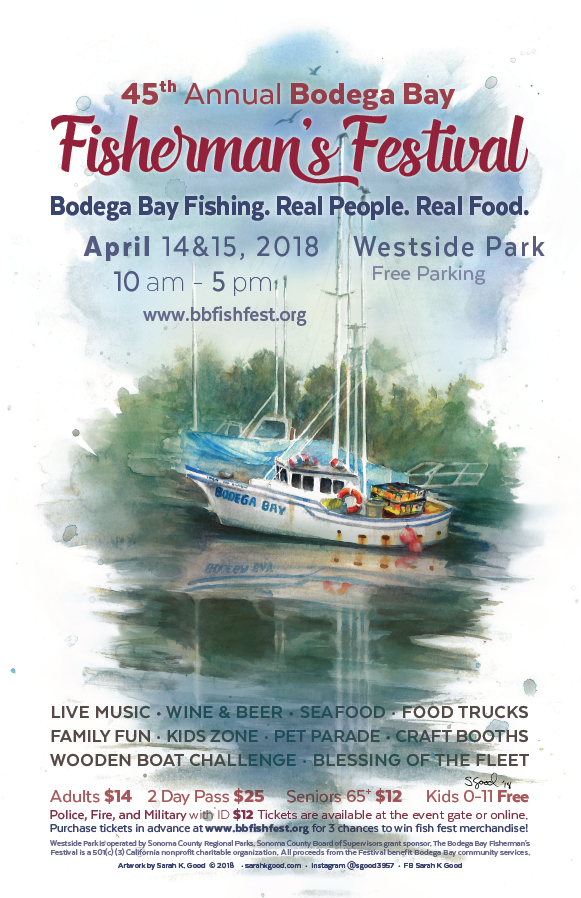
For nearly half a century, the Bodega Bay Fisherman’s Festival has honored the region’s fishing communities and supported local nonprofit organizations with a weekend of family fun and delicious food. This year, the festival’s popular wooden boat challenge, in which teams create floating structures on the fly, expands to the whole weekend, and entertainment includes a kids area and live music by the Zins on Saturday and Pride & Joy on Sunday. Get a taste of Bodega Bay on April 14–15 at Westside Park, Westshore Road, Bodega Bay. 10am to 5pm, both days; $12–$25. bbfishfest.org.
May Day!
In recent weeks, we've seen many folks take loud and public action against gun violence, unaffordable housing, immigration and calls for ending wars and racism. The callous slashing of summer school classes brought swift passionate action (including a sit-in) at the usually placid Santa Rosa Junior College campus.
At the Hyatt Vineyard Creek in Santa Rosa, the room cleaners, primarily...
Letters to the Editor: April 18, 2018
Napa's Last Hope
If the wine industry had stuck with agriculture instead of greedily cultivating tourism as well, it might not have to deal with a locals uprising in Napa. The Oak Woodlands Initiative (Measure C) is people-driven, born out of frustration with county supervisors who keep approving more visitors, events and wine production despite locals' objections about traffic and...
Forced Marriage
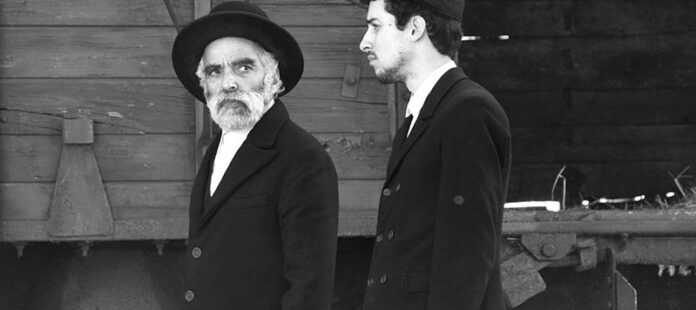
It's a couple of days before the end of WWII, and a no-name Hungarian village is about to celebrate a wedding.
Ferenc Török's 1945 starts in the household of the groom. He's the son of the local dignitary, the bald, bespectacled, town clerk István (Péter Rudolf, a vision of Central European pomp). The marriage is a sham. The big man's...
Let’s Roll
Cannabis' big day, 4/20, falls on a Friday night the first year that recreational marijuana use is legal in California. That means there will be a party everywhere you look this weekend, including a surplus of 4/20 concerts of all genres happening in the North Bay.
With reggae essentially the official music of cannabis, Sonoma County's Pacific Soundrise act as...
Floral Wonders

Each spring at Quarryhill Botanical Garden is a lush display, as the largest collection of wild-sourced Asian plants found in the Sonoma Valley blooms throughout the 25-acre space.
This year, six months after wildfires tore through the region, yet inexplicably spared the gardens, the season's bloom is a poignant symbol of the North Bay's regrowth.
"It's an incredible spring already," says...
Synergy
On the eve of April 20 —a global rite of spring spawned by the mystic Waldos and their quest for the secret garden of cannabinoid splendor— the embrace of legalization has ever so subtly shifted our celebration toward an understanding of the purpose and effect of the endocannabinoid system.
This system is the master regulator of human physiology. It turns...
Certified
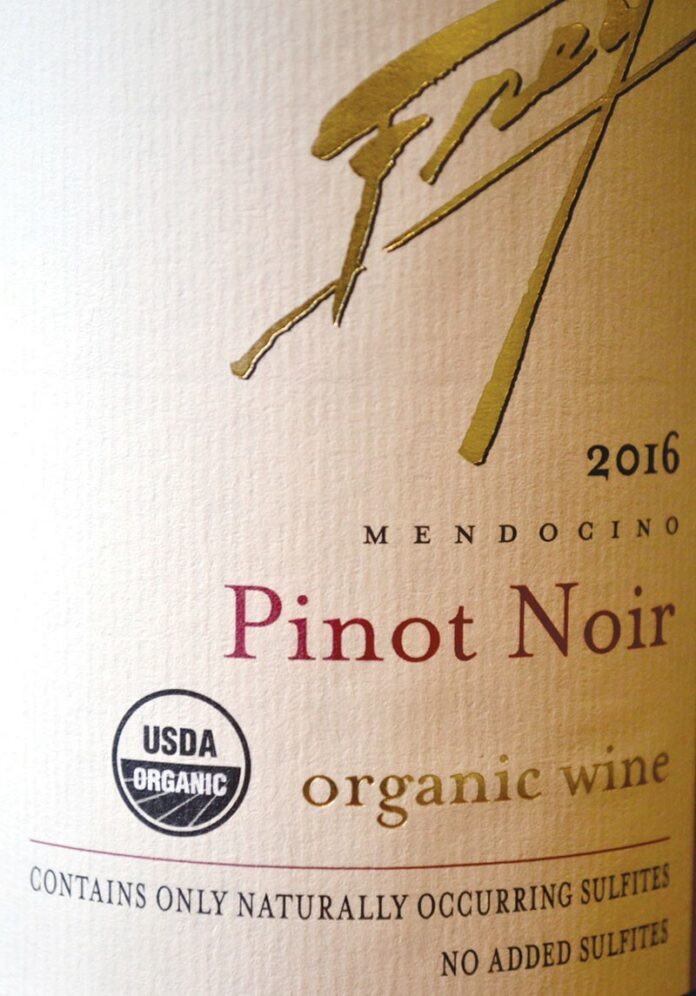
There's good news for those who, while touting their winery's "green" cred to visitors, so often say, "We try to be as organic as possible," usually accompanied by much wringing of hands, shrugging of shoulders and a meekly solicitous smile, as if to say, "What more can we do?" The possibility exists to go all in for organic, and...
Fear and Loathing
Film, television and theater veteran Charles Siebert headlines the 6th Street Playhouse production of Arthur Miller's Death of a Salesman. Miller's Pulitzer Prize- and multi–Tony Award–winning treatise on the elusiveness of the American dream is considered by many to be the greatest American play ever written. Nearly 70-years-old, in the hands of the right artistic team, Death of a...
April 14-15: Real Food, Real People in Bodega Bay
For nearly half a century, the Bodega Bay Fisherman’s Festival has honored the region’s fishing communities and supported local nonprofit organizations with a weekend of family fun and delicious food. This year, the festival’s popular wooden boat challenge, in which teams create floating structures on the fly, expands to the whole weekend, and entertainment includes a kids area and...
