Art into Action

Two movements have dominated discussions in 2018: gender equality and action over outrage, topics that reign at this week’s Napa Valley Film Festival, running Nov. 7–11.

The fest, now in its eighth year, takes a stand with the #ArtInspiringAction initiative, where provocative, issue-based films amp up theatergoers to take action in support of themes explored in the films. One such documentary, This Changes Everything, features an army of A-list actresses who speak out on gender disparity in the entertainment industry. Actor, activist and producer Geena Davis (the main subject of the film), will be presented with the Visionary Award on Friday, following the screening. Davis will be honored for her work to further women’s rights and gender equality; as special envoy for the U.N.’s International Telecommunications Union, and through her nonprofit, the Geena Davis Institute.

On Saturday, a panel, Women in Film: Shattering the Glass Lens, will further extend the conversation around equality with a lineup of female filmmakers who will discuss their careers and ways we can band together to effect change in the industry.

Other #ArtInspiringAction programming includes Afghan Cycles, about a tribe of Afghan women who, despite cultural barriers, oppression and death threats, rally against the patriarchal hold of the Taliban for the freedom to ride a bicycle. Soufra follows the journey of Mariam al-Shaar, a generational refugee, who spent her whole life in a refugee camp in Lebanon. Over the course of the film, Shaar changes her fate when she builds a catering company and food truck with the help of fellow refugee women.

Ask for Jane tells the story of a group of college women who developed an underground abortion network to help over 11,000 women get illegal abortions in Chicago between 1969 and 1973. The film is based on the real-life activist group, the Janes, who operated a spy network to assist with abortions before being arrested in 1972.

A bevy of Bay Area films hit the screen, including Uncrushable, directed by celebrity chef Tyler Florence. The film documents the last year’s wildfires through the eyes of some of those most affected, including victims who lost homes or businesses, first responders, chefs and winemakers. Empire on Mainstreet spotlights serial entrepreneur Crista Luedtke, who changed the face of Guerneville when she opened the Boon Hotel & Spa and El Barrio amid local opposition and a devastating flood.

Brewmaster tracks the rise of the craft-beer industry and offers a glimpse into Sonoma County beer brewing in the ’70s and features the New Albion Brewery. And tails are sure to wag at the #ArtInspiringAction screening of Pick of the Litter, as theatergoers see a litter of puppies scrap it out on a quest to become guide dogs for the blind. The movie is directed by Bay Area filmmakers Don Hardy and Dana Nachman.

With all the drama on and off screen, festival-goers can laugh it off at a sneak peek of the National Geographic miniseries Valley of the Boom (premiering January 2019). The two-episode screening explores the detonation and disruption of the tech boom and browser wars of the ’90s, weaving scripted dialogue and real-life segments. Bradley Whitford and Steve Zahn star.

Funny bones are sure to be flexed at Friday’s special tribute honoring the legendary Groundlings theater group, which launched comedic wunderkinds like Will Ferrell, Lisa Kudrow and Melissa McCarthy. Ferrell said this about his experience at last year’s fest, “I was just happy to be a part of the festival and do a little Q&A but to be honored as well,” Ferrell said about last year’s festival. “It’s great because in the comedy world, we don’t get a lot of awards. It’s nice to have your work recognized.” One of Groundlings’ founding members, Laraine Newman, is expected to attend alongside alums Cheri Oteri, Taran Killam, Stephanie Courtney and Julia Sweeney.

At Thursday’s Celebrity Tribute, actor, producer and director Laurence Fishburne will receive the Legendary Actor award, alongside Maverick Award recipient Billy Bob Thornton. Saturday’s Rising Star Showcase will honor up-and-coming talents, including Camila Mendes (Riverdale), Billy Magnussen (Game Night), Rosa Salazar (American Horror Story), Alexandra Shipp (X-Men: Apocalypse), Tye Sheridan (Tree of Life) and Taissa Farmiga (The Nun; What They Had).

Two new venues make their debut at this year’s fest. In Calistoga, theatergoers can get rolling at the drive-in theater at the Calistoga Fairgrounds, which will screen a daily double feature and sport 50 parking spots for cars and bleacher seating for 100, with enough throwback snacks to cure even the meanest case of the munchies.

The new Feast It Forward studio in Napa will host the Wednesday-night kick-off party and serve as the down valley hub, with a diverse programing and party scene that includes culinary demos, film inspired wine and food pairings, a filmmaker lounge and live music, all set within a happening indoor-outdoor space.—Christina Julian

Napa Valley Film Fest runs Wednesday, Nov. 7, through Sunday, Nov. 11, at
several venues in Napa County. Visit nvff.org for the full lineup.

[page]

The Stinson Beach Doc Fest, now in its fifth year, offers a truly filmic treat under one roof—and for a good cause. The festival showcases five great documentaries and is devoted to helping fund the Stinson Beach Community Center. This year’s films gained international attention and accolades, and also hit on an issue or ethic near and dear to many North Bay hearts.

This year’s festival also promises to be deliciously local, with all the choice trimmings drawn from our local larder of love. On opening night, “Gala Night,” North Bay chef David (“I’m the Anthony Bourdain of the North Bay”) Cook will be on hand preparing the food, a “Tastes of West Marin” menu for attendees. Cook will also be dishing up between-films meals through the weekend to attendees at $20 a pop. They ought to make a film about Dave. Maybe next year.

Free Solo

Nov. 10, 7pm

There’s a line from Freddie Nietzsche where the philosopher points out that if you stare at the abyss long enough, it will start to stare back.

With that in mind, there’s no sport like the free-climbing of rocks to make the point about the abyss that looms for one and all—despite the best efforts of the Buck Institute for Research and Aging. Free-climbing has got to be both the dumbest and bravest sport in the world, and every time Netflix puts one of these crazy-climber stories up—you know I’m sitting there, glued to the screen, anxiously puffing away. “Don’t fall, man!”

There’s really no sport that offers such a level of visceral and direct contemplation of the very thin line between life and death that’s all around us, or as the French like to say, le voile est mince.

Free Solo tells the life story of Alex Honnold, who set out a few years ago to climb the 3,000-foot El Capitan massif in Yosemite National Park. He set out to do it without a rope. Dude, are you crazy? Two climbers this year died while climbing El Capitan—with ropes. There’ve been more than two dozen deaths on the iconoclastic massif since 1968. Every time I watch one of those angsty docs about extreme climbers, I die a little too.

Honnold gave an interview to Rolling Stone recently where he says he’s an atheist and comments on that whole idea of staring into the abyss:

“Being on big granite walls is a constant reminder that nature just does not care. You’re just another animal that slipped off something. I’ve seen animals fall off cliffs. I saw a mountain goat bite it in Mexico, which was crazy because you think of them as being so majestic and sure-footed. He survived, actually, and just got back up. I saw a squirrel fall off a cliff once. I was like, ‘Holy shit, even squirrels!’ That’s nature, you know.”

RGB

Nov. 9, 8pm

To be a fly on the wall at the Supreme Court these days is to be squashed like a bug in the crosshairs of a Democracy beset by reptile-brain derangement and wet-brain justice, courtesy of Donald Trump and his various appointments to high positions of power; e.g., Brett Kavanaugh.

So it’s cool that liberal feminist crusader Ruth Bader Ginsburg, an appointee of the philandering gasbag Bill Clinton, is in her mid-80s, has survived pancreatic and colon cancer, lifts weights and has been pegged with a nickname that invokes a long-dead Brooklyn rapper and crack dealer, the original Notorious B.I.G, aka Biggie Smalls. They share a lot in common. Ginsburg was also born in Brooklyn.

RGB delves into the mystique and the mirthful, mass-cult hagiography that attends the elevation of a Supreme Court judge to a position of high-media rock-stardom and pop-culture legend.

Much as I totally dig her gestalt, it’s unclear to me how or why Ruth Bader Ginsburg earned this stature—it’s not just because of her opinions and dissents—but I guess the film will explain everything, and then some. It premiered at Sundance this year and has done pretty well at the box office. Here’s to RBG’s continued good health, and to a future filled with films that also celebrate the likes of Snoop Dogg Sotomayor.

Pick of the Litter

Nov. 10, 5pm

Hey, it was just a couple of weeks ago that we were highlighting San Rafael’s Guide Dogs for the Blind in our Pacific Sun nonprofit issue, and—boom!—just like that, here’s a documentary screening of Pick of the Litter at the Stinson fest that’s all about guide dogs and how their cute little lives unfold.

Bay Area filmmakers Dana Nachman and Don Hardy have produced a wonderful and poignant film that highlights how competitive the world out there is for would-be guide dogs, and how not every animal makes the cut. The film focuses on the trainers at the San Rafael training center, where some 800 dogs are born each year—but only a few hundred make the final cut through a rigorous training regimen that takes years to complete.

The trailer alone to this sweet film is so loaded with puppy love and sloppy beasts by the name of Primrose, Patriot, Potomac, Phil and Poppet—well, it almost makes me want to gouge out my eyeballs, grab a stick and be led around the county by a highly trained Labrador. There are worse things.

Dark Money

Nov. 11, 7pm

When most people think about outrageous political conduct in Montana, well, it’s hard to not focus on Sen. Greg Gianforte beating up a Guardian reporter for daring to ask him a question.

Dark Money takes place in Montana and provides some of the sober architecture that explains how a goon like Gianforte could be considered for higher office, and the answer is the 2010 disastrous Citizens United ruling from the Supreme Court, which turned corporations into people, then turned electoral politics into a rolling scandal where thugs like Gianforte would be celebrated by the likes of Donald Trump for body-slamming the First Amendment—which is pretty much exactly what the Citizens United ruling did, too.

Evolution of Organic

Nov. 11, 5pm

Well, this one looks fun and totally local, keying in as it does on the birth of the organic-produce movement in America—which is to say, at the ground zero for organic agriculture in these here United States, Star Route Farms in West Marin.

Why, there’s even a local actress of some renown doing the voiceover for Evolution of Organic, and who once starred as a public defender in the hit cop show Hill Street Blues, in the 1980s.

Weird, we haven’t heard much from her since her starring role in the Steven Bochco drama, but the growth of the organic foods movement since the 1960s is a different story—it has been a loud and proud addition to the American food scene, accessible and delicious to all who dare take a bite, and humble in its vegetative state of no-pesticide purity. The film features interviews with the likes of Warren Weber (founder of Star Route Farms) and Paul Muller of Full Belly Farm, among others.—Tom Gogola

Stinson Beach Community Center,
32 Belvedere Ave., Stinson Beach.

Midterm Exam

0

For years now, the policy window for privatizing public schools has been wide open.

What was once considered an extreme or at least rare idea—such as outsourcing public schools to private contractors with few strings attached, or giving parents public tax money to subsidize their children’s private school tuitions—has become widespread, as charter schools are now legal in all but a handful of states, and voucher programs have proliferated in many forms across the country.

Politicians of all stripes have been extremely reluctant, especially at the national level, to lean into a real discussion of the negative consequences of redirecting public education funds to private operators, with little to no regulation on how the money is being spent. Candidates have instead stuck to a “safe boilerplate” of education being “good” and essential to “the workforce” without much regard to who provides it.

But policy windows can be fleeting and multiple factors can rejigger the public’s views. Indeed, in campaigns that candidates waged in the midterm elections, one can see the policy window on school privatization gradually shifting back to support for public schools and increasing skepticism about doling out cash to private-education entrepreneurs.

‘VULTURE SCHOOLS’

It is the wave of new progressive candidates who appear to be the ones who are shifting the policy window on school privatization.

Take the campaign of progressive superstar Randy Bryce, in his run for the congressional seat Paul Ryan held in Wisconsin. The Badger State recently expanded statewide a voucher program that was confined to Milwaukee and Racine, and charter schools have expanded significantly under the leadership of Republican Gov. Scott Walker.

On his website, Bryce provides the usual bromides about “every child deserves a quality education” and “charter, private and traditional public schools can all thrive,” but he then adds the curious statement that “no student should see money taken from their classroom in order to serve another.” What does that mean?

Click through the “Learn More” prompt, and you’ll watch a video in which he makes a much stronger statement about the problems of privatizing public schools. “We can’t afford two school systems, a public one and a private one,” he elaborates, and he blasts “vulture schools that don’t have the same accountability and don’t have the same rules.”

The example of the school he brings up that closed after head count day and whose owners “moved to Florida” is a real school run by a husband-and-wife team who abruptly closed their Milwaukee private school after taking more than $2.3 million of state voucher money, and moved to Florida to start another one.

These sorts of scandals have become nearly daily occurrences in the privately operated school industry.

SCHOOLS FOR SCANDALS

The latest scandal breaks from Arizona, where the state auditor found that parents who used the state’s voucher-like education savings program spent more than $700,000 on cosmetics, music, movies, clothing, sports apparel and other personal items. Some even tried to withdraw cash with the state-issued debit cards. The state has not recovered any of the money.

In California, a recent audit of a charter school found the married couple who ran the school made almost $850,000 in less than two years and secretly hired people and created positions without approval from the school’s board. (There are some 1,200 charter schools in California, and Sonoma County dominates the North Bay with nearly 60 charters currently operational; Napa has three and Marin has four charter schools.)

A video from Florida that went viral shows an African-American boy being denied admission to a private school that his parents used public school voucher money to enroll him in. An enormous white cross adorns the school’s front lawn. This and other similar occurrences of discrimination by voucher-funded private schools in the Sunshine State has prompted the NAACP to call for an investigation into all private schools accepting vouchers.

Around the same time, an op-ed appeared in a Florida newspaper recounting the scandal of a voucher-funded private school that stiffed teachers and skipped rent payments. Teachers filed formal complaints about a “lack of basic school supplies,” academic “irregularities,” student safety concerns and inadequate staffing. But when the school was evicted, it simply moved to a new location and started the whole flimflam all over again.

In Georgia, a police investigation of a charter school found that the governing board had terminated the school’s leader, made no public announcement of the firing and never told parents why. At another Georgia charter school, parents were told to “watch your bank accounts” after 6,000 school records were mysteriously transferred to a personal email account.

In Nevada, an analysis of the state’s charter-school industry found they increase racial and economic segregation by enrolling far fewer low-income kids and far more white and Asian students than public schools do. A state audit of a charter school in New Mexico found that tens of thousands of dollars had been stolen by the school’s employees.

SOME REGULATORY CONTROL, PLEASE

One doesn’t need to cherry-pick to find news stories about waste, fraud, abuse and downright theft in the school privatization sector. The above examples all happened within the last month.

Of course, financial scandals happen in public schools too. That’s why they’re heavily regulated. But the notion that “parent choice” can keep charter schools and private voucher schools clean and honest is disproven nearly every day.

In Washington, D.C., there now seems to be an inkling to address the mountain of fraud created by charter schools and voucher programs. Prompted by a massive scandal involving an online charter school in Ohio, Democratic senators want the top watchdog for the federal government to investigate the business practices of online charter schools.

Their investigations can’t stop there. A recent analysis of states with the most charter schools and the most charter closures finds the federal government dumps millions into these schools but provides little oversight and guidance for what to do when these schools close, leaving millions of dollars in taxpayer money at risk to scamming.

The endless revelations of corruptions in the charter school and school voucher racket are now what’s driving policy, more so than dry, empirical studies about whether privatizing public schools “works” academically.

Of course, some progressives stick to the old script of “investing in schools” with little regard to who runs them, and a few still cling to the school privatization cause. But the trend that made privatizing public schools an acceptable if not preferential policy has at least stalled, if not completely been thrown into reverse.

This article was produced by the Independent Media Institute. Jeff Bryant is director of the Education Opportunity Network, a partnership effort of the Institute for America’s Future and the Opportunity to Learn Campaign. He has written extensively about public education policy. Source: Alternet.

Letters to the Editor: Novemer 7, 2018

Catholic
Unblock

I appreciated very much Tom Gogola’s article about the law firm Jeff Anderson & Associates releasing the names of the Catholic clergymen with sexual-abuse histories (“Roster of Abuse,” Oct. 31). Usually, the names are not mentioned unless an archbishop or cardinal is involved. The sickening switching around of abusers from school to school and parish to parish has kept the names out of the news. Kudos to the law firm and to the Bohemian.

Greenbrae

Poultry Effort

What the author fails to mention in his article concerning chickens at McCoy Poultry Services (“Cage Match,” Oct. 24) is the condition of the 10 chickens rescued from the facility. Their injuries were so severe that they had to be euthanized. Instead of holding a conference on how to “prepare and manage activists,” why doesn’t the Sonoma County Farm Bureau do the right thing and tell farmers they have to treat their chickens humanely?

Santa Rosa

Fireside Chats

We live in a country in which the elites are not only out of touch with the lives the rest of us live, but also without any sense that they, too, will be victims of the world they are destroying. For quite a while, some of us have been talking about ways to impede this destruction, through pulling out of the dominant systems and creating new ones, along with activism which educates around the current and impending problems.

Conversations Around the Fires is a loosely affiliated group of people who have been holding public discussions of alternative ways of approaching problems, ways that are different from the ones you will hear from corporate media. Our next gathering, “Facing Down the Giants: A Call for Mutual Aid” on Tuesday, Nov. 13, will feature a look at one of the causes and some of the remedies to the sense of impending doom so many of us feel.

Sonoma State professor Peter Phillips will discuss his new book, Giants: The Global Power Elite, in which he exposes the most powerful players in global capitalism. As disempowering as it might seem to be faced with so much detail about those who have so much control over the systems which run our lives, Phillips and Conversations Around the Fires hope you will take this knowledge out into the world to help you focus your energy to create something different.

After Phillips’ talk, we will hold conversation circles with local groups working to create a better world: Daily Acts, TransitionTown, Rapid Response Network, Public Banking and others. Please join us on Nov. 13 at 6:30pm at Christ Church United Methodist, 1717 Yulupa Ave. in Santa Rosa to find ways to plug in and create an activism that could provide hope for the future.

Via Bohemian.com

Write to us at le*****@******an.com.

Justice & Recovery

Since the one-year anniversary of the Tubbs fire has passed, it’s appropriate for county residents to pause and consider how far we’ve come and where we’re going.

Just after the wildfires, the Alliance for a Just Recovery (AJR)—comprising every major labor, environmental and faith organization in Sonoma County—formed to ensure that the long-term challenges of soaring inequality, deepening climate crisis, and racial and environmental justice would shape the county’s recovery and rebuilding.

The AJR just published a new report, “Voices from the Grassroots,” that advances a comprehensive “common agenda” for a just, equitable and sustainable recovery, and specific policy recommendations for increasing good jobs, affordable housing and environmental restoration.

On Nov. 19, the AJR is sponsoring a second forum to consider “State of Working America 2018,” a new North Bay Jobs with Justice report analyzing inequality, poverty and the working poor, and “Meeting Our Housing Needs and Protecting the Environment,” a Sierra Club report on the housing crisis. The forum will also focus on new proposed AJR policy initiatives to address the needs of low- and moderate-income families and root causes of the fire—including urban sprawl, the urban-wildlands interface and intensified climate change effects.

The forum will highlight several campaigns that AJR is supporting, and how residents can join:

• A citywide $15 hour minimum wage for Sonoma, Sebastopol, Santa Rosa, Novato and Petaluma, phased in by 2020, three years before the current $11-an-hour state minimum reaches $15.

• The City of Santa Rosa and other municipalities can extend outgoing Gov. Jerry Brown’s 10 percent post-fire rent increase cap, before its Dec. 4 expiration.

• Opposition to new development projects in community separators and burned areas, such as a luxury resort on Redwood Highway in northern Santa Rosa’s Larkfield-Wikiup area.

• New policy supporting all-electric-ready housing in the highest fire risk (urban-wildland interface) areas.

The second Alliance for a Just Recovery forum takes place Monday, Nov. 19, from 6pm to 7:30pm at Christ Church United Methodist, 1717 Yulupa Ave., Santa Rosa (doors open 5:30pm). Visit northbayjobswithjustice.org for more information, or call 707.292.2863.

Martin Bennett is co-chair of North Bay Jobs with Justice; Teri Shore is the North Bay regional director for Greenbelt Alliance.

Pick Six

0

The smell of wine hits as soon as I get to Kenwood.

New wine, fermenting wine, the unmistakable aromatic that announces that somewhere, nearby, a lot of yeast is gorging on a lot of grapes. Then, just as I roll into the parking lot at Kenwood Vineyards, I get the unreal impression that I’ve homed in on the very source, as a couple of cellar rats roll out bins of freshly pressed, doubly aromatic pomace. Looking a bit like a crumbly, slightly soggy helping of purple-dyed trail mix, pomace is the leftovers from the making of red wine. Good old Kenwood red?

Not that Kenwood red. Last time Swirl popped in at the old wine barn, which was founded in 1906 as the Pagani Brothers Winery, we praised the stalwart producer’s $7 red table wine, a dependable everyday Zinfandel blend. “Now that red blends are popular, we’re no longer doing that,” Kenwood Vineyards winemaker Zeke Neeley tells me with a lighthearted laugh, as we ride in a luxury van on a press junket to one of the winery’s estate vineyards in the Sonoma Valley.

The aim of this adventure is to sell us on Kenwood’s new, upscale Six Ridges label, begun with the 2013 vintage and bottled after the winery’s sale to French beverage giant Pernod Ricard in 2014.

When some wine brands sell to the biggies, they wander, get watered down or worse. Seen any Glen Ellen lately? But Kenwood appears to be getting better organized than ever. The new boss has kept valuable favorites like the Jack London single-vineyard series, which is exclusive to the winery, and though Kenwood has discarded the inexpensive red blend, it maintains competitive pricing for what used to be called the “fighting varietal” wines—and these days, holding Sonoma County appellation wine at $15 for Sauvignon Blanc and $22 for Cabernet (later in the day I see the Chardonnay tagged at $12.99 in a local market) is fighting bloody tooth and nail.

The Six Ridges series includes an unmistakably “Savvy” Sonoma Coast Sauvignon Blanc; a 2017 Russian River Valley Chardonnay ($26) that tempers toasty notes with a hard-to-place herbal note (I’ll definitely be sniffing the tarragon next time I’m in the produce aisle, just to check); a woodsy, strawberry jammy, incense-and-green-pepper-jelly-scented 2014 Dry Creek Valley Zinfandel ($26); a waxy, cherry cola candle of a 2015 Russian River Valley Pinot Noir ($30); and a surprisingly supple, cigar-leaf-scented 2014 Alexander Valley Cabernet Sauvignon ($35), all priced quite reasonably—for those who can smell a bargain in today’s wine market.

Kenwood Vineyards, 9592 Sonoma Hwy., Kenwood. Daily, 10am–5pm daily.
Tasting fee, $15–$25. 707.282.4228.

Puppet Masters

0

After 22 seasons of TV’s South Park and 15 years of Broadway’s Avenue Q, audiences may be somewhat desensitized to youngsters dropping F-bombs or puppets vigorously engaged in coitus. Prepare to be re-sensitized.

Robert Askins’ Hand to God, running at Santa Rosa’s Left Edge Theatre through Nov. 11, adds blasphemy to the mix, and the end result is one helluva dark, mean and funny play.

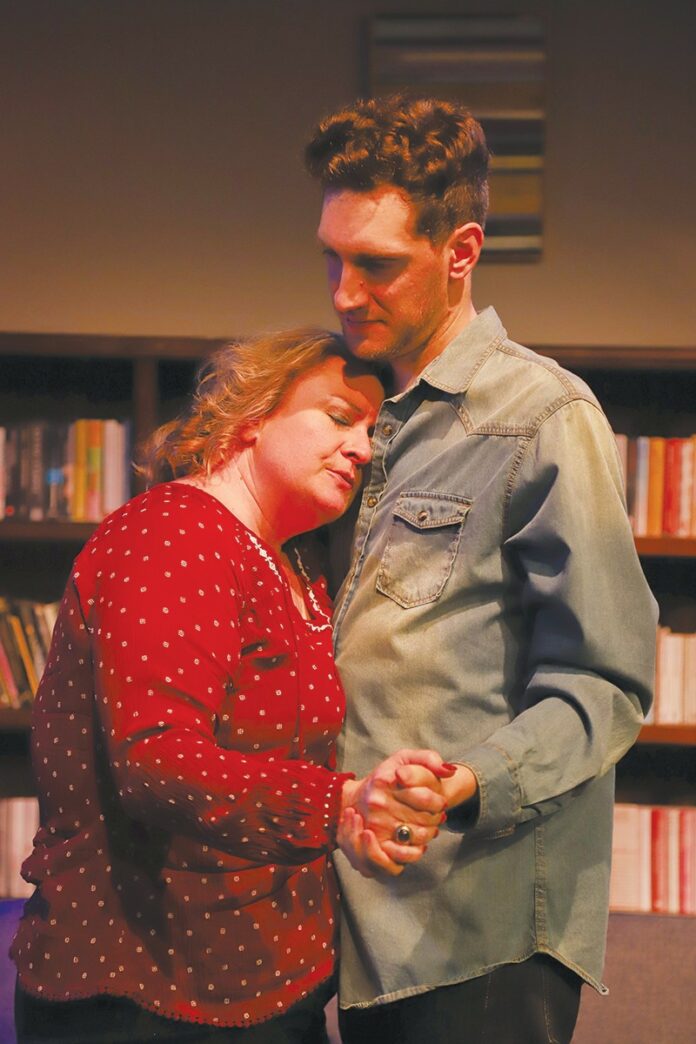
The play opens in the basement of a rural Texas church. It’s the meeting place of the Christketeers, a Christian puppet club that Pastor Greg (Carl Kraines) thinks is a good vehicle to help recently widowed Margery (Melissa Claire) out of her funk. The club has three members: Margery’s introverted son, Jason (Dean Linnard); the ne’er do well Timmy (Neil Thollander), who’s basically been sentenced to the club; and Jessica (Chandler Parrott-Thomas), the only member who actually has an interest in puppetry, albeit Balinese shadow puppetry.

Jason introduces his puppet, Tyrone, to Jessica with a painfully unfunny, half-finished version of Abbott and Costello’s “Who’s on First?” routine, and the seeds of affection grow between them. Pastor Greg hopes similar seeds will grow between him and Margery, while it’s Timmy’s anatomy that grows when Margery enters his mind. Something else that’s growing through all of this is Tyrone’s “personality,” to the point that his mother thinks the puppet might be demonically possessed.

Linnard, a trained puppeteer, really puts his skills to work here, and his ability to play two distinct characters simultaneously is a joy to watch. Parrott-Thomas matches him in puppetry skill in one particularly physical scene. Claire is good as a woman on the verge of collapse who makes some really bad choices, while Thollander (the object of one of those choices) is effectively loutish. Kraines does nice work as the put-upon pastor.

Askins’ deeper-than-it-lets-on script, crisp direction by Chris Ginesi, a clever set design by Argo Thompson (leading to some really funny sight gags) and outstanding character work by all lead to a devilishly entertaining show.

Rating (out of 5): ★★★★

‘Hand to God’ runs through Nov. 11 at Left Edge Theatre. 50 Mark West Springs Road, Santa Rosa. Friday–Saturday, 8pm; Sunday, 2pm. $25–$40. 707.546.3600.
leftedgetheatre.com.

Staying Power

0

The year 2008 feels like a long time ago to songwriter Eric Earley, frontman of Portland, Ore., folk-rock group Blitzen Trapper—though it was a monumental one for the band. It was the year they released their acclaimed breakout fourth LP, Furr, via Sub Pop and gained an international fan base.

“I remember being pretty consumed by music at that time, writing and recording it. There wasn’t a whole lot else,” says Earley. Having fronted Blitzen Trapper for nearly a decade already at that time, Earley was living in inner city Portland, and capturing slices of life in the city, both the good and the bad, through narrative songs that resonated with audiences then and now.

This year, Furr gets the deluxe treatment in an expanded 10-year-anniversary reissue that contains all 13 original tracks as well as 10 bonus songs recorded around the same time, and two live tracks.

To celebrate the reissue, Blitzen Trapper are on a major U.S. and Canadian tour performing the album in its entirety. The band storms into the North Bay to play the HopMonk Taverns in Novato and Sebastopol on Nov. 10 and 11, respectively.

While Furr depicted a Portland that has certainly changed in the last decade, Earley’s songwriting has remained true. “I’ve cycled through different ways of writing, but ultimately I’m still writing a lot of story-songs, folk songs,” he says. “I still like to dabble in other genres here and there, and that’s the cool thing about playing Furr live—the record touches on a lot of different things, different genres. It remains interesting for us to play every night.”

In the last decade, Blitzen Trapper have released eclectic records and experimented with the art form on such records as 2017’s stage-play-turned album Wild & Reckless, which Earley describes as a companion piece to Furr.

Currently deep on the tour, Earley has heard from longtime fans how Furr touched their lives. “Some of those songs seemed to have helped people through difficult times,” he says. “To hear people’s stories on [the album] and about their lives which is pretty amazing.”

Old School

Orson Welles’ Other Side of the Wind is likely the most famous unfinished film ever, blighted with feuding producers and heirs, and shoots that continued over the course of some seven years.

After paying off the participants (including the Shah of Iran’s brother) and satisfying all the parties who had a piece of it, and with money raised from everyone from producer Frank Marshall to a $1 million crowdfunding campaign, The Other Side of the Wind is now available from Netflix, in what the streaming service deems “an attempt to honor and complete [Welles’] vision.”

Like Welles’ Mr. Arkadin (1962), The Other Side of the Wind begins with the question of whether a death might or might not be a suicide. The director Jake Hannaford (John Huston as Welles’ alter ego) is found dead in a car crash the night after his wild birthday party in a desert mansion. In mockumentary style, we see the party, crowded with old-time filmmakers, film-school poindexters and young flat-voiced groupies.

Hannaford was making a film within a film, which the studio was ready to pull the plug on. When we visit the set, it is crassness incarnate, with a bevy of topless hippie chicks. But in the screenings, velvety images form, suffused with L.A. beachfront smog. Welles’ mistress (and co-writer), the dark, impassive Oja Kodar, reflects zero emotion as she strides around nude in this blue gloaming.

Welles being Welles, he gets into the spirit of the then-modish stuff he was satirizing in a bravura psychedelic orgy scene, all wet silk and ice cubes and violent carnival lights. Here’s what an Orson Welles soft-core porn film would have looked like—better than Radley Metzger and Russ Meyer.

Welles’ terminal vision of the studio era was contemporary with titles like The Last Picture Show and The Last Movie, whose directors, Peter Bogdanovich and Dennis Hopper, show up here for Hannaford’s last party.

The twilight of the Hollywood gods is embodied by Kodar, solitary, striped with shadows from the laths of ruined, wobbling backlot movie sets. In this evocative satirical drama, Welles demonstrates a last magic act. He was still ahead of his time even at the end of his career.

‘The Other Side of the Wind’ is now streaming on Netflix.

Save the Phoenix Theater!

34165712_1541101031235847_r
From opera house to movie theater to rock and roll venue and teen center, the Phoenix Theater in downtown Petaluma has become an institution and invaluable community resource in Sonoma County. Now, the venue needs the community’s help to stay open.
Recently, the Phoenix was given notice by the city that a modern sprinkler system would have to be installed by next April to keep operating. In addition, the century-old building has long needed a new roof, and now the two combined expenses threaten to be more than the venue can handle.
Thankfully, the community has already come out to help the space remain open, with recent donations including $50k raised from this year’s Lagunitas Beer Circus, $50k donated from Petaluma Market and $40k coming from an anonymous source. But, there’s still a long way to go.
Yesterday, the Phoenix launched a GoFundMe crowdsourcing fundraiser for the $250k that’s still needed to safely and quickly make the necessary repairs and infrastructure updates. In less than a day, the GoFundMe has already topped $10k in donations and is trending on the website. Now, it’s time for the whole community to come out and lend a hand. Click here to help save the Phoenix Theater, and read the full statement from Phoenix booking manger Jim Agius below.

Nov. 2: Notes from the Trail in Napa

0

In 2007, Napa farmer and writer Jeremy Benson and his sister April hiked 1,200 miles along the coast of California, starting in Crescent City and making their way south to San Diego. Along the way, Benson wrote down his experiences, and now he offers a look back on that momentous trek with his new chapbook based on those hikes, Footslog. Named the poet laureate of Napa County last year, Benson reads from his new collection and shares other stories at a book-release party on Friday, Nov. 2, at Napa Bookmine, 964 Pearl St., Napa. 6pm. Free admission. 707.733.3199.

Art into Action

Two movements have dominated discussions in 2018: gender equality and action over outrage, topics that reign at this week's Napa Valley Film Festival, running Nov. 7–11. The fest, now in its eighth year, takes a stand with the #ArtInspiringAction initiative, where provocative, issue-based films amp up theatergoers to take action in support of themes explored in the films. One such...

Midterm Exam

For years now, the policy window for privatizing public schools has been wide open. What was once considered an extreme or at least rare idea—such as outsourcing public schools to private contractors with few strings attached, or giving parents public tax money to subsidize their children's private school tuitions—has become widespread, as charter schools are now legal in all but...

Letters to the Editor: Novemer 7, 2018

Catholic Unblock I appreciated very much Tom Gogola's article about the law firm Jeff Anderson & Associates releasing the names of the Catholic clergymen with sexual-abuse histories ("Roster of Abuse," Oct. 31). Usually, the names are not mentioned unless an archbishop or cardinal is involved. The sickening switching around of abusers from school to school and parish to parish has...

Justice & Recovery

Since the one-year anniversary of the Tubbs fire has passed, it's appropriate for county residents to pause and consider how far we've come and where we're going. Just after the wildfires, the Alliance for a Just Recovery (AJR)—comprising every major labor, environmental and faith organization in Sonoma County—formed to ensure that the long-term challenges of soaring inequality, deepening climate crisis,...

Pick Six

The smell of wine hits as soon as I get to Kenwood. New wine, fermenting wine, the unmistakable aromatic that announces that somewhere, nearby, a lot of yeast is gorging on a lot of grapes. Then, just as I roll into the parking lot at Kenwood Vineyards, I get the unreal impression that I've homed in on the very source,...

Puppet Masters

After 22 seasons of TV's South Park and 15 years of Broadway's Avenue Q, audiences may be somewhat desensitized to youngsters dropping F-bombs or puppets vigorously engaged in coitus. Prepare to be re-sensitized. Robert Askins' Hand to God, running at Santa Rosa's Left Edge Theatre through Nov. 11, adds blasphemy to the mix, and the end result is one helluva...

Staying Power

The year 2008 feels like a long time ago to songwriter Eric Earley, frontman of Portland, Ore., folk-rock group Blitzen Trapper—though it was a monumental one for the band. It was the year they released their acclaimed breakout fourth LP, Furr, via Sub Pop and gained an international fan base. "I remember being pretty consumed by music at that time,...

Old School

Orson Welles' Other Side of the Wind is likely the most famous unfinished film ever, blighted with feuding producers and heirs, and shoots that continued over the course of some seven years. After paying off the participants (including the Shah of Iran's brother) and satisfying all the parties who had a piece of it, and with money raised from everyone...

Save the Phoenix Theater!

From opera house to movie theater to rock and roll venue and teen center, the Phoenix Theater in downtown Petaluma has become an institution and invaluable community resource in Sonoma County. Now, the venue needs the community's help to stay open. Recently, the Phoenix was given notice by the city that a modern sprinkler system would have to be installed by next...

Nov. 2: Notes from the Trail in Napa

In 2007, Napa farmer and writer Jeremy Benson and his sister April hiked 1,200 miles along the coast of California, starting in Crescent City and making their way south to San Diego. Along the way, Benson wrote down his experiences, and now he offers a look back on that momentous trek with his new chapbook based on those hikes,...
11,084FansLike
4,606FollowersFollow
6,928FollowersFollow