Closing the Gap

0

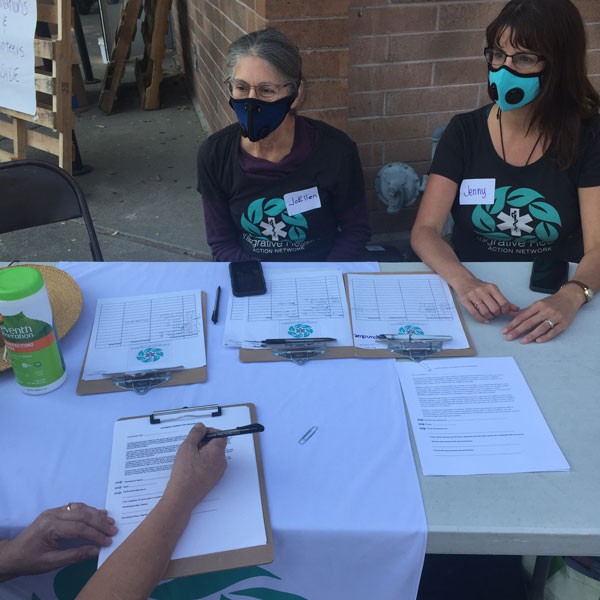
Latino Service Providers (LSP) is a nonprofit organization founded in 1989 to provide access to information and opportunities for engaging our Latinx community. LSP’s mission is to be a bridge across generations for the Latinx community focusing on health and social issues. We do this by developing youth leaders, building awareness and connections to community services and advocating for equity across race and ethnicity. Our vision is that our Sonoma County Latinx community has equitable opportunities to lead healthy, resilient and connected lives. We implement our mission and vision in various ways to engage and seek to connect and collaborate with all community members of Sonoma County.

The growing Latinx population residing in the United States and the corresponding growth in Sonoma County brings great diversity and new opportunities to the county. Working collaboratively to close the achievement gap, reduce stigma around mental health and provide awareness of tools and resources to the Latinx population in Sonoma County helps identify and overcome current obstacles that contribute to the ever-growing disparities in educational and economic achievement, civic engagement and access to healthcare and mental health services.

LSP’s focus on mental health is an important part of the organization’s work because of the disparities that exist in access to mental health services for our Latinx population in Sonoma County. Though Latinxs experience the same prevalence of mental health conditions when compared to the rest of the population, we access services at a lower rate than the rest of the population. In response to this disparity, LSP developed an internship program open to 39 students in Sonoma County. The students, known as Youth Promotores (Youth Community Health Workers), engage their peers, family, friends and community in conversation, workshops and/or presentations on mental health. The goal of the project is to not only engage and educate the Latinx community on mental health issues, but to also help diversify our future health workforce of Sonoma County.

To learn more about Latino Service Providers or to become a member, please visit latinoserviceproviders.org.

Guadalupe Navarro is executive director of Latino Service Providers in Windsor. We welcome your contribution. To have your topical essay of
350 words considered for publication, write op*****@******an.com.

Sister Act

0

The Ross Valley Players conclude their 89th season with a production of Crimes of the Heart, running in Ross through Aug. 11. Beth Henley’s tragicomedy won the 1981 Pulitzer Prize for drama and was followed by a film adaptation starring Sissy Spacek that nabbed three Oscar nominations.

The Magrath sisters are gathered at their grandfather’s home in Hazelhurst, Miss. in support of sister Babe (Margaret Grace Hee) who’s out on bail after shooting her husband in the stomach. Lenny (Jensen Power) is taking care of Grandpa after sister Meg (Chandler Parrott-Thomas) took off to Southern California in pursuit of a singing career.

Things haven’t turned out so well for any of them. Lenny’s given up hope of ever finding love because of a shrunken ovary. Meg, who left a broken heart in town, is back after suffering a breakdown and spending the last year working for a pet food company. Babe will soon stand trial for the attempted murder of her ne’er-do-well husband. Current problems and past grievances will test the bonds of sisterhood.

Full of the absurd and the grotesque for which the style of “Southern Gothic” is known, Henley’s play has six great character roles for actors, and director Patrick Nims filled those roles well. In addition to the three aforementioned sisters, there’s Chick Boyle (Caitlin Strom-Martin), a neighboring cousin with a perpetually upturned nose; Doc Porter (Michel Harris), the man Meg left behind; and Barnett Lloyd (Jeremy Judge), the wet-behind-the-ears defense attorney who’s taken Babe’s case for “personal” reasons.

Henley mines the dark material (suicide, infidelity, attempted murder, etc.) for a lot of humor, and none of it seems cheap. The ability of these women to carry on despite the harshness of their lives and to still have hope for better times to come is one of this show’s appeals. Audiences looking for a little support in their lives might learn a little something from the Magrath sisters.

‘Crimes of the Heart” runs Friday – Sunday through Aug. 11 at the Barn Theatre in the Marin Art and Garden Center, 30 Sir Francis Drake Blvd., Ross. Thurs – Sat, 8pm; Sunday, 2pm. $15 – $27. 415.456.9555. rossvalleyplayers.com.

Tom Waits Appears on New Folk Ballad

0

d7d7c35876b39fa51abac4255edc7dd2It’s been two years since fans heard any new music from Tom Waits, whose been busy acting in films for the Coen Brothers and Jim Jarmusch lately. Now, the longtime North Bay resident has returned to the airwaves as a featured vocalist on guitarist Marc Ribot’s newly released track, “Bella Ciao,” from Ribot’s forthcoming record Songs of Resistance 1948 – 2018, out September 14.
The song is an old Italian folk ballad that is best known as an anthem for Italian resistance fighters during World War II. In a statement, Ribot says, “I played Tom a bunch of the tunes and he immediately bonded with that one. Of course, he brings a certain gravitas to everything he does—my Italian friends say he sounds exactly like an old ‘partigiano’ (resistance fighter)!”
Watch the video below to hear Waits’ take on “Bella Ciao.” (Via Pitchfork)

Gogol Bordello Headlines Upcoming Lagunitas Beer Circus

0

72390e-20190522-gogol-bordello-s-20th-anniversary-tour

What started as small party back in 2009 has grown into a freaktastic celebration of all things weird, wonderful and circus-like. Held in Petaluma, the Lagunitas Beer Circus is a one-of-a-kind experience that combines cold beer, live music and thrilling circus acts in an evening of revelry where you’ll see things you can’t unsee.

Now, 10 years in, Lagunitas Beer Circus is holding its biggest big-top soiree yet, and they’ve recruited gypsy-punk veterans Gogol Bordello to headline the show. The New York City ensemble has been shaking things up since 1999, and their flair for theatrics makes them the perfect band to play the beer circus. The provocative post-modern group lays down the jams alongside a bevy of performers and beers on Saturday, Sept 14, at the Sonoma-Marin Fairgrounds in Petaluma. Tickets are on sale now. Don’t delay, the beer circus usually sells out in advance.

Juiced

0

As summer brought blue skies to the North Bay, a recent editorial in Santa Rosa’s Press Democrat was uncharacteristically out of sync with the editorial stances of California’s two largest newspapers.

Gov. Gavin Newsom was pushing hard on state legislators to rubber-stamp AB 1054, a complex bill that would, among other things, establish a $21 billion “wildfire fund” that would be half funded by ratepayers. If it passed, the state’s investor-owned utilities could dip into the monies to pay for damages from future fires caused by their equipment.

Newsom urged legislators to pass the bill before leaving for the summer break on July 12, citing concerns about the approaching fire season and a threat from Wall Street credit rating agencies to downgrade the lending status of the state’s three utilities.

The L.A. Times and San Francisco Chronicle weren’t persuaded. On July 11, the Times editorial board urged the Assembly to “say no to being rushed by Wall Street into the hasty adoption of a complex law that puts Californians on the hook for billions of dollars.”

“It’s more important to get AB 1054 right than it is to get it passed quickly,” the Chronicle wrote. “The state Assembly must resist the pressure and stop giving this bill a fast run to the governor’s desk.”

For its part, the Press Democrat took an opposite view of the bill. The local paper of record ran an editorial that downplayed criticisms of AB 1054 and urged the Assembly to fast track the controversial bill.

“Despite some claims to the contrary, this bill isn’t a bailout for PG&E or the state’s other investor-owned utilities, Southern California Edison and San Diego Gas & Electric,” the PD‘s July 11 editorial argued. “It does offer them some protection so long as they follow the rules, including spending $5 billion of shareholder funds on fire prevention and submitting wildfire safety plans annually for state approval. … There’s no reason to wait any longer.”

In its editorial, the paper did not disclose that Darius Anderson, managing member of the paper’s parent company, Sonoma Media Investments, is a registered lobbyist for PG&E. Nor did the Press Democrat‘s board of editors, which includes Sonoma Media Investments CEO Steve Falk, disclose that the Rebuild Northbay Foundation, the nonprofit founded by Anderson to receive funds for “rebuilding” fire-devastated communities—is almost entirely funded by PG&E.

Public records reveal PG&E regularly hands out tens of millions of dollars to law firms, lobbyists, and community, business and political organizations as it strives to guide the conversation around the besieged energy corporation’s future, not to mention California’s future in the age of climate disruption.

But one PG&E post-fire contribution to a nonprofit does not appear in paperwork filed with state regulators: On Dec. 26, 2017, PG&E contributed $2 million to the Rebuild Northbay Foundation, the nonprofit founded by Anderson in the wake of the fires. Neither PG&E, the Rebuild Northbay Foundation nor the Press Democrat drew public attention to the generous and tax-deductible contribution.

Billions of dollars of corporate profits are at risk should state government take action to hold PG&E shareholders accountable for corporate negligence. For the quarter preceding the 2017 North Bay fires, PG&E reported a $2.2 billion net profit—an astoundingly profitable 12.5 percent margin, according to net margins posted by macrotrends.net.

Then, back-to-back fire seasons, linked in part to PG&E’s poorly-maintained equipment and aging transmission infrastructures, sent the investor-owned utility’s stock price tumbling.

Suddenly an existential question arose: Would Californians be safer if the badly managed utility’s assets were purchased by the state and municipal utility districts? That was an issue left for another day: although the state has the authority to close down and purchase the utility, state lawmakers and executives have not moved in that direction. Indeed, critics say AB 1054, which Newsom signed into law on July 12, makes it harder for a public takeover of the utility or any of its assets, should that option be raised again.

In the meantime, PG&E continues to invest heavily in legal and political damage control.

By the time the company declared bankruptcy in January 2019, it had paid California and New York City white-shoe law firms $100 million for advice, according to the Wall Street Journal.

In 2017, PG&E disclosed $1.9 million in payments on lobbying efforts. In 2018, PG&E raised the ante to $9.9 million. The powerhouse San Francisco public relations firm Storefront Political Media booked $4.1 million from PG&E in 2018. The same year, the largest electrical-workers local in Northern California, IBEW 1245, reported paying $1.36 million to the same firm, according to a report filed with the U.S. Department of Labor.

Eric Brooks, co-coordinator of Californians for Energy Choice, a statewide grassroots coalition that works to defend and expand local clean energy programs, says AB1054 is, flat-out, a PG&E bailout bill.

“A publicly owned utility will cost less to operate safely than a utility driven by the maximization of short-term shareholder profits,” says Brooks. “AB 1054 reduces incentives for PG&E to seriously change its operations.”

“The less they have to pay for wildfire damages caused by their equipment, the less they are incentivized to fix the underlying causes of those fires.”

In a San Francisco Chronicle op-ed, former CPUC president Loretta Lynch wrote, “The legislation is being presented as the only way to compensate victims and stabilize utilities. But it is shockingly stacked in favor of Wall Street and the utilities, and it repeals the California Public Utilities Commission’s authority to question the companies’ claimed costs and past practices.”

As part of its campaign to shape public policy and public opinion, the utility has sought to influence legislation written by the North Bay’s 3rd District Senator, Bill Dodd, in a variety of ways.

Several organizations that received money from PG&E endorsed SB 901, legislation co-written by Dodd which established a “stress test” to determine how much utilities could pay for damages caused by the 2017 fires without going bankrupt. It also created cost recovery rules for future fires started by a utility’s equipment. Critics of the legislation passed since the 2017 fire such as Brooks assail it as part of an overarching government bailout for a utility that appears to be more concerned with its bottom line than with saving lives.

PG&E’s Influence Machine

How did PG&E—a company with a long record for capitalizing on poorly maintained infrastructure—get bailed out by Newsom and the legislature?

It is, in large part, a simple matter of money, says Carmen Balber, executive director of Consumer Watchdog, a nonprofit that tracks political spending. “PG&E has a pattern of throwing money around whether it be in TV advertising, lobbying or community contributions to try to dampen criticism and protect its financial interests.”

PG&E disclosed about $28 million in contributions to nonprofits and community-based organizations each year since 2016, according to reports filed with the California Public Utilities Commission, the state body tasked with overseeing the utility.

PG&E has contributed $190,000 to the A. Phillip Randolph Institute San Francisco Chapter over the past two years. In 2018, the group, which represents African-American trade union workers, endorsed Dodd’s SB 901.

Another major recipient of PG&E cash is the California Fire Foundation. In 2017 and 2018, PG&E contributed a total of $350,000 to the foundation, which is owned by the California Professional Firefighters, a labor council that signed on as a supporter of SB 901. PG&E also contributed $450,000 to the Bay Area Council Foundation over the same two years. The Bay Area Council, the foundation’s business-advocacy group, supported SB 901.

Documentation of PG&E’s $2 million contribution provided by Rebuild Northbay Foundation’s executive director, Jennifer Gray Thompson, shows an employee of Anderson’s Sacramento-based lobbying firm, Platinum Advisors, invoiced the utility for $2 million on behalf of the Rebuild Northbay Foundation on Dec. 1, 2017, three days after Anderson filed incorporation paperwork for the nonprofit. State records also show that in March 2018, Platinum Advisors added PG&E as a client.

The Rebuild Northbay Foundation’s 2018 annual report lists PG&E as a donor of “$10,000 Or More.” But the distinction could also apply to a separate, $11,000 contribution the utility gave to the Rebuild Northbay Foundation in 2018, which is also listed in the 2018 CPUC report.

Why didn’t the Rebuild Northbay Foundation trumpet receiving a $2 million donation from PG&E? Rebuild Northbay Foundation’s executive director Thompson says via email that she has told “anyone who asks” about the donation, including all of the neighborhood leaders the group has worked with.

“[PG&E] was not looking to be applauded. At no time did anyone or anything indicate to me it was a secret,” says Thompson.

On Oct. 19, 2017, PG&E trumpeted a press release announcing $3 million in contributions to an array of North Bay nonprofits, including a $2 million donation to the local Redwood Credit Union’s Fire Relief Fund.

A review of PG&E’s press releases reveals the company did not make a similar announcement about donating $2 million to the Rebuild Northbay Foundation, even though it was a newsworthy contribution: PG&E’s initial $2 million outlay to the Rebuild Northbay Foundation accounted for 85 percent of the nonprofit’s revenue through April 9, 2019, according to the list of donations provided to the Bohemian by the Rebuild Northbay Foundation.

When shown a copy of the check issued to the Rebuild Northbay Foundation by PG&E, Terrie Prosper, head spokesperson at the CPUC, would not say whether the utility’s undisclosed contribution violated commission rules. A follow-up response from public information officer Christopher Chow indicates the agency has not investigated the matter. “We cannot comment on the issue before we have looked into it,” says Chow.

PG&E spokesperson Deanna Contreras says the utility did not disclose the initial $2 million contribution because the Rebuild Northbay Foundation was not a registered nonprofit at the time of the contribution. Contreras did not respond to subsequent inquiries about the donation.

The distinction made by Contreras does not hold up to scrutiny. General Order 77-M, the CPUC rule requiring the state’s three largest utilities to disclose a variety of expenses including executive compensation, legal fees and contributions to outside organizations, does not distinguish between registered and unregistered nonprofits.

Charity or Lobbying?

Consumer Watchdog’s Balber says the fact that a soon-to-be PG&E lobbyist incorporated a nonprofit funded primarily by PG&E muddies the ethical waters. And then there is the issue of press coverage.

“Making a charitable contribution of $2 million to a nonprofit designed to help victims of the wildfires is not a problem. What does raise eyebrows is that the owner of a local newspaper covering PG&E is also a PG&E lobbyist and the operator of the nonprofit,” he says.

“That certainly brings into question whether the Press Democrat’s coverage of PG&E and the serious damage it has caused to the community is completely independent of the owner’s financial interests and editorial input,” adds Balber.

It’s also not clear how the Rebuild Northbay Foundation has spent the $2 million from PG&E so far.

A December 2017 letter from PG&E’s Travis Kiyota sent to the Rebuild Northbay Foundation along with the utility’s contribution specifies the funds are not to be used for political activities. “It is our understanding that these funds will not be used for federal, state, or local campaign activity, including independent expenditures to support or oppose candidates for elective office or lobbying efforts,” Kiyota’s letter states in part.

In an email to the Bohemian, Thompson says the Rebuild Northbay Foundation has held to a “very conservative” budget so far, tending to raise funds for projects individually rather than dipping into the PG&E pot.

Thompson says PG&E’s money has been mixed with other contributions into a “general fund.” She acknowledges that some of the utility’s money has gone to ongoing costs, including the salaries of several employees and at least one contractor.

The nonprofit’s board of directors will review and approve tax forms and an internal audit covering the Rebuild Northbay Foundation’s first fiscal year at a July 29 meeting, according to Thompson.

Until very recently, PG&E executives served on the Rebuild Northbay Foundation’s board of directors since it was founded by Anderson out of the Sacramento office of his lobbying business, Platinum Advisors. Anderson served on the board until he resigned earlier this year.

According to public records, the Rebuild Northbay Foundation’s official address remains the same as Platinum Advisor’s. Platinum Advisor’s Chief Financial Officer, Charles Fina, is overseeing the Rebuild Northbay Foundation’s tax filings, according to Thompson.

Rebuild Northbay Foundation board member Steven Malnight was a senior vice president for energy supply and policy at PG&E. He served on the board until April 2019 even as he was employed by PG&E as strategist for its corporate lobbying efforts.

Brian Bottari, until recently PG&E’s North Bay public affairs manager, replaced Malnight on the board. Bottari influences political endorsements and expenditures as chair of the Santa Rosa Metro Chamber’s Political Action Committee and as a member of the Sonoma County Alliance’s Political Action Committee. According to his LinkedIn profile, Bottari took a job with Comcast in May.

According to state records, in Sept. 2017, PG&E contributed $12,500 to the Sonoma County Alliance’s PAC, followed by $10,000 in Nov. 2018. In 2018, PG&E contributed $6,000 to Metro Chamber’s PAC and $5,000 to a committee backing Measure N, a housing bond on the Santa Rosa ballot.

In short, two PG&E executives engaged in lobbying and exerting local political influence have governed the PG&E-funded Rebuild Northbay Foundation, which was created by a PG&E lobbyist who owns most of the print media in the North Bay, including the Press Democrat, Petaluma Argus-Courier, Sonoma Index Tribune, North Bay Business Journal, Sonoma Magazine, Spirit Magazine, La Prensa Sonoma and Emerald Report.

The Dodd Factor

In addition to shaping public perception through lobbying and charitable donations, PG&E-funded entities help finance the campaigns of many North Bay politicians, including state Senator Dodd, who has been influential in crafting legislation that impacts PG&E since the fires.

He’s not alone in accepting campaign cash from the utility. ABC 10, the TV news station in Sacramento, recently reported PG&E made direct contributions to 80 percent of sitting state lawmakers since 2017.

But Dodd has benefited from utility largesse. In 2016, two independent expenditure committees backed by utilities helped Dodd win his Senate seat. Californians For Jobs and A Strong Economy, which received $280,000 from the state’s three utilities, spent $656,657 on mailers, consultants and phone banks in support of Dodd’s campaign. The same year, PG&E gave $30,000 to Building and Protecting A Strong California, an independent committee that spent $89,011 backing Dodd.

All told, Dodd’s committee and the independent committees backing him spent $5.9 million, dwarfing the $569,000 supporting his opponent, according to an analysis by the Davis Enterprise.

In early 2018, Dodd was selected to chair the Wildfire Preparedness and Response Legislative Conference Committee, a committee tasked with writing legislation meant to deal with worsening wildfire seasons and to regulate the role of utilities in the deadly fires.

On the surface, Dodd was a logical choice. His district includes parts of Napa and Sonoma counties, parts of which were devastated by the October 2017 North Bay wildfires.

However, while writing and considering legislation to regulate PG&E in 2018, Dodd received a range of benefits from the utility and affiliated organizations, raising questions about whether he was influenced by the utility.

Dodd regularly attends events hosted by the California Foundation on the Environment and the Economy, a corporate-funded nonprofit associated with a variety of business and labor interests.

CFEE’s Board of Directors includes PG&E’s director of state government relations and executives from Sempra Energy Utilities and Southern California Edison, as well as representatives from four IBEW chapters, the labor union that represents utility workers.

In 2018, PG&E contributed $60,000 to the foundation, according to a report filed with the CPUC. IBEW 1245, the union’s Vacaville local, contributed $51,533 to CFEE in 2018, according to a report filed with the U.S. Department of Labor.

In March and April 2018, Dodd attended two CFEE policy conferences in the North Bay and took a weeklong trip to the Netherlands with five other state lawmakers. The trip to the Netherlands was described as an opportunity to study that country’s approach to dealing with climate change and sea level rise.

CFEE chipped in $11,994.22 to send Dodd to the Netherlands, according to Dodd’s 2018 financial disclosure report.

A representative from CFEE told the Los Angeles Times in March that the trips offer an opportunity for lawmakers to meet policy leaders from other countries and gain a “broader understanding of complex issues.”

But critics say business-funded trips can muddy the public’s understanding of the policy-making process and create a perception that lawmakers are unduly influenced by the trip’s sponsors. And besides, CFEE’s rationale for its trips doesn’t hold up, says Balber, who has researched the group’s junkets.

“Lawmakers can learn everything they need to know about any issue right here in California,” she says. “The overseas trips are an opportunity for lobbyists and business executives to get face time with lawmakers.”

In a statement, Dodd says “I have not accepted any political contributions from PG&E since the 2017 wildfires and I do not intend to. I’ve done everything I can to make sure PG&E is held accountable for its past misdeeds and that its malfeasance doesn’t lead to new wildfires. Indeed, my legislation ensures no ratepayer money goes toward executive compensation at PG&E, increases penalties for violations, sets expansive new safety standards and compliance audits, and helps victims get compensated. I will continue standing up for ratepayers and victims.”

But as hearings on SB 901 picked up over the summer, Dodd hosted a fundraiser attended by PG&E and its allies, with embarrassing consequences on one occasion.

On Aug. 7, 2018, Dodd was filmed by Consumer Watchdog as he rushed through a committee hearing to attend a fundraiser for his committee, Bill Dodd for Senate 2020, one block from the state capitol. In the video, Dodd walks into a Sacramento bar for the fundraiser, followed by three lobbyists for PG&E and IBEW, the electric workers union.

The episode filmed by Consumer Watchdog received a lot of attention in Sacramento’s political circles, notes Balber. Dodd’s spokesman, Paul Payne, says the senator did not accept any contributions from PG&E at the Aug. 7 fundraiser and that “no lobbyists attended any fundraisers for Sen. Dodd on behalf of PG&E.”

On Sept. 21, 2018, the day then–Gov. Jerry Brown signed SB 901 into law, Dodd held a fundraiser at the Wing and Barrel Ranch, the high-end hunting club in southeast Sonoma County owned by Anderson.

A month later Dodd attended an invitation-only retreat held at Ramekins Culinary School in Sonoma that was hosted by Anderson for politicians and Platinum Advisor clients. Dodd was a speaker at the Oct. 17 event, billed as the Platinum Advisors First Annual Client Retreat.

The senator spoke alongside Jennifer Gray Thompson from the Rebuild Northbay Foundation, and Steve Falk, the CEO of Sonoma Media Investments, according to a summary of the event obtained by the Bohemian.

According to documents obtained by the Bohemian, Dodd, Thompson and Falk provided retreat attendees, including elected officials, Platinum clients, corporate representatives and Sacramento lobbyists, with a “a snapshot into wildfire recovery.”

While it’s not clear what exactly the panel discussed, the presence of a newspaper executive, the director of a PG&E-funded nonprofit and a sitting politician charged with regulating utilities at a party thrown by PG&E lobbyists tell a story of Anderson and the utility’s influence.

Sonoma Media Investments and Anderson did not respond to the Bohemian’s requests for comment.

The Power Brokers is a series on the intersection of politics and power in the North Bay and beyond. Peter Byrne contributed to this article. He was supported in part by a grant from the Fund For Investigative Journalism.

Fish On

0

Bob Dooley has been fishing since he was 11, having spent most of that span as a boat owner, often traveling up the West Coast to the waters off Alaska, searching for pollock and other whitefish.

Now 65 and retired, Dooley serves on the Pacific Fishery Management Council, weighing in on regulatory policy. The Half Moon Bay fisherman realizes the term “fishery management” has at times been cast as a bad word among fishermen, especially those from the generation prior, but Dooley credits the federal regulations with keeping the nation’s fisheries sustainable and letting populations rebound—ultimately giving fishermen like himself a shot at a career.

The backbone of this whole framework is the 1976 Magnuson-Stevens Fishery Conservation and Management Act. Among its provisions, it outlined a system to create fish allotments for individual fisheries. Congress has reauthorized the act a few times over the years, most recently in 2006. In the years since, efforts to revisit the law have stalled out before netting any results. Now, U.S. Rep. Jared Huffman (D, San Rafael) is starting a “listening tour” to get perspectives on how to improve Magnuson–Stevens. Huffman plans to introduce a bill to tackle the reauthorization within the next year.

Looking ahead, Dooley says Congress may take this important opportunity to clarify wording that often gets misinterpreted. By and large, though, he’s hoping that legislators hold interest groups at bay.

“The problem is when you open the door, a lot of special interests can climb through. It’s a good act, and I don’t think we need to fool with it much,” he says.

As the recently elevated chair of Congress’ Democrat-controlled Water, Oceans and Wildlife Subcommittee, Huffman says his goal is to help manage oceans and fisheries “to be as environmentally and economically resilient as possible.” He’s asking how issues like global climate change should be considered in a revised version of the act.

Noah Oppenheim, executive director of the Pacific Coast Federation of Fishermen’s Associations, is looking forward to the listening tour. Oppenheim has his doubts about how Congress can make any legislative progress on global warming under a White House that denies the existence of climate change. Nonetheless, he believes the opportunity will prompt fishermen to start thinking more globally and get involved outside of the individual policies undertaken by local fishery councils.

Representative Huffman, for his part, enjoys support from an environmental community that’s aligned with his values. Huffman riding herd over the process, Oppenheim says, “will be an interesting dynamic to watch.”

“He needs to understand,” he says, “that fisheries management is about the industry first,” and that the Magnuson-Stevens Act wasn’t intended to shut down the industry, but to figure out how to make it work in a manner that’s sustainable for fish and fishermen alike.

Oppenheim knows full well that fishing has an impact on fish stocks.

“We’ve brought back many stocks from the brink,” he says. He adds that California fishermen have, if grudgingly, “throttled back their activities to protect them.” Overfishing is one issue, but it’s “climate impacts and industrial activities outside of fishing,” he says, “that are the biggest impact” on fish stocks.

Oppenheim explains that lawmakers should take a hard look at any offshore industry development as they study reauthorization. He says external threats to fishermen’s livelihoods—offshore oil and gas rigs and wind farms—should be a part of the discussion. Concerned about the impacts of a proposed wind farm south of the Monterey Bay Sanctuary National Marine Sanctuary, Oppenheim notes that the current law doesn’t allow for any regulation of industries that might have a deleterious impact on fishermen’s livelihoods. The Bureau of Energy Management oversees the leasing for such projects.

With Huffman still testing the winds on this topic, it’s unclear which direction policy discussions might take.

Tobias Aguirre, CEO of the nonprofit advocacy group Fishwise, believes Congress should strengthen the act’s environmental aim to let fisheries continue rebounding. “We need to keep our foot on the gas,” says Aguirre. Fishwise has been collaborating on the international Seafood Alliance for Legality and Traceability, which aims to improve transparency in global seafood markets. Fishwise’s next mission, he says, will be improving the working conditions of fishermen.

The livelihoods of fishermen is certainly a chief concern of Oppenheim.

A fisherman himself, he’s the first to admit that fishermen have occasionally been part of an “anti-science” agenda when it has suited them, but he also says they provide valuable data to scientists and regulators. “Fishermen can both be far better observers of ocean conditions and the real-time status of fisheries,” he says, “and simultaneously be in denial over the impacts that broad-scale fishing can have over time.”

But it’s also true that the science isn’t always right, he adds. Scientists have missed the mark when it comes to fish stocks—surveys have been wrong. The bottom line for Oppenheim when it comes to fisheries management is that “we’re doing better than we ever have in the past,” though there’s much to be done. He believes the “ship can be righted to some extent by bringing in the fishermen,” especially small-scale operators. “One of the more interesting things to note about fish politics is to notice how ‘flipped’ it is,” he says. “The quote-unquote ‘liberal’ politics of egalitarianism and support for communities” has not been the traditional Democrat approach, he argues.

At the same time, conservative lawmakers pegged with being too pro-business at the expense of the environment, he says, have in fact led the charge to focus on localities and small-time operators.

“Fundamentally, liberals should be about supporting communities,” Oppenheim says as he pines for a post-partisan fisheries management debate. “Partisanship in fisheries is terrible, counterproductive and we’ve been seeing too much of it lately.”

Art Market

0

Since opening in 2013, the Barlow has become west Sonoma County’s hub of local artisans and crafters, with over a dozen acres of industrial-chic structures currently housing brewers, distillers, restaurants, retail space, art galleries and more.

Much of that was in jeopardy during February’s flood, but the businesses that survived or opened since are savoring the summer weather. Now, the Sebastopol marketplace is unveiling a daylong celebration to showcase art and local businesses on Saturday, July 27.

The walkable art show is curated by Sebastopol artist Saree Robinson and encompasses the entire marketplace, with 10 newly painted mini-murals on display and special showings and events at venues throughout.

“I did a public art project in Petaluma along American Alley with O-Positive Festival in 2015,” Robinson says. “I wanted to do something like that in Sebastopol because I love this town and I want to see more public art here.”

Sonoma County artists selected by Robinson and a jury painted 10 murals, which feature a range of styles and techniques, from the graffiti-inspired art of Ricky Watts and Rhett Johnson, to the whimsically nature-influenced paintings by Angela Hunter Geiss and Mica Jennings (pictured). Local educational nonprofit group ArtStart even got in on the murals and contributed one created by several local summer art
camp students.

In addition, the Barlow’s three resident galleries—Adelle Stoll, Lori Austin Gallery and Gallery 300—will offer indoor-outdoor exhibits, and several Barlow business are hosting their own. .

Other artists whose work will be featured include Bradley Jacob Cox of Giant Eye Photography, West Coast mixed-media artists Sarah Hessinger and Nate Valensky, and Petaluma-based Michael Garlington, an internationally acclaimed photographer, sculptor and installation artist best known for his work with partner Natalia Bertotti.

Participating Barlow businesses include Sebastopol Community Market, Pax Wine Cellars, the Farmer’s Wife, Fern Bar, Woodfour Brewing Company and Crooked Goat Brewing—who will be hosting live music as well—among others.

“There’s a lot of great art involved in this event,” Robinson says. “I would love to see the entire community turn out and celebrate and support our
local artists.”

Hella Firkin

0

You may know the story about the fox and the grapes. In a nutshell: fox can’t get grapes, so fox disparages grapes as sour. Fewer know the one about the firkin and the mill.

Mad Fritz Brewing Company’s eclectic label designs depict scenes from Aesop’s Fables, such as the story about the fox and the grapes, as re-imagined in a series of 17th century prints. Bohemian readers liked them so much, they voted Mad Fritz “best beer label in Napa” in the 2019 Reader’s Poll. But there’s more to the story than a pretty picture.

Brewer Nile Zacherle has been working toward the ideal of making a beer of true terroir, or as he calls it, “origin beer,” since he founded the brewery in St. Helena a half decade ago. That means the hops are, increasingly, locally sourced, and the barley, if it’s not from a small, Colorado or Pacific Northwest farm-and-malt house, may even be grown in Napa Valley.

Does it make a difference? Of course it does. “I like to say, our beers are for the beer nerd,” Zacherle says, quickly adding, “You don’t have to be. But this is a deep dive into beer nerdom.”

Zacherle recently opened a tiny tap room in St. Helena behind the Clif Family Velo Vino tasting room on Highway 29 south of town. It’s pretty spare, equipped mainly with beer and record albums. “We’re all about the beer and the vinyl,”
says Zacherle.

You like IPA, they’ve got IPA: Oast House IPA is made with Columbus hops. Everything here is cask-conditioned, like a home brew, meaning the secondary fermentation—which adds bubbles—happens in the bottle or the keg. There’s a big, fresh, citrusy aroma of Meyer lemon here.

This August, Mad Fritz marks its fifth anniversary with a one-of-a-kind, catered beer fest, that a dozen or so other breweries and wineries will help celebrate. A quick look at the lineup reveals it’s smaller, yet deeper, than your average beer fest—check out Logsdon Farmhouse Ales, for one. The event benefits the Bale Grist Mill, where Zacherle grinds his blue corn.

The Larks in the Corn pale ale has an aroma reminiscent of fresh-cooked tortilla, for sure, and although it’s barrel aged, like all Mad Fritz beers, it’s absolutely fox friendly—that is, it isn’t a “sour” at all.

Mad Fritz tap room, 1282B Vidovich Ave., St. Helena. Open Thurs–Mon, 12:30–6pm. 707.968.5097. Mad Firkin Fest, Bale Grist Mill State Historic Park, 3369 St. Helena Hwy., St. Helena. August 3, 2019, 1–5pm. $95. madfirkinfest.com.

Sláinte!

0

Drawing from his Irish heritage and punk upbringing, Sonoma native and multi-instrumentalist Tony Gibson feels right at home when he’s fronting folk-rock revivalists the Gentlemen Soldiers on stages and at festivals throughout the Bay Area.

“We’re a fun band, we really enjoy performing for people, but we also enjoy each other onstage,” says Gibson.

The band’s been an Irish-music institution for nearly a decade, and now they’re sizing up a proper debut album—slated for release later this year—and making July feel like March when they perform in Novato on July 26 and in Petaluma on July 27.

Gibson, who moved back to the North Bay after working in the Southern California music business in the early 2000s, started the band in 2011 with high school friends and musicians Marcos Garcia (guitar and vocals) and JB Duff (drums and vocals) as a way to celebrate Saint Patrick’s Day at Murphy’s Irish Pub in Sonoma.

“We decided we wanted to put a sort of Pogues-ish band together,” Gibson says. “We spent the first three years grinding through the Sonoma music venues. Eventually, we took a direction forward to playing throughout the Bay Area.”

The group recruited bassist Emily Froberg a few years back and plays a mix of traditional and modern Irish songs and other folk tunes with an upbeat rhythm and acoustic instrumentation accompanied by stirring harmonies. While this sound made them a mainstay on North Bay stages for eight years, they weren’t able to commit to a recording until now.

Furthermore, Gibson is looking ahead musically and plans to write more original material and fill out the band’s live sound. Having learned mandolin in addition to guitar, he’s now practicing Irish Bouzouki, which lies somewhere between the two instruments.

“We’ve got a little bit of everything,” Gibson says, of the music. “It’s rowdy, but it’s playful. It’s a good time; and in times like these, it’s good to seek out good times.”

Gentlemen Soldiers play on Friday, Jul 26, at Finnegan’s Marin (877 Grant Ave., Novato. 9pm. Free. 415.899.1516) and Saturday, Jul 27, at the Big Easy (128 American Alley, Petaluma. 8pm. 707.776.7163.

Facts Matter

There is this toxic rhetoric when the president says “send them back.” He is telling you that America is only for white people. Do Trump supporters who approached the Lights for Liberty Vigil in Petaluma recently know the following facts?

White immigrants did not universally “assimilate” and not all had papers. Twenty-two percent of adult white immigrants did not speak English in 1910. Thirty-eight percent of adult white immigrants did not have papers in 1920. Undocumented Americans paid $23.6 billion in federal income taxes in 2015. Like everyone else they pay for highway repairs, police, firefighters, public schools and social security to list a few.

Immigrant adults in 2016 had been in the U.S. more than 10 years, compared with 41 percent in 2007.Undocumented immigrants increasingly arrive by plane, not the border. In 2014, 42 percent of all undocumented Americans in the U.S. were “overstays.” This trend is expected to continue.

Perhaps those individuals choose to ignore the truth. By keeping silent, you then allow someone to tell a Latinx family to stop playing Spanish music, hate symbols are “innocent” and it’s acceptable for white males to approach a peaceful vigil to intimidate and spread fear. Welcome to Petaluma.

Petaluma

I Predict

Contrary to what one previous reader predicted will happen (“Letters to the Editor, July 17, 2019), the chief racist, rapist, treasonous Trump will take a dump in the next election. The people in the United States by an overwhelming margin will elect a democratic president who can bring back honor, truth, and civility to the White House. They want a president who will instigate human treatment of migrants coming across the border, offer Medicare for all, a living wage and labor rights, free college for those who want it, renewable energy, clean water in Flint, hold Wall Street accountable and tell the truth. I predict on the day of the inauguration, the second the Democratic president is sworn in and Trump becomes an ordinary citizen, a team of FBI agents will descend on Trump, arrest is sorry ass, and carry him off in handcuffs in front of the millions watching on television and in front of millions of cheering citizens watching at the National Mall.

Via Bohemian.com

Craters

Congratulations to Sonoma County for commemorating the lunar landing anniversary—by making our roads replicate the moon’s surface.

Occidental

Write to us at le*****@******an.com.

Closing the Gap

Latino Service Providers (LSP) is a nonprofit organization founded in 1989 to provide access to information and opportunities for engaging our Latinx community. LSP's mission is to be a bridge across generations for the Latinx community focusing on health and social issues. We do this by developing youth leaders, building awareness and connections to community services and advocating for...

Sister Act

The Ross Valley Players conclude their 89th season with a production of Crimes of the Heart, running in Ross through Aug. 11. Beth Henley's tragicomedy won the 1981 Pulitzer Prize for drama and was followed by a film adaptation starring Sissy Spacek that nabbed three Oscar nominations. The Magrath sisters are gathered at their grandfather's home in Hazelhurst, Miss. in...

Tom Waits Appears on New Folk Ballad

It's been two years since fans heard any new music from Tom Waits, whose been busy acting in films for the Coen Brothers and Jim Jarmusch lately. Now, the longtime North Bay resident has returned to the airwaves as a featured vocalist on guitarist Marc Ribot's newly released track, “Bella Ciao,” from Ribot's forthcoming record Songs of Resistance 1948 – 2018, out...

Gogol Bordello Headlines Upcoming Lagunitas Beer Circus

What started as small party back in 2009 has grown into a freaktastic celebration of all things weird, wonderful and circus-like. Held in Petaluma, the Lagunitas Beer Circus is a one-of-a-kind experience that combines cold beer, live music and thrilling circus acts in an evening of revelry where you’ll see things you can’t unsee. Now, 10 years in, Lagunitas Beer Circus is holding...

Juiced

As summer brought blue skies to the North Bay, a recent editorial in Santa Rosa's Press Democrat was uncharacteristically out of sync with the editorial stances of California's two largest newspapers. Gov. Gavin Newsom was pushing hard on state legislators to rubber-stamp AB 1054, a complex bill that would, among other things, establish a $21 billion "wildfire fund" that would...

Fish On

Bob Dooley has been fishing since he was 11, having spent most of that span as a boat owner, often traveling up the West Coast to the waters off Alaska, searching for pollock and other whitefish. Now 65 and retired, Dooley serves on the Pacific Fishery Management Council, weighing in on regulatory policy. The Half Moon Bay fisherman realizes the...

Art Market

Since opening in 2013, the Barlow has become west Sonoma County's hub of local artisans and crafters, with over a dozen acres of industrial-chic structures currently housing brewers, distillers, restaurants, retail space, art galleries and more. Much of that was in jeopardy during February's flood, but the businesses that survived or opened since are savoring the summer weather. Now, the...

Hella Firkin

You may know the story about the fox and the grapes. In a nutshell: fox can't get grapes, so fox disparages grapes as sour. Fewer know the one about the firkin and the mill. Mad Fritz Brewing Company's eclectic label designs depict scenes from Aesop's Fables, such as the story about the fox and the grapes, as re-imagined in a...

Sláinte!

Drawing from his Irish heritage and punk upbringing, Sonoma native and multi-instrumentalist Tony Gibson feels right at home when he's fronting folk-rock revivalists the Gentlemen Soldiers on stages and at festivals throughout the Bay Area. "We're a fun band, we really enjoy performing for people, but we also enjoy each other onstage," says Gibson. The band's been an Irish-music institution for...

Facts Matter

There is this toxic rhetoric when the president says "send them back." He is telling you that America is only for white people. Do Trump supporters who approached the Lights for Liberty Vigil in Petaluma recently know the following facts? White immigrants did not universally "assimilate" and not all had papers. Twenty-two percent of adult white immigrants did not speak...
11,084FansLike
4,606FollowersFollow
6,928FollowersFollow