Go to Church

0

David Bowie once said, “Music itself is going to become like running water.” He was talking about how people never think of their tap water: They wash dishes in it, they drink it and the water becomes so commonplace that it’s taken for granted until it’s not there.

For many artists and audiences in the North Bay, the tap for live-music experiences in downtown Santa Rosa has been stuck on low-flow for some time. And people are starting to notice.

Make no mistake, there are a number of bars, clubs and coffeehouses in town that host bands; but for intimate, engaging concerts in a devoted theater space, nothing has quenched Santa Rosa’s musical thirst quite like the newly opened nonprofit venue the Lost Church.

Located on Mendocino Avenue, three blocks off of Courthouse Square, the Lost Church is a 99-person, fully seated listening room that follows in the footsteps of the San Francisco venue of the same name.

That original venue, located in San Francisco’s Mission District, is the brainchild of musicians Brett and Elizabeth Cline, who took their irregularly shaped house and turned the living room into a venue.

When the Clines began looking to expand their Lost Church into a multi-venue project, they contacted North Bay musician, producer and promoter Josh Windmiller, whose work includes founding and running the popular Railroad Square Music Festival (returning on June 14, 2020) as well as playing in bands such as the Crux.

“I never thought I’d be the venue guy,” says Windmiller. “But this is a perfect fit for me. I want to create art, be around artistic people and I want my fellow music makers to thrive.”

When Windmiller met Brett and Elizabeth and found out they wanted to expand their theater model to other communities and make them sustainable, nonprofit ventures, he jumped at the chance to help make it happen.

“”This is our proof of concept, to show that spaces like this are possible in our community,” Windmiller says.

In the works since late 2018, the Lost Church boasts warm acoustics, charming décor and a focus on live music, with a stage set under chandeliers and vines.

“The whole thing feels like a post-apocalyptic cabaret space,” Windmiller says. “It feels like we’ve sequestered ourselves in this building where vines are growing, but we’ve decked it out with beautiful art and stained wood and intimate lighting, and it has a good vibe.”

While Executive Director Brett Cline was a driving force in the building and design of the Santa Rosa venue, the running of the theater is entirely in the hands of the North Bay community. On the ground floor of the project from day one, Windmiller is now the venue’s development director.

“The San Francisco people aren’t going to begin to pretend that we don’t have a pretty awesome scene up here,” says Windmiller. “And honestly, the only thing we have a dearth of is places to play—there is an unequal representation of artists to venues. We have some really great venues, but not enough of them that can take a risk on up-and-coming artists and not a lot that can host a show in a place that is this intimate.”

“I like the aspect of what they are trying to build there, in that it seems to be music focused,” says Philip Pavliger, a Santa Rosa photographer who works with Windmiller on events like Railroad Square Music Fest. “Santa Rosa has a fair number of venues, but there didn’t seem to be a place where local artists could go to try out new material in front of an audience.”

When Pavliger heard about the Lost Church, he took the chance to shoot a new exhibit, “Rhapsody of Nine,” featuring photo portraits of local musicians in the venue. The photos are currently on display nearby at Acre Coffee on Fourth Street.

“There’s an amazing amount of talented people here in the area,” Pavliger says. “For me the idea is to help support and grow something I think the city could really use.”

So far, the Lost Church has consistently hosted attentive and enthusiastic audiences, and Windmiller says the venue is ideal for smaller acts, solos, duos or stripped-down bands because they don’t have to try to cut through distractions.

“There’s definitely a place for cafes, clubs and bars—those are some of the main places I’ve played with the Crux,” Windmiller says. “But there’s a certain vibe and experience that one finds in a theater, and this is a small theater, this is a parlor room, and that’s so exciting to be creating here.

“Our belief and our conviction is that live experience can be sustained, loved and can grow through being different from those experiences that we find in the digital era. Where Netflix and YouTube can provide privacy and distance from the performer, live experiences can provide intimacy, engagement and evenings with the community and art that will be unforgettable. What we need to do is sustain a place where new acts and even established artists can have those experiences with an audience.

“Maybe the time we’re living in is post apocalyptic, maybe the internet has destroyed the world like a robot uprising, and indeed we are creating a theater from the ruins of the old world.”

County Seeks First Youth Poet Laureate

0

Sonoma County students between ages 13 and 19 who have a passion for writing poetry are encouraged to apply to be recognized as the inaugural Sonoma County Youth Poet Laureate.

Following in the footsteps of national youth poet laureate programs, California Poets in the Schools is on the hunt for a Sonoma County student who has shown a commitment to the arts through writing and engagement in clubs or afterschool activities.

Interested students can apply online by March 13, and the youth poet laureate will win $500 and have a chapbook of their poetry published as well as participate in several public functions.

With the application, three of the student’s poems must be submitted, totaling no more than 10 pages. A committee of respected local poets will review applications and choose finalists, who will need an adult sponsor and who will be asked to attend a judging session.

The winner will be announced in late April, and the inauguration will take place on May 2, at the Santa Rosa Central Library, in conjunction with a countywide youth poetry reading event.

State Delivers Trailers to Shelter Homeless

On Thursday, Feb. 27, CalTrans towed 10 FEMA-owned travel trailers from Chico to Sonoma County’s administrative campus in Santa Rosa to help temporarily house some of the thousands of people estimated to lack access to formal housing in the county.

As of press time, details about how many people the trailers will shelter—and for how long —remained unclear.

According to the Press Democrat, Sonoma County Board of Supervisors Chair Susan Gorin significantly reduced her estimate for how many people the trailers could each hold after seeing them in person. All told, they will shelter between 20 and 30 people, Gorin told a reporter.

The Sonoma County Board of Supervisors is expected to discuss possible locations and uses for the trailers at their Tuesday, March 10 meeting.

Sheriff’s Deputy Blount Retires

A Sonoma County Sheriff’s Deputy involved in the incident leading to the death of a Petaluma man last November, retired from the department last week.

David Ward died shortly after an interaction with officers from the Sheriff’s Office and Sebastopol Police Department.

The Marin Coroner’s Office has not yet released a cause of death, but a video of the interaction shows that Charles Blount, a longtime Sonoma County Sheriff’s Deputy, attempted a controversial neck hold through Ward’s car window and slammed Ward’s head against the car door during the interaction.

In a statement released in December, Sheriff Mark Essick called Blount’s conduct captured in the video “extremely troubling.” Essick announced in the same statement that he had begun the process of firing Blount.

Blount initially hired a lawyer and appealed the termination proceeding. However, on Feb. 7, he retired.

The Santa Rosa Police Department’s criminal investigation and the Sheriff’s Office’s administrative investigations into Ward’s death will continue.

Reading Room

0

Nestled among majestic redwoods and within walking distance of Sonoma State University, the Sitting Room, a community library focused on books by and about women, is a welcome place of respite for study, focus and quietude.

“Its focus is on women, but it is open to all, free and always growing,” says Karen Petersen, cofounder of the Sitting Room and Librarian at the Herold Mahoney Library on Santa Rosa Junior College’s Petaluma campus.

Peterson and J.J. Wilson, Professor Emerita, Sonoma State University cofounded the Sitting Room in 1983, along with an enthusiastic group of book lovers who “donated books, held salons and celebrated the cultural contributions of women artists and writers,” says Petersen. “People just brought books, it was very touching. It started out very small and then it grew.”

Inspired by the Morrison Reading Room at the UC Berkeley University Library where Petersen and Wilson were students, they conceived the Sitting Room as a retreat and quiet space for anyone to come read and study.

Today the unique, nonprofit community organization houses over 7,000 books, including a small lending library and exceptional literary collections devoted to Virginia Woolf, poetry, art and fiction. It is also a place for writers to work, learn and share.

While visiting and browsing the library is a special experience, its titles are fully searchable at the Sappho archive online (librarycat.org/lib/Sitting_Room).

“From its beginnings in a Cotati storefront, the Sitting Room has always made a special place for local writers and of course students,” says Petersen. “Our workshops, book groups and programs featuring regional poets and novelists shine an important and valued light on the rich literary culture of our region.”

Petersen remembers the recently deceased local writer Susan Swartz.

“The late Susan Swartz was a beloved member of the Sitting Room family and we were looking forward to hearing her read from her new novel, Laughing in the Dark, on March 15,” Petersen says. “We will still host a reading on that date with local author Barbara Baer and a chance to remember Susan and her inspiring, funny, tragic writing.”

The Sitting Room’s Writer in Residence program introduces the public to various featured writers, workshops, readings and performances. Current writers include Patti Trimble, a spoken-word artist performing her work Penelope at the Sitting Room on June 6, and Sonoma County Poet Laureate Maya Khosla and her fire-inspired Local Legacy Project.

“Cofounder J.J. Wilson has begun a special series devoted to rediscovering lesser-known women writers such as Dorothy Bryant, Rumer Godden and currently Rebecca West,” Peterson says.

Indeed, a shelf of West’s work is visible as you enter the Sitting Room.

This treasured community library has inspired and supported, many local writers in their work for nearly 40 years, by literally providing them the simplest of things—a room of their own.

Close-up on Israel

0

Back for its fifth year, the annual Sonoma County Israeli Film Festival runs March 3–31 at the Rialto Cinemas in Sebastopol. Featuring four films, this year’s fest focuses on a bevy of themes including gender identity, love and aging as well as the ongoing Israeli–Palestinian conflict.

Iréne (pronounced eh-REN)

Hodes is director of the Israeli Film Festival, which is an offshoot of the Jewish Film Festival of Sonoma County (for which she also programs films), now in its 25th year. Hodes explains the Israeli Film Festival came to be because the Jewish Film Festival received submissions from Israel’s vibrant film scene that weren’t necessarily steeped in Judaism but needed a place to be shown.

“We have a very robust film program at the Jewish Community Center of Sonoma County, but we found that there were so many submissions of Israeli films over the years, we wanted to give them a chance to shine and have their own festival,” Hodes says. “So now we have the Jewish Film Festival in October and the Israeli Film Festival each spring.”

Hodes goes on to explain that many people, particularly in this area, don’t really grasp the depth of the Israeli film industry as a whole.

“People may have preconceived notions of say, Israel as a country but aside from that, there’s a high-quality film industry in general with hundreds of films every year, wonderful film schools, a lot of student films,” she says. “And just like any country with so many films, a lot of these won’t be screened internationally.”

Still in its formative years, the Israeli Film Festival features four films spread out over the month of March showing twice daily on Tuesdays. It kicked off last Tuesday, March 3, with the Bay Area premiere of Flawless, written and directed by Tal Granit and Sharon Maymon. The film won four Ophir Awards (the equivalent of the Israeli Oscars).

Hodes passionately speaks to the smaller, more independently made Israeli films.

“The Jewish Community Center wants to give those films a place to be shown,” she says. “The curatorial work that I do is to try and create a balanced selection. So, they are not all political, they are not all religious or documentary, they’re not all, say, Holocaust specific or Palestinian/Israeli crisis specific. I try to create a very balanced selection in terms of comedy, drama, documentaries and try to show a balanced view of what’s happening in that country.”

Sameh Zoabi’s romantic-comedy Tel Aviv on Fire screens twice on Tuesday, March 17, with a 1pm matinee and a 7pm showing. The film had a very successful film-festival run and won numerous awards including an Ophir Award for Best Screenplay and the Best Picture Interfilm Award, both at the 2018 Venice Film Festival. Lead actor Kais Nashif also won the Venice Horizon’s Award for Best Actor.

The film is a satire of the Israel/Palestine conflict wherein a young Palestinian man is given the opportunity to serve as an assistant on a popular soap opera, yet this work requires him to travel between the Israeli and Palestinian border. Sure enough, on his way to work an Israeli border patrol stops him, and confusion and hilarity ensue before the two find common ground.

When discussing the program at large, Hodes seems most excited about Tel Aviv on Fire as she describes the way it takes on a serious topic yet is still very much a comedy. Hodes says the film “really hits so many key topics and does it skillfully in a way we can laugh at at the same time.”

Hodes goes on to note the film is a bit tricky on a few levels, language-wise (“pay attention to which character speaks which language” she states more than once) and she will be on hand to provide an intro to the film. To clarify a bit more without providing spoilers, Hodes concedes Tel Aviv on Fire is “all in a foreign language but it’s 70 percent in Arabic and only 30 percent in Hebrew so, this is very much a Palestinian-based film.”

Hodes also points out that Tel Aviv on Fire shows deep, honest perspectives from people trying to travel between borders. She says viewers will “see the border wall, they will see the travel between Jerusalem and Ramallah, back and forth and back and forth and what that really means in terms of the reality of what crossing the border wall is like.”

The following week, Tuesday, March 24, also with 1pm and 7pm showings, is The Other Story. This film is directed by Avi Nesher, who also shares co-writing credits with Noam Shpancer. Nesher has made films in Israel since the early ’80s and is widely credited as playing a major role in Israel’s prominent rise in International Cinema over the past decade.

Hodes says Nesher is “sort of the Steven Spielberg of Israel” which, seeing as he’s relatively unknown stateside, speaks clearly to Hodes’ aforementioned goal of bringing excellent yet perhaps not well-known Israeli cinema to Sonoma County.

Based on true events, The Other Story deals with secular Israelis, orthodox Jews and progressive pagans—all wrapped up in a coming-of-age story. The film centers on a rebellious young woman who escapes the chaos of her secular upbringing, hoping to find comfort in the more disciplined Hassidic life. Themes of female empowerment are found throughout the film, and Los Angeles Times critic Kenneth Turan says the film is “filled to the brim with intense emotions and proud of it” before going on to echo Hodes’ sentiment about the struggle for smaller foreign films to be seen on American screens. To this point, Turan says the film’s ability to cross borders and sell tickets in America makes The Other Story an “outlier among foreign-language films.”

Rounding out the Israeli Film Festival is rom-com Love in Suspenders, directed by Yohanan Weller and written by Elisa Dor. The film, which plays at 1pm and 7pm on Tuesday, March 31, is a play on the classic “opposites attract” paradigm, yet this film focuses on two senior citizens who are both grieving the recent loss of their significant other while navigating new relationships.

Hodes calls Love in Suspenders “an incredibly lovely comedy” that she is “happy to end [the festival with] on such a light note.” Hodes says that the festival has a sizable older audience and thinks the film will resonate because it “focuses on age and the right to be loved no matter how old you are and what that means in terms of getting older and having a quality of life that you deserve.”

In terms of the films lined up for this year’s Israeli Film Festival, which is also Hodes’ maiden voyage as programmer, she says it’s “very much along the lines of what we’ve done but focuses on more modern themes. We have transgender issues, LGBTQ, we have the Israeli-Palestinian conflict issue. Last year, they did sort of the Israeli experience of international culture.”

Asked what makes this year unique, Hodes says, “In my heart of hearts, I would like to see the Israeli film-festival audience-base expand to outside of the Jewish community which, I think it already has in that we have a lot more interest every time we have a festival.”

First Case

0

Centers for Disease Control and Prevention

TESTING The CDC is shipping the test kits to laboratories CDC has designated as qualified.

In an effort to get ahead of the possible spread of the coronavirus, Sonoma County officials declared a state of emergency on Monday, March 2.

The declaration came after officials announced that doctors are treating an unnamed patient for a suspected case of coronavirus (COVID-19) in an unnamed local hospital.

The case is the second in the county, but the first involving a Sonoma County resident. On Feb. 25, the county announced that a local hospital was treating a patient who had been in quarantine at Travis Air Force Base, after returning from a trip on the Diamond Princess cruise ship in Japan.

In a press conference on Monday afternoon, county officials, including Supervisor Susan Gorin and others, explained the parameters of the declaration, which Gorin said the Board of Supervisors would consider formalizing at a March 4 meeting.

County officials said Monday that they are open to the possibility that there might be additional local cases because the second patient under care for coronavirus may have come in contact with other county residents before being diagnosed.

Sonoma County Health Officer Dr. Celeste Philip said the emergency declaration will help the county coordinate their efforts to deal with the potential spread of the virus.

“The declaration allows for us to have better coordination within the different county agencies as well as them being able to access mutual aid and assistance in a more streamlined process,” Phillip said at a press conference.

Also on Monday, officials announced they had closed the Healdsburg School, a private school offering K-8 classes, for cleaning after health officials learned that “someone involved in the care of the patient” had visited the school.

Jennie Snyder, a deputy superintendent at the Sonoma County Office of Education, said that the person had visited the school at night, not during school hours while students were present.

Spread

By Monday, March 2, the coronavirus had infected more than 90,000 people worldwide and killed more than 3,000. In the United States, the virus had infected 100 people and killed six by the same date.

A report from the China Center for Disease Control (CDC) found that the vast majority (87 percent) of cases in the country were in people aged 30 to 79. While the disease had a 2.3 percent fatality rate overall, 14.8 percent of the fatal cases were older than 80. The fatality rate for younger patients was significantly lower, according to the China CDC.

Sonoma County is not alone in California counties declaring an emergency, even though the case count so far is low.

Three weeks earlier, Santa Clara County declared a state of health emergency. By Monday, March 2, Santa Clara County had announced a total of nine cases within the county.

In a statement online, the Centers for Disease Control and Prevention (CDC) advises that “The potential public health threat posed by COVID-19 is very high, to the United States and globally.

At this time, however, most people in the United States will have little immediate risk of exposure to this virus. This virus is NOT currently spreading widely in the United States. However, it is important to note that current global circumstances suggest it is likely that this virus will cause a pandemic.”

Developing tests

At the press conference on Monday, county officials said they still lack kits to test for the virus.

The “presumptive” positive declaration came after officials from the Centers for Disease Control and Prevention (CDC), working along with state and local officials tested the patient.

According to county officials, the only way they can turn a presumptive positive case into a fully confident diagnosis is if they conduct the test in a CDC laboratory. The CDC will test the Sonoma County patient, according to a Monday, March 2 county press release.

County officials offered few details about the patient, the hospital where doctors are treating them or the cruise ship they had been on.

Barbie Robinson, the county’s health services director, told reporters that the county believes they cannot name the hospital caring for the patient under the Health Insurance Portability and Accountability Act (HIPAA), a law governing patient privacy rules.

It’s not clear that the justification will hold up to scrutiny. Reporters at the press conference contended that other counties have identified the hospitals where they are treating COVID-19 patients.

“We want to protect the patients and their privacy and so at this juncture we’re not releasing that information,” Robinson said at the press conference.

Health Advice

In order to reduce the risk of a spread, county officials warned against hoarding supplies that could be used by medical professionals, including surgical masks for health care workers, unless you are sick.

The Sonoma County Department of Health Services recommends the following steps to reduce the spread of the virus:

washing hands frequently with soap and water for at least 20 seconds,

avoid touching your eyes and face,

coughing or sneezing into your sleeved elbow,

and staying home when ill.

When the Party’s Over

0

By Cliff Zyskowski

When the party’s over

black water oozes forth from tepid taps

in lesser towns across the land

as I pair my pinot with cherry-glazed roast pork

on a cedar plank.

When the party’s over

kids separated from their parents at the border

are left alone to defend their right to survival

as my son mulls over college apps and we hover over

the arrival of the latest 9er’s gear from amazon prime.

Drug-ridden rat-infested horrified homeless

light fires to their waste

in protest of 60-day tiny home referrals

with a lease option to enter rehab, therapy or worse:

To be blinded by the light searing the deep end

of rising tidal waters,

our planet a supernova filled with debris and malice

two degrees away from the King Midas touch of self-destruction.

My party still hangs on

as I adjust the hot tub’s jets

to chill the anger boiling over

a thousand creature comforts caressing my cloistered quietude.

My party still hangs on

as broken chips await the last of the guacamole,

401K up 7% since the last election,

cupboards stocked and belly full.

Yeah, I have solar panels,

I mentor a youth,

I docent at the garden.

It’s no longer enough

This land was made for you and me.

Look around, there’s room at the top for us all.

This land of the free, this home of the brave,

this time to rise up and take a stand for what’s right.

Will we march together, demanding

quality of life, liberty for all, flags waving high?

…the party carries on

Cliff Zyskowski is a Sonoma resident and retired psychiatric technician. We welcome your contribution. To have your topical essay of 350 words considered for publication, write op*****@******an.com.

Compost It

Compost It

A long and painstaking process by the City of Santa Rosa, involving extensive public input, determined that the most appropriate location for a much-needed local composting facility is the Laguna Wastewater Treatment Plant on Llano Road. That determination is now being challenged by local residents. A public hearing is scheduled for Thursday, March 5, at 1:30pm at the Santa Rosa City Council Chamber.

Since Renewable Sonoma’s composting operation was shut down at Mecham Road in 2015, our county has been exporting green waste and importing compost to and from Vacaville and Ukiah at a terrific carbon footprint and financial expense. This is one of those cases in which the benefit of carbon sequestration and carbon footprint reduction should prevail over personal interests.

Sebastopol

More Compost

I am writing in support of the reopening of our composting facility in Sonoma County. It is the right environmental move for our county, in taking action, to stop the out-hauling of our food scraps and valuable green material and provide local, high-quality compost here again.

It does not make sense to be sending our high-quality soil amendments outside of our county, creating increased carbon footprint and reducing the amount of high-quality soil amendments here, in our own county. Not to mention the price of out-hauling then shipping an inferior product back for resale.

Sonoma Compost, key partner in Renewable Sonoma, has a track record of producing high-quality composts and mulch that totally enhances plant growth, improves our soil health, saves water and sequesters carbon that is crucial to our county.

I have a dynamic garden at my home called “Miss Daisy’s Magical Wonderland” here in Sebastopol. For me to offer the most delightful experience, I depend on this soil enhancement.

As we are awakening and aware how important it is to be in action of climate change improvements, I am in support of going forward with plans to open Renewable Sonoma and bring Sonoma Compost back to Sonoma County where it belongs, please.

Sebastopol

Bad Taste

This is an excellent production and since the reviewer gave it a 4 out of 5, it seems like he actually enjoyed the play (“Talk of the Town,” Feb. 19). But the first and last paragraphs put such a “bad taste” in one’s mouth about it and hardly feel like an invite to go and enjoy the show (Urinetown at Spreckels).

I am disappointed that Harry felt he had to begin and end the review this way and that the rest of the review seemed lukewarm. This cast is excellent, the story prescient and relevant to today, and the review did not do justice to this show.

Via bohemian.com

Looks like Harry had fun writing this review!

Via bohemian.com

Write to us at le*****@******an.com.

Ring the Bells

0

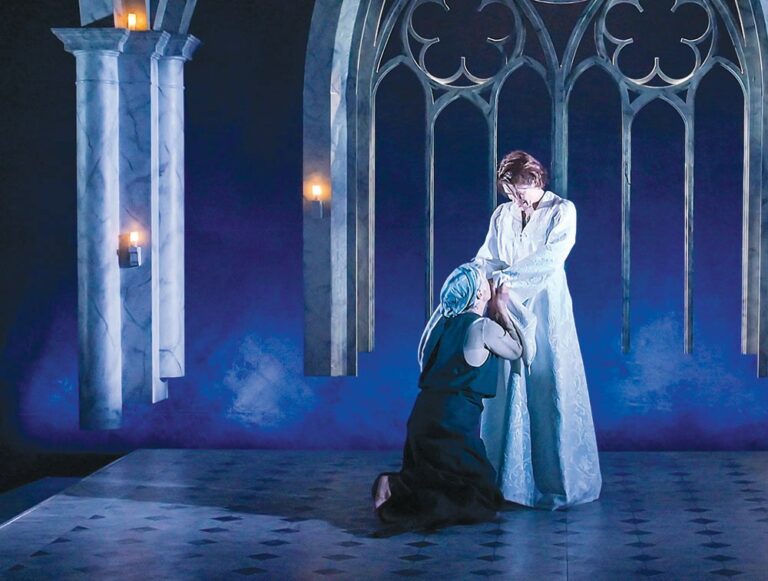
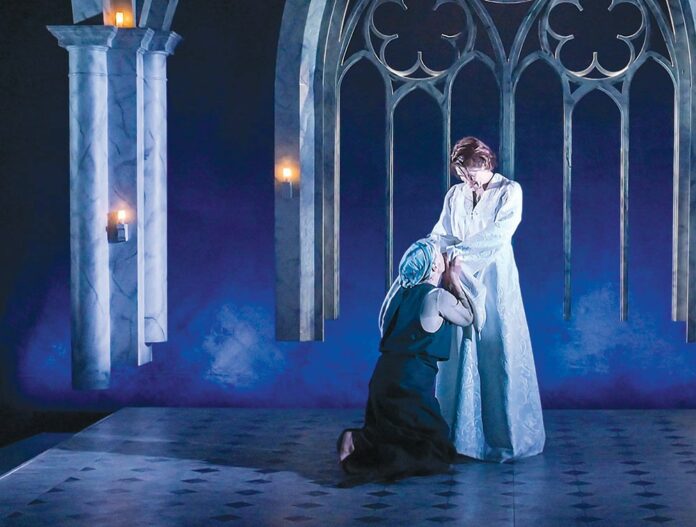
The Hunchback of Notre Dame finally makes its North Bay debut with a production offered up by a local music education center. Cotati’s Music to My Ears presents the musical at the new Rancho Cotate High School Theatre Arts Auditorium in Rohnert Park through March 8.

A blend of Victor Hugo’s gothic novel and Disney’s 1996 animated musical, the show never made it to Broadway but has met with some success in regional and community theaters. Rohnert Park’s Spreckels Theatre Company scheduled it in a season a few years back, but pulled the darker-than-you-would-expect-with-the-name-Disney-attached entertainment for a more “family friendly” show.

Hugo’s 15th century–era tale of Notre Dame Cathedral’s bell-ringer Quasimodo (Chris DeSouza), his guardian Archdeacon Frollo (William O’Neill), and a gypsy girl named Esmeralda (director Aja Gianola-Norris) is a monster of a show to produce. Operatic in scope, the production benefits immensely from the involvement of San Francisco Opera–member O’Neill as both performer and choir director. A chorus is integral to this show, and there’s a 28-member chorus on stage throughout.

DeSouza—who is deaf (as is Quasimodo)—communicates beautifully through American Sign Language, while actor/singer Ezra Hernandez provides the character’s speaking and singing voice. This had to add a significant level of complexity to the production, and credit must be given to all involved for making it work so well. While many cast members utilize ASL in the show, the March 6 performance will be fully ASL interpreted.

Gianola-Norris makes for an entrancing Esmeralda, and Alanna Weatherby, as narrator Clopin, and Blake Chandler, as the dashing Phoebus, also give convincing performances. Performers of a variety of ages and abilities fill out the ensemble, in fulfillment of the producing company’s vision that participation in theater is for everyone.

While Caitlyn Clark’s costumery is worthy, the performance I attended lacked in technical finesse. There’s no set to speak of, and haphazard lighting and missed sound cues were a constant distraction. To add insult to injury, someone pulled the fire alarm during the final scene and the theater had to be evacuated. After receiving clearance, in the best tradition of “the show must go on,” it did.

The nobility shown by the cast and audience in dealing with that situation makes for a good summation of this production. The Hunchback of Notre Dame is a noble effort.

Rating (out of 5): ★★★

The Music to My Ears production of ‘The Hunchback of Notre Dame’ runs through March 8 at the Rancho Cotate High School Theatre Auditorium, 5450 Snyder Lane, Rohnert Park. Fri–Sat, 7:30pm; Sun, 2pm; $20–$25. 707.664.0123. funmusiclessons.com.

Reading Room: The Sitting Room Community Library

0

Nestled among majestic redwoods and within walking distance of Sonoma State University, the Sitting Room, a community library focused on books by and about women, is a welcome place of respite for study, focus and quietude.

“Its focus is on women, but it is open to all, free and always growing,” says Karen Petersen, cofounder of the Sitting Room and Librarian at the Herold Mahoney Library on Santa Rosa Junior College’s Petaluma campus.

Peterson and J.J. Wilson, Professor Emerita, Sonoma State University cofounded the Sitting Room in 1983, along with an enthusiastic group of book lovers who “donated books, held salons and celebrated the cultural contributions of women artists and writers,” says Petersen. “People just brought books, it was very touching. It started out very small and then it grew.”

Inspired by the Morrison Reading Room at the UC Berkeley University Library where Petersen and Wilson were students, they conceived the Sitting Room as a retreat and quiet space for anyone to come read and study.

Today the unique, nonprofit community organization houses over 7,000 books, including a small lending library and exceptional literary collections devoted to Virginia Woolf, poetry, art and fiction. It is also a place for writers to work, learn and share.

While visiting and browsing the library is a special experience, its titles are fully searchable at the Sappho archive online (librarycat.org/lib/Sitting_Room).

“From its beginnings in a Cotati storefront, the Sitting Room has always made a special place for local writers and of course students,” says Petersen. “Our workshops, book groups and programs featuring regional poets and novelists shine an important and valued light on the rich literary culture of our region.”

Petersen remembers the recently deceased local writer Susan Swartz.

“The late Susan Swartz was a beloved member of the Sitting Room family and we were looking forward to hearing her read from her new novel, Laughing in the Dark, on March 15,” Petersen says. “We will still host a reading on that date with local author Barbara Baer and a chance to remember Susan and her inspiring, funny, tragic writing.”

The Sitting Room’s Writer in Residence program introduces the public to various featured writers, workshops, readings and performances. Current writers include Patti Trimble, a spoken-word artist performing her work Penelope at the Sitting Room on June 6, and Sonoma County Poet Laureate Maya Khosla and her fire-inspired Local Legacy Project.

“Cofounder J.J. Wilson has begun a special series devoted to rediscovering lesser-known women writers such as Dorothy Bryant, Rumer Godden and currently Rebecca West,” Peterson says.

Indeed, a shelf of West’s work is visible as you enter the Sitting Room.

This treasured community library has inspired and supported, many local writers in their work for nearly 40 years, by literally providing them the simplest of things—a room of their own.

The Sitting Room: A Community Library is open Mondays—Saturdays, 9am to 5pm and by appointment, at 2025 Curtis Drive, Penngrove. All special events are free and open to everyone in the community (no memberships needed or gender excluded). 707.795.9028. Sittingroom.org

“Calistogans” Photo Exhibit Opens at Sofie Contemporary Arts

Since moving to Calistoga in 2015, editorial photographer Clark James Mishler has taken hundreds of photo portraits as part of an ongoing “portrait a day” project that appears in the Calistoga Tribune. Now, Mishler collects many of those shots in the new exhibit, “Calistogans,” that captures locals in all facets of their everyday life. Some of the photos are funny, some are poignant, and all are uniquely Calistogan. The exhibit opens with a reception on Sunday, March 8, at Sofie Contemporary Arts, 1407 Lincoln Ave., Calistoga. 3pm. Free. 707.942.4231.

Go to Church

David Bowie once said, "Music itself is going to become like running water." He was talking about how people never think of their tap water: They wash dishes in it, they drink it and the water becomes so commonplace that it's taken for granted until it's not there. For many artists and audiences in the North Bay, the tap for...

County Seeks First Youth Poet Laureate

Sonoma County students between ages 13 and 19 who have a passion for writing poetry are encouraged to apply to be recognized as the inaugural Sonoma County Youth Poet Laureate. Following in the footsteps of national youth poet laureate programs, California Poets in the Schools is on the hunt for a Sonoma County student who has shown a commitment to...

Reading Room

Nestled among majestic redwoods and within walking distance of Sonoma State University, the Sitting Room, a community library focused on books by and about women, is a welcome place of respite for study, focus and quietude. "Its focus is on women, but it is open to all, free and always growing," says Karen Petersen, cofounder of the Sitting Room and...

Close-up on Israel

Back for its fifth year, the annual Sonoma County Israeli Film Festival runs March 3–31 at the Rialto Cinemas in Sebastopol. Featuring four films, this year's fest focuses on a bevy of themes including gender identity, love and aging as well as the ongoing Israeli–Palestinian conflict. Iréne (pronounced eh-REN) Hodes is director of the Israeli Film Festival, which is an offshoot...

First Case

Centers for Disease Control and Prevention TESTING The CDC is shipping the test kits to laboratories CDC has designated as qualified. In an effort to get ahead of the possible spread of the coronavirus, Sonoma County officials declared a state of emergency on Monday, March 2. The declaration came after officials announced that doctors are treating an unnamed patient for a suspected...

When the Party’s Over

By Cliff Zyskowski When the party's over black water oozes forth from tepid taps in lesser towns across the land as I pair my pinot with cherry-glazed roast pork on a cedar plank. When the party's over kids separated from their parents at the border are left alone to defend their right to survival as my son mulls over college apps and we hover over the arrival of the...

Compost It

Compost It A long and painstaking process by the City of Santa Rosa, involving extensive public input, determined that the most appropriate location for a much-needed local composting facility is the Laguna Wastewater Treatment Plant on Llano Road. That determination is now being challenged by local residents. A public hearing is scheduled for Thursday, March 5, at 1:30pm at the...

Ring the Bells

The Hunchback of Notre Dame finally makes its North Bay debut with a production offered up by a local music education center. Cotati's Music to My Ears presents the musical at the new Rancho Cotate High School Theatre Arts Auditorium in Rohnert Park through March 8. A blend of Victor Hugo's gothic novel and Disney's 1996 animated musical, the show...

Reading Room: The Sitting Room Community Library

Nestled among majestic redwoods and within walking distance of Sonoma State University, the Sitting Room, a community library focused on books by and about women, is a welcome place of respite for study, focus and quietude. “Its focus is on women, but it is open to all, free and always growing,” says Karen Petersen, cofounder of the Sitting Room...

“Calistogans” Photo Exhibit Opens at Sofie Contemporary Arts

Photographer Clark James Mishler is on hand for the March 8 reception.
11,084FansLike
4,606FollowersFollow
6,928FollowersFollow