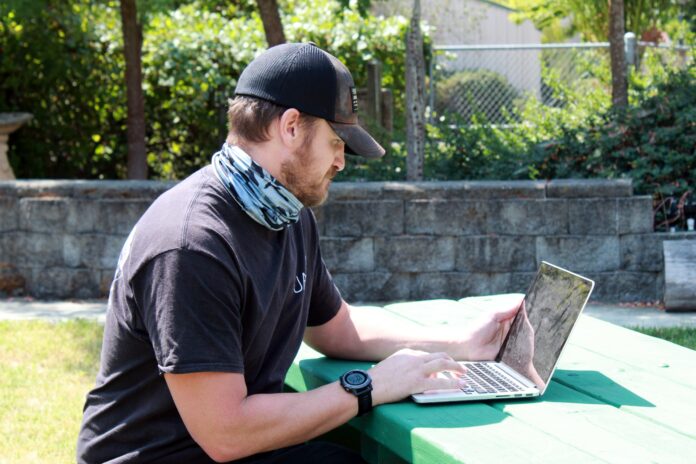
Petaluma City Councilmember Gabe Kearney Faces 16-Count Campaign Finance Complaint

A complaint filed with a state campaign finance regulation commission alleges that Petaluma City Councilmember Gabe Kearney has violated campaign finance rules 16 times during the past four years by failing to file paperwork and pay fees on time.

The complaint against Kearney, filed with the state Fair Political Practices Commission (FPPC), alleges that Kearney filed numerous forms late, failed to pay annual FPPC fees on time for the past four years, and gathered over $5,000 in political contributions before formally declaring his candidacy in the November 2016 election.

Though the complaint lists the forms as allegedly late, not entirely missing, some of the same forms are not available at the Petaluma City Clerk’s office, making it unclear how much money—if any—Kearney received from donors at the end of his 2016 campaign and during his latest four-year term on the council.

At a meeting in May, the FPPC’s legal staff determined that there was “probable cause” that Kearney had violated state rules repeatedly. While a finding of probable cause does not mean there was a violation it does signal that FPPC staff found some evidence to support the complaint. The vast majority of cases end in a settlement, according to an FPPC spokesperson. The FPPC does not comment on specific, on-going cases.

In response to questions about the complaint, Kearney told the Bohemian on Thursday morning that the late filings stem from a paperwork error at the end of 2016.

“At the end of the [2016] campaign I submitted the forms that I thought were adequate to close out my campaign account. I have been informed that they were not the proper forms to close out the account and I am working with the FPPC to close out this in the proper way,” Kearney wrote, adding that he hopes to close the case in the next few weeks.

Kearney’s explanation does not appear to apply to six of the 16 counts against him. Five of the counts predate the end of the 2016 campaign and another count, an alleged failure to file an annual Statement of Economic Interests on time in 2019, is unrelated to the 2016 campaign committee.

In addition, a form covering contributions to Kearney’s 2016 campaign between Oct. 23 through Dec. 31, 2016, was not available on the City Clerk’s website at the time of publication.

Acting City Clerk Samantha Pascoe told the Bohemian on Thursday that Kearney is working with the FPPC to amend two 2016 forms—including the one covering campaign contributions Kearney received between Oct. 23 through Dec. 31, 2016—which are currently not available on the city’s website. A recently-added note on the city’s 2016 campaign finance page states that the amended forms will be published soon.

Kearney did not respond to a request for clarification of his explanation on Thursday.

Ann Ravel, a former chair of the FPPC who reviewed the complaint, said that the number of alleged violations listed in the complaint against the Petaluma City Councilmember is unusually high and could result in a large fine.

“This is an awful lot of instances of violations. It’s quite unusual actually,” Ravel said in a phone interview.

Ravel said she believes that the commission’s staff would have considered the possibility of the paperwork error Kearney cited before deciding that there was probable cause.

“Certainly the FPPC would have looked at the circumstances. Either you filed or you didn’t… They would have known whether [the campaign committee] was closed out, whether it should have been closed out,” Ravel said. “If they thought that [Kearney’s explanation] was a reasonable rationale for failing to file they would not have charged him.”

The 16 counts against Kearney include soliciting and accepting “campaign contributions totaling approximately $5,315” before filing paperwork announcing his intention to run in the November 2016 election and failing to file eight campaign finance statements on time between Sept. 24, 2016 and Jan. 31, 2020. Kearney and his 2016 committee also allegedly failed to pay an annual FPPC fee—and the four resulting $150 late fees—every year between 2016 through 2020.

One form available on the City Clerk’s website, which the FPPC complaint lists as due on Sept. 29, 2016, was submitted on Oct. 6, 2016, according to a datestamp on the form.

“It looks to me like there’s probably going to be a big fine involved,” Ravel, the former FPPC chair, opined.

Kearney was first appointed to the Petaluma City Council in 2011. He won reelection in 2016 and recently filed paperwork announcing his intention to run again in the Nov. 3, 2020 election.

According to his most recent Statement of Economic Interests, a form politicians and many public employees are required to file each year, Kearney worked in 2019 as an Emergency Services Coordinator for Cal OES, the state emergency management department.

All told, three sitting city council members—Kearney, Mike Healy, and Kathy Miller—are running against five newcomers—Brian Barnacle, Robert Conklin, Susan Kirks, Dennis Pocekay, and Lizzie Wallack—for three open seats on the Petaluma council this November.

The complaint against Kearney is included on pages 12 and 13 of this document.

Marin String Band Charms on Debut

0

by Sean McAlindin

San Rafael string band Late for the Train’s debut album, Plant It or Build It, is a beautiful collection of peculiarly romantic songs full of thoughtful lyricism, stirring instrumentals and sweet harmonies. 

The opening track, “Sang Through the Summer,” is all about celebrating an ephemeral twinkling of bliss before it’s gone. It’s a fitting introduction for the band fronted by Marin County troubadours Laura Benson and Dave Pascoe, who share a penchant for wandering roads less traveled while loving each magical moment along the way. 

The voices of Benson and Pascoe blend like gypsy souls who’ve found a home in each other’s musical arms. They met at an open mic night in a Northern California living room on Halloween night, 2017. Benson was dressed as Rosie the Riveter in bright red lipstick; Pascoe, in cheetah pants, saw her sing to a rapt, silent room. As the party wore on, they both got out their fiddles and started jamming on Celtic tunes. The rest is history, as they now live and create together from their home in San Rafael’s Gerstle Park neighborhood. 

What begins with deft Appalachian flatpicking quickly hints at something more on Plant It or Build It. Through all 10 songs on the album, their voices contrast and meld with a fascinating and plaintive authenticity harkening back to older times while keenly observing those of today.

The album was recorded by Ky Takikawa almost entirely live during a four-day session in a remote, two-story concrete-and-glass house hidden under Bixby Bridge in Big Sur. 

Tracking days began early with a family breakfast and ended well beyond midnight underneath the California stars. During breaks, the band walked an overgrown singletrack path alongside the creek to jump into the roiling ocean and wash away their blues. 

Flawless mastering by The Wailin’ Jennys’ soundman Adrian Dolan shines as the first side of the record ends with the one verse of traditional acapella, “Bright Morning Stars.” The harmonies of this song about staying up all night surround your ears as you long for more.

Side two begins with “The Architect,” a song about what it takes to make a life in this contemporary day and age. Jack Johnson meets Ani DiFranco as Pascoe and Benson ask listeners, “Are you the architect or the gardener of your life?”

The album closes with “Paper Smiles,” a lovely composition about being the black sheep of the family, the one destined to roam the countryside looking for a little love and decent song. 

“Me, I play the sounds of lovers lost and freedom found,” the band sings on the closing track. “So I can hold them close, the ones I love the most.”

‘Plant It or Build It’ is available now. Lateforthetrainband.com.

Letters: Scare Tactic

We’ve seen a surge in propaganda from our rogue Sonoma County Sheriff Mark Essick lately.

In recent weeks, the Sheriff launched a campaign of major scare tactics and hangdog pleas asking the public to complain about a budget cut called for by the Board of Supervisors across all county agencies. This cut will force him to sell Henry 1, the rescue helicopter we all love, he says. And, apart from the time Essick summoned the copter to impress guests at a private party hosted by a wealthy donor, Henry 1 and crew do great work. 

What Essick isn’t saying is that he has a whopping budget of $184 million, the lion’s share of the entire County budget, and he’s been asked to reduce spending by only 8 percent, around $14 million. He’s also not mentioning that the annual budget for Henry 1 is just slightly over $2 million a year. 

Mr. Essick, you can’t manage a $2 million cut from your $184 million? I don’t believe that for a minute. It’s a ploy, people, don’t fall for it!

Kathleen Finigan

Santa Rosa

Be Proper

Most protesters are peaceful, but some are not. Some observers say “violent” protestors are ONLY damaging property. Property damage is much less egregious than damage to people, but it’s also counter-productive. Property is God to some Americans. Try convincing Trump supporters that it’s ONLY property being damaged.

I get it, having been involved in violence myself during the Vietnam era. I think it’s counterproductive now though, due to the upcoming election. Cooler heads must prevail. We had great political leaders during the ’60s. I don’t hear about any leaders at all now.

People say, “Anybody but Trump,” but their actions are improving his re-election chances. Can they not realize this?

Robert Feuer

Camp Meeker

Open Mic: Petaluma Standard Time

0

If you’re ever in doubt as to the time

There’s a clock shop here in town

Offering the hour of the day

To four locations without a chime

The local hour here in town

One for Manhattan and organized crime

Another for Tokyo if so inclined

Time for Denver and that piece of mind

The hour hands each tell a differing story

As do the minutes which makes one worry

Welcome to where time stands still

In this beautiful tree-lined little town

Known for the Great Petaluma Mill

We enjoy taking things slow up here

Welcoming all comers

The Sonoma County Fair

Our opera houses and vaudeville acts of yore

Brainerd Jones’ renowned architecture

And …

While the times on the clocks may not rhyme

A stroll down the boulevard, our wooden bridge

The World’s Egg Basket offers you

More than you know

Regardless of the season

Whatever time it actually is

Paul Cheney lives in Petaluma.

Calistoga Gallery Taps Dickinson

0


Located in the heart of Calistoga, Sofie Contemporary Arts is one of Napa Valley’s premier purveyors of inventive modern art that is diverse in media, styles and approaches.

The gallery is run by director Jan Sofie and manager Scott Sofie. Since opening the gallery in 2017, the couple have endured fires, mass evacuations and, more recently, a Covid-19 pandemic that closed their space for the past six months.

Still, Jan and Scott Sofie remain hopeful, and they share that feeling with the community as Sofie Contemporary Arts reopens this month. The new exhibit—entitled “Hope Is the Thing…”—is running now and remains on display through October.

The invitational group show’s theme is inspired by Emily Dickinson’s 1862 poem, “Hope Is the Thing With Feathers,” in which Dickinson describes the capacity for hope in metaphor as a bird that “perches in the soul.”

That hopeful feeling is illustrated in the exhibit’s diverse art from more than 20 accomplished Bay Area artists, including many North Bay favorites.

“While talking with many artists over the past difficult months, it became obvious that we were all trying to keep focused on what we really cared about, what really mattered,” Jan Sofie says in a statement.

For this exhibit, many of the participating artists are displaying works that focus on what is personally relevant for them, and selections in the show hit on topics of the pandemic and social distancing as well as economic turmoil and environmental concerns.

Participating artist Sylvia Gonzalez creates natural scenes such as her piece “Goldfinches” (pictured) from pencil and pastel drawn over monotype backgrounds. Working from her studio in Petaluma, Gonzalez focuses her layered art not only on birds, but on foxes, coyotes and other wildlife that can be found in the North Bay.

San Rafael artist Bill Russell also uses birds as an artistic metaphor in his contribution to the exhibit. His acrylic piece, “Little Birdies,” features several feathered figures in a colorful collage of movement.

Napa Valley artist Anne Pentland’s piece in the show is also a nature scene, though Pentland finds hope among ashes in her oil painting, “Aftermath Australia.” The piece is from Pentland’s ongoing “Madonna” Series, which employs the religious symbol of protection to represent Pentland’s passion for nature and her concern over climate change and its effects on wildlife.

In addition to works that feature animals, plants and other natural wonders that act as essential sources of solace, the exhibit includes works that evoke notable historical and culturally significant figures and references that aim to bolster resolve as well as hope.

“Without hope, I don’t think we can muster the courage or grit to change or go forward with what we need to do,” Sofie says. “There is always intelligence and light even in the most discouraging moments, but it takes critical awareness and discipline to manifest it; I think you will see this in the exhibition.”

Sofie Contemporary Arts is located at 1407 Lincoln Ave., Calistoga. Open Wednesday through Sunday, noon to 6pm or by arrangement. 707.942.4231.

A Recitation for the River

0

When it comes to quarantine hobbies, binging Netflix and day-drinking on Zoom top the list. Writer-performer David Templeton had something different in mind—he committed the entirety of the seventh chapter of Kenneth Grahame’s seminal work, The Wind and the Willows, to memory. Now that it’s—literally—in his mind, he’s bringing it out, word-for-word in an online recitation this Saturday to benefit Friends of the Petaluma River, the organization that stewards the conversation of the Petaluma River Watershed. 

The chapter in question, “The Piper at the Gates of Dawn,” finds the protagonists Rat and Mole on a late-night boat journey up the river in search of a lost baby otter. Who do they meet along the way? The god Pan—the goat-legged pipe-player of the title. For context, the 3,800-word chapter is about 10 times the length of this column (the contents of which I’ll forget immediately upon filing it). 

How Templeton managed to squeeze a beloved literary classic into his brain and keep it there likely comes from his skills as a solo theatrical artist, penning and performing one-person shows like his popular Wretch Like Me in the past decade (not to mention being a former Bohemian theater critic). 

The difference, beyond the text being that of another author, is that Templeton has forbidden himself the luxury of extemporizing should memory fail. It’s a literary tightrope walk across a roiling river of words. Will he make it? Tune into the free simulcast on YouTube, Facebook or the Friends of Petaluma River website this Saturday to see for yourself. 

Online donations are encouraged and donors will have the opportunity to win a “Wind in the Willows”–themed gift basket. I’ll be on hand, virtually, to introduce Templeton and to host a post-performance Q&A with him and Stephanie Bastianon, executive director at Friends of the Petaluma River.

As Templeton says, memorizing “The Piper at the Gates of Dawn” “has been a true joy and pleasure at a time when joy and pleasure sometimes seem in short supply.”

Indeed, it’s good to have a little Pan without all the “demic.”
David Templeton’s from-memory recitation of “The Piper at the Gates of Dawn” begins at 5:30pm, Saturday, Sept. 12. The performance will be available for free via Facebook, YouTube or the Friends’ website; for links and more information visit FriendsofthePetalumaRiver.org.

A Farm and a Dispensary Bloom in Sonoma

Mike Benziger has grown many things in his life, but not this. 

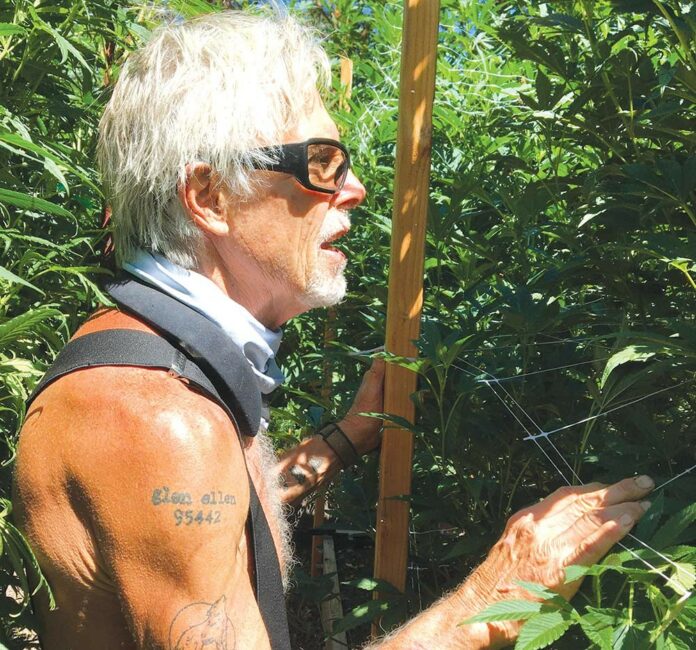
“We’re not growing placebos,” Benziger tells me at Glentucky Family Farm, where his pot patch looks and feels more like a jungle than a garden. It’s challenging to move around plants that press in from two sides and tower overhead.

Before he began growing weed, he grew grapes, made great wine and helped create the Benziger brand. As of August 2020, Mike has the crucial documents from both the State of California and from Sonoma County to cultivate weed legitimately. Hurray!

I sang Mike’s praises at a Sonoma Valley Planning Commission Zoom meeting, which gave him a thumbs-up, and later before the  Sonoma County Board of Supervisors, also via Zoom. A half-dozen others, including Mike’s neighbors, testified, along with cannabis lawyer, Omar Figueroa.

Also on Zoom, Kumail Raza, who works for Sonoma County in the permits department, described Mike’s operation: 50 plants on a 2,400-square-foot parcel, with no plants visible to the public and with no odors that could possibly offend visitors at nearby Jack London State Historic Park. The authorities scrutinized nearly everything about Mike’s Farm. The whole process felt to me like an invasion of privacy.

To grow cannabis legally these days you have to allow the authorities to inspect setbacks from roads and waterways, monitor wind direction, measure use of water and keep an eye on security systems meant to prevent, or to at least mitigate, break-ins and theft.

Supervisor Susan Gorin said that she had visited Glentucky Family Farm and talked to “the applicant” whom she described as “a well-known person in Sonoma Valley.”

Supervisor Shirlee Zane tried to sound like an advocate for employees’ rights and insisted that cannabis workers are habitually paid poorly. She urged Benziger to provide healthcare benefits for his workers and sick leave, too. Thanks, Shirlee!

Mike described his own garden as “pharmaceutical” and said his emphasis is on cannabis as medicine. He also testified that he grows 20 different kinds of fruits and vegetables and that he’s committed to agricultural diversity. Later the same day, I understood why he told me that if he had to do it all over again, he might not get into the cannabiz. It’s costly, time-consuming and emotionally draining. Sonoma County has made it nearly impossible for citizens to become legit pot farmers.

Mike tells me, “If small-time growers like me are to survive, we’ll need dispensaries that will carry our weed.”

Fortunately, the town of Sonoma now has a real dispensary. No, not right this minute. But in August the Sonoma City Council awarded SPARC, one of the coolest cannabis companies, a conditional certificate to operate a dispensary on Sonoma Highway about a 15-minute drive from the city’s center.

SPARC was a surprise winner. When the Justice Grown folks, one of the finalists for the certificate, announced that they would name their proposed dispensary “The Jewel Mathieson Wellness Center,” I thought that they were a shoo-in. Honoring the work and the memory of Mathieson, a longtime cannabis activist who passed away on Aug. 5, 2020, seemed like an idea whose time had come.

But it was not to be. Justice Grown is linked to a law firm in far-off Chicago.  SPARC is local, owns and operates a cannabis farm in Sonoma Valley, runs dispensaries in Santa Rosa, Sebastopol and San Francisco, and has a proven track record. The representatives from Justice Grown who testified before the council members tended to be overbearing. That was my impression. I watched and listened via ZOOM.

SPARC came across as humbler and smarter. “We haven’t been lobbying,” SPARC’s Erich Pearson told me, shortly before the city council voted to award him and his group a permit. “We don’t have to do backroom shenanigans.”   

Justice Grown promised to donate $1,000,000 to the city of Sonoma over the course of its first five years of operation provided it was granted a license. Was that a bribe? Some citizens thought so. SPARC’s offer to donate $4,000 per month in free cannabis to low-income medical patients, and those needing palliative aid, came across as genuinely philanthropic.

For more than a decade, residents of the town of Sonoma have traveled weekly, if not daily, to Cotati and Santa Rosa to buy cannabis and then gone home. That made no sense to many local citizens, and to cannabis activists such as Jewel Mathieson and her husband, Ken Brown, a former mayor and council member who planted the first idea for a dispensary ages ago.

Segments of the wine industry have been opposed to a cannabis dispensary in Sonoma, which would bring competition for tourist dollars. If SPARC’s dispensary is to succeed it will have to rely a great deal on sales to out-of-towners. That does mean a fight for disposable income.

Benziger thinks that in the long run cannabis has a good chance of becoming more popular than wine because of a generational shift.

Michael Coats of Michael Coats Public Relations and a leading cannabis activist, tells me, “Sometimes the city of Sonoma can feel like the most conservative place of earth.” Now with a dispensary, that perception will surely shift.

Before I left Benziger’s cannabis jungle, he gave me samples of two of his strains: La Bamba and Banana. At home, I smoked them both and emailed: “I’m glad you’re not growing placebos. Your weed worked wonders.”

Jonah Raskin is the author of “Dark Past, Dark Future: A Tioga Vignetta Murder Mystery.”

Left Edge Theatre Streams ‘Sweat’

0

With no date in sight for the resumption of live, in-house theatre, Left Edge Theatre becomes the first North Bay company to move forward with a full season of streaming productions beginning with Lynn Nottage’s Pulitzer Prize–winning drama Sweat. The show streams through Sept. 27.

The play opens with a parole officer (Corey Jackson) interviewing two recent parolees—Jason (Skylar Bird), whose face sports a black eye and white supremacist tattoos, and Chris (Sam Ademolah), a young African-American who has found solace in religion. How these two are connected and what event precipitated their imprisonment will be revealed over the show’s time-shifting two-plus hours as it addresses issues of economic inequality, race, immigration, union-busting and what despair can do to friends and family over the span of eight years.

A Reading, Pennsylvania blue-collar bar tended by Stan (Mike Pavone) and his barback Oscar (Anthony Martinez) is the favorite watering hole and home-away-from-home of good friends and factory-line co-workers Tracie (Jill Zimmerman), Cynthia (Serena Elize Flores) and Jessie (Lydia Revelos). Cynthia’s announcement that she’s applying for a management position seems to sit well with her friends until she gets the position and has to announce plant reductions and layoffs. Labor unrest grows, latent prejudices are exposed, friendships crumble and soon the bar’s status as neutral territory is horribly revoked.

Director Argo Thompson has given this streaming production a more cinematic look, eschewing the infamous Zoom “Brady Bunch” boxes for single-screen shots. Another improvement was replacing green-screen background projections with individual set pieces constructed in the actors’ homes and on the Left Edge stage. Several scenes were pre-filmed, including a fight scene which didn’t come off particularly well and raised some questions in my mind with regard to Covid-safe practices.

Technical challenges with live-streaming still exist. Camera-focus issues, inconsistent audio and ragged transitions continue to be the norm. The cast must double as crew and, despite the occasional blip, handles those duties with aplomb.

The performances delivered by the diverse cast are generally strong. Actors with significant film and television experience (such as Pavone and Zimmerman) seem more comfortable with the medium, but each actor has their moment.

At its core, Sweat is an examination of how those on the lower rungs of the economic ladder tend to devour each other in order to survive when it would be better for them to direct their appetites towards those on top. It’s powerful food for thought.

Live performances of ‘Sweat’ are streamed through Sept. 13; recorded performance available for streaming through Sept. 27. $10–$30. leftedgetheatre.com.

Petaluma Student Hatchery Faces Unprecedented School Year

No students are to be seen in the on-campus hatchery at Casa Grande High School in Petaluma.

There, United Anglers Program Director Dan Hubacker lectures about the Petaluma watershed and native species of trout and salmon to two 55-inch television screens, which display the face of his students via Zoom.

Though past classes have seen pushback from admin, devastating droughts and year after year of wildfires in the North Bay, none of these are perhaps as comparable—or impactful—as the coronavirus pandemic, which saw its first U.S. cases in January and has forced campus shutdowns of K-12 and colleges nationwide.

United Anglers got its start in the early ’80s, when teacher Tom Furrer and a group of Casa students spearheaded a massive clean-up of Adobe Creek. They removed over 30 truckloads of trash, including large kitchen appliances, car parts and several tires. During the Tubbs fire in October 2017, the on-campus hatchery was designated as an emergency facility for the Warm Springs Fish Hatchery in Geyserville.

Students enrolled in the class learn about the history of United Anglers, the Petaluma watershed, native strains of trout and salmon, and general wildlife. Those who pass the Tech II Exam, which requires a perfect score, are allowed to work with the hatchery’s equipment and are responsible for raising Steelhead trout later in the school year.

In 1993, students managed to raise over $510,000 to build the on-campus hatchery. Since then, the program has hosted an annual fundraiser at the Lucchesi Community Center, as Casa Grande High School offers United Anglers no funding for hatchery maintenance or class materials, which include nets and creek waders.

This year, with large gatherings banned, the plan for the November fundraiser is uncertain. Program director Dan Hubacker is hesitant to make any major decisions at this point, but he says that the program will still need support and funding, regardless of whether a fundraiser is held. Even if in-person classes are permitted in spring, massive modifications will have to be made to the building so that students can be allowed inside.

“We can either sit back and wait for in-person to occur, and then go, we don’t have any funding to cover that, or we can prepare … and we’re ready as soon as we get the go-ahead,” Hubacker says. “Right, wrong or indifferent, we can only go back if these changes are made. We have to keep our distance, we have to wear a mask, those are the things that are expected of us, so how do we get to that?”

In mid-March, amid talk of remote learning and campus shutdowns, Hubacker and his students began strategizing their next steps.

“The way I prepared the students was the idea that one way or another, we’re either coming back to class and running things status quo or, as we gain more information, we’ll make the call as we go,” Hubacker said in an interview.

Initial campus closures extended through the end of April, with an anticipated reopening date of May 1. However, in April, Petaluma City Schools announced that all classes would be conducted online for the remainder of the school year. For Hubacker, this forced the question of how to deal with the existing steelhead trout in the building.

“I didn’t want to cut the fish loose and find out a week later, hey, we’re coming back for in-person teaching and have everybody wonder, why did [you] cut the fish loose? There was that pull from both sides, so I held on to the fish through the end of the [school] year,” Hubacker said.

Hubacker recruited the help of the Department of Fish and Wildlife and UA’s Board of Directors. At the end of the year, the group successfully transported the trout to Warm Springs.

Hubacker says that the switch to remote instruction brought with it more than a few limitations. Holding class via Zoom means students aren’t able to get hands-on instruction, a hallmark of the UA program, and this presents challenges with distributing exams.

“We’re still, as educators, trying to wrap our head around how to assess students in a formalized setting,” Hubacker says. “With an exam, how do you do it? How do you not have a student sitting there with their notes open, a cell phone accessible, the internet accessible? Don’t even get me started with the idea of, how do you meet the accommodations of a student that has additional needs that need to be met? It’s not an equitable model.”

Remote instruction is new territory for Hubacker, who says that “all [the] field components have become part of our Zoom time.”

With the fate of in-person classes in spring semester left hanging in the balance, Hubacker says he will continue to modify the program’s schedule as more information is released.

“In the grand scheme of things, I’ve reached a point where—excuse my language—I’ve been pissed off,” he says. “I’ve vented to the point where it’s like, it’s not changing it. How much can I really complain if I can’t turn around and go, this is what I can do? Right now, this is what we have, what am I gonna do about it? How am I going to make this work to the best of my ability?”

Program alumna Izzy Fabbro, who graduated in 2018, says that the program provided her with a pathway to working with endangered species.

“I think the hatchery is important for showing students how important the environment is even at the local scale,” Fabbro says. “It allows us to get involved in improving our community. It also allows us an opportunity to get to do hands-on work that isn’t always available to everyone.”

The sentiment is echoed by Hubacker, who says that the cultural component of the class may not be able to return for the foreseeable future.

“The norms that you have, the chemistry, stressing, working together—I know it sounds small, but such a big part of this group is a handshake,” Hubacker says. “We spend an entire class period practicing handshakes. What’s going to happen with that? I don’t know.”

Still, even amid all the uncertainty, Hubacker feels confident in the abilities of his students. For now, the organization’s goal is moving forward—regardless of what will come in the next few months.

“I haven’t seen a group so fired up to prove a point than the group we have right now, because they know what they’re up against,” Hubacker says. “They know how easy it is to roll over and accept this, but as I keep telling them, this is stuff that is going to be written in the history books. We’re in times right now where it’s like, if you can get through this, you can get through just about everything.”

For more information or to donate to United Anglers, visit uacg.org.

Green Music Center Moves to Online Format for Fall Season

The Green Music Center–Sonoma State University’s world-class live music venue and educational centerpiece made up of the acoustically-pristine Weill Hall, the intimate Schroeder Hall and more¬–is accustomed to packing the halls with concerts and various live events featuring culturally significant musicians and other top-tier performers.

This year has been a quiet one at the Green Music Center, as the Covid-19 pandemic closed the halls and classrooms in March. After missing the summer season due to the extended social-distancing orders, the center in Rohnert Park is transforming their planned fall season into an online experience.

Dubbed ‘The Green Room,’ this new virtual program of events is inspired by the center’s green rooms, where performers hang out backstage, and ‘The Green Room’ events will feature conversations with artists as well as performances streaming online, beginning September 17 and running through December.

In addition to presenting online concerts featuring popular acts, The Green Room’s online fall programming reflects the Green Music Center’s commitment to student engagement with four artists-in-residence from a variety of backgrounds and disciplines who will also lead students in online discussions and workshops along with their scheduled shows.

The artists-in-residence performances begin with musician, performing artist and cultural Babalawo (spiritual guide) Michael Mwenso, who presents a ‘Black Music Series of talks and showcases starting September 17. The series opens with “A Form of Protest,” in which Mwenso examines music as a form of activism, and highlights the role it has played in pushing the boundaries on civil rights, human rights, class inequality and more through a discussion, historical recordings and performance.

Other artist-in-residence performers include Green Music Center favorites Las Cafeteras (pictured), who share their infectious genre-bending and lyrically-rich music and storytelling on October 15; visionary choreographer Liz Lerman, who returns to continue her new site-specific work “Wicked Bodies (Sonoma),” exploring the depictions of women’s bodies across multiple historic periods on November 5; and multicultural musical group and Navajo cultural music ambassadors DDAT, which performs on December 3.

‘The Green Room’ will also present three free online performances by the Chamber Music Society of Lincoln Center, and concerts by multi-cultural artists like acoustic and electric guitarist JIJI, instrumental band Invoke and the Juilliard String Quartet.

Aside from ‘The Green Room’ online season, The Green Music Center will still be the performing location for its resident orchestra, The Santa Rosa Symphony; which will perform, record and stream its redesigned Fall 2020 concerts from the Green Music Center’s Weill Hall stage.

The “SRS @ Home Virtual Fall Concert Series” will be streamed live on YouTube on October 11, November 15 and December 13 at 3pm, and each concert will feature a socially-distanced subset of the orchestra and Music Director Francesco Lecce-Chong.

“In the face of the difficulties behind us and the struggles ahead, the Symphony will share uplifting musical experiences, as it has during past crises,” Lecce-Chong says. “This is truly a historic moment in our Symphony’s long history, and we are so excited to present our first concerts, specifically programmed, directed and filmed for you to enjoy in your homes. We may not be in the Green Music Center in person, but imagine that across our community, we will all be gathered for a performance.”

Get tickets and the full details on ‘The Green Room’ online season at gmc.sonoma.edu.

Find more information on the Santa Rosa Symphony’s upcoming virtual season at srsymphony.org.

Petaluma City Councilmember Gabe Kearney Faces 16-Count Campaign Finance Complaint

Gabe Kearney, City of Petaluma
A complaint filed with a state campaign finance regulation commission alleges that Petaluma City Councilmember Gabe Kearney has violated campaign finance rules 16 times during the past four years by failing to file paperwork and pay fees on time. The complaint against Kearney, filed with the state Fair Political Practices Commission (FPPC), alleges that Kearney filed numerous forms late, failed...

Marin String Band Charms on Debut

by Sean McAlindin San Rafael string band Late for the Train’s debut album, Plant It or Build It, is a beautiful collection of peculiarly romantic songs full of thoughtful lyricism, stirring instrumentals and sweet harmonies.  The opening track, “Sang Through the Summer,” is all about celebrating an ephemeral twinkling of bliss before it’s gone. It’s a fitting introduction for the band...

Letters: Scare Tactic

We’ve seen a surge in propaganda from our rogue Sonoma County Sheriff Mark Essick lately. In recent weeks, the Sheriff launched a campaign of major scare tactics and hangdog pleas asking the public to complain about a budget cut called for by the Board of Supervisors across all county agencies. This...

Open Mic: Petaluma Standard Time

If you’re ever in doubt as to the time There’s a clock shop here in town Offering the hour of the day To four locations without a chime The local hour here in town ...

Calistoga Gallery Taps Dickinson

Located in the heart of Calistoga, Sofie Contemporary Arts is one of Napa Valley’s premier purveyors of inventive modern art that is diverse in media, styles and approaches. The gallery is run by director Jan Sofie and manager Scott Sofie. Since opening the gallery in 2017, the couple have endured fires, mass evacuations and, more recently, a Covid-19 pandemic that...

A Recitation for the River

When it comes to quarantine hobbies, binging Netflix and day-drinking on Zoom top the list. Writer-performer David Templeton had something different in mind—he committed the entirety of the seventh chapter of Kenneth Grahame’s seminal work, The Wind and the Willows, to memory. Now that it's—literally—in his mind, he’s bringing it out, word-for-word in an online recitation this Saturday to...

A Farm and a Dispensary Bloom in Sonoma

Mike Benziger has grown many things in his life, but not this.  “We’re not growing placebos,” Benziger tells me at Glentucky Family Farm, where his pot patch looks and feels more like a jungle than a garden. It’s challenging to move around plants that press in from two sides and tower overhead. Before he began growing weed, he grew grapes, made...

Left Edge Theatre Streams ‘Sweat’

With no date in sight for the resumption of live, in-house theatre, Left Edge Theatre becomes the first North Bay company to move forward with a full season of streaming productions beginning with Lynn Nottage’s Pulitzer Prize–winning drama Sweat. The show streams through Sept. 27. The play opens with a parole officer (Corey Jackson) interviewing two recent parolees—Jason (Skylar Bird),...

Petaluma Student Hatchery Faces Unprecedented School Year

No students are to be seen in the on-campus hatchery at Casa Grande High School in Petaluma. There, United Anglers Program Director Dan Hubacker lectures about the Petaluma watershed and native species...

Green Music Center Moves to Online Format for Fall Season

'The Green Room' will feature live streamed concerts and more.
12,122FansLike
4,933FollowersFollow
6,928FollowersFollow