Focus of SR Police’s Investigation Into Porsche-Protester Incident Remains Unclear

Nearly three weeks after an unidentified motorist drove through a crowd of Black Lives Matter protesters marching in Santa Rosa, basic details about the Santa Rosa Police Department’s investigation into the matter remain unclear, angering protesters who say the driver’s actions threatened their lives.

On June 20, a motorist in a white Porsche Cayenne drove through a crowd of Black Lives Matter protesters marching along Santa Rosa’s Sonoma Avenue. Since then, dozens of protesters who witnessed the incident have reported it to the police, alleging that the motorist drove recklessly with intent to injure protesters.

At least three witnesses submitted video of the event along with their police reports. The driver, whose identity has not been revealed by police, reported the incident, too, alleging protesters attacked her.


SRPD’s Violent Crimes Investigation Team (VCI) conducted an investigation and turned their findings over to Sonoma County District Attorney Jill Ravitch’s office on Tuesday, July 7, according to Santa Rosa police lieutenant Jeneane Kucker, a department spokesperson.

“This case has been sent to the DA at this point for a decision on prosecution. Our VCI team thoroughly investigated the case and interviewed more than 25 (plus) [sic] people involved,” Kucker told the Bohemian in an email.

On July 8, Brandon Gilbert, an assistant to Ravitch, confirmed that the prosecutor’s office is reviewing the case.

“We just received the investigative report and it is under review,” Gilbert said. “We will be reviewing all digital media as well.”

Still, it’s not clear yet who the police actually investigated.

Lt. Kucker twice did not respond to questions asking whether the VCI investigated the driver, protesters or both as possible perpetrators.

That lack of clarity and publicity seems appropriate for the case given that the SRPD’s initial public statements about the incident seemed slanted in favor of the driver, in contrast to multiple videos of the event circulating online.

A press release issued by SRPD the day after the June 20 event created alarm among protesters that the driver was described as the victim. The SRPD press release described the motorist as a nurse who had gotten off work at a local hospital, and multiple news websites wrote articles that relied only on the SRPD release as a source.

According to the release, the motorist alleged that she was followed by someone on a bicycle who punched her in the face when she stopped her car. Protesters who witnessed the driver accelerate through the crowd doubt this claim.

The Bohemian asked Lt. Kucker, “How did SRPD determine that the driver was punched? What evidence supports that?” Lt. Kucker did not answer these questions either.

Alleging that police and media dangerously misrepresented protesters in their reporting, a group of about 20 witnesses gathered on two occasions to demand justice from SRPD and the DA’s office.

Sophia Grace Ferar, one of the organizers of these follow-up actions, said that the event’s media coverage frustrated her deeply. She noted that SRPD issued no subsequent press releases about the event, despite telling a witness that they had received 60–70 statements from protesters.

“We were almost run over and the only difference between us and Summer Taylor, who lost her life [during a protest in Seattle], is that we had security in front of us who gave us a heads-up,” said Ferar. (The King County Prosecutor charged the driver who killed Taylor with vehicular homicide, vehicular assault and reckless driving on Wednesday.)

On July 7, Ravitch and six deputy DAs came to Santa Rosa’s Old Courthouse to meet with a group of protesters. Though prompted by the investigation into the incident between the motorist and protesters, the meeting was broader in scope.

Delashay Carmona Benson, a local Afro-Latina activist and community organizer, spoke with Ravitch before and at the meeting. Carmona Benson says that she will be assembling a committee of Black and Indigenous community members who will meet with Ravitch every two weeks.

“Everything starts with dialogue,” Carmona Benson said.

When asked whether she feels optimistic about her interaction with Ravitch, Carmona Benson said, “I felt she was listening and that she was responsive.”

Carmona Benson told Ravitch she wants to meet with judges, parole officers, probation officers and people from the family law division. She says Ravitch has already begun to put her in touch with those people, as promised.

Regarding the meeting, Gilbert said, “[Ravitch] plans to continue to engage with all members in the community she was elected by and lives in. She believes strongly that all voices should be heard and that dissent should be respectful and not dismissive. She believes this is an important time for all of us, and we need to focus on working together for positive change. She has pledged to be part of that effort.”

Carmona Benson said, “It’s her job to work for the people. We elected her. I think she knows I’m not afraid to tell the world if she’s not doing it.”

Press Democrat Parent Company Resigns From Business Group Following ‘All Lives Matter’ Blog Post

In an interview Wednesday afternoon, North Bay Business Journal publisher Brad Bollinger told the Bohemian that the Journal and its parent company, Sonoma Media Investments (SMI), have left a local business group following a controversial blog post by the group’s former president.

Sonoma Media Investments, founded in 2011, now owns the Santa Rosa Press Democrat, North Bay Business Journal, Petaluma Argus-Courier, Sonoma Index-Tribune, La Prensa Sonoma, Sonoma County Gazette, Sonoma Magazine and Spirited Magazine.

The Sonoma County Alliance (SCA), a business networking group, was founded in 1978. Despite its politically-influential membership, the organization was likely not a household name until the group’s board president Doug Hilberman published his thoughts on the nationwide Black Lives Matter protests on June 26.

“Speaking for the Sonoma County Alliance and as a community member, I strongly believe that ALL lives matter,” Hillberman’s post, now available on the Internet Archive, begins.

Hillberman’s post, specifically the use of “all lives matter,” a statement which Black Lives Matter supporters say diminishes the greater oppression faced by people of color in America, went somewhat viral as local social media users responded in outrage. Hillberman resigned from the SCA one day after his blog post. Since then, a number of SCA members have left the group as community members continue to criticize the organization’s lack of diversity and past actions.

Brian Ling, the SCA’s executive director, did not respond to a request for comment on Wednesday.

A list of SCA members published by the North Bay Business Journal in Sept. 2019 shows that Bollinger, the Business Journal’s publisher, was an SCA board member and that Business Journal itself was a sustaining member of SCA, a distinction which costs $1,475 per year, according to the SCA’s website. Another employee of Sonoma Media Investments and the Press Democrat held a general membership, according to the 2019 membership list.

For the past two weeks, the Press Democrat has covered the SCA saga without mentioning that the paper’s parent company and the Business Journal were SCA members.

The Bohemian emailed Bollinger and other SMI employees at 1:02pm this afternoon. Since then, the Press Democrat and the Business Journal have updated recent articles with an announcement of SMI’s decision to leave the SCA. An editor’s note at the bottom of the articles states that “This article has been modified to include information about the departure of the Journal from the Sonoma County Alliance.”

In an interview Wednesday, Bollinger said that the company’s choice to leave had “been developing for the past few days.” Bollinger acknowledged that the company’s previous articles should have disclosed the company’s SCA membership.

“In retrospect, in the first stories that we did… it would have been best if we had said ‘North Bay Business Journal is a member’ and ‘SMI is a member’… but the fact is that we’ve resigned from the organization so that we can focus on this important community discussion around inclusion, equity and diversity,” Bollinger said.

“We feel that as news organizations… it’s our responsibility to cover this important conversation around these issues: Inclusion, diversity, equity. And we will do what we do all the time is that we [act as] an uninterested party. We want to cover all sides. We feel that we could not do that and be [SCA] members at the same time,” Bollinger continued.

“We have taken the step of resigning our membership so that, as we move into a robust discussion and real actions to increase diversity, equity and inclusion in our communities, the Business Journal can, as always, fulfill its fundamental role as impartial observer,” Bollinger said in a separate prepared statement.

Longtime readers of the Bohemian will know that we’ve long been critical of the SMI publications’ coverage of the company’s lead investor, Darius Anderson. Anderson, who owns Platinum Advisors, a lobbying firm with offices in Sacramento, San Francisco, and Washington DC, assembled the group of investors behind SMI in 2011.

Despite Anderson’s prominence in state and local politics, SMI publications rarely disclose who Anderson is working for in coverage of Platinum Advisors’ clients.

Last year, for instance, the Bohemian reported on the Rebuild North Bay Foundation, a nonprofit Anderson founded shortly after the Oct. 2017 wildfires. Although the SMI publications frequently ran articles about Rebuild—and the fact that Anderson founded the organization—they never mentioned that PG&E hired Anderson’s Platinum Advisors lobbying firm between March 2018 and Nov. 1, 2019, or that Rebuild was mostly funded by a $2 million contribution from PG&E in December 2017.

Asked whether SMI publications should disclose Anderson’s lobbying clients and business ventures similar to how they are now mentioning the company’s former SCA membership, Bollinger defended SMI’s track record.

“Journalists face this all the time: what to disclose and when. I think we’re a very open organization. [Anderson’s] relationships are widely known, so I can’t speak specifically to which story and when and what, but I can tell you this: Darius is committed to community journalism 110 percent,” Bollinger said, noting that many local newspapers around the country are shutting down. 

Do you know who Platinum Advisors’ current clients are? Click here to find out.

Apres Nous

0

Je dis ça, je dis rien is a French idiom that translates literally as, “I say that, I say nothing.” Its nearest English counterpart is the comparatively flip “just sayin,’” which is as close to a raison d’etre as I can presently muster for this column.

You see, the problem with being a humorist during unfunny times is that the joke is inevitably on me. Fortunately, self-satire is a forté of mine. Perhaps it’s a defense mechanism developed from bearing a weird name or a career spent pissing in the wind from the bloodshot eye of a storm of mixed metaphors. Or, I’m just regardant mon nombril

This much we know—I made a pledge to avoid writing about Bay Area Bastille Day celebrations because A) encouraging people to gather during a pandemic is irresponsible and B) Francophiles. 

To avoid both, and the possibility of accidentally writing about them, I decided to flee the area and hide outside the jurisdiction of my beat. San Francisco seemed safe. Traffic at the Robin Williams Tunnel was at a standstill. Why the Marin side of the tunnel’s triumphant arches aren’t festooned with Mork-inspired rainbow suspenders and half-moon button is an opportunity missed. I didn’t, however, miss the opportunity to exit, which is why I was soon strolling Sausalito’s Caledonia Street. 

I took a socially-distanced seat outside the nearest café, which turned out to be called Fast Food Français. The name sounds like an oxymoron. Does gourmand France even have fast food? I suppose if Tarantino is to be believed, there is such a thing as a “Royale with Cheese,” ergo there must be a Gallic McDonald’s. 

I ordered a glass of Mourvedre. And yes, it’s difficult to sip wine through an N95 mask but, to misquote Jeff Goldblum, “wine finds a way.” I ordered French fries. They came wrapped in a fake French newspaper. I began to write for this real newspaper in English: How to Celebrate Bastille Day. Pro-tip—sing. 

There’s probably a Bastille anthem but neither of us knows it, so just crank the U2 but sing “Bastille Haven’t Found What I’m Looking For.” Or, whenever you encounter a gaggle of un-masked Trump supporters, re-enact the scene in Casablanca when the French refugees sing “La Marseillaise” over their German occupants croaking “Die Wacht am Rhein.” Then switch to the Beatles’ “All You Need Is Love” if they figure out the political subtext. Or, don’t. 

Daedalus Howell is revolutionary at DaedalusHowell.com.

Growth Mindset

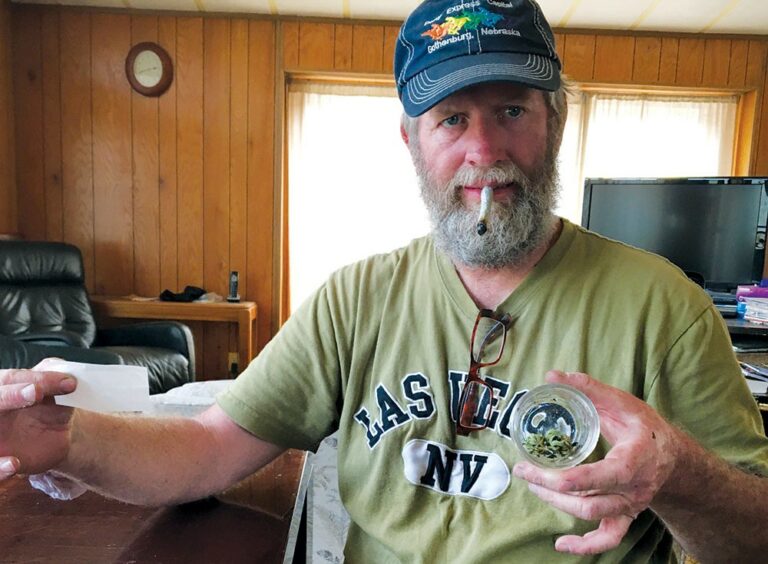
[image-1]

Alex Rowland has lived most of his adulthood in the U.S., but for his first seven years or so he called the land “Down Under” home. Now 48, he looks as fit as an Australian surfer. These days, the waves he rides are mostly in the choppy waters of the cannabis industry.

A graduate of Bowdoin College where he studied art, history and economics, Rowland is largely self-taught about marijuana and the volatile marketplace. When I ask him to give me a ballpark figure for the amount of money he has raised, he says $20 million.

Over the last few weeks, as stories about George Floyd have captured the world’s attention, Rowland and his team at NewTropic have talked with nonprofits about manufacturing cannabis products for causes that would assist minorities hurt by the war on drugs.

Before I met him at his Santa Rosa–based cannabis company, he sent an email in which he said, “In minority communities, dealing drugs has been one of the only ways to earn a decent living. Rather than nurturing the talents of these people and encouraging their sense of enterprise, we as a society have instead vilified them, incarcerated them and killed them. It’s tragic.”

At NewTropic—where nearly 100 people work in a 26,000-square-foot area—Rowland reminds me that while cannabis is legal in California, it’s illegal in Utah and Idaho. That’s also tragic.

The company operates five days a week, from 6:30am to 11:30pm. Before long, it will go 24/7. The numbers suggest the huge demand for cannabis and the significant revenue to NewTropic and tax dollars to the county.

Rowland himself has come a long way since the summer he was 17 and flew to Australia to be with his pot-growing father.

“It was my first experience with cannabis, including the ritual of consumption,” Rowland says. “That summer, I learned about growing, harvesting and processing.”

Rowland is still a cannabis consumer. He didn’t enter the industry as a manufacturer on a big scale until Colorado, and then California, legalized adult-use and adopted regulations. Prior to that he built software and media companies for more than two decades.

NewTropic doesn’t grow or sell marijuana, but it makes a wide variety of marijuana products for clients such as Old Pal, NorCal Cannabis Company, Stone Road, Biscotti, Aster Farms and Garden Society. Rowland plans to expand dramatically. He already needs an additional 45,000 square feet in Santa Rosa.

Over the next five years, Rowland hopes to have 25 additional facilities across the U.S. With his savvy about money, knowledge of marijuana and willingness to learn new stuff, success seems highly likely, indeed. 

Jonah Raskin is the author of “Marijuanaland: Dispatches from an American War.”

Growth Mindset: Cannabis entrepreneur Alex Rowland

Alex Rowland has lived most of his adulthood in the U.S., but for his first seven years or so he called the land “Down Under” home. Now 48, he looks as fit as an Australian surfer. These days, the waves he rides are mostly in the choppy waters of the cannabis industry.

A graduate of Bowdoin College where he studied art, history and economics, Rowland is largely self-taught about marijuana and the volatile marketplace. When I ask him to give me a ballpark figure for the amount of money he has raised, he says $20 million.

Over the last few weeks, as stories about George Floyd have captured the world’s attention, Rowland and his team at NewTropic have talked with nonprofits about manufacturing cannabis products for causes that would assist minorities hurt by the war on drugs.

Before I met him at his Santa Rosa–based cannabis company, he sent an email in which he said, “In minority communities, dealing drugs has been one of the only ways to earn a decent living. Rather than nurturing the talents of these people and encouraging their sense of enterprise, we as a society have instead vilified them, incarcerated them and killed them. It’s tragic.”

At NewTropic—where nearly 100 people work in a 26,000-square-foot area—Rowland reminds me that while cannabis is legal in California, it’s illegal in Utah and Idaho. That’s also tragic.

The company operates five days a week, from 6:30am to 11:30pm. Before long, it will go 24/7. The numbers suggest the huge demand for cannabis and the significant revenue to NewTropic and tax dollars to the county.

Rowland himself has come a long way since the summer he was 17 and flew to Australia to be with his pot-growing father.

“It was my first experience with cannabis, including the ritual of consumption,” Rowland says. “That summer, I learned about growing, harvesting and processing.”

Rowland is still a cannabis consumer. He didn’t enter the industry as a manufacturer on a big scale until Colorado, and then California, legalized adult-use and adopted regulations. Prior to that he built software and media companies for more than two decades.

NewTropic doesn’t grow or sell marijuana, but it makes a wide variety of marijuana products for clients such as Old Pal, NorCal Cannabis Company, Stone Road, Biscotti, Aster Farms and Garden Society. Rowland plans to expand dramatically. He already needs an additional 45,000 square feet in Santa Rosa.

Over the next five years, Rowland hopes to have 25 additional facilities across the U.S. With his savvy about money, knowledge of marijuana and willingness to learn new stuff, success seems highly likely, indeed.

Jonah Raskin is the author of “Marijuanaland: Dispatches from an American War.”

Open Space Case

In the middle of the Covid crisis, political unrest and economic uncertainty, the County of Sonoma is seeking to bypass voters and flout open-space protections to push forward a new luxury resort and major event center at 3890 Old Redwood Highway in the heart of the key voter-protected Windsor-Larkfield-Santa Rosa Community Separator greenbelt.

County planners want to allow construction of a luxury resort subdivision of a dozen Wine Country party houses and a warehouse-sized event building. The plan is for a hundred events serving a total of 10,000 people per year open daily for drinking, dining, weddings and music until 10pm on open, undeveloped land next to a youth summer camp.  

Even worse, the luxury resort is to be located in the Tubb’s fire burn zone at the foot of Fountaingrove, putting more people in harm’s way. The project will exacerbate the housing crisis and will compete with local businesses.

Strangely, county planners have determined that there will be no significant environmental impacts from the intensified commercial use of the property to Piner Creek, a large pond home to yellow legged frogs and giant salamanders, or to the old oaks that dot the property.

The luxury project is also on the outside edge of the voter-approved Santa Rosa Urban Growth Boundary where urban development has twice been determined by voters to end.

A public hearing by the Board of Zoning Adjustments is set for 1pm on July 9 for a vote on the environmental review and the project. The luxury resort and event center violates critical community separator protections, the General Plan and Zoning Code and overrides the will of the voters. It shouldn’t be reviewed or approved at a time of crisis when voters countywide are facing life and death issues.

Teri Shore

Regional Director, North Bay

Greenbelt Alliance

Big Skills Tiny Homes teaches on the job

0

The homes may be tiny, but the career options are big with Big Skills Tiny Homes. This Marin nonprofit provides self-discovery, mentoring and skill development to students interested in the trades.

During the nine-month program, students learn the trade skills needed to build a house—a tiny house—that is then sold to fund the next team of student builders. 

Sean Ticknor, president and founder of the nonprofit, explains why he began the program.

“As a construction-industry professional for the past 20 years I am aware of the need for more skilled tradesmen and tradeswomen,” he says. “And, as a parent actively engaged in the community, the high schools are not providing any kind of pipeline for skilled tradespeople, but there is pressure to go to college.”

Ticknor wanted to fill that gap. So last fall, with 18 years of experience working as an engineer and structural designer, he led three student builders—Melena King, Melkyn Mazariegos and Owen Navarro—through the entire home-building process.

“I see the need to offer high school graduates an additional option—an option that would give a young person the opportunity and time to experience the trades,” Ticknor says. “An option that would build a young person’s skills and confidence. And, an option that would result in the identification of a financially rewarding and satisfying career—without the accumulation of considerable debt.”

Indeed, students these days need more options upon graduation, as well as mentors to help them navigate those options. Through the process of building a tiny home from start to finish, students are exposed to a variety of trade disciplines and are then mentored afterward to use their experiences to identify their future career path.

A natural mentor, and regular volunteer at his two sons’ schools, Ticknor found that the kids in the program were eager to learn and that experts in the trades were also very willing to share what they knew. 

“It was a delightful year, the kids learned so much,” he says. “Tradespeople are thrilled to share their expertise and are more than happy to share their skills and knowledge. Guest speakers and field trips were easy to arrange.” 

From September 2019 through May 2020 the team worked Monday–Friday from 8:00am to 12:30pm, learning every skill needed to build a tiny house. In the fall, they learned everything from trailer preparation and foundation work, to floor, wall and roof framing, sheathing, and door and window installation. In winter, it was time to install siding, a roof, plumbing and electrical, gas lines, HVAC and insulation; and to do the trim work. In late spring, the finishing touches were added—appliances, a complete kitchen and bathroom, built-ins and paint.

“The first build couldn’t have gone much better, except for the Covid-19 lockdown at the end,” Ticknor says. “All of them have a job if they want it—two are working right now, the other is in school.”

The beautiful home they built was finished in May and is now for sale. When it sells, the money will go toward funding the next tiny house build. They are now accepting student applications or the next round of the paid program, which begins Sept. 8, 2020. 

“We believe in self-discovery through real-world experiences, because knowing what you like to do and what you are good at leads to a career you love,” Ticknor says. “Being a mentor is a real privilege—I am so delighted with this first round of three students; each one was so hard-working, smart and attentive. It’s great to see that each one is working toward something that matches their personality.”  

Besides, tiny houses are the wave of the future, especially if you can build one yourself.

www.bigskillstinyhomes.org

Companies Tied to Nancy Pelosi, Devin Nunes Received Covid Loans

The half-trillion-dollar loan program advertised as a lifesaver for the country’s struggling small businesses is again under fire after the Small Business Administration (SBA) on Monday released a list containing hundreds of recipients of the program, revealing that several private equity-backed chains owned by members of Congress and dozens of publicly traded companies and corporations received millions.

The Paycheck Protection Program (PPP)—a part of the Coronavirus Aid, Relief and Economic Security Act—first drew scrutiny after it quickly burned through its initial $350 billion allocations by helping large public companies secure multi-million dollar loans while several small businesses missed out. There’s also the fact that the big banks administering the program on behalf of the government are expected to net hundreds of millions of dollars in fees.

If at least 75 percent of the loan is used for payroll, it becomes “forgivable,” according to the SBA.

To see the full list of recipients that received a loan of at least $150,000 click here.

Here are a few of the companies which received large or otherwise notable loans in the North Bay:

— Ygrene Energy Fund, a Petaluma company that offers energy efficiency financing and has raised millions of dollars in venture capital investments, according to news reports, received a loan of between $5 and $10 million to cover 229 employees.

— The Francis Ford Coppola Winery, named for its movie-director owner and based in Geyserville, received a loan of between $5 and $10 million to cover 469 employees.

— The parent company of Napa County’s French Laundry restaurant received a $2 to $5 million loan for 163 employees. Thomas Keller, the company’s owner and celebrity chef, is suing his insurance company for failing to pay for losses due to the pandemic.

— Piatti Restaurant Company, which owns and operates Mill Valley’s high-end Italian restaurant, received a $2 to $5 million loan for 459 employees.

— 23 Bottles of Beer, LLC, the parent company of the North Bay’s Russian River Brewing Company, received a $2 to $5 million loan for 196 employees.

— The Girl and the Fig, a popular restaurant in the city of Sonoma, received between $1 and $2 million for 138 employees.

— Then there are the politicians. According to Bloomberg News, Paul Pelosi, the husband of Speaker of the House Nancy Pelosi, the longtime San Francisco congresswoman, holds an 8.1 percent stake in the San Rafael-based EDI Associates. EDI in turn has an investment in the El Dorado Hotel, located in the city of Sonoma. EDI Associates received a loan of between $350,000 and $1 million for 52 employees. A spokesperson for Nancy Pelosi told Bloomberg that Paul Pelosi was “not involved in or even aware of this PPP loan.”

— Congressman Devin Nunes, a Republican who represents the Central Valley, has reportedly outdone Pelosi on the loan front. Nunes owns a stake in Alpha Omega Winery, according to news reports. The St. Helena winery received a $1 to $2 million loan for an unreported number of employees.

Additional reporting by Tony Nuñez.


Editor’s note:
The Bohemian is part of a group of 12 weekly newspapers that did apply
for and receive a PPP loan of $1-2 million through Nuz, Inc. in Santa
Cruz.

Matt Reischling Takes a Holiday

0

Petaluma-native Matt Reischling has been around. He attended UCLA, lived on a boat in Oakland for a year and has made his home in a hodge-podge of places such as Italy and San Diego, where he began his first band, The Marinators.

“I wrote a lot of bizarre topical songs about inhalers, sea lions and basketball,” Reischling says.

For a decade, he called Los Angeles home, recording and playing music under the moniker Confessions of a Corn Silo, though he says “the L.A. intensity” began to creep into his psyche, and he moved back to the North Bay five years ago.

“I needed to get out of there (L.A.), and the best place to do it was to come back to where I first lived,” he says. “But I wanted to try to reinvent myself after all these experiences, and in the past three years I’ve found my voice again.”

That new musical voice shines through on Spirit Holiday, the debut album from Reischling’s new solo project, Matt Reischling & the Black Box.

Available now online, the 12-track LP is a melodic and lyrically reflective collection of original tunes (and one David Bowie cover) that looks back on Reischling’s adventures and imagines new ones.

“The album is essentially, among many different things, a reintroduction of my music, which I’ve been writing for 20 years,” Reischling says. “Some people ask me, ‘Is it weird to come back to where you grew up?’ And I say, ‘No, I’ve had 20 years of living away.’ This place has changed, I’ve changed and it was all kind of meant to be.”

Reischling credits that feeling of fortuitousness upon his return to the North Bay with the group of musicians he fell in with, including guitarist Lincoln Barr and drummer Anthony Vaccaro.

Both appear on Spirit Holiday, as do bassist Daniel Spree, cellist Linda Amari and percussionists Juan ‘Tato’ Pacheco and David Gray.

Musically, Spirit Holiday is a mix of alternative-rock, indie-rock, folk and pop tunes that call to mind artists like Neil Young, Grandaddy and Sparklehorse. Lyrically, the record is a vulnerable exposé on Reischling’s changing emotional headspace.

For example, opening track, “Willingly,” begins with Reischling singing, “Well, I lost myself recently / I let go of myself willingly.”

“That’s how I felt at the time playing the song, as that’s how I felt coming back here,” Reischling says of the song’s lyrics. Through the course of the album, Reischling’s mindset changes as he writes about developing a positive outlook in the album’s title track.

“The last two or three years, I’ve been getting back into good health,” Reischling says. “I went to Mexico, Cuba, Chiapas, various places in search of healing and inspiration. I wrote that song about going somewhere to seek something out, even if you don’t know what it is.”

Other tracks on Spirit Holiday reference a wide range of topics, from grocery store flirtations, to the late actor Philip Seymour Hoffman, to a child ghost; proving that Reischling still has that penchant for the bizarre in his songwriting.

Now that Spirit Holiday is available on streaming sites such as Bandcamp, Spotify and Apple Music, Reischling is looking forward to the next iteration of Matt Reischling & the Black Box, including planned publishing projects and other creative avenues.

“I’m grateful anytime I can play anywhere,” Reischling says. “The band thing was happening for a couple years. That is on hiatus, so I’ve refashioned the Black Box to be a solo thing with different players. I’m always going to be vacillating between playing solo, which I feel like I do well, and with a group of people who want to play with me at the time. I’m open to everything.”

‘Spirit Holiday’ is available online wherever you stream music and available to purchase as a digital album on Mattreischling.bandcamp.com.

Petaluma Approves Leghorns Park Artwork, Dodges Legal Questions

As the nationwide Black Lives Matter protests continue, artwork affiliated with the movement has become a flashpoint for disagreement in cities across the country.

On Saturday, July 4, a woman in Martinez was filmed using a small bucket of black paint and a roller to cover up the first, bright-yellow “L” in the city’s new “Black Lives Matter” mural. During the video, a man accompanying the woman calls racism a “leftist lie.”

The Martinez Police Department is reportedly now searching for the couple who defaced the artwork, which had been permitted by the city.

Artwork has played a central role in Petaluma’s protests, raising conflicts among community members—and legal questions—over the past month. As a result, at a meeting on Monday, July 6, the Petaluma City Council weighed in on several art-related questions but left underlying legal issues largely unaddressed.

The council approved the creation of a Black Lives Matter street mural without discussion. The artwork, similar to the ones cropping up in cities across the country including Martinez, will spell out “Black Lives Matter” on a yet-to-be-determined public street.

Next, the council temporarily approved an impromptu art installation at the city-operated Leghorns Park, which, in recent weeks has become the center of a legal debate after a man visited the park multiple times to tear down signs, allegedly hitting one woman in the face with his elbow in the process.

Although numerous protesters witnessed the man in action on June 20, a responding police officer told protesters there wasn’t much he could do.

The officer, caught on film, explains that he cannot arrest or charge the man for removing and destroying the artwork because the artwork exists in something of a legal gray zone.

The city chose, at that time, not to enforce the municipal code that usually bars citizens from installing unpermitted art or signs in many city-owned spaces. Because the art was technically not permitted, the police could not prosecute the man for removing it, the officer says.

“We can’t play favorites, so to speak,” the officer comments. “If we’re charging him with taking down the signs, then we’d have to charge you for putting up the signs.”

In a series of interviews last week, the Bohemian attempted to clarify how the Petaluma Police reached this understanding of the law and who offered them legal advice.

Deputy Police Chief Brian Miller said in an interview that the man’s decision to remove the art could be considered free speech under the First Amendment. He also said that the District Attorney’s office advised the police department that the man was “acting on behalf of the City” when he tore down and destroyed the signs.

The District Attorney’s Office denies they offered the department that advice, and City Attorney Eric Danly stated in an email, “The person who removed the signs was not acting as an agent of the City.” Nor did the public attorneys advise the police department that the vandalism of the artworks was protected as freedom of expression.

Although it is now caught up in a nationwide political discussion, the Leghorns Park installation had decidedly non-political beginnings.

Back in December, the Kindness Committee, a group founded by local high school students, began installing their artwork on fences at public schools and parks. The early installations included phrases such as “be nice,” “go for it,” and “be happy,” according to a presentation two of the group’s founders gave to the city council.

In June, as the nationwide Black Lives Matter protests began, the Kindness Committee began installing work in support of the movement at parks around the city. Only then did the students’ artwork become controversial, the Kindness Committee’s members and supporters said during the council meeting.

In mid-June, after some of the signs were ripped down, the Kindness Committee organized a “sign hanging party.” Some of those signs were ripped down as well, but local Black Lives Matters activists and sympathizers continued to add their own work to the Kindness Committee’s Leghorns Park display throughout the month.

In letters submitted to the council, a few residents criticized the appearance and political significance of the artwork. One man, speaking during public comment, said that permitting the artwork, even temporarily, could lead the city to slip into lawlessness.

Those statements—and the people who removed the art—seemed racist, supporters of the artwork said.

“I think this art has brought out the racism in our community and I encourage you to pass this resolution,” former councilmember Janice Cader-Thompson said during the meeting’s public-comment period.

Ultimately, the city council approved the artwork until Aug. 6 with an option to extend until Sept. 15.

The council did not address the underlying legal issues raised by the June 20 video of the police’s response to the man removing the artwork. But, if he returns to tear down the now-permitted artwork, the police will be obligated to charge him.

Does city-permitted artwork pack the same political punch as unpermitted artwork? Protesters who spoke at the meeting seemed to think the city’s approval signifies a small step in support of the movement, although the city, as with most others in the North Bay, has been slow to embrace the movement’s larger calls for systemic police reform, reallocating funding away from law enforcement or abolishing police departments altogether.

For their part, protesters continue to use unpermitted artwork as a tool.

During a march on Saturday, July 4, protesters installed artwork all over the station’s sign and front doors.

“Abolish the police,” one poster taped over a sign in front of the station read.

Although the police did not attempt to stop the installation, the artwork had been removed by Tuesday afternoon.

Nearly a month earlier, on June 12, the Petaluma Police Department took to Facebook with a post featuring artwork in support of police.

“We would like to thank the chaplains, volunteers and community members who showed their support this morning by placing colorful signs on our building… Please know your posters have been moved inside for us to enjoy for weeks to come,” the Facebook post, which was tagged #thinblueline, stated.

Additional reporting by Peter Byrne.

Focus of SR Police’s Investigation Into Porsche-Protester Incident Remains Unclear

Nearly three weeks after an unidentified motorist drove through a crowd of Black Lives Matter protesters marching in...

Press Democrat Parent Company Resigns From Business Group Following ‘All Lives Matter’ Blog Post

In an interview Wednesday afternoon, North Bay Business Journal publisher Brad Bollinger told the Bohemian that the Journal and its parent company, Sonoma Media Investments (SMI), have left a local business group following a controversial blog post by the group’s former president. Sonoma Media Investments, founded in 2011, now owns the Santa Rosa Press Democrat, North Bay Business Journal, Petaluma...

Apres Nous

Je dis ça, je dis rien is a French idiom that translates literally as, “I say that, I say nothing.” Its nearest English counterpart is the comparatively flip “just sayin,’” which is as close to a raison d’etre as I can presently muster for this column. You see, the problem with being a humorist during unfunny times is that the...

Growth Mindset

Alex Rowland has lived most of his adulthood in the U.S., but for his first seven years or so he called the land “Down Under” home. Now 48, he looks as fit as an Australian surfer. These days, the waves he rides are mostly in the choppy waters of the cannabis industry. ...

Growth Mindset: Cannabis entrepreneur Alex Rowland

Alex Rowland has lived most of his adulthood in the U.S., but for his first seven years or so he called the land “Down Under” home. Now 48, he looks as fit as an Australian surfer. These days, the waves he rides are mostly in the choppy waters of the cannabis industry. A graduate of Bowdoin College where he...

Open Space Case

In the middle of the Covid crisis, political unrest and economic uncertainty, the County of Sonoma is seeking to bypass voters and flout open-space protections to push forward a new luxury resort and major event center at 3890 Old Redwood Highway in the heart of the key voter-protected Windsor-Larkfield-Santa Rosa Community Separator greenbelt. County planners want to allow construction of...

Big Skills Tiny Homes teaches on the job

The homes may be tiny, but the career options are big with Big Skills Tiny Homes. This Marin nonprofit provides self-discovery, mentoring and skill development to students interested in the trades. During the nine-month program, students learn the trade skills needed to build a house—a tiny house—that is then sold to fund the next team of student builders.  Sean Ticknor, president...

Companies Tied to Nancy Pelosi, Devin Nunes Received Covid Loans

The half-trillion-dollar loan program advertised as a lifesaver for the country’s struggling small businesses is again under fire after the Small Business Administration (SBA) on Monday released a list containing hundreds of recipients of the program, revealing that several private equity-backed chains owned by members of Congress and dozens of publicly traded companies...

Matt Reischling Takes a Holiday

Petaluma-based artist's indie-rock LP looks back on past adventures and imagines new ones.

Petaluma Approves Leghorns Park Artwork, Dodges Legal Questions

As the nationwide Black Lives Matter protests continue, artwork affiliated with the movement has become a flashpoint for disagreement in cities across the country. On Saturday, July 4, a woman...
11,084FansLike
4,606FollowersFollow
6,928FollowersFollow