Meeting Bernie

Bernie Sanders represents many things to many people. To me, he represents a thoughtful and considerate man, and here’s why:

While living in Vermont in the early ’80s, I had the opportunity to meet Burlington’s Mayor Sanders under somewhat challenging circumstances. The first took place on a bitterly cold day during the December holidays. I had parked in downtown Burlington, across from City Hall, to finish some last-minute gift shopping with my three young kids. When we returned to our parking space, the car—a rusty Subaru—was gone. It was then that Bernie approached with a “Can I help you?” When I told him I thought our car had been stolen, he looked at the street sign that clearly stated “12-minute Parking” and asked, “Did you read the sign?” I hadn’t. Bernie told us to “Wait here,” left us for a couple of minutes and returned to let us know that the car had been towed and he’d called a cab to take us to the car impoundment.

A few months later, after having dinner with friends in downtown Burlington, we got back to my car amid a full-blown snowstorm to discover the battery was dead. While we pondered what to do, a car slowly cruised by, made a U-turn, and pulled up to the front of us. Mayor Bernie emerged with the words, “Looks like you fellas need a jump.” Cables were connected, the car started and off he went.

Bernie is a true man of the people—then and now.

Retired Superintendent/Principal

Petaluma

For the Record

Thanks for your cover story “On The Record” (Feb. 26). I appreciated you representing this most enduring of formats—the vinyl record—and places where we can shop, buy and trade.

I especially appreciated the info on Jason Scogna’s radio show. Since 2014, I’ve been hosting an all-vinyl radio show called The Vinyl Cave, Friday nights 7–10pm on 91.3 FM KSVY in Sonoma. It can also be heard at www.ksvy.org. I encourage people to discover or rediscover the fun of dropping the needle and feeling the warm sound of vinyl. Turn it up and you feel it in the heart, not in the head like other audio media.

Thanks again, Bohemian!!!

Sonoma

Helping SIFF

Our independent film festival in Sonoma still needs many more volunteers. The dates of the Sonoma International Film Festival are
March 25–29. Please go to our website, www.sonomafilmfest.org, click on the drop-down menu, then on “Support” and “Volunteers Welcome,” then on signup.com. For more info or questions please contact: ki*@************st.org.

Sonoma

Write to us at le*****@******an.com.

Cannabis & Corona

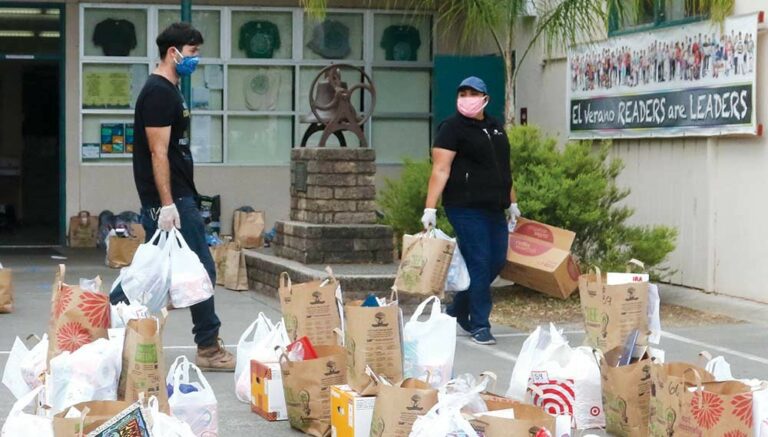
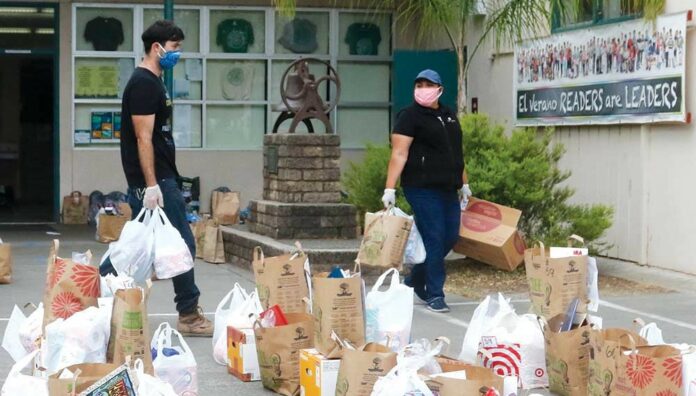
Like every other sector of our society, the coronavirus has hit the cannabis world. Experts say the virus will continue to hit it—causing cancellations or postponements of cannabis festivals and events in the coming weeks and months.

Canna-tourism could suffer as people travel less and avoid crowds. Industry observers do not expect overall consumption and demand will be greatly impacted, but those who smoke joints and use pipes would be smart not to share them. Some may choose to have their weed delivered rather than buy it in person.

It’s a good thing Americans are not dependent on China for cannabis, as they are for so many other products. Some vape hardware comes from China and virus scares have impacted supplies.

New York City Mayor Bill de Blasio announced recently at a press conference that people who smoke or vape can become more vulnerable to severe illness.

“If you are a smoker or a vaper this is a very good time to stop that habit and we will help you,” de Blasio said.

To get a sense of what is happening locally, I called Eli Melrod, the CEO of Solful, a Sebastopol-based dispensary.

“Consumers are stocking up and are preparing to hunker down,” he told me. “Instead of buying one or two items, they’re buying 10 to 12 items so they have a month’s supply, rather than a week’s supply.”

Melrod urges employees to wash their hands frequently and not touch their faces. With increased demand, the dispensary is aiming to increase supply.

“We’re reaching out to manufacturers and to growers,” Melrod said. “We don’t want to run out of the medicine that people need. The store is up and running as usual and we hope to see our regular customers. They’re all welcome.”

Over the last two weeks, I have continued smoking joints—by myself—and eating gummies. I attended a cannabis event with a friend who offered me the joint he was smoking. It seemed wise to decline. I’m not sorry I did. Precaution is the watchword for now and for the immediate future.

Local cannabis maven, Mitcho Thompson, advises, “Now is the time to have a stash.”

Jonah Raskin is the author of “Dark Day, Dark Night: a Marijuana Murder Mystery.”

Cannabis & Corona

[image-1]

Like every other sector of our society, the coronavirus has hit the cannabis world. Experts say the virus will continue to hit it—causing cancellations or postponements of cannabis festivals and events in the coming weeks and months.

Canna-tourism could suffer as people travel less and avoid crowds. Industry observers do not expect overall consumption and demand will be greatly impacted, but those who smoke joints and use pipes would be smart not to share them. Some may choose to have their weed delivered rather than buy it in person.

It’s a good thing Americans are not dependent on China for cannabis, as they are for so many other products. Some vape hardware comes from China and virus scares have impacted supplies.

New York City Mayor Bill de Blasio announced recently at a press conference that people who smoke or vape can become more vulnerable to severe illness.

“If you are a smoker or a vaper this is a very good time to stop that habit and we will help you,” de Blasio said.

To get a sense of what is happening locally, I called Eli Melrod, the CEO of Solful, a Sebastopol-based dispensary.

“Consumers are stocking up and are preparing to hunker down,” he told me. “Instead of buying one or two items, they’re buying 10 to 12 items so they have a month’s supply, rather than a week’s supply.”

Melrod urges employees to wash their hands frequently and not touch their faces. With increased demand, the dispensary is aiming to increase supply.

“We’re reaching out to manufacturers and to growers,” Melrod said. “We don’t want to run out of the medicine that people need. The store is up and running as usual and we hope to see our regular customers. They’re all welcome.”

Over the last two weeks, I have continued smoking joints—by myself—and eating gummies. I attended a cannabis event with a friend who offered me the joint he was smoking. It seemed wise to decline. I’m not sorry I did. Precaution is the watchword for now and for the immediate future.

Local cannabis maven, Mitcho Thompson, advises, “Now is the time to have a stash.”

Jonah Raskin is the author of “Dark Day, Dark Night: a Marijuana Murder Mystery.”

Return to Stage

0

The renovation and remodeling of Santa Rosa Junior College’s 80-year-old Burbank Auditorium is now complete.

The venerable 600-seat theater has been reconfigured into two performance venues; a 400-seat proscenium-arch space and a 200-seat, three-quarters thrust studio theater. The JC’s Theatre Arts Department, which has had to take their shows “on the road” for the past two years, returns to campus to open the Studio Theatre with Martin McDonagh’s The Cripple of Inishmaan.

McDonagh, often referred to as “the bad boy of Irish theater,” is known for his darkly humorous looks at Irish life both onstage (Beauty Queen of Leenane) and in film (the cult-classic In Bruges).

It’s 1934 and the citizens of Inishmaan, one of Ireland’s Aran Islands, are all abuzz with the news brought by island crier/gossip/blowhard Johnnypateenmike (Riley Craig). It seems that a Hollywood film crew has arrived to shoot a documentary on a nearby island (This is based on a true incident). The isle’s younger folk, like the egg-centric Helen (Hayley Hollis) and candy-obsessed Bartley (Samuel Gleason), have dreams of being discovered. Orphaned Billy Claven (Daniel Dow), known to all on the island as “Cripple Billy,” sees it as his chance to escape a life full of unhappiness and derision, perpetrated even by the loving “aunties” (Allyson Bray, Samantha Bohlke-Stater) who raised him.

More tragedy than comedy, there’s an undercurrent of sadness and cruelty to the story that matches the bleakness of the play’s setting. Each time the show seems to be veering into redemptive sentimentality, McDonagh executes a quick U-turn.

Director Leslie McCauley has a talented ensemble at work here, with the expected challenges of casting college-age students in mature roles minimized by good costume, hair and makeup design by Ariel Allen. Standouts include Dow, who does particularly good physical work, and Craig, who impresses with what is a generally loathsome and pathetic character. Dialect work is also strong courtesy Dialect Coach/Cultural Advisor Jane Martin.

Peter Crompton’s scenic design and Theo Bridant’s light-and-sound design work in tandem to transform the intimate theater and transport the audience to a wee bit o’ Ireland, as does the live musical accompaniment by Lisa Doyle and Sonia Tubridy.

At two-and-a-half hours (with intermission), the show seems to meander a bit—but that, and its deliberate pacing, are no doubt representative of life on a remote Northern Atlantic rock.

Erin go Bragh.

Rating (out of 5): ★★★★

‘The Cripple of Inishmaan’ runs Wednesday–Sunday through March 15 in Santa Rosa Junior College’s Burbank Auditorium Studio Theatre at 1501 Mendocino Ave., Santa Rosa. Wednesday–Saturday, 8pm; Saturday & Sunday, 2pm. $10–$25. 707.527.4307. theatrearts.santarosa.edu

‘Directions to the Dumpster’ Chronicles Homeless Journey

Edward Campagnola has a story to tell. Currently living as an unsheltered resident in Sonoma County, he spent the last five years writing his story, and last year he released his debut novel, Directions to the Dumpster.

Now available on Amazon.com, the book traces Campagnola’s journey in homelessness and his attempts to get out of it. It is also a story that aims to dispel preconceptions about homelessness and end the stigma associated with it through a campaign of awareness and compassion.

“I’ve been in a cave really for five years,” Campagnola says. “You’re lucky if you have a phone, you know what day it is. I would lose days if I didn’t have a phone, but having it is a security risk.”

This glimpse into Campagnola’s daily experience is one of the book’s many details that dissolves the reader’s veil of ignorance and exposes them to the reality of what unsheltered residents go through day to day.

The title of the book, Directions to the Dumpster, is a phrase Campagnola uses literally and figuratively. He argues that in a capitalist society, the homeless are seen as worthless, while they also are often given directions to the dumpster when they do reach out and ask for help.

“I originally titled the book Going to California, a la the Zep tune,” Campagnola says.

Originally from New Jersey, Campagnola traveled to New Orleans, Houston and Las Vegas after the death of his wife.

“I was soul-searching at the time,” he says.

At one point in his travels he suffered a violent, random attack on a California-bound Greyhound bus that left him with PTSD. When he arrived in Sonoma County, words began to pour out of him.

“It was unbelievable, and I don’t know if it was from the attack, but phrases just started flowing out of me,” Campagnola says.

Collecting those phrases in notebooks, Campagnola wrote his manuscript on a Sonoma County Library computer. He wrote the novel as a form of therapy, as a way to reconnect with his adult children and to give society a better understanding of homelessness in America.

Campagnola describes his book as a documentary-style narrative, detailing events as they occurred and letting the reader make their own personal connection.

“I did not bother to express what my feelings were,” he says. “Except for the moment when I talk about a handwritten letter from my wife that I lost—I was more distraught than any point in my life.”

Though Campagnola secured a publishing contract, the book is an entirely DIY experience, with Campagnola editing and promoting the book on his own. The road to publishing was a long one, but he’s ready to do it again.

“The book’s a cliffhanger,” Campagnola says. “I’ve already started writing the sequel. I decided the title will be Directions Home.”

‘Directions to the Dumpster’ is available online.

Go to Church

0

David Bowie once said, “Music itself is going to become like running water.” He was talking about how people never think of their tap water: They wash dishes in it, they drink it and the water becomes so commonplace that it’s taken for granted until it’s not there.

For many artists and audiences in the North Bay, the tap for live-music experiences in downtown Santa Rosa has been stuck on low-flow for some time. And people are starting to notice.

Make no mistake, there are a number of bars, clubs and coffeehouses in town that host bands; but for intimate, engaging concerts in a devoted theater space, nothing has quenched Santa Rosa’s musical thirst quite like the newly opened nonprofit venue the Lost Church.

Located on Mendocino Avenue, three blocks off of Courthouse Square, the Lost Church is a 99-person, fully seated listening room that follows in the footsteps of the San Francisco venue of the same name.

That original venue, located in San Francisco’s Mission District, is the brainchild of musicians Brett and Elizabeth Cline, who took their irregularly shaped house and turned the living room into a venue.

When the Clines began looking to expand their Lost Church into a multi-venue project, they contacted North Bay musician, producer and promoter Josh Windmiller, whose work includes founding and running the popular Railroad Square Music Festival (returning on June 14, 2020) as well as playing in bands such as the Crux.

“I never thought I’d be the venue guy,” says Windmiller. “But this is a perfect fit for me. I want to create art, be around artistic people and I want my fellow music makers to thrive.”

When Windmiller met Brett and Elizabeth and found out they wanted to expand their theater model to other communities and make them sustainable, nonprofit ventures, he jumped at the chance to help make it happen.

“”This is our proof of concept, to show that spaces like this are possible in our community,” Windmiller says.

In the works since late 2018, the Lost Church boasts warm acoustics, charming décor and a focus on live music, with a stage set under chandeliers and vines.

“The whole thing feels like a post-apocalyptic cabaret space,” Windmiller says. “It feels like we’ve sequestered ourselves in this building where vines are growing, but we’ve decked it out with beautiful art and stained wood and intimate lighting, and it has a good vibe.”

While Executive Director Brett Cline was a driving force in the building and design of the Santa Rosa venue, the running of the theater is entirely in the hands of the North Bay community. On the ground floor of the project from day one, Windmiller is now the venue’s development director.

“The San Francisco people aren’t going to begin to pretend that we don’t have a pretty awesome scene up here,” says Windmiller. “And honestly, the only thing we have a dearth of is places to play—there is an unequal representation of artists to venues. We have some really great venues, but not enough of them that can take a risk on up-and-coming artists and not a lot that can host a show in a place that is this intimate.”

“I like the aspect of what they are trying to build there, in that it seems to be music focused,” says Philip Pavliger, a Santa Rosa photographer who works with Windmiller on events like Railroad Square Music Fest. “Santa Rosa has a fair number of venues, but there didn’t seem to be a place where local artists could go to try out new material in front of an audience.”

When Pavliger heard about the Lost Church, he took the chance to shoot a new exhibit, “Rhapsody of Nine,” featuring photo portraits of local musicians in the venue. The photos are currently on display nearby at Acre Coffee on Fourth Street.

“There’s an amazing amount of talented people here in the area,” Pavliger says. “For me the idea is to help support and grow something I think the city could really use.”

So far, the Lost Church has consistently hosted attentive and enthusiastic audiences, and Windmiller says the venue is ideal for smaller acts, solos, duos or stripped-down bands because they don’t have to try to cut through distractions.

“There’s definitely a place for cafes, clubs and bars—those are some of the main places I’ve played with the Crux,” Windmiller says. “But there’s a certain vibe and experience that one finds in a theater, and this is a small theater, this is a parlor room, and that’s so exciting to be creating here.

“Our belief and our conviction is that live experience can be sustained, loved and can grow through being different from those experiences that we find in the digital era. Where Netflix and YouTube can provide privacy and distance from the performer, live experiences can provide intimacy, engagement and evenings with the community and art that will be unforgettable. What we need to do is sustain a place where new acts and even established artists can have those experiences with an audience.

“Maybe the time we’re living in is post apocalyptic, maybe the internet has destroyed the world like a robot uprising, and indeed we are creating a theater from the ruins of the old world.”

County Seeks First Youth Poet Laureate

0

Sonoma County students between ages 13 and 19 who have a passion for writing poetry are encouraged to apply to be recognized as the inaugural Sonoma County Youth Poet Laureate.

Following in the footsteps of national youth poet laureate programs, California Poets in the Schools is on the hunt for a Sonoma County student who has shown a commitment to the arts through writing and engagement in clubs or afterschool activities.

Interested students can apply online by March 13, and the youth poet laureate will win $500 and have a chapbook of their poetry published as well as participate in several public functions.

With the application, three of the student’s poems must be submitted, totaling no more than 10 pages. A committee of respected local poets will review applications and choose finalists, who will need an adult sponsor and who will be asked to attend a judging session.

The winner will be announced in late April, and the inauguration will take place on May 2, at the Santa Rosa Central Library, in conjunction with a countywide youth poetry reading event.

State Delivers Trailers to Shelter Homeless

On Thursday, Feb. 27, CalTrans towed 10 FEMA-owned travel trailers from Chico to Sonoma County’s administrative campus in Santa Rosa to help temporarily house some of the thousands of people estimated to lack access to formal housing in the county.

As of press time, details about how many people the trailers will shelter—and for how long —remained unclear.

According to the Press Democrat, Sonoma County Board of Supervisors Chair Susan Gorin significantly reduced her estimate for how many people the trailers could each hold after seeing them in person. All told, they will shelter between 20 and 30 people, Gorin told a reporter.

The Sonoma County Board of Supervisors is expected to discuss possible locations and uses for the trailers at their Tuesday, March 10 meeting.

Sheriff’s Deputy Blount Retires

A Sonoma County Sheriff’s Deputy involved in the incident leading to the death of a Petaluma man last November, retired from the department last week.

David Ward died shortly after an interaction with officers from the Sheriff’s Office and Sebastopol Police Department.

The Marin Coroner’s Office has not yet released a cause of death, but a video of the interaction shows that Charles Blount, a longtime Sonoma County Sheriff’s Deputy, attempted a controversial neck hold through Ward’s car window and slammed Ward’s head against the car door during the interaction.

In a statement released in December, Sheriff Mark Essick called Blount’s conduct captured in the video “extremely troubling.” Essick announced in the same statement that he had begun the process of firing Blount.

Blount initially hired a lawyer and appealed the termination proceeding. However, on Feb. 7, he retired.

The Santa Rosa Police Department’s criminal investigation and the Sheriff’s Office’s administrative investigations into Ward’s death will continue.

Reading Room

0

Nestled among majestic redwoods and within walking distance of Sonoma State University, the Sitting Room, a community library focused on books by and about women, is a welcome place of respite for study, focus and quietude.

“Its focus is on women, but it is open to all, free and always growing,” says Karen Petersen, cofounder of the Sitting Room and Librarian at the Herold Mahoney Library on Santa Rosa Junior College’s Petaluma campus.

Peterson and J.J. Wilson, Professor Emerita, Sonoma State University cofounded the Sitting Room in 1983, along with an enthusiastic group of book lovers who “donated books, held salons and celebrated the cultural contributions of women artists and writers,” says Petersen. “People just brought books, it was very touching. It started out very small and then it grew.”

Inspired by the Morrison Reading Room at the UC Berkeley University Library where Petersen and Wilson were students, they conceived the Sitting Room as a retreat and quiet space for anyone to come read and study.

Today the unique, nonprofit community organization houses over 7,000 books, including a small lending library and exceptional literary collections devoted to Virginia Woolf, poetry, art and fiction. It is also a place for writers to work, learn and share.

While visiting and browsing the library is a special experience, its titles are fully searchable at the Sappho archive online (librarycat.org/lib/Sitting_Room).

“From its beginnings in a Cotati storefront, the Sitting Room has always made a special place for local writers and of course students,” says Petersen. “Our workshops, book groups and programs featuring regional poets and novelists shine an important and valued light on the rich literary culture of our region.”

Petersen remembers the recently deceased local writer Susan Swartz.

“The late Susan Swartz was a beloved member of the Sitting Room family and we were looking forward to hearing her read from her new novel, Laughing in the Dark, on March 15,” Petersen says. “We will still host a reading on that date with local author Barbara Baer and a chance to remember Susan and her inspiring, funny, tragic writing.”

The Sitting Room’s Writer in Residence program introduces the public to various featured writers, workshops, readings and performances. Current writers include Patti Trimble, a spoken-word artist performing her work Penelope at the Sitting Room on June 6, and Sonoma County Poet Laureate Maya Khosla and her fire-inspired Local Legacy Project.

“Cofounder J.J. Wilson has begun a special series devoted to rediscovering lesser-known women writers such as Dorothy Bryant, Rumer Godden and currently Rebecca West,” Peterson says.

Indeed, a shelf of West’s work is visible as you enter the Sitting Room.

This treasured community library has inspired and supported, many local writers in their work for nearly 40 years, by literally providing them the simplest of things—a room of their own.

Close-up on Israel

0

Back for its fifth year, the annual Sonoma County Israeli Film Festival runs March 3–31 at the Rialto Cinemas in Sebastopol. Featuring four films, this year’s fest focuses on a bevy of themes including gender identity, love and aging as well as the ongoing Israeli–Palestinian conflict.

Iréne (pronounced eh-REN)

Hodes is director of the Israeli Film Festival, which is an offshoot of the Jewish Film Festival of Sonoma County (for which she also programs films), now in its 25th year. Hodes explains the Israeli Film Festival came to be because the Jewish Film Festival received submissions from Israel’s vibrant film scene that weren’t necessarily steeped in Judaism but needed a place to be shown.

“We have a very robust film program at the Jewish Community Center of Sonoma County, but we found that there were so many submissions of Israeli films over the years, we wanted to give them a chance to shine and have their own festival,” Hodes says. “So now we have the Jewish Film Festival in October and the Israeli Film Festival each spring.”

Hodes goes on to explain that many people, particularly in this area, don’t really grasp the depth of the Israeli film industry as a whole.

“People may have preconceived notions of say, Israel as a country but aside from that, there’s a high-quality film industry in general with hundreds of films every year, wonderful film schools, a lot of student films,” she says. “And just like any country with so many films, a lot of these won’t be screened internationally.”

Still in its formative years, the Israeli Film Festival features four films spread out over the month of March showing twice daily on Tuesdays. It kicked off last Tuesday, March 3, with the Bay Area premiere of Flawless, written and directed by Tal Granit and Sharon Maymon. The film won four Ophir Awards (the equivalent of the Israeli Oscars).

Hodes passionately speaks to the smaller, more independently made Israeli films.

“The Jewish Community Center wants to give those films a place to be shown,” she says. “The curatorial work that I do is to try and create a balanced selection. So, they are not all political, they are not all religious or documentary, they’re not all, say, Holocaust specific or Palestinian/Israeli crisis specific. I try to create a very balanced selection in terms of comedy, drama, documentaries and try to show a balanced view of what’s happening in that country.”

Sameh Zoabi’s romantic-comedy Tel Aviv on Fire screens twice on Tuesday, March 17, with a 1pm matinee and a 7pm showing. The film had a very successful film-festival run and won numerous awards including an Ophir Award for Best Screenplay and the Best Picture Interfilm Award, both at the 2018 Venice Film Festival. Lead actor Kais Nashif also won the Venice Horizon’s Award for Best Actor.

The film is a satire of the Israel/Palestine conflict wherein a young Palestinian man is given the opportunity to serve as an assistant on a popular soap opera, yet this work requires him to travel between the Israeli and Palestinian border. Sure enough, on his way to work an Israeli border patrol stops him, and confusion and hilarity ensue before the two find common ground.

When discussing the program at large, Hodes seems most excited about Tel Aviv on Fire as she describes the way it takes on a serious topic yet is still very much a comedy. Hodes says the film “really hits so many key topics and does it skillfully in a way we can laugh at at the same time.”

Hodes goes on to note the film is a bit tricky on a few levels, language-wise (“pay attention to which character speaks which language” she states more than once) and she will be on hand to provide an intro to the film. To clarify a bit more without providing spoilers, Hodes concedes Tel Aviv on Fire is “all in a foreign language but it’s 70 percent in Arabic and only 30 percent in Hebrew so, this is very much a Palestinian-based film.”

Hodes also points out that Tel Aviv on Fire shows deep, honest perspectives from people trying to travel between borders. She says viewers will “see the border wall, they will see the travel between Jerusalem and Ramallah, back and forth and back and forth and what that really means in terms of the reality of what crossing the border wall is like.”

The following week, Tuesday, March 24, also with 1pm and 7pm showings, is The Other Story. This film is directed by Avi Nesher, who also shares co-writing credits with Noam Shpancer. Nesher has made films in Israel since the early ’80s and is widely credited as playing a major role in Israel’s prominent rise in International Cinema over the past decade.

Hodes says Nesher is “sort of the Steven Spielberg of Israel” which, seeing as he’s relatively unknown stateside, speaks clearly to Hodes’ aforementioned goal of bringing excellent yet perhaps not well-known Israeli cinema to Sonoma County.

Based on true events, The Other Story deals with secular Israelis, orthodox Jews and progressive pagans—all wrapped up in a coming-of-age story. The film centers on a rebellious young woman who escapes the chaos of her secular upbringing, hoping to find comfort in the more disciplined Hassidic life. Themes of female empowerment are found throughout the film, and Los Angeles Times critic Kenneth Turan says the film is “filled to the brim with intense emotions and proud of it” before going on to echo Hodes’ sentiment about the struggle for smaller foreign films to be seen on American screens. To this point, Turan says the film’s ability to cross borders and sell tickets in America makes The Other Story an “outlier among foreign-language films.”

Rounding out the Israeli Film Festival is rom-com Love in Suspenders, directed by Yohanan Weller and written by Elisa Dor. The film, which plays at 1pm and 7pm on Tuesday, March 31, is a play on the classic “opposites attract” paradigm, yet this film focuses on two senior citizens who are both grieving the recent loss of their significant other while navigating new relationships.

Hodes calls Love in Suspenders “an incredibly lovely comedy” that she is “happy to end [the festival with] on such a light note.” Hodes says that the festival has a sizable older audience and thinks the film will resonate because it “focuses on age and the right to be loved no matter how old you are and what that means in terms of getting older and having a quality of life that you deserve.”

In terms of the films lined up for this year’s Israeli Film Festival, which is also Hodes’ maiden voyage as programmer, she says it’s “very much along the lines of what we’ve done but focuses on more modern themes. We have transgender issues, LGBTQ, we have the Israeli-Palestinian conflict issue. Last year, they did sort of the Israeli experience of international culture.”

Asked what makes this year unique, Hodes says, “In my heart of hearts, I would like to see the Israeli film-festival audience-base expand to outside of the Jewish community which, I think it already has in that we have a lot more interest every time we have a festival.”

Meeting Bernie

Bernie Sanders represents many things to many people. To me, he represents a thoughtful and considerate man, and here's why: While living in Vermont in the early '80s, I had the opportunity to meet Burlington's Mayor Sanders under somewhat challenging circumstances. The first took place on a bitterly cold day during the December holidays. I had parked in downtown Burlington,...

Cannabis & Corona

Like every other sector of our society, the coronavirus has hit the cannabis world. Experts say the virus will continue to hit it—causing cancellations or postponements of cannabis festivals and events in the coming weeks and months. Canna-tourism could suffer as people travel less and avoid crowds. Industry observers do not expect overall consumption and...

Cannabis & Corona

Like every other sector of our society, the coronavirus has hit the cannabis world. Experts say the virus will continue to hit it—causing cancellations or postponements of cannabis festivals and events in the coming weeks and months. Canna-tourism could suffer as people travel less and avoid crowds. Industry observers do not expect overall consumption and...

Return to Stage

The renovation and remodeling of Santa Rosa Junior College's 80-year-old Burbank Auditorium is now complete. The venerable 600-seat theater has been reconfigured into two performance venues; a 400-seat proscenium-arch space and a 200-seat, three-quarters thrust studio theater. The JC's Theatre Arts Department, which has had to take their shows "on the road" for the past...

‘Directions to the Dumpster’ Chronicles Homeless Journey

Sonoma County man’s novel offers personal insight

Go to Church

David Bowie once said, "Music itself is going to become like running water." He was talking about how people never think of their tap water: They wash dishes in it, they drink it and the water becomes so commonplace that it's taken for granted until it's not there. For many artists and audiences in the North Bay, the tap for...

County Seeks First Youth Poet Laureate

Sonoma County students between ages 13 and 19 who have a passion for writing poetry are encouraged to apply to be recognized as the inaugural Sonoma County Youth Poet Laureate. Following in the footsteps of national youth poet laureate programs, California Poets in the Schools is on the hunt for a Sonoma County student who has shown a commitment to...

Reading Room

Nestled among majestic redwoods and within walking distance of Sonoma State University, the Sitting Room, a community library focused on books by and about women, is a welcome place of respite for study, focus and quietude. "Its focus is on women, but it is open to all, free and always growing," says Karen Petersen, cofounder of the Sitting Room and...

Close-up on Israel

Back for its fifth year, the annual Sonoma County Israeli Film Festival runs March 3–31 at the Rialto Cinemas in Sebastopol. Featuring four films, this year's fest focuses on a bevy of themes including gender identity, love and aging as well as the ongoing Israeli–Palestinian conflict. Iréne (pronounced eh-REN) Hodes is director of the Israeli Film Festival, which is an offshoot...
11,084FansLike
4,446FollowersFollow
6,928FollowersFollow