Your Letters, Sept. 9

Tourist Season

Must we endure another dispatch from “Cassady Caution” complaining about tourists? Without visitors, the North Bay economy would collapse faster than a tipsy bachelorette climbing out of the fountain in the Plaza.

Tourists fill our hotels, restaurants, tasting rooms, boutiques and parking spaces. Yes, especially the parking spaces. They arrive with money and leave with a hangover and a mystery wine club membership. This is called “commerce.”

Remove tourism and what remains? Grapevines, unaffordable houses and thousands of hospitality workers doomscrolling on their phones. Our charming downtowns would become ghost towns, and every farm-to-table restaurant would be tabled until it bought the farm.

Yet Caution keeps greeting our economic lifeblood as if it were an invasive species. Worse, you keep publishing her complaints. At this rate, she and her editorial enablers will single-handedly turn Wine Country into Whine Country.

There is a place where she can enjoy fewer tourists, less traffic and all the parking her heart desires. It’s called Clear Lake.

Tom Tinnitus
Healdsburg

Necessary Caution

Cheers for Cassady Caution, who continues to say what many North Bay residents think but dare not utter.

Yes, our visitors spend money. They also drive like idiots (how many storefronts have we lost this year alone?) and drive up prices for locals who are expected to smile graciously while waiting 40 minutes for brunch in their own hometown because some twit needs to Instagram an egg.

Meanwhile, every modest diner becomes a “culinary destination,” every shed becomes a “rustic retreat” and every patch of dirt with two folding chairs becomes a $600-a-night “immersive agritourism experience.” It’s a scam, and Cassady says so.

Tamsin Waites
Mill Valley

Northerly Neighbor: Canada Rejects U.S. ‘Ownership’

0

While Iran was being threatened by Donald Trump with economic D-Day, Canada was being threatened with a political D-Day. While a dispute over tariffs appeared to cause the breakdown in negotiations, Prime Minister Mark Carney suggested something else was responsible.

“Last-minute changes in the U.S.-proposed terms were unfair, uneconomic and called into question the reliability of any deal,” Carney said. He’s right. U.S. negotiators introduced demands unrelated to tariffs—demands that cut deeply into Canadian sovereignty.

U.S. trade representative Jamieson Greer blamed Canada for walking away from a deal. Carney promised U.S. tariffs would be met “dollar for dollar,” and Trump countered with 50% tariffs on Canadian autos, trucks and steel. But Carney may have the last word: “The attitude, at the negotiation table, that Canada is a subsidiary of the United States—that’s not something we’re going to accept.”

With the breakdown came a raft of Canadian charges about U.S. demands. The U.S. tried to dissuade Canada from shifting trade to other countries, such as China, and sought to dictate Canada’s steel tariffs. “We are the partners of choice for countries around the world, and the Americans wanted to restrict that—unacceptable,” Carney said.

U.S. negotiators insisted that French not be used exclusively on Canadian products sold in Canada, including films and online content. They sought favorable treatment for Canadian-made auto parts used in Michigan but not Ontario; an end to “Buy Canadian” practices and the ban on U.S.-made liquor; and tariff concessions in exchange for access to critical minerals, oil exports, F-35 fighters and Golden Dome missile defense.

In the background lay the USMCA agreement, which Trump says the U.S. will not renew. His strategy was to lock Canada into agreements before USMCA renegotiations. The Canadians would not consent to blackmail.

Canada will suffer for defying Trump. But Carney’s insistence on protecting sovereignty is just. “Last spring, I warned that America is trying to break us so that they can own us,” he told reporters. “And I promised: ‘That will never, ever happen.’ We are keeping that promise.”

Both countries will suffer from this trade war. Americans’ costs will rise; Canadians will lose customers, investment and small businesses. Don’t tell Donald Trump that. He’s fixated on statehood for Canada.

Mel Gurtov, syndicated by PeaceVoice, is professor emeritus of political science at Portland State University.

Art, Apples, Anthems & Anniversaries

0

Petaluma
Shifting Ground

Northern California artist Karen Olsen-Dunn takes a familiar landscape and rearranges the view in Terrain Shift, her solo exhibition at Petaluma’s G Street Gallery. Drawing inspiration from Sonoma County, The Sea Ranch and the Northern California coast, Olsen-Dunn begins with recognizable bluffs, cypress groves, pathways, fences and vegetation, then rebuilds them through saturated color, geometric interruptions, repeated lines and layered perspectives. Working across painting, printmaking, pigment transfer and shaped birch panels, the artist considers landscape less as scenery than something continually altered by erosion, climate, memory and perception. Olsen-Dunn, whose work appeared in the de Young Open 2023, will be on hand for the exhibition reception. 4–7pm, Saturday, Sept. 26, at G Street Gallery at the Watershed Building, 429 First St., Petaluma. Gallery hours 9am–5pm, Monday–Friday; weekend visits by appointment. karenolsendunn.com.

Sebastopol
Core Values

Gold Ridge Organic Farms celebrates Sonoma County’s apple heritage—and a new chapter for local growers—at its Fifth Annual Heirloom Apple Festival. The 88-acre organic olive orchard and heirloom apple farm recently expanded its mission with the Heritage Apple Press, a new 20,000-square-foot Santa Rosa processing facility designed to give regional organic apple growers and cider producers some much-needed local capacity. Managing director Merrilee Olson, a chef and artisan food producer, calls supporting small farms through “right size” processing a longtime passion. Festivalgoers can taste the fruits of that labor with heirloom apples, olive oil, cheese-and-apple pairings, wood-fired pizza, apple crumble and cider slushies, accompanied by live music, trolley rides and—because every proper farm party needs them—goats. Saturday, Sept. 19, at Gold Ridge Organic Farms, 3387 Canfield Rd., Sebastopol. 707.823.3110. GoldridgeOrganicFarms.com.

Larkspur
Hit the Road, Ray

The genius of Ray Charles gets an all-star Bay Area salute when The Ray Charles Project takes over the Lark Theater. The sextet digs into highlights from Charles’ formidable songbook with a lineup led by 11-time Grammy-winning Santana vocalist Tony Lindsay and blues guitarist Chris Cain. Behind them is a rhythm section with serious road mileage: drummer Kevin Hayes has played with the Robert Cray Band, John Lee Hooker and B.B. King; bassist Myron Dove is a Santana veteran; and keyboardist Eamonn Flynn’s credits include Michael Franti and Spearhead, Elvin Bishop, Coco Montoya and Maria Muldaur. It’s less imitation than celebration—seasoned jazz, blues and soul players keeping the spirit of Brother Ray swinging. 7:30pm, Saturday, Sept. 19, at Lark Theater, 549 Magnolia Ave., Larkspur. $60 GA; $75 VIP. larktheater.net.

Sausalito
Golden Counsel

Marin County Women Lawyers marks a half-century of breaking barriers with its 50th Anniversary Golden Dinner Celebration. Founded in 1976, the organization has spent five decades advancing women in Marin’s legal profession through mentorship, education, advocacy and support for women seeking judicial and public office. The anniversary gala honors MCWL founder Lois A. Prentice, Esq., whose leadership helped launch an organization that would become an enduring force for equality within the county’s legal community. Members of the bench and bar, past presidents and community leaders will gather at the Spinnaker Restaurant to toast 50 years of progress—and the women who made their case for it. 6–10pm, Saturday, Sept. 19, at the Spinnaker Restaurant, Sausalito. Tickets and sponsorship information at mcwlawyers.org.

Free Will Astrology, Sept. 9-15

0

ARIES (March 21-April 19): Cheetahs are the fastest land animals, but they can maintain top tempo for only about 20-30 seconds before overheating. When they’re hunting, they usually get just one speedy dash to catch their prey. They must spend far more time stalking and positioning than running. The velocity is sensational, but their patient and prolonged strategy is even more essential. In the coming weeks, Aries, I urge you to be like the cheetah as you pursue what you need and want.

TAURUS (April 20-May 20): The dancer Mikhail Baryshnikov said that true mastery means performing with complete intensity while making the movement appear effortless. Behind the grace lies years of disciplined practice. Is there an aptitude or practice you cultivate that fits this description, Taurus? I hope you’re ready to showcase it, flaunt it and use it to your maximum benefit. It’s time to capitalize bountifully on skills at which you excel. Your well-deserved rewards are more likely to arrive than usual.

GEMINI (May 21-June 20): “Dear Oracle: I have contracted a severe case of too-many-tabs-open. My brain has 19 windows running at once, and it’s hard for me to determine which thoughts are the truly important ones. Everything seems equally urgent and equally trifling. Any tips on how I can better figure out what actually matters the most? —Overstimulated Gemini.” Dear Overstimulated: The secret to fixing this dilemma is to consult your body. Focus your attention on your gut, and ask it to send you sweet clues about which yearnings it resonates with most. Check in with your feet, and seek their wise counsel about which direction they want to lead you. Pat yourself lovingly on the butt a few times, and request its loving guidance about what will make you feel most grounded.

CANCER (June 21-July 22): For some people, laughter is like a spiritual practice. A lot of them are Leos, Aquarians and Sagittarians. They crack up more often and for longer stretches than most, and they tend to howl at ironies everyone else takes too seriously. I bring this to your attention, dear Cancerian, because you’re in a time when you could and should laugh often in wild, liberating ways. I invite you to explore the weirder areas of your sense of humor and work earnestly to expand what you find funny. P.S.: There’s credible evidence that laughter can reduce stress physiology, ease anxiety, lift mood, strengthen social connection and even raise pain tolerance.

LEO (July 23-Aug. 22): The astronomer Johannes Kepler spent years trying to prove that planetary orbits were perfect circles because he believed the universe should behave that way. Once he abandoned his cherished assumption, he discovered the truth: The planets travel in ellipses. That revision transformed astronomy forever. With this in mind, Leo, I will ask you: Is there an elegant belief you have outgrown? A theory that was once fun and interesting but now limits your vision? The coming weeks will favor corrections. Changing your mind will show you that reality is even more interesting than you previously understood.

VIRGO (Aug. 23-Sept. 22): Master chefs say that diners first taste food with their eyes. The visual presentation is key to the whole experience. But the beauty must arise from craftsmanship rather than empty decoration. I believe you Virgos are in a phase when this is an important metaphor. Your outer style and inner substance are ready to become better collaborators. Some suggestions: Wear clothes that influence you to feel vividly alive. Relax your face and posture. Beautify your workspace. Polish your presentations. And please make sure the dazzling appearances reflect equally nourishing contents.

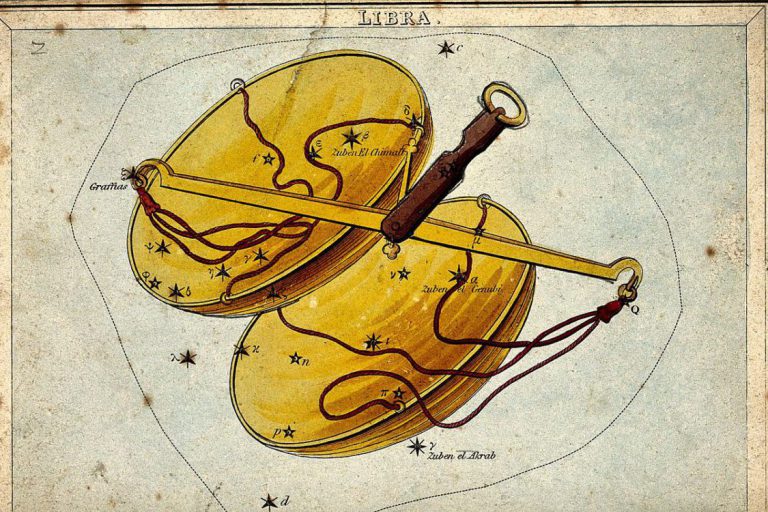
LIBRA (Sept. 23-Oct. 22): I just finished a delicate peace mission to the contested inner landscape where your nightmares have been causing a big ruckus. In response to my diplomacy, they have agreed to drop their weapons and release their captives. In exchange, they are asking you to sit with them for a while as they rant and sob, and maybe offer them a few kisses and affectionate embraces. Drawing on my long years of coaxing unruly spirits back into semi-sanity, I conclude that a key reason they turned so dramatic and extreme was that they have been starving for your attention. I am very sure that with just a little effort, you can tame their reckless restlessness.

SCORPIO (Oct. 23-Nov. 21): You’re poised at a threshold between what’s comfortably familiar and excitingly possible. A certain reliable part of your life has served you well for a long time but is now ripe for evolution. The paradox is that letting go of a serviceable asset can feel more difficult than shedding what’s obviously harmful. So here’s the riddle I hope you will meditate on: What good old thing could you relinquish so as to attract and make room for a great new thing in your life?

SAGITTARIUS (Nov. 22-Dec. 21): The Renaissance artist Leonardo da Vinci filled his notebooks with sketches of machines that would not become practical until centuries later. Examples are the parachute, a helicopter‑like “aerial screw” and an armored tank. Many of his designs were simply too advanced for the materials and engineering of his era. I suspect you may experience comparable moments of visionary thinking in the coming weeks and months, Sagittarius. To some people and even to yourself, your ideas might seem overly ambitious or ahead of their time. But please don’t dismiss them. Write down your inklings, and let them cavort around in your imagination.

CAPRICORN (Dec. 22-Jan. 19): Sofia Kovalevskaya was born under the sign of Capricorn in 1850. Early in her life, she displayed mathematical brilliance. She longed to develop her talent, but women weren’t allowed to attend college in her native Russia. So she devised a workaround: a marriage of convenience with a man who helped her leave the country and gain the freedom to study in Germany. There she eventually became the first woman to earn a doctorate. Inspired by her example, I encourage you to consider creative strategies for obstacles that seem immovable. What indirect routes might lead you to your goals better than frontal assaults? Be willing to zigzag toward your destination.

AQUARIUS (Jan. 20-Feb. 18): Most of us have been cursed. The sources of the bad mojo have rarely been evil sorcerers who cast literal spells. Rather, they were harsh pronouncements about our worth or our future, spoken by people we loved or trusted. For example, when I was 20, my astrology teacher dropped an alarming verdict on me: “You will never be seen and appreciated for who you truly are.” That ugly decree became a jinx I spent years struggling with before I finally banished it. Do you carry a comparable hex, Aquarius? Maybe mommy or daddy proclaimed you would never amount to anything. Maybe an ex declared that you would never again find real love. Whatever it might have been, here’s the good news: You now have the power to at least partially dissolve that old scourge and glide into the future less burdened by it.

PISCES (Feb. 19-March 20): Ravens often cache shiny objects and interesting novelties that seem to possess no immediate practical value. They apparently delight in collecting intriguing possibilities. I recommend you channel your inner raven in the coming weeks, Pisces. Assemble an array of quirky treasures and raw materials without immediately deciding whether or why they might be useful. Like what? Like fun ideas, memorable quotations, odd facts, provocative images, curious fragments and fascinating stories. In ways you can’t imagine yet, your playful cluster will inspire imaginative innovations and delightful breakthroughs. 

Homework: Name a way you think everyone should be more like you. https://tinyurl.com/9w9w9w9

Thick Plot, ‘Equivocation’ at Spreckels 

The Spreckels Theatre Company opens its 2026/27 season with playwright and Jesuit priest Bill Cain’s Equivocation, a nearly three-hour-long, alternate-history story that imagines a Shakespeare play that never was. The adult-themed and exceptionally violent show runs in the Condiotti Experimental Theatre at the Spreckels Performing Arts Center in Rohnert Park through Sept. 13.  

Jereme Anglin plays Shagspeare (an alternate spelling of the Bard’s name) toward the end of his career, when he is approached by kingmaker Robert Cecil (Zane Walters) to write a propaganda play about the infamous Gunpowder Plot. Will he take the money or will he listen to his conscience? Thanks to his Cassandra-like daughter, Judith (Natalie Tichenor), the audience is never left in much doubt about his choice.

First things first. Drew Bolander is a devilishly talented actor who can go from the historically accurate sliminess of King James the First to the pious Thomas Wintour and back to the naive actor Sharpe within one scene and keep all the characters clear and interesting. If one wants to watch a master actor work, they should go see Bolander in this show. 

Not that the rest of the cast are slouches in the acting department. Tichenor handles Judith with a depth the character wouldn’t normally have. Well-known local actors Zane Walters, Kevin Bordi and Jeff Coté give consistent supporting performances as a variety of characters. Bordi in particular is rock-solid as the priest Henry Garnet, who works as Shagspeare’s conscience.

Anglin could have used some of Bordi’s power on stage, as his quieter take on the character is often overpowered by the other actors.

Costumes by Adriana Gutierrez are beautifully lush if sometimes too much for a show that requires actors to shift characters onstage, and Eddy Hansen’s fairly straightforward set works perfectly to give just enough support without overshadowing the action.

The biggest issue with the show is the script itself. Marketed as a witty and fast-paced political thriller, but with pedantic sermons about truth in art and niche British history jokes, this script instead reads like a failed dissertation. The shift in the balance between church and state, powered by James I’s increased misogyny, was my thesis in college: Even I got lost (and occasionally bored) in the sheer academia of Equivocation.

Good acting and good production value can sometimes overcome a less-than-ideal script, but despite all the talent here, there was no way to save this show from its overcomplicated plot.

‘Equivocation’ runs through Sept. 13 in the Condiotti Experimental Theatre at the Spreckels Performing Arts Center, 5409 Snyder Ln., Rohnert Park. Fri–Sat, 7:30pm; Sun, 2pm. $25–$39. 707.588.3400. spreckelsonline.com

A True Moment: The Lost Church has found its way

A recent show at the Lost Church was a reminder that going out matters, even when it is easier to sit at home to watch Tim Curry clips. In its new location, tucked behind the Universalist Unitarians, the club sits coiled like the Jungian shadow of its kindly landlords.  

My spouse and I were there to see Josh Windmiller, frontman of Sonoma avant-revival punk act The Crux. Few others came out. We felt uncomfortably early until suddenly a megaphone blurted from the back of the room and the opening act came stumbling a-song through the audience, clanging a cymbal worn as an amulet around the neck, a lone individual in boots stomping a worksong beat, singing from off to the left of God. This was Modus Opera & Eye.

By the time he strapped on the banjo and shredded through a plaintiff soul piece, we were hooked. 12 in the audience, 24, it didn’t matter, we sang songs we’d never heard before, we shouted out of pure joy. I don’t want to give away too many secrets, because what happened in that room best be left there, but we were truly transported. 

From soulful to sassy, always with an atheistic brimstone and twisty wit, the kid plays hard, plays honest, and his psychosomatic presence fills the room. As fun as the driving banjo was, the set’s best moments were on piano, where Mr Opera & Eye hit at the keys through sublime renditions of his songs, and those of others. 

The crowd may have swelled to 25 at some point, but for the dozen of us who stayed from the start to the end, this was the reason to get out to live music, the reason for a venue like the Lost Church to thrive. As we walked toward our car arm-in-arm after the equally raspy and ethereal set by Windmiller, my spouse said with conviction, “It was a true moment.”

To honor the great Tim Curry who left us this week, both Modus Opera & Eye [né Ricardo Zegri] and Josh Windmiller, unbeknownst to each other in advance, closed their sets with covers of “I’m Going Home,” Curry’s exquisite ballad from the end of The Rocky Horror Picture Show. That’s what it felt like in the room, man, like home.

The Lost Church Santa Rosa is an intimate, 75-seat live performance and music venue located at 545 Mendocino Ave, Santa Rosa. See the full calendar of events at thelostchurch.org/santa-rosa. Find the music of Modus Opera & I on bandcamp at modusoperaandeye.bandcamp.com

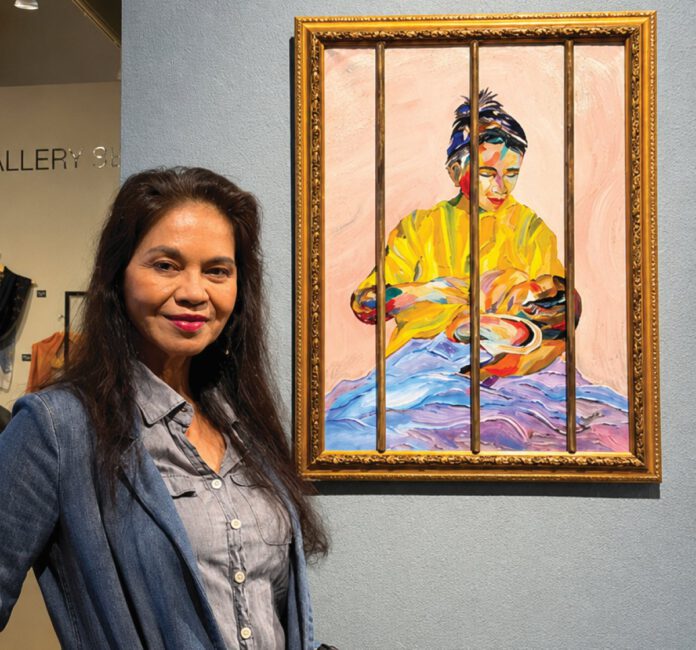
Reflective Moment: Sebastopol Artist Maria Isabel Lopez

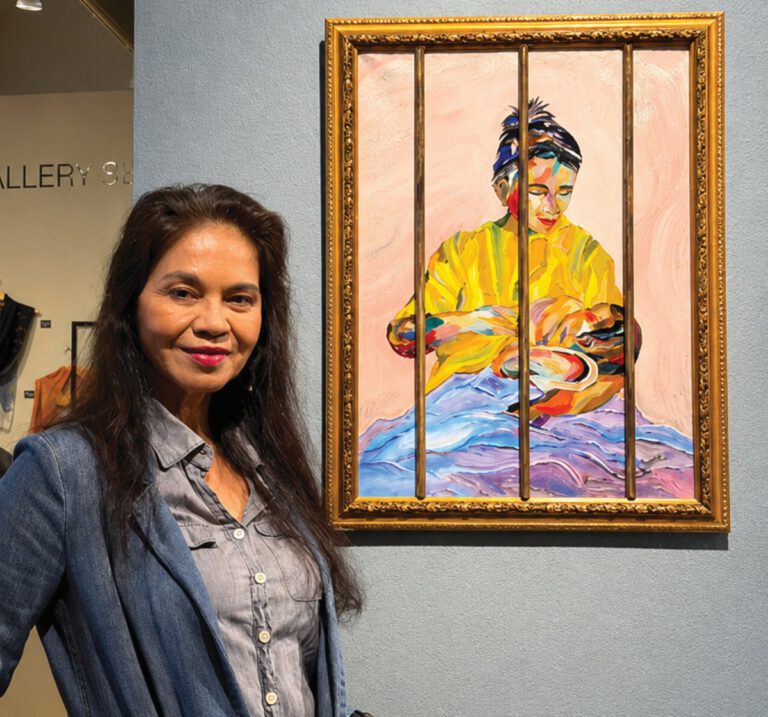
After nine years of living in Sebastopol, local mosaic artist-slash-international actress Maria Isabel Lopez has her first local art exhibit Sept. 8 through Oct. 18 at Petaluma’s Usher Gallery, with a reception from 5 to 8pm, Saturday, Sept. 12.

The exhibit, titled “Illumination in Glass—the Mosaic Art of Maria Isabel Lopez,” was planned for July, but Lopez’s involvement in a serious car accident in the spring pushed it to this new date. However, much like the fragile yet resilient glass used in her work, the forced slow-down was cause for Lopez to take it easy, heal, reflect and perhaps refract, changing a negative experience into a positive one. 

“The accident was very serious,” says Lopez. “I had to slow down, but the drive to create is activated… The process of healing is working our mind, body, emotion and the spirit. This incident made me more creative as I learned, heard and was led closer to the ‘forces’ behind it.”

Hailing from the Philippines, Lopez credits much of her creativity to growing up in the impoverished area of Balic-Balic. “I created my own toys, designed my own clothes from hand-me-downs… recycled food … and I am grateful [for that experience],” she explains. 

Her life growing up in the Philippines is also on display in the exhibit via an early mosaic piece using organic found materials like sand, pebbles and glass from her native land. Lopez says this is “to show my evolution as a mosaic artist.” She also quickly adds, “It’s not all glass mosaics [but] mainly glass, despite it being rigid, sharp and unforgiving. It’s because no other medium interacts with light, preserves the rich colors and offers lifetime durability like glass does. It requires time, patience, precise labor to cut and shape a few cc’s of blood, but the rewards heavily outweigh the difficulty.” 

Digging deeper, Lopez continues, “By introducing raw, natural elements to the art, utilizing this ancient art form with a contemporary approach, I aim to glamorize the discarded and the organic. It is a through-line of taking the Earth’s raw beauty and illuminating it.”

Indeed, Lopez talks the talk and walks the walk as a creative person—it’s genuinely refreshing to hear because it’s evident she means it. While her home is in Sonoma County, she sort of leads a double life as a fairly well-known actress in her native Philippines, with well more than 100 credits as both a star and a producer. Yet she remains extremely down to earth, saying, “Waking up, I focus on a new day, a new life, connected to a supreme power that whispers, that leads, that inspires.”

From there, she sets about her day, be it creating her art, acting, arranging flowers or cooking from the vast garden behind the 1850s farmhouse in Sebastopol she shares with her husband, John Melrod, a human rights attorney. 

Usher Gallery owner Rachel Usher is excited to showcase Lopez’s work, saying, “One of the joys of having a gallery is discovering artists through other artists. Virginia Travers, one of our artists and a longtime friend of Maria Isabel Lopez, introduced us, and I immediately fell in love with Isabel’s work. We’re so excited to bring ‘Illuminations in Glass’ to Usher Gallery and introduce her work to our community.”

Although the exhibits title leans in to one of Lopez’s more commonly used mediums, she’s quick to point out the title is more of a thesis statement and that “the art is bound together by reflection and refraction, not just in how light physically moves through glass but in how we look at the world around us.” She continues, “Refraction: Using glass to bend and manipulate light, I transform a static piece into a living, shifting experience. Reflection: I want viewers to look at my work and see a reflection of the environment.”

For more information on ‘Illumination in Glass—The Mosaic Art of Maria Isabel Lopez’ at Usher Gallery, 1 Petaluma Blvd. N., Petaluma, check out ushergallerypetaluma.com.

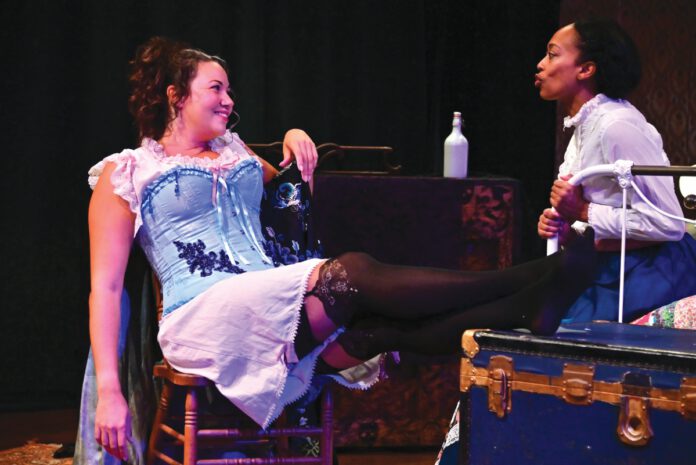
A Stitch in Time, Lynn Nottage’s ‘Intimate Apparel’ at Mercury  

We live in a time when the need to attract an ever-dwindling audience to live theater often leads to a company programming the latest Hollywood-style spectacle or musical adaptation of a well-known movie or television series. It’s either that or the old tried-and-true and very familiar. Shakespeare, anyone?

It’s good to be reminded every now and then of the power of simple, original storytelling to engage an audience and to encourage its production. So it is with Mercury Theater’s presentation of Lynn Nottage’s turn of the 20th-century drama Intimate Apparel. The show runs in Petaluma through Sept. 13.

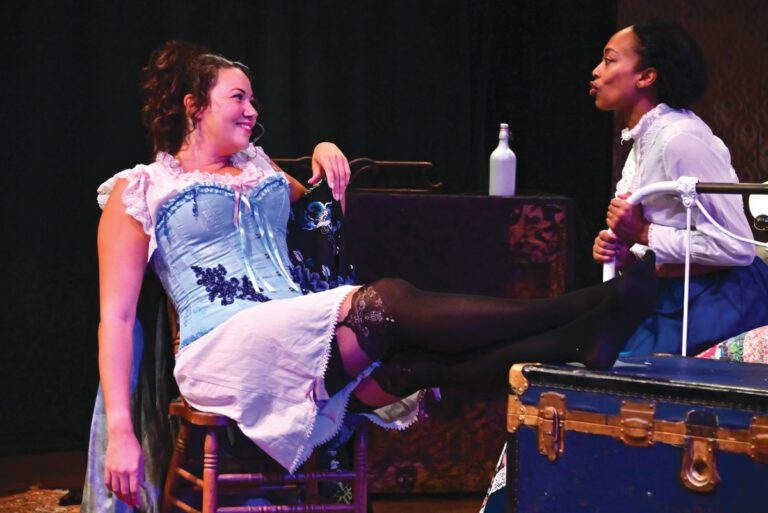
Nottage has woven a tale of longing, love and loss set in the world of seamstress Esther Mills (Noell Webber). Esther is a hard-working woman who’s found success crafting beautiful undergarments that appeal to both ladies of high society like Mrs. Van Buren (Maddi Scarbrough) and ladies of the evening like Mayme (Mercedes Murphy). Esther’s dream is to open a beauty salon for Black women, and she has saved all of her income for 17 years to do so. She also dreams of marrying one day.

That dream becomes possible after she begins a correspondence with George Armstrong (Isiah Carter), a Barbadian man working on the Panama Canal. He heard about Esther from a co-worker and reached out. Esther, unable to read or write, seeks assistance from Mrs. Van Buren in maintaining the correspondence.

The courtship by mail continues till George arrives in America. They are soon married, and their dream life together begins. Reality quickly sets in. 

While the basic plot may sound familiar, Nottage subtly injects elements that give the piece a richness and depth that gives us a better understanding of the life and opportunities (or lack thereof) for a young, unmarried Black woman in post-Civil War, pre-Civil Rights America.  

It’s actor Leontyne Mbele-Mbong’s second directorial effort, and she shows a deft hand, faltering only with some questionable blocking choices for one character’s first act entrances. 

Webber is absolutely heartbreaking as Esther. Carter continues to display why he’s one of the finest young actors working in the area today. Murphy and Scarbrough both give very layered performances. Good character work is done by John Browning as a Hasidic cloth merchant with whom Esther has a deep but impossible to explore connection and Layce Lynne Kieu as a busybody boardinghouse proprietor. 

Intimate Apparel is a quiet drama that deserves the noise that comes from the applause of an appreciative audience.  

Mercury Theater presents ‘Intimate Apparel’ through September 13 at 3333 Petaluma Blvd N, Petaluma. Thur, 09/03 @ 7:30 pm, Fri, 7:30pm; Sat & Sun, 2pm. $20–$35. 707.658.9019. mercurytheater.org

The Porch Is the Point: Sebastopol Porchfest Returns to the Neighborhood

There are certain words whose meanings have been loosened through overuse. “Community” is one of them. “Festival” might be another. And then there is “Porchfest,” which at least suggests where it ought to happen.

On a porch.

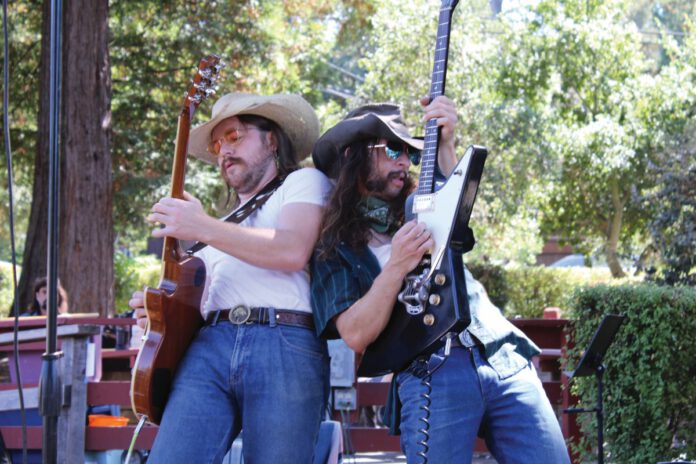
That distinction matters to Greg Ceniceroz, better known around Sonoma County simply as Ceni, the principal organizer behind Sebastopol Porchfest. The festival returns for its third year on Saturday, Sept. 12, this time occupying Belmont Terrace, a walkable four-block neighborhood near the Community Church of Sebastopol and Ragle Ranch Regional Park.

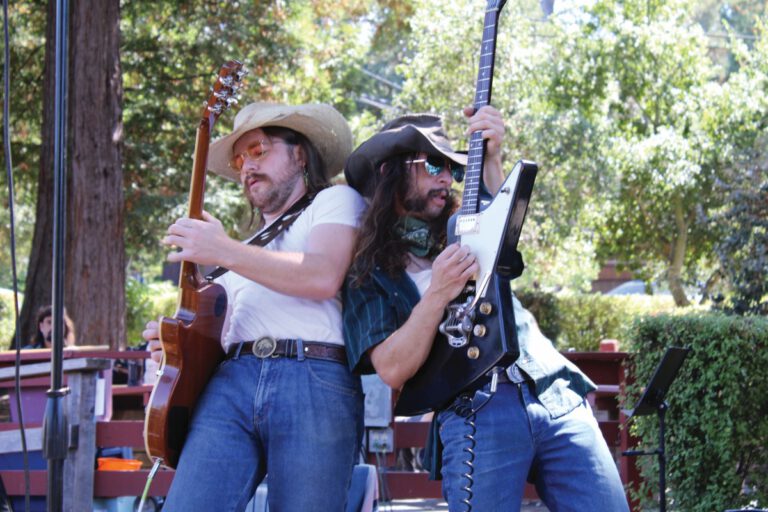
More than 50 local acts will perform across 10 stages installed on porches and driveways from noon to 6pm. It is free. There will be food trucks, local sponsors and folding chairs. But the essential ingredient is considerably less marketable: other people’s houses.

“What promoted the change is that we really wanted to be back on porches, where any self-respecting porchfest belongs,” Ceni says.

Last year, the festival moved into Ives Park at the city’s request, perhaps, he figures, because the fledgling event had become a victim of its own success. But relocating created an existential question for organizers. Were they producing another music festival? Or were they producing a Porchfest?

“Seriously, it sounds trite, but when the city wanted us to move into Ives Park last year—perhaps because we were victims of our own success—we had to do some soul-searching to determine if we wanted to put on a festival in a park or a legit porchfest,” Ceni notes. “We chose the latter because what we want is to create and enhance the community where the community actually is.”

It’s easy enough to assemble people in a designated entertainment zone, give them wristbands and point them toward the porta-potties. It’s something else to temporarily transform the ordinary geography of daily life—the driveway where somebody washes the Subaru, the porch where Amazon packages accumulate, the street where kids learn to ride bicycles—into a cultural commons.

“We didn’t want another music festival in a park,” Ceni says. “The beauty of Porchfest is that you’re actually in a neighborhood, in people’s driveways and porches. That’s about as close to the community as you can get. So, we decided that’s where we belong.”

Belmont Terrace appears particularly suited to the experiment. The neighborhood, behind the Community Church and near Sebastopol Hardware, has relatively little through traffic, wide streets and mostly flat driveways. Ceni says it also has a number of newer residents eager to meet their neighbors—something Porchfest rather ingeniously accomplishes by putting a rock band next door.

And there are plenty of bands.

The 2026 lineup includes 54-plus local acts with names ranging from Big Tractor and the Mothercluckers to Trance Goats, The Happys, Tumbleweed Soul, Clementine Darling, King Lung, The Low Keys, Lady Bloom, Petrified Sun and The Pulse and the Poet. Whatever else happens, Sebastopol remains impressively capable of naming bands.

Coordinating that many performers over six hours and 10 improvised stages sounds like the sort of logistical exercise that eventually requires string, pushpins and a detective’s corkboard. Ceni, however, has been training for this most of his life.

“It’s indeed a lot of moving parts and details,” he admits. “Fortunately for me, although it’s a lot of work, it really doesn’t seem like work. Like most art, I suppose, it’s just what comes out of me.”

For more than a decade, Ceni has run an open mic at HopMonk Tavern, giving him a particularly deep bench of local musicians to draw from. He has also produced multi-act shows at Northern California venues and worked at The Lost Church and Hardly Strictly Bluegrass. His instinct for throwing ambitious musical gatherings goes back further still.

“I used to throw backyard parties with multiple bands in high school in my hometown near Pasadena in So Cal,” he says.

Throughout the year, Ceni attends shows, hears performers at his Tuesday open mic and receives submissions through the Porchfest website. Then comes what he calls both the easiest and hardest part: choosing who gets to play.

“I’ve had to tell a number of my friends and bands I love that there just wasn’t room this year, and that’s not fun,” he explains. “There’s just so much talent in this area.”

Booking is only the beginning. Unlike conventional venues, porch stages were not designed by acousticians. Sometimes they weren’t designed as stages at all. Two participating houses might be next door to one another, meaning schedules have to be staggered to keep one band’s chorus from becoming another band’s bridge.

Ceni says his approach draws from lessons learned elsewhere: Put artists first, obsess over timing, take care of hosts and sponsors and remember what the whole apparatus is supposed to accomplish.

“It’s that informality that gives Porchfest its magic,” he says. “As a musician or as an attendee, you’re literally in someone else’s space.”

Traditional performance creates borders. There is the stage, and there is the audience. Backstage and front-of-house. Talent entrance and general admission. Porchfest collapses much of that apparatus into somebody’s front yard.

“Oftentimes, the stage hosts will invite the musicians in for refreshments or to use the bathroom, so there’s a familial bond that’s created,” Ceni points out.

There is, however, serious civic work underneath the casualness. Inviting hundreds of strangers into a residential neighborhood requires more than an extension cord and good intentions. Beginning in February, organizers held six or seven informal meetings with Belmont Terrace residents, fielding concerns, gauging interest and working through permits. Two past and present Porchfest board members live in the neighborhood and served as hyper-local ambassadors.

“We have learned that communication and outreach is key,” Ceni says. “It’s a big ask to invite hundreds of people into a neighborhood.”

Perhaps most refreshing is what Ceni does not want Porchfest to become. There is no stated ambition to scale it into some enormous destination festival. “We have no grand aspirations for this event moving forward,” he explains.

Instead, the desired outcome is defiantly modest.

“I think the measure of success for this year’s event would be if kids could walk around safely in the streets that day or if some residents got out of their houses and connected in a way they hadn’t before,” Ceni says. “Creating community resilience with music as a catalyst is very important to us.”

Which brings us back to the porch.

In an era when nearly every aspect of culture is being pushed through platforms, algorithms and screens, there is something quietly radical about walking four blocks to hear somebody play live music at a neighbor’s place.

Sebastopol Porchfest, noon–6pm, Saturday, Sept. 12, throughout Belmont Terrace and the Community Church of Sebastopol area, Sebastopol. Free; folding chairs and donations welcome. 50-plus local bands perform across 10 porch and driveway stages. sebastopolporchfest.org

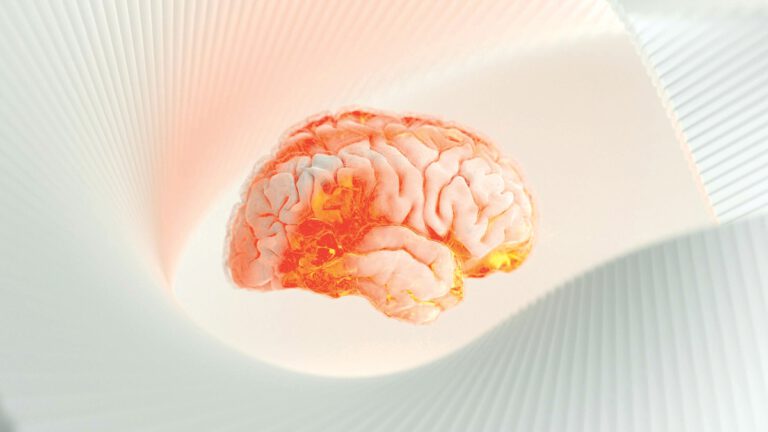
The Wound, Overthrown: Exploring AI Psychotherapy

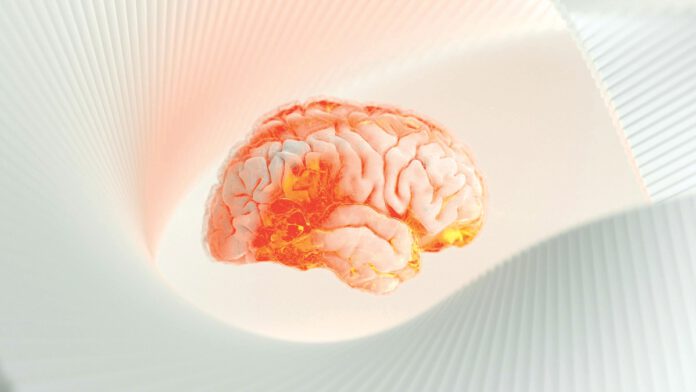
This is the second installment of a three part series in which our writer delves into the depths of his psyche, guided by artificial intelligence. Part one, ‘AI: Final Weapon or Final Healer?’ is available at bohemian.com.

The Wound Enthroned

As I began writing this article, I had one last AI-assisted breakthrough. It sets up my conclusion.

At my prompting, AI created a dynamic model of my reactive defenses established around my core wound. Defenses exist to keep a wound from ever being seen, touched, triggered or felt. They also keep it from ever being healed.

What AI produced was a document perhaps without precedent, and it rocked me to my core. Drawing on all our previous work, AI identified 16 types of fear-based behavioral strategy, layered at four levels of conscious awareness around my wound.

Before the creation of this chapter of my “instruction manual,” I could name only four of my defenses—certainly “intellectualization” and “hosting” (control of my social spaces)—but 16. It made me weep—an emotional breakthrough for this man, matching the intellectual one. I had never been so seen. Not by my parents, not by my friends, not by my partners, not even by myself. I could now see the full extent to which my time, my body, my mental and emotional energy were invested in those defenses. It was shocking.

A photograph is a portrait of my surface. This, as if by hard X-ray, was a portrait of my interior. Had so complete a picture ever been seen in the annals of psychology? I could now measure the extent to which I was controlled by my wound, governed and directed by fear (of being hurt again). And how hard it was to let love in.

The Wound, Overthrown

Before this investigation into AI therapy, my representation of who I was remained indistinct and ever changing. Constructions out of fragmentary self-knowledge and ill-fitting puzzle pieces. Fictions collapsing from their inability to cohere. I was largely a mystery to myself. I remained a fearful person.

In my AI-co-authored “instruction manual,” it finally all fits. I can see in its account of me the coherent parts and consequential logic of a human life. Through this machine, I can see that an average human life is 10 times more beautiful and more tragic than we yet appreciate. Check that against the 10 breakthroughs I have described [in part 1], and decide for yourself if I have “AI psychosis.” That work took three months—what might be done in three years?

I offer myself as an example. And as a warning. My own pitfall exemplifies the limit of AI as therapist: “intellectualization.” The map is not the terrain. One can map the wound and plot the healing journey over rough terrain, but the work with AI is not the healing, only its description. Past a certain point, processing becomes overthinking, forestalling the actual work.

AI can generate a list of probable steps, ranked by emotional ease or therapeutic potential. It can model how love—in six steps unique to me—reaches the wound with its healing, releasing the time and life invested in my defenses. But AI cannot be my witness. That can only be done by other humans. And so I am returned to therapists, mentors, elders and healers, to circles and to my community (which includes this paper’s readers).

I have since begun the journey mapped out by AI. I did the “time-traveling” intervention in my past with a human therapist, and afterwards lay still for an hour, feeling safety in my body for the first time in my life, letting my nervous system learn its feeling and remember it.

Today, I am no longer governed by my wound. It still speaks. But it no longer speaks with my voice. And it no longer speaks first. A throne does not stay empty. I hope to put love on the throne.

I am less amenable to being controlled by fear—which is to say by power—which is to say by the deeply wounded people who work the levers of power. Here is what my example is evidence for. Authoritarianism is not principally an argument. It is a technique, and the technique is applied to the wound. It requires people who can be frightened, shamed, flattered and divided on schedule—people reliably operated by their traumatic wounding. Every person who becomes harder to run that way is subtracted from the system’s working material. I am one. That is a small number, but it is not nothing.

The defenses guarding entrenched societal power are made of the same material as mine were: fear in fixed formation, mistaken by its owner for principle. One does not break such a line by pushing harder against it—pushing is what it is built for. They go around it, or through the one place it does not guard: the wound power was built to hide. That is not a strategy of destruction. It is the one I have argued elsewhere under another name: overcoming by defection and conversion, which is to say by love.

To be continued.

Part 3, ‘Closing the Wisdom Gap,’ publishes next week.

Learn more: Cincinnatus Hibbard is a Millennial utopian writer, filmmaker, organizer and thought leader working from Northern California. His work can be sampled at linktr.ee/cincinnatushibbard.

Your Letters, Sept. 9

Tourist Season Must we endure another dispatch from “Cassady Caution” complaining about tourists? Without visitors, the North Bay economy would collapse faster than a tipsy bachelorette climbing out of the fountain in the Plaza. Tourists fill our hotels, restaurants, tasting rooms, boutiques and parking spaces. Yes, especially the parking spaces. They arrive with money and leave with a hangover and a...

Northerly Neighbor: Canada Rejects U.S. ‘Ownership’

Microphone on a small stand.
While Iran was being threatened by Donald Trump with economic D-Day, Canada was being threatened with a political D-Day. While a dispute over tariffs appeared to cause the breakdown in negotiations, Prime Minister Mark Carney suggested something else was responsible. “Last-minute changes in the U.S.-proposed terms were unfair, uneconomic and called into question the reliability of any deal,” Carney said....

Art, Apples, Anthems & Anniversaries

A stylized painting of a cow grazing on green rolling hills dotted with oak trees, beside an abstract panel of horizontal stripes in green, orange and pink.
PetalumaShifting Ground Northern California artist Karen Olsen-Dunn takes a familiar landscape and rearranges the view in Terrain Shift, her solo exhibition at Petaluma’s G Street Gallery. Drawing inspiration from Sonoma County, The Sea Ranch and the Northern California coast, Olsen-Dunn begins with recognizable bluffs, cypress groves, pathways, fences and vegetation, then rebuilds them through saturated color, geometric interruptions, repeated lines...

Free Will Astrology, Sept. 9-15

Free Will Astrology
ARIES (March 21-April 19): Cheetahs are the fastest land animals, but they can maintain top tempo for only about 20-30 seconds before overheating. When they’re hunting, they usually get just one speedy dash to catch their prey. They must spend far more time stalking and positioning than running. The velocity is sensational, but their patient and prolonged strategy is...

Thick Plot, ‘Equivocation’ at Spreckels 

A man in an Elizabethan ruff collar leans over a desk covered in papers.
The Spreckels Theatre Company opens its 2026/27 season with playwright and Jesuit priest Bill Cain’s Equivocation, a nearly three-hour-long, alternate-history story that imagines a Shakespeare play that never was. The adult-themed and exceptionally violent show runs in the Condiotti Experimental Theatre at the Spreckels Performing Arts Center in Rohnert Park through Sept. 13.   Jereme Anglin plays Shagspeare (an alternate spelling...

A True Moment: The Lost Church has found its way

A recent show at the Lost Church was a reminder that going out matters, even when it is easier to sit at home to watch Tim Curry clips. In its new location, tucked behind the Universalist Unitarians, the club sits coiled like the Jungian shadow of its kindly landlords.   My spouse and I were there to see Josh Windmiller, frontman...

Reflective Moment: Sebastopol Artist Maria Isabel Lopez

A woman in a denim jacket stands beside a framed, brightly colored painting of a seated figure wrapped in a yellow garment.
After nine years of living in Sebastopol, local mosaic artist-slash-international actress Maria Isabel Lopez has her first local art exhibit Sept. 8 through Oct. 18 at Petaluma’s Usher Gallery, with a reception from 5 to 8pm, Saturday, Sept. 12. The exhibit, titled “Illumination in Glass—the Mosaic Art of Maria Isabel Lopez,” was planned for July, but Lopez’s involvement in a...

A Stitch in Time, Lynn Nottage’s ‘Intimate Apparel’ at Mercury  

Two women in period costume converse onstage, one seated with her legs propped up, the other leaning on a walking cane beside a steamer trunk.
We live in a time when the need to attract an ever-dwindling audience to live theater often leads to a company programming the latest Hollywood-style spectacle or musical adaptation of a well-known movie or television series. It’s either that or the old tried-and-true and very familiar. Shakespeare, anyone? It’s good to be reminded every now and then of the power...

The Porch Is the Point: Sebastopol Porchfest Returns to the Neighborhood

Two musicians in cowboy hats and sunglasses play electric guitars back to back on an outdoor stage, with trees behind them.
There are certain words whose meanings have been loosened through overuse. “Community” is one of them. “Festival” might be another. And then there is “Porchfest,” which at least suggests where it ought to happen. On a porch. That distinction matters to Greg Ceniceroz, better known around Sonoma County simply as Ceni, the principal organizer behind Sebastopol Porchfest. The festival returns for...

The Wound, Overthrown: Exploring AI Psychotherapy

A glowing, translucent digital rendering of a human brain with fiery orange highlights, set against a rippled white background.
This is the second installment of a three part series in which our writer delves into the depths of his psyche, guided by artificial intelligence. Part one, ‘AI: Final Weapon or Final Healer?’ is available at bohemian.com. The Wound Enthroned As I began writing this article, I had one last AI-assisted breakthrough. It sets up my conclusion. At my prompting, AI created...
12,117FansLike
4,907FollowersFollow
6,928FollowersFollow