Swing Time

Cocktail Notion


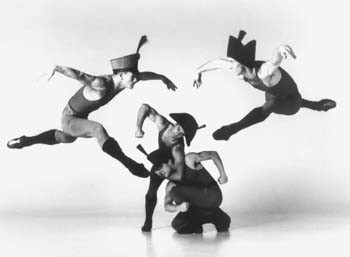
Jitterbugs: These young whippersnappers really cut a rug.

Photo by Chris Gardner


Ballroom dancing, vintage fashions, cocktails– are we becoming civilized again?

By Christian M. Chensvold

THE FEDORA SITS on my head with a supercilious tilt. My shoes are black and white two-tones visible from a block away. A pair of polka-dot suspenders holds up my check trousers. Ruby answers the door, her beaming face framed by bangs cut straight across her brow, her hair cut in a Louise Brooks­styled bob. Her painted lips are a deep luscious red. A vintage dress strewn with flowers hugs her shapely figure, and her dainty purse is covered with beads whose shine has grown dull with the passing of time.

We look happily at each other. We look like our grandparents.

An hour later, my jacket off and sleeves rolled up, we’re on the dance floor stomping out an East Coast swing at the Moonlight Restaurant and Bar in downtown Santa Rosa. Tiny James and the Swing Kings are pounding out their mixture of uptown swing at a blitzkrieg pace.

A pair of pretty young women join us, improvising dance moves and giggling at the roomful of staring eyes. But the spark catches fire, and suddenly the joint is jumpin’. A half dozen more–all in their 20s–crowd themselves into the minuscule dancing space. They appear to have no idea what they’re doing, twirling and spinning to clashing rhythms in a fit of dancing discord. But they’re swing dancing, and if their feet aren’t in the right place, at least their hearts are.

SCIENCE PREACHES that for every action there is an equal and opposite reaction. So after years of barbaric fashions, melody-deprived alt-rock, and the swilling of beer, numerous young people are paving a gilded path back to sartorial elegance, swing music, and that great American institution–the cocktail. From Manhattan nightclubs to Bimbo’s 365 Club, Cafe du Nord, and the Essex Supper Club in San Francisco, everywhere there is a fog bank of cigar smoke, a deluge of martinis, and a stampede of ballroom dancing. Dubbed the “Swing Scene,” “Lounge,” and “Cocktail Culture,” retro is back with a vengeance.

Times change, and for now the pendulum swings.

Ever since Tony Bennett performed on “MTV Unplugged” in 1995, Generation Xers have slowly trickled into stores seeking out music that was once a target of mockery. Swing, says Karl Byrn, music manager at Copperfield’s Annex in Santa Rosa, is “the alternative to alternative. It catches people falling through the cracks. It has a kitschiness to it, and it’s part of a scene, which gives it more appeal than classic jazz.”

Twentysomethings are more likely to buy new bands rehashing the old than Miles Davis, says Byrn. He cites the Squirrel Nut Zippers, who play June 12 at the Luther Burbank Center, as an “immensely popular” example. The North Carolina­based band offers an intense form of danceable jazz played by musicians just out of a 12-step program for punk rockers. Byrn has also noticed a growing interest in tango music, fueled in part by Madonna’s retro role in Evita.

Though several years old in the Bay Area, the swing scene is just getting on its feet in Sonoma County. Dedicated ballroom dancers have always been here, but now what was once seen only in the dance hall can be glimpsed in the nightclub: people engaged in the intimate union of partner dancing.

One by one terpsichore neophytes under 40 are signing up for classes and showing off their moves whenever a jazz or blues band plays a local club.

More tips on swingin’ fashions, dances, and drinks.

JAMES SANDERS, aka Tiny James, really is tiny–at least in years. The 26-year-old Santa Rosa guitarist, vocalist, and songwriter is one of many young whippersnappers fed up with what he sees as the artificiality and insincerity of contemporary music. Sanders believes that most postmodern pop has no soul, and has opted instead to pay homage to such jazzy musical forefathers as Count Basie and Benny Goodman. The Swing Kings play primarily in San Francisco at the Hi-Ball Lounge, Coconut Grove, and other venues where swing sycophants put on the ritz and show off their dance moves, though you can occasionally catch them at the Moonlight or Petaluma’s Mystic Theater. Sanders quietly laments that swing hasn’t caught on as much in the county, citing a lack of familiarity with the music and a shortage of venues as the reason.

After a quick break at the Moonlight, the Swing Kings jump into another set. Sanders’ white shoes kick in the air as he gives his guitar strings a vigorous massage, while trumpet player Kendall Holstein waits patiently for his solo, decked out in a fedora, vest, and pocket watch.

MEANWHILE, over at Santa Rosa’s Finley Hall, the dance floor is bathed in an atmospheric darkness dappled with colored lights and the sparkling scintillations of the silver ball that hangs from the ceiling like a shiny moon. On stage the DJ, a hierophant on a stereo altar, cues the tunes. The whole effect is painfully disco.

The dancing, however, is strictly ballroom. It is the third Friday of the month and about 100 people spanning three generations have gathered for this city-sponsored dance. On the stereo, Dion and the Belmonts are crooning “The Wanderer” while couples follow along with a lively West Coast swing. Dress is stylish but not formal, and there is no drinking. Here it’s dancing for dancing’s sake.

Ruby and I arrive in the middle of a cha-cha and rush to the floor to finish the number. Latin music always seems to create the most excitement at a ballroom dance, as if a warm tropical breeze were wafting from the speakers along with the music.

As a rumba begins to softly throb its Cuban rhythm, 29-year-old Peter Zimmerman sits beside the dance floor watching the action with a curious fascination. Dressed in jeans and a plain cotton pullover, but sporting brown wing-tip shoes, Zimmerman has dropped by with a group of 20-something friends, some of whom can dance. However, Zimmerman is a wallflower: having bought the shoes, he doesn’t know a single step. But he wants to learn–badly. “I think it’s essential for courting a woman,” he says.

“This is a lost art,” he shakes his head. “To lead a woman–wow, that’s a beautiful thing.”


Michael Amsler

Glitter Ball: Ryan Noble and Jessica Capitani wend their way around the floor at the Finley Center’s monthly do.

ALL THIS is a world away from the postmodern nightclub scene, where techno music blares at deafening decibels while the horny and overperfumed writhe to a pornophonic beat. Here dancers have little or no physical contact with each other and neither succeed nor fail at standard steps because, of course, there aren’t any. Instead, men and women bump and grind like isolated molecules in a kind of kinetic solipsism, and the result is chaos.

Some say that once you’ve tasted ballroom, you’ll never go back, but there is a subtle strain of melancholy beneath retro’s return. For a culture to be in the throes of the past presupposes the belief that to take another step forward–to embrace the new millennium–is to fall into an abyss.

And so we stumble backward through the decades as if searching for something we’ve lost, like Orpheus plunging the underworld to recover his beloved Eurydice.

Could American have reached a point where the only sentiment left is nostalgia?

A Zeitgeist haunts the attic of our collective unconscious, where all our old things lie heavy with dust. Dad’s hi-fi is there, along with Sinatra on vinyl. Mom’s prom dress rests in an old trunk, along with pictures of grandma and grandpa when they were courting, dressed to the nines and dancing the jitterbug.

We dust off these old things to amuse ourselves, our sentiments vacillating between irony and fond remembrance.

Cocktail culture has been called a return to the phallic order, the revitalization of rituals that remind us of a time when life was more predictable because men and women knew what was expected of them. The swinging club where a guy in a suit buys a martini for a doll in a dress is romanticized as a social sphere where for a few hours everything is all right in the world. And when the guy leads his doll to the dance floor, the two retreat into a life- and love-affirming sanctuary far from the bombastic invective, the thrust and parry of blame, and the numbing shell-shock of our contemporary gender wars.

It’s after midnight. The night is over, and the music is but a memory. My date and I linger on her doorstep. After an awkward moment I kiss her on the cheek. Then I whistle my way back to the car. She blows me a kiss before closing the front door.

And I laugh when I realize that not only do we look like our grandparents, we are acting like them.

From the May 15-21, 1997 issue of the Sonoma County Independent

This page was designed and created by the Boulevards team.
© 1997 Metrosa, Inc.

The Playwright’s Festival

0

First Act


Michael Amsler

Play Right: Doug Stout believes that plays should rearrange your molecules.

Worth, wonder, and work

By Gretchen Giles

LONG BEFORE Plato’s shadow tales were first cast by firelight onto the cave wall, humankind had shared the very particular trait of wanting to act out the stories of their lives. Yet that most ancient of art forms–the play–is still enjoying the mighty flicker mightily.

In Sonoma County, the boards are creaking as new stages appear and older companies are reinvigorated. And while William Shakespeare and Neil Simon maintain a constant companionship with local audiences, the real news is in the upswell of original works written by local playwrights.

As the dramaturge for the Sonoma County Repertory and Main Street theaters, Doug Stout knows all about this. Stewarding Sonoma County Rep’s innovative monthly Monday Night Muse series of staged readings, Stout is constantly on the lookout for new work that can stand the competition in this July’s New Play Festival.

Worthy plays are often first tried at Monday Night Muse, with rehearsed actors reading directly from the script on a bare stage. Generally, Tuesday finds the playwright hunched over the keyboard, rewriting.

Working with a team of two other readers, Stout is busy culling his voluminous mail down to six or so plays, one of which will receive a fully costumed and set-designed treatment; the runners-up receiving staged readings.

Surely he knows what makes a play good.

“This is where it becomes real tricky,” Stout chuckles, seated in Sonoma County Rep’s office. “My preface is that if I give you a formula for how to select the best play or what makes a good play, someone will write a play violating that formula that will be better than anything in the formula.

“However,” he says, crossing his leg, “I would say that a play should have drive–immediately it should pull you and push you until the very end.

“‘Going to the theater ought to rearrange your molecules,'” Stout continues, quoting actress Glenn Close. “If it doesn’t rearrange your molecules, if you don’t feel some sense of worth or wonder–not necessarily both–when you leave the theater, then the play isn’t worth doing.”

That stern caveat aside, Stout shakes his head. “I’m a playwright, poet, novelist, and I’ve written many essays. Very few times in my life have I produced anything with great worth and wonder,” he laughs. “I wish it could happen more. Most of the plays we get don’t have those qualities.”

Writing is hard enough without having to actually make up words and put them in other people’s mouths. Well, perhaps not hard for everyone.

NINETEEN-YEAR-OLD actor Matt Farnsworth is seated on the hot patio of his parent’s Santa Rosa home. Inside, his smiling mother works at the dining room table, and outside lies a copy of Farnsworth’s The Pale Monkey-Dirt of Love. One flips idly through this story of anguished young love to see the words “fuck” and “syphilis” repeated hypnotically on a page. And Farnsworth’s mother is still smiling.

Actually, she’s got plenty to grin about, as this young playwright just had Pale Monkey-Dirt and another one-act play produced at his former school. An actor who appears with Main Street and Sonoma County Rep, Farnsworth appears to come easily to the playwright’s craft.

“There’s something with the language and how characters talk to each other that I find very appealing,” he says. “I guess in a sense it’s very limited, because you can’t explain everything or write out a paragraph about what this place looks like or what these people are feeling–they have to express it through what they’re saying. I think that’s what really drew me to it.”

Santa Rosa Junior College English instructor Bob Duxbury sits in a rehearsal studio, grinning at his own words as student actors wrap themselves around the dialogue of his one-act play Caltrans.

Slated to be performed May 19-20 with four student-penned plays at the campus’ Playwright’s Festival, Caltrans pokes ardent fun at the whole California thing.

Duxbury’s efforts include a play about the inequities of Prop. 187 that was recently given a live performance on KPFA (94.1 FM). “I try to write about political things, but I got so much resistance from my classes while I was writing [that play],” he sighs. “Young Americans want everything filtered through the guise of relationships.”

Noting that Caltrans is being mounted for only about $15, Duxbury is enthused about the democratic nature of live performance, an element that keeps play-writing interesting for him. “There are an awful lot of gaps out there in American society that theater can address,” he says. “People don’t read, but people will sit still to be read at.”

Marc Bojanowski and Nichola Penney both have plays in the Playwright’s Festival. How do they feel about their craft? “I despise it,” answers Bojanowski softly. “At the same time, I don’t think that it’s something that I’ll ever be able to stop doing.”

The Playwright’s Festival features five original one-act plays Monday-Tuesday, May 19-20. Burbank Auditorium, SRJC, 1501 Mendocino Ave. 8 to 10 p.m. Admission is free. Call 527-4418 for details.

From the May 15-21, 1997 issue of the Sonoma County Independent

This page was designed and created by the Boulevards team.
© 1997 Metrosa, Inc.

The Scoop

Brave Changes

By Bob Harris

A WHILE BACK, I wrote that honoring baseball legend Jackie Robinson means more than just retiring his number. It means continuing to overcome racism, both in baseball and in real life.

Let’s begin.

Here’s a way to gradually build alternatives to team names like the Redskins, Indians, Braves, and Chiefs. (Yeah, it’s cosmetic, but ideas matter. Ask Rosa Parks.) I grew up as a Cleveland baseball fan, so that’s the team I’ll use as an example. The idea can work anywhere.

The Indians’ mascot is Chief Wahoo, a red Sambo that most Clevelanders honestly don’t realize is an embarrassment to a troubled town trying hard to present a sophisticated face. Regarding the logo, fans fall into three categories: (A) Those who love Wahoo. Most don’t mind that others disagree, but they dislike protests that distract from their enjoyment of the game. (B) Those who love the team but aren’t quite comfortable with the logo. They’d like to cheer for the Indians in a less offensive way. (C) Those for whom changing the mascot has become a priority. Demands from this last group to dump Chief Wahoo have so far created only animosity. That’s largely because protesters have so far offered nothing better than criticism.

That hardens everyone.

The solution? Create a positive alternative–one cool enough that people will eventually choose it voluntarily. Fans who prefer not to wear Wahoo can simply begin using a different name and logo on their own, one with real appeal to anyone who adores baseball history: the Cleveland Spiders. (Sure, it sounds a little goofy at first. Stay with me on this.)

Cleveland’s team wasn’t always called the Indians. In 1900, they were the Blues. They were the Broncos in 1902, and then the Naps until 1904. They weren’t the Indians until 1905–named after Louis Sockalexis, a Penobscot Indian who was a major star in 1897. Sockalexis played for the Cleveland Spiders.

The Spiders were the first major league franchise in Cleveland. In 1892, they also became the first to reach the playoffs, where they lost the championship to Boston. (That should feel familiar to any real Cleveland fan.)

Although they never won a title, the Spiders contended every year until 1898, when the owner pulled a fast one and shipped all the good players to his other team in St. Louis. (That feels really familiar.)

Baseball fans love nostalgia. In Cleveland, jackets and caps from the pennant years of 1954, 1948, and 1920 are considered stylish. So how much hipper can you get than the Spiders, who featured Cy Young in his prime and played at League Park, Cleveland’s equivalent to Ebbets Field or old Comiskey?

If Spiders merchandise retains the Indians’ color scheme, then everybody’s rooting for the same team here–just in his or her own way. And dialogue over the existing name will be vastly improved for everyone. Spiders shirts, caps, and jackets don’t yet exist. They should.

Here’s how:

First, somebody who cares prints up buttons, small pennants, bumper stickers, etc. and distributes them outside Jacobs Field for free, along with business cards providing an explanation and contact info for media and investors. A local radio station, magazine, or even sporting goods store can cover the cost with ads on the backs of the cards. When the Spiders idea gains some publicity and support, somebody with money will invest in the bigger stuff. (Maybe eventually the Indians themselves, if the demand is large enough.)

The Spiders name has a lot of other pluses–you can instantly imagine a cool mascot and a great logo–but that’s getting ahead of the game.

Personally, I’m rooting for Jim Thome, David Justice, and the rest of the Spiders from now on. It sounds strange at first, but come on, folks–there’s already a cemetery right across the street from Jacobs Field. Of course this team should be called the Spiders. Cleveland’s baseball team was named the same year Birth of a Nation became a blockbuster. Honoring the Klan isn’t acceptable anymore. Is Chief Wahoo? The Spiders alternative gives fans a way to change their minds at their own pace, in a way that honors the city and its team while embarrassing no one.

If the idea works, Cleveland’s–dare I say it?–brave example will show fans in Atlanta, Kansas City, Washington, and across the country how to come up with their own solutions to the problem of offensive pro and college mascots.

No matter where you live, similar alternative names, fitting each city’s history, surely exist. Let’s show the way.

Think globally, root locally.

From the May 15-21, 1997 issue of the Sonoma County Independent

This page was designed and created by the Boulevards team.
© 1997 Metrosa, Inc.

Talking Pictures

0

Stressed for Success


Mark Fellman

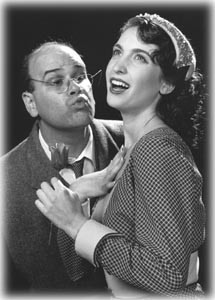
High Anxiety: Lisa Kudrow and Mira Sorvino take a most excellent adventure.

Anxiety expert crashes Romy and Michele’s party

By David Templeton

Writer David Templeton specializes in taking interesting people to interesting movies in his ongoing quest for the ultimate post-film conversation. This week he sends author-therapist Robert Gerzon to see the sweetly goofy Romy and Michele’s High School Reunion.

ACCORDING TO CERTAIN records at Cubberley High School in Palo Alto, Robert Gerzon–graduating class of 1963–has been deceased for well over 30 years. This may explain why he’s never been invited to any high school reunions.

“It’s the best reason I’ve ever heard for not attending your reunion,” he admits. Gerzon is speaking, not from the grave but from Concord, Mass., where he’s very much alive, writing and building a therapy practice specializing in anxiety issues. It was only five years ago that he discovered his untimely death.

“I got this list back in the mail,” he explains, “and my name was way at the end, and I was listed as deceased. It was very funny, but also a little disturbing. “

And speaking of reunions, what’s with all these movies and plays about high school reunions? Now there are two movies: Grosse Pointe Blank–about a hit man attending his 10-year reunion as therapy–and the unexpectedly wise and sweet Romy and Michele’s High School Reunion, the story of two underemployed, not-very-bright friends (Mira Sorvino and Lisa Kudrow) who decide to attend their high school posing as successful businesswomen.

I asked Gerzon, whose accessible new book, Finding Serenity in the Age of Anxiety (Macmillan, 1997), will be released this month, to go see Romy and Michele, a film he’d been planning to avoid. Having seen the film, I felt Romy and friend could benefit from a good therapist.

“This is something that people go and talk to their therapists about,” he says, having confessed his pleasant surprise at the film’s good-natured sensitivity to the potential trauma of facing a roomful of fellow alumni.

“When people go to their high school reunions they think about those basic questions. ‘Who am I? What am I doing with my life? Am I good enough?’ This whole thing of ‘What are these people going to think of me?’

“We think it should be easy, but for some of us the reunion is a very anxious time.”

In his book, Gerzon separates anxiety, an “amorphous and ill-defined phenomenon,” into three specific flavors: “Toxic Anxiety” is worry, insomnia, butterflies in the stomach, which, if unresolved, can develop into obsessive-compulsive disorders and phobias. “Natural Anxiety” is “the good kind–intelligent anxiety that helps us plan for the future.” “Sacred Anxiety” is all the big-ticket stuff–existential, spiritual anxiety, anxiety about life, those ‘Who am I?’ issues.

So which type are Romy and Michele struggling with?

“Like most people,” he suggests, “they’re experiencing a mixture of all three. I do believe that Sacred Anxiety underlies all our other anxieties because it is the most fundamental. Romy and Michele were certainly dealing with that–the ‘what am I worth?’ stuff–but they had also clearly been enmeshed in [Toxic Anxiety] since high school, a time whenToxic Anxiety sort of runs the show.

“The movie illustrates how hard it is to sit down and really think about our lives. That’s what Romy and Michele were avoiding. But this big event just plunged them right into it.

“The reunion became a wonderful therapeutic moment,” Gerzon continues. “They took away the power that these people had had all their lives, and by so doing things started to change for them.”

Gerzon won’t be facing another reunion until, let’s see, 2003. Is he planning to attend that one?

“I’m probably ready–at the age of 51–to go to a high school reunion,” he jests. “Of course, everyone will be surprised I’m still alive. Maybe I can claim some sort of divine status,” he chuckles.

From the May 15-21, 1997 issue of the Sonoma County Independent

This page was designed and created by the Boulevards team.
© 1997 Metrosa, Inc.

Gay Moms

0

Motherhood2


Janet Orsi

Family Portrait: Cass Smith, Cora Smith-Tobin, and Barbara Tobin.

Local lesbian moms redefine the nuclear family

By Bruce Robinson

LIKE A LOT of contemporary kids, 6-year-old Cora Smith-Tobin carries the surnames of both her parents. And, like many children her age, she is growing up in a household that does not include a father. Instead, she has two mothers. At a time when the conventional mom-dad-and-kids family unit is becoming increasingly rare, lesbian households with children are less and less unusual. Still, on this Mother’s Day, local lesbian moms are experiencing mixed reactions to their situation. For example, Barbara Tobin, Cora’s birth mother, recalls taking her in for a baby shot, “and the nurse said, ‘Which one of you is the mother?’ We said, ‘We both are.’ She just said, ‘Oh, OK,’ and carried on.

“We have an attitude that we expect to be accepted and that really plays out,” she continues. That [acceptance] is what we get back.”

Adds Cass Smith, Cora’s other mom and Tobin’s partner for the past eight and a half years, “The only time it comes up that there are two moms instead of a mom and a dad is when you go into a brand-new situation, and [find out] how are people going to react. Ten minutes later, that’s over with.”

Yet, not all local lesbian households feel they can be so open. Lynn Anderson and Carla Bond are both public school teachers who share a 7-year-old daughter. Even though they live some distance away from the district that employs them, they do not feel safe fully acknowledging their relationship at school.

“It’s hard not being able to be out,” Anderson says. “I have to be more guarded. It would be nice to tell the whole story and feel comfortable with that.”

Ironically, they have discovered that they do have to reveal themselves to other teachers in their home neighborhood. “We have to come out to Andrea’s teacher every year,” Anderson says resignedly. “And soccer coaches,” Bond adds. “It hasn’t been a problem for us, really, but it’s something that other families don’t have to do.”

“It’s a process of continually coming out,” agrees Kathy Allen. “And every time I do that, I never know what reaction I’m going to get.”

She has come to realize that it is something her young children–she has two, both with her lesbian partner–will also have to share as they get older. “It’s a process that just goes on and on,” she explains. “As school goes on and my kids make new friends, they’re going to be coming out, too.

“It’s a conversation they’re going to be having hundreds of times in their lives. It’s not something you get to do once and then you’re done with it.”

For lesbian moms and their children, questions about the absence of a dad in the house crop up soon after kids hit school. “Orphan? Adopted? She doesn’t know what these words mean, so she comes home asking,” says Bonds ruefully.

“We try and beat her to it, but you never know what kids are going to come home with.”

Anderson recalls one time her daughter blithely volunteered, “I have two moms,” to a stranger in a local department store, leaving her mother to deflect the other woman’s misdirected sympathies abut the difficulties of being a stepmom.

One coping resource that all three of these households share is membership is a loose association of lesbian families called the Lavender Storks. Tobin helped form the group when she was pregnant in 1990 as “a support group with the idea that as we started having kids, the kids would have each other to know.”

Begun with barely half a dozen members, the group now has a mailing list of almost 30 households for their quarterly get-togethers.

Parenting teenagers is a whole different experience, one that June Grayson. and Beverly Welsh are going through for a second time. Having already shared Grayson’s two younger biological children through their late teens in the early ’80s, the couple is now repeating the process with a pair of teenaged foster daughters, girls who choose to become a part of the all-female household.

“They have been totally accepting, absolutely great about it,” Grayson says. “Their attitude with their friends has been, if they don’t like it, they don’t have to come to our house. Or using it as an education thing.

“Anytime one of the kids would make a disparaging remark, she would talk about us.”

After a pair of unsatisfactory previous foster placements, “a lesbian couple seemed like an alternative idea, quite reasonable,” says the couple’s 15-year-old foster daughter.

And, she adds, her friends have also approved. “A lot of them have seen the way I’ve been with my other foster homes, and they see me now, the difference. They really appreciate them, not because they’re lesbians, but because they’re doing so well with me.”

Welsh suggests that one reason the placement is working lies in the lower level of conflict she sees as characteristic of lesbian relationships. “Almost every straight couple we know, there are issues that come up that seem to us to be part of the fabric of male-female relationships. We treat the girls pretty much the way we treat each other. There’s no yelling and screaming; we don’t believe in it.”

At the same time, she adds, they recognize that male role models are also important. “I think the male approach to things and the male influence, for girls, is often very valuable. It’s one of the things we need to make an effort to have for them.”

And like the other couples interviewed for this story, Grayson and Welsh fully expect their children to grow up heterosexual. “If 10 percent of the population is gay and lesbian, then 10 percent of the kids of gays and lesbians are gay and lesbian,” Welsh observes.

But she suggests that growing up in an alternative household “may make the whole issue of ‘who am I, sexually?’ a little easier for them.

“It may make the teen years more comfortable, because they know they can discuss it openly.”

But all the mothers interviewed for this story agree that any issues they encountered due to sexual orientation pale next to the day-to-day details of child-rearing.

“One of the hardest things for me is having to work full-time and be a parent,” sighs Bond, echoing a lament of working parents everywhere.

“We’re just sort of normal.”

From the May 8-14, 1997 issue of the Sonoma County Independent

This page was designed and created by the Boulevards team.
© 1997 Metrosa, Inc.

Joan Marler

Old Souls


Goddess Culture: Sebastopol author Joan Marler ensures Gimbutas’ work will not be forgotten by future generations.

Photo by Michael Amsler


Joan Marler’s realm of the ancestors

By Paula Harris

JOAN MARLER bends forward to light two candles on either side of a flowering plant arrangement, and her necklace, formed from large chunks of Lithuanian amber, suddenly glints, catching the light for just a second.

A hush falls over the audience sitting in the Sonoma State University Art Building classroom. This small ritual precedes a slide-show presentation Marler is about to make about the work of her friend and mentor–the world-renowned Lithuanian archaeologist Marija Gimbutas.

Although the late Gimbutas is most commonly known as the “grandmother of the goddess movement,” having authored (among a variety of scientific books) The Language of the Goddess and The Civilization of the Goddess, Marler, 49, says the archaeologist’s work is far broader than this. As the editor of a new book of essays, Marler aims to illustrate the many facets of Gimbutas’ life and accomplishments.

“She moved freely among disciplines, combining archaeology with an extensive background in linguistics and an ongoing study of folklore and mythology. Gimbutas had the wisdom of a natural philosopher and the aesthetic perception of an artist,” notes Marler in the introduction to her In the Realm of the Ancestors. An Anthology in Honor of Marija Gimbutas (Knowledge, Ideas & Trends; $45.95).

Marler, a Sebastopol scholar, edited and helped write this treasure trove of mostly original essays by some 60 well-known and respected academics, writers, and critics of different disciplines, who acknowledge the importance of Gimbutas’ research and how it relates to their own work.

Contributors include artist/prehistorian Michael Dames and feminist writer Naomi Goldenberg, as well as Occidental-based writer Joan Sutherland and SSU art history professor Susan Moulton. In her classes, Moulton uses Gimbutas’ findings to illustrate the theory of the “sacred feminine” in works of art.

“Archaeological evidence unearthed and researched by Gimbutas and others suggests a new understanding of myths and legends which emphasize cyclical nature, embodied by images of the ‘sacred feminine’ that predate the emergence of the patriarchal God of Judeo-Christian tradition,” writes Moulton, who concludes that “Gimbutas’ decipherment of hybridized symbolic structures has made possible a new paradigm for revisioning history which can be extended to ancient, medieval, and Renaissance imagery.”

Indeed, according to Marler, Gimbutas’ most striking research, which began in the late 1960s, showed that the earliest cultures were earth-based, peaceful, and well-developed, with women and men both in key roles, and not patriarchal and warlike, as was commonly believed. Gimbutas sought meaning, and, through her interdisciplinary approach, was the first to interpret what those cultures were.

“It was a radical retelling of the origins of Western civilization,” says Marler. “The old idea was that civilization started with patriarchy–but that came later.”

Marler says Gimbutas struggled to achieve credibility in a male-dominated field. “[Gimbutas] had no agenda, she didn’t set out to prove this, it came out naturally and organically from her research and it surprised her as well,” Marler observes. “She was not a whacked-out goddess person–she considered herself a scientist and simply described what she saw and found.”

Marler met Gimbutas in 1987, and became her personal editor. When the archaeologist was stricken with cancer and became too ill to lecture, she sent Marler in her place. “I had absorbed everything I could, and I could speak in public, so I carried on,” says Marler. “Basically, she passed her work on to me. It was a tremendous stimulation to my development. She was an absolute genius, a taskmaster who required a tremendous amount of focus, achievement, and integrity.”

Gimbutas succumbed to cancer in 1994 at age 73, and Marler has gone on to become an international lecturer. The Sebastopol resident wears as many different hats as her mentor. Well known through the airwaves as a producer and host for KPFA-FM 94.1 radio, Marler recently produced an eight-part radio series on last year’s women’s conference in Beijing, China, which she attended. In June, Marler will chair a two-day presentation on Gimbutas’ work at the Smithsonian Institution in Washington, D.C.

Taking all her findings into consideration, what has been Gimbutas’ greatest legacy? Marler answers without hesitation. “Her work struck a chord that continues to resonate within and beyond academic spheres. It gives us a vision of what we can re-create. This view is giving us hope right at the end of the millennium when most people are seeing apocalypse. There’s a groundswell of people saying, ‘She’s confirming what I know in my bones is true–we haven’t always lived like this.'”

Marler reveals that the book’s title was born from a possible message about survival:

“Shortly after Marija Gimbutas died, I had a vivid dream that told me she is now in the realm of the ancestors. She spoke in a fierce voice, saying, ‘You must remember us!’ I was shaken awake with the distinct feeling that this dream was not only for me.”

From the May 8-14, 1997 issue of the Sonoma County Independent

This page was designed and created by the Boulevards team.
© 1997 Metrosa, Inc.

Talking Pictures

0

Bi-Bi-Love

By David Templeton

Writer David Templeton takes interesting people to interesting movies in his ongoing quest for the ultimate post-film conversation. This time out, he meets up with Anka Radakovich–the infamous Details magazine sex columnist–to discuss the frank and funny love story Chasing Amy.

“Am I doing this right?” asks Anka Radakovich sleepily, her once-confident demeanor now displaying a hint of uncharacteristic shyness. “Am I, you know, giving you what you need?”

I assure her that her performance has so far been more than satisfying. “Oh good,” she purrs. “I do like to take care of my men.”

Being a fairly typical male, I respond to the flirtatious nature of these remarks. Before I know it, the limbic system of my brain has devised a pleasant fantasy wherein Radakovich stands helpless against her sudden, overpowering, urgent desire to please me, me, and only me with multiple juicy quotes (I don’t know what got into her; maybe she could detect my probing sensitivity as an interviewer from the way I push the buttons on the tape recorder).

I slap myself psychically, silently hissing, ‘Stop it! Get a grip! Be a professional!’

Very well then.

Anka Radakovich is the notoriously funny author of Details magazine’s sex column, a post she embraced (with a professorial thumbs-up from her long-time idol Allen Ginsberg) and held on to for seven years. Her first book, The Wild Girls’ Club (Knopf, 1995), has been snatched up by Hollywood, and her brand-new Sexplorations: Journeys to the Erogenous Frontier (Knopf, 1997) is gaining enthusiastic, if somewhat flustered, reviews.

Unlike certain Q&A sexperts or those “technique of the week” writers, Radakovich takes her readers firsthand into the trenches of love. In Sexplorations, for example, she describes such adventures as attending dominatrix training, crashing a wife-swapping retreat, cruising a nudist colony, and deflowering a born-again Christian (hallelujah!).

Before leaving her hometown of New York for the book tour that has brought her to this early-morning coffeehouse rendezvous, Radakovich went out to see the film Chasing Amy. A truly modern love story, Amy is a boy-meets-lesbian/boy-loses-lesbian kind of thing. It stars Ben Affleck and Joey Lauren Adams as Holden and Alyssa, rising young comic-book artists whose unexpected love affair is ultimately threatened by Holden’s inability to deal with his lover’s active sexual history.

“I loved it! What a great date movie! I liked the idea of the guy being so thrown off by her past,” Radakovich grins, leaning in close to add, “I get that too, because of what I do for a living. Guys are intimidated by what they perceive as my past sexual experience. I am always telling people, ‘I just write about sex. I’m not a sex worker.’ Come on! Some people write about movies, right? I write about sex.

“And what’s funny is that the guys who aren’t immediately scared away from me end up thinking that what I need is a real man, like them, to straighten me out, to turn me into a good girl. It drives me nuts!”

Radakovich–who has staked her career on the notion that sex is nothing to be ashamed of–demonstrates her fidelity to this belief by failing to lower her voice when uttering things that many would not even whisper in public. She’ll easily say “cunnilingus” and “the tip of the penis” at the same fearless volume that she says “And make that a decaf.”

“As for the whole bisexual theme,” she continues, “I can identify with Holden’s discomfort. I’ve gone out with bisexual men, and I admit that it intimidates me! I’m always afraid I’m going to be dumped for some guy named Ralph. I always end up sitting there thinking, ‘What if I can’t satisfy him?’ We go out on a date and all the time I’m going, ‘Gee, do I want to go through with this? What if I don’t perform fellatio as good as guys do it? Maybe guys are better at it than women.’ It really makes me insecure. And I’m a pretty good fellater,” she adds.

“On the other hand, sometimes I wish I were bisexual, because then I’d have a lot more to write about. If I’d been with a woman, I would have a lot more juicy stories to tell. If I were bisexual I’d have twice as many people to hit on. That would increase my chances of finding someone nice.” She sighs and rolls her eyes, fetchingly. “Alas,” she says. “I’m hopelessly heterosexual.”

“So,” I ask, maintaining my professionalism, “might Chasing Amy–with its frank discussions of sexuality–actually help people’s sex lives?”

“Why not?” she replies. “Anytime you just talk about it, bring it out into the open, it makes sex seem less mysterious. That’s a good thing.

“But, I have to say here, this movie is not just a sex story. It’s a love story. This is about love. After writing about sex for seven years, I’m realizing that it’s not as important as love is. Relationships–with all the dating, the flirting, the dumping, the game playing–that’s the hard part. Sex, once you learn a few things, is just the easy part.”

“So then,” she concludes, with a self-assured grin. “How was I?”

Web exclusive to the May 8-14, 1997 issue of the Sonoma County Independent

This page was designed and created by the Boulevards team.
© 1997 Metrosa, Inc.

Kitchen

0

Kitchen Debate


Michael Amsler

Stand the Heat: Eating at Kitchen is better than being at mom’s, after all–no one asks you when you’re going to have a baby, get a job, or cut your hair.

Graton’s new Kitchen hits and misses

By Steve Bjerklie

NAME your new restaurant “Kitchen,” and automatically you’re up against not just all the usual challenges facing any new food business, you’re up against mom. The kitchen in almost everyone’s childhood is the primordial source of love, the über-room where a parent’s affection is alchemized into breakfast, lunch, and dinner–not to mention Rice Krispie bars.

Jan Salisbury takes the “kitchen” challenge seriously in her new so-named restaurant in the west county wilder-town of Graton. She calls her cuisine “glamorous comfort food,” explaining that “this is the way I feel about food: It should be simple and taste good.” Revealing the truth of her words, simplicity and taste abound in her menu. (Rice Krispie bars, alas, do not.)

Open since mid-March in Cafe Dahlia’s old location, Kitchen offers fresh, hearty, abundant fare–Salisbury grew up in Bountiful, Utah–that is rather more glamorous than my mom cooked but no less comforting. Focusing on meats and seafood accompanied by county-grown vegetables and garnishes, Kitchen’s kitchen aims to zing the familiar with a jolt of the snazzy.

Our party of four was able to sample 80 percent of the menu–which is neatly displayed and described on a single art-enlivened page–without ordering anything extra. One companion began with a house salad she pronounced “dressed just right” with a simple vinaigrette; pecans and a bit of pungent Gorgonzola also woke up the mixed greens. Another companion found her asparagus sprigs a tad on the woody side but nonetheless perfectly steamed, and an accompanying creamy aioli seasoned with sun-dried tomatoes beautifully complemented the earthen taste of the vegetable.

An asparagus-potato bisque emphasized a fresh taste with excellent results, though the friend who ordered it admitted that his distaste for nuts made him frown at the surprise of almonds in the soup. My caesar salad, with big, crunchy romaine leaves drizzled with a classic, if slightly runny, caesar dressing, came topped with my preferred amount of grated fresh Parmesan cheese–lots–but the baguette croutons were stale.

The pan-roasted salmon I ordered arrived blackened and crisp on the outside, steamy on the inside–a somewhat unusual, though delicious, presentation for a dish not advertised as “blackened.” One companion’s pork tenderloin was another winner, the most succulent pork I’ve tasted in a long time. The tenderloin’s mashed potato/apple stuffing seemed a little plain, however–here, too much emphasis on “comfort,” not enough on “glamorous.” But the accompanying wild rice was spectacular, prepared in a wonderful reduction sauce. Kitchen’s comfort theme plays beautifully in the desserts; our table’s included an excellent apple crisp à la mode, a tapioca sparkling with mango, a light, fluffy pineapple upside-down cake, and a dense chocolate torte floating on a pond of sweet loose custard.

Complaints about too much salt prevented enthusiastic comments about the duck breast and most of the accompanying vegetables. The saltiness of the Liberty duck breast, indeed, violated rather than complemented the sweetness of the port and dried cherries. Owing to its load of olives, salt is to be expected in the pasta alla putanesca, but the fresh pasta was gluey under the sauce and the dish seemed like a leftover from last night’s casserole–the table’s only real disappointment.

Oversalting of a couple of items can’t be explained away by Kitchen’s newness, but the inconsistent service might be. While our order was taken quickly and efficiently, and our waitress removed a troublesome, crumbly wine cork with deft skill, a soda took far too long to arrive, bread had to be requested, and coffee with our desserts was forgotten.

Dishes came out of the kitchen and arrived at our table in pairs, making two of our number wait–this shouldn’t happen at a table of four on a slow night. Perhaps the wait staff is still getting used to Kitchen’s small space: 14 tables and four counter seats fill (but don’t cram) an area no larger than a first-grade classroom, its walls enlivened by a mustard, tomato bisque, and chocolate color scheme. Like a real kitchen, the souvenir salt-and-pepper shakers–a different pair on every table (ours came from San Francisco’s Cliff House)–were a wonderful touch.

Dinner for four, including salads, entrées, desserts, a bottle of Davis Bynum pinot noir and a Dutton Ranch chardonnay from the short but well-priced wine list, came to just under $200 with tip, a fair value. Worth the drive to Graton? Yes.

Kitchen

8989 Graton Ave., Graton; 824-0563
Hours: Tuesday through Sunday, 5 to 9 p.m.; Sunday brunch, 10 a.m. to 2 p.m.
Food: Well prepared but somewhat salty comfort food; still better than mom’s
Service: Inconsistent, but good when wait staff pay attention
Ambience: Comfortable, with edible color scheme
Price: Somewhat expensive
Wine list: Short but well chosen and well priced, with emphasis on Sonoma wines
Overall: ***

From the May 8-14, 1997 issue of the Sonoma County Independent

This page was designed and created by the Boulevards team.
© 1997 Metrosa, Inc.

Robert Fagles

On, Voyager


Mary Gross

Lost in the Translation: Professor Robert Fagles immersed himself in ‘The Odyssey’ for seven long years.

Robert Fagles hits a Homer with his new ‘Odyssey’ translation

By Zack Stentz

IN 1995 IT WAS JANE AUSTEN. Last year it was Shakespeare. Now the latest titan of Western literature to be dusted off and celebrated in popular culture appears to be none other than that oldest, deadest Dead White European Male of them all: Homer. Despite predating by 2,700 years the average Hollywood executive (except maybe Lew Wasserman), the presumed author of The Iliad and The Odyssey finds his work at the center of network television’s May sweeps period, as NBC unveils a $30 million, four-hour miniseries of The Odyssey (starring Armand Assante as Odysseus and Isabella Rossellini as the goddess Athena).

And on the literary front, an acclaimed new translation of The Odyssey (Viking Penguin; $35) by Princeton literature professor Robert Fagles (the New York Times called it “a memorable achievement” and “a worthy successor” to his similarly praised 1990 translation of The Iliad) has emerged as 1997’s unlikeliest bestseller, selling an incredible 50,000 copies in hardcover and 9,000 in its audiocassette version.

No one could be more pleased with this state of affairs than Fagles himself, who’s had Homer as a constant houseguest in his brain for even longer than anyone Penelope ever entertained. “And I’m glad to say it,” Fagles laughs, speaking over the phone from his Princeton office, “because I’d rather have Homer on or in the brain than Penelope’s suitors.”

Asked to account for The Odyssey‘s current prominence, Fagles replies: “The Odyssey is a postwar poem, a poem of readjustment, and I think in some sense a post­Cold War poem. I think one reason there’s so much responsiveness to The Odyssey right now is that in many ways we’re in a postwar period.”

But postwar doesn’t mean post-violent conflict, and echoes of Homer appear nearly everywhere in the contemporary world. Psychiatrist Jonathan Shay’s 1995 book Achilles in Vietnam looked at his Vietnam veteran patients’ post-traumatic stress disorders in the light of The Iliad’s infamous “rage of Achilles,” a fury that also seemed manifest on CNN as the long standoff at the Japanese embassy in Peru abruptly ended with a sudden burst of merciless violence.

“Actually, it’s almost Odyssean,” says Fagles of that incident, “in that the sudden strike had been brewing for a very long time, until the time was absolutely right. And that’s of course echoed in books 13-22 of The Odyssey, where there’s a very long wait until the strategic moment arrives, and Athena tips off Odysseus that the time is now to strike.

“At the same time,” he counters, “I don’t want to limit Homer to his relevance to our own age. It’s there, and it’s very powerful, but in other ways the poem is very strange, and very distant in time, so it’s a kind of two-way street. The poems are very available, and very contemporary feeling, yet at the same time a good deal grander, a good deal larger, and a good deal more imaginative than our lives are in the 1990s.”


Oliver Upton

Long Strange Trip: Armand Assante plays Odysseus in the NBC special.

A primary reason for the praise showered upon Fagles and his work stems from his largely successful effort to walk the knife edge between a lifeless adherence to the literal text and opting for a translation so idiomatic it becomes “Robert Fagles’ The Odyssey.”

“Well, all translation involves this tug of war,” Fagles explains. “You have one foot in the past, some 2,700 years ago, and you have to be loyal to it, master the Greek, master the commentaries, master the lexicons.

“And on the other hand,” he adds, “you have the challenges of your own language, in this case American English, and all the great things that have been written in it. And the goal is to bring those two together, to bring that ancient text into the language we speak here and now.”

In other words, “every generation needs its own Homer” as the cliché goes, though Fagles admits that “any translator worth his or her salt hopes his or her translation will last longer than one generation. [18th-century English author Alexander] Pope’s Homer was the English Homer for 150 years.”

Its longevity aside, Pope’s Homer also provides a warning to the translator who would go too far in substituting his own words for the original, as 18th-century classicist Richard Bentley accused when he wrote: “It is a very pretty poem, Mr. Pope, but you must not call it Homer.”

Fagles avoids some of the pitfalls of earlier translators partly through clever renderings of the repeated epithets attached to characters: he translates polutropos, the word Homer often uses to describe Odysseus, as the wonderfully evocative “man of twists and turns.”

“Many of the epithets demand a sort of flexibility,” Fagles explains, “as with one epithet used to describe Odysseus, polumetis: ‘full of cunning,’ ‘full of resources.’ His resources vary according to context, and to simply repeat a phrase serves little purpose, especially if you grant the fact that Homer the performer could vary the epithet through inflection or the nuance of his voice.”

Homer the performer. This is a critical phrase in understanding Fagles’ approach to his work, which treats The Odyssey as not just a literary document but a work to be performed aloud, just as in Homer’s day. “Once you get that Greek hexameter [the rolling, six-beat line form in which Homer composed] in your ear, it becomes the most gorgeous line of poetry ever conceived,” says Fagles. “And the more it lodges, the more you realize there’s nothing like it in English and you mustn’t try to reproduce it.”

So did Fagles’ two decades of daily contact with Homer (as long as Odysseus himself spent away from Ithaca) make the act of translation a purely technical chore? “No, no, the technical part is just the start of it,” Fagles replies. “The more I became involved–and I’m an inveterate tinkerer–the more deeply I became engaged with the story and the personalities. You have to, because if you grant Homer was a performer, remember that 70 percent of The Odyssey is direct discourse. All kinds of people are talking, and talking to each other.

“There’s nothing more important to me when trying to translate than a sense of cadence,” says Fagles. “I’m always mumbling when I’m trying to translate.”

A habit that must be troublesome in public situations. “You get some odd looks,” he laughs, “but you learn to live with them.”

So be warned. The next time you find yourself standing next a person lost in thought, muttering rhythmically to himself or herself in some unknown tongue, don’t necessarily back away and call for the men in white coats. He or she might just be working on the next translation of Homer.

From the May 8-14, 1997 issue of the Sonoma County Independent

This page was designed and created by the Boulevards team.
© 1997 Metrosa, Inc.

The Scoop

Newt Loot

By Bob Harris

IN ACCEPTING $300,000 from Bob Dole to pay off his ethics violation fines, Newt Gingrich claims he took the high ground. If enough folks examine the deal closely, he may have to head for the hills.

House rules allow loans only on terms “generally available to the public.” That includes me, so I called five banks and asked for $300K unsecured at 10 percent with no payments for eight years. They thought I was nuts. When I profiled Newt’s income and net worth, all five still said no chance. (The best I found for him was only $25K, monthly payments, 10 years, 13.9 percent.)

On its face, this deal’s a bigger con than Speed 2.

Loans to congressmen must also come from a financial institution–which Dole isn’t, although he’s older than most–unless originating from a friend with no interest in buying influence.

That explains why both Dole and Gingrich, who notoriously don’t like each other, took such pains to proclaim themselves “close personal friends” in various statements. That’s their Ethics Committee loophole.

OK, so Dole and Gingrich are pals. Just like Tiger Woods and Fuzzy Zoeller. But does Dole really have no interest in buying influence? Dole’s new day gig is “special counsel” for Verner, Liipfert, one of the biggest and most active lobbying firms in Washington. In February, the five tobacco monsters–Philip Morris, RJR, Brown & Williamson, UST, and Loews–retained Verner, Liipfert to lobby Congress.

The cancer kings are in major trouble: 15 class-action suits, 23 states suing for billions in Medicaid expenses, and now teeny Liggett fessing up that cigarettes are marketed to kids. However, Liggett has also shown the bad guys a way out: admitting guilt and paying a fine, in exchange for immunity from future liability. Since potential lawsuits reach over a trillion dollars, the barons of broadleaf need immunity so badly that they’re willing to put their ads, their trademarks, $300 billion in fines, and FDA status as a drug on the bargaining table.

On April 3, after weeks of organizing, backroom negotiations began. The first meeting included four attorneys general, two stogie moguls, a bunch of trial lawyers–and Verner, Liipfert. Info on the meetings is scarce. However, any agreement they reach will have to be voted on by Congress. That puts Mr. Speaker at the head of the tobacco lobby’s kiss-up list.

And he badly needs $300,000. Gee, what to do, what to do.

Who thought up the loan? “Dole just came up with it himself,” said Charles Black, an “adviser to Dole” who did most of the talking. A curious spinmeister: Black is a lobbyist whose biggest account last year was Philip Morris. (Dole and tobacco go way back, having opposed FDA actions to curb tobacco sales and marketing.)

When did the loan idea originate? Dole’s spokeswoman termed it “last-minute” and “completely unexpected.” But most GOP sources say Dole first broached the loan with Scott Reed, an actual friend of Newt, sometime near the first of April–just as tobacco liability talks began. Reed spoke to another go-between, and then Gingrich. (This is how “close personal friends” usually talk.)

When did Newt accept the loan? His people pinpoint the evening of the April 16–apparently trophy wife Marianne give the pants-wearing thumbs-up–but Newt’s signature is on an agreement dated the 15th. Reed contacted Gingrich at least a week earlier. No one is being very specific about dates. It’s not clear when Newt verbally agreed, but Dole wouldn’t have called on the 15th if Newt hadn’t expressed interest.

We do know that on April 9, Verner, Liipfert hired Bob Dole.

The non-partisan National Journal‘s “CongressDaily” reports that Dole received a signing bonus of–coincidentally enough–$300,000. (The paper’s source is a partner at Verner, Liipfert.)

That’s just how much Dole fronted Gingrich six days later.

Curious? The major papers aren’t; only Mother Jones noted the “CongressDaily” report in an article on its Web site. The Ethics Committee won’t care; the chairman is Utah’s James Hansen, a conservative Republican. Slam dunk. Dole denies that Verner, Liipfert had knowledge of the Gingrich loan; reportedly, most folks at the firm were embarrassed by the appearance of impropriety. You can see why: Verner, Liipfert works for tobacco. So does Dole, who now also works for Verner, Liipfert. Verner, Liipfert wants liability limits passed. During negotiations, they gave Dole $300K, just as Dole was offering the bailout to Newt. Dole put $300K in Newt’s hand six days later. Now let’s see just how hard Newt works to pass the impending liability deal.

The high ground smells a lot like a tobacco field.

From the May 8-14, 1997 issue of the Sonoma County Independent

This page was designed and created by the Boulevards team.
© 1997 Metrosa, Inc.

Swing Time

Cocktail NotionJitterbugs: These young whippersnappers really cut a rug.Photo by Chris GardnerBallroom dancing, vintage fashions, cocktails-- are we becoming civilized again?By Christian M. ChensvoldTHE FEDORA SITS on my head with a supercilious tilt. My shoes are black and white two-tones visible from a block away. A pair of polka-dot suspenders holds up my check trousers. Ruby answers the...

The Playwright’s Festival

First ActMichael AmslerPlay Right: Doug Stout believes that plays should rearrange your molecules.Worth, wonder, and work By Gretchen GilesLONG BEFORE Plato's shadow tales were first cast by firelight onto the cave wall, humankind had shared the very particular trait of wanting to act out the stories of their lives. Yet that most ancient of art forms--the play--is still...

The Scoop

Brave ChangesBy Bob HarrisA WHILE BACK, I wrote that honoring baseball legend Jackie Robinson means more than just retiring his number. It means continuing to overcome racism, both in baseball and in real life. Let's begin. Here's a way to gradually build alternatives to team names like the Redskins,...

Talking Pictures

Stressed for SuccessMark FellmanHigh Anxiety: Lisa Kudrow and Mira Sorvino take a most excellent adventure.Anxiety expert crashes Romy and Michele's partyBy David TempletonWriter David Templeton specializes in taking interesting people to interesting movies in his ongoing quest for the ultimate post-film conversation. This week he sends author-therapist Robert Gerzon to see the sweetly goofy Romy and Michele's High...

Gay Moms

Motherhood2Janet OrsiFamily Portrait: Cass Smith, Cora Smith-Tobin, and Barbara Tobin.Local lesbian moms redefine the nuclear family By Bruce RobinsonLIKE A LOT of contemporary kids, 6-year-old Cora Smith-Tobin carries the surnames of both her parents. And, like many children her age, she is growing up in a household that does not include a father. Instead,...

Joan Marler

Old Souls Goddess Culture: Sebastopol author Joan Marler ensures Gimbutas' work will not be forgotten by future generations.Photo by Michael AmslerJoan Marler's realm of the ancestors By Paula HarrisJOAN MARLER bends forward to light two candles on either side of a flowering plant arrangement, and her necklace, formed from large chunks of Lithuanian amber, suddenly glints, catching the...

Talking Pictures

Bi-Bi-LoveBy David TempletonWriter David Templeton takes interesting people to interesting movies in his ongoing quest for the ultimate post-film conversation. This time out, he meets up with Anka Radakovich--the infamous Details magazine sex columnist--to discuss the frank and funny love story Chasing Amy."Am I doing this right?" asks Anka Radakovich sleepily, her once-confident demeanor now displaying a hint of...

Kitchen

Kitchen DebateMichael AmslerStand the Heat: Eating at Kitchen is better than being at mom's, after all--no one asks you when you're going to have a baby, get a job, or cut your hair.Graton's new Kitchen hits and misses By Steve BjerklieNAME your new restaurant "Kitchen," and automatically you're up against not just all the usual challenges...

Robert Fagles

On, VoyagerMary GrossLost in the Translation: Professor Robert Fagles immersed himself in 'The Odyssey' for seven long years. Robert Fagles hits a Homer with his new 'Odyssey' translation By Zack StentzIN 1995 IT WAS JANE AUSTEN. Last year it was Shakespeare. Now the latest titan of Western literature to be dusted off and celebrated in popular culture...

The Scoop

Newt LootBy Bob HarrisIN ACCEPTING $300,000 from Bob Dole to pay off his ethics violation fines, Newt Gingrich claims he took the high ground. If enough folks examine the deal closely, he may have to head for the hills. House rules allow loans only on terms "generally available to the public." That includes me, so I called five...
11,084FansLike
4,606FollowersFollow
6,928FollowersFollow