Petaluma Voter Fraud

0

No Confidence


Janet Orsi

King of the Hill: During the debate over the fate of Lafferty Ranch, City Councilman Matt Maguire conducted tours to the area.

Questions linger despite charges in Petaluma voter-fraud case

By Paula Harris

AFTER A 16-MONTH probe into what state investigators call one of the biggest voter-fraud scandals in California, the Sonoma County District Attorney’s Office and the state Election Board have wrapped up investigations of the Petaluma voter-fraud case, in which some 2,000 signatures were forged to help a controversial land-swap measure get on the 1996 ballot.

Five people have been charged on various counts of fraud and forgery in connection with the scandal. Yet the collective sigh of relief from the community has not been forthcoming. On the contrary, many are angry because so many troubling questions remain unanswered. “We’re adamant the public needs to know exactly what went on in this attempt to deceive them,” says Hank Zucker, spokesman for Citizens for Lafferty. “Any arrangement that doesn’t lead to a full disclosure is not acceptable.”

Moreover, the fact that three of those five suspects charged have close ties to two Sonoma County supervisors, and county District Attorney Mike Mullins has not pursued that link further, does not sit well with many local political observers.

The investigation so far “is only part of the story. I’m sure there’s a very extensive story about leaders in the community,” says Petaluma City Councilwoman Jane Hamilton. “What disturbs me is the blanket of silence people in key positions have laid over the issue. Instead of leadership, all we’re hearing is denials. They should be insisting on a full prosecution, charging for every one of those forgeries because each one has a victim.”

Petition supporters backed an ill-fated attempt to place an initiative on the 1996 ballot that would have approved the swap of city-owned Lafferty Ranch, atop Sonoma Mountain, to millionaire rancher Peter Pfendler in exchange for $1.4 million and Moon Ranch, an old dude ranch at the base of the mountain.

The Independent has requested from county officials a public records act to obtain a full list of all those whose names were forged.

Two weeks ago, Mullins filed felony fraud charges against several local political movers and shakers in connection with the case. Those charged include Martin McClure, a Santa Rosa political consultant, who worked as Supervisor Paul Kelley’s aide from 1994 until February 1997. McClure is active in county Republican circles and ran unsuccessfully for state Assembly in 1986. He is accused of six felony counts of forging signatures on the petitions and two counts of circulating the petitions with forged signatures.

Steve Henricksen, a candidate for the state Legislature last year and a member of the Sonoma County Republican Party Central Committee, is accused of four felony counts of forging signatures, and two counts of circulating the petitions with forged signatures. A close friend of Kelley, who assigned him a post on the Sonoma County Fair Board in 1995, Henricksen recently resigned from that post, citing “negative publicity.” His wife, Donna, also stepped down from her position as an administrative aide to Kelley.

Marion Hodge, a 12-year aide to Sonoma County Supervisor Jim Harberson–who represents the Petaluma district–has been accused of a single misdemeanor: filing petitions she knew weren’t circulated by Petaluma residents, as required by state law. Hodge recently resigned her position with Harberson.

Craig and Shelly Arthur, a former Petaluma couple who were arrested in May, have accepted plea bargains. The couple will be sentenced Jan. 13. Transcripts of investigator interviews with the Arthurs reveal that, as the deadline to file the petitions loomed, there was panic that they wouldn’t gather enough signatures. “About a week to 10 days before the, ah, petitions were due back in, Martin [McClure] and I sat down [and decided] we weren’t gonna make it, and he mentioned that we might forge some signatures and I asked him what’s gonna happen when we get caught,” Craig Arthur testified, according to the court transcript. “Martin, of course, working for the county as an aide to one of the supervisors, ah, represented that he knew how, how things were done and that the chances of getting caught were slim. I believed him and we went on and did that.”

Hodge hired McClure, and the Committee for Choice paid him $1,200 to get signatures.

The Lafferty swap revisited.

MEANWHILE, Supervisors Harberson and Kelley are rushing to proclaim their innocence, saying they had no role in the scandal. “I had nothing to do with it. I was gone on vacation and came home and discovered it,” says Harberson. “I asked Marion Hodge specifically if she had anything to do with this. She said no and I believed her. I was extremely disappointed and devastated she was charged with a misdemeanor. … She was someone who never gave any indication of breaking any law.”

Harberson knew Hodge was collecting signatures, and told her she had to do it on her own time. He told Hodge that he thought the initiative was “a loser,” he says.

“It was obvious the people of Petaluma did not want to get rid of Lafferty,” says Harberson. “While there’s a presumption of innocence, I’m sure people ended up forging signatures because there was so little public support for getting rid of Lafferty.”

Harberson is not surprised he’s now under suspicion. “This is politics and you’re going to be a target,” he comments. “If you’re looking for fairness in politics, you’re going to be disappointed. You’re not going to find it.”

Meanwhile, Kelley hurriedly sent out a press release two weeks ago, after the resignations of Steve and Donna Henricksen, noting he is “shocked and surprised at the allegations around this issue.”

YET ONE OF THE MAJOR unanswered questions in the probe is why certain individuals, some from outside Petaluma, and not all avid hikers and park enthusiasts, were so interested in swapping one ranch for another in Petaluma.

“Some people held the minority belief that Moon was better for Petaluma, but it’s stretching the imagination to think of holding that belief to the degree they were willing to commit felonies to get that result,” reasons Zucker. “A lot of people are acting as if they were bought and paid for, but there’s no evidence.”

Hamilton has her own theory: “People were interested because it was a county network, a small network that wanted to help Peter Pfendler with his agenda. They were willing to risk their careers,” she claims.

Pfendler did not return calls last week for comment.

According to county election records, in 1993 Harberson received $1,500 in campaign contributions from Peter and Connie Pfendler. Between 1985 and 1994, Harberson also received $700 from Matt Hudson, Pfendler’s attorney, and $450 from Donald Smith, who filed the failed initiatives for the Committee for Choice.

In 1994, Kelley received $550 in contributions from campaign manager Martin McClure, and $130 from Stephen Henricksen, who also loaned him $500. Also, in 1994, he received $400 from Craig Arthur.

Meanwhile, Harberson is under fire from Petaluma City Council members and others who charge that on the county level he’s obstructing plans to turn Lafferty into a wilderness park, as opponents of the swap desired. “[Harberson] certainly isn’t helping either to move Lafferty along or to get any other regional park, though a year ago he said he’d look for another site for a park with more family facilities,” says Zucker. “[Access to Lafferty Ranch] is being fought every step of the way–Harberson is certainly listening to his friends on the mountain more than his neighbors in Petaluma.”

Harberson disagrees, saying the delays are necessary to fulfill EIR requirements. “The city has to do an EIR because of state law–it’s unbelievable the City Council would not want to have a full EIR–and I can’t move this along legally,” he says.

He’s asked Pfendler to dedicate the remainder of Moon Ranch as a regional park. Since Moon is more accessible, says Harberson, most people would go there, it would be used more than Lafferty, and Pfendler would have his privacy. Pfendler, says Harberson, has not yet responded to the request. Harberson adds that the open space district has already paid $1.2 million to Pfendler for development rights on Moon.

This week, Petaluma Police Chief Pat Parks told the Independent that the department intends to review the entire voter-fraud case and will ask the District Attorney’s Office to investigate further if it sees a need. Meanwhile, City Council members and community activists are left to guessing games. “No one is coming forward. Why are the people who sponsored the initiatives not coming forward?” asks Hamilton. “The people who are silent are still holding out on the public and are still planning to run for office and do other things in the community. Lafferty cost us our innocence.

“It almost makes you wonder if there’s buried treasure up there.”

From the Nov. 26-Dec. 3, 1997 issue of the Sonoma County Independent.

© Metro Publishing Inc.

The Scoop

Dangerous Myth

By Bob Harris

WHEN I WAS in first grade, we never spent a day talking about the “meaning” of Halloween or Memorial Day. We spent a whole week on the Thanksgiving story.

Plymouth Rock, 1621: Pilgrims escaping religious persecution and settling an empty continent shared their bounty with primitive Indians with whom they shared the land.

(Aside to uptight liberals: Most actual American Indians really don’t care much if we call them “Indians,” “Native Americans,” or “Constantin-ople.” As if a polite term could undo 500 years. You should hear what they call us.) Thanksgiving is really a creation myth for white America, a capsule of what cheap politicians consider traditional values: manifest destiny, the Protestant work ethic, cultural superiority, etc. Our ritual re-enactment of the feast is nothing less than a civil sacrament.

It’s also almost completely phony.

To begin with, the word settler is deceptive. The Indians had long before “settled” most of the east coast, and fairly comfortably at that. (Are Mexicans moving to L.A. “settlers?” Potato, potahto.)

America was not empty. Archeologists have found Indian communities of 30,000 or more all over America; the current consensus is that around 12-15 million folks were living north of the Rio Grande when Europeans got off the boat. Other explorers soon followed Columbus, but colonies were another deal entirely. Providing homes for dozens of people, thousands of miles from the nearest supplies–using only 16th-century tools you could fit on a boat–was a heck of a trick.

Spanish colonists gave it a shot in 1526, but faced with new crops, strange animals, dwindling supplies, and no cable, they bagged it right away. The first English colony was established on Roanoke Island in 1585. It was gone by 1590. Nice try.

Finally, in 1607, the Brits founded Jamestown. Good news, bad news. By the end of the first winter, two thirds had died of disease and starvation. The remainder received handouts from the Powhatan Indians–welfare for illegal immigrants, in modern terms–and survived.

To the Powhatans, Europeans looked pretty goofy: far from home for no visible reason, unable to grow crops, short-lived, and sick all the time. Boy, were they sick. Sanitation wasn’t exactly a European strong point. Remember, London and Paris still had raw sewage running in the streets. For many, religious modesty forbade routine bathing. And the newcomers had been living on a boat for months. In short, Europeans were pretty skanky.

Skip ahead a few years.

Shortly before the Mayflower landed, the area around Plymouth was ravaged by an epidemic, probably smallpox brought to shore by French and British fishermen. Europeans often survived the disease, since it was their funk in the first place, but 90 percent of the local Indians died between 1617 and 1620.

We’re not talking European Black Death rates of 30 percent, which was enough to mess things up for hundreds of years. We’re talking Ebola mortality here, albeit at a slower speed. This pattern was repeated in the Americas for centuries. It’s one of the main reasons the thriving Indian civilizations are gone. Europeans had major cooties.

Imagine the impact of anthrax, cholera, influenza, and assorted plagues and poxes on communities with no resistance. Over and over again, the first white folks into an Indian village found three or four times as many inhabitants as expeditions just a generation or two later. That’s why later Europeans were sometimes able to “settle” right in the middle of former Indian towns, growing crops on fields cleared by Indians, using the very tools the Indians left behind, using the survivors as teachers and servants.

Cutting some slack, most colonists didn’t run around infecting Indians intentionally. Many were too busy bleeding and throwing up to be bothered. Think of it as a (mostly) unintentional form of biological warfare, with the front moving west at an average of 10-15 miles per year, and you’re not far off.

Then remember that over three quarters of the federal budget in Washington’s time was spent on various methods of killing Indians and taking their land–intentional genocide is a whole other subject for another time–and you can see how, at the dawn of the 20th century, those 12-15 million Indians were reduced to just 250,000. That’s why the most famous Indian storytellers in America are Kevin Costner and Walt Disney. It’s why so much of our history–which until this century was mostly a series of European/Indian interactions–is largely white stories of white glories.

Like the Mayflower Thanksgiving myth, for example …

From the Nov. 26-Dec. 3, 1997 issue of the Sonoma County Independent.

© Metro Publishing Inc.
Santa Rosa Junior College

0

SRJC Hijinx

By Bruce Robinson

DON’T BE DECEIVED by the silence. Things may have seemed quiet under the oaks since March, when the Santa Rosa Junior College faculty heatedly passed a resolution of censure and “no confidence” in the school’s president and board of trustees, but that does not mean the hard feelings have abated.

The deep-seated and apparently mutual distrust between the college’s workforce and its administration has smoldered for several years, and the passions that erupted last spring have now been channeled into grievances and lawsuits, cases that could ultimately resonate through institutions of higher education across the country.

The legal pivot point for many of the interlocking cases will come early next month, when a federal court in San Francisco is due to rule on a question that strikes to the heart of two years of campus controversy. This issue revolves around five letters and a flier–all critical of SRJC President Robert Agrella and the board of trustees, and all written and distributed anonymously between August 1995 and October 1996.

Although some of the letters–attributed by the administration to SRJC instructor Sylvia Wasson–claimed to have originated from such sources as “Eight Concerned Members of This College Community,” “Concerned Faculty and Administrators of Santa Rosa Junior College,” and “Students Against the President,” no members of any of these groups have come forward or been otherwise identified. The administration has spent tens of thousands of dollars investigating faculty members in an attempt to confirm its suspicion and to hang the deed on Wasson, who has denied any connection to the letters.

The core issue, as framed by Santa Rosa attorney Martin Reilley, who is representing Wasson, is whether the letters are protected free speech under the First and 14th amendments. If they are, he argues, the SRJC administration had no legal grounds to investigate who wrote them.

“The administration took umbrage that someone would write these things and publish these things and then went on the attack to try and find out who did this,” Reilley explains, as the late fall sunlight pours into his Fountain Grove office. “The only reason to find out who did it is to punish.

“Now, if it’s constitutionally protected, which we believe it is, then there was no reason to expend any public funds to investigate or to seek out for purposes of punishment or retaliation. But they did, and they came to the conclusion that it was Sylvia Wasson.”

Wasson, a languages instructor at the college for the past 22 years, has consistently and vehemently denied having any role in the creation or circulation of the letters. She is being scapegoated, Wasson says, because of a prior incident in which she ran afoul of the Agrella administration.

The administration’s accusations against her are “false and slanderous,” Wasson told the Independent shortly after she was summarily fired by the board of trustees last January. “All letters I have written to this administration I have proudly signed.”

After an extensive internal inquiry–an effort that involved at least three attorneys, a private investigator, and a handwriting expert and “questioned-document examiner”–the administration branded Wasson the author of the mystery writings. Wasson was fired and never given a chance to rebut the accusations leveled against her. Her dismissal provoked a wave of protest from her colleagues, erupting into outrage when it was subsequently revealed that the investigation had also involved the clandestine removal of confidential personnel files of 10 SRJC employees, as well as searches of 49 computers in 13 campus offices.

“I think for many people, that was adding insult to injury,” says instructor Johanna James, one of those whose files were rifled. “Why wasn’t our permission asked? Why was the whole thing done in secret?”

Through the teachers’ union, the All-Faculty Association, James has filed an invasion-of-privacy grievance, one of five such complaints working their way through the internal grievance process. Asked why she thinks she was included in the search, James remains perplexed. “Bob Agrella has looked me in the eye and told me to my face that I was just a name that popped into his mind,” she replies, “and I find it hard to disbelieve someone when they look me in the face and tell me something.

“But I also find it hard to believe that this particular group of people was chosen at random. Although I have been told my office was not entered, I do believe my office was entered and some documents were removed. But when you can’t find something in your office, it’s hard to prove it was ever there.”

Funding of new SRJC building raises budget questions.

IN AN ANGRY RESPONSE to the revelations about the extent of the investigation, the college’s 22-member Academic Senate, which represents the 275 faculty members, voted overwhelmingly March 12 to censure and express no confidence in Agrella and the board of trustees. “That was a milestone in the history of the college,” says history professor and Academic Senate member Dean Frazer, who has taught at SRJC for almost 30 years. “It suggests how general and how genuine the outrage was on campus.”

In May, the senate conducted a campuswide survey to gauge faculty attitudes toward Agrella. In 12 of the survey’s 13 questions, well over half the 125 respondents rated Agrella’s performance as poor or unsatisfactory. Negative responses to the question “Overall, how would you rate your confidence in the leadership of the president?” totaled more than 80 percent. That was two months after Agrella’s March 25 public apology to the campus community, in which he conceded, “Whether an investigation should ever have been initiated is now highly questionable.”

In an effort to mollify the faculty, the board also reinstated Wasson, but did so “without prejudice,” reserving the option to renew actions against her in the future.

But Wasson received no apology. “No one has ever said, ‘We blew it, we’re wrong,’ that she is indeed a good professor. They don’t admit they did wrong by firing her and calling her all these despicable things. In fact, they insist that they’re right, and they reserve the right to fire her again at any time,” says attorney Reilley.

“If the administration really wants to get past this, they should admit that they were wrong, that it was unconstitutional, that they have no basis to conclude she was the author, and that whoever the author is, [that person] is not, just because of authoring these letters, immoral, unbalanced, or unfit to serve–and then this case would probably be over.”

EVEN NOW, the internal justification for the probe remains disputed. It is clear that Agrella and the trustees were angered by the charges raised in the unsigned letters, but there appears to have been no consideration that any of those documents might have contained even the slightest kernel of truth.

“Wasn’t there anybody who said, wait a minute, what are we doing here?” wonders veteran economics professor Ron Schuelke. “A seven-member board, a college president, and two vice presidents–I find it almost incomprehensible that not one of them said, wait a minute, look at what we’re doing with respect to the First Amendment, academic freedom, rights to due process and tenure, and rights to privacy.”

Yet several of the recurring points in the letters seem to be easily verifiable. The earliest documents allege that Agrella carried on an adulterous affair with a junior member of his administration; he has since married the woman. Other letters charge that the Agrella administration has repeatedly mishandled personnel matters and routinely engaged in “intimidation, character assassination and threats of dismissal” against “employees who dared to oppose him,” creating a climate in which dissent could not be expressed openly without fear of reprisals.

Another recurring theme, Reilley says, is the contention that the district has “squandered vast amounts of taxpayers’ money, more than any other administration, in pursuing vendettas and defending lawsuits and claims filed by employees for violations of employee rights,” and been sued more than any previous administration.

“Now, when you ask the question, which of those are true, they’re all very easily determinable,” Reilley continues. “Certainly the board of trustees ought to know [whether it’s] true this administration has been sued more than any other. And the answer is yes. There’ve been 32 lawsuits filed in state court over the last nine years, when Agrella [has been] there. And let’s get an accounting–how much money has been spent? Logic would tell you, if you’ve been sued more than any other administration, you’ve spent more money on lawyers.

“As to [whether] the Agrella administration created an atmosphere of fear and intimidation, I think that was answered by the faculty survey that was conducted over the summer. Over 62 percent of the faculty gave him an F for ethics, caring about academic freedoms.” A report by Michael O’Donnell, a Santa Rosa attorney hired by the district to review the investigation, offered some revealing insights into the previously confidential process when it was made public by the board last spring. Even before initiating any kind of inquiry, the trustees felt that “the nature of these anonymous writings . . . caused grave doubt as to the fitness of whoever was responsible in terms of moral character” and “seemed to the Board to indicate a lack of emotional stability so severe as to call into doubt the author’s fitness to continue as an employee of SRJC,” wrote O’Donnell.

Those were the precise reasons cited for Wasson’s eventual dismissal, after the administration asserted that the anonymous writings were “false and defamatory,” though their veracity has never been examined.

The O’Donnell report also laid bare the slim chain of analysis by which Wasson’s supposed guilt was determined. The supposedly ultimate “evidence” was in the reports of Oakland document examiner Patricia Fisher, who was hired by the administration. She focused on two hand-addressed envelopes, one of which was directed to board of trustees president Rick Call and contained a copy of an anonymous letters. Fisher’s analysis centered on the handwriting samples. She found no “unexplainable differences” between the writing on the two envelopes, and attributed any differences to “an attempt to disguise the writing,” even though “several variations on letter configurations were not part of the known writing” of Wasson.

Using a computer to analyze both the anonymous letters and documents known to have been written by Wasson–including papers allegedly taken from her personnel file–Fisher reported finding general similarities.

“I think it’s incredible that anyone would believe that Sylvia Wasson was the author of these letters, based on this analysis,” scoffs Reilley. “We are certainly prepared to present evidence that these were not authored by the same person.”

Meanwhile, the case has caught the attention of educators across the country. “It seems like a threat to tenure and academic freedom,” says Cal State Hayward history professor Terry Jones, president of the California Teachers Association. “That’s unconscionable in an educational setting. Stuff like that puts a chill on the whole academic environment.

“What goes on in an educational setting is the ability to think, argue, express ideas, even unpopular ideas. If you cut off that ability to freely express one’s feelings and opinions, then you stifle creativity and the things that have made this country so great.”

SAYS LAW PROFESSOR Robert O’Neil, director of the Thomas Jefferson Center for the Protection of Free Expression at the University of Virginia, “The question of how far a faculty member may go in conveying views of a certain administration, that is certainly of interest broadly.”

But the aspect of the SRJC dispute that “may attract more attention than the pro and con is the invasion of the faculty member’s privacy, electronic and otherwise. That will certainly be of great interest,” he adds.

However, O’Neil does not expect the Wasson suit to establish any significant legal precedents. “It will have limited impact because the circumstances are so extraordinary.”

Still, the unusual nature of the face-off has caught the attention of the New York Times and other media. On April 18, the Times described the “near open revolt” of the faculty that “left the administration fending off accusations that they approved a witch hunt.”

Yet for all the furor that has surrounded the letters and Wasson’s precarious status at the college over the past year, it is almost universally acknowledged that the fundamental problems within the campus community run much deeper.

“We’re all very focused on this particular incident, but in a lot of ways it is part of what I see as a pattern, of an administrative approach at the college,” says Johanna James. “In all fairness, I don’t think it’s just Bob Agrella as being some sort of master villain–his personality and behavior are just another piece in the puzzle. I think the board should be very accountable, too.”

Critics say that the expansion of the college administration to include more deans and associate deans in recent years has narrowed the opportunities for direct communication between the top levels of the administration. When combined with the high-handed and unpopular actions of the president and his staff, those changes have fostered a widespread view that the administration disdains the faculty. “The organizational structure of this college has evolved to the point where there is clearly a dichotomy between the administration and the faculty and staff,” agrees economics professor Schuelke. “Instead of being on the same team, it’s like two teams playing against each other. The line seems to be drawn right at the department chair level.”

Put another way, “There has been a great reduction in the spirit of mutuality, reciprocity, and collegiality” that was formerly present at the school, observes history professor Frazer. “I feel very much that the high reputation of the college has been sullied, that the growing ill will and adversary relationship seems almost on the verge of becoming permanent.”

EVEN NOW, a committee of Academic Senate members is preparing a series of resolutions–some call them demands–calling on the administration to fully disclose what was taken from files and offices during the letter investigation.

Faculty members want administrators to return documents and any copies; to make public quarterly reports on the cumulative costs of the investigation and related lawsuits; and to meet regularly with a senate committee to review “substantiated” claims of “retribution by the administration against faculty who have been critical of the college.”

These steps are necessary, social sciences instructor Marty Bennett told the senate Nov. 5, to counter “a continuing pattern of retribution against faculty who would speak out on this case and others. We really do have a climate of fear, a very chilly atmosphere. Morale has bottomed out.”

But amidst all the conflict and controversy of recent months, a group of employees has been working to build a campuswide consensus around a new document intended to affirm the highest ideals of the institution. On Nov. 11, Agrella and the trustees officially adopted the SRJC “Magna Carta.”

It now hangs where much of the recent animosity has been generated–the board of trustees’ meeting room.

The college Magna Carta specifies four “values and principles” as imperatives for the campus community: freedom of speech, due process, human respect and dignity, and a condemnation of abuse of power.

SRJC staffer Carole Wolfe, one of the prime movers of the charter, recognizes that these are precisely the issues over which Agrella and the board have been repeatedly criticized, and has encountered considerable skepticism from others on campus who doubt that the administration will live up to the lofty ideas the Magna Carta spells out. Some even suggest that Agrella’s endorsement is a cynical bit of face-saving to counter all the negative publicity that has surrounded the Wasson suit.

“This is a big fear of mine,” Wolfe admits, “but I don’t think this is a bad thing, even if they don’t live up to it. It aims for change in the way the organization works. It aims for more shared governance and consensus.

“If we all live by the principles, change will occur.”

From the Nov. 20-26, 1997 issue of the Sonoma County Independent.

© Metro Publishing Inc.
Resurgence of Fascism

Quiet Riot


Michael Amsler

The Hunter: Investigative journalist and author Martin Lee’s new book, The Beast Reawakens, spotlights the resurgence of fascist groups. Lee interviewed everyone from youthful skinheads to expatriate Nazis to paint a sobering portrait of the right-wing’s reign of terror.

Fascism reawakens: Sonoma County author Martin Lee illuminates the Nazi renaissance

By Patrick Sullivan

FLAMES EXPLODE and leap to devour the tall building. Hurled gasoline bombs have found their target, and an ugly cheer rises from the huge crowd of men who rule this street in the German town of Rostock. They are young, they are angry, and they are Nazis.

Their fists, boots, and clubs ensure that none of the people trapped in the burning building will escape through the ground-floor exits. As the flames rise higher, a sense of triumph fills the crowd. They have reason for their joy: No one is going to prevent this murderous act of terror. The local police stand idly by–they have made an arrangement not to intervene.

Cries of “Lynch them!” are heard, and the crowd suddenly breaks into a rendition of “Deutschland über Alles.” Behind the crowd, flames rapidly climb the building. Faces peer out of windows as people scramble from floor to floor, desperate for rescue. But no help is forthcoming.

Horrified readers will be forgiven for hoping that this is a scene from the Deutschland of the 1930s. But there is no refuge in the past. This savage attack occurred only five years ago as part of a long series of outrages against racial minorities in the newly reunified Germany.

A well-organized campaign of riots, burnings, and physical attacks–coordinated with cell phones and fax machines–resulted in the deaths of nearly a hundred people. That grim figure includes a Turkish grandmother and two young children burned to death by assailants who shouted “Heil Hitler.”

The beast is back. Fascism has re-emerged on the world scene, igniting new hatred and reviving old horrors. And America is not immune: We have seen a rising toll of terror from ultra-right-wing violence, including the 169 people who died in the Oklahoma City bombing of 1995. The explosion that destroyed the Murrah Federal Building also blew to bits our hopes that right-wing terrorism was a tragedy of another era.

Now we fear it may be the wave of the future.

Standing in the forefront of the attempt to understand this terrifying phenomenon is Sonoma County author Martin Lee. Lee has spent years exploring the renaissance of Nazi power across Europe and America. Now, in a chilling new book, The Beast Reawakens (Little, Brown & Co.; $24.95), he shines a spotlight on the conspiracies and accommodations that allowed fascism to survive World War II and re-emerge in force at the dawn of the new century.

Through the Looking Glass

MARTIN LEE is a slim, soft-spoken man with a polite smile. There is an air of matter-of-factness about him that stands in uncanny contrast to the subject of his book. As he sits in a sunny, small-town Sonoma County coffeehouse, he speaks in an understated fashion about some of the most terrifying personalities in the neo-fascist underground.

Some might think Lee an unlikely infiltrator. Many of the Nazis who spoke at length with him would be surprised to learn that Lee’s mother fled Czechoslovakia just ahead of Hitler’s death-camp snatch-squads. Nevertheless, Lee was superbly successful at ferreting out a treasure trove of information about neo-fascism.

The Beast Reawakens took over four years to research and write. Lee traveled to more than a dozen countries, interviewing the old leaders and the new blood of the extreme right wing. For those who marvel at his commitment to spending long hours with racist fanatics, Lee has a wry answer.

“I don’t know, maybe I should be on a psychiatrist’s couch,” he says with a laugh. “There were certainly times when things got very weird, when the whole world seemed upside down.”

Lee, 43, has been a working journalist for decades. He is a co-founder of the media watchdog group FAIR (Fairness and Accuracy In Reporting) and has written two previous books. One of these, Acid Dreams (Grove Press, 1986), has acquired something of a cult following in Northern California, exploring as it does the strange role played by the Central Intelligence Agency in the distribution of LSD.

As part of his research for The Beast Reawakens, the author raced around Europe to reach the elderly Nazi survivors of the Third Reich before they died. These encounters often turned out to be as bizarre as they were disturbing. Even Lee’s remarkable equilibrium was shaken by his experiences.

Spain under the fascist dictator Francisco Franco was a common refuge for Nazis fleeing the Allied victory. So Lee was not surprised to discover notorious SS Gen. Lon Degrelle living openly in an apartment in Malaga. But after he secured an interview with this close confidante of Adolf Hitler, the author was flabbergasted by the reception he received.

“He greets me with a bear hug and ushers me into his really posh apartment with a beautiful view of the Mediterranean,” Lee says. “There were original Roman statues, Flemish wall paintings. I thought I was in an art museum.”

Degrelle was well accustomed to starstruck neo-Nazis from around the world making pilgrimages to his home. Many young fascists looked upon the old general as a father figure, and he assumed that Lee had come to worship at the shrine.

“He took me around and showed me all his war mementos,” Lee says with a grim smile. “Then he picks up his Iron Cross, this German military medal that Hitler had personally given him. He takes the medal, puts it around my neck, and clasps an arm around me as a photographer comes out and snaps our picture.”

It was the clear links between old Nazis like Degrelle and the new crop of fascists springing up in Europe and America that caught Lee’s attention. He soon discovered that high-level survivors of the Third Reich played a disturbing role in inspiring and grooming their ideological offspring.

How did fascism survive defeat? Lee says patience and tenacity played an important role.

“These are people who don’t think in terms of the week or the next month,” he says. “They think in terms of the next generation. They have this mad dream of a National Socialist world, and they’re willing to bide their time.”

Escaping Justice

THE BOOK PROVIDES damning evidence that our own government played a significant, and appalling, part in the survival of fascism. World War II had barely ended before the United States began to employ notorious Nazis to spy against the new threat–the Soviet Union. Foremost among these recruits was Gen. Reinhard Gehlen, whose vast Nazi spy ring was absorbed almost wholesale into the newly born CIA.

Lee believes that the Nuremberg trials–which sentenced some German war criminals to death–barely scratched the surface of Nazi war guilt. Many important supporters of the Hitler regime escaped without punishment; many others actually went to work for the American government. It was all part of a strategy to build Europe into a fortress against the Red Menace, and punishment for war crimes of the Third Reich took a back seat.

Indeed, the Soviet Union was also busy recruiting Hitler’s followers, employing them as spies and soldiers. But whether the defeated fascists worked for the Reds or for the red, white, and blue, their ultimate allegiance seems to have been to the survival of their Nazi ideals.

“Fascists and Nazis were extremely opportunistic, very pragmatic in their political strategies,” Lee says. “In some ways, they’re much less ideological than people think. They’re willing to make alliances with almost anyone if it advances their cause.”

In the shadowy world of Cold War Europe, Nazis coolly played the two superpowers off each other. Meanwhile, they accumulated fortunes, built their power, and groomed a new generation of shock troops.

There is something in Lee’s book to anger or unnerve almost everyone, regardless of their ideology. As the Nazis set themselves up as spy masters and arms merchants, their influence reached into some surprising places. Lee indicts everyone from Arab nationalists to U.S. senators to the Israeli government to Latin American dictatorships for cooperation with the Nazi network.

Through interviews, observation, and research into recently declassified documents, Lee was able to assemble a shocking picture of growing fascist influence and organization.

After the collapse of the Berlin Wall and the end of the Cold War, fascism emerged from the shadows and dove into the political mainstream. Neo-Nazis played an important role in the establishment of new German rules on citizenship and immigration. In countries like France and Italy, fascist political parties like the National Front became major forces at the ballot box, and hate crimes have become a daily occurrence on the continent.

Meanwhile, across the Atlantic, things were also heating up.

Made in America?

THE VIPER MILITIA, the Republic of Texas, the Freemen of Montana: A brief glance at recent headlines makes paramilitary groups seem a dime a dozen in ’90s America. Still, for all the press such groups receive, we seem farther than ever from understanding what makes them tick.

Armed groups of anti-government zealots are frightening enough to most people. But for all we think we know about militias, it is what we don’t see that should really scare us, says Lee.

The Beast Reawakens documents disturbing links between German neo-Nazis, American white supremacists, and our country’s armed militia movement. The racist right, according to Lee, sees the growth of anti-government sentiment as a huge opportunity, and they are ready to take full advantage.

“They have realized that swastikas and hoods turn people off,” Lee says. “But if you talk about gun control and big government, people will listen.”

Of course, Lee admits that not all militia members are racists. He believes only about a quarter of the 225 known militias have ties to white supremacist hate groups. But many think that’s frightening enough.

Among the book’s more startling revelations is the role white supremacists may have played in the Oklahoma City bombing. Lee establishes numerous links between convicted bomber Timothy McVeigh and German army veteran Andreas Strassmeir, who trains self-styled soldiers at a bizarre white supremacist compound on the Oklahoma border.

Here in California, there are nearly 20 active racist groups, according to Klanwatch, an organization devoted to monitoring racist activity. These include skinheads, Nazis, and the Ku Klux Klan.

Lee avers that there are also militia groups operating in some of the more rural counties here in Northern California. Many are motivated by anger about environmental regulations. We don’t hear a lot from these organizations, but don’t take that as a reassurance.

“Just because they’re low-key doesn’t mean they’re not active,” he says. “It just means they’re not grabbing headlines.”

Crypto-fascist politicians may be even more dangerous than terrorists in an era of increasingly successful electoral forays by the likes of Pat Buchanan and David Duke. Concealing bigotry beneath the mask of mainstream conservative views is an increasingly popular tactic in the neo-Nazi movement.

In The Beast Reawakens, one former associate says of Pete Peters, a prominent white supremacist, “He doesn’t espouse Hitler. He doesn’t use the swastika or Klan robes. Instead, he uses the Bible and the American flag. Peters talks in a language we’re used to hearing. His hatred is masked in God.”

All this begs a simple question: What is the attraction? Why do apparently ordinary people become involved in such a widely discredited social movement? Lee says the answer is complex.

On an individual level, young fascists are often motivated by an understandable need for identity and community. To an impressionable new recruit, right-wing organizations provide an attractive feeling of purpose and camaraderie in an increasingly uncertain world. Hard-core racist propaganda often comes only later.

Regardless of whether they choose terrorist violence or deceptive political stealth campaigns, American right-wingers are well served by a growing subculture that nurtures their views in a thousand ways.

Lee recounts with equal parts humor and unease an incident that occurred after a talk he recently gave at a Dallas college. Militia members were in the audience, and one came up afterwards to give him a copy of a right-wing magazine. Lee looked it over on the plane home, and he says it gave him considerable food for thought.

“The articles weren’t that interesting,” he explains. “It was the advertising that caught my eye. The right-wing social scene is very active. . . . There was even a Christian Patriot dating service. These people never have to leave their subculture, even to date.”

A Fertile Field

NAILING DOWN a social explanation for the rise of neo-fascism is tougher than you might think. Coming up with solutions is harder still. Even getting experts to agree on a firm definition of this slippery ideology is no easy matter.

“Fascism is a very difficult thing to pin down,” Lee says. “Academics are always fighting over the definition. Historically, it mutates and goes through different phases.”

Among the factors fueling the growing strength of the extreme right are economic upheaval and a widening cultural-identity crisis. Lee says globalization plays a key role. As the world gets smaller, people are increasingly fearful about their employment prospects and more uncertain about who they are in a cultural sense.

“The impact of globalization is not just economic, it is profoundly cultural,” Lee says. “People are concerned about losing their language and traditions. Is every street corner in the world going to have a McDonald’s?

“We have an evolving global monoculture, and fascists have been able to speak to legitimate anxieties about it in a very manipulative way.”

In response to deepening unease about the complicated dynamic of globalization, neo-fascists have crafted a very simple message. They speak of defending cultural identity and of taking pride in national heritage. But their solutions to new problems reek of something very old.

Scapegoating is the tool of choice. Fascists argue that complex economic and cultural problems can be simply blamed on immigrants, minorities, and the international bogeymen at the United Nations.

If we just kick out the guest workers and the U.N. black helicopters, everything will be fine, they say.

Of course, history has amply demonstrated that simple solutions have a way of turning into Final Solutions. Unfortunately, opponents of fascism cannot count on people to remember that terrifying historical fact.

Easy remedies are hard to find. For those who hope that neo-fascists, white supremacists, and militias will just fade away, Lee holds out little hope. He believes it’s crucial to understand and evaluate the phenomenon. But he doesn’t think the force that managed to survive the crushing defeat and disgrace of World War II is ready to die yet.

“The factors fueling the growth of neo-fascism aren’t going away anytime soon,” Lee cautions. “I think we can expect violent eruptions of this sort to continue for the foreseeable future.”

From the Nov. 20-26, 1997 issue of the Sonoma County Independent.

© Metro Publishing Inc.

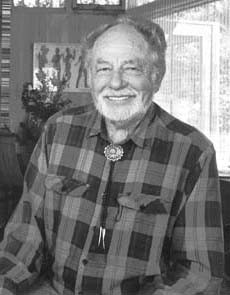
Baron Wolman

0

Photo Play


Michael Amsler

F Stops Here: Photographer Baron Wolman exhibits his Rolling Stone portfolio Nov. 23 to benefit local AIDS programs.

Photographer Baron Wolman’s cool life

By Gretchen Giles

JANIS LIVED a few doors down, the Dead were just around the corner, and the kid living upstairs from photographer Baron Wolman took too much acid and walked in delirium out of the third-floor window, splatting fatally onto the hard, filthy pavement of Haight Street below. The year was ’67, and everyone was grooving.

Fueled by the music and the times, a 21-year-old journalist named Jann Wenner gathered some friends and began a revolution in ink. Named Rolling Stone, this newsprint rag captured the era, defined it in print and pictures, and helped form a generation. Among the friends that Wenner interested in his project was Wolman, then a 30-year-old freelance photojournalist. Already an established photographer for such glossy mags as Life and Look, Wolman accompanied Wenner in ’67 to cover the story when Mills College–a bastion of academic musical study–canonized rock music by hosting a conference on its importance.

Wenner invited Wolman to shoot for the burgeoning Rolling Stone, Wolman agreed to work for free, and when the first issue hit the streets five months later, rock history began to be recorded.

During his fast-paced tenure, Wolman’s lens captured the royalty of the ’60s pop and rock explosion: Janis Joplin, the Rolling Stones, Frank Zappa, the Who, Jimi Hendrix, Joan Baez, Iggy Pop, Pink Floyd, Bob Dylan, the Grateful Dead, Phil Spector, Jim Morrison, Ike & Tina Turner, Tim Leary, and a motley cast of hangers-on.

When he left the magazine three years later, rock itself had changed.

And according to Wolman and former Rolling Stone managing editor John Burks, now a professor of journalism at San Francisco State University, nothing will ever be the same again. “Once in a while, I’ll look back at my old copies of Rolling Stone, if a student has a question or something,” says Burks by phone from the San Francisco campus, “and I’m really struck by the collected works of Baron and [fellow photographer] Jim Marshall. Rolling Stone created the language, visual and written, of that era and it seemed accidental. You can’t do that anymore. “

Why is this no longer possible? Wolman and Burks both agree on one word: access.

“The only way for Baron to do the work he did, so close to the performers, so lyrical and intimate, was through access,” confirms Burks, noting that today’s rock stars are so packaged, so protected, and so image-conscious that the kind of off-hand directness featured in those early issues of Rolling Stone shots no longer exists.

“There was the excitement to the concerts that I tried very hard to get,” says Wolman, an affable man with reddish hair who insists that rain-drenched shoes be wiped on his expensive rugs and who immediately sets about making tea in the airy kitchen of his home in an affluent Fountain Grove neighborhood.

“It’s very hard with a still photograph to capture the action of a concert,” he says. “You try to see something in the face, the body language, the lighting. Of course, it was much tougher in those days; there were no automatic cameras, so it was a real technical challenge to get a decent photograph.

“But the really great thing was that I could get onstage with people, no problem. For [photographing] Tina Turner at the Hungry i, I was probably 12 feet away–I could smell her.”

Access may have been half of the charm, but talent crafted the rest.


Little Foxes: Harlow, above, is among the groupies Wolman shot for Rolling Stone.

Photo by Baron Wolman


“What happens when I take pictures at concerts is that I really get involved in the music. I let the music get into my system so that I can anticipate what the musician is going to do,” Wolman explains, gesturing the reporter to a chair.

“Because if I can anticipate, I can get a good shot. Once I see the good shot in the viewfinder, it’s gone. The music gets inside me, it’s in my brain, I’m close enough to the stage so that the vibration from the speakers is making my skin tingle, and I’m filling the viewfinder with the musician. It’s almost, not quite, as if I’m the person that’s up there. I just always feel high. I disconnect with the real world,” Wolman says, “and I’m involved in the process.

“When I took these pictures, I didn’t feel as if I were taking a picture. I felt as though I were some conduit for this experience, and I happened to have the camera in my hand and would snap the shutter, but it wasn’t somehow my choice. I don’t know how else to explain it: I mean, I want to own responsibility for the good ones, and even the bad ones, but there was something else. When I would go out on assignment, I would go into this other state.

“Because I see myself as a kind of voyeur,” he grins. “I’m happiest when I’m invisible and watching. I just love to watch. I’m a chameleon and can adapt myself to the situation, and that, to me, is one of the gifts that I was given naturally, and that’s how you get honest pictures.”

“But,” Wolman says, still smiling, “those days are gone, and when those days left, I really began to lose interest in it.

“When the business of music became bigger than the music itself,” he says, bringing the hot teapot to the table, “then we became part of a wheel, and the artistry of the photography was then incorporated in the person’s vision of himself or herself for their own career, rather than the disinterested journalistic kind of approach, which I really like.

“For me personally,” he says, pouring tea to cool in his cup, “it went from an intimate experience to being a major corporate experience. Well, maybe not corporate, but beyond the intimacy.”

After leaving Wenner and company, Wolman started his own fashion magazine, Rags, housed in Rolling Stone‘s first San Francisco offices. When that venture, devoted to street couture and culture, folded after 13 issues, Wolman learned to fly and did aviation photography; started Square Books, his own publishing house; and has since continued to do projects for everyone from the Oakland Raiders to the adult-rock cable music channel VH1.

“I look at life like this huge buffet table,” says the unflappable Wolman. “And I’m not going to stop at the appetizers. I want to eat from the whole table. If you do that, you pay the price in some way, but you get to taste every flavor.”

He leans forward in his chair with a conspiratorial smile. “I,” he says with satisfaction, “have had such a cool life.”

The exhibit runs Nov. 23-Dec. 30. A silent auction for Face to Face: Sonoma County AIDS Network is Sunday, Nov. 23, from 3 to 7 p.m. Sonoma Sound Masters, 723 Fourth St., Santa Rosa. Free. 528-3130.

From the Nov. 20-26, 1997 issue of the Sonoma County Independent.

© Metro Publishing Inc.
Talking Pictures

0

Wising Up Early

By David Templeton

Writer David Templeton takes interesting people to interesting movies in his ongoing quest for the ultimate post-film conversation. This time out, he rendezvous with noted author and social critic Walter Mosley to see the ethereal coming-of-age story, Eve’s Bayou.

Walter Mosley is excited.

In fact, he’s kind of amped; drenched, as it were, in a fine post-cinema glow.

Sliding his paper napkin from beneath his silverware, he spreads it out in front of him, as “Your Cheatin’ Heart” plays throughout the crammed restaurant.

“This is a movie,” Mosely says, indicating the napkin. “Up there on the big screen. This is the way it’s done. Just like this. Then along comes a filmmaker like Kasi Lemmons, and … ” He eyes my napkin, still folded neatly before me.

“May I borrow this?” He places the new napkin beside his own, two identical movie screens. “So the filmmaker goes, ‘Let’s make a movie,’ and she puts it up there, and it’s like this … ” He folds one corner down, overlapping and sticking out to the side, then folds the alternate corner underneath. “It’s the same thing, only from a different angle, a different way of seeing it. Know what I mean?”

Yes I do. It’s a matter of perspective, and perspective, as his millions of readers are keenly aware, is a terribly important thing to Walter Mosley.

Mosley is the best-selling author of the masterful Easy Rawlin’s mysteries–whodunits told from the point of view of the reluctant African-American detective Rawlins–has fashioned a series of stories that also work as a first-person account of the history of Los Angeles. As seen through the eyes of an increasingly cynical black man, the books begin in the postwar 1940s of Devil in a Blue Dress (made into a 1995 film starring Denzel Washington) and moving toward the turbulent ’70s of Little Yellow Dog; and Mosley intends to continue the series, bringing Easy into the 1990s.

A different perspective is at work in his newest book. Always Outnumbered, Always Outgunned (Norton; $23) is an interconnected group of stories featuring Socrates Fortlow, a convicted murderer set free after 27 years, who attempts to come to terms with his own crimes while struggling with the moral and ethical labyrinth of his new life. Intended as a series of morality tales, the book is an insistently probing, philosophical gem, a book about ethics set in a world where standard notions of right and wrong have been blown to hell.

Set in 1960s Louisiana, Eve’s Bayou is told from the perspective of young Eve, a fierce force of nature who knows that her father–the local doctor, a charming, roguish Samuel L. Jackson–has been cheating on her mother. A marvelously subtle, beautifully told coming-of-age story, the film begins with Eve’s confession, “I was 10-years-old the summer I killed my father.” Whether she is guilty or not is unimportant; in Eve’s own eyes, she is as guilty as sin.

“It’s nice to see something so much from a woman’s point of view, so much so that you actually begin to see men the way women might,” Mosley observes, eyes dropping back to the two napkins. “I would have been unhappy if the women were seen as some kind of transcendent creatures, their ethereal wonderment only held back by the baseness of these men. But these women all had their own issues going.

“Another thing I really love about this movie,” he grins broadly. “She really did kill her father. She didn’t think [what she did] was going to kill him. Cuz she’s a kid, and kids are like that. Then again, her father helped. He was gonna get killed sooner or later anyway. His luck was going to run out.”

Noting my companion’s glee, I ask, “But wasn’t the thing she did, you know, a horrible thing?”

“No. Nothing kids do is horrible,” he replies. “Children can’t help it. They didn’t decide to be in that world. They didn’t decide to be surrounded by a tumult of emotions. It is a parent’s job to protect children from the emotions they can’t deal with. These parents didn’t. How can you blame a child for being who they’re being?

“So where do you draw the line?” I wonder. In reference to the new book, I suggest, “The kid that Socrates befriends, Darryl, he’s done a fairly heinous thing.”

“He’s a kid. Socrates forgives him,” he says. “But then he says, ‘The important thing is that the only way you’re going to survive is to understand that you did wrong. To grow up.’

“Eve was very different. I don’t think she understood what she was doing, and even if she did, what are going to do? We put the child in this position. What are going to do? I have to forgive her. I have to forgive her.

“The thing that people are so mad at kids about now,” Mosley continues, picking at his french fries, “is that they’re armed, they’re doing drugs, and they’re sexually active at 12 and 13 years old. But who’s fault is that?”

He pauses to munch on his fries, as the music fades from Aretha’s “Respect” to Patsy Cline’s “I Fall to Pieces.”

“It’s like this guy in New York who’s been giving all these people AIDS,” he says after a moment. “And the response is, ‘Well, let’s kill him.’ I think he did a terrible thing, but at the same time you don’t have anybody getting on television, or any parents, going, ‘God, we should have given our children condoms, we should have talked to them, should have moved to Hawaii.’ Whatever they needed to do to protect their kids, they didn’t do. And now they’re saying let’s get the guy who did it.

“But from my point of view,” he shrugs, “we all did it.”

“There’s the argument,” I say, “that everyone has an innate sense of right and wrong, and whether you can get a machine gun easily or not, you know its wrong to use it. So kids should be held responsible for their choices.”

“That’s not understanding children though,” he insists, raising his voice to strengthen the point. “This movie understands children. She wanted her father dead. He’d been cheating on her mother, and he’d hurt her sister. And she also didn’t want her father dead. ‘I love you, I hate you. I want you alive, I want you dead.’ Children are completely victims of this.

“So many people are afraid of the emotions of kids, which is why the kids are acting out. You have to be able to talk. The thing I like about this movie is there was truth in this film, truth about passion inside of a family and how it can go awry if it’s not dealt with, taken care of, if the parents don’t deprive themselves in some way.

“If you have machine guns for sale, or drugs for sale, or sexual activity from the moment someone is able to have sex, if that’s the world your living in, then you have to deal with all these things. But we don’t. We don’t deal with it.”

He grins again. “And that’s the way it is until we do.”

From the Nov. 20-26, 1997 issue of the Sonoma County Independent.

© Metro Publishing Inc.
Thanksgiving

0

Pilgrims’ Progress


Flipping the Bird: The feast is the least of the story.

Think Thanksgiving is one giant Hallmark moment? Time for a paradigm shift

By Christina Waters

THE WAY white America envisions that first Thanksgiving, through a filter of sentimental hogwash, it went something like this: Plucky white Pilgrims–mostly guys–set out across the Atlantic Ocean and were rewarded with an entire continent of untold wealth that was essentially destined by the Almighty for their use. Oh, sure, there were a few unclothed savages already there, shuffling around in the dirt, slinging arrows here and there at equally filthy and equally wild animals, but that wasn’t really a problem. (Journals and letters written by those first settlers contain shameless accounts of plunder and theft of native stores of food, tools, and furs. If the Pilgrims found it, they took it.)

After working, praying, and surviving a bitter winter, the Pilgrim fathers brought in a bountiful harvest produced by careful tending of seeds they had brought from home. Inviting their heathen neighbors to join them, the Pilgrims gave thanks for their New World and its riches at a meal consisting of turkey, squash, mashed potatoes, cranberry sauce, and pumpkin pie. Afterwards, the men sat around smoking and watching football while the women cleaned up.

Now what really happened was more like this:

After two months and two deaths on the Mayflower crossing in 1620, the Pilgrims landed on the coast of Massachusetts, where an Algonquin-speaking group, the Wampanoags, lived. Clad in leather garments–augmented by furs during the winter–these native people skillfully cultivated corn, beans, squashes, and pumpkins; hunted the woods for deer, elk, and bear; and fished in the rivers for salmon and herring.

Like other members of what anthropologists now call the Woodland Culture, the Wampanoags looked upon deer, fish, and turtles as totemic siblings, and had deep respect for every natural creature. When they hunted, they left offerings for other forest inhabitants, and they would never think of planting or harvesting without giving ritual thanks for the fertility of Mother Earth.

Well, from where the natives sat–especially one named Squanto, who’d learned English after having been sold into slavery a few years earlier by another friendly white guy–these Pilgrims were in deep buffalo chips.

The wheat brought from Europe was completely unsuited to the New England soil and failed to germinate. Half the settlers died during the first winter. Many of the English were defiantly proud and refused to dirty their hands with planting. Most of them were incapable of successful hunting.

Squanto and his friends took pity on this sorry situation and brought venison and furs to the luckless Anglos. He taught them how to plant corn using fish as fertilizer and how to dig clams, tap maple trees for syrup, and essentially not be so clueless. Now the Algonquin tribes already had the custom of celebrating six different thanksgiving festivals during the year, and one of them just happened to coincide with the dinner party thrown by Miles Standish and company.

Standish invited Squanto and a few of his friends and their families to come on down and share a meal. Over 90 Indians–we’re talking extended family here–showed up. The Pilgrim menu wasn’t going to cover that many guests. So a few of the Algonquin guys went out for an hour and came back with five deer, enough for three solid days of cross-cultural feasting.

And here’s what was actually on that menu: venison, wild duck, wild geese, eels, clams, squash, corn bread, berries, nuts, and the “Indian pudding” that the English called furmenty. That meal was one of the last untroubled moments the whites and natives ever spent together.

Within 50 years, most of the Woodland peoples had been killed or claimed by European diseases or–if lucky–had disappeared into the woods. Today there are still 500 Wampanoags living in New England.

They do not celebrate Thanksgiving.

Native Feast

WHILE CRANBERRIES, squash, pumpkins, corn, turkeys, chocolate, tomatoes, potatoes, and chilies are commonly eaten the world over today, two thirds of all the foodstuffs once available originated in the Americas. No wonder the Pilgrims–subsisting on beer, cheese, and porridge–felt thankful. The recipes offered below were created using native American ingredients, and are offered courtesy of Loretta Barrett Oden, chef and owner of the Corn Dance Cafe in Santa Fe, N. M.

Butternut Squash Soup with Roasted Pumpkin Seeds2 large butternut squashes, skin and seeds removed, cut into 2-inch piecesSaltHoney1/4 cup pumpkin seedsChopped chives

Place squash meat into a heavy saucepan and cover with water. Cook until fork-tender, drain, and reserve liquid. Place some of the squash in a food processor. Be careful–the squash is hot! Process until smooth, adding some of the reserved liquid if too thick. Season with salt and sweeten with honey to taste.

Place pumpkin seeds on a baking sheet in a 350-degree oven and roast until fragrant. Ladle soup into warm soup bowls and garnish with pumpkin seeds and chives. Serves 4-6.

Ribbons of Summer Squash with Sage PestoCanola oil2 cups zucchini and yellow summer squash, julienned (prepared on a mandolin or with a grater–do not peel)1 cup corn kernels, roasted1 cup fresh tomatoes, chopped1 cup heirloom beans, cooked (Anasazi, Appaloosa, black, butterscotch, Calypso, Tepary, chestnut lime, or any other variety)Sage pesto (see below)Sage leaves, fresh

In a large sauté pan, heat just a bit of oil to keep from sticking or use a non-stick pan. Add squash, corn, tomatoes, mixed beans, and 1 heaping tablespoon sage pesto. Toss quickly. Do not overcook. Place in large bowl, garnish with sage leaves, and serve immediately. Serves 4-6.

Sage Pesto1/2 cup olive oil1/4 cup garlic, chopped1 cup fresh sage, firmly packed1/2 cup fresh parsley1 cup roasted pine nuts1 tsp. saltJuice of 1 lemon1 tbsp. fresh, mild goat cheese (optional)

Mix all together in blender.

From the Nov. 20-26, 1997 issue of the Sonoma County Independent.

© Metro Publishing Inc.
Steep-Slope Conversions

0

Slippery Slope


Fallen Giants: A splintered oak pierces the air at the E&J Gallo project. .

Conservationists hope to protect oak woodlands

By Dylan Bennett

RURAL RESIDENTS in the county, savoring the rustic country landscape, face a two-pronged environmental attack on the good life as they know it. While timber interests actively pursue the mature forests of local landowners, the local $2 billion grape industry is threatening wildlife habitat and biological diversity through the aggressive conversion of hillside forests into profitable steep-slope vineyards.

That’s the perspective of environmental activists hoping the county Board of Supervisors will pass a law to stop steep-slope conversions. Mark Green, head of Sonoma County Conservation Action, says his organization is working with several other groups in the fact-finding stage of an effort to create a county ordinance to strictly regulate and limit the conversion of steep-slope forests.

In Sonoma County, landowners who want to cut timber for development are allowed to log only in small increments. But those wishing to convert to grape cultivation may clear cut their land.

The new law should be similar to a 1990 Napa County ordinance, but offering tougher protection of wildlife habitat. The coalition of environmentalists expects to have its proposal clearly defined by year’s end, when it will push county supes to pick up the cause. “Vineyards should not be built on these very steep slopes, and oak woodlands ought to be left as oak woodlands,” says Green. “Because habitat fills to capacity, if you take out a whole bunch of habitat, all the animals do not move next door, since next door is full. So they die.

“The conversion of the county in the monoculture of grapes is not in the interest of the biological health of the county, or in the public interest, particularly when you tie those issues to issues of sedimentation from erosion, which goes directly to the threatened coho salmon and steelhead.”

Organizations working with SCCA include Friends of the Russian River, the Westside Winery Group, the Russian River Task Force, the California Native Plant Society, and the Audubon Society. “It’s a vital, diverse, and skilled group,” says Green. “They’re sharp people who have done a lot of politics. Something is going to happen.” According to Green, about 1,500 to 2,000 acres are converted to vineyards each year.

The most dramatic case of hillside vineyard conversion is the proposed 500-acre vineyard project by E&J Gallo Winery on Westside Road in Healdsburg that aims to convert 174 acres of forest. The California Department of Forestry has required Gallo to get an environmental impact report for the wooded portion of the plan, but normally conversions of hardwood forests without conifer trees do not require a timber harvest plan and are loosely regulated, according to activists. Two weeks ago, Gallo representatives announced that the company will delay the timber harvest plan for a year, though it has not withdrawn its application to cut down the trees. In fact, work already had begun on the property, with several large oaks lying toppled or broken on the land.

While Green describes aerial photographs that show “huge scalped-off areas of oak woodland that are being converted into vineyard” and “look almost like bomb craters,” Rick Theis, executive director of the Sonoma County Grape Growers Association, says any accusation of vineyard industry malpractice applies only to a small minority. “We’ve got 90 to 95 percent of the growers out there who are doing things right,” says Theis, referring to erosion control. “Five percent of the people out there are causing a serious problem.”

THEIS, Judy James of the Sonoma County Farm Bureau, and Bob Anderson of United Winegrowers for Sonoma County don’t react to the question of wildlife habitat, but point a collective finger at the lack of anti-erosion measures taken by some small-scale newcomers to the vineyard business.

“It’s an attitude,” says Theis. “They are generally property-rights advocates who say it’s my property and I can do anything I want with it.

“Usually they are fairly wealthy and want to come to Sonoma County to live the life of a gentleman farmer. They’re wealthy because they are stingy people when it comes to spending money. They are not willing to hire the right people to do the job.”

Ironically, the three agricultural trade organizations say they have complained to state officials about not enforcing existing water-quality and wildlife-protection regulations. Lack of enforcement, they say, has contributed to the current movement to prohibit hillside conversions.

“Erosion is only a small part of the larger issue here,” responds Green. “We are talking about the conversion of oak forests, coniferous forests, wildlife habitat. Gallo did that. Kendall-Jackson is doing that. It’s not just little people who are doing that. It’s everybody who’s converting these habitat areas on the hillsides. In terms of the eradication of habitat issue, which is primary, the major players are doing that aggressively.”

From the Nov. 13-19, 1997 issue of the Sonoma County Independent.

© Metro Publishing Inc.
The Scoop

Dueling Systems

By Bob Harris

SO WHERE’S a speculator supposed to get a reliable return on his money these days? After years of easy money, Wall Street’s finally looking about as fairly priced as a tub of movie popcorn, and even more likely to cause a heart attack.

Not many other countries look safe for a killing, either. Europe reflected the New York gyrations, Latin America is always boom and bust, and Asian markets were the ones that set off this set of tremors. Hey, since when is living at the top of the pyramid scheme supposed to involve risk? It’s almost enough to make you go get a job. But worry not, dear predators. I’ve been poking around, and there’s still one place where your surplus money can reproduce like ebola: Mongolia.

Just look at the numbers. Remember Bloody Monday, when the Dow dropped 550 points, and almost every market in the world fell at the same time? Mongolia was up 6 percent just that one day alone. In fact, the index of the top 75 stocks traded in Ulan Bator hit a mark of 332 — up from about 84 less than two years ago. That’s roughly a 200 percent annual return for the last two years.

And you thought Magellan was hot stuff.

The place is an Emerging Market player’s paradise: post-communist monopolies with government subsidy, cheap labor, and no human-rights inspectors. Somebody get Phil Knight on the phone — when he’s done with Vietnam, Nike’s got a new home up north.

There’s just one catch: The main reason the Mongolian Exchange was unaffected by other markets is that it’s just too darn isolated to get any money in or out of there. You want to invest in Mongolia? Fine. Grab a yak, exchange your dollars for a wheelbarrow of tugriks, and hit the trail. Which means that until they hire Peter Lynch to manage the Fidelity Mongolian fund, we’re on the sidelines. Unless possibly there’s a futures market in Antarctica.

Hey, with global warming, maybe we can short the icecaps.

LET’S SUPPOSE you and I are competitors in business. Let’s say we run gas stations on opposite corners of the street. And we don’t like each other a whole lot.

So I call you names that aren’t very nice. I don’t actually assault you or anything. I just say a few things you don’t particularly like.

One day, you decide you’ve had enough. You call me out. You initiate a confrontation. You tell me to shut up. I say no. And so suddenly, in front of dozens of co-workers, you haul off with your left hand and knock me to the ground. I don’t fight back. And that’s the end of the exchange. You’d be arrested for assault, wouldn’t you? Of course. And you’d have to plead guilty, what with the dozens of witnesses.

So why wasn’t Shaquille O’Neal arrested for whopping the Utah Jazz center the other day? It didn’t happen during a game, when the rules of normal human conduct are suspended. It happened as the teams were passing on the floor between workouts. Whop. End of story.

You or I would be standing in front of a judge. Shaq just has to sit for a little while and might have to toss some pocket change at the NBA commissioner. He’ll keep his endorsements and remain (to most) this big wonderful hero. No, it’s not as if Shaq ought to be breaking rocks somewhere, instead of just shooting them. He just lost his temper. It happens. So even if the cops had gotten involved, with a lack of priors he’d probably get off with a suspended sentence and/or a fine–pretty much what he’s getting from the league.

But that’s not the point. The problem here is that there seem to be two systems of law–one for “important” people, and one for you and me. People talk about where kids today get the idea that they can pull trash and get away with it.

Well, heck, if we let big shots walk around slapping people and still treat them like heroes, what else can we possibly expect?

From the Nov. 13-19, 1997 issue of the Sonoma County Independent.

© Metro Publishing Inc.

Holiday Wines

0

Drinkin’ Turkey


Centerpiece: Give thanks for fine wine.

Photo by Michael Amsler


Popping corks for turkey, ham, and other holiday fare

By Bob Johnson

THE ANNUAL transformation of otherwise vacant expanses of land from pumpkin patches to Christmas tree lots is under way throughout Sonoma County, and that can mean only one thing: The time has arrived to begin planning the traditional Thanksgiving meal.

Ever since President Washington proclaimed the first Thanksgiving Day on Nov. 26, 1789, turkey has been the main course of choice among most families. The waist watchers among us know that a three-and-a-half-ounce serving of white turkey meat sans the skin contains only 115 calories. So how come we’re always reluctant to step on the scale the morning after Thanksgiving? The responsibility lies with all those other mouth-watering dishes that blanket the table: stuffing, mashed potatoes and giblet gravy, candied yams, cranberry sauce, corn bread …

This eclectic combination of flavors and spices not only causes the calorie count to soar, it also makes selecting the “perfect Thanksgiving wine” next to impossible.

That’s not a cop-out; it’s a fact.

A soft, buttery chardonnay might match well with the turkey, but its delicate flavors would dissipate when consumed with the yams. Likewise, the subtle nuances of a well-aged cabernet sauvignon would go nearly unnoticed because of all the food flavors with which they’d be competing. Substitute ham for the turkey … or add ham to the mix … and the “matching game” becomes even more challenging.

Generally speaking, wines with bright and lively fruit flavors make the best Turkey Day dinner companions. Younger wines, though they may lack the complexity that develops with time in the bottle, typically are very fruit-forward.

No wine better defines “fruity” than Beaujolais Nouveau, the first-of-the-vintage wines from France that hit American soil about this time each year. A growing number of California wineries are releasing similar bottlings, and meeting with solid commercial, if not artistic, success. For me, nouveau wines–whether imported or domestic–are pleasant quaffers, but they’re nothing to write home about. A special day like Thanksgiving demands special wines.

So what’s a Thanksgiving dinner host to do? Pick up not one, but three or four bottles of different wine varietals to match the various dishes you plan to serve.

The shopping list that follows utilizes a scoring system of one to four corks for the wines: one cork, commercially sound; two corks, very good; three corks, outstanding; and four corks, exceptional.

Tasty with Turkey

Stonestreet 1995 “Upper Barn Block” Alexander Valley Chardonnay
A big wine (its 14.2 percent alcohol is among the highest I’ve seen in a chardonnay) with an apple butter flavor and a long, lingering, buttery finish. 4 corks.

Chateau St. Jean 1995 Robert Young Vineyard Chardonnay
Spiced pear fruit and gobs of butter in the mouth, and spicy oak on the finish. 4 corks.

Rodney Strong 1996 Sonoma County Chardonnay
Apple, pear, and tropical fruit flavors with hints of vanilla and cream. A good value. 3 corks.

Heavenly with Ham

La Crema 1995 Sonoma Coast Reserve Pinot Noir
A big fruit bowl of a wine with bright cherry and raspberry flavors. 3.5 corks.

Stonestreet 1995 Russian River Valley Pinot Noir
Black cherry and tart cranberry flavors with a long, sweet, vanilla-oak finish. 3.5 corks.

Trentadue 1994 Old Patch Red
A blend of zinfandel, cabernet sauvignon, and various Rhône varietals from several vineyards around the county, this is a pleasing wine with lots of bright red fruit flavors. Another good value. 3 corks.

Sumptuous With Spicy Sides

Davis Bynum 1995 Sonoma County Old Vines Zinfandel
Black pepper and black cherry aromas dominate the nose, while supple fruit flavors entice the taste buds. Winemaker Gary Farrell makes outstanding zins under his own label (recently winning top marks at the Harvest Fair), and this David Bynum bottling comes very close to matching that quality standard. 3.5 corks.

La Crema 1995 Sonoma County Reserve Zinfandel
Spicy red raspberry aroma and flavor, with a touch of black pepper in the back end. Rich and racy. 3.5 corks.

Pedroncelli 1995 “Mother Clone” Dry Creek Valley Zinfandel
Spicy vanilla and concentrated red fruit flavors, accompanied by a sweet berry aroma that makes the wine almost as much fun to smell as it is to drink. 3 corks.

Highly Recommended
Out-of-County Bottlings

WITH TURKEY, try the Saintsbury 1996 Carneros Unfiltered Chardonnay (4 corks); the Rosemount Estate 1997 Southern Australia Chardonnay (3 corks); or the Zaca Mesa 1996 Roussanne (3 corks).

With ham, try the David Bruce 1996 Central Coast Pinot Noir or the 1996 Santa Barbara County Pinot Noir from the always-dependable Meridian Vineyards (3 corks).

And with those spicy side dishes, try the Edmeades 1995 Eaglepoint Vineyard Zinfandel (3.5 corks) or the Beringer 1996 California Gewürztraminer (3 corks).

From the Nov. 13-19, 1997 issue of the Sonoma County Independent.

© Metro Publishing Inc.

Petaluma Voter Fraud

No Confidence Janet OrsiKing of the Hill: During the debate over the fate of Lafferty Ranch, City Councilman Matt Maguire conducted tours to the area.Questions linger despite charges in Petaluma voter-fraud caseBy Paula HarrisAFTER A 16-MONTH probe into what state investigators call one of the biggest voter-fraud scandals in California, the Sonoma County District Attorney's Office and the state...

The Scoop

Dangerous Myth By Bob HarrisWHEN I WAS in first grade, we never spent a day talking about the "meaning" of Halloween or Memorial Day. We spent a whole week on the Thanksgiving story. Plymouth Rock, 1621: Pilgrims escaping religious persecution and settling an empty continent shared their bounty with primitive Indians with whom they shared the land. (Aside to...

Santa Rosa Junior College

SRJC HijinxBy Bruce RobinsonDON'T BE DECEIVED by the silence. Things may have seemed quiet under the oaks since March, when the Santa Rosa Junior College faculty heatedly passed a resolution of censure and "no confidence" in the school's president and board of trustees, but that does not mean the hard feelings have abated. The deep-seated and apparently mutual distrust...

Resurgence of Fascism

Quiet RiotMichael AmslerThe Hunter: Investigative journalist and author Martin Lee's new book, The Beast Reawakens, spotlights the resurgence of fascist groups. Lee interviewed everyone from youthful skinheads to expatriate Nazis to paint a sobering portrait of the right-wing's reign of terror. Fascism reawakens: Sonoma County author Martin Lee illuminates the Nazi renaissanceBy Patrick SullivanFLAMES EXPLODE and leap to devour...

Baron Wolman

Photo PlayMichael AmslerF Stops Here: Photographer Baron Wolman exhibits his Rolling Stone portfolio Nov. 23 to benefit local AIDS programs.Photographer Baron Wolman's cool lifeBy Gretchen GilesJANIS LIVED a few doors down, the Dead were just around the corner, and the kid living upstairs from photographer Baron Wolman took too much acid and walked in delirium out of the third-floor...

Talking Pictures

Wising Up EarlyBy David TempletonWriter David Templeton takes interesting people to interesting movies in his ongoing quest for the ultimate post-film conversation. This time out, he rendezvous with noted author and social critic Walter Mosley to see the ethereal coming-of-age story, Eve's Bayou.Walter Mosley is excited.In fact, he's kind of amped; drenched, as it were, in a fine post-cinema...

Thanksgiving

Pilgrims' ProgressFlipping the Bird: The feast is the least of the story.Think Thanksgiving is one giant Hallmark moment? Time for a paradigm shiftBy Christina WatersTHE WAY white America envisions that first Thanksgiving, through a filter of sentimental hogwash, it went something like this: Plucky white Pilgrims--mostly guys--set out across the Atlantic Ocean and were rewarded with an entire...

Steep-Slope Conversions

Slippery SlopeFallen Giants: A splintered oak pierces the air at the E&J Gallo project. .Conservationists hope to protect oak woodlands By Dylan BennettRURAL RESIDENTS in the county, savoring the rustic country landscape, face a two-pronged environmental attack on the good life as they know it. While timber interests actively pursue the mature forests of local landowners, the local $2...

The Scoop

Dueling Systems By Bob Harris SO WHERE'S a speculator supposed to get a reliable return on his money these days? After years of easy money, Wall Street's finally looking about as fairly priced as a tub of movie popcorn, and even more likely to cause a heart attack.Not many other countries look safe for a killing, either. Europe...

Holiday Wines

Drinkin' TurkeyCenterpiece: Give thanks for fine wine.Photo by Michael AmslerPopping corks for turkey, ham, and other holiday fareBy Bob JohnsonTHE ANNUAL transformation of otherwise vacant expanses of land from pumpkin patches to Christmas tree lots is under way throughout Sonoma County, and that can mean only one thing: The time has arrived to begin planning the traditional Thanksgiving...
11,084FansLike
4,606FollowersFollow
6,928FollowersFollow
