Literary Events

Author, Author!


Book dreams: Arizona author Barbara Kingsolver appears Oct. 29 at the Santa Rosa Veterans Building to read from her new novel, The Poisonwood Bible.

Fall promises flood of new books and their creators at local bookstores

By Patrick Sullivan

LISTEN HARD: Can you hear that clanking sound? It’s the nation’s printing presses, of course, going into overdrive mode, preparing to spew out an inky tidal wave of new books–good, bad, and beyond belief–for the coming season. With the falling leaves of autumn will arrive a deluge of both new titles and local literary events. Geese and caribou, after all, are not the only species that migrate: Authors, too, are about to set out on another leg of their seasonal pattern of travel, one that will deposit many of the best right here on our doorsteps to discuss their new books and meet their readers in local bookstores ranging from Copperfield’s to Readers’ Books to Barnes & Noble.

Maybe it’s morbid, but the change of seasons makes many of us stop to contemplate death and dying. Few, however, have matched the perceptive wit and biting humor brought to the subject by the late Jessica Mitford in The American Way of Death. The book’s illuminating exposé of America’s funeral practices has been hailed as a classic piece of investigative journalism since its publication 35 years ago. Now, an updated version has arrived, brought to completion by local writer and activist Karen Leonard, who worked as Mitford’s research assistant. Leonard will speak about the revised edition Sept. 28 at Copperfield’s Books in Montgomery Village (2316 Montgomery Drive, Santa Rosa; 578-8938).

Both literary heavyweights and rousing crowd pleasers are sweeping through the doors at Copperfield’s this fall. Fans of Pam Houston–author of Cowboys Are My Weakness–will be able to catch up with the writer Oct. 1 at the Montgomery Village store. Former Santa Rosa resident Greg Sarris, fresh from the glowing acclaim accorded to Grand Avenue, returns to Sonoma County Oct. 17 for an appearance at Copperfield’s in Sebastopol (138 North Main St.; 823-2618). Watermelon Nights, the latest work to spill from Sarris’ pen, is an epic tale focusing on three generations of Pomo Indians. Author and farmer David Mas Masumoto appears on Oct. 19 at the Montgomery village store to talk about Harvest Son, his new book about his family farm.

Then, in perhaps the most pleasant surprise of the literary season, Barbara Kingsolver arrives Oct. 29 for a Copperfield’s-sponsored event at the Santa Rosa Veterans Building (1351 Maple Ave.). Details are still being nailed down, but Kingsolver, author of such popular and critically acclaimed works as Animal Dreams and The Bean Tree, will read from her new novel, The Poisonwood Bible, a story of a missionary family in the Belgian Congo in the 1960s. Judging from her recent PBS profile, Kingsolver should prove to be just as fascinating in person as she is behind a typewriter.

FOR ANOTHER take on religion and family, step into the comfortable environment of the brand-new Readers’ Books store (130 East Napa St., Sonoma; 939-1779) to catch an appearance by Pearl Abraham. The Romance Reader, Abraham’s first novel, was a masterful exploration of a young woman’s experience in the world of Orthodox Judaism. Her new book, Giving up America, promises to be just as compelling and provocative.

Readers’ Books also plays host on Sept. 11 to Jane Bay, who will discuss her new memoir, Precious Jewels of Tibet: A Journey to the Roof of the World. Local novelist Jean Hegland will appear at the store Sept. 25 to read from her surprise bestseller, Into the Forest. On Oct. 12, poet Celia Gilbert will dazzle us with selections from her new collection, An Ark of Sorts.

Then, get ready for some Halloween fun: The contributors to Harvest Tales & Midnight Revels: Stories for the Waning of the Year read from their work at Readers’ Books on Oct. 26. What’s spookier than Halloween? Censorship, of course. On Nov. 14, Readers’ will host a reception featuring KPFA commentator Michael Parenti to benefit Project Censored. The event takes place at the Sonoma Community Center (276 E. Napa St.; 938-4626); a $5-$10 donation is requested.

Barnes & Noble (700 Fourth St., Santa Rosa; 576-7494) plunges into the world of theater Sept. 9 with an preview and discussion of Shakespeare’s Othello, led by Jim DePriest, executive director of Sonoma County Repertory Theatre/Main Street Theatre. Actors will perform scenes from the play, and a drawing will be held for free tickets to the full Main Street Theatre performance. Then, on Sept. 30, explore the back roads of Guatemala with photographer Gordon Frost, author of All Souls Travel, in a slide-show presentation. Suzanne Skees, author of God Among the Shakers, appears at the store Oct. 14.

Is that it for literary events in Sonoma County? Not by a long shot. For more details, keep your eyes on the Sonoma County Independent‘s Readings section in the calendar. And, if you see a herd of wild-haired authors migrating in creative confusion down our highways and byways, point ’em toward the nearest bookstore. After all, sometimes even Mother Nature needs a helping hand.

From the August 27-September 2, 1998 issue of the Sonoma County Independent.

© Metro Publishing Inc.

Sonoma Valley Film Festival

0

Sonoma Valley Film Festival


THIS IS ONLY the second installment of this exhibition of world-class films, but the Sonoma Valley Film Festival is already well on the way to becoming a local institution. The festival–which serves as a fundraiser for the restoration of the historic Sebastiani Theatre– offers an eclectic lineup of films and special events. Here are the highlights:

“Movies by Moonlight”: Tribute to Frank Sinatra and the Swing Era, featuring Sinatra films and live swing music and dancers. Sept. 12 at 6:30 p.m. on the “field of dreams,” 205 First St.W. $25/with dinner; $15/ admission only.

The Island on Bird Street: Jewish boy’s struggle to survive in wartorn Poland during the Nazi purge. Sept. 12 at 1:30 p.m. at the Sebastiani. Sept. 13 at 5 p.m. at Sonoma Cinemas.

Paulina: True story of woman traded as a child for land rights. Sept. 12 at 7 p.m. at the Sebastiani. Sept. 13 at 3 p.m. at Sonoma Cinemas.

Doing Time for Patsy Cline: Australian film about a road trip to Nashville. Sept. 12 at 3:30 p.m. at the Sebastiani. Sept. 12 at noon at Sonoma Cinemas.

All movies $6/adults, $3/children. Call 939-0306 for more information.

From the August 27-September 2, 1998 issue of the Sonoma County Independent.

© Metro Publishing Inc.
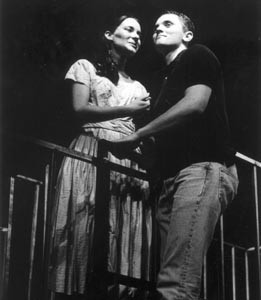
Kop Out

0

Cyber Kvetch

Disgruntled workers: Lost in cyberspace

By H. B. Koplowitz

IN WHAT has been called a threat to free speech and employee rights on the Internet, America Online recently provided a California newspaper, the Orange County Register, with the name of an employee who had created a website featuring rumors, gossip, and complaints about the newspaper. But there’s seldom a guarantee of privacy in cyberspace, especially from the same if-they-ask-tell company that told the Navy the name of a sailor who’d announced in a chat room that he was gay.

Yet had the Unregistered News covered its tracks better, it might still be publishing today. Because lots of disgruntled employees have websites on the Internet if you know where to look, and sometimes even if you don’t.

Frankly, I didn’t know where to begin looking for websites by employees lampooning their bosses. But typing “disgruntled” into a search engine soon got me to more general kvetch websites, including Disgruntled, an online magazine “For People Who Work for a Living.” The webzine has pages with such upbeat names as “The Complaint Department,” “Quitting Time,” “Advice for the Disgruntled,” and “Tales of Corporate Horror.”

The Waitressing Gripe Page, adheres to the philosophy that waitressing would be a great job if it weren’t for customers. “Are you an annoying restaurant patron?” it asks, and provides a comprehensive list of symptoms, many of them sent in by other waitresses. Symptoms include “unattractive, dateless man … who thinks your waitress is talking to you because she likes you”; “too cheap to order a drink, then asks to have your water refilled five times”; yelling, “we’re ready to order”; asking to have food prepared “in some bizarre way that’s not on the menu”; and, of course, stiffing the waitress. The bottom line, according to the website: “Be pleasant to your waitress. You’ll never know when she’ll spit in your food!”

Similar sites exist for pizza drivers, drive-thru restaurant workers, cabbies, and hostesses. Then there’s Mindless Jobs of America, with testimonials from people with such occupations as high school janitor, cemetery repairman, parking lot attendant, nursing home dietary aide, car-wash drier, gas station attendant, telemarketer, cable guy, and movie projectionist (“Considering the amount of work I do compared to the pay I get, I am getting paid pretty damn good, so there is no reason for me to take everyone out with a rifle.”)

Working for the Man provides vengeful advice for “disposable cogs … filled with self-loathing for working like a slave and letting yourself get kicked around for a few pennies.” Created by Nikol Lohr, who also hosts Disgruntled Housewife, the tips include nurturing your passive-aggressive nature, plotting constantly, developing a work-related illness, and faking work.

Speaking of faking work, Don’s Boss Page helps you pretend to be working while you are sleeping or surfing the net. The “Personal Protector” is a button you can click on when you are using your Web browser that will quickly load a window that makes it look as if you are working on a spreadsheet. The site also has “Sound Busy,” an audio-enhanced page that makes it sound as if you’re busy typing.

Funny stuff, but I was about to give up on my quest to find a site like the short-lived Unregistered News when a journalist friend let me in on News Mait Writers’ Cooperative. The site has a Newspaper Intelligence Page, which is mostly bitching and moaning about low wages and morale at newspapers. But there’s also a lot of inside dish, such as the purported reaction from the staff of the L.A. Daily News to the report that the newspaper donated $60,000 to a political movement that wants the San Fernando Valley to secede from Los Angeles. “It’s a disgrace, and the staff is understandably outraged,” according to the anonymous account. The site also has extensive links to listings of journalism jobs, and is conducting an unofficial salary survey of newspapers throughout the country.

SATISFIED that I had found the kind of website I was searching for, I was all set to sign off when I decided to get my daily Monica shot by reading the latest Drudge Report. But instead of using my bookmark, I mistakenly typed “www.drudge.com” in the address window, which took me to The Drudge Retort: Putting the Yellow Back in Journalism.

The top headline of the counterfeit site was “Clinton offers blow-by-blow testimony of Lewinsky affair.” In Drudge’s breathless writing style (but the byline of Jonathan Bourne), the article claimed that Washington, D.C., police were investigating the president for violating the city’s sodomy law, and that Vice President Al Gore’s wife, Tipper, had consulted a decorator.

You heard it here first.

From the August 27-September 2, 1998 issue of the Sonoma County Independent.

© Metro Publishing Inc.

Reissued Jethro Tull

0

Passion Play

By Greg Cahill

CLASSIC ROCK deserves classic treatment. The Sebastopol-based audiophile company Mobile Fidelity has reissued several of Jethro Tull’s classic rock albums on 24k gold-plated CDs under its acclaimed ultradisc II series.

Good luck finding a Mobile Fidelity copy of its now out-of-print audiophile version of 1972’s Thick as a Brick, a critically panned sci-fi-inspired recording that features one extended track about a boy’s growth into manhood and presages the cloning phenomenon.

Still around, though, is the two-CD set Living in the Past, which features the hit title track and some less than engaging filler.

More recently, the label has reissued Tull’s 1973 opus Passion Play, which explores the subject of life after death. As Rock: The Rough Guide notes, critics found it obscure and pretentious (a criticism often leveled at Jethro Tull’s mid-career output), but U.S. audiences sent it to the top of the pop charts.

For my money, I’m holding out for a 24k copy of the band’s 1968 debut This Was, which contains mostly self-penned blues material and a nod to jazz player Roland Kirk, whose flute phrasing and techniques Ian Anderson has borrowed liberally throughout his career.

From the August 27-September 2, 1998 issue of the Sonoma County Independent.

© Metro Publishing Inc.
Russian River Jazz Festival

0

All That Jazz


Acclaimed jazz acts top fall arts lineup

By Greg Cahill

LIKE A FINE chardonnay and a golden autumn sunset, there’s just something about wine country and the emotive strains of jazz that complement each other so well. While the fall arts season brings to the county many noteworthy acts–from country crooner Trace Adkins to British reggae star Pato Banton–the sizzle of a hot sax still warms the hearts of local jazz fans.

Of course, the king of wine country jazz is the 22nd annual Russian River Jazz Festival, hailed as the ultimate beach party (and, hey, the beer is cold and cheap). The lineup for this year’s event, on Saturday and Sunday, Sept. 12-13, runs the gamut from lite-pop to fusion to straight-ahead piano jazz.

Saturday’s performers are pop-soul singer Bobby Caldwell; Latin jazz percussionist Pete Escovedo and his orchestra; jazz-pop guitar/vocal duo Tuck and Patti; saxophonist Jules Broussard; and San Francisco jazz club favorites Mingus Amungus.

On Sunday, catch jazz-pop vocalist Randy Crawford; the Zawinul Syndicate, featuring fusion pioneer and ex-Miles Davis sideman Joe Zawinul of Weather Report; jazz genius Ahmad Jamal (who revolutionized the genre in the 1950s); a Duke Ellington Tribute, featuring pianist, composer, and arranger Bill Bell; and the acclaimed Oakland Interfaith Gospel Choir.

All shows are on Johnson’s Beach in Guerneville on the bank of the Russian River. Tickets are $37 a day or $68 for a two-day pass. Gates open at 10 a.m. (come early if you want a coveted spot on the river, the only place you’re allowed to raise a beach umbrella); music begins at 11 a.m. For details, call 869-9000.

Is swing your thing? The intimate Sommer Vineyards concert series closes Sept. 19 with the swingin’ sounds of the Blue Moon Band, performing in an intimate, outdoor setting at the vineyards in Geyserville. Tickets are $15.

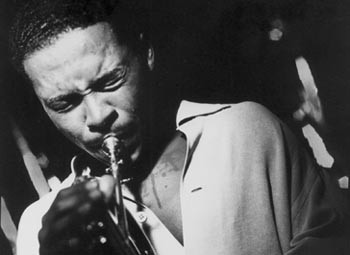
Meanwhile, Spreckels Performing Arts Center is continuing its run of big-name jazz acts that began a year ago. Saxophonist Ernie Watts, who has recorded with everyone from Aretha Franklin to Frank Zappa, performs Oct. 31 at the Rohnert Park venue. Over the years, Watts has performed as a member of the original Tonight Show band with Doc Severinsen. Earlier this year, he hit the stage as part of bassist Charlie Haden’s Quartet West. Watts’ latest CD, The Long Road Home (JVC), is a strong set of straight-ahead acoustic jazz, featuring pianist Kenny Barron, bassist Reggie Workman, and guitarist Mark Whitfield.

On Nov. 28, pianist George Winston–celebrated for his best-selling impressionistic Windham Hill solo recordings–presents a tribute at the Luther Burbank Center to the late, great jazz pianist Vince Guaraldi, best known for his standard “Cast Your Fate to the Wind” and the musical score for the first 15 Peanuts TV cartoons. But Guaraldi’s finest work arguably included his introspective interpretations of “A Flower Is a Lovesome Thing” and other standards given a quiet Bill Evans treatment.

Let’s hope Winston settles into those.

OTHER UPCOMING LBC shows include performance artist Laurie Anderson’s Sept. 3 one-woman multimedia show “The Speed of Darkness,” a meditation on the future of society and technology; a program with crossover Christian rock band Jars of Clay on Sept. 23; ’60s folk legends Peter, Paul & Mary (still puffin’ that magic dragon) on Sept. 27; a performance by country crooner Trace Adkins on Oct. 7; bluegrass great John McCutcheon at a special family show on Oct. 10; an evening with Canadian songstress Anne Murray on Oct. 22; and a night with Irish pop and Celtic folk star Mary Black on Oct. 24.

If British reggae is your cup of tea, Pato Banton may be your man. Known for his positive, anti-drug messages and dance-hall grooves, Banton has contributed raps to reggae rockers UB40. He performs Sept. 11 at Petaluma’s Phoenix Theatre.

For a blast of unadulterated (albeit multi-hyphenated) roots rock, saddle up for the Mystic Theater in Petaluma on Sept. 13 for the return of NRBQ. OK, the big guy–telecaster master Al Anderson–left the band a couple of years ago, but anyone who caught NRBQ last year at Johnny Otis’ final Red Beans & Rice Festival knows that these guys can still rock–and get goofy with the best of them.

From the August 27-September 2, 1998 issue of the Sonoma County Independent.

© Metro Publishing Inc.
Talking Pictures

0

Battle Scenes

‘Saving Private Ryan’ gets warm, but vague reception at a high school reunion

By David Templeton

Writer David Templeton takes interesting people to interesting movies in his ongoing quest for the ultimate post-film conversation. And sometimes not. This time out, he takes a vacation from movies and celebrities, traveling to Southern California for his unexpectedly surreal 20-year high school reunion. Amid hyper-nostalgic weirdness, our adventurous conversationalist discovers that everyone has something to say about the movies–even if it’s always the same thing.

Well, here I am.

Southern California, Long Beach, some big fancy hotel: the site of my 20th high school reunion, scheduled to begin at 6 p.m. sharp.

“Gosh, it’s 6:20,” observes my friend, Laura, as we drive up and take our place in line, waiting for a valet. Back in high school, Laura and I were best buds, inseparable members of that unofficial class of teenager known as ugly ducklings. We sat next to each other in numerous art classes, went to countless movies, dreamed aloud of the hopeful future. She married my best friend. Later they divorced. I haven’t seen her in almost 10 years, but here we are again. I’m crashing at her place in Irvine. Ted, her current husband, has bowed out of tonight’s festivities owing to a thrown back. He seemed almost grateful for the excuse to stay home. He’s evidently been to high school reunions.

I clamber from the car. My legs–noticeably stiff and vaguely numb–have yet to recover from the nine-hour drive down from the Bay Area. I cast a glance up and down the street, taking notice of the glittering marquee of a movie theater, just up the block. Six screens. Saving Private Ryan is playing on three of them; I can’t make out the rest.

It’s an encouraging sign. Literally. If the party gets too weird, there might still be time to catch a flick.

That, come to think of it, is what I did 20 years ago. On graduation night, I skipped the all-night class party and went to the movies with a few friends. Capricorn One. Opening night. During the big chase scene at the end, my date became so excited she spilled half a tub of popcorn in our laps. Those were the days.

“Welcome Downey High Class of ’78,” proclaims a large, conspicuous banner inside the hotel lobby. We follow the arrow, and a few moments later, step into a large room packed with 200 people, all of whom, curiously, have absolutely nothing in common with one another, beyond each being roughly 38 years old (there’s a thought) and having all once attended the same crumbling, suburban high school from which Karen and Richard Carpenter once graduated! At the check-in desk, we are given name tags that display our youthful 1978 yearbook photos, a cruel trick if ever there was one, but necessary if we were going to connect the people now schmoozing and preening around us to the people who once ignored us in the hallways.

“David Templeton,” calls out a voice. A short, burly man with an aggressive handshake comes up to chat. After peering at his photo, I recognize him as the little brother of the guy who used to dump me upside down in the trash can. When the conversation moves to the “So-what-do-you-do?” phase, I learn that he’s now a salesperson for a printing firm. Learning that I write about movies, he immediately says, “Wow. Have you seen Saving Private Ryan? What a movie!”

Agreeing that Steven Spielberg’s blockbuster World War II epic–about a group of soldiers risking their lives to locate one lost private–is possibly the best film of the summer, I ask what he liked best about it.

“Um,” he thinks. “It was so damn real, as close to being in actual combat as you can get without having to actually duck bullets.”

“Have you ever experienced actual combat?” I wonder.

“Well, no,” he says, “but that’s what I hear.” He wanders off.

I consult my little guidebooks, which list the names of the graduating class, along with a few personal statistics and a description of what each person has done over the last two decades. There are a surprising number of salespeople, teachers, “senior program analysts” (whatever those are), and law enforcement officers. There appears to be a trend among women to abandon careers in lower-middle management for stay-at-home mommyhood. One woman proudly lists the names of all nine of her children.

There are a few messages from classmates who couldn’t be here tonight. Scotty, who lists his occupation as “ranch hand,” says he’ll be busy this weekend weaning 1,500 lambs. Dennis, now residing in Oklahoma, says he will never set foot in California again because God is about to destroy the entire state, sinking it in the ocean, “up to the Arizona border.”

Laura–who now owns a successful graphic design company–spots an old friend, Teha, now the most popular art teacher in the city of Brea and, like Laura, still a knockout. In school, they used to delight in painting the doors of restrooms, changing the word WOMEN to WOMBATS.

“We’re going to go off and play spot-the-silicone,” announces Laura, and off they go to spy on one-time cheerleaders, as the DJ plays “You Light up My Life” for the second time, finishing out a set that included “Love Will Keep Us Together” by the Captain and Tenille and that disco version of the Star Wars theme song. No one seems to be dancing.

For the next two hours, I meander through the crowd, occasionally running into someone I actually remember. Some of the best conversations are held with the desperately bored spouses of Downey High graduates.

A pattern begins to emerge.

Every time a conversation turns to our current occupations, when my interest in movies is mentioned, my fellow conversationalists–with only one exception–are quick to bring up Saving Private Ryan.

“Man,” says Steve, a former water polo champion, now a bus driver. “What a movie. It’s almost like being right there on the front lines. Right there. Bullets whizzing past you. What a movie.”

Out of a dozen or so people who ask me about Ryan, only one person does not excitedly relate some version of the “next-best-thing-to-actual-warfare” remark. It’s as if they all studied the same notes for the Small Talk Test. The one dissenter, by the way–the girlfriend of a tall CPA I don’t remember at all–tells me that the movie, mainly, made her feel sad.

“It made me think about my life,” she tells me simply, her voice almost drowned out by the sounds of Queen’s “We Are the Champions.” “I thought about the sacrifices people have made for me, what my parents gave up to raise me, to send me to college. What some of my teachers went through to try to get me to shape up and make something of myself. The effort the doctors made to fix my leg after a car accident.

“The movie makes me feel that I have a responsibility to amount to something. Though I’m not sure I have yet,” she adds. She’s working on it, though. She goes on to say she’s just returned to school, with plans to become a nurse.

It’s approaching midnight.

Too late for a movie. A small band of us decide to walk down toward the beach. Later on we’ll end up at Denny’s, talking about everything but Saving Private Ryan.

“See you in 10 years,” someone shouts as we exit the ballroom.

Sure. Unless California’s sunk into the ocean by then, of course.

Web extra to the August 27-September 2, 1998 issue of the Sonoma County Independent.

© Metro Publishing Inc.
Spins

0

Jazz Party


Michael Amsler

Gone fishin’: Tom Waits, left, and John Lurie fish and cut bait.

New CDs by John Lurie, Duke Ellington

By Greg Cahill


John Lurie
Fishing with John (Strange & Beautiful Music)


The Lounge Lizards
Queen of All Ears (Strange & Beautiful Music)

IT SEEMS LIKE a simple concept. Independent film star (Stranger Than Paradise, The Last Temptation of Christ) and multi-instrumentalist John Lurie snares a few friends–including Petaluma resident Tom Waits, Matt Dillon, Jim Jarmusch, and Willem Dafoe (Waits gets to travel to sunny Jamaica; Dafoe freezes his butt on an icy Maine lake)–for a series of tandem fishing expeditions in exotic locales for the Independent Film Channel program Fishing with John (the episodes repeat this fall on the Bravo! cable channel).

There just one catch: Lurie doesn’t know Jack about fishing. Funny stuff. And the best part is that Lurie–the driving force behind the Lounge Lizards avant-jazz ensemble–has spun off a loopy musical score to accompany this loopy bit of conceptual TV. Loopy, that is, but not without interest, as in “Canoe,” a track that accompanies Waits in Jamaica (Lurie on harmonica, Brazilian percussion master Nana Vasconcelos on drums). Or “The Beast,” featuring the John Lurie National Orchestra with Medeski, Martin, and Wood drummer Billy Martin.

Meanwhile, Queen of All Ears carries on in the hip downtown New York vein that leans heavily on feeling rather than structure. Featuring Lurie on alto and soprano saxes, these offbeat tracks lope through sometimes Afro-Cubanesque, often funkified terrain that is at its best when it strays into such minimalist dreamscapes as “Scary Children.”


Duke Ellington
Jazz Party in Stereo (Mobile Fidelity/Sony)


Count Basie
Live at the Sands … Before Frank (Reprise)

THIS NEWLY reissued classic 1959 Ellington recording gets the 24k gold treatment from Sebastopol-based audiophile company Mobile Fidelity. Released after the Duke’s mid-’50s resurgence, the super-cool Jazz Party boasts a swingin’ rendition of Billy Strayhorn’s “U.M.M.G.” and features trumpeter Dizzy Gillespie, reedmen Johnny Hodges and Paul Gonsalves, vocalist Jimmy Rushing, and pianist Jimmy Jones. This is pure Ellingtonia–exotic orchestral jazz rife with dynamic, bluesy arrangements and bristling with stunning solos. One of Ellington’s finest-sounding live dates just got better.

Kansas City big-band legend Count Basie has been largely overlooked in the trendy swing revival. This unexpected previously unreleased 1966 date– which gratuitously caps on the Sinatra mystique– captures Basie in Vegas and helps to set the record straight on one of the genre’s greats. And what a band! Big, brassy, and bold–Basie at his best.

From the August 20-26, 1998 issue of the Sonoma County Independent.

© Metro Publishing Inc.

Caffeine and Children

0

Generation Wired


Michael Amsler

The brand names are pulsing with power: Surge, Zapped, Full Speed, Outburst. And Josta is laced with both caffeine and the pick-me-up herb guarana, which is hyped as “raw, primal power.” Is it any wonder caffeine consumption is on the rise among kids?

By Helen Cordes

ANYONE REMEMBER when caffeine was off-limits for children? (“It’ll stunt your growth!”) These days constraints on caffeine consumption for kids and young teens are nonexistent. Kids are having caffeine early and often–high-octane Mountain Dew is the preferred soda of the under-6 set–and in much bigger doses than before. Caffeine Inc. is raking it in, often targeting teens and younger kids, and while Coca-Cola’s polar bears get the attention, studies showing the negative consequences of child caffeination are virtually ignored.

Look at fast-food joints, convenience stores, and restaurants, where many kids get up to 40 percent of their meals. It’s common to see young children and teens downing “big gulp”-size caffeinated sodas or lining up for seconds and thirds at refillable soda stations. These megadrinks can pack a wallop equal to three cups of strong coffee–all bombarding a body that may be one-half or two-thirds adult size. And kids are eagerly reaching for the aggressively marketed new drinks that are at or near the legal limit for added caffeine (which is 6 milligrams per ounce) such as Coca-Cola’s Surge (51 milligrams in 12 ounces), Pepsi-Cola’s Josta (58), Jolt (72), the caffeinated herbal drink XTC (70), and others.

And kids may get a near double-dose of caffeine if they buy these juiced-up drinks at vending machines, which increasingly offer only 20-ounce bottles instead of 12-ounce cans.

Check out school cafeterias: Kids are bypassing milk for cans of Coke (45 milligrams), Pepsi (37), Mountain Dew (55) and Sunkist (40), bought at school pop machines or served at the fast-food franchises now at 13 percent of the nation’s schools. Glance at family shopping carts: Sodas are the best-selling product at grocery stores–$11.7 billion annually in sales. And four of the five most popular soft drinks in the United States are caffeinated, with No. 4 Sprite the sole exception.

The most conservative estimates have children and teens guzzling more than 64 gallons of soda a year–an amount that has tripled for teens since 1978, doubled for the 6-11 set, and increased by a quarter for under-5 tots, according to a 1994 survey by the Agriculture Department.

The top drinkers, teen boys, pop open an average of three sodas a day.

And check out the local coffee shop. For tons of teens, and kids as young as elementary school, the local Starbucks or its equivalent has become the favored hangout. Many juvenile customers scorn decaf in the sugary coffee drinks they prefer. (Twelve ounces of a regular Starbucks coffee contains around 190 milligrams of caffeine. Since coffee is naturally caffeinated–sodas have caffeine added to them–it is not regulated for caffeine content.) Caffeine is even showing up on the playing field: Competitive-minded parents are bringing along high-caffeine drinks or packets of the new carbo- and caffeine-packed “sports goo” to help give their young athletes a winner’s edge.

Why is “Generation Next” (as Pepsi puts it) downing caffeine at rates never seen before? One likely reason is that most parents are unaware of the health problems associated with caffeine. Solid scientific research has linked caffeine to anxiety, respiratory ailments, possible bone loss, and other health worries–although there has been slight coverage of this.

But what turned children on to caffeine in the first place? Kids’ desire to get wired didn’t simply occur as a mass switch in personal preference. The major caffeine suppliers to kids have been throwing millions into advertising and giveaways. Mountain Dew, for example, has distributed half a million free pagers to kids, who can use them to call friends–but only after they read the Mountain Dew promo that automatically pops up.

The soft-drink companies have also spent tens of millions placing their products and ads where youths are a captive audience: schools. Dozens of school districts have been paid up to $11 million each by Coke or Pepsi for the assurance that only that company’s products will be sold on school grounds, and for the right to put ads on gym walls and school buses. And the soda barons have used dozens of other sly marketing ploys, such as plastering ads and logos on everything from free textbook covers to computer screensavers and mousepads.

Children have few places left to look where they are not exposed to a soft-drink product or logo.

The marketing strategy behind the new high-caffeine products is ingeniously suited to a generation confronting more family instability and a less secure job future, and dogged by stress and powerlessness. The brand names are pulsing with power: Surge, Zapped, Full Speed, Outburst. Josta, laced with both caffeine and the pick-me-up herb guarana, is hyped as “raw, primal power.” Mountain Dew promises there’s “nothing more intense than slammin’ a Dew.”

Caffeine, then, is the perfect antidote for youths facing the pressures of the ’90s : It provides a boost of sociability, enhanced performance, and energy. Sure, there’s the inevitable droop that follows, but that only reinforces the need to have more.

As for kids’ rising attraction to coffee, that may be fueled by the proliferation of coffee shops–Starbucks opens another one every business day–and the perennial desire of kids to ape grown-up behavior. “Coffee bars are the only legal places for kids to hang out,” says Gerald Celente, author of Trends 2000. Direct youth advertising by coffee interests is minimal, but the coffee industry is busy courting younger drinkers, who “love coffee products that are cold and sweet,” notes Ted Lingle, executive director of the Specialty Coffee Association of America.

Plenty of coffee parlors are expanding their sweet-drink menus. Starbucks, in partnership with Pepsi, is pushing its bottled creamy coffee drink Frappuccino and test-marketing Power Frappuccino, its coffee and carbo drink aimed at the hot youth-directed “energy drink” category.

ALL THE MAJOR caffeine suppliers insist they’re not targeting the under-12 set. “Our core market is the teen and young adult category,” says Pepsi spokesman Larry Jabblonsky. “We don’t make a concerted effort to reach those under 12.” And Chris Gimbl of Starbucks says, “We don’t market to teenagers. However, anyone is welcome at our stores.” But Terry Barker, whose company makes the caffeinated water Krank2O, notes, “The only market available is to start them out younger and younger.” (He hastens to add that Krank2O markets to those 15 and older.)

Barker’s remark reflects economic reality. For the market bulge of the century–baby boomers–caffeine is becoming something to avoid. Coffee drinking is on the rise only for those between ages 15 and 24, while java jiving takes a steady dive thereafter. Ditto for soft-drink consumption: Statistics show that teens and young adults slug the most, with soda sipping sinking slowly from there.

In Barker’s view, caffeine suppliers are following the example of another supplier of an addictive substance: the tobacco companies. “The goal is to perpetuate the market,” he says.

Indeed, there’s evidence that the caffeine lobby has borrowed a tactic or two from the nicotine gang. Ask industry representatives about the health consequences of children consuming caffeine, and they frequently point to two “non-profit research organizations”–the International Life Sciences Institute and the International Food Information Council. Both are funded by major food, beverage, and agribusiness multinationals, including Coca-Cola, Pepsi-Cola, and major coffee suppliers Kraft and Procter & Gamble.

Both refer questions to scientists who maintain that there is absolutely no cause for concern about caffeine and kids. “The studies are really quite reassuring,” says Dr. Peter Dews, an ILSI board member and a Harvard School of Medicine professor emeritus. “Nothing has been shown to be harmful.”

Asked about a 6-year-old ingesting the quantum dose of caffeine in a “big gulp,” Dr. Richard Adamson, vice president of scientific and technical affairs for the National Soft Drink Association, asserts, “People generally don’t drink big gulps all in one sitting.” (Kids ration their big gulps?) Asked why caffeine is necessary in sodas, he says, “It’s there solely for the taste. Just take a sip of caffeine-free Pepsi and then a sip of regular Pepsi. Try it! You’ll be able to tell!”

(I did! I can’t!)

Asked if there is any health value to caffeinated soda, Adamson claims, “They’re a good source of water. Kids need lots of water.” Reminded that caffeine is a diuretic, which causes water to be excreted more rapidly, Adamson grudgingly agrees.

DESPITE soothing words from the industry, a few outfits are taking a stand against the rising use of caffeine by children. Last summer, when the Center for Science in the Public Interest petitioned the Food and Drug Administration to require the posting of caffeine amounts on labels, it cited several caffeine-related risks: miscarriage, osteoporosis, insomnia, anxiety, addiction.

Children, the group noted, can suffer some of these adverse effects, and they face additional risks: Caffeine may threaten their developing bone mass and, when sodas are substituted for more nutritional food, impede their overall nutrition. (The FDA was scheduled to respond by February but informed the CSPI it needed more time to investigate concerns and studies cited in the petition.) Last year the American Medical Association also registered concerns about the new high-caffeine drinks that are “being aggressively advertised” to a youth audience and passed a resolution calling for caffeine labeling.

In perhaps the only public expression of concern from the industry, Havis Dawson, editor of the trade magazine Beverage World, called on the industry a year ago to “pronounce clear guidelines for how much caffeine our children should drink.”

Since then, he’s received no response. “If the industry doesn’t come up with guidelines,” he says, “someone else who’s more scared of caffeine could do it, and they might not be ones the industry likes.”

Guidelines may indeed be necessary. For years, independent scientific researchers have been urging caution. Their concerns fall into two categories: how children react behaviorally to the addictive and stimulant qualities of caffeine, and how caffeine affects children’s bodies. Children respond to caffeine as do adults, according to a number of studies. A low dose may aid concentration and task completion, but higher doses typically make children nervous, anxious, fidgety, frustrated, and quicker to anger. National Institute of Mental Health child psychiatry researcher Judith Rapoport found that the 8- to 13-year-olds who regularly consumed high doses were judged more restless by teachers–in fact, one third were hyperactive enough to meet the criteria for attention deficit disorder with hyperactivity, or ADHD. When low-caffeine-consuming children were given a daily dose equivalent to that of their higher-consuming peers, parents reported that they became more emotional, inattentive, and restless.

“Children for whom there is a concern about anxiety should not have caffeine,” Rapoport says.

Hofstra University psychology associate professor Mitchell Schare studied almost 400 preschoolers from upper-income New York City suburbs in 1994 and 1995. The heavier-caffeine consumers among the children, who had the equivalent of three to four cups of coffee daily, had more “uncontrollable energy,” Schare notes. He concludes, “I believe the effects of caffeine can potentially mimic ADHD and be misdiagnosed as ADHD.”

These kids’ chief caffeine source was, surprisingly, iced tea, which many parents may not realize contains caffeine.

Like adults, kids who are regular caffeine drinkers suffer ill effects when they don’t get a regular shot. In a recent study by Stanford neurobiologist Avram Goldstein, fifth and sixth graders at a suburban Denver school who were deprived of daily caffeine reported having symptoms such as trouble thinking clearly, not feeling energetic, and getting angry easily.

Even children who typically consume 28 milligrams a day (less than an average soda) felt symptoms.

“Children can in fact become dependent on caffeine,” notes Goldstein, who did pioneer research on caffeine and adults in the ’60s. And caffeine-dependent children usually have a handicap adults don’t: They can’t guarantee a daily fix the way adults can, because they don’t typically have the money and mobility to get caffeine
at will.

Johns Hopkins psychiatry professor and caffeine expert Roland Griffiths worries about this on-again, off-again situation. “A lot of kids already have chaotic lives. Do children need a pharmacological destabilizer on top of that?” he asks.

Caffeine can also be harmful to children’s growing bodies, since it can cause excess excretion of calcium and magnesium, says Gail Frank, nutrition professor at California State University, Long Beach, and spokeswoman for the American Dietetic Association. She says, “There’s a danger that children won’t reach sufficient bone mass.” Children are less likely now to replace calcium by drinking milk–consumption has plummeted in recent years, largely because kids are downing soft drinks instead.

The phosphoric acid in cola beverages may be particularly detrimental to children’s health; there is evidence that it can cause bone fractures, notes Cornell University Medical College registered dietitian Barbara Levine. Phosphoric acid can also break down tooth enamel. And common children’s ailments like ear infections and respiratory irritations that produce colds, bronchitis, and asthma may be exacerbated by caffeinated, carbonated drinks, according to Dr. William Cochran, pediatric gastroenterologist at Penn State’s Geisinger Clinic and a member of the American Academy of Pediatrics nutrition committee. Caffeine and carbonated bubbles can trigger “refluxing,” in which a sphincter muscle allows the acidy contents of the upper stomach to back up and irritate portions of the respiratory tract. In both his research and his pediatric practice, Cochran has found that most children with chronic ear infections and respiratory illnesses have refluxing problems.

AS KIDS GUZZLE caffeinated and other sodas at increasing rates, researchers like Frank worry about potential problems that won’t be seen until kids mature. “What will happen when millions of children with much higher rates of caffeine consumption grow up?” Frank asks. “We may see increasing rates of osteoporosis.”

She also points to caffeine’s ability to raise blood pressure: “We just don’t know the long-term effects, and we need to find out.”

Meanwhile, Frank recommends that children and teens stay well under 100 milligrams of caffeine a day, which amounts to one or two cans of soda, depending on the caffeine content.

Many who’d like to see a decline in children’s caffeine consumption know the task is not easy. “I think most parents simply don’t realize how much caffeine kids get,” says CSPI executive director Michael Jacobson. “Labeling products would at least give them some way to get the information and make some judgments.” (For more information on the center’s petition to the FDA, see CSPI’s website, www.cspinet.org.)

The presence of sodas and their marketing in schools is an obvious target. “Schools are selling off students to soda,” charges Marianne Manilov of the Center for Commercial-Free Public Education in Oakland. “Is this really what we want in public schools?” But efforts to restrict soda sales in school face much opposition from soda conglomerates’ lobbying guns as well as from some school officials who like receiving a cut of vending-machine revenues.

Last year a West Virginia law prohibiting the sale of sodas in schools during the school day was overturned after “a great deal of effort from the soft-drink lobby,” reports an angry Martha Hill, who heads a county school-lunch program and is president-elect of the American School Food Service Association.

For concerned parents, home education–teaching children that caffeine is a drug and should be seen as such–is probably the best option. That’s not what the executives at Coke and Pepsi want. But they are pushing a drug on pre-adults, one that may have serious health consequences for a whole generation. And that view–not the glitzy marketing and snazzy ads–is the real thing.

This article, here in abridged and slightly amended form, originally appeared in The Nation.

From the August 20-26, 1998 issue of the Sonoma County Independent.

© Metro Publishing Inc.

Net Broadcasting

0

Net Cast


Questioning technology: Information without limits

By Frank Beacham

TIRED OF THE SAME OLD, same old on TV and radio? Think maybe you can do better yourself? On the Internet, anyone can be a broadcaster. Over 400 TV stations, nearly 1,000 radio stations, and more than 1,600 newspapers are already operating websites. Thousands more organizations and individuals are now broadcasting audio and video content over the Net.

The attraction of webcasting is compelling. This hybrid of print, images, and audio is the cheapest, most powerful medium ever available to those who want to get their ideas to a large audience without having to deal with the powers that be.

With Net broadcasting, there’s no FCC, no censorship (yet), and no corporate gatekeepers creating boundaries around programming. For now, it’s truly a broadcasting medium without limits. Therein lies the problem.

As any successful creative person can tell you, good communications craft requires self-discipline. The fact that the distribution medium has no limits does not mean that all the time-proven rules of effective storytelling can be arbitrarily tossed aside. Doing so usually results in sloppy, poorly executed work that leaves outsiders scratching their heads in confusion over the meaning of the message.

This is one of the reasons writers–even the best ones–appreciate good editors. (Bad editors, of course, are a different story.) A good editor challenges the writer to bring clarity to the text. If the subject is news or information, the editor forces the writer to offer documentation and a solid foundation for the story being told. The best writer-editor relationships result in a continuing back-and-forth exchange that eventually hones the work into a clear, concise presentation of the story.

Three veteran “old media” newsmen think one of the big problems with information delivery over the Internet is a lack of good editing. Many Internet journalists and webcasters, they say, ramble on endlessly with drivel and rumors that they have made no effort to verify. Because of this increasing dissemination of bad information, a broad brush of distrust, they say, is tainting the credibility of the entire Internet.

“News is a craft,” says Reuven Frank, former president of NBC News. “Somebody has to go get it. If you’re lucky, it’s somebody who knows what they are doing.”

So much of what passes for news today, whether on TV, cable, or the Internet, is a group of commentators “sitting around and repeating what they read in this morning’s New York Times,” says Frank. “That doesn’t amount to very much.”

The fact that the Internet has no gatekeeper does not mean content producers should eliminate the function of the editor, says Sander Vanocur, a veteran print and broadcast correspondent who is now an anchor on the History Channel.

“There’s too much information and too little judgment,” says Vanocur of today’s freewheeling information media on both television and the Internet. He cites the excellent training he got in the early days of his journalistic career as a hard-pressed wire-service reporter.

“We were edited very strictly,” he recalls. “It was a cruel and hard apprenticeship. Mostly done by older men … a few of them drunks, disappointed in life and in love. But this apprenticeship instilled in us a sense of what you could put in and what you should leave out, what was right and what was wrong. Once you had it, it was like learning Latin as a child–you rarely made mistakes thereafter.

“You knew it instinctively.”

Former NBC correspondent Edwin Newman, a connoisseur of the written word, sees the media explosion of recent years as a phenomenon of “too much information, misinformation, and ready opinion.” Webcasting, he feels, is simply an extension of a society that already lives amid too much noise. “There’s a virtual disappearance of quiet,” says Newman. “It’s disturbing that so many people these days, especially young people, never want it. They seem to think they are being cheated if quiet exists. There’s a constant need for banging music or to have someone blabbering away at them. I see the Internet as an aspect of this. I’m a great believer in reading,” he continues.

“Not because I’ve written some books, but because I think being able to sit down and read and think is desirable. What we are seeing now tends to lessen the time given to thought … the time given to solitude.”

Many advocates of webcasting celebrate the end of the time restraints that have long restricted the length of news stories on television. That, says Reuven Frank, is a myth: “News comes in finite packages, not just a [continuous] stream.

“You are still constrained by time on the Internet,” says Frank. “The time you are constrained by is the attention span at the receiving end. When people get too much information, they just turn off. I think they are already doing it, even without the Internet.” Information overload, he said, accounts for the steadily declining audience for newspapers, radio, and television. “With the Internet, I think it will become more extreme.”

Will the Internet eventually live up to its potential as a new mass medium that successfully merges the printed word with sound and images?

“I don’t know; that’s such a guess,” says Frank. “I think that each substantial change like this takes a generation to accomplish. You have people growing up with it, not people harkening back to the way things used to be. You can’t really get a new form [of media] until you get a new generation.”

From the August 20-26, 1998 issue of the Sonoma County Independent.

© Metro Publishing Inc.
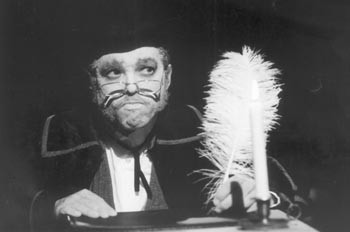
David Prothero

0

Dream Designer

Michael Amsler


David Prothero makes fantasy happen

By David Templeton

WARNING!” cautions David Prothero, as a guest steps unaware into his living room. “Warning! Here there be dragons.” Prothero is not being merely whimsical–though one could hardly look around the room and not be struck by the prevailing whimsy of the neo-gothic, gargoyles-and-ravens design scheme of the place. The dragons he warns of are real.

“Water dragons,” he explains, leaning over to scoop one of them up from its hiding place. Cradling the 2-foot-long, flushed-red reptile gently, he turns it about to gaze into its scaly face. “There’s another one around somewhere,” he says. “They’re pleasant little fellows. They eat baby mice.”

The gleefully macabre interior of Prothero’s Petaluma home is tempered by less off-beat–but equally playful–decorations: Numerous dwarves (the Disney kind) exist in various collectible forms, and sketches of Wizard of Oz landscapes hang on the walls. Prothero lives and works here, sharing the place with his two sons.

“This is fairly conservative for me,” he laughs. “I’m only renting. If I owned my own place I’d go a lot farther.

“I have a strong desire for a certain level of fantasy in my immediate surroundings,” Prothero adds. “It’s a natural environment in which to let ideas flow.”

It is ideas, after all, that are Prothero’s stock in trade. He is paid to have them, develop them, and put them down on paper. Occasionally some of these ideas are actually used, brought to life as underwater stage sets, whirling and rotating parade floats, labyrinthine theme-park rides, undulating chandeliers manipulated in time to soaring music, and gaseous clouds that form and re-form within the enormous lobby of a multimillion-dollar casino. All these miracles were made possible by ideas hatched right here in Mr. Prothero’s fun house.

Though others may have had the initial notion–be it a stage show, a traveling exhibit, or an amusement-park ride–it is to Prothero that those people come when they wish to make it happen. As the owner of Dwarf Productions–“A compact, efficient little company with big ideas” reads Dwarf’s letterhead–Prothero draws on his early schooling in theatrical arts and advanced physics to develop what he calls “interactive entertainment environments.” Part designer, part technician, he determines how each creative vision is going to be executed, employing a broad knowledge of available technologies and scientific possibility. Often, the end result is something that has never been accomplished or even attempted before.

“At the beginning of every project,” he says, flipping the pages of his mind-boggling portfolio, “you’ve got the high concept–that’s the initial idea, the creative element–on one side, and then on the other side you’ve got the reality: a client with a budget. I’m the guy who stitches the two together.”

Put another way, “I make other people’s stuff work.” He explains all this shyly, even humbly, pointing out that he started his career working backstage at the theater in his home town of Hibbing, Minn.

“Theater, particularly the backstage environment of theater, tends to attract all the square pegs that don’t fit in anywhere else. The anonymity of my work pretty much suits me,” he admits.

Among his many anonymous achievements–not counting numerous sets and special effects designed for his son’s elementary school plays and haunted houses–Prothero designed the stage and sets for “Splash,” the legendary Reno Hilton show that featured mermaids and mermen performing in pools and waterfalls among ever-shifting backgrounds. When the San Francisco 49ers won the 1984 Super Bowl, they celebrated their victory with a drive through the streets of San Francisco, seated comfortably on bleachers carried by a massive float of Prothero’s design, big enough to hold all the members of the team, along with their families.

Prothero developed the initial concepts of Walt Disney World’s innovative Disney Institute, designed major elements of Universal Studio’s popular Star Trek Adventure ride, and converted Vancouver’s PNE Coliseum hockey arena, with seating for 6,500 people, into a stunning Italian opera house for Teatro alla Scala of Milan’s production of Verdi’s I Lombardi during Expo ’86.

Most dazzling of all–literally–is one of Prothero’s most recent projects.

Called the Atrium Show, it’s “an architectural enhancement” of the walk through the atrium inside the Crown Casino Hotel in Melbourne, Australia. With fountains, lasers, lights, photographic projections, and audio effects, enhanced by mysterious liquid nitrogen fog and amazing floating cloud formations, the atrium–designed by an international team of artists and technicians, in which Prothero was a key player–has been transformed into a representation of the four seasons of the state of Victoria, animated and choreographed to a soaring orchestral score. Enormous chandeliers undulate overhead, change shape and color, and can be programmed to form patterns or star-fields in the artificial sky. The building itself, which cost a reported $2.5 billion, is the biggest casino in the world, and the largest building in the Southern Hemisphere.

“The Atrium Show was designed for people to walk through,” Prothero says proudly. “But they’re ending up with hundreds of people standing in one place as it unfolds in sequence around them.”

Still, for every Prothero project that has been realized, there are numerous others that never moved beyond the conceptual stage. This, he points out, is the way the business works.

“I get paid for the ideas, whether they are developed or not,” he shrugs. “What usually happens is that the client finally understands what he or she is getting into, how much money it will cost, and how much of their lives they’ll have to give up.

“Frankly,” he smiles, “it’s a lot easier if a idea never does get built. Because then we can avoid all the physical headaches. And in truth, most ideas end up becoming compromised in scope during that process. If it’s never built, it remains a pure idea.”

On the other hand, visiting Australia to oversee implementation of a billion-dollar wonderland is nothing to knock.

“That,” he admits, “was a fun little project.”

From the August 20-26, 1998 issue of the Sonoma County Independent.

© Metro Publishing Inc.

Literary Events

Author, Author!Book dreams: Arizona author Barbara Kingsolver appears Oct. 29 at the Santa Rosa Veterans Building to read from her new novel, The Poisonwood Bible.Fall promises flood of new books and their creators at local bookstoresBy Patrick SullivanLISTEN HARD: Can you hear that clanking sound? It's the nation's printing presses, of course, going into overdrive mode, preparing to spew...

Sonoma Valley Film Festival

Sonoma Valley Film FestivalTHIS IS ONLY the second installment of this exhibition of world-class films, but the Sonoma Valley Film Festival is already well on the way to becoming a local institution. The festival--which serves as a fundraiser for the restoration of the historic Sebastiani Theatre-- offers an eclectic lineup of films and special events. Here are the highlights:"Movies...

Kop Out

Cyber KvetchDisgruntled workers: Lost in cyberspaceBy H. B. KoplowitzIN WHAT has been called a threat to free speech and employee rights on the Internet, America Online recently provided a California newspaper, the Orange County Register, with the name of an employee who had created a website featuring rumors, gossip, and complaints about the newspaper. But there's seldom a guarantee...

Reissued Jethro Tull

Passion PlayBy Greg CahillCLASSIC ROCK deserves classic treatment. The Sebastopol-based audiophile company Mobile Fidelity has reissued several of Jethro Tull's classic rock albums on 24k gold-plated CDs under its acclaimed ultradisc II series.Good luck finding a Mobile Fidelity copy of its now out-of-print audiophile version of 1972's Thick as a Brick, a critically panned sci-fi-inspired recording that features...

Russian River Jazz Festival

All That JazzAcclaimed jazz acts top fall arts lineupBy Greg CahillLIKE A FINE chardonnay and a golden autumn sunset, there's just something about wine country and the emotive strains of jazz that complement each other so well. While the fall arts season brings to the county many noteworthy acts--from country crooner Trace Adkins to British reggae star Pato Banton--the...

Talking Pictures

Battle Scenes'Saving Private Ryan' gets warm, but vague reception at a high school reunionBy David TempletonWriter David Templeton takes interesting people to interesting movies in his ongoing quest for the ultimate post-film conversation. And sometimes not. This time out, he takes a vacation from movies and celebrities, traveling to Southern California for his unexpectedly surreal 20-year high school...

Spins

Jazz PartyMichael AmslerGone fishin': Tom Waits, left, and John Lurie fish and cut bait.New CDs by John Lurie, Duke EllingtonBy Greg CahillJohn LurieFishing with John (Strange & Beautiful Music)The Lounge LizardsQueen of All Ears (Strange & Beautiful Music)IT SEEMS LIKE a simple concept. Independent film star (Stranger Than Paradise, The Last Temptation of Christ) and multi-instrumentalist John Lurie snares...

Caffeine and Children

Generation WiredMichael AmslerThe brand names are pulsing with power: Surge, Zapped, Full Speed, Outburst. And Josta is laced with both caffeine and the pick-me-up herb guarana, which is hyped as "raw, primal power." Is it any wonder caffeine consumption is on the rise among kids?By Helen CordesANYONE REMEMBER when caffeine was off-limits for children? ("It'll stunt your growth!")...

Net Broadcasting

Net CastQuestioning technology: Information without limitsBy Frank BeachamTIRED OF THE SAME OLD, same old on TV and radio? Think maybe you can do better yourself? On the Internet, anyone can be a broadcaster. Over 400 TV stations, nearly 1,000 radio stations, and more than 1,600 newspapers are already operating websites. Thousands more organizations and individuals are now broadcasting audio...

David Prothero

Dream DesignerMichael AmslerDavid Prothero makes fantasy happenBy David TempletonWARNING!" cautions David Prothero, as a guest steps unaware into his living room. "Warning! Here there be dragons." Prothero is not being merely whimsical--though one could hardly look around the room and not be struck by the prevailing whimsy of the neo-gothic, gargoyles-and-ravens design scheme of the place. The dragons he...
11,084FansLike
4,606FollowersFollow
6,928FollowersFollow

