
‘Outside Providence’

0

Photograph by Michael Amsler

Bucking Authority

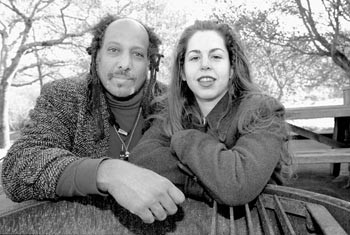
Comedian Tom Smothers on censorship and the squandering of free speech

Writer David Templeton takes interesting people to interesting movies in his ongoing quest for the ultimate post-film conversation. This column is not a review; rather, it’s a freewheeling, tangential discussion of life, alternative ideas, and popular culture.

TOM SMOTHERS is annoyed. And he appears to be enjoying it. We’ve just seen an afternoon matinee of Outside Providence, a charming, funny little coming-of-age story in which the teenage protagonists swear like angry sailors and smoke more pot than a whole convention of California asthma sufferers. Set in the early ’70s, Outside–written by Peter and Bobby Farrelly (of There’s Something about Mary fame)–is a profanity-fueled homage to recreational authority bashing; it’s The Catcher in the Rye for stoners.

“It’s basically one pot-smoking scene after another,” pronounces an elegantly goateed Smothers, eager to offer his energetic critique. “And I’m not square on that subject, but it got to be so redundant.”

As we amble from the theater and set our trajectory toward the nearest cup of coffee, Smothers–the 62-year-old, yo-yo-twirling, elder half of the infamous Smothers Brothers comedy duo–concedes that he is not the film’s target audience.

“I was never a stoner in high school–so I can’t identify with all that pubescent drug stuff,” he says. “I didn’t get high until I was 21.”

That would have been around 1958, just before Tom and his comic bass-playing brother, Dick Smothers, hit it big with a string of irreverent comedy albums. Their success as recording stars eventually led to television. After a goofy 1965 sitcom–with Tom playing an inept guardian angel–the brothers hit their stride in 1967 with The Smothers Brothers Comedy Hour. An immediate, top-rated, prime-time sensation on CBS, the variety show quickly became a major censorship battleground, as the Smothers’ increasingly progressive political views–they were outspoken opponents of the Vietnam War, for one thing–threw the network’s censors into overtime.

THE BROTHERS RESISTED all attempts at censorship, balking loudly when CBS pulled co-star Pat Paulsen’s mock presidential campaign speeches–“If nominated, I will not run. If elected, I will not serve”–and when the censor clipped the remarks of singer Joan Baez. (While she was dedicating a song to her then-husband and convicted draft resister David Harris–she straightforwardly explained that he was about to serve a two-year prison term for resisting the Vietnam draft. CBS cut Baez’s speech right after the word prison, denying the public her explanation of why her husband was jail-bound.)

The controversial show finally was canceled, still performing in the Top 10, during the summer of 1969. Other TV shows soon followed (on other networks) for the Smothers, and the duo has enjoyed a tremendously fruitful touring career. Tom, also a successful Sonoma winemaker, can frequently be seen on Bill Maher’s late-night Politically Incorrect program–but history will best remember the Smothers Brothers as those brilliant TV troublemakers from the ’60s.

WE HAVE OUR COFFEE. Squeezed into the corner of a quiet local cafe–Smothers lives on a vine-covered mountain in nearby Kneed–the comic is still grousing playfully at the sheer number of “objectionable phrases” that were crammed into Outside Providence, the tale of a blue-collar kid (Shawn Hates) with a redneck dad (Alec Baldwin) who always calls him Dildo. After being transferred to a highbrow “prep school,” the kid locks horns with the school’s sociopathic administration.

He does this mainly by lighting up joints and swearing a lot.

“It was a nice little movie, but man, every other word was ‘fuck,'” Smothers marvels. ” ‘Fuck’ this, and ‘fuck’ that. It’s the Farrelly brothers,” he surmises, targeting the film’s writers, a very different pair of envelope-pushing siblings. “That kind of language is indulgent and unnecessary.”

Wait. Is this Tom Smothers–the former free-speech poster boy–talking? “Let me tell you something,” he laughs. “There’s a great illusion that we now have more freedom merely because people say ‘fuck’ more often. So here we are, the language in movies and on TV has gotten raunchier, the subject matter has gotten sexier and more explicit–but there’s no content to it.

“People come up to me and say, ‘Man, don’t you wish you were on TV today? Look what people get away with saying?’ And I answer, ‘Really? What are they saying?’ It’s all jack-off jokes and narcissistic reference to bodily functions. There’s practically no real political satire or social commentary. And as we get further along with these media conglomerations owned by major corporations, you won’t see a single word of political satire on prime-time TV.

“But, wow, we’ve got ‘freedom of speech,’ so we’ll still have Hill Street Blues, with its dirty words and naked behinds,” Smothers adds evenly, managing to reveal his obvious passion while remaining entirely calm.

“When we were censored,” he continues, “it wasn’t four-letter words we were fighting for. It was ideas. We were censored for talking about the war, about voter registration, about Martin Luther King. If we were on the air right now we’d be talking about how our government is up for sale to the highest bidder. We’d tell how all these politicians, busy playing the money game, have turned America into the most corrupt country on the planet. We’d talk about how American arrogance has damaged country after country, all around the world.

Shaking his head, he adds, “We sure wouldn’t waste what ‘freedom of speech’ we have, trying to pass off a few four-letter words.”

WHICH BRINGS US BACK to the movie. “I was thinking,” Smothers says, “The kid in the movie handles every confrontation by telling the authority figures to just shut up. It gets him in more trouble.

“He reminded me of me,” he says with a smile. “I got into so many screaming matches with network presidents. ‘How can you tell me to calm down when people are dying in Vietnam!’ But I know now that I handled it all wrong. I was ‘bucking authority.’ I was behaving inappropriately. I know that, and I know I’d do it differently now.

“But,” he adds, grinning widely, “It doesn’t mean I wasn’t right.”

Tom Smothers will perform yo-yo tricks at a kids’ variety show that also features BMX riders, teen mariachi sensation Mayra Carol, mimes, hog callers, and lots more. Wednesday, Oct. 6, at 6:30 p.m. Luther Burbank Center, 50 Mark West Springs Road, Santa Rosa. Tickets are $7-$10. 546-3600.

From the September 23-29, 1999 issue of the Sonoma County Independent.

© Metro Publishing Inc.
Harvest Fair

0

Let them eat cake: Sure, it’s a tough job, but Harvest Fair judges Anthony Bonviso and Ramon Canova gave it their all last week when they passed judgment on a torrent of tortes, a cavalcade of cakes, and a parade of pies.

A Sweet Job!

Judgment Day at the annual Harvest Fair

By Marina Wolf

A CRYSTALLINE HUSH presses up against the rafters in the Showcase Cafe, a high-ceilinged room tucked against the stands at the Sonoma County Fairgrounds. The tables hold more than 30 hopefuls from Dept. 120, Sections 31 through 34: professional food service, cakes and pastries. It’s not as many as previous years–a couple of top contenders were previously engaged during the Harvest Fair season–but it’s still a lot to the untrained eye and stomach.

And the judges are only on the second slice of the day.

They’re not supposed to talk in the assessment period before medals are designated in each section, but Ramon Canova, a confectionery importer and former pastry chef, can’t restrain himself as he cuts through the top layer of the second of two wedding cakes. “Now that cuts very well,” he murmurs appreciatively as he removes a clean section of cake. “That’s real smooth.”

It’s this level of focus, among other things, that separates the mere enthusiasts who visit the Harvest Fair (scheduled this year for Oct. 1-3) from the truly professional judges who descend on the fairgrounds before the fair every year to render their assessments on everything from olive oil to hors d’oeuvres. Judging coordinator Anne Vercelli has been selecting judges for the Harvest Fair professional categories for around 15 years, and her choices for this year’s cakes and pastry panel are inspired: Canova is joined by Anthony Bonviso, the owner of Gotta Havit gelati and sorbets, and Otto Edward Eckstein, a mild-mannered German pastry chef with smooth silvery-gray hair and the slight stoop of a man who has been bending over a counter for decades.

Together the three men face the task of assigning medal designations–gold, silver, or bronze–to each item on the tables. The Danish system of judging assigns medal levels according to individual merit, as opposed to the American system, in which the entries are judged against one another. It lends a kind of egalitarian feel to the proceedings.

This is, after all, the Harvest Fair, and not the cutthroat, rough-and-tumble international salon culinaire.

“I enter with my professional standards; then I temper them with the notion of commercial viability,” says Canova when asked about how he judges the Harvest Fair entrants. “Because these are small businesses.”

“And you gotta have your finger on the reality of doing business,” interjects Bonviso.

AT TIMES the tasting resembles a wine event of the most refined order. The three judges select and taste different parts of the entry, separately and together in one mouthful. They sniff slightly at their forks before taking the first tentative nibble. The second bite is larger, and is rolled around in the mouth while the taster’s eyes glaze over like a good fruit tart.

At other times the tasting really reveals the science behind baking. The judges peer at the samples of cake, tortes, and cheesecakes as scientists might examine a stratum of soil sample. A period of discussion follows the medal assignments for each category, at which time the judges have a chance to state their responses and revise their votes upward or downward.

This is when the topics get a little esoteric, if not to say almost metaphysical. A piece of apple pie emerges slightly crumbly from the dish, eliciting a brief but intense post-medal debate of how well the starch was blended in with the apples; a second piece cut demonstrates that in fact the binding starch was blended unevenly, a small but significant point for this crew.

A novice judge might be inclined to fill in a chart for each entry based on the chart in the professional guidebook–appearance, 30 percent; texture, 35 percent; flavor, 35 percent–but these men make some of their assessments almost immediately. As with Eckstein and the pear tart. Eckstein approaches the rectangular pastry carefully and inspects it with narrowed eyes.

“What is it?” asks Bonviso, coming up to the table after refilling his water glass.

“It’s a bordeloue, a classic French tart,” says Eckstein as he grasps the end of the pastry with a firm hand and cuts away three pieces. “Someone has received some very good training in pastries.” He gazes at his piece for a few seconds, and then forks a careful piece into his mouth. His face, which has been solemn through much of the proceedings, relaxes into a small smile.

“It’s perfect.”

Photograph by Michael Amsler

A LATER ENTRY calls up almost the opposite response, getting an immediate, forceful bronze from all three judges. The post-medal discussion for this less-than-winning number touches on the unappealing texture and an artificial liqueur flavoring that hits heavily and lingers long. Theoretically, this entry could be passed over without receiving any medal at all.

But the judges concur that a no-medal response would be for something truly awful, not at all worthy of a professional kitchen. And this dessert, while not golden, isn’t a leaden loser, either.

“There are going to be some people somewhere who like that flavor,” admits Bonviso. “People have put in a fair amount of time and energy to get their things here, and I don’t want to discredit that.”

By the end of the afternoon, the tables are cluttered with crumpled napkins, half-eaten slices, and well-used forks. The judges are getting a little punchy, maybe from the sugar–they haven’t been spitting–or from the glasses of crisp, Harvest Fair­label sauvignon blanc that they are gratefully clutching as they mill near the gold table, from which one item will be chosen for best of show. “We don’t have to eat any more, do we?” asks Ramon.

“Oh, no, sir,” says Vercelli as she passes out the ballots, pieces of orange card stock. “Just take a walk down memory lane.” The walk is short, and the vote is quick and unanimous: No. 186. The bordeloue, the perfect pear tart, wins the day.

Finally the tags beside the top runners can be dropped. Petaluma’s 21st Century Pastry sweeps the top ranks, with five entries taking the gold. Master Piece Cakes and Pearson & Co., both of Santa Rosa, check in with one gold entry apiece. And the best-of-show winner, the pear tart made with local organic pears poached in Mark West chardonnay, came out of the pastry kitchen at Equus in the Fountain Grove Hotel in Santa Rosa.

Meanwhile, the other entries are getting sliced up for Harvest Fair office workers and a few lucky visitors at the nearby Home and Garden Show. In the cool dim light of the cafe, the pieces of silver- and bronze-winning cake look a little disappointed to have let down their creators. But as Bonviso said at the very beginning of the day, “Everyone thinks they’re a gold. But not everybody is. That’s just the way life is.”

The medal winners from the cakes, pastries, and other professional food and wine categories will be served to the lucky attendees of the Harvest Fair Awards Night on Saturday, Sept. 25. The rest of us must be content with the Harvest Fair itself, which is a damned fine thing, anyway, with food, wine, art, crafts, animals, entertainment, and all the best that Sonoma County has to offer at summer’s end.

The Harvest Fair is open on Friday, Oct. 1, from 10 a.m. to 8 p.m.; on Saturday and Sunday, Oct. 2 and 3, from 10 a.m. to 7 p.m. Sonoma County Fairgrounds, 1350 Bennett Valley Road, Santa Rosa. Tickets are $5/general, $2/children 7 to 12, $2/seniors on Friday only, and free to children 6 and under. For details, call 545-4203.

From the September 23-29, 1999 issue of the Sonoma County Independent.

© Metro Publishing Inc.

‘Return with Honor’

0

Dogs of War

‘Return with Honor’ tells harrowing tale of American POWs

By Nicole McEwan

THEY CAME from the cornfields and metropolises of America, nascent Supermen borne on patriotic dreams, their ideals of manhood nurtured by their World War II-hero fathers and uncles and further sanctified by Saturday afternoon matinees with John Wayne, a 30-foot-high celluloid hero who blazed the path to glory.

Some were seduced by the sky itself–its boundless vistas a potent lure to those whose civilian lives were grounded in poverty. Others were driven by logic: if one had to go to war, then why not travel in style, soaring high above the pestilent jungle, encased in a suit of armor with wings?

Young, impossibly innocent, they began their careers as Air Force pilots with strenuous indoctrination and discipline–and ultimately these were the qualities that saved them.

Oscar-winning filmmakers Freida Lee Mock and Terry Sanders (Maya Lin: A Strong Clear Vision) document these heroes in Return with Honor, a gripping profile whose straightforward presentation belies the complex ideas it evokes. Eschewing voice-of-God style narration, the husband-and-wife team uses interviews with almost two dozen former POWs to illustrate an epic of isolation, torture, and hunger.

And when these men’s often understated memories fail to bring such hell to life, the directors rely on an arresting array of found footage culled from Vietnam-era TV news–and, more remarkably, agit-prop imagery shot by the North Vietnamese and donated to the production. The result is a film that will have you pondering the acute dichotomy between past and present ideas of patriotism and “manliness.”

Witness the segment showing the emaciated airman (including Arizona Sen. John McCain) being marched through Hanoi (which suffered much from American bombers) in their underwear as angry villagers pelt them with rocks and sticks.

The incident supported the canny prediction of the POWs’ chief interrogator, who warned the prisoners about their flawed ideology: “You know about the war as a matter of weapons. In reality, it’s a matter of national will. We will win the war in the streets of New York.” Footage of anti-war protesters provided by their captors drove that point home. Yet the pilots endured, bolstered by a faith and brotherhood that may seem foreign to contemporary eyes.

Though such historical footage is effective, it pales compared to the netherworld brutally depicted in a series of pen-and-ink drawings by Lt. John McGrath, whose salvation came in the form of artistic expression. Covered with boils and open sores, McGrath used his own pus and blood to paint portraits on his cell walls and committed images to memory that would later spill out onto blank pages.

SEVERAL DEPICT the Vietnamese Rope Game, which involved being tied, arms and legs to back, until joints dislocated. The harrowing vision is made complete with cutaways shot in the actual Hanoi Hilton (ironically, a building built by the French to house the Vietnamese), which show the iron manacles and tiny windows that substituted for decor throughout years of imprisonment. The effect is chilling.

Even more affecting, however, is the uncompromising stoicism of men like Cmdr. Jeremiah Denton, who famously outwitted his captors by blinking the word torture in Morse code during a staged TV “confession.” Equally inspiring are interviews with the wives who waited at home and fought for the truth even as the U.S. government struggled to cover up the extent of the POWs’ suffering.

Ultimately, Return with Honor goes against the ingrained stereotype of the Vietnam vet as a broken man, delivering a portrait that is neither nihilistic nor accusatory. By focusing on the words of the flesh-and-blood men who were there, Sanders and Mock travel beyond rhetoric, successfully crafting an ode to the human spirit that surpasses politics and simply celebrates life. And who is better equipped to guide us on that journey than a group of men who lived so little for so long?

‘Return with Honor’ screens Thursday, Sept. 23, at 6:40 and 9:25 p.m. at Sebastopol Cinemas, 6868 McKinley St. (829-3456), and Wednesday and Thursday, Sept. 29 and 30, at 6:40 and 9:25 p.m. at Washington Square, 219 S. McDowell Blvd., Petaluma (762-0006).

From the September 23-29, 1999 issue of the Sonoma County Independent.

© Metro Publishing Inc.
Spins

0

Rap Transit

Healthy hybrids in pop mainstream

By Greg Cahill

Orange 9MM Pretend I’m Human Ng

Skunk Anansie Post Orgasmic ChillVirgin

THE RECENT chart success of acts like Limp Bizkit and Kid Rock has kicked new life into the rap-metal/aggro-funk subgenre. As new artists seize the bridge between hip-hop and hard rock, artists who’ve already mined that ground continue to strut their pop politics while stretching that hybrid sound.

On their fourth disc, Pretend I’m Human, Orange 9MM serve a sturdy dose of heavy guitar riffage topped with rapper/singer Chaka Malik’s breakbeat lyricism. The disc starts with a bang, but the band’s prog-rock leanings finally lead them into an almost ambient sci-fi groove that’s more reflective than assaultive.

On the other hand, Skunk Anansie’s third CD, Post Orgasmic Chill, veers more deliberately in alt-rock and trip-hop directions. Bandleader Skin tries to bring a fragile R&B voice to punk rock, and the result is an edgy, explosive commercial sound that amounts to Rage Against Natalie Merchant.

Neither disc is an aggro-funk breakthrough, but both are healthy signs of pop styles growing as they merge. Karl Byrn

Rob Swift The Ablist Aspodel

Various Artists Quannum Spectrum Quannum Projects

HIP-HOP’S POPULARITY continues to sell multi-units for both gangsta rappers and teeny-bop R&B pop acts, but the industry’s artistic focus is on alt-rap and underground hip-hop. Alt-rock’s obsession with techno has opened the pop mainstream to the sonic-collage world of the DJ, and for hip-hop this signals a shift from the rapper to the track mixer.

Rob Swift is one of the leading “tumtablists,” and his recent disc The Ablist is a tour de force of DJ skill. The jazzy samples, interludes, and funk beats are only the bedrock for Swift’s dexterous scratching, which hits an expressiveness that can be compared only to bebop sax soloing or Hendrixian guitar.

Quannum Spectrum serves as a sampler for the Davis-based collective that includes noted rappers Blackalicious and noted electronica producer DJ Shalow. The disc offers a mellow ’70s funk vibe and collegiate poeticism that recalls early alt-rap acts like De La Soul, but the group effort isn’t as colorful as DJ Shadow’s solo work. K.B.

G. Love & Special Sauce Philadelphonic Okeh/550 Music

THESE PURVEYORS of a very funky brew spiked with ample doses of blues, rap, jazz, and alt-rock have thrown a lot of folks for a loop with this breezy CD. But it’s not the musical stylings that have tossed fans a curve–they’ve long embraced the laid-back blues-based sound that launched this Philadelphia-based band onto the charts in 1994 with the MTV-spun hit “Cold Beverage.”

This time out, G. Love–aka singer, songwriter, and guitarist Garrett Dutton–has incorporated his newfound spirituality into several tracks, most notably “Numbers,” a languid blues ode to the biblical book, and “Amazing,” as in grace.

Still, the message is subtle–you might even say mixed–as there’s also plenty of sex, party raves, and street-corner wit.

Critics have taken Love to task for that, but you have to appreciate the positive tip–and the grooves are pure Philly soul.

Pick of the Week:

Various Artists Saints Paradise: Trombone Shout Bands from the United House of Prayer Smithsonian/Folkways

PROZAC? Who needs anti-depressents when you can alight to the ecstatic sounds of these five East Coast trombone-shout bands. Beyond gospel, beyond jazz, this ebullient first-ever anthology of trombone choirs will lift your spirit and take you higher. G.C.

From the September 23-29, 1999 issue of the Sonoma County Independent.

© Metro Publishing Inc.
New Capitalism

0

Right Stuff

New Capitalists inspired by sanctity of labor

By Gregory J. Millman

A CENTURY AGO, the pragmatic philosopher and psychologist William James described a “work sickness” characterized by nervous tics, breathlessness, and tension. He attributed this to the fact that work had lost its spiritual meaning.

Today, commentators speak of workplace stress. And while some business people are still looking for a magic cure, others are rediscovering the ancient Christian tradition of work in the spirit of faith and trying to build a New Capitalism inspired by the old idea of the sanctity of labor.

Consider these examples:

An 11-foot-high white marble sculpture of Jesus washing the feet of Peter marks the entrance to the ServiceMaster Corp. in Downers Grove, Ill. A conglomerate whose stock trades on the New York Stock Exchange, ServiceMaster has over $5 billion in annual sales. Yet the company’s mission statement lists service to God as its first objective.

In the Basque country of Spain, a small cooperative founded in the mid-1950s by a Catholic priest to make paraffin lamps now ranks as Spain’s 11th largest industrial group, with sales of over $11 billion. Its name is Mondragon, and it exemplifies the practicality of the Christian ideals of solidarity and the primacy of labor over capital. Workers vote to elect the company’s Governing Council, which appoints the executive team. For years, the top salary was no more than triple the pay of the lowest-paid worker.

On the small-business front, North Carolina auto dealer Don Flow decided to look at his business in terms of the teachings of Thomas Aquinas. What he found scared him–unrealistic sticker prices, games played with trade-in allowances, and dealers exploiting their information advantage. Flow decided the system was immoral and set out to change it in his own dealership. He devised a special training package that translated the Book of Proverbs into the language of the automobile showroom and put all his sales people on salary to remove any incentive to take advantage of customers.

Flow admits that the most he can hope for is to build an honest business in a notoriously dishonest industry. Interestingly, Flow’s competitors are beginning to imitate him.

The old-fashioned Protestant Ethic saw riches as a blessing that set those predestined for heaven apart from the riffraff on earth. The New Capitalist model sees wealth as something to be shared with the workers who help produce it–arguably a view more consistent with the Gospel.

In fact, these pioneers in the revival of the Christian tradition of work and prayer are fond of pointing out that salvation history began with work. The book of Genesis presents Adam and Eve in a garden, working, well before they fell from grace. For the earliest Christians, work was so important a part of spiritual life that both Scripture and tradition remark on Jesus as a carpenter’s son, Peter and the Zebedees fishermen, and so forth.

St. Anthony, founder of Western monasticism, insisted on labor as an integral part of the spiritual life, and later St. Benedict confirmed the insight, writing, “Only when they live by the work of their hands are they truly monks.”

Monks living by that rule advanced agriculture and husbandry, founded trade fairs, built highways, pioneered river transport.

IN THE EARLY YEARS of the 20th century, German sociologist Max Weber coined the phrase “Protestant Ethic,” which included, as a fundamental, the idea of “calling” to a life work or occupation. But capitalism lost its soul in the Industrial Revolution. Many of the great 19th-century robber barons were good, church-going men who literally killed employees in order to make the piles of money with which they piously endowed seminaries and colleges. Clergy who graduate from these centers of learning attend to “things of the spirit,” a category that does not include business.

Meanwhile, eccentric groups like the Christian Businessman’s Study Committee and the Fellowship of Companies for Christ International are filling the void with conferences, study materials, and support groups. Vancouver’s tiny Regent College offers a seminary program tailored specifically to the needs of lay people in business, emphasizing the dignity of workers, the sense of daily work as a sacred calling and business management as a ministry.

Within the Catholic Church, the past several decades have seen a proliferation of “lay movements.” Chiara Lubich, the founder of Focolare, has been promoting with some success in Latin America an “economy of sharing.”

The movement Opus Dei, whose very raison d’être is the “sanctification of work,” offers an intensely personal, almost monastic program of spiritual formation to its lay members.

In the 18th and 19th centuries, revival frenzies swept America and left enduring marks on politics and society.

Many believe America is in the midst of its third such “Great Awakening,” and while battles over evolution, abortion, and sexual freedom claim the headlines, its most enduring legacy is likely to be a transformation of the way we work.

Gregory J. Millman is the author of The Vandals’ Crown–How Rebel Currency Traders Overthrew the World’s Central Banks (Free Press, 1995), which was translated into nine languages and became a Business Week bestseller. He is now at work on a book about faith and work.

From the September 23-29, 1999 issue of the Sonoma County Independent.

© Metro Publishing Inc.
‘Mumford’

Mumford.

Whine Harvest

‘Mumford’ is a promising black comedy that ends up tattle-tale gray

By

LIKE the similarly misfiring American Beauty, Mumford is a black comedy that bleaches out to oatmeal-gray by the last reel. Mumford is a more promising tale than the already overpraised Beauty, which is why it’s even more of a pity that it gives up the ghost in the last hour.

The film–much of it shot in Petaluma–stars Loren Dean as a psychologist named Dr. Mumford who is treating several neurotic types in an imaginary Sonoma County town, also named Mumford.

Dr. Mumford’s patients include a wealthy lady named Althea (Mary McDonnell), who has a major compulsive-shopping habit–a habit easily traceable to neglect by her awful husband, Jeremy (played by Ted Danson in a one-scene cameo). Mumford’s other patients include an obese pharmacist with an uncontrollable sexual fantasy life (Pruitt Taylor Vince, the lead in Heavy); a self-hating teenager named Nessa (Zooey Deschanel); and the lonely billionaire “Skip” Skipperton (Jason Lee of Chasing Amy), a computer hardware mogul, owner of Panda Modems.

Among these many sufferers, Dr. Mumford’s favorite patient is Sofie (Hope Davis), purportedly stricken with Epstein-Barr, but apparently only in need of some male attention.

It’s an interesting cast, but these characters are only types, whose eccentricities are contrasted with the inhuman smoothness of the doctor. It would take some master plotting to weave these characters into a neurotic’s version of Our Town. Dean’s infuriating calm helps keep the movie from falling apart, for a time. His face is like a police composite sketch, and he has the reserved, bland menace of the flat-faced ’60s movie villain Henry Silva, whom he resembles. Mumford hooks you with the doctor’s sinisterness and then lets you off–far too early in the story–when it explains who Mumford the man is and how he arrived in Mumford the town. At first Mumford seems like a story of Ripley, novelist Patricia Highsmith’s talented wolf who feeds on the rich, silly sheep of the world. Then Dr. Mumford turns into a good shepherd: a practitioner who may not have a degree but has lots of heart.

Lawrence Kasdan, screenwriter and director, creates a town ripe for the plucking. That the townsfolk all turn out to be nice guys, including Mumford, seems a disappointment.

WHAT’S GOOD about the film? Danson, oafishly blowing his cigar smoke in a balloon snifter, in which a pint of brandy floats; as he slurps the smoke back up, he quotes his philosophy of life: “Like the Zen say, ‘Be here now.’ ”

I always enjoy seeing the pointed, foxy face of Hope Davis–the smartest blonde in the movies today–her alertness giving her pale-lady role an arrogant kick. (Mumford offers her a place on his therapist’s couch, and she replies, “I’d better not, because I’d fall asleep. I think it’s too soon to start sleeping with you.”)

The first appearance of Martin Short, as a nasty lawyer, is a promise of fun to come, although Short turns sweet and obsequious as a bellboy later.

Still, a promise is a promise, even if it’s broken.

From the September 23-29, 1999 issue of the Sonoma County Independent.

© Metro Publishing Inc.

Child-Care

0

No Kiddin’

Someone to watch over them: One in 20 Sonoma County children soon will be unable to find suitable child care–a situation that family advocates say is reaching critical mass. Already there are 36,000 latchkey children ages 5 to 12 in the county.

Facing up to the child-care crisis

By Yosha Bourgea

LAWRENCE WANDERS through the small, crowded play area, picking up a toy that rings like a telephone. A high, wordless yelp comes from his mouth, as if in response. He is constantly in motion, his eyes glancing over the toys and books around him, an artless, toothy grin on his 8-year-old face.

Every so often he looks over the low wall at the rows of grown-ups, seated at a press conference called by Family Action of Sonoma County to discuss a predicted shortfall in child-care services in the county.

Diane Giampaoli, his mother, sits behind a table, talking about him to reporters. “It’s difficult to get consistent day care,” Giampaoli says. “Someone will say they can work with him, and then they meet him, and next week suddenly they can’t do it.”

Lawrence–who goes by the nickname “Lolo”–is autistic, and that makes the problem of finding child care for him especially hard. His mother has tried day-care centers, but none will accept him.

She understands why: her son’s behavior requires special supervision, which most facilities are not prepared to provide.

But understanding the problem doesn’t make it easier to solve.

“Day care for special-needs kids in Sonoma County does not exist,” Giampaoli says flatly.

Indeed, a newly released report shows that special-needs children aren’t the only ones coming up short. The crisis has been growing for years, quietly, out of the sensation-hungry eye of the news media. Hurricanes and shooting sprees are more exciting than the predicament of how to care for children. The new report, “Child Care: A Quiet Crisis in Sonoma County,” shows that the crisis affects everyone, from businesses whose employees are distracted at work, wondering about the safety of their kids, to the 150,000 children who make up a third of the county’s population.

The figures released last week by the Sonoma County Child Care Planning Council and Family Action are alarming. By this time next year, according to a recent report, it’s anticipated that close to 7,500 local children who are in need of full- or part-time care will be unable to find it.

That’s one in 20.

The council’s two-year study is part of a state-mandated review that will be presented to local policymakers throughout the county. On Tuesday, Sept. 21, the agency will deliver its finding to the Board of Supervisors.

“We can’t dodge this issue any longer,” says Suzanne Shupe, director of Family Action of Sonoma County. “We need to address the problem as a community.”

The demand for child care has grown steadily since World War II, when the two-parent, one-breadwinner family model began to decline. Today, only a third of the two-parent families in Sonoma County can afford to leave a parent at home during the day. And single parents, who make up 23 percent of all families in the county, don’t have a choice.

Finding someone to watch their children, let alone take care of them, can be a week-to-week struggle.

Toddlers and infants are especially at risk. A report released last year by the Little Hoover Commission shows that brain development occurs primarily before age 3, and suggests that children who spend their earliest years in a safe and stimulating environment are more likely to grow up to be intelligent, well-adjusted adults.

But the report also shows that 40 percent of infant and toddler care in the country takes place in settings that are unsafe or unhealthy.

“The earlier you can intervene, the less expensive it is to solve a problem,” says Petaluma City Council-member Jane Hamilton. “If you can help a child when they’re 3, then when they’re 15, they won’t tend to be in Juvenile Hall costing taxpayers thousands of dollars.”

Nurturing: Santa Rosa child-care worker LaMona Holt and friends.

ROSE WAYMAN began running a small day care out of her home in 1985, when she was pregnant with her second child. Last month, she got approval from the Santa Rosa Planning Commission to expand her facility from six children to 12. “I’ve always had a waiting list,” Wayman says. “That’s why I expanded. We have a baby starting next week who was on the list before her mom got pregnant.”

Joan (her last name is withheld upon request) has eight clients on the waiting list for her Santa Rosa day care. “We’re booked till next summer,” she says.

Like Wayman, Joan has expanded to meet the growing demand from the community, although she doesn’t advertise. Most of the children in her care belong to friends, and they provide all the business she can handle.

Unfortunately, the demand for child care rarely translates into higher wages for the people providing it, some of whom face stiff resistance from neighbors who argue against day-care businesses in residential areas. An offshoot of the crisis is the shortage of qualified staff in state-licensed child-care facilities, where many employees work for close to minimum wage.

Kenneth Jaffe, executive director of the International Child Resource Institute, says that people who have had years of higher education often find they can’t afford to work in the field.

Many families rely on the public school system as a form of day care. But for parents who work later hours, a school day isn’t long enough. It’s estimated that almost one third of school-age children in the county need after-school care to cover their parents’ working and commuting hours. United Way estimated recently that there are more than 36,000 “latchkey” children ages 5 to 12 in Sonoma County.

Some schools have opened their classrooms to after-hours care providers, but Jaffe guesses that less than half of schools in the county participate in such partnerships. It’s not for lack of trying, he says–the problem is lack of space. The reduction of class size in recent years means that fewer rooms are available, and when space is limited, extracurricular programs are the first to go.

IN THE FACE of the crisis, community organizations are banding together to spread the word and work on solutions. Some school-age children in the Santa Rosa School District are taking advantage of Safe Havens for Youth, a free, federally funded after-school pilot program sponsored by United Way. If it remains successful, Safe Havens could be a model for similar programs throughout the county.

Significant headway already has been made through a new program, SonomaWORKS, which provides federal child-care subsidies for families moving off welfare. Subsidized child care helped close to 1,000 children in Sonoma County last year, but demand still far exceeds the supply. At River Child Care Services and the Community Child Care Council, two local resource and referral agencies, more than 2,000 families are now on the waiting list for subsidies. And low-income working families, who are not even eligible, are the hardest hit of all. Child-care costs can consume up to 25 percent of a family’s budget–and when housing and food expenses compete for dollars, something important has to give.

But financially strapped parents have at least one political ally in Rep. Lynn Woolsey, D-Petaluma, herself a former welfare mother, who recently introduced legislation to increase the availability of child care for children whose parents work non-traditional hours or shifts.

“We’re spending all this money on a missile defense system,” says Woolsey. “You’d think we could spare some for the most important thing–our children.”

From the September 16-23, 1999 issue of the Sonoma County Independent.

© Metro Publishing Inc.
The Bistro

0

Bistro Blast

Hail and hearty: The Bistro chefs are game to give patrons generous portions.

Glen Ellen restaurant puts the din back in dinner

By Paula Harris

TGIF? NATURALLY, but you can express your gratitude for the impending weekend in a couple of ways. Some Fridays you’re raring to hit the town and kick up your heels in search of the nearest raucous shindig. Other times, you can barely drag your mentally fried, physically fatigued carcass through the office door to punch out–even a take-out meal at the day’s end seems too much trouble.

A relaxing dinner in a cozy, tranquil restaurant is your desire. You imagine dreamily unwinding from the torturous work week amid glowing candles and mellow cocktail music, with a sympathetic dinner companion across the table. A fortifying glass of merlot, a plate of energy-replenishing red meat, and a silently efficient bus person with a an engaging smile and a crumb comb to clean up the tablecloth completes the picture.

One recent Friday we went in search of such a culinary comfort zone. The Bistro in Glen Ellen sure looked the part: warm polished wood floor, mottled lemon walls, exposed wood-beamed ceilings, a view of mature trees and a creekside dining area, a corner fireplace, and amber glass lamps casting a soft honey glow over the whole scene. Glorious.

Now if we just had some earplugs!

The Bistro, the latest in a string of restaurants to open in Glen Ellen’s Jack London Lodge, was buzzing this Friday evening. In fact, the decibel level was uncomfortable. Had we known, we would have opted to change our reservations to sit outside in the more peaceful garden area. Still, we decided to make the best of it.

The Bistro’s menu is a mixed bag. It includes Italian, French, Japanese, Thai, and Mexican influences, plus such rotating old-time American blue-plate specials as roast prime rib of beef, buttermilk fried chicken, and Yankee pot roast.

WE WERE EAGER to perk up our exhausted spirits with something rich and hunky, and the wild boar chili appetizer ($4.95) certainly did the trick. A generous extra-deep bowl was filled to the brim with sweet, smoky, spicy meat that had the same tender-flaky consistency as pork ribs. It was topped with cheddar cheese, dollops of sour cream, and chives and was accompanied by a big spongy square of homemade cornbread. Appetizer? This dish was more like a meal and a half.

That said, the butter lettuce salad ($7.95) seemed very overpriced. The average-tasting salad featured pecan-crusted Sonoma goat cheese, dried figs, and orange slices, and was coated with lemongrass vinaigrette. The flavors didn’t harmonize, the lettuce tasted bland, and the goat cheese got lost among the flavors.

The duck liver and merlot-soaked cherry paté with crispy sage cracker bread ($5.95) was far more pleasing. The paté was a smooth, rosy mouthful and came with local bitter greens, snipped chives, little squares of diced red pepper and red onion, and a few capers. We would have preferred warm plain crusty toast to the chiplike accompaniment (obviously not the promised sage cracker bread) that resembled fried wanton.

We enjoyed the roasted vegetable tower ($12.95), which featured layered portobello mushrooms, eggplant, zucchini, red pepper, and couscous, but we hated the accompanying saffron pea sauce, which was too salty.

The chef’s roast tenderloin of beef ($17.95) was hearty fare. The meat was rare, pink, and tender and came with lumpy mashed potatoes infused with truffle oil, and charred ‘n’ chubby asparagus spears.

We ended the heavy meal with tart dried-cherry brioche pudding ($4.95) with butterscotch ice cream and butterscotch sauce. The cherries livened up an otherwise bland, stodgy pudding, although the ice cream tasted light and lovely.

A classic, though undistinguished, crême brûlée ($4.50) featured a wafer cookie, fresh raspberries, and a thick, brittle sugar crust.

The restaurant has a modest wine list with several offerings by the glass. Since it was out of our first choice, a Benziger Imagery Series 1996 petit sirah, we chose the Cline syrah 1997 ($25), which needed some time to open up and lose its initial acidity.

By the end of the meal, the din was so bad we’d given up on any dinner conversation and sat in kind of red meat/red wine/noise­induced stupor. A midsized party celebrating grandma’s birthday nearby had turned the atmosphere into an out-and-out shriek fest, and we knew it was time to leave.

On the way out, we asked a waiter about the extreme noise. He told us that soundproofing may eventually be installed to improve acoustics. We say, the sooner the better.

The Bistro 13740 Arnold Drive Glen Ellen 996-4401 Hours: Lunch, Monday-Saturday, 11 a.m. to 5 p.m.; Sunday brunch, 10 a.m. to 5 p.m.; dinner, Sunday-Thursday, 5 to 10 p.m., and Friday-Saturday, 5 to 11 p.m. Food: Eclectic, including American “old-time favorites” Service: Rushed and a bit frantic one minute, slow the next Ambiance: Loud indoors, more peaceful outdoors Price: Moderate to expensive Wine list: Modest, with several wines by the glass Overall: ** (out of 4 stars)

From the September 16-23, 1999 issue of the Sonoma County Independent.

© Metro Publishing Inc.
New Theatre Works

0

Fresh Talent

Royal pain: Rebecca Allington plays Queen Elizabeth in Repertory.

New playwrights light up local stages

By Daedalus Howell

IN SHAKESPEARE’S Hamlet, the melancholy Dane employed a play to confirm the guilt of his fratricidal uncle. Though less grandiose in their goals, two local theater companies–Actors’ Theatre and Sonoma County Repertory Theater–are also courting the skills of playwrights. They won’t catch the conscience of a king, but they do hope to snare the next David Mamet or Tom Stoppard.

Actors’ Theatre’s “New Theatre Works Festival,” which commenced earlier this month, features staged readings of five new works as part of the company’s commitment to putting new voices in front of the footlights.

“The purpose of the New Theatre Works Festival is really simple–to encourage new playwrights,” says associate artistic director Danielle Cain. “Theater history has produced many, many wonderful playwrights, but to keep theater vital and new and part of society you need new playwrights.”

Backed by a play-reading committee culled from AT’s artistic staff, Cain braved the uncharted waters of the dramatist talent pool (the company received 60 submissions) and selected five finalists, one of whom will receive $500 and a possible future production.

AT also appointed three playwrights-in-residence (company alumni Mollie Boice, Brian Bryson, and Eliot Fintushel) to create works for the theater’s Bare Stage Series.

“There are many talented playwrights out there, and this is an opportunity for us to encourage them and provide a venue for them to see their work read out loud by good, strong actors,” says Cain.

AT’s staged-reading process often aids the playwright by testing the cogency of his or her artistic intention.

“We don’t have the playwright present at rehearsals, so that when the playwrights hear their work read out loud they will know pretty clearly whether they were succinct and successful in certain areas of their work–or not,” Cain says.

AT audiences are encouraged to address issues about a play with its writer. Cain recently hosted a reading in which participants vehemently disagreed about a new work.

“That’s great,” Cain says. “That means people felt strongly about it–people should feel strongly about the theater that they see.”

SCRT’s annual “Harvest Festival of New Plays,” the culmination of its year-round “New Drama Works” series of staged readings, features full-scale productions of three selected works, as well as two additional staged readings in its Santa Rosa and Sebastopol venues.

“Those are fully staged, fully costumed and developed productions,” says artistic director Jim DePriest, whose company receives up to five play submissions a week from California writers.

“We’re hoping to find a few playwrights whose work we find exemplary and that we could perhaps engage in a sort of residency as we did this past year with playwright John Moran,” he says.

Eventually, DePriest hopes to find writers who will create new works specifically for his company’s venues.

“As we grow and become more financially secure, we can take more risks on doing new work,” he says.

Indeed, staging works by playwrights who are not name-brand dramatists can stymie box office receipts.

“New plays are risky in some regard, especially when you’re dealing with a larger house, which is essentially our bread and butter,” DePriest says. “With established work, people know what it is. When people accept us for the work we do rather than whose work we do, then we can do more original plays.”

In the meantime, both companies will continue to support new playwrights with their respective festivals.

“It’s almost like a mandate, it’s something we have to do,” says DePriest. “Where else are the new plays going to come from?”

Actors’ Theatre’s New Theatre Works Festival continues through Oct. 6 at the Luther Burbank Center, 50 Mark West Springs Road, Santa Rosa. Performances begin at 7:30 p.m. Tickets are $5. 523-4185.

Sonoma County Rep’s Harvest Festival of New Plays continues through Sept. 25 at two locations: 101 N. Main St., Sebastopol; and 415 Humboldt St., Santa Rosa. Performances begin at 8 p.m. Tickets are $10-$12. 544-7278.

From the September 16-23, 1999 issue of the Sonoma County Independent.

© Metro Publishing Inc.

Baseball Marriage

0

Home Run

Batting a thousand: Susan and Bob Fletcher, co-owners of the Sonoma County Crushers, are partners on and off the field.

Sonoma County Crushers husband-and-wife team are married to the game

By Bill English

ALTHOUGH baseball has no clock, it happens every day. The relentlessly long season has been known to hobble even the most finely conditioned athletes, but the players aren’t the only ones who feel the pain and tension of summer’s most demanding schedule. Everyone from the owners to the ushers learns to respect the ebb and flow of the National Pastime.

Because baseball can kill you in a million ways.

But it also gives rise to genuine heroes and tales of wonder. The story of the Sonoma County Crushers is one such baseball saga. Five years ago Bob and Susan Fletcher left the insulated corporate world of IBM and embarked on a wild lifestyle detour by becoming the owners of a fledgling professional baseball team. In the beginning, the move seemed audacious, perhaps even foolhardy. The Western Baseball League was new and unproven. The Sonoma County Crushers–who won the league championship in 1998, but got bumped in the first round of the playoffs this year–didn’t even have a name at the time. Amazingly, ex-IBM exec Bob Fletcher didn’t consider himself a risk taker–he felt confident that he knew what he was doing. Looking back now he realizes he was a hapless rookie with a cheap suitcase and a porkpie hat.

Baseball has taught the Fletchers some hard lessons. “We had no idea what an enormous risk we were actually taking when we first got into this,” Bob says as he sits with his wife beside the pristine infield of Rohnert Park Stadium. “Owning a professional baseball team is a deceptively sophisticated undertaking. There are so many micro and macro decisions to be made. And a lot of them have nothing to do with baseball.”

DURING the first season, the thinly veiled terror was evident in both Bob and Susan’s eyes. They were not baseball people. But suddenly they were flung into an alternate universe with a whole new set of rules. Before long, the curves and knucklers were coming at them from all sides.

“The money issue has always been a big concern,” Susan says. “I remember once during the first season when I was facing a payroll of $40,000, and only had $5,000 in the checking account. I’m the one who signs the checks. I had no idea where the money was coming from. Then 10,000 fans showed up over the weekend and the money miraculously was there. But the cash flow through this business was definitely something I had to get used to.”

Flying by the seat of your baseball pants is a harsh reality for all the owners of Western Baseball League franchises. Teams have folded or changed owners with alarming frequency. The Fletchers are the only original owners left standing, and the number of teams has shrunk this year from eight to six.

“Most of the time when you run a small business you’re pretty much in control of your own destiny,” Bob explains. “But in this situation there are a lot of factors you can’t control. We could be the healthiest team in the WBL, but if the league fails there’ll be no one for us to play. Even the weather can cause you problems. This summer has been the coldest we’ve experienced, and even though we didn’t have a single rainout, I think it cost us some attendance.”

Fortunately for the Fletchers, the WBL seems stable at the moment and is set to expand into Yuma and Scottsdale, Arizona, next season.

THE FLETCHERS’ 30-year marriage appears to have blossomed in the hothouse environment of Crushers’ baseball. Clearly, the couple have survived the minor-league baseball wars together and now have the confident air of veterans. They claim they no longer have the horrible doubts that haunted them during the first few years.

“I think Bob is happier than he’s ever been,” says Susan. “When he worked for IBM, nobody asked him for his autograph at the movies. We’ve created something here. And in the long run the fun far outweighs the stress.”

Susan, who’s in charge of finding host families for the modestly paid (around a $1,000 a month) Crushers’ players, has also become well known in the community. “The host families have been great, but I still worry about placing the right player with the right household,” she says. “And how do you tell a child the Crusher living in the guest bedroom has been traded? I’ve had mothers burst into tears when they got the news.”

At the moment, the Fletchers have no intention of selling the team or retiring. They both feel they’re living the life most people can only dream about. But sometimes the relentless baseball chatter becomes too much. “All we do is talk about baseball,” Susan says. “It’s not uncommon for us to work 21 straight days. Sometimes I just have to tell Bob no baseball talk tonight. That’s when I like to be alone with my roses.”

When asked where the Crushers will be in another five years, Bob is quick to reply. “Hopefully, we’ll still own the team. I’d like to have a new stadium somewhere down the line. When you go around the country you can see all the possibilities. There’s a lot of great minor-league ballpark designs out there.”

Bob smiles at his wife as they both stare off down the third baseline.

“You know what would look nice?” he muses. “Maybe we could get the Flamingo Hotel to sponsor pink foul poles with flamingos perched on top.”

Susan smiles broadly. “Bob does the marketing,” she says.

From the September 16-23, 1999 issue of the Sonoma County Independent.

© Metro Publishing Inc.

‘Outside Providence’

Photograph by Michael Amsler Bucking Authority Comedian Tom Smothers on censorship and the squandering of free speech Writer David Templeton takes interesting people to interesting movies in his ongoing quest for the ultimate post-film conversation. This column is not a review; rather, it's a freewheeling,...

Harvest Fair

Let them eat cake: Sure, it's a tough job, but Harvest Fair judges Anthony Bonviso and Ramon Canova gave it their all last week when they passed judgment on a torrent of tortes, a cavalcade of cakes, and a parade of pies. A Sweet Job! Judgment Day at the annual Harvest...

‘Return with Honor’

Dogs of War 'Return with Honor' tells harrowing tale of American POWs By Nicole McEwan THEY CAME from the cornfields and metropolises of America, nascent Supermen borne on patriotic dreams, their ideals of manhood nurtured by their World War II-hero fathers and uncles and further sanctified by Saturday afternoon matinees with...

Spins

Rap Transit Healthy hybrids in pop mainstream By Greg Cahill Orange 9MM Pretend I'm Human Ng Skunk Anansie Post Orgasmic ChillVirgin THE RECENT chart success of acts like Limp Bizkit and Kid Rock has kicked new life into the rap-metal/aggro-funk subgenre. As new...

New Capitalism

Right Stuff New Capitalists inspired by sanctity of labor By Gregory J. Millman A CENTURY AGO, the pragmatic philosopher and psychologist William James described a "work sickness" characterized by nervous tics, breathlessness, and tension. He attributed this to the fact that work had lost its spiritual meaning. Today,...

‘Mumford’

Mumford. Whine Harvest 'Mumford' is a promising black comedy that ends up tattle-tale gray By LIKE the similarly misfiring American Beauty, Mumford is a black comedy that bleaches out to oatmeal-gray by the last reel. Mumford is a more promising tale than the already overpraised Beauty, which is why it's...

Child-Care

No Kiddin' Someone to watch over them: One in 20 Sonoma County children soon will be unable to find suitable child care--a situation that family advocates say is reaching critical mass. Already there are 36,000 latchkey children ages 5 to 12 in the county. Facing up to the child-care crisis By...

The Bistro

Bistro Blast Hail and hearty: The Bistro chefs are game to give patrons generous portions. Glen Ellen restaurant puts the din back in dinner By Paula Harris TGIF? NATURALLY, but you can express your gratitude for the impending weekend in a couple of ways. Some Fridays you're raring to...

New Theatre Works

Fresh Talent Royal pain: Rebecca Allington plays Queen Elizabeth in Repertory. New playwrights light up local stages By Daedalus Howell IN SHAKESPEARE'S Hamlet, the melancholy Dane employed a play to confirm the guilt of his fratricidal uncle. Though less grandiose in their goals, two local theater companies--Actors' Theatre and Sonoma County...

Baseball Marriage

Home Run Batting a thousand: Susan and Bob Fletcher, co-owners of the Sonoma County Crushers, are partners on and off the field. Sonoma County Crushers husband-and-wife team are married to the game By Bill English ALTHOUGH baseball has no clock, it happens every day. The relentlessly long season...
11,084FansLike
4,606FollowersFollow
6,928FollowersFollow
