
Latino Health Forum

0

Forum illuminates Latina-health issues

By Yosha Bourgea

EDIA URTEAGA had an advantage when she found out she had diabetes. As a patient-relations coordinator at Kaiser Permanente Medical Center in Santa Rosa, she already knew factual information about the disease and understood some of its sources. Still, when test results from a regular checkup showed that her blood sugar levels were dangerously high, she refused at first to believe it.

“I became really scared,” Urteaga says. “I just stopped eating. I was rejecting this, saying, ‘Why me?’ I knew about diabetes, but when it’s your own body it’s a different story.”

Because Latinos like her suffer a greater incidence of diabetes than other ethnic groups, Urteaga will be taking part in a panel discussion on nutrition and diabetes strategies next Thursday as part of the seventh annual Latino Health Forum conference. She will talk about nutrition, medication, and exercise, but also about how important it is that health-care providers acknowledge the emotional impact of being diagnosed with a disease like diabetes.

“It’s different for Latinos because of language barriers and cultural barriers,” Urteaga says. “It all depends on what stage of acculturation a person is at. At some stages, you’re basically isolated.”

In years past, the conference–which is organized by the Sonoma County Academic Foundation for Excellence in Medicine and held at the Sonoma County Office of Education in Santa Rosa–has tackled topics such as the health of Latino farmworkers and the problem of youth violence. This year, the focus is on women’s-health issues.

Conference coordinator Natalie Peck expects between 150 and 200 people–students, health-care workers, politicians, clergy members, social advocates, and others–to attend the daylong gathering. Workshops will touch on issues such as domestic violence, cultural attitudes toward women’s sexuality, and the problem of finding access to health care.

Bill Hughes, executive director of the Southwest Community Health Center, says that a majority of the patients at his facility are Latino–and most of them are at or below the poverty level. A study released by the Sonoma County Health Partnership this year shows that 35.8 percent of Latinos in the county are uninsured–far more than the general population. Hughes says that the few patients who have insurance through their employers generally don’t have enough.

“One of the things that people tend not to realize is that poor people are sicker than affluent people,” Hughes says. “It’s a combination of living conditions, diet, and frequently education. The people who are routinely the sickest are the people who don’t have insurance.”

While documented immigrants are eligible for Medi-Cal, many of them do not apply for it out of fear and uncertainty about its effect on immigration status. And undocumented immigrants, who have learned to be wary of the INS, often don’t seek out health care at all–even when it is desperately needed.

Although there are Latinos in every economic bracket, it is no stereotype to say that they are disproportionately represented among the poor. At the county, state, and national levels, Latinos have the lowest per capita income of any ethnic group.

“These are the folks who are picking our crops, minding our children, cooking, cleaning,” says Helen Rodriguez-Trias, co-director of the Pacific Institute for Women’s Health and one of the keynote speakers at the conference. “They are very poorly paid, and we now have a false economy. Ultimately, the only way a society can thrive is by caring about all its members.”

The other keynote speaker is America Bracho, executive director of Latino Health Access, who will address the challenges that Latinas face in reconciling their cultural traditions with the culture of the United States. “Sometimes [in traditional culture] you are taught that you don’t own your body,” Bracho says, “and then [in the United States] when you are 40, you’re asked to touch your breast to look for cancer, but we’re trained not to do that. We are not taught as a society to participate.

“We have to start by finding a way of feeling comfortable with our own bodies.”

Although traditional gender roles are changing, it is still difficult for many Latinas to gain equal footing with the men in their lives. Yolanda (not her real name), who will be speaking at a conference workshop on domestic violence, says that she endured physical abuse at the hands of her husband for 10 years before she was able to turn him in to the police.

“I accepted it, I thought it was part of being a wife,” she says. “I finally realized it didn’t have to be that way.”

IN SPEAKING to groups of Latino men, Yolanda has found that, like her, many of them came from violent homes and grew up thinking that physical abuse was acceptable. The cycle of violence isn’t easy to break, she says, but talking about it is a beginning.

Of course, domestic violence affects women of every background, but for Latinas who may not be fluent in English or aware of available resources, it can be especially difficult to ask for help. Yolanda, who has been a Sonoma County resident for 20 years, was aided in her legal struggle by activist Marie De Santis of the Women’s Justice Center, which offers bilingual assistance to women in need. “If it hadn’t been for her, I wouldn’t have made it through the court stuff,” Yolanda says. “Her presence in the courtroom was amazing.” De Santis will also speak at the conference workshop.

Empowering Latina girls and women is a community process, and the Latino Health Forum offers an opportunity for the community to come together in that spirit. “We need to teach our girls who they are as Latinas, not just at the physical level, [but also] at the political level,” Bracho says. “If you don’t know your power, you can’t make change.”

From the October 21-27, 1999 issue of the Sonoma County Independent.

© Metro Publishing Inc.

Jive 5 Winners

0

The five winners of the Jive 5 writing contest

The future has arrived. Our chrome-plated, double-barreled Brave New World is upon us, parked at the curb with its 12-cylinder engine rumbling like a rocket, so put down your pens and hold on to your double mochas, folks, ’cause it’s going to be a bumpy ride.

But wait: we’re getting ahead of ourselves. Two months ago, the Sonoma County Independent kicked off Jive Five–the latest installment of our annual coffeehouse writing contest–by asking local writers to give us a sneak peek at the 21st century. As we teeter on the brink of the new millennium, we wanted an idea of what to expect from our Brave New World. Give us the raw truth or the most half-baked lies, we urged, as long as you do it in 500 words or less.

And so they did, in all shades and hues, from rosy predictions of world peace to pitch-black tales of totalitarian horror to all the wonderful gradations of gray in between. Funny, shocking, sad, or profoundly hopeful–we got it all. Our sincere appreciation to everyone who entered; please accept our thanks for your imaginative efforts. Contest judges were editor Greg Cahill; arts editor Patrick Sullivan; Susan Bono, editor of the Tiny Lights journal of personal essays; SRJC writing instructor Guy Biederman; and J. J. Wilson, SSU English professor and co-founder of the Sitting Room in Cotati.

Below, you’ll find the five winning entries. But that’s not the end of the jive. On Wednesday, Oct. 27, at 6:30 p.m., you’ll get a chance to see the winning writers (and the judges) in person as they read their stories and receive their prizes. Free food and coffee round out the futuristic fun at A’Roma Roasters and Coffeehouse, 95 Fifth St., Railroad Square, Santa Rosa. All are invited. Admission is free. (For details, call 527-1200.) –Patrick Sullivan

First Place

Erotic Act By Leslie Cole

IN THE NEW millennium the writing of a complete sentence will be an erotic act. The sound of a pen scratching out a thought on rough paper will be a major turn-on. Photographs of hands holding writing instruments will be considered not just beautiful but the ultimate seduction, and the advertising industry will use such images to cause longing. A billboard showing a rough boxy hand with callused fingertips gripping a stubby-end pencil will rivet and arouse consumers. The motion of a pen as it moves across paper will be the new tango, and the curve and fall of a graceful script will be compared to water falling over stones, to the heat between her thighs, to a bright leaf slowly falling. It will be a map, a choreography of what is wished for.

Gifts of soy ink, liquid chocolate, a box of Bics, coal, yellow pollen carefully gathered, Crayolas coupled with rice paper, the peeled bark of a shivering aspen, a smooth box of fine white sand, brown paper sacks, the backs of menus, a spiral notebook will be a major proposal, an offering.

People will have their bare skin ruled and lined like a legal tablet. Hallmark stores and Office Depot will start stocking condoms, red wine, vibrators, silk gloves. Stone tablets and chisels will again be in vogue. The brave will turn to pissing out messages in white snow, to smearing out endearments on the backs of dusty cars.

But the complete sentence, a complete thought will be what matters. Fragments and run-ons will be reason for scorn and a cause for male and female impotency. Strunk and White’s Elements of Style will be a bestseller. Lovers will receive copies of it as gifts, will leave them lying around casually on coffee tables. English teachers will be revered as gods and goddesses. They will ride in sedan chairs lined with silk pillows. Their students will fall to their knees in reverence, and basic-skills classes will become jammed with ardent learners. The Eros of some instructors will be so overwhelming that they will need to lecture from behind a satin screen. Would-be writers will frame comments from their mentors in gilt-edged frames. Teachers’ wastebaskets will become sacred, and the sound of tearing paper will be painful. A note crumpled in the face of a lover, devastation.

In the new millennium a complete sentence seduces. A complete thought. A subject and a verb naked. I want you. You take me. We take us. We are taken. We have been taken. Take me now. Take me.

Second Place

The Dream of Undoing By Jennie Orvino

ON A WHITE balcony with louvered doors, overlooking town square in Novi Sad, 11:59 p.m. on the eve of the year 2000. A midnight sun outlines hills pitted black with steaming craters, pooled oil, and unexploded yellow bomblets with white fins, like toys.

A clock chimes and the landscape of rubble begins to rise; like time-lapse photography in reverse, crushed beams and blocks of stone form hospitals and churches once again, blasted buses get their wheels back, puffy as cartoons, rolling over roads empty of

armored personnel carriers. An undulating wave, from gray to Technicolor, moves across the line of sight, charred meadows turn verdant, fouled waters run clear, legs and arms blown off by shrapnel gather themselves to be once more Sanja Milenlovic, who carries her basket of turnips home from market.

Third Place

Twentyfirst-Something By Mrs. Klein

AS THE WORLD, bulging under its equatorial belt from the fried fat of the land, turns into the new Middle Ages, earthlings will be going bald at an exponential rate, their reflective pates creating a planetary aura glow that will deflect global warming into outer space where it will melt the Milky Way into a chocolate mess, but not on our hands!

The population bomb will be defused as scientists discover that wearing black causes sterility. Geneticists will clone the Dalai Lama with Saddam Hussein, birthing a yin/yang international leader who gives with one hand and takes away with the other, allowing a wholly/unholy alliance between the Mother of All Joy & the Father of All Pain.

The media will grow more snakes on itheir Medusa mainframe, slithering deeper into the orifices of all mankind and Roto-Rooting out the last stinking socialist tendencies, thereby saving humanity from itself.

Praise Allah Channels! Praise the Invisible Ones! Praise the Half-Time Baltimore Oracles! Praise Aldous Huxley Jr. III, CEO of BNW Inc., largest global temp personnel agency and singles matchmaking network, bringing together Need & Desire and satisfying millions of fantasies.

The high level of toxins in our fingertips will activate the holograms in U.S. paper money, and the money molecules will come alive and establish themselves as a separate and superior nation. “The Bills,” as they will call their sovereignty, will sequester themselves in gated palaces, ordering in pizza, pot stickers, exotic yen, snowmobiles, stiletto-heeled shoes, disposable diapers, SUVs, smart bombs, Neil Diamond collections, and angel pins, thereby creating a greater demand for these products, helping to fuel the economy and filling up the purse in the Pursuit of Happiness, as consumers establish consumption quota clubs, with an annual competition for the King and Queen of Consumption.

Peace on earth will prevail, as Gen Xers rally around the non sequiturs, while Gen Motors and Gen Foods merge to manufacture edible autos that move and feed the masses.

All non-human creatures will form a Union to raise their standards of living, and after a long and difficult strike that interrupts nature’s usual weather patterns, the air, land, and sea critters will have access to better housing, cleaner air, land, and seas, and the right to interspecies marriage, with benefits.

Thanks to the use of EMFs as Energy Cleansers, all co-dependents and their therapists will attain high degrees of awareness, spontaneously combusting into erotic particles of light, showering a widespread feeling of contentment and satisfaction over most of the Eastern Hemisphere, and ushering in an era of decline for whiners and control freaks.

The 13-moon calendar will replace the 12-month calendar and workers will enjoy the extra paycheck.

A Native American woman will be elected president of the United States, and all lands will be returned to their original owners. Real estate salespeople will live in their Mercedes and enjoy the experience of a simple lifestyle.

In short, the 21st century will come to be known as the Great Equalizer.

Honorable Mention

Beneath a Tree, Close to the Shore By Matthew Kramer

THE SLEEPING BAGS that have been your traveling companions for thousands of miles have just woken up crying. They dozed during the drive, were fine for the flight, tranquil on the train, and seemed happy to get in some hiking. Now the pair of them are voicing their differences–they will not zip together.

You’d never considered checking for that. Passports: months in advance. Hostel memberships: ditto. You exchanged currency at the bank, memorized a few foreign phrases, flipped through travel books, Let’s Go, Happy Planet. Hell, you even suffered through a Rick Steves video borrowed from the library. You were well prepared. There’s even a de-cored, squashed roll of toilet paper in a Ziploc in your backpack.

But taking a test-run on zippers? You remember pulling them brand-new from their stuff-sacks, saying, “Hocus Pocus! Alakazam!” as the mummy bags kept magically unfolding from their cocoons. There’s nothing to do but laugh.

It’s funny. After all the delight, delays, and discomfort, it does seem pretty damn funny. It’s as if you’ve covered a third of the world with your zippers down. Both of you. Yanks! Assuming everyone’s going to speak your language, that all sets of teeth will mesh seamlessly for a smooth communion. Well, it ain’t gonna happen.

The two-person tent is perfectly pitched–that, you practiced–beneath some sort of evergreen off the shore of a lake. Darkness is settling in, making itself at home, oblivious to your dilemma. The temperature is falling with each star that flickers on.

You’re weary, on the border of crankiness, but next to you, on a separate sleeping bag, sits the most important person in your life. There’s nothing between you but sweat-dampened clothing.

“Forget dinner.”

“I could go for something sweet.”

Your eyes have adjusted to the blue glow of the tent.

“Let’s just put one on top and one on bottom.”

“Yeah? Which one?”

Lips on your neck, softly. And fingertips. Buttons. Other zippers–these two functioning fine. Others have checked into hotels, packed into parties. What will they take home with them from this night? Here, within this glowing dome, it’s personal, and sober. It’s one-on-one. It’s one.

When you awaken to early-morning raindrops, you feel a familiar hand on your shoulder, see a sleep-puffy face not far from yours. Pulling your hand from the warmth, you reach into the cold new century, some say the new millennium, and smooth a strayed stand of hair back behind that freckled ear. While your favorite human being cuddles closer in sleep, these thoughts blossom abruptly in your mind, springing up from the drizzle that’s lulling you back to sleep: “This is it–we’ve arrived–the future.”

Honorable Mention

Prophet Tear-ing By Rick Escalante

IN THE FUTURE nobody will be famous. Andy Warhol is dead; besides, his art sucks. Campbell’s soup will be around. It will look the same, it will taste the same, it will be the same. It will suck. But it comes in a can. A tin can. Tin cans will become the most sought-after artifacts because they once contained the essence of what can no longer be contained. Except for Campbell’s soup cans. They will still suck. Sex as we know it will vanish; in fact, sex as I know it has vanished. Vanishing cream will vanish only to be replaced by varnish because it originally was varnish but then the “r” vanished and so the varnish was vanquished, but that’s going too far. In the future “r”s will disappea making the futue look vey bleak. In fact, it will look so bleak everyone will need glasses. Everyone will be driven insane looking at rows and rows of rose-colored glasses. Everybody will look the same because everyone will wear rose-colored glasses. Insanity will become the leading cause of death. Dog attacks will become the second leading cause of death because the Seeing Eye dogs will be made to wear rose-colored glasses. Dog food that comes in cans will be under suspicion of manslaughter, and a successful class-action lawsuit against the dog-food manufacturers will cause mass famine and kidney failure among the world’s population.

Fetching will replace girl watching as the world slowly goes to the dogs. A fetching woman will no longer be sought after. To call a woman a “dog” will no longer be politically incorrect. It will mean she will be fetching. Political correctness will no longer be political or correct. Neither will spelling bees.

Words will fragment, becoming “black holes” that under the weight of their own meaning will suck until they suck themselves into oblivion, leaving traces of their essence in tin cans. In the future, the past will be forgotten; history buffs will wander the streets, prompting confused cries of “. . . the Alamo . . . the Alamo.”

Sex will become bilingual, making it possible for the layman to cry out “OH GOD” in languages foreign to most tongues, in which case he can use his mother tongue, but that’s really disgusting. Pushing the envelope of bad taste will be replaced by a shocking, vile form of public expression–all those who witness INTEGRITY won’t know what hit them–and that will be half the problem.

In the future, the ghost of Martin Luther King will invade the psyche of the masses, prompting nocturnal cries of “I have a (wet) dream.” Bozo the Clown will run for president and win, but leaving office, his shoes will be hard to fill. And finally, life will be found on planet Earth, but not life as we know it. It will suck.

From the October 21-27, 1999 issue of the Sonoma County Independent.

© Metro Publishing Inc.
‘Body Shots’

Body Shots.

Disco Daze

Tragic singles mingle in L.A. nightspots in “Body Shots”

By

ISN’T IT TRAGIC being a glamorous single? Spending your nights at the most exclusive nightclubs, burning hundreds of dollars on fancy cocktails, having wordless trysts in the parking lot–and all this effort just to alleviate the loneliness that threatens to crush the soul like a sensitive little bug?

At last, there’s a movie to console you during those sad moments between the morning hangover and the hour when you must put on your war paint and carefully selected wardrobe and wade out into the sea of flesh again. And this film is called Body Shots.

It starts off with a brave little poem, which states (I was weeping too hard to get the exact wording), “You can have a ride on my jelly roll, but you can’t have a piece of my soul.” (So true! And yet, so cruel!) Sara (Tara Reid) opens the story with a vignette that could be titled “Courtney Love’s Night Out.” She’s swerving home in her car, clad in a slip, crying and drunk as a skunk. Crosscut to a pair of acquaintances (Amanda Peet, Sean Patrick Flanery), who wake up hung-over, fully dressed, and not really introduced to each other. Sara busts in on the scene, raving about being date-raped.

Flashback to how the mess all began: men showering at their gym, trash talking about all the pussy they’ll be rounding up that night. Flashback to women, putting on their makeup and talking about whether they mind giving head or not. Thence to the overproduced scene at the disco, a bacchanal of blue lights and throbbing music, during which I went crazy trying to figure out which of these actors was which. Apparently the evil Christopher Reeve guy is Michael (Jerry O’Connell), an Oakland Raider on the prowl; the Brad Pitt knockoff is Shawn (Brad Rowe), Michael’s buddy; and Ron Livingston is Trent, the hopeless horndog who crashes the scene and ends up getting lashed by a dominatrix.

But all the characters are subordinated to Reid. Sara’s near Rashomon experience with Michael takes over the movie. Her night of bad sex is an example to all of us clublanders, as is the film’s big knee-trembler scene in a parking lot up against a cyclone fence. Compulsive. Animalistic. Chilling. Brrr, just imagine the feel of that cold metal against your naked butt. All through the act, the couple talks in voice-over about how neutral and empty all of this tragic loveless sex is! Can’t you sympathize? I was crying like a baby! I was crying a river! I was crying 96 teardrops! I remember that director Michael Cristofer’s previous film, Gia, also had a lesbian scene through a chain-link fence. Does Cristofer harbor the only known case of a cyclone-fence fetish?

But, I mean, this isn’t about sex, it’s about love! As we learn from the scene of one of these kids–damn, which one was it?–giving the camera a 1,000-yard stare and repeating, “Sex without love is violence! Sex without love is violence!” So true, so sadly, terribly true. Harold Robbins tried telling us, Jackie Collins tried telling us. When will we learn? When will the world realize that beautiful dim-bulbs need love, too! Oh well, off to Club Vapid. See ya!

From the October 21-27, 1999 issue of the Sonoma County Independent.

© Metro Publishing Inc.
Bruce Springsteen

0

The Boss’s Back

On the other side of Bruce Springsteen

By David Templeton

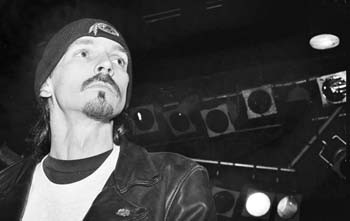
I WASN’T EXPECTING to go see Bruce this time around. Though my heart rate admittedly quickened when I first learned that Springsteen would be touring this fall–together again with the E Street Band–I’d quickly decided that my time and money had better things to do.

Now, don’t get me wrong.

I still consider Springsteen to be the best, most dynamic rock-and-roller standing–an argument I’ve gotten better at making as the years have flipped by. But the day before Springsteen’s Oakland Coliseum concerts went on sale, I figured I would sit this one out.

See, my wife and I have been reading Suze Orman books. We’re consolidating our debts, cutting back on non-essentials. How could I justify something as, um, frivolous, as a Bruce Springsteen concert?

The sweet voice of anarchy piped up in the form of my 12-year-old daughter, Amber.

The night before tickets were to go on sale–for a two-night run (later extended to three nights) at the Oakland Coliseum–I discovered a little pile of dollar bills under my pillow, savings from Amber’s allowance, with a little note: “Go see Bruce.”

“You have to go,” she pleaded. “For goodness sakes, you’ve had the guy’s butt hanging on your wall my entire life.”

It’s true. She speaks of a framed, 4-by-4-foot poster of the Born in the U.S.A. album cover–the one featuring that famous close-up of Bruce’s well-worn blue jeans.

Bruce’s butt. I’ve had that poster since 1984. Over the years we’ve come to know every inch of it, from the missing rhinestone on his belt to the white, Brazil-shaped fade-mark on the left back pocket.

I bought the poster when I was 25, as an adornment to liven the bare walls of the apartment I was suddenly occupying all by myself–after a stinging breakup with my girlfriend. Bruce’s Butt became the focal point of my home, a symbol of wounded masculinity. Or something.

Not that Bruce needed such a bachelor-pad exhibition.

With Born in the U.S.A., Springsteen was, at that moment, very, very popular, selling out amphitheaters and making millions. With his surprisingly commercial new collection of three-minute musical snapshots, Springsteen–a strong word-of-mouth favorite since before his Born to Run album put him on the charts–had struck a major American nerve.

I remember a night in late 1984, in a downtown pub populated entirely by the kind of men inclined to be hanging out in a bar at 2 a.m. When the radio started playing “Dancing in the Dark,” a weird thing happened. Men started singing. “You can’t start a fire, You can’t start a fire without a spark,” they bellowed. “This gun’s for hire, even if we’re just dancing in the dark.” A bunch of guys, pumping their arms in the air, began to chant: “This gun’s for hire. This gun’s for hire.” It was sad, and desperate, and kind of thrilling.

Lonely men do stupid things. Springsteen gave us permission to do them.

The first time I heard Springsteen I was working on a factory bottling line, packing industrial strength mayonnaise in downtown Los Angeles. The song was “Born to Run.” I didn’t like it. “Wrap your legs round these velvet rims and strap your hands cross my engines.” Give me a break. It was an old high school compatriot who turned me around, forcing me to listen to the song again, headphones tight against my head, lyric-sheet open on my lap. “Baby this town rips the bones from your back, it’s a death trap, a suicide rap, Got to get out while we’re young . . .”

From then on, Springsteen’s anthems of desperation and longing were the soundtrack of my own unsteady move from adolescence to adulthood. When I left L.A. permanently, at the age of 21, I played “Thunder Road,” loud, on the car stereo, timing it so I crossed the county line just as Springsteen sang the words, “It’s a town full of losers and I’m pulling out of here to win.”

Over the years, Springsteen calmed down, got married, divorced, and remarried. He had kids. His music evolved to reflect his tentatively advancing maturity–and we all grew right along with him.

SO WITH Amber’s sweet insistence–and her money, which I swear I’ll pay back–I got up early the next morning and went to stand in the ticket line, with about a hundred other guys, all looking a little sheepish to be there.

I was surprised to see my friend Todd–who once owned every Springsteen bootleg there was–standing a few places a head of me.

Todd shrugged. “I thought I was past this whole concert-going thing,” he said, “but . . .” I understood. This was no mere concert anymore. It had become a Robert Bly thing, a brotherhood of men uniting to honor their own path to adulthood.

“Now all we have to do is get tickets, ” Todd added, as the doors swung open.

Ten minutes later, nearly every seat was sold out.

By the time we reached the counter, all that was available were seats back of the stage. Bruce wouldn’t even be facing us.

“I don’t know about you,” I said to Todd. “I think I just need to be there.” So that was that. Todd and I will be driving in together–and we’ll take our kids, the next generation of Bruce fans. I really don’t mind at all that I’ll be forced to watch the show from behind the stage–at least we’ll be there. And after all, it’s a view of Bruce I’m very familiar with.

From the October 21-27, 1999 issue of the Sonoma County Independent.

© Metro Publishing Inc.
‘The Source’

0

New documentary explores the ongoing influence of the Beats

By Nicole McEwan

The Source, Chuck Workman’s densely constructed odyssey through the best minds of the Beat Generation, opens with a mesmerizing image. The 1942 photo depicts three young men standing arm in arm on a cold winter’s day. On the left is Jack Kerouac, widely grinning and shamelessly staring straight into the camera. In the center is Allen Ginsberg, head tilted back, eyes averted, smug and shy simultaneously.

Beside him stands an impeccably clad William S. Burroughs, already staring down his nose at the world–a self-described “WASP washout” slumming around with restless vigor. The trio seem expert at living in the moment, caught in the midst of an impromptu party and ready to take on the world. Miraculously, they did–and then they wrote about it.

Before the Beats, America’s critical eye was pointed resolutely outward–enemies existed strictly beyond its borders and anyone who wasn’t blithely marching in step with the postwar machine was likely to be labeled a Communist. More than anything, the Beats’ writing held up a mirror forcing introspection on an unwilling nation.

“There was a schizophrenia between the subculture and popular culture,” explains Ginsberg in one scene, describing the vibrant black, gay, and jazz cultures that were flourishing in the ’40s and ’50s, far beneath the nation’s radar. Through a kaleidoscope of poetry, photographs, home movies, newsreels, TV kinescopes, and interviews, Workman credits the Beats’ philosophies as the kindling that set the counterculture on fire–eventually leading up to the civil rights and anti-war movements, the ERA, and even Stonewall.

Workman has made a career out of producing the divinely edited movie-clip sequences that are sometimes the unintentional highlight of the Academy Awards show. Here he puts those well-honed editing skills to fine use, fashioning a coherent portrait of his subjects from a multitude of sources. Using the creative arcs of Kerouac, Ginsberg, and Burroughs, the three most prominent Beats, as a framework, Workman weaves in bon mots, insights, and anecdotes from an impressive array of personalities, including writers Ken Kesey, Amiri Baraka, and Norman Mailer; lesser-known Beats like Gregory Corso and Gary Snyder; City Lights founder/publisher Lawrence Ferlinghetti, Bob Dylan, and even Jerry Garcia–who describes Beats muse Neal Cassady as the first person the musician had ever met “who he, himself, was the art.”

To his credit, Workman tempers this mostly rosy tribute with scenes of bitterness (Corso decrying his lesser status than that of the more famous Kerouac) and decline (a drunken, bloated Kerouac getting the freak-show treatment on a ’60s-era TV gabfest). Along the way, a sense of wry amusement informs ironically positioned clips of the pop culture commodification of Beat yearnings, from Beat quotes on coffee mugs to a Saturday Night Live skit with Steve Martin donning the requisite beret, black turtleneck, and stoned demeanor.

Less successful are the dramatized interludes featuring actors Johnny Depp, John Turturro, and Dennis Hopper as the Beat triumvirate reading portions of On the Road, Howl, and Naked Lunch. Workman’s previous (and equally accomplished) documentary Superstar celebrated the life and work of Andy Warhol–a painter who so well understood the potent allure of celebrity that he exploited it in his art. Here, Workman takes a page from Warhol’s book, using the three inarguably gifted actors as audience bait. Sadly, the trio often appears to be reading the words from a teleprompter–which seems oddly sacrilegious in this setting. Still the words work a certain magic–and Hopper, with his ferretlike countenance, is especially convincing as Burroughs.

A largely successful marriage of context and content, The Source‘s celebratory, elegiac tone captures the imagination like a great book–one that warrants a first and possibly a second perusal.

‘The Source’ screens Wednesday and Thursday, Oct. 20 and 21, at 7 and 9 p.m. at Washington Square Cinema, 219 S. McDowell Blvd., Petaluma. For details, call 762-0006.

From the October 14-20, 1999 issue of Metro, Silicon Valley’s Weekly Newspaper.

© 1999 Metro Publishing Inc. MetroActive is affiliated with the Boulevards Network.

For more information about the San Jose/Silicon Valley area, visit sanjose.com.

‘Random Hearts’

Random Hearts.

Cold Spell

No magic in chilly ‘Random Hearts’

By

THROUGHOUT the new melodrama Random Hearts, Harrison Ford’s character carries cuckoldry like a cross. In his scenes as a glib political consultant, Sydney Pollack (who also directed) shows us a pugnacious, humane, and world-weary face. Judging from his onscreen performance, Pollack is not exactly the man you’d expect to be so slow, so terminally restrained behind the camera. It wasn’t mentioned much at the time, but Pollack was certainly the best actor in Eyes Wide Shut, a much more tentative movie about adultery than Random Hearts. Pollack looks like a man who could understand how a woman could have sex with her husband in the morning and deceive him in the afternoon. But Pollack doesn’t pass on that understanding to his characters, and throughout Random Hearts, Ford displays an incomprehension that looks like dumbness.

Ford plays Sgt. “Dutch” Van Den Broeck, a Washington, D.C., Internal Affairs policeman who is apparently happily married. When a plane crashes, it is revealed that two of the dead were traveling under assumed names: Dutch’s wife and the husband of a Republican congresswoman, who were having an affair. When Dutch seeks out the congresswoman, Kay Chandler (Kristin Scott Thomas), looking for clues, he falls for the aristocratic woman. He deludes himself into thinking that what he’s actually doing is tracking down the truth about his wife’s secret life.

Warren Adler’s novel spent 15 years in development, and here’s why: the plot is a fine first act that seems doomed in the last two. Forgiven, as it were, by the deaths of their cheating spouses, what’s the logic in the two betrayed lovers staying apart? But it turns out that the congresswoman is facing a tough re-election campaign, and any impropriety can be used against her. There’s also a subplot about Dutch’s cowboylike investigation of a rogue cop. Wearing a discreet earring and a floppy haircut, Ford is meant to be the fiery counterpart to his patrician lover–who is not just a congresswoman, but the daughter of a congressman as well. But Scott Thomas, who hides under the shade of her Dietrich eyelids, is every bit as recessive an actor as Ford is, and the two seem lost in respective snits.

Pollack keeps the film morose and free of humor. Nothing lightens the mood. And the question of Chandler’s principles–her reason for avoiding happiness with Dutch–seems unbelievable. Why is she in Washington, anyway? She herself says she hasn’t got a political record to run on, and she apparently has no politics. And the importance of Dutch’s dirty job as a cop isn’t shown to us either. When you’re constructing an argument between love and duty, it’s best to make that duty clear and strong, instead of vague and distracting. Kay’s highhandedness with Dutch is irritating, even snobbish, and the one scene of a weekend they spend together in an autumn-leaf-covered cabin provides the only brief warmth in a stodgy film.

From the October 14-20, 1999 issue of the Sonoma County Independent.

© Metro Publishing Inc.
‘Watermelon Nights’

0

SRJC offers uneven production of ‘Watermelon Nights’

By Daedalus Howell

BRITISH DRAMATIST Robert Holman once remarked, “The novel is more of a whisper, whereas the stage is a shout.” But Santa Rosa Junior College theatrical director Leslie McCauley is out to prove that novels can shout (or at least chatter audibly) with her verbatim staging of the fifth chapter of author Greg Sarris’ novel Watermelon Nights.

Inspired by the work of the San Francisco-based theatrical troupe Word for Word (the company that pioneered word-for-word presentations of non-dramatic work), McCauley animates Sarris’ coming-of-age tale about a young Native American man named Johnny (played by Zachary A. Hummell) caught between the world of a Santa Rosa Indian community and his dreams of becoming a clothing retailer in San Francisco.

More significant, however, is the fact that Johnny is gay and living under the homophobic scrutiny of his peers as he ponderously considers the nature of love. To complicate matters, Johnny finds himself attracted to the tight-lipped Felix (Jack Kohler), the brawling but charming Cro-Magnon who lords it over his social circle.

Hummell turns in an earnest and vivid performance as the emotionally troubled Johnny, who must nimbly navigate a psychological obstacle course lest he get his ass kicked. Hummell never unfurls his brow and anxiously trots the stage without letting the character default into a portrait of victimhood.

Conversely, Kohler’s Felix prowls the scenery like some order of predatory jungle cat. Clad in a wife-beater undershirt and permanently pinching a cigarette (from which he awkwardly drags so as to flex his enormous biceps) between his thumb and forefinger, Kohler draws Felix as a valentine to sleaze. The cigarette effect, no matter how clumsily deployed (it is painfully obvious the actor is a non-smoker), does underscore the character’s trumped-up bravado and, eerily, works.

A half dozen supporting characters round out the cast, who may, at any given point, be mewing or mooing as ad hoc cats or cattle. Among those allowed to act standing up are such standout performers as rubber-faced Drew Hirshfield (he steals the show as Dollface, a decrepit feline enthusiast) and Jessica Larson, who takes on the roles of an officious McDonald’s clerk, a nurse and a bank teller.

Author Sarris’ stylistic decision to write much of this chapter in a vernacular that chucks out conventional grammar for the sake of down-home dialogue (“knowed” instead of “knew,” for example) may prove grating to some ears, though on paper it adds color to the text.

Indeed, the hazards of staging non-dramatic work are manifold, and though director McCauley successfully mitigates much of their impact, the fact is that the production often seems to default into a mere recitation of the work rather than an actorly interpretation of it.

Not every word of Sarris’ text plays well onstage, which is just as well because he wrote a novel, not a play. However, a more formal interpretation of Sarris’ often engaging work might have better served both the production and theatergoers.

That said, SRJC’s production of Watermelon Nights remains important theater, not least because it addresses issues germane to the local Native American experience that are seldom, if ever, explored on Sonoma County stages.

‘Watermelon Nights’ plays on Thursday and Friday, Oct. 14 and 15, at 8 p.m. and on Saturday, Oct. 16, at 2 and 8 p.m. at the Burbank Auditorium, SRJC, 1501 Mendocino Ave., Santa Rosa. $7. 527-4342.

From the October 14-20, 1999 issue of the Sonoma County Independent.

© Metro Publishing Inc.

Proposition 13

0

More problems than solutions in state government, says author Peter Schrag

By Yosha Bourgea

PETER SCHRAG knows his politics. Not surprising, since the columnist and former editorial page editor for the Sacramento Bee has been covering the capitol beat for more than 20 years. Last year, he drew upon his experience to write Paradise Lost: California’s Experience, America’s Future (New Press; $25), an examination of California’s decline from the postwar years, when its commitment to public services was a model for the nation, to the present state of affairs 40 years later, when the economy suffers from multiple structural problems and the public sector is no better than mediocre.

What Schrag says in his book, and reiterates over the phone, is that most people don’t even begin to understand the welter of tax limits, special districts, and reform initiatives that clog the state government–and that goes for legislators as well as citizens.

“Nobody can figure out who’s responsible for what, or who’s in charge of anything,” Schrag says. “It makes people frustrated.”

Ironically, the source of much of this complexity may lie with the people themselves. Beginning in the late ’70s with Proposition 13, voters angry with skyrocketing property values passed a series of “tax revolt” laws that reduced local property taxes and drastically limited the fiscal power of local government. The tax revolt burdened the state government with local responsibilities, Schrag says, but left it without the authority to carry them out.

Schrag will discuss the situation next week at a pair of Santa Rosa Junior College lectures. Following the presentation, a panel including Assemblywoman Pat Wiggins, Santa Rosa Mayor Janet Condron, and Santa Rosa School Board President Hugh Futrell will discuss how citizens, the private sector, and government can work together to improve California’s future.

This is the second time that SRJC has sponsored a talk by Schrag on the subject of California’s political malaise. The first presentation, held at Readers’ Books in Sonoma, was sparsely attended.

Assemblywoman Pat Wiggins, D-Santa Rosa, says that Schrag’s book addresses the effects of what voters set in motion with Proposition 13. “It shows that you have to be careful what you ask for,” she says. “The biggest source of income for city governments is now sales tax revenue, and so they go around chasing big boxes, and that sucks the vitality out of the heart of the cities.”


PROP. 13, which essentially froze property taxes for many homeowners at 1 percent, appealed greatly to homeowners at the time. But with the tax, the available revenue for public services was significantly diminished. Moreover, Prop. 13 put the responsibility for dividing that revenue into the hands of the state government.

“In a state of more than 30 million people,” Schrag writes, “the legislature and governor have become the arbiters of local priorities.”

At the same time, Prop. 13 hamstrung the state government by requiring a two-thirds vote in order to raise most taxes. Now every determined political minority group has veto power, particularly the conservative Republicans in the State Assembly (known as the “Proposition 13 babies”) who control more than a third of the votes. And initiatives that attempt to gather revenue for public services by raising taxes are generally given the cold shoulder at the ballot box. A prime example of this process is the recent fate of measures B and C in Sonoma County. Support for Measure B, which outlined improvements for Highway 101, was enthusiastic; at the same time, voters soundly rejected Measure C, which would have paid for the improvements by raising taxes.

Without property tax revenue, Schrag says, the infrastructure of the state has steadily weakened. California’s public schools, once among the best in the country, now rank near the bottom; universities have shrunk their enrollments and raised their fees. Public health services, which lack a powerful constituency and have no lobbyists to speak of, operate on shoestring budgets, often with little or no help from Sacramento.

As a veteran reporter, Schrag is skilled at asking questions. When it comes to finding answers, however, he’s much more cautious. “There are a lot more problems than I’ve got solutions, let me tell you,” he says. As long as property owners constitute a majority of voters, the likelihood of raising property taxes again is slim indeed.

“Is there some way you could get rid of Prop. 13? No,” Schrag says flatly. “But that doesn’t mean that over the long haul, with some good leadership–which this state hasn’t had in a long time–you couldn’t maybe change the public perception of some of these issues.”

Peter Schrag will give a lecture entitled “California at the Millennium” at noon and again at 7:30 p.m. on Monday, Oct. 18, at SRJC’s Newman Auditorium. Admission is free.

From the October 14-20, 1999 issue of the Sonoma County Independent.

© Metro Publishing Inc.

Vegetarians of Sonoma County

0

Spreading the word: Laurie Reaume and Barbara Baker pass out pamphlets at the Santa Rosa Farmers Market.

Veggin’ Out

Trouble in Veggieville–vegetarian movement gains followers, loses leaders

By Marina Wolf

ON THE SURFACE, Vegetarians of Sonoma County is doing as well as it ever has. More than 8,000 copies of its free quarterly newsletter, the Vegetarian Grapevine, are distributed at points throughout the county. And the group is getting ready for its annual Vegetarian Fair (see sidebar), which, according to newsletter editor Laurie Reaume, is going to be its biggest event ever. But in a later conversation, Reaume sounds a more subdued note about VSC’s future: the group will cease publication of the newsletter in May and close up shop if they haven’t found more board members by February.

“We need people to participate on more than an occasional basis, otherwise we’re not going to make it,” she says. “We don’t have the consolidated identity and we don’t have the core.”

How can this be happening in Sonoma County, home of the widely popular McDougall healthy-heart diet and great organic vegetables, HempRella cheese, and liberal political ideas? Where have all the vegetarians gone?

Veggie Land

Truly, a problem of this sort seems out of place here, where the culture is extremely supportive of alternative-food lifestyles. Local vegetarians have long been accustomed to having at least one restaurant that caters to their needs. That niche currently is filled by Slice of Life in Sebastopol, which sports a menu that is entirely vegetarian and primarily vegan (completely lacking butter, eggs, and other animal products). After the McDougall diet came out, many mainstream restaurants offered at least a few vegetarian and vegan options. While that crush has faded in recent years, restaurants are still trading briskly in “heart-healthy” eating, and note their McDougall selections.

Meanwhile, a few establishments have developed a primarily vegetarian client base. One manager at California Thai in Santa Rosa estimates that at least 60 percent of its customers ask for the vegetarian menu.

The county has a number of vegetarian groups on tap, from the quiet McDougall potluck group to the politically active Sonoma People for Animal Rights and even a raw-foods potluck and magazine. But organizers of these groups, while more optimistic about the future of their groups than Reaume is about VSC, acknowledge the existence of the “invisible-vegetarian phenomenon.”

SPAR members recently agreed to make the promotion of a vegan diet their No. 1 priority. “SPAR’s mission is to reduce animal suffering,” says activist and newsletter editor Stephen Wells of the shift in focus. “And the number of animals being processed into food far outnumbers those that die in other industries.”

Wells’ partner, Alex Bury, is a trained chef and has poured her energy into the SPAR vegan potlucks, which began meeting regularly after last Thanksgiving’s dinner. The attendance is averaging around 25, which is up from the original 12 or so, but still is a small percentage of the 450-plus subscribers to SPAR’s quarterly newsletter.

“There’s a huge number people that get the SPAR newsletter,” Bury says. “But we never see them at a potluck or a meeting. They keep it to themselves.”

Just Another Diet?

If, as it seems, the vast majority of Sonoma County vegetarians “keep it to themselves,” we may thank science for that. With new dietary recommendations from various health organizations and increasing medical evidence that a plant-based diet may prevent a variety of human ills, more and more people are moving away from meat.

One study, conducted in 1996, concluded that around 66.2 million Americans were eating meatless meals more often than the year before. Of the respondents in this study, 46 percent were trying to reduce their red meat consumption, and 15 percent were considering becoming vegetarian.

Food manufacturers have been quick to hail this rising demand as a window of opportunity for introducing vegetarian and vegan products to a whole new market of consumers. The “meat and dairy alternatives” industry more than doubled its sales from 1989 to 1994, from $138 million to $286 million.

Unfortunately for vegetarian groups, the shift in America’s eating habits doesn’t necessarily translate into new members to plan and participate in social and political activities. For many people, vegetarianism is simply a way of cleaning out the arteries and preventing cancer, rather than a total lifestyle commitment that takes into account ethical and environmental considerations, as well as health issues.

Those who take up vegetarian eating for the sake of health may eventually cross over to an understanding of the larger social and political issues behind their food choices. Barbara Baker, president of VSC, has traveled that path herself since she went vegan three years ago. But she admits to now being a little bemused by the vegetarian-for-health approach, especially when it comes to these vegetarians’ lack of involvement with the same movement that made their diet possible. Baker recalls her recent trip to Costa Rica on a McDougall tour, where most of the 160 people in the tour group were there for health reasons. The difference in their motivation level, she says, was apparent.

“They found it much easier to ‘stray’ from the diet than did those of us who believe in it for other reasons, environmental and ethical reasons.”

Virtually Vegetarian

Jill Nussinow, a nutritionist who teaches vegetarian cooking classes in Sonoma County, says that about a quarter of the people who take her classes identify as being vegetarian. The rest, she guesses, just want to learn for their friends and family, or would like to cook vegetarian some of the time. But she’s not too concerned about the motivations of her students.

“It doesn’t matter to me if you’re a vegetarian or not, if you want to learn about it I want you to learn,” she says. “And if you want to call yourself a vegetarian, I don’t mind.”

A lot of people are calling themselves vegetarians these days. The shelves of vegetarian cookbooks are filled with titles that acknowledge this trend: Almost Vegetarian, The Gradual Vegetarian, The Meat-Lover’s Vegetarian Cookbook, The New Not-Strictly Vegetarian Cookbook, The Occasional Vegetarian.

Two polls commissioned by Vegetarian Times magazine in 1992 and again in 1996 concluded that about 7 percent of Americans self-identify as vegetarians, or about 12.4 million people. But polls that have gotten more specific about vegetarian behaviors place the total number of actual vegetarians much lower, at about 1 percent of the population. The majority of those self-identified vegetarians, then, may eat fish, poultry, or meat from time to time. They want to be vegetarian, but they aren’t quite there yet.

In any case, these “new vegetarians” have helped push vegetarianism to a previously unparalleled level of mainstream acceptance. The food is available as never before, the concepts are reaching wider understanding, and vegetarianism itself has moved from a mark of freakishness to a desirable descriptor (even if you don’t practice it all the time).

So is mainstreaming a problem? It is if you’re trying to maintain a certain level of political involvement. Brian Graff, co-director of the North American Vegetarian Society, remembers the first world vegetarian conference that his New York-based group sponsored in 1975. At that time, an attendance count of 1,500 people was considered a stunning success. The conference has never been as large since, according to Graff; it’s been diffused by all the other options.

“There are so many groups to choose from, so many events like food festivals, conference, potlucks. Even through the media you can get information without having to go to a group,” he says simply. “It’s a different world now.”

Find out how you can get involved in the Sonoma County vegetarian community at the Vegetarian Awareness Fair, sponsored by Vegetarians of Sonoma County in honor of Vegetarian Awareness Month. Sample foods (this ain’t your college-days tofu and brown rice), pick up some cooking hints, and visit community booths. Friday, Oct. 15, from 5:30 to 8:30 p.m. New College, 99 Sixth St., Santa Rosa. The $5 donation benefits the excellent programs of New College. 528-2892.

From the October 14-20, 1999 issue of the Sonoma County Independent.

© Metro Publishing Inc.

Spins

0

Techno Roots

Moby taps into American spirituals

Moby PlayRave New World

Moby may be one of techno’s only acts boasting poster-child recognition, and the pure bravery and openness of his music merits that semi-superstar status. Already considered by techno purists to be a sellout for the genre-inclusive disco of 1995’s Everything Is Wrong and the punk rock of 1997’s Animal Rights, Moby had only his media-touted genius image to lose by expanding even further on Play. The disc vindicates Moby as an artist of great vision, as he’s the first to use electronica’s beat-and-sample palette to create a blues/gospel recording, not a funk/rock or ambient disc. He samples from the early-century field recordings of musicologist Alan Lomax, yet rather than being a collage, the gospel choruses, handclaps, and delta-blues moans build a sustained movement of inner pain and hope. Literally, Play is a post-rave spiritual quest. Karl Byrn

Hank Williams III Risin’ OutlawCurb

Hank Williams Sr. boasted a busted-down life that wrecked his health, fed his hillbilly genius, and made him the pre-eminent country star of the 20th century. His son, Hank Jr., struggled in the shadow of his famous father, reeling to redneck anthems but never coming close to evoking the personal pathos of Hank Sr. It seems that the third generation is the charm. This strong debut from Hank III is rife with promise, twangy hillbilly tomes about heartbreak, honky-tonks, and, well, heartbreak and honky-tonks. Hank III has no problem affecting the look and sound of grandpa, and–thanks to an extended stint as a bassist in a touring punk band–wears shit-kickin’ boots that augment his neo-traditional roots (check out the pair of raw, raunchy live tracks that close the disc). If there’s one problem, you get a sense that Hank III lacks the worldliness needed to sustain his songwriting at a high level–one of the best songs on the disc, “Thunderstorms and Neon Signs,” is a wistful entry from his road diary that rings true. But a few more busted relationships and this guy will be hitting his stride. Greg Cahill

New American Shame New American ShameAtlantic

Among the recent crop of classic-rock influenced wannabe rock stars who are rejecting alt-rock’s anti-heroism and proudly flaunting stadium excess (Buck Cherry being the notable chart-toppers), New American Shame is doing the job justice. Wailing out of (where else but) the Pacific Northwest, NAS’s debut sounds exactly like Bon Scott-era AC/DC. That’s good, because it’s the best AC/DC album since Back in Black, and it shows a new band seeing through the sex-drugs-rock-and-roll image and hitting the mark of grisled working-class anger and flaming twin guitar power. K.B.

Various Artists Red Hot + LisbonBar None

The organizers of the more than a dozen Red Hot + benefit CDs have settled on a tried and true formula that of late has teamed big-name stars like David Byrne with lesser-known world music artists while raising oodles of dough for AIDS/HiV awareness programs. The latest offering, the follow-up to 1997’s Red Hot + Rio, explores similar terrain with Portuguese musicians and Portuguese-speaking nationals from Angola and elsewhere in the vast fallen empire. The ubiquitous Byrne pairs with Brazilian heavyweight Caetano Velosa, African superstar Bonga teams up with Brazilian diva Marisa Monte, and so on. The versatile k. d. lang even pops up, performing a credible fado. Overall, the accent is techno-treated tracks, sometimes at the expense of the more charming ethnic sounds. Conspicuously absent: Cape Verde singer Cesaria Evora, who first made her mark recording in Lisbon. G.C.

From the October 14-20, 1999 issue of the Sonoma County Independent.

© Metro Publishing Inc.

Latino Health Forum

Forum illuminates Latina-health issues By Yosha Bourgea EDIA URTEAGA had an advantage when she found out she had diabetes. As a patient-relations coordinator at Kaiser Permanente Medical Center in Santa Rosa, she already knew factual information about the disease and understood some of its sources. Still, when test results from a regular checkup showed that...

Jive 5 Winners

The five winners of the Jive 5 writing contest The future has arrived. Our chrome-plated, double-barreled Brave New World is upon us, parked at the curb with its 12-cylinder engine rumbling like a rocket, so put down your pens and hold on to your double mochas, folks, 'cause it's going to be a bumpy ride. ...

‘Body Shots’

Body Shots. Disco Daze Tragic singles mingle in L.A. nightspots in "Body Shots" By ISN'T IT TRAGIC being a glamorous single? Spending your nights at the most exclusive nightclubs, burning hundreds of dollars on fancy cocktails, having wordless trysts in the parking lot--and all this effort just to alleviate...

Bruce Springsteen

The Boss's Back On the other side of Bruce Springsteen By David Templeton I WASN'T EXPECTING to go see Bruce this time around. Though my heart rate admittedly quickened when I first learned that Springsteen would be touring this fall--together again with the E Street Band--I'd quickly decided that my time and...

‘The Source’

New documentary explores the ongoing influence of the Beats By Nicole McEwan The Source, Chuck Workman's densely constructed odyssey through the best minds of the Beat Generation, opens with a mesmerizing image. The 1942 photo depicts three young men standing arm in arm on a cold winter's day. On the left is Jack...

‘Random Hearts’

Random Hearts. Cold Spell No magic in chilly 'Random Hearts' By THROUGHOUT the new melodrama Random Hearts, Harrison Ford's character carries cuckoldry like a cross. In his scenes as a glib political consultant, Sydney Pollack (who also directed) shows us a pugnacious, humane, and world-weary face. Judging from his onscreen...

‘Watermelon Nights’

SRJC offers uneven production of 'Watermelon Nights' By Daedalus Howell BRITISH DRAMATIST Robert Holman once remarked, "The novel is more of a whisper, whereas the stage is a shout." But Santa Rosa Junior College theatrical director Leslie McCauley is out to prove that novels can shout (or at least chatter audibly) with her verbatim...

Proposition 13

More problems than solutions in state government, says author Peter Schrag By Yosha Bourgea PETER SCHRAG knows his politics. Not surprising, since the columnist and former editorial page editor for the Sacramento Bee has been covering the capitol beat for more than 20 years. Last year, he drew upon his experience to write Paradise Lost:...

Vegetarians of Sonoma County

Spreading the word: Laurie Reaume and Barbara Baker pass out pamphlets at the Santa Rosa Farmers Market. Veggin' Out Trouble in Veggieville--vegetarian movement gains followers, loses leaders By Marina Wolf ON THE SURFACE, Vegetarians of Sonoma County is doing as well as it ever has. More than 8,000...

Spins

Techno Roots Moby taps into American spirituals Moby PlayRave New World Moby may be one of techno's only acts boasting poster-child recognition, and the pure bravery and openness of his music merits that semi-superstar status. Already considered by techno purists to be a sellout...
11,084FansLike
4,606FollowersFollow
6,928FollowersFollow
