
Rural Heritage Initiative

0

Wide-open spaces: Rohnert Park City Councilman Jake McKenzie is among those supporting the Rural Heritage Initiative.

Green Days

Battle lines being drawn in bid to save rural heritage

By Jeremy A. Hay

AN INITIATIVE intended to protect agricultural and rural land from development will likely qualify for November’s ballot–over the opposition of some of the Sonoma County’s largest agricultural interests, who say it may limit the future ability of farmers to do business.

The Rural Heritage Initiative, or RHI, needs 16,058 signatures by May 22 to qualify for the ballot. Supporters, hoping to provide themselves a wide margin of safety, plan to collect 22,000 signatures, and by the weekend had collected 20,000.

Should it win in November, the RHI would require voter approval of any proposal to redesignate or increase the density of any land that the county’s 1989 General Plan specifies as agricultural or rural. It would apply only to unincorporated areas, but would affect about 80 percent of the county’s land, or close to 800,00 acres.

Supporters say the initiative supports General Plan policies–backed by voters over the past several years in a series of urban-growth-boundary ballot measures–that call for “city-centered growth.” Without it, they say, the same technology industry-driven growth that has transformed Silicon Valley may well render Sonoma County unrecognizable 20, or even 10, years from now.

The reason for their concern is the region’s booming economy. According to the Association of Bay Area Governments, Sonoma County can expect a 47 percent increase in jobs over the next 20 years, along with 120,000 new residents.

“This is a rather simple idea,” says John Blayney, spokesman for the initiative effort. “What’s the future of this county going to be? Is it going to be Santa Clara County, or is it going to be a county that values its agricultural lands and open space?

“I think a lot of people in Sonoma County would agree that this is perhaps the biggest decision this county’s ever going to face.”

THE RHI IS sponsored by Citizens for Sonoma County’s Future, a coalition of the Sierra Club, Sonoma County Conservation Action, Greenbelt Alliance, and Friends of the Russian River. It is based largely on a similar initiative, Measure J, adopted in 1990 by Napa County voters and considered today a huge success by environmental advocates.

But while Measure J was backed by much of Napa’s agricultural industry, especially local vintners, the RHI may not enjoy the same support.

In what RHI supporters say was an unfortunate oversight, none of Sonoma County’s agricultural organizations were asked to help shape the initiative. Now those organizations, which include the Sonoma County Farm Bureau and the Sonoma County Wineries Association, are opposing the measure.

“The people who are going to be most impacted by it weren’t included or even consulted in the drafting of the ordinance,” says Judy James, executive director of the local Farm Bureau.

James notes that the architect of Measure J, Volker Eisele, was then president of the Napa County Farm Bureau. She says, “We didn’t have the opportunity here to help craft something that’s really good for agriculture.”

A rueful Peter Ashcroft, chair of the RHI steering committee, says James’ complaints are on target. “Some people were consulted,” he says, “but it’s clear in retrospect–and hindsight is always 20/20–that we should have done a better job of reaching out to the agricultural community.”

Ashcroft, who is chairman of the Sonoma County Sierra Club chapter, declines to say who was consulted, only that they were from local farming industries.

Jaimie Douglas, executive director of the Sonoma County Wineries Association, echoes James’ anger at being excluded from the initiative process. She suggests the slight may stem from “the grape-growing and wine-producing industries being kind of singled out as not being environmentally friendly, which is absolutely not the case.”

But Lynn Hamilton, former Sebastopol mayor and now director of the Town Hall Coalition, a recently formed citizens’ group that has crossed swords with grape growers over vineyard expansion, argues that the wine industry should welcome the initiative.

“This is really a chance to protect our ag lands for ag use, which I think the wine [producers] and grape-growing people should be wholeheartedly enthusiastic about,” Hamilton says.

Its detractors also criticize the initiative for being, as Judy James puts it, “so general and vague that it’s going to cause unintended consequences for agriculture.”

Among examples of those consequences James cites the possibility that a dairy farmer deciding to also produce cheese, or perhaps ice cream, might be prevented from obtaining the required use permit; or a farm family with producing vineyards might also, under the ordinance, be unable to obtain the required permits.

“There are a lot of gray areas in the initiative, such as the question of getting use permits for ag projects in the future,” James says, “and we really need them to be in black and white.”

Blayney says such concerns are unwarranted, because use permits are governed by specific zoning ordinances, not the General Plan. The zoning ordinances are more detailed land-use rules that are separate from the General Plan land designations and policies, although they are supposed to implement those policies.

“The only thing the ordinance would regulate is a change in the designation of land the General Plan designates as an agricultural or rural resource, or an increase in density,” Blayney emphasizes. “It does nothing to change the existing zoning ordinance.”

LAST FRIDAY, in a letter to Ashcroft, the Farm Bureau and the Wineries Association, joined by the Sonoma County Farmlands Group and United Wine Growers, urged a halt to the initiative effort.

The letter calls the RHI “flawed in substance and process” and says: “Only by withdrawing the initiative will it be possible for the agricultural community to join with your group . . . in pursuit of consensus regarding long-term agricultural preservation policies.”

Ashcroft says the steering committee discussed the possibility of delaying the initiative process, but concluded it “would be breaking faith” with the 20,000 people who signed petitions in support of the RHI, as well as with “the hundreds of” signature gatherers.

Blayney says he hopes to continue to meet with representatives of the agricultural community to allay their fears. “We don’t necessarily expect everybody to support [the initiative],” he says. “We just don’t want people to misunderstand it.”

From the May 11-17, 2000 issue of the Sonoma County Independent.

© Metro Publishing Inc.

Salsa

0

Salsa Savvy

Finding new ways to assess the sauce

By Marina Wolf

WELL, IT’S OFFICIAL: Salsa has become an all-American institution. In 1996 it surpassed ketchup as the most-used condiment in the United States, and now it is turning up in that most patriotic of pastimes: the food contest.

Some cynics might consider this just another example of America’s appropriation approach to food: take it in and make it ours. But I see it as a triumph, a major leap forward in our country’s consciousness about its own ethnic, cultural, and culinary diversity.

We have moved beyond hot dogs and apple pie–not a great diet to begin with–into an open acknowledgment of enchiladas, burritos, and spicy sauces as important additions to the American table.

A healthy debate on the merits of various salsas is appealing (though actually tasting 15 salsas in a row is, to me, as enjoyable as licking a scrubbing pad for an hour). Unfortunately, the consensus of most American eaters seems to have settled on one of two manifestations of the salsa ideal: (1) diced underripe vegetables stewing in a swamp of citric acid, or (2) boiled and bottled tomato pulp, whose most authentically ethnic quality is the artwork on the label.

The reality of salsa is much more interesting. Salsa in Spanish simply means sauce, and can apply to any number of sauces, some of which have been around as long as chile peppers have been cultivated: thousands of years. Salsas may be stewed, raw, roasted, grilled. Chile peppers are the defining ingredient, but the type and amount vary wildly. Tomatoes are usually indicated in traditional Central and South American salsas, but in the wake of fusion cooking and the increased awareness of regional specialties, even this boundary has been blown wide open, making room for such ingredients as corn, tomatillos, mangoes, apples, strawberries, and even sweet potato.

In the face of such anarchy, salsa competitions are a natural response, a community’s attempt to impose meaning and order on an unruly universe of possibilities. But the pressure is on to assess the entries according to the old rules, the Pace-based paradigm. Too often we elevate one or two of the simpler characteristics to the sole deciding factor and downplay others that are as important, or at least as interesting, to the avid salsa consumer. Tomato and nontomato is a cliché, as is the line between commercial and home-cooked (who exactly is being served by that distinction?). But what about chunky vs. smooth? Such vastly different approaches require almost completely different strategies in order to assess texture and flavor. (Peanut-butter aficionados will understand what is at stake here.)

What of the many gradations of heat? To keep “chile bullies” from dominating the field, we could just as easily divide and judge entries according to scientifically measured Scoville heat ratings.

Or–stay with me here–we could rethink the whole angle of competition altogether, make it less ferocious and more functional. The question would not be which salsa is best, but how well a given salsa works for the purpose for which it was mixed. Is it a dip, a side dish, a last-minute condiment, or an essential ingredient in a casserole? Is it served at parties or just at family dinners?

These are essential questions in determining the feasibility of a salsa.

FORM SHOULD follow function, in salsa as in everything. Smooth salsa is tricky in social situations: the liquid responds to gravity and the incline of a chip much more dramatically than does its chunky-cut counterpart. Considering the distance between the lips and the dip bowl, and the peculiar attraction between salsa and clothing (especially white silk T-shirts), party salsa should be chosen and created carefully.

A good party salsa has distinct flavors and crisp textures, whatever the ingredients, and enough substance to rest sturdily on a chip. In a casserole, however, this chunky salsa only confuses things. There’s too much going on, too much separateness and disunity. A smooth salsa, on the other hand, is just the thing to provide a common backdrop for the dish’s constituent parts.

The “topper” category would be the most challenging, if only because of the size of the pool. Every new restaurant has at least one kind of salsa on the menu, trailing artistically on or around a piece of protein. The field is wide open for contenders: smooth and chunky, cooked and fresco, fruit and vegetable. The salsa could be simply chile peppers moistened with tomato juice, or it could be the reverse, a tomato salad with a hint of heat.

But the judging would be simple: put a spoonful of each entry over a tiny piece of fish. Does it overpower or enhance? Does it clash or complement? Is it super or just superfluous?

I understand that this might be a difficult proposal for Americans to swallow. The whole thing smacks of socialism, of a touchy-feely “we’re all OK” mentality that is anathema to the fine American tradition of no-holds-barred competition.

But I would urge organizers of salsa contests to take the plunge, even if it does mean encouraging the sweet-potato crowd. The soul of salsa is in its diversity. And salsa lovers everywhere deserve a bite of the whole enchilada.

From the May 11-17, 2000 issue of the Sonoma County Independent.
© Metro Publishing Inc.

Rene di Rosa

0

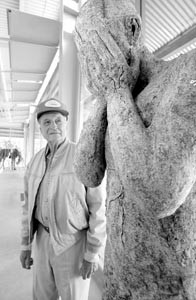
California dreaming: A self-described “artcoholic,” Rene di Rosa has assembled a collection of California art that is as eclectic as it is eccentric–and it’s all on view to the public at the di Rosa Preserve in Napa.

Artful Refuge

California art finds a home at the di Rosa Preserve

By Richard von Busack

RENE DI ROSA is a tall, elderly man in farmer’s clothes, with the kind of nose you see in portraits of the Medicis. None of us, I think, recognized him as the man who ran the museum until he spoke up abruptly.

When addressed by a stranger, most urbanites look at their shoes. We studied ours as di Rosa started talking to the cluster of about two dozen visitors in the Gatehouse Gallery, on the grounds of the private art preserve that bears his name.

“I hope you’ll enjoy what you see,” di Rosa said. “This shuttle here”–he gestured out to the driveway where a jitney was waiting–“it takes you up to where I used to live.”

The Rene and Veronica di Rosa Preserve–located in the hills of Napa County–has to be the only world-class art collection whose proprietor greets you before you tour it.

From the gatehouse, it’s a short ride up the hill along Winery Lake to the three-story house and main gallery, which lies within sight of the busy Carneros Highway, not far from the Napa/Sonoma county line.

Nothing in the di Rosa preserve stops traffic. The gatehouse doesn’t look much different than the new prefab aluminum or steel barn buildings in surrounding vineyards. What most tourists would have eyes for is the pretentious jumbo replica of a French chateau that stands across the road.

But when you get away from the highway, you can see that di Rosa’s preserve is a very fine piece of property. In the 35-acre lake stand some of Veronica di Rosa’s steel sculptures of multicolored cows.

Veronica, an artist and writer, died in Normandy in 1991, falling from a path where she was picking wildflowers. The loss of his wife changed Rene di Rosa, it’s said. Once he was the kind of extrovert who’d wear a gorilla suit to public meetings to protest Sonoma County real-estate development. Now his energies are turned toward completing what could be described as a countercultural Hearst Castle.

It was a leaky barn when di Rosa found it; after much remodeling, it’s a handsome but not ostentatious turreted country manor overlooking the one-story steel gallery where most of the di Rosa’s art is displayed.

In addition to being a major gallery, the di Rosa Preserve is also a bird refuge. Waterfowl float on the lake. Padding in between the main gallery buildings are the peacocks, their fine feathers shining from the recent rains. I stopped counting after 20; later I learned there was 60, including a few calicos. “Mulattos,” di Rosa told me later. “There was a solid white one I had once, but they’ve interbred.”

IS THERE SUCH a thing as Northern California art–something in the people, as in the landscape, that makes Northern California special? Questions like these are best mulled over at the di Rosa Preserve. This private museum spells out its function in big chiseled stone letters: “divinely regional, superbly parochial, wondrously provincial . . . an absolutely native glory.”

Here in a group of buildings are some of the di Rosa Foundation’s 1,700 pieces of art–paintings, sculptures, and photographs by 600 artists, almost all from Northern California. The museum has been open for only the last three years, and the preserve is still little known because of rationed access caused by a traffic-retarding deal struck with the county.

With a collection this size, it’s hard to sum up the highlights. As collectors, Rene and Veronica had good instincts and an immunity to shock.

What stands out most are two works by the animistic yet feminist artist Joan Brown. Her 1975 Woman Preparing for a Shower sums up the tension of a placid, pretty woman on the edge of something otherworldly; it’s a bathing-woman painting without tease. Next to her, a strange dog stands on his hind legs, offering her a towel in his teeth.

Enrique Chagoya’s furious charcoal drawing, When Paradise Arrived, is an indelible satire of Southern California nativism. The colossal hand of Mickey Mouse prepares to flick aside a small dark-skinned girl, as if she were a sowbug.

Roy De Forest’s sculpture in the main gallery is both charming and disturbing, a prehensile-eyed, asymmetric critter sprouting wooden spindles, brushes, and a series of counterweights and pendulums to stay on its feet.

David Best’s art cars, a favorite, are studded with familiar objects, including poker chips, Stratego tiles, statuary, and spent ammo from a machine-gun belt. One hood ornament is a life-sized head of a rhinoceros. “Just cars with stuff on them. They ask nothing from the observer,” Best notes, as quoted in a recently published profile of the di Rosa Preserve, edited by di Rosa himself: Local Color: The Di Rosa Collection of Contemporary California Art (Chronicle Books; $35).

It’s a trick of the di Rosa gallery not to name the artists with the customary plaques. Instead, small notebooks in every chamber of the preserve have the names, titles, and dates.

This system could be seen to take away the identities of the artists, but di Rosa says he avoided title cards because it irked him to see visitors at a museum paying more attention to the text than the image. And the lack of captioning is meant to fit in with the origins of the di Rosa Preserve as a private home expanded to museum size.

The Yankee streak is still visible in the Boston-born di Rosa, in the way he laconically pronounces the name “San Fran-cis-co” when talking about the decline of the art scene there.

He was born in 1919, the son of the Italian consul and a Philadelphia woman. He went to Paris to write; couldn’t finish his novel; then came to San Francisco to work for the San Francisco Chronicle. During the 1950s he lived in North Beach, but he didn’t feel kinship with the beat scene.

“I’d come here from the Left Bank,” Di Rosa said, “not the left bank of the Sacramento River–and there didn’t seem to be a center of rebellion in San Francisco, or any artistic center. It wasn’t established. A new community hadn’t established itself yet.”

Years ahead of the back-to-the-land movement, di Rosa decided to become a farmer. He headed for the higher ground near the Sonoma/Napa county border on Carneros Road. In 1960, grapes hadn’t been grown in the area for almost 30 years. What phylloxera hadn’t ruined, Prohibition did. Planting cool-weather pinot noir and chardonnay grapes, di Rosa became a successful grape grower. In 1986 he sold 250 acres to Seagram’s and got out of the grape business.

Since then, di Rosa has been fully involved in the collecting of art. The self-described “artcoholic” has purchased about three dozen pieces in the last few months. A favorite prowling ground is student shows. He told me about a pair of a mixed-media pieces he acquired from Sonoma State University art shows.

“I like finding an emerging artist and acquiring their piece,” he explains. “It’s also art I can afford. Established artists are a little beyond my wallet.”

STUDYING agriculture at UC Davis in the 1960s, di Rosa became acquainted with some of the artists working in the art department there, including William Wiley and Roy de Forest. The Funk School, it’s been called. It’s very accessible art–playful, colorful, and insouciant.

Abstract expressionism has a seriousness of intent similar to the scholarly saxophone jazz of the era. Funk art is more like jug band music, with kazoos and banjos. The di Rosa collection has that homey streak; much of the collection is on the walls of the main house’s living rooms and bedrooms.

In the large gallery of the di Rosa Preserve is a bust by Terry Allen. Shoe is a bronze of a businessman with an upside-down shoe in his mouth. The footwear has been jammed in so forcefully that the ends of the man’s tie still swing in the breeze.

Allen is also a songwriter, the composer of an anti-New York art scene anthem called “Truckload of Art,” recently recorded by the Austin Lounge Lizards. In it, a truck of overvalued, blue-chip art from Manhattan crashes and burns: “A truckload of art is burnin’ near the highway/ And it’s raging far out of control./ What the critics have cheered are now shattered and queered/ and their noble reviews have been stewed on the road.”

If anything could sum up the di Rosa Preserve’s collection, it’s that song. Di Rosa’s unwillingness to act through curators and experts, along with his decision to go local and go for what he likes, is an example of the countercultural, eclectic, and unwilling-to-behave spirit that I’ve always honored and revered in Northern California.

This spirit of liberty and self-expression sometimes seems to be going the way of affordable housing. Still, a trip to the di Rosa Preserve revives those feelings of leisure and contemplation that ordinary life smothers.

You’ll find the Rene and Veronica di Rosa Foundation at 5200 Carneros Hwy. (Hwy.121), Napa. Tours are by reservation only. Call 226-5991.

From the May 11-17, 2000 issue of the Sonoma County Independent.

© Metro Publishing Inc.

‘Henry IV’

0

Henry IV, Part 1.

Regarding Henry

Thoughtful ‘Henry IV’ makes history

By Daedalus Howell

A LONG TIME AGO, on a stage far, far away–ages before Star Wars and long before the upcoming troika of Lord of the Rings flicks–William Shakespeare was busy inventing the epic trilogy with his trio of history plays: Henry IV, Part 1; Henry IV, Part 2; and Henry V.

Marking the conclusion of the Cinnabar Theater’s Falstaff Festival, the Quicksilver II Theater Company presents Henry IV, Part 1, arguably the most successful play of Shakespeare’s tragical-history tour.

Directed by Deborah Eubanks, this production of the first installment of the Henry plays (which has been enhanced by adding a few lines from the other two plays in the series) is more concerned with the reformation of wayward Prince Hal (Jereme Anglin) than with his royal father, Henry Bolingbroke (soberly played by Lucas McClure), for whom the play is named.

Hal is a waggish wastrel who cavorts with thieves, drunks, and whores before “going straight” to quell the attempt of the young Hotspur (Rick Codding) to depose the king.

Anglin’s rebel-with-a-crown is an adept portrayal of the “nimble-footed madcap Prince of Wales” drawn so absorbingly in Shakespeare’s text. The actor employs a decidedly subtle approach as his character incrementally inches toward salvation. Instead of an aboutface from his once ne’er-do-well self, Hal evolves organically through a series of well-paced revelations that add credibility to his character arc and testify to Anglin’s stage-borne skill.

Al Liner’s fustian Falstaff has all the chutzpah of a New York City cabbie and a more innate understanding of the human heart than a cardiologist. Both riotous and disquieting, his rendition of Plump Jack’s famed “What is honor?” monologue marks an exquisite moment for local stages as he deftly treads the tightrope from humility to humanity before passing out drunk in the arms of a wench.

Rick Codding’s Hotspur–despite the “space-villain” duds designer Maureen O’Sullivan garbs him in–is a consummate depiction of a young man racked by his own ambition. Slicker than a sociopath with a charm-school certificate, Codding’s Hotspur is a note-perfect creep. This is one of the production’s breakout performances.

In a scene in Hotspur’s love lab, April Daniels shines as his wife, Lady Percy. She expertly traipses through a complicated array of emotions within the span of one finely crafted scene that is as much a credit to Eubanks’ direction as the players’ native panache. And Sean Casey’s comic, Pythonesque pepper-pot squawking as Westmoreland is well matched with Sam Misner’s ruddy-nosed rapscallion Bardolf.

Unfortunately, the swordplay between the various players that comes at the climax of the second act is a bit of a misstep, often looking like what would result if the Three Stooges did the Ginsu Knives commercials. And though this production is certainly more of a “sleeper” than a yawner, the fact remains that it sometimes seems like more of an endurance test (for both the actors and the audience) than entertainment as it creeps around the three-hour mark despite the obvious pains Eubanks took to prune the behemoth into a tidy evening of theater.

In the end, however, the production is more pensive than ponderous and, like the profligate prince’s line “redeeming time when men think least I will,” it also redeems itself with the sheer talent of its cast.

Quicksilver II Theater Company presents Henry IV, Part 1, through May 27, on Fridays and Saturdays at 8, and Sunday, May 14, at 3 p.m. at the Cinnabar Theater, 3333 Petaluma Blvd. N., Petaluma. $9 to $14. 763-8920.

From the May 11-17, 2000 issue of the Sonoma County Independent.

© Metro Publishing Inc.

‘Return to Me’

0

Heart of the matter: Minnie Driver and David Duchovny star in Return to Me.

Crying Game

Author Jane Smiley on horse hearts, weeping at movies, and ‘Return to Me’

By David Templeton

Writer David Templeton takes interesting people to interesting movies in his ongoing quest for the ultimate post-film conversation. This is not a review; rather, it’s a freewheeling, tangential discussion of art, alternative ideas, and popular culture.

“GEE,” PURRS author Jane Smiley, reaching for the hand of her boyfriend, Jack. “I’m kind of sorry we can’t run right home, right now.”

The three of us–Smiley and Jack . . . and I (now feeling a bit like a fifth wheel)–are sitting in a darkened San Francisco theater, watching the end credits of the sentimental romance Return to Me. Still a bit misty-eyed from the film, Smiley wraps her arms around her similarly teary paramour, resting her head affectionately on his shoulder.

“Romantic movies,” Smiley happily confesses, “always put us in the mood to cuddle. We usually run right home and go to bed.”

Jane Smiley, the 1992 Pulitzer Prize-winning author of A Thousand Acres, has a habit of saying things like that.

In conversation, she is a constant wellspring of honest, unprotected proclamations so candid and personal they take you by surprise, offered in a confident, easygoing manner that somehow makes you feel all warm and cozy. The Monterey-based writer is, in fact, as disarmingly authentic and truthful in person as she is in the pages of her rich, insight-laden novels.

Smiley is currently in the midst of a book-signing tour for her latest novel, the delightful, fast-paced racetrack epic Horse Heaven (Knopf; $22), about the inhabitants–human, canine, and equine–of a Northern California horse ranch. Eagerly, the author has taken the afternoon off to go to the movies.

Which brings us to Return to Me, a romantic comedy in which a grieving widower (David Duchovny of X-Files fame) finds himself strangely drawn to an eccentric young woman (Minnie Driver) who is still recovering from a heart transplant. The catch is that, unknown to both of them, Driver’s heart donor was Duchovny’s first wife, a brilliant scientist who died in a tragic car accident.

“I liked it. The romantic comedy is an art form that really interests me,” Smiley says as we depart the theater and head for a sunny bench at a nearby park. “I think romantic comedies are very, very hard to make work, maybe the hardest type of movie there is.

“The problem is, the two stars are obviously destined for each other–the two biggest names in the movie are always destined for each other–so the audience knows from the beginning what’s going happen. A romantic comedy is all about keeping the stars apart for two hours until you can get the biggest jolt at the end when they finally come together.

“So in critiquing this kind of story,” she continues, “you have to ask, ‘Are they realistically kept apart?’ In this case, they were mostly realistically kept apart, but they lost me when they both discover the truth, that she’s got his dead wife’s heart, and they’re so overwhelmed that they run away. What was that about? Personally, I would have said, ‘Wow! Terrific! You’ve got her heart? That’s so cool!’ I would have instantly felt that it was a wonderful thing.

“But then, of course, you’d be messing with the very heart of the Hollywood romantic-comedy format.”

AND SPEAKING of hearts: Smiley–an avid equestrian and racing aficionado who now owns several racehorses–takes the opportunity to offer this fascinating factoid.

“The average horse heart weighs seven pounds,” she reveals. “That’s about seven times larger than a human heart. Horses, by nature, have big hearts. And the great racehorses, like Secretariat and Eclipse, have hearts that are even larger. Eclipse’s heart was 16 pounds. Secretariat’s heart was 22 pounds.

“The theory is that these hearts simply are much bigger pumps of oxygenated blood. Secretariat never showed fatigue. The longer he ran, the faster he went, and the better he liked it.

“When we say that a human has heart,” she continues, “we mean that they are kind or generous people. But when you say a horse has heart, it might be a nasty, unpleasant horse, but it’s a determined horse, a horse that wants to run and won’t stop trying.”

Those qualities, of course, are also prized in humans, “though they tend to be called stamina and pluck,” says Smiley. “My basic theory about the cinema is that movies are all about male endurance and female pluck. The most attractive men are the ones that seem to be suffering, but they endure it stoically–and David Duchovny does suffer nicely in Return to Me–while the most attractive women in movies are the ones that have a lot of, you know, oomph. Women who are down but not out.”

Like Minnie Driver?

“Well, Minnie Driver was a little bit plucky,” Smiley allows, “but she didn’t have quite enough pluck to make a truly classic Hollywood female.”

She was pluckier in Good Will Hunting. Or Grosse Pointe Blank.

“I loved Grosse Pointe Blank,” Smiley admits. “I love the scene where the hit man, John Cusack, was talking to his secretary on the phone while he was calmly, coolly making a hit. It’s one of the sexiest scenes ever put on film. That scene always turns me on.

“He was so totally cool, totally expert. Of course, he wouldn’t have had to be killing someone for that scene to be sexy. He could have been hammering a nail. It still would have been sexy.”

But did it make Smiley cry?

“Sure,” she laughs. “But I cry all the time. Crying is an important part of being alive. I think a good day is when you cry, when you laugh, when you eat something good, when you ride a horse, when you write something, and when you make love.

“That’s the recipe for a perfect day,” says Smiley. “You have to cry at least once or it’s not truly perfect.”

From the May 11-17, 2000 issue of the Sonoma County Independent.

© Metro Publishing Inc.

Miles Davis/John Coltrane

0

Miles to Go

New Miles Davis/John Coltrane box set showcases two jazz giants

By Greg Cahill

IT’S KIND OF A CURSE, this addictive urge to own every available recorded track of a favorite artist. So the newly released Miles Davis & John Coltrane: The Complete Columbia Recordings (Columbia/Legacy) is a six-CD, 58-track shot in the arm that will set you back $100 and deliver hours of stimulating sounds by a super sextet that remains legendary in the annals of modern music.

The whole package–replete with a 116-page booklet, featuring dozens of previously unpublished photos, a session analysis, and reflective essays–is organized in a hardbound portfolio and encased in a heavy red steel box.

Caveat emptor: Don’t be lured by that bright-yellow sticker that promises 18 previously unreleased tracks, unless you really need a fix that includes five versions of “Two Bass Hit,” four versions of “Ah-Leu-Cha” (including three stacked together on a single disc), and four consecutive renderings of “Sweet Sue, Just You.”

That said, this collection of spectacular tracks–recorded between October 1955 and March 1961–represents one of the most fertile periods in the long and illustrious career of trumpeter Miles Davis. And it’s an eloquent union of two remarkable jazz giants. Already written off by music critics as a relic of the bop era, Davis reinvented himself and jazz after assembling this sterling rotating lineup that at various times featured tenor saxophonists John Coltrane and Hank Mobley; alto saxophonist Cannonball Adderly; pianists Bill Evans, Red Garland, and Wynton Kelley; bassist Paul Chambers; and drummers Philly Joe Jones and Jimmy Cobb.

The recordings–illumined for eternity with a cool blue flame fed by the creative interplay of bold musical ideas–were featured on such LPs as ‘Round about Midnight, Milestones, and Someday My Prince Will Come. But the real gem is 1959’s Kind of Blue, the modal masterpiece that changed jazz forever and remains an essential recording. From the undeniable cool of “Freddie Freeloader” to the pastoral calm of “Blue in Green,” it’s easy to see why this material established the Davis/Coltrane unit as the premier jazz group of the decade.

In that regard, the completist approach is welcome. But unfortunately, there is little here to shed new light on those landmark sessions. For instance, the alternate take of “Flamenco Sketches”–which resonates with pianist Bill Evans’ meditative 1958 signature song “Peace Piece”–is available on the expanded edition of Kind of Blue, released three years ago.

For the casual fan, the bulk of this material can be purchased at less than half the total cost of this ambitious set. For cursed completists, well, you’ve just gotta own it, dontcha?

From the May 11-17, 2000 issue of the Sonoma County Independent.
© Metro Publishing Inc.

Water Street Bistro

0

Photograph by Michael Amsler

Culinary Chameleon

Former Babette’s chef shines at her own Water Street Bistro in Petaluma

By Paula Harris

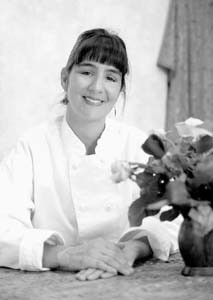
STEPHANIE Rastetter stands on the restaurant’s outdoor patio squinting her eyes against the morning sunlight and sweeps her dark hair back with one hand as she surveys the murky Petaluma River flowing beyond. Water Street Bistro is her place.

At age 36, dressed in casual baggy denim overalls and chunky black lace-up shoes, Rastetter looks more like a carefree college student playing hooky from psych class than a celebrated master chef and new restaurant owner.

Who would guess that this warm, chatty young woman used to be one of two chefs at Babette’s restaurant, a Sonoma County icon that consistently turned out some of the most innovative, expensive, and lauded cuisine in the Bay Area?

For five years, the upscale French restaurant, concealed down an alley off Sonoma Plaza, was the county’s answer to Yountville’s French Laundry and San Francisco’s Fleur de Lys. Its five-course, prix-fixe haute cuisine dinners became legendary among bon vivants and celebrants alike.

And Rastetter, as sous-chef, co-created the dishes.

These days she prepares homey soups and quiches and serves up breakfast and lunch (and soon dinner will be included) in her unpretentious, cheery new space. The menu boasts homemade waffles, sandwiches, and salads–and almost everything costs less than $6.75.

“It’s so casual here–it’s like night and day from Babette’s,” she muses. “For me diversity is what’s really fun. I loved cooking at Babette’s, but I also like cooking other things, too, things more soul food­oriented or more rustic in their nature.

“This place gives me the opportunity to do that.”

The bistro, tucked behind Petaluma Boulevard North, has a comfortable blend of mottled ochre and cobalt-blue walls, faux-leopard banquettes, oversized plants, and mirrors. Soothing jazz vocals and French torch songs ooze from the sound system. An old heavy golden curtain from Babette’s is draped casually over a drinks cooler. Outdoor dining on the small patio by the river completes the laid-back picture.

Despite the difference between the two restaurants, the commitment to serious, well-thought-out food prepared with local ingredients remains the same.

“I like to offer people something a little more challenging in the food department than they’re used to, but in a really comfortable environment, so that people can get a little more adventurous,” explains Rastetter.

Check out her pickled black-eyed peas, warm turkey and ham muffaletto, crab chowder, or chicken hazelnut terrine and you’ll see that Rastetter’s downhome comfort food has a certain global sophistication. This is the place to go if you fancy a glass of rosé with your classic BLT.

A GRADUATE of the City College Hotel and Restaurant program in San Francisco, Rastetter has had an 18-year cooking career, including San Francisco stints at the prestigious Campton Place with Bradley Ogden and at Regina’s with Regina Charboneau. When Charboneau opened a second Regina’s in the Sonoma Hotel several years ago, Rastetter followed. That’s where she met future Babette’s owners Daniel Patterson and Elizabeth Ramsey.

Rastetter began cooking at Babette’s on the day the restaurant opened in 1994. She stayed there until the eatery closed last June. She veered from her kitchen duties only in the final eight months to manage Babette’s more casual wine bar cafe, in order to spend more time with her two small children.

During Babette’s rule, the food world heaped accolades on Chef Patterson while Rastetter toiled in obscurity. In 1996, Food and Wine Magazine named Patterson one of “the 12 best new chefs in America.”

Meanwhile, Rastetter worked quietly, creating half of all the courses served in the brocade-and-velvet dining room each week–a huge accomplishment with little recognition. But Rastetter insists she was content to stay in the background.

“Babette’s was always billed as this husband-and-wife team, with Elizabeth in the front and Daniel in the back, so maybe it just made more sense to keep it that way,” Rastetter explains.

“But just knowing that I did a lot of the cooking and that people were liking it was satisfaction enough.”

These days, as chef and restaurant owner, Rastetter is able to blend her culinary expertise and considerable people skills, urging her guests (read: patrons) to share food and conversation. “I love to encourage people to be a little more communal with their eating,” she says.

“You can try more, experience more, and you’re not committed to the same flavors for the entire meal.”

In June, Water Street Bistro will open for dinner with table service (right now orders are taken at the counter). Rastetter promises light fare that will allow people to “graze” their way through dinner.

“I envision items like a grilled fish with a vegetable ragoût in a little broth and green olive oil, or a warm entrée salad like duck confit with frisée, or roasted fingerlings and roasted onions,” she adds.

“I also see tapas here at night, some sangría–maybe we’ll bring in a flamenco guitarist.”

But what Rastetter visualizes most is the birth of a new community gathering place, with this small bistro’s slight echoes of a stripped-down Babette’s and its welcoming ambiance. “It’s not just dinner, it’s a chance to reach out and interact with other people besides just the people you go to dinner with,” Rastetter explains with a smile.

“It’s interesting, because by some gift of God or whoever, this space seems to make people do that.”

Water Street Bistro (which actually faces Water Street) is located at 100 Petaluma Blvd. N., Suite 106 (at Western Avenue), Petaluma. Open Monday to Friday, 7:30 a.m. to 5 p.m.; Saturday,7:30 a.m. to 4 p.m.; and Sunday, 8:30 a.m. to 2:30 p.m. In June, the restaurant will open for dinner Friday and Saturday, from 5 p.m. to 8:30 p.m. 763-9563.

From the May 4-10, 2000 issue of the Sonoma County Independent.
© Metro Publishing Inc.

Dean and DeLuca

0

Lap of Luxury

Gourmet Groceries–Satisfying Our Urge to Splurge

By Marina Wolf

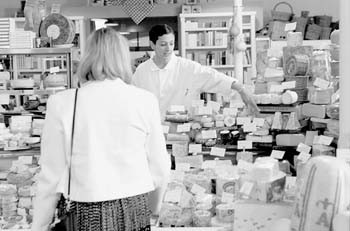
PEOPLE who hate grocery shopping should live in my head for a week. They’d soon realize that food can be window-shopped as much as cars or jewelry. Even in the most ordinary supermarket, I can find some obscure jar of goods on the top shelf to pick up and examine (the smaller and quirkier the jar, the better). Every few months I visit a local deli to stare through a yellowing fiberglass case at an ancient bottle of balsamic vinegar. On my first trip to New York, I visited the original Dean and DeLuca store in Manhattan–the ultimate upscale market/deli–like a pilgrim to a shrine. My camera lay forgotten against my breathless chest the whole time. My money lasted through six chocolate truffles and a bag of French sea salt, which could have been purchased through the web site or at a Dean and DeLuca store in St. Helena that’s about 3,000 miles closer to home. But, no. I wanted to stand physically in the presence of this food, this greatness.

One doesn’t analyze a religious experience, not in the heat of it. But as I left the store, I couldn’t help noticing the other tourists clutching Dean and DeLuca bags, relics of our devotion. In the days that followed, I wondered about the attraction that drew us through the myriad lures of the Big Apple, to pay $28 for six truffles and the privilege of wandering around this high-priced market for a couple of hours.

What is it, I wondered, that makes expensive food that interesting?

What are we paying for?

Well, status, for starters. Cultural or financial, take your pick. Even this humble writer gets an occasional thrill out of having some little spice or tidbit that my foodie friends haven’t heard of. People do this to show off money, too. There are those who simply like to put on a show. One luxury-food writer speaks of caviar thusly: “The most elegant and generous way [emphasis added] to serve caviar is on small, perfectly trimmed pieces of properly toasted bread. The dollop of caviar should never be skimpy.”

Don’t scrimp, in other words. Load it on.

Such generosity implies that cost is no object–this stuff does, after all, retail for $125 per two-ounce jar. But if you have to show that cost is no object, that reveals that cost is, in fact, the object.

In expensive foods, too, there is usually some suggestion of travel, of exploration of faraway corners of the earth. Once, high-priced luxury foods more accurately reflected the realities of long-distance shipping, whether by train, ship, or camel. With FedEx, the Internet, and phone ordering, distance doesn’t cost nearly as much as it used to. But a high price is still a precious reminder of how far this food traveled to land on our plates.

For others, the distance is not as important as the starting point. There is a price for homesickness, and people craving the foods of home are usually willing to pay through the nose. I once paid the equivalent of two weeks’ salary for a bag of marshmallows in Russia. I didn’t miss them until I saw the package, and then longing overwhelmed all common sense (we made s’mores over the stovetop).

WE PAY, TOO, for a more collective nostalgia, for a taste of making or harvesting or foraging, for a lifestyle that we as a society may have only the faintest, secondhand memory of. Sometimes we have endangered the food supply ourselves, as in the case of lobsters, which once were disdained along the East Coast for being so common. Sometimes the urban, modern way of life is the culprit. We are several generations removed from knowing how to make food items, like bread, jam, or sweet butter, that now command high prices for their creators.

Mushrooms are like this, too.

So many ethnic groups have mushroom-hunting traditions, and finding mushrooms doesn’t take any extreme skill, just some guidance and time. But wild mushrooms on the market are some of the most expensive items in the produce section ($35-$50 for fresh porcini). Don’t even think of asking the produce person for a sample.

Time, yes, that is also part of the high price of luxury food. Our time is so valuable, but look at what we pay for other people’s. We are paying for a taste of their time, because a lot of expensive food has simply been around for a while. A country ham in the Southern United States can hang around in a woodshed for 10 or 11 months (prices run from $50 on up, and you have to pick it up yourself).

The really good English cheddar and Italian Reggiano-Parmigiano cheeses might sit on a shelf for two years or more, and then they sell for at least $25 per pound.

The funny thing about luxury food is that somewhere, most likely at its point of origin, it is really cheap. In the South, that country ham, which has been lauded in gourmet magazines as America’s prosciutto, gets fried up for breakfast with red-eye gravy at home.

Saffron retails for $5 to $10 per gram, making it the most expensive food item in the world, ounce for ounce. Where it is grown in Morocco, the locals stuff their teapots with it to flavor their tea.

I try not to think about this truism too much. It only makes me envious of the people who live in caviar country. But that’s what luxury food is all about: wanting to be somewhere else, if only to eat.

From the May 4-10, 2000 issue of the Sonoma County Independent.

© Metro Publishing Inc.

2000 Pacific Rim International Wine Competition

0

Class Act

Local vintage named Best of Class at Pacific Rim competition

By Bob Johnson

SHOPPING for wine is confusing. Depending on where one shops, the choices can range in number from a few dozen to several hundred. Factor in wine specialty stores–of which there is no shortage in Sonoma County–and the number multiplies. Then consider bottlings made in such minute quantities that they’re allocated only to selected retailers, and the entire vino-seeking experience becomes mind-numbing.

And we haven’t even mentioned the strides made by wineries in marketing.

The labels that adorn wine bottles no longer are intended merely to inform; their purpose is to catch the eye of the consumer and project an image.

So how does one separate the wheat from the chaff? Or, in winespeak, how does one separate the delicious from the dregs?

One way is to put your trust in the gold-, silver- and bronze-medal ranking system employed by various wine competitions around the country. The annual competition that has risen head and shoulders above all others in recent years is staged in San Bernardino County, on the National Orange Show grounds. The 2000 Pacific Rim International Wine Competition took place during the week leading up to tax day and once again was administered by veteran wine educator Dr. James Crum.

In the Pacific Rim competition, a bronze medal is given to a wine “that has good varietal character, and has quality and style–a wine that is well made.” A silver medal is given to a wine “showing beautiful balance and varietal character–a wine that is extremely well crafted.” And a gold medal is reserved for a wine “exhibiting perfect varietal character, balance and structure, and containing exceptional qualities and complexities.”

As Crum notes, the wine-buying public should not be “put off” by a wine that has earned a Pacific Rim bronze medal. “By definition, if you buy a bronze medal­winning wine, you’re in for a very pleasant experience,” he says.

This year, Crum assembled 10 panels of three judges each–30 judges in all–to evaluate the bottlings entered by wineries from across the United States and several foreign countries. While the Sonoma County Harvest Fair competition shines the spotlight solely on local bottlings, the Pacific Rim event has gained greater stature owing in large part to its much wider boundaries.

Notes Crum: “Wineries don’t enter the Pacific Rim competition because they love Jim Crum. They enter it because they know their wines will get a fair shake. And they know that because the winemakers we’ve engaged as judges tell their fellow winemakers about how they’re treated and how we operate.”

A Long Road to Hoe

The road to Pacific Rim’s Grand Champion award for Y2K was a long one. As the 15th annual competition commenced, McIlroy Cellars’ 1998 Montavi Vineyard Zinfandel was just one bottle among 2,190. By day’s end, it had been awarded a gold medal and was named Best of Class among all zinfandels earning golds.

That Best of Class distinction qualified the wine for the Best Pacific Rim Red Wine taste-off the following day, competing against other Best of Class reds and evaluated by the competition’s entire 30-person judging staff.

When the wine was voted Best Red, it moved on to a final taste-off involving the best white, best sparkling, best dessert, and best fortified wines. And in that final evaluation round, it was the runaway winner.

When the identity of the wine was revealed, more than one judge’s eyebrow was seen tilting skyward. You see, most of California’s “superstar” zinfandels are made from grapes grown in Sonoma County’s Dry Creek Valley; the Montavi Vineyard is situated in the Russian River Valley, which is better known for producing topflight pinot noir.

Nonetheless, winemaker Will McIlroy was able to craft a real winner, no doubt attributable to his 20 years of winemaking experience.

McIlroy, along with another talented vintner, Gary Farrell, also makes wine for the Davis Bynum Winery. If you can’t find the McIlroy zinfandel–which is likely, since a mere 198 cases were produced–try any of Davis Bynum’s bottlings as an alternative. It will make your vino shopping a much less daunting experience.

The Best of the Rest

IN ADDITION to McIlroy Cellars’ Montavi Vineyard Zinfandel, four wines earned major awards at the 2000 Pacific Rim competition–including two additional North Coast bottlings . . .

Best White Wine: Bonterra Vineyards 1998 Viognier, North Coast. Bonterra is located in Hopland, and the specialty of winemaker Robert Blue is crafting wines from organically grown grapes. The judges loved this wine’s engaging honeysuckle and apricot nose, its creamy mouth feel, and its exotic peach and vanilla flavors.

Best Sparkling Wine: Gloria Ferrer nonvintage Blanc de Blanc, Sonoma County. Another superb bottling from a perennial Pacific Rim champion.

Best Dessert Wine: Jackson-Triggs 1997 Proprietor’s Reserve Riesling Icewine, Okanagan Valley. If you’ve never heard of the Okanagan Valley, that’s probably because it’s not in California. Heck, some of it’s not even in the United States. The valley runs from British Columbia into Washington state, and it’s particularly known for Riesling–from dry, Alsatian-style bottlings to super-sweet dessert wines, like this one.

Best Fortified Wine: St. Julian nonvintage “Michigan Light” Solera Cream Sherry. St. Julian established its solera aging system in 1973, and this rendition is a blend of all vintages from ’73 through ’96. Year after year, this wine wins more awards for the St. Julian Wine Co. than any other bottling.

From the May 4-10, 2000 issue of the Sonoma County Independent.

© Metro Publishing Inc.

Usual Suspects

0

It’s time for ‘the book Washington doesn’t want you to read’

By Greg Cahill

IN THESE POST-GIDDY Wall Street days, you can argue all you want about the goodness of greed, but there’s no denying that greed is an equal opportunity vice. Case in point: Republicans and Democrats feed with equal zeal (and at the taxpayers’ expense) at the trough of pork-barrel politics. Now the 2000 Congressional Pig Book Summary–not the catchiest of titles–by Citizens Against Government Waste, has all the sordid details in its annual report, which shows how representatives attach items to spending bills.

It chronicles $17.7 billion in government waste.

“No matter how you slice it, pork is always on the menu in Washington,” notes CAGW President Thomas A. Schatz. “In fiscal 2000, Congress went whole hog, porking up the various spending bills with billions of dollars in worthless earmarks. Our elected representatives simply couldn’t resist the lure of easy money, putting their partisan political interests above the best interest of taxpayers.”

According to Schatz, Congress indulged itself at a record pace–eclipsing last year’s totals by a whopping 47 percent (and you thought there was going to be a tax rebate in your future), 22 percent higher than the previous record set in 1997.

Indeed, with 365 pork-barrel items, you can skim one-a-day style through this pink pamphlet–and still take a day off to commemorate the leap year.

But Congress was not solely to blame for the outrageous pork-barrel feeding frenzy. “President Clinton was an enabler . . . ,” Schatz notes. “When congressional leaders proposed cutting just one percent of the budget by eliminating waste, fraud, and abuse, the White House said no.”

Here are the Pig Book‘s top oinkers, recognizing “dogged perseverance in the mad pursuit of pork.” Something to think about the next time you’re stuck in gridlock traffic and wondering why the feds say they can’t afford to fix the Bay Area’s traffic mess:

The Piracy of the Potomac Award is given to Senate Majority Leader Trent Lott, R-Miss., for procuring a $375 million amphibious-assault ship that the navy doesn’t want, but that will benefit his constituents. (Not to be outdone, House Minority Leader Richard Gephardt, D-Mo., snared $275 million for five F-15 fighter planes that the Pentagon didn’t want.)

The Smell Test Award is shared by Sen. Kit Bond, R-Mo., and Rep. Stephen Buyer, R-Ind., for $1.75 million for animal waste research at the University of Missouri and Purdue University.

The Tracks of My Tears Award goes to Rep. Jack Kingston, R-Ga., for $100,000 for Vidalia onion research.

The Bridge Over Troubled Waters Award goes to Sen. Ernest “Fritz” Hollings, D-S.C., for $1 million for the Limehouse Bridge, which is used by patrons of golf resorts on the exclusive Kiawah and Seabrook Islands.

The Who Wants to Be a Billionaire Award is delivered to Sen. Ted Stevens, R-Alaska, for using the other 49 states as his “porkline” while securing more than $1 billion in earmarks since 1991.

The Son of a Beach Award is shared by Reps. Rodney Frelinghuysen, R-N.J., and Michael Forbes, D-N.Y., and a bipartisan group of members for adding $55 million in beach-renourishment projects.

The Jurassic Pork Award goes to Rep. Julian Dixon, D-Calif., for adding $1 million for a dinosaur exhibit at the Los Angeles Museum of Natural History.

The What a Dam Waste Award is picked up by Rep. Chet Edwards, D-Texas, for $625,000 for Lake Waco, including a lighted hike and bike trail on top of Lake Waco Dam.

The Empire Strikes Back Award is issued to Rep. James Walsh, R-N.Y., for bringing home $41.7 million in VA/HUD bacon, including $450,000 to convert a former NYNEX building into a parking garage.

The Breaking Up Is Easy to Do Award goes to Sen. Barbara Mikulski, D-Md., for a $35 million plan that fails to consolidate Food and Drug Administration facilities in suburban Maryland.

The Passing Gas Award is won by Sen. Patrick Leahy, D-Vt., for adding $5 million for the Vermont gasification project, even though the House explicitly prohibited further funding.

The Money Does Grow on Trees Award goes to Sen. Robert Bennett, R-Utah, for $500,000 for the Olympic Tree Program.

Copies of the book are available online at www.cagw.org.

From the May 4-10, 2000 issue of the Sonoma County Independent.

© Metro Publishing Inc.

Rural Heritage Initiative

Wide-open spaces: Rohnert Park City Councilman Jake McKenzie is among those supporting the Rural Heritage Initiative. Green Days Battle lines being drawn in bid to save rural heritage By Jeremy A. Hay AN INITIATIVE intended to protect agricultural and rural land from development will likely qualify...

Salsa

Salsa Savvy Finding new ways to assess the sauce By Marina Wolf WELL, IT'S OFFICIAL: Salsa has become an all-American institution. In 1996 it surpassed ketchup as the most-used condiment in the United States, and now it is turning up in that most patriotic of pastimes: the food contest. ...

Rene di Rosa

California dreaming: A self-described "artcoholic," Rene di Rosa has assembled a collection of California art that is as eclectic as it is eccentric--and it's all on view to the public at the di Rosa Preserve in Napa. Artful Refuge California art finds a home at the di Rosa Preserve By Richard...

‘Henry IV’

Henry IV, Part 1. Regarding Henry Thoughtful 'Henry IV' makes history By Daedalus Howell A LONG TIME AGO, on a stage far, far away--ages before Star Wars and long before the upcoming troika of Lord of the Rings flicks--William Shakespeare was busy inventing the epic trilogy with his trio of history...

‘Return to Me’

Heart of the matter: Minnie Driver and David Duchovny star in Return to Me. Crying Game Author Jane Smiley on horse hearts, weeping at movies, and 'Return to Me' By David Templeton Writer David Templeton takes interesting people to interesting movies in his ongoing quest for the ultimate...

Miles Davis/John Coltrane

Miles to Go New Miles Davis/John Coltrane box set showcases two jazz giants By Greg Cahill IT'S KIND OF A CURSE, this addictive urge to own every available recorded track of a favorite artist. So the newly released Miles Davis & John Coltrane: The Complete Columbia Recordings (Columbia/Legacy) is a six-CD,...

Water Street Bistro

Photograph by Michael Amsler Culinary Chameleon Former Babette's chef shines at her own Water Street Bistro in Petaluma By Paula Harris STEPHANIE Rastetter stands on the restaurant's outdoor patio squinting her eyes against the morning sunlight and sweeps her dark hair back with one hand as she surveys the...

Dean and DeLuca

Lap of Luxury Gourmet Groceries--Satisfying Our Urge to Splurge By Marina Wolf PEOPLE who hate grocery shopping should live in my head for a week. They'd soon realize that food can be window-shopped as much as cars or jewelry. Even in the most ordinary supermarket, I can find some obscure jar...

2000 Pacific Rim International Wine Competition

Class Act Local vintage named Best of Class at Pacific Rim competition By Bob Johnson SHOPPING for wine is confusing. Depending on where one shops, the choices can range in number from a few dozen to several hundred. Factor in wine specialty stores--of which there is no shortage in Sonoma County--and...

Usual Suspects

It's time for 'the book Washington doesn't want you to read' By Greg Cahill IN THESE POST-GIDDY Wall Street days, you can argue all you want about the goodness of greed, but there's no denying that greed is an equal opportunity vice. Case in point: Republicans and Democrats feed with equal zeal (and at the...
11,084FansLike
4,606FollowersFollow
6,928FollowersFollow
