
Summer Cuisine

0

Cool Cuisine

How to eat when you can’t stand the heat

By Marina Wolf

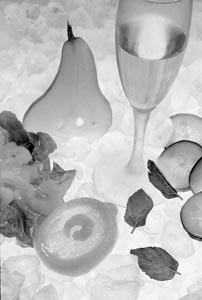
HAIR, LAWN, and appetite: the first three things to wilt during a heat wave. The first two are beyond the scope of a food article, but what about the appetite? We have to eat, even after the joy of ice cubes, popsicles, and watermelon melts away.

First off, you might try taking your cue from the tropical cuisines of the world, which provide sustenance for their people in much worse weather than ours (it’s not the heat, it’s the humidity!). Much of the food in hot countries includes large quantities of chilies and other zesty seasonings. Pungent flavorings make you sweat, which is part of our body’s natural cooling system. But they also wake you out of your heat-induced stupor, according to chef and author Louise Fiszer. “During the summer your palate is looking for something interesting,” says Fiszer. “The appetite dies down in heat, so you need a little something to wake it up.”

Accordingly, Fiszer makes lavish use of fresh herbs in the summer, basil and mint being favorites that quickly transcend garnish and become primary ingredients. The chapter on cold soups in Fiszer’s Good Day for Soup (which she co-wrote with Jeannette Ferrary in 1996), is full of herbs. Dilled cucumber soup with bay shrimp. Cool minted pea soup. Cream of mixed lettuces, chive, and chervil. Chilled pear and parsley. Cold plum and watercress.

HERBS ARE also a key component in what makes Southeast Asian food a cooling dinner option, says chef and author Joyce Jue. Mint and cilantro are ubiquitous in tropical Asian cuisines, sparked by tartness from citrus or vinegar in dressings or sauces, and punctuated, of course, with chilies. Even the garnishes of Asian salads contribute to waking up the mouth, says Jue. “I love the crispy fried garlic and shallot. They give a real burst of flavor.”

Of course, the salads Jue specializes in aren’t the typical cool, crisp, leafy California salads. Instead, the Asian salads are a savory mixture of minced meats, poultry, and fish, tossed with lots of herbs and often some fruits and vegetables. “Asians don’t treat these salads as a meal, but with a little extra protein and larger servings, they work well in a Western diet,” Jue says.

Asian salads illustrate several cool-kitchen principles. They make frequent use of noodles such as rice vermicelli, which need only to be rehydrated in hot water. One of Jue’s favorite noodle-based salads combines vermicelli with chicken, shrimp, and crumbled sections of pomelo or grapefruit.

There is also a strong tradition in some Southeast Asian countries of fresh salad platters, which are assembled right at the table. Jue mentions the Vietnamese salad platter dai rau song, which usually contains lettuce, green fresh herbs, cucumber and carrot strips, and shredded scallions, wrapped in rice crepes and dipped into a sauced based on peanut, chili, or fish.

If you’re dealing with raw things, you’re in luck. If you must cook, do it in the cooler hours, and then just put it together when you’re ready, says Fiszer. And for god’s sake, take the easy way out wherever you can. “Today there’s almost nothing you can’t get already prepared,” Fiszer says. “From the smallest mom-and-pop store to the biggest luxury market, you can find the food anywhere. All you do is add your touches to it.”

Fiszer points out one of her favorite summer concoctions–a tortilla wrap with chicken caesar salad–as a perfect example of this. The chicken is already grilled and cut into strips (you can find this in the section where packaged hot dogs are, but don’t let that turn you off). You simply toss the chicken together with romaine lettuce and caesar salad dressing, spread the tortilla with more dressing, and roll up. “I would much prefer to grill my own chicken, but if you don’t have the time and you don’t want to heat up the kitchen, this is the way to go.”

Another salad, which Fiszer recently made for a class, contained prawns, feta cheese, olives, roasted red pepper, penne, and spinach, and the only thing she had to cook was the pasta. Everything else was precooked, precut, precrumbled. Total prep time?

Fifteen minutes.

SUMMER is not the time, in other words, to worry about home cooking, because home cooking is hot work. Use your deli for precooked ingredients such as whole roast chicken or thick-cut roast beef. Don’t forget such cooling vegetarian products as tofu (even that comes in convenience packages, already marinated and/or baked). And remember canned foods such as beans, well rinsed and drained.

Fiszer advocates learning several techniques for salad dressing. “A good salad relies on the strength of the dressing,” she says firmly. But even that can be store-bought and home-improved, with very little effort. “I would never tell you to buy dressing. It’s so easy to make and tastes better, too,” Fiszer says. “But if you had to, you could always buy dressing and add your own lemon juice, herbs, balsamic vinegar.”

And of course, there’s always the last resort. If all this is completely beyond you, do what Jue does: “I make my husband barbecue.”

Lamb Sausage, Arugula, and White Bean Salad

This main-dish salad from Louise Fiszer’s A Good Day for Salad (co-written with Jeannette Ferrary; Chronicle Books, 1999) illustrates how simple dinner can be. Beans out of a can should be thoroughly rinsed; Fiszer recommends beans from glass jars (Whole Foods is her favorite brand), as they are entirely free from that tinny aftertaste.

Cherry tomato and rosemary dressing: 6 cherry tomatoes, halved & seeded 2 cloves garlic 1 tsp. fresh minced rosemary or 1/2 teaspoon dried 1 tbsp. sugar 4 tbsp. balsamic vinegar 1/2 cup olive oil 1/2 tsp. freshly ground pepper 1/2 tsp. salt 1 pound lamb sausage, cooked & sliced 4 cups. cooked white beans 1 cup cherry tomatoes, halved 8 cups arugula, torn into bite-size pieces Fresh rosemary sprigs for garnish

In a blender or food processor, mix all dressing ingredients until well blended. In a large bowl, combine lamb, beans, tomatoes, and arugula. Toss with dressing and garnish with sprigs of rosemary. Serves 6 to 8.

Louise Fiszer’s class, “A Good Day for Salads,” will be held at Ramekins Sonoma Valley Culinary School on Wednesday, July 12, at 11 a.m. Joyce Jue will teach a class there on “Asian Salads for Summer” on Thursday, July 27, also at 11 a.m. The fee for each class is $40. For details, call Ramekins at 933-0450.

From the July 6-12, 2000 issue of the Sonoma County Independent.

© Metro Publishing Inc.
Merlot

0

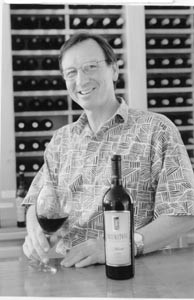
Groundbreaking: Winemaker Dennis Hill–blending quality and mass production.

Mellow Merlot

Blackstone Winery specializes in a new California classic

By Bob Johnson

IF YOU WERE TO WALK into the lounge of a fine restaurant, pull up a bar stool, and ask for a glass of merlot, chances are pretty good that the juice splashed in your glass would be from Blackstone Winery. The Blackstone winemaking facility dominates downtown Graton, and is situated a few quick strides across Graton Road from the winery’s tasting room. Blackstone’s flagship wine is its California-designated merlot, but unlike the signature bottlings of other wineries, Blackstone merlot is made in huge quantities.

From the 1997 vintage, some 200,000 cases–that’s 2.4 million bottles–were produced. In 1998, that number swelled to 270,000 cases. And for 1999, it’s projected that Blackstone’s case production of “California” merlot will easily surpass 300,000.

The man charged with overseeing Blackstone’s winemaking is Dennis Hill, who broke into the business a quarter-century ago, working for a much less ambitious concern: Seghesio Winery.

Next came a stint at Alexander Valley Vineyards, then a tour of Europe, followed by more winemaking at de Lorimier Winery and then Mill Creek Winery. Three years after brothers Derek and Courtney Benham founded Blackstone, they persuaded Hill to make what amounted to a career change: from hands-on artisan winemaking to overseeing the production of wine for the masses. That was in 1993.

Hill makes no apologies for his present station in life.

“Whether you’re talking about 250 cases or 250,000, the same basic winemaking skills are involved,” he says. “Rather than working with a single vineyard or a specific appellation, my job is to draw upon numerous fruit sources and work toward creating consistent aromas and flavors from vintage to vintage.

“We buy grapes, we have wine contracts with other wineries, and we also tap the bulk market somewhat,” Hill explains. “Since 1997, we’ve focused more on buying grapes. It’s not always easy to get the flavors and aromas we’re looking for, but since we can access so many sources, we’re able to maintain an identifiable style.”

Tasting Notes: Reviews of three local merlot bottlings.

HILL SAYS Blackstone buys grapes from some 25 vineyards in Napa Valley alone. “Most of the fruit is from the southern part of Napa, where it’s relatively cool and merlot does really well,” he says. A good chunk of Blackstone’s Sonoma County fruit is sourced from the Alexander Valley, which Hill says provides “depth and richness to the overall blend.” Russian River Valley fruit, which Hill says is “more elegant, with a lot of high notes,” also is utilized.

A limited amount of Sonoma County fruit was used for the 1998 bottling. More will find its way into the ’99 blend.

“We also use grapes from Mendocino, Santa Cruz, and the Central Coast,” he adds. “And in the future, we may buy some grapes from Lake County. We’ve identified growers who have nice developments at the higher elevations. I think we’ll be able to produce some wines with more structure, color, and fruit than have typified Lake County in the past.”

What is Hill’s goal each year when he begins working on the Blackstone merlot blend? “Blackstone is a wine that’s made to be consumed within the first year or two of bottling,” he says. “We’re trying to make a wine that’s respected for its complexity, appeals to a wide range of people, and is versatile with many foods. We want it to be soft and very drinkable.”

What does Hill mean by “soft”?

“The primary focus is on bright, forward fruit,” he explains. “We keep the oak influence to a minimum; we want it to add roundness, but not overpower the fruit.”

After all of the individual vineyard lots have been assessed and the final blend assembled, Hill fines the wine with egg whites “to eliminate the more angular tannins.” That process also contributes to the wine’s softness.

Does Hill get as much satisfaction out of producing a mass-market wine as he did out of crafting much more limited quantities at Seghesio, Alexander Valley, de Lorimier, and Mill Creek?

“Maybe more,” he claims.

Really?

“Really. Take single-vineyard wines. Yes, they can be fun to make because they can express the unique characteristics of a vineyard. But that’s also limiting, to some degree. There’s only so much you can do as a winemaker to make the wine better.

“With the blending we do here, it’s much more challenging to achieve the aroma and flavor profile we’re looking for because every vintage is a little bit different. We have so many sources of fruit that the right blend is always there–it’s just a matter of finding it, and that can be like putting a puzzle together.”

So is bigger better?

“I wouldn’t say it’s better, necessarily,” Hill says. “Different? Yes. Better? No. Worse? No. Just different. I think what it shows is that you can make very good wines regardless of quantity. What you hear so many winemakers say is true: it all begins with the fruit.”

And in the case of Blackstone Winery, it ends with an always dependable, and affordable, glass of merlot.

From the July 6-12, 2000 issue of the Sonoma County Independent.

© Metro Publishing Inc.
Sonoma County Right-to-Farm Ordinance

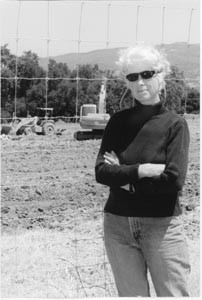
Bedlam in paradise: Marilyn Goode says that the area around her Sonoma Valley home is fraught with noise from vineyard development.

Down on the Farm

Suburbanites and farmers clash over Sonoma County’s new right-to-farm ordinance. Now the issue is heading for the courts

By Tara Treasurefield

MARILYN GOODE used to delight in listening to birdsong every morning. “Now, there’s an unbelievable din in the morning,” she says. The source of all the noise? Vineyard development. “At 6 a.m., it’s bedlam here,” says Goode, whose family has lived in the Sonoma Valley for 60 years. “They’re putting metal stakes in the ground with some kind of machine–rat-a-tat-tat, rat-a-tat-tat. It sounds like a war zone.

“We’ve been encroached upon.”

But wait. Who’s encroaching upon whom? The new right-to-farm ordinance, approved by the Sonoma County Board of Supervisors last year, protects agriculture from residents, not the other way around–disturbing news for a growing number of suburbanites concerned about pesticide use and other agricultural practices.

Pete Parkinson, director of planning at the county Permit Resource and Management Department, says the ordinance makes it clear that “legal and properly conducted agricultural operations on agricultural land will not be considered a nuisance under the Sonoma County Code” and “ensures that people are informed of the consequences of living in a right-to-farm county.”

The ordinance warns that anyone who lives on or uses property near an agricultural operation “may at times be subject to–without limitation–noise, odors, fumes, dust, smoke, insects, operation of machinery during any time of day or night, storage and disposal of manure, and ground or aerial application of fertilizers, soil amendments, seeds, and pesticides.”

Surprisingly, the environmental community has split over the ordinance’s provisions.

For instance, Mark Green, executive director of Sonoma County Conservation Action, says, “I look at the new right-to-farm ordinance as the agricultural community flexing its muscles. The subtext is that if called by a constituent with a complaint about how agricultural activities are affecting their life or their health, four of the five supervisors [west county Supervisor Mike Reilly voted against the ordinance] will side with agricultural operators. That’s really what this ordinance means.”

On the other hand, west county organic farmer Shepherd Bliss supports the right-to-farm ordinance. “Some people have gotten so mad at the wine industry that they’re mad at farmers in general,” he says. “The impact of some urban environmentalists is going to be to run off small family farms.”

THE RIGHT-TO-FARM ordinance specifically protects three zones: land-intensive agricultural (LIA), land-extensive agricultural (LEA), and diverse agricultural (DA). Under the ordinance, owners of property within 300 feet of an LIA, LEA, or DA zone who require a use permit must record a declaration acknowledging the right-to-farm standards; this is a binding declaration that runs with the property in perpetuity.

Also, potential home buyers must be notified of the right to-farm protections if the property is within 300 feet of an LIA, LEA, or DA zone. All property owners in the unincorporated areas, including those who don’t live within 300 feet of an LIA, LEA, or DA zone, receive notification of the right to farm with their annual tax bill.

According to Parkinson, this is because “sights and sounds of agriculture can travel more than 300 feet.”

West county resident Alan Morgan (a pseudonym) worries about the effects that pesticides drifting from neighboring farms will have on his children. “We don’t have any control over the chemicals they put into the environment around our home,” says Morgan, who has received threats over his complaints to neighboring grape growers.

“We can smell the poison and see the drift coming onto our property.”

Morgan says that the Sonoma County Agricultural Commission seems more concerned about protecting agricultural interests than his family’s health. “Why, when I make a call, can’t I get someone to come out? The right-to-farm ordinance is very bad.”

But Parkinson says, “A common misconception about the right-to-farm ordinance is that it somehow changes the way pesticide application is done; that’s regulated by the state and the agricultural commissioner. The right-to-farm ordinance provides no protection to any farmer who applies pesticides illegally or improperly.”

Green says, “If someone can demonstrate in a legal sense that they have been damaged and there’s harm to their life, liberty, or property, the law says quite clearly that they have the right to sue for redress of those grievances in court.” Green says that a court in the Midwest recently ruled against a similar right-to-farm ordinance because it “illegally stripped people of their right to seek redress for grievances.”

In fact, Ann Maurice of the Sebastopol-based Ad Hoc Committee for Clean Water has filed suit against the county. “We believe that the differences [between the new right-to-farm ordinance and the one the board rescinded] are significant and will have serious adverse impacts,” she says.”

A major concern is the disclosure notice to all residents of the county that they should be prepared to accept, without limitation, inconveniences or discomforts associated with agricultural operations.

The case goes to court in August.

But Nick Frey, director of the Sonoma County Grape Growers Association, offers an alternative to legal action. “If you have a problem with a grape grower, talk to him first, and if that doesn’t work, call us. We’ll try to mediate some kind of discussion and enhance communications.”

But critics of the right-to-farm ordinance point out that the changing nature of the county’s agricultural economy–including the recent introduction of industrial-scale vineyard operations–is altering the way that farming affects residents.

Marilyn Goode agrees that communicating with growers can help preserve the land she loves, but she misses what has been lost. “For the last 30 to 40 years, we’ve been primarily dairy and grazing land,” she says.

“There hasn’t been intensive agriculture around me for the 60 years that we’ve been here. Years ago, they didn’t use this kind of heavy equipment. Nor did they have the lethal poisons they use now. We had chickens, turkey farms.

“Turkeys are pretty quiet.”

From the July 6-12, 2000 issue of the Sonoma County Independent.

© Metro Publishing Inc.

Patrick Ball

0

Stories to tell: Patrick Ball, who has emerged as one of the leading interpreters of the music of Turlough O’Carolan, presents a one-man show this month based on the celebrated works of the Irish bard.

Dream Weaver

Celtic harpist and storyteller Patrick Ball blends music, folklore, and heart

By Greg Cahill

THE TWILIGHT cast ghostly, gray-blue shadows in the crisp autumn air; the voices came reassuringly. Patrick Ball sat in the audience that night 20 years ago in Johnsborough, Tenn.–site of the largest storytelling festival in the United States–listening intently while local folklorists spun Appalachian tales at a benefit for a colleague injured in a car accident.

“It was the first time I ever heard anybody tell a story to a lot of people gathered together,” says Ball, a 50-year-old Sebastopol resident. “It didn’t really seem much like a theatrical experience. It was more like a warm, intimate sort of exchange.”

It was enough to convince Ball after his graduation from Dominican College in San Rafael (with a master’s degree in Irish history) that being cooped up in a stuffy classroom was not for him. “It’s the nicest job I’ve ever had,” Ball says of the lucrative career he has created as an actor, storyteller, and Celtic harpist.

He returns to the Spreckels Performing Arts Center on July 13 for a three-week run of O’Carolan’s Farewell to Music, Ball’s acclaimed one-man play showcasing the music and lore of the blind 18th-century Irish bard Turlough O’Carolan. Ball co-wrote the play with Peter Glazer, the writer and director of Woody Guthrie’s American Song.

“Hauntingly beautiful ballads and lilting storytelling,” the New York Variety opined. “The play might spring from the 17th century invasion of Ireland by England, but seems as current as the latest troubles in Belfast. [Ball’s] acting is fine, his musicianship outstanding.

“Ball and Glazer have created a small gem.”

In many ways, Ball is particularly suited to bringing the O’Carolan tale to the stage, since he is one of the few people alive to have mastered the difficult instrument and has a real affinity for the late bard. “When it came to writing the piece,” he says, “I wanted to be able to put the dilemma in front of the audience of how this man, who was not only blind and had his own personal darkness but probably lived during the darkest time in Irish history, could write such beautiful uplifting tunes.”

After his first encounter with the storytellers in Tennessee, Ball–who seemed destined to become an attorney, until the death of lawyer father–pursued his craft with a passion. After hitchhiking around the United States, he spent 18 months studying Appalachian lore at the Penland School of Crafts and spent a year in Ireland researching Celtic oral history. He then returned to the North Bay, where he lectured in public schools.

While the traditional lore of the Appalachian Mountains and Western Europe has been committed to writing, it is the “rhythmic charm and poetry of the phrase” that intrigues him. “I love the dialects, the turn of phrases, the clever expressions,” says the soft-spoken Ball. “If you go back to the Appalachians now, people have a colorful way of talking, and it’s the same way in rural parts of England and Scotland.

“For instance, if a room is small, the Irish would say, ‘There isn’t enough room here for two cats to dance.’ But the Appalachians would say, ‘There ain’t enough room in here to cuss a cat without getting hair your mouth.’

“I wanted [through my storytelling] to be able to present a show that had that same sort of charm. A lot of my friends specialize in stories where the importance and significance is of psychological value [as in the underlying human emotions of fairy tales]. But my approach is a little different.”

One unusual aspect of Ball’s performances is his use of a Celtic harp “to create an atmosphere where people are receptive to hearing the older stories,” he explains.

Ball’s own introduction to the instrument came a year after he began his career as a professional folklorist. He first heard the distinctively bright, chiming tone of the instrument in 1980, while visiting the Renaissance Pleasure Faire. There, Ball met Jay Witcher, a former aerospace engineer-turned-master craftsman of folk harps.

The 32-string, four-and-a-half-octave instrument, which dates back more than 1,000 years, is gracefully carved from wood, strung with brass wire, and plucked with the fingernails–characteristics that lend it a considerably different tone than that of its concert cousin.

Over the years, Ball has recorded several albums of Celtic harp music; his 1983 debut, Celtic Harp 1: Music of Turlough O’Carolan (Fortuna), showcased the works of the Irishman who has become his muse.

INDEED, Ball’s concert and recorded material has always drawn heavily from the poignant songs of O’Carolan, who roamed the rugged Irish countryside on horseback. O’Carolan, considered by many as the last of the Irish bards, composed nearly 250 songs, which were transcribed and preserved by a Dublin musician.

“O’Carolan was influenced by the Italian and Baroque musical influx that swept Ireland at the turn of the 18th century. I frankly think his stuff is still beautiful,” says Ball, who once used the songs for the 1987 score of The Ugly Duckling, a Windham Hill/Rabbit Ears children’s recording narrated by Cher. “One of the reasons I learned to play the harp was so I could play his music.”

By mixing storytelling and music in a show of Irish wit and charm, Ball has created an alluring one-man tour de force. “It’s an art form, in a way,” he says. “But it’s also just simple human exchange. What I’ve always liked about it is that there’s an intimacy and a directness, which is good theater if nothing else.

“I don’t feel as though I have any particular message. It’s simply the charm of what used to be a common occurrence.”

Patrick Ball performs O’Carolan’s Farewell to Music at the Spreckels Performing Arts Center, Bette Condiotti Experimental Theater, 5409 Snyder Lane, Rohnert Park. The show runs Thursdays through Sundays, July 13-30. Tickets are $10-$15. 588-3400.

From the July 6-12, 2000 issue of the Sonoma County Independent.

© Metro Publishing Inc.
Robert McChesney

0

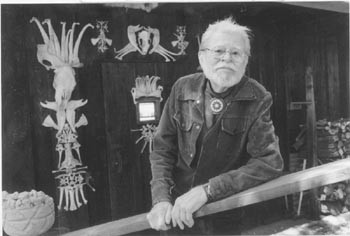
American original: Petaluma painter Robert McChesney wields an offbeat brush.

Enduring Visions

Local retrospective shows off Robert McChesney’s abstract paintings

By Daedalus Howell

AS THEY SAY, “Home is where the art is.” For over 50 years now, home for artist Robert McChesney has been atop Petaluma’s Sonoma Mountain, but seldom has his work been exhibited in Sonoma County. Instead, the abstract expressionist’s paintings and assemblages have met art lovers abroad or in such museums as New York’s Whitney, the San Francisco Museum of Modern Art, and the Art Institute of Chicago.

Starting Friday, July 14, however, “Robert McChesney: An American Painter” goes on exhibit at Santa Rosa’s Kress Building. The six-week retrospective features nearly 70 paintings and represents half a century of the 88-year-old artist’s oeuvre. Interestingly, the retrospective is only the fourth showing of McChesney’s work in Santa Rosa and the first since 1988.

“The works I’ll be exhibiting are all abstract paintings. My experience is that throughout life an artist is influenced by everything. He has the ability to digest this and get that out onto his picture plane,” says McChesney, one of the progenitors of Bay Area abstract expressionism, which flourished in the 1950s and continues to inform artists today.

“It is my whole experience that I’m working to produce,” he continues. “Of course. you can never reproduce all your experiences–that’s ridiculous– but you see things in these patterns, abstractly, that imply culture of all kinds, and that’s how you do it.”

McChesney’s recent paintings are strewn with evocative natural forms composed in a distinctly Southwestern palette. They appear as organic as they do organized and have been variously described as suggesting micro-slides, intergalactic phenomena, or aerial views of crop circles.

The more discerning viewer, however, sees the work as McChesney does: “There’s nature in them, there’s architecture in them, there’s cities in them–but they’re not that in the objective sense.”

The usual adjectives used to describe active octogenarians don’t apply to McChesney. He isn’t spry, for example–he’s goddamn robust. His conversation is peppered with such anachronistic hipsterisms as “You dig?” and his eyes actively search his surroundings.

Often garbed like some order of beatnik cowboy in a turtleneck, cowboy hat, and full silver beard under which lurks a bolo tie, McChesney is more than an “American painter.” He’s an American original–and it shows in his art.

Among the many occurrences that set McChesney on the path of abstract expressionism was one that took place in the navy. As a merchant marine in World War II, he bided his time between shifts, painting on an easel improvised from his bunk and some plywood and watching the water.

“We’d be tied up outside before going into port and they always had this platform down below, for landing,” he explains. “I’d go down there, and they’d have this light on, and the shapes and forms I saw in the water were just absolutely amazing.

“I was doubtlessly influenced by that,” he adds. “I didn’t copy that, but I used the forms. This went on until the war was over, and by that time I had hundreds of paintings.”

McChesney relishes the opportunity to showcase his work locally. As his wife, artist and author Mary Fuller McChesney, points out, “There really weren’t many opportunities for artists to show work in Sonoma County until recently. Robert has had more retrospectives in Fresno, of all places, than in his own home county.”

THE RETROSPECTIVE groups McChesney’s work chronologically, arranging pieces in their original series collections, from 1946 to 2000. That arrangement helps underline the enduring power of the artist’s work, according to Sandy Thompson, who is curating the show on behalf of City Vision’s Arts and Culture Committee, which previously presented the Christo exhibit at the Kress Building.

“His work is incredibly strong,” says Thompson. “He is one of the original, and probably one of the last, Bay Area expressionist painters. . . . Robert sees in a very unique way, and I think he’s able to translate that consistently and dynamically. You look at his work over 55 years and it stays strong. He has stuck to his vision–he gave no quarter and he gave no compromise.”

McChesney’s creative process is deceptively simple. He lays the work-in-progress flat on the floor and applies various paints with a squeeze-bottle. He then distributes found objects upon the plane that work simultaneously as stencils and antennae for the fortuitous bedlam he later molds into art.

“When this whole thing sets up, I’ve got what I call a ‘chaotic condition,’ and it’s my job to get rid of the chaos and build an abstract composition,” says McChesney. “It’s amazing–the different shapes and forms and how they colorize together and produce this chaos. After it sets up, that’s where the work begins.”

“Robert McChesney: An American Painter” opens Friday, July 14, with a reception from 5:30 to 7:30 p.m. Regular visiting hours are Fridays-Sundays, noon to 4 p.m. The exhibit continues through Aug. 26 at the Kress Building, 613 Fourth St., Santa Rosa. Admission is free. For details, call 578-7259.

From the July 6-12, 2000 issue of the Sonoma County Independent.

© Metro Publishing Inc.
Labor and Social Action Summer School

0

FOR THE THIRD straight year, Sonoma State University plays host to the Labor and Social Action School. The event, which is sponsored primarily by the North Bay Central Labor Council, is an ambitious effort to “educate for action” on labor, environmental, and civil rights issues.

The weekend starts with a bang on Friday, July 7, when political maverick and author Jim Hightower speaks on “The Struggle for Economic Justice in the Era of Globalization.” Hightower speak at 7:30 p.m. at the Person Theatre. Tickets are $7 to $10 on a sliding scale and are available at Copperfield’s Books in Sebastopol and downtown Santa Rosa and at North Light Cafe and Books in Cotati.

The summer school continues on Saturday, July 8, with a series of workshops on a variety of topics, such as growth, working women, labor history, sweatshops, and income inequality.

The workshops begin at 9 a.m. at Stevenson Hall. SSU, 1801 E. Cotati Ave., Rohnert Park.Admission to the whole conference is $50. For details, call 545-7349, ext. 22.

From the June 29-July 5, 2000 issue of the Sonoma County Independent.

© Metro Publishing Inc.
‘Sylvia’

0

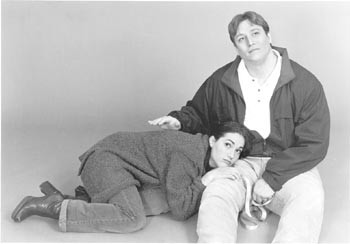
Heavy petting: Vanessa Severo and Gregory Joseph Allen star in Sylvia.

Doggone Good

‘Sylvia’ offers fetching tale of puppy love

By Daedalus Howell

SANTA ROSA’S Summer Repertory Theatre invites local theatergoers to allay the dog days of summer with their own dog show, A. R. Gurney’s canine comedy Sylvia (marvelously directed by Irwin Appel). About a love triangle between a woman, her man, and his dog, this supremely satisfying production comes in on a Gurney but certainly doesn’t leave on a stretcher.

In it, empty-nesters and suburban refugees Greg (Gregory Joseph Allen) and Kate (Carrie Baker) have moved to Manhattan to embrace the latter halves of their lives. Greg’s career and emotional well-being flounder in the new environment, however, as his wife’s career teaching Shakespeare to inner-city kids flourishes. Yearning for emotional connection with the bustling world surrounding him, Greg impulsively adopts a stray mutt named Sylvia (Vanessa Severo).

Sylvia seems to converses with Greg as though she were human, but soon becomes a “bone of contention” between him and his wife. Threats of the pound loom as the dog, described as a “male menopausal moment,” effectively becomes “another woman.”

Vanessa Severo is the kind of actress with whom audiences (and theater reviewers) instantly fall in love. Excruciatingly beautiful (or should that be fetching?), the winsome actress bounds onstage as the breathless and blathering Labrador-poodle mix Sylvia, and the house nearly caves in from laughter and adoration.

Severo’s performance is vivacious, kinetic, and poignant–her parody of puppydom is as effortless as her wit is surefire. Beyond the exquisite emotional shading Severo brings to her canine character, the actress proves herself an adept physical comedienne. After being groomed with bows and a boa, she prances about the living-room set with her ass and nose so far in the air they’re practically airborne.

Greg Allen, as a commodities trader gone astray, provides the perfect ballast for Sylvia’s spitfire antics. More than delivering a lovable lug hung up on his pooch, Allen develops Greg’s arc such that it both sells the absurdity of his constant lovelorn doggerel (“Ahh, who’s a good girl?”) and draws a memorable portrait of a man on a fox hunt for happiness.

Throughout, Carrie Baker’s Kate, an upright, cosmopolitan schoolmarm with a penchant for quoting the bard , serves as the play’s voice of reason. Baker brings a cool sophistication and attractive mien to her exasperated character, who’s forced to choose between obliging her husband’s bestial obsessions and going solo.

Heidi Tokheim proves herself the chameleon of this stellar cast by appearing as different sounding boards for Greg and Kate. Among them are Tom, a Central Park regular whose dog Bowser is the object of Sylvia’s desire prior to her getting spayed and Leslie, the sexually ambiguous marriage counselor who explores gender issues in his/her spare time.

No bones about it: SRT’s Sylvia is more than a shaggy-dog story. It’s inspired, moving theater. Not to sound dogmatic, but audiences should sit and watch this show or have their noses rubbed in regret.

Sylvia plays through Aug. 5, Tuesdays-Saturdays at 8 p.m. and Sundays at 7:30 p.m.; plus some matinee shows (call for details). SRJC, Newman Auditorium, 1501 Mendocino Ave., Santa Rosa. Tickets are $12 for adults and $10 for seniors and youth. 527-4343.

From the June 29-July 5, 2000 issue of the Sonoma County Independent.

© Metro Publishing Inc.
Community Cookbooks

0

Reading Recipes

The historical significance of community cookbooks

By Marina Wolf

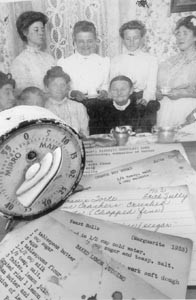
COMMUNITY cookbooks. Most of our mothers had at least one of these rickety assemblages of “tried-and-true recipes,” collected by a committee, plainly published, and sold by the stack to raise funds for some unspecified charitable project. My mom has one mimeographed volume dating from 1956, whose cover is charred in a spiral pattern that bears a suspicious resemblance to an electric burner. But in spite of this fascinating mark, I never wondered about that book, or even about what my mom was cooking while she was burning the cover off. Now I’m rethinking my obliviousness, thanks to some scholars who are mulling over such seemingly mundane material.

Recipes for Reading: Community Cookbooks, Stories, Histories (University of Massachusetts Press, 1997) takes a good hard look at the questions a curious reader may find in community cookbooks. Why do some contributors to these cookbooks use their husbands’ names and others use their own names? Why do some cookbooks not mention names at all? Why is one dish included five times? Why are instructions usually so terse? Why, for example, are there nonkosher recipes in a Jewish women’s auxiliary cookbook?

Underneath these seemingly trivial questions, however, are real issues: What does a collection of recipes reflect about its community’s group dynamics and aspirations? What is the effect of ethnicity or economic status on the language and content of the cookbook? How does the process of creating these cookbooks dovetail with the creation of women’s communities?

In answer, the scholars set out a veritable feast of possibilities in the field of women’s culture. One Recipes for Reading essay examines the syntax and semantics of pie recipes to provide a linguistic background for the communities that created and used them. Another deconstructs Like Water for Chocolate as a complex blend of community and self in the kitchens of Mexico.

In her own contribution, editor Anne Bower identifies narrative elements of community cookbooks that combine to tell stories of history, moral triumph, or the integration and assimilation of a smaller community into the larger society.

THE ASSIMILATION plot line was common in community cookbooks before World War II, according to Bower. Until then, books produced by women from various ethnic backgrounds called upon Mom, God, the flag, and eight recipes for apple pie. It was a natural phase of the immigrant experience, says Bower: “These women were asserting themselves as middle-class Americans. They wanted to show that they ate whatever was current and that they lived the good life.”

Later, as wars and international politics sped up the globalization of American tastes and tolerances, immigrant communities felt more comfortable, and their cookbooks began to include native recipes, native languages, and a palpable sense of ethnic, cultural, or religious pride.

Meanwhile, women’s roles in the home changed, which necessarily affected the tone of their community cookbooks. Early books emphasized the power of women to affect the physical and moral health of their families through the meals that were served. Bower writes, “They used a lot of terms like ‘domestic scientist’ or ‘minister of the family state,’ ” perhaps as a way of compensating for or distracting women from the constricted sphere in which they lived.

In time, women edged out into the world of business, and the standards for domestic mastery expanded to include speed and convenience as well as healthfulness and taste.

Most cookbooks, however, still enforced the notion of the woman as the cook, regardless of her social or professional standing (witness the defensive title of the 1955 National Women’s Press Club cookbook: Who Says We Can’t Cook?).

Today, many community cookbooks have occasional male contributors and a much-heightened awareness of health and ecological issues. But in fact, says Bower, the cookbooks still display old attitudes about women and cooking.

“It’s still mostly women writing the books, and they’re still in charge of our health. We still believe that we can make the world a better place by what we feed our families.”

THIS WAS certainly true of my mother, though she was never very skilled as a cook. I recently went back to her charred cookbook to see what culinary stories she had picked up as a young woman. The cookbook came out of Utah in the mid-’50s, so women were the kitchen authorities, gentle tyrants of the stovetop, feeding hungry men and eager children (as depicted in the crudely drawn cartoons at the front of each chapter).

There were the scientific-looking tables of measurements, the chapter full of thrifty household hints, and the obligatory poem on how to keep your husband happy–important reading for my mother, who was a single student at Brigham Young University at the time. With the pressure surrounding unmarried women of that time and place, she surely would be studying the pages of these and other cookbooks not only for guidelines, but also for fantasies of the wedded life to come.

MY MOTHER, being a newcomer to this congregation, contributed no recipes of her own, but, like many a dedicated student of other literary genres, she wrote copious marginalia, noting prices of various cuts of meat and cutting recipes by two-thirds, her singlehood revealing itself.

The community she joined consisted of sturdy, practical women whom she would come to know well (relatives of her friend and soon-to-be sister-in-law were major content providers). Most of the recipes were modest and made large quantities; their directions assumed competence and Mormon utilitarianism, with the possible exception of the desserts, which took more pages than any other category.

Perhaps the contributors wanted their friends to think they made desserts often, or maybe this was just a manifestation of a dream, an image of the sweeter life that everyone wanted in those postwar years.

Maybe on my second reading I can get to a discursive analysis of the salad dressings. Someday I might even get Mom to confess to the circumstances of the burnt book.

But I’ve read enough to recognize this fading set of recipes for what it is: a rich primary text for the story of my mother’s life.

From the June 29-July 5, 2000 issue of the Sonoma County Independent.

© Metro Publishing Inc.
Santa Rosa and Petaluma Master Plans

Master Plan

A tale of two cities and their approaches to planning

By Stephanie Hiller

MORE HOUSES? High-rises downtown? Traffic and more traffic? Here comes the “g” word–not “growth” this time, but “general plan.” This year, Sonoma County’s two biggest cities, Santa Rosa and Petaluma (as well as Rohnert Park), have each embarked on a periodic revision of their general plan, that unwieldy document that guides development. Both have employed Dyett & Bhatia as their consultants, but there the similarity ends.

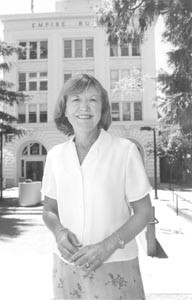
While Santa Rosa is doing a routine, every-fifth-year update of its plan, Petaluma has launched an ambitious exercise to create “a comprehensive general plan for the whole community–kind of a 20-year business plan,” according to Pamela Tuft, who holds the unique position of general-plan director in Petaluma.

Petaluma City Councilman Matt McGuire, sounding more like John Seed than the typical city official, talks about “honoring the interconnectedness of all things,” measuring and quantifying the environmental impacts and then “using that as a framework to direct us in how we structure our general plan.”

Back in staid Santa Rosa, you’ll hear no such inspired talk. Yet that city’s general-plan revision, humdrum as it may sound, will have significant impacts on the quality of life. General plans matter: through legislation and through case law, the general plan has assumed the status of the “constitution for all future development,” according to LAFCO (Local Agency Formation Commission).

Enviros say that “it’s not the plan, it’s the planning.” For local housing activist Sonya Taylor, Santa Rosa could do better. “This is the first revision since the urban growth boundaries [were voted in four years ago, limiting the city’s sprawl for 20 years], and growth pressures are stronger than ever before. It would have been a good time to do a major update [in Santa Rosa].”

To begin with, Santa Rosa city officials were not going to invite citizens to offer their views, but, according to Taylor, they got pressured into it. The 18-month process now involves monthly workshops in each of the four quadrants of Santa Rosa, after which the city’s planning management team, which is made up of staff and volunteers, will make recommendations to consultants, who will draft a general plan and bring it back to the citizenry.

“Ultimately it’s those four votes on the City Council [that will decide the fate of the plan],” says Ken Wells, a citizen member of the planning management team. Wells would like more emphasis on environmental impacts than he sees happening. “One of the more troubling areas is that everything’s paid for by development. Unless the community is willing to tax itself, it’s impossible for jurisdictions to raise money.”

The surging economy and growth of jobs have produced a terrible imbalance in the housing sector, especially affordable housing, which is, in Taylor’s view, “the issue of the decade.”

“We’ve taken a strong stand for mixed-density housing,” says Santa Rosa City Councilwoman Noreen Evans, referring to the council’s recent directive that Safeway’s latest project at the old Yardbirds site must include affordable housing. “The reality is that people are coming here, so we might as well put them where we want them!”

Santa Rosa Mayor Janet Condron agrees. “We want to establish more mixed use,” she says, “higher densities, more affordable housing.”

WHAT’S STOPPING IT? Money, says Steve Burke, director of Santa Rosa’s Housing Authority. “It’s not the plan that does it. What we need most is the source of revenue.”

Builders would rather construct upscale, market-rate housing, with its higher profit margin; they’re tired of being asked to bear the costs of affordable housing. City leaders hope that a study currently in progress will show the most effective ways of securing that money, whether through raising in-lieu fees paid by developers or requiring businesses to cover more of the costs of the housing their workers will need.

It’s become commonplace to blame urban growth boundaries for the high cost of housing, since they put the brakes on annexations. But analysts say that Santa Rosa–one of five Sonoma County communities to adopt UGBs–still has plenty of space within those boundaries to meet its growth-requirements projections for 20 years, as well those of the Association of Bay Area Governments. Since ABAG was created in 1961, the agency’s projections have set the pace for city planning throughout the Bay Area. City planning must accommodate ABAG numbers in order for a city to get certified and funded. But there are no penalties if those houses never get built.

ABAG tries to distribute the growth through the nine-county region it represents, but since Marin County has a no-growth policy, the pressure for additional North Bay housing gets pushed on Sonoma County, which is expected to grow by 25 percent in the next 20 years, owing more to the birthrate than to newcomers.

USING a median income of $58,100, ABAG predicts a need for 5,465 new units in Santa Rosa in the next seven and a half years. Of those, some 1,800 houses must be built for very-low- and low-income families.

The solution, in the parlance of today’s “smart planning,” is higher and mixed densities in appropriate sections of the city, like the downtown area.

“We could build single-family sprawl,” says Taylor. “But we’ve seen what happened in Silicon Valley. What we’re trying to do is build higher densities in certain areas to get affordable housing and to get better neighborhoods. Then you can designate more land for parks.”

It’s the public that is most resistant to the idea of higher densities. “People don’t like change” is the mayor’s explanation.

But Taylor says sympathetically, “The bottom line is that growth brings a huge amount of problems. Transportation gets worse and roads don’t get better. There’s a perceived loss of privacy. Schools get more crowded.”

But a mixed-use neighborhood, where shopping is close at hand and public transportation is available, offers convenience that can be a boon for elders and creates lively streets that attract young people. “I think it’s Santa Rosa’s responsibility to convince people that mixed density will maintain a higher quality of life,” says Taylor.

Must we have those higher densities? Lisa Kranz, a city planner working on the general plan revision, “can’t say.”

But for attorney Dick Day of Concerned Citizens for Santa Rosa, the picture is quite clear: “We don’t have a tremendous need for starter castles on the hill, yet that’s what they’re building. What we need is a growth management and allocation plan that will insist that 50 to 70 percent of new houses are affordable.”

Will it be done?

Wait and see, or join the process. Monthly meetings are coming up in the next six months for southeast and northeast Santa Rosa.

From the June 29-July 5, 2000 issue of the Sonoma County Independent.

© Metro Publishing Inc.

Hamburger Ranch and Pasta Farm

0

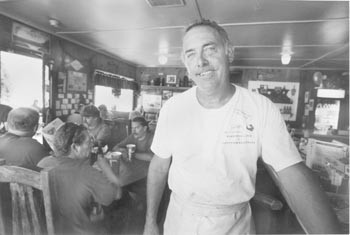
Blue-collar burgers: Chef/owner Ray Pesce is carrying on the working-class tradition at the Hamburger Ranch and Pasta Farm in Cloverdale, which has served local ranchers, loggers, and travelers for more than 50 years.

On the Road

A rustic haven for hungry travelers

By Paula Harris

THE HOGS ARE packing the parking lot of this old roadside barbecue and burger joint–motorcycles, that is. Gleaming Harleys are lined wheel-to-wheel, three and four abreast, while cars and trucks clumsily vie for space in the dusty parking lot under the trees in Oat Valley.

We pull our car into the last remaining spot–and it’s a tight squeeze. I gingerly open the door, careful not to send a nearby cluster of motorbikes sprawling dominolike across the gravelly ground.

Seems everyone’s here at Cloverdale’s Hamburger Ranch and Pasta Farm this Saturday lunchtime for the same reason: to grab a burger and a cold beer before heading back onto the freeway. The place is swarming with scores of men (and a few women) wearing leathers and black shades and jabbering loudly.

The bikers crowd the outdoor seating areas, sprawling on plastic chairs beneath the green-and-white striped umbrellas, tossing back lagers. A big ol’ barbecue pit is smoking merrily; a pile of logs is stacked to one side ready for the evening barbecue (summer weekends between 5 and 9 p.m.)

The building that’s now the Hamburger Ranch and Pasta Farm restaurant started out more than 50 years ago as the Top o’ the Hill Texaco Gas Station and segued into a popular watering hole and eatery for local ranchers, loggers, and travelers.

It’s an old-style mom-‘n’-pop place, with clunky, rustic wooden chairs and barstools, plastic squeezy color-coded ketchup and mustard bottles on the tables, and oldies on the sound system. It’s the kind of place you’d still expect to find 25-cent hamburgers and 10-cent coffee–of course the prices are a bit steeper than that these days, but still a deal.

The scarred wooden wall panels are plastered with postcards. “Your place takes me back to the 1950s and family vacation time,” reads one dog-eared card in a cheerful scrawl. “It’s a real blast from the past.” Another describes how the smoky-sweet smell of the barbecue lured a carload of motorists headed for Elk off the road and into the restaurant.

We manage to find a small booth near the cash register. There follows a long wait with a lot of noisy activity. With every jarringly loud door slam accompanied by a jangly bell, more bikers come inside to pay for their lunches at the counter.

The line forms for the cash register right by our table, and since they’re at our eye level, we’re condemned to watch a constant parade of leather-clad biker butts awaiting their turn. Shiny black. Shiny black. Shiny peacock green with black drawstrings. Shiny black. Shiny black almost resting on our tabletop.

The “entertainment” wears pretty thin after about 35 minutes.

THE WAITRESS, an overwhelmed young woman edgily snapping gum, finally gets to us. “Is it usually like this?” we yell above the din. “No, today we’ve been ambushed by a biker club,” she hollers with a shrug and a gum pop.

We order a hearty, stomach-filling fettuccine with homemade marinara sauce ($5.75/half order). The half order is generous enough. The sauce is crammed with mushrooms and tomatoes. It’s good, tasty roadside fare–a dish that could keep you going till way past Elk.

The award-winning “World Famous Hamburger” ($3.20) sounds promising. But we’re disappointed by the burger, served in a plastic basket on a sheet of greaseproof paper. The textureless meat is woefully thin, dry, and badly burned (we’d requested medium-well and this is, well, well). It doesn’t look or taste homemade. The only saving grace is a golden heap of excellent French fries–wedge-cut russets with the skins left on and deep-fried in canola oil.

The grilled garden burger ($3.95) is even worse than the hamburger–and rock-hard around the edges to boot–but the accompanying scallion-flecked potato salad is very good.

The food is far better when we return on a Thursday evening. There are still plenty of diners, but the atmosphere is calmer. Tiny lights illuminate the trees outside, and Louis Armstrong plays on the sound system.

A half order of cheese-filled ravioli ($5.75) in delicate pesto cream sauce is a luscious treat (the same dish would cost double in an upscale Italian trattoria). A turkey burger ($4.25) is a succulent oval flecked with herbs and black pepper. The texture of the patty is good–almost shredded rather than ground. Very tasty.

We order the half-pound burger called “International Connection” ($6.95), and this time everything’s as it should be. Ordered “medium,” the juicy meat is cooked perfectly, with a homemade taste and texture. It’s a trucker’s dinner–a thick half-pound patty on top of two hunks of garlic bread wrapped in melted jack and heaped with jalapeños, pickles, tomatoes, lettuce, and grilled onions. Good stuff.

A bottle of Fetzer 1997 Home Ranch Zinfandel ($18), selected from the small wine list, is the perfect inexpensive burger wine. Although most folks here drink beer.

One quibble (apart from the slow service) is that this time no fries come with the burgers and we have to order them separately (ranch fries, $1.55). Unfortunately, they finally arrive only after we’ve eaten our burgers.

The only homemade dessert offered is a little gem: a pumpkin pudding cake ($2.25) that offers a smooth pumpkin-cinnamon custard and a comforting slice of nostalgia. All at once it’s Thanksgiving in the middle of June.

There are a few glitches, but for price and funky atmosphere, Hamburger Ranch and Pasta Farm is well worth a detour.

Hamburger Ranch and Pasta Farm Top of the Hill–Cloverdale, 31195 N. Redwood Hwy., Cloverdale; 894-5616 Hours: Daily, 7 a.m. to 9 p.m. Food: The name says it all, plus barbecued items on summer weekend evenings Service: Either overwhelmed or just slow Ambiance: Old-fashioned mom-‘n’-pop roadhouse; loud, intense, and crowded on weekends; more comfortable outside Price: Inexpensive Wine list: Small selection of inexpensive wines Overall: 2 1/2 stars (out of 4)

From the June 29-July 5, 2000 issue of the Sonoma County Independent.

© Metro Publishing Inc.

Summer Cuisine

Cool Cuisine How to eat when you can't stand the heat By Marina Wolf HAIR, LAWN, and appetite: the first three things to wilt during a heat wave. The first two are beyond the scope of a food article, but what about the appetite? We have to eat, even after the...

Merlot

Groundbreaking: Winemaker Dennis Hill--blending quality and mass production. Mellow Merlot Blackstone Winery specializes in a new California classic By Bob Johnson IF YOU WERE TO WALK into the lounge of a fine restaurant, pull up a bar stool, and ask for a glass of merlot, chances are pretty good...

Sonoma County Right-to-Farm Ordinance

Bedlam in paradise: Marilyn Goode says that the area around her Sonoma Valley home is fraught with noise from vineyard development. Down on the Farm Suburbanites and farmers clash over Sonoma County's new right-to-farm ordinance. Now the issue is heading for the courts By Tara Treasurefield ...

Patrick Ball

Stories to tell: Patrick Ball, who has emerged as one of the leading interpreters of the music of Turlough O'Carolan, presents a one-man show this month based on the celebrated works of the Irish bard. Dream Weaver Celtic harpist and storyteller Patrick Ball blends music, folklore, and heart By Greg Cahill...

Robert McChesney

American original: Petaluma painter Robert McChesney wields an offbeat brush. Enduring Visions Local retrospective shows off Robert McChesney's abstract paintings By Daedalus Howell AS THEY SAY, "Home is where the art is." For over 50 years now, home for artist Robert McChesney has been atop Petaluma's Sonoma...

Labor and Social Action Summer School

FOR THE THIRD straight year, Sonoma State University plays host to the Labor and Social Action School. The event, which is sponsored primarily by the North Bay Central Labor Council, is an ambitious effort to "educate for action" on labor, environmental, and civil rights issues. The weekend starts with a bang on Friday, July 7, when...

‘Sylvia’

Heavy petting: Vanessa Severo and Gregory Joseph Allen star in Sylvia. Doggone Good 'Sylvia' offers fetching tale of puppy love By Daedalus Howell SANTA ROSA'S Summer Repertory Theatre invites local theatergoers to allay the dog days of summer with their own dog show, A. R. Gurney's canine comedy...

Community Cookbooks

Reading Recipes The historical significance of community cookbooks By Marina Wolf COMMUNITY cookbooks. Most of our mothers had at least one of these rickety assemblages of "tried-and-true recipes," collected by a committee, plainly published, and sold by the stack to raise funds for some unspecified charitable project. My mom has one...

Santa Rosa and Petaluma Master Plans

Master Plan A tale of two cities and their approaches to planning By Stephanie Hiller MORE HOUSES? High-rises downtown? Traffic and more traffic? Here comes the "g" word--not "growth" this time, but "general plan." This year, Sonoma County's two biggest cities, Santa Rosa and Petaluma (as well as Rohnert...

Hamburger Ranch and Pasta Farm

Blue-collar burgers: Chef/owner Ray Pesce is carrying on the working-class tradition at the Hamburger Ranch and Pasta Farm in Cloverdale, which has served local ranchers, loggers, and travelers for more than 50 years. On the Road A rustic haven for hungry travelers By Paula Harris THE HOGS...
11,084FansLike
4,606FollowersFollow
6,928FollowersFollow
