Housing Help

0

Gimme Shelter

Housing–what a nightmare. That is, at least if you’re on the outside looking in. If you bought into this region before the boom times hit–in which 30 percent annual increases in the cost of a new home are common–then you’re racking up the equity. Yup, housing costs are going faster than a dry shake roof after being targeted by a bottle rocket on the Fourth of July. But don’t despair entirely. There’s always an overpriced chicken coop out there somewhere for you and the kids. Or maybe a condo. And there is help–however slim. Now don’t you regret spending all that cash on the high life back in the ’80s?

California Department of Real Estate This licensing agency handles complaints about real estate brokers, sales agents, and mortgage brokers. 415/904-5925.

Federal National Mortgage Association (Fannie Mae) The agency provides information about residential mortgages. affordable housing, and local lenders. www.homepath.com

California Finance Housing Agency Loans The CHFA administers several loan programs designed to assist low-income individuals, including the CHFA resale program, sponsored by the state of California and funded through bonds sold by the CHFA. Loans at rates typically a point or so below market rates are available to first-time home buyers. CHFA, 1121 L. St., Seventh Floor, Sacramento, CA 95814. 916/322-3991.

Cal-Vet Loans For first-time buyers, these loans are generally offered at lower-than-average interest rates to veterans. 800/952-5626.

FHA Loans FHA loans are insured by the Federal Housing Administration and permit qualified buyers (with impeccable credit) to purchase a home with as little as 5 percent down. 415/556-5900.

Burbank Housing Development Corp. This nonprofit agency runs numerous programs, including a number of sweat-equity projects that allow first-time home buyers a chance to work off part of their down payment. 3432 Mendocino Ave., Santa Rosa; 526-9782. For loan counseling, call 526-5528.

From the July 20-26, 2000 issue of the Sonoma County Independent.

© Metro Publishing Inc.

Dance Classes and Apparel

0

Astaire and Rogers were class. Kelly and Caron were cool. Fonteyn was grace. Travolta was attitude. What will you be when you slip on your new dance shoes? Or maybe you’ll go ethnically barefoot with rings on your toes and jangling bells on your ankles. So you’ve always yearned to gyrate in a grass skirt; clatter castanets; slither to salsa music; jump, jive, and glide to a Viennese waltz? It’s not too late. Child or adult. Beginner or professional. With a partner or without. Two left feet or not. There are plenty of local options for dancers and wannabes and plenty of reasons to pound the boards, twist, and twirl. Visit Monroe Hall in Santa Rosa, which offers lessons in many genres, like swing, salsa, ballroom, country-western, square, jazz, and Cajun-zydeco. Or try exotic flamenco, hula, or belly dancing at a dance school. Or just get moving at a bargain-priced class at the JC. “Dancing is a wonderful activity,” says Denny Freeman, owner of Dance Central in Santa Rosa, which offers classes in big-band swing, American tango, salsa, country two-step, and more. “It’s a way to get exercise, to meet people, to relax and listen to music, and to learn the skills of partner dancing.” Plus, next time you’re invited to a wedding, you (hopefully) won’t injure anyone else on the dance floor. See below for dance classes and dance apparel.

Sonoma County

Academy of Ballet California 569 Summerfield Road, Santa Rosa. 537-0140.

Ballet Allegro Classical Academy 410 Center St., Healdsburg. 433-2533.

Belly Dance by Rose Productions P.O. Box 182, Occidental. 824-0533.

Cloverdale School of Dance 127 E. First St., Cloverdale. 894-4057.

Dance Center of Sonoma County 56 W. Sixth St., Santa Rosa. 575-8277.

Dance Central 3535 Industrial Drive, Santa Rosa. 545-6150.

Dance Gear 2100 Armory Drive, Santa Rosa. 526-5858.

The Dance Shop 19 Kentucky St., Petaluma. 778-3188.

Fantastic Feet Studio 607 Martin Ave., Rohnert Park. 585-9292.

Footloose Dance Center 946 Caulfield Lane, Petaluma. 762-2410.

FlamencoArts 709 Davis St., Santa Rosa. 544-0909.

Healdsburg Ballet 311 Monte Vista Ave., Healdsburg. 431-7617.

International Dance Theatre and School 709 Davis St., Santa Rosa. 544-0909.

John Ross Academy of Dance 977 Golf Course Drive, Rohnert Park. 586-1136.

Monroe Dance Hall 1400 W. College Ave., Santa Rosa. 575-1205.

North Bay Performing Arts Center 424 Payran St., Petaluma. 762-1306.

Petaluma School of Ballet 110 Howard St., Petaluma. 762-3972.

Santa Rosa Junior College 1501 Mendocino Ave., Santa Rosa. 527-4237.

Sebastopol Ballet School 390 Morris St., Sebastopol. 824-8006.

Shirley Hunter School of Dance 3494-D Montgomery Drive, Santa Rosa. 539-9379.

Silvija’s Dance Supply 569 Summerfield Road, Santa Rosa. 539-7530.

Sonoma Ballet Conservatory Suite B, 561 Broadway, Sonoma. 938-1424.

Suzanne’s Dance School 532 S. McDowell Blvd., Petaluma. 763-4827.

Windsor Dance Academy 7862 Bell Road, Windsor. 838-7369.

Wischemann Hall 460 Eddie Lane, Sebastopol. 823-0926.

Napa County

Academy of Danse 1123 Jordan Lane, Napa. 226-6170.

Back Stage Dancewear 950 Pearl St., Napa. 251-9409.

Napa Regional Dance Company 1527 Polk St., Napa. 252-4615.

Napa Valley Dance Center 950 Pearl St., Napa. 255-2701.

Pepperette Baton & Dance Club 2401 California St., Napa. 224-9198.

Sara’s Studio of Song & Dance 4080 Byway E., Napa. 252-7375.

Silverado Ballet School 617 Wilson St., Napa. 255-9233.

From the July 20-26, 2000 issue of the Sonoma County Independent.

© Metro Publishing Inc.

Film Cafe

0

Movies in motion: Quirky art flicks like Karen Aqua’s “Nine Lives” (above) are standard fare at the Sonoma Museum of Visual Art’s Film Cafe, which begins its new season on July 22 with a workshop on making your own film.

Movie Magic

Film Cafe workshop lets you make your own film–without using a camera

By Patrick Sullivan

MAKING a movie is easier than you think. Maybe you believe would-be filmmakers have only two options. You can head to Hollywood and try to sweet-talk some big studio into handing you a hundred million bucks to whip up a special-effects-laden extravaganza full of exploding cars and buxom babes. Or you can grab a digital camera and head into the dark forest of indie filmmaking, where you’ll wander for days without end, haunted by the grim knowledge that your blood, sweat, and copious tears will most likely come to nothing, since probably no one will ever see the finished product. If you even manage to finish it.

But get this: What if you could make a film without ever touching a camera?

It’s not a joke. It’s not a Zen riddle. It’s the subject of a workshop that opens this summer’s installment of the annual Film Cafe at the Sonoma Museum of Visual Art.

Now in its third summer, the annual series of outdoor screenings of short films in the courtyard of the Luther Burbank Center has acquired a reputation for offering offbeat visual experiences. (For a complete list of upcoming Film Cafe events, see sidebar, page 27.) But this year, for the first time, the event’s organizers are offering all of us voyeurs the chance to become full-blown participants.

The workshop, titled “Rolling with Sound: Making a Camera-less 16mm Film,” will not qualify you to direct the next Mission Impossible movie–or even the sequel to The Blair Witch Project. But participants will learn how they can make a visually interesting film without ever shouting “Action!” or “Clean that booze hound up and get him on the set!”

Best of all, the three-hour session–which will be led by SMOVA director Gay Shelton–will result in the creation of an actual film that will be shown to an actual audience. Whatever comes out of the workshop, no matter how quirky, will screen on Friday, July 28, at the first evening of the Film Cafe (which also features a selection of films from Monte Rio filmmaker Rock Ross).

And that might be only the beginning.

“I would be so pleased if people got turned on about making films and saw how easy it was and actually created things that could be considered for next year’s Film Cafe,” Shelton says. “That would be really cool.”

Here’s how it works. Shelton will demonstrate various methods of using simple tools to create visual effects on both clear film stock and exposed color film. You’ll learn how to scratch through different layers of emulsion, how to draw on the film, stamp on it, drill through it (which shows up on the screen as dots), and much more.

“We’ll be doing all kinds of hand techniques, almost like making a collage or a drawing,” Shelton explains.

These techniques, by the way, are easy to duplicate at home. The tools used are simple: razor blades, sandpaper, marking pens, and so on.

“It’s all very ordinary stuff,” Shelton says. “The only thing you have to do is go out and find the film stock, and I’ll be giving sources for that.”

Shelton will be assisted in the workshop by poet Christina Svane and musician Billy O’Hare, who will collaborate with the student filmmakers to create a sound piece to go with the film.

“It’s a lot of work for five minutes,” Shelton admits, “but it gives people an idea of what’s involved.”

Film Cafe Screening Schedule

SHELTON has plenty of experience laboring in the vineyards of filmmaking. The 39-year-old graduate of UC Davis split her time in the art department between a variety of artistic media, with a special concentration on painting and drawing. But she spent many long nights in the school’s film and sound production studios.

Indeed, Shelton recalls one fateful night when she went on editing sound until well beyond her bedtime–with painful results at around 3 in the morning.

“As I was speaking into the microphone, I just suddenly nodded right off and hit my head on a drawer handle,” she recalls with a laugh. “So I think I can say I spent a lot of time in the production room.”

Shelton went on to participate in various film projects at the school, and even scored a grant to make a collaborative film, with a fellow student, called Page 50 of Roget’s Thesaurus. Along the way, she used many of the same techniques she’ll demonstrate in the upcoming workshop.

“I was pretty serious about making films at the time, and I used a lot of these techniques in my film, along with some really great found footage, including this great Catholic sex-ed film,” she says.

Shelton doesn’t make films these days (“I’m busy running this museum,” she says), but that may change. Long known for her work as a painter, Shelton has recently been forced by a lung problem to stop working with paint, so she’s thinking of returning to her old artistic outlet.

But the workshop is more than a reflection of Shelton’s personal interest in filmmaking. The board of directors recently revised SMOVA’s mission statement to add education to the long-standing goals of offering exhibits and events. To that end, the museum has begun to conduct things like school tours. The camera-less film session is an experiment, an attempt to understand the interests of the community.

“At this point we’re casting a big net and trying to understand what the most effective way to create these experiments in education would be,” Shelton says. “So people can vote for this kind of workshop by signing up.”

“Making a Camera-less Film” takes place on Saturday, July 22, from 11 a.m. to 2 p.m. at SMOVA, Luther Burbank Center, 50 Mark West Springs Road, Santa Rosa. Admission is $50, which includes a box lunch and admission to the Film Cafe screening on Friday, July 28. For details, call 527-0297.

From the July 20-26, 2000 issue of the Sonoma County Independent.

© Metro Publishing Inc.

David Brooks/Ann Powers

Fool’s Paradise

Two new books try–and fail– to analyze the new bohemians

By Jonah Raskin

I’VE LINGERED this summer in Austin, Texas, a college town and the state capitol–and now also home to the booming computer industry and to industrious techies like Nate Hess. Thirty-seven-years-old and a Northern California transplant, Hess goes to work wearing Birkenstocks, purple hair, and six earrings in his right ear. He’s an avid Tom Waits fan and he never buys coffee at Starbucks because he’s put off by their corporate policies. Hess is a multimillionaire, and in Austin he’s got company.

In fact, this town is crawling with folks like him. They’re young, rich, and hip, and, along with their ilk around the country, they’re the subject of David Brooks’ pop sociology study, Bobos in Paradise: The New Upper Class and How They Got There (Simon & Schuster; $25).

If you don’t already know, “bobos” is shorthand for the hybrid clan that’s bourgeois and bohemian. Look at their bank accounts and they’re bourgeois; monitor their life styles and they’re bohemian.

Brooks, who recently moved from the Wall Street Journal to Newsweek, proudly calls himself a bobo. Moreover, he thinks the bobos might be the salvation of humanity since they combine the best of capitalism with the best of the counterculture, or so he argues.

No doubt about it, the bobos are here in a big way and here to stay as long as the American economy keeps going up and up. Some of my best friends are bobos–in Texas, California, and all across the country. Many of them are former 1960s radicals who now work for corporations, make lots of money, and use it to protect the whole planet and not just to indulge themselves. I love them dearly, but I’m not sure I’d want to put the fate of the world in their hands.

What I’m saying, I guess, is that while there’s truth in Brooks’ argument, he doesn’t have the whole truth and nothing but the truth on the subject. The bobos form an elite, but they aren’t in power anywhere. They haven’t replaced the old Wasp establishment, and the old Wasp establishment, which includes George W. Bush and Al Gore, still runs much of the country.

Part of Brooks’ problem is that he starts with a false premise. “Throughout the twentieth century it’s been pretty easy to distinguish between the bourgeois world of capitalism and the bohemian counterculture,” he writes. But you don’t have to be a historian to know that bankers have often moved to bohemia, and bohemians have often become, if not bankers, then at the least upper middle class.

I observed the phenomenon in my family. Not only were my parents bourgeois suburbanites and bohemians, they were also socialists, and so were their friends. Like many of today’s bobos, they were goodhearted do-gooders, but they were unable to prevent the Depression or World War II, and I doubt that Brooks’ good people have the power or the wisdom to prevent war, genocide, or economic catastrophe, either, though I wish them well.

If Brooks were to read Ann Powers’ polemical memoir Weird Like Us: My Bohemian America (Simon & Schuster; $23), he’d surely say that her bohemian-rags-to-bourgeois riches story illustrates his bobo thesis. He’d be right, though it might not be clear at first glance, since Powers occasionally roars like a real subversive. Indeed, she rocked the bourgeois boat back in the 1980s, then decided to travel first class.

Powers began her career as an angry, underpaid rock critic for the San Francisco Weekly. Now she’s paid exceedingly well at the New York Times, where she writes about pop music. According to the account she provides in Weird Like Us, she lives with her husband in bourgeois splendor in Brooklyn.

POWERS’ BOOK often reads like a brief in defense of her marriage, her upward mobility, and her particular brand of cultural journalism. “Rock criticism offers its practitioners the freedom of the fugitive,” she insists, as though she and the scribbling tribe of rock critics exist in a rarefied atmosphere above the rest of us. (Only someone who wasn’t ever a fugitive could think that fugitives are free.)

In the last chapter, “Selling Out,” Powers says that “we are all Judases,” and that “bohemians embrace selling out.” A therapist might say that she feels guilty about turning her back on her own countercultural past in San Francisco, and that she’s projecting her personal feeling of betrayal on the entire gang of bohemians. Maybe so.

Perhaps what’s missing most in Powers’ account is a global perspective. Indeed, Weird Like Us feels like a movie that’s been shot in close-up. You see the heroine and her small circle of friends in detail in their little enclave, but the camera never pulls back far enough to reveal the larger political and economic picture of a world increasingly divided between the techies haves and the computerless have-nots.

What Bobos in Paradise and Weird Like Us have in common is that they’re both advertisements for their respective authors and for capitalism, albeit of the enlightened variety. If you’re not bohemian and bourgeois, it’s your own fault, Brooks and Powers insist. No contemporary authors have made joining the upper class seem so pure and noble. It’s enough to make one want to escape to a far-off bohemia where the dollar doesn’t matter, where art is a calling, and nonconformity is the credo.

Jonah Raskin is the author of For the Hell of It: The Life and Times of Abbie Hoffman.

From the July 20-26, 2000 issue of the Sonoma County Independent.

© Metro Publishing Inc.

Pesticide Spraying

0

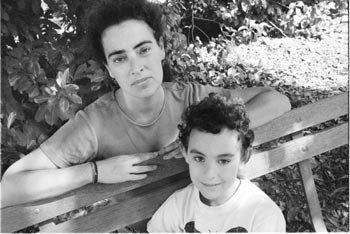
Taking a stand: Maggy Howe, seen with her 5-year-old son Zane, says she will resist any attempt to enforce a pesticide spraying order near her home.

In the Air

Threat of widespread pesticide spraying sparks resistance

By Tara Treasurefield

FIVE-YEAR-OLD Zane Howe, who has raised painted-lady butterflies since he was 2, says that butterflies are his best friends and believes that their lives are as valuable as his. When his “friends” unfold their wings for the first time, he releases them into his family’s organic garden outside of Occidental. But Zane’s mother, Maggy Howe, is convinced that both Zane and his butterflies are in danger, as pesticides may soon be sprayed in residential areas of Sonoma County to control the glassy-winged sharpshooter, an insect that carries the deadly-to-vineyards Pierce’s disease.

Is this woman nuts? Didn’t the local daily run an article last week titled “State Rejects Wine Pest Sprays, Quarantines”? Well, yeah. But those who read the article carefully know that the headline is only half true: Bill Lyons Jr., secretary of the California Department of Food and Agriculture, has rejected quarantines, but he has not rejected pesticides, or even the possibility of enforced aerial spraying to control the pest.

In fact, chlorpyrifos, a neurotoxin banned last month by the Environmental Protection Agency for residential use, was sprayed recently by aircraft in Riverside County on a 260-acre orange grove adjacent to a housing development. In Porterville and Fresno, two areas where the pest has caused extensive crop damage, another powerful neurotoxin, Sevin, was sprayed on the ground in residential areas.

“Zane’s current batch of butterflies is in the cocoon stage,” Maggy Howe says. “He’s given names to all of them. How do you explain to a 5-year-old what’s going to happen to his butterflies–or what did happen to them?”

Howe is also concerned about her son’s health. “You can cover the sandbox, but there’s no guarantee that the pesticide won’t get on the child’s toys,” she says. “How do you wash it off? Can you wash it off? As a mother, I am completely outraged.”

She is among a growing number of residents who believe that their lives–and, in some cases, livelihoods–may be placed in jeopardy by enforced spraying against the pest. The situation has escalated in recent weeks, owing to pressure from the federal government and the multibillion-dollar wine industry, laying the groundwork for political action and fomenting talk of civil disobedience.

“The wine industry has brought this on itself,” says Brock Dolman, a biologist at the Occidental Arts and Ecology Center, “through unsustainable vineyard practices. Monocropping, excessive irrigation, and overuse of chemicals make vineyards vulnerable to the sharpshooter and other pests.”

Organic farmer Bob Cannard, who will lose his livelihood if his property is sprayed, thinks that public officials are being short-sighted in their response. “Moving directly to the full-kill approach is our cultural response,” he says. “This makes a lot of money for those that do the killing, and that’s what they’re into.”

Howe, Dolman, and Cannard are among a considerable contingent of critics who say that state and county agricultural officials are not giving enough credence to alternatives to spraying. “It’s ludicrous not to declare a quarantine,” says Robin VanSickle, a nurse at Kaiser Permanente in Santa Rosa. “The bugs didn’t fly 500 miles to Northern California; they were transported in trucks–‘Express Mail’ for the bug. If you want to contain an insect, you don’t put plants infested with it in garden centers for people to take home and disperse.”

Still, the CDFA continues to allow shipments of nursery stock and grapes from infested areas. Glassy-winged sharpshooter egg casings have been discovered at two Sonoma County ornamental plant nurseries, yet officials argue that a quarantine would unfairly penalize nurseries.

“Government officials don’t have their priorities straight. Above all, they should protect the health and welfare of our environment and communities,” says first-time father of a newborn Sean Callaway. “The commerce of a particular industry, in this case wine grapes, should never take precedence over the health of a community and its ecosystem. Hundreds of citizens are now aware of the dangers of the chemicals being sprayed all around us. This is not acceptable, and we intend to put an end to it.”

But why would the state endanger children, organic farms, and even butterflies? “The state has decided that business profits supersede the health or rights of its citizens,” says Will Shonbrun, publisher of the Sonoma Valley Voice. “Californians are being forced to submit to the spraying of highly toxic pesticides on their property. As a private property owner, I consider this an invasion.

“As a private citizen, I consider it a usurpation of my right and my family’s right not to be endangered by forced poisoning.”

HE’S NOT ALONE in that sentiment. A couple of weeks ago, several Sonoma County residents spoke passionately at a Board of Supervisors’ hearing to express their alarm over the possibility of aerial or ground spraying. A couple even defiantly told the supes that they will resist any attempt to enforce a pesticide-spraying order.

Now a group of county activists is preparing to organize civil disobedience training for those opposed to the spraying. Speaking for the Town Hall Coalition, an Occidental-based group that has fought vineyard expansion and related issues, Lynn Hamilton is inviting concerned citizens to plan actions to derail the “full-kill approach” at an upcoming pesticides forum. Speakers will include CDFA Secretary Lyons and Nick Frey of the Sonoma County Grape Growers Association.

“We need to go to our state representatives, organize a demonstration, and start a petition saying we object to both ground and aerial spraying,” says Hamilton, a former Sebastopol mayor who worked as a community organizer in South America before returning to the west county two years ago.

In the meantime, others have their own plans. “I have a 10-year-old daughter and a 75-year-old grandmother in my household,” says Shonbrun. “I will not permit them to be put in harm’s way through enforced home invasion and pesticide spraying for the sake of the wine industry. Others who oppose what I consider to be immoral and illegal government actions must decide what course of action to take, but I will resist and protect my family and property, regardless of the consequences.”

Dolman says that the 10 people who own the OAEC’s extensive organic farm “would have to have some very serious collective discussions about how to respond. I’d venture to guess that some resistance would be put forth to prevent any efforts to contaminate our property,” he says.

VanSickle says she’s not willing to be martyred on the altar of wine-industry profits. “They haven’t sprayed me yet, and they’d better not try. Better the vines than me, my kid, my husband, my neighbors, my quail.”

Maggy Howe agrees. “If they come to my door, I’ll protest in any way I can,” she says. “Civil disobedience is a possibility.”

The Town Hall Coalition pesticide forum will be held on Thursday, July 27, at 7:30 p.m., at the Occidental Community Center, 3920 Bohemian Hwy., Occidental. 874-9110.

From the July 20-26, 2000 issue of the Sonoma County Independent.

© Metro Publishing Inc.

Wine

0

Swirl, Sniff, Sip, and Spit

If you think Kendall is one of the original Jackson Five, you need help. If you think a sommelier is someone who walks in his sleep; or that “the crush” describes the Novato Narrows at peak commute time; or that phylloxera is a punk-thrash band, you need help. And if you think all zinfandels are pink, all sauvignons are blanc, and all pinots are red, you really do need help now. It can be embarrassing to live in the Wine Country and not know your Alsace from your merlot. But fret not–there are several ways to empower yourself with the mystical knowledge of viticulture (that’s vino talk to you, bub). The Sonoma County Wineries Association frequently teams up with local wine educators to present classes for those who’re a little green about the grape. Or you can enroll in a wine class, such as component tasting, at Santa Rosa Junior College. There are also on-going winetasting classes at the Applewood Inn in Guerneville (869-9093). Many North Bay restaurants, cooking schools, and wineries hold events that feature food and wine pairing. Then there’s also the world-renowned Sonoma County Wine Library, which boasts a vast collection of books, pamphlets, magazines, films, and local records, all relating in some way to wine, wineries, or the Wine Country in general. Here are a few ways to pop the cork on Wine 101:

Sonoma County

Benziger Family Winery tour 1883 London Ranch Road, Glen Ellen. 935-0300

Mistral Restaurant 1229 N. Dutton Ave., Santa Rosa. 578-4511.

Ramekins Sonoma Valley Culinary School 450 W. Spain St., Sonoma. 933-0450.

Santa Rosa Junior College 1501 Mendocino Ave., Santa Rosa. 527-4237.

Sonoma County Tourism Program 520 Mendocino Ave., Santa Rosa. 565-5383.

Sonoma County Wine and Visitors Center 5000 Roberts Lake Road, Rohnert Park. 586-3795.

Sonoma County Wine Library 139 Piper St., Healdsburg. 433-3772.

Sonoma County Wineries Association 5000 Roberts Lake Road, Rohnert Park. 586-3795.

Napa County

Culinary Institute of America Marketplace 2555 Main St., St. Helena. 967-2309.

Napa Cooking School 1088 College Ave., St. Helena. 967-2930.

Napa Wine Train 1275 McKinstry St., Napa. 253-2111.

Napa Valley Conference and Visitors Bureau 1310 Town Center, Napa. 226-7459.

From the July 20-26, 2000 issue of the Sonoma County Independent.

© Metro Publishing Inc.

Pet Care Resources

0

Paws for Thought

As your dog’s agile body comes skidding across your hardwood floors, the clickity-clack of its overgrown nails become recognizable. Nails grow at a fast rate, and you, too, would be skidding around if it were not for your dexterous ability to file your own nails. Clipping your dog’s nails yourself is possible. But how do you pin down your pet (we’ll call him Fido here) for a manicure? First, fit him with a tight muzzle and find a helper to hold him. Holding entails placing Fido on his side, and then putting one arm in front of his back legs and firmly anchoring the other arm underneath his chin. Then, using nail clippers of appropriate size, discourage mass hemorrhage by shaving off small sheets of nail until you can see the pink nail bed. For the sake of your terrified pet and your clean carpet, don’t clip the nails too short (trying to catch Fido once he’s freed and decorating your carpet with bloody little half moons is maddening). You should cut only the transparent part of the nail past the foot pads so that you don’t hurt Fido by cutting into the “quick’–the portion that has nerves and blood vessels. Give Fido a pedicure every six weeks and you’ll will save a trip to the vet and protect your floors and lap. But if this home remedy sounds too daunting, sit up, roll over, and take heed. Help is at hand (and, er, at paw). Check out a few suggestions below and get your long-nailed mutt–or perhaps an unfortunately mangy, malodorous, matted one–in stunningly spiffy shape.

Sonoma County

The Dapper Dog 215 G St., Petaluma. 762-5918.

Dawg Groomer 609 E. Washington St., Petaluma. 763-2144.

Deb’s Pet Grooming 5979 Commerce Blvd., Rohnert Park. 588-8845.

Forty-Niner Pet 365 Southwest Blvd., Rohnert Park. 795-1242.

The Groomery 123 Stanford St., Santa Rosa, 576-1575.

The Grooming Gallery 847 Gravenstein Hwy., Sebastopol. 829-3535.

Healdsburg Dog Grooming 1460 Grove St., Healdsburg. 433-2559.

Kamp K-9 6915 Gravenstein Hwy., Cotati. 795-5995.

Little Friends Pet Hotel 7960 Gravenstein Hwy., Cotati. 795-6126.

Paws of Santa Rosa 4932 Sonoma Hwy., Santa Rosa. 538-7297.

Perfect Paws Pet Grooming 2468 W. Third St., Santa Rosa. 527-7297.

Pet Talk Grooming 6 Enterprise Drive., Rohnert Park. 585-3810.

Petaluma Pet Groomer 117 Washington St., Petaluma. 762-6281.

Piccadilly Pets 9237 Piccadilly Circle, Windsor. 837-9528.

Plaza Grooming 24 10th St., Santa Rosa. 544-1298.

Rincon Valley Pet Grooming 4988 1/2 Sonoma Hwy. 539-0937.

Scissorhands 6553 Front St., Forestville. 887-0190.

Shampoodle 587 Montecito Center, Santa Rosa. 539-1546.

The Soggy Doggy 403 Seventh St., Santa Rosa. 542-0244.

U Do It Self Service Pet Bathing 6 Enterprise Drive, Rohnert Park. 585-3810.

Napa County

Bubbles N Bows 585 Coombsville Road., Napa. 258-8022.

Dog World 1050 Pueblo Ave., Napa. 252-6206.

Pet Cuts 1119 Lincoln Ave., Napa. 258-1164.

The Red Dog Salon 3679 Silverado Trail N., St. Helena. 963-9358.

Reese’s Grooming 818 Jackson St., Napa. 224-6146.

Scoobi-Doo’s 2742 Jefferson St., Napa. 226-2727.

Tails of the City 2205 Main St., Napa. 254-7877.

Vintage Dog Palace 1128 Franklin St., Napa. 252-8180.

From the July 20-26, 2000 issue of the Sonoma County Independent.

© Metro Publishing Inc.

Stress Reduction

0

“Stress reduction” is the key term. It’s all the same to the relaxation-deprived. Whether you’re an off-duty cop luxuriating in your regular shiatsu massage and deep-pore facial; a world-weary attorney ready to kiss your caseload goodbye for an hour, immersed up to the neck in bubbling mud; or a frazzled mom surrendering to the sweet joy of an aromatherapy body wrap and extended soak in the hot springs. We all need to unwind, and the more pampering involved the better. Luckily for us, there are plenty of places to unravel knotted minds and muscles in Sonoma and Napa counties. Just check out all the upscale Wine Country spas, natural hot springs, and volcanic-mud baths practically in the back yard. Choose from a myriad of tension-busting treatments. Some folks just relish being packed up to their chins in hot wood chips and enzymes, a unique Japanese heat treatment offered at Osmosis in Freestone. It’s a relaxing dry bath that uses fragrant cedar fiber, rice bran, and enzymes to chill you out. Another alternative treatment is the “Watsu” offered at Glen Ellen’s Gaige House Inn and described as a “gentle form of water massage done in a pool while cradled in the arms of a trained provider.” Others prefer to seep solo under the stars at Calistoga Spa Hot Springs, a resort/motel off Calistoga’s main street, that opens its four outdoor naturally heated mineral pools and its steam room to the public each evening. But the truly adventurous love to wallow in the ooze at one of Calistoga’s mudbath emporiums, such as Dr. Wilkinson’s on Lincoln Avenue, which uses volcanic ash left over from the eruption of Mt. St. Helena, mixed with the boiling mineral water from the gurgling geothermal well on the property and a bit of peat moss for texture. In addition, salt glow rubs, seaweed algae wraps, “manual lymphatic drainage” (designed to unblock lymph nodes and strengthen your puny immune system), numerous styles of massage, and many other de-stressors can be found at various day spas in the area. Big spenders may want to check out the recent multimillion-dollar renovation at Sonoma Mission Inn and Spa, Sonoma’s crown jewel, for total, unashamed indulgence. But if you’re stressed out because you’re pinching pennies, you can troll the local herb farms and retail outlets, such as Mom’s Head Gardens in Santa Rosa, Rosemary’s Garden in Sebastopol, and local bath shops, for comforting aromatic and inexpensive de-stressors you can savor in your own boudoir. A few suggestions:

Sonoma County

Alles European Day Spa 432 Orchard St., Santa Rosa. 573-3068.

Aesthetic Profiles 990 Sonoma Ave., Suite 2A, Santa Rosa. 523-0893.

Essentials Day Spa & Salon 1229 N. Dutton Ave., Suite D, Santa Rosa. 526-3766.

Florencia 26 E. Washington St., Petaluma. 789-0168.

Gaige House Inn 13540 Arnold Drive, Glen Ellen. 935-0237.

Mermaids 115 South Main St., Sebastopol. 823-3535.

Osmosis 209 Bohemian Hwy., Freestone. 823-8231.

Panache in the Wine Country 15500 Chalk Hill Road, Healdsburg. 433-8171.

Paradise Spa 699 Petaluma Blvd. N., Petaluma. 775-3233.

A Simple Touch 239 Center St., Healdsburg. 433-6856.

Simply Skin 10 Fourth St., Suite 104, Santa Rosa. 569-7546.

Sonoma Mission Inn and Spa 18140 Sonoma Hwy., Boyes Hot Springs. 938-9000.

Sonoma Spa 457 First St. W., Sonoma. 939-8770.

Spa off the Plaza 706 Healdsburg Ave., Healdsburg. 431-7938.

Therapeutic Massage and Facial Center 101 Golf Course Drive, Rohnert Park. 584-0433.

Wine Country Spa 1601 Terrace Way, Santa Rosa. 545-8390.

Bath Factory 481 First St. W., Sonoma. 935-5903.

Hampton Court Essential Luxuries 631 Fourth St., Santa Rosa. 578-9416.

Mom’s Head Gardens 4153 Langner Ave., Santa Rosa. 585-8575.

Rosemary’s Garden 132 N. Main, Sebastopol. 829-2539.

Soft Shell 40 Kentucky St., Petaluma. 773-4950.

Sonoma County Bathworks 6 Petaluma Blvd. N., Petaluma (763-2724); 2320 Magowan Drive, Santa Rosa (526-7627).

Napa County

Auberge du Soleil 180 Rutherford Road., Rutherford. 967-9990.

Calistoga Oasis Spa 1300 Washington St., Calistoga. 942-2122.

Calistoga Village Inn and Spa 1880 Lincoln Ave., Calistoga. 942-0991.

Emerald 1523 Main St., Napa. 226-2700.

Eurospa 1202 Pine St., Calistoga. 942-6829.

Health Spa of Napa Valley 1030 Main St., St. Helena. 967-8800.

Lavender Hill Spa 1015 Foothill Blvd. (Hwy. 29), Calistoga. 942-4495.

Lincoln Avenue Spa 1339 Lincoln Ave., Calistoga. 942-5296.

Meadowood 900 Meadowood Lane, St. Helena. 963-3646.

Mount View Spa 1457 Lincoln Ave. Calistoga, 942-5789.

Oasis Spa 1300 Washington St., Calistoga. 942-2122.

Calistoga Spa Hot Springs 1006 Washington St., Calistoga. 942-6269.

Doctor Wilkinson’s Hot Springs 1507 Lincoln Ave., Calistoga. 942-4102.

Lincoln Avenue Spa 1339 Lincoln Ave., Calistoga. 942-5296.

Nance’s Hot Springs 1614 Lincoln Ave., Calistoga. 942-6211.

Roman Spa Hot Springs Resort 1300 Washington St., Calistoga. 942-4441.

White Sulphur Springs Spa 3100 White Sulphur Springs Road, St. Helena. 963-8588.

Calla Lily 1222 Main St., St. Helena. 944 1540.

Deva 1213 Coombs St,, Napa. 224-1397.

Free Time 1348 Lincoln Ave., Calistoga. 942-0210.

Heaven and Earth 1317 Main St., St. Helena. 963-1124.

From the July 20-26, 2000 issue of the Sonoma County Independent.

© Metro Publishing Inc.

Activist Organizations

0

Body Politic

Talking about politics today makes most people angry. But anger is an emotion that burns out fast. These days, a pissed-off scowl is apt to turn, rather quickly, into a cynical smirk–cynicism being the default spirit of the age. That’s fine, to a point, when it comes to the art and practice of citizenship, where a jaded eye is preferable to slack-jawed gullibility. But cynicism can cut the legs out from under the desire to make change. And when a citizenry is thus debilitated, that’s guaranteed to mean more stuff to be cynical about. None of us should worry too much about losing our edge; the power elite are bound to continue with their parade of greed, corruption, and ineptitude. But those who want to find a way into public life in the North Bay are likely to see their anger morph into something more useful, politically speaking. There are scores of activist organizations throughout the region working to change this corner of the world. The list below is partial.

Sonoma County

The Peace and Justice Center of Sonoma County (540 Pacific Ave., Santa Rosa; 575-8902) serves as a coordinating body for numerous local groups and also sponsors events and programs.

The Environmental Center of Sonoma County (312 Mendocino Ave., Santa Rosa), operated by the Sonoma County Conservation Council, is a federation of 20 key conservation and environmental groups–including Sonoma County Conservation Action, the county’s largest enviro group–offering programs and information.

The local chapter of the National Organization for Women meets on the third Monday of every month, from 7 to 9 p.m., to discuss women’s issues, bend an ear to guest speakers, and determine how best to wield its influence to improve conditions for women everywhere. These are scent-free events, at the Volunteer Center 153 Stony Circle, Suite 100, Santa Rosa; 523-9533..

By mobilizing communities, raising awareness of labor issues and helping to support striking workers, the North Bay AFL-CIO Labor Council (1700 Corby Ave., Santa Rosa; 545-6970) acts as a political and monetary lifeline for several local unions in the region.

The group Parents, Families and Friends of Lesbians and Gays (say “P-Flag”) offers support for families and friends of lesbian and gay teens and adults (431-8364).

For the past couple of years, Petaluma Progressives (763-1532) has worked to nurture an increasingly left-leaning community through lectures, rallies, and an impressive weekly independent film series.

The Town Hall Coalition (P.O. Box 1005, Occidental; 874-9110) is tackling the expansion of vineyards in Sonoma County, along with a slew of related topics, including growing pesticide use. Its members are prime movers in the contentious battle over preservation of the county’s rural heritage. And they’re well-organized, politically savvy, highly motivated, and–it appears–fearless in their quest to quench the wine industry’s thirst for power.

Napa County

In a region that has unprecedented growth in its vineyards, the United Farm Workers of America (1606 Main St., Napa; 253-1398) is gaining political ground.

Friends of the Napa River (68 Coombs St., Napa; 254-8520) is making waves in a county that is showing it has respect for natural resources.

From the July 20-26, 2000 issue of the Sonoma County Independent.

© Metro Publishing Inc.

La Charcuterie

0

Something to smile about: La Charcuterie chef/owner Patrick Martin has gained national recognition for his cozy cuisine.

Photograph by Michael Amsler

Hog Heaven

Charcuterie chef Patrick Martin is as happy as a pig in a poke

By Marina Wolf

WHEN PATRICK Martin arrived in New York City from France 16 years ago, he had no job, no papers, and such a jumbled command of English that he had to watch Sesame Street to catch up. Such humble beginnings made his recent visit to the Big Apple that much more triumphant, when he took the Mediterranean French food and casual California style of Restaurant Charcuterie to a demonstration dinner earlier this year at the prestigious James Beard House.

In the restaurant business, that gig is like playing Carnegie Hall.

With the help of his family–wife Robin, 19-year-old Jake, and 13-year-old Amanda–Martin pulled it off so well that the Food Network is considering basing a series around him and his family. But in spite of the praise and media attention, Martin remains matter-of-fact. “You have to be careful, not to let it get to your head too much. I mean, it’s neat, it’s a beautiful experience. But it doesn’t pay the bills, you know,” he adds in a sly whisper, making a gesture at the cozy Healdsburg dining room.

“You have to make sure you keep this guy going.”

His attention to the restaurant business comes no doubt in part from his mother and stepfather, who ran a cafe near Lyons in southern France. But it also is the natural legacy of a long life in restaurants and the total immersion he got at the beginning, as a 14-year-old in culinary vocational school. There were business and general-ed classes in the morning, and then cooking and waiting tables in the afternoon. At the end of the first year, Martin chose cooking. After graduation, he worked his way through several restaurants over a few years, but actually the decision was a tough one. “Cooks there work double shift, all the time. You don’t make any money. Here they say they don’t make anything, but in France they make zero. . . You really have no life, and it gets to you fast.” Martin shakes his head expressively. “I almost lost my love for cooking in France.”

FOR A CHANGE, the young Martin waited on tables the year before he left France, which was almost as bad: staff inspections, no tips, and rising as early as the chefs to do laundry and floors. He went on and upward to cook positions in London, New York City, and San Francisco, before settling in Sonoma County in 1995. But he’s retained a certain perspective that his American-trained colleagues just don’t have, and maybe should.

“I tell my staff not to complain,” he says, smiling indulgently at a waitress tending the last lunch customer. “I’ve worked in kitchens where we weren’t allowed to speak. The chef will kick you in the ass or punch you. I’ve never been in the army, but I imagine it’s the same kind of treatment.” Martin and his fellow students worked in fluorescent-lit basements–“You go outside, you cannot see in the sunlight for five minutes”–and lived in a land of minute, constant tortures.

“I remembered doing the coppers. I washed the pots at the end of the shift,” he says. “I made my own paste out of vinegar, rock salt, flour, and sawdust. Oh, my god, we felt it in every cut. But we could not complain. We just did it.

“It’s funny to think about those things now,” he continues in a more serious tone. “I think it’s made me a better person. People tell me I’m different from other French chefs. But I saw these things so often, people yelling and making other people cry, and it doesn’t help. I saw it so many times, it happened to me so often, that I don’t want to do it to anybody else.”

Instead, Martin focuses on enjoying his freedom as a chef-owner. “My favorite part of the job is to make all the decisions, to be able to do what I want. Because for so many years I couldn’t. I was in the kitchen, and even though I was doing all the cooking, the chef takes all the credit.”

NOW MARTIN can step out of the kitchen and meet his customers anytime. He also enjoys this, a chance to get out of what a real-estate agent would call a “cozy” kitchen and just chat. Some are local winemakers, whose bottles rest in the head-high wine rack. Others are just regulars, some of whom have been coming to Restaurant Charcuterie for longer than Martin has owned it.

The pine-tabled room, with its droll pig decor, encourages intimacy, a match to the small-town feeling that Martin cherishes so much in his restaurant. But he is careful not to get too casual. Though he’s worked the toughest restaurant cities in the world, he says, Healdsburg is the most challenging place to be a chef.

“Here people are really sophisticated. They have a palate. They train themselves with the wine,” says Martin. “Also they will tell you what is good or bad. In New York or San Francisco you really don’t give a damn what they think, because you know tomorrow you’re going to have another thousand people walk by your restaurant.”

When Martin mentioned his guests’ candor to a colleague this last visit to New York, the chef (who shall, but probably shouldn’t, remain anonymous) said that if one of his customers complained too vigorously, they’d get kicked out of the restaurant. “That’s the difference between a small village and big city,” Martin says, grinning. “We could never get away with that.”

Poached Pear in Saffron with Mascarpone Cheese, Honey, and Pink Pepper Cookies

The title says it all, but you have to cook it to get the full sensory impact of this aromatic dish, which helped land Patrick Martin the Beard House gig.

10 cups water 4 cups sugar 2 cinnamon sticks 6 whole star anise pods 1 tbsp. saffron 6 Anjou pears, peeled 1/2 cup brandy

Bring water, sugar, cinnamon, star anise, and saffron to boil, and boil for 10 minutes. Add pears, bring back to boil, then simmer for 20 minutes (test doneness with toothpick, should be tender when pierced). Remove pears from syrup to cooling rack. Add brandy to syrup and simmer until syrup is reduced by half.

2 cups mascarpone cheese 1/2 tbsp. orange honey 1/4 cup cream

Mix cheese and honey. Add cream until right consistency (slightly runny).

Pink pepper cookies:

1/2 cup butter 1 cup sugar 1 cup flour 1 tsp. baking powder 1 1/2 tsp. crushed pink peppercorns Whole pink peppercorns

Cream butter and sugar together. Gradually add flour and baking powder. Blend in crushed pepper. Work dough with hands to form a smooth ball. Pinch off 1-inch pieces of dough and roll into balls. Arrange balls of dough a little apart on an ungreased cookie sheet. Dip bottom of a glass in sugar and flatten ball. Press whole pink peppercorn in center of each cookie. Bake at 300 degrees, 20-30 minutes. Cool on rack.

When pears are cool, core and quarter them, and place four quarters on each plate. Pour a little syrup over and top with cheese mixture. Then, without touching syrup, arrange 4 cookies on each plate.

From the July 20-26, 2000 issue of the Sonoma County Independent.

© Metro Publishing Inc.

Housing Help

Gimme Shelter Housing--what a nightmare. That is, at least if you're on the outside looking in. If you bought into this region before the boom times hit--in which 30 percent annual increases in the cost of a new home are common--then you're racking up the equity. Yup, housing costs are going faster than a...

Dance Classes and Apparel

Astaire and Rogers were class. Kelly and Caron were cool. Fonteyn was grace. Travolta was attitude. What will you be when you slip on your new dance shoes? Or maybe you'll go ethnically barefoot with rings on your toes and jangling bells on your ankles. So you've always yearned to gyrate in a grass skirt; clatter castanets; slither...

Film Cafe

Movies in motion: Quirky art flicks like Karen Aqua's "Nine Lives" (above) are standard fare at the Sonoma Museum of Visual Art's Film Cafe, which begins its new season on July 22 with a workshop on making your own film. Movie Magic Film Cafe workshop lets you make your own film--without using a camera...

David Brooks/Ann Powers

Fool's Paradise Two new books try--and fail-- to analyze the new bohemians By Jonah Raskin I'VE LINGERED this summer in Austin, Texas, a college town and the state capitol--and now also home to the booming computer industry and to industrious techies like Nate Hess. Thirty-seven-years-old and a Northern California transplant, Hess...

Pesticide Spraying

Taking a stand: Maggy Howe, seen with her 5-year-old son Zane, says she will resist any attempt to enforce a pesticide spraying order near her home. In the Air Threat of widespread pesticide spraying sparks resistance By Tara Treasurefield FIVE-YEAR-OLD Zane Howe, who has raised painted-lady butterflies since he was...

Wine

Swirl, Sniff, Sip, and Spit If you think Kendall is one of the original Jackson Five, you need help. If you think a sommelier is someone who walks in his sleep; or that "the crush" describes the Novato Narrows at peak commute time; or that phylloxera is a punk-thrash band, you need help. And if...

Pet Care Resources

Paws for Thought As your dog's agile body comes skidding across your hardwood floors, the clickity-clack of its overgrown nails become recognizable. Nails grow at a fast rate, and you, too, would be skidding around if it were not for your dexterous ability to file your own nails. Clipping your dog's nails yourself is possible. But how...

Stress Reduction

"Stress reduction" is the key term. It's all the same to the relaxation-deprived. Whether you're an off-duty cop luxuriating in your regular shiatsu massage and deep-pore facial; a world-weary attorney ready to kiss your caseload goodbye for an hour, immersed up to the neck in bubbling mud; or a frazzled mom surrendering to the sweet joy of an...

Activist Organizations

Body Politic Talking about politics today makes most people angry. But anger is an emotion that burns out fast. These days, a pissed-off scowl is apt to turn, rather quickly, into a cynical smirk--cynicism being the default spirit of the age. That's fine, to a point, when it comes to the art and practice of...

La Charcuterie

Something to smile about: La Charcuterie chef/owner Patrick Martin has gained national recognition for his cozy cuisine. Photograph by Michael Amsler Hog Heaven Charcuterie chef Patrick Martin is as happy as a pig in a poke By Marina Wolf WHEN PATRICK Martin arrived in New York City...
11,084FansLike
4,606FollowersFollow
6,928FollowersFollow