
The Puppet Workshop and Festival 2000

0

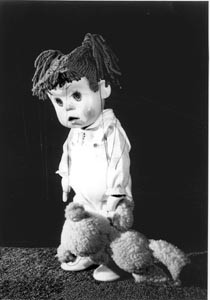
Polly at the Puppet Fest.

Photograph by Arlyn Coad

Child’s Play

Marionettes hang out at Jarvis Conservatory during Puppet Fest

By Paula Harris

EVEN THE MOST jaded child, force-fed an incessant diet of TV murders and video-arcade violence, can usually suspend disbelief long enough to be enticingly drawn in by the age-old enchantment of puppetry. And we’re not talking “media puppetry,” a catch-all term used for film, video, and computer technology’s electronic interpretations of the ancient art form.

“Despite exciting technical developments, media puppetry rarely is used to its fullest advantage because few directors and producers can imagine the possibilities,” explains longtime puppeteer Leman Coad of Vancouver-based Coad Canada Puppets. “Also, film and video don’t encourage the audience’s imagination. Everything is spelled out in the finest detail.”

So here we’re talking about becoming transfixed by decidedly low-tech blocks of wood and chunks of foam–which actually make the most magical puppets of all.

The spellbinding quality of giving life to an inanimate object evokes a unique and universal response from both children and adults. Puppeteers call it a pure form of theater that allows the audience to believe in the character and even invest emotion in it.

“Puppetry doesn’t just allow, it encourages audiences to use their imagination,” adds Coad. “Good puppetry suggests very clearly, then backs off to allow the audience to fill in the details. The magic of puppetry is the spectator suspending reality and believing the object of wood, paint, and fabric is a thinking, feeling character.”

Coad will be bringing his string marionettes to the Napa’s Jarvis Conservatory for the Puppet Workshop and Festival 2000, where his dolls will share billing with Missouri-based Parasol Puppets. Parasol Puppets will perform Circus using handcrafted hand puppets. Coad Canada Puppets will perform Polly, a mime show with marionettes. (Puppeteers maneuver a hand puppet with their hand concealed inside the figure; they move a marionette by manipulating strings or wires from above.)

Polly is essentially a character study of a small child. The production is a series of vignettes with a thin story line to tie them together, but the focus is on Polly’s mental and emotional processes. “I think the show works because Polly taps into the infant in each of us,” explains Coad.

The puppeteers will lead a hands-on workshop preceding Saturday’s matinee. Debbie Lutzsky Allen of Parasol Puppets will show participants how to create puppets, which they will be able to keep. Coad will provide insight into the technique and history of puppet theater and demonstrate the basic skills of how to manipulate the marionettes.

“My approach to puppetry is to simplify. Eliminate all the nonessentials so only the essence remains,” says Coad. “Then I step back and allow the audience to participate with their imaginations.”

The Puppet Workshop and Festival 2000 offers two performances; one on Friday, Sept. 29, at 7 p.m., and another on Saturday, Sept. 30, at 3:30 p.m. at the Jarvis Conservatory, 1711 Main St., Napa. Tickets are $20 for adults and $10 for children 12 and under. Catch the festival’s Saturday workshop from 1 to 2:30 p.m. Tuition is $5 per person. Call 255-5445.

From the September 21-27, 2000 issue of the Sonoma County Independent.
© Metro Publishing Inc.

Mass Transit

0

SUV-lovin’ SOBs–Katie Alvord wants you to brave the wilds of mass transit

THIS BUS STOP smells like urine. An inky swamp of soggy newspapers covers the floor and bench, while a pleasant little pool of thick red liquid–Is it a melted Popsicle? Is it blood? What the hell is that?–lies steaming in the gum-encrusted corner. Countless cigarette butts are strewn about. And it’s hot. At 1 o’clock in the afternoon, it’s a whopping 93 degrees outside, but inside the covered shelter–at the corner of fourth and C streets in Petaluma–it’s at least 10 degrees hotter.

I think I’ll stand outside.

I just have to remember to avoid stepping in that big calcified dog-leaving that so festively adorns the sidewalk nearby. I peruse the street, hoping for the arrival of the Greyhound Bus that (if all is right with the world) is carrying Katie Alvord, author of Divorce Your Car: Ending the Love Affair with the Automobile (New Society Publishers; $17.95). The Michigan-based writer–a transportation iconoclast of the highest order–is in the midst of a 4,000-mile cross-country book tour, which she is conducting entirely car-free.

I plan to intercept Alvord’s bus en route from a book-signing in Oakland to her drop-off point in Santa Rosa, where she’ll mount her handy folding bicycle and ride to Sebastopol for another bookstore appearance this evening.

Before any of that can happen, though, the bus has to drive through Petaluma, where I am still waiting.

A bevy of buses runs by varying services–from Golden Gate Transit and Sonoma County Transit to the local Petaluma service–rumble up to the stop from time to time, admitting or discharging a stream of public-transit aficionados. I soon discover that, by hovering close to the vastly proportioned vehicles, I can find momentary shade from the murderous sun.

So I wait. And wait.

The Greyhound is not technically due to pass through town until 2 p.m., but the scary Greyhound rep I spoke to on the phone warned that I should be here at least an hour ahead or I’d run a serious risk of missing the bus altogether.

“Our buses,” he insisted, “often come early.”

The bus arrives at precisely 2:06. Katie Alvord is waiting inside, lounging in air-conditioned luxury. Waving me back, Alvord points me to the seat she’s saved in the row directly in front of her. There is nowhere else to sit. “There are a lot of people on the Greyhound today,” she beams.

ALVORD REPRESENTS a trend that, according to the stats running throughout her book, is quickly sweeping the country, though at 6 percent Sonoma County still enjoys the lowest percentage of commuters using public transit in the nine-county Bay Area region. And then there’s that public transit strike in Los Angeles this week that has stranded a half million carless commuters.

Still, Alvord says, America’s love affair with the car seems to be cooling off. Whether as a protest against an increasingly fast-paced world, as a means to reduce automotive exhaust and fight global warming, or as a way to avoid being stuck behind the wheel in gridlocked traffic, thousands of people are divorcing their cars–turning to buses, trains, and bicycles or resorting to carpools and car-sharing programs–happily claiming that the whole car-human thing was a dysfunctional relationship to begin with.

She defines two kinds of car divorce: Car Free and Car Light, where the vehicle is used only when absolutely necessary.

Divorce Your Car features a witty foreword by Alvord’s ex-hubby, Sonoma’s Craig Scarborough, who admits the 10-year marriage was made “inappropriate,” in part owing to his own love for “fun things with internal-combustion systems.”

Alvord’s entertaining, eye-opening book has gained her a great deal of attention–and more than a little hostility.

“One talk-show host that interviewed me on the radio,” she reveals, as the bus climbs the on ramp onto a bumper-to-bumper Highway 101, “began the show proclaiming, ‘What you are proposing is nothing short of un-American!'”

If so, Alvord doesn’t care.

“I’m car-free and a much happier person because of it,” she insists. “If someone wants to pursue a simpler lifestyle, divorcing their car fits right in.”

Simpler? As my unpleasant, time-killing experience illustrates, traveling car-free brings plenty of unpleasant inconveniences–not the least of which is the sunburn I earned waiting the prescribed hour for the bus.

Alvord–who’s heard every excuse in the book, and they are all in her book–is fairly tactful in her response to my complaint.

“As an experienced bus rider,” she remarks, “you learn which services typically run a little late and which ones are smack-dab on time. And even if they tell you to get there an hour in advance . . . that’s ridiculous. An hour early? That’s just impossible.”

I believe she’s now laughing at me.

“I mean, duh,” she says, grinning. “As for the other kinds of problems you’re talking about–the cruddy bus stop, the slow schedule, and lack of facilities–those are things that have stemmed from our lack of investment in transit for many, many years.

“Let your decision-makers know that you are using those services and that you want to see them improved, from general statements about it to specifics, like, ‘I was standing at the bus stop, and it was a really unpleasant experience.’ ”

You could make the phone call to Sonoma County Transit or to Greyhound or to the county supervisors.

Alvord looks out the window, where traffic is crawling as we zip by in the diamond lane. Referring to those car-addicted folks who’d like to add a few costly lanes to 101, she says, “Adding lanes doesn’t solve congestion problems the way people expect them to be solved. Because what happens when you add extra lane capacity, after a brief time, you end up with more traffic than you started with.”

The bus pulls into the station in Santa Rosa, and within minutes Alvord has assembled her folding 10-speed bike, attached the trailer-hitch suitcase, and is ready to ride.

“Living car-free is not for everyone,” she admits before she leaves. “The thing is, you can structure your life so that it’s not that inconvenient.”

With that, she pedals off, leaving me to take the bus back home.

As she pulls away, I notice the giant letters printed on the back of her T-shirt: One Less Car.

From the September 21-27, 2000 issue of the Sonoma County Independent.
© Metro Publishing Inc.

Anti-Fashion on the Internet

0

Chic Shot

Cyber catwalk spawns anti-fashion websites and plenty of satirical punch

By Paula Harris

RUNWAY DIVAS, style slaves, and hip fashionistas have their pick. Racks of chic magazine layouts, slick advertisements, and cool-chic websites are readily available to dictate exactly what is and what is not au courant. But what about everyone else? Well, a backlash against the fashion-obsessed can also be found on the Web. Here are our top picks for anti-fashion websites. Hey, they might even start a trend.

1. www.riotgrrl.com/feed.htm

It’s hard to pass up a serving of the intriguingly titled “Feed the Supermodel” game. Riotgrrl’s morphing pics let you transform an emaciated celebrity waif into a fatty by feeding her more than a Carr’s water cracker and bottle of Evian. Today, bony, pointy-faced Jennifer Love Hewitt, actress and cover girl, appears on-screen posing on some beach in a stretchy white crop top and painted-on crimson shorts. Feeding time! Just a click and then watch her chin double and her hips expand. “Thank you so very much!,” Love Hewett “responds.” “Oh! Boy! I am so happy! Can you feed me just a little more?!” But the game has just begun. It’s up to you whether you want to help the now-chubby supermodel lose weight by dishing out “comida buena” (including carrots, Slimfast, and vitamins), or turn her into an ecstatic blimp with “comida mal” (including stromboli, 16-oz. steak, and Oreo cheesecake). More satisfying than a platter of ribs!

2. www.thewire.org/jim/mfashion

Men are not immune to the fashion knocks on the Net. This page of “Men’s Fashion Rules” by Jim Rosenberg aims to provide a service to the women of the world, since “men are from Kmart, women are from Bloomingdale’s.” His enlightening tips include such gems as: “A man must never purchase clothes with visible writing, unless it is related to sports or Bart Simpson. This is especially true of Euro-sounding phrases like ‘Chunnel Boy’ or sissified concoctions such as ‘Mummsy’s Yacht Club.’ ” The best Rosenberg Rule is that a man must show no hint of style or flair and strive at all times to approximate Stalin-era work camp garb. “To help resist the urge to improvise, simply recall those ’70s shirts with French street scenes, long beagle dog collars, and absolutely no natural fibers,” he advises. “These were once thought to be stylish. Men might still be wearing them today, were it not for OSHA’s landmark ruling that they were simply too flammable for public use.”

3. www.feralcheryl.com.au/

“Thank you for saving the children from stupid, anorexic, dumb blonde dolls with big boobs who wear ridiculous ’80s-style clothes!” gushes Heide Belbin of Penguin, Tasmania, at the customer-comments section of this website, the Australian Anti-Barbie, a doll named Feral Cheryl. Yes, this one is for the kids. This is no ultrafashion doll with freakish proportions and tortured feet. Feral Cheryl is a real wild child from the rainforest region of New South Wales, Australia, and was originally created to reflect the “freedom and wildness” of the alternative lifestyles in that area. “Unlike other ‘fashion dolls,’ the 34-cm. vinyl Feral Cheryl doll is not blonde, and not ridiculously thin,” touts the blurb. “She goes barefoot [and] has tattoos, dreadlocks, simple clothes, and a handmade rainbow bag. She lives simply and with a healthy body shape, and pubic hair . . . (hmmm, maybe more than we wanted to know). Feral Cheerily is a natural young woman.” And parents, listen up! Feral Cheryl has no fashion wardrobe, sports car, wedding dress, beauty shop, or holiday camper.

4. www.rtmark.com/more/tommy/

In a 1997 nationwide effort to mock notions of “style” mass-marketed to consumers and play on similarities between the words and meanings of “fashion” and “fascism,” a group of anti-fashionites calling themselves WearMockers placed parody T-shirts in department stores among similar displayed merchandise. This website tells how they transformed the logo that identifies the popular Tommy Hilfiger line by changing the name in the distinctive red, white, and blue flag-style emblem from “Hilfiger” to “Hitler.” Thus, the logo read “TOMMY HITLER.” The activists placed hundreds of shirts–and many customers and salespeople often never immediately saw the difference. “It had all of the thrills of shoplifting with none of the guilt,” explains WearMocker 017, of Portland, Ore. “We ended up calling it ‘shopleaving.’ ”

5. www.adbusters.org/

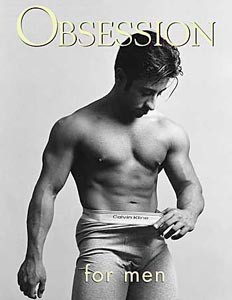
Those lovable pranksters at Adbusters are at it again. Check out their spoof fashion ads for Obsession for Men, Obsession for Women, Escape (as in from Calvin Klein), Benetton, Tommy Hilfiger (follow the flock), and one for a certain athletic shoe company featuring a young Asian woman fleeing barefoot. “You’re running because you want that raise, to be all that you can be,” states the print. “But it’s not easy when you work 60 hours a week making sneakers in an Indonesian factory and your friends disappear when they ask for a raise. So think globally before you decide it’s so cool to wear Nike.” No pain, no gain.

6. www.blank.org/sweatgear/

This parody fashion-catalog site allows customers to select designer attire from old-fashioned sweatshops in El Salvador “for that lean and mean look.” For example, THE SWEAT’ER from the Sweat Gear Fashion Line is a choice young sweater from El Salvador’s world-renowned labor pool. “Available in sizes from 15 to 26 years old. Pairs up perfectly with transnational capital. Performs under the harshest conditions. Works 13-hour days for 57¢/hour, practically free with every SWEAT GEAR purchase. Do not publicize, unionize, or wash with strong insurgent. Over 60,000 units on hand. Replacements readily available.” If that’s not to your taste, how about the GLOBAL CITIZEN from the Empowerment Fashion Line? “Which is more important? A bargain in your local fashion mall, or social justice and economic democracy? This Global Citizen doesn’t have to ask. She knows it takes grassroots action to build a better world. Not afraid to confront U.S. policymakers or transnational corporations. Supports women who are organizing in the sweatshops of El Salvador. Looks beyond her own backyard to find solutions. Knit together, seamless fabric. One standard of justice fits all.” Required reading for Kathie Lee.

7. www.postfun.com/pfp/fashion

Conservatives don’t even bother. This satire on Christianity and fashion–“The Week in Fashion Prophecy”–is deeply offensive. And often hilarious. Lots of stylin’ sermons here, including “Accessorizing with Gifts of the Holy Spirit,” “Accepting Jesus as Your Personal Shopper,” and “Cross-Dressing for Less.” A segment on WWJD-emblazoned underwear tells consumers, “When the spirit is willing but the flesh is weak, let these 100% cotton panties do the talking for you. ‘What Would Jesus Do?’ ” Those words will put a damper on a young man’s ardor faster than a bedroom full of stuffed animals. And another section, “Jesus at the Oscars,” reports that “while most fundamentalist and evangelical Christians believe that Jesus looks better on the hanger, at Adult Christianity we believe differently. We want Jesus off the rack, out of the closet, and into the scene. While Jesus is the same yesterday, today and forever, we’re quite sure his handlers would, with key accessories, periodically update his timeless style.” The report lists suggestions for outfits, including a transparent latex beaded shirt–skintight (like Prada)–and lace-up boots with big heels, as a nod to his blue-collar roots. “Although this is all speculation,” it continues, “I’m quite sure Jesus would not be nailed down to one particular look. I think he would always surprise.”

From the September 21-27, 2000 issue of the Sonoma County Independent.

© Metro Publishing Inc.

Camera Art 2

0

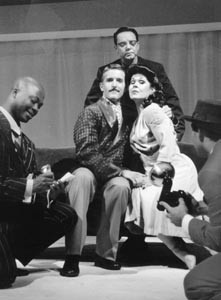
Intrigue.

Foto Fest

Organizers of Camera Art 2 shoot for picture perfect

By Paula Harris

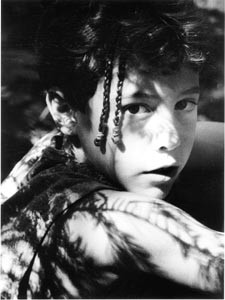
KATHLEEN McCallum paces through her art gallery and stops before one of her photographs. The image depicts two young boys at what appears to be a remote Mexican plaza. One kid, his tongue lolling in one corner of his mouth, smirks with mischievous innocence, caught somewhere between childhood and maturity. The other boy stares intently at the camera (or maybe at the person behind it) with brazen sexuality.

This type of raw intimacy comes across in much of McCallum’s work, which she often uses as an outlet for her own feelings. “To me emotion is everything,” she says, gesturing to the black-and-white print. “I embrace it.”

When she’s not squinting through her camera lens, zooming in on her subjects to reveal telling details, the 42-year-old McCallum–the organizer of the upcoming Camera Art 2 exhibit–is looking at the bigger picture. Specifically the bigger picture for fellow photographers in Sonoma County, who McCallum says have it tough.

Although it may seem every other local restaurant is plastering its dining room walls with photographic art, McCallum–who lives in Santa Rosa–contends that the lack of places to show work continues to be a major concern for Sonoma County photographers.

“I hear a lot of people talk about having to leave the area to show their work–that’s a hardship for a lot of us,” she says. “This area has a large amount of very talented photographers with real motivation to share their work, but there aren’t enough venues for those artists.”

Last year, McCallum decided to take action. To help local shutterbugs overcome this challenge, she organized Camera Art 1, a showcase for the diverse work of 50 established and emerging Sonoma County photographers. The two-day event was held in the upscale outdoor setting of Santa Rosa’s Montgomery Village Shopping Center.

Participants included nationally known Rolling Stone photographer Baron Wolman and Polaroid-transfer artist Kathleen T. Carr. The exhibit drew some 4,000 people–a mixture of artists, tourists, and holiday shoppers. Sales, according to McCallum, were brisk. “Some photographers did very well,” she says.

After the exhibit, Santa Rosa Junior College student Brian Gaberman was picked up by the Barry Singer Gallery, which landed him shows in New York City and Los Angeles. And local photographers Kay Damgaard and Tim Fleming will be displaying their work in next month’s ARTrails open-house show. “There are definitely more photographers in this year’s ARTrails than before,” observes McCallum.

McCallum hopes to repeat last year’s success with Camera Art 2, which takes place on Friday and Saturday, Sept. 22 and 23, in Santa Rosa. Live music will be introduced at this year’s event, which will once again feature the work of 50 photographers. Many of the artists from last year, including Wolman, Karen Enarson, and Tomas Hakanson, will return, and others (like Stella Monday, Jane Krensky, and Robert Janover) are signing on for the first time.

The exhibit will provide many examples of where the art form is heading. On display will be a variety of styles: photography on different surfaces, liquid emulsion works, manipulated surfaces, and hand-colored images. Also featured will be photography combined with computer art.

“I think we’re educating the community a bit more that there are no boundaries with photography,” says McCallum.

Last year’s exhibit allowed McCallum to poll the art community on its interest in forming a collective art gallery dedicated to showing photographs and sculptures. Interest level was apparently high enough for McCallum and a group of associates to open Silver Stone Gallery in Montgomery Village in February. Over those six months, artists have joined and fallen away, and the stylish space now has 13 members. In the future, McCallum hopes to open the upper level as workshops for art instruction.

BUT DOESN’T competition between all these photographers get heated? Not at all, according to McCallum. “Because of the group energy, artists inspire each other, and they motivate and challenge each other to reach their fullest potential,” she explains. “We share techniques and marketing strategies and basically fuel each other’s creative spirit.”

But McCallum doesn’t want to stop there. She hopes to give local photographers and other artists even more exposure by creating a Sonoma County Arts and Music Festival in the near future.

“With the incredible wealth in the area and the influx of tourists, everything is in place,” she says effusively. “The art scene is just like a river. It’s always flowing and taking on new directions.”

Camera Art 2 takes place on Friday and Saturday, Sept. 22 and 23, from 10 a.m. to 5 p.m. in the Village Court Mall, Montgomery Village Shopping Center, Santa Rosa. Admission is free. 541-7117.

From the September 21-27, 2000 issue of the Sonoma County Independent.
© Metro Publishing Inc.

Usual Suspects

0

Protesters disclose the bare facts

By Greg Cahill and Paula Harris

FAMILIAR cheesecake? Not so. At first glance, the posters resemble the provocative ads for products like Victoria’s Secret lingerie, Cosmopolitan magazine, or Obsession perfume–featuring beautiful, young, and very voluptuous models. But look closer (yes, go ahead do what you normally do) and check out their chests–gasp!–the models have mastectomy scars where breasts once were.

The three controversial posters are part of a public awareness campaign by the Breast Cancer Fund, the San Francisco-based nonprofit organization that asks, in a society obsessed with breasts, what’s being done about breast cancer?

Sonoma State University will display the posters on campus at the InterCultural Center Gallery at the student union throughout October, which is National Breast Cancer Awareness month.

It’s not possible to predict what the reaction will be, but the ads caused an uproar when they went up at bus stops around the Bay Area earlier this year. They were removed a short time later because of complaints to the transit companies from squeamish passers-by that the images were “too shocking for the public.”

“[The posters] caused controversy when they went up, but they are supposed to get the word out that breast cancer is a serious problem that shouldn’t be hidden. But it’s important to display the posters because this is something the public isn’t faced with and maybe doesn’t want to be faced with,” says Jen Denzell, an assistant at SSU’s Women’s Resource Center.

Scars have been superimposed onto the models, so that one has a double mastectomy and two have single mastectomies. “The models, advertising executive, and photographer donated their time; I donated images of my mastectomy scars,” says Andrea Ravinett Martin, founder and director of the Breast Cancer Fund.

“We created the ads to guard against complacency in a society that so readily commodifies breasts for business and entertainment purposes. . . . The ads force us to acknowledge that we’re being subjected to a deadly and disfiguring epidemic directed at our culture’s most profound symbol of sexuality and nurture,” she adds. “They also help us understand that a true appreciation of breasts requires us to act more responsibly in the way we treat women, their bodies, and the disease.”

Although the ads originally caused quite a stir, Denzell says more people complained after they were yanked. “It was very interesting,” she concludes.

Articles about the Breast Cancer Fund’s purpose in creating the ads and about the controversy they caused will be part of the display, which is free and open to the public.

Breast cancer is expected to kill at least 40,800 women this year, including 4,000 in California (the highest number of any state). Overall, it is expected that 182,800 new cases will be reported in 2000.

MEANWHILE, Sebastopol shoppers got quite a surprise on Saturday, Sept. 16, when a group of 20 women paraded topless down Main Street before holding a noontime rally at which free breast cancer exams were offered. The shirt-optional march, organized by BABES (Breast Action Brigade to Eliminate Sexism), was billed as the first annual Breast Fest..

The march was held without a permit (required for all street paraders–clothed, semi-clothed, or otherwise), though a spokeswoman for the Sebastopol Police Department reports that the event went off without a hitch.

During the past couple of years, Breast Fests have sprung up across the nation, chiefly as a means to raise awareness about breast cancer and related women’s health issues.

Jill Leslie, owner of Milk and Honey in Sebastopol, participated in the hourlong event, not only to raise awareness about women’s health issues but also to make a statement about the sexualization of women by American culture.

“Certainly breast cancer awareness was part of it, but it was more encompassing than that,” she says. “We also marched to protest the fact that in 23 states it is illegal to breast-feed in public and [marched] to make a statement about the objectification of women’s breasts.

“We should be able to walk down the street without harassment just for having this body part.”

Leslie couldn’t say just how much gawking was going on by spectators, but she felt that the protest helped educate folks.

“Our attitude was: These are our breasts, get over it,” she concludes.

From the September 21-27, 2000 issue of the Sonoma County Independent.
© Metro Publishing Inc.

Glassy-Winged Sharpshooter

0

Environmentalists grow impatient over tactics to combat glassy-winged sharpshooter

By Tara Treasurefield

FROM 1993 until a few months ago, Maxina Ventura lived in Schellville in the Sonoma Valley, where pesticides are sprayed on vineyards by both ground and air. A mother of two small children, Ventura says, “Research I did at the agricultural department showed me that we were being covered with cancer-causing and hormone-disrupting chemicals, as well as heavy neurotoxins.

“Suddenly all the cancer deaths in the neighborhood made sense, and our thyroid, nervous system, and respiratory problems were no longer surprising.”

Schellville residents made phone calls, wrote letters, and met with the county Agricultural Commission and county Supervisor Mike Cale to express their concerns. But in the end, they decided that the only way to protect their families was to leave the county. “In my immediate neighborhood, around one vineyard, five households have been displaced by pesticides and others are considering leaving,” says Ventura. “Tractor spraying and aerial spraying are equally harmful. Several people moved to get away from the drift caused by tractor spraying.”

Ventura and her neighbors may prove to be the first wave of a mass exodus from California’s sprawling Wine Country. It appears that everyone who can is ready and willing to spend taxpayer money to fight Pierce’s disease, which can kill grape vines. The current strategy is primarily to use nerve poisons against the glassy-winged sharpshooter, one of the bugs that sometimes carries Pierce’s disease.

With activists throughout Sonoma County vowing to fight spraying through civil disobedience, that strategy will be part of a discussion at two public forums scheduled in the next two weeks in Sonoma County. The ante was raised this week after inspectors found an adult glassy winged sharpshooter–the first discovered in Sonoma County–at a Healdsburg nursury.

According to the California Department of Food and Agriculture, the wine industry has contributed $250,000 to this effort. In comparison, government officials have earmarked a whopping $40 million of taxpayer funds, and that’s just for starters.

Senate Bill 671, signed by Gov. Davis in May, calls for at least $15 million for sharpshooter/Pierce’s disease control every year until 2006. Sen. Barbara Boxer, D-Calif., proposed that Congress contribute another $3 million to the anti-sharpshooter war chest. Even more generous, Congress voted to match whatever California contributes. The U.S. Department of Agriculture has invested an additional $860,000.

“The sharpshooter is a threat, and we want to deal with it in the smallest area possible,” says Sonoma County Agricultural Commissioner John Westoby. “A lot of things are being looked at, including organics and bio-control agents, but carbaryl looks good right now.”

According to Westoby, the Agricultural Commission will spray carbaryl on the ground in residential areas, but won’t aerial spray.

“We can’t prevent growers from aerial spraying their crops,” he says. “If they do, we’ll be out there watching any applications they did.”

But it’s a big county, and even now the Agricultural Commission can’t witness every incident of pesticide drift.

THOUGH AERIAL spraying occurs now in Schellville and other areas, Nick Frey, executive director of the Sonoma County Grape Growers Association, says, “I think it’s very unlikely that growers will aerial spray to combat the sharpshooter. It’s not a very effective tool, and it’s not the method that anyone would recommend.”

He says that the association doesn’t support aerial spraying in residential areas, but growers might want to aerial spray if the sharpshooter appeared in an area that couldn’t be accessed very well.

While spraying is most likely in residential and agricultural areas, infested host plants in commercial areas could also be sprayed. The current practice is to spray any infested area, and regulations from CDFA define an infestation as “five or more adult insects within any five-day period and within a 300-yard radius, or the detection of multiple life stages.”

It’s a safe bet that some people will resist spraying. In that case, says Westoby, “We’d try to get permission. If we couldn’t get onto the property, we’d get an inspection warrant, and if we determined that it was necessary to treat, we’d get a court order to do an abatement [spraying].”

Westoby sympathizes with organic farmers, who could lose their certification if their crops are sprayed with a pesticide that’s not approved by California Certified Organic Farmers. “If they can come up with an organic material that would work, great,” he says. But he’s reluctant to extend the same courtesy to other county residents who object to pesticide spraying where they live.

“We’d have to check it through the Science Advisory Panel and through the CDFA. Maybe there wouldn’t be anything organic that would be effective,” he says.

Chris Malen, a member of the executive committee of the Napa County Sierra Club, is impatient with the emphasis on protecting vineyards. “Not all of us think wine is so important that we should be sprayed for it. The wine industry has engineered its own demise with monoculture. They need to correct their mistake without forcing poison on the rest of us,” she says.

“To be sprayed in our own homes is a fundamental violation of our constitutional rights. It’s morally wrong.”

Sondra Cooper, a physical therapist in Sonoma, agrees. “They need to come up with an alternative to spraying pesticides on my property. That’s not an appropriate answer to their problem. I refuse to allow them to come onto my property,” she says.

Georgia Kelly, director of Praxis Peace Institute in Sonoma, has another idea.

“Wine is a luxury. To put a luxury item ahead of the health of the people is unacceptable,” she says. “People need to realize that we can respond to forced spraying by boycotting California wine.”

A Pesticides Forum, sponsored by the Town Hall Coalition, will be held Thursday, Sept. 21, at 7 p.m., at the First Congregational Church, 252 W. Spain St., Sonoma. A public meeting on the glassy-winged sharpshooter will be conducted Thursday, Sept. 28, at 5:30 p.m., by the Sonoma County Board of Supervisors, 575 Administration Drive, Santa Rosa.

Tara Treasurefield is chair of the Town Hall Coalition Toxics Committee.

From the September 21-27, 2000 issue of the Sonoma County Independent.

© Metro Publishing Inc.

New Folk Releases

0

Photograph by Diana Davis

At the Source

Two new folk compilations plumb the depths for source material

By Greg Cahill

GRUNGE IS DEAD, but the acoustic backlash that trailed in its wake is still going strong. These days, acoustic music is sustained by a new generation of fans who are embracing roots rock, alt-country, folk, gospel, bluegrass, and country blues. Witness Moby’s use of vintage field-holler recordings last year on his acclaimed Play (V2), or Beck’s sampling of two tracks from ’60s folkie Mike Millius’ Desperado album on the 1996 breakthrough Odelay (DGC)–the working title for Beck’s song “Jack-Ass” from that album was “Millius.”

In recent weeks, two important collections of source material have hit the market: The Best of Broadside, 1962-1988 (Smithsonian/Folkways) is a five-CD set showcasing the cream of the ’60s folk revival, while Harry Smith’s Anthology of American Folk Music, Vol. IV (Revenant) is an astounding two-CD selection of vintage folk, bluegrass, gospel, blues, and Cajun recordings that helped feed the passions of those young folkies who first lit up the stages 40 years ago in the darkened coffeehouses of Greenwich Village and Cambridge.

The Broadside set, subtitled “Anthems of the American Underground from the Pages of Broadside magazine,” comes in an 8 1/2-by-11-inch ringed binder packaged in a hardbound portfolio. It is as much an homage to the adventurous publication–a prototype alternative newspaper, begun in 1962 in a cramped rent-controlled apartment in New York City in the aftermath of the 1950s persecution of the New Left–as it is a tribute to the music of the times. As Smithsonian/Folkways musicologist Anthony Seeger explains in the collection’s exhaustive liner notes, the magazine, comprised of stapled mimeographed pages and costing 35 cents, took its name from the Shakespearean-era term for the sheets of paper on which songwriters published their latest songs, “sold in the streets to eager buyers who would savor the boldness of a writer and the scandalousness of the material.”

In 1962 and over the ensuing years, there was plenty of scandalous material for songwriters to focus on: the civil rights abuses, the spread of nuclear weapons, government deception, and widespread poverty in a land of plenty.

Indeed, the magazine had a rich legacy and a suitably broad interpretation of protest music–Broadside in 1971 published the lyrics of Black Sabbath’s “War Pigs,” by Ozzy Osbourne’s seminal heavy-metal band.

The 89-song Broadside CD set is the story of the New Left and a half century of resistance and struggle that saw the emergence of the women’s movement, gay rights, labor battles, growing dissent over the Vietnam War, and a simmering discontent with suburban sprawl and the vapid values of middle-class life.

It’s also the history of America at a turning point in the second half of the 20th century, the soundtrack for “the unwashed” (to quote Ed Rush, one of the originators of the religious parody “Plastic Jesus”), those college kids, middle-class drifters, and hedonistic bohemians who frequented posh folk clubs and dark coffeehouses during the early to mid-’60s.

All the big names of the ’60s folk revival are included: Pete Seeger, Bob Dylan, Buffy Sainte Marie, Tom Paxton, Phil Ochs, Janis Ian, and Nina Simone. As are the more obscure acts: Sis Cunningham (of the topical Almanac Singers), Thom Parrott, Paul Kaplan, and Jeff Ampolsk, to name a few. Oh yeah, and Mike Millius.

Among the notable artifacts included in the collection are:

* Two rare recordings by Blind Boy Grunt (a.k.a. Bob Dylan): 1962’s “The Ballad of Donald White” and 1963’s “John Brown.”

* A 1962 recording of Dylan’s “Blowin’ in the Wind,” performed by the New World Singers.

* A recording of the civil disobedience anthem “Go Limp,” penned by Alex Comfort, better known for authoring the Joy of Sex book series.

* Songs by three singers–Malvina Reynolds, Frederick Douglas Kirkpatrick, and Buffy Sainte Marie–who all went on to make considerable contributions to the hit public television children’s series Sesame Street.

THE TWO-CD Harry Smith Anthology is an artifact in its own right. This “secret volume,” compiled nearly 50 years ago by idiosyncratic scholar Smith and forgotten at the time of his acclaimed 1952 multi-LP set for the original Folkways label (which served as a major source of material for the ’60s folk revivalists), was left out of the anthology’s highly publicized reissue three years ago.

This little gem is packaged in a hardbound jacket. It features an interview with Smith and essays by Greil Marcus, Ed Sanders of the Fugs, and John Fahey. It also includes tracks by the Monroe Brothers, the Carter Family, Robert Johnson, Bukka White, Lead Belly, Sleepy John Estes, and Memphis Minnie–all recorded between 1928 and 1940.

It is an essential set for any serious collector of Americana–and required listening if you just have a hankering for freewheeling hillbilly music.

As Rolling Stone noted at the time of the 1997 reissues, “It’s impossible to overstate the historic worth, sociocultural impact, and undiminished vitality of the music in [Harry Smith’s Anthology].”

That still stands true today.

From the September 21-27, 2000 issue of the Sonoma County Independent.

© Metro Publishing Inc.

‘Cecil B. Demented’

0

Roger Corman-collaborator Beverly Gray critiques ‘Cecil B. Demented’

Writer David Templeton takes interesting people to interesting movies in his ongoing quest for the ultimate post-film conversation. This is not a review; rather, it’s a freewheeling, tangential discussion of art, alternative ideas, and popular culture.

“Well, it’s no masterpiece of modern cinema–but I had fun with it.” That pithy pronouncement by author Beverly Gray, in reference to Cecil B. Demented–the latest in-your-face, censor-baiting extravaganza from cinematic bad boy John Waters–is among the most elegant film critiques I’ve ever heard. It’s short and sweet, with a haiku-like simplicity that . . . hey, wait a minute.

“It’s no masterpiece of modern cinema, but I had fun with it.”

Hot damn, it is a haiku!

I suppose Gray’s knack for stylish brevity is to be expected. As a former development executive and script editor for Roger Corman–another infamous cinematic Bad Boy–Gray has surely soaked up a bit of Corman’s knack for simplicity and speed.

We’re talking about the guy who made Little Shop of Horrors in two days. The guy whose films rarely run over 80 minutes.

“One of Roger’s greatest skills is knowing how to make things swifter and tighter,” Gray agrees. “He can find the flab in any film.”

There’s no flab in Gray’s new book about her former boss, Roger Corman: An Unauthorized Biography of the Godfather of Indie Filmmaking (Renaissance, $23.95). As satisfying as eavesdropping on a roomful of glamorous strangers, the tightly constructed biography stitches Gray’s first-hand Corman experience with at least 80 interviews of stars and actors who rose up through the ranks of the Corman factory system. While hardly the kind of treacly homage that usually appears in books about Corman, Gray is affectionate and fair, praising her mentor’s creativity and courage while challenging his commitment to commerce over craft.

Speaking of which, let’s talk about commerce over craft.

In Cecil B. Demented , a band of filmmaking terrorists, led by Cecil (Stephen Dorff) attempt to bring down the artistically corrupt movie-making industry. Angry at the commercialization of the cinematic art form, the “Filmmakers from Hell,” as they call themselves, kidnap a shrill, aging, big-studio superstar actress (Melanie Griffith), and force her to star in their own bizarre, politically-charged art films. Eventually, she grows to like it. Working like commandos with cameras, Cecil and company prowl the streets (without permits, of course), staging their outrageous scenes as quickly and cheaply as possible.

Looks like fun.

“It certainly gave me a lots of Roger Corman memories,” remarks Gray, who lives near UCLA, where she teaches a popular course in down-and-dirty screenwriting. “When Cecil says, ‘The Hollywood system stole our sex and co-opted our violence,’ it really reminded me of Roger. He always told us that we didn’t have going for us the same things that MGM had going for it, or Fox, or Columbia. We were never going to have the big stars or the lavish budgets, so what our movies had to have was something a little edgier, a little smarter, a little bolder, a little more off-the-wall. Something the big studios wouldn’t dare do.”

It was toward the end of Gray’s tenure with Corman–during which she’d worked on films from Deathrace 2000 to Carnosaur–that the indie mogul began to witness a change taking place.

“The things that Roger had always scored points with, a little more violence, a little more sex, a little more outlandish appeal, the big studios were now beginning to do,” she says. “With much bigger budgets. It was kind of a struggle for Roger to watch that.”

It’s common knowledge that directors like Spielberg and Lucas changed the rules of modern filmmaking by showing studios what a blockbuster could really be. But Corman’s view of the change goes even deeper.

“Roger saw that what happened with Jaws and Star Wars was that the B-movie and the A-movie traded places,” Gray says. “Before the change, the studios gave their biggest budgets to the classy films, the drama and costume epics. The science fiction and action films were always made with the low budgets. Now, the Schwarzeneger movies cost 100 million dollars, and the serious dramas–if they’re made at all by the studios–are given smaller budgets.”

It’s enough to make little Cecil sick.

There’s a certain irony in the way that Corman, who more-or-less invented the independent film, is also an icon of financial prudence, a guy who’d much rather think of himself as a successful businessman than as an artist

“Roger is a total paradox,” Gray observes, “a man pulled between wanting to make good films and wanting to make money. Ultimately, the money-making side of Roger always wins out.”

Though Corman’s company, Concorde-New Horizon Pictures, is still releasing films–mainly straight-to-video fare patched together from outtakes of other films–Gray says production has almost stopped.

“I think he’s stopped enjoying movies,” Gray suggests. “One time he loved movies. He loved packing a screen with thrills and chills. Movies motivated his life and gave him a lot of fun. Now I think he feels movies more of a burden than a pleasure.”

Even so, Corman is proud of his standing as a radical force in Hollywood.

“I think he would identify with John Waters’ movie,” says Gray, “especially its criticism of the MPAA. I loved the chant they used: ‘Hey! Hey! MPAA! How many movies did you censor today?’ Roger would love the spirit of that, because Roger has always had the same suspicion–that the MPAA was out to get the little filmmaker.

“Of course,” she adds, “the Filmmakers from Hell were definitely not Roger’s kind of people. They’re a little too psychotic.”

And there’s one other thing Roger Corman wouldn’t have liked about Cecil B. Demented, which runs exactly 88 minutes.

“I’m certain,” says Beverly Gray, “that he’d think it was way too long.”

From the September 21-27, 2000 issue of the Sonoma County Independent.

© Metro Publishing Inc.

‘As Thousands Cheer’

0

As Thousands Cheer.

As 1,000s Jeer

Revival of Berlin’s musical is no crowd pleaser

By Daedalus Howell

UNLESS ONE is making Jackson Pollock knockoffs with a parakeet and a birdcage, newspapers just don’t make good source material for artists. Playwright Moss Hart and songwriter Irving Berlin, however, mined the headlines of their day for their revue As Thousands Cheer. The result is old news.

Presented as a co-production of the Marin Theatre Company and the Allegro Theatre Company, As Thousands Cheer (directed by Danny Scheie) has long been relegated to the musical tchotchke shop. Apparently a smash when it debuted in 1933 (one must note this was in the throes of the Depression, when watching cheese age was a cheap and welcomed diversion), the revue enjoyed 400 performances, then proved its ephemeral nature by disappearing until 1990. That’s when the manuscript was discovered entombed in the basement of a Hollywood film studio.

Its grave disturbed, As Thousands Cheer has unleashed something of a mummy’s curse, wreaking its revenge on unsuspecting theater companies by garnering nasty reviews with its discursive collection of dopey tunes and underdeveloped sketches.

Admittedly, there are several toe-tapping numbers, among them the charming ode to the gossip trade “Through a Keyhole,” which includes the inspired line “If you’d really like to know how she got into the show . . . ”

Other songs, however, particularly the mawkish and artificially sweet “Easter Parade” (which presaged the invention of NutraSweet by decades), only draw attention to the fact that Berlin was no Cole Porter. If he were to go up against the Gershwins with this show, their dog would win.

Berlin can’t shoulder all the blame for this gutless revue–Hart is an equal culprit. In his sketch “Franklin D. Roosevelt to Be Inaugurated Tomorrow,” outgoing first couple Herbert Hoover (Colin Thomson) and his wife Lou (Lesley Hamilton) telephone associates and rebuke them with Bronx cheers. Such gags serve to remind theatergoers what a wonderful playwriting team Hart and longtime collaborator George S. Kaufman were. Too bad Kaufman was nowhere near this show.

As for the production itself, if the company had intended the audience to exit whistling, it shouldn’t have passed out the stale saltines that constitute this show’s musical numbers. Though Berlin’s genius (evidenced in songs like “Puttin’ on the Ritz” and “Cheek to Cheek”) is not fully realized in As Thousands Cheer, the material suffers more from its listless interpretation by the cast than from its creator’s ear.

There are exceptions–most notably C. Kelly Wright’s robust rendition of “Supper Time,” an eerie and heart-wrenching ballad sung from the point of view of a young widow, underscored by a projected image of a man strung by his neck–accompanied by the headline “Unknown Negro Lynched by Frenzied Mob.”

Carleton Alexander consistently charms in a variety of roles, including that of a lovelorn chauffeur in Berlin’s piquant ode to nascent love, “How’s Chances.”

Hamilton, easily the production’s finest actress, portrays Mrs. Hoover; an acerbic Joan Crawford who panders to the press; a newsreel director who goads a hunger-striking Gandhi (Brian Yates Sharber) to accentuate his starvation with pantomime; and an Irish chambermaid who extracts lingerie from the crannies of Noel Coward’s hotel room.

This show may have Hart but it has no soul. As Thousands Cheer is a time capsule and should have remained buried.

‘As Thousands Cheer’ plays through Oct. 1, Tuesdays-Thursdays at 7:30 p.m. and Fridays-Saturdays at 8 p.m. at the Marin Theatre Company, 397 Miller Ave., Mill Valley. Tickets are $24-$40. For details, call 415/388-5200.

From the September 21-27, 2000 issue of the Sonoma County Independent.

© Metro Publishing Inc.

Burning Spear

0

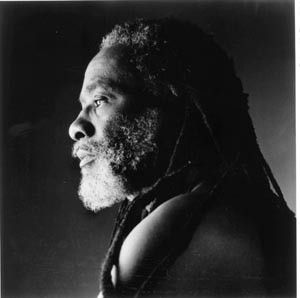
Natural mystic: Burning Spear (a.k.a. Winston Rodney).

Rebel Reggae

New CD compilation spotlights roots classics

By Greg Cahill

SOME nitwit on Entertainment Tonight last week compared hot-selling rapper and former Fugee Wyclef Jean–the onetime Haitian DJ who released his second solo CD, Ecleftic: 2 Sides II a Book, several weeks ago–to the late Bob Marley, the international superstar who catapulted reggae onto the world stage during the mid-’70s.

That’s like comparing brain-numbing Jamaican ganja to the cheap ragweed that sprouts wild along Midwestern railroad tracks, the remnants of the marijuana seed that used to tumble from freight cars loaded with cheap parakeet feed.

Context, children–sure, everybody and their mother, from Sting to Gwen Stefani and No Doubt, have milked Jamaican music for all its worth.

But there was a time when that music used to mean more than another chance to bastardize a great island sound and plunder deep cultural roots.

Jack Ruby Presents the Black Foundation (Heartbeat/Rounder), a newly compiled 17-song collection of Jamaican roots classics lives up to its hype as a musical journey through some of the greatest and most militant reggae music ever recorded.

The collection features timeless and vital hits by Burning Spear (including the rare singles version of the title track from his landmark 1975 album Marcus Garvey, one of the true classics of the genre and the seminal “rockers” release), Big Youth, the Heptones, Justin Hinds and the Dominoes, the Eagles (no, not the insipid Southern California rock group), the Black Survivors, and the Black Disciples, among others. The last-named supergroup featured such stalwart session players as bassists Robbie Shakespeare and Aston “Family Man” Barrett (of the Wailers), guitarist Earl “Chinna” Smith and Tony Chin, tenor saxophonist Tommy McCook (of the Skatalites), and trumpeter Bobby Ellis.

All the tracks share several things: they were produced by the legendary Jack Ruby (no, not the mob associate who blasted JFK assassin Lee Harvey Oswald), who was renowned for his trademark horn arrangements and lean, mysterious production; all were recorded for the Fox and Wolf labels, and several are heard here for the first time; and all are imbued with an abiding social and political consciousness that marked the best reggae of the ’60s and early ’70s.

WHILE MANY of these songs first saw the light of day on sound systems that gave birth to the DJ phenom and served as the inspiration for proto rappers, these are no mere dance-hall soundtracks. These powerful songs of slavery and rebellion, recorded in isolation at a time when American blacks were waging a pitched battle for civil rights, are deeply rooted in the repression of Jamaica–a fact that contributed directly to the spirit of their message.

For instance, Ruby often recorded Vinnie Taylor and the Revealers from a small studio in Port Maria, the principal town in the St. Mary’s parish, center of the famous 1760 slave rebellion known as Tacky’s war, in which 60 whites and 300 slaves were killed. The Revealers later became the Earth Last Messengers and eventually Jah Messengers, a vocal trio that brought their apocalyptic warnings about Babylon to dance floors in the ’90s.

That spirit of rebellion may have found its strongest voice in Burning Spear (a.k.a. Winston Rodney), the dreadlocked dervish whose mournful “Slavery Days” is included here. As Ruby told the British magazine Black Music in 1976, “There’s no roots singer down here that really maintain a standard like Burning Spear. The type of sound that Spear sing, as you listen the words it relate to black people, is black message. Any black man that know black history and listen to Spear got to take unto himself some truth.” *

From the September 21-27, 2000 issue of the Sonoma County Independent.

© Metro Publishing Inc.

The Puppet Workshop and Festival 2000

Polly at the Puppet Fest. Photograph by Arlyn Coad Child's Play Marionettes hang out at Jarvis Conservatory during Puppet Fest By Paula Harris EVEN THE MOST jaded child, force-fed an incessant diet of TV murders and video-arcade violence, can usually suspend disbelief long enough to be enticingly...

Mass Transit

SUV-lovin' SOBs--Katie Alvord wants you to brave the wilds of mass transit THIS BUS STOP smells like urine. An inky swamp of soggy newspapers covers the floor and bench, while a pleasant little pool of thick red liquid--Is it a melted Popsicle? Is it blood? What the hell is that?--lies steaming in the gum-encrusted...

Anti-Fashion on the Internet

Chic Shot Cyber catwalk spawns anti-fashion websites and plenty of satirical punch By Paula Harris RUNWAY DIVAS, style slaves, and hip fashionistas have their pick. Racks of chic magazine layouts, slick advertisements, and cool-chic websites are readily available to dictate exactly what is and what is not au courant. But what...

Camera Art 2

Intrigue. Foto Fest Organizers of Camera Art 2 shoot for picture perfect By Paula Harris KATHLEEN McCallum paces through her art gallery and stops before one of her photographs. The image depicts two young boys at what appears to be a remote Mexican plaza. One kid, his tongue lolling in...

Usual Suspects

Protesters disclose the bare facts By Greg Cahill and Paula Harris FAMILIAR cheesecake? Not so. At first glance, the posters resemble the provocative ads for products like Victoria's Secret lingerie, Cosmopolitan magazine, or Obsession perfume--featuring beautiful, young, and very voluptuous models. But look closer (yes, go ahead do what you normally do) and check out...

Glassy-Winged Sharpshooter

Environmentalists grow impatient over tactics to combat glassy-winged sharpshooter By Tara Treasurefield FROM 1993 until a few months ago, Maxina Ventura lived in Schellville in the Sonoma Valley, where pesticides are sprayed on vineyards by both ground and air. A mother of two small children, Ventura says, "Research I did at the agricultural department showed...

New Folk Releases

Photograph by Diana Davis At the Source Two new folk compilations plumb the depths for source material By Greg Cahill GRUNGE IS DEAD, but the acoustic backlash that trailed in its wake is still going strong. These days, acoustic music is sustained by a new generation of fans who...

‘Cecil B. Demented’

Roger Corman-collaborator Beverly Gray critiques 'Cecil B. Demented' Writer David Templeton takes interesting people to interesting movies in his ongoing quest for the ultimate post-film conversation. This is not a review; rather, it's a freewheeling, tangential discussion of art, alternative ideas, and popular culture. "Well, it's no masterpiece of modern cinema--but...

‘As Thousands Cheer’

As Thousands Cheer. As 1,000s Jeer Revival of Berlin's musical is no crowd pleaser By Daedalus Howell UNLESS ONE is making Jackson Pollock knockoffs with a parakeet and a birdcage, newspapers just don't make good source material for artists. Playwright Moss Hart and songwriter Irving Berlin, however, mined the headlines...

Burning Spear

Natural mystic: Burning Spear (a.k.a. Winston Rodney). Rebel Reggae New CD compilation spotlights roots classics By Greg Cahill SOME nitwit on Entertainment Tonight last week compared hot-selling rapper and former Fugee Wyclef Jean--the onetime Haitian DJ who released his second solo CD, Ecleftic: 2 Sides II a Book, several...
11,084FansLike
4,606FollowersFollow
6,928FollowersFollow