
Left Bank

0

French Twist

Chef Steven Obranovich keeps things smokin’

By Marina Wolf

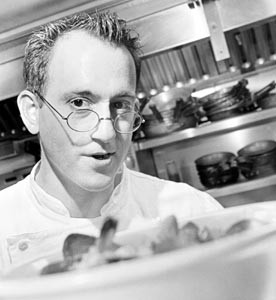
“I don’t know why I’m nervous,” says Steven Obranovich over his shoulder as he leads the way into Larkspur’s Left Bank restaurant. “I guess I’m just a pessimist. Anything that can go wrong, will. I’m going to make some coffee. Do you want some?” The 32-year-old chef lives on coffee, that and Marlboro Light 100s. “Everyone smokes in the restaurant business,” he says with a shrug and continues back to the kitchen. “One place where I worked in France during my apprenticeship, there were 25 of us sitting in the locker room smoking.”

Obranovich may not get to smoke indoors as much anymore, but he still carries a lot of France in his life, visiting regularly for ideas and old china and preparing Left Bank’s popular cuisine de grand-mère (“grandmother’s cooking”). But not everything French is fabulous, as he discovered in 1995 when he joined the staff in Chicago’s Everest Room after graduating from the California Culinary Academy in 1995. At the Everest Room, old-school French traditions reigned, including the one about staying in your position until you die. Obranovich wanted to be more than fish chef, and almost managed to do so in his boss’s offer to open a restaurant in the faux Eiffel Tower in Las Vegas. He grimaces even now at the thought.

“Maybe I’m being a Bay Area snob, but why would you go to Vegas and eat at any of those places?”

Fortunately for the upwardly striving Obranovich, he landed the Left Bank position after a round of secret interviews and left the Las Vegas gig for a colleague of his at the Everest Room. “Everyone went home happy. She got to be chef at the new restaurant. And I got to come back to the Bay Area, and I don’t have to deal with the snow or the stupid, ugly people of the Midwest.”

On this note, Obranovich puts away the enormous bowlful of chanterelles that he’s been ripping up for tonight’s fish special (a salmon roulade filled with sautéed wild mushrooms) and eagerly accepts a suggestion to wait for the photographer out on the patio. He relaxes into the chair and puffs casually, but gets a little anxious again when the photographer arrives. “I’m not putting a hat on,” he mutters as he stubs out his cigarette. “I’m just letting you know. I don’t wear one.”

IN THAT tone of voice, and peering over his wire-frame glasses, Obranovich resembles a shy teenager refusing to wear a tie to class pictures. But the resemblance fades entirely when he steps behind the stove, clattering pans together for a quick lunch of bouillabaise and steamed mussels. “I actually hate fish,” he says, pulling handfuls of fish and shellfish out of a knee-level drawer and tossing them into pans sizzling with oil, garlic, and shallots. “I never eat it. But it’s the easiest thing for me to be creative with. Because I did it for four years, every single day.” He shakes the pans up and dumps them into big bowls, while the photographer tries to keep up. “You’re not seeing all my head? How’s this, is this better?” He lowers his head to make a cheesy grin over the bowl.

We take the heaping bowls of seafood back to the patio, and Obranovich ponders the question of what is la cuisine grand-mère. Obranovich’s own grandmother cooked badly, but is this the kind of food–rich seafood stews, sauerkraut fried in duck fat–that French grandmothers cook?

“Oh, yeah. I’ve been to France a whole bunch of times, and they’re pigs! They’re all svelte, none of them are fat, but they drink a lot, they smoke a lot, and they eat a lot, all day long. They eat the things that nobody else in the world can eat, and they’re fine.”

Obranovich tries to give a history of his life in five minutes. He mentions being 7 or 8 and learning to make salads and fresh foods from his mother’s Palo Alto garden. Theater was his life, even while he worked for five years as an aide for a politician. He got the idea for cooking school only when a friend jumped the lawyer track and applied to CCA. Now he can’t imagine doing anything else. In spite of the standard chef worries about food costs and critics, the last year and a half have been the best of his life.

He drains the last of his wine and then abruptly changes topic. “Well, now that I’ve had a glass of wine, do you want to know what it’s like to be a gay chef?”

Um, OK.

“Well, with the customers it’s not a big deal, with the waitstaff and owners it’s not a big deal. But with the kitchen staff you’re dealing with Latinos, the machismo and all of that. When I was coming up, when I worked in Chicago, my god, I could not believe what I had to deal with.”

Fans of food literature might recall the particularly gruesome sexual threats described in chef Anthony Bourdain’s book Kitchen Confidential, when a chef once threatened to pull a guy’s eye out and fuck him in the skull. Obranovich says the sexual tension was usually more subtle than that.

“It wasn’t malicious; it was like, let’s see how far he’ll go. There was one person who I had problems with. He was kind of my equal on the line. I was the fish chef, he was the meat chef, and it was like, OK, who’s better? So I would turn it around on him. He’d touch me, and I’d turn around and grab him there. I’d establish the boundaries. And then, you know, it basically stopped.”

SOME of that confidence seems to come from Obranovich’s 11-year relationship, an amazing record in an industry rife with marital stress. But the two seem to have reached some sort of equilibrium: the husband, as Obranovich likes to call him, is in France on a Fulbright, and anyway, Obranovich regularly works 14- to 16-hour days. “Here in America we are all renowned for being workaholics. It’s not strange for me to be so dedicated to what I do. And it’s not strange for him either, because he knows that that’s the type of person that I am, and he respects it.”

Obranovich visited his partner in France last week and came back to a moderate level of chaos, even for him: the holiday season, a new sous-chef, and a big launch party with wine.com for Left Bank’s own label of wine. So other than smoking his head off, how does he decompress?

“I go to sleep. That’s all. I don’t decompress,” Obranovich says as he takes another drag on the cigarette. “My mind is constantly going with work, constantly. When I’m driving home, I’m thinking, OK, what am I doing tomorrow? When I get home at night, I fill the coffee machine with coffee and wash my face, then I just lie there for about 10 minutes, go to sleep, wake up, and start all over again. It sounds really strange, and it sounds like it wouldn’t be fulfilling, but it is.”

Pumpkin & Duck Confit Flan with a Double Crème

Obranovish created this savory custard to accompany the release of Left Bank’s first wine, a Beaujolais. Any fall greens (such as frisée, spinach, or escarole) dressed in a vinaigrette of your choice would be suitable to complete this dish.

5 ounces heavy crean 1 ounce butter, plus extra for greasing Pinch of grated nutmeg 12 sprigs fresh chervil, finely chopped 6 sprigs tarragon, finely chopped Salt and pepper 3 eggs 12 ounces canned pumpkin 1 cup shredded duck-leg confit (available in specialty shops) 15­20 large spinach leaves

Double Créme: 16 ounces heavy cream Juice of lemon Grated nutmeg Salt and pepper

Preheat oven to 350 degrees. Grease a 1-pint soufflé dish or 8-inch cake pan. In a saucepan, heat cream, butter, nutmeg, chervil, tarragon, and salt and pepper together until butter melts. Whisk in eggs, pumpkin purée, and confit.

Carefully dip spinach leaves, one by one, into boiling water for a few seconds. Immediately remove to a bowl containing ice and water and chill. Squeeze out as much water possible, being careful not to break the leaves, and unfold onto paper towels. Arrange spinach in overlapping layers in dish or pan and pour in pumpkin mixture. Bake in middle of oven for 45 minutes or until a knife inserted comes out clean.

While flan bakes, make the double crème. Pour cream into a pot and bring to a boil, being careful not to let it boil over. Reduce heat and simmer for 15 minutes, or until cream coats back of a spoon. Add lemon juice, nutmeg, and salt and pepper.

When flan is baked, let it set for a few minutes. Unfold and serve warm, drizzled with or pooled in double crème. Serves 8 as an appetizer.

From the November 16-22, 2000 issue of the Northern California Bohemian.
© Metro Publishing Inc.

The Oddvillian Sideshow

0

Odd Company

Spooky vaudevillians take center stage

By Ella Lawrence

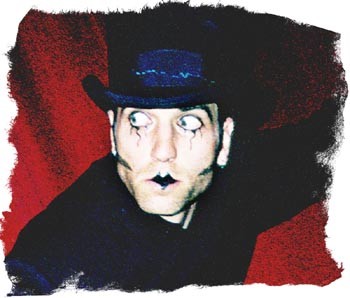
THE CROWD PEERS eagerly up at the darkened stage of the Phoenix Theatre. They know something is about to happen, but nobody’s quite sure what. Suddenly, flames shoot out from the abyss. An exotic, chiseled man in a turban and flowing pants steps center stage. He stares solemnly into the crowd for a moment–then spews a stream of fire from his mouth. The audience gasps.

Before this scorching opening act is over, the swami tosses fire back and forth between his hands, gulps down flames from a blowtorch, and lights rows of firecrackers on his forearms, standing stock still while explosives detonate on his skin.

So begins the Oddvillian Sideshow, a conglomeration of talents started in 1997 by three young performers from Sonoma: Jorg Scott, a talented trapeze artist who also serves as the show’s eloquent ringmaster; Andrew Spear, an adept physical comedian; and Tobias Weinberger, who performs as the aforementioned swami of flaming fame.

The entire show is darkly reminiscent of another era, when circus sideshows still offered access to the mysteries of the unknown, when the headless girl sent children screaming in terror, and the “unicorn” made women and men fall down and weep.

Scott calls the show a “collaboration of young, artistic energy.” At ages 16, 18, and 25, the three performers got together to turn their dream of the weird into reality, and the Oddvillian Sideshow debuted on the streets of San Francisco.

“It was a coming together, bringing all the things we’d done in our short lives and putting them in one crazy show,” says Scott, the oldest Oddvillian, who is now 28.

The group’s first performance took place in the tourist-trap atmosphere of Pier 39, and since then the sideshow has performed on the streets, at festivals, private parties, and the creative collective warehouse Cell Space in San Francisco. Every show is different, in part because Scott and his collaborators frequently bring in new guest performers.

“We’ve never really done the same show twice,” Scott says, “because the environment we’re performing in is always different.”

One reason the act is so well honed today is the Sebastiani Theatre. Built in 1934 in Sonoma, the theater is operated by Roger Rhoton, a veteran vaudeville performer himself who has worked with Spear and Weinberger since they were kids.

Rhoton has been one of the troupe’s biggest influences: “The act developed here in the theater, so I’ve been involved with them since the beginning,” he says. “They’ve worked real hard, and they’ve put together a really good show.”

The Oddvillians spend up to 10 hours a week practicing on the Sebastiani’s stage: “The screen can be raised, and it gives us the time and space to work with all of our props,” Scott says. “We like that our show is such a production!”

AND WHAT a production it is. The next act at the Phoenix show is breathtaking. The lights go off, and a long, white stretch of transparent gauze drops from the high-vaulted ceiling of the stage. A muscular figure clad in white slithers from the wings.

It’s difficult to tell if the figure is male or female: its hooded body suit is skintight, and its face is painted with black-light-sensitive spirals in electric orange, blue, and green. The figure (actually Zeina Asfour, a guest performer from Marin) leaps up and grabs a length of the white gauze, dangling by one arm in midair.

For the first time, the audience notices a DJ (Darren Treinen) and turntables just behind the glowing figure. The music has thus far been so suited to the performances that it seemed to naturally float out of the air. Now, however, a pounding bass blasts out of the speakers and a techno-remix of Sting’s “Desert Rose” perks the audience up.

The mysterious figure begins to climb up the length of gauze, twining its ankles around the fabric as it gracefully pulls its way toward the ceiling. Suddenly, the figure lets go and plummets toward the stage. The audience gasps in horror, but the intricately looped cloth catches the performer, and it hangs in perfect balance, pivoting slowly in a graceful circle.

The act continues for 15 minutes, and the audience barely breathes until Asfour bows and runs offstage.

Suddenly, a loud crackling noise fills the theater and the audience looks around, wondering if all the excitement has shorted out the circuits at the Phoenix. But no, it’s actually Electro-Boy.

The stiff, silver-clothed figure is carried like a robot onstage by the ringmaster. He’s set upright, and the ringmaster flips a breaker switch on the battery pack Electro-Boy wears on his back. The DJ speeds up the crazy electronica, and Electro-Boy begins to break dance. He hypnotizes the audience with his skill for the five minutes it takes for his battery pack to wear out. Then the ringmaster returns to tote away the now-stiff figure.

Electro-Boy is Andrew Spear, who came up with the idea for the Oddvillian Sideshow at the age of 16. He lends a wildly humorous edge to the otherwise eerie production.

IT’S QUITE A SHOW– especially considering that it’s all presided over by a ringmaster who insists he didn’t think he’d go into the performing arts.

“I never wanted to do this!” protests Scott. “I didn’t know what to do.”

He ended up following in his father’s footsteps–sort of. Rick Scott is a children’s performer who travels the globe, telling stories and playing music. He’s also recorded seven albums.

“My dad was one of my hugest influences,” Scott says. “From him I got my stage presence, my sense of being comfortable on stage.”

Part of this presence may have been cultivated during Scott’s stint at circus school (from age 11 to age 15). He went on to teach the flying trapeze on cruise ships, and now teaches it at the San Francisco School of Circus Arts.

When asked about his future goals for the troupe, Scott thinks for a moment and then replies, “I want us to have a tesla coil.”

He won’t say what he wants it for. “You’ll just have to wait and see,” he says, chuckling evilly.

Catch the Oddvillians in action at a special variety show on Dec. 18 at the Sebastiani Theatre, on the Plaza, in Sonoma. For prices and other details, call 707/996-2020 or 707/528-4222.

From the November 16-22, 2000 issue of the Northern California Bohemian.

© Metro Publishing Inc.

2000 Presidential Election

0

Unnatural disaster or act of God?

By Stephen Kessler

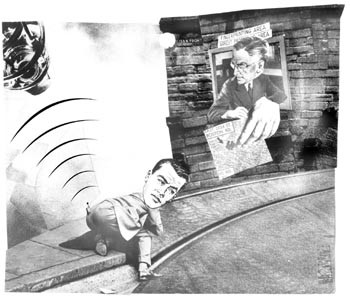
ANYONE disappointed last Jan. 1, when the year 2000 computer apocalypse failed to materialize and life went on in boring normality, must be thrilled by the political catastrophe of the anti-presidential election. It’s as if an asteroid hit Florida, or New Mexico, or Washington, D.C., and the resulting dust cloud has totally obscured the future of our democracy.

Nobody can say for sure which dinosaurs will be extinguished by this earthshaking event, but the psychopolitical landscape has been blasted flat. Al Gore and George W. Bush–and even that pesky upstart Ralph “Just Give Me 5 Percent” Nader–have been rendered irrelevant by the disaster of an electoral system blown to smithereens. It’s enough to make one wonder just who or what is directing this bizarre historic drama.

Until Nov. 7, I was a fundamentalist skeptic, absolutely unconvinced of the existence of any divine intelligence. The clockwork theory of theology seemed absurd; no organizing principle was more persuasive to me than the Heraclitean notion of randomness. But now I’m not so sure. Only the most perverse and all-powerful cosmic imagination, a Novelist of supreme genius and superhuman mischievousness, could have devised this infinitely twisted plot.

In light of the religious abuse we’ve been subjected to over the course of the campaign–each major candidate attempting to outdo the other with proclamations of piety–it makes sense that a disgusted Deity might be provoked to put these uppity politicians in their place. What better way to clap a lid on spiritual pride than to deprive the so-called leader of the free world (whoever that may turn out to be) of the power that flows from his constituents.

The images of Bush as an empty suit and Gore as a stiff turn out to be more true-to-life than anyone anticipated. The King of the Universe has a greater sense of humor than I gave Him credit for.

So, who on Earth has the Solomonic wisdom to split this baby in half? Such decisive leadership, I’m afraid, is absent without an absentee ballot. Still, poetic justice might be served by some deus ex machina appointing an alternate president: a triangulated chief executive equidistant from the Bushian smirk and the Goresque rictus, someone with a record free of spiritual convictions and unbesmirched by elective officialdom, a person who can find his way around Washington even in the darkness of a nuclear winter, a public servant who knows what needs to be done and is prepared to do it.

Yes, ladies and gentlemen, I give you he next president of the United States, Ralph “The Body Politic” Nader!

With the possible exception of Monica Lewinsky, Nader has done more than anyone else to bring this great republic to the verge of a nervous breakdown, and since the other top contenders for the highest office in the land have canceled each other out, or been canceled out by a confused electorate, it’s only fair to give the jolly Green giant a shot at the job he claims to covet. So what if he won only 3 percent of the vote?–the dude deserves to get what he deserves.

The presidency having been reduced to an even more impossible project than it was before the electoral meltdown, Nader in his uncompromising idealism is the ideal choice for such a thankless position. His cabinet alone–Phil Donohue as secretary of state, Michael Moore as secretary of labor, Susan Sarandon as secretary of sex (no presidential blowjobs on the people’s time!), among other equally qualified political veterans–would instantly inspire the confidence of a befuddled citizenry.

Unroll Ralph’s sleeping bag in the Oval Office, stick him behind the desk in his wrinkled suit, Trent Lott looking over one shoulder and Clarence Thomas over the other, and tell him: OK, wise guy, govern this.

From the November 16-22, 2000 issue of the Northern California Bohemian.
© Metro Publishing Inc.

‘Three Viewings’

0

Three Viewings.

Photograph by Michael Amsler

View to a Kill

‘Three Viewings’ gives new life to death biz

By Patrick Sullivan

IT’S BREAKING one of the last taboos left in our youth- obsessed culture to admit it, but everybody has to face the fact eventually. Sooner or later, death catches up with us all–ready or not.

Of course, most people fall into the “not” category, as demonstrated by the three characters in Jeffrey Hatcher’s Three Viewings, now at the Dreamweavers Theatre in Napa.

The three–a lovesick funeral director, a strutting thief, and a naive housewife–don’t face the end of their own lives. Instead, it’s the profound impact death has upon the living that lies at the heart of this play.

If this all sounds like a total downer, you’re in for a bit of a surprise. It’s not just that Three Viewings has the courage to broach the difficult subject of death. Hatcher’s witty play–divided into three monologues, all set in the same Midwestern funeral parlor–is also unafraid to look the Reaper in the eye and laugh in his bony face.

And the audience was certainly chuckling right along on the opening weekend. It’s no easy task for one actor to carry a third of a play on his or her own. But under the capable direction of Debbie Baumann, the cast managed–with a few minor stumbles–to mine both the rich humor and the deep pathos present in Hatcher’s work.

Joe Lewis brings a commanding presence to the stage in the role of Emil, a funeral director hopelessly in love with a woman who attends all his funerals for business reasons. Torn between prudence and desire, Emil experiences every casual touch from his beloved as a “detonation to the skin.” He longs to confess his love, but he fears “a howl of derision and 20 years of averted glances.” The humorous side of Emil’s predicament comes through loud and clear in Lewis’ hilarious performance. But the actor manages the transition to tragedy too lightly: his reaction to devastating news is so understated that it strains belief.

Victoria Field does a commendable job in the demanding role of Mac, a demented but sexy woman who earns “a high five figures” by going to funerals so she can steal jewelry off the corpses. Packing more venom than your average cobra, Mac slithers through her monologue, spitting out insults and wisecracks about the absurd ways our society deals with death.

Drawn back home (where she’s known as “the bipolar, bisexual drug addict”) by the death of a wealthy relative, Mac confronts her past–which reveals her to be far more complicated than appearances suggest.

But the shining star of this cast is unquestionably Gwennyth Trice, who finishes off the play in the uproariously funny role of Virginia, a naive housewife whose husband’s death reveals that the couple’s finances were built on debtor’s quicksand.

Every time she checks her answering machine, she gets another ugly surprise. It turns out she now owes big money to the bank, to her brother-in-law, and–ominously–to the mob-run Smith Trucking (“They own no trucks,” Virginia explains, “and there has never been a Mr. Smith”), which loaned her husband half a million at 50 percent. “I am not a financier,” she remarks, “but even I know this is not a good rate.”

Trice’s nearly note-perfect performance provides a suitable ending to this play, which offers more laughs than most comedies–and yet manages to send an audience out of the theater with plenty to think about.

‘Three Viewings’ continues Nov. 17­18 at The Dreamweavers Theatre, 1637 Imola Ave., Napa. Tickets are $12. For details, call 707/255-LIVE.

From the November 16-22, 2000 issue of the Northern California Bohemian.
© Metro Publishing Inc.

Open Mic

0

Book Case

By Becca Lawton

TODAY I’m pestering our school librarians with questions about the local front-page news. “It says here that parent volunteers aren’t allowed to offset staff cuts,” I point out. “Does that mean I’m no longer working here?”

“No,” answers veteran librarian Mrs. X. “Nothing’s changing with our established volunteers.”

“Right,” explains her colleague Ms. Z. “You’ve worked with us for years. You’re OK. The union’s just worried that new parent helpers will take over our classified duties when we’re not here.”

And they’re not here a lot these days.

Since budget cuts this fall, our school library is open half time. The other half, it sits locked up and unstaffed, the lights out on the thousands of books assembled lovingly by Mrs. X and Ms. Z in their decades of work here. I learned about the potential library shutdown last year from my fourth-grade daughter. We were headed home from her school, passing well-watered lawns in a development of million-dollar custom houses still in phased construction. “I don’t get it,” she said. “How can they close the library?”

“The school district feels it doesn’t have the money to keep it open.” We rounded the corner near an estate guarded by two black hounds and a half-mile of wrought-iron fencing. My daughter protested.

“But it’s our library! We made the money to fix it up.”

She was right. She and her schoolmates raised funds in an event called the Great Academic Brain Wave, which, along with money earned at school book fairs, paid to expand and remodel the library. When it reopened in its new glory, the children learned firsthand what hard work can achieve.

“It’s not fair,” she concluded. I agreed. Lifting up mine eyes to the hills from whence cometh my help, I spied sunlight glinting off the picture window of a distant trophy home. The library situation is up for analysis, along with other “enhancement programs” cut recently in our school district. This alone tells me they don’t get it. We don’t see our books as enhancements–they and the librarians are fundamental to our children’s success.

So here’s to the district reopening full library access, preferably in the lifetimes of the kids who supported library renewal. If not, then we need to tap other resources. I guess it’s lucky I’m grandfathered in, because I’ll give up helping the enhancement programs when you pry my cold, dead fingers off their bindings.

Becca Lawton is a Sonoma County writer whose short stories and essays have appeared in a number of enhancements, er, books.

From the November 16-22, 2000 issue of the Northern California Bohemian.

© Metro Publishing Inc.

Microchip Implants

0

Digital Angel

Put that micro chip where the sun don’t shine

By Katharine Mieszkowski

WORRY NO MORE, doting parents! Whether it’s your little pumpkin’s first day walking home from school by herself or the millionth time you’ve lost her at the mall, the Babysitter will track your sweetpea’s location from a jelly bean­sized microchip implant, discreetly tucked under her collarbone. You’ll be able to chart her every move. What better way to give her independence and put your mind at ease?

Also available: The Constant Companion lets you keep a watchful eye on grandma or grandpa, even when you can’t be by their side; the Invisible Bodyguard offers freedom from fear so you can enjoy the fauna and foliage when ecotourism takes you to kidnapping hot spots around the globe. Coming soon: the INS Border Patroller; the Maximum Security Guard; the Personal Private Eye; the Micro-Manager.

Alas, this is not as far-fetched or as futuristic as it sounds. The whoa-dude notion of surveillance chips being installed in human beings is poised to cross over from the realm of science fiction into everyday reality, and soon. One technology with the deliciously sci-fi name of “Digital Angel,” a prototype of which has just been unveiled, could be implanted under the skin and used to monitor not only the chip-wearer’s location, but vital signs like heart rate and body temperature. Other devices, worn externally like bracelets or pagers, are already in use and invite us to embrace electronic monitoring in specific environments–like a theme park, college campus, or construction site–for our fun, health, or safety.

What’s disturbing is just how quickly these devices, which only recently would have been laughed off as a cyborg fantasy, are becoming accepted. Amazingly, it was but two years ago that a British cybernetics professor pulled what then seemed like a futuristic stunt: temporarily installing electronics in his arm to control his computer remotely.

Now having a personal chip is becoming, well, not quite the norm but a ready possibility. Kevin Warwick, the cybernetics prof, says, “As the topic becomes more accessible in the media, people get used to the idea; it’s not such a frightening thing. . . . If it’s not there this year, it’s only a year or two downstream.” A Japanese firm is already testing chips to track lost relatives. And the New York Times, in a nod to what its editors imagine the future might hold now that the human genome project is complete, asked several designers to suggest how we might carry around a chip encoded with our unique genetic sequence “for perfect identification in matters medical, official, criminal or otherwise.” Some of the possibilities portrayed in the July 9 Sunday magazine: a “decoder” ring, an implant in the human iris to be read with a retinal scanner, even an oval-shaped “genegg” for the belly button.

WITH commercial interests hard at work to spread the gospel of human tracking and monitoring–voluntarily, and for our own good, of course–and others normalizing chip implantation, it might not be too soon to start preparing for a whole new silicon craze. Excuse me, but is that a chip in your ass?

Global Positioning Satellite, or GPS, technology already exists to track us wherever we might care to go–the problem is keeping the sensor up and running, giving off signals all the time from inside of our bodies.

Thus far, the biggest technological challenge is energy; a tracking chip needs a power source. Think how annoying it would be to have to plug your arm into the wall to recharge yourself like a pesky cellphone; besides, it would make it nearly impossible to thwart kidnappers or retrieve lost kiddies if rescuers didn’t find the missing before the charge died. There’s also the vexing dilemma of getting the chip and its power source small enough for comfort and aesthetics. Who wants an unsightly chip bulge?

Chris Hables Gray, an associate professor of computer science and the cultural study of science and technology at the University of Great Falls in Montana, says that researchers have been working to find just such a small, self-generating power source by tapping everything from body heat to the electrical pulses in the muscles. There’s even been talk of putting teensy-weensy nanotechnology machines to work as miniature waterwheels in the bloodstream so the heart itself could be the power source. The heart running your chip: it’s practically poetic.

But now one company claims that it has cracked this power-source conundrum and that it has a patent on the solution, although executives won’t yet reveal the technical details of how it actually works. Applied Digital Solutions didn’t invent it, but purchased the patent for a “personal tracking and recovery system,” which the company has dubbed Digital Angel.

According to CEO Richard Sullivan, Digital Angel combines GPS wireless communications with biosensors, powered by body heat in the form of a dime-sized chip, which can be embedded in a watch, bracelet, or medallion, even under your flesh–should the FDA approve such an invasive thing.

“It’s like a live radio signal all the time,” Sullivan says. He sees a $100 billion potential market for the technology, which is still under development with help from researchers at Princeton University and the New Jersey Institute of Technology. The company held a gala in New York last month to show off the prototype and try to drum up investment to finance actual products.

And the potential applications, should the thing actually work as the company claims it does? Just use your imagination, folks. Sullivan envisions kiddies having their own Digital Angels watching over them in case of a snatching. Or caretakers installing them in patients with Alzheimer’s disease to prevent the old folks from wandering off. And just wait until the military gets a load of this–one in every soldier to track not only his whereabouts, but his very mortality, in real time.

The same would go for employees in extremely hazardous workplaces, such as nuclear power plants.

Come to think of it, a medallion worn around the neck and powered by your very own body heat doesn’t seem any more invasive than some of the things that companies already do to their employees, so why not a chip in every last cube? Better still, dispense with those pesky keycards to get in and out of the office and just have the whole thing implanted in your left butt cheek.

IF YOU’RE not already wondering how you and your loved ones made it this far without a single chip implant, just consider all the medical applications. Picture a system that would constantly monitor a heart disease sufferer’s pulse rate or a diabetes patient’s sugar levels and notify medical help when things were looking dangerous. We accept pacemakers as a necessary and important technology to extend and enhance the quality of lives. How is this any different?

Sullivan brushes off concerns about privacy by promising that the chip-wearer will be able to control when he or she is, uh, switched on or off, although he won’t yet say how exactly that will work. The Digital Angel Web site puts it bluntly: “The unit can be turned off by the wearer, thereby making the monitoring voluntary. It will not intrude on personal privacy except in applications applied to the tracking of criminals.”

Maybe so, but the potential for abuse is so ludicrously high that it’s almost impossible to overstate. You can just see the Michael Douglas­ Sharon Stone Hollywood version, where the jealous husband gives an opulent anniversary watch with the chip inside it to his cheating wife so he can obsessively monitor her movements, her body temperature, the very acceleration of the pounding of her heart . . . until she figures it out and puts the chip to work–against him.

To makers of tracking technologies, these Big Brother worst-case scenarios sound like the same griping that has met all sorts of other advancements we now blithely accept, like Social Security numbers, credit cards that catalog our every purchase, and even e-mail.

“We believe that the benefits of the technology to a parent looking for a child at a theme park or a student feeling safe walking across campus far outweigh some of those concerns,” says Tom Turner, senior vice president of marketing and business development for a company called WhereNet, which makes a technology that can be used to find people or objects in a specific local environment. “It’s an individual choice.”

So far, WhereNet has licensed its technology to companies that make bracelets worn on the wrist or pagerlike devices carried in a pocket or purse. It’s in use at a water park in Denver and on the campuses of the University of South Florida in Tampa and the University of South Alabama in Mobile. Turner sees a future for such gadgets on cruise ships, in gated communities, and at shopping malls.

Brendan Fitzgerald, the president of Microgistics, which makes WalkMate, the device used by college students to alert campus police if they’re in danger, also thinks the benefits are greater than the risks.

“If you were working in a hazardous industrial environment, you would want to know that you could push a button and have someone help you if you need help. ‘I fell into the vat of boiling acid!’ ” Safety first is a logic that’s hard to argue with, even when it starts to veer from help when you need it to totally transparent surveillance when you’re at work.

AND, LIKE almost everyone else I talked to in this field, Applied Digital Systems’ Sullivan dismisses nagging doubts about what it means to literally wire ourselves up. “By our own nature, we tend to avoid things we know the least about and gravitate toward those that we do know. Some of the things that have made the most positive contributions to our lives are the things that there are the most concern about. Like any technology, it’s really in the hands of the user,” he says. Translation: It’s Galileo vs. the church all over again.

OK, Dr. Jekyll, you’ve convinced me. I’m ready for my implant. Let me be the first to sign up for my very own chip body modification. What list do I put my name on? In fact, I want my chip secured on the outside of my skin where I can show it off to everyone as a sign of just how wired I’ve become–surely it will be the next big thing filling the void left by the waning trendiness of tattoos, piercing, scarification: chipification.

However fashionable or discreet tracking devices might become, not everyone is titillated by the possibilities. “I think most people would be repulsed by the idea. This is just a sort of modern version of tattooing people, something that for obvious reasons–the Nazis tattooed numbers on people–no one proposes,” says Bob Gellman, a Washington privacy consultant. “You can do anything you want voluntarily. You can tattoo a bar code on your forehead if you want.”

But the real question, as he sees it, is who will be able to demand that a chip be implanted in another person–a parent in a child; a prison in an inmate; the INS in an undocumented illegal alien found in the country; an employer in an employee as a condition of being hired?

“I’m sure there’s a strong argument that implanting a chip in a person is unconstitutional. It would be cruel and unusual punishment,” Gellman says.

And for now the legal and social questions of who could turn such a chip on or off and who would have access to the information generated by such a chip is “a totally unexplored area,” he says, adding: “And probably one better off left unexplored.”

Others see the chipification of humans as all but inevitable. Chris Hables Gray, professor, self-proclaimed “cyborgologist,” and author of the forthcoming book Cyborg Citizen, says that it really doesn’t matter whether or not the Digital Angel flies. “If this company doesn’t do it, someone else will,” he says. And watch out when they do.

“They will start implanting them in prisoners, parolees, child abusers, sex offenders, and drunk drivers,” he predicts. Gray says that it’s been a military project for some 20 years to find a way to track every soldier on the battlefield. Remember when Oklahoma City bomber Timothy McVeigh complained about having been a part of a Gulf War experiment that implanted a chip in his butt?

“McVeigh kept saying that he was being controlled by a chip in his ass,” says Gray.

The cyborgologist isn’t saying he believes the bomber, of course, but cites circumstantial evidence that the military may have been experimenting with such tracking devices, and “if the military starts to say we will put these chips into every Marine’s ass, they have no protection from that.”

NO MATTER how creepy we find the prospect of such a technology, we can’t stop its creation–nor would we necessarily want to. “Technology is continually trumping the constitutional guarantees that we have,” says Gray.

He’d like to see protections against the misuse of such chips as they become commercially available: “Citizens could ask for a law that made it a crime to put these into a person without their permission, and to forbid, under any conditions, the government to put these into prisoners, parolees, illegal aliens, soldiers, citizens.”

He’s even proposed–“only half joking”–a “Cyborg Bill of Rights” to help ensure that “new technologies are chosen democratically, and we do not have to accept every new technology that invades our freedoms.”

From the November 16-22, 2000 issue of the Northern California Bohemian.

© Metro Publishing Inc.

Chris Strachwitz

0

For the Record

CD box set spotlights Arhoolie label chief

By Greg Cahill

HE CALLS them audio snapshots. Over a 40-year stretch, beginning in 1960, East Bay producer, label chief, and record store owner Chris Strachwitz has amassed an amazing collection of roots recordings–vibrant sonic portraits of America’s diverse musical culture, all teeming with the rhythmic jolt of juke joints, dance halls, and backyard barbecues.

Country blues (“unadulterated, authentic, and low-down”), Cajun, zydeco, Native American “chicken scratch,” and hard-driving gospel stand side by side with regional Mexican acts, polka bands, and New Orleans brass bands. Together, these infectiously appealing recordings also serve as signposts of a most amazing journey.

The recently released five-CD box set Arhoolie Records 40th Anniversary Collection: 1960-2000, The Journey of Chris Strachwitz maps out that legacy in what Strachwitz himself calls “raw, rootsy, and unpolished” fashion.

As the founder of Arhoolie Records and proprietor of Down Home Music in El Cerrito, Strachwitz is a familiar figure to Bay Area roots music enthusiasts. But he also is one of the most important influences in modern American music in the same league with musicologist and archivist Alan Lomax and documentary filmmaker Robert Mugge. As writer Elijah Wald underscores in the liner notes, Strachwitz is largely responsible for the regional revivals of Cajun and zydeco music, spreading the word about and helping to gain international recognition for Clifton Chenier, BeauSoleil, the Savoy-Doucet Band, and other giants of Louisiana music. In the same vein, Strachwitz spurred wider interest in Tex-Mex music by recording accordionist Flaco Jimenez and other purveyors of border music. His recordings of blues guitar greats Mance Lipscomb and Lightin’ Hopkins still are revered in blues circles.

Most recently, Strachwitz has issued a series of critically acclaimed steel-guitar gospel CDs.

A POLISH immigrant–his family fled the advancing Russian Army after World War II–Strachwitz grew up on a small farm outside of Reno, Nev., where he was quickly drawn to the hillbilly music beaming from radio station XERB in Baja California. A skinny kid with bad English and few friends, Strachwitz turned to music for solace. “I was longing for something that spoke to me,” he has recalled, “and I was listening to the radio and heard this amazing stuff.”

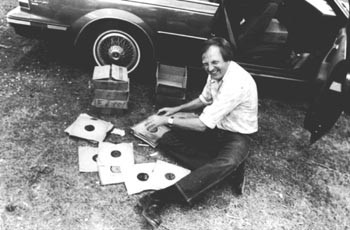
In 1960, Strachwitz was working as a German teacher at Los Gatos High School when he released the first Arhoolie album–a collection of songs performed by bluesman Lipscomb, a Texas sharecropper. The first pressing of 250 albums was stuffed inside of cardboard jackets and assembled on the kitchen table of Strachwitz’s home. The Arhoolie name was suggested by Texas folklorist, historian, and playwright Mack McCormick, supposedly referring to a style of field holler sung by black farmworkers. Soon Strachwitz–a “manic” collector of records–had transformed a simple love of blues and jazz into a legacy of American vernacular music.

Over the years, he has largely ignored commercial trends, compiling “audio snapshots” of what was rapidly becoming an outsider’s music in an increasingly homogenized society.

The result is a peerless scrapbook of roots music.

From the November 16-22, 2000 issue of the Northern California Bohemian.

© Metro Publishing Inc.

‘Rififi’

Rumble in Paris

Classic ‘Rififi’ returns with style to burn

By

DEPENDING on whom you ask, the title means either “rumble” or “trouble” in the French argot. Indeed, the 1955 film Rififi was in trouble. The most readily available prints were haphazardly subtitled, with by-now archaic British slang translating the pungent French dialogue. Even if you could read the subtitles–no easy task against the white background–you’d be confused by curious words like “busies” for cops or “charlies” for breasts.

But in a new print and newly written subtitles, a viewer in the year 2000 can just coast along for one smooth ride.

Rififi is a film vastly cooler than the recent Croupier. It concerns a pack of old-school gangsters cracking into a jewelry store in the Rue de la Paix in Paris. The burglary is engineered by a revered but played-out career criminal named Tony Le Stephanois, played by Jean Servais. Le Stephanois is freshly out of jail, out of money, and out of time–he’s got an ominous cough that isn’t soothed by his chain-smoking.

His young friend Jo (Carl Mohner), who owes him a debt, tips Le Stephanois to the possibilities contained within Mappin et Webb’s jewelry store. The original plan is for a smash-and-grab robbery, but the elder criminal has his eyes on a bigger prize and recruits a team for the all-night burglary.

Rififi’s director, Jules Dassin, was an involuntary American expatriate, previously best known for the original version of Night and the City. Dassin was a blacklisted Communist who had come to make movies in France.

There’s social commentary in Rififi, if you’re looking. Only a man who believed in the dignity of labor could have brought such affection to watching the hard work of the thieves. The famous, much-imitated robbery in Rififi has the gang as intent as surgeons. These 25 silent minutes of precision safecracking wring tension out of the closeups on the tools and the methods. It’s like This Old House gone rogue.

Dassin, using the pseudonym Perlo Vita, plays Cesar, the well-dressed Milanese member of the gang. Since he’s a foreigner, Cesar doesn’t say much. You can see why Dassin picked the part–he’s suggested that his reason for making the safecracking scene mute was because of his imperfect French.

Rififi is a Paris-fancier’s delight. The scenes of Montmartre at night are invigoratingly sordid, as are the misty hungover-looking dawns. Dassin also brings economy to the smaller, subtler scenes, such as a child horsing around with his lounging godfather at the start of the film.

When you see this neglected film-noir classic, you understand why it was so popular; the loyal but ruthless gang with their cigs and fedoras are part of a film with style to burn. Here are the roots for everything from Reservoir Dogs to Shoot the Piano Player.

Rififi was more than just a crime film. It was a kind of genre–at least eight films were made with “rififi” in the title, none of which were sequels. Moreover, Servais’ last film was titled They Came to Rob Las Vegas; you can suppose what impact Rififi had on his career. Servais proved that there’s no one as disillusioned as a good-looking juvenile actor who grows up and gets knocked around by life.

In Rififi, Servais is a beautiful loser as battered as Bogart. Yet Servais’ only other name part was as the voice of de Maupassant in Max Ophuls’ film Le Plaisir. It’s Servais who pronounces that film’s epigram, “Happiness, it isn’t a picnic.” The arch-cynic author was natural casting for someone whose dry voice had more than once pronounced doom on a squealer.

‘Rififi’ opens Friday, Nov. 17, at the Rafael Theater, 1118 Fourth St., San Rafael. For details, see Movie Times, page 34, or call 415/454-1222.

From the November 16-22, 2000 issue of the Northern California Bohemian.

© Metro Publishing Inc.

Newsgrinder

0

Important events as reported by daily newspapers and summarized by Daedalus Howell.

Saturday 11.11.00

Joy-rider Tyrone Bradish revealed he ain’t as smart as the whip that’s now whuppin’ his ass after getting popped for stealing a Chrysler PT Cruiser from a Santa Rosa car dealership and trying to return the car when he realized it was running on fumes, reports the local daily. Taxpayers can rest assured they’re getting the best police work their money can buy: “We eventually caught him because he ran out of gas,” admits Santa Rosa Police Sgt. Tony Wynne. At one point, the 22-year-old Bradish led police on a high-speed chase through downtown Petaluma, where the local fuzz, apparently inspired by the Cannonball Run movies, threw spike strips on the road to pop Bradish’s tires. A Santa Rosa police car and three sheriff’s cars ran over them instead. Bradish also rammed a police car. So where were the car-lot security guards? Who left the keys in the car? Lot manager Tareq Huq demands answers. “There is somebody who will be in this office on Monday being talked to,” he said. “Talked to, if not discharged.” Give ’em hell, Huq!

Saturday 11.11.00

Mental health and education professionals gathered at the second annual Conference on Boys (hosted by Sonoma State University) to mull over the question: What’s on boys’ minds? Well, duh. The answer is probably between the pages of those magazines beneath their beds, on those videos in their bottom drawers, and through the keyholes of their sisters’ bedroom doors. Discussions at the conference centered on boys and sex, sex and boys, sex, boys, sexy boys, and boyish sex. “This last 30 years of all women’s action and women’s movement has been powerful for girls, and that’s a good thing,” conference director Duncan MacInnes said to the local daily. “Now, what I want to do is bring boys to the level of girls.” Gender crusader Joe Manthey, please report to the white courtesy telephone. . . . Dr. Lawrence Diller, author of Running on Ritalin, delivered the keynote address (Ritalin is a stimulant used to treat the attention deficit disorders of 3.2 million boys annually–though patients often resell the junk at school for quick cash, I kid you not). “It’s not that Ritalin doesn’t work,” says Diller (cuz oh, baby, it does), “But I don’t see it as a moral equivalent to better parents and better schools.” Or better speed.

Sunday 11.12.00

Apparently someone doth protest too much for two gentlemen of Marin. Former chairman of that county’s Republican Party, Ed McGill, gets the blue ribbon for his hateful hyperbolic summation of the League of Women Voters’ Campaign Watch committee as “Stalinist strumpets” and “thugs of the Spanish Inquisition.” In an unrelated matter, the Marin Independent Journal reports that female Pat Zuch has filed a complaint against Sausalito Vice Mayor J. R. Roberts for spitting on her and cursing her during a confrontation. “I think what Pat Zuch is doing here is trying to make some political hay out of a private dispute,” said Arthur Wachtel, Roberts’ attorney, who did not comment if his client spat or swallowed in the past. “It is unfortunate that she and her associates have decided to revive this again and to raise it in the media.” Hey, that’s our bread and lung-butter, pal.

Monday 11.13.00

A 12-foot-deep 9,000-ton heap of “biosolids,” piled at the site of Santa Rosa’s West College Avenue sewage treatment plant since it was dismantled eight years ago, might finally get the heave-ho–that is, if the City Council springs for the nearly $800,000 pooper-scooper fee, reports the local daily. Santa Rosa environmental compliance officer Dean Paige describes the 18 million pounds of sewage pond residue as “former biologically objectionable material” (which translates to “huge pile of shit”). And hey, kids, it’s full of lead! Paige is unsure if the lead has seeped into groundwater and contaminated private wells in the area–water supplies that are already contaminated by solvents from a nearby former dry-cleaning business. No word if the city will go through with a proposal to truck in water from local kiddie pools to aid the beleaguered residents.

Tuesday 11.14.00

From the people that brought you Banana Republic and the Republic of Tea comes ZoZa–a retail concept made especially for the Republic of Mill Valley. A cheapie redux of ye olde economy brick-and-mortar clothes store with an Internet spin, local founders Mel and Patricia Ziegler have opened what they call a “walk-in website” for their new line of fashions made of washable, high-tech synthetic fabrics. (Dude, if you’re going to make a walk-in website, how ’bout one where the clothes are, like, off?) Customers can touch and try on clothing samples at the ZoZa store but make their purchases online, for there are no racks, cash registers, or mannequins. Fitting rooms are portable cardboard cylinders near a mirrored wall. The Zieglers don’t want to “throw money away” in rent and advertising. They just want you to throw your money away on fruity space clothes! “We think our customers, particularly in Marin County, are smarter,” says Mel Ziegler. Nudge, nudge. Wink, wink.

From the November 16-22, 2000 issue of the Northern California Bohemian.

© Metro Publishing Inc.

The Wide-Eyed Gourmet

0

The cool of culinary artistry

By Marina Wolf

WHAT’S THE DIFFERENCE between a professional chef and a home cook? One hand tossing. How’s that for a culinary koan? I used to think the answer was somewhere in the total dedication to one’s craft, the finely honed palate, the even more finely honed knives, the $20,000 culinary school education. It’s all these and one thing more: total nonchalance.

I realized this the other day while I was trapped against a giant stovetop watching a chef make a seafood stew. He reached into the containers of fish chunks and clams and pulled out exactly the right amounts. He tossed the contents of the pan in a practiced, one-handed shake, and splashed it all with wine, not even looking. His hands and arms were loose and relaxed, even while he carried on two simultaneous conversations and mugged

for a photographer. Joe Cool at the cooktop, and the whole thing took five minutes max.

Contrast this to my own recipe for seafood stew:

Find cookbook: 5 mins. Mince garlic: 2 mins. Mince garlic again (it’s not fine enough): 2 mins. Debone fish with fingernails: 7 mins. Saw fish into pieces with dull knife: 3 mins. Scrape burned pieces of garlic off bottom of pan and start over: 8 mins. Put shellfish in pan, consult cookbook: 2 mins. Poke and prod: 4 mins. Consult cookbook: 2 mins.

You get the picture. More than a half an hour has passed, and I haven’t even gotten to the tomato products yet.

The importance of support staff cannot be underestimated. What I saw in action in the professional kitchen was the result of several layers of kitchen help doing all kinds of distasteful things to stinky food products, just to get them ready for a fine dining experience. Someone scrubbed those mussels, chopped those shallots, stirred the flavorful fish stock from time to time at the back of the stove. Some poor sap will scrub the floor when dinner is done, mopping up whatever spillage or splatter the chef may have overlooked or even incorporated as part of the flair that impressed me so much. A chef does not worry about running out of pans or not having enough minced garlic; somebody else is taking care of those things.

But professional performance goes beyond mere prep work, into some kind of ultra-laid-back Zone, made possible by repetition. If you’re grabbing handfuls of fish every day for years, as the young chef had, you’ll know the difference between 3.5 and 4 ounces of cod chunks, or some angry head-cook will feed you your own hat and then show you the difference. As a result, professional chefs trust themselves, in a way that doesn’t involve any affirmations or internal pep-talks. They can rely on the body to do what needs to be done.

For most home cooks like myself, self-trust comes hard, if at all. Take that seafood soup, which I’ve made several times and it always turns out wonderfully. Logically I know that a lack of clams is not going to adversely affect the outcome, and that a little extra oil in the pan won’t ruin the whole thing. And yet I forget these things. I don’t trust my timid muscle and sense memory to know when the fish is just done, or to remember that the garlic will soften and melt into the stew, so it doesn’t need to be a paste. I cling to the cookbook, hunch over it obsessively, and second-guess myself at every turn.

A chef doesn’t have time for that. A chef goes with the flow, one hand tossing, and trusts that the flavor will follow.

From the November 16-22, 2000 issue of the Northern California Bohemian.

© Metro Publishing Inc.

Left Bank

French Twist Chef Steven Obranovich keeps things smokin' By Marina Wolf "I don't know why I'm nervous," says Steven Obranovich over his shoulder as he leads the way into Larkspur's Left Bank restaurant. "I guess I'm just a pessimist. Anything that can go wrong, will. I'm going to make some coffee....

The Oddvillian Sideshow

Odd Company Spooky vaudevillians take center stage By Ella Lawrence THE CROWD PEERS eagerly up at the darkened stage of the Phoenix Theatre. They know something is about to happen, but nobody's quite sure what. Suddenly, flames shoot out from the abyss. An exotic, chiseled man in a turban and flowing...

2000 Presidential Election

Unnatural disaster or act of God? By Stephen Kessler ANYONE disappointed last Jan. 1, when the year 2000 computer apocalypse failed to materialize and life went on in boring normality, must be thrilled by the political catastrophe of the anti-presidential election. It's as if an asteroid hit Florida, or New Mexico, or Washington, D.C.,...

‘Three Viewings’

Three Viewings. Photograph by Michael Amsler View to a Kill 'Three Viewings' gives new life to death biz By Patrick Sullivan IT'S BREAKING one of the last taboos left in our youth- obsessed culture to admit it, but everybody has to face the fact eventually. Sooner or later,...

Open Mic

Book Case By Becca Lawton TODAY I'm pestering our school librarians with questions about the local front-page news. "It says here that parent volunteers aren't allowed to offset staff cuts," I point out. "Does that mean I'm no longer working here?" "No," answers veteran librarian Mrs. X. "Nothing's changing with our established volunteers."...

Microchip Implants

Digital Angel Put that micro chip where the sun don't shine By Katharine Mieszkowski WORRY NO MORE, doting parents! Whether it's your little pumpkin's first day walking home from school by herself or the millionth time you've lost her at the mall, the Babysitter will track your sweetpea's location from a...

Chris Strachwitz

For the Record CD box set spotlights Arhoolie label chief By Greg Cahill HE CALLS them audio snapshots. Over a 40-year stretch, beginning in 1960, East Bay producer, label chief, and record store owner Chris Strachwitz has amassed an amazing collection of roots recordings--vibrant sonic portraits of America's diverse musical culture,...

‘Rififi’

Rumble in Paris Classic 'Rififi' returns with style to burn By DEPENDING on whom you ask, the title means either "rumble" or "trouble" in the French argot. Indeed, the 1955 film Rififi was in trouble. The most readily available prints were haphazardly subtitled, with by-now archaic British slang translating the pungent...

Newsgrinder

Important events as reported by daily newspapers and summarized by Daedalus Howell. Saturday 11.11.00 Joy-rider Tyrone Bradish revealed he ain't as smart as the whip that's now whuppin' his ass after getting popped for stealing a Chrysler PT Cruiser from a Santa Rosa car dealership and trying to return the car when he realized...

The Wide-Eyed Gourmet

The cool of culinary artistry By Marina Wolf WHAT'S THE DIFFERENCE between a professional chef and a home cook? One hand tossing. How's that for a culinary koan? I used to think the answer was somewhere in the total dedication to one's craft, the finely honed palate, the even more finely honed knives, the $20,000...
11,084FansLike
4,606FollowersFollow
6,928FollowersFollow