
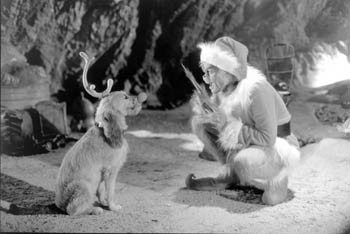
‘The Grinch’

0

Tickle Me, Dr. Elmo

‘Grandma’ singer dazzled by ‘The Grinch’

Writer David Templeton takes interesting people to interesting movies in his ongoing quest for the ultimate post-film conversation. This is not a film review; rather, it’s a freewheeling, tangential discussion life, ideas, and popular culture.

“WELL,” remarks a dazzled Dr. Elmo Shropshire, as Dr. Seuss’ How the Grinch Stole Christmas, starring Jim Carrey as the Christmas-hating Grinch, comes crashing and hyperventilating to a close. “All I can say is, we sure didn’t have things like that when I was growing up.”

Sure we did. Only we called ’em roller coasters. Or freak shows. But I know what my appreciative guest is talking about. This new Grinch is full-tilt, state-of-the-art eye candy. Colorful and visually rich, it’s a wild and woolly wonder of art direction. Though occasionally reaching a bit too low for its laughs, the extravaganza is so relentlessly energetic that it nearly leaps off the screen and into the laps of its startled audience.

As the credits roll, Elmo remains glued to his seat, gazing reverently up at the screen. As the names of the film’s many makeup artists begin to scroll by–and there is a small army of them–my guest remarks, “I knew there’d be a lot of makeup people. The makeup was amazing. Every character in the film was done up. It must have taken those people hours every day.”

At least. In addition to the famous green-fur-and-wrinkles look worn by Carrey in the film, the entire population of Whoville sports scrunchy little pig-noses and big, protruding front teeth. Hmmm.

But aren’t those piggy people a distinct departure from the cherubic little Whos drawn by Dr. Seuss in the classic children’s book on which this film is based?

“I liked it,” says Elmo. “It really added to the whole ambiance to see all those people with those weird, strange faces, dancing around the Christmas tree.”

Of course, Dr. Elmo has a well-documented fondness for weird things at the holidays. A bestselling folksinger who until recently worked full-time as a veterinarian, the good doctor, who makes his home in Novato, is best known as the man who brought us “Grandma Got Run Over by a Reindeer.”

A song so sick it actually elicited public protest marches when it first came out 21 years ago–the Grey Panthers thought it was ageist–the satirical tune about an unfortunate Christmas Eve hit-and-run has sold over 5 million copies and become the most requested Christmas song of all time.

That’s not sick, that’s funny.

Since recording the song–which was written by Dallas tunesmith Randy Brooks–Elmo has become inextricably linked to Christmas, much the way Elvira is now cemented onto Halloween.

Last year he gave 180 radio interviews between Thanksgiving and Christmas. That’s in addition to a brutal touring schedule that kept him hopping throughout the holidays. This year the schedule will be even tougher as Elmo promotes a new CD, Up Your Chimney (Laughing Stock), which features a new song by Brooks–the slightly racy “Goin’ on a Date with Santa” and includes such Yuletide oddities as “Uncle Johnny’s Glass Eye” and “Texas Chainsaw Christmas.”

There’s also a brand-new animated video version of “Grandma Got Run Over by a Reindeer” and a hot-selling reindeer toy that shimmies and sings the Grandma song.

Though Grandma is, as Elmo puts it, “the one that pays the rent,” he has had a few other hits. “Grandma’s Killer Fruitcake” was a modest success in 1994–yes, there will be a singing fruitcake toy, due out next year–and “Kenneth Starr Is Coming to Town” (co-authored with Mill Valley’s Rita Abrams) won him further acclaim around this time last year.

“I’ve never been so busy in my life,” says Elmo, perched on a stool in the downstairs studio of his bucolic house in the Marin hills. “Of course, everyone is busier now. Christmas is so stressful for people, it’s no wonder our Christmas movies and songs have become so much more intense. That’s one of the messages of the movie: that Christmas is supposed to be about something other than running around shopping for presents.”

As he talks, a handful of deer (not reindeer; just the usual Bambi type) are meandering on the grass just outside the window, sanding an arm’s length away are Elmo’s numerous guitars. Just over his shoulder, hanging on the wall, is his gold record for Grandma. A stack of CDs rests on his desk.

“You know, The Grinch did have that ‘noncommercial’ message,” Elmos points out, “which is kinda ironic, because they obviously spent multi-millions on that production, clearly in hopes that they’ll make multimillions, all by delivering a message about the importance of not commercializing Christmas.”

On the other hand:

“I think everybody likes to dream of a noncommercial Christmas,” he muses, “but for those people who make a lot of their money at Christmas, and that includes myself, obviously, we kinda depend on the overly commercial parts of Christmas. It’s a funny position to be in.”

The phone rings. It’s a DJ from Tampa, Fla., leaving a message asking for a CD and an interview with Elmo. Strangely, though, I can swear the song he mentions is “Grandma Got Recounted by a Reindeer.”

“Yeah, that’s right,” Elmo. “We wrote and recorded it yesterday, as a parody of the elections in Florida. It’s not the best thing I’ve ever done, but it is timely, and people tend to forgive you if it’s timely.”

One has to wonder, with so much going on every December, does Dr. Elmo ever get a chance to relax and enjoy the holidays, have a cup of eggnog, kick back with his family?

“It’s a good question,” he replies, with a laugh. “To tell you the truth, after last year, when I put in 20-hour days for five weeks straight, I’m almost afraid of Christmas now. I only hope my strength holds up.”

There’s no chance of Dr. Elmo turning into a Grinch, though.

“No way,” he says. ” Christmas has been too good to me for that.”

From the November 23-29, 2000 issue of the Northern California Bohemian.
© Metro Publishing Inc.

Newsgrinder

0

Important events as reported by daily newspapers and summarized by Daedalus Howell.

Tuesday 11.14.00

With apologies to Kermit the Frog, it’s not easy being (a putting) green for neighbors of Kentfield’s Ann Morrissey. Her motion to review the legality of a backyard 600-square-foot synthetic green near her home was rejected by the Marin County Board of Supervisors, reports the Marin Independent Journal. “Most people would say, ‘A putting green? So what?’ ” said Morrissey. Indeed the chorus resounds–so what? “But they are not using it as a putting green. They are using it as a chipping green and whacking the ball,” she laments. “This is not trivial–it is about safety for my son.” It’s unclear how many points golfers score if one actually pegs the kid, but area putters agree that a moving target increases the par considerably. The feud came to a head at a recent meeting of the Kentfield Planning Advisory Board where, according to meeting’s minutes, the neighbor picked up a sack of balls that Morrissey had brought as a visual aid. Morrissey then tried to grab the guy’s balls, but he wrestled his sack away from her. When onlookers protested, he let Morrissey get her hands on his ball sack, sputtered some dirty words, and left. No word if the ball-grabbing later inspired the golfer to use his wood. The case was cited in an 87-page report by the Marin County Civil grand jury (the report can be delivered to your mailbox in a plain brown wrapper).

Wednesday 11.15.00

Petaluma’s ArgusCourier.com reports that the Petaluma Police arrested Billy Messimer, clothier manager of the Petaluma Ross discount store and criminal mastermind, for allegedly embezzling $468 by giving himself credit for returned items he never purchased. The action handily earns the department the coveted moniker “Fashion Police.” The company’s district loss-prevention manager (read: tattletale) had taken the Petaluma man into custody for the crime, but let the Fashion Police take credit for it, garnering a rocket boost in their public opinion ratings, which brings them to an even zero.

Saturday 11.18.00

Anti-smoking crusaders can exhale a collective sigh of relief–the world’s first Marlboro Man has gone up in a puff of crematory smoke, reports the Napa Valley Register. Seventy-year-old Stephen Butin joins Joe Camel and his Marlboro Man successor David McClean (who died of smoking-related illness in 1995) in that great black lung in the sky. A former rodeo rider born in Santa Rosa, Butin was recruited by famed ad man Jay Conrad Levinson in the mid-’50s because he was a “real cowboy.” Honey! The Marlboro Man concept, considered one of the most successful in advertising history, enticed millions of orally fixated macho men into the boys’ room, where they huffed, puffed. and sucked the tar out of (insert your favorite slang for “cigarette” here). Now they get their fix from an oxygen tube. Thank you, Marlboro Man.

Sunday 11.19.00

Buyers beware: The Rohnert Park fuzz are giving locals another legal reason to avoid teenage girls (used camcorder, anyone?) with their new decoy program that busts adults who purchase booze for hot teenage betties, reports the local daily. Administered by the Department of Alcoholic Beverage Control, the sting is jocularly referred to by the cops and young honeys as “Mister, Mistering” (which sounds like either a French skin flick or an ’80s Euro-pop band). In a new spin on the term “police siren,” the barely legal chicks hang around the entrances of liquor stores (what’s new?) flashing their doe eyes and courting buyers, who are summarily popped for contributing to the delinquency of minors. Twenty-four-year-old Joel Roberts learned the hard way that one can’t drain a keg with a wiretap when a six-pack intended for a beer-baiting tart landed him a misdemeanor citation. In a “this hurts me more than it hurts you” recap of Roberts’ bust, the teenage Santa Rosa Junior College police cadet said, “I feel so bad. I feel so bad. But it’s teaching him a lesson.” As they say, if you’re too young to do, teach.

Monday 11.20.00

Residents of a Petaluma neighborhood were allowed back into their homes after a nightlong standoff ended between police and 52-year-old Jay Haymaker, who they decided to believe was holding his roommate at gunpoint. Haymaker was actually alone. The suspect “surrendered” at 9:30 on Monday morning, when retrieving his morning newspaper, after officers from the Sonoma County Sheriff’s Department’s SWAT team made an explosive sound as a diversionary tactic–then pointed fingers at each other crowing, “You smelt it, you dealt it.” Officers had tried to make contact with Haymaker throughout the night, using bullhorns because his phone number is apparently unlisted. They’d asked residents of about a dozen homes on West Payran Street and Rocca Drive to leave, ostensibly because of the danger of gunfire, but also so they wouldn’t see how their tax dollars were spent on a PD block party.

From the November 23-29, 2000 issue of the Northern California Bohemian.

© Metro Publishing Inc.

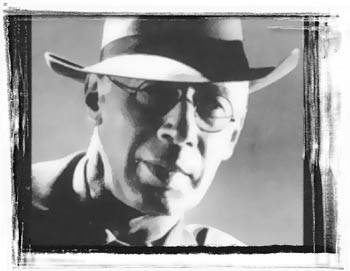
Henry Miller

Miller Time

Recalling the genius of an American colossus

By Stephen Kessler

HARD to believe it’s been 20 years since Henry Miller left us. AT 88, Miller lived out the final days of his extraordinary life in a big colonial house in Pacific Palisades, an unlikely last stop for his odyssey.

He had started out on the streets of Brooklyn at the end of the 19th century, attempted unsuccessfully to “come of age” in New York City, escaped to the lower depths of subbohemian Paris, where he belatedly found his voice as a writer and wrote his first three monumental books, left Paris for Greece on the eve of World War II, returned to the States and traveled the country discovering why he’d fled in the first place, and eventually settled for several years like some kind of Chinese sage on a ridge above the Big Sur coast.

The rigors of living so far from civilization in his advancing years, combined with the royalties from international sales of his many books, conspired to take him to the L.A. suburb where, by now a self-made legend, he enjoyed the luxuries of commercial success and disappeared into the sunset.

In the early 1990s, scholars Mary Dearborn and Robert Ferguson published new biographies of Miller, novelist Erica Jong brought out a book-length personal appreciation, and Philip Kaufman’s film Henry & June, based on the journals of Anaïs Nin, temporarily reminded us of the writer’s special place in the century’s literary landscape.

But since then he’s pretty much vanished from the cultural radar.

This is especially ironic in light of the rise of the personal memoir as one of the most popular literary forms and the recent apotheosis of Jack Kerouac as the great American rebel automythographer.

It’s hard to imagine either Kerouac or the memoir emerging as major forces in U.S. publishing without the precedent of Miller’s free-form taboo-smashing example.

Miller’s first book, Tropic of Cancer, written in the author’s early 40s and published in Paris in 1934 (but banned in this country until 1961 on account of its alleged “obscenity”), begins with a prophetic epigraph from that most American of writers, Ralph Waldo Emerson: “These novels will give way, by and by, to diaries or autobiographies–captivating books, if only a man knew how to choose among what he calls his experiences that which is really his experience, and how to record truth truly.”

Miller, even now, maintains his scandalous reputation, known by most as a writer of “dirty books.”

But those who actually read his work in all its remarkable variousness may come to understand that, while he is a ribald and outrageous storyteller, he is also, like Emerson, a philosopher.

Tropic of Cancer is a shocking book not just for its frankly sexual and scatological aspects but for its fearless confrontation with a civilization collapsing in a spasm of spectacular decadence.

Just a few years before Hitler sends Europe into a cataclysmic war, Miller discerns, in the squalor of his immediate circle of degenerate friends and acquaintances, the symptoms of a more pervasive ailment, a moral cancer that he sets out to expose, sparing no one, least of all himself.

That he is able to tell this degraded tale in a prose that, for all its darkness, is nothing less than exuberant, is some kind of miracle.

Imagine Spengler’s The Decline of the West, Eliot’s The Waste Land, Sartre’s No Exit , and Dylan’s “Desolation Row” combined and retold by the mutant manic offspring of Mae West and Groucho Marx, and you have some idea of the apocalyptic energy of Miller’s breakthrough book.

Obscene, perhaps, but only as a frighteningly and hilariously honest depiction of a world that’s all too real.

In Tropic of Cancer, Miller attempts to hasten the razing of this corrupt world while at the same time eradicating his personal catastrophe, which includes up to then not only his abject failure to accomplish anything in 40 years of earthly existence but also his tormented erotic obsession–sometimes known as love–with the woman who was to be his lifelong muse and goad and inspiration, his second wife, June (aka Mona).

The impoverished, directionless, hopeless yet comical account Miller’s autobiographical narrator records could easily be considered nihilistic, but it’s Miller’s lyric genius, in the transcendental spirit of Emerson, to lift his sordid material from the depths of its own depravity into something resembling redemption.

Toward the end of this harrowing sustained exercise in creative rage, the author contemplates the crotch of a prostitute and launches into one of the most memorable riffs in literature, a 10-page diatribe against “a world tottering and crumbling, a world used up and polished like a leper’s skull,” a world that breeds, alongside the human race, “another race of beings, the inhuman ones, the race of artists who, goaded by unknown impulses, take the lifeless mass of humanity and by the fever and ferment with which they imbue it turn this soggy dough into bread and the bread into wine and the wine into song.”

Miller aligns himself with this race of artistic monsters and declares, in a paroxysm of exasperation that amounts to a manifesto, “A man who belongs to this race must stand up on a high place with gibberish in his mouth and rip out his entrails. . . . And anything that falls short of this frightening spectacle, anything less shuddering, less terrifying, less mad, less intoxicated, less contaminating, is not art.”

This is a high standard for any artist to set for himself, but Miller at his most possessed and most inspired meets it, in this and many of the later books.

From the portrayal of his lowdown immediate surroundings in Tropic of Cancer, Miller turns a backward glance on his young manhood in New York in the equally scandalous and even funnier Tropic of Capricorn, whose first 100 pages relate his years of employment with the Cosmodemonic Telegraph Co., one of the most engrossing portraits of corporate bureaucracy ever consigned to paper.

But Capricorn, as its goatish title suggests, is mostly about its horny narrator’s unquenchable thirst for sex and his simultaneous search for meaning in a world that seems no more nor less than maddeningly chaotic.

More coherent as a narrative than Cancer, despite its many digressions and lack of a conventional “plot,” Tropic of Capricorn is Miller’s portrait of the artist as a young man who can’t quite figure out how to be an artist.

Despite his anguish and confusion and pain and despair, the antiheroic protagonist’s story is once again told in such joyfully charged prose that it practically lifts you out of your seat as you read.

This guy may be hurting, but he’s alive in a way that you can only hope to be–not necessarily by indulging your every forbidden appetite but by paying such close attention to your difficulties and to the details of your oppressive environment that even your failures become something to celebrate and thereby turn into evidence of an undefeated existence.

In the third and final book of this initial trilogy, Black Spring, Miller abandons the novelistic pretense of telling any single story and instead creates a kind of collage of sketches, portraits, vignettes, essays, and poems-in-prose that once again combine to reveal the author in all his prodigious originality.

This is the book, if the uninitiated reader can suspend the desire for conventional narrative and surrender to the spell of Miller’s voice, that may be the best one-volume introduction to the author’s work, as it represents multiple aspects of his literary persona.

Perhaps the most marvelously disorienting section of Black Spring is “Into the Night Life . . . A Coney Island of the Mind,” a 30-page dreamlike prose fantasia whose wild inventiveness, richness of imagination, and gorgeous sentences are breathtaking.

Here is Miller cut loose beyond the stench of rotten circumstance and the arbitrary limits of “making sense” into a realm of ecstatic revelation, the writer as clown working the high wire without a net, performing for nothing so much as his own delight.

The joy with which this acrobatic prose is infused is dangerously contagious. I say dangerous because, attempted with less virtuosity, this kind of writing, liberating as it may feel, is likely to result in an utterly unreadable mess.

But why not, Miller might answer, make a mess? Life itself is a mess, and isn’t art obliged to be faithful to life? Miller was also an accomplished amateur watercolorist, a selection of whose pictures appeared after his death in a book appropriately titled Paint as You Like and Die Happy.

His writing–from the Tropics and Black Spring through the wonderful books of essays (The Air-conditioned Nightmare, Remember to Remember, Stand Still Like the Hummingbird, The Cosmological Eye, and others) and the great book on his stay in Greece, The Colossus of Maroussi, to the excruciating Rosy Crucifixion trilogy (Sexus, Plexus, and Nexus, the epic saga of his life with June)–is radical testimony to the artist’s freedom to ignore existing rules and do it however he or she feels moved to make a singular statement.

Not everyone can get away with such defiance of propriety. Even Miller, at his worst, can be tiresome and sloppy. And not everyone has the nerve or courage or madness or whatever it takes to risk colossal failure by taking such a path.

But his friend Lawrence Durrell, describing Miller as “one of those towering anomalies, like Melville or Whitman,” places him in his proper context among the giants of American literature, a source of consternation to some, consolation to others, and inspiration to those who would find a form and style of expression true to their own experience.

From the November 23-29, 2000 issue of the Northern California Bohemian.

© Metro Publishing Inc.

Turkey How-To Guide

0

Turkey Triage

A how-to guide for holiday emergencies

By Marina Wolf

DURING this festive season, you might fantasize about a chat with the experts. It would be more of a confrontation than a conversation. Waving a half-cooked turkey and an impossible guest list in their faces, you’d ask, “OK, wise guys, what would you do?”

Well, here’s as close as you can get in print: a celebrity panel with a surprisingly down-to-earth attitude about holiday entertaining. Katie Brown, TV personality and author of Katie Brown Entertains (HarperCollins), stocks Diet Coke, mixed nuts, and Valium (hey, she made the joke, not me). Rick Rodgers, author of Thanksgiving 101 and Christmas 101 (Broadway Books) has been around the country and on TV teaching his holiday basics, but he has the same problems as everybody else, including parents who wouldn’t listen to his grilling advice (nothing larger that 14 pounds on the grill) and ended up lighting on fire a turkey the size of a Volkswagen bug. And Barbara Kafka, who recently released Roasting (HarperCollins), brings years of experience to the table, but still found herself temporarily flummoxed with the dinner party from hell, which included one guest who kept kosher, one who couldn’t eat anything with seeds, and one who was recovering from alcoholism.

So pull up a chair and let’s get a taste of how the pros might handle some common holiday emergencies.

Your significant other’s parents are meeting you for the first time, and you’re hosting the dinner. What do you prepare?

Rick Rodgers: Call your mother-in-law and say, “Mom, will you please give me your favorite recipe for stuffing? I don’t know what kind to make, and Jimmy loves your stuffing.” Even better, have her teach you how to make the stuffing. Make it the family thing it’s supposed to be.

Barbara Kafka: I think you have to know how good a cook you are. In other words, if you’re a good cook you might go ahead and be a little more ambitious. If you’re not such a good cook, do the safe thing. I wouldn’t be extravagant for the first time, either. I think that sets a bad tone, like gee, she’s going to bankrupt our son.

Katie Brown: First of all, don’t do anything out of the ordinary. This is not the time to show off your skills. This is the time to go with classics. If you want to pop in one thing extraordinary, make sure it’s a side dish and that it still has traditional components. I made turkey lasagna for my dad, and it didn’t work.

Dinner hour has arrived, everybody’s hungry, and you realize that you put the turkey in too late. It has at least two more hours to go. What do you do to keep everyone happy until then?

Kafka: I turn that oven up to 500 degrees. In about half to three-quarters of an hour, it’ll be ready. This isn’t a real disaster.

Rodgers: One solution is to cut the turkey in half through the rib cage–crosswise through the back–separating breast and wings from drumsticks and thighs(light from dark). Roast them separately and they’ll cook faster. Then just prop them together and decorate with parsley. Next year you’ll be joking about the time we had to cut the turkey in half.

Brown: I’ve been there, and it’s miserable. Sometimes you can substitute side dishes or make them last longer. Put your soup course out, put out salad as second course, go into third course with a vegetable plate, and then just serve turkey with stuffing. Do anything, add more courses, get naked, light yourself on fire. The key is to never admit defeat. Because then people start to lose faith.

It’s your turn to host the family dinner. What with other social obligations, you’ll have about three hours to get ready on the day of the dinner. How would you make this happen with as little stress as possible?

Rodgers: There are three ways of doing it. One is to be superorganized and start way ahead of time, with three shopping lists and a visit to the express lane the day before the dinner. Another way is to have a potluck. But they get out of control because people never bring what they say they’re going to bring. So I clip recipes, send them to the guests, and ask them to make two batches. Finally, this is what the gourmet departments are for. Buy everything you can from them, and concentrate just on the turkey and stuffing. People are so thrilled that they are invited to your house, they’re relaxed and eating dinner off of china, so they’re very slow to criticize.

Brown: First of all, I might order the turkey online or from the grocery store so that the only thing I had to worry about were side dishes. Keep it simple. For bread, I’d go right to the frozen food section and get Parker House rolls, put them out on a cookie sheet, slice them on the side, squirt in something like honey butter, pumpkin butter, and bake those. Buy premixed greens, toast some pecans, add dried cherries or cranberries, maybe even some orange slices and red onions, and store-bought ginger-soy dressing. Get pre-made pie crusts, canned pumpkin. I think you can do it all in three hours.

Kafka: It only takes 45 minutes to make a boned and rolled loin of pork or leg of lamb. Takes about the same time to make the potatoes, if you cut them in half. And anyway, remember that even if you want to make the turkey, by the time your guests sit and eat, if you give them enough first courses, you’ll have enough time to get that turkey done. We tend to forget that these things take time to get done. Guests don’t have to eat the instant they walk in.

It’s Christmas day–or pick your major holiday–the cocktail hour before dinner. One of your guests shows up at the door with four strangers in tow. “I found out at the last minute that they were alone,” says your friend. “I didn’t think you’d mind.” How would you handle the situation?

Kafka: First of all, I’d try to be gracious, hard though that may seem. I would want to be a lady about it. Rather than trying to stretch the food you have, you should just add something, a simple pasta or soup course. Again, you want to do things that are easy, because by this time it’s late. Courses like this you can make in great quantity. Remember to sharpen your knife so you can slice the meat thinly. And then you can tell your friend afterwards, if she does it again, you’ll kill her.

Brown: I always cook more than I should. I always plan for extra people. At least you’ll have leftovers and you can make people to-go packets. If you didn’t make enough, you can throw two or three more dishes together. Cut up some extra potatoes and roast them to go with the mashed potatoes. You can even heat up frozen vegetables, mix in some herbs, and melt some cheese over the top.

Rodgers: The smart cook is going to prepare for the worst-case scenario and make extra, because people get ruder and ruder every year. I had a friend ask once, the night before, if he could bring a friend. Two hours later he called back to tell me he’s allergic to cheese and garlic. Oh, well! They’ll get more green beans.

Triage Tips Five things for the emergency kit

A good roasting pan, an expensive one that’ll last forever. “They absorb heat to make great drippings, and they don’t fold in half like aluminum.” [Rodgers]

A plate of cookies and a bowl of mixed nuts. “When people come into the kitchen while you’re working, you don’t want them picking at you or your food.” [Brown]

Smoked salmon “Everyone seems to like smoked salmon, especially if it’s the good stuff.” [Kafka]

Whatever drink keeps you going, to keep you grounded during a crisis. “I have Diet Coke; my mom drinks iced tea.” [Brown]

Thermometers, both oven and instant-read meat types. “No one’s oven is exactly what the dial says.” [Rodgers]

Shake it Up How to make the perfect martini

This recipe requires extra time for preparation but is well worth the effort. It serves two.

First, you’ll need

Stainless steel cocktail shaker Martini glasses–the larger the better Shot glass Gin–preferably Tanqueray Vermouth–preferably Martini & Rossi Extra Dry Fresh lemon Quality cocktail olives

The day before:

Prepare fresh ice using bottled or distilled water.

Place ingredients in refrigerator; place glasses and shaker in freezer.

Strain olives; then bathe them overnight in vermouth.

Now you’re ready

Coat the rim of each chilled glass with a lemon wedge.

Into your shaker add: 10 ice cubes, four gin shots, 1/4 shot vermouth.

Shake 40 times.

Strain into glasses, alternating between each.

Place one vermouth-drenched olive into each glass.

Optional:

Add a splash of cranberry juice or crème de menthe for holiday color. For one of the most exhaustive martini recipe sites on the Internet, check out The Martini List. And remember that perfection is a subjective experience, so feel free to experiment.

Then you might want to bid on a new liver on eBay.

From the November 23-29, 2000 issue of the Northern California Bohemian.

© Metro Publishing Inc.

The Ig Nobel Awards

0

Oddities of Science

Think science isn’t funny? Guess again.

THAT ALBERT Einstein. For a physicist, he sure had a great sense of humor. Most people have seen the posters of the guy: wild-haired, bright-eyed, sticking his tongue out at the camera. And we’ve read Einstein’s quirky quips and quotes: “Two things are infinite: the universe and human stupidity, and I’m not sure about the universe.”

Really now, who’d have thought a scientist would turn out to be so funny?

Science is, after all, a dry, academic, humorless discipline, a realm of facts and figures and dangerous exploding chemicals. It’s a solemn business. Scientists, the chosen acolytes of the scientific flame, tend to be sober-minded people. Like nuns and DMV workers, they have little tolerance for tomfoolery or unrestrained silliness. Right?

Uh, wrong.

“What very few people realize,” declares Marc Abrahams, editor of the Annals of Improbable Research, in Cambridge, Mass., and the founder of the annual Ig Nobel Awards, “is that scientists are among the funniest people on the planet.”

He’s serious.

“There are a few completely humorless scientists who take themselves and their work much too seriously,” Abrahams admits, “and it is these people who give a bad reputation to everyone else. Scientists are the ones trying to solve the problems no one else can figure out. If you don’t keep a sense of humor about it, you’ll be miserable.”

We should not doubt him. Under Abrahams’ guidance, the AIR has become the world’s leading “science humor” magazine. That’s right: science humor. Staffed by writers trained in the scientific method and possessed of a wicked sense of irony, AIR is, in part, a conscious attempt to make science more inviting to an intimidated world at large. To that end, Abrahams and company scour academic journals in search of stories that reveal the wacky, eccentric underbelly of the scientific process. By reporting on scientific achievements that “cannot or should not be reproduced,” the AIR allows scientists and nonscientists to laugh out loud.

That laughter grows loudest once a year, when AIR presents the illustrious Ig Nobel Awards, handed out every October–coinciding with the announcements of the Nobel Prizes–to 10 recipients whose achievements have inspired the highest degree of jaw-dropping disbelief. This year’s winners–honored in a supremely silly ceremony that took place at Harvard University on Oct. 5–include Richard Wassersug, who published a paper titled On the Comparative Palatability of Some Dry-Season Tadpoles from Costa Rica. It involved a firsthand tadpole taste-test, and was, in fairness, a serious attempt to understand why certain tadpoles are avoided by amphibian-eating predators. Another winner, honored with the prize for literature, was the infamous Australian “Breatharian,” Jasmuheen, whose book Living on Light shares the notion that while some humans do eat food, we don’t ever really need to. This year’s Peace Prize went to the British Royal Navy, for ordering its sailors to undergo target practice in which they refrain from using live cannon shells and instead simply shout, “Bang!”

Now a 10-year-old tradition, the Ig Nobel ceremony is perhaps the strangest scientific celebration going. It certainly stands as proof positive that scientists do indeed have a sense of humor. In addition to the winner’s acceptance speeches–which, according to tradition, must conclude in less than 60 seconds to avoid interruption from Miss Sweetie Poo, an adorable 9-year-old sent out to whine, “Please stop, I’m bored. Please stop, I’m bored!”–the celebration includes the Brain Food opera (performed by actual Nobel Prize winners), the Great Intelligence Debate (a contest of 30-second speeches shouted simultaneously), and the ritual distribution of plastic bubble-wrap “Fish Brains.” As it has for the past several years, the October ceremony will be broadcast Nov. 24 (the day after Thanksgiving) at 11 a.m., on NPR’s Talk of the Nation Science Friday.

SENSE of humor notwithstanding, one has to wonder how the recipients of an Ig Nobel respond to being told they’ve just won. “There’s usually a long pause after they hear the news,” admits Abrahams. “But really, a surprising number of them are pleased about it. Most of the others are tolerant, or at least amused.” He insists that the Ig Nobels are not meant to ridicule the winners, but to honor them for having the courage to go where no one’s gone before. “A scientific achievement can seem pretty ridiculous and still have something significant to contribute. That’s the history of science. Every important breakthrough we know was once thought to be absolutely nuts,” says Abrahams. “Besides, most of our winners are just happy their work was noticed at all.”

Larry Friend, a Petaluma geologist who works for Harding ESE Inc., an environmental services firm in Marin County, says he’d consider it an honor to receive an Ig Nobel. “Any type of award, either realistic or ignominious, would be great,” he confirms. A walking-talking example of a funny scientist, Friend keeps a large file of science-related jokes and humorous essays, documents he gleefully distributes to his colleagues far and wide. “Being a scientist gets depressingly overwhelming unless you can poke fun at what you’re doing,” he says. “Scientists are treated as second-class citizens. I mean, you can make a lot more money doing other things. Here I am, among the smartest 10 percent of all people in the country, and I can’t make any money.

“Actually, that’s pretty funny when you think of it,” he adds. “Maybe I’m not that smart after all.”

Nicholas Geist, a professor of paleontology at Sonoma State University, has another theory as to why people think scientists are humorless people. It begins in elementary school, Geist hypothesizes.

“Science textbooks just suck in elementary school,” he says.

Beyond that, Geist, a longtime fan of the AIR, agrees with Abrahams, observing that “some of the funniest people in the world are scientists. “On the other hand,” he says, “some of the most self-absorbed, boring people I’ve ever met are scientists. If scientists have a bad reputation, it’s scientists’ own fault. A lot of scientists, particularly young scientists at the beginning of their careers, tend to be all ‘Science! the Search for Truth with a capital T.’

“I’ll always remember what this one old paleontologist at Oregon State once told me. ‘Good science is an internally consistent set of lies.’ ”

Now there’s a line one might expect to hear in an Ig Nobel acceptance speech.

One thing’s for sure, Einstein would probably get a chuckle out of it.

From the November 23-29, 2000 issue of the Northern California Bohemian.

© Metro Publishing Inc.

Marijuana

Smoke Damage

How marijuana ruined my life for the better

By Stephen Kessler

SOMETIMES I wonder what I might have amounted to if I hadn’t become a pothead 30 years ago, when I was in graduate school, and pretty much remained one ever since. If not for marijuana, by now I’d probably be securely tenured in some English department and my mother would be able to brag to her friends about her son the doctor of philosophy. I’d be fluent in Academese, a respectable specialist in some form of critical theory, a teacher admired by his brightest students, a defeated imaginative writer, and a wretchedly unhappy and neurotic person. This, at least, is how I envisioned the path I was on at the time and where it must inevitably lead.

Luckily, marijuana intervened.

Getting high, for me, in 1969, at the age of 22, provided a vitally helpful perspective on the pettiness and irrelevance of an academic career to the creative vocation I felt was calling me. Following an acute psychotic episode–usefully assisted by psychedelic drugs, which triggered the explosion of all my internal conflicts and contradictions–I left the doctoral program and its generous fellowship for the full-time pursuit of my first love, poetry. This may not have been possible without a small but steady independent income that enabled me to live without a “real” job, but that financial independence was also existential in that the freedom it afforded left me no excuses for not doing what I claimed to want to do, which was to write. Smoking marijuana gave me courage, at the time, to follow my deepest imaginative instincts, not only in the actual writing of poems but in the larger arena of making decisions about my life and how I wished to live it. Contrary to conventional wisdom, my judgment felt to me more fundamentally sound when I was stoned than straight.

Encouraged by the permission I felt to write without parental or professorial approval, I set out on the slow, uncertain, and mostly thankless path of the young poet, laboring over less-than-brilliant lines, writing, revising, sending the finished works to magazines, occasionally publishing, more often collecting rejections. Through most of this artistic apprenticeship I was accompanied by the sweet smell of burning hemp, whose presence surrounding my efforts seemed to expand the atmosphere of creative possibility, enhancing my sense of heroic romance on the seas of the blank page, that heady journey into the unknown. Frequently stoned as I indulged my imagination, I knew I was learning something about poetry, about writing, and about myself.

From there it was a slippery slope into the harder stuff: translation, criticism, journalism, editing, and publishing. In the years since my earliest days as a dropout hippie poet I’ve managed to make a working life for myself in these various branches of literary practice, and while I wouldn’t presume to credit pot for anything I’ve managed to accomplish, I do believe its companionship has helped me maintain a certain equanimity amid the myriad distractions, confusions, and aggravations of the surrounding world, enabling me to focus on what matters most, or what I most enjoy. If anything, marijuana has tempered my ambition, relaxing the compulsion to overachieve and giving license to play.

IT IS THIS sense of permission–or permissiveness, as the virtue-pushers would have it–that makes the forbidden herb, for me, a useful antidote to the various societal prohibitions against, for example, “doing nothing.” Pot reinforces my instinctive Taoism. Maybe that’s why it’s considered by some to be a dangerous drug: if everyone used it, nothing would get done. But paradoxical as it may seem, it is precisely when “doing nothing” that I tend to get the most accomplished as an artist. Or the deep involvement, the timelessness, experienced in the flow of creation may feel so aimless or effortless that it might as well be nothing, except for the fact that when I resume more consciously purposeful activity I often find persuasive evidence that I was doing something after all: a written text or other crafty artifact, a rack of freshly washed dishes, a stack of firewood, a pile of paid bills whose checks were written while listening to music or some radio show.

Stoned or straight, I find these kinds of meditative activities to be a means of grounding myself in the mundane patterns and rhythms out of which imagination rises. The content, style, and quality of what I write are not, I’ve found, especially affected by whether or not I’ve been smoking, but I am aware, when high, of more intimate sensuous relations with the language, with the texture of lines and sentences, with a kind of musical understanding not always readily evident to my more rational and sober self. The mild psychosis induced by this subtle alteration of consciousness may provide a different angle of vision, or revision, that can be of use in making esthetic decisions–what works and what doesn’t, how to refine some detail, trim out the excess, or develop some incomplete idea.

Obviously such working habits are more dependent on the mind and skill of the individual than they are on what drugs he may or may not be taking. An idiot on marijuana is still an idiot, possibly more so. And one’s response to pot may vary greatly, depending on personality and circumstances. The health effects of smoking anything cannot be entirely positive, and I’ve seen enough stupid people in herbally induced stupors to be disabused of any evangelical notion of marijuana as a panacea. Like any other substance–food, tobacco, caffeine, alcohol, television–its abuse can be toxic and destructive. But unlike these ordinary and often insidious additives to daily life, pot remains not only legally prohibited but even now, at the turn of the millennium, socially stigmatized in a way that, say, coffee (a truly mind-altering substance) is not.

AMONG my friends, some smoke and some don’t, for reasons of their own–just as I don’t drink coffee because it makes my stomach jumpy–but the ones who do are just as productive in their lives and work and social contributions as are the abstainers. Anecdotally speaking, I’ve seen no correlation one way or another between marijuana use and creativity, citizenship, ethics, or character. What I have noticed when smoking with friends is a ritual affirmation of time-out, a refreshing pause in the everyday onslaught, a moment of quiet dialogue to savor, an island of sanity in the rush of events. Different people have different ways of relaxing, but those who habitually watch TV–whether in the lethargy of their own living rooms or in the noise and convivial drunkenness of a bar with ballgames blaring–seem to me far more at risk for various psychopathologies than those who routinely prefer a few tokes of pot.

While I don’t exactly take pride in my own habit, I don’t consider it a major vice. A couple of puffs in midafternoon, following a late lunch, or at the end of a longish day, in the cocktail hour, or in the evening while listening to some especially beautiful music, strikes me as an eminently civilized way of decompressing the psyche. Whenever I find myself using it more than feels healthy–when I wake up in the morning foggy-headed, or feel a strain on my respiratory system–I may take a break for a few weeks as a way to remind myself of the drug’s potentially negative effects and to refresh my appreciation of its positive ones. I wouldn’t recommend it to anyone, especially children (I’m content with the knowledge that my 18-year-old daughter doesn’t use it), but neither would I discourage the curious from trying it in a conscious, responsible way.

Partner, collaborator, accomplice, friend, companion–marijuana, over the years, has woven itself gently into the pattern of my life in a way that may have prevented me from pushing myself above and beyond whatever I’ve done as a writer. Without the benign corruption of pot, who knows, I might have been a contender. Instead, up to now, in my early 50s, I’ve managed to maintain my physical and mental health, create a few works I hope may be worth saving, cultivate many lasting friendships, and contribute what I could to my communities. For someone of alternately competitive and contemplative tendencies, the path I’ve taken, accompanied by the herbal reality-check of marijuana, feels to me thus far to have been a reasonable compromise. As my father used to say, “Everything in moderation.”

From the November 23-29, 2000 issue of the Northern California Bohemian.

© Metro Publishing Inc.

Open Mic

0

Movie Math

By C. D. Payne

HAVE YOU BEEN CATCHING UP with those old movies on Turner Classic Movies? You soon discover that in Hollywood “old” is a relevant term. For example, the other night you may have seen Faithless (1932), a Depression-era comedy in which Tallulah Bankhead and Robert Montgomery play impoverished society swells struggling to scrape up carfare. At one point Tallulah is asked her age. “Twenty-four,” she admits with modest sincerity. Yeah, right.

Miss Bankhead may have been 24 at some point in her life, but I suspect it was long before talking pictures arrived on the scene.

That same week brought us The Ambassador’s Daughter (1956), starring Olivia de Havilland as a dewy-eyed Parisian maiden resisting the advances of dashing enlisted man John Forsythe. This was 17 years after Olivia swiped Ashley Wilkes from Scarlett in Gone with the Wind and 21 years after her movie debut in The Irish in Us (1935). Two decades later, Miss de Havilland looked glamorous in her Dior wardrobe, but you may have noticed the director never moved in very close on his ingenue. Perhaps it was because she was celebrating her 40th birthday that year.

Hollywood leading men engage in age-fudging too. Take the case of Susan Slept Here (1954), in which playboy screenwriter Dick Powell suddenly finds himself married to juvenile delinquent Debbie Reynolds. Should he keep her? The problem is that the child bride is only 17, while the groom is “19 years older.” According to my pocket calculator, that would make Dick a still-youthful 36.

Yeah, right.

In fact, Dick Powell had 28 years seniority on Debbie. In 1954, she was a bubbly 22 and he was a mature 50. Can this marriage be saved? I doubt it.

A half-century later, actors are still playing fast and loose with their ages. For example, if her official biography is to be believed, former Cheers star Kirstie Alley is now four years younger than everyone else in her high school class. “That’s odd,” former classmates have commented, “she didn’t look 14 when we graduated.”

The good news is that there’s no reason why the rest of us can’t readjust our ages to Hollywood Time. According to my official biography, I am now a vigorous 34. And no, I will not be attending any high school reunions with my aging peers.

From the November 23-29, 2000 issue of the Northern California Bohemian.

© Metro Publishing Inc.

Internet Futures

0

Net Gains

Is the Internet just a giant Tupperware party?

By Naomi Klein

WHEN THE TOP two executives at BMG Entertainment resigned last month, it revealed a deep schism in the way multinational companies see the Internet’s culture of sharing. Despite all the attempts to turn the Net into a giant shopping mall, the default ethos still seems to be anti-shopping: on the Internet, we may purchase things here and there, but we share ceaselessly: ideas, humor, information, and yes, music files.

So here’s the real debate as it goes down in the boardroom: Is this culture of online swapping and trading a threat to the heart of the profit motive, or is it an unprecedented profit-making opportunity, a chance to turn sharing itself into an enormously profitable sales tool?

When the five major record labels, under the umbrella of the Recording Industry Association of America, launched a lawsuit against Napster, they threw their lot decidedly into the first camp: file-sharing is theft of copyright, pure and simple, and it must be stopped.

But then, in October, something very strange happened: Bertelsmann, owner of BMG Entertainment (one of the five companies behind the RIAA lawsuit), struck a deal with Napster (hence the BMG resignations). The two companies are going to launch a file-sharing site where music fans pay a membership fee in exchange for access to BMG music. Once it’s off the ground, Bertelsmann will pull out of the lawsuit.

At the press conference, Thomas Middelhoff, chairman and chief executive of Bertelsmann, pitted himself against the suits over at Time Warner and Sony who just don’t get the Net. “This is a call for the industry to wake up,” he said.

SO WHAT’S going on? Has Bertelsmann, a $17.6 billion media conglomerate (which owns my publisher and pretty much everyone else’s) decided to join the cyber-hippies who chant that “information wants to be free”? I somehow doubt it. More likely, Bertelsmann knows what more and more corporations understand: that after many failed attempts to use the Net as a direct sales tool, it may just turn out that the process of trading information is the Net’s ultimate commercial use.

Napster defenders argue that they don’t pirate CDs, but rather swap music within an online community the way communities of friends swap mixed tapes. They get to know and trust one another’s taste and, they argue, they end up buying more music because they are exposed to more of it. They also say they have been driven to create this alternative by inflated CD prices and the hideously homogenous rotation of pop on video stations and commercial radio.

What’s taking place on sites like Napster is a high-tech version of something very old: people talking to other people directly about what they like. It used to be called “word of mouth”; in the Internet age it’s called “word of mouse.” It’s the X factor that can create a true phenomenon, like the Blair Witch Project, and which marketers can’t seem to purchase or control–witness the Blair Witch sequel.

Or can they? Trying to understand, systematize, and harness this most human of all behaviors (how and why we talk to each other) has become something of a corporate obsession. Books such as The Tipping Point by Malcolm Gladwell, The Anatomy of Buzz by Emanuel Rosen, and Unleashing the Ideavirus by Seth Godin offer quasi- scientific explanations for how ideas spread: less by advertising than by regular people who are respected by their peers. Gladwell calls them “connectors” and “mavens,” Godin calls them “sneezers,” Rosen calls them “network hubs.”

Based on this theory, a marketing school has developed that encourages companies to treat consumers as if they were journalists or celebrities: feed them free stuff and watch them do your marketing for you, gratis. Put more bluntly, turn the ultimate anti-commodity–human communication, between friends, inside communities of trust–into a commercial transaction.

This is the irony of the record industry’s crackdown on Napster. At the same time as the legal arms of record companies are pummeling file-sharing sites, their marketing arms are warmly embracing these same online communities for their “peer-on-peer” potential. They’ve been paying firms like Electric Artists to strategically circulate free music samples and video clips in the hope of turning music fans into battalions of unpaid cyber Avon Ladies.

Bertelsmann itself used these techniques of “online seeding” to launch BMG artist Christina Aguilera: ElecticArtists gave away music samples to chatty Britney Spears fans, who then bombarded their online friends with the great news: She’s been cloned!!

When Bertelsmann made a deal with Napster last week, it were betting on a future in which sharing–when carefully controlled by marketers–is the Internet’s “killer app”: a global network of online brand-babble where authentic communities used to be.

The Internet as a giant Tupperware party. Are you ready?

From the November 23-29, 2000 issue of the Northern California Bohemian.

© Metro Publishing Inc.

The Wide-Eyed Gourmet

Feast & Famine

By Marina Wolf

IF YOU’RE LUCKY, you’ve had some experience with hunger in your life. Not enough to stunt your growth or make you die, but just enough to put an edge on your appetite. Maybe you’re a member of a religion that imposes periodic fast days. Maybe you didn’t make enough money in college, but your scholarships counted against you at the food-stamp office.

I had all of that, plus six brothers and sisters and parents plagued by layoffs and underemployment. We got free school lunches and, during the worst months, food bank-surplus TVP for snacks. First helpings were small, and second helpings, if there were any, inevitably led to noisy skirmishes and heated charges of parental favoritism. Food, in other words, was a highly charged issue at our house, and only at Thanksgiving and Christmas could we relax, two days in one month when we would have more than barely enough. We always started those dinners with a prayer, how thankful we were for each other and blah blah blah, but it was really all about the big roasted bird in the middle of the table. When the last amen was said, we pigged out in the old style. We were a roomful of Tiny Tims getting excited about our plum pudding.

This low-level deprivation used to bother me a lot. But it’s true what they say: A bit of hunger really does make a great-tasting sauce. And I will forever appreciate the occasional feast.

Our ancestors did, too. They really knew how to get into the food, with their spit-roasted oxen and fig-stuffed titmice, followed by towers of sugar paste borne into the dining hall by sweaty kitchen slaves, who themselves were planning a gorgeous gorge with oxen leftovers after the Lord High muckety-mucks had theirs. Scholars may point to such decadent meals as a prelude to the fall of Rome or as a sign of class inequities in medieval Europe. But actually most people back in the old days, even members of the upper class, were living in a state of uncertainty when it came to their next meal. There were church restrictions and locusts and kings and barbarians taking a bigger cut.

We as a nation, on the other hand, are no longer immediately dependent on harvest or hunting. Many of us can load our grocery carts anytime. Stand at the end of a checkout counter sometime and watch our modern-day cornucopia–the conveyor belt–overflow with holiday provisions.

But we are drowning in a sea of indifferent plenty. Without the contrast, that tiny edge of everyday desire, our hyperabundance becomes just one more luxury to take for granted. Hey, there’s always one more stuffed thing, one more set of side dishes, another choice among four desserts. You can get it at any restaurant seven days a week, or even at home if you’ve just come back from the supermarket. When the festive board groans more than once or twice a year, we stop listening, and the creaking table blends into all the other holiday noise.

But there is a part of human nature that craves the contrast of hunger and humongous meals. The postmodern, well-fed American, lacking in fast days and famines, tends to find that contrast with post-holiday diets. It’s an understandable impulse that has become almost as much a ritual as the Rose Parade.

But on behalf of people everywhere who have been or are now hungry, I’d like to say to the nation: This year, spare us your collective anorexia. It’s a mockery of the real thing. Festive food–having it, sharing it–should bring you only joy.

From the November 23-29, 2000 issue of the Northern California Bohemian.

© Metro Publishing Inc.

Keb’ Mo’

0

Blues Redux

Bluesman Keb’ Mo’ returns to his roots

By Alan Sculley

WHEN he arrived on the national blues scene with his self-titled 1994 CD, Keb’ Mo’ became immediately known for helping breathe new life into the acoustic blues style. Though it had songs that featured accompaniment from other instruments, the eponymous CD clearly established the bluesman as an artist building on what acoustic-oriented artists like Mississippi John Hurt and Taj Mahal had done before him.

Gradually, though, Keb’ Mo’ (his real name is Kevin Moore) has built on the acoustic blues foundation. And by the time of his third CD, the 1998 release Slow Down, he had expanded considerably on the acoustic sound. With the exception of the solo acoustic “I’m Telling You Now” and a cover of Robert Johnson’s “Love in Vain,” the remaining 10 songs featured full-band arrangements, with songs like “A Better Man,” “Soon As I Get Paid,” and “Muddy Water,” rocking quite convincingly.

Yet Mo’s new CD, The Door, finds the singer-songwriter taking a step back toward his roots. To be sure, there are plenty of songs with full-band accompaniment, such as the funky gospel-informed “Stand Up (and Be Strong)” and the gentle pop-tinged ballad “Come on Back.” But the new CD is perhaps more defined by songs like “Loola Loo,” “Anyway,” and the title track, which, even though they include some additional instrumentation, are centered around Mo’s vocals and his acoustic guitar.

The Door is a little closer to home,” Mo’ says. “I meant it to be very acoustic-friendly, meaning that I could play the songs solo.”

For the Philadelphia-based singer-guitarist, The Door promises to build on an impressive run that has seen both his second and third CDs capture Grammy Awards for best contemporary blues artist.

That Mo’ would succeed so impressively so fast after emerging on the national scene is remarkable, considering the meandering path he’d followed for much of his career. In 1973, he made his first inroads, at age 21, when Papa John Creach, the late violinist who recorded with Hot Tuna and Jefferson Starship, happened to stop by a rehearsal space where Mo’s current band was practicing. Creach liked what he heard and hired the group on the spot. Instead of continuing to pursue jobs as a sideman after his three-year stint with Creach, Mo’ instead signed on as a contractor and arranger of demo sessions at A&M Studios. His studio work helped him land a record deal in 1980 with a subsidiary of Casablanca Records, Chocolate City.

BUT THE sessions for the album went sour as Mo’, who was plagued by vocal problems at the time, let others take control of the recording sessions. The finished CD, Rainmaker, stiffed commercially and critically, and Mo’ returned to the Los Angeles club scene. He had a variety of gigs, some good (such as a stint in a group led by Monk Higgins that frequently had top blues stars such as Big Joe Turner and Albert Collins stop by and sit in on sets), others not nearly as noteworthy.

It wasn’t until 1990 that things started to fall into place. That’s when Mo’ was invited to play a role as a musician performing Delta blues music in a play produced by the Los Angeles Theater Center called Rabbit Foot. The role gave Mo’ the opportunity to delve further into the music of such acoustic Delta blues artists as Big Bill Broonzy and Mississippi John Hurt.

“I just could feel the realness,” Mo’ says, explaining his attraction to artists like Broonzy and Hurt. “They sang about real things. They sang about real stuff.”

After a couple of years of studying the style and exploring his own writing and performing talents, Mo’ landed a record deal with OKeh Records, a longtime blues label that was being revived by Epic Records. His career has been on a fast track ever since. And the collaborators on The Door are a good indication of just how much respect Mo’ had earned over the course of just three solo CDs.

“Blues is a genre, like country is a genre,” Mo’ says. “Songs are just the songs. I mean, you can do a blues version of ‘The Way We Were.’ All you do is just change the chords, decorate the song differently, sing it differently. I took that tip from country. Country songs have been crossing genres from country to pop to rock for years. Because they’re just songs. The song doesn’t make any difference.

“I mean, like people can take a country song and make it jazz or R&B, make it more country, bluegrass, pop-country, whatever. I’m from the school of get the song first.”

Keb’ Mo’ performs on Sunday, Nov. 26, at 7:30 p.m. Luther Burbank Center, 50 Mark West Springs Road, Santa Rosa. $27.50. 707/765-6665.

From the November 23-29, 2000 issue of the Northern California Bohemian.

© Metro Publishing Inc.

‘The Grinch’

Tickle Me, Dr. Elmo 'Grandma' singer dazzled by 'The Grinch' Writer David Templeton takes interesting people to interesting movies in his ongoing quest for the ultimate post-film conversation. This is not a film review; rather, it's a freewheeling, tangential discussion life, ideas, and popular culture. "WELL," remarks...

Newsgrinder

Important events as reported by daily newspapers and summarized by Daedalus Howell. Tuesday 11.14.00 With apologies to Kermit the Frog, it's not easy being (a putting) green for neighbors of Kentfield's Ann Morrissey. Her motion to review the legality of a backyard 600-square-foot synthetic green near her home was rejected by the Marin County...

Henry Miller

Miller Time Recalling the genius of an American colossus By Stephen Kessler HARD to believe it's been 20 years since Henry Miller left us. AT 88, Miller lived out the final days of his extraordinary life in a big colonial house in Pacific Palisades, an unlikely last stop for his odyssey....

Turkey How-To Guide

Turkey Triage A how-to guide for holiday emergencies By Marina Wolf DURING this festive season, you might fantasize about a chat with the experts. It would be more of a confrontation than a conversation. Waving a half-cooked turkey and an impossible guest list in their faces, you'd ask, "OK, wise guys,...

The Ig Nobel Awards

Oddities of Science Think science isn't funny? Guess again. THAT ALBERT Einstein. For a physicist, he sure had a great sense of humor. Most people have seen the posters of the guy: wild-haired, bright-eyed, sticking his tongue out at the camera. And we've read Einstein's quirky quips and quotes: "Two things...

Marijuana

Smoke Damage How marijuana ruined my life for the better By Stephen Kessler SOMETIMES I wonder what I might have amounted to if I hadn't become a pothead 30 years ago, when I was in graduate school, and pretty much remained one ever since. If not for marijuana, by now I'd...

Open Mic

Movie Math By C. D. Payne HAVE YOU BEEN CATCHING UP with those old movies on Turner Classic Movies? You soon discover that in Hollywood "old" is a relevant term. For example, the other night you may have seen Faithless (1932), a Depression-era comedy in which Tallulah Bankhead and Robert Montgomery play impoverished society swells...

Internet Futures

Net Gains Is the Internet just a giant Tupperware party? By Naomi Klein WHEN THE TOP two executives at BMG Entertainment resigned last month, it revealed a deep schism in the way multinational companies see the Internet's culture of sharing. Despite all the attempts to turn the Net into a...

The Wide-Eyed Gourmet

Feast & Famine By Marina Wolf IF YOU'RE LUCKY, you've had some experience with hunger in your life. Not enough to stunt your growth or make you die, but just enough to put an edge on your appetite. Maybe you're a member of a religion that imposes periodic fast days. Maybe you didn't make enough...

Keb’ Mo’

Blues Redux Bluesman Keb' Mo' returns to his roots By Alan Sculley WHEN he arrived on the national blues scene with his self-titled 1994 CD, Keb' Mo' became immediately known for helping breathe new life into the acoustic blues style. Though it had songs that featured accompaniment from...
11,084FansLike
4,606FollowersFollow
6,928FollowersFollow